What Makes Modern Chinese Names So Meaningful
When a Chinese parent names a child, they aren't browsing a baby book and picking something that sounds nice. They're encoding an entire worldview into two or three characters — balancing tonal harmony, stroke-count aesthetics, elemental theory, and family legacy all at once. Modern chinese names represent a distinct cultural era, shaped by digital tools, pop culture, legal constraints, and a generation of parents who blend classical literary taste with contemporary ambition.
Every chinese name meaning runs deeper than a simple translation. A single character carries its own pronunciation, visual weight, historical associations, and elemental classification. Pair two characters together in a given name, and you create a compact phrase that expresses a parent's highest hopes. The result is a naming system where nothing is accidental — each choice signals something about the family's values, education, and vision for their child's future.
Why Modern Chinese Names Are More Than Just Labels
Imagine compressing a wish, a family's identity, and a piece of linguistic art into just two or three syllables. That's what Chinese naming achieves. Unlike naming traditions where sound alone drives the choice, the chinese meaning of names operates on multiple layers simultaneously: the visual beauty of the written character, the tonal melody when spoken aloud, the cultural resonance of each component, and even the numerological balance of brush strokes.
A Chinese name is not a label — it is a compressed narrative. In two or three characters, it encodes ancestral belonging, parental aspiration, and linguistic craftsmanship that most naming traditions spread across an entire phrase.
This is why understanding what a chinese name mean requires looking beyond a dictionary definition. The character 明 (ming) means "bright," but placed in a name it can evoke intellectual clarity, moral transparency, or a hopeful future — depending on what it's paired with and which surname precedes it. Names in chinese and meanings are inseparable from context, tone, and combination.
Who This Guide Serves
This guide speaks to two audiences. If you're a Chinese-heritage parent — whether in mainland China, Taiwan, or the diaspora — you'll find structured insight into how today's naming landscape works, from trending characters to legal restrictions you need to navigate. If you're a language learner, writer, or someone choosing a Chinese name for professional or personal reasons, you'll gain the cultural literacy to recognize what makes a name authentic versus awkward.
What follows covers the full picture: how chinese names are structurally built from surname to given name, the actual decision-making process parents use today, curated name lists organized by meaning rather than alphabet, decade-by-decade trend shifts, regional differences across Chinese-speaking communities, and practical steps for selecting a name that sounds natural. The name in chinese meaning system rewards those who understand its logic — and that logic is exactly what we're here to unpack.
The starting point is structure. Every meaningful choice a parent makes depends on understanding how surnames and given names interact — and why that two-character or three-character architecture shapes everything that follows.
How Chinese Names Are Structured From Surname to Given Name
Chinese names follow a fixed architecture: surname first, given name second. This isn't just a formatting quirk — it reflects a cultural priority where family identity precedes individual identity. When you hear the name Wang Xiaoming, Wang is the family name and Xiaoming is the given name. Reverse that order and you've already misidentified the person, which is exactly what happened to early Chinese immigrants in English-speaking countries whose records swapped their surnames and given names for generations.
Understanding this structure is essential for anyone exploring chinese surnames and meanings, because the surname sets the tonal and visual foundation that every given-name choice must complement. A name isn't just two parts placed side by side — it's a deliberate pairing where sound, stroke count, and meaning must flow as a unified whole.
Surname First and Given Name Second
In Western naming conventions, the given name leads and the family name follows. Chinese naming inverts this entirely. You'll notice that a three-syllable Chinese name like Chen Yuhan breaks down as one-syllable surname (Chen) plus two-syllable given name (Yuhan). This pattern covers the vast majority of modern chinese names you'll encounter.
China has roughly 6,000 surnames currently in use, yet the concentration is staggering. The top 100 chinese last names account for approximately 85.9% of the entire registered population. That means over 1.1 billion people share fewer than 100 family names. The practical result? Given names carry almost the entire burden of individual distinction — which is why parents invest so heavily in choosing them.
Among those 6,000 surnames, only about 400 appear with any real frequency, and 81 of those are compound surnames like Ouyang, Zhuge, or Shangguan. The overwhelming majority of chinese family names are single characters, which is why the one-syllable-plus-two-syllable pattern (like Li Zihan or Zhang Yuxuan) dominates modern naming.
Common Chinese Surnames and Their Origins
The most common chinese last names have remained remarkably stable across centuries. According to China's 2020 National Name Report, the top five surnames — Wang, Li, Zhang, Liu, and Chen — together account for 30.8% of the national population. Each of these names carries historical weight that stretches back thousands of years.
Here's a breakdown of the ten most common chinese last names, their approximate population share, and the stories behind them:
| Rank | Surname (Character) | Pinyin | Population Share | Origin Note |
|---|---|---|---|---|
| 1 | 王 | Wang | 7.10% | Means "king" — derived from descendants of royal families across multiple dynasties |
| 2 | 李 | Li | 6.96% | Means "plum tree" — rose to dominance during the Tang Dynasty (618-906 AD) when it was the imperial surname |
| 3 | 张 | Zhang | 6.42% | Composed of characters for "bow" and "long" — attributed to the legendary inventor of the bow and arrow |
| 4 | 刘 | Liu | 5.16% | Connected to the Han Dynasty ruling family — one of the most historically powerful surnames |
| 5 | 陈 | Chen | 4.26% | Traced to the ancient kingdom of Chen in modern-day Henan province |
| 6 | 杨 | Yang | 2.97% | Linked to descendants of the Sui Dynasty and ancient Yang state |
| 7 | 黄 | Huang | 2.16% | Means "yellow" — connected to the ancient Huang kingdom in Henan |
| 8 | 赵 | Zhao | 2.03% | The imperial surname of the Song Dynasty — historically placed first in the Hundred Family Surnames text |
| 9 | 吴 | Wu | 1.88% | Derived from the ancient state of Wu in the Yangtze Delta region |
| 10 | 周 | Zhou | 1.78% | Connected to the Zhou Dynasty (1046-256 BC), one of China's longest-ruling dynasties |
When people research chinese last name meanings, they often discover that these surnames function as compressed history lessons. The character 王 literally means "king," while 张 visually depicts a drawn bow. Understanding these chinese last names and meanings adds a layer of appreciation for how deeply ancestry is embedded in the naming system.
One-Character vs. Two-Character Given Names
Given names in Chinese can be either one character or two characters long. This choice isn't random — it signals generational identity, cultural preference, and even practical considerations about name duplication.
Single-character given names (like Wang Wei or Li Na) were extremely popular from the 1960s through the 1980s. They sound clean and direct, but they created a massive duplication problem. When you combine a limited pool of common surnames with single-character given names drawn from a small set of popular characters, millions of people end up sharing identical full names. Imagine searching for "Wang Wei" in a government database and getting thousands of exact matches.
Two-character given names (like Zhang Zihan or Liu Yuxuan) now dominate modern naming in China. The government has actively encouraged this shift to reduce duplication in civil registration systems. Two characters offer exponentially more possible combinations, allowing parents to create distinctive names while still drawing from culturally meaningful character pools.
There's also a cultural dimension. Two-character given names allow for richer semantic layering — one character can express a quality while the second adds nuance or contrast. A name like 思颖 (Si Ying) pairs "contemplation" with "intelligence," creating a meaning neither character achieves alone. Single-character names, by contrast, tend to make a single bold statement: 勇 (Yong, "brave") or 慧 (Hui, "wise").
For parents today, the structural choice between one and two characters is really the first creative decision in the naming process — and it shapes every option that follows. The real complexity begins when families move beyond structure into the actual methods they use to select those characters: consulting naming masters, running stroke-count algorithms, balancing elemental theory, and navigating a legal system that restricts which characters are even permitted.
How Modern Chinese Parents Actually Choose Names Today
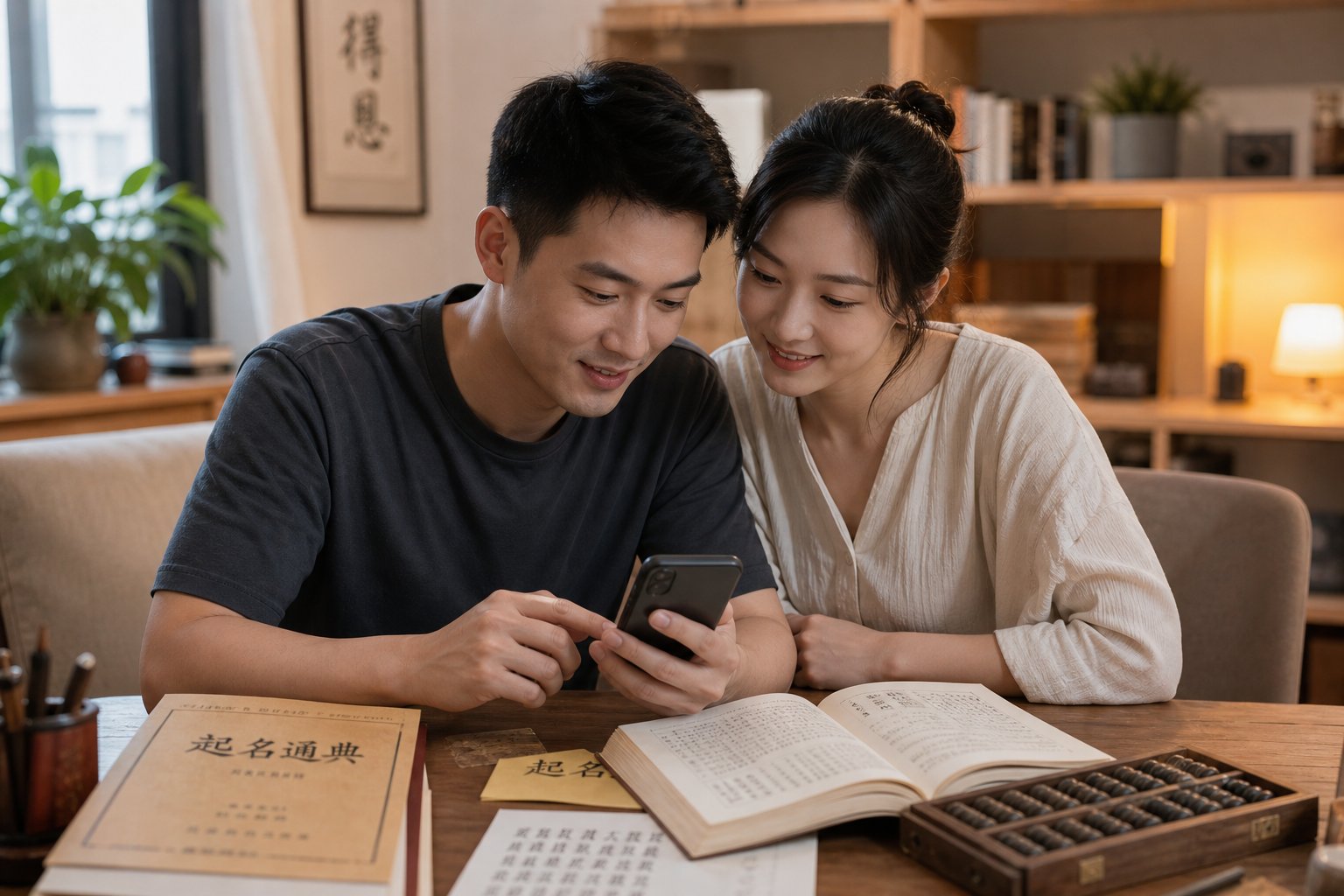
Picking a name isn't a single inspired moment for most Chinese families. It's a multi-step process that can stretch across weeks or even months, blending ancient metaphysical systems with smartphone apps and government regulations. According to one parent who documented his naming journey, the process involved analyzing stroke counts, elemental harmony, phonetic flow, and cultural meaning simultaneously — describing it as "a carefully balanced equation" rather than a simple creative exercise. About 80% of parents report feeling significant pressure to choose the perfect name, and that pressure doubles when navigating the complexities of Chinese naming traditions.
So what does the actual decision-making look like? It typically involves three overlapping tracks: traditional consultation, digital tools, and legal compliance. Most families engage with at least two of these, and many work through all three before registering a name.
The Role of Fortune Tellers and Naming Masters
Despite China's rapid modernization, consulting a naming specialist remains common — especially among families in southern China, Taiwan, and overseas Chinese communities. These specialists analyze the child's bazi (八字), which translates to "eight characters" derived from the exact year, month, day, and hour of birth. Each of these time markers corresponds to one of the five elements: wood, fire, earth, metal, and water.
The logic works like this. If a child's birth chart shows an excess of fire and a deficiency of water, the naming master recommends characters containing water-related radicals or meanings to restore balance. A name like 泽霖 (Ze Lin) — where both characters carry strong water associations — might be prescribed for a child whose chart needs that element. The chinese name interpretation here isn't just about what the characters mean in isolation; it's about how they interact with the child's cosmic profile.
Generational poem naming (字辈) once played a central role in this process. Families maintained multi-generational poems where each generation used the next character in sequence as part of their given name. Your name literally encoded which generation you belonged to within the clan. This tradition is fading in urban China — most young parents now prioritize individual meaning over generational markers — but it persists in rural areas and among families with strong lineage consciousness.
Naming Apps and Digital Tools in Contemporary China
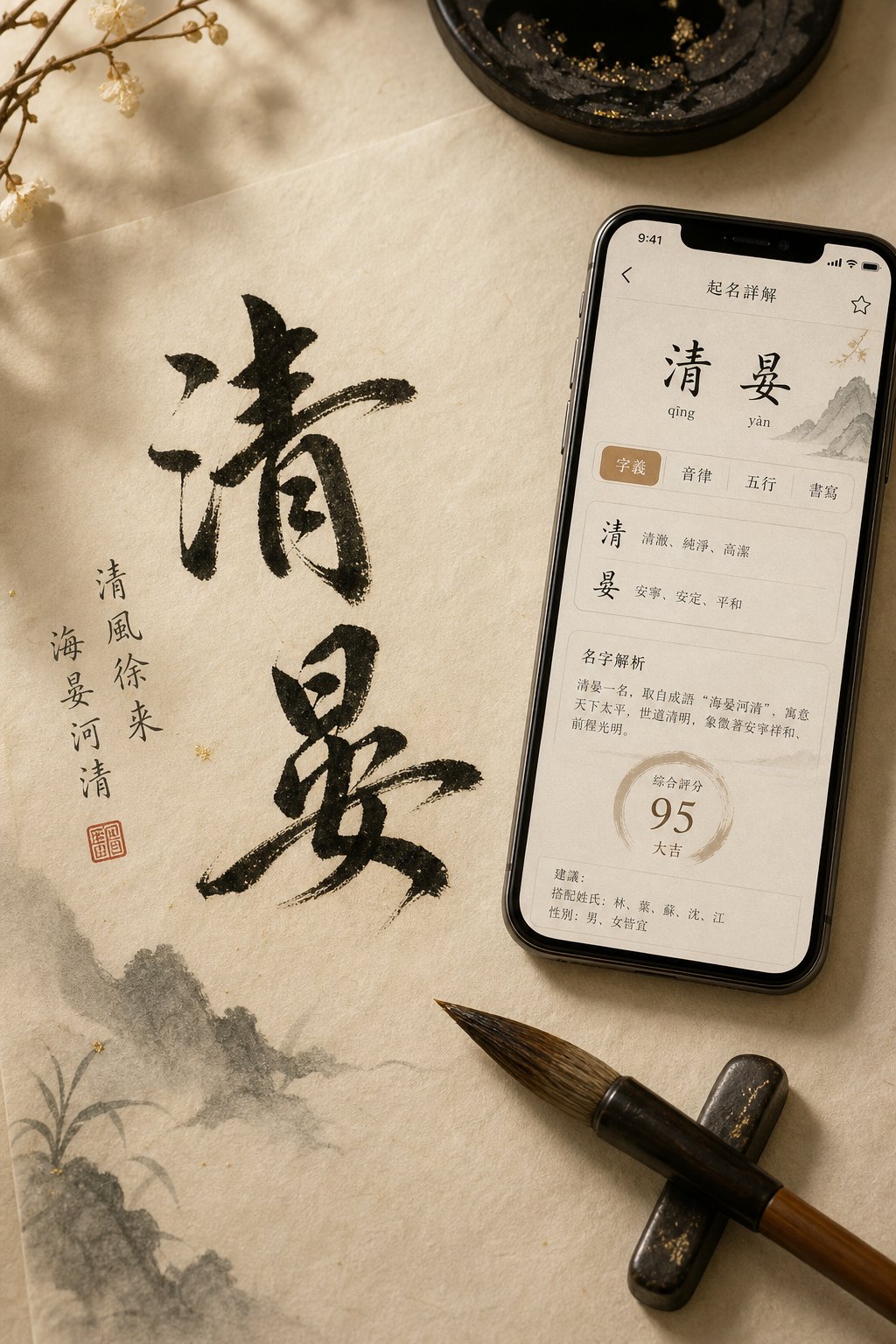
Technology has transformed how parents explore chinese names and characters. Where previous generations relied solely on naming masters or family elders, today's parents often start with a chinese name generator app that scores potential names across multiple dimensions simultaneously.
These apps typically evaluate names on stroke-count numerology, tonal progression, five-element compatibility with the child's birth data, character rarity, and even potential homophone conflicts. Some platforms process thousands of mandarin characters against these criteria in seconds — something even the most experienced human naming specialist would find difficult to replicate at that speed.
The workflow many parents follow mirrors what one father described as an iterative methodology: set constraints first (birth year, zodiac, family surname, elements to prioritize or avoid), generate a broad list of candidates, then narrow through shortlisting and further refinement. Parents input details like the family surname's stroke count and elemental profile, the baby's expected zodiac year, and desired qualities — wisdom, strength, grace — then review scored results. The chinese for name (名字, mingzi) becomes a data point in a larger optimization system.
But here's what's important: these tools don't replace human judgment. They expand the field of possibilities. Parents consistently report that the final choice comes down to emotional resonance — how the name feels when spoken aloud, whether it sparks recognition between partners. The app narrows a universe of options; the heart makes the call.
Legal Rules and Character Restrictions
Even after a family settles on the perfect name, China's civil registration system has the final say. The government maintains strict rules about which chinese hanzi can appear in registered names, and parents occasionally discover their chosen characters are rejected at the registration office.
You might wonder: how many chinese characters are there in total? The answer is over 90,000 recorded in comprehensive dictionaries, but China's official Table of General Standard Chinese Characters limits usable characters to 8,105. Names must draw from this approved set. Characters outside it — including rare classical forms, dialect-specific characters, or invented characters — will be refused.
Here are the key legal constraints parents must navigate:
- Full names (surname plus given name) must be between two and four characters total — single-character full names and names exceeding four characters are not permitted for Han Chinese citizens
- Only standardized simplified characters from the approved list are accepted in mainland China (Taiwan permits traditional characters)
- Characters that cannot be encoded in the national identity card system's character database will be rejected, even if they technically appear in the approved list
- Names cannot contain numbers, foreign letters, or non-standard symbols
- Some regions restrict characters with negative or vulgar associations, though enforcement varies by local registration office
Notable cases illustrate these limits. A family in Zhengzhou attempted to name their child "@" (reading it as the Chinese phrase 爱他, "love him") and was refused. Parents choosing rare classical characters like 頔 (di, meaning "beautiful") have faced rejection because the character wasn't encoded in local ID card systems — even though it exists in standard dictionaries. These constraints mean that the naming process isn't purely creative; it's also a negotiation with bureaucratic infrastructure.
The interplay between aspiration and regulation shapes the final outcome. Parents dream in poetry but register within a system — and the names that emerge from this tension reflect both the richness of Chinese literary tradition and the practical realities of governing 1.4 billion people who share fewer than 100 common surnames. That tension becomes especially visible when you look at the actual names parents are choosing for daughters today, where classical elegance meets modern ambition in character combinations that would have been rare just a generation ago.
Modern Chinese Girl Names Organized by Meaning
Most chinese girl names lists you'll find online dump hundreds of names in alphabetical order or random tables. That approach misses the point entirely. Chinese parents don't browse names alphabetically — they start with a quality they want their daughter to embody, then search for characters that express it. Nature imagery, intellectual ambition, classical grace, moral virtue — each category draws from a different pool of characters with distinct aesthetic profiles.
The chinese names for girls below are organized the way parents actually think about them: by the meaning they want to encode. Each entry includes the full character, pinyin with tone marks, a breakdown of what the component characters contribute, and a note on why the combination works in today's naming landscape. These aren't historical relics — they reflect what's appearing on birth registries right now, shaped by the trends and tools covered earlier.
Nature and Beauty Names for Girls
Nature-inspired names dominate recent chinese female names trends. Parents gravitate toward characters evoking plants, water, light, and seasons because they feel fresh without being trendy — rooted in classical poetry yet light enough for a modern child. The key is pairing two nature characters that create a scene rather than just naming an object.
Here are standout choices that balance poetic imagery with contemporary appeal:
梓萱 (Zǐ Xuān) — 梓 refers to the catalpa tree, symbolizing vitality and rootedness, while 萱 is the daylily, traditionally associated with joy and freedom from worry. Together they paint an image of flourishing growth. This combination ranks among the most popular female chinese names of the past decade, though its popularity has peaked enough that some parents now seek alternatives.
语桐 (Yǔ Tóng) — 语 means speech or language, suggesting eloquence, while 桐 is the paulownia tree, a symbol of nobility and refinement in classical Chinese culture. The pairing implies a girl whose words carry weight and grace. According to recent household registration data, 语桐 ranks among the top trending china female names, valued for its elegant rhythm and literary resonance.
芷若 (Zhǐ Ruò) — 芷 is an aromatic herb (angelica), long used in poetry to represent moral purity, and 若 means "like" or "as if," adding a gentle, understated quality. The name reads almost like a line from a classical poem: "fragrant as angelica." It works well as a modern name because it sounds soft without being overly sweet.
清菡 (Qīng Hàn) — 清 means pure or clear, and 菡 is a literary term for lotus bud. The combination evokes an image of a lotus emerging from clear water — a classic metaphor for integrity and natural beauty. Its appeal lies in the rarity of 菡, which feels distinctive without being obscure.
若溪 (Ruò Xī) — 若 contributes softness and gentleness, while 溪 means mountain stream. The name suggests someone with the quiet persistence of flowing water. Parents choose it for its natural imagery and smooth tonal flow — third tone followed by first tone creates a rising, open sound.
Virtue and Intelligence Names for Girls
A generation ago, chinese names girl choices for daughters emphasized beauty and gentleness almost exclusively. Today's parents increasingly prioritize intellectual qualities — wisdom, ambition, depth of thought. This shift reflects broader social changes where families invest equally in daughters' education and career potential. The characters chosen for these names signal that expectation clearly.
思颖 (Sī Yǐng) — 思 means thought or contemplation, and 颖 means intelligent or outstanding. Together they describe a girl who thinks deeply and stands out for her intellect. The name appears frequently in modern registries because it balances aspiration with femininity — neither too soft nor too aggressive.
慧琳 (Huì Lín) — 慧 is one of the most direct characters for wisdom and intelligence, while 琳 refers to beautiful jade. The pairing suggests that intelligence itself is precious — a value statement embedded in the name. It works well across most surname pairings because the fourth-tone-second-tone pattern creates strong rhythmic contrast.
诗涵 (Shī Hán) — 诗 means poetry, implying literary talent and cultural refinement, while 涵 means to contain or cultivate, suggesting inner depth and self-cultivation. This name has become a modern classic — ranking consistently in top-15 lists for its blend of artistic sensibility and intellectual substance. It implies a girl who absorbs knowledge deeply rather than superficially.
一诺 (Yī Nuò) — Drawn from the idiom 一诺千金 (a promise worth a thousand gold pieces), this name means "one promise" and symbolizes integrity, sincerity, and commitment. It's currently one of the most popular asian names for girls in China, valued for its moral weight packed into just two simple characters.
书瑶 (Shū Yáo) — 书 means book or scholarly knowledge, and 瑶 refers to precious jade. The combination suggests a girl whose learning makes her valuable — scholarly grace paired with inherent worth. Its appeal lies in the classical feel of 瑶 balanced against the straightforward clarity of 书.
How to Pair Girl Names With Common Surnames
Here's something most chinese names list female resources completely ignore: the same given name sounds dramatically different depending on which surname precedes it. Tonal flow, rhythm, and even meaning associations shift based on the pairing. A name that sings after one surname can stumble after another.
The core principle is tonal contrast. Mandarin has four tones plus a neutral tone, and placing identical tones back-to-back — especially consecutive third tones or consecutive fourth tones — creates awkward pronunciation. You want variety in the tonal pattern across the full name. A surname in the second tone (rising) pairs naturally with a given name starting in the fourth tone (falling), creating a satisfying wave pattern.
Consider how the same given name interacts with different surnames:
| Given Name | With Wang (王, 2nd tone) | With Chen (陈, 2nd tone) | With Liu (刘, 2nd tone) | Tonal Pattern Note |
|---|---|---|---|---|
| 诗涵 (Shī Han) | Wang Shīhan (2-1-2) — smooth rising-falling wave | Chen Shīhan (2-1-2) — identical flow to Wang pairing | Liu Shīhan (2-1-2) — works equally well; first tone provides contrast | First tone in the middle breaks up the second tones nicely |
| 梓萱 (Zǐ Xuān) | Wang Zǐxuān (2-3-1) — slight pause at third tone, then lifts | Chen Zǐxuān (2-3-1) — same pattern; the third tone dips create gentle rhythm | Liu Zǐxuān (2-3-1) — flows well; rising surname contrasts with dipping given name | Third-to-first tone transition gives a sense of resolution |
| 一诺 (Yī Nuo) | Wang Yīnuo (2-1-4) — clean descending finish feels decisive | Chen Yīnuo (2-1-4) — strong and clear; the fourth tone ending adds weight | Liu Yīnuo (2-1-4) — rhythmically punchy; works well for a name about commitment | Fourth tone ending gives the name a sense of firmness |
| 语桐 (Yǔ Tong) | Wang Yǔtong (2-3-2) — consecutive rising tones can feel slightly heavy | Chen Yǔtong (2-3-2) — same mild heaviness; still acceptable | Liu Yǔtong (2-3-2) — works but benefits from slower pronunciation | Multiple second and third tones cluster; pairing with a fourth-tone surname like Zhao would improve flow |
| 清菡 (Qīng Han) | Wang Qīnghan (2-1-4) — excellent contrast; rises then falls cleanly | Chen Qīnghan (2-1-4) — same strong pattern; the first tone provides breathing room | Liu Qīnghan (2-1-4) — smooth and elegant; the tonal arc feels complete | This pattern (rising-flat-falling) is considered one of the most harmonious in naming |
You'll notice that Wang, Chen, and Liu all share the second tone, which is why they produce similar patterns with the same given names. The real differences emerge when you compare these against fourth-tone surnames like Zhao (赵) or third-tone surnames like Li (李, which shifts to second tone before another third tone due to tone sandhi rules). A name like 语桐 paired with Li would trigger a tone sandhi change — Li shifts from third to second tone before the third-tone 语 — creating a smoother flow than the written tones suggest.
The practical takeaway: always say the full name aloud — surname plus given name — multiple times before committing. What looks balanced on paper can feel clunky in speech, and what seems tonally awkward in theory sometimes flows naturally due to sandhi rules and natural speech rhythm.
These pairing principles apply equally to boy names, where the same structural logic governs how characters interact — but the character pools shift toward different semantic territories: strength, vastness, scholarly ambition, and the kind of expansive imagery that reflects a different set of parental aspirations.
Modern Chinese Boy Names With Meaning and Structure
Chinese boy names draw from a different character pool than girl names, but the underlying logic is identical: parents start with a quality they want to express, then find characters that encode it with tonal grace and visual balance. The difference lies in which qualities dominate. Where girl names lean toward nature imagery and intellectual refinement, chinese names for boys gravitate toward expansiveness, moral strength, scholarly depth, and the kind of ambition that Chinese culture has historically channeled through its sons.
That said, the boundaries are blurring. Many male chinese given names now incorporate characters once considered too soft or literary for boys — a shift driven by the same cultural forces reshaping girl names. The names below reflect this evolving landscape, organized by the aspirational categories parents actually use when searching for chinese boy names.
Strength and Ambition Names for Boys
Characters conveying vastness, power, and moral courage remain the backbone of chinese male names. But modern parents have moved away from blunt force — names like 强 (Qiang, "strong") or 勇 (Yong, "brave") feel dated now. Today's strength names pair power with refinement, creating combinations that suggest capability without aggression.
浩然 (Hao Ran) — 浩 means vast or immense, and 然 means natural or righteous. This name directly references the Confucian concept of 浩然之气 (haoran zhi qi) — a "vast, righteous spirit" that Mencius described as the highest moral energy a person can cultivate. It's one of the most enduringly popular chinese men names because it balances philosophical depth with strong phonetics. The fourth-tone-second-tone pattern (Hao-Ran) creates a satisfying falling-then-rising arc.
宇轩 (Yu Xuan) — 宇 means universe or space, and 轩 means lofty or elevated (originally referring to a high-windowed pavilion). Together they suggest someone whose vision and bearing are expansive. This combination ranks consistently among the top chinese first names male in recent birth registries, valued for its blend of cosmic scale and architectural elegance.
俊杰 (Jun Jie) — 俊 means handsome or talented, and 杰 means outstanding or heroic. The pairing is direct and confident — it says "exceptionally talented person" without ambiguity. Characters like 杰 appear frequently in chinese names male because they carry clear aspirational weight. As naming guides note, 杰 is one of the most commonly used characters for boys, symbolizing someone who rises above the ordinary.
天宇 (Tian Yu) — 天 means heaven or sky, and 宇 means universe. This name represents lofty aspirations and a broad perspective. It's chosen for boys whose parents want to express limitless potential — the idea that their son's reach should be as wide as the sky itself.
Wisdom and Nature Names for Boys
The scholarly tradition runs deep in Chinese naming. For centuries, families expressed their educational hopes through characters associated with learning, clarity of thought, and intellectual achievement. Modern parents continue this tradition but adapt it — pairing scholarly characters with nature imagery to avoid sounding overly formal or old-fashioned.
子墨 (Zi Mo) — 子 is a classical honorific (used for Confucius as 孔子) that now functions as an elegant prefix meaning "son" or "scholar," while 墨 means ink — the fundamental tool of Chinese calligraphy and scholarship. The name evokes a young scholar at his writing desk, brush in hand. It works because 子 adds classical weight without heaviness, and 墨 is specific enough to feel distinctive.
明哲 (Ming Zhe) — 明 means bright or clear-sighted, and 哲 means wise or philosophical. This combination draws from the classical phrase 明哲保身 (the wise protect themselves through clear judgment). Parents choose it for its intellectual directness — it states plainly that wisdom and clarity are the highest values. The second-tone-second-tone pattern (Ming-Zhe) creates a steady rising energy.
泽宇 (Ze Yu) — 泽 refers to marshland or moisture that nourishes growth (and by extension, benevolence that benefits others), while 宇 means universe. The combination suggests someone whose generosity and influence extend broadly. Naming resources note that 泽 symbolizes nurturing places where life thrives — making it a character that encodes both natural imagery and moral aspiration simultaneously.
博文 (Bo Wen) — 博 means broad or knowledgeable, and 文 means literature, culture, or refinement. The name means "broadly learned" and is chosen for boys whose parents value academic excellence and cultural depth. It carries a quiet confidence — suggesting someone well-read and articulate rather than flashy or forceful.
Why Certain Character Combinations Work Together
Sounds complex? It is — but the principles are learnable. When Chinese parents evaluate whether two characters belong together in a name, they're unconsciously running three checks: tonal pattern, visual stroke-count balance, and semantic harmony. Understanding these mechanics explains why some chinese names for men feel natural while others sound awkward despite containing individually beautiful characters.
Tonal pattern refers to how the tones of each character interact when spoken aloud. The core rule: avoid placing two fourth tones (falling tones) consecutively, as this creates a harsh, choppy sound. The most pleasing patterns alternate between rising and falling energy — a fourth tone followed by a second tone, or a third tone followed by a first tone. As tone pairing research shows, Mandarin speakers naturally prefer tonal variety because it creates rhythmic flow in speech.
Visual stroke-count balance matters because Chinese names are written as often as they're spoken. A character with 20+ strokes paired with a 3-stroke character looks visually lopsided on paper. Parents aim for moderate balance — not identical stroke counts, but a comfortable visual weight where neither character overwhelms the other.
Semantic harmony means the two characters should create a coherent image or idea together, not just stack two unrelated positive qualities. 浩然 works because "vast" and "righteous" combine into a recognized philosophical concept. Pairing 浩 (vast) with 美 (beautiful) would feel disjointed — the characters don't build toward a unified meaning.
Here's how these three dimensions play out across popular name combinations:
| Name | Tonal Pattern | Stroke Count (Char 1 + Char 2) | Semantic Harmony |
|---|---|---|---|
| 浩然 (Hao Ran) | 4th + 2nd (falling-rising) — excellent contrast | 10 + 12 — well balanced | Strong — both characters build toward a single Confucian concept |
| 子墨 (Zi Mo) | 3rd + 4th (dipping-falling) — smooth transition | 3 + 15 — visually uneven but acceptable due to 子's classical weight | Strong — scholar + ink creates a coherent literary image |
| 宇轩 (Yu Xuan) | 3rd + 1st (dipping-high) — resolves upward cleanly | 6 + 10 — moderate balance | Strong — universe + lofty pavilion creates spatial grandeur |
| 俊杰 (Jun Jie) | 4th + 2nd (falling-rising) — dynamic contrast | 9 + 12 — well balanced | Moderate — both mean "outstanding," slight redundancy but culturally accepted |
| 明哲 (Ming Zhe) | 2nd + 2nd (rising-rising) — less contrast but still smooth | 8 + 10 — nearly identical visual weight | Strong — brightness + wisdom form a classical philosophical pair |
You'll notice that the strongest names score well across all three dimensions simultaneously. A name can survive weakness in one area — 子墨's stroke imbalance is forgiven because its semantic and tonal qualities are excellent — but weakness in two or more dimensions makes a name feel off, even if the individual characters are beautiful.
These structural principles aren't just academic. They explain why certain names dominate birth registries while others, built from equally meaningful characters, never gain traction. Parents may not articulate these rules explicitly, but they feel them — a name either flows or it doesn't, and that intuition maps directly onto tonal contrast, visual weight, and semantic coherence.
What happens, though, when parents want to step outside gendered character pools entirely? A growing number of Chinese families are choosing names that work regardless of the child's gender — drawing from characters that carry no strong masculine or feminine signal. That shift reflects something larger happening in Chinese naming culture.
Gender-Neutral and Unisex Modern Chinese Names
Chinese naming has never drawn as hard a line between masculine and feminine as English does. There's no equivalent of the Michael/Michelle split — no gendered suffixes or spelling conventions that instantly signal a name's intended gender. Instead, gender in Chinese names operates on a spectrum of association. Some characters lean strongly feminine (婷, 娜, 芳), others lean strongly masculine (刚, 武, 磊), but a vast middle ground of characters carries no inherent gender signal at all. Characters like 宇 (universe), 子 (scholar), 晨 (morning), 安 (peace), 瑞 (auspicious), and 林 (forest) appear comfortably in names across genders — and a growing number of parents are choosing them deliberately.
This isn't just a quirk of the writing system. It reflects a conscious cultural shift. The unisex meaning of many common chinese names stems from the fact that qualities like wisdom, peace, and natural beauty aren't gendered concepts in Chinese philosophy. When parents select these characters, they're making a statement: the aspirations encoded in this name belong to our child regardless of gender.
Why Gender-Neutral Names Are Rising in China
Several forces are driving this trend simultaneously, and they reinforce each other in ways that make gender-neutral naming feel less like a niche choice and more like a mainstream shift.
The one-child policy's legacy looms large. For decades, families with only one daughter often gave her names carrying traditionally masculine meaning — ambition, strength, vastness — because she carried the family's entire aspirational weight. Characters like 宇 (universe) and 博 (broad knowledge) started appearing in girls' names not as a political statement but as a practical one: this child will achieve everything we hoped for, regardless of gender. That normalization opened the door for today's parents to see these characters as genuinely neutral.
Pop culture accelerated the shift. C-drama characters with androgynous aesthetics — think of the scholarly, refined male leads whose names sound equally natural on women — have made gender-fluid naming feel aspirational rather than transgressive. When a wildly popular drama features a male character named 安然 or a female character named 子墨, millions of viewers absorb the idea that these names transcend gender. Celebrity culture reinforces this: stars who use cool chinese names with ambiguous gender coding attract fans who want that same energy for their children.
Younger parents — particularly urban millennials and Gen Z — are also rejecting rigid gender categories more broadly. For them, choosing unique chinese names that don't immediately telegraph a child's sex feels modern and forward-thinking. It's a way of saying: let this person define themselves rather than having their name do it for them.
Popular Unisex Chinese Names and Their Meanings
The following chinese names with meaning work equally well for any child. Each uses characters that carry no strong gender signal in contemporary usage — you'd encounter these on both boys and girls without surprise. The asian name meaning of each reflects universal qualities: peace, light, wisdom, natural beauty.
| Name (Characters) | Pinyin | Meaning | Usage Notes |
|---|---|---|---|
| 安然 | An Ran | Peaceful and natural; serene composure | Used roughly 50/50 across genders; 安 (peace) and 然 (natural) both carry no gender weight |
| 子涵 | Zi Han | Scholarly depth; one who cultivates inner richness | Extremely common for both genders; 子 functions as a classical honorific prefix |
| 晨曦 | Chen Xi | Morning light; the first rays of dawn | Slightly more common for girls but fully accepted for boys; evokes hope and new beginnings |
| 瑞林 | Rui Lin | Auspicious forest; blessed abundance | Balanced usage; 瑞 (auspicious) and 林 (forest) are both gender-neutral characters |
| 宇安 | Yu An | Universal peace; cosmic tranquility | Leans slightly masculine due to 宇 but increasingly used for girls seeking expansive names |
| 思远 | Si Yuan | Far-reaching thought; contemplating the distant | Classical and literary; used across genders with equal frequency in recent registries |
| 嘉禾 | Jia He | Excellent harvest; abundant blessings | Nature-based with auspicious overtones; works for any child without gender friction |
| 知行 | Zhi Xing | Knowledge and action united (a Neo-Confucian concept) | Philosophical weight appeals to educated parents; no gender association |
| 沐阳 | Mu Yang | Bathed in sunlight; warmed by the sun | Growing in popularity for both genders; 沐 (to bathe in) adds a gentle, nurturing quality |
| 林溪 | Lin Xi | Forest stream; where woods meet flowing water | Pure nature imagery with no gendered connotation; appeals to parents seeking poetic simplicity |
What makes these names work as gender-neutral options isn't just the absence of gendered characters — it's the presence of universally valued qualities. Peace, wisdom, nature, light, and philosophical depth belong to no gender in Chinese cultural logic. Parents choosing these common chinese names are drawing from a tradition that has always recognized certain virtues as human rather than masculine or feminine.
The masculine meaning traditionally encoded in characters like 宇 (universe) or 远 (distant) is softening as more girls carry these names successfully. Conversely, characters like 涵 (to contain, to cultivate) — once slightly feminine-leaning — now appear in boys' names without raising eyebrows. The boundaries are dissolving in both directions.
Naming Taboos and Common Mistakes to Avoid
Whether choosing gendered or gender-neutral names, certain pitfalls trip up parents repeatedly. These mistakes aren't about taste — they're structural problems that can follow a child for life.
Homophone disasters are the most common trap. Chinese is rich in homophones, and a name that looks elegant in characters can sound identical to an embarrassing word when spoken aloud. The name 史珍香 (Shi Zhenxiang) looks fine written down — "precious fragrance from history" — but spoken quickly, it sounds like 是真香 ("it really smells"). Parents must say the full name aloud, quickly and repeatedly, checking for unintended sound-alikes in both Mandarin and their local dialect.
Surname-given name collisions create problems when the surname's meaning interacts badly with the given name. The surname 吴 (Wu) is a homophone of 无 ("without" or "lacking"). Name a child 吴德 (Wu De) and you've accidentally created "without virtue." Similarly, 杨伟 (Yang Wei) sounds identical to 阳痿 (impotence) — a real name that has caused documented distress for its bearers. Always check what the surname plus given name sounds like as a complete phrase.
Overly common combinations present a different kind of problem. Names like 子涵 have become so widespread that some elementary school classrooms contain three or four children with identical names. As naming culture researchers note, the same pop culture forces that popularize certain characters also create saturation — and a name meant to feel special loses that quality when shared with millions.
Internet-era searchability is a newer concern that previous generations never faced. Parents now check whether a potential name returns clean results on social media platforms like WeChat, Weibo, and Douyin. A name shared with a controversial public figure or an unfortunate viral meme becomes a liability. Some parents even search the name on Taobao and Baidu to ensure no awkward associations exist in the digital landscape their child will inhabit.
Character complexity mismatches matter for practical reasons. A child named with a 25-stroke character will spend years writing their name on school assignments while classmates with simpler characters finish in seconds. This sounds trivial but accumulates — and some parents report their children developing negative associations with their own names because of writing difficulty.
These taboos apply universally, but they carry extra weight for gender-neutral names because the naming pool is smaller. When you're already limiting yourself to characters without strong gender signals, accidentally landing on a homophone problem or an oversaturated combination narrows your options further. The solution is systematic checking: say it aloud, pair it with the surname, search it online, write it by hand, and ask native speakers for their gut reaction.
Naming taboos and trends don't exist in a vacuum — they shift across decades as Chinese society transforms. The names parents avoid today were often the names everyone wanted a generation ago, and understanding that historical arc reveals why certain characters rise and fall in popularity with almost predictable regularity.

How Chinese Naming Trends Have Shifted Across Decades
Chinese names function as a cultural timestamp. Tell someone your name is 建国 (Jianguo, "build the nation") and they'll guess you were born in the 1950s or 60s. Say it's 子涵 (Zihan) and they'll place you squarely in the 2000s or 2010s. This isn't coincidence — popular chinese names track social and political shifts with remarkable precision, each generation's naming preferences reflecting the values, anxieties, and aspirations of the era that produced them.
Understanding this historical arc matters for anyone choosing a name today. It explains why certain characters feel dated, why others feel fresh, and why the most popular names china produces right now are a deliberate reaction against what came immediately before.
From Revolutionary Names to Classical Revival
The 1950s and 1960s produced names that read like political slogans. Parents named children 建国 (Jianguo, "build the nation"), 红军 (Hongjun, "Red Army"), 卫东 (Weidong, "defend the East" — a reference to Mao), and 援朝 (Yuanchao, "support Korea"). These weren't subtle. They declared allegiance to the new state and its revolutionary project. The ming meaning embedded in these names was explicitly political — brightness directed toward national purpose rather than personal flourishing.
The reform era of the 1970s and 1980s swung toward simplicity. As political fervor cooled, parents chose single-character given names that expressed basic positive qualities: 伟 (Wei, "great"), 芳 (Fang, "fragrant"), 丽 (Li, "beautiful"), 强 (Qiang, "strong"), 敏 (Min, "quick-witted"). These common chinese first names were safe, unpretentious, and easy to write. They reflected a generation exhausted by ideological intensity, seeking normalcy. The downside? Massive duplication. Millions of people ended up sharing identical common chinese full names like 王伟, 李芳, or 张丽.
The 1990s and 2000s brought the individuality wave. Rising prosperity, smaller families, and exposure to global culture made parents want names that stood out. Characters like 涵 (Han, "cultivate"), 轩 (Xuan, "lofty"), 萱 (Xuan, "daylily"), and 梓 (Zi, "catalpa tree") surged in popularity. These carried poetic meaning drawn from classical literature — parents were reaching back past the revolutionary era to reconnect with traditional chinese names and their literary heritage. The irony? So many parents made the same "unique" choices that names like 子涵 and 浩宇 became the new 王伟 — ubiquitous rather than distinctive.
Today's naming landscape represents a further evolution. Parents still draw from classical sources, but they dig deeper — choosing rarer characters from Tang and Song dynasty poetry, avoiding the overused characters of the 2000s wave. The aesthetic is what you might call "neo-classical": chinese traditional names reimagined with modern sensibility. Characters like 屿 (Yu, "islet"), 筠 (Yun, "bamboo skin"), and 珩 (Heng, "jade ornament") are rising precisely because they carry literary weight without the saturation of 梓 or 涵.
Pop Culture and Social Media Influence on Naming
C-dramas have become one of the most powerful forces shaping naming trends. When a historical drama captures national attention, the lead characters' names ripple through birth registries within months. A show set in ancient China featuring a heroine named 若曦 (Ruoxi) or a scholar named 墨渊 (Moyuan) doesn't just entertain — it normalizes specific character combinations and makes them feel aspirational. Parents absorb these names as aesthetically validated: if millions of viewers found the name beautiful on screen, it carries a pre-approved cultural resonance.
Celebrity baby names amplify this effect. When a famous actor or singer announces their child's name, social media discussion explodes — dissecting the character choices, debating the five-element balance, and inevitably inspiring imitation. The speed of this influence has accelerated dramatically. What once took years to filter through a population now spreads in days through WeChat groups and Douyin videos dedicated to baby naming.
But social media cuts both ways. The same platforms that spread trendy names also expose their overuse. Parents now routinely search potential names on Weibo and Douyin before committing, checking how many accounts already use that name. A name that returns thousands of results feels less special — and the search for distinction pushes parents toward increasingly uncommon character combinations. This creates a feedback loop: popular names china registries track become less desirable precisely because they're popular, driving constant rotation in what feels fresh.
The Problem of Name Duplication in Modern China
Name duplication isn't just an aesthetic concern — it creates real administrative headaches. When hundreds of thousands of children born in the same decade share identical full names, everything from school enrollment to medical records to legal documents becomes complicated. China's public security databases have flagged this as a growing issue, and it's one reason the government encouraged the shift from single-character to two-character given names.
The scale of duplication is staggering. According to reports on Chinese naming trends, certain names became so dominant in specific birth years that elementary school classrooms routinely contained multiple children with the same full name. Teachers resorted to numbering them — 子涵一号, 子涵二号 — which is exactly the kind of experience parents now actively try to prevent.
Here are the most overused traditional chinese names and modern combinations that informed parents are now steering away from:
- 子涵 (Zi Han) — once fresh and literary, now so saturated it's become a punchline about generic naming
- 浩宇 (Hao Yu) — the default "ambitious boy" name of the 2000s-2010s; still beautiful but no longer distinctive
- 梓萱 (Zi Xuan) — peaked around 2015 as the most popular girl name; parents now associate it with following the crowd
- 浩然 (Hao Ran) — philosophically rich but overexposed; appears in nearly every "top names" list for the past decade
- 一诺 (Yi Nuo) — surged after 2018 and quickly reached saturation in urban areas
- 欣怡 (Xin Yi) — a pleasant name meaning "joyful" that became too common to feel personal
- 子轩 (Zi Xuan) — the male counterpart to 梓萱's overuse; shares the same phonetic profile
- 诗涵 (Shi Han) — literary and elegant but now one of the most frequently duplicated girl names nationwide
The poetic meaning these names carry hasn't diminished — 浩然 still references Mencius, and 梓萱 still evokes flourishing nature. What's changed is their social signal. A name chosen by millions no longer communicates thoughtful individuality; it communicates that the parents followed the same trend as everyone else. For a culture that increasingly values distinction, that's a meaningful drawback.
This duplication problem drives today's most interesting naming behavior: parents mining deeper layers of classical Chinese literature for characters that carry equivalent beauty but haven't been claimed by the masses. They're reading Tang poetry anthologies, Song dynasty ci lyrics, and even the Book of Songs (诗经) — searching for combinations that feel timeless rather than trendy. The result is a naming culture that's simultaneously more classical and more individualistic than any previous generation.
These trends play out differently depending on where a family lives. A name that feels fresh in Beijing might already be oversaturated in Guangzhou, and the characters that Taiwanese parents favor often diverge sharply from mainland preferences — shaped by different writing systems, different phonetic priorities, and different cultural reference points entirely.
Regional Naming Differences Across Chinese Communities
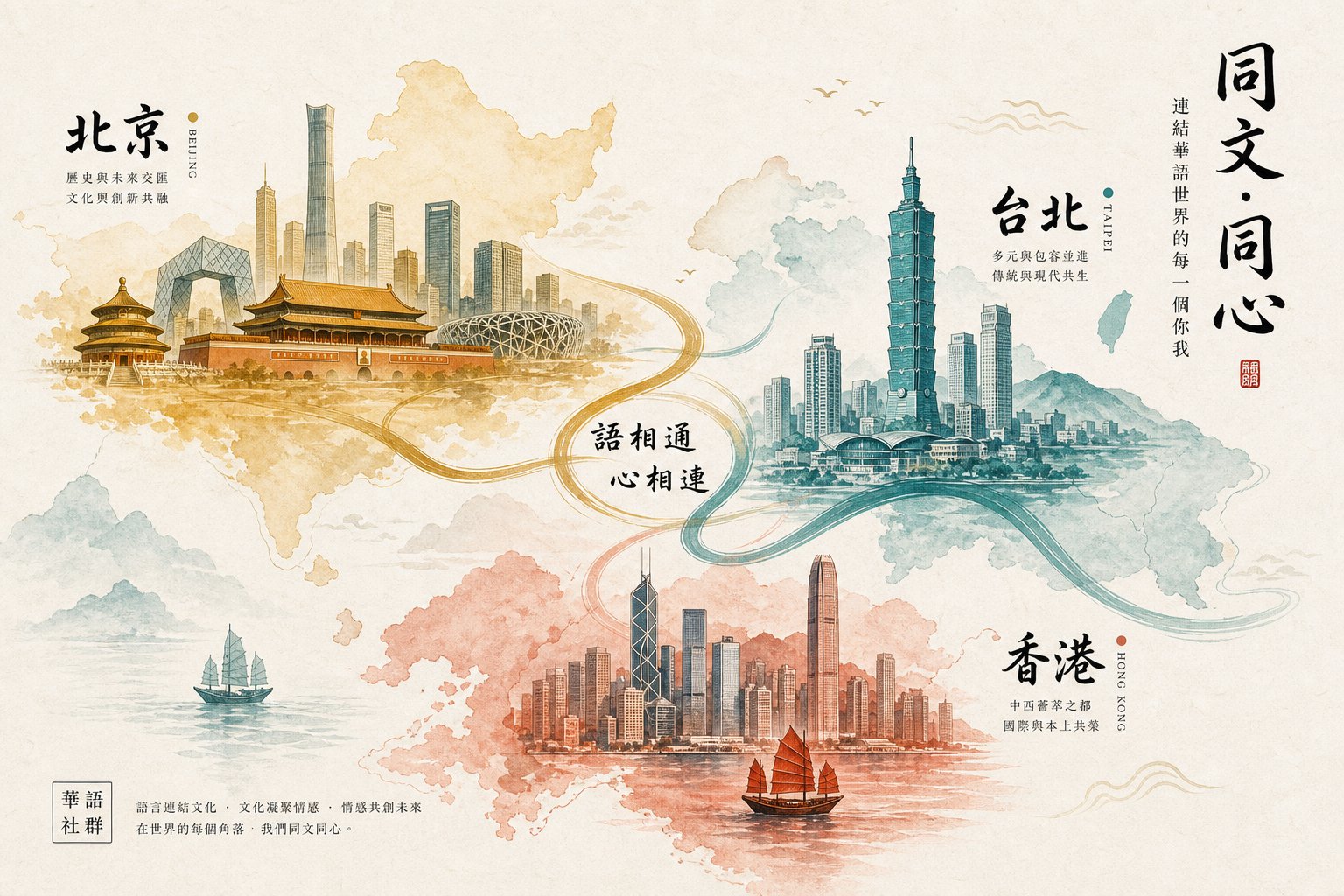
A name that sounds elegant in Mandarin might land flat in Cantonese. A character beloved by mainland parents might feel outdated to a Taiwanese family. And for overseas Chinese navigating two languages simultaneously, the challenge doubles — finding a name that works in Chinese while remaining pronounceable in English, French, or Malay. Regional variation in Chinese naming isn't a footnote; it's a fundamental dimension that shapes which characters get chosen and why.
The same pool of asian names and surnames fragments into distinct traditions once you account for dialect, writing system, legal framework, and cultural reference points. Mandarin chinese names chosen in Beijing operate under different phonetic logic than Cantonese names in Hong Kong or Hokkien-influenced names in Taiwan. Understanding these differences matters whether you're choosing a name for a child, researching your family heritage, or trying to understand why the same surname gets romanized three different ways depending on where the family originates.
Mainland China vs. Taiwan Naming Styles
The most visible difference is the writing system itself. Mainland China uses simplified characters while Taiwan maintains traditional characters — and this isn't just a cosmetic distinction. Traditional characters often contain more strokes, which means Taiwanese parents factor in a different visual weight when balancing names. A character like 龍 (dragon) in traditional form has 16 strokes; its simplified equivalent 龙 has just 5. That stroke-count difference changes the entire calculus of visual balance discussed earlier.
Beyond script, the character preferences diverge meaningfully. Taiwanese mandarin naming tends toward more literary and classical aesthetics — characters drawn from poetry, philosophy, and nature imagery that feel slightly more formal than mainland trends. Names like 宥廷 (You Ting), 品妍 (Pin Yan), and 承恩 (Cheng En) appear frequently in Taiwanese birth registries but rarely in mainland ones. There's also a subtle Japanese influence in Taiwanese naming — characters like 翔 (Xiang, "soar") and naming patterns that echo Japanese aesthetics filtered through decades of cultural exchange.
Legal frameworks differ too. Taiwan's naming regulations are more permissive about character choice, allowing any character found in standard traditional Chinese dictionaries rather than restricting parents to a government-approved list. This means Taiwanese parents can access a broader character pool — including rare classical characters that mainland systems would reject for encoding reasons. The result is that Taiwanese chinese mandarin names often feel slightly more distinctive and literary compared to their mainland counterparts, where the approved character list creates a narrower selection funnel.
Generational naming patterns also diverge. While mainland China has largely abandoned the generational poem tradition (字辈), some Taiwanese families — particularly those with strong ancestral hall connections — still maintain it. The surname Chen (陳) dominates Taiwan at roughly 11% of the population compared to about 3% in mainland China, reflecting the Fujian and Guangdong origins of most Taiwanese Han families. This concentration means Taiwanese parents face even greater pressure to find distinctive given names.
Hong Kong and Cantonese Naming Considerations
Hong Kong naming operates in a fundamentally different phonetic universe. While mainland parents optimize names for Mandarin's four tones, Hong Kong families choose characters based on Cantonese pronunciation — which has six to nine tones depending on the analysis. A character that flows beautifully in Mandarin might create tonal clashes in Cantonese, and vice versa.
Consider the character 俊 (handsome/talented). In Mandarin it's pronounced "Jun" with a falling fourth tone. In Cantonese it's "Jeon" with a rising tone — a completely different phonetic profile that interacts differently with surrounding characters. Parents in Hong Kong evaluate names by how they sound in Cantonese first, Mandarin second — if they consider Mandarin at all. This creates a parallel naming culture where popular combinations diverge significantly from mainland trends.
Hong Kong's bilingual environment adds another layer. Over 64% of Hongkongers use English given names, according to survey data — either as part of their legal name or as a social alias. This means many Hong Kong children effectively receive two names: a Chinese name chosen for Cantonese phonetics and cultural meaning, plus an English name chosen for international contexts. The two names may be phonetically linked (嘉欣 Ka Yan becoming "Karen") or completely independent (a child named 志明 Chi Ming who goes by "David" at work).
The romanization of asian last names in Hong Kong follows Cantonese pronunciation rather than Mandarin pinyin, which is why the same surname 陈 appears as "Chan" in Hong Kong but "Chen" in mainland contexts, or why 黄 becomes "Wong" rather than "Huang." These romanization differences mean that asia surnames from the same Chinese character can look entirely unrelated in English — creating confusion for anyone unfamiliar with the dialect split. The surname 李 alone appears as "Li" (Mandarin), "Lee" (Cantonese/Hong Kong), "Lei" (Macau Portuguese influence), and "Ly" (Vietnamese Chinese) depending on regional convention.
The Dual-Name Phenomenon for Overseas Chinese
For Chinese families living abroad, naming becomes a cross-linguistic negotiation. The challenge isn't just choosing a beautiful Chinese name — it's choosing one that coexists gracefully with the host country's language. Some families solve this by selecting Chinese names whose sounds map naturally to English (or French, or Spanish) equivalents. Others maintain completely separate names for each linguistic context, accepting that their child will live with a dual identity encoded in two different naming systems.
The phonetic-bridge approach is increasingly popular among diaspora parents. They look for Chinese characters whose pronunciation echoes a Western name — or vice versa, starting with a Western name and finding Chinese characters that approximate its sound while carrying independent meaning. The name doesn't need to be a perfect phonetic match; a rough echo is enough to create a sense of connection between the two identities.
Here are examples of how asian surnames names and given names pair across languages in practice:
| Chinese Name | Pinyin | Meaning | English Equivalent or Adaptation | Connection Type |
|---|---|---|---|---|
| 美琳 | Mei Lin | Beautiful jade | Meilin / Maylin | Direct phonetic use — the Chinese name becomes the English name |
| 凯文 | Kai Wen | Triumphant literature | Kevin | Sound approximation — 凯文 was chosen specifically to echo "Kevin" |
| 莉莉 | Li Li | Jasmine (doubled) | Lily | Both phonetic and semantic match — sounds like Lily and means a flower |
| 安娜 | An Na | Peaceful grace | Anna | Near-perfect phonetic match with independent Chinese meaning |
| 杰森 | Jie Sen | Outstanding forest | Jason | Sound approximation — characters chosen for phonetics first, meaning second |
| 思嘉 | Si Jia | Contemplating excellence | Scarlett (via Gone with the Wind's Scarlett/Sijia) | Cultural association rather than direct phonetic link |
| 伟明 | Wei Ming | Great brightness | William (loose echo) | Partial phonetic overlap; meaning stands independently |
| 雅文 | Ya Wen | Elegant culture | Yvonne | First-syllable match; Chinese meaning chosen for its own merit |
You'll notice two distinct strategies in this table. Names like 凯文 and 杰森 prioritize phonetic matching — the Chinese characters were selected primarily because they sound like Kevin and Jason, with meaning as a secondary benefit. Names like 美琳 and 思嘉 take the opposite approach: the Chinese name carries full independent meaning, and the English connection is a bonus rather than the driving force.
Most naming experts recommend the second approach. When characters are chosen purely for sound, the resulting Chinese name can feel hollow to native speakers — technically meaningful but obviously reverse-engineered from English. A name like 杰森 (Jie Sen, "outstanding forest") works acceptably, but no Chinese parent would arrive at that combination organically. It signals "diaspora compromise" rather than "authentic Chinese name." The strongest dual-language names are those where the Chinese version stands on its own merits and the English connection feels like a happy coincidence rather than the point.
Diaspora families also face the question of which dialect to romanize from. A family with Cantonese heritage might romanize 陈 as "Chan" while a Mandarin-speaking family writes "Chen" — and both are correct for their context. This is why asian last names from the same Chinese character appear in so many different English spellings across communities worldwide. The romanization isn't wrong; it's simply reflecting a different spoken tradition.
These regional and diaspora considerations add complexity, but they also expand the creative space. A family in Vancouver choosing a name has access to both Chinese literary tradition and English phonetic compatibility — two dimensions of beauty rather than one. The key is understanding which trade-offs matter most: cultural authenticity, cross-linguistic ease, tonal elegance, or family heritage. For non-Chinese speakers approaching this system from the outside — whether for language study, professional use, or creative writing — the challenge is different again: finding a name that sounds natural rather than borrowed.
Choosing a Chinese Name as a Non-Native Speaker
Whether you're studying Mandarin, doing business in China, writing fiction with Chinese characters, or simply connecting with a heritage community, having a Chinese name changes how people relate to you. A well-chosen name signals respect and cultural awareness. A poorly chosen one — however well-intentioned — signals the opposite. The difference between a chinese good name and an awkward one often comes down to a handful of structural principles that native speakers absorb intuitively but outsiders need to learn explicitly.
The good news: you don't need to be a linguist or a naming master to get this right. You just need to understand what makes a name sound like a name rather than a phrase, a slogan, or a translation exercise.
What Makes a Chinese Name Sound Natural
Natural-sounding names share a few consistent traits. First, they use common surname structures — sticking with one of the top 100 surnames rather than selecting a rare one that draws immediate attention. A foreigner named 王明远 (Wang Mingyuan) blends in; one named 司马天龙 (Sima Tianlong) announces themselves as an outsider playing dress-up.
Second, the given-name characters should fall within normal naming frequency. Characters that are beautiful in poetry or prose — like 魑 (chi, a type of demon) or 翡 (fei, kingfisher jade) — can feel strange in a name because native speakers rarely encounter them there. The best chinese names use characters from the active naming pool: the same characters appearing in chinese baby names and meanings guides that real parents consult. Think 明 (bright), 文 (cultured), 安 (peaceful), 宇 (universe) — characters with clear meaning that appear in thousands of real names.
Third, tonal flow matters as much as meaning. A name with three consecutive fourth tones sounds choppy and aggressive. A name where every character shares the same tone feels flat. The principles covered in earlier sections — tonal contrast, rising-falling arcs, avoiding harsh consecutive patterns — apply doubly here because any phonetic awkwardness will compound the foreignness.
Finally, the name should feel like a name, not a word. 快乐 (Kuaile, "happy") is a word. 安乐 (Anle) is closer to a name but still feels like a concept rather than a person. Characters need to be combined in ways that create naming-specific meaning — the kind of compressed aspiration that marks Chinese names as distinct from ordinary vocabulary.
Common Mistakes When Choosing a Chinese Name as a Foreigner
Drawing from documented naming pitfalls, here are the specific errors that immediately mark a name as chosen by a non-native speaker:
- Choosing characters solely for meaning without considering sound — selecting 死 (death) because you think it's edgy, or 龙凤 (dragon-phoenix) because it sounds powerful, without realizing these combinations sound absurd as actual names
- Using four-character names that sound like idioms — a full name like 李天下无敌 (Li Tianxia Wudi, "Li Undefeated Under Heaven") reads like a martial arts novel parody, not a real person
- Selecting rare or compound surnames that draw attention — surnames like 上官 (Shangguan) or 欧阳 (Ouyang) are real but uncommon enough that using one as a foreigner feels like cosplay rather than cultural engagement
- Picking characters associated with the opposite gender — a man choosing 美花 (Meihua, "beautiful flower") or a woman choosing 刚强 (Gangqiang, "tough and strong") creates confusion that follows you into every introduction
- Adopting names of historical icons or fictional characters — naming yourself 李白 (Li Bai, the great Tang poet) or 诸葛亮 (Zhuge Liang) is the equivalent of a Chinese person moving to London and introducing themselves as "Shakespeare"
- Ignoring homophone collisions — the name 杜子腾 (Du Ziteng) looks fine in characters but sounds like 肚子疼 ("stomachache") when spoken aloud; these traps are invisible without native-speaker review
- Relying on stereotypical syllables — defaulting to "Chang," "Shang," or "Wong" because they "sound Chinese" perpetuates outdated media stereotypes rather than reflecting authentic naming
The thread connecting all these mistakes is the same: prioritizing how the name looks to a non-Chinese audience over how it sounds and functions within Chinese culture. A name chosen behind the name's surface meaning — one that accounts for sound, cultural weight, gender coding, and social context — avoids these traps entirely.
Practical Steps to Select an Authentic Chinese Name
Rather than browsing a random chinese names list and hoping something sticks, follow a structured process that mirrors how naming actually works within the culture:
- Start with a common surname that echoes your real name phonetically — if your surname is "Wilson," 魏 (Wei) creates a natural bridge; if it's "Chen" already, you're set; if nothing maps cleanly, choose from the top 20 surnames based on which one you can pronounce most comfortably
- Select given-name characters from the modern naming pool — browse a current chinese name list from recent birth registries rather than a dictionary; look for characters that appear in real names of people your age or younger
- Verify tonal flow across the full name — say surname plus given name aloud ten times quickly; if you stumble or it feels monotone, adjust one character to create better tonal contrast
- Check for homophone disasters — search the full name's pinyin (without tones) online and see what other meanings surface; ask a native speaker to say it fast and report what they hear
- Test gender appropriateness — show the written name to three native speakers without context and ask them to guess the bearer's gender; if the answer doesn't match your intention, swap characters
- Get feedback from native speakers in your target community — a name that works in Taiwan may feel different in mainland China or Singapore; match the name to the Chinese-speaking community you'll actually interact with
Name generators and online tools serve well as starting points for building a good chinese names shortlist — they can surface combinations you'd never find on your own. But treat their output as raw material, not finished product. The final name should survive every check above and feel natural when a native speaker says it without knowing it belongs to a foreigner.
The effort is worth it. A thoughtfully chosen Chinese name — one that respects the structural logic, cultural weight, and phonetic principles covered throughout this guide — becomes more than a label. It becomes a bridge: proof that you've engaged with the system on its own terms rather than imposing outside assumptions onto it. And in a culture where names encode identity, aspiration, and belonging in just two or three characters, that respect is immediately recognized.
Frequently Asked Questions About Modern Chinese Names
1. How do Chinese parents choose names for their babies today?
Modern Chinese parents typically follow a multi-step process combining traditional and digital methods. Many consult naming masters who analyze the child's birth date and time (bazi) to determine which of the five elements — wood, fire, earth, metal, water — the name should incorporate. Simultaneously, parents use smartphone apps that score potential names across stroke count, tonal balance, five-element compatibility, and character rarity. The process also involves checking legal compliance, since China restricts names to standardized characters from an approved list of 8,105 characters, and full names must be two to four characters long. Most families spend weeks or months before registering a final choice.
2. What is the structure of a Chinese name?
Chinese names follow a fixed structure: surname first, given name second. The surname is typically one character (though compound two-character surnames like Ouyang exist), and the given name is one or two characters. Two-character given names now dominate modern naming because they reduce duplication and allow richer semantic layering. The top 100 surnames cover about 85.9% of China's population, meaning given names carry nearly all the burden of individual distinction. When reading a name like Wang Xiaoming, Wang is the family name and Xiaoming is the personal name — the reverse of Western naming order.
3. What are the most popular modern Chinese names right now?
Recent birth registry data shows names like Yi Nuo (one promise), Yihan, and Ruxi trending for girls, while Muchen, Yichen, and Zimo are popular for boys. However, the naming landscape shifts rapidly because social media exposes overuse. Names that dominated the 2010s — Zihan, Haoyu, Zixuan — are now considered oversaturated, with parents actively avoiding them. The current trend favors neo-classical names that draw from deeper layers of Tang and Song dynasty poetry, using rarer characters like Yu (islet), Yun (bamboo skin), and Heng (jade ornament) that carry literary weight without mass saturation.
4. Can non-Chinese speakers choose an authentic Chinese name?
Yes, but it requires following structural principles that native speakers intuitively understand. Start with a common surname from the top 100 — ideally one that phonetically echoes your real name. Select given-name characters from the modern naming pool rather than a dictionary, verify tonal flow by saying the full name aloud repeatedly, and check for homophone collisions that could create embarrassing meanings. Common mistakes include choosing overly grandiose characters, using rare surnames that draw attention, or selecting names of historical icons. Always get feedback from native speakers in your target community before committing.
5. Are there gender-neutral Chinese names?
Chinese naming has always had a broader gender-neutral zone than English because there are no gendered suffixes or spelling conventions. Characters like Yu (universe), Zi (scholar), Chen (morning), An (peace), Rui (auspicious), and Lin (forest) carry no inherent gender signal and appear comfortably in names for any child. This trend is growing due to the one-child policy's legacy of giving daughters ambitious names, C-drama characters with androgynous aesthetics, and younger parents rejecting rigid gender categories. Popular unisex names include Anran (peaceful and natural), Zihan (scholarly depth), and Chenxi (morning light).