What Chinese Symbols Actually Are and Why They Get Misunderstood
When you search for Chinese symbols and meanings, you might expect a simple list of characters with translations. But here's the problem: the term "Chinese symbol" actually refers to three very different things, and mixing them up leads to misreadings, bad tattoos, and cultural misunderstandings.
Understanding what are Chinese symbols called and how they function requires separating written language from visual art from national identity. Each category carries meaning in a completely different way.
What Are Chinese Writing Symbols Called
Chinese writing symbols are called hanzi (汉字), which literally translates to "Han characters." These are logographic units where each character represents a syllable and a meaning, not a letter in an alphabet. The system has been in continuous use for over 3,000 years, with the earliest conclusive examples dating to the late Shang period around 1350 BCE.
Two main forms exist today. Simplified Chinese is used in Mainland China and Singapore, while Traditional Chinese remains standard in Taiwan, Hong Kong, and Macau. The split happened in the 1950s when the People's Republic introduced a simplification reform to boost literacy. Both systems share the same underlying logic, but a single Chinese symbol can look quite different depending on which form you're reading.
Characters vs Motifs vs Cultural Symbols
Most people conflate three distinct categories when searching for Chinese meanings and symbols. Here's how they differ:
- Written characters (hanzi) - The building blocks of the Chinese language. Each one encodes meaning through radicals and structural components. There are roughly 50,000 in existence, though about 3,000 cover everyday literacy.
- Visual art motifs - Decorative images like dragons, phoenixes, lotus flowers, and cloud patterns. These carry symbolic weight but are not part of the writing system. They appear in architecture, textiles, and ceramics.
- National and cultural emblems - Broader symbols of China such as the Great Wall, the panda, or the five-starred red flag. These function as identity markers rather than carriers of linguistic meaning. The national symbols of China operate on a political and cultural level distinct from both hanzi and decorative motifs.
The confusion makes sense. All three categories are visual, all carry meaning, and all show up when you search for china symbols online. But a dragon on a restaurant wall communicates differently than the character 龙 (lóng) in a sentence, and both differ from the dragon as one of the traditional symbols of China representing imperial authority.
Recognizing which type of symbol you're looking at is the first step toward reading any of them correctly. The deeper question is how each one actually encodes its meaning, and that starts with the internal architecture of the characters themselves.
How Chinese Characters Encode Meaning Through Radicals and Structure
Most lists of chinese characters and meanings give you a character, a translation, and nothing else. That approach treats each symbol as an isolated fact to memorize. But Chinese writing actually follows a system, and once you see how it works, you can start decoding unfamiliar characters on your own.
Think of it this way: English words are built from letters that represent sounds. Chinese word symbols are built from components that represent meaning and pronunciation. Each character is a small puzzle, and the pieces follow patterns you can learn to recognize.
Pictographic Origins and Radical Breakdown
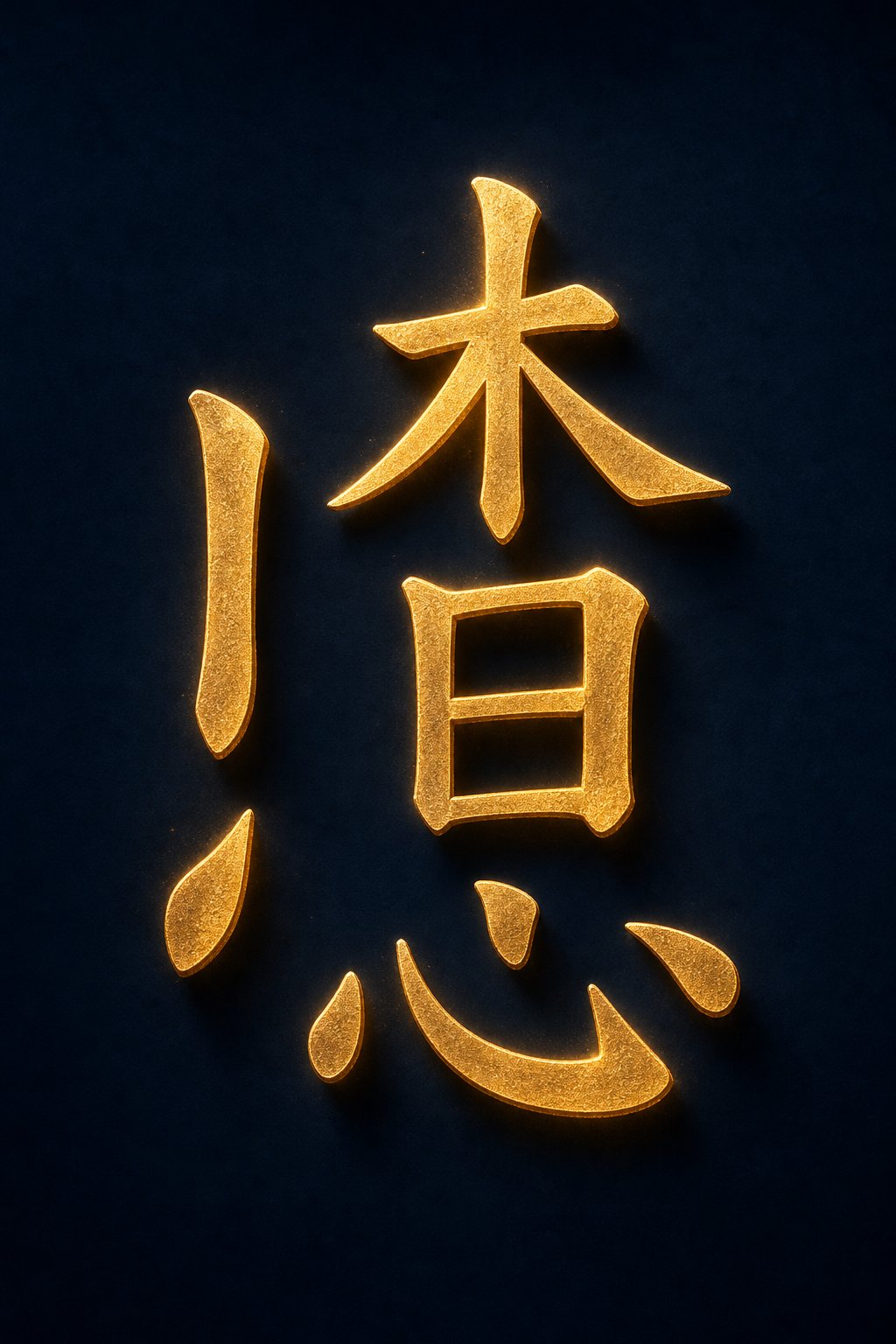
Every Chinese character is constructed from smaller building blocks called radicals (部首, bushou). These 214 radicals act as semantic signposts, giving you a clue about what category of meaning a character belongs to. Spot the water radical 氵 on the left side of a character? It likely relates to liquid, rivers, or flow. See the heart radical 忄? Expect something connected to emotions or feelings.
Here's where chinese writing and meaning become genuinely interesting. Characters combine these radicals in logical ways. Take 休 (xiu, "rest"): it places the person radical 亻 next to the character for tree 木. A person leaning against a tree. That's rest. Or consider 好 (hao, "good"): it combines 女 (woman) and 子 (child). The logic is visible once you know where to look.
These aren't random pairings. Over 80% of Chinese characters are phono-semantic compounds, meaning one component hints at meaning while another hints at pronunciation. The character 妈 (ma, "mother") pairs the female radical 女 with 马 (ma, "horse"), which contributes its sound, not its meaning.
Here are six of the most common radicals you'll encounter when exploring chinese words symbols and meanings:
| Radical | Pinyin | Meaning | Example Characters | Example Meanings |
|---|---|---|---|---|
| 氵 | shui | Water | 海, 河, 湖 | Sea, river, lake |
| 忄 | xin | Heart | 忆, 忙, 快 | Remember, busy, fast/happy |
| 亻 | ren | Person | 你, 他, 休 | You, he, rest |
| 木 | mu | Tree/Wood | 林, 森, 根 | Forest, dense forest, root |
| 女 | nu | Woman | 妈, 好, 姓 | Mother, good, surname |
| 火 / 灬 | huo | Fire | 灯, 炎, 热 | Lamp, flame, hot |
You'll notice that some radicals change shape depending on their position within a character. Water as a standalone character is 水, but as a radical on the left side it becomes 氵. Heart shifts from 心 to 忄. Recognizing these alternate forms is key to reading chinese symbol meanings accurately.
Stroke Order and Why It Matters
Every Chinese character is written following a specific stroke order: top to bottom, left to right, horizontal before vertical. This isn't arbitrary tradition. Stroke order reflects the internal logic of how components fit together, and following it produces characters with correct proportions and balance.
For anyone studying chinese writing with meaning in mind, stroke order also aids memorization. When you write 想 (xiang, "to think"), the correct sequence forces you to complete the top-left component 木 first, then the top-right 目, and finally the bottom 心. This mirrors the character's actual structure: 相 (mutual) above 心 (heart), reinforcing that thinking involves the heart in Chinese philosophical tradition.
Compare simplified and traditional forms side by side, and you'll see how stroke count changes while the underlying radical logic stays intact:
| Meaning | Simplified | Traditional | Pinyin | Key Radical |
|---|---|---|---|---|
| Horse | 马 | 馬 | ma (third tone) | 馬 (horse) |
| Dragon | 龙 | 龍 | long (second tone) | 龙 (dragon) |
| Learn | 学 | 學 | xue (second tone) | 子 (child) |
| See | 见 | 見 | jian (fourth tone) | 见 (see) |
The simplified forms reduce strokes for faster writing, but the radical at the core of each chinese character meaning remains identifiable. 马 still carries the essence of 馬, just with fewer lines.
Understanding this structural system transforms how you approach any unfamiliar character. Instead of seeing a mysterious drawing, you see components with known roles, each contributing a piece of the puzzle. That same logic extends into how characters carry emotional weight, starting with some of the most searched symbols in Chinese: love and happiness.
Chinese Symbols for Love and Happiness Explained
Few characters get searched, tattooed, and displayed more often than the ones for love and happiness. They're also among the most frequently misread. The chinese symbol that means love isn't just a flat translation of an English word. It tells a story through its radicals, and that story changes depending on whether you're reading the traditional or simplified form.
The Character for Love 愛 and Its Radical Story
The traditional character for love is 愛 (ai, fourth tone). Look at its structure from top to bottom and you'll find something remarkable: the heart radical 心 sits right at the center, cradled between a "roof" component at the top and 夊 (a slow-walking foot) at the bottom. The composition suggests love as something you hold in your heart while moving through life with care.
The simplified form 爱, introduced in the 1950s reform, removed the heart radical entirely. This sparked a cultural debate that continues today. Critics argue the simplified version is literally "heartless love," stripping the emotional core from the character. Defenders point out that simplification was a practical literacy measure, not a philosophical statement, and that the meaning remains unchanged in usage.
Regardless of which side you take, the contrast illustrates something important about how Chinese characters carry meaning. The symbol of love in Chinese isn't arbitrary. Its components were chosen to reflect what love involves: the heart, the act of giving (the hand-like component at the top), and steady, patient movement. When someone gets this as a tattoo or hangs it as decor, they're displaying a small philosophical statement, not just a word.
For anyone searching for the asian symbol of love or the chinese symbol for in love, it's worth noting that 愛 covers a broad emotional range. Romantic love, parental love, love of country, love of learning: all use this same character. Context determines the specific flavor. 我愛你 (wo ai ni) means "I love you" romantically, while 愛好 (aihao) means "hobby" or "something you love doing."
Happiness 福 and Double Happiness 囍 in Chinese Culture
If 愛 is the most tattooed character, 福 (fu, second tone) is the most displayed. The chinese symbol for happiness appears on doors, gift boxes, red envelopes, and restaurant walls across Chinese-speaking communities worldwide. Its meaning blends good fortune, blessing, and happiness into a single concept that doesn't map neatly onto any one English word.
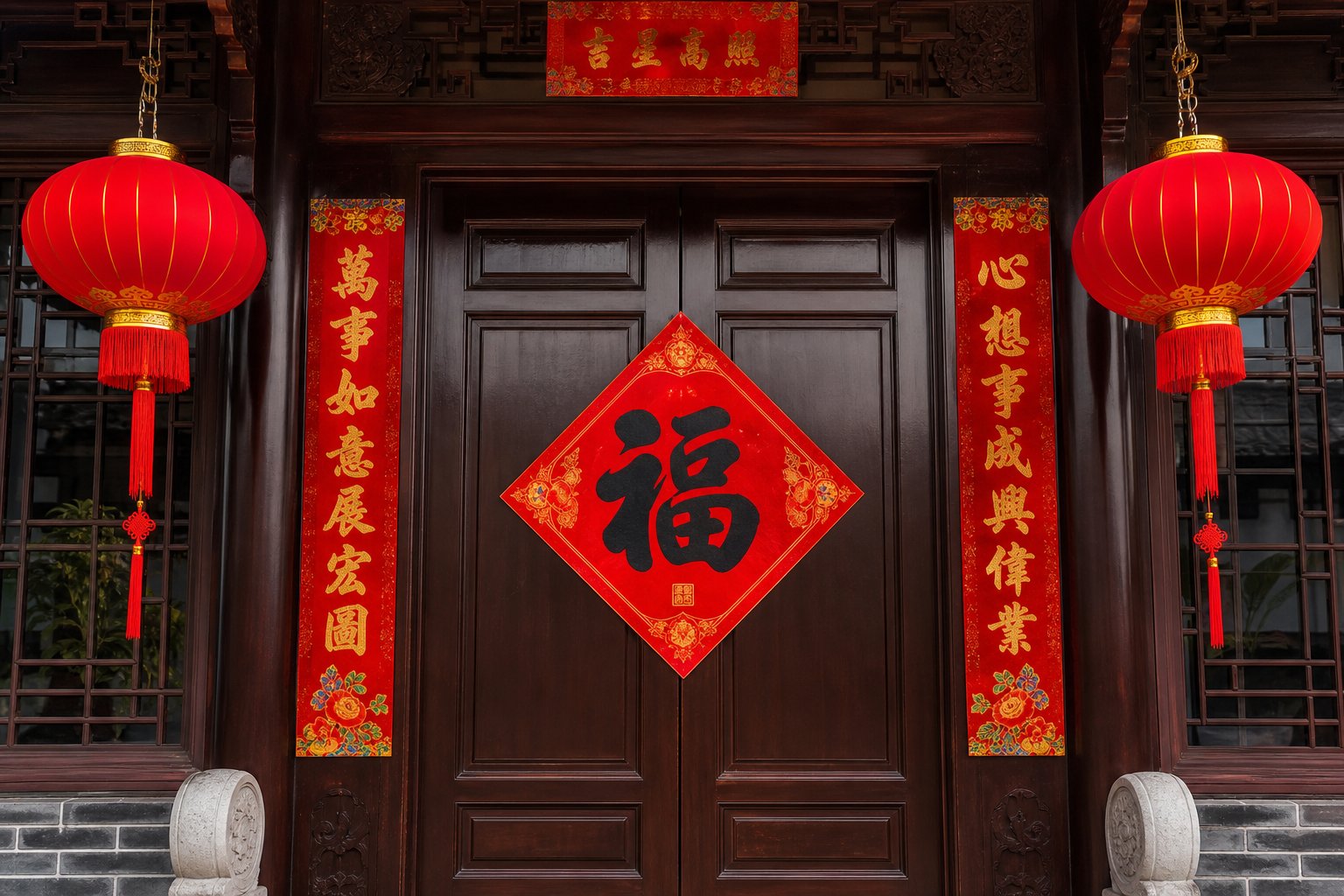
What makes 福 culturally fascinating is how it's used during Lunar New Year. You'll spot it pasted on front doors, often on a red diamond-shaped paper. And here's the detail that confuses most outsiders: it's frequently hung upside down on purpose. The word for "upside down" (倒, dao) is a homophone of "to arrive" (到, dao). So an inverted 福 creates the pun 福到了, meaning "good fortune has arrived." It's a visual joke built into the decoration itself.
Then there's 囍 (shuang xi, literally "double happiness"), the chinese symbol for happy occasions related to marriage. It's formed by placing two 喜 (xi, "joy") characters side by side. You'll see 囍 on wedding invitations, banquet decorations, and bridal gifts. It never appears at funerals or in contexts unrelated to marriage, so using it incorrectly is a notable cultural misstep.
Here's a reference table covering the key love and happiness characters with their forms and contexts:
| Meaning | Simplified | Traditional | Pinyin | Contextual Usage |
|---|---|---|---|---|
| Love | 爱 | 愛 | ai (fourth tone) | Romantic love, familial love, general affection |
| Happiness / Fortune | 福 | 福 | fu (second tone) | Lunar New Year decor, blessings, gift-giving |
| Joy | 喜 | 喜 | xi (third tone) | Happy events, good news, celebrations |
| Double Happiness | 囍 | 囍 | shuang xi | Weddings and marriage celebrations only |
| Kindness / Benevolence | 仁 | 仁 | ren (second tone) | Confucian virtue, compassion toward others |
| Bliss / Contentment | 乐 | 樂 | le (fourth tone) | Happiness in chinese philosophy, also means "music" |
A few cultural etiquette notes worth keeping in mind when displaying these symbols:
- 福 placement - Hang it on the main door or entrance to invite fortune inside. The upside-down orientation is traditional on inner doors or storage containers, but some families prefer it right-side-up on the front door.
- 囍 is wedding-exclusive - Never use double happiness for birthdays, business openings, or general celebrations. It signals marriage specifically.
- Color matters - These characters almost always appear in red and gold for joyful contexts. Writing them in white or black carries funerary associations and should be avoided in celebratory settings.
- Gifting context - Items bearing 福 make appropriate Lunar New Year gifts. Items with 囍 are only suitable as wedding presents.
The chinese for happiness, then, isn't a single character with a single use. It's a system of related symbols, each with specific rules about when, where, and how they appear. Getting the character right matters less than getting the context right.
Love and happiness represent the emotional core of Chinese symbolism, but they're far from the only virtues encoded in the writing system. Strength, hope, and prosperity carry their own radical stories and philosophical weight, often requiring compound characters that reveal how Chinese handles abstract concepts differently from English.
Symbols of Strength Hope and Prosperity in Chinese
Strength, hope, and prosperity rank among the most requested Chinese characters for tattoos, artwork, and personal mottos. But here's a nuance that most translation lists miss entirely: while English expresses these ideas as single words, Chinese often requires two-character compounds to capture abstract concepts. Searching for a single chinese symbol for strength will give you a real character, but the full picture is more layered than that.
Strength 力 and Power 強 in Chinese Characters
The most fundamental symbol of strength in Chinese is 力 (li, fourth tone). It's one of the simplest characters you'll encounter: just two strokes. But don't let that simplicity fool you. In Oracle Bone Script, 力 resembled an ancient plow used to cultivate land, connecting physical strength directly to agricultural labor. The meaning evolved from "the force needed to work the earth" into a broader concept covering power, ability, and effort.
What makes 力 especially important is its role as a radical. It appears as a building block inside dozens of other characters, each one inheriting some aspect of strength or exertion:
- 动 (dong) - to move, combining 云 (cloud) with 力 (force). Movement requires strength.
- 功 (gong) - achievement or merit, combining 工 (work) with 力 (force). Success comes from applied effort.
- 努 (nu) - to exert, as in 努力 (nuli, "to work hard"). The character literally stacks effort upon strength.
- 勇 (yong) - brave or courageous, placing 力 at the base to suggest that courage requires strength as its foundation.
- 励 (li) - to encourage, as in 鼓励 (guli, "encouragement"). Inspiring others is an act of lending strength.
The chinese character for strength, then, isn't just a standalone symbol. It's a root that branches into an entire family of related concepts: movement, achievement, bravery, and encouragement all grow from the same two-stroke seed.
For a more emphatic expression of power, there's 強/强 (qiang, second tone). The traditional form 強 contains a bow radical 弓 combined with components suggesting an insect's hard shell, evoking resilience and toughness. The simplified form 强 retains the bow radical on the left. Where 力 represents raw physical force, 强 carries connotations of being powerful, dominant, or superior. You'll hear it in 强大 (qiangda, "mighty"), 坚强 (jianqiang, "resilient"), and 强壮 (qiangzhuang, "physically strong").
Hope 希望 and Prosperity 繁榮 as Compound Words
Here's where Chinese handles abstraction differently from English. If you ask for the chinese symbol for hope, there isn't a single character that carries the full weight of that concept. Instead, Chinese uses 希望 (xiwang), a two-character compound where 希 (xi, "rare" or "to aspire") pairs with 望 (wang, "to gaze into the distance" or "to expect"). Together they create "hope": the act of looking toward something rare and desired. Neither character alone conveys the meaning. It's the combination that does the work.
The same principle applies to prosperity in Chinese. The full expression is 繁榮/繁荣 (fanrong), where 繁 (fan, "abundant" or "complex") joins 荣 (rong, "flourishing" or "glory"). The traditional form 榮 contains the tree radical 木, rooting prosperity in the image of a tree in full bloom. Prosperity isn't just wealth. It's organic growth, abundance, and visible flourishing.
This compound-word structure is one of the defining features of modern Chinese. Linguists describe Mandarin as a "language of compound words" because most concepts require two or three characters working together. Understanding this prevents a common mistake: assuming every English word maps to a single Chinese character. For abstract virtues especially, the meaning lives in the relationship between characters, not in either one alone.
Here's a breakdown of the key strength, hope, and prosperity characters with their forms and usage:
| Meaning | Simplified | Traditional | Pinyin | Usage Context |
|---|---|---|---|---|
| Strength / Force | 力 | 力 | li (fourth tone) | Physical power, ability, effort; common radical in other characters |
| Strong / Powerful | 强 | 強 | qiang (second tone) | Dominance, resilience, superiority; used in motivational contexts |
| Hope | 希望 | 希望 | xiwang (first, fourth tone) | Aspirations, wishes, expectations for the future |
| Prosperity / Flourishing | 繁荣 | 繁榮 | fanrong (second, second tone) | Economic growth, cultural flourishing, national development |
| Wealth / Riches | 富 | 富 | fu (fourth tone) | Material abundance; contains roof radical suggesting stored resources |
| Diligence / Hard Work | 勤 | 勤 | qin (second tone) | Industriousness; pairs with 力 in 勤力 (hardworking) |
Why did these particular virtues become so central to Chinese symbolism? The answer connects directly to Confucian philosophy, which shaped Chinese culture for over two millennia. Confucius emphasized that personal cultivation (修身, xiushen) was the foundation of a harmonious society. Strength wasn't valued for domination but for self-discipline. Hope wasn't passive wishing but active aspiration paired with effort. And prosperity was understood as a collective achievement, not individual accumulation.
The Confucian classic The Great Learning (大学, Daxue) lays out a progression: cultivate the self, regulate the family, govern the state, bring peace to the world. Each chinese symbol of hope and prosperity fits within this framework. 力 provides the personal discipline. 希望 sets the direction. 繁荣 represents the outcome when individuals and communities align their efforts.
A classical proverb captures this philosophy in action:
天道酬勤 (Tian dao chou qin) - Heaven rewards the diligent. Prosperity comes not from luck but from sustained effort.
This proverb appears in calligraphy scrolls, office decorations, and graduation gifts across Chinese-speaking communities. It ties the symbol for strength in chinese directly to the promise of prosperity: one leads to the other through persistent work.
The chinese symbol for prosperity, whether expressed as 繁荣, 富, or the broader concept of 兴旺 (xingwang, "thriving"), always carries this ethical dimension. Prosperity earned through virtue is celebrated. Prosperity without moral foundation is suspect. That philosophical layer is invisible if you only look at the translation.
Strength and prosperity represent outward-facing virtues, the ones you display and pursue in the world. But Chinese philosophy places equal weight on inward virtues: peace, wisdom, and loyalty. These characters draw from different philosophical traditions, Confucianism, Taoism, and Buddhism, each shaping the symbols in distinct ways.
Peace Wisdom and Virtue Characters With Philosophical Context
Strength pushes outward. Peace pulls inward. The chinese symbol for peace isn't about the absence of conflict the way English speakers tend to frame it. In Chinese philosophy, peace is an active state of balance, something you cultivate through relationships, shared resources, and deliberate harmony. That distinction is built right into the character itself.
Peace 和平 and Its Confucian Roots
The chinese character for peace most commonly appears as 和平 (heping, second tone + second tone), a two-character compound. But the real philosophical weight sits in the first character: 和 (he, "harmony"). Break it apart and you'll find two radicals working together. On the left sits 禾 (he, "grain" or "growing crop"). On the right sits 口 (kou, "mouth"). Grain plus mouth. Harmony through shared food.
That's not a poetic interpretation. It's the structural logic of the character. When people eat together, when resources are distributed, when no one goes hungry, you have 和. Confucius built an entire ethical system around this idea. The Analerta emphasizes 和为贵 (he wei gui): "harmony is the highest value." Social peace isn't imposed from above. It grows from the ground up, starting with the basic act of sharing sustenance.
The second character, 平 (ping, "level" or "flat"), reinforces the concept. Imagine a balanced scale or a calm water surface. Together, 和平 means peace as both social harmony and equilibrium. You'll see this chinese peace symbol on protest banners, diplomatic documents, and calligraphy scrolls alike. It carries weight in every context because it implies active maintenance, not passive quiet.
For anyone searching for the chinese sign for peace, it's worth noting that 安 (an, first tone) offers a related but distinct meaning. 安 places the radical for woman 女 beneath a roof 宀, suggesting safety and domestic tranquility. Where 和平 is public and societal, 安 is private and personal. The character appears in 安全 (anquan, "safety"), 安心 (anxin, "peace of mind"), and 安宁 (anning, "serenity").
Wisdom 智 and Virtue Symbols in Taoism and Buddhism
The chinese symbol of wisdom is 智 (zhi, fourth tone), and its history stretches back over 3,000 years to oracle bone inscriptions. The earliest form placed 知 (zhi, "knowledge") on the left side alongside a radical resembling a standing person. In bronze script, 白 (bai, "white" or "clear") was added below. By the Han dynasty, it had simplified into the form used today.
The chinese symbol for wisdom carries a meaning that differs from the Western concept of intelligence. In the Analects of Confucius, the sage stated: 知者不惑 (zhi zhe bu huo), "He who is wise is free from perplexities." Wisdom here isn't about accumulating facts. It's about clarity, the ability to see through confusion and act without hesitation.
Taoism takes this further. In the Tao Te Ching, Laozi warns against conventional cleverness and prizes a deeper, intuitive knowing that aligns with natural patterns. The idiom 大智若愚 (dazhi-ruoyu, "great wisdom appears foolish") captures this Taoist flavor perfectly. True wisdom doesn't perform or display itself. It looks simple from the outside.
Buddhism introduced yet another layer. The Sanskrit term prajna (般若, bore) refers to transcendent wisdom that perceives the emptiness of all phenomena. This isn't knowledge you gain through study but insight that arises through meditation and letting go. When 智 appears in Buddhist contexts like 智慧 (zhihui), it carries this contemplative dimension that neither Confucianism nor Taoism quite matches.
Confucianism lists 智 as one of its five cardinal virtues, alongside benevolence (仁 ren), righteousness (义 yi), propriety (礼 li), and integrity (信 xin). Here are the core virtue characters across all three philosophical traditions, each carrying distinct philosophical weight:
- 仁 (ren, second tone) - Benevolence or humaneness. The Confucian master virtue. Combines the person radical 亻 with 二 ("two"), suggesting virtue exists only in relationship with others.
- 义/義 (yi, fourth tone) - Righteousness or moral duty. Central to both Confucianism and martial arts culture. Implies doing what is right regardless of personal cost.
- 忠 (zhong, first tone) - Loyalty or devotion. The chinese symbol for loyalty places 中 ("center") above 心 ("heart"), meaning your heart is centered on your commitments. Valued in ruler-subject and friend-to-friend relationships.
- 孝 (xiao, fourth tone) - Filial piety. Combines 老 ("old") with 子 ("child"), depicting a child supporting an elder. The foundational chinese symbol for family values in Confucian ethics.
- 德 (de, second tone) - Virtue or moral power. Central to Taoism, where it refers to the natural integrity that flows from alignment with the Tao. The Tao Te Ching is literally the "Classic of the Way and Virtue."
- 慈 (ci, second tone) - Compassion or loving-kindness. The primary Buddhist virtue. Contains the heart radical 心 at its base, grounding compassion in emotional experience.
- 信 (xin, fourth tone) - Trustworthiness or integrity. Combines the person radical 亻 with 言 ("speech"), meaning a person whose words can be relied upon.
- 礼/禮 (li, third tone) - Propriety or ritual correctness. Governs social behavior, ceremonies, and respectful interaction. The traditional form contains the spirit radical 示.
A few etiquette guidelines matter when displaying these virtue characters:
- Context determines appropriateness - Hanging 忠 (loyalty) in a business setting signals dedication to clients or craft. Displaying it casually on clothing can seem performative or nationalistic depending on the audience.
- Calligraphy style signals intent - Formal kaishu (regular script) suits professional or ceremonial display. Cursive caoshu suggests artistic appreciation. Mixing styles carelessly looks uninformed.
- Philosophical pairing matters - Virtue characters traditionally appear in pairs or sets. Displaying 智 alone is fine, but pairing it with 仁 (wisdom and benevolence) or 勇 (wisdom and courage) shows deeper cultural literacy.
- Avoid mixing traditions carelessly - Placing a Buddhist 慈 next to a Confucian 忠 isn't wrong, but it signals a modern eclectic approach rather than traditional understanding. Know which tradition your chosen symbol belongs to.
These virtue characters function differently from the emotional symbols covered earlier. Love and happiness describe feelings. Peace, wisdom, and loyalty describe aspirations, qualities you work toward over a lifetime. They're prescriptive rather than descriptive, which is why they appear so often in educational settings, government buildings, and family ancestral halls.
What connects all these symbols, from love to strength to virtue, is a deeper layer of meaning that operates beneath the surface of individual characters. Chinese culture encodes significance not just through written language but through sound itself. Homophones create hidden connections between unrelated objects, turning everyday images into carriers of secret messages that most outsiders never detect.
The Hidden Language of Homophones and Compound Symbolism
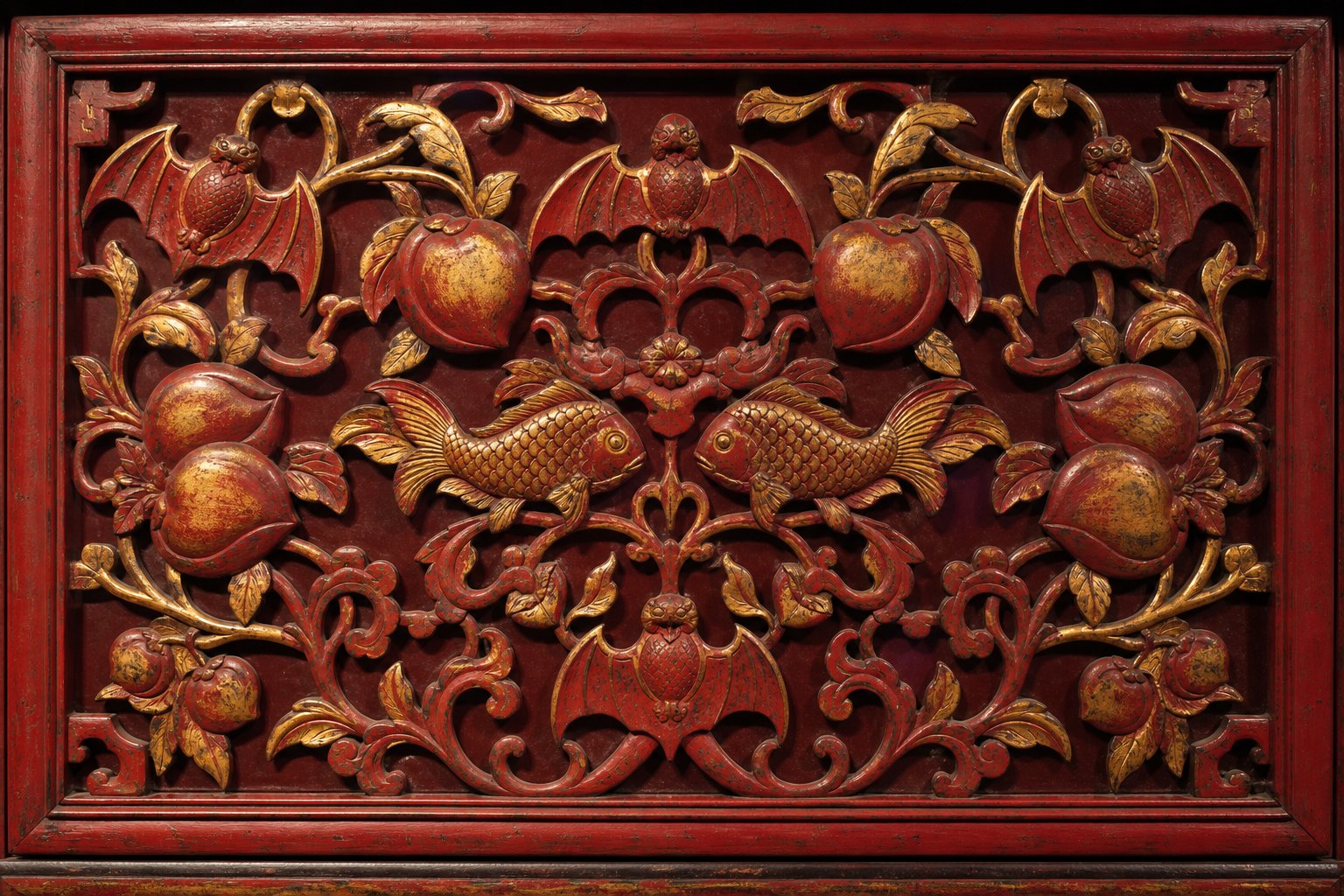
Imagine looking at a painting of a bat flying toward a peach tree and thinking it's just a nature scene. To someone who understands chinese symbolism, that image is actually a sentence: "May blessings and longevity come to you." The mechanism behind this hidden language? Homophones, words that sound identical but carry entirely different meanings. This system turns chinese artwork, architecture, and decorations into layered visual poetry that most Western viewers walk right past.
How Homophones Create Hidden Symbol Meanings
Mandarin Chinese has roughly 400 distinct syllables (about 1,300 when you include tonal variations), yet tens of thousands of characters. The result is a language packed with homophones, and Chinese culture exploits this density to create symbolic connections between unrelated objects.
Here's how it works. The word for fish, 鱼 (yu, second tone), sounds identical to 余 (yu), meaning "surplus" or "abundance." So a pair of fish on a window grille doesn't just depict aquatic life. It broadcasts the wish for abundance every year. The bat, 蝠 (fu), sounds like 福 (fu, "fortune" or "blessings"), transforming a creature that Western cultures associate with darkness into one of the most auspicious chinese motifs in existence. And deer, 鹿 (lu, fourth tone), shares its pronunciation with 禄 (lu, "prosperity" or "official salary"), making deer imagery a wish for career success and wealth.
These aren't obscure references. They're embedded in everyday life. A fish dish is always served whole at Lunar New Year dinner because 年年有余 (nian nian you yu) means "surplus year after year." Bat motifs appear on everything from window lattices to silver jewelry to embroidered garments. The connections are invisible if you don't speak the language, but once you see the pattern, chinese decorations suddenly become readable.
Compound Symbolism and Rebus Art in Chinese Decoration
Single homophones are just the beginning. The real sophistication of asian symbolism emerges when multiple symbols combine into compound messages, functioning like visual sentences. Chinese artisans developed this into a refined art form sometimes called rebus imagery, where each element contributes one word or concept to a larger phrase.
Consider a traditional chinese patterns composition featuring bats alongside peaches. Bat delivers 福 (fu, "blessings"). Peach delivers 寿 (shou, "longevity"), because peaches are associated with the Queen Mother of the West and her legendary peaches of immortality. Together: blessings and long life. Add a pair of old coins (钱, qian, punning on 全, quan, "complete"), and the full message becomes "fortune and longevity both complete."
This compound approach allowed artisans to encode complex blessings into a single decorative panel, textile, or ceramic piece. The quantity of objects, their arrangement, and even the vessel they decorate all contribute meaning. A ding cauldron decorated with ruyi wand patterns, for instance, creates the phrase 一定如意 (yiding ruyi, "all will be fulfilled as you wish") because "one cauldron" (yi ding) puns on "a certainty" (yi ding).
Here are the most common homophone pairs you'll encounter in traditional chinese culture symbols and decorative art:
| Image/Object | Chinese Name | Sounds Like | Symbolic Meaning | Common Artistic Context |
|---|---|---|---|---|
| Fish | 鱼 (yu) | 余 (yu) - surplus | Abundance year after year | Window grilles, New Year paintings, ceramics |
| Bat | 蝠 (fu) | 福 (fu) - fortune | Blessings and good luck | Embroidery, lattice work, jade carvings |
| Deer | 鹿 (lu) | 禄 (lu) - prosperity | Official salary, career success | Scroll paintings, porcelain, furniture inlay |
| Vase | 瓶 (ping) | 平 (ping) - peace | Safety and tranquility | Shelf displays, paired with seasonal flowers |
| Monkey | 猴 (hou) | 侯 (hou) - marquis | Noble rank, promotion | Jade ornaments, ink paintings |
| Quail | 鹌 (an) | 安 (an) - peace | Living peacefully | Paired with chrysanthemums in paintings |
| Lotus | 莲 (lian) | 连 (lian) - continuous | Unbroken succession | Paired with fish for "surplus year after year" |
| Cassia/Osmanthus | 桂 (gui) | 贵 (gui) - noble | Honor and high status | Exam success imagery, moon palace scenes |
You'll notice these chinese patterns don't work in isolation. A monkey riding on a horse's back creates 马上封侯 (mashang feng hou, "immediately granted the title of marquis") because 马上 means both "on horseback" and "immediately." A jade carving of a monkey carrying its baby on its back means "may every generation hold noble rank," since "back" (背, bei) puns on "generations" and "monkey" (猴, hou) puns on "marquis."
This layered system explains why chinese artwork from centuries ago still resonates in modern celebrations. The images aren't merely decorative. They're messages, blessings compressed into visual form and passed between people who share the linguistic key to decode them. Every Lunar New Year poster, wedding banner, and restaurant mural participates in this tradition, whether the viewer realizes it or not.
The homophone system also reveals why certain numbers and colors carry such intense symbolic weight in Chinese daily life. The same sound-based logic that turns a bat into a blessing also makes the number eight irresistible and the number four something to avoid at all costs.
Chinese Number and Color Symbolism That Shapes Daily Life
The homophone logic that turns a bat into a blessing operates just as powerfully in the realm of numbers. Every digit from one to nine carries symbolic weight in Chinese culture, and the consequences are tangible: buildings skip entire floors, phone numbers sell for thousands of dollars, and wedding dates get booked years in advance based on numeric auspiciousness. Understanding luck in chinese culture means recognizing that numbers and colors aren't neutral. They're active carriers of fortune or misfortune.
Lucky and Unlucky Numbers in Chinese Culture
The chinese symbol for luck isn't always a written character. Sometimes it's a number on a license plate or a date on a calendar. The system works the same way as the homophone symbolism covered earlier: pronunciation creates meaning.
The number 8 is considered the luckiest number in China because 八 (ba) sounds similar to 发 (fa) as in 发财 (facai, "becoming wealthy"). This isn't a minor cultural preference. The opening ceremony of the 2008 Beijing Olympics began at exactly 8 minutes and 8 seconds past 8 pm on August 8th. Phone numbers and license plates containing multiple eights sell at premium prices, and business owners time their grand openings to dates heavy with this digit.
On the opposite end, 4 is the most avoided number because 四 (si, fourth tone) sounds nearly identical to 死 (si, third tone), meaning "death." You'll notice this immediately in Chinese buildings: elevators often skip from floor 3 directly to floor 5. Some buildings omit every floor containing a 4, jumping from 39 to 50. Gifting money in amounts containing 4, like 40 or 400 RMB, is considered deeply inauspicious.
Here's a complete breakdown of how each single digit functions as a chinese luck symbol:
| Number | Chinese Character | Pinyin | Symbolic Meaning | Cultural Context |
|---|---|---|---|---|
| 1 | 一 | yi (first tone) | Unity, beginning | Neutral; represents wholeness and first place |
| 2 | 二 | er (fourth tone) | Harmony, pairs | Lucky; good things come in doubles. Even numbers preferred for gifts |
| 3 | 三 | san (first tone) | Birth, life stages | Mixed; sounds like 生 (sheng, "birth") but also 散 (san, "to scatter") |
| 4 | 四 | si (fourth tone) | Death | Unlucky; avoided in floors, phone numbers, addresses, and gift amounts |
| 5 | 五 | wu (third tone) | Five elements, balance | Historically significant; connected to earth, water, fire, wood, metal |
| 6 | 六 | liu (fourth tone) | Smooth flow, progress | Lucky; sounds like 流 (liu, "to flow"). Popular in business and engagement gifts |
| 7 | 七 | qi (first tone) | Togetherness, union | Neutral to positive; represents union of yin, yang, and five elements |
| 8 | 八 | ba (first tone) | Wealth, prosperity | Luckiest number; sounds like 发 (fa, "to prosper"). Premium pricing for 8-heavy numbers |
| 9 | 九 | jiu (third tone) | Longevity, completeness | Lucky; sounds like 久 (jiu, "everlasting"). Associated with emperors and permanence |
Number combinations amplify these meanings. The sequence 168 (yi liu ba) sounds like 一路发 (yi lu fa), meaning "prosperous all the way." Couples exchange 520 (wu er ling) because it approximates 我爱你 (wo ai ni, "I love you"). Red envelopes at weddings commonly contain amounts like 888 or 1,366 RMB, each encoding chinese good luck wishes through sound.
For anyone navigating real-world situations, the practical rule is simple: favor 6, 8, and 9 in amounts, dates, and quantities. Avoid 4 in any context involving gifts, celebrations, or new beginnings. This applies to everything from choosing a hotel room number to deciding how much cash to put in a red envelope.
Color Symbolism and Cultural Etiquette
Colors function as chinese good luck symbols just as powerfully as numbers do. But where Western and Chinese color associations overlap, they often point in opposite directions, and the mistakes can be genuinely offensive.
- Red (红, hong) - The ultimate symbol for good luck in chinese culture. Red represents happiness, prosperity, and celebration. It dominates weddings, Lunar New Year, business openings, and birth celebrations. Red envelopes (红包, hongbao) carry gift money. Red lanterns ward off evil spirits. Red is the default choice whenever you want to signal joy and good fortune.
- Gold / Yellow (金/黄, jin/huang) - Represents wealth, nobility, and imperial authority. Historically, bright golden yellow was reserved exclusively for the emperor, and commoners could face punishment for wearing it. Today it pairs with red during festivals and appears in temple decorations, symbolizing prosperity and high status.
- White (白, bai) - This is where most Westerners stumble. White represents death, mourning, and funerals in Chinese culture, not purity or innocence. Mourners wear white clothing or white armbands. White flowers, especially chrysanthemums, are funeral offerings. Showing up to a celebration dressed in white carries the same energy as wearing black to a Western wedding, but worse.
- Black (黑, hei) - Carries complex associations: depth, authority, formality, and also mourning. Black appears alongside white at funerals. In other contexts it signals seriousness, stability, and knowledge. Modern Chinese fashion has largely neutralized black for everyday wear, but traditional contexts still carry the older associations.
- Green (绿, lu) - Generally positive, symbolizing growth, harmony, and health. Green jade represents virtue and protection. However, there's one critical exception: wearing a green hat (戴绿帽子, dai lu maozi) is a euphemism meaning your partner is unfaithful. Never gift a green hat to anyone in Chinese culture.
These color rules have direct consequences for gift-giving. Wrapping a gift in white or black paper signals mourning, regardless of what's inside. Red and gold wrapping communicates celebration and good wishes. An empty wallet given as a gift implies you're wishing financial hardship on the recipient, so always tuck a coin or bill inside to symbolize future prosperity.
Other gift-giving taboos worth knowing:
- Clocks - Never gift a clock. "Giving a clock" (送钟, song zhong) is a homophone for "attending a funeral" (送终, song zhong). This is the most serious chinese symbol for good fortune violation you can commit in gift-giving.
- Pears - Avoid sharing pears. 梨 (li, "pear") sounds like 离 (li, "separation"). Splitting a pear with someone implies you want the relationship to end.
- Sharp objects - Knives and scissors suggest cutting ties with the recipient.
- Umbrellas - 伞 (san, "umbrella") sounds like 散 (san, "to scatter" or "break apart").
The chinese character for luck, 运 (yun), literally contains the movement radical, suggesting that fortune is something in motion, not static. Numbers and colors are the vehicles that keep it flowing in the right direction, or block it entirely. Getting these details right isn't about superstition. It's about cultural fluency, the kind that prevents awkward moments and shows genuine respect.
These symbolic systems didn't appear overnight. They developed across thousands of years, shaped by the same forces that transformed Chinese writing from scratches on turtle shells into the streamlined characters used today. That evolution tells its own story about how meaning survives, adapts, and sometimes splits in two.
How Chinese Symbols Evolved Over Three Thousand Years
Every modern Chinese character you encounter today is the descendant of a pictograph scratched onto animal bone over three millennia ago. Ancient chinese symbols didn't start as abstract strokes. They started as drawings, simplified over centuries by millions of hands until the pictures became the streamlined forms used in text messages and street signs. Understanding that journey changes how you read every character.
From Oracle Bones to Seal Script
The oldest confirmed examples of Chinese writing are oracle bone inscriptions (甲骨文, jiaguwen), carved into turtle plastrons and animal scapulae during the late Shang Dynasty around 1350 BCE. Diviners heated the bones until they cracked, then inscribed questions to ancestors and spirits alongside the resulting patterns. Over 100,000 inscribed shells and bones have been excavated since their discovery in 1899, when scholar Wang Yirong recognized the markings as ancient writing rather than mystical "dragon bone" medicine.
These ancient china symbols were surprisingly sophisticated. Scribes used brushes to draft characters before carving, and the constraints of bone and shell shaped the script: rounded forms became angular, solid fills became outlines, and thick strokes thinned into straight lines. What ancient chinese depicts on these bones isn't primitive scratching. It's a fully functional writing system with grammar, vocabulary, and stylistic variation.
Bronze inscriptions from the same period and the subsequent Western Zhou era (1046-771 BCE) preserved a more formal, pictographic style. The character for horse, for instance, clearly showed four legs, a mane, and a tail in its bronze form. These chinese ancient symbols on ritual vessels served as the "formal script" of their era, while everyday brush writing on bamboo strips functioned as the popular script.
The critical turning point came with Qin Shi Huang's unification of China in 221 BCE. Before this, each warring state had developed its own script variations, creating a fragmented landscape of china language symbols that made cross-regional communication difficult. The Qin standardization imposed a single formal script, small seal script (小篆, xiaozhuan), across the entire empire. This wasn't a new invention. It was simply the existing Qin script made mandatory for everyone else.
Here's the chronological path from picture to modern character:
- Oracle Bone Script (ca. 1350 BCE) - Angular, carved forms on shell and bone. Pictographic origins clearly visible.
- Bronze Script (Shang through Spring and Autumn period) - Rounder, more elaborate forms cast on ritual vessels. The formal script of early dynasties.
- Seal Script (Qin standardization, 221 BCE) - Regularized, symmetrical forms. Became the empire-wide standard.
- Clerical Script (Han Dynasty onward) - Flattened, angular strokes optimized for brush writing on bamboo and silk. The han dynasty symbol style that bridged ancient and modern forms.
- Regular Script (established by the Tang Dynasty) - The standard form used in printing and formal writing for over a thousand years.
- Simplified Script (1950s reform) - Reduced stroke counts for mass literacy. Used in Mainland China and Singapore today.
Trace the character 馬/马 (ma, "horse") through this progression and you'll see the transformation clearly. The oracle bone form showed a recognizable animal in profile: head, mane, body, four legs, tail. Bronze script preserved these features with rounder lines. Seal script stylized the legs into parallel strokes and abstracted the mane. Clerical script flattened everything further. Regular script gave us 馬, where the four dots at the bottom are the last echo of those original four legs. The simplified form 马 compresses even further, reducing the character to just three strokes, yet that bottom hook still traces back to the animal's legs.
The Path to Simplified Characters
The split between simplified chinese writing symbols and traditional forms didn't happen in a vacuum. By the early twentieth century, Chinese intellectuals saw the complexity of the writing system as a barrier to mass literacy and modernization. The ruling Kuomintang Party actually published an official simplification scheme in 1935 before withdrawing it under conservative opposition.
After the founding of the People's Republic in 1949, simplification became policy. Two main strategies drove the reform. First, where multiple variant characters existed for the same word, officials selected the simplest one as standard. Second, cursive script forms that had been used informally for centuries were regularized into the official writing system. Many "new" simplified characters were actually old shorthand that people had been writing for generations.
The result created a geographic split that persists today. Mainland China and Singapore use simplified characters. Taiwan, Hong Kong, and Macau retained traditional forms. But the divide is less dramatic than it appears. Of the 8,105 standard characters specified in China's official table, less than a third actually came from the 1950s simplification scheme. The majority were never simplified at all.
The reform had tradeoffs. Some simplified forms lost components that carried historical meaning, like the heart radical removed from 愛 to create 爱. Others introduced curved lines from cursive that feel aesthetically awkward in standard script. A second round of simplification attempted in 1977 was rescinded in 1986 after public backlash, suggesting the process had reached its practical limits.
Today, the original motivation for simplification, making characters easier to write by hand, has largely become moot. Smartphones and computers mean most people select characters from a screen rather than drawing them stroke by stroke. Young people across the divide increasingly read both systems thanks to cross-strait media consumption, blurring boundaries that once seemed fixed.
What remains constant across all these stages, from oracle bone to smartphone keyboard, is the underlying logic. Radicals still signal meaning. Phonetic components still hint at pronunciation. The four symbols of china's writing evolution (pictographic, ideographic, compound, and phono-semantic) still describe how characters encode information, whether you're reading a 3,000-year-old bronze vessel or a modern WeChat message.
This evolutionary perspective matters for a practical reason. When you encounter Chinese symbols in the real world, on a restaurant sign, a piece of jewelry, or someone's skin, knowing whether you're looking at a traditional or simplified form, and understanding why both exist, prevents the kind of misreadings that turn meaningful symbols into embarrassing mistakes.
Chinese Symbols in Everyday Life From Tattoos to Home Decor
Knowing the history and philosophy behind Chinese characters is one thing. Encountering them on your own skin, your living room wall, or a restaurant menu is another. The places where people actually interact with these symbols, tattoo parlors, home decor shops, martial arts studios, and Lunar New Year celebrations, are also where the most misreadings happen. The gap between what someone intends a symbol to mean and what it actually communicates can be enormous.
Chinese Symbol Tattoos and Common Mistakes to Avoid
Chinese tattoo symbol meanings go wrong for predictable reasons. The most common? Relying on a single online translation without understanding that Chinese words carry context, register, and connotation that a dictionary entry can't capture. A character might technically translate to the word you want, but its actual usage in Chinese could be completely different from what you imagine.
Take the well-documented case of someone who wanted "free" tattooed in Chinese, meaning freedom of spirit. They got 免费 (mianfei), which means "free of charge," as in free WiFi. The character 免 is a negation term, and 费 means "fee." What they needed was 自由 (ziyou), which carries the philosophical weight of liberty and autonomy. Another person wanted "power" and received 电 (dian), which means "electricity." The intended concept, physical or personal power, would be better expressed as 力量 (liliang) or 力气 (liqi).
These aren't rare edge cases. Chinese writing tattoo meanings go sideways regularly because of several structural issues with how people approach the process:
- Single-character traps - Many English concepts require two-character compounds in Chinese. Tattooing just one character often produces gibberish or shifts the meaning entirely. "Family" as 家庭 (jiating) works, but it reads as the formal, statistical term for "household." A simple 家 (jia) communicates the warm concept of home and family more naturally.
- Mirror-image errors - Tattoo stencils sometimes get flipped during transfer, producing a reversed character that no longer means anything. Unlike English letters, most Chinese characters are not symmetrical. A reversed 福 is just a meaningless shape.
- Simplified vs traditional choices - For tattoos, traditional characters are generally preferred because they carry more visual weight and historical depth. The simplified form of love, 爱, missing its heart radical, looks incomplete to anyone who reads traditional Chinese. If permanence and aesthetics matter, traditional forms like 愛 tend to age better on skin.
- Stroke errors - A single missing or added stroke can transform one character into another. 大 (da, "big") with one extra stroke becomes 犬 (quan, "dog"). 未 (wei, "not yet") with a slightly longer top stroke becomes 末 (mo, "end"). Tattoo artists unfamiliar with Chinese writing may not notice these differences.
- Register mismatch - Chinese has formal and informal registers just like English. Getting 鬼 (gui) tattooed because someone told you it means "spirit" ignores that it actually refers to ghosts, demons, and devils. The gentler, more appropriate term for a spiritual memorial would be 灵魂 (linghun, "soul").
If you're set on getting chinese letters tattoos, here are the most commonly requested symbols with their correct forms and verification tips:
- Strength - 力 (li) for raw force, or 力量 (liliang) for broader power. Verify: the character should have exactly two strokes.
- Love - 愛 (ai, traditional) or 爱 (ai, simplified). For tattoos, 愛 with the heart radical intact is the stronger choice.
- Courage - 勇 (yong) or 勇气 (yongqi). The character contains 力 at its base.
- Peace - 和平 (heping) for societal peace, or 安 (an) for personal tranquility and safety.
- Freedom - 自由 (ziyou). Never 免费 (mianfei), which means "free of charge."
- Beauty - 美 (mei) is the chinese symbol of beauty, combining 羊 (sheep, representing goodness) with 大 (big). It works as a standalone character.
- Protection - 护 (hu) means "to protect," but the chinese symbol for protection in traditional talismanic use is often 守护 (shouhu, "to guard") or the character 佑 (you, "divine protection").
The single most reliable step? Show your chosen character to at least three native Chinese speakers before committing to ink. Not just any speakers, either. Ask educated adults who read regularly. A character that looks cool chinese symbols to a non-reader might read as awkward, outdated, or unintentionally humorous to someone literate in the language. China tattoo meaning disasters are almost always preventable with this one verification step.
Symbols in Home Decor and Feng Shui Practice
Chinese symbols in home decor follow placement rules that most Western buyers never learn. It's not enough to hang a character on the wall because it looks attractive. Where you place it, which direction it faces, and what you pair it with all carry meaning in feng shui practice.
The character 福 (fu, "fortune") is the most widely displayed symbol in Chinese homes. During Lunar New Year, families paste it on their front doors, typically on red diamond-shaped paper with the character rendered in gold or black. The tradition of hanging 福 upside down exploits the same homophone logic discussed earlier: 倒 (dao, "upside down") sounds like 到 (dao, "to arrive"), creating the pun "fortune has arrived." Some families place the inverted version on inner doors or storage containers while keeping the front door version right-side up. Either approach is considered correct.
Dragon and phoenix pairings (龙凤, longfeng) represent the union of masculine and feminine energy. In traditional placement, the dragon occupies the left side (east) and the phoenix the right side (west) when facing the display. Reversing them disrupts the symbolic balance. You'll see this pairing on wedding decorations, restaurant walls, and embroidered textiles. In feng shui, dragon imagery placed in the east sector of a home is believed to activate career luck and authority, while phoenix imagery in the south supports reputation and recognition.
Beyond individual homes, Chinese symbols function as environmental language in several public contexts:
- Restaurant decor - Fish imagery (abundance), the character 招财进宝 ("attracting wealth and treasure"), and golden cat figurines (招财猫, though originally Japanese, widely adopted in Chinese businesses) all serve as prosperity invitations. Red lanterns signal celebration and welcome.
- Tea packaging - Characters like 茶 (cha, "tea"), 禅 (chan, "zen/meditation"), and 道 (dao, "the way") appear frequently. Mountain and cloud motifs reference the high-altitude origins of premium teas and the Taoist connection between tea drinking and spiritual cultivation.
- Martial arts schools - 武 (wu, "martial") and 道 (dao, "way") dominate dojo signage. The character 武 itself contains 止 (zhi, "to stop") and 戈 (ge, "weapon"), encoding the philosophy that true martial skill means stopping violence, not perpetuating it.
- Feng shui placement - Specific characters are recommended for specific rooms. 安 (peace) suits bedrooms. 福 (fortune) belongs near entrances. 寿 (longevity) is appropriate for elder family members' spaces. Placing 财 (wealth) in the southeast corner aligns with traditional feng shui compass directions for prosperity energy.
A note on cultural sensitivity deserves attention here. The question of whether non-Chinese people can respectfully use Chinese symbols in their homes, on their bodies, or in their creative work comes up frequently. The distinction between cultural appreciation and cultural appropriation matters. Appreciation involves learning what a symbol means, understanding its context, and using it respectfully. Appropriation takes a symbol out of context for aesthetic purposes without regard for its significance.
Practical guidelines for respectful usage:
- Learn what your chosen symbol actually means before displaying it. A character you can't read or explain is decoration without understanding.
- Avoid sacred or ceremonial symbols as casual accessories. Taoist talismans and Buddhist sutras carry religious weight that differs from decorative characters like 福 or 寿.
- Consider your intent. Genuine interest in Chinese culture, paired with effort to learn, reads very differently from grabbing something that "looks exotic."
- When in doubt, ask. Most Chinese speakers appreciate sincere curiosity about their writing system and are happy to help verify meanings or suggest appropriate symbols.
Chinese symbols and meanings aren't museum artifacts locked behind glass. They're living elements of a culture that continues to evolve, showing up in text messages, street art, fashion, and global design. The difference between misreading them and reading them well comes down to the same thing it always has: taking the time to understand what you're looking at before deciding what it means to you.
Frequently Asked Questions About Chinese Symbols and Meanings
1. What are Chinese writing symbols called?
Chinese writing symbols are called hanzi, which translates to Han characters. They are logographic units where each character represents both a syllable and a meaning rather than a single letter. Two main forms exist today: Simplified Chinese used in Mainland China and Singapore, and Traditional Chinese used in Taiwan, Hong Kong, and Macau. The system has been in continuous use for over 3,000 years, with roughly 50,000 characters in existence, though about 3,000 cover everyday literacy needs.
2. What is the Chinese symbol for love and why does it have two forms?
The Chinese symbol for love is ai, written as the traditional form with a heart radical at its center, or as the simplified form introduced in the 1950s. The traditional version contains components representing a roof, a heart, and a slow-walking foot, suggesting love as something held in the heart while moving through life with care. The simplified version removed the heart radical for easier writing, sparking an ongoing cultural debate about whether this creates heartless love. For tattoos and decorative purposes, the traditional form is generally preferred for its visual depth and philosophical completeness.
3. Why is the number 4 considered unlucky in Chinese culture?
The number 4 is avoided in Chinese culture because its pronunciation si sounds nearly identical to the word for death. This homophone connection has real-world consequences: many buildings skip the fourth floor entirely in their elevator numbering, jumping from 3 to 5. Some buildings omit every floor containing a 4, going from 39 directly to 50. Gift amounts containing 4, such as 40 or 400 RMB, are considered deeply inauspicious. Conversely, the number 8 is the luckiest because it sounds like the word for becoming wealthy.
4. How do Chinese characters encode meaning through radicals?
Chinese characters are built from 214 smaller components called radicals that act as semantic signposts. The water radical on the left side of a character signals something related to liquid or flow, while the heart radical indicates emotions. Over 80% of Chinese characters are phono-semantic compounds where one component hints at meaning and another hints at pronunciation. For example, the character for rest combines the person radical with the character for tree, depicting a person leaning against a tree. This structural system allows readers to decode unfamiliar characters by recognizing their component parts.
5. What mistakes should I avoid when getting a Chinese character tattoo?
The most common tattoo mistakes include using a single character when the concept requires a two-character compound, getting mirror-image reversals from flipped stencils, choosing simplified forms that look incomplete to traditional readers, and relying on online translators that miss context and register. For example, someone wanting freedom might receive the characters for free of charge instead of liberty. Always show your chosen character to at least three educated native Chinese speakers before committing to ink, choose traditional forms for their visual weight and completeness, and verify that stroke count and order are correct since one missing stroke can change a character entirely.