Understanding Chinese Terms of Endearment and Why They Matter
Imagine calling your partner "honey" in English. Simple, right? You barely think about it. But when you step into Mandarin, that same impulse to express affection runs headfirst into a wall of cultural rules you never knew existed. Chinese terms of endearment are not just translated pet names with different syllables. They operate on an entirely different logic, one built on metaphor, tonal precision, and a deeply ingrained sense of who you are to the person you are addressing.
In English, "babe" works for a new fling or a spouse of twenty years. In Chinese, the wrong term at the wrong relationship stage can feel presumptuous, awkward, or even offensive. That gap between vocabulary knowledge and cultural fluency is exactly where most learners stumble.
Why Chinese Endearments Are More Than Vocabulary
Terms of endearment in Chinese are shaped by three forces that rarely factor into Western pet names: relationship hierarchy, indirect emotional expression, and the physical mechanics of tone. A single character like 宝 (bao, meaning "treasure") can appear in terms for lovers, children, and close friends, but the surrounding context, the speaker's age, and even the platform (spoken aloud versus typed on WeChat) all shift its weight dramatically.
Chinese culture tends to express affection through action and implication rather than declaration. Asking "Have you eaten yet?" carries the emotional warmth that "I love you" does in English. This indirectness extends to chinese words of endearment themselves. Many terms lean on poetic imagery, nature metaphors, or playful diminutives rather than blunt statements of feeling.
In Chinese culture, love is rarely announced. It is demonstrated through care, implied through metaphor, and understood through context. The words matter less than knowing when silence says more.
The Role of Tone and Context in Expressing Affection
Mandarin is a tonal language, and this changes everything about how chinese endearments land. The word 宝贝 (baobei, "baby" or "treasure") spoken in a soft, lilting voice between partners feels intimate. The same word barked flatly sounds sarcastic or cold. Tone is not just a pronunciation rule here. It is an emotional instrument.
Context layers on top of tone. Chinese terms of affection shift based on whether you are texting privately, speaking in front of family, or posting on social media. A term that feels natural in a late-night WeChat message might draw raised eyebrows at a family dinner. Understanding these boundaries is what separates a learner who memorized a list from someone who actually connects with native speakers.
This guide covers that full spectrum: romantic pet names, family nicknames, generational differences, regional dialect variations, digital-era slang, and the pronunciation pitfalls that trip up non-native speakers. You will also find chinese words of endearment mapped to specific relationship stages, so you know which terms fit a first date versus a decade-long marriage. The goal is not just to hand you vocabulary but to give you the cultural instinct to use it without making anyone cringe.

Romantic Chinese Pet Names for Boyfriends and Girlfriends
So you know that context matters and tone carries emotional weight. But which terms do Chinese couples actually reach for when they want to express romantic affection? The answer depends on the relationship's depth, the couple's personality, and whether they lean traditional or modern. Still, a handful of love words in Chinese show up so consistently that they form the foundation every learner needs.
Classic Romantic Terms Every Learner Should Know
Three expressions dominate the romantic landscape in Mandarin. You will hear them in dramas, read them in texts, and encounter them in real conversations between couples across China.
亲爱的 (qin ai de) is the closest equivalent to "darling" or "my dear" in Chinese. It works as a standalone address or as a prefix before someone's name. Couples use it in messages, phone calls, and face-to-face conversation. Its versatility makes it a safe starting point, though some younger speakers consider it slightly formal or old-fashioned compared to newer alternatives.
To pronounce it naturally, start with "qin" using a high, flat first tone, like holding a steady musical note. Then "ai" drops from high to low in a sharp fourth tone, like giving a firm command. Finally, "de" is spoken lightly and neutrally, almost swallowed. The combination should feel smooth and warm, not clipped.
宝贝 (bao bei) is arguably the most popular chinese pet name for lovers today. It translates literally as "treasure" or "precious thing," functioning much like "baby" or "babe" in English. Both men and women use it freely. Parents also call young children 宝贝, which gives the term a layered tenderness when used between partners.
The tones here trip up many learners. 宝 (bao) uses the third tone, a falling-rising pattern where your voice dips down into a low valley then rises back up, like the shape of a checkmark. 贝 (bei) carries a fourth tone, dropping sharply from high to low. Together, the rhythm feels like a gentle dip followed by a decisive drop.
老公/老婆 (lao gong / lao po) literally translates to "old husband" and "old wife," but the 老 here signals familiarity and closeness rather than age. These terms are the go-to chinese pet names for boyfriend and girlfriend pairs who have moved past the early dating phase. Many unmarried couples in committed relationships use 老公 and 老婆 to signal deep attachment, treating the terms as a declaration of long-term intent rather than a legal status.
Both words start with 老 (lao) in the third tone, that same dipping-then-rising pattern. 公 (gong) sits in a flat first tone, while 婆 (po) uses a light second tone that rises like asking a question. When spoken affectionately, the 老 often gets softened and slightly shortened.
Character Etymology and What Each Term Reveals About Love
Chinese characters are not arbitrary symbols. They carry layers of meaning built from smaller components, and the recurring elements in romantic vocabulary reveal how Chinese culture conceptualizes love itself.
The character 宝 (treasure) appears in 宝贝, 宝宝, and 小宝贝. Its traditional form 寶 contains 玉 (jade) sheltered under a roof 宀, with additional components suggesting something precious kept safe inside a home. The metaphor is clear: a loved one is something invaluable that you protect and cherish within your life.
心 (xin, heart) shows up across dozens of affection-related terms. 亲爱的 contains 心 embedded within the character 爱 (love) itself. Other romantic expressions like 心肝 (xin gan, "heart and liver," meaning "dearest one"), 甜心 (tian xin, "sweetheart"), and 心上人 (xin shang ren, "the one in my heart") all build on this same radical. The traditional character for love, 愛, visibly contains 心 at its center, a detail that was preserved from ancient seal script forms where the phonetic component 㤅 already included the heart radical as its semantic element.
This pattern tells you something fundamental: Chinese romantic language gravitates toward metaphors of value (treasure, jade, gold) and interiority (heart, the space within). Love is framed as something held inside, protected, and deeply personal rather than loudly proclaimed.
When searching for the right chinese pet names for girlfriend or boyfriend, understanding these building blocks helps you feel the emotional texture behind each term rather than just memorizing translations.
| Characters | Pinyin | Literal Meaning | English Equivalent | Usage Context |
|---|---|---|---|---|
| 亲爱的 | qin ai de | Dear/beloved one | Darling, my dear | Universal; messages, calls, face-to-face; slightly formal |
| 宝贝 | bao bei | Treasure, precious | Baby, babe | Very common between couples; also used for children |
| 老公 | lao gong | Old husband | Hubby | Committed couples; does not require marriage |
| 老婆 | lao po | Old wife | Wifey | Committed couples; signals long-term bond |
| 心肝 | xin gan | Heart and liver | Dearest one, sweetheart | Intimate; old-fashioned but deeply tender |
| 甜心 | tian xin | Sweet heart | Sweetheart | Younger couples; influenced by English usage |
| 爱人 | ai ren | Love person | Lover, spouse | More formal; common among married couples |
| 心上人 | xin shang ren | Person on my heart | My beloved | Poetic and literary; special occasions |
You will notice that several of these terms blur the line between darling in Chinese and sweetheart in Chinese. That overlap is intentional. Mandarin does not always draw the same distinctions English does between levels of romantic address. The difference often lives in delivery, timing, and the specific relationship dynamic rather than in the word itself.
These classic terms form the bedrock, but Chinese couples rarely stop here. The playful, inventive side of romantic language, where food metaphors meet animal nicknames and reduplication patterns turn any word adorable, is where things get genuinely fun.
Cute and Funny Chinese Nicknames for Couples
Classic terms like 宝贝 and 亲爱的 give you a solid foundation, but real Chinese couples rarely stick to the textbook. The playful side of romantic language is where personality shines through, where partners invent names based on inside jokes, physical quirks, favorite snacks, or animals that somehow capture the other person's essence. These cute chinese nicknames feel more personal precisely because they are less universal.
Playful and Funny Nicknames Chinese Couples Actually Use
One of the most distinctive features of Mandarin is reduplication, the practice of doubling a character to make it sound softer, cuter, or more childlike. You already saw this with 宝宝 (bao bao), which takes the single character 宝 (treasure) and repeats it to create something that feels like cooing at a loved one. This pattern works broadly. 猪猪 (zhu zhu, "piggy piggy") sounds far more affectionate than a single 猪. 乖乖 (guai guai, "good good") turns a simple adjective into a tender pet name. If you want to make almost any chinese couple nickname feel gentler, try doubling it.
Beyond reduplication, couples draw from a surprisingly wide pool of inspiration. Here are the main categories you will encounter:
- Animal-based: 小猪 (xiao zhu, "little pig") is one of the most common funny chinese nicknames between partners. Unlike in English, calling someone a pig in Chinese is playful rather than insulting. It implies they are cute, a little lazy, and lovable. Other popular picks include 小熊 (xiao xiong, "little bear"), 兔子 (tu zi, "bunny"), and 小猫咪 (xiao mao mi, "little kitty").
- Food-based: 小汤圆 (xiao tang yuan, "little glutinous rice ball") suggests someone round, sweet, and comforting. 小笼包 (xiao long bao, "soup dumpling") works for someone with chubby cheeks. 糖糖 (tang tang, "candy candy") uses reduplication to double the sweetness.
- Appearance-based: 小胖 (xiao pang, "little chubby one") is affectionate rather than critical. 大眼睛 (da yan jing, "big eyes") highlights a feature the speaker finds attractive. 小矮子 (xiao ai zi, "shorty") teases height differences between partners.
- Personality-based: 傻瓜 (sha gua, "silly melon" or "fool") is one of the most endearing terms in Chinese romance. It sounds like an insult on paper, but between couples it means something closer to "you adorable idiot." 小懒虫 (xiao lan chong, "little lazy bug") affectionately calls out a partner who loves sleeping in.
What makes these work is the prefix 小 (xiao, "little"). Attaching 小 to nearly anything shrinks it into something cute and non-threatening. It is the linguistic equivalent of adding a diminutive suffix in Spanish or Russian, except Chinese speakers deploy it constantly in romantic contexts.
Here is how some of these sound in actual conversation:
"小猪,起床了!已经十点了。"
(Xiao zhu, qi chuang le! Yi jing shi dian le.)
"Little pig, get up! It's already ten o'clock."
"傻瓜,我当然喜欢你。"
(Sha gua, wo dang ran xi huan ni.)
"Silly, of course I like you."
You will notice these terms carry warmth precisely because they are slightly teasing. Chinese romantic culture often expresses closeness through gentle mockery rather than grand declarations. Calling someone a dumpling or a lazy bug signals comfort, the kind of familiarity where you no longer need to impress.
Code Names and Secret Pet Names for Your Crush
Not every nickname is meant for public consumption. Chinese couples, especially younger ones, often create code names for crushes or partners that outsiders would not recognize. This is partly practical (privacy on shared social media) and partly fun (the secrecy itself becomes romantic).
Common strategies include using initials, inside-joke references, or deliberately obscure terms. Someone might save their partner's contact as 那个人 (na ge ren, "that person") or 某人 (mou ren, "a certain someone"). Others pick cool chinese nicknames drawn from characters in games, novels, or shows they both love. A couple who bonded over a particular drama might call each other by character names that only they would connect to romance.
Number-based codes also serve as discreet pet names in texts. Saving a crush as "520" (wu er ling, which sounds like 我爱你, "I love you") hides the relationship in plain sight. Some couples assign each other single-character names that reference private memories, a restaurant where they had their first date, a city they visited together, or a word from a conversation only they remember.
The creativity here is limitless, and that is the point. The best code names for crushes in Chinese are not found in any dictionary. They are invented between two people, layered with meaning that belongs only to them. What matters is understanding the cultural toolkit, reduplication, the 小 prefix, animal metaphors, playful insults, and strategic obscurity, so you can build your own.
These playful dynamics between partners exist in one emotional register. But Chinese affection vocabulary stretches far beyond romance. Within families, an entirely different set of naming traditions governs how love is expressed across generations.
Chinese Nicknames for Children and Family Members
Romantic pet names get all the attention, but the richest layer of chinese nicknames lives inside the family home. The way a grandmother addresses a toddler, the way siblings tease each other, the way a father softens his voice for his daughter: these carry a weight that romantic terms rarely match. Family endearments in Chinese follow their own rules, shaped by generational respect, superstition, and a naming tradition that has persisted for thousands of years.
What Chinese Parents Call Their Children
Every Chinese child grows up with two names operating in parallel. There is the formal given name, the 大名 (da ming, "big name"), chosen carefully for its meaning, tonal balance, and astrological compatibility. Then there is the 小名 (xiao ming, "little name"), a childhood nickname used exclusively by family and close friends. These two names serve completely different emotional functions.
The 小名 tradition reflects intimacy and protection. A child's little name is not meant for teachers, employers, or strangers. It belongs to the inner circle, the people who knew you before you became your public self. Common patterns for chinese nicknames for children include:
- Reduplication of one character from the formal name: A child named 明辉 (Ming Hui) might become 辉辉 (Hui Hui) at home. Doubling the character softens it, just like romantic reduplication.
- Adding 小 (xiao) before a character: 小明 (Xiao Ming), 小花 (Xiao Hua, "Little Flower"), 小宝 (Xiao Bao, "Little Treasure"). The 小 prefix signals affection and youth.
- Adding 阿 (a) before a character: 阿宝 (A Bao), 阿毛 (A Mao). This pattern is especially common in southern China and Taiwan.
- Food and animal names: 豆豆 (Dou Dou, "little bean"), 果果 (Guo Guo, "little fruit"), 虎子 (Hu Zi, "little tiger").
Here is where superstition enters the picture. A traditional belief holds that giving a baby in chinese families a humble, ugly, or even slightly ridiculous nickname will protect the child from evil spirits or misfortune. The logic goes that spirits would not bother stealing a child called 狗蛋 (Gou Dan, "dog egg") or 丑丑 (Chou Chou, "ugly ugly"). While fewer modern parents follow this practice literally, echoes of it survive in deliberately silly or self-deprecating baby nicknames that older relatives still use.
Family Nicknames Across Generations
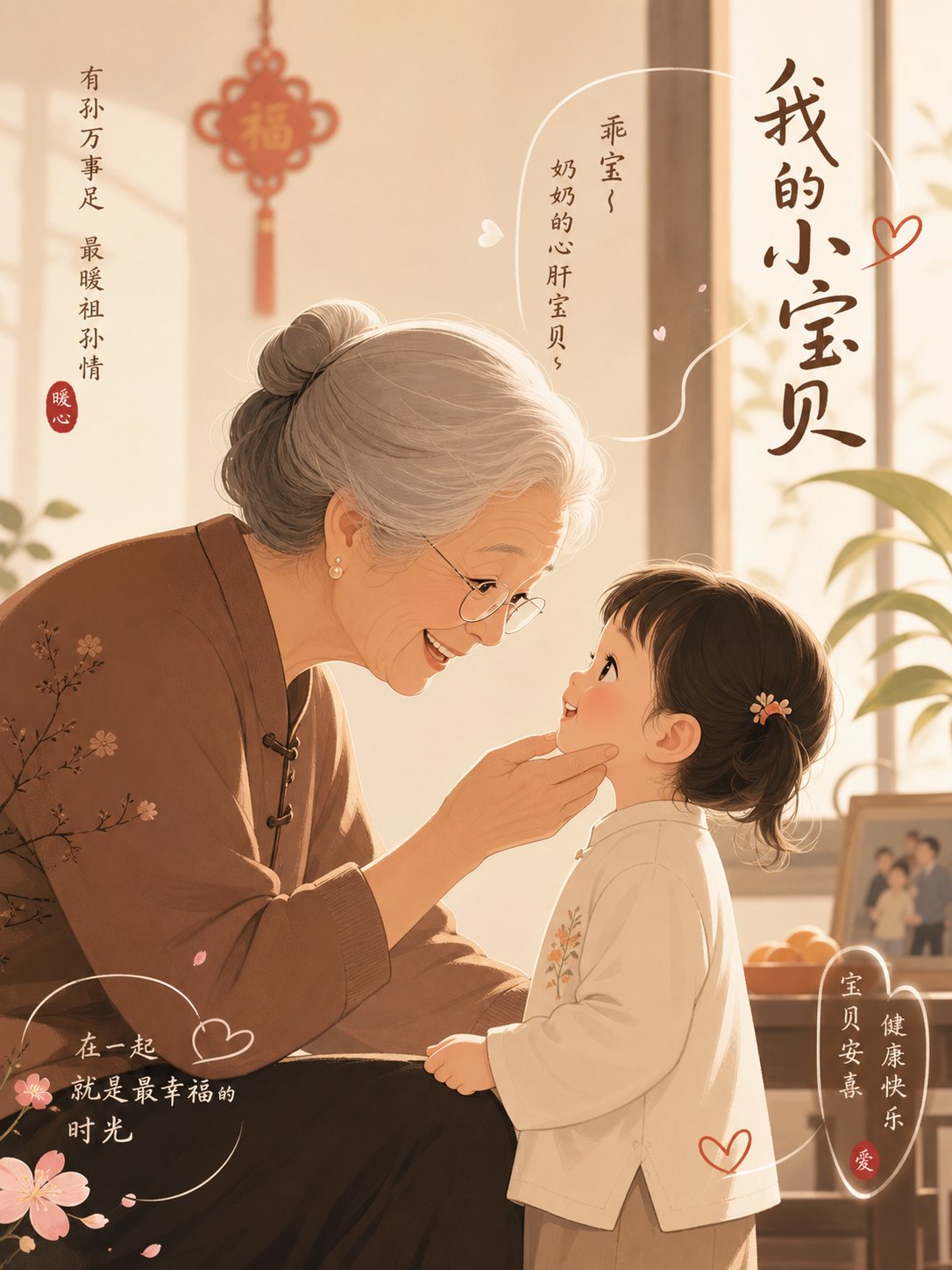
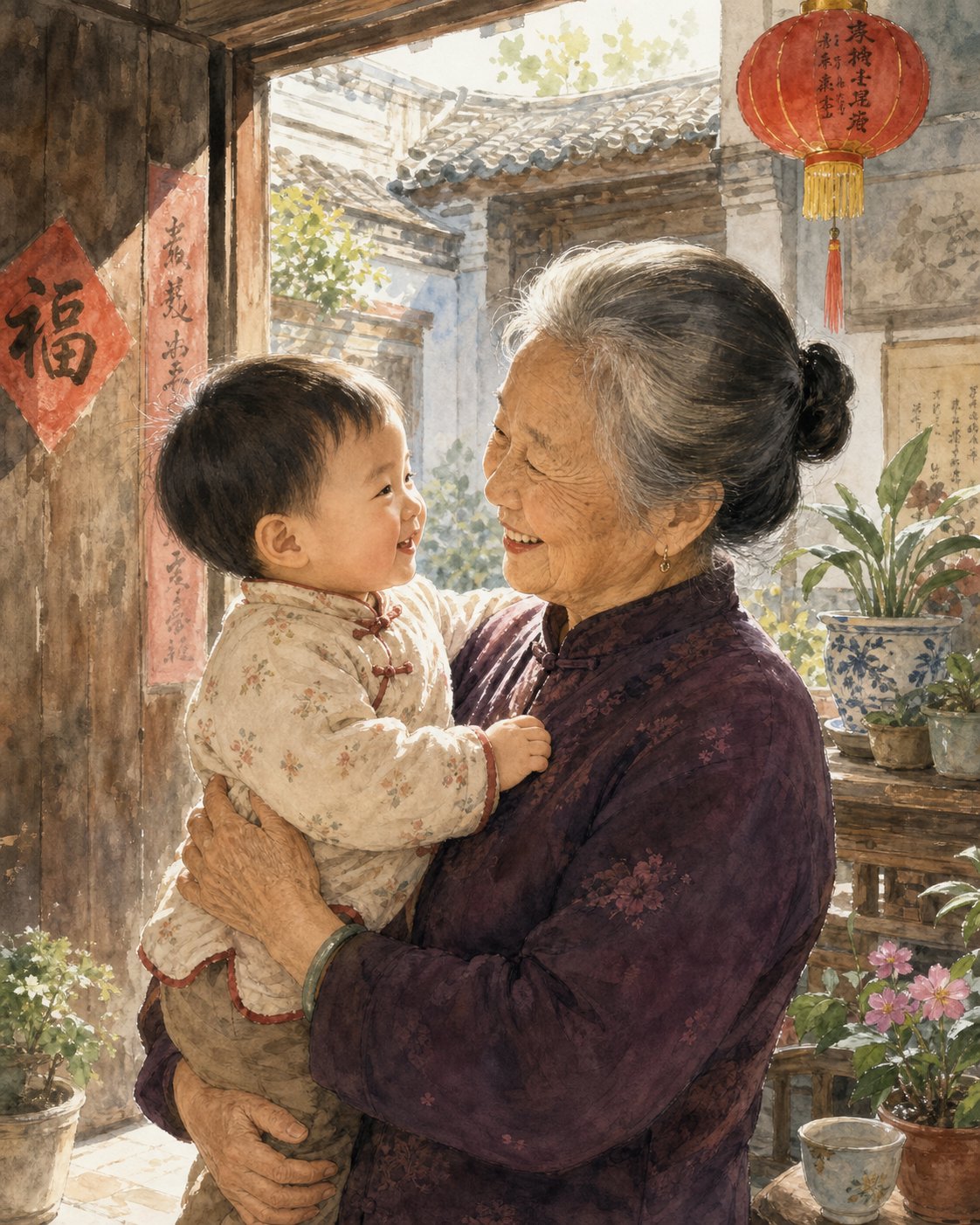
Generational differences shape how families use nicknames in chinese households. Older grandparents, particularly those raised before the 1980s, tend toward traditional patterns: 乖乖 (guai guai, "good child"), 心肝宝贝 (xin gan bao bei, "heart-liver treasure"), or simple reduplication of the child's surname character. These terms carry a Confucian warmth, affectionate but measured.
Younger parents, especially millennials and Gen Z, pull from a different playbook. They borrow from internet culture, anime, and global pop culture. A modern Chinese parent might call their toddler 小公主 (xiao gong zhu, "little princess"), 小王子 (xiao wang zi, "little prince"), or even English-influenced terms like 贝比 (bei bi, a phonetic rendering of "baby"). The emotional intent is the same, but the vocabulary reflects a generation raised on international media.
Children addressing parents and grandparents follow a strict formality system that reflects Confucian hierarchy. Unlike English, where "grandma" covers both sides of the family, Chinese distinguishes paternal from maternal relatives with entirely different words. 爷爷 (ye ye) means paternal grandfather, while 外公 (wai gong) means maternal grandfather. 奶奶 (nai nai) is paternal grandmother; 外婆 (wai po) is maternal grandmother. The character 外 (wai, "outside") in the maternal terms reflects the traditional view that the mother's family sits outside the core patrilineal unit.
Between siblings, affection often takes the form of role-based address. A younger sibling calling an older brother 哥 (ge) or older sister 姐 (jie) is not just naming a relationship. It is performing respect. Adding 小 before a younger sibling's name, like 小妹 (xiao mei, "little sister"), reverses the dynamic into protective tenderness.
Here is how family terms progress from most intimate and private to most respectful and public:
- 小名 / reduplication nicknames (e.g., 宝宝, 豆豆, 乖乖) - used only within the immediate family, behind closed doors
- 小 + name character (e.g., 小明, 小花) - used by extended family and very close family friends
- Role-based kinship terms (e.g., 哥哥, 妹妹, 爷爷) - used in all family settings, including public gatherings
- Full given name (e.g., 张明辉) - used by teachers, acquaintances, and in formal introductions
- Surname + title (e.g., 张先生, 张小姐) - used in professional or unfamiliar social contexts
This progression reveals something important about how Chinese culture structures intimacy. The closer someone is to you, the less formal their name for you becomes. Hearing your 小名 from someone signals that they belong to your innermost circle. It is a sound that carries childhood, family dinners, and unconditional belonging.
Family terms operate on a vertical axis of generational respect. But Chinese also navigates a horizontal axis, one that measures how public or private a term of endearment can safely travel. That social calibration, knowing which terms belong in which settings, is where many learners make their most visible mistakes.
The Formality Spectrum of Chinese Affection Words
Every term of endearment in Chinese carries social weight. Use the right one in the wrong setting and you will get anything from awkward silence to genuine offense. The vertical axis of family hierarchy is one dimension. The horizontal axis, how public or private a term can safely travel, is another entirely. Think of it as a formality ladder where each rung changes not just the word you choose but the social consequences of choosing it.
The Formality Ladder From Intimate to Public
Imagine you are introducing your partner at a work dinner. In English, you might say "my boyfriend" or "my girlfriend" without a second thought. In Chinese, the word you pick signals how serious the relationship is, how much respect you are showing the audience, and how traditional or modern you want to appear. Saying 老公 (lao gong) at a formal business dinner sounds overly casual, almost like announcing private bedroom talk. Saying 爱人 (ai ren) at the same dinner sounds measured and appropriate.
This is not just about vocabulary preference. It is about register, the social frequency you are broadcasting on. A couple in chinese culture learns to code-switch between registers instinctively. The same two people might use 宝宝 in bed, 老公/老婆 at home with family, 先生/太太 (xian sheng / tai tai) at formal events, and 他/她 (he/she) with a vague smile when coworkers ask about weekend plans.
The consequences of misjudging register are real. Using an intimate term in a public or professional setting can embarrass your partner, signal immaturity, or make others uncomfortable. Using an overly formal term in private can feel cold or distant, as though you are holding your partner at arm's length. The ladder below maps where each common term sits:
| Term | Formality Level (1-5) | Appropriate Setting | Who Uses It |
|---|---|---|---|
| 宝宝 (bao bao) | 1 - Most intimate | Private only: texts, bedroom, alone together | Couples in established relationships; very close |
| 小猪/傻瓜 (xiao zhu / sha gua) | 1 - Most intimate | Private or among very close friends who know the couple | Playful couples; younger generation |
| 老公/老婆 (lao gong / lao po) | 2 - Casual intimate | Home, casual outings, among friends and family | Committed couples, married or long-term |
| 亲爱的 (qin ai de) | 2 - Casual intimate | Messages, phone calls, relaxed social settings | Couples at any stage; slightly literary tone |
| 男朋友/女朋友 (nan peng you / nu peng you) | 3 - Neutral | Social introductions, conversations with acquaintances | Anyone describing a boyfriend in chinese or girlfriend in mandarin |
| 爱人 (ai ren) | 3 - Neutral | Semi-formal settings, workplace mentions, older generation | Married couples; common in mainland China |
| 对象 (dui xiang) | 3 - Neutral | Casual to semi-formal; answering "are you seeing someone?" | All ages; means "partner" without specifying marriage |
| 先生/太太 (xian sheng / tai tai) | 4 - Formal | Business dinners, official events, speaking to elders | Married couples in formal contexts |
| 伴侣 (ban lu) | 5 - Most formal | Legal documents, official forms, public speeches | Any couple; gender-neutral and institutional |
Notice how the word for lover in chinese shifts depending on context. 爱人 literally means "love person," but its register is surprisingly neutral and even slightly formal in mainland usage. Meanwhile, 情人 (qing ren), which also translates as "lover," carries connotations of illicit romance or extramarital affairs. Same English translation, completely different social signal. This is why direct translation fails so often with Chinese affection vocabulary.
If someone asks you how to say bf in chinese, the answer depends entirely on who is asking and who is listening. Among friends, 男朋友 (nan peng you) works perfectly. In a text to the person themselves, 老公 or a private nickname feels natural. On a government form, 伴侣 or 配偶 (pei ou, "spouse") is the only appropriate choice.
Gender Dynamics and Same-Sex Relationship Terms
Traditional Chinese affection terms are heavily gendered. 老公 is exclusively for male partners; 老婆 is exclusively for female partners. The entire system assumes heterosexual pairing, which creates a gap that younger Chinese speakers have been actively filling.
In same-sex relationships, couples navigate this in several ways. Some adopt the existing terms regardless of gender, with two women both using 老婆 for each other or two men both using 老公. Others prefer gender-neutral alternatives like 伴侣 (ban lu, "companion/partner"), 对象 (dui xiang, "partner/significant other"), or 另一半 (ling yi ban, "other half"). These terms avoid gendered assumptions while still communicating commitment.
Chinese internet culture has also generated its own vocabulary. Terms like 同志 (tong zhi, originally "comrade," reclaimed as "gay"), CP (from "coupling," used for any romantic pairing fans support), and 对家 (dui jia, "matched partner") circulate on platforms like Weibo and Douyin. Younger speakers in LGBTQ+ communities often mix English loanwords with Chinese slang, creating a fluid vocabulary that evolves faster than any textbook can track.
Gender dynamics also affect heterosexual usage in ways learners should understand. Certain terms carry directional expectations. 小公主 (xiao gong zhu, "little princess") flows naturally from a man to a woman but sounds patronizing in reverse. 大男孩 (da nan hai, "big boy") from a woman to a man can feel affectionate or condescending depending on tone and relationship power dynamics. The safest approach is to mirror what your partner uses and pay attention to what makes them visibly comfortable.
Workplace boundaries add another layer. Calling a colleague 亲 (qin, a shortened form of 亲爱的 popular in customer service and casual online chat) might feel friendly in a WeChat group but inappropriate in a meeting. Using 美女 (mei nu, "beautiful woman") or 帅哥 (shuai ge, "handsome guy") as casual address is common in service industries and among strangers, but directing these at a coworker repeatedly can cross into uncomfortable territory. The rule of thumb: if a term implies romantic interest or physical appraisal, it does not belong in professional settings regardless of how casually Chinese internet culture uses it elsewhere.
Formality and gender dynamics give you the social map. But language never stays still, and the terms Chinese speakers actually use today, especially online, look nothing like what textbooks printed even five years ago. The digital layer of affection vocabulary is where the fastest evolution is happening.
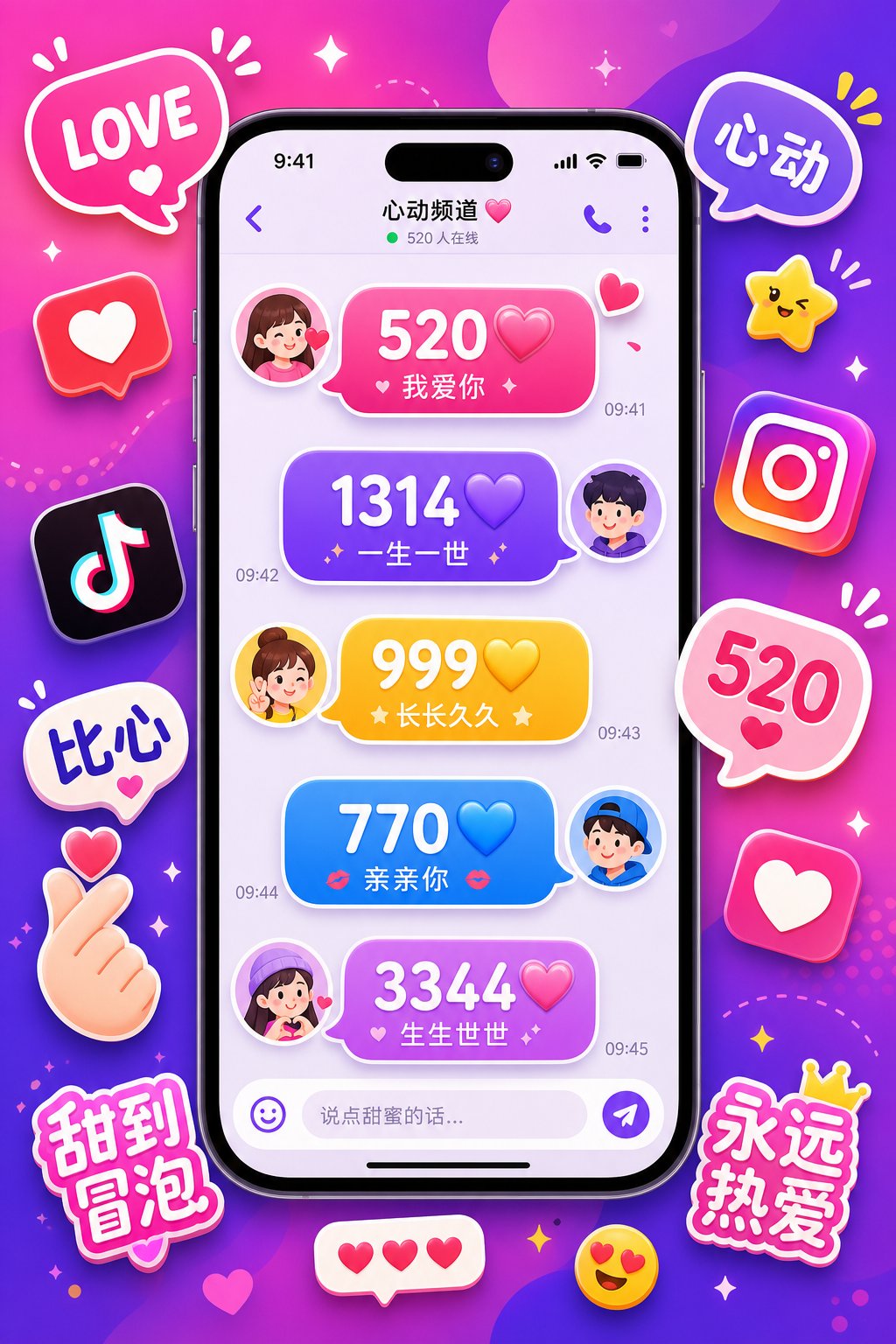
Modern Chinese Internet Pet Names and Digital Slang
Chinese affection vocabulary is evolving faster on screens than it ever did in spoken conversation. WeChat, Douyin, Weibo, and QQ have become laboratories where millions of young speakers invent, test, and discard pet names in real time. If you only learn the classic terms, you will sound like someone who learned English from a 1990s textbook. The digital layer is where chinese flirting phrases actually live today.
WeChat and Social Media Pet Names for the Digital Age
Walk through any Chinese social media platform and you will encounter terms that no dictionary covers. These are not random slang. They follow patterns, and understanding those patterns lets you decode new ones as they appear.
小哥哥 (xiao ge ge) and 小姐姐 (xiao jie jie) are everywhere. Literally "little older brother" and "little older sister," they function as flirty chinese address terms for attractive strangers or people you admire online. A comment like "小哥哥好帅" ("little brother, so handsome") under a Douyin video is not claiming a family relationship. It is a playful, slightly flirtatious compliment that keeps things light. The 小 prefix softens the kinship term into something closer to "cutie" or "hottie" without the directness those English words carry.
集美 (ji mei) emerged from a viral livestream moment and spread across platforms as an affectionate way for women to address female friends. It sounds like 姐妹 (jie mei, "sisters") spoken with a regional accent, and its playful distortion is part of the charm. Using it signals you are plugged into current internet culture.
Other terms cycle through popularity quickly. 绝绝子 (jue jue zi) means something is absolutely amazing and gets applied to people you admire. YYDS, short for 永远的神 (yong yuan de shen, "forever the god"), functions like calling someone the GOAT. When directed at a crush or partner, these trending expressions carry a flirty chinese energy that formal terms simply cannot replicate.
Generational divides are sharp here. Gen Z speakers on Douyin and QQ adopt and abandon terms within weeks. Millennials on WeChat tend to stick with expressions that have already proven staying power. Older users, meanwhile, often prefer voice messages over typed slang entirely, making the generational gap in digital affection language wider than in any previous era.
Number Codes and Texting Abbreviations in Chinese Romance
Chinese love phrases take a uniquely mathematical form in digital spaces. Because Mandarin numbers sound similar to common words, entire sentences get compressed into digit strings. This is not just shorthand. It is a creative system that lets you express affection in ways that feel like a shared secret.
The most essential number codes for romance:
- Number codes: 520 (wu er ling) sounds like 我爱你 (wo ai ni, "I love you"). 1314 (yi san yi si) echoes 一生一世 (yi sheng yi shi, "forever and always"). Combine them into 5201314 for "I love you forever." 99 (jiu jiu) sounds like 久久 (jiu jiu, "a long time"), expressing lasting devotion. 521 means "I love you" back.
- Internet slang terms: 亲 (qin) is a shortened 亲爱的 used constantly in casual chat and online shopping interactions. 么么哒 (me me da) mimics kissing sounds and works like sending a virtual kiss. 比心 (bi xin, "make a heart") references the finger-heart gesture popular in selfies.
- Platform-specific nicknames: On Douyin, calling someone 小哥哥/小姐姐 in comments is standard flirting. On WeChat, couples set each other's contact names to private jokes or number codes like 520. On Weibo, fans use CP names (pairing names combining characters from two people's names) that double as romantic shorthand.
- Trending expressions: 集美 for close female friends. 宝 (bao) used alone as a casual, gender-neutral "babe" in chat. 崽 (zai, "cub") as an affectionate address for someone younger or cuter. 啵啵 (bo bo) mimics a kiss sound and works as a sign-off in flirty messages.
Emoji conventions add another layer. The WeChat smile sticker [微笑] reads as passive-aggressive or sarcastic to Chinese users, not friendly. Sending it to a crush would feel cold or dismissive. Safe choices for flirty chinese texting include [捂脸] (the facepalm sticker, conveying shy embarrassment), [亲亲] (blowing a kiss), and strings of ❤️ or the simple ~ tilde at the end of a message, which softens tone the way a smile softens spoken words.
The number 520 has even spawned its own unofficial holiday. May 20th (5/20) functions as a secondary Valentine's Day in China, with couples exchanging gifts and posting declarations online. Sending a red packet of 5.20 yuan or 52.0 yuan on WeChat is a small but meaningful gesture that says "I love you" through the payment amount itself.
What makes these chinese love phrases powerful is their layered encoding. A message reading "晚安,520~" ("goodnight, 520~") packs affection, playfulness, and digital-native fluency into five characters and three digits. It signals that you belong to the same cultural moment as the person reading it. And that sense of shared belonging is, ultimately, what every term of endearment tries to create.
Digital slang gives you the vocabulary of the moment. But Mandarin is not the only Chinese language with its own affection vocabulary. Cantonese, Taiwanese Mandarin, Hokkien, and Shanghainese each carry distinct terms that sound nothing like their mainland equivalents, and using the wrong regional variant can mark you as an outsider just as quickly as using outdated slang.
Regional and Dialect Variations Across Chinese Languages
Ask how do you say sweetheart in chinese and you will get a different answer depending on whether you are in Guangzhou, Taipei, Xiamen, or Shanghai. Mandarin dominates textbooks, but over 200 million people speak Cantonese, Hokkien, or other regional languages as their primary tongue. Each carries its own pet names in chinese that sound nothing like their Mandarin equivalents, and mixing them up marks you instantly as someone who learned from a single-dialect source.
Cantonese Terms of Endearment and How They Differ
Cantonese operates with six tones instead of Mandarin's four, which gives its affection vocabulary a distinct melodic quality. The term 老婆 (lou5 po4) and 老公 (lou5 gung1) exist in Cantonese too, but the pronunciation shifts dramatically. More importantly, Cantonese has its own exclusive cantonese nicknames that Mandarin speakers would not recognize.
靓仔 (leng3 zai2) and 靓女 (leng3 neoi5) mean "handsome guy" and "pretty girl" respectively. These function as casual, flirty address terms in Hong Kong and Guangdong, similar to how 小哥哥/小姐姐 works in Mandarin internet culture but with broader everyday use. A market vendor might call you 靓仔 to get your attention. Between partners, it carries genuine admiration.
心肝 (sam1 gon1) survives in Cantonese with the same "heart and liver" meaning as Mandarin, but older Cantonese speakers also use 宝贝 (bou2 bui3) with a softer, rounder sound than its Mandarin counterpart. The Cantonese-specific BB (bi4 bi1), borrowed from English "baby," is extremely common among younger Hong Kong couples, often written in English letters even within Chinese text messages.
Taiwanese Mandarin and Southern Dialect Variations
Taiwanese Mandarin has a reputation for sounding softer and more playful than mainland standard Mandarin. The retroflex sounds (zh, ch, sh) flatten out, and sentence-final particles like 啦 (la), 喔 (o), and 耶 (ye) add a lilting, affectionate quality to everything. When a Taiwanese speaker says 寶貝 (bao bei), the slightly different tonal delivery and the trailing particles make it sound gentler than the same word spoken in Beijing.
Taiwan also uses unique expressions. 水某 (sui2 boo2) in Taiwanese Hokkien means "beautiful woman" and doubles as a compliment-nickname for a girlfriend. 阿娜答 (a na da), borrowed from the Japanese あなた (anata, "you/darling"), appears in older Taiwanese usage as an affectionate address for a spouse. If someone asks how do you say darling in chinese within a Taiwanese context, 阿娜答 or the standard 親愛的 both work, but the Japanese-influenced term carries a nostalgic, generational warmth.
Hokkien, spoken across Fujian, Taiwan, and Southeast Asian Chinese communities, uses 阿 (a) as a prefix even more heavily than Mandarin. Terms like 阿兄 (a-hiann) for an older boyfriend or 阿妹 (a-muē) for a younger girlfriend feel natural in Hokkien but would sound odd transplanted into Mandarin conversation. Shanghainese adds its own flavor with 阿拉 (a-la) as a first-person pronoun that creates intimacy simply through dialect solidarity, speaking Shanghainese together in a Mandarin-dominant city becomes its own form of endearment.
| Sentiment | Mandarin | Cantonese (Jyutping) | Taiwanese Mandarin / Hokkien | Shanghainese |
|---|---|---|---|---|
| Darling / Dear | 亲爱的 (qin ai de) | 亲爱的 (can1 oi3 dik1) | 阿娜答 (a na da) / 亲爱的 | 亲爱额 (qin ai eq) |
| Sweetheart / Baby | 宝贝 (bao bei) | 宝贝 (bou2 bui3) / BB | 寶貝 (bao bei) / 心肝仔 (sim-kuann-a) | 宝贝 (bau be) |
| Hubby | 老公 (lao gong) | 老公 (lou5 gung1) | 老公 / 阿兄 (a-hiann) | 老公 (lau kon) |
| Wifey | 老婆 (lao po) | 老婆 (lou5 po4) | 老婆 / 牵手 (khan-chhiu) | 老婆 (lau bu) |
| Handsome / Pretty | 帅哥 / 美女 | 靓仔 / 靓女 (leng3 zai2 / leng3 neoi5) | 帅哥 / 水某 (sui2 boo2) | 帅哥 / 漂亮姑娘 |
Notice how sweetheart in mandarin (宝贝) shares the same characters across most regions but sounds distinctly different in each pronunciation system. The Hokkien term 牵手 (khan-chhiu), meaning "holding hands," is a particularly beautiful alternative for "wife" that has no Mandarin equivalent. It frames marriage as two people walking through life hand in hand rather than through ownership or age-based familiarity.
Regional variation matters because Chinese speakers often identify strongly with their local language. Using a Cantonese nickname with a Cantonese-speaking partner, even imperfectly, signals effort and cultural respect that no amount of textbook Mandarin can match. The dialect you choose to learn pet names in says something about who you are trying to connect with and how deeply you want that connection to reach.
Knowing which regional terms exist is one thing. Pronouncing them correctly, and avoiding the tonal mistakes that turn affection into confusion or offense, is where the real challenge begins.

Common Mistakes and Cultural Pitfalls to Avoid
Knowing the right vocabulary is only half the battle. The other half is not accidentally calling your partner smelly when you meant ugly, or broadcasting bedroom-level intimacy at a family dinner. Non-native speakers make predictable mistakes with Chinese terms of endearment, and most of them fall into two categories: tonal errors that warp meaning and cultural missteps that signal you do not understand the social rules governing affection in Chinese.
Tonal Mistakes That Change Meaning Entirely
Mandarin's four tones are not optional seasoning. They are load-bearing structure. When you ask how do you say honey in chinese, the answer involves 亲爱的 (qin ai de) or 蜜糖 (mi tang), but mispronouncing the tones can land you somewhere embarrassing.
Here is how the four tones physically work, beyond pinyin numbers:
- First tone (flat high): Hold your voice at the top of your range, steady and level, like sustaining a single musical note. Think of humming "mmm" when something tastes good.
- Second tone (rising): Start in the middle and slide up, like the inflection at the end of an English question. "Really?" captures the shape.
- Third tone (dipping): Drop your voice low into a creaky, compressed valley, then let it rise slightly. Imagine the grumble of reluctant agreement: "ugh... fine." In connected speech, it often stays low without the final rise.
- Fourth tone (falling): Start high and drop sharply, like giving a firm command. "Stop!" has the same decisive downward energy.
These distinctions matter enormously in affection vocabulary. Consider 亲 (qin, first tone, meaning "dear" or "close") versus 琴 (qin, second tone, "a stringed instrument"). Or the common mistake with 宝 (bao): pronounced correctly in the third tone it means "treasure," but flattened into a first tone it loses its meaning entirely and confuses listeners.
Research on Mandarin tone errors shows that the most dangerous mistakes happen when both words are grammatically interchangeable and used in similar contexts. Calling someone 臭 (chou, fourth tone, "smelly") when you meant 丑 (chou, third tone, "ugly") is a classic example. Neither is flattering, but the confusion itself signals carelessness. Similarly, mixing up 问 (wen, fourth tone, "to ask") and 吻 (wen, third tone, "to kiss") has tripped up countless learners. Telling someone "you can kiss me if you have questions" is not the impression you want to make.
The most embarrassing tone mistakes are not the ones that sound like nonsense. They are the ones that sound like a completely different, perfectly valid sentence, leaving your partner unsure whether you misspoke or revealed something unintended.
For terms of endearment specifically, the third tone causes the most trouble. 宝贝 (bao bei), 老婆 (lao po), and 小 (xiao) all contain third tones that learners tend to flatten or rush. When you flatten the third tone in 宝, it stops sounding like "treasure" and starts sounding uncertain or foreign. The fix is physical: consciously drop your voice into the lowest part of your range and let it sit there. Do not rush the rise. In natural speech, especially before another third tone, the dip alone is enough.
Cross-Cultural Relationship Guidance for Non-Chinese Speakers
Tonal accuracy gets you understood. Cultural awareness keeps you from making your partner uncomfortable. These are the most common missteps non-native speakers make when using honey in a chinese relationship context:
Public versus private mismatch. Research published in Frontiers in Psychology confirms that public affection has historically been discouraged in Chinese culture, and while younger generations are more open, the norm still leans conservative compared to Western expectations. Calling your partner 宝宝 in front of their parents or colleagues can feel like you are performing intimacy for an audience rather than expressing genuine feeling. Many Chinese partners prefer affection to stay private, expressed through actions (carrying their bag, ordering their favorite dish) rather than public pet names.
Age-inappropriate terms. Calling an adult woman 乖 (guai, "good girl" in chinese contexts) can feel patronizing unless you are already in an established relationship where that dynamic is welcome. 乖 is primarily what parents say to children. Directed at a partner without clear mutual consent, it implies a power imbalance that many modern Chinese women find condescending rather than sweet. The same applies to 小丫头 (xiao ya tou, "little girl"), which works between long-term partners with an age gap but sounds dismissive from a new boyfriend.
Translating english nicknames directly. Many chinese nicknames in english do not survive the reverse trip. Calling someone "honey" by saying 蜂蜜 (feng mi, literal honey the substance) instead of using 亲爱的 or 宝贝 sounds bizarre, like calling your partner "bee secretion." Similarly, "sweetheart" translated character-by-character as 甜心 (tian xin) works in Chinese, but "sugar" as 糖 (tang) alone does not function as a standalone pet name the way it does in English.
Generational expectations. If your Chinese partner's parents are from an older generation, they may find any visible affection between you uncomfortable, not because they disapprove of the relationship but because their cultural framework treats love as something demonstrated through commitment and responsibility rather than verbal sweetness. Using pet names in front of them, even mild ones, can read as showing off rather than showing respect. Ask your partner what their family is comfortable with. The answer will vary enormously between families.
When in doubt, mirror your Chinese partner's lead. If they use your name in front of family, use theirs. If they switch to pet names when you are alone, match that shift. The safest strategy is not to guess what is appropriate but to follow the cues of the person who grew up inside the culture.
One final note on the question of how do you say honey in chinese within a relationship: the answer is almost never a direct translation of the English word. Chinese speakers reach for 亲爱的, 宝贝, or simply 亲 depending on context. The concept of "honey" as a pet name exists, but it maps onto Chinese terms that carry their own cultural weight rather than borrowing the English metaphor. Learning which Chinese term matches the emotional register you want, rather than translating your native language's pet names, is the single biggest shift that separates learners who connect from those who confuse.
Avoiding mistakes clears the path. But knowing what not to say only gets you so far. The real skill is knowing exactly which term fits the moment you are in, the relationship stage you have reached, and the emotional tone you want to strike.
Putting It All Together in Real Conversations
Knowing what not to say protects you from embarrassment. Knowing exactly what to say, and when, is what makes affection land. Chinese couples do not pick a single pet name and stick with it forever. They move through a natural progression, shifting terms as the relationship deepens, as trust builds, and as private language develops between two people. The right term at the right moment feels effortless. The wrong one feels forced, premature, or strangely distant.
Real Conversations Using Terms of Endearment
Context brings vocabulary to life. Here are four scenarios showing how Chinese speakers actually deploy love phrases in mandarin across different relationship moments:
Texting a partner goodnight (established couple):
"宝宝,早点睡,明天还要上班。晚安~520"
(Bao bao, zao dian shui, ming tian hai yao shang ban. Wan an~ 520)
"Baby, sleep early, you still have work tomorrow. Goodnight~ I love you"
Notice the 520 tucked at the end like a signature. The tilde (~) softens the message. This is intimate-register texting between people who have long passed the stage of formality.
Flirting with someone new online:
"小姐姐,你这张照片也太好看了吧?"
(Xiao jie jie, ni zhe zhang zhao pian ye tai hao kan le ba?)
"Hey gorgeous, this photo of yours is way too good-looking, isn't it?"
小姐姐 keeps things light and playful. No commitment implied, no presumption of closeness. The sentence-final 吧 invites a response without pressure.
A parent greeting a child after school:
"宝贝回来啦!饿不饿?妈妈给你做了你最爱吃的。"
(Bao bei hui lai la! E bu e? Mama gei ni zuo le ni zui ai chi de.)
"Treasure's home! Hungry? Mom made your favorite."
宝贝 here carries parental warmth rather than romance. The question about food is itself an expression of love, exactly the indirect affection style that defines how to say love in chinese through action rather than declaration.
A meaningful moment between long-term partners:
"老婆,这些年辛苦你了。"
(Lao po, zhe xie nian xin ku ni le.)
"Wifey, these years have been hard on you. Thank you."
This is not flashy. It is not cute. But for many Chinese couples, this kind of quiet acknowledgment carries more emotional weight than any romantic phrases in chinese could. The term 老婆 here signals deep familiarity, and the sentence itself demonstrates the chinese of love at its most authentic: gratitude expressed simply, without performance.
Choosing the Right Term for Your Relationship Stage
Chinese couples naturally escalate their pet names as intimacy grows. Jumping ahead feels presumptuous. Staying behind feels cold. Here is how the progression typically unfolds:
- First meeting / early interest: Use their name, or 小哥哥/小姐姐 in casual or online contexts. No pet names yet. Affection shows through attention and effort, not vocabulary. Saying 你好 with warmth already communicates interest.
- Early dating (first few weeks): 亲爱的 (qin ai de) enters text messages first, usually before spoken conversation. Some couples test 宝贝 (bao bei) in private texts. If it is reciprocated, the door is open. If met with silence or a name-only reply, pull back.
- Established relationship (months in): 宝宝 (bao bao), 宝贝, and playful nicknames like 小猪 or 傻瓜 become normal. Couples develop inside jokes and private code names. This is where like in mandarin chinese shifts from 喜欢 (xi huan, "like") to 爱 (ai, "love") in actual conversation.
- Committed partnership / pre-marriage: 老公/老婆 (lao gong / lao po) signals that both people see a future together. Using these terms is itself a soft declaration of commitment. Some couples adopt them after months; others wait years.
- Marriage and beyond: The full range is available. Long-married couples often simplify back to names or even 喂 (wei, "hey") spoken with decades of warmth behind it. The pet names matter less because the relationship itself has become the endearment. Formal settings call for 先生/太太 (xian sheng / tai tai), while private moments might still use 宝贝 with the same tenderness as year one.
Reading social cues matters more than memorizing this sequence. If your partner stiffens when you try a new term, it landed wrong. If they smile or repeat it back, you have found the right register. Pay attention to what they call you. Chinese speakers often signal their comfort level by offering a term first, giving you implicit permission to match it.
The best love phrases in mandarin are not the most poetic or the most creative. They are the ones that match the moment, the ones your partner actually wants to hear from you specifically. A perfectly timed 辛苦了 (xin ku le, "you've worked hard") after a long day can carry more romance than any elaborate pet name. That is the real lesson behind every term in this guide: affection in Chinese lives less in the word itself and more in the precision of choosing it at exactly the right time.
Frequently Asked Questions About Chinese Terms of Endearment
1. What is the most common Chinese term of endearment for a romantic partner?
宝贝 (bao bei), meaning 'treasure' or 'precious,' is the most widely used romantic pet name in modern Chinese. Both men and women use it freely, and it functions similarly to 'baby' or 'babe' in English. The term works across relationship stages, from early dating through marriage, though its tone and context shift its emotional weight. Parents also use it for young children, which adds a layer of protective tenderness when spoken between partners.
2. How do you say 'I love you' in Chinese text messages?
The most popular way is the number code 520 (wu er ling), which sounds phonetically similar to 我爱你 (wo ai ni, 'I love you'). Chinese speakers also combine codes for deeper meaning: 5201314 means 'I love you forever,' since 1314 echoes 一生一世 (yi sheng yi shi, 'for all of life'). May 20th (5/20) has even become an unofficial Valentine's Day in China, and sending WeChat red packets of 5.20 yuan is a common romantic gesture.
3. What is the difference between 老公/老婆 and 先生/太太 in Chinese?
老公 (lao gong, 'hubby') and 老婆 (lao po, 'wifey') are casual intimate terms used at home, among friends, and in relaxed settings. They signal deep emotional closeness and do not require legal marriage. 先生 (xian sheng, 'Mr./husband') and 太太 (tai tai, 'Mrs./wife') are formal equivalents reserved for business dinners, official events, and conversations with elders. Using 老公 at a formal work dinner sounds overly casual, while using 先生 in private can feel emotionally distant.
4. Why do Chinese couples call each other 小猪 (little pig)?
Unlike in Western culture where 'pig' is an insult, calling someone 小猪 (xiao zhu) in Chinese is playful and affectionate. It implies the person is cute, a little lazy, and lovable. Chinese romantic culture often expresses closeness through gentle teasing rather than grand declarations. The 小 (little) prefix softens any term into something endearing, and the nickname signals a comfort level where partners no longer need to impress each other.
5. Are Chinese terms of endearment different in Cantonese versus Mandarin?
Yes, significantly. While some terms like 老公/老婆 exist in both languages, Cantonese has exclusive pet names that Mandarin speakers would not recognize. 靓仔 (leng zai, 'handsome guy') and 靓女 (leng neoi, 'pretty girl') are everyday flirty address terms in Hong Kong and Guangdong. Younger Cantonese couples also commonly use BB (borrowed from English 'baby'), often written in English letters within Chinese messages. The six-tone system in Cantonese gives these terms a distinct melodic quality compared to Mandarin's four tones.