Why Chinese Virtue Names Carry Deeper Meaning for Boys
When parents browse lists of chinese boy names, they often encounter characters chosen for their pleasant sound or visual beauty. A virtue name operates on a different level entirely. It encodes a moral aspiration directly into a child's identity, turning the act of naming into something closer to a philosophical declaration.
Chinese virtue names, known as 德名 (dé míng), draw from a tradition where each character carries its own pronunciation, visual form, and semantic weight. Unlike names selected purely for aesthetic appeal or auspicious stroke counts, virtue names embed a specific ethical quality the parents wish their son to embody throughout his life. The chinese name meaning behind a virtue name is not decorative. It is instructional.
What Makes a Virtue Name Different From Other Chinese Names
Most chinese names for boys fall into broad thematic categories: nature imagery, aspirations of greatness, or references to strength and power. Virtue names belong to a narrower, more intentional tradition. They select characters tied directly to moral philosophy rather than physical attributes or worldly success.
Imagine the difference between naming a son 强 (qiáng, "strong") versus naming him 仁 (rén, "benevolent"). The first describes a quality you hope he possesses. The second describes how you hope he treats other people. That distinction, between personal attribute and moral orientation, is what sets virtue naming apart.
Three philosophical traditions feed into this practice. Confucianism contributes virtues of social harmony and duty: benevolence, righteousness, propriety. Buddhism introduces compassion and enlightenment. Daoism offers naturalness, authenticity, and inner strength. Each tradition shapes a different flavor of virtue name, giving parents a surprisingly rich palette to work with when choosing chinese baby names rooted in ethical meaning.
The Parental Aspiration Behind Virtue Naming
In Chinese culture, a person's name tells the story of their parents' ideals and hopes for them, aspirations that the name's bearer often embraces throughout their life. This is especially true with virtue names. A father who names his son 义明 (Yì Míng, "righteous and clear") is not simply labeling a child. He is setting a moral compass.
In Chinese naming tradition, giving a child a virtue name is an act of moral instruction, not just identification. The name becomes a daily reminder of who the parents hope their child will become.
This is why exploring chinese names and meanings through the lens of virtue offers something deeper than a standard name list. Rather than organizing names alphabetically or by popularity, the framework ahead groups them by the specific quality you wish for your son: courage, integrity, wisdom, compassion, perseverance. You pick the aspiration first, then find the character that carries it.
That approach mirrors how traditional Chinese families actually chose names. They started with a question: what kind of person do we hope he becomes? The answer pointed them toward a philosophical tradition, and from there, toward specific characters with centuries of moral weight behind them.
The Five Constant Virtues That Shape Traditional Boy Names
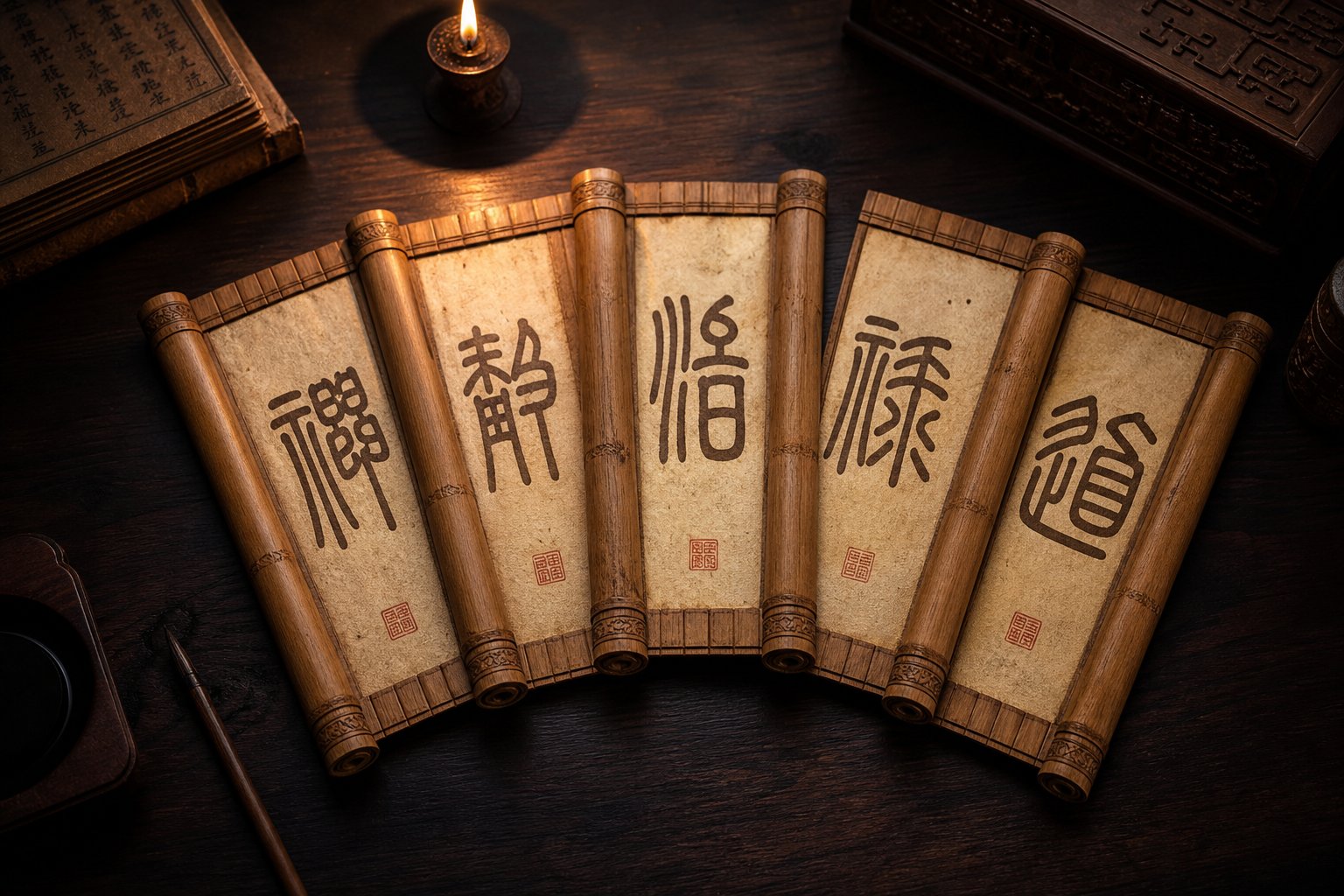
The foundation of chinese boy names and meanings rooted in moral philosophy starts with five characters that have shaped ethical thinking for over two millennia. Known as the Five Constant Virtues (五常, Wǔ Cháng), these characters, Ren Yi Li Zhi Xin, form the backbone of Confucian ethics and remain among the most powerful building blocks for boy names with meaning.
Each of these five characters carries a specific moral instruction. When used as chinese first names or as part of a two-character given name, they signal that the parents have drawn from the deepest well of Chinese philosophical tradition. You will notice that these are not abstract concepts locked in ancient texts. They are living characters that appear in names across every generation.
Ren 仁 and Yi 义 as Naming Characters
The character 仁 (rén) sits at the heart of Confucian thought. Break it apart and you find two components: the radical for "person" (亻) on the left and the number "two" (二) on the right. The visual logic is striking. Humanity, this character argues, exists in relationship. You cannot practice benevolence alone. It requires at least two people.
Confucius emphasized this virtue above all others. In the Analerta, he stated "仁者爱人" (rénzhě àirén): the benevolent person loves others. When parents place 仁 in a son's name, they are encoding a lifelong reminder that his worth will be measured by how he treats the people around him.
Complete name examples using 仁:
- 仁杰 (Rén Jié) - benevolent and outstanding
- 仁宇 (Rén Yǔ) - benevolence as vast as the universe
- 志仁 (Zhì Rén) - aspiring toward benevolence
The character 义 (yì) in simplified form, or 義 in traditional, carries a different moral weight. Its traditional form shows a sheep (羊) above the character for "self" (我). In classical Chinese thought, the sheep represented something offered up, a sacrifice. Righteousness, then, is the willingness to put principle above self-interest.
Mencius argued that 义 is the innate sense of shame and moral judgment that every person possesses. In the Mencius, he paired it directly with 仁, calling them the two essential qualities of a moral person. As a naming character, 义 tells the world that this boy should stand for what is right, even when it costs him something.
Complete name examples using 义:
- 义轩 (Yì Xuān) - righteous and noble
- 义博 (Yì Bó) - righteous and broad-minded
- 承义 (Chéng Yì) - inheriting righteousness
Li 礼 Zhi 智 and Xin 信 in Boy Names
The character 礼 (lǐ), written as 禮 in traditional form, combines the radical for "ritual" or "spiritual" (礻) with a phonetic component. It represents propriety, the system of social rituals and respectful behavior that holds communities together. In the Analerta, Confucius taught that without 礼, courage becomes recklessness and caution becomes timidity. As a naming character, it signals a hope that the boy will carry himself with dignity and treat social bonds with care.
Complete name examples using 礼:
- 礼贤 (Lǐ Xián) - propriety and virtue combined
- 礼明 (Lǐ Míng) - propriety illuminated by clarity
- 崇礼 (Chóng Lǐ) - revering propriety
智 (zhì) combines the character for "knowledge" (知) with "sun" or "day" (日). Picture wisdom as sunlight cutting through confusion. This is not mere intelligence or book learning. It is the capacity to see clearly, to distinguish right from wrong, and to make sound decisions under pressure. Confucius said "知者不惑" (zhìzhě bù huò): the wise are free from confusion.
Complete name examples using 智:
- 智远 (Zhì Yuǎn) - wisdom reaching far
- 智恒 (Zhì Héng) - enduring wisdom
- 明智 (Míng Zhì) - clear and wise
The fifth constant, 信 (xìn), is built from "person" (亻) standing beside "speech" (言). The visual message is direct: when a person speaks, their words should be trustworthy. This character represents faithfulness, reliability, and the keeping of promises. The classical saying "言必信, 行必果" (yán bì xìn, xíng bì guǒ) captures its essence: your words must be trustworthy, your actions must produce results.
Complete name examples using 信:
- 信达 (Xìn Dá) - trustworthy and accomplished
- 信哲 (Xìn Zhé) - faithful and philosophical
- 立信 (Lì Xìn) - establishing trustworthiness
Complete Name Examples Using the Five Constants
When you look at names in chinese and meanings side by side, the Five Constants reveal how a single character can produce very different names depending on its pairing. The table below provides a systematic reference for each virtue, showing both character forms, pronunciation, and classical roots. These chinese symbols and meanings have served as chinese given names male for centuries, and they continue to carry cultural authority.
| Character (Simplified/Traditional) | Pinyin | Core Meaning | Example Full Names | Classical Source Text |
|---|---|---|---|---|
| 仁 / 仁 | Rén | Benevolence, humaneness, love for others | 仁杰 (Rén Jié), 志仁 (Zhì Rén), 仁宇 (Rén Yǔ) | Analerta: "仁者爱人" (The benevolent love others) |
| 义 / 義 | Yì | Righteousness, moral duty, justice | 义轩 (Yì Xuān), 承义 (Chéng Yì), 义博 (Yì Bó) | Mencius: "生, 亦我所欲也; 义, 亦我所欲也" (Life is what I desire; righteousness is also what I desire) |
| 礼 / 禮 | Lǐ | Propriety, ritual, respectful conduct | 礼贤 (Lǐ Xián), 崇礼 (Chóng Lǐ), 礼明 (Lǐ Míng) | Analerta: "不学礼, 无以立" (Without learning propriety, one cannot stand) |
| 智 / 智 | Zhì | Wisdom, discernment, clarity of judgment | 智远 (Zhì Yuǎn), 明智 (Míng Zhì), 智恒 (Zhì Héng) | Analerta: "知者不惑" (The wise are free from confusion) |
| 信 / 信 | Xìn | Faithfulness, trustworthiness, keeping one's word | 信达 (Xìn Dá), 立信 (Lì Xìn), 信哲 (Xìn Zhé) | Analerta: "人而无信, 不知其可也" (A person without trustworthiness, I do not know what they can accomplish) |
Each of these five characters works as either the first or second element in a two-character given name. Placing the virtue character first (仁杰, 义轩) puts the moral quality in the leading position, making it the defining trait. Placing it second (志仁, 承义) frames the virtue as something to be pursued or inherited, adding a sense of aspiration and movement.
The Five Constants give you a compact starting point, but they represent only the most well-known layer of virtue naming. Beyond these five pillars, Chinese philosophy offers a wider range of moral characters that most name lists overlook entirely, characters for courage, perseverance, humility, and integrity that open up less common but equally powerful naming possibilities.
Lesser-Known Virtue Characters Most Name Lists Miss
The Five Constants get all the attention, but Chinese moral philosophy runs far deeper than five characters. Parents looking for unique boy names with meaning will find a richer, less crowded field in the virtue characters that sit just outside that famous set. These characters carry equal philosophical weight and often produce more distinctive names precisely because fewer families reach for them.
Eight characters in particular deserve closer attention. Each one encodes a specific moral quality, and each combines naturally with complementary characters to form powerful chinese male name options that stand apart from the usual lists.
Courage and Perseverance Characters for Strong Names
Parents who want powerful chinese male names often gravitate toward characters that convey inner toughness and the will to endure. Two characters stand out in this category.
The character 勇 (yǒng) means courage, but not reckless boldness. Its structure shows "strength" (力) rising from "use" (用), suggesting strength applied purposefully. In traditional Chinese thought, courage without wisdom is dangerous, so 勇 in a name implies bravery guided by principle.
- 勇 (yǒng) - courage, bravery applied with purpose. Primarily masculine.
Name pairings:
- 勇哲 (Yǒng Zhé) - courageous and wise
- 勇德 (Yǒng Dé) - courageous and virtuous
- 承勇 (Chéng Yǒng) - inheriting courage
The character 毅 (yì) represents perseverance, the grit to push through difficulty without quitting. It combines the radical for "death" or "ending" (殳) with components suggesting resolve. This is the virtue of finishing what you start, of refusing to break under pressure.
- 毅 (yì) - perseverance, firmness of will, unyielding resolve. Primarily masculine.
Name pairings:
- 毅然 (Yì Rán) - resolute and decisive
- 毅恒 (Yì Héng) - persevering and constant
- 弘毅 (Hóng Yì) - broad-minded and resolute (from the Analerta: "士不可以不弘毅")
Two more characters in this strength-oriented category round out the options. Loyalty and diligence both carry a quiet toughness that appeals to parents seeking masculine chinese names with substance.
- 忠 (zhōng) - loyalty, devotion, faithfulness to duty. The character places "center" (中) above "heart" (心), meaning your heart stays centered on what matters. Primarily masculine.
Name pairings:
- 忠贤 (Zhōng Xián) - loyal and virtuous
- 忠毅 (Zhōng Yì) - loyal and resolute
- 建忠 (Jiàn Zhōng) - establishing loyalty
- 勤 (qín) - diligence, industriousness, sustained effort. The character combines "strength" with "collective," suggesting consistent work over time rather than a single burst of effort. Unisex, though slightly more common in male names.
Name pairings:
- 勤学 (Qín Xué) - diligent in learning
- 勤远 (Qín Yuǎn) - diligence reaching far
- 志勤 (Zhì Qín) - aspiring toward diligence
Integrity and Humility Characters for Refined Names
Not every parent wants a name that sounds forceful. Some prefer chinese masculine names that convey quiet moral refinement, the kind of character that earns respect through restraint rather than assertion. Four virtue characters serve this purpose beautifully.
- 廉 (lián) - integrity, incorruptibility, moral cleanliness. Historically associated with upright officials who refused bribes. Primarily masculine.
Name pairings:
- 廉正 (Lián Zhèng) - integrity and uprightness
- 廉明 (Lián Míng) - integrity illuminated
- 崇廉 (Chóng Lián) - revering integrity
- 谦 (qiān) - humility, modesty, the willingness to learn from others. The character uses the "speech" radical (讠) combined with a phonetic element suggesting restraint. Unisex, though traditionally more common for boys.
Name pairings:
- 谦益 (Qiān Yì) - humble and beneficial
- 谦博 (Qiān Bó) - humble and broad-minded
- 文谦 (Wén Qiān) - cultured and humble
- 诚 (chéng) - sincerity, being true to one's own heart. The character combines "speech" (言) with "complete" (成), meaning your words are whole reflections of your actual thoughts. Unisex.
Name pairings:
- 诚轩 (Chéng Xuān) - sincere and noble
- 诚远 (Chéng Yuǎn) - sincerity reaching far
- 至诚 (Zhì Chéng) - utmost sincerity
- 孝 (xiào) - filial piety, devotion to parents and family. The character shows "old" (老) above "child" (子), visually depicting a child supporting an elder. Unisex, though historically emphasized more for sons.
Name pairings:
- 孝贤 (Xiào Xián) - filial and virtuous
- 孝文 (Xiào Wén) - filial and cultured
- 承孝 (Chéng Xiào) - carrying forward filial devotion
Which Virtue Characters Are Exclusively Masculine
Here is where gender conventions matter for parents choosing a chinese male name. Not all virtue characters carry the same gender weight. Some read as unmistakably male to native Chinese speakers, while others cross gender lines comfortably.
Characters that are exclusively or strongly masculine:
- 勇 (yǒng) - courage. Rarely used for girls. Its association with physical bravery and warrior spirit makes it read as strongly male.
- 毅 (yì) - perseverance. Almost exclusively masculine. Its hard, decisive sound reinforces this perception.
- 忠 (zhōng) - loyalty. Historically tied to male duty toward rulers and country. Very rarely appears in female names.
- 廉 (lián) - integrity. Associated with male officials and public service. Strongly masculine.
Characters that are unisex or lean slightly masculine:
- 勤 (qín) - diligence. Used for both genders, though slightly more common for boys.
- 谦 (qiān) - humility. Genuinely unisex. Works equally well in male and female names.
- 诚 (chéng) - sincerity. Unisex, with a slight male lean in traditional usage.
- 孝 (xiào) - filial piety. Unisex in principle, though cultural emphasis on sons carrying family duty gives it a male association.
Understanding these conventions helps you choose a name that communicates exactly what you intend. A name built from 勇 or 毅 signals unmistakable masculine strength. A name using 谦 or 诚 carries moral weight without locking into rigid gender expectations.
These eight characters give you a vocabulary that goes well beyond the standard lists. But knowing individual characters is only half the equation. The philosophical tradition behind each one, whether Confucian, Buddhist, or Daoist, shapes its deeper resonance and determines what kind of moral world you are placing your son's name within.
Confucian Buddhist and Daoist Roots of Virtue Names
Every virtue character belongs to a philosophical family. When you choose a traditional chinese name built from a moral character, you are not just picking a meaning. You are placing your son within a specific intellectual lineage that shapes how that virtue is understood, practiced, and expressed. Knowing which tradition a character comes from helps you choose with intention rather than guesswork.
Three streams of thought feed into the chinese name definition of virtue: Confucianism, Daoism, and Buddhism. Each tradition asks a different question about what it means to live well, and each produces a distinct flavor of name.
Confucian Names and Social Virtue
Confucian virtue characters emphasize how a person relates to others. They are fundamentally social. The characters 仁 (ren), 义 (yi), 礼 (li), 孝 (xiao), and 忠 (zhong) all describe moral qualities that only make sense in the context of relationships, whether with family, community, or the state.
The Analects grounds these virtues in concrete situations. Benevolence (仁) is defined as "caring for others." Righteousness (义) emerges when a person "thinks of righteousness when faced with gain." Trustworthiness (信) is what allows a ruler to govern, because without it, "the state will not stand." These are not abstract ideals floating in philosophical space. They are instructions for how to behave in specific roles: as a son, a friend, an official, a leader.
When you give your son a Confucian virtue name, you are expressing a hope that he will excel in his relationships. These chinese given names carry an outward orientation. They say: this boy will contribute to the harmony of the world around him. Characters like 孝 (filial piety) and 忠 (loyalty) specifically encode duty, the idea that moral strength is demonstrated through service to others.
Daoist Names Rooted in Natural Harmony
Daoist virtue names work from the opposite direction. Where Confucian names point outward toward social duty, Daoist names point inward toward authenticity and naturalness. The key characters here are 德 (de, virtue as inner power), 道 (dao, the way), 真 (zhen, truth or genuineness), and 朴 (pu, simplicity or uncarved potential).
The Dao De Jing offers a striking perspective on virtue that directly connects to naming philosophy. Chapter 38 states that the highest virtue does not consciously try to be virtuous, and therefore truly possesses virtue. This paradox shapes how Daoist names feel. They suggest effortlessness, a moral quality that arises naturally rather than through discipline or social pressure.
The Dao produces all things, nourishes them, brings them to their full growth, nurses them, completes them, matures them, maintains them, and overspreads them. It produces them and makes no claim to the possession of them; it carries them through their processes and does not vaunt its ability in doing so. This is called its mysterious operation.
This passage from Chapter 51 of the Dao De Jing captures the spirit behind Daoist mandarin names and meanings. A name like 德明 (De Ming, "virtue illuminated") or 道真 (Dao Zhen, "the way of truth") carries a quiet confidence. It does not announce moral ambition the way a Confucian name does. Instead, it suggests a boy who will find his strength through alignment with something larger than social expectation.
Daoist names tend to feel less formal and more poetic. Characters like 朴 (simplicity) and 真 (genuineness) appeal to parents who value authenticity over achievement, inner peace over outward accomplishment.
Buddhist Influence on Compassion-Based Names
Buddhism arrived in China during the Han dynasty and gradually wove itself into naming traditions. Buddhist-influenced virtue characters focus on compassion, awakening, and the cultivation of goodness. The key characters are 慈 (ci, compassion or loving-kindness), 悟 (wu, enlightenment or awakening), and 善 (shan, goodness or virtue).
These characters carry a gentler energy than either Confucian or Daoist alternatives. A name like 慈恩 (Ci En, "compassionate grace") or 悟明 (Wu Ming, "awakened clarity") suggests a boy whose strength lies in empathy and understanding rather than duty or naturalness. The character 善 (shan) is particularly versatile. It appears across all three traditions but carries its strongest spiritual weight in Buddhist contexts, where it implies active cultivation of goodness through mindful practice.
Buddhist names are less common than Confucian ones in mainstream naming, which makes them distinctive. They appeal to families who value gentleness and spiritual depth, or who want traditional chinese names that carry a contemplative quality without sounding old-fashioned.
Understanding these three roots helps you make a more informed choice. A Confucian name says: "I hope my son serves the world with integrity." A Daoist name says: "I hope my son finds his true nature and lives authentically." A Buddhist name says: "I hope my son moves through life with compassion and awareness." The virtue character you choose is not just a word. It is a philosophical commitment, and knowing which tradition you are drawing from gives that commitment clarity and depth.
Of course, a single character only becomes a complete name when paired with a second character. The art of combining virtue characters with complementary elements, whether drawn from nature, scholarship, or elemental theory, is where naming moves from philosophy into craft.
How to Build Complete Names From Virtue Characters
A virtue character on its own is a moral statement. Paired with a second character, it becomes a complete identity. The craft of building male chinese given names lies in choosing that second character wisely, because it shapes the tone, imagery, and even the elemental balance of the full name. Think of it this way: the virtue character sets the ethical direction, and the complementary character determines the landscape your son walks through.
Chinese two-character given names follow a pairing logic that falls into three broad categories. Each category produces a different emotional register, giving you surprising flexibility from a single virtue character.
Pairing Virtue Characters With Nature and Scholarly Elements
The most common pairing strategies for chinese male first names work like this:
- Virtue + Nature element: Combines moral quality with imagery from the natural world. 德明 (Dé Míng) pairs "virtue" with "brightness," evoking moral clarity like sunlight. 仁泽 (Rén Zé) pairs "benevolence" with "marsh" or "beneficence," suggesting kindness that nourishes like water flowing to fertile land.
- Virtue + Aspiration: Combines moral quality with a character expressing ambition or movement. 义飞 (Yì Fēi) pairs "righteousness" with "to fly," creating an image of principled ambition soaring upward. 毅行 (Yì Xíng) pairs "perseverance" with "to walk" or "to act," grounding resolve in daily practice.
- Virtue + Scholarly character: Combines moral quality with characters tied to learning, culture, or refinement. 信文 (Xìn Wén) pairs "trustworthiness" with "literature" or "culture." 诚博 (Chéng Bó) pairs "sincerity" with "broad learning." These combinations appeal to parents who value intellectual depth alongside moral character.
You will notice that the same virtue character shifts meaning depending on its partner. Take 德 (dé, virtue). Pair it with 明 (míng, bright) and you get a name suggesting illuminated moral character. Pair it with 林 (lín, forest) and the name evokes virtue growing naturally, like trees in a grove. Pair it with 铭 (míng, inscription) and the name implies virtue engraved permanently into one's identity. One character, three completely different chinese first names male speakers would recognize as distinct in feeling.
How Five Elements Theory Guides Character Combinations
Beyond meaning and sound, traditional naming considers elemental balance. The Wu Xing (五行) system assigns each Chinese character an elemental association based on its radical: Wood (木), Fire (火), Earth (土), Metal (金), or Water (水). When building a male chinese first name, the goal is to pair characters whose elements support each other through the Generating Cycle rather than clash through the Controlling Cycle.
Here is how this works in practice. If a child's birth chart (BaZi) shows a deficiency in Water, a naming specialist might pair a virtue character with a Water-element complement. For example, 德泽 (Dé Zé) combines 德 (Earth element, due to its grounding moral quality) with 泽 (Water element, carrying the water radical 氵). Earth and Water interact through the Controlling Cycle, so a specialist might instead recommend 德涵 (Dé Hán), where 涵 (Water) carries a softer, more contained energy that harmonizes better.
The elemental associations of common complementary characters break down like this:
- Wood (木): 林 (lín, forest), 桐 (tóng, paulownia tree), 松 (sōng, pine) — growth, vitality
- Fire (火): 明 (míng, bright), 煜 (yù, radiant), 炎 (yán, flame) — illumination, warmth
- Earth (土): 坤 (kūn, earth), 岳 (yuè, mountain peak), 城 (chéng, city) — stability, grounding
- Metal (金): 铭 (míng, inscription), 锐 (ruì, sharp), 鑫 (xīn, prosperity) — precision, strength
- Water (水): 涵 (hán, contain), 泽 (zé, marsh), 润 (rùn, moist) — depth, adaptability
Not every family consults a BaZi chart, but understanding elemental pairing helps explain why certain name combinations feel balanced while others feel off. A name stacking two Fire-element characters might sound energetic but lack grounding. A name combining Metal and Wood (a controlling relationship where Metal cuts Wood) might create subtle tension. The Generating Cycle, where Wood feeds Fire, Fire creates Earth, Earth bears Metal, Metal collects Water, and Water nourishes Wood, offers the smoothest pairings.
Multiple Name Options From a Single Virtue Character
To show how one virtue character opens up a range of complete names, the table below demonstrates pairing options across different elements and categories. Each combination produces a distinct chinese first name with its own nuance and elemental profile.
| Virtue Character | Complementary Character | Combined Name | Pinyin | Combined Meaning | Element Association |
|---|---|---|---|---|---|
| 德 (virtue) | 明 (bright) | 德明 | Dé Míng | Virtue illuminated by clarity | Earth + Fire |
| 德 (virtue) | 林 (forest) | 德林 | Dé Lín | Virtue growing naturally like a forest | Earth + Wood |
| 德 (virtue) | 铭 (inscription) | 德铭 | Dé Míng | Virtue engraved permanently | Earth + Metal |
| 义 (righteousness) | 飞 (fly) | 义飞 | Yì Fēi | Righteousness soaring high | Metal + Water |
| 义 (righteousness) | 松 (pine) | 义松 | Yì Sōng | Righteousness steady as a pine tree | Metal + Wood |
| 信 (trust) | 文 (culture) | 信文 | Xìn Wén | Trustworthiness paired with learning | Metal + Water |
| 信 (trust) | 泽 (marsh) | 信泽 | Xìn Zé | Trust that nourishes like water | Metal + Water |
| 毅 (perseverance) | 轩 (noble) | 毅轩 | Yì Xuān | Resolute and dignified | Wood + Earth |
| 毅 (perseverance) | 涵 (contain) | 毅涵 | Yì Hán | Perseverance with depth | Wood + Water |
| 诚 (sincerity) | 煜 (radiant) | 诚煜 | Chéng Yù | Sincerity that radiates outward | Metal + Fire |
Notice how 德 alone generates three entirely different names depending on whether you pair it with light, nature, or permanence. This is the real power of the two-character system. You are not choosing from a fixed list of chinese male first names. You are constructing meaning from components, the way a sentence is built from words.
The pairing process gives you creative control, but one more factor shapes how a name actually lands in daily life: how it sounds when spoken aloud alongside the family surname. Tonal flow between surname and given name determines whether a name feels musical or awkward, and the most common Chinese surnames each create different acoustic environments that favor certain virtue combinations over others.
Surname Compatibility and Tonal Pairing for Virtue Names
You have picked the perfect virtue character. It carries the right meaning, the right philosophical weight, the right elemental balance. But say the full name out loud, surname included, and something feels off. The syllables bump into each other, or the pitch pattern falls flat. This is the tonal dimension of Chinese naming, and it matters more than most parents realize until they hear the name spoken repeatedly in daily life.
Mandarin Chinese uses four main tones, and the way those tones sequence across a full name determines whether it sounds musical or monotonous. Since the most common chinese last names in mainland China, Li (李), Wang (王), and Zhang (张), are shared by more than 270 million people, getting the tonal pairing right with these asian surnames is a practical concern for a huge number of families.
Matching Virtue Names to Common Surnames
Each of the five most common chinese last names carries a fixed tone that sets the acoustic starting point for the full name:
- 王 (Wáng) — Tone 2 (rising)
- 李 (Lǐ) — Tone 3 (dipping)
- 张 (Zhāng) — Tone 1 (flat/high)
- 刘 (Liú) — Tone 2 (rising)
- 陈 (Chén) — Tone 2 (rising)
The general principle is straightforward: avoid stacking the same tone across all syllables. A name like 王仁文 (Wáng Rén Wén), where all three syllables sit in Tone 2, creates a flat, droning effect. Contrast that with 王毅轩 (Wáng Yì Xuān), which moves from Tone 2 to Tone 4 to Tone 1, producing a satisfying rise-fall-level contour that feels dynamic when spoken aloud.
Tonal Flow and Avoiding Awkward Sound Combinations
The smoothest common chinese names follow a pattern where tones alternate or create a clear directional arc. Here are the combinations that native speakers find most pleasing:
- Rising + Falling + Level (2-4-1): Creates a wave-like rhythm. Example: 陈毅松 (Chén Yì Sōng)
- Flat + Dipping + Falling (1-3-4): Builds tension then resolves. Example: 张勇毅 (Zhāng Yǒng Yì)
- Dipping + Rising + Falling (3-2-4): Lifts then drops decisively. Example: 李仁义 (Lǐ Rén Yì)
Combinations to avoid include three consecutive same-tone syllables and two consecutive Tone 3 syllables (which trigger a sandhi rule where the first Tone 3 shifts to Tone 2, potentially creating confusion with other characters). For two-character given names, the pairing is simpler: just ensure the given name's tones do not mirror the surname's tone exactly.
The table below matches specific virtue names to the five most common chinese last names, rated by tonal flow:
| Surname | Tone | Recommended Virtue Names | Tones of Full Name | Flow Rating |
|---|---|---|---|---|
| 王 Wáng | 2 (rising) | 毅轩 (Yì Xuān) | 2-4-1 | Excellent |
| 王 Wáng | 2 (rising) | 德铭 (Dé Míng) | 2-2-2 | Poor (monotone) |
| 李 Lǐ | 3 (dipping) | 诚煜 (Chéng Yù) | 3-2-4 | Excellent |
| 李 Lǐ | 3 (dipping) | 信达 (Xìn Dá) | 3-4-2 | Good |
| 张 Zhāng | 1 (flat) | 义飞 (Yì Fēi) | 1-4-1 | Good |
| 张 Zhāng | 1 (flat) | 勇毅 (Yǒng Yì) | 1-3-4 | Excellent |
| 刘 Liú | 2 (rising) | 智远 (Zhì Yuǎn) | 2-4-3 | Good |
| 刘 Liú | 2 (rising) | 廉正 (Lián Zhèng) | 2-2-4 | Fair |
| 陈 Chén | 2 (rising) | 毅然 (Yì Rán) | 2-4-2 | Good |
| 陈 Chén | 2 (rising) | 礼贤 (Lǐ Xián) | 2-3-2 | Fair |
Generation Names and the Family Naming System
Tonal pairing becomes even more constrained in families that follow the generation name (辈分, bèifèn) system. In this tradition, males of the same generation share one fixed character in their given name, typically the first of the two given-name characters. These generation names are worked out long in advance and cannot be changed, often recorded in a family genealogy book or encoded in a poem expressing wishes for the lineage.
Imagine your family's generation character is 文 (Wén, Tone 2). Your surname is 陈 (Chén, Tone 2). You now need a virtue character in the second position that breaks the Tone 2 pattern. Characters like 毅 (yì, Tone 4) or 谦 (qiān, Tone 1) would work beautifully, producing 陈文毅 (Chén Wén Yì, 2-2-4) or 陈文谦 (Chén Wén Qiān, 2-2-1). Both end with a tonal shift that rescues the name from monotony.
For families using this system, the generation character functions almost like chinese middle names in Western naming conventions. It occupies a fixed position, and the virtue character must work around it. This limits your options but also simplifies the decision: you are choosing one character rather than two, and your only job is to find a virtue character whose tone and meaning complement both the surname and the generation character already in place.
The generation name tradition is less strictly observed today than it was a century ago, but many families still honor it, especially for firstborn sons. If your family maintains a genealogy poem, check which generation character applies before selecting your virtue character. The names and surnames in your lineage create a fixed acoustic and semantic environment that your chosen virtue name must harmonize with.
Tonal flow and family systems are the structural constraints. But names also carry cultural weight that shifts over time. A virtue name that sounded dignified in the Tang dynasty might feel stiff to modern ears, while one that seemed plain a generation ago might now feel refreshingly authentic. Understanding how these names have traveled through history, and who carried them, adds another layer to the decision.
Historical Figures Who Carried Virtue Names Through the Ages
Virtue names are not theoretical. Real people carried them, lived under their weight, and in many cases, fulfilled the moral aspirations their parents encoded into those characters. Looking at famous chinese names from history reveals how virtue naming worked in practice across more than two thousand years of Chinese civilization.
These are not obscure figures buried in footnotes. They are generals, scholars, poets, and reformers whose names became inseparable from their legacies. When you choose a virtue name for your son, you are placing him in a lineage of men whose names told the world what they stood for.
Classical Scholars and Warriors With Virtue Names
The connection between a virtue name and a life lived in accordance with that virtue shows up repeatedly across Chinese history. Some of these men are remembered precisely because their actions matched the moral promise of their names. Others carried virtue names that became ironic or aspirational in hindsight. Either way, the names carried cultural gravity.
When people search for chinese names for warrior figures, they often encounter names where courage, loyalty, or righteousness sits at the core. The tradition of giving military men virtue names was deliberate. Parents who hoped their sons would serve with honor chose characters that would remind them of duty even on the battlefield.
- Guan Yu 关羽 (courtesy name Yunchang 云长) — Eastern Han / Three Kingdoms period (died 220 CE). While his given name 羽 means "feather," Guan Yu became the living embodiment of 义 (righteousness) in Chinese culture. He is worshipped as the God of Righteousness (义神), and his story demonstrates how a life of loyalty can transform a person into the symbol of a virtue itself. His legacy shaped chinese warrior names for centuries afterward.
- Zhuge Liang 诸葛亮 (courtesy name Kongming 孔明) — Three Kingdoms period (181-234 CE). His courtesy name 孔明 combines "great" with "bright/clear," encoding the virtue of wisdom and clarity. His legendary strategic brilliance fulfilled that name's promise so completely that 孔明 became synonymous with intelligence in Chinese culture.
- Yue Fei 岳飞 (courtesy name Pengju 鹏举) — Southern Song dynasty (1103-1142 CE). His mother famously tattooed 精忠报国 ("serve the country with utmost loyalty") on his back. The character 忠 (loyalty) defined his entire life and death. Among ancient chinese names male figures carried, Yue Fei's story is the most powerful illustration of how chinese names for warrior heroes encode moral duty. His name 飞 ("to fly") paired with his courtesy name meaning "the great roc rises" expressed soaring ambition guided by unwavering loyalty.
- Wen Tianxiang 文天祥 — Late Song dynasty (1236-1283 CE). His given name 天祥 means "heaven's blessing," but his surname 文 (culture, civility) and his life of principled resistance against Mongol invasion made him a symbol of 义 (righteousness) and 忠 (loyalty). He chose execution over surrender, writing the famous line: "Since ancient times, who has not died? Let me keep a loyal heart to illuminate history."
- Zeng Guofan 曾国藩 — Late Qing dynasty (1811-1872 CE). His given name 国藩 means "fence protecting the nation," encoding duty and loyalty to country. He became one of China's most influential statesmen and is still studied for his writings on self-cultivation and moral discipline. His personal letters reveal a man who consciously tried to live up to the virtue embedded in his name.
- Cai Yuanpei 蔡元培 — Late Qing to Republic era (1868-1940 CE). His given name 元培 means "original cultivation" or "fundamental nurturing," encoding the virtue of fostering growth and education. As president of Peking University, he transformed Chinese higher education, fulfilling the cultivating aspiration his parents placed in his name.
How Virtue Naming Evolved Across Dynasties
Virtue naming was not static. The characters parents favored shifted with each era's values, and the style of encoding moral aspiration changed alongside broader cultural movements.
During the Zhou dynasty (1046-256 BCE), virtue names tended toward formal, direct moral statements. Names drew heavily from ritual language and the emerging Confucian vocabulary. Characters like 仁, 义, and 德 appeared in their most straightforward form, often as single-character given names. This was the era when the philosophical foundations were being laid, and names reflected that earnest, unadorned moral seriousness.
The Han dynasty (206 BCE-220 CE) saw virtue naming expand alongside the codification of Confucian thought as state ideology. The Five Constants became firmly established, and names using these characters gained official prestige. Courtesy names (字, zi) became the primary vehicle for virtue expression, allowing a person to carry both a personal name and a public moral identity.
By the Tang dynasty (618-907 CE), virtue naming took on a more literary quality. The era's poetic culture meant that virtue characters were increasingly paired with nature imagery and aesthetic language. A Tang-era virtue name might combine 德 with 辉 (radiance) or 义 with 风 (wind), producing names that felt both morally grounded and artistically refined. This was the golden age of combining philosophical weight with lyrical beauty.
The Song dynasty (960-1279 CE) brought Neo-Confucian revival, and virtue names became more intellectually rigorous again. Characters like 理 (principle), 诚 (sincerity), and 敬 (reverence) gained popularity, reflecting the era's emphasis on inner moral cultivation over outward display.
The modern era introduced tension. During the mid-twentieth century, virtue names temporarily fell out of fashion as revolutionary names (建国, 卫东) dominated. But the past two decades have seen a quiet revival, with parents returning to classical virtue characters while pairing them with contemporary-sounding complements. The tradition bends but does not break.
What remains constant across all these shifts is the core impulse: parents choosing a character that says something about the kind of man they hope their son will become. The specific characters trend in and out of fashion, but the practice of encoding moral aspiration into a name has survived every dynasty, every revolution, and every cultural shift China has experienced. The question for modern parents is not whether this tradition still matters, but how it lands in contemporary ears, both inside China and across the diaspora.
Modern Perception of Virtue Names in China and Abroad
A generation ago, naming a boy 忠 (loyalty) or 义 (righteousness) might have sounded like something a grandfather would suggest. These characters carried the weight of duty and formality, and younger parents in the 1990s and 2000s often reached for softer, more poetic alternatives instead. That pattern is shifting. Among the most popular chinese names appearing on recent newborn registries, classical virtue characters are making a quiet but unmistakable return.
Are Virtue Names Making a Comeback in Modern China
The short answer: yes, but selectively. Post-1990 generation parents in China are increasingly drawing from classical texts when naming their children. Names inspired by the Tao Te Ching, the Book of Songs, and Tang poetry are trending across multiple provinces. This is not a wholesale return to the rigid virtue names of the 1950s and 1960s, when characters like 建国 (build the country) and 卫东 (defend the East) dominated. Instead, today's parents are selecting virtue characters and pairing them with literary or nature-inspired complements that feel fresh rather than heavy.
Cultural sociologist Xu Shumin describes this shift as young parents "reclaiming traditional Chinese culture as a living aesthetic in everyday life." The same generation that wears Hanfu for self-expression is choosing names that carry philosophical depth. They want chinese names popular for their cultural resonance, not just their sound. The difference from earlier eras is intentionality: these parents are not following family obligation or political fashion. They are making a deliberate aesthetic and philosophical choice.
What is driving the revival? A few factors converge. The rise of Chinese costume dramas and classical literature adaptations has made ancient naming styles feel aspirational rather than dusty. Social media amplifies names that sound distinctive, and a well-chosen virtue name stands out against the sea of common chinese boy names that dominated the 2000s and 2010s, names built from characters like 浩 (vast), 宇 (universe), and 轩 (noble), which became so widespread they lost their individuality.
Choosing Virtue Names as a Diaspora Parent
For families living outside China, the calculation changes. A virtue name needs to work in two worlds: it must carry cultural weight for Chinese-speaking relatives while remaining accessible in English-speaking environments. This creates practical questions that parents inside China rarely face.
Pronunciation accessibility matters. Some virtue characters translate into chinese names in english that non-Chinese speakers can approximate easily. 德 (Dé) sounds close to "duh," which is manageable. 毅 (Yì) maps to a simple "ee" sound. But 智 (Zhì) requires the retroflex "zh" that English speakers struggle with, and 谦 (Qiān) contains the "q" sound that has no English equivalent. If your son will spend most of his daily life in an English-speaking environment, consider how often he will need to correct people.
The meaning explanation factor is equally important. Virtue names give diaspora parents something powerful: a built-in story. When someone asks "what does your name mean?" a boy named 毅恒 can say "perseverance and constancy" with genuine pride. That narrative anchors cultural identity in a way that a purely phonetic name cannot. Many diaspora parents report that choosing a virtue name was partly about giving their son a conversation starter, a bridge between his heritage and his daily world.
Some parents pair a virtue name with an English name that echoes its meaning. 德明 (Dé Míng, "virtue illuminated") might pair with "Derek" for phonetic similarity, or with "Clement" for meaning overlap. This dual-name strategy lets the child move between contexts without losing either identity.
Which Virtue Characters Feel Fresh vs Old-Fashioned
Not all virtue characters land the same way in modern ears. Native Chinese speakers have strong intuitions about which names sound timeless, which feel trendy, and which sound like they belong to a previous generation. If you are looking for cool chinese names that still carry moral weight, this distinction matters.
- Timeless (sound dignified in any era): 德 (dé, virtue), 智 (zhì, wisdom), 信 (xìn, trust), 毅 (yì, perseverance). These characters have never gone fully out of style and do not trigger associations with any specific political period.
- Trending (gaining popularity among young parents): 诚 (chéng, sincerity), 谦 (qiān, humility), 善 (shàn, goodness). These feel fresh because they were underused for decades and now benefit from the classical revival. They pair well with modern complementary characters.
- Dated (carry generational baggage): 忠 (zhōng, loyalty), 孝 (xiào, filial piety), 勤 (qín, diligence). These are not bad characters, but they strongly evoke the naming style of the 1950s-1970s. Using them requires a modern pairing to avoid sounding like a name from your grandfather's generation.
The "dated" category is not a permanent judgment. Characters cycle in and out of fashion, and a skilled pairing can rescue any virtue character from feeling stale. 忠 paired with 远 (yuǎn, far-reaching) or 瑞 (ruì, auspicious) reads differently than 忠 standing alone or paired with 国 (guó, country). Context and combination determine whether a name sounds like a relic or a revival.
Among the most popular chinese names for boys right now, you will find virtue characters sitting alongside nature imagery and literary references rather than standing in isolation. The modern approach treats virtue as one ingredient in a name rather than the entire recipe. That balance, moral weight without heaviness, is what makes the current revival feel sustainable rather than nostalgic.
Understanding how these names land in contemporary culture is useful context. But when it comes time to actually choose, most parents find it easier to start from the other direction entirely: not from the character, but from the wish. What do you hope your son becomes? That aspiration, stated plainly, points you toward the right name faster than any alphabetical list or popularity chart ever could.
Choosing a Virtue Name by What You Wish for Your Son
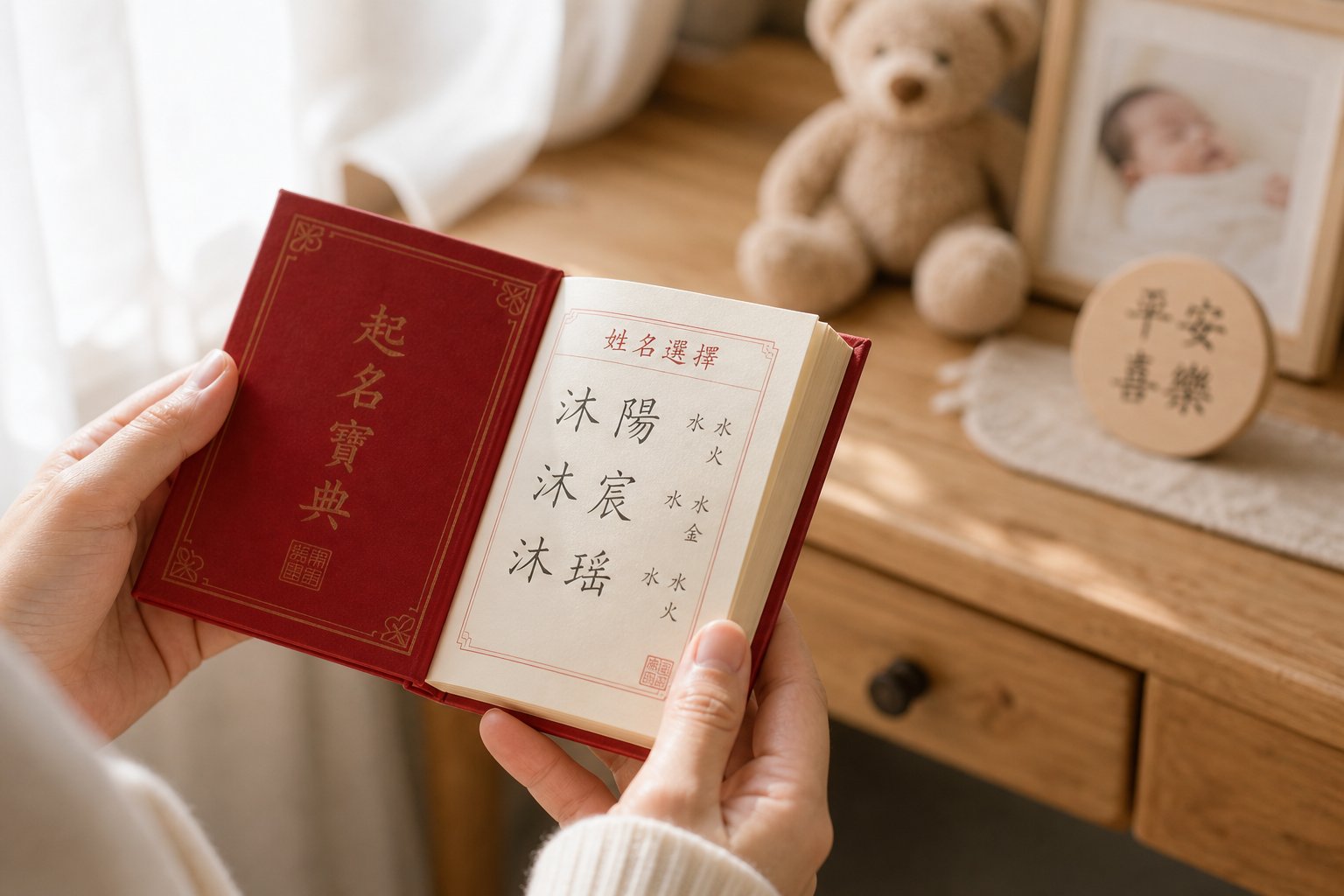
Start with the wish, not the character. That is the simplest way to navigate the world of male chinese names rooted in virtue. Instead of scrolling through hundreds of options hoping something clicks, ask yourself one question: what kind of man do I hope he becomes? Your answer points directly to a category, and from there, to a short list of names that carry exactly that aspiration.
The table below organizes chinese male names by four core parental wishes. Each entry includes the full two-character given name in both simplified and traditional characters, pinyin with tone marks, and a plain-language explanation of the hope embedded in the name. Whether you are choosing asian names for boys within a bilingual family or selecting chinese names for men who will carry their name across cultures, this reference gives you a clear starting point.
Names That Wish for Moral Leadership
These names express the hope that your son will lead others through integrity rather than authority. They combine virtue characters with elements suggesting guidance, clarity, or influence.
- 德明 (Dé Míng) — Virtue illuminated. A wish that his moral character will be visible and inspire others to follow.
- 义轩 (Yì Xuān) — Righteous and noble. A hope that he stands for justice while carrying himself with dignity.
- 信达 (Xìn Dá) — Trustworthy and accomplished. The aspiration that his reliability will open doors and earn respect.
- 礼贤 (Lǐ Xián) — Propriety meeting virtue. A wish that he leads by treating others with genuine respect.
Names That Wish for Inner Strength and Courage
For parents who want their son to face difficulty without breaking, these chinese names boy options encode resilience and determination. They pair strength-oriented virtue characters with elements suggesting endurance or forward motion.
- 毅恒 (Yì Héng) — Persevering and constant. A wish that he finishes what he starts, no matter how long it takes.
- 勇哲 (Yǒng Zhé) — Courageous and wise. The hope that his bravery is guided by clear thinking, never reckless.
- 弘毅 (Hóng Yì) — Broad-minded and resolute. Drawn directly from the Analects, this name wishes for a son who shoulders heavy responsibility with an open heart.
- 忠毅 (Zhōng Yì) — Loyal and unyielding. A hope that he stays devoted to his principles even under pressure.
Names That Wish for Wisdom and Scholarship
These names suit parents who value intellectual depth and reflective thinking. They combine wisdom-oriented characters with elements suggesting breadth, clarity, or cultivation. Among asian boy names with philosophical roots, these carry a scholarly elegance that native speakers recognize immediately.
- 智远 (Zhì Yuǎn) — Wisdom reaching far. A wish that his insight extends beyond the immediate and sees long-term consequences.
- 诚博 (Chéng Bó) — Sincere and broadly learned. The hope that his knowledge is grounded in honesty rather than pretense.
- 谦博 (Qiān Bó) — Humble and knowledgeable. A wish that learning makes him more open, not more arrogant.
- 明哲 (Míng Zhé) — Clear and philosophical. The aspiration that he sees through confusion to the heart of things.
A fourth category rounds out the framework: names wishing for kindness and compassion. These draw from Buddhist and Confucian traditions alike, encoding the hope that your son moves through life with empathy.
- 仁泽 (Rén Zé) — Benevolence that nourishes. A wish that his kindness flows outward and benefits those around him.
- 善恒 (Shàn Héng) — Goodness sustained over time. The hope that compassion is not a mood but a permanent orientation.
- 慈恩 (Cí Ēn) — Compassionate grace. A wish that he treats others with the gentle strength of someone who understands suffering.
| Aspiration | Full Name | Characters (Simplified/Traditional) | Pinyin With Tones | Meaning |
|---|---|---|---|---|
| Moral Leadership | Deming | 德明 / 德明 | Dé Míng | Virtue illuminated, leading by example |
| Moral Leadership | Yixuan | 义轩 / 義軒 | Yì Xuān | Righteous and dignified |
| Moral Leadership | Xinda | 信达 / 信達 | Xìn Dá | Trustworthy and accomplished |
| Moral Leadership | Lixian | 礼贤 / 禮賢 | Lǐ Xián | Propriety meeting virtue |
| Inner Strength | Yiheng | 毅恒 / 毅恆 | Yì Héng | Persevering and constant |
| Inner Strength | Yongzhe | 勇哲 / 勇哲 | Yǒng Zhé | Courageous and wise |
| Inner Strength | Hongyi | 弘毅 / 弘毅 | Hóng Yì | Broad-minded and resolute |
| Inner Strength | Zhongyi | 忠毅 / 忠毅 | Zhōng Yì | Loyal and unyielding |
| Wisdom | Zhiyuan | 智远 / 智遠 | Zhì Yuǎn | Wisdom reaching far |
| Wisdom | Chengbo | 诚博 / 誠博 | Chéng Bó | Sincere and broadly learned |
| Wisdom | Qianbo | 谦博 / 謙博 | Qiān Bó | Humble and knowledgeable |
| Wisdom | Mingzhe | 明哲 / 明哲 | Míng Zhé | Clear and philosophical |
| Kindness | Renze | 仁泽 / 仁澤 | Rén Zé | Benevolence that nourishes others |
| Kindness | Shanheng | 善恒 / 善恆 | Shàn Héng | Goodness sustained over time |
| Kindness | Cien | 慈恩 / 慈恩 | Cí Ēn | Compassionate grace |
Pronunciation tips for non-native speakers: The trickiest sounds in these chinese men names are the retroflex consonants (zh, ch) and the Mandarin "q" (pronounced like "ch" in "cheese" but with the tongue further forward). For names like 智远 (Zhì Yuǎn), approximate "zh" as a soft "j" sound. For 谦 (Qiān), think "chee-en" spoken quickly. The tone marks matter most for distinguishing meaning, but even an approximate pronunciation carries the name's dignity. When introducing your son's name in English-speaking settings, lead with the meaning: "His name means perseverance and constancy" gives listeners an anchor before they attempt the sounds.
Every name in this reference started the same way: with a parent imagining the man their son might become. The character you choose is not a prediction. It is a compass heading, a daily reminder woven into the most personal word he will ever carry. Pick the wish first. The right name follows.
Frequently Asked Questions About Chinese Virtue Names for Boys
1. What is the difference between a Chinese virtue name and a regular Chinese boy name?
A regular Chinese boy name might use characters chosen for pleasant sound, visual beauty, or auspicious stroke count. A virtue name specifically encodes a moral quality from Confucian, Buddhist, or Daoist philosophy into the child's identity. For example, naming a son 仁 (ren, benevolent) instructs him on how to treat others, while a name like 强 (qiang, strong) simply describes a desired personal attribute. Virtue names turn naming into a philosophical declaration rather than just identification.
2. Which Chinese virtue characters are best for a strong masculine name?
Characters that read as unmistakably masculine to native Chinese speakers include 勇 (yong, courage), 毅 (yi, perseverance), 忠 (zhong, loyalty), and 廉 (lian, integrity). These are rarely used in female names and carry associations with warrior spirit, unyielding resolve, and public service. For a softer but still masculine option, 诚 (cheng, sincerity) and 谦 (qian, humility) work well as unisex characters that lean slightly male in traditional usage.
3. How do I pair a virtue character with a Chinese surname for good tonal flow?
Avoid stacking the same Mandarin tone across all syllables in the full name. For example, with the surname 王 (Wang, Tone 2), pairing it with 毅轩 (Yi Xuan, Tones 4-1) creates a pleasing rise-fall-level contour. The smoothest names alternate tones or create a directional arc. Check your surname's tone first, then select a virtue name whose tones contrast with it. Two consecutive Tone 3 syllables should also be avoided as they trigger sandhi rules that can cause confusion.
4. Are traditional virtue names still popular in modern China?
Yes, virtue names are experiencing a selective revival among post-1990 generation parents in China. Characters like 诚 (sincerity), 谦 (humility), and 善 (goodness) are trending because they were underused for decades and now feel fresh when paired with literary or nature-inspired complements. Characters like 忠 (loyalty) and 孝 (filial piety) carry more generational baggage from the 1950s-1970s naming era, but can still work with modern pairings that avoid dated associations.
5. How do I choose a Chinese virtue name for a boy growing up outside China?
Consider three factors: pronunciation accessibility for non-Chinese speakers, the built-in meaning story your son can share, and potential English name pairing. Characters like 德 (De) and 毅 (Yi) have sounds that English speakers can approximate easily, while 智 (Zhi) and 谦 (Qian) require sounds absent in English. A virtue name gives diaspora children a powerful conversation starter about their heritage. Some parents also pair the Chinese name with an English name that echoes its meaning or sound for dual-context flexibility.