Two Cultures, One Script, Worlds Apart in Naming
Imagine two parents, one in Beijing and one in Kyoto, both writing the character 明 on paper as they consider names for their newborn. The strokes are identical. The ink dries the same way. Yet the philosophies guiding each parent's hand could not be more different. One encodes Confucian aspirations for moral clarity. The other weighs the character's visual balance, its seasonal resonance, and how it sounds when spoken aloud. This is the central paradox of chinese vs japanese naming philosophy: a shared script carrying entirely separate cultural worlds.
Why Naming Philosophy Reveals Cultural Identity
Names in Asia are never just labels. They are compressed philosophies, tiny declarations of what a culture values most. When you study asian names and surnames, you quickly realize that each name functions as an act of cultural transmission, passing beliefs about virtue, beauty, destiny, and family from one generation to the next. An asian name is not chosen the way you might pick a favorite sound. It is constructed, sometimes debated for weeks, consulted over with elders or even fortune-tellers, because the stakes feel genuinely high.
This is why naming philosophy serves as one of the sharpest lenses for understanding cultural identity. The choices parents make, which characters they favor, what qualities they encode, how they balance individuality against family legacy, reveal values that broader cultural analysis often misses.
The Shared Script With Divergent Meanings
Both Chinese (hanzi) and Japanese (kanji) naming traditions draw from the same pool of characters. As linguistic research confirms, Japan imported Chinese characters in the 4th century and adapted them into its own writing system. The characters look the same, but they carry different cultural weight depending on which tradition wields them.
The same character can encode duty in a Chinese name and beauty in a Japanese name. Shared script does not mean shared philosophy; it means shared raw material shaped by divergent worldviews.
What makes common asian names so fascinating across these two cultures is precisely this divergence. Japanese names blend meaning with sound harmony and visual aesthetics. Chinese names prioritize moral depth and ancestral continuity. Both traditions treat naming as a serious, even spiritual act, yet they arrive at that seriousness through completely different philosophical paths.
Throughout this article, you will explore seven key dimensions where these naming philosophies diverge: spiritual foundations, character selection methods, structural conventions, generational practices, divination systems, legal constraints, and modern evolution. Each dimension reveals something distinct about how China and Japan relate to identity, time, family, and the individual.
How We Compared These Naming Traditions
Comparing chinese naming conventions to japanese naming customs requires more than a side-by-side character list. You need a framework that captures the philosophical depth behind each tradition, not just surface-level differences in structure or popularity. Both cultures absorbed Confucian thought centuries ago, yet the way those shared roots branched into naming practice tells two very different stories about identity, beauty, and obligation.
Dimensions of Philosophical Comparison
To make this comparison meaningful, we evaluate each tradition across seven distinct dimensions. Think of these as lenses, each one revealing a layer of philosophy that a simple "what does this name mean?" question would miss:
- Spiritual foundations - The religious and philosophical systems (Confucianism, Shinto, Buddhism) that shape what parents believe a name should accomplish.
- Character selection methods - How parents choose specific characters and what criteria they prioritize: moral weight, phonetic beauty, or visual form.
- Structural conventions - How are chinese names structured compared to Japanese names, and what does that structure communicate about family and individual identity.
- Generational practices - Whether names encode multi-generational continuity or reflect the spirit of a particular era.
- Divination systems - The role of numerology, elemental theory, and fortune-telling in guiding final name decisions.
- Legal constraints - Government-imposed character lists and regulations that limit or shape parental choice.
- Modern evolution - How globalization, Western influence, and shifting values are reshaping both traditions today.
Sources and Cultural Authority
Chinese name conventions draw authority from classical Confucian texts like the Analerta and the Book of Rites, which outline principles of virtue, filial piety, and social harmony that still guide naming decisions. Japanese naming customs, meanwhile, pull from Shinto theological writings, Buddhist aesthetic philosophy, and imperial-era cultural scholarship that emphasizes seasonal awareness and phonetic grace.
Both traditions share a Confucian backbone, valuing family cohesion and moral aspiration. Yet the divergence is striking. Chinese naming philosophy channeled Confucianism into rigid generational systems and virtue encoding. Japanese naming philosophy filtered those same Confucian ideals through Shinto naturalism and a deep sensitivity to sound and form, producing something that feels philosophically distinct despite the common ancestry.
With this framework in place, the real differences come alive when you examine each dimension closely, starting with the spiritual and religious forces that give each tradition its deepest sense of purpose.
Spiritual Foundations Behind Each Naming System
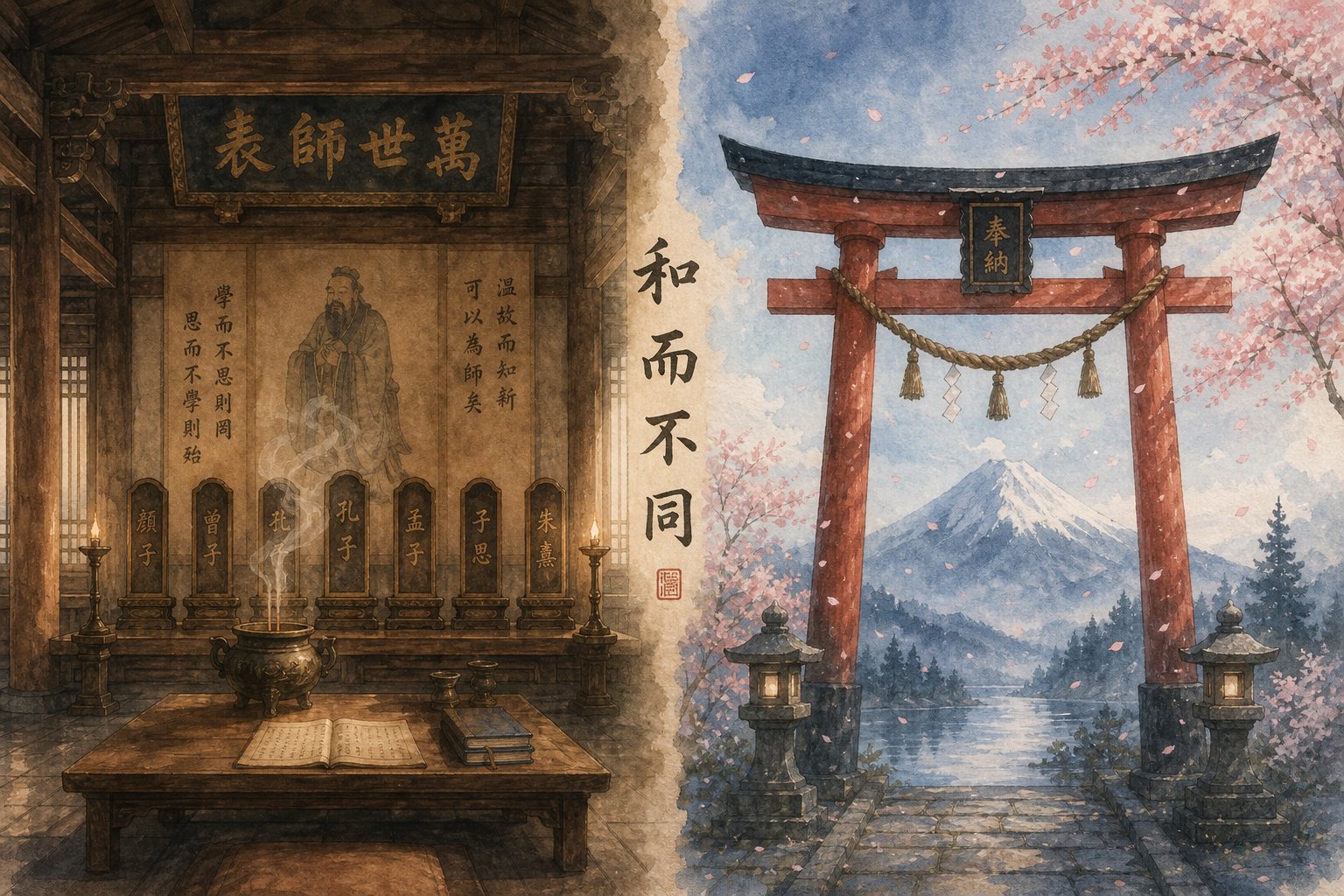
Every naming tradition rests on a deeper question: what do you believe a name is supposed to do? In China, the answer has been shaped by Confucian moral philosophy for over two thousand years. In Japan, the answer draws from a blend of Shinto reverence for nature and Buddhist awareness of impermanence. These spiritual foundations do not just influence naming. They define what counts as a "good" name in each culture.
Confucian Virtue Ethics in Chinese Name Selection
Chinese naming philosophy treats a name as a moral blueprint. Parents select characters that encode the virtues they hope their child will embody: righteousness, wisdom, loyalty, benevolence. This practice flows directly from Confucian ethics, where personal cultivation (xiuyang) is the foundation of social harmony. A name like De Yi (德义), meaning "virtue and righteousness," is not merely aspirational. It is a reflection of Confucian ethics embedded into identity itself. Similarly, Wen Tianxiang (文天祥) combines refinement, heaven, and auspiciousness into a single declaration of moral destiny.
Ancestor worship reinforces this approach. Names connect a child to a lineage, carrying forward the family's accumulated moral capital. The asian name meaning here is never purely personal. It is relational, linking the individual to ancestors who came before and descendants who will follow. Parents consult elders, reference classical texts, and choose characters like 忠 (loyalty), 仁 (benevolence), or 明 (clarity) because these virtues serve the family across generations, not just the individual in one lifetime.
Shinto Nature Aesthetics and Buddhist Impermanence in Japanese Names
Japanese naming philosophy operates from a fundamentally different spiritual center. Shinto, Japan's indigenous faith, sees sacred spirits (kami) in natural phenomena: wind, rivers, mountains, trees, and seasons. This reverence for nature flows directly into naming. When you explore japanese names and meanings, you will notice characters like 桜 (sakura, cherry blossom), 海 (umi, sea), or 陽 (hi, sunlight) appearing constantly. These are not metaphors for human virtues. They are expressions of beauty found in the natural world.
Buddhism adds another layer. The concept of impermanence (mujo) encourages an appreciation for fleeting beauty, the cherry blossom that blooms briefly, the autumn light that fades. Japanese parents often choose names that capture a specific seasonal feeling or a moment of aesthetic grace rather than a permanent moral aspiration. A name like Haruki (春樹), meaning "spring tree," evokes renewal and natural vitality. Mizuki (美月), meaning "beautiful moon," reflects poetic sensitivity rather than ethical instruction.
This is why japanese family names with meanings often reference geography and nature directly. Surnames like Yamamoto (mountain base), Tanaka (rice field middle), and Kawaguchi (river mouth) reveal a worldview where identity is rooted in place and landscape rather than moral lineage. When you study japanese last names and meanings, the pattern becomes unmistakable: nature is not a backdrop to identity but its very source.
| Dimension | Chinese Naming Philosophy | Japanese Naming Philosophy |
|---|---|---|
| Source Philosophy | Confucianism, ancestor worship | Shinto naturalism, Buddhism |
| Core Values Encoded | Moral virtues: loyalty, wisdom, benevolence | Natural beauty, seasonal awareness, aesthetic harmony |
| Relationship to Nature | Nature as metaphor for human qualities (e.g., 明 = moral clarity) | Nature as sacred reality (e.g., 桜 = cherry blossom as kami presence) |
| Relationship to Ancestors | Direct lineage encoding; names carry family moral legacy forward | Indirect; ancestors become kami but do not dictate naming characters |
| Example Given Name | 德义 (De Yi) - virtue and righteousness | 春樹 (Haruki) - spring tree |
| Example Surname Logic | Clan-based, often ancient state or occupation origins | Geography-based: 山本 (Yamamoto) = mountain base |
The contrast is clear. Chinese names ask: what kind of person should this child become? Japanese names ask: what beauty does this child's existence reflect? Both questions carry deep spiritual weight, but they point in different directions. One encodes duty and moral continuity. The other captures presence and natural grace. These divergent foundations shape everything that follows, from how parents select individual characters to how they weigh sound against meaning in the final choice.
Same Characters With Different Cultural Weight
Spiritual foundations set the direction, but the real divergence becomes visible at the moment of character selection. Two parents reach for the same dictionary of characters, yet they are asking entirely different questions. One asks: does this character carry the right moral weight? The other asks: does this character sound beautiful, look balanced on paper, and hold a meaning that resonates? The chinese name structure prioritizes depth of meaning above all else. Japanese naming treats meaning as just one voice in a three-part harmony.
Chinese Character Selection as Moral Encoding
Chinese parents approach character selection like architects drafting a blueprint for character. They consult classical dictionaries, sometimes seeking rare or literary characters that elevate a name beyond the ordinary. The goal is semantic precision. Each character must encode a specific aspiration, whether that is wisdom (智), strength (强), prosperity (昌), or moral integrity (廉).
Consider the character 志, meaning ambition or will. In a Chinese name, this character functions as a direct moral instruction. A name like Zhi Qiang (志强) literally means "ambitious and strong," leaving no ambiguity about what the parents hope their child will become. There is a deliberate preference for characters that carry weight, that feel substantial and serious when read. Parents may spend weeks evaluating whether a character's meaning aligns with the family's values, the child's birth circumstances, and the overall tonal balance of the full name.
This is why you will sometimes encounter Chinese names with characters so rare that even native speakers need a dictionary. Rarity itself signals aspiration. It says: this family thought deeply, reached beyond the common, and chose something with intention.
Japanese Triple Balance of Meaning, Sound, and Visual Beauty
Japanese parents face a fundamentally different challenge. When choosing a name in japanese, they must satisfy three criteria simultaneously: the kanji's meaning, the phonetic beauty of how the name sounds when spoken, and the visual aesthetics of how the characters look when written. No single dimension dominates. All three must harmonize.
This triple balance exists because names in japanese language carry multiple possible readings. A single kanji can have several pronunciations depending on context. The character 大, for example, can be read as "dai," "tai," or "o" in names. Parents choose not just the character but the specific reading (called nanori) that produces the most pleasing sound. Two children might share the same written kanji yet have completely different spoken names.
Visual aesthetics add another layer. Japanese parents consider how the characters look together on paper: the stroke count balance, the visual density, whether the name feels elegant or cluttered when written. A name that means something beautiful but looks visually heavy when brushed might be rejected in favor of a lighter alternative.
The character 美 (beauty) appears in both Chinese and Japanese names, yet it serves different masters. In Chinese, it encodes a moral aspiration toward inner beauty and virtue. In Japanese, it balances meaning with sound (mi or bi) and visual grace, functioning as one element in an aesthetic composition rather than a standalone declaration.
This difference explains why japanese name meanings often feel poetic rather than instructional. A name like Mio (美桜) combines beauty with cherry blossom, chosen not just for what it means but for how "Mio" feels on the tongue and how the two characters sit together visually. Compare this to a Chinese name like Mei De (美德), meaning "beautiful virtue," where both characters serve a single purpose: moral encoding.
When you study japanese names and the meanings behind them, you will notice this layered quality repeatedly. The meaning matters, but it never operates alone. It must pass through filters of sound and form before a name feels complete. Chinese naming, by contrast, treats meaning as the primary and often sufficient criterion. A character with the right moral resonance can carry a name even if its sound is unremarkable.
This philosophical split, semantic depth versus aesthetic harmony, shapes not just individual names but entire cultural attitudes toward what a name in japanese or Chinese is supposed to accomplish. And it raises a deeper structural question: if both cultures place the family name first, do they do so for the same philosophical reasons?
Family Name First and What It Really Means
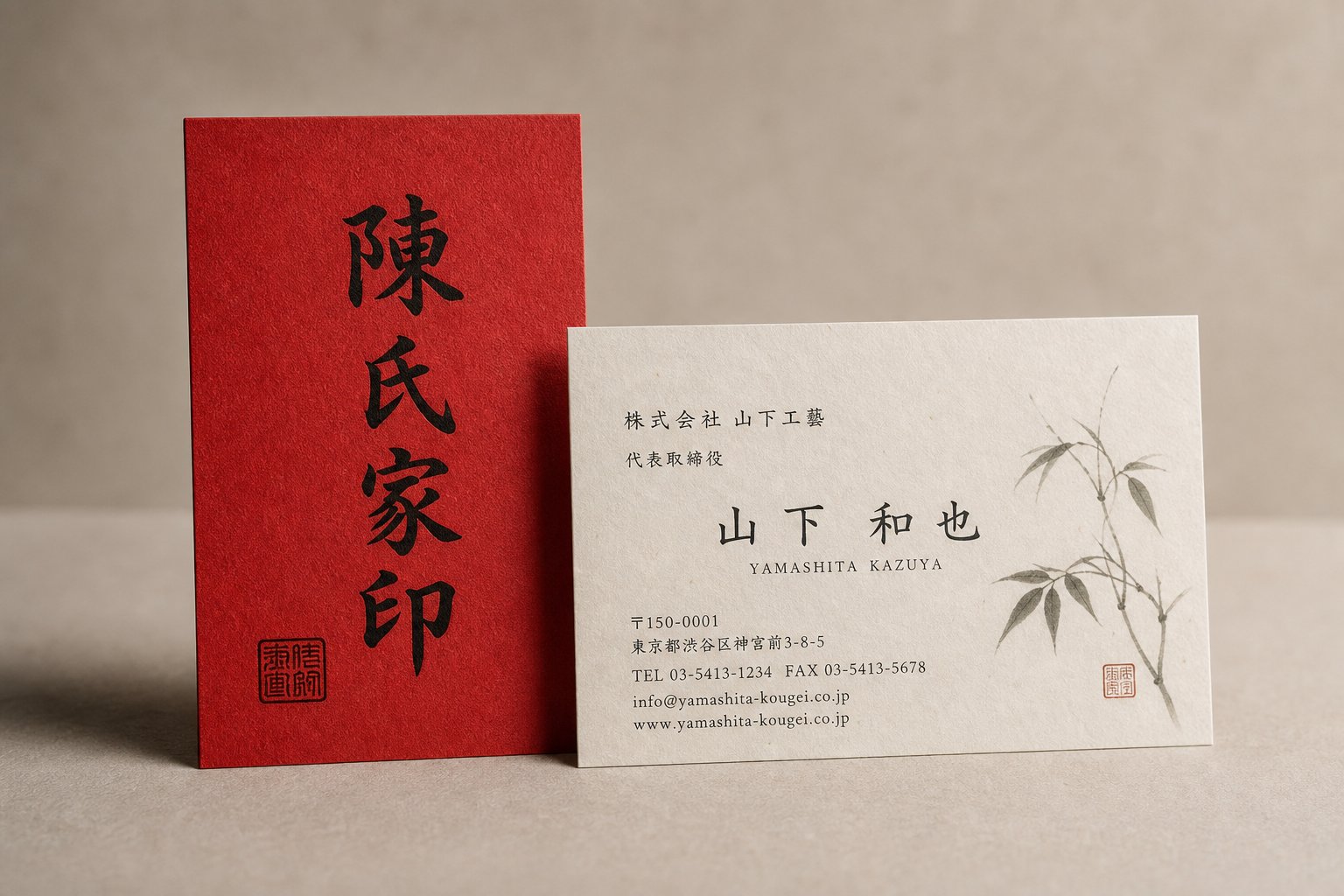
Both cultures answer that structural question the same way: surname before given name. But identical word order does not mean identical reasoning. The chinese name order and the japanese name order share a surface-level convention while encoding fundamentally different philosophies about where the individual stands in relation to the group.
Chinese Family-First Order as Confucian Hierarchy
In the order of chinese names, the surname is not just placed first for convenience. It is placed first because, philosophically, the family exists before the individual. Confucian thought treats the self as an extension of lineage. You are your family's child before you are your own person. When someone says their chinese last name first, they are performing a small act of Confucian ethics: declaring allegiance to the collective before asserting individuality.
Think of it this way. When you encounter first name and last name for chinese individuals, the structure communicates hierarchy. The surname (xing) represents centuries of ancestral continuity. The given name (ming) represents the parents' hopes for one specific life within that continuity. Placing the family marker first signals that duty to lineage outweighs personal distinction. A person named Wang Zhiming is a Wang first, Zhiming second. The family's identity is the foundation; the individual's identity is built upon it.
This ordering extends beyond names into social behavior. Chinese introductions, formal documents, and even casual references default to surname-first because the philosophical assumption is baked into the culture: you belong to something larger before you belong to yourself.
Japanese Name Order and the Honorific System
Japanese names last name first follows a similar structural pattern, but the philosophical emphasis shifts. Japanese naming order reflects collective identity too, yet it layers on an intricate system of social context through honorifics that Chinese naming lacks entirely.
In Japan, people typically address each other by surname plus an honorific suffix. The japanese word san meaning functions like "Mr." or "Ms." but is far more universal in daily use. It signals baseline respect without implying intimacy or distance. You will hear Tanaka-san in offices, classrooms, and casual introductions alike because it is the safest, most neutral way to acknowledge someone's social presence.
The kun honorific japanese speakers use adds a layer of relational nuance. Kun (君) is typically reserved for younger men or juniors, used by teachers addressing male students or by superiors addressing subordinates. Chan (ちゃん) conveys affection and closeness, often used for children or intimate friends. These suffixes do not just show politeness. They actively define the relationship between speaker and listener in real time.
This means japanese name order carries more social information than chinese name order. A Chinese surname-first structure communicates hierarchy of family over individual. A Japanese surname-first structure communicates that plus an entire relational map through the honorific attached. The name itself becomes a social instrument, shifting in tone depending on who is speaking and in what context.
| Dimension | Chinese Convention | Japanese Convention |
|---|---|---|
| Name Order Structure | Surname (1 character) + Given name (1-2 characters) | Surname (2+ characters common) + Given name (1-2 characters) |
| Philosophical Justification | Confucian hierarchy: family supersedes individual identity | Collective identity + social context defined through honorifics |
| Honorific System | Minimal; titles like Xiansheng (Mr.) or Laoshi (Teacher) used separately | Extensive suffix system: -san, -sama, -kun, -chan attached directly to names |
| Western Name Adaptation | Often adopt an English first name placed before surname (e.g., "David Wang") in international contexts | Increasingly reverting to surname-first in official international use since 2019 government recommendation |
The table reveals something important. Chinese naming handles Western adaptation by essentially code-switching, adopting a Western name for international convenience while preserving the original structure at home. Japan took the opposite approach in recent years, actively reasserting surname-first order in English-language contexts to preserve cultural identity rather than accommodate Western expectations.
Both cultures place family before individual in their naming structure. But China does so as a declaration of Confucian duty. Japan does so as the foundation for a dynamic social system where your name changes emotional texture depending on who speaks it and which suffix they choose. The structure looks identical on paper. The philosophy operating beneath it is not.
This difference in how each culture relates to time, whether names encode permanent hierarchy or shift with social context, becomes even more pronounced when you look at how generations are marked within each naming tradition.
Generational Naming and the Relationship to Time
Here is where the two traditions diverge most dramatically. Chinese naming embeds a system for tracking lineage across centuries, a built-in mechanism that tells you exactly where a person sits in the family hierarchy. Japanese naming has no equivalent system at all. Instead, it reflects the cultural moment, the era, the aesthetic mood of the time a child is born. This single difference reveals how each culture relates to time itself: one treats names as anchors to permanence, the other as mirrors of the present.
Chinese Generation Names and Ancestral Continuity
The Chinese generation name (beifen or zibei) is a naming practice unique to China. Each chinese family name carries with it a predetermined sequence of characters, often drawn from an ancestral poem composed by clan elders. When a child is born, the father selects the next character in that sequence as part of the child's name. All male cousins of the same generation within a chinese surname lineage share that identical generation character, making their familial relationship immediately visible to anyone who knows the system.
How does this work in practice? The Gom Benn Wong family provides a vivid example. Their generational poem, composed around the late Ming Dynasty by scholar Wong Shi Jun, reads as a four-line verse praising ancestors and voicing hope for future prosperity. Each character in the poem corresponds to one generation. Here is how the system operates:
- A clan elder or ancestor composes a poem, typically praising the family's heritage and expressing aspirations for future generations.
- Each character in the poem is assigned sequentially to a generation. The Mao family poem, for instance, contains 40 characters representing 40 generations.
- When a male child is born, the father takes the character corresponding to that generation and pairs it with a personally chosen given name.
- All male cousins from the same generation share the same generation character, creating an instant marker of kinship and hierarchy.
- When the poem's characters are exhausted, clan elders convene to compose a new sequence.
This tradition dates back to the Han Dynasty (206 BC - 220 AD) and reached maturity during the Song Dynasty, when families began using poems rather than arbitrary character lists. The practice declined sharply during the Cultural Revolution, when generation names were seen as feudal relics. Research by Li Zhonghua and Edwin D. Lawson found that generation name usage among men dropped from over 90% in the pre-Mao era to roughly 41% during the height of Mao's regime. The post-Mao period showed a significant recovery, with about 53% of male respondents using generation names, suggesting a renewed regard for traditional Chinese culture.
Japanese Era-Based Naming Trends
Japan has nothing resembling this multi-generational encoding system. Japanese family names do not carry predetermined character sequences or ancestral poems. Instead, naming trends in Japan shift with each imperial era, reflecting the cultural mood of the moment rather than a fixed lineage plan.
Consider how common names japan has favored have changed across eras. During the Showa period (1926-1989), popular male names like Hiroshi and Takeshi reflected strength and perseverance, values shaped by wartime and postwar recovery. The Heisei era (1989-2019) brought softer, more individualistic names. The Reiwa era (2019-present) has seen names emphasizing harmony and natural beauty, echoing the era name's own meaning of "beautiful harmony." Among the most common japanese surnames, families like Sato, Suzuki, and Takahashi remain stable across generations, but given names cycle through trends as rapidly as fashion.
Popular japanese surnames stay constant because Japanese family names were largely fixed during the Meiji era (1868). The creative energy goes entirely into given names, which respond to cultural currents rather than ancestral mandates. A list of common japanese surnames today looks nearly identical to one from a century ago. But the given names paired with those surnames tell you exactly which decade a person was born in.
This contrast reveals a profound philosophical difference. Chinese generational naming treats time as a river flowing from ancestors through the present into the future, and names are the markers that keep everyone oriented within that flow. Japanese naming treats time as a series of distinct moments, each with its own aesthetic character worth capturing. One culture names for permanence. The other names for presence.
Both approaches carry spiritual weight. Chinese generation names honor ancestors and maintain cosmic order within the clan. Japanese era-responsive naming honors the beauty of the present moment, a sensibility rooted in Buddhist impermanence and Shinto seasonal awareness. Neither is more "correct." They simply answer different questions about what a name owes to time.
Yet even within these philosophical frameworks, neither culture leaves naming entirely to human judgment. Both turn to systems of divination and numerology to confirm that a chosen name aligns with forces beyond parental preference.
Divination and Numerology in Name Selection
Choosing a name that sounds right and means something beautiful is not enough in either tradition. Both Chinese and Japanese parents frequently consult systems of divination to verify that a name aligns with cosmic forces, that it will bring fortune rather than misfortune to the child who carries it. These are not fringe practices. Even secular, university-educated families in both cultures routinely check a name's numerological profile before making it official. The reasoning is simple: if naming is a consequential act, why leave anything to chance?
Chinese Wuxing Theory and Elemental Balance
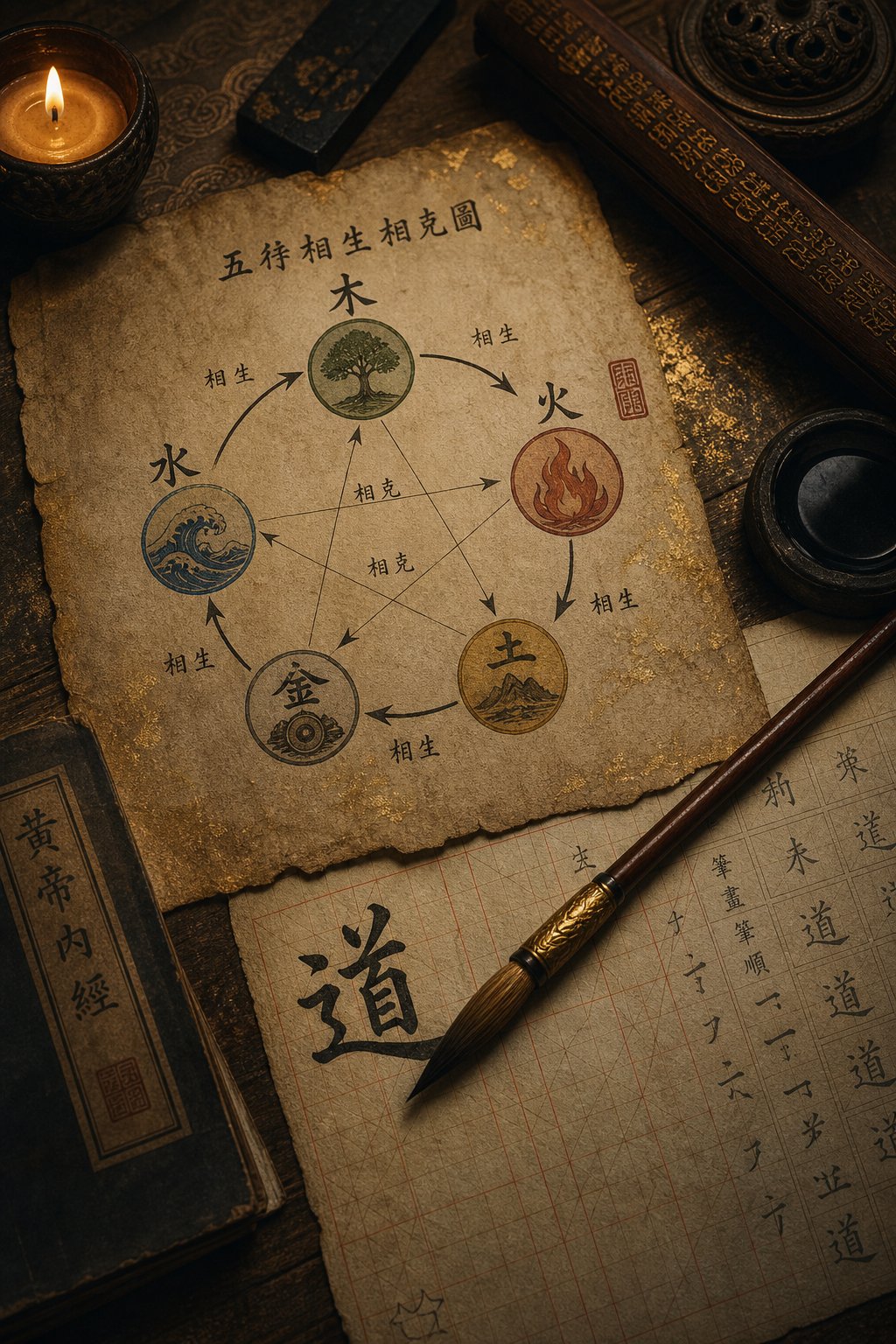
In Chinese naming, the wuxing (five elements) system plays a central role. The five elements, wood, fire, earth, metal, and water, are believed to govern all natural phenomena, including a person's destiny. When parents consider how to name your asian baby within the Chinese tradition, they first determine which elements are strong or weak in the child's bazi (eight characters of birth time). The name then compensates for any elemental imbalance.
For example, a child born at a time dominated by fire and lacking water might receive a name containing the character 淼 (vast water) or 泽 (marsh, grace). Characters containing the water radical (氵) are selected specifically to restore cosmic equilibrium. This is not metaphorical. Parents and naming consultants treat elemental balance as a real force shaping the child's health, career, and relationships throughout life.
Stroke-count divination adds another layer. Each character's total stroke count is analyzed through mathematical formulas that produce luck ratings for different life domains: career, relationships, health, and overall fortune. A name might carry perfect meaning yet be rejected because its stroke-count profile signals difficulty in middle age. Parents often cycle through multiple candidate names before finding one that satisfies both semantic aspiration and numerological safety.
Japanese Seimei Handan and Stroke-Count Fortune
Japan developed its own stroke-count divination system called seimei handan (姓名判断), meaning "name fortune judgment." When selecting japanese first names, many parents consult seimei handan charts or online calculators to assess a name's overall luck profile. The system divides a full name into five numerical "grids" (kakusuu), each derived from the stroke counts of different character combinations within the surname and given name.
The five grids evaluate different life aspects: heaven luck (inherited from family), personality luck, earth luck (related to health and home life), outer luck (social relationships), and total luck (overall life trajectory). Each grid produces a number classified as lucky (kichi), unlucky (kyou), or neutral. Parents choosing japanese baby names often adjust their preferred characters, swapping one kanji for another with the same reading but a different stroke count, to improve the overall handan score.
What makes seimei handan distinct from Chinese stroke-count divination is its focus. Chinese systems emphasize elemental balance and cosmic harmony with birth-time forces. Japanese systems focus on the internal numerical relationships within the name itself, treating the name as a self-contained fortune structure. Both take the practice seriously, but they are measuring different things.
| Dimension | Chinese Wuxing Naming | Japanese Seimei Handan |
|---|---|---|
| Method | Five-element analysis of birth chart + stroke-count formulas | Five-grid stroke-count calculation from full name |
| Philosophical Basis | Daoist cosmology; balance of natural forces | Numerological harmony within the name structure |
| What Is Being Balanced | Child's elemental deficiencies against cosmic birth-time forces | Internal numerical relationships across five life-domain grids |
| Modern Prevalence | Widely used; professional naming consultants remain common in mainland China and Taiwan | Very common; online seimei handan tools are among Japan's most-visited naming resources |
The persistence of these systems is remarkable. In an age of scientific rationalism, both cultures maintain divination as a standard step in the naming process. Parents who would never describe themselves as superstitious still check stroke counts "just in case." This reveals something deeper about how both traditions view naming: it is not merely a creative exercise or a personal preference. It is an act with real consequences, a moment where human choice intersects with forces larger than the individual.
When you browse japanese names with meanings online or explore names that mean life, strength, or beauty, you are seeing only the semantic surface. Beneath that surface, many of those japanese first names were shaped by numerological calculations invisible to the casual observer. The same is true for Chinese names, where a character's elemental properties may have mattered more to the parents than its dictionary definition.
Both divination systems operate within cultural frameworks that governments have tried, with varying success, to regulate. The tension between traditional naming freedom and modern legal constraints reveals yet another philosophical fault line between these two cultures.
Modern Evolution and Western Influence on Names
Divination systems may persist, but the cultural ground beneath both naming traditions is shifting fast. Globalization, government regulation, and Western individualism are reshaping how Chinese and Japanese parents think about names. The philosophical cores remain, yet the pressures acting on them are new, and each culture is responding in characteristically different ways.
Simplified Characters and Modern Chinese Name Choices
When the People's Republic of China introduced simplified characters in the 1950s and 1960s, the reform was about literacy, not naming. But it had unintended consequences for naming philosophy. Simplification reduced the visual complexity of thousands of characters, and in some cases merged distinct traditional characters into a single simplified form. For parents who valued the aesthetic weight of a name's brushstrokes, this was a real loss. A character that once carried 18 strokes of visual authority might now contain only 8, altering both its numerological profile and its visual presence on paper.
More significantly, China's government-approved character list constrains what parents can legally register. The system requires that names use characters encodable in the national database, which excludes many rare classical characters that previous generations favored. Do chinese people have middle names in the traditional sense? Not exactly. Chinese names typically follow a strict surname-plus-one-or-two-character given name structure, with no formal middle name slot. However, the two-character given name sometimes functions similarly, with one character serving generational purposes and the other expressing individual identity.
Modern trends in Chinese naming reveal a culture negotiating between tradition and contemporary aspiration:
- Literary revival names - Parents increasingly draw from classical poetry and ancient texts, choosing characters like 梓 (zi, catalpa tree) or 昕 (xin, dawn) that feel elevated without being illegibly rare.
- Gender-neutral shifts - Traditional gender markers in names are softening, with characters like 宇 (universe) and 辰 (celestial) appearing across genders.
- English-friendly phonetics - Some parents now consider how a name sounds when romanized, choosing names that translate smoothly into pinyin for international use.
- Single-character given names - The one-child policy era produced a surge in single-character given names, a structural shift that reduced the space available for encoding meaning.
- Database-driven constraints - Characters outside the government's approved digital encoding are rejected at registration, effectively creating a state-curated naming vocabulary.
Research from the University of Tubingen and MIT found that naming systems globally must balance two constraints: allowing identification of many individuals while keeping the total word inventory manageable. In China, where a relatively small set of surnames is shared by enormous populations, given names carry the heavier identification burden. This pressure pushes parents toward more distinctive given-name characters even as government lists limit their options.
Japan's Kira-Kira Names and Western Individualism
Japan's modern naming evolution took a dramatically different turn. Starting in the 1990s and accelerating through the 2000s, a trend called kira-kira names (kirakira nemu, or "sparkle names") emerged. These names use standard kanji characters but assign them highly unconventional readings, sometimes phonetically imitating English words or pop culture references. A parent might write 光宙 (characters meaning "light" and "space") but intend it to be read as "Pikachu." Another might use 天使 (angel) but pronounce it "Enjeru," the Japanese phonetic rendering of the English word.
This trend represents something philosophically significant: Western individualism pushing against Japan's traditional collective naming values. Where Japanese naming once prioritized harmony between meaning, sound, and visual form, kira-kira names prioritize uniqueness and self-expression above all else. The practice sparked intense public debate. Critics called it irresponsible, arguing that children burdened with unreadable names face social friction. Supporters framed it as creative freedom.
Japan's legal framework for naming operates through the jinmeiyo kanji (人名用漢字) system, a government-maintained list of characters approved for use in registered names. This list has expanded over decades, growing from around 90 characters in 1951 to over 860 today, supplementing the roughly 2,100 joyo kanji (daily-use characters) also available for names. In 2023, Japan's government further responded to the kira-kira phenomenon by introducing regulations allowing municipalities to require that name readings bear a reasonable connection to the characters used.
Key modern trends in Japanese naming include:
- Kira-kira backlash - After peaking in the 2000s-2010s, extremely unconventional readings are declining as parents observe the social difficulties they create.
- Reiwa-era naturalism - Names referencing nature and harmony are surging, influenced by the current era name's meaning of "beautiful harmony."
- Hiragana-only names for girls - Some parents choose to write names entirely in hiragana, prioritizing phonetic softness over kanji meaning.
- International readability - Parents increasingly consider whether a name is pronounceable in English, choosing names like Ren, Kai, or Hana that cross linguistic boundaries.
- Reading flexibility regulation - New rules require registered readings to have a recognizable connection to the kanji used, curbing the most extreme kira-kira practices.
Do japanese have middle names? They do not. The Japanese legal system provides no field for a middle name on the family register (koseki). This becomes a practical issue for japanese american names, where individuals often navigate between two naming systems. A person might be Tanaka Yuki on their Japanese passport but "Yuki Marie Tanaka" on American documents, adopting a middle name that exists only in the Western legal context. The question of do japanese people have middle names comes up frequently in cross-cultural contexts, and the answer reveals how rigidly each system defines name structure.
This absence of japanese middle names contrasts with the flexibility some Chinese diaspora families exercise. While mainland Chinese naming also lacks a formal middle name, Chinese Americans sometimes insert a Chinese given-name character as a middle name in English documents, creating hybrid structures that preserve cultural identity within Western frameworks. Among asian american last names, you will find both traditions adapting differently: Chinese Americans often adopt Western first names while keeping their surname, while Japanese Americans more commonly use their given names without substitution.
Globalization creates a shared pressure point. Both cultures face the question of how to maintain philosophical depth when names must also function internationally. A parent who wants to translate my name in japanese language or find an English equivalent for a Chinese name confronts the reality that translation strips away the layers, the elemental balance, the stroke-count fortune, the generational encoding, that made the original name meaningful. The asia english name phenomenon, where individuals adopt a separate English name for international use, is one pragmatic solution. But it splits identity in two, raising its own philosophical questions about which name is "real."
What emerges from both cultures' modern evolution is a shared tension between preservation and adaptation. China regulates through character lists and database constraints, maintaining a top-down philosophy of naming as a civic act. Japan regulates through approved kanji lists and reading-reasonableness rules, reflecting a philosophy that values social harmony even in personal expression. Both are negotiating with Western individualism on their own terms, absorbing some of its energy while resisting its most disruptive implications.
These modern pressures do not erase the philosophical foundations explored throughout this comparison. They add new layers to them, creating naming landscapes where ancient divination coexists with database limitations, where Confucian virtue encoding meets international phonetic convenience, and where Shinto naturalism absorbs and transforms Western concepts of individual uniqueness.
The Complete Philosophical Comparison
Seven dimensions. Two cultures. One shared script that masks fundamentally different worldviews. Whether you are researching japanese last names for a novel, tracing your own family's heritage through asian last names, or choosing a name that honors one of these traditions, the philosophical map below gives you a single reference point for everything explored in this article.
Complete Philosophical Comparison at a Glance
| Dimension | Chinese Philosophy | Japanese Philosophy |
|---|---|---|
| Spiritual Foundation | Confucian virtue ethics and ancestor worship; names encode moral duty | Shinto naturalism and Buddhist impermanence; names capture beauty and presence |
| Character Selection | Semantic depth dominates; rare characters signal aspiration and moral weight | Triple balance of meaning, sound harmony, and visual aesthetics must align |
| Name Structure | Surname (1 char) + given name (1-2 chars); family supersedes individual | Surname (often 2+ chars) + given name; layered with honorific social context |
| Generational Practice | Predetermined generation characters from ancestral poems encode lineage position | No generational system; names reflect era-based cultural trends |
| Divination System | Wuxing (five elements) balancing birth-chart deficiencies + stroke-count formulas | Seimei handan: five-grid stroke-count analysis of internal name harmony |
| Legal Constraints | Government-approved digital character database limits available characters | Jinmeiyo kanji list + new reading-reasonableness regulations |
| Modern Evolution | Literary revival, gender-neutral shifts, English-friendly phonetics | Kira-kira backlash, Reiwa naturalism, international readability focus |
Notice the pattern. Chinese naming philosophy consistently prioritizes permanence, moral encoding, and multi-generational continuity. Japanese naming philosophy consistently prioritizes aesthetic harmony, present-moment beauty, and social context. When you browse common japanese last names like Sato, Suzuki, or Takahashi, their geographic origins (village, shrine, tall bridge) reflect that nature-rooted worldview. When you study japanese family names and meanings, you find landscapes embedded in identity. Chinese surnames, by contrast, trace back to ancient states, clans, and occupations, encoding social structure rather than natural scenery.
Among the most common japanese last names, the top ten alone account for roughly 10% of the population. Japanese surnames number around 100,000 distinct forms, dwarfing China's approximately 6,000. This difference itself is philosophical: China's smaller surname pool concentrates family identity into powerful clan markers, while Japan's vast array of japanese surnames distributes identity across geography and local history.
Which Tradition Resonates With Your Values
If you are exploring these traditions for creative writing, ask yourself what your character's name should accomplish. Should it declare moral purpose? Lean Chinese. Should it evoke seasonal beauty and phonetic grace? Lean Japanese. For cultural research, the table above serves as a diagnostic tool, helping you identify which philosophical layer a specific name is operating on. For baby naming across these traditions, the key insight is that neither system treats naming casually. Both demand intention, research, and respect for forces larger than personal taste.
Understanding chinese vs japanese naming philosophy is not about deciding which tradition is superior. It is about recognizing that shared characters are raw material, and philosophy is the hand that shapes them into meaning.
The next time you encounter asian surnames or given names from either tradition, you will see more than characters on a page. You will see compressed worldviews: one reaching backward through ancestral time, the other reaching outward into natural beauty. Same script. Worlds apart.
Frequently Asked Questions About Chinese vs Japanese Naming Philosophy
1. Why do both Chinese and Japanese names put the family name first?
Both cultures place the surname before the given name, but for different philosophical reasons. Chinese name order reflects Confucian hierarchy where family identity takes precedence over the individual, treating the person as an extension of their lineage. Japanese name order also signals collective identity but adds layers of social context through honorific suffixes like -san, -kun, and -chan, which actively define the relationship between speaker and listener. The structure looks identical, but Chinese ordering declares duty to ancestors while Japanese ordering serves as the foundation for a dynamic social system.
2. How do Chinese and Japanese parents choose characters for names differently?
Chinese parents prioritize semantic depth above all else, selecting characters that encode specific moral virtues like wisdom, loyalty, or strength. They may seek rare or literary characters to signal aspiration. Japanese parents must balance three dimensions simultaneously: the kanji's meaning, the phonetic beauty of how the name sounds when spoken aloud, and the visual aesthetics of how characters look when written together. A Japanese name can be rejected if it looks visually heavy on paper, even if its meaning is perfect. This triple-balance approach makes Japanese naming a more multi-sensory process compared to China's meaning-first philosophy.
3. What role does fortune-telling play in Chinese and Japanese naming?
Both cultures use divination systems during the naming process, even among secular families. Chinese naming employs wuxing (five elements) theory, analyzing a child's birth chart to identify elemental imbalances and then selecting name characters that restore cosmic equilibrium. Japanese naming uses seimei handan, a stroke-count system that divides the full name into five numerical grids evaluating different life aspects like career, health, and relationships. The key difference is that Chinese divination balances the child against external cosmic forces, while Japanese divination analyzes the internal numerical harmony within the name itself.
4. Do Japanese people have middle names?
No, the Japanese legal system provides no field for a middle name on the family register (koseki). This becomes a practical challenge for Japanese Americans who navigate between two naming systems. A person might be Tanaka Yuki on their Japanese passport but adopt a structure like Yuki Marie Tanaka on American documents, with the middle name existing only in the Western legal context. This contrasts with some Chinese diaspora families who insert a Chinese given-name character as a middle name in English documents, creating hybrid structures that preserve cultural identity within Western frameworks.
5. What are Chinese generation names and why doesn't Japan have them?
Chinese generation names (beifen) are predetermined characters drawn from ancestral poems composed by clan elders. Each character in the poem corresponds to one generation, and all male cousins of the same generation share that identical character in their names. This system dates back to the Han Dynasty and encodes multi-generational continuity. Japan has no equivalent system because its naming philosophy reflects the present moment rather than permanent lineage. Japanese names shift with imperial eras, capturing the cultural mood of the time a child is born. This difference reveals how each culture relates to time: China names for permanence while Japan names for presence.