Why Choosing a Chinese Name for Your Adopted Child Carries Lifelong Meaning
Imagine your child, years from now, introducing themselves in a Mandarin class or connecting with their birth culture for the first time. The Chinese name you choose today becomes the thread they pull to unravel their own story. For adoptive families, this decision sits at a unique crossroads: it requires both an understanding of Chinese naming traditions and sensitivity to the specific emotional landscape of adoption.
Why This Naming Decision Matters
So what is a Chinese name in the context of adoption? It is far more than a label. It functions as a cultural bridge, a piece of heritage your child carries regardless of where they grow up. Transracial adoptees have spoken openly about how their Chinese names shaped their sense of identity and belonging. As adoptees interviewed by Mochi Magazine have shared, these names can become powerful tools for reclaiming heritage, even when the names originated in an orphanage rather than a biological family. One adoptee described her Chinese name as proof that she belongs in Asian spaces. Another wore hers engraved on a necklace, calling it her "true identity."
A Chinese name chosen with care gives your child something no document or ceremony can: a living, spoken connection to the culture they were born into, one they can carry into every room for the rest of their life.
Understanding how to choose a Chinese name means grappling with questions most baby-name books never address. Should you keep the orphanage-assigned name? Honor traditional naming systems even when birth information is incomplete? And how do you avoid well-meaning mistakes that a native speaker would catch immediately? These are adoption-specific challenges, and they deserve adoption-specific guidance.
What This Guide Covers
This resource walks you through the full process, step by step. You will learn how Chinese names are structured, what orphanage names typically mean and whether to preserve them, how traditional practices like the five elements factor into naming, and why your child's province of origin influences pronunciation and character choice. You will also find guidance on common pitfalls, working with cultural consultants, and practical strategies for keeping the name alive in daily life. If you have ever wondered what are Chinese names beyond a simple translation exercise, this guide treats them as what they truly are: deliberate compositions where every stroke carries weight. The goal is to equip you with enough knowledge to make a confident, culturally grounded decision for your child.
How Chinese Names Work and Why Structure Matters
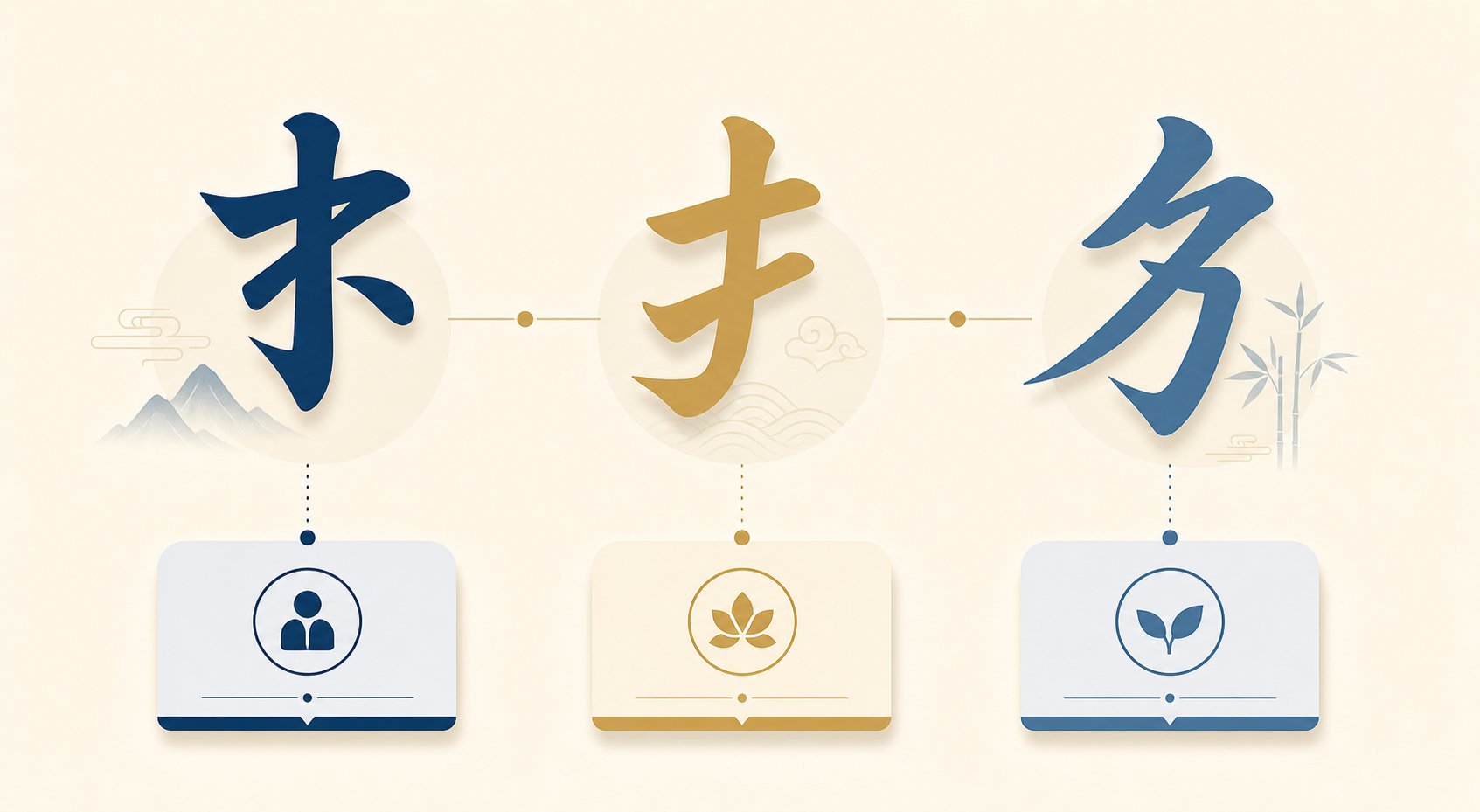
Before you can make meaningful choices about your child's name, you need to understand the architecture behind it. So how do Chinese names work? Unlike Western names that follow a given-name-then-surname order, Chinese names place the family name first and the personal name second. The total name is typically two or three characters long, and every character is a deliberate choice carrying its own meaning.
How Chinese Names Are Structured
Think of a Chinese name as a compact sentence about identity. The first character is almost always the surname, inherited from the family line. The remaining one or two characters form the given name. A two-character given name is the most common format today, giving parents room to layer meaning, sound, and cultural resonance into the name.
Here is how Chinese names are structured in practice:
| Position | Component | Example Character | Pinyin |
|---|---|---|---|
| 1st character | Surname (family name) | 李 | Li |
| 2nd character | Generation character or first given-name character | 耀 | Yao |
| 3rd character | Personal character (unique to the individual) | 明 | Ming |
A single-character given name (surname plus one character) does exist and grew more popular in the mid-20th century. However, two-character given names remain the traditional standard and offer more flexibility for embedding meaning. For adoptive families choosing a Chinese name, the two-character format provides space to honor heritage while personalizing the name.
The Role of Generational Characters
You might notice that siblings or cousins in Chinese families share a character in their names. This is the generational character, known as 字辈 (zi bei). Historically, Chinese clans created generation poems that assigned a specific character to each generation. Brothers and cousins received the same generation character, typically as the first character of their given name, while the second character remained unique to each person.
These poems served as more than naming tools. They reinforced family identity, conveyed values like loyalty or wisdom, and maintained generational order within the clan. Some poems followed rhyme schemes in sets of five or seven characters, creating a sequence that could guide naming for dozens of generations.
For adopted children, the generational character raises a practical question: your child likely will not share a biological clan poem. However, understanding this tradition helps you decode orphanage names, where a shared character among children often mimics this system at an institutional level.
Understanding Surname Choices in Adoption
The surname decision is one of the first structural choices you will face. Adoptive families generally have three options:
- Keep the child's original Chinese surname from their orphanage records, preserving a direct link to their earliest identity.
- Use a common Chinese surname that phonetically resembles your family's last name (for example, a family named "Lee" might use 李).
- Select a Chinese surname independently based on meaning or cultural significance, separate from both the orphanage name and your Western surname.
There is no single correct answer here. Some families keep the original surname as a middle name while using a transliterated version as the primary Chinese surname. Others preserve the full orphanage name and add a new given name alongside it. The chinese name structure you choose should reflect what feels most authentic to your family's relationship with your child's heritage.
What matters most is understanding that the surname carries weight in Chinese culture. It signals lineage and belonging. Whatever you decide, make the choice intentionally rather than defaulting to convenience.
Understanding Your Child's Orphanage-Assigned Name
Your child's adoption paperwork likely includes a Chinese name they have already been living with. Many adoptive families invest deep emotion into these orphan names, often preserving them as middle names or keeping them intact. But what does that name actually mean, and who chose it? The answer is more institutional than personal, and understanding this distinction helps you make informed decisions about whether to keep, modify, or supplement the name.
What Orphanage Names Typically Mean
Orphanage-assigned names follow bureaucratic patterns rather than the deeply personal naming traditions of Chinese families. Research by Research-China.Org reveals that orphanage directors typically assign names based on a set of practical and administrative factors: the child's finding location, the date they were found, their gender, and sometimes simply the next entry in a Chinese dictionary.
The surname (first character) often signals institutional identity rather than family lineage. Common orphanage surnames include "Dang" (党, meaning "Party" or "Government"), "Guo" (国, meaning "State" or "Country"), and "Fu" (福, meaning "Good Fortune," the root character in the Chinese word for orphanage). Other orphanages derive surnames from the city name, the director's own surname, or a local landmark. For example, an orphanage in a city called Bao'An might surname all children "Bao" (宝).
This means your child's surname was likely shared with every child at that institution during a given period. It was not chosen for them specifically. It was a classification tool.
Decoding Characters and Shared Generational Markers
The middle character in a three-character orphanage name often functions like a generational marker, but instead of connecting biological siblings, it groups children by admission date or finding location. Some orphanages change this shared character annually, monthly, or by the district where the child was found. One orphanage even used the character "Ao" (奥, from "Olympics") for every child found in 2008, the year Beijing hosted the Games.
The final character tends to be the most individualized, yet even here, patterns emerge. Some institutions simply work through characters in dictionary order based on radical groupings, assigning the next available character to the next child admitted.
If you are wondering what does my name in Chinese mean at the character level, here is how to research it:
- Identify the exact Chinese characters (not just the pinyin) from your child's official adoption documents.
- Look up each character individually using a reliable dictionary tool like MDBG or Pleco, noting all possible meanings.
- Check the pinyin and tone number for each character to understand pronunciation.
- Research whether the surname matches the orphanage's city name, director's name, or a common institutional surname like Dang or Guo.
- Ask a native Mandarin speaker to read the full name aloud and share their impression of its connotations and naturalness.
- Contact other families who adopted from the same institution to compare naming patterns and identify shared generational characters.
Understanding the meaning of Chinese names at this level reveals which parts are personal and which are purely administrative. That distinction matters when deciding what to preserve.
Adult Adoptee Perspectives on Their Birth Names
The question of keeping versus changing an orphanage name carries real emotional weight, and adult adoptees hold a range of views. Some adoptees describe their orphanage name as the only tangible link to their earliest life in China, regardless of how it was assigned. One parent in the adoption community noted that the name was "the only thing they could take with them from China," and the bureaucratic origin did not diminish its significance.
Others feel differently. Some adult adoptees have expressed frustration that their orphanage name branded them as institutional, particularly when surnames like "Dang" or "Yuan" (meaning "institution") made their status immediately obvious to any Chinese speaker. One family was told directly that their child's surname "was not a good name" and "would brand them for life."
There is no universal right answer here. Many families find a middle path: preserving the orphanage name as a legal middle name or a documented part of the child's history while also creating a new Chinese given name chosen with personal intention. This approach honors the child's origin story without limiting their identity to an administrative label.
What matters most is that you understand the chinese meaning of names your child already carries before deciding what role those characters will play going forward. A name assigned from a dictionary page still held your child through their earliest days. That history has value, even when the naming process itself was formulaic.
Traditional Naming Practices Like Five Elements and Birth Charts
Character meaning is only one layer of Chinese naming conventions. In many Chinese families, the name a child receives is also shaped by cosmological systems that have guided naming decisions for over two thousand years. Two of the most influential are 五行 (Wu Xing, the Five Elements) and 八字 (Ba Zi, the Eight Characters birth chart). For adoptive parents choosing a Chinese name for their child, these traditions raise a compelling question: should you honor them, even when key information is missing?
The Five Elements in Chinese Naming Tradition
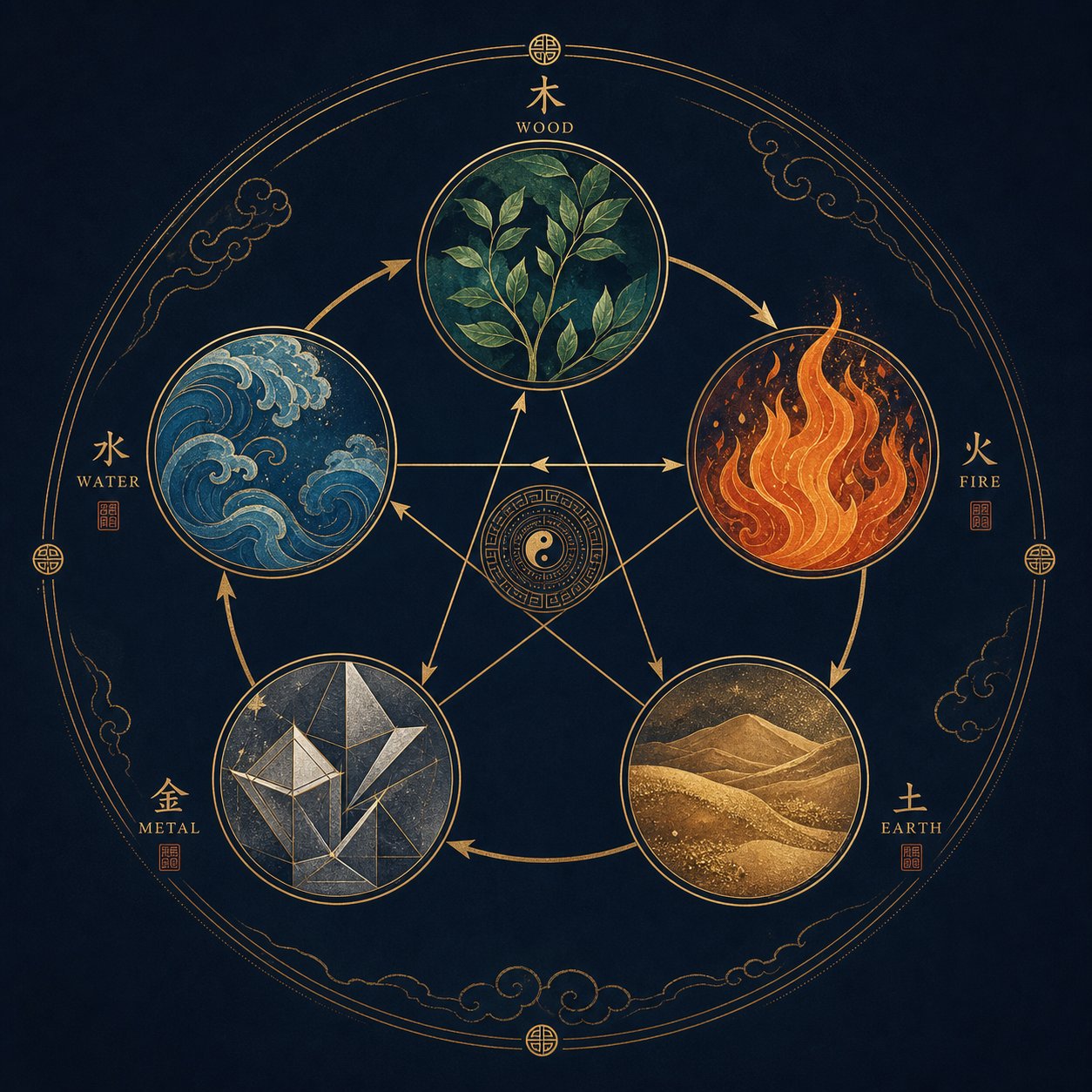
Wu Xing is not a list of substances. It is a system of five dynamic forces: wood, fire, earth, metal, and water. These elements exist in cycles of generation and control. Water nourishes wood. Wood fuels fire. Fire creates earth (ash). Earth bears metal (ore). Metal enriches water (minerals). As Chinese naming tradition holds, each element carries distinct qualities, and parents select characters associated with the element they believe will balance or strengthen their child's nature.
In practice, a naming consultant analyzes which elements are strong or weak in a child's birth chart, then recommends characters containing radicals tied to the missing or underrepresented element. A child whose chart lacks water might receive a name with the radical 氵(water), like 泽 (Ze, meaning grace or nourishment) or 清 (Qing, meaning clarity). A child needing wood energy might get a character with the 木 radical, like 梓 (Zi, the catalpa tree) or 柏 (Bai, the evergreen cypress).
Here is how the five elements map to chinese names and characters commonly used in naming:
| Element | Chinese | Common Name Characters | Associated Qualities |
|---|---|---|---|
| Metal (金) | Jin | 铭 (Ming), 钧 (Jun), 铮 (Zheng) | Strength, clarity, decisiveness |
| Wood (木) | Mu | 梓 (Zi), 柏 (Bai), 林 (Lin) | Growth, flexibility, resilience |
| Water (水) | Shui | 泽 (Ze), 润 (Run), 清 (Qing) | Depth, adaptability, wisdom |
| Fire (火) | Huo | 煜 (Yu), 灿 (Can), 煦 (Xu) | Warmth, energy, passion |
| Earth (土) | Tu | 坤 (Kun), 安 (An), 坚 (Jian) | Stability, reliability, groundedness |
You will notice that these are not arbitrary associations. Metal characters often contain the 钅radical. Wood characters carry 木. Water characters include 氵. Fire characters feature 火. Earth characters hold 土. The radical itself signals the elemental connection, making the system visually embedded in the written character.
Birth Charts and What to Do When Information Is Missing
The 八字 (Ba Zi) system generates a chart from four pairs of characters representing the year, month, day, and hour of birth. Each pair consists of a Heavenly Stem and an Earthly Branch, producing eight characters total. A naming practitioner reads this chart to determine which of the five elements dominate and which are deficient, then selects name characters to restore balance.
Here is the challenge for adoptive families: many children adopted from China have estimated rather than confirmed birth dates. The finding date recorded in orphanage documents may not be the actual date of birth, and the birth hour is almost never known. Without an accurate birth time, a full Ba Zi chart cannot be calculated.
Families navigate this gap in several ways:
- Some use the finding date as a proxy, acknowledging it is approximate but still meaningful as the date the child entered documented life.
- Others work with a practitioner who calculates partial charts based on the known year and estimated month, focusing on the elements that remain consistent regardless of the exact day or hour.
- Some families skip the birth chart entirely and choose characters based on elemental qualities they find meaningful for their child, independent of any calculation.
None of these approaches is wrong. The Ba Zi system was designed for families with precise birth records, and adapting it to adoption realities requires flexibility rather than rigid adherence.
Deciding Whether to Follow Traditional Practices
Should you incorporate Wu Xing or Ba Zi into your naming process? There is no obligation to do so. Many modern Chinese families in urban areas choose names based purely on character meaning, sound, and aesthetic appeal without consulting elemental systems. Following these chinese naming customs is a choice, not a requirement for cultural authenticity.
That said, some adoptive parents find value in engaging with these traditions for a specific reason: it mirrors what a Chinese birth family might have done. It is a way of honoring the cultural context your child was born into, even when the exact circumstances of their birth remain unknown.
If you decide to incorporate the five elements, focus on the qualities that resonate with your hopes for your child rather than treating the system as a rigid formula. A character like 安 (An, meaning peace and safety) carries the earth element and works beautifully for a child you want to feel grounded and secure. A character like 润 (Run, meaning to nourish) carries water energy and suits a child you hope will move through life with gentleness and adaptability. The element becomes a lens for selecting meaning, not a constraint that limits your options.
Whether you follow these systems or not, understanding them deepens your appreciation for the layers embedded in Chinese naming conventions. And if your child one day asks why you chose their characters, being able to explain the tradition behind the choice adds richness to the story you tell them.
Regional Differences in Chinese Naming Across Provinces
China is not linguistically uniform. A character that sounds elegant in Mandarin might land awkwardly in Cantonese, and a name that flows naturally in southern dialect regions could feel flat when spoken in the north. Because china names carry tonal and phonetic weight that shifts across regions, your child's province of origin directly influences which characters will serve them well.
Mandarin vs. Cantonese Naming Traditions
Mandarin and Cantonese are the two dominant dialect groups shaping chinese name conventions, and they differ in ways that matter for naming. Mandarin uses four tones plus a neutral tone, while Cantonese operates with six primary tones (nine if you count the three entering tones that end in stop consonants like "p," "t," or "k"). More tones means more potential for a character to sound like an unintended word when spoken aloud in Cantonese, even if it sounds perfectly fine in Mandarin.
Beyond tones, the two dialects differ in ending consonants. Mandarin syllables typically end in "n" or "ng," while Cantonese retains final consonants like "p," "t," "k," "m," "n," and "ng." This gives Cantonese names a crisper, more percussive quality. Characters that feel soft and flowing in Mandarin pronunciation may sound abrupt or punchy in Cantonese, and vice versa.
Naming aesthetics also diverge. Cantonese-speaking families in Guangdong and Hong Kong tend to favor characters that produce balanced tonal patterns across the full name, often avoiding consecutive low tones that can sound flat. Mandarin-speaking families in northern and central provinces may prioritize rising-falling tonal contrasts that create a sense of rhythm.
| Category | Mandarin | Cantonese |
|---|---|---|
| Romanization system | Pinyin (e.g., Ming) | Jyutping (e.g., Ming4) |
| Number of tones | 4 tones + 1 neutral | 6 tones (9 with entering tones) |
| Final consonants | Limited to "n" and "ng" | Includes "p," "t," "k," "m," "n," "ng" |
| Written characters | Simplified Chinese | Traditional Chinese |
| Common name characters | 梓 (Zi), 宇 (Yu), 轩 (Xuan) | 俊 (Zeon3), 嘉 (Gaa1), 慧 (Wai6) |
| Tonal naming preference | Rising-falling contrast | Balanced tonal spread across syllables |
Why Your Child's Province of Origin Matters
When you know which province your child was adopted from, you gain a crucial piece of the naming puzzle. A child from Guangdong, Hong Kong, or Macau grew up in a Cantonese-speaking environment. Even if they were too young to remember it, their name will be spoken by Cantonese speakers if they ever reconnect with people from that region. Choosing characters that sound natural in Cantonese honors that connection.
Children adopted from provinces like Hunan, Jiangxi, Anhui, or Sichuan come from regions where local dialects differ from both standard Mandarin and Cantonese. However, Mandarin serves as the lingua franca across these areas, so Mandarin pronunciation is typically the safer reference point for naming.
China has different names and naming sensibilities depending on the region, and this extends to character popularity. Some characters trend heavily in certain provinces but feel dated or unusual in others. A cultural consultant familiar with your child's specific province can flag these regional preferences, helping you avoid a name that sounds geographically mismatched.
Romanization Systems and Pronunciation
How your child's name appears in English on legal documents depends on which romanization system you use. Pinyin is the standard for Mandarin and is used on mainland Chinese passports and official records. Jyutping is the linguistic romanization for Cantonese, though many Hong Kong families use older systems like Yale Cantonese or informal romanizations that have become conventional for certain surnames ("Chan" instead of Jyutping's "Can4," for example).
This distinction matters practically. If your child's adoption documents romanize their name using a Cantonese convention, switching to pinyin on their new documents changes how the name looks and is pronounced by English speakers. "Wong" becomes "Wang." "Chan" becomes "Chen." "Ng" becomes "Wu." These are the same characters rendered through different phonetic lenses.
For families adopting from Guangdong or Hong Kong, consider preserving the Cantonese romanization on legal documents even if you primarily use Mandarin pronunciation at home. This keeps the name visually consistent with its regional origin. For children from other provinces, pinyin is the natural choice and aligns with how their name would appear on any mainland Chinese document.
Whatever system you choose, test the romanized spelling with English speakers who will encounter the name daily. Some romanizations create pronunciation confusion in English contexts. A name romanized as "Qi" in pinyin (pronounced "chee") will be mispronounced by most English speakers as "kee" or "kwee." Anticipating these friction points helps you decide whether to prioritize phonetic accuracy or everyday usability in your child's non-Chinese-speaking community.
Common Mistakes to Avoid When Choosing a Chinese Name
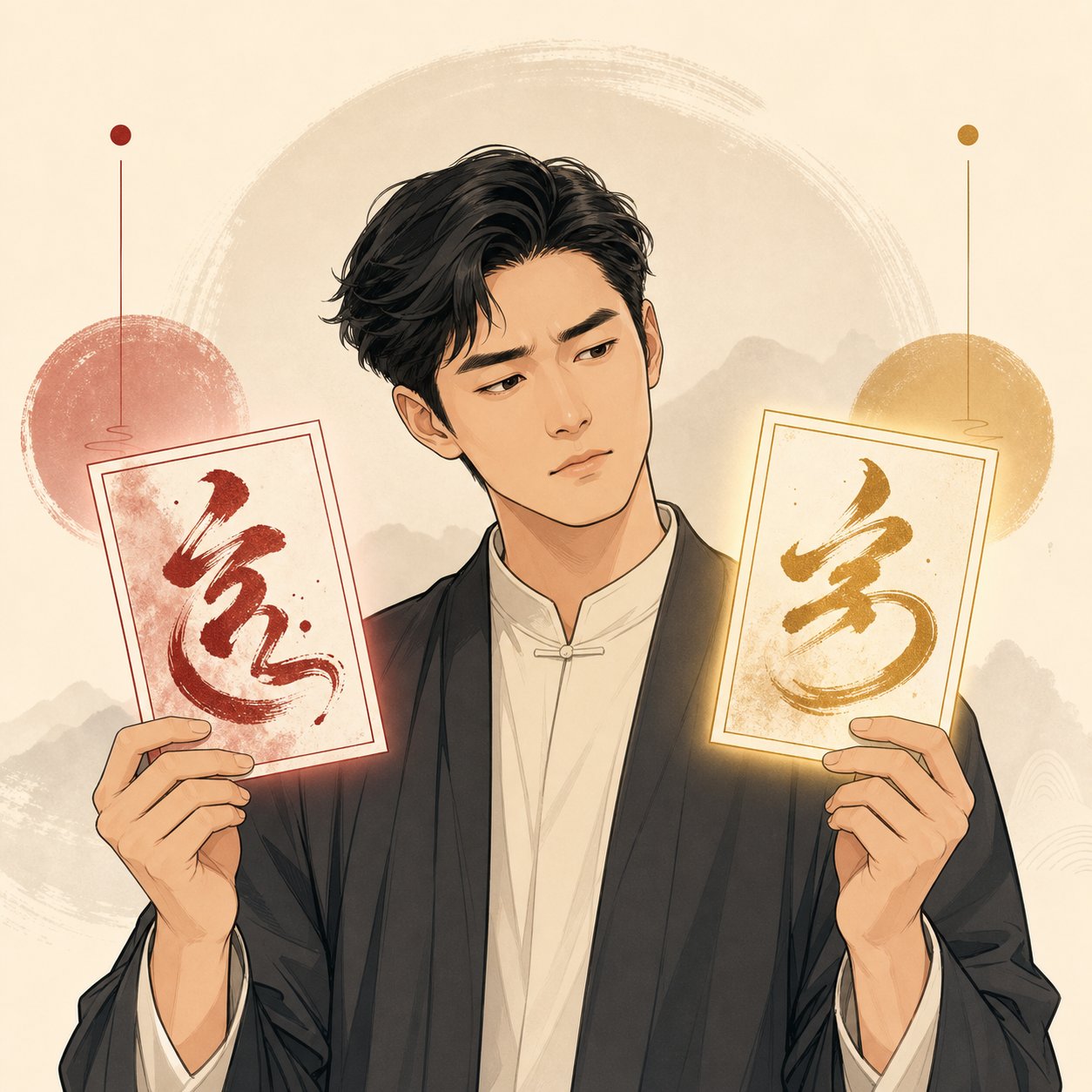
Pronunciation friction is just one piece of a larger puzzle. Even when you have the right region and romanization in mind, the characters themselves can trip you up in ways that are invisible to non-native speakers. The mistakes below show up repeatedly among parents choosing chinese name characters without sufficient cultural guidance, and most are entirely preventable with the right verification process.
Here are the most frequent pitfalls, ranked by how often they occur:
- Tonal collisions that create unfortunate homophones. Two perfectly fine characters placed together can sound nearly identical to an embarrassing or negative word when spoken aloud. Chinese is dense with homophones, and a single tone shift changes meaning entirely.
- Character combinations that produce unintended meanings. Individual characters may carry beautiful meanings in isolation, but paired together they form a compound word or phrase with humorous, vulgar, or morbid connotations that any native speaker would immediately catch.
- Relying on stereotype chinese names or overly common characters. Defaulting to syllables that "sound Chinese" to Western ears, or choosing the same handful of characters that appear in every baby-name list, signals unfamiliarity with the language's actual diversity.
- Selecting characters too complex for a child to write. A character with 20+ strokes may look elegant on paper, but your child will need to learn to write their own name. Characters like 曦 (Xi, meaning dawn, 20 strokes) or 龍 (Long, meaning dragon, 16 strokes) create real frustration for young learners.
- Picking names that sound foreign or unnatural to native speakers. Direct transliterations of English names or character pairings that no Chinese family would use together make the name feel artificial, immediately marking it as chosen by someone outside the culture.
Tonal Pitfalls and Unintended Meanings
Chinese is a tonal language where the same syllable carries completely different meanings depending on pitch. "Ma" in the first tone means mother. In the third tone, it means horse. This tonal density means that characters chosen for their individual beauty can collide acoustically when placed side by side, producing sounds that echo negative words.
The problem compounds with character combinations. A parent might select two characters with lovely standalone meanings, like "to think" and "prosperous," only to discover that spoken together they sound nearly identical to the word for "death." Similarly, characters containing the syllable "ri" (meaning "sun") carry vulgar slang associations in colloquial Mandarin that would make native speakers uncomfortable.
These are not edge cases. They are the kind of collision that happens routinely when parents select characters from a dictionary based on meaning alone, without testing how the full name sounds when spoken at natural speed. The chinese names behind the name, the acoustic and cultural layers beneath the surface meaning, are where these problems hide.
Stereotypical or Overly Common Character Choices
Another frequent mistake is gravitating toward characters that feel "authentically Chinese" based on Western media exposure rather than actual naming trends. Syllables like "Chang," "Shang," or "Ming" get chosen disproportionately by non-Chinese speakers because they sound familiar. But familiarity to Western ears does not equal naturalness to Chinese ones. As naming experts have pointed out, these choices can inadvertently echo the "Ching Chang Chong" mockery historically used to degrade Chinese immigrants, making them culturally loaded in ways parents never intended.
On the opposite end, some parents pick characters that are technically valid but so overused they carry no distinction. Imagine naming a child the equivalent of "John Smith" but without realizing it. Characters like 美 (Mei, beautiful) or 丽 (Li, pretty) appear in millions of names and, when used without a thoughtful pairing, can feel generic rather than meaningful.
The sweet spot lies between these extremes: characters that are recognizable, culturally grounded, and carry specific meaning without being either exotic-sounding or bland.
How to Verify Your Name Choice
The single most effective safeguard against all of these mistakes is testing your chosen name with multiple native Chinese speakers, ideally from different regions and age groups. One person's approval is not enough. A name that sounds fine to a speaker from Beijing might carry slang associations in Sichuan, or vice versa.
When you verify, ask specifically:
- Does this name sound natural for a child of this gender and generation?
- Do the characters together remind you of any common words, phrases, or slang?
- Would you find this name unusual or out of place if you met someone with it?
- Is there anything about the tonal pattern that sounds awkward or humorous when spoken quickly?
- Can you think of any teasing nicknames that could be derived from this name?
Ask at least three native speakers, and include at least one person from your child's province of origin if possible. Pay attention to hesitation or polite deflection. In Chinese culture, directly telling someone their name choice is bad can feel rude, so a lukewarm response often signals a real problem. Press gently for honest feedback.
If you do not have native speakers in your personal network, seek out Chinese cultural organizations, university language departments, or professional naming consultants who specialize in cross-cultural naming. The investment of time here is small compared to the lifelong impact of the name you choose.
Working With Native Speakers and Cultural Consultants
Knowing what to avoid is valuable. Knowing who to turn to for guidance is even more so. A qualified cultural consultant or native speaker can catch problems you would never spot on your own, and they can also surface character combinations and meanings you would never discover through dictionary research alone. The question is how to find the right person and how to make the most of that collaboration.
Finding a Qualified Cultural Consultant
Not every native Chinese speaker is equally equipped to help you choose a chinese given name. Fluency alone does not guarantee naming expertise. You want someone who understands character etymology, tonal aesthetics, regional connotations, and ideally the cultural nuances behind the name chinese families actually use in practice.
Look for consultants who meet at least a few of these criteria:
- Native-level fluency in Mandarin or Cantonese (matching your child's province of origin)
- Familiarity with traditional naming practices like five elements or generational characters
- Experience working with adoptive families or cross-cultural naming situations
- Willingness to explain their reasoning rather than simply handing you a name
- Ability to provide multiple options with detailed breakdowns of meaning, tone, and cultural associations
Where do you find these people? Chinese cultural centers, university East Asian studies departments, and adoption community networks are strong starting points. Some professional naming services operate online and specialize in creating names for non-Chinese-speaking families. Adoption agencies with China programs sometimes maintain referral lists of cultural consultants as well.
When evaluating suggestions, pay attention to how thoroughly the consultant explains the chinese behind the name. A good consultant does not just tell you a name is beautiful. They walk you through why: the radical structure, the literary or historical associations, how the characters interact tonally, and whether the name reads as age-appropriate for a child versus an adult.
Here is what to prepare before your consultation:
- Your child's birth date (or estimated date) and province of origin
- The orphanage-assigned name with exact Chinese characters, not just pinyin
- Any family values, qualities, or themes you want the name to reflect
- Whether you prefer a single-character or double-character given name
- Your surname decision (keeping the original, transliterating yours, or choosing a new one)
- Any characters or sounds you want to avoid based on prior research
- Whether you plan to use the name as a legal first name, middle name, or informal name
The more context you provide, the more tailored the suggestions will be. A consultant working blind will default to generic recommendations. One who understands your family's specific situation can craft something genuinely personal.
Involving Older Children in the Naming Process
For children adopted at older ages, the naming conversation shifts significantly. A child who is five, seven, or ten years old already has a relationship with their existing name. They may have emotional attachments to it, or they may associate it with institutional life and want something new. Either response is valid.
Adult adoptees have reflected on how their Chinese names shaped their sense of identity over time. Some grew to love names they initially rejected. Others carried complicated feelings about names that marked them as orphans. What emerges consistently from these stories is that having agency in the process matters. Adoptees who felt their names were imposed without their input often struggled more with those names later.
For older children, consider these approaches:
- Present the existing orphanage name's meaning and ask how they feel about it
- Offer the option of keeping it, modifying it, or choosing something entirely new
- Let them participate in selecting characters by showing options with visual explanations of meaning
- Frame the process as additive rather than replacement: they can carry both names
A child does not need to make the final decision alone. But giving them a voice, even a small one, transforms the name from something that happened to them into something they helped shape. That distinction carries weight well into adulthood.
When Naming Decisions Happen in the Adoption Timeline
Timing varies depending on your adoption pathway, but most families face naming decisions at predictable points. During the referral stage, you receive your child's file including their orphanage name. This is when research typically begins: decoding the existing name, deciding whether to preserve it, and exploring alternatives.
Between referral and travel, many families finalize their naming approach. This window, often several months, is the ideal time to consult with native speakers, test options, and settle on characters. Rushing this process during the travel period itself, when emotions run high and logistics consume your attention, rarely produces the best results.
After adoption finalization, you still have flexibility. Legal name changes can happen post-adoption in most jurisdictions, and many families add or adjust Chinese names on re-issued birth certificates or citizenship documents. The name does not need to be perfect on day one. Some families choose a provisional name and refine it after spending time with their child and learning their personality.
For families pursuing the process right now, keep in mind that naming is not a single moment but an unfolding decision. You can honor your child's history, consult experts, involve your child when age-appropriate, and still adjust course as your understanding deepens. The goal is a name that feels right not just today, but decades from now when your child carries it into rooms you cannot yet imagine.
Keeping Your Child's Chinese Name Alive in Daily Life
Choosing the right characters is only half the work. A name that lives exclusively on a birth certificate or adoption document fades into abstraction. For the name to carry real meaning in your child's life, it needs to be spoken, written, and woven into everyday routines, especially in a household where Chinese is not the primary language.
Daily Practices for Using the Chinese Name at Home
Consistency matters more than perfection here. You do not need to be fluent in Mandarin to keep your child's Chinese name present. You just need to create regular touchpoints where the name shows up naturally.
- Use the Chinese name as a term of endearment at home, even alongside their English name. Hearing it spoken by family normalizes it.
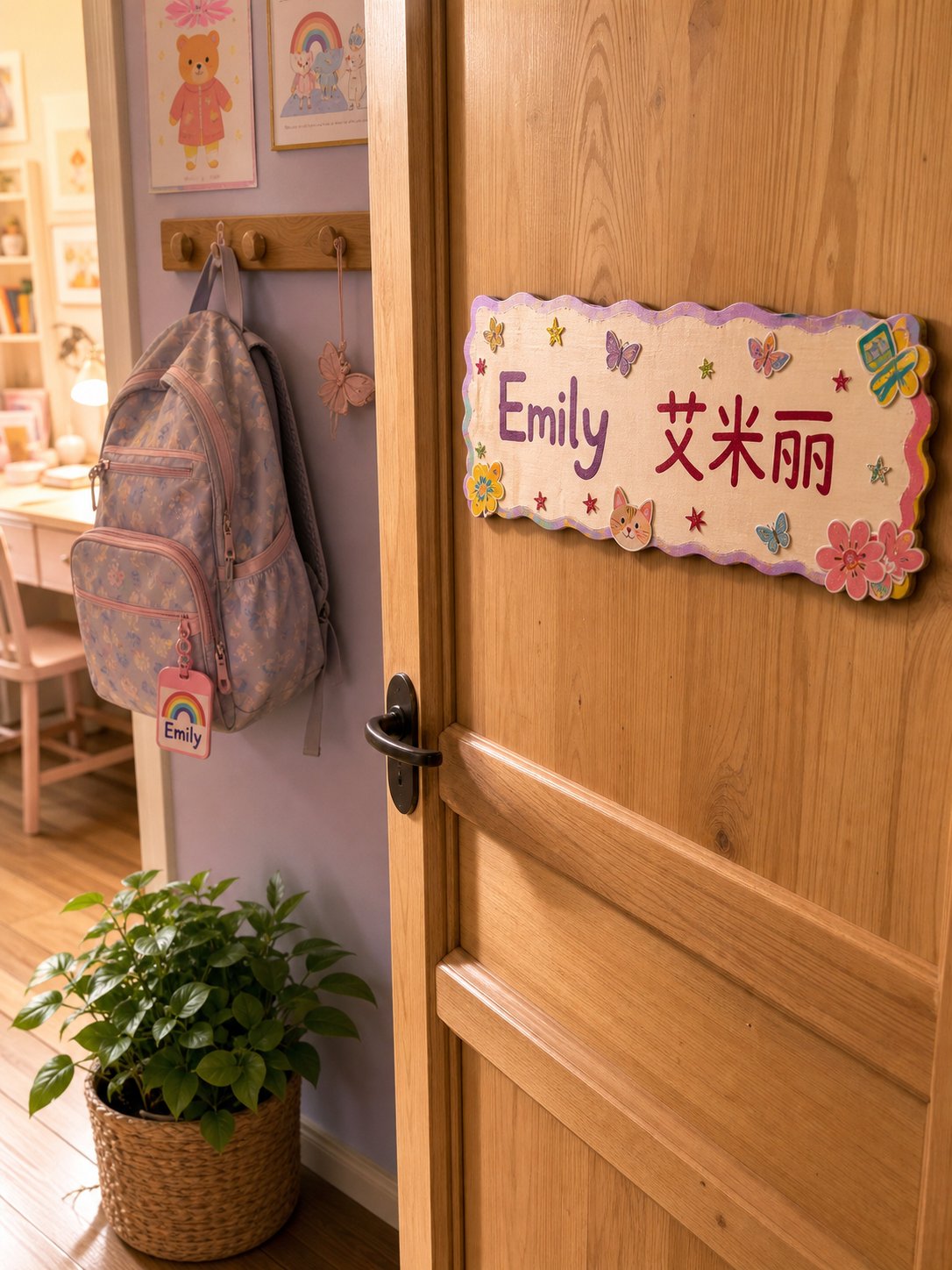
- Label your child's belongings (lunchbox, backpack, bedroom door) with their Chinese characters alongside the English spelling.
- Practice writing the characters together as a family activity. Start with large-format tracing sheets and progress to smaller grids as motor skills develop.
- Include the Chinese name on school records, library cards, and extracurricular registrations so it appears in semi-public contexts.
- Connect with Chinese-speaking community members, whether through heritage language classes, cultural organizations, or family friends, who can use the name in conversation.
- Read picture books or watch media in Mandarin where characters share similar names, reinforcing that the name belongs to a living language.
- Celebrate the name's meaning on birthdays or Lunar New Year by explaining the characters and what they represent.
The goal is not to create pressure around the name but to make it feel as ordinary and comfortable as their English name. Adoptees who studied Mandarin have described the moment a classmate called them by their Chinese name in public as deeply affirming. One adoptee recalled reacting instinctively to her Chinese name in a library and feeling genuinely excited that it had become part of her identity rather than just a word on paper.
Legal Options for Formalizing the Name
People often ask, do chinese people have middle names? Traditionally, no. Chinese naming conventions do not include a separate middle name the way Western systems do. However, when Chinese names enter Western legal frameworks, they frequently occupy the middle name position. This is the most common approach for adoptive families: placing the Chinese name as a legal middle name in chinese documentation and Western birth certificates alike.
You have several legal options depending on your jurisdiction:
- Legal middle name: The Chinese name (in pinyin) appears as the official middle name on the re-issued birth certificate and citizenship documents. This is the most common choice among adoptive families.
- Hyphenated first name: Some families hyphenate the English and Chinese names together as a compound first name (e.g., "Emma-Mingzhu"), keeping both equally visible.
- Legal first name with English nickname: A smaller number of families make the Chinese name the legal first name and use an English name socially. This mirrors how many Chinese immigrants navigate dual-name systems.
- Informal use only: The Chinese name remains part of family life without appearing on legal documents. This works but means the name has no official standing if the child later wants it recognized.
Do asians have middle names in the traditional sense? The concept varies across cultures. Many East Asian naming systems do not use a separate middle name category, but diaspora families frequently adapt to Western legal structures by slotting heritage names into that position. Do asian people have middle names on their documents in the West? Increasingly, yes, precisely because families recognize that formalizing the name gives it staying power. A name that exists only in memory is easier to lose than one printed on every official record your child encounters.
If you are considering a middle name for chinese heritage purposes, file the paperwork during the re-adoption or birth certificate re-issuance process. Adding a name later is possible in most states but involves a separate legal petition, court fees, and processing time. Doing it upfront is simpler.
The Name as an Ongoing Cultural Bridge
A Chinese name is not a one-time gift you hand your child at adoption. It is a living connection that grows in meaning as they grow in understanding. At age three, it might be the characters on their wall. At age ten, it might be the name they use in Saturday Chinese school. At age sixteen, it might be the identity they reclaim after years of feeling caught between cultures.
A Chinese name kept alive through daily use becomes more than heritage preserved. It becomes heritage practiced, a bridge your child can walk across whenever they are ready, in their own time and on their own terms.
Adult adoptees consistently describe a turning point where their Chinese name shifted from something embarrassing or foreign into something powerful. That shift does not happen in a vacuum. It happens because the name was there, waiting, when they were ready to reach for it. Families who use the name regularly, who treat it as normal rather than exotic, give their children the foundation to make that reach without hesitation.
The characters you chose with such care deserve more than a filing cabinet. Speak them. Write them. Let your child hear their Chinese name in your voice so that years from now, when they introduce themselves in a Mandarin class or connect with their birth culture, the name already feels like home.
Frequently Asked Questions About Choosing a Chinese Name for an Adopted Child
1. Should I keep my adopted child's orphanage-assigned Chinese name?
There is no single right answer. Orphanage names are typically assigned using institutional patterns rather than personal family traditions. Surnames often reflect the orphanage's city or director, and shared middle characters group children by admission date rather than kinship. Many families preserve the orphanage name as a legal middle name to honor the child's earliest identity while also creating a new given name chosen with personal intention. Adult adoptees hold varied views: some treasure the name as their only link to early life in China, while others feel it marked them as institutional. Consider your child's age, emotional attachment, and the name's actual meaning before deciding.
2. How do Chinese names work differently from Western names?
Chinese names place the surname first and the given name second, typically totaling two or three characters. Each character carries independent meaning, so a Chinese name reads almost like a compact phrase about identity. Unlike Western names drawn from fixed lists, Chinese given names are composed by selecting individual characters for their meaning, sound, tonal harmony, and even the visual balance of their strokes. Families may also incorporate generational characters shared among siblings or cousins, and some follow traditional systems like the five elements to guide character selection based on the child's birth information.
3. Do I need to follow the five elements tradition when naming my adopted child?
No, it is not required. Many modern Chinese families in urban areas choose names based purely on character meaning and sound without consulting elemental systems. However, some adoptive parents find value in engaging with Wu Xing (five elements) because it mirrors what a Chinese birth family might have done. The challenge for adoptive families is that a full birth chart requires precise birth date and time, which is often unavailable for adopted children. You can use the finding date as a proxy, work with partial charts, or simply select characters whose elemental qualities resonate with your hopes for your child without strict calculation.
4. How can I verify that the Chinese name I chose does not have embarrassing meanings?
Test your chosen name with at least three native Chinese speakers from different regions and age groups. Ask specifically whether the characters together remind them of common words, slang, or phrases, whether the tonal pattern sounds awkward when spoken quickly, and whether any teasing nicknames could be derived from it. Pay attention to hesitation or polite deflection, as Chinese cultural norms may prevent someone from directly saying a name choice is poor. Include at least one speaker from your child's province of origin if possible, since regional slang and tonal associations vary significantly across China.
5. How do I keep my child's Chinese name meaningful if we don't speak Chinese at home?
Consistency matters more than fluency. Use the Chinese name as a term of endearment alongside their English name so they hear it regularly from family. Label belongings with the Chinese characters, practice writing them together as an activity, and include the name on school records and library cards. Connect with Chinese-speaking community members through heritage language classes or cultural organizations who can use the name in conversation. Formalizing the name as a legal middle name ensures it appears on official documents throughout life, giving it staying power even if daily spoken use fluctuates as the child grows.