Understanding Elegance in Chinese Naming Culture
When English speakers hear the word "elegant," they might picture something subjectively pretty or refined. In Chinese culture, elegance carries a far more specific weight. It is rooted in a single character that has shaped aesthetics, literature, and naming traditions for thousands of years.
What Makes a Chinese Name Elegant
The elegant definition in Chinese naming traces back to one character: 雅 (yǎ). This isn't a loose compliment. It's a classical aesthetic category tied to literary refinement, natural beauty, and moral virtue. In traditional Chinese thought, art and self-cultivation are inseparable. Confucius urged his students to "take pleasure in the arts" as a path toward moral development. The same philosophy applies to naming: an elegant name isn't merely pleasant sounding. It reflects inner character.
雅 (yǎ): A classical Chinese aesthetic concept meaning refined, cultured, and graceful. It denotes beauty that arises from literary depth, harmony with nature, and virtuous character rather than surface-level decoration.
So when parents search for elegant chinese baby names, they're reaching toward something with real cultural roots. The elegant meaning here connects sound, written form, and moral resonance into a single identity. A name carrying yǎ feels like a line of poetry you want to read twice.
How This Guide Differs From a Name List
Most resources for chinese names offer long tables of characters with translations and little else. You scroll, you pick something that looks nice, and you move on without understanding why it works or whether it truly fits.
This guide takes a different approach. Rather than dumping hundreds of options, it curates chinese baby names through a defined elegance lens and teaches you the principles behind each selection. Here's what to expect:
- Girls and boys covered equally, with a dedicated gender-neutral section
- Chinese characters and pinyin with tone marks included for every name
- English pronunciation approximations so you can say each name confidently
- Explanations of why each name qualifies as elegant, not just what it means
- Cultural context drawn from classical poetry, philosophy, and naming tradition
The chinese for name is 名 (míng), and in this tradition, a míng is never just a label. It's a deliberate act of creation, balancing sound, visual beauty, literary weight, and elemental harmony. Understanding these layers transforms name selection from guesswork into something closer to composing a poem.
That compositional quality starts with structure. Every Chinese name follows specific architectural rules that determine how meaning, sound, and visual form come together.
Chinese Naming Philosophy and How Names Are Built
Chinese names follow an architecture that might feel unfamiliar if you grew up with Western naming conventions. The family name comes first, the given meaning follows, and every element carries intentional weight. Understanding this structure is what separates a thoughtful name from a random selection of pretty characters.
The Structure of a Chinese Name
A Chinese name typically has two or three characters total. The first character is the surname. Chinese surnames (also called chinese family names) number in the hundreds, though a handful like Li, Wang, Zhang, and Chen dominate. After the surname comes the given name, which is usually one or two mandarin characters chosen by the parents.
In many traditional families, one character of the given name is shared across an entire generation of siblings or cousins. This is called a generational name (字辈, zìbèi). Imagine three brothers named 志明, 志强, and 志远. The shared character 志 (zhì, meaning ambition) marks them as belonging to the same generation within the family tree. This practice is less rigid today, but it still influences how names and characters are selected in families that honor lineage traditions.
Five Elements and Stroke Count in Name Selection
Beyond meaning, Chinese naming philosophy draws on wuxing (五行), the theory of five elements. Parents traditionally consult a child's birth date and time to determine which elemental energies need strengthening through the name. The five elements and their qualities are:
- Wood (木, mù) - growth, vitality, creativity
- Fire (火, huǒ) - passion, warmth, brilliance
- Earth (土, tǔ) - stability, nourishment, reliability
- Metal (金, jīn) - strength, precision, clarity
- Water (水, shuǐ) - wisdom, adaptability, depth
Characters containing radicals associated with a needed element are favored. A child lacking water energy might receive a name with the water radical (氵), like 涵 (hán, meaning encompassing) or 澜 (lán, meaning waves).
Stroke count adds another layer. Each character is classified as Yin (even strokes) or Yang (odd strokes), and a balanced name should alternate between them. According to traditional naming practice, the total stroke count of a complete name should fall within specific auspicious numbers, and the Yin-Yang pattern across all three characters should follow harmonious sequences like Yang-Yang-Yin or Yin-Yang-Yang.
Visual Aesthetics of Chinese Characters
Here's something rarely discussed in English-language resources: how a name looks when written matters almost as much as how it sounds. You might wonder how many chinese characters are there to choose from. The answer is tens of thousands, but only a fraction carry the visual balance that contributes to an elegant name.
Characters with overly dense stroke counts (like 鑫, 20+ strokes) can feel visually heavy. Characters that are too sparse (like 一, a single stroke) may look incomplete beside a complex surname. The goal is visual harmony: characters that sit comfortably together on paper, with balanced proportions and complementary structures. A name like 林清雅 flows visually because each character occupies its space with similar density and grace.
This interplay of meaning, elemental balance, and visual form is what gives Chinese naming its depth. An elegant name satisfies all three dimensions simultaneously. The real art begins when you apply these principles to specific names, starting with those crafted for girls.
Elegant Chinese Girl Names With Characters and Meanings
Applying those principles of meaning, sound, and visual form to real names is where the magic happens. The following chinese girl names have been curated not just for pleasant meanings but for how they satisfy the full elegance framework: literary depth, tonal beauty, and balanced written form. Each one earns its place through a specific source of refinement.
When browsing asian names for girls, you'll notice most lists organize alphabetically or by popularity. That approach tells you nothing about why a name feels graceful. Instead, the selections below are grouped by the origin of their elegance, giving you a clearer sense of which aesthetic tradition resonates with your family.
Virtue-Based Elegant Girl Names
These chinese names for girls draw their refinement from moral qualities. In Chinese culture, naming a child after a virtue isn't aspirational fluff. It's a quiet declaration of the values a family holds dear. The most elegant virtue names avoid bluntness. Rather than naming a child "Good" outright, they evoke grace, wisdom, or kindness through poetic indirection.
| Chinese Characters | Pinyin | Pronunciation Guide | Meaning | Elegance Category |
|---|---|---|---|---|
| 淑慧 | Shū Hui | Shoo (flat tone) Hway (falling tone) | Virtuous wisdom - gentle nature paired with intelligent mind | Virtue |
| 婉清 | Wǎn Qīng | Wahn (dipping tone) Ching (flat tone) | Gentle purity - soft temperament with a clean, clear heart | Virtue |
| 柔嘉 | Rou Jiā | Row (rising tone) Jyah (flat tone) | Tender goodness - mild character and inner virtue | Virtue |
| 懿淑 | Yi Shū | Ee (falling tone) Shoo (flat tone) | Noble gentleness - moral excellence with graceful bearing | Virtue |
| 德馨 | De Xīn | Duh (rising tone) Shin (flat tone) | Virtuous fragrance - moral integrity so strong it radiates outward | Virtue |
What makes these elegant rather than merely meaningful? Each pairs an abstract virtue with a sensory or poetic complement. 德馨 doesn't just say "moral." It says morality so deep it becomes fragrant, like incense rising. That layered imagery is the hallmark of elegant female names in the Chinese tradition.
Nature-Inspired Elegant Girl Names
Nature imagery is the most beloved source for female chinese names, but elegance here depends on restraint. A name referencing a common flower can feel ordinary. The refined choices draw from jade, moonlight, mist, and water rather than obvious blossoms. They suggest rather than state.
| Chinese Characters | Pinyin | Pronunciation Guide | Meaning | Elegance Category |
|---|---|---|---|---|
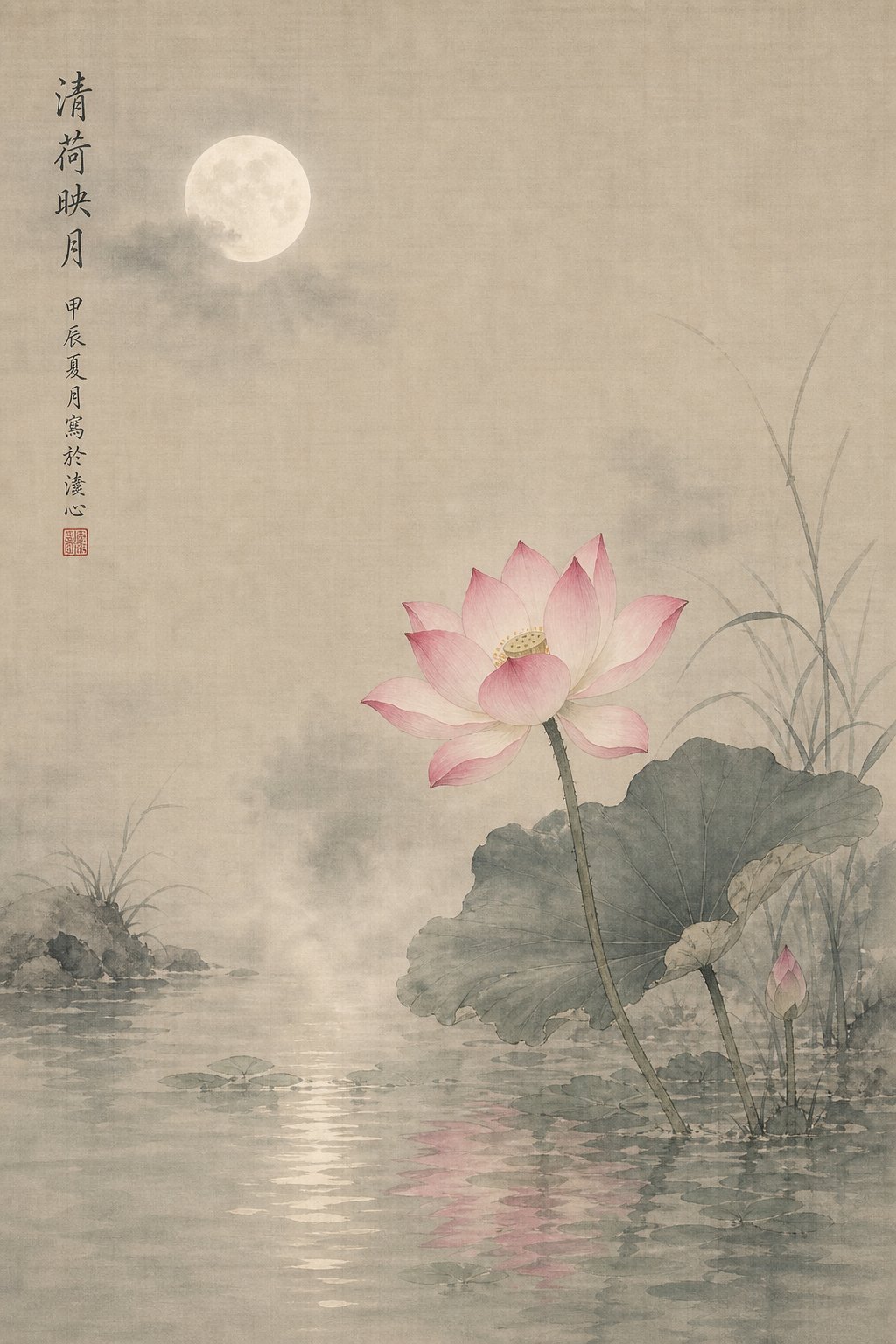
| 清菡 | Qīng Han | Ching (flat tone) Hahn (falling tone) | Clear lotus - pure as a lotus rising from still water | Nature |
| 若溪 | Ruo Xī | Rwoh (falling tone) Shee (flat tone) | Like a stream - gentle and vivid as a mountain brook | Nature |
| 云舒 | Yun Shū | Yoon (rising tone) Shoo (flat tone) | Clouds drifting freely - calm, unhurried elegance | Nature |
| 月菲 | Yue Fēi | Yweh (falling tone) Fay (flat tone) | Moonlight fragrance - lunar glow with delicate scent | Nature |
| 岚云 | Lan Yun | Lahn (rising tone) Yoon (rising tone) | Mountain mist and clouds - ethereal, quiet, and elevated | Nature |
Notice how these chinese names girl options avoid the most common nature characters. Instead of 花 (flower) directly, they reach for 菡 (lotus bud) or 岚 (mountain mist). This specificity is what separates elegant girl names from generic pretty ones. The rarer the image, the more it lingers in the mind.
Literary and Poetic Girl Names
The deepest well of elegance comes from classical Chinese poetry. These chinese female names carry a literary pedigree, each traceable to a specific verse or tradition. When someone asks about the name's origin, the answer isn't just a dictionary definition. It's a story rooted in centuries of literary culture.
| Chinese Characters | Pinyin | Pronunciation Guide | Meaning | Elegance Category |
|---|---|---|---|---|
| 舒窈 | Shū Yǎo | Shoo (flat tone) Yow (dipping tone) | Graceful and slender - from the Book of Songs describing an ideal lady | Literary |
| 静姝 | Jing Shū | Jing (falling tone) Shoo (flat tone) | Quiet beauty - from the Shijing poem "Jing Nu" about a serene maiden | Literary |
| 琼华 | Qiong Hua | Chyohng (rising tone) Hwah (rising tone) | Jade splendor - referenced in ancient poetry as a gift of rare beauty | Literary |
| 令仪 | Ling Yi | Ling (falling tone) Ee (rising tone) | Dignified bearing - from classical texts praising noble etiquette | Literary |
| 诗涵 | Shī Han | Shir (flat tone) Hahn (rising tone) | Poetic depth - literary talent paired with inner cultivation | Literary |
舒窈 (Shū Yǎo) is a standout example. It comes directly from the Book of Songs (诗经), China's oldest poetry collection, where the phrase describes a woman of graceful, slender beauty. Choosing this name gives a child a connection to over 2,500 years of literary tradition. Similarly, 静姝 appears in the Shijing's "Jing Nu" poem, where it paints the image of a quietly beautiful woman whose composure itself is captivating.
These literary names carry weight precisely because they aren't invented. They're inherited from a living tradition, and any educated Chinese speaker will recognize the reference immediately.
Sound matters as much as source, though. Even the most meaningful name can fall flat if its tones clash with the family surname or create awkward rhythms when spoken aloud. The interplay between a name's tonal pattern and its surname pairing determines whether it sings or stumbles.
Elegant Chinese Boy Names With Characters and Meanings
Elegance isn't gendered. Yet most English-language resources for chinese names for boys lean heavily toward power and dominance, names meaning "strong," "dragon," or "conquer," while reserving grace and refinement for girls. This creates a false divide. In classical Chinese culture, the ideal man was the junzi (君子), a gentleman whose strength was inseparable from literary cultivation, moral depth, and aesthetic sensitivity. The most admired chinese male names have always balanced force with finesse.
The selections below apply the same elegance framework used for girl names: literary resonance, tonal beauty, visual harmony, and layered meaning. These are boy names with meaning that goes beyond surface-level toughness, offering depth that a child can grow into across a lifetime.
Scholarly and Intellectual Boy Names
In Chinese tradition, scholarship isn't passive bookishness. It's a form of power. The scholar-official was the highest social ideal for centuries, and names meaning bright or smart carry that legacy. These male chinese given names connect a child to the tradition of wisdom as strength.
| Chinese Characters | Pinyin | Pronunciation Guide | Meaning | Elegance Category |
|---|---|---|---|---|
| 睿哲 | Rui Zhe | Ray (falling tone) Juh (rising tone) | Perceptive philosopher - sharp wisdom paired with deep thinking | Scholarly |
| 博文 | Bo Wen | Bwoh (rising tone) When (rising tone) | Extensive learning - broadly cultured and well-read | Scholarly |
| 致远 | Zhi Yuan | Jir (falling tone) Yoo-en (dipping tone) | Achieves far-reaching goals - from Zhuge Liang's famous maxim on calm ambition | Scholarly |
| 思齐 | Sī Qi | Suh (flat tone) Chee (rising tone) | Aspires to virtue - from the Analerta: "see virtue, aspire to equal it" | Scholarly |
| 文韬 | Wen Tāo | When (rising tone) Tow (flat tone) | Literary strategy - brilliant tactical mind rooted in classical learning | Scholarly |
致远 (Zhi Yuan) deserves special attention. It comes from the phrase "非宁静无以致远," attributed to Zhuge Liang, the legendary strategist of the Three Kingdoms period. The name doesn't shout ambition. It whispers it, suggesting someone whose quiet focus carries them further than brute effort ever could. That restraint is what makes it elegant rather than merely aspirational.
Strength and Grace Boy Names
The most compelling chinese first names male combine power with polish. These names acknowledge strength but refuse to let it stand alone. They pair it with refinement, creating the impression of controlled force, like a calligrapher's brush stroke that looks effortless but requires years of discipline.
| Chinese Characters | Pinyin | Pronunciation Guide | Meaning | Elegance Category |
|---|---|---|---|---|
| 瑾轩 | Jǐn Xuān | Jin (dipping tone) Shwen (flat tone) | Jade pavilion - noble virtue with lofty, open bearing | Strength-Grace |
| 浩然 | Hao Ran | How (falling tone) Rahn (rising tone) | Vast magnanimity - from Mencius's concept of righteous, expansive spirit | Strength-Grace |
| 凌恒 | Ling Heng | Ling (rising tone) Huhng (rising tone) | Surpasses perseverance - transcending ordinary endurance through grace | Strength-Grace |
| 卓睿 | Zhuo Rui | Jwoh (rising tone) Ray (falling tone) | Outstanding wisdom - exceptional talent paired with keen perception | Strength-Grace |
| 珩 | Heng | Huhng (rising tone) | Top jade ornament - a rare pendant worn by elite gentlemen | Strength-Grace |
珩 (Heng) is worth noting as one of the more striking one syllable boy names in this tradition. It refers to the horizontal jade piece at the top of a ceremonial pendant, the crowning element that holds everything together. As a single character, it carries visual simplicity on the page while holding deep cultural weight. Among asian male names, single-character choices like this stand out for their quiet confidence.
Nature and Celestial Boy Names
Nature imagery for boys tends toward the monumental: mountains, rivers, stars, and vast skies. The elegance here comes from choosing images that suggest grandeur without aggression. A mountain can be imposing and serene at the same time. A star can be brilliant without being blinding.
| Chinese Characters | Pinyin | Pronunciation Guide | Meaning | Elegance Category |
|---|---|---|---|---|
| 星野 | Xīng Yě | Shing (flat tone) Yeh (dipping tone) | Starfield - the wild, expansive field of stars suggesting boundless potential | Nature-Celestial |
| 峻峰 | Jun Fēng | Jwin (falling tone) Fuhng (flat tone) | Lofty peak - tall and imposing mountain symbolizing unshakable stature | Nature-Celestial |
| 云长 | Yun Chang | Yoon (rising tone) Chahng (rising tone) | Unfolding clouds - expansive and free, evoking the style name of the legendary Guan Yu | Nature-Celestial |
| 瀚辰 | Han Chen | Hahn (falling tone) Chuhn (rising tone) | Vast galaxy - depth of knowledge as expansive as the stars | Nature-Celestial |
| 雪松 | Xuě Sōng | Shweh (dipping tone) Sohng (flat tone) | Snow pine - resilience and integrity under pressure, standing tall through winter | Nature-Celestial |
雪松 (Xue Song) captures something essential about elegant masculinity in Chinese culture. The pine tree enduring heavy snow is one of the most celebrated images in classical painting and poetry. It represents a man who maintains his integrity and composure under hardship, bending slightly but never breaking. The name is visually balanced on the page, tonally varied, and rich with literary association.
These names share a quality that separates them from the typical "powerful" lists you'll find elsewhere: they trust the reader to sense strength without being told. A starfield doesn't announce its vastness. A snow-covered pine doesn't declare its resilience. The elegance lies in what remains unspoken, a principle that applies equally well to names that transcend gender categories entirely.

Gender-Neutral Elegant Chinese Names for Any Child
That unspoken quality, the elegance that doesn't need to announce itself, also doesn't need a gender. Many of the most refined characters in Chinese carry no masculine or feminine association whatsoever. They belong to the sky, to water, to abstract virtues that transcend categories. Yet most lists of asian names split rigidly into boy and girl names, leaving parents who want something fluid with almost nothing to work from.
This gap is surprising given how naturally Chinese lends itself to gender-neutral naming. For families welcoming a chinese baby without knowing the sex, or for parents who simply reject the idea that elegance must be gendered, these names offer something rare: beauty without boundaries.
Why Gender-Neutral Names Work in Chinese
Unlike Romance languages, Chinese has no grammatical gender. Characters don't carry masculine or feminine markers the way French or Spanish words do. A character like 明 (bright) or 清 (clear) is simply itself, unattached to any gendered grammar.
This means the gendering of Chinese names is purely cultural, not linguistic. Certain characters became associated with girls (flowers, jade, beauty) and others with boys (mountains, dragons, strength) through convention alone. Characters tied to natural phenomena, celestial imagery, and abstract virtues often escaped this sorting entirely. They remained available to anyone.
Modern Chinese families are increasingly embracing this flexibility. As linguist Victor Mair has documented, Chinese naming preferences are in flux, with younger generations choosing names that prioritize personal meaning over rigid gender conventions. A name like 宇思 (Yǔ Sī, meaning "universal thought") works beautifully for boy and girl names alike, its elegance rooted in intellectual aspiration rather than gendered imagery.
Curated Gender-Neutral Elegant Names
The following names draw from celestial bodies, water, light, and philosophical concepts. Each works gracefully for any child. You'll find names that mean moon, names that mean water, and names with sun meaning all represented here, because the sky doesn't belong to one gender.
- 明月 (Míng Yuè) - "Meen Yweh" (rising tone, falling tone) - Bright moon. Luminous and calm, evoking the full moon reflected in still water. One of the most beloved images in Chinese poetry, used for centuries without gender restriction.
- 清泉 (Qīng Quán) - "Ching Chwen" (flat tone, rising tone) - Clear spring. Pure water emerging from the earth, suggesting natural clarity and refreshing honesty.
- 旭辰 (Xù Chén) - "Shoo Chuhn" (falling tone, rising tone) - Rising sun and morning stars. Among names with sun meaning, this one captures the first light of dawn meeting the last visible star. Hopeful without being heavy.
- 澄心 (Chéng Xīn) - "Chuhng Shin" (rising tone, flat tone) - Clarified heart. A Buddhist-influenced name suggesting a mind made transparent through stillness, like sediment settling in water.
- 霁云 (Jì Yún) - "Jee Yoon" (falling tone, rising tone) - Clouds after rain. The moment the sky clears, carrying both relief and beauty. Visually balanced and tonally musical.
- 知远 (Zhī Yuǎn) - "Jir Yoo-en" (flat tone, dipping tone) - Knows what is far. Philosophical depth paired with forward vision, drawn from classical ideals of wisdom.
- 沐风 (Mù Fēng) - "Moo Fuhng" (falling tone, flat tone) - Bathed in wind. Suggests someone who moves through the world with openness and ease, refreshed by experience rather than burdened by it.
- 逸尘 (Yì Chén) - "Ee Chuhn" (falling tone, rising tone) - Transcends the mundane. A Daoist-flavored name implying someone who rises above ordinary concerns with effortless grace.
These names share a quality you'll notice immediately: they paint scenes rather than assign traits. 霁云 doesn't tell you what a person should be. It offers an image, a clearing sky, and lets the child fill it with their own meaning. That openness is what makes gender-neutral naming so compelling. The name becomes a canvas rather than a prescription.
Many of these images, the moon reflected in water, clouds parting after rain, dawn light on a mountain, come directly from classical Chinese poetry. That literary tradition is the deepest reservoir of elegant naming, and it rewards parents who are willing to trace a name back to its source.
Names Inspired by Classical Chinese Poetry and Literature
A name drawn from a poem carries something a dictionary definition never can: a story. When you trace a child's name back to a specific verse written a thousand years ago, you're giving them a lineage of meaning that connects their identity to one of the world's oldest literary traditions. This is where chinese baby names and meanings reach their deepest layer.
Chinese parents have sourced names from poetry for millennia. As novelist Wendy Chen writes, Chinese names often hold "several stories to tell," reflecting family hopes, generational bonds, and cultural history all at once. The richest source material comes from four traditions: Tang Dynasty poetry (known for vivid imagery and emotional precision), Song Dynasty ci lyrics (musical, intimate, and layered), the Book of Songs or Shijing (China's oldest poetry anthology, dating to the 11th century BCE), and the I Ching (the Book of Changes, with its philosophical depth). Each offers a different flavor of elegance.
Names From Tang and Song Dynasty Poetry
The Tang Dynasty (618-907 CE) is considered the golden age of Chinese poetry. Poets like Li Bai, Du Fu, and Wang Wei created images so vivid they've shaped the language itself. Song Dynasty ci lyrics added musical intimacy, with poets like Li Qingzhao crafting verses of emotional subtlety. Names pulled from these traditions carry immediate literary recognition among Chinese speakers.
Consider the name 明月 (Míng Yuè). While it simply means "bright moon," its resonance comes from Li Bai's famous line:
举头望明月,低头思故乡 - I raise my head to gaze at the bright moon, then lower it, thinking of home.
The ming meaning here transcends "bright." It carries the weight of longing, beauty, and the universal human experience of looking upward in wonder. A child named 明月 inherits that entire emotional landscape.
From Wang Wei's nature poetry comes 清辉 (Qīng Huī), meaning "clear radiance." It echoes his moonlit landscapes where light filters through pine trees, a scene of quiet luminosity. The name suggests someone whose presence illuminates without overwhelming, like moonlight rather than a spotlight.
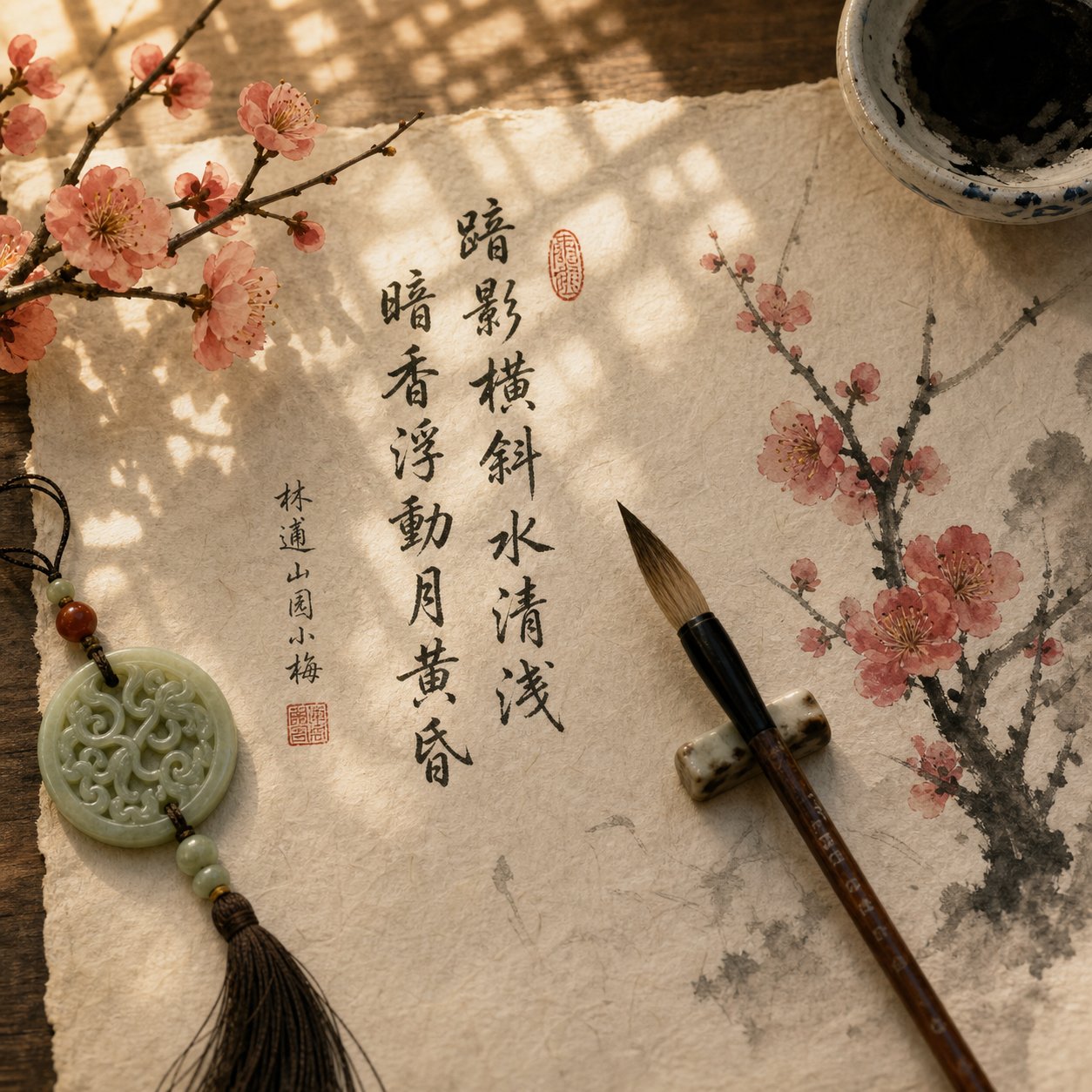
Song Dynasty ci lyrics offer names with musical delicacy. 疏影 (Shū Yǐng), meaning "sparse shadows," comes from Lin Bu's celebrated poem about plum blossoms:
疏影横斜水清浅,暗香浮动月黄昏 - Sparse shadows slant across clear, shallow water; hidden fragrance drifts in the yellow dusk of moonlight.
This image of a moon blossom casting delicate shadows across water is considered one of the most elegant couplets in Chinese literature. As a name, 疏影 evokes understated beauty, the kind that reveals itself slowly rather than demanding attention.
Names From the Book of Songs and Classical Texts
The Shijing predates the Tang by over a thousand years, yet its language remains remarkably alive in modern naming. Many parents searching for asian names and meanings with genuine cultural depth find their answer here. The Book of Songs contains folk poetry, court hymns, and ritual verses that established the vocabulary of elegance still used today.
The name 琼琚 (Qióng Jū), meaning "jade pendant," appears in a Shijing love poem:
投我以木瓜,报之以琼琚 - You toss me a papaya; I return to you a jade pendant.
The jade name meaning here goes beyond the stone itself. It represents something precious offered in love, a gift whose value lies in the sincerity behind it. In Chinese literary tradition, jade consistently symbolizes moral purity and enduring worth, making any jade-derived name inherently elegant.
From the I Ching comes 乾元 (Qián Yuán), meaning "creative origin" or "the primal force of heaven." This name draws from the opening hexagram of the Book of Changes, representing pure creative energy. It works beautifully for any child, carrying philosophical weight without gendered limitation.
The character 爱 (ài) appears throughout classical poetry as well. Often called the chinese symbol for love, it shows up in verses about devotion to family, country, and ideals. Names like 爱莲 (Ài Lián, "loves the lotus") reference Zhou Dunyi's famous essay on the lotus as a symbol of purity, layering love with moral aspiration.
What makes literary names so compelling is their conversational power. When someone asks about the origin of a name like 疏影 or 琼琚, the answer isn't a one-word translation. It's a poem, a scene, a piece of living history. The name becomes a doorway into culture rather than a label sitting on a birth certificate.
Of course, even the most poetically sourced name needs to sound right when spoken aloud. A beautiful literary reference can lose its magic if the tones clash with the family surname or create an awkward rhythm in everyday speech. The musicality of Mandarin tones plays a decisive role in whether a name flows or stumbles off the tongue.
Tonal Harmony and Surname Pairing for Beautiful Sound
A name can hold perfect meaning and still sound flat when spoken aloud. That's because Mandarin is a tonal language, and the pitch pattern across a full name, surname plus given name, determines whether it feels musical or monotonous. Understanding this tonal dimension is what separates pretty family names on paper from names that genuinely sing in conversation.
How Mandarin Tones Shape a Name's Sound
Mandarin has four main tones that change the pitch contour of every syllable:
- First tone (flat, high) - a sustained high pitch, like holding a musical note steady
- Second tone (rising) - pitch climbs from middle to high, like asking "hm?"
- Third tone (dipping) - drops low then rises slightly, creating a valley shape
- Fourth tone (falling) - drops sharply from high to low, like a firm command
Each syllable meaning shifts entirely with a different tone. The syllable "li" can mean beautiful (丽, lì, fourth tone), plum (李, lǐ, third tone), or reason (理, lǐ, third tone) depending on pitch alone. When you string two or three syllables together in a name, their tones interact to create rhythm.
Here's the key principle: repeating the same tone across all syllables produces a flat, droning quality. Imagine saying three first-tone syllables in a row. The pitch stays high and level throughout, with no rise or fall to create interest. It's like a melody played on a single note. Conversely, names that alternate between rising and falling tones, or that move from low to high, create a natural musical arc that feels pleasing to the ear.
The most elegant tonal patterns tend to follow one of these shapes: rising then falling (like a wave cresting), low then high (like a question resolving into certainty), or varied movement across all three syllables. Among asian names and surnames, this tonal interplay is unique to Chinese and gives parents an extra dimension of beauty to work with.
Surname Pairing Examples With Common Family Names
The most common chinese last names, Li (李, third tone), Wang (王, second tone), Zhang (张, first tone), and Chen (陈, second tone), each set a specific tonal starting point. The given name must complement that starting tone rather than echo it. Here's how specific combinations work, and why some sound elegant while others fall flat.
| Surname | Given Name | Tone Pattern | Sound Quality Rating |
|---|---|---|---|
| 王 (Wang, T2) | 语嫣 (Yǔ Yan, T3-T1) | Rising → Dipping → Flat | Excellent - creates a wave-like arc that resolves on a sustained high note |
| 李 (Lǐ, T3) | 清辉 (Qīng Huī, T1-T1) | Dipping → Flat → Flat | Good - the low dip launches into a smooth, elevated glide |
| 张 (Zhāng, T1) | 若溪 (Ruò Xī, T4-T1) | Flat → Falling → Flat | Excellent - the sharp drop in the middle creates drama between two steady tones |
| 陈 (Chén, T2) | 墨涵 (Mò Hán, T4-T2) | Rising → Falling → Rising | Excellent - symmetrical rise-fall-rise pattern feels balanced and complete |
| 王 (Wang, T2) | 思思 (Sī Sī, T1-T1) | Rising → Flat → Flat | Weak - two identical flat tones create monotony after the surname |
| 李 (Lǐ, T3) | 雨语 (Yǔ Yǔ, T3-T3) | Dipping → Dipping → Dipping | Poor - three third tones in sequence sound choppy and labored |
| 张 (Zhāng, T1) | 飞天 (Fēi Tiān, T1-T1) | Flat → Flat → Flat | Poor - three sustained high tones feel monotone despite strong meaning |
| 陈 (Chén, T2) | 瑾轩 (Jǐn Xuān, T3-T1) | Rising → Dipping → Flat | Good - descends then lifts, creating a gentle valley-to-peak shape |
You'll notice a pattern in the strongest combinations: tonal variety. The top-rated pairings never repeat the same tone more than twice in sequence, and they create directional movement, pitch that goes somewhere rather than staying put. Among the most common chinese last names, Wang and Chen (both rising tones) pair especially well with given names that begin on a falling or dipping tone, because the contrast creates immediate sonic interest.
When evaluating asian surnames against potential given names, try saying the full name aloud three times quickly. If it feels effortless and rhythmic, the tones are working together. If your voice feels stuck or strained, the tonal pattern likely needs adjustment. This simple spoken test catches problems that no amount of reading can reveal.
Tonal harmony is one piece of the puzzle, but for families navigating two languages, there's another layer of complexity. A name that flows beautifully in Mandarin may trip up English speakers entirely, and vice versa. Bridging that gap requires its own set of strategies.
Cross-Cultural Naming for Bilingual and Diaspora Families
For families living between two languages, a name has to do double duty. It needs to carry meaning and elegance in Chinese while remaining pronounceable and natural in English-speaking contexts. This isn't a minor concern. A child whose name gets mangled daily at school or work carries that friction for life. The good news? Plenty of refined chinese and english names coexist beautifully when you know what to look for.
Research from the University of Nottingham Ningbo shows that mainland Chinese students demonstrate high agency and creativity when navigating English naming practices, often seeking names that feel unique while still bridging cultural identity. Parents can apply that same intentionality from birth, choosing chinese english names that honor heritage without creating daily pronunciation battles.
Chinese Names That Sound Natural in English
The simplest strategy is selecting chinese names that sound like english names, or at least contain sounds that English speakers can approximate without training. Mandarin has several phonemes that overlap with English, and names built from these sounds cross linguistic boundaries with minimal friction.
Consider these elegant options with natural crossover appeal:
- 美琳 (Měi Lín) - Sounds close to "May-Lin." Means "beautiful jade." English speakers handle both syllables effortlessly, and the name reads as graceful in either language.
- 凯文 (Kǎi Wén) - Phonetically mirrors "Kevin" while meaning "triumphant culture." A genuine chinese names to english bridge that carries scholarly elegance.
- 乐安 (Lè Ān) - Approximates "Le-Ann." Means "joyful peace." The tones shift in English but the sounds remain intact.
- 明 (Míng) - Sounds like "Ming," immediately recognizable in English. Means "bright" or "luminous." Clean, one-syllable, and elegant in both contexts.
- 瑞恩 (Ruì Ēn) - Close to "Ryan" phonetically while meaning "auspicious grace." Works as a complete chinese names in english without feeling forced.
- 莉娜 (Lì Nà) - Approximates "Lina" or "Leena." Means "jasmine elegance." Flows naturally in English conversation while retaining poetic Chinese meaning.
What makes these work isn't just phonetic overlap. Each name holds genuine elegance in Chinese, with layered meaning and balanced characters, rather than being a transliteration of an English name stuffed into Chinese characters. The english name from chinese emerges organically because the sounds already exist in both languages.
Pairing Chinese and English Names for Bilingual Families
Not every family wants a single name to serve both worlds. Many bilingual families choose a formal Chinese given name for family and cultural contexts alongside a separate English name for school and professional life. This approach gives parents complete freedom in both languages without compromise.
The key is choosing pairs that share an emotional resonance or thematic thread, even if the sounds differ entirely. Think of it as two translations of the same feeling rather than two versions of the same sound. Here are pairings where the chinese names for english names complement each other in spirit:
- 清雅 (Qīng Yǎ) paired with Claire - Both evoke clarity and refinement. The Chinese name means "clear elegance"; Claire carries the same luminous quality in English.
- 睿哲 (Ruì Zhé) paired with Sage - Both center on wisdom. The Chinese name means "perceptive philosopher"; Sage carries identical intellectual weight.
- 星辰 (Xīng Chén) paired with Stella - Both reach for the stars. The Chinese name means "stars and celestial bodies"; Stella is Latin for star.
- 浩然 (Hào Rán) paired with Grant - Both suggest expansiveness. The Chinese name means "vast magnanimity"; Grant carries connotations of greatness and generosity.
- 若溪 (Ruò Xī) paired with Brook - Both flow with water imagery. The Chinese name means "like a stream"; Brook is its English mirror.
This thematic pairing approach means a child's identity stays coherent across languages. When they explain their english names in chinese contexts, or their Chinese name to English-speaking friends, there's a story that connects the two rather than an awkward disconnect.
A third strategy works for families who want maximum flexibility: choose a Chinese name whose first syllable doubles as an English nickname. 美琳 becomes "May." 凯文 becomes "Kai." 乐安 becomes "Lee." The child moves between worlds using different portions of the same name, never feeling like they're switching identities entirely.
Whichever approach you choose, the goal remains the same: a name that feels like home in both languages. But elegance in any language also means avoiding pitfalls. Even the most carefully chosen cross-cultural name can stumble if it accidentally violates naming taboos or creates unfortunate homophones that native speakers would catch immediately.
Naming Taboos and Cultural Considerations to Know
A name can be poetically sourced, tonally balanced, and visually graceful, yet still cause a native speaker to wince. Chinese naming carries cultural rules that operate beneath the surface of meaning and sound. Violating them doesn't just produce an awkward name. It can signal disrespect, invite ridicule, or associate a child with misfortune. For parents choosing a chinese baby name from outside the culture, these pitfalls are invisible without guidance.
The stakes are real. In Chinese tradition, a name shapes a child's fortune and social reception. Getting it wrong isn't a minor aesthetic misstep. It's a cultural faux pas that family members and community will notice immediately. Here's what to watch for.
Characters and Homophones to Avoid
Mandarin's tonal system means that many characters share identical or near-identical pronunciations. A character with a beautiful meaning can sound exactly like one associated with death, illness, or vulgarity. Even common chinese names can become problematic when combined with certain surnames.
- Death homophones: The combination 思旺 (si wang, meaning "thinking of prosperity") sounds nearly identical to 死亡 (si wang, meaning "death"). Both characters are individually positive, but together they create an unfortunate echo that any native speaker would catch.
- Number associations: Characters pronounced like the number 4 (四, si) are avoided because the sound mirrors 死 (death). In northern China, associations with the number 2 (二, er) can imply stupidity, as calling someone "250" (二百五) is a common insult.
- Vulgar double meanings: Some characters carry colloquial meanings that dictionaries won't show you. The character 日 (ri) means "sun" formally, but in certain regions it doubles as profanity. Similarly, 草 (cao, "grass") can carry vulgar connotations in spoken Chinese. A baby in chinese culture named with these characters might face teasing that parents never anticipated.
- Surname-specific traps: The surname 杨 (Yang) paired with 伟 (wei, "great") creates 杨伟, which sounds like a slang term for impotence. The surname 史 (Shi) combined with 珍 (zhen, "precious") produces 史珍, homophonous with a crude expression. Even elegant characters become landmines in the wrong surname context.
- Characters associated with misfortune: Avoid characters directly meaning death (死), illness (病), decline (衰), or suffering (苦). This seems obvious, but subtler associations trip people up. Characters containing the "illness" radical (疒) or the "death" radical can carry subconscious negative weight even when their primary meaning is neutral.
The core lesson? Never evaluate a given name in isolation. Always test it against the full name, including surname, and say it aloud repeatedly to catch homophone collisions that look invisible on paper.
Generational Rules and Cultural Respect
In Western cultures, naming a baby in chinese families after a grandparent is an honor. In Chinese culture, it's the opposite. Using a character from a living elder's name, whether parent, grandparent, uncle, or aunt, can be perceived as an act of disrespect toward that person. This taboo extends beyond exact matches. Even using a different character with the same pronunciation as an elder's name character may cause offense in traditional families.
This rule stems from the rigid hierarchical structure of Chinese family life. A name is tied to a person's position in the generational order. Repeating it implies you're placing yourself, or your child, on the same level as the elder. Among common family names with deep lineage traditions, this sensitivity runs especially strong.
Similarly, avoid the names of major political figures. Characters from the names of leaders like Mao Zedong, Zhou Enlai, or Deng Xiaoping are culturally off-limits for a complete name, though using a single character from their given name with a different surname is generally acceptable. Historical criminals, traitors, and figures with damaged reputations should also be avoided entirely. Even the most common surnames paired with a famous figure's given name will draw unwanted associations.
The tradition of generational naming poems, where families pre-select characters for each generation decades in advance, has faded since 1949 but hasn't disappeared. If your child has Chinese family on either side, ask whether a generational character exists for their generation before finalizing a name. Ignoring this tradition when it's still observed signals that you haven't done your homework.
How to Verify Your Chosen Name
If you don't speak Mandarin natively, verification isn't optional. It's essential. A name that looks elegant in translation can carry associations, sounds, or cultural baggage that only a native speaker would recognize. Here's a practical process for confirming your chinese inspired names are genuinely appropriate:
- Ask multiple native speakers, not just one. Regional dialects create different homophone patterns. A name that sounds fine in Mandarin might be problematic in Cantonese, Hokkien, or Shanghainese. If your family has ties to a specific region, consult someone from that area.
- Test the full name with surname included. Tell your consultants the complete name as it would be spoken and written. Many problems only emerge in combination with specific most common surnames.
- Ask specifically about negative associations. Don't just ask "Is this a good name?" Ask "Does this sound like anything embarrassing, vulgar, or unfortunate?" Chinese speakers may be too polite to volunteer criticism unless directly prompted.
- Search the name on Chinese social media. Platforms like Weibo or Xiaohongshu can reveal whether a name has become associated with a meme, a scandal, or a fictional character you'd rather not reference.
- Consult someone from the older generation. Younger Chinese speakers may not catch taboos related to generational naming rules or historical figures. A grandparent-aged consultant brings cultural memory that younger speakers lack.
- Write it out by hand. Have a native speaker write the characters and confirm they look balanced together. Some character combinations that seem fine in typed form look awkward or unbalanced in handwriting.
This verification process takes a few conversations, not weeks of research. But those conversations can save your child from carrying a name that makes native speakers uncomfortable, amused, or confused. The goal of choosing an elegant name is to give your child something that opens doors in Chinese-speaking contexts. A name that violates cultural taboos does the opposite, no matter how beautiful its individual characters may be.
Frequently Asked Questions About Elegant Chinese Baby Names
1. What makes a Chinese name considered elegant rather than just pretty?
Elegance in Chinese naming is tied to the classical concept of 雅 (ya), which combines literary refinement, natural beauty, and moral virtue. An elegant name satisfies multiple dimensions simultaneously: it carries layered meaning rooted in poetry or philosophy, produces a pleasing tonal pattern when spoken aloud, and looks visually balanced when written in characters. A merely pretty name might sound nice but lack cultural depth, while an elegant name connects the child to thousands of years of literary tradition.
2. Can Chinese names work well in both English and Chinese-speaking environments?
Yes, many Chinese names contain phonemes that overlap with English sounds, making them naturally pronounceable across both languages. Names like 美琳 (Mei Lin), 明 (Ming), and 乐安 (Le An) cross linguistic boundaries smoothly. Families can also choose thematic pairings where a Chinese name and English name share emotional resonance rather than identical sounds, such as pairing 星辰 (stars) with Stella. The key is testing pronunciation with speakers of both languages before finalizing.
3. How do Mandarin tones affect whether a Chinese name sounds good?
Mandarin's four tones create pitch patterns across a full name that determine its musicality. Repeating the same tone across all syllables produces a flat, monotonous sound, while alternating between rising and falling tones creates a natural musical arc. The surname sets the starting tone, so given names must complement it. For example, the surname Wang (rising tone) pairs well with names beginning on a dipping or falling tone because the contrast creates immediate sonic interest.
4. What are common mistakes to avoid when choosing a Chinese baby name?
The most critical mistakes involve homophone collisions, where individually positive characters sound like words meaning death, vulgarity, or misfortune when combined. Surname-specific traps are especially dangerous, as certain given names become inappropriate only with particular family names. Other pitfalls include using characters from a living elder's name (considered disrespectful), choosing politically sensitive characters, and selecting names without testing them with native speakers from the relevant dialect region.
5. Are gender-neutral Chinese names culturally appropriate?
Absolutely. Chinese has no grammatical gender, so characters carry no inherent masculine or feminine markers. The gendering of names is purely cultural convention, not linguistic rule. Characters tied to natural phenomena like moonlight, water, and stars, or abstract virtues like wisdom and clarity, have historically remained ungendered. Modern Chinese families increasingly embrace this flexibility, choosing names that prioritize personal meaning over rigid gender conventions, making gender-neutral elegant names both culturally grounded and contemporary.