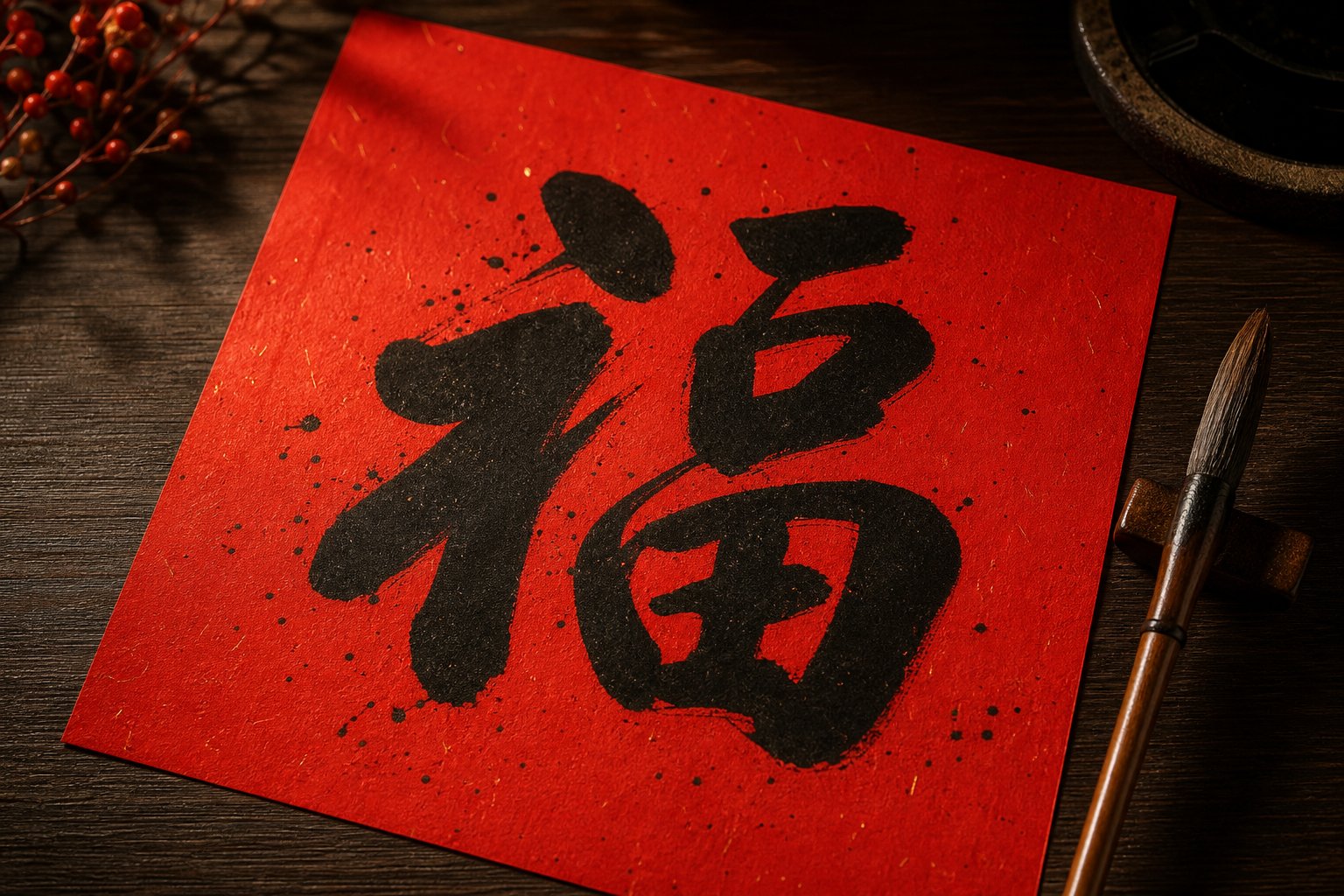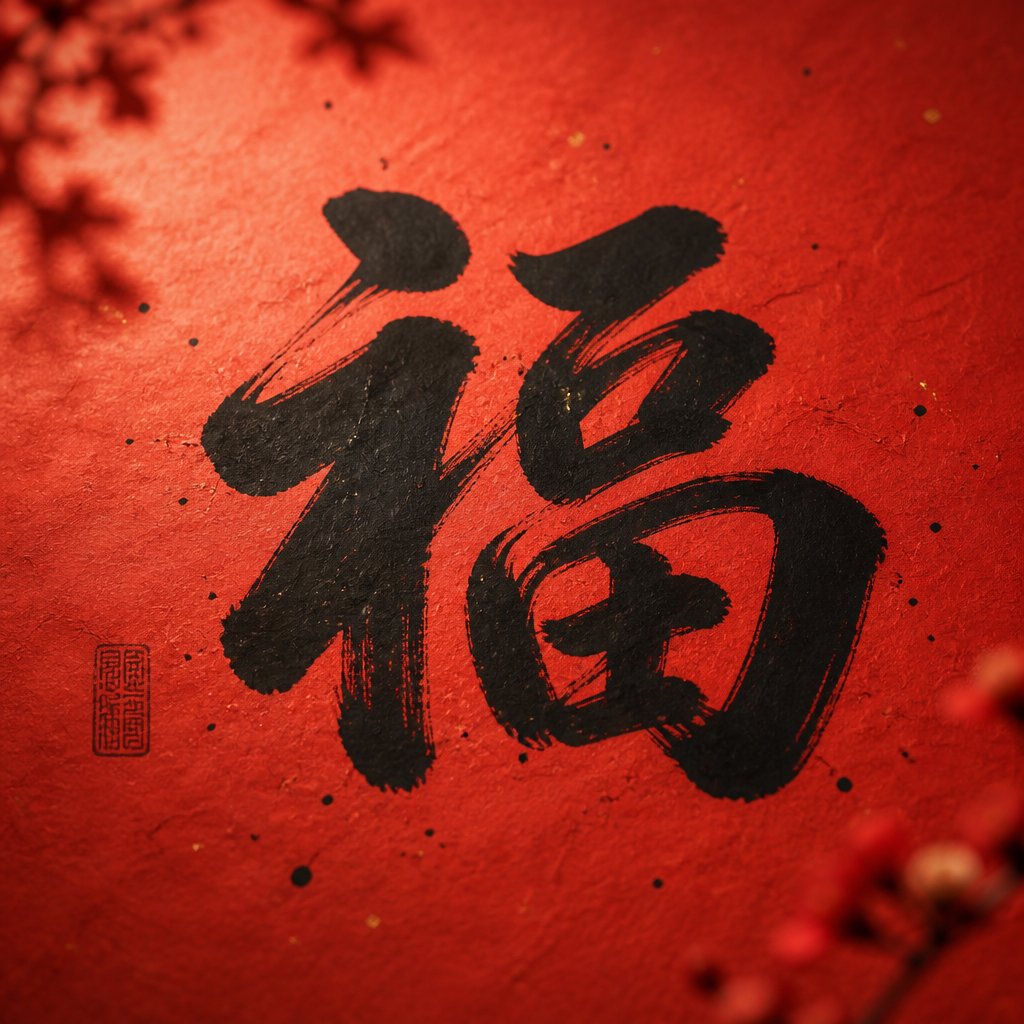
What the Fortune Chinese Symbol Really Means
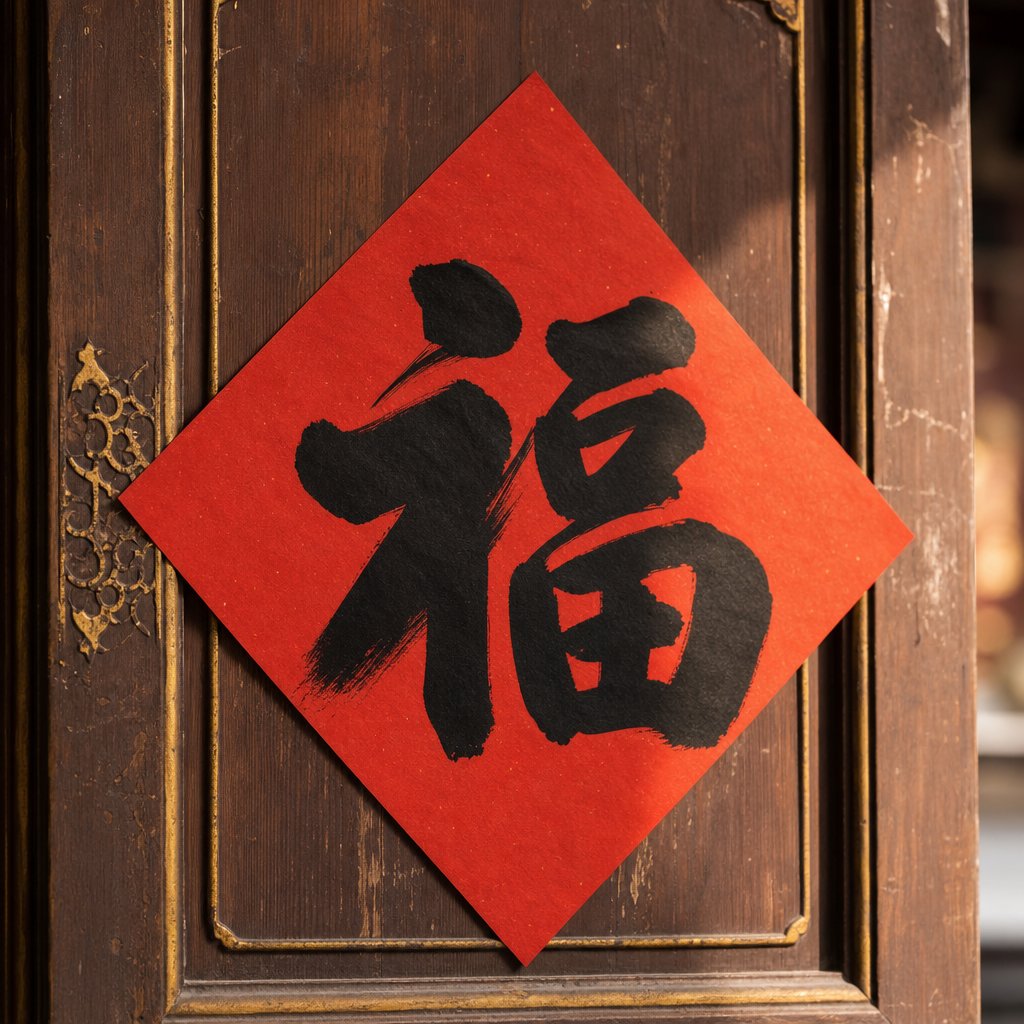
You've probably seen it on red paper diamonds taped to doorways, printed on gift boxes, or brushed in gold ink across restaurant walls. The character 福 (pronounced fu) is one of the most visible symbols in Chinese culture, yet its meaning gets flattened every time someone translates it as a single English word. The truth is, no single translation captures what this fortune symbol actually holds.
What the Fortune Symbol 福 Actually Means
福 (fu, second tone) is a Chinese character that simultaneously means good fortune, blessing, happiness, and prosperity. It represents a holistic wish for a good life — not just wealth, but well-being in all its forms.
When you see 福 translated simply as "fortune" or "luck," you're only getting a fraction of the picture. The character functions more like a prayer than a label. It carries the weight of what one writer describes as "having enough to last for this year and the next, having boisterous laughter shared among kin to echo through the generations, having a supernatural peace with self and the world." That layered richness is why 福 remains a shared aspiration and collective prayer across Chinese communities worldwide.
Why 福 Is More Than Just Fortune
Think of it this way: English separates "fortune," "blessing," "happiness," and "luck" into distinct concepts. Chinese symbol meanings often work differently. 福 bundles all of these into one character, treating them as inseparable parts of a well-lived life. A person with 福 isn't just wealthy — they're healthy, surrounded by family, at peace, and favored by circumstance.
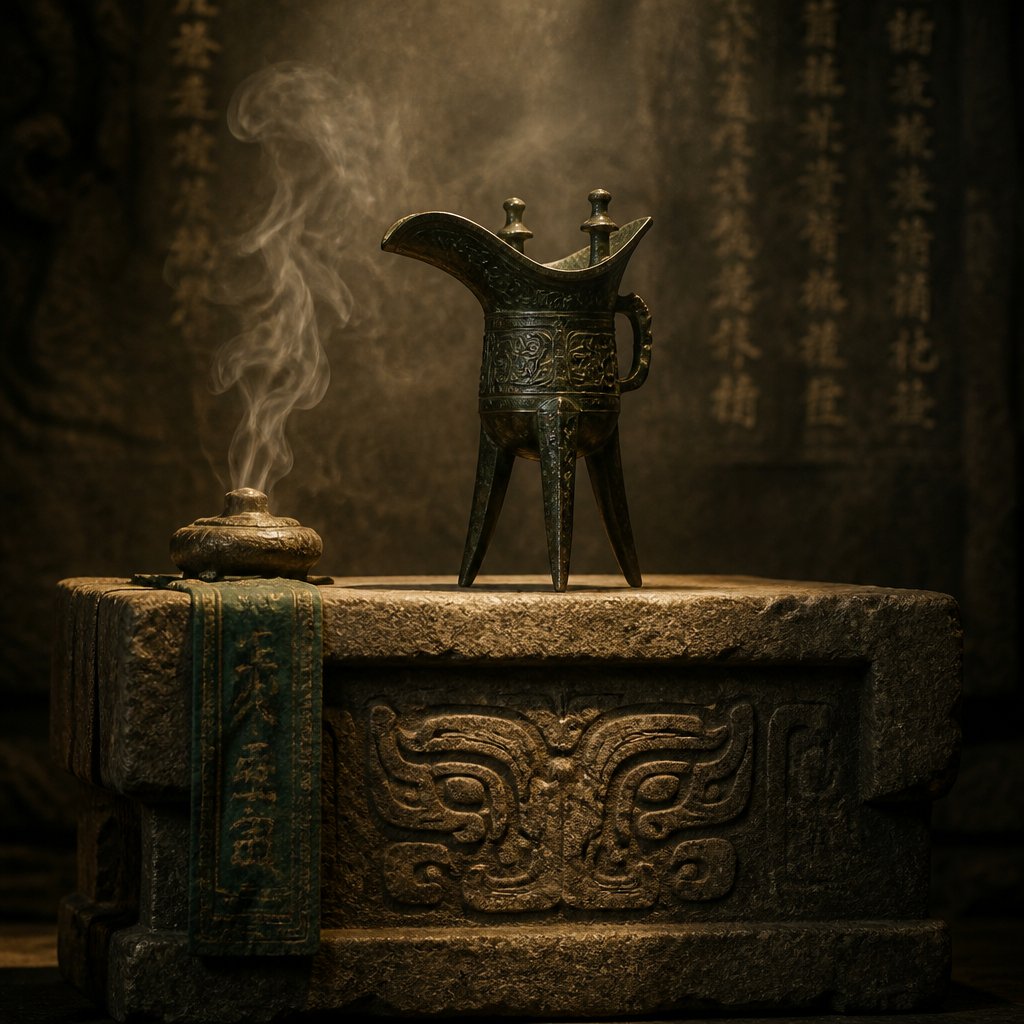
This is what makes 福 a genuine chinese symbol of hope and prosperity rather than a narrow reference to money or chance. The character traces back over 3,000 years to oracle bone inscriptions from the Shang dynasty, where it depicted a wine vessel placed on an altar as an offering to the gods. Its form has evolved, but its essence has stayed remarkably consistent across millennia.
In the sections ahead, you'll find a full breakdown of the character's radicals and etymology, clear pronunciation guidance for English speakers, the fascinating wordplay behind hanging 福 upside down, side-by-side comparisons with related chinese symbols and meanings, and practical advice for displaying or using the character respectfully in Western contexts. Consider this your definitive single-character resource — not a broad listicle of lucky symbols, but a deep dive into the one character that matters most.
Breaking Down the Radicals and Etymology of 福
So what is fu, really, when you look beneath the surface? Most explanations stop at "it means fortune" and move on. But the chinese fu symbol is a compound character — two distinct components fused together, each carrying its own story. Understanding those parts reveals why this chinese character for fortune looks the way it does and why its meaning runs so deep.
The Spirit Radical 示 on the Left Side
Look at the left side of 福 and you'll notice the radical 礻, a simplified form of 示 (shi). In its earliest pictographic form, 示 depicted a stone altar used in the worship of the divine — a flat surface with offerings placed on top. The top horizontal stroke represents the sacrificial items resting on the altar table.
This radical is sometimes called the "spirit radical" or "altar radical," and it shows up consistently in characters connected to the spiritual realm. You'll find it in:
- 祭 (ji) — to offer sacrifice
- 神 (shen) — god, spirit, deity
- 祈 (qi) — to pray
- 祝 (zhu) — to bless, to wish well
- 祖 (zu) — ancestor
- 礼 (li) — ritual, ceremony, courtesy
Notice the pattern? Every one of these characters involves a relationship between humans and something greater — gods, ancestors, or sacred rites. When you see 礻in the fu chinese character, it signals that this isn't about earthly effort alone. It's about receiving something from above. The radical anchors the entire character in the concept of divine favor.
The Abundance Component 畐 on the Right Side
The right side of the chinese fu character is 畐 (fu), and its origin is equally vivid. Scholars studying oracle bone inscriptions found that this component originally depicted a cup and a wine jar held by two hands — a vessel filled to the brim, being offered upward. It represents fullness, abundance, and sufficiency.
Over centuries, the pictogram evolved into the more geometric form you see today, which some people break down further into 一 (one), 口 (mouth), and 田 (field). This folk interpretation suggests "one mouth and a field" — meaning each person has land to sustain them. While linguists note this reading came later as the character's form shifted, it reinforces the same core idea: having enough, being provided for.
The chinese word fu, then, is built from two powerful concepts working together. The left side asks for blessing from the divine. The right side defines what that blessing looks like — abundance, a full vessel, nothing lacking. Combine them, and you get a character that means something far richer than "good luck."
| Component | Position | Original Pictogram | Core Meaning | Role in 福 |
|---|---|---|---|---|
| 礻(示, shi) | Left side | A stone altar with offerings | Spirit, divine connection, sacred ritual | Signals that blessings come from a higher source |
| 畐 (fu) | Right side | Hands holding a full wine vessel | Fullness, abundance, sufficiency | Defines the nature of the blessing — having plenty |
| 福 (fu) | Combined | Offering a full vessel at an altar | Fortune, blessing, divine abundance | A holistic wish: spiritual favor producing material and emotional fullness |
This is what separates the fu mandarin character from a simple lucky charm. It encodes a worldview — the idea that true fortune isn't random chance but a gift received through reverence. The earliest Chinese who carved this character for fu onto oracle bones over three thousand years ago weren't wishing for a lottery win. They were asking the heavens for a life of completeness: enough food, enough peace, enough joy to fill the vessel all the way up.
That etymological DNA still pulses through the character today, even when it's printed on mass-produced red envelopes. And it explains why 福 carries a weight that words like "luck" or "fortune" simply cannot match on their own. The character's visual architecture tells you exactly what kind of fortune it promises — and where that fortune is believed to come from.
How to Pronounce 福 in Mandarin and Other Dialects
Knowing what the character means and how it's built is one thing. Saying it correctly is another challenge entirely — and one that trips up most English speakers. The word for fortune in chinese sounds nothing like the English word "fortune," and getting the tone wrong can change the meaning completely. Here's how to get it right.
How to Pronounce 福 in Mandarin with Correct Tone
In Standard Mandarin, 福 is pronounced fu with the second tone. The pinyin spelling is fú (the accent mark over the "u" indicates the rising tone). If you're unfamiliar with Mandarin tones, imagine the sound you make when asking a confused question — that upward pitch at the end of "huh?" That's the general shape of the second tone.
Here's a step-by-step breakdown for English speakers:
- Start with the "f" sound, exactly as in English words like "food" or "full"
- Follow it with a vowel sound close to the "oo" in "food" — but shorter and tighter, more like a clipped "oo"
- As you say the vowel, let your pitch rise from mid-range to high, like your voice is climbing a short staircase
The result sounds roughly like "foo" spoken with a rising inflection — not a flat "foo" and not a falling one. The sinological IPA transcription is /fu³⁵/, meaning your pitch starts at level 3 (mid) and rises to level 5 (high). Think of it as the vocal equivalent of an upward arrow.
One common mistake: English speakers sometimes confuse fú (second tone, rising) with fu (fourth tone, falling). The fourth tone — written as fù — sounds sharp and decisive, like a command. That's a different character entirely (付, meaning "to pay," or 父, meaning "father"). When you want to say good luck in chinese using this character, keep that pitch rising. Flat or falling, and you've said something else.
The mandarin for good luck using this character is often part of longer phrases like 祝你幸福 (zhu ni xingfu, "wishing you happiness") or 福气 (fuqi, "good fortune/blessed"). In each case, the fú keeps its rising second tone.
Regional Variations Across Chinese Dialects
Chinese fu doesn't sound the same everywhere. China's linguistic landscape includes dozens of dialect groups, and 福 takes on a distinctly different sound in each one. If you're traveling, watching regional media, or speaking with family members from different provinces, you'll encounter these variations regularly.
The most significant difference? Mandarin lost the final consonant that older dialects preserved. In Cantonese, Hokkien, Hakka, and other southern dialects, fu in chinese ends with a sharp "-k" sound — a remnant of the Middle Chinese pronunciation pjuwk that dates back over a thousand years. Mandarin smoothed that ending away, but southern dialects kept it intact.
| Dialect | Region | Pronunciation | Romanization System | Notable Feature |
|---|---|---|---|---|
| Mandarin (Standard) | Mainland China, Taiwan | foo (rising tone) | fu (Pinyin) | No final consonant; second tone (rising) |
| Cantonese | Guangdong, Hong Kong, Macau | fook (high level tone) | fuk1 (Jyutping) | Ends with a clipped "-k" sound |
| Hokkien | Fujian, Taiwan, Southeast Asia | hawk (short, clipped) | hok (POJ) | Initial "h" instead of "f"; final "-k" |
| Teochew | Eastern Guangdong, Southeast Asia | hawk (low tone) | hog4 (Peng'im) | Similar to Hokkien; distinct tone value |
| Hakka | Guangdong, Jiangxi, Taiwan | fook (low tone) | fuk (PFS) | Retains "f" initial with final "-k" |
| Shanghainese (Wu) | Shanghai, Zhejiang | foh (short, glottal stop) | foq (Wugniu) | Ends with a glottal stop rather than "-k" |
| Eastern Min (Fuzhou) | Fujian (Fuzhou area) | hoh (rising) | hok (BUC) | "H" initial; unique vowel quality |
These differences matter beyond linguistics. Regional pronunciation shapes local traditions around the character. In Cantonese-speaking areas, the word "fuk" sounds similar to other auspicious words, creating additional layers of wordplay in New Year greetings. In Hokkien communities across Southeast Asia, "hok" appears in temple names, business signage, and family blessings — carrying the same meaning of luck in chinese culture but wrapped in a completely different sound.
If you're learning to say fú in chinese for the first time, Standard Mandarin is the most widely understood version. But knowing that the character sounds different in Cantonese or Hokkien helps you recognize it in conversation, film, or music — and shows respect for the diversity within Chinese-speaking communities. The character stays the same on paper. Its spoken form shifts depending on where you are and who you're speaking with.
That spoken flexibility hints at something deeper about 福: its meaning has proven durable enough to survive not just centuries of script evolution, but also the vast phonetic distances between China's dialect groups. The same character, read aloud in seven different ways, still carries the same wish — a life filled with blessings. And as you'll see next, the character's long history through imperial dynasties shows just how far back that wish extends.
Historical Evolution from Oracle Bones to Modern Script
Three thousand years is a long time for any symbol to survive. Most ancient china symbols vanished as the civilizations that created them collapsed or merged into new ones. 福 didn't just survive — it grew more culturally powerful with each passing dynasty. Tracing its visual evolution from the earliest scratches on turtle shells to the brushstroked character hanging on doors today reveals how deeply chinese symbolism is tied to lived history rather than static tradition.
From Oracle Bone Script to Bronze Inscriptions
The oldest known form of 福 appears on oracle bones from the Shang dynasty (roughly 1600-1046 BCE). These were pieces of turtle shell or animal bone used in divination rituals. A priest would carve a question into the bone, apply heat until it cracked, and interpret the pattern as a message from the spirits. The characters carved alongside those cracks are the earliest Chinese writing we have.
On these bones, 福 looked nothing like the character you see today. Imagine a pictograph showing a pair of hands holding a wine vessel upright before an altar — a literal snapshot of a person making an offering to the gods. The earliest oracle bone form depicted a wine vessel placed before a deity, because the ancients used wine to symbolize a life of abundance. The act of offering was the act of asking for blessings. The character and the ritual were one and the same.
As Chinese civilization moved into the Western Zhou dynasty (1046-771 BCE), writing shifted from bone to bronze. Ritual vessels — dings, gui, and other ceremonial containers — were cast with inscriptions commemorating events, honoring ancestors, or recording royal decrees. In these bronze inscriptions (金文, jinwen), 福 began to simplify. The vivid image of two hands disappeared. The wine vessel remained, often represented by the component 酉 (meaning wine or fermented liquid), positioned near the altar radical 示. Some bronze variants placed the vessel above the altar; others arranged it below. The character was still clearly tied to ritual offering, but it was becoming more abstract — less picture, more symbol.
During this same bronze period, a phonetic element crept in. The component 畐 (fu) — which carries the meaning of "full" or "brimming" — began appearing on the right side of the character. This wasn't random. Chinese characters often incorporate a sound-alike component to help readers identify pronunciation. 畐 served double duty: it signaled how to say the character and reinforced its meaning of abundance.
Evolution Through Imperial Dynasties to Modern Forms
By the Qin dynasty (221-206 BCE), China's first emperor standardized the writing system into Small Seal Script (小篆, xiaozhuan). This was a deliberate political act — one empire, one script. In this standardized form, the wine vessel fully merged into the component 畐, conveying "fullness" and "bounty." The left side settled into the recognizable altar radical 示. The basic architecture of the modern character was now locked in place.
The Han dynasty (206 BCE - 220 CE) brought Clerical Script (隶书, lishu), which flattened the flowing curves of seal script into angular, brush-friendly strokes. This made writing faster and more practical for the expanding bureaucracy. 福 gained the squared proportions and horizontal emphasis that would carry forward into Regular Script (楷书, kaishu) — the standard form used from the Tang dynasty onward and still used today.
The Song dynasty (960-1279 CE) marks a turning point not in the character's shape but in its cultural role. Historical records including the Dream Pool Essays document that by the Southern Song period, the custom of writing 福 on red paper and pasting it on the main gate was already an established Spring Festival tradition. What had been a sacred ritual character — carved on bones, cast on bronze — became a household symbol accessible to everyone, from scholars to farmers. The character's meaning expanded accordingly: no longer just a prayer to the gods, but a communal declaration of hope for the year ahead.
Here's how the character's form evolved across major stages:
- Oracle Bone Script (Shang dynasty, ~1600-1046 BCE) — Pictographic: hands holding a wine vessel before an altar. Clearly depicts a ritual offering scene.
- Bronze Inscriptions (Zhou dynasty, ~1046-256 BCE) — Semi-pictographic: hands disappear, wine vessel (酉) and altar (示) remain. Phonetic element 畐 begins appearing.
- Small Seal Script (Qin dynasty, ~221-206 BCE) — Standardized: left side becomes 示 (altar radical), right side becomes 畐 (fullness). Flowing, rounded strokes.
- Clerical Script (Han dynasty, ~206 BCE-220 CE) — Angular and squared. Brush-optimized for speed. Proportions flatten horizontally.
- Regular Script (Tang dynasty onward, ~618 CE-present) — The form used today. Clean, balanced strokes. 13 total strokes in standard form.
One question that often comes up: is there a difference between simplified and traditional 福? Unlike many Chinese characters that were dramatically altered during the People's Republic's script reforms in the 1950s and 60s, 福 was left untouched. The character looks identical whether you're reading a newspaper in Beijing, a temple inscription in Taipei, or a shop sign in Hong Kong. It's one of those symbols of china that transcends the simplified-traditional divide entirely — a rare point of visual unity across all Chinese-speaking regions.
This continuity matters. When a family in Shenzhen pastes a brushed 福 on their door during Spring Festival, they're using the same character structure that a Song dynasty household would recognize. When a calligrapher in Taiwan writes it in seal script style, they're reaching back to the Qin standardization. And when scholars study the oracle bone forms, they can still see the ghost of that original image — hands lifting a full vessel toward the heavens, asking for a blessed life.
Among ancient asian symbols that have survived into the modern era, few can claim this kind of unbroken lineage. The Egyptian hieroglyphs fell out of use. Sumerian cuneiform became unreadable for millennia. But 福 has been continuously written, spoken, and displayed for over three thousand years — adapting its form to new tools and new eras while keeping its meaning intact. That durability is itself a kind of fortune.
The character's physical journey from bone to bronze to paper also set the stage for one of its most famous cultural traditions — the practice of hanging it upside down. That custom, rooted in a clever phonetic pun, didn't emerge until much later in the dynasty timeline. But it could only exist because 福 had already become so universally recognized that people could play with its orientation and still be understood.
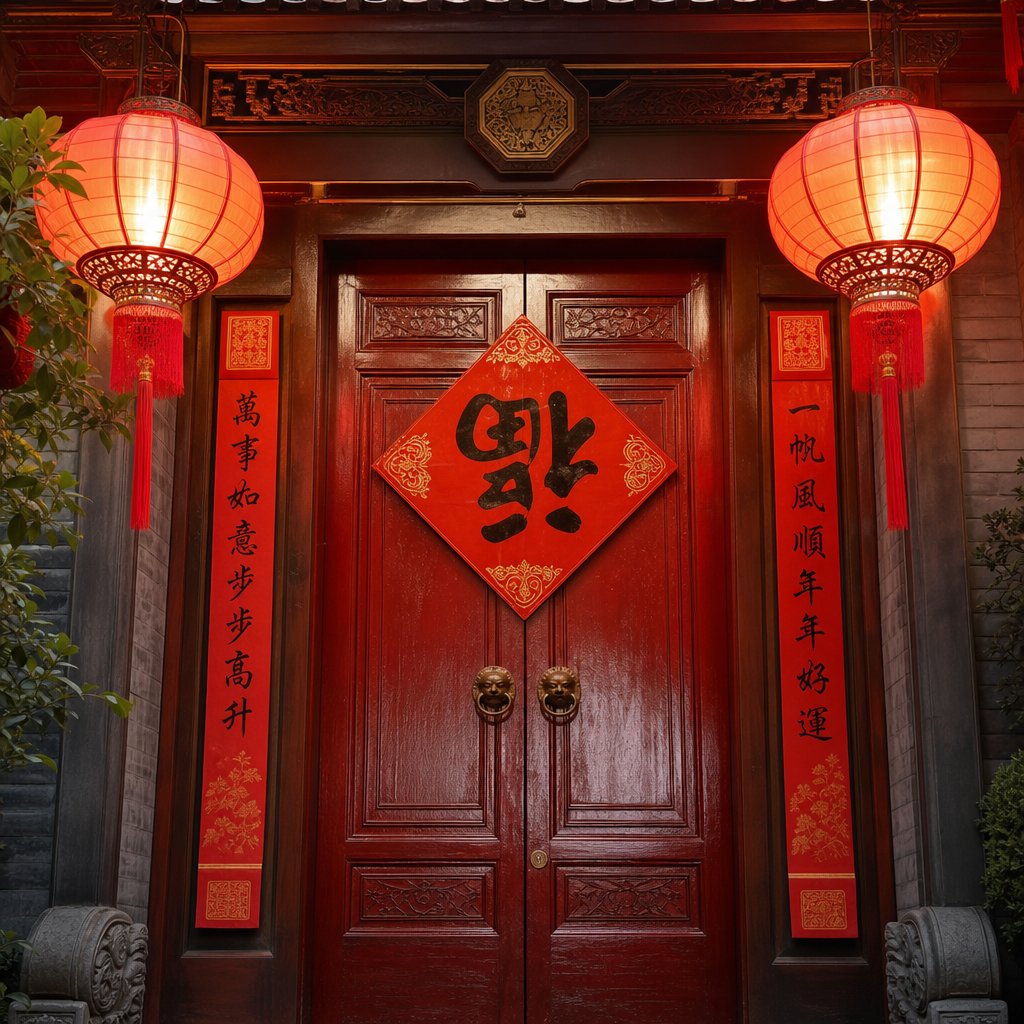
The Upside-Down Fu Tradition and Its Hidden Wordplay
Imagine walking up to someone's front door during Chinese New Year and noticing the big red 福 character pasted completely upside down. Your first instinct might be that someone made a mistake. They didn't. That deliberate inversion is one of the most clever linguistic traditions in Chinese culture — and understanding why it works requires you to hear the pun hiding inside it.
The Wordplay Behind Hanging 福 Upside Down
The entire tradition rests on a single homophone. In Mandarin, the word for "upside down" or "inverted" is 倒 (dao, fourth tone). The word for "to arrive" is 到 (dao, fourth tone). They sound identical. So when someone flips the chinese luck symbol upside down, the phrase 福倒了 (fu dao le) carries a double meaning simultaneously:
- Literal reading: "The fu character is upside down"
- Phonetic reading: "Fortune has arrived"
Because 倒 (upside down) and 到 (to arrive) are perfect homophones in Mandarin, hanging 福 inverted transforms a visual joke into a spoken blessing — 福倒了 means both "fu is flipped" and "fortune has arrived."
This isn't a loose similarity or a stretch. The two words share the exact same pronunciation and tone. The pun works instantly for any Mandarin speaker — it's the kind of wordplay that makes people smile rather than groan. And it turns a simple piece of red paper into an interactive blessing. Anyone who sees the inverted character and says "福倒了" out loud has, whether they intended to or not, just declared that good fortune has come to this household.
The tradition likely solidified during the Ming dynasty, though its exact origins are debated. What's clear is that by the Qing dynasty, the practice was widespread enough to appear in folk stories and court anecdotes. One popular tale credits a servant in the household of Prince Gong who accidentally pasted the character upside down. Rather than punish the servant, a quick-thinking advisor declared it auspicious — fortune had arrived at the prince's door. Whether the story is historically accurate matters less than what it reveals: the pun was already so well-known that it could serve as a ready-made excuse.
When and Where the Upside-Down Fu Appears
Here's where many people — including some Chinese families — get the placement wrong. The upside-down orientation is not appropriate everywhere. Traditional etiquette draws a clear line between the main entrance and interior spaces.
The main entrance door should always display 福 upright. This vertical alignment invokes the blessing "Fu Ru Dong Hai" — fortune as vast as the Eastern Sea. An upright character at the front gate symbolizes dignity and openness, welcoming blessings to flow inward. Some traditions hold that inverting it on the main door actually suggests fortune is being poured outward, away from the family — the opposite of what you want.
Once you step inside, the rules relax into playful territory. Interior doors, kitchen walls, pantry cabinets, storage rooms, refrigerators, and even water containers are all fair game for the inverted good luck chinese symbol. The logic is intuitive: these are spaces of containment and abundance. An upside-down 福 on a rice bin or cabinet declares that fortune has arrived and is staying put — sealed inside where the family's sustenance lives.
The timing matters too. Tradition calls for pasting these crimson squares during the afternoon of Chinese New Year's Eve, before sunset. Families work from the outermost gate inward, physically guiding luck deeper into the home. Larger characters guard the entrance to capture broad energy, while progressively smaller versions appear on inner doors and furniture, signifying that blessings permeate every corner once they've crossed the threshold.
Regional variations add further texture. In some northern Chinese communities, every door gets an inverted 福 except the main gate. In parts of southern China, the practice is less common — families may keep all characters upright and rely on other good luck fortune symbols like spring couplets (chunlian) to carry the wordplay instead. Cantonese-speaking households sometimes prefer the character upright everywhere, since the Cantonese pronunciation "fuk" generates its own set of auspicious homophones without needing the inversion trick.
福 and the Sanxing: Fortune in Chinese Cosmology
The luck chinese symbol doesn't exist in isolation within Chinese spiritual tradition. It connects directly to the Sanxing (三星) — the Three Star Gods who personify the three greatest blessings a person can receive: Fu (福, fortune and happiness), Lu (禄, prosperity and status), and Shou (寿, longevity).
The deity associated with 福 is Fuxing (福星), the chinese god of luck and good fortune. Unlike some deities with elaborate mythologies, Fuxing represents a broad, benevolent force — the cosmic principle that good things can and should flow toward deserving people. In traditional iconography, Fuxing is often depicted as a scholarly official or a figure surrounded by children, symbolizing both social success and family abundance.
Together, the Sanxing form a trinity of aspiration that appears in paintings, sculptures, and decorative arts across Chinese culture. You'll see them on porcelain, embroidered on silk, and displayed as figurines in homes and businesses. The chinese symbol for good luck — 福 — anchors this trio as the broadest and most fundamental blessing. Without fortune, prosperity and longevity lose their foundation. Fuxing comes first among the three for a reason.
This cosmological context explains why 福 carries more weight than a simple chinese good luck symbols sticker might suggest. When someone hangs the character — upright or inverted — they're participating in a tradition that connects household ritual to a larger spiritual framework. The pun is playful, yes. But beneath the wordplay sits a sincere wish rooted in centuries of belief: that fortune, in all its layered meanings, will find its way through the door and stay.
That layered meaning also raises a practical question. If 福 covers fortune, blessing, and happiness all at once, how does it differ from other characters that seem to promise similar things? Chinese has separate symbols for wealth, joy, longevity, and career success — and choosing the wrong one for your intent is a mistake worth avoiding.
Fortune vs Prosperity vs Luck – Comparing Related Symbols
Chinese has an entire family of characters that Western audiences lump together under "good luck" or "fortune." But each one targets a different slice of the good life. Pick the wrong character for a tattoo, a gift, or a piece of wall art, and you've said something you didn't intend. Here's how the five most common auspicious characters actually differ — and when to use each one.
福 禄 寿 喜 财 Compared Side by Side
These five characters appear together on decorative scrolls, festival banners, and traditional artwork. They look interchangeable to outsiders, but each carries a distinct meaning and shows up in specific cultural contexts. The table below breaks them apart.
| Character | Pinyin | Core Meaning | Usage Context | When It's Displayed |
|---|---|---|---|---|
| 福 (fu) | fu (2nd tone) | Fortune, blessing, overall well-being | General good wishes, household protection, spiritual blessing | Spring Festival (year-round in some homes), housewarming, any auspicious occasion |
| 禄 (lu) | lu (4th tone) | Prosperity, official salary, career success | Professional advancement, government exams, business ambitions | Career milestones, office decor, promotions, business openings |
| 寿 (shou) | shou (4th tone) | Longevity, long life | Birthday celebrations, elder respect, health wishes | Milestone birthdays (especially 60th, 70th, 80th), gifts for elders |
| 喜 (xi) | xi (3rd tone) | Happiness, joy, celebration | Weddings, engagements, joyful announcements | Wedding venues, invitations, bridal decor; doubled as 囍 for marriages |
| 财 (cai) | cai (2nd tone) | Wealth, money, material riches | Financial success, business profit, monetary gain | Business entrances, New Year greetings to colleagues, shop openings |
Notice how 福 sits at the top as the broadest category. It's the chinese symbol for happiness, blessing, and fortune rolled into one — a holistic wish that covers spiritual, emotional, and material well-being. The other four characters each zoom in on one specific dimension of a good life.
Choosing the Right Symbol for Your Intent
Imagine you're selecting a character for a piece of jewelry, a wall hanging, or a permanent tattoo. Your choice should match what you're actually wishing for:
- Want an all-purpose blessing? Go with 福. It's the safest, most universally appropriate choice — the prosperity symbol that also covers health, family harmony, and spiritual peace. You can't go wrong with it in almost any context.
- Focused on money and financial growth? 财 is your character. It's the chinese symbol for wealth in the most direct, material sense. Businesses paste it near cash registers and safes. It's specific and unapologetic about wanting monetary abundance.
- Celebrating a wedding or engagement? 喜 is the chinese symbol for joy in celebratory contexts. Doubled into 囍 — the famous chinese double luck character — it becomes the universal wedding emblem. You'll see it on everything from red envelopes to bridal gowns. The doubled form is exclusively for romantic unions; a single 喜 works for general happiness.
- Honoring an elder's birthday? 寿 is the correct choice. Giving someone a 寿 decoration or cake topper wishes them long life. Using 福 here wouldn't be wrong, but 寿 shows you understand the occasion's specific significance.
- Wishing someone career success? 禄 targets professional advancement. As a prosperity chinese symbol rooted in the old imperial examination system, it historically meant an official's salary — the reward for scholarly achievement. Today it maps to career growth, promotions, and professional recognition.
The chinese symbol for happy moments depends entirely on what kind of happiness you mean. 喜 captures the burst of celebratory joy — a wedding, a birth announcement, good news. 福 captures the quieter, deeper contentment of a life well-lived. They overlap, but they aren't interchangeable.
Here's a practical test: if you'd say "congratulations" in English, 喜 is probably right. If you'd say "I wish you well" or "may you be blessed," 福 fits better. And if you'd say "may you get rich," reach for 财 — the chinese symbol for prosperity in its most tangible, bankable form.
One more distinction worth noting: the Fulushuo triad (福禄寿) groups the first three characters together as the three greatest blessings a person can receive. These correspond to the Three Star Gods discussed earlier. When you see all three displayed together — on a scroll, a ceramic set, or a temple roof — they represent the complete package of human aspiration: blessed fortune, earned prosperity, and a long life to enjoy both.
Getting these distinctions right matters beyond academic interest. A 寿 character on a wedding gift sends an awkward message. A 财 tattoo on someone who wanted spiritual peace misses the mark entirely. The chinese symbol for joy (喜) on a funeral banner would be deeply inappropriate. Each character has its lane, and respecting those boundaries shows genuine understanding of the culture behind the brushstrokes.
With the right character chosen, the next question becomes practical: where exactly do you put it? Placement isn't arbitrary in Chinese tradition — feng shui principles and seasonal customs dictate specific rules for how and where the fortune symbol should appear in a home or business.
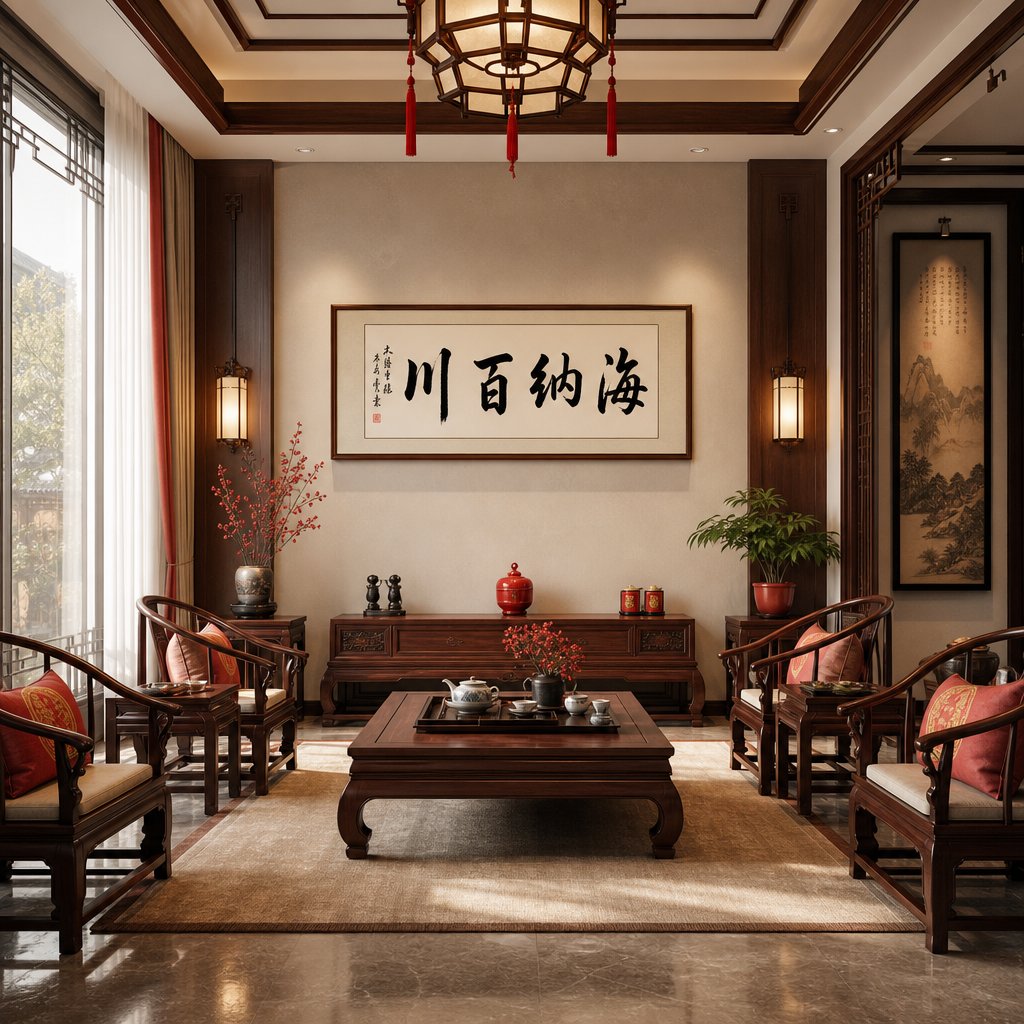
Feng Shui Rules for Displaying the Fortune Symbol
Placement isn't just about aesthetics when it comes to the chinese good fortune symbol. In feng shui philosophy, where you position 福 determines whether blessings flow inward or scatter away. Get it right, and the character functions as a kind of chinese charm for good luck anchoring positive energy in your space. Get it wrong, and you may be symbolically pushing fortune out the door.
Feng Shui Placement Rules for the Fortune Character
The core principle is straightforward: 福 should face the direction from which energy enters your home. In most cases, that means the main entrance. According to feng shui symbolic logic, the character's internal structure — blessings descending from heaven into a stable container — only works correctly when displayed upright. Inverting it on the main door disrupts the natural energetic pathway, symbolically placing heaven below and the container above.
Here's where each placement serves a specific purpose among feng shui symbols in the home:
- Main entrance or front door — Always upright. This is where fortune "walks in" with you. A large, bold 福 here invites blessings across the threshold.
- Living room — Upright, facing the seating area. Positions the blessing where the family gathers, reinforcing harmony and togetherness.
- Kitchen or pantry — Upright or inverted (regional preference). The kitchen represents sustenance. Some families invert 福 here to signal that abundance has arrived and is stored safely.
- Wealth corner (财位) — Always upright. In feng shui, this is typically the far-left corner diagonally opposite the main door. Placing 福 here stabilizes financial energy.
- Business entrance — Upright and prominent. Shops and restaurants display it to wish for steady customers and success throughout the year.
One tradition many people overlook: old fu characters should be replaced annually. Leaving last year's faded paper on the door suggests stagnant energy. The act of removing the old and pasting the new is itself a ritual of renewal — out with exhausted luck, in with fresh blessings.
Seasonal and Ceremonial Display Traditions
The chinese new year fu tradition is the most visible display occasion, but it's not the only one. The character appears across the Chinese calendar wherever a fresh start or celebration calls for it. The red and gold color pairing isn't decorative accident either — red wards off negative energy and signals joy, while gold represents prosperity and divine light.
The chinese doorway tradition of pasting fu characters follows a specific sequence. If you're setting up chinese decorations for Spring Festival, here's the traditional order:
- Clean the door surface thoroughly — removing last year's character symbolizes sweeping away old, stale energy.
- Choose the afternoon of New Year's Eve, before sunset, as the ideal pasting time.
- Start from the outermost gate and work inward, guiding fortune deeper into the home with each successive character.
- Place the largest 福 on the main entrance, upright and centered.
- Apply progressively smaller characters on interior doors, cabinets, and storage areas — these may be inverted if your regional tradition allows it.
- Step back and confirm alignment. A crooked character is considered inauspicious.
Beyond Spring Festival, 福 makes appearances at weddings (often paired with 喜), business openings (alongside 财), and housewarming celebrations. Some families keep a calligraphic 福 displayed year-round in the living room as a permanent fixture among their chinese symbols for good luck, refreshing it only at New Year. Others treat it as strictly seasonal, bringing it out only during the festival period and storing it away after the Lantern Festival marks the celebration's end.
The key takeaway for anyone wanting to bring chinese good luck into their space: respect the direction of energy flow. The character's own structure — divine blessing settling into a stable vessel — tells you everything about how it wants to be positioned. Upright at the threshold, welcoming fortune in. Contained within interior spaces, keeping it from leaking out. The placement rules aren't arbitrary superstition. They're a spatial expression of the same philosophy encoded in the character itself.
Knowing where to place 福 is one thing. Writing it yourself — with correct proportions and proper stroke sequence — adds another layer of personal connection to the tradition.
How to Write 福 with Correct Stroke Order
Writing the chinese character for good luck yourself — whether for Spring Festival decorations, calligraphy practice, or a personal art project — requires following a specific stroke sequence. Skip a stroke or reverse the order, and the character loses its structural balance. The good news: once you understand the logic, the 13 strokes follow a predictable pattern.
The fundamental rule of Chinese writing applies here: left before right, top before bottom. You'll complete the entire left radical 礻 before touching the right component 畐. Think of it as building two columns of a structure — the spiritual foundation on the left, then the vessel of abundance on the right.
Stroke Order Sequence for All 13 Strokes
The left radical 礻(the spirit/altar radical) comes first, followed by the right component 畐 (fullness). Here's the complete sequence for writing this chinese letter for luck:
- Dot — A short downward-right dot at the top left. This begins the altar radical.
- Horizontal-left sweep — Starting to the right of the dot, stroke horizontally then sweep downward to the left in one continuous motion.
- Vertical — A straight vertical stroke dropping down from the center of the radical.
- Dot — A small dot to the lower right of the vertical, completing the radical.
- Horizontal — A long horizontal stroke forming the top bar of the right component.
- Vertical — Drop down from the left end of stroke 5, forming the left wall of the enclosed structure.
- Horizontal fold — Starting from the top right, stroke right then turn downward, creating the top and right side of the upper box (口).
- Horizontal — Close the bottom of the upper box, connecting left wall to right wall.
- Vertical — Drop down from the left, forming the left wall of the lower box (田).
- Horizontal fold — Create the top and right side of the 田 component in one stroke.
- Vertical — A short vertical stroke bisecting 田 down the middle.
- Horizontal — A short horizontal stroke bisecting 田 across the middle.
- Horizontal — The final stroke closes the bottom of 田, sealing the character.
The result, when proportioned correctly, shows the left radical occupying roughly one-third of the character's width and the right component filling the remaining two-thirds. This asymmetry is intentional — the left-right structure gives 福 its characteristic visual weight leaning toward abundance.
Common Calligraphy Mistakes to Avoid
Even experienced learners stumble on specific points when writing good luck in chinese characters. Here are the errors that show up most often:
- Wrong order inside 田 — The middle vertical (stroke 11) must come before the middle horizontal (stroke 12). Many beginners reverse this, drawing the horizontal cross-stroke first. In Chinese stroke rules, vertical strokes within an enclosed space precede horizontal ones that intersect them.
- Left side too wide — The radical 礻should stay narrow and compact. If it spreads too wide, the right component gets cramped and the character looks unbalanced. Aim for a 1:2 width ratio between left and right.
- Rushing the final strokes — Strokes 11 through 13 define the 田 component's internal structure. Rushing them produces a muddy, illegible bottom half. Keep each stroke deliberate and evenly spaced.
- Misaligning the top horizontal — Stroke 5 (the top bar of the right component) should align with or sit slightly below the top of the left radical. Placing it too high creates an awkward gap.
- Forgetting proportional height — Both sides should share the same vertical height. The left radical shouldn't float above or sink below the right component.
If you're writing lucky chinese letters for Spring Festival, one practical tip: practice the character large first. A 福 written at poster size (think 30cm square) forces you to commit to each stroke's direction and length. Shrinking it down afterward is far easier than trying to learn correct proportions at small scale from the start.
For those serious about chinese writing luck characters with authentic style, exploring different calligraphy scripts opens up creative possibilities. The same 福 written in regular script (楷书) looks precise and formal. In running script (行书), strokes connect fluidly. In cursive script (草书), the character becomes almost abstract — a dance of ink that only trained eyes can parse. But regardless of style, the underlying stroke order stays consistent. Master it in regular script first, and every other variation becomes accessible.
Writing the chinese character for luck by hand connects you to the tradition in a way that buying a pre-printed decoration never quite matches. Each stroke retraces a path that calligraphers have followed for centuries — the same sequence, the same logic, the same wish pressed into paper with ink and intention. Whether your version ends up on a door, in a frame, or simply in a practice notebook, the act of writing it is itself a small ritual of hope.
Of course, writing 福 correctly is only part of the equation if you plan to use it in a Western context. Questions about tattoo accuracy, decor etiquette, and cultural sensitivity deserve their own careful attention.
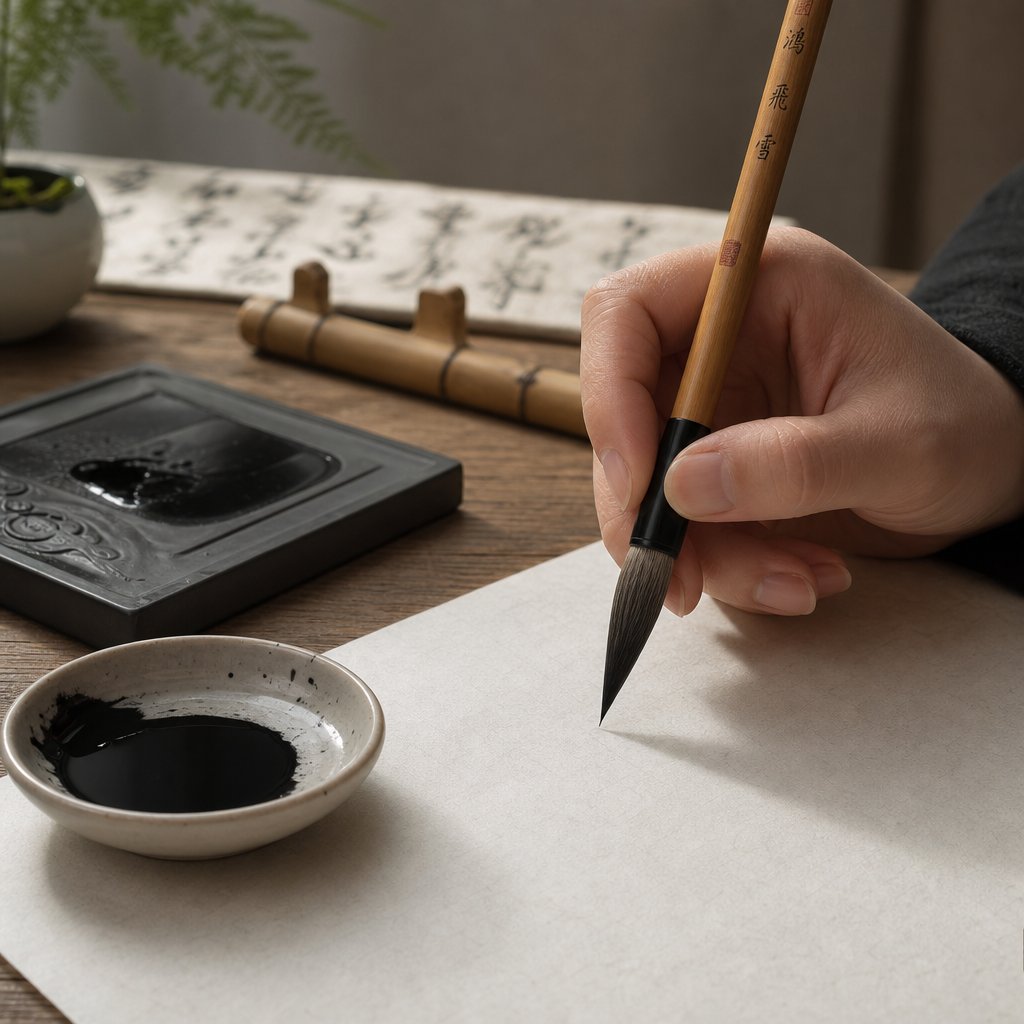
Using the Fortune Symbol in Western Contexts with Respect
You've learned what 福 means, how it's built, how to pronounce it, and where to place it. But here's the question that rarely gets addressed directly: what does it look like when someone outside Chinese culture uses this character — on their body, in their home, or as a gift? The line between appreciation and appropriation isn't always obvious, and getting it wrong can range from mildly embarrassing to genuinely disrespectful.
The good news is that most Chinese people respond positively when outsiders engage with asian symbols and meanings thoughtfully. Intent matters. Knowledge matters more. And the fact that you've read this far already puts you ahead of someone grabbing a random character off a Pinterest board.
Tattoo Considerations and Meaning Accuracy
A blessed in chinese tattoo is one of the most common requests at studios worldwide. 福 ranks among the top choices because its meaning is unambiguously positive — no hidden ironic subtext, no context where it becomes inappropriate. But "unambiguously positive" only holds true if the character is actually correct on your skin.
Here's what to verify before committing to permanent ink:
Orientation. A mirrored or inverted character isn't a stylistic choice — it's simply wrong. When a tattoo stencil gets flipped during transfer, the result reads as gibberish to any native reader. Always confirm the final stencil placement on skin before the needle starts. As tattoo guidance from calligraphy experts notes, Chinese characters are not symmetric, and a mirrored character is immediately recognizable as an error.
Simplified vs. traditional form. In the case of 福, this is actually a non-issue — the character wasn't altered during China's script simplification reforms. It looks identical in both systems. But if you're combining it with other characters in a phrase, make sure every character uses the same script system. Mixing simplified and traditional forms in one design signals unfamiliarity with the writing system.
Calligraphy style. A computer font produces flat, mechanical letterforms that lack the energy of genuine brushwork. The best approach, according to experienced practitioners: have a native Chinese speaker who writes by hand produce your reference character. Photograph that handwriting and use it as the basis for your design — not a screenshot from a translation app.
Common mistakes that change meaning entirely. The blessing chinese symbol 福 can be confused with visually similar characters if a single stroke goes wrong. A hook that curves the wrong direction, a component drawn too short or too long — these small errors can transform one character into another. The difference between getting a chinese character for blessed and getting a character that means something unrelated often comes down to one stroke's placement.
One verification method that eliminates most errors: show your intended design to a native Mandarin speaker and ask them to read it cold — without telling them what it's supposed to say. If they immediately say "fu" or "blessing," you're good. If they hesitate, squint, or say something else, go back to the drawing board.
Home Decor and Gift-Giving Etiquette
Wall art, jewelry, ornamental scrolls, embroidered pillows — the chinese symbol for blessings shows up across Western home decor in dozens of forms. Using it respectfully doesn't require being Chinese. It requires understanding what you're displaying and treating it with the same consideration you'd give any meaningful cultural object.
The key distinction, as interior designer Jean Liu frames it, comes down to intention: "It comes down to being honest with oneself and whether or not there is an interest in being thoughtful and sensitive to someone else's culture and history." A 福 character displayed because you genuinely connect with its meaning of holistic blessing sits in a different category than one chosen purely because it "looks cool" without any understanding of what it says.
For gift-giving, context shapes appropriateness. A beautifully calligraphed 福 makes a thoughtful housewarming gift — it's a universal wish for well-being in the recipient's new space. But gifting asian culture symbols without explanation can leave the recipient confused or uncomfortable. A brief note about the character's meaning transforms a mysterious object into a meaningful gesture.
Here's a practical guide for Western audiences engaging with the fortune symbol:
- Do learn what the character means before displaying it. You're reading this article, so you're already there.
- Do source from artists or makers who understand the cultural significance — independent calligraphers, Chinese-owned shops, or artisans who can explain their work.
- Do display it with the same care you'd give any meaningful artwork. A framed calligraphy piece deserves a respectful location, not a bathroom floor or a doormat.
- Do ask questions when you're unsure. Most Chinese people appreciate genuine curiosity about their culture far more than they're offended by it.
- Don't display characters you can't identify or explain. If you can't tell a visitor what it says, reconsider whether it belongs on your wall.
- Don't mix random asian symbolism together as generic "Eastern" decor. 福 is Chinese. A Shinto torii gate is Japanese. A mandala is Buddhist or Hindu. They're not interchangeable.
- Don't treat the character as a superstitious lucky charm. Framing it as "this controls my fate" misrepresents the tradition. A calmer, more accurate framing: "this expresses a wish" or "this represents a cultural value I respect."
- Don't buy mass-produced decor with characters that nobody can verify. If the seller can't tell you what the calligraphy says, the product likely prioritizes aesthetics over accuracy.
The underlying principle is simple: engagement with knowledge is appreciation. Engagement without knowledge — or worse, engagement that flattens an entire civilization into a decorative motif — slides toward appropriation. The fortune symbol carries over three thousand years of spiritual, linguistic, and cultural meaning. Honoring even a fraction of that depth when you display it is what separates thoughtful use from careless decoration.
Whether you're considering a tattoo, choosing wall art, or selecting a meaningful gift, the same rule applies: know what you're working with. The chinese symbol for blessings isn't fragile — it's survived dynasties, revolutions, and script reforms. It can certainly survive crossing cultural boundaries. It just asks that you carry its meaning with you when you do.
Frequently Asked Questions About the Fortune Chinese Symbol
1. What does the Chinese fortune symbol 福 mean in English?
The Chinese character 福 (fu) cannot be captured by a single English word. It simultaneously encompasses good fortune, blessing, happiness, prosperity, and overall well-being. Rather than referring only to wealth or luck, 福 represents a holistic wish for a complete, fulfilled life — including health, family harmony, spiritual peace, and material sufficiency. Its meaning is closer to a prayer for total life satisfaction than a narrow reference to money or chance.
2. Why do Chinese people hang the fu character upside down?
The upside-down 福 tradition relies on a Mandarin homophone pun. The word for 'upside down' (倒, dao) sounds identical to the word for 'to arrive' (到, dao). So when 福 is inverted, saying '福倒了' (fu dao le) simultaneously means 'the character is upside down' and 'fortune has arrived.' However, traditional etiquette dictates that only interior doors, cabinets, and storage areas should display the inverted character — the main entrance should always keep 福 upright to welcome blessings inward.
3. How do you pronounce 福 correctly in Mandarin?
福 is pronounced 'fu' with the second (rising) tone, written in pinyin as 'fu' with an accent mark. For English speakers, it sounds similar to 'foo' in 'food' but shorter and spoken with a rising pitch — like the upward inflection at the end of a surprised question. The pitch starts at a mid-level and rises to high. Avoid saying it with a flat or falling tone, as that changes the meaning to entirely different characters like 付 (to pay) or 父 (father).
4. What is the difference between 福, 财, and 喜 in Chinese?
These three characters target different aspects of a good life. 福 (fu) is the broadest — it covers overall blessing, well-being, and holistic fortune. 财 (cai) is specifically about monetary wealth and financial success, commonly displayed in businesses near cash registers. 喜 (xi) represents celebratory joy and happiness, most famously doubled as 囍 for weddings. Choose 福 for general blessings, 财 when focused on money, and 喜 for celebrations like marriages or joyful announcements.
5. Is it culturally appropriate to get a 福 tattoo if you are not Chinese?
Most Chinese people respond positively when outsiders engage with the character thoughtfully and knowledgeably. The key is accuracy and respect: verify the character orientation is correct (not mirrored), use authentic calligraphy rather than computer fonts, and confirm the design with a native speaker before committing. Have someone read the character cold without telling them what it should say. If they immediately recognize it as 福, you are on solid ground. The character's meaning is unambiguously positive, making it one of the safer choices for cross-cultural tattoos when done correctly.