What Are the Four Treasures of the Study
Defining the Four Treasures of the Study
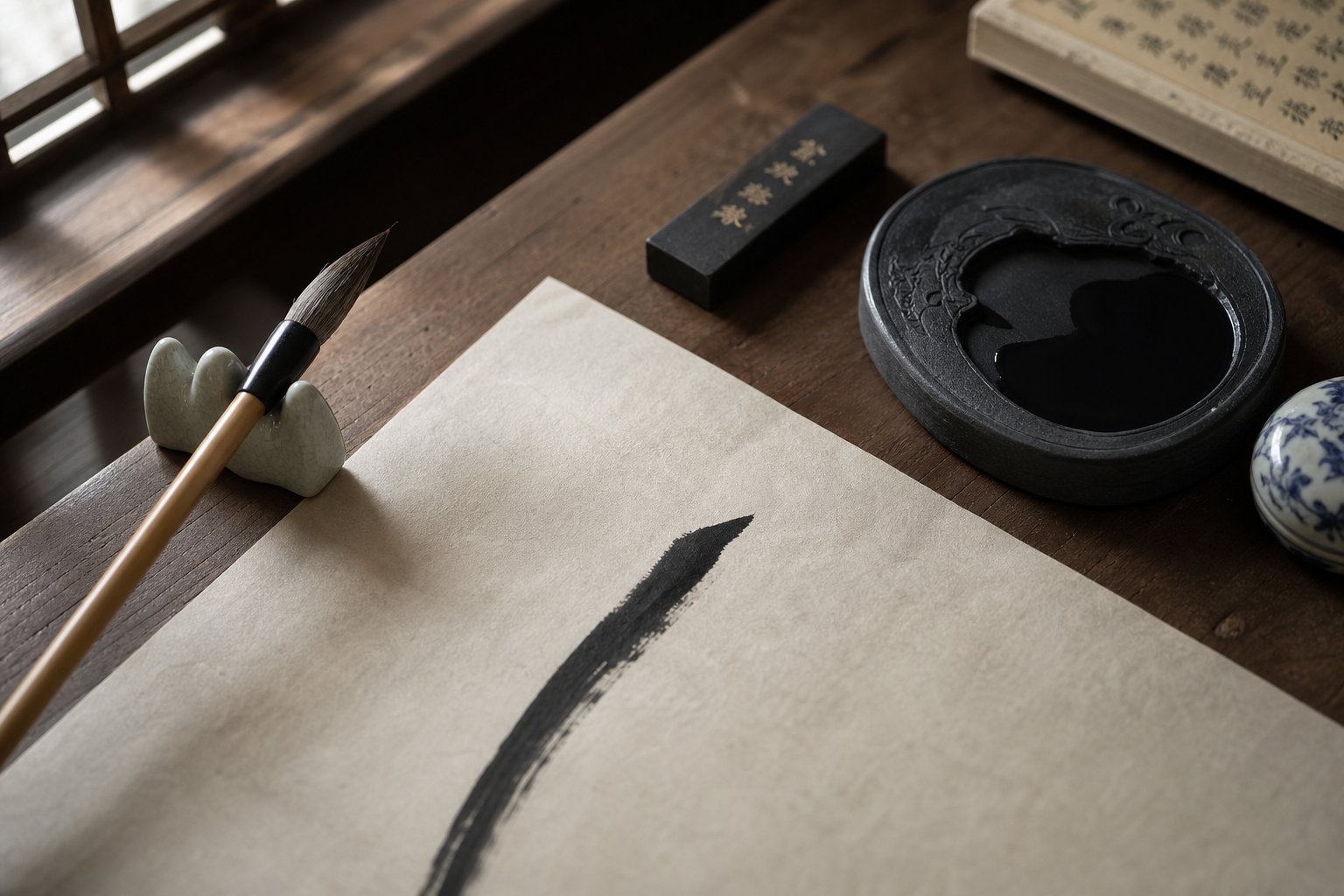
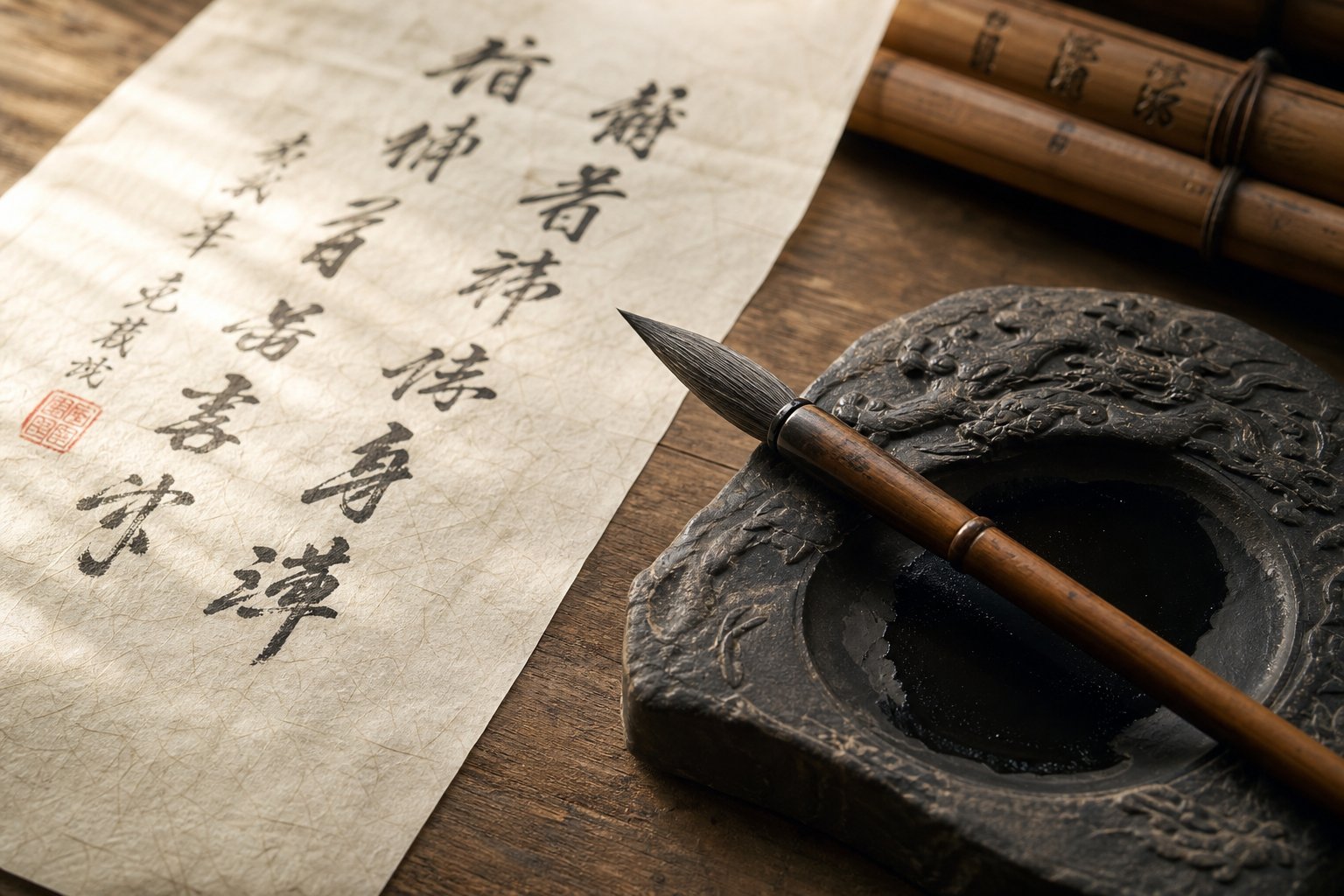
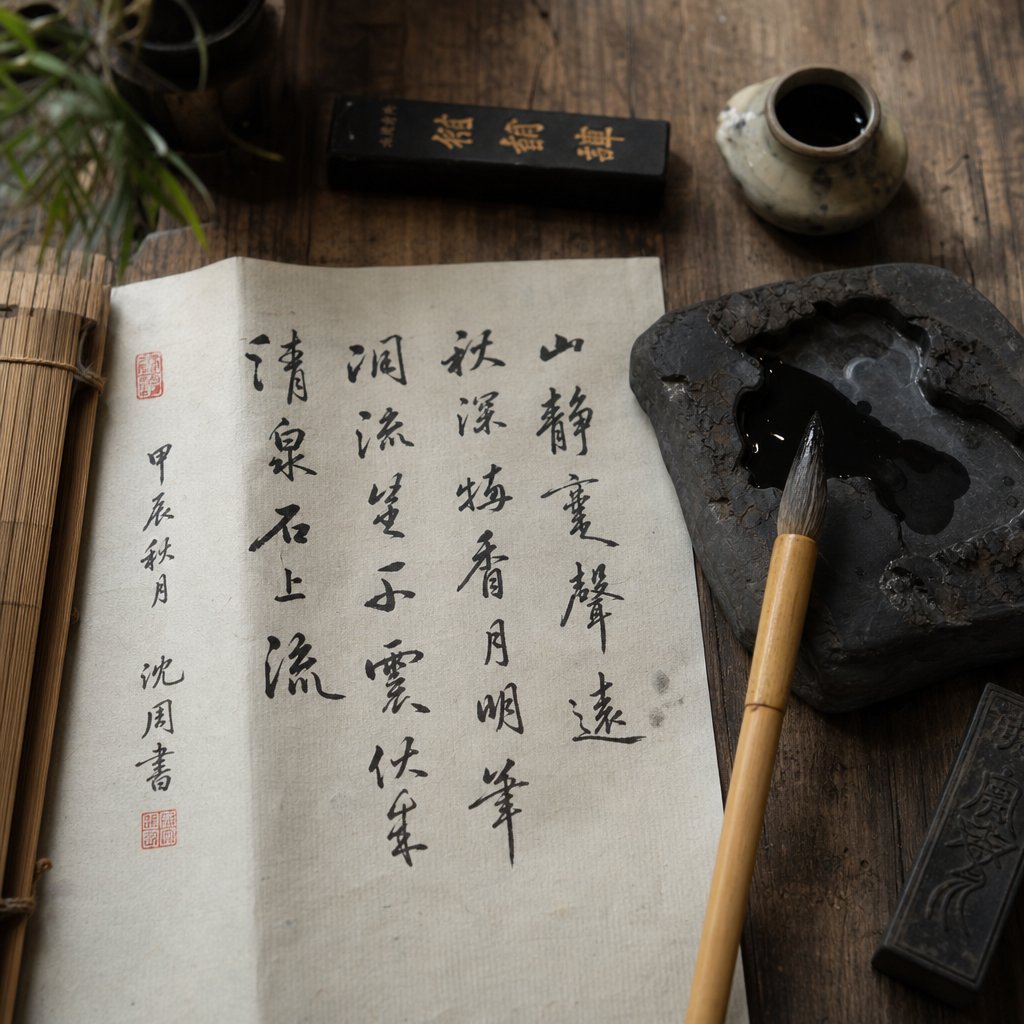
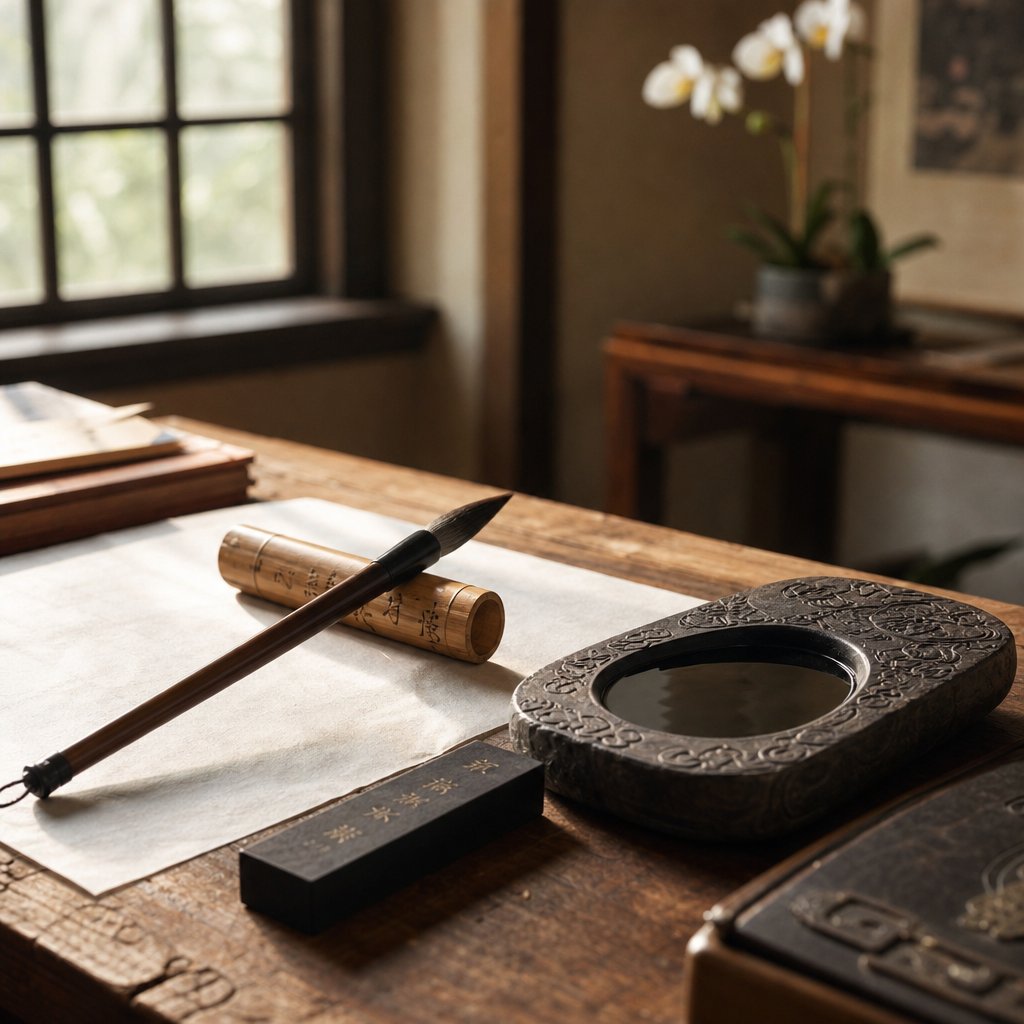
The four treasures of the study (文房四宝, wen fang si bao) are the brush (毛笔), ink stick (墨), paper (纸), and inkstone (砚). Together, these four tools formed the essential toolkit for writing and painting in traditional China. The term "文房" refers specifically to the study room of intellectuals, and because these implements were indispensable within that space, they earned the collective title of "treasures."
Imagine a quiet room furnished with nothing more than a wooden desk, a window facing a garden, and these four objects arranged with care. For centuries, this was the creative engine of Chinese civilization. Every imperial edict, every landscape scroll, every line of poetry passed through the interaction of hair, soot, fiber, and stone. Writing was so valued that the Chinese elevated these implements above mere utility, treating them as objects worthy of connoisseurship and even reverence.
Why These Four Tools Matter Beyond Writing
You might wonder why a brush or a slab of stone would carry cultural weight comparable to a musical instrument or a philosophical text. The answer lies in the literati tradition. In imperial China, scholar-officials were expected to cultivate themselves through the Four Noble Arts: playing the qin zither, strategic board games, calligraphy, and painting (琴棋书画). Calligraphy and painting both depended entirely on the four treasures of the study. Mastering these tools was not a technical exercise alone. It was a path toward moral refinement.
The scholar's identity was inseparable from the objects on the desk. Owning fine brushes, aged ink, handmade paper, and a carved inkstone signaled not wealth but cultivation. As the Asian Art Museum notes, having beautiful tools for painting indicated a deep respect for the art itself. The tools were partners in expression, not passive instruments.
In the Chinese literati tradition, the tool does not serve the artist from a distance. It merges with intention, breath, and gesture until brush and hand become a single expressive force.
This philosophical unity of tool and artist is what separates the four treasures from ordinary stationery. Each treasure carries its own material science, regional craft heritage, and centuries of refinement. The brush involves animal hair selection and binding techniques perfected in specific towns. The ink stick emerges from soot chemistry and molding traditions rooted in a single province. Paper depends on fiber composition and sizing methods that determine how ink behaves on its surface. The inkstone demands geological knowledge and carving skill passed through generations.
What follows is a journey through all of these dimensions: the historical codification of the tradition, the material depth of each treasure, how they function as an integrated system, and why they remain a living practice across East Asia.
Historical Origins and How the Tradition Was Codified
Each of these four tools existed independently for centuries before anyone thought to group them together. Brushes were already in use during the Eastern Zhou period, and primitive inkstones appear at Neolithic sites over five thousand years old. The leap from scattered implements to a unified cultural concept required a specific kind of space and a specific kind of person to bring them together.
Origins of the Term 文房四宝
The word "wenfang" (文房), meaning a scholar studio dedicated to reading, writing, and painting, first appeared during the Northern and Southern Dynasties (420-589). By the Tang dynasty, the study had evolved into more than a workspace. It was a venue for displaying collectibles, hosting intellectual friends, and cultivating personal refinement. The tools inside that room gradually became symbols of the room itself.
During the Southern Tang period (937-975), the concept crystallized around specific regional products: the Zhuge brush from Xuancheng, Li Tinggui ink from Huizhou, Chengxintang paper from Huizhou, and the Longwei inkstone from Wuyuan. These were not generic categories but named masterworks, each tied to a particular artisan or locale. The ruler Li Yu, last emperor of the Southern Tang, was himself a devoted patron of fine ink, granting the imperial surname to his favorite ink maker's family.
The phrase "四宝" (four treasures) entered common literary usage by the Northern Song dynasty. The poet Mei Yaochen (1002-1060) wrote: "The Four Treasures of the Study come from two commanderies; recently you and I have appreciated and cherished them." Su Yijian's influential treatise, Four Treatises on the Study, further cemented the idea that brush, ink, paper, and inkstone formed a complete, interdependent set rather than four separate purchases. By the Southern Song, the poet Lu You even personified them as "the Four Scholars of the Study," his sole companions in solitude.
Evolution Across Dynasties
The four treasures of study did not arrive fully formed. Each tool underwent centuries of material refinement, with breakthroughs in one area often reshaping how the others were used. Han dynasty calligraphy, for instance, relied on pine soot ink that was hand-kneaded rather than molded, ground on stone slabs that still required a pestle. The tools were functional but crude by later standards.
Here is how the tradition developed across major periods:
- Han dynasty (206 BC - 220 AD): Artificial ink made from pine soot replaced natural pigments. The invention of molded ink sticks eliminated the need for a grinding pestle on inkstones. Cai Lun improved papermaking techniques, though archaeological finds show paper existed as early as the Western Han.
- Tang dynasty (618-907): The scholar studio became a recognized cultural institution. Ink production hubs formed in northern pine-rich regions. Xuan paper production began in Jingxian under the jurisdiction of Xuanzhou, giving the paper its enduring name.
- Southern Tang to early Song (10th-11th century): The four treasures were first codified as a unified set tied to specific regional products. Oil soot ink emerged through the use of tung oil, producing richer, more lustrous blacks suited to painting.
- Song dynasty (960-1279): Huizhou rose as the dominant center for ink production, crafting both pine soot and oil soot varieties. The term "Four Treasures of the Study" achieved widespread social acceptance and appeared in poetry, treatises, and even tomb murals.
- Yuan through Ming dynasties (13th-17th century): The Hu brush from Huzhou, Zhejiang, gradually overtook the Xuan brush in prominence. Xuan paper production in Jingxian refined its 108-step manual process into the form still practiced today.
- Qing dynasty (1644-1911): Imperial patronage elevated the four treasures to their highest level of craftsmanship. The Palace Museum collection from this era represents the pinnacle of material quality and decorative artistry.
What emerges from this timeline is a pattern: each dynasty inherited the tools, then pushed one or more of them toward new levels of sophistication. The Song dynasty poet who ground aged ink on a Duan inkstone and wrote on Xuan paper was working with a system that had taken over a thousand years to assemble. And each component in that system carried its own deep material story, beginning with the brush and the craft of selecting, sorting, and binding animal hair into bamboo.
The Brush and the Craft of Hair and Bamboo
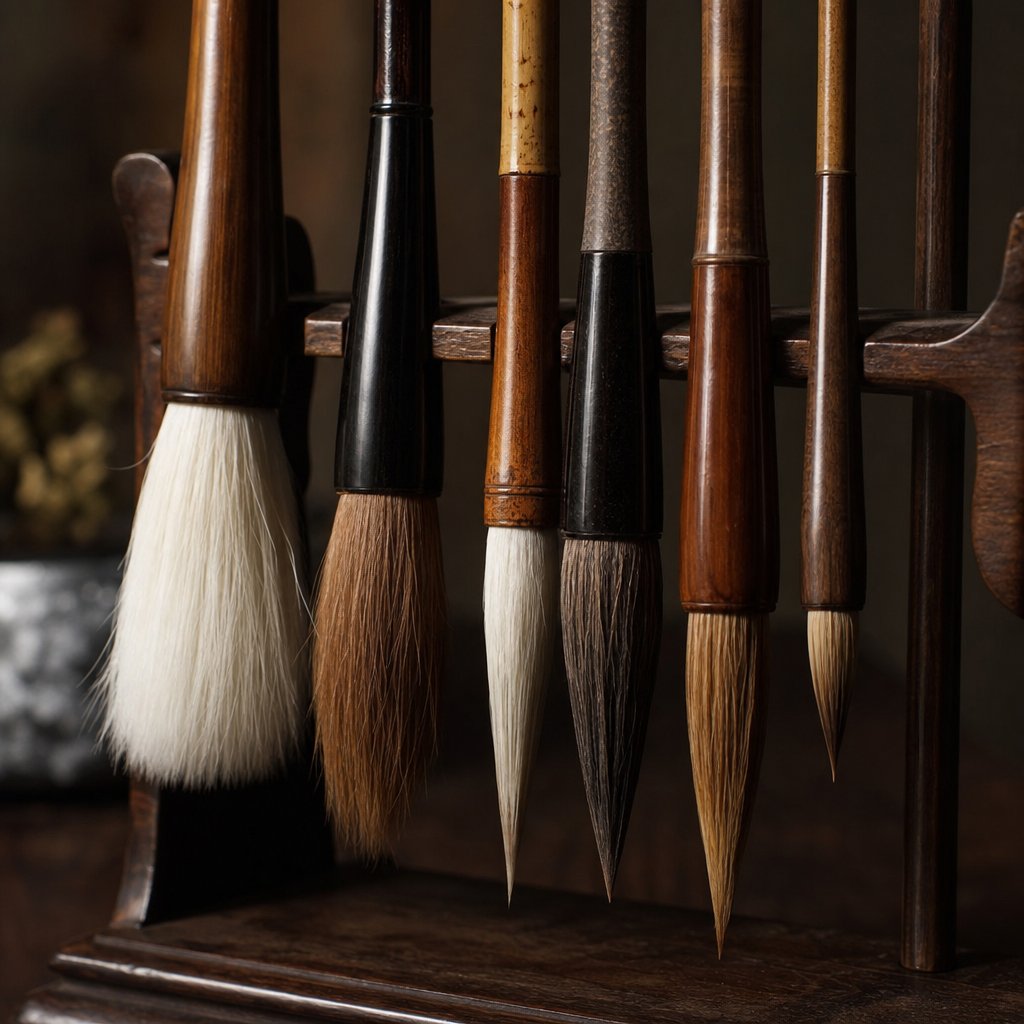
A Chinese brush and ink set may look simple at first glance, but the brush alone contains centuries of material science hidden inside a bamboo tube. The brush head is not a random clump of hair. It is an engineered structure with a defined tip, a supportive spine, and an interior reservoir designed to hold and release ink in a controlled flow. Every decision about which animal hair to use, how to sort it, and how to bind it determines what that brush can do on paper.
Brush Hair Types and Their Characteristics
When you pick up a brush for mandarin calligraphy or ink painting, the hair type is the single biggest factor shaping your strokes. Different animals produce fibers with radically different properties, and brush makers have spent generations matching those properties to specific artistic tasks.
Goat hair (羊毫) is the most commonly used soft hair. It is flexible, highly absorbent, and relatively inexpensive. Goat hair does not spring back to its original shape after being pressed to the page, which means it rewards a confident hand but punishes hesitation. Many professional artists choose goat hair precisely because its unpredictability creates unintentional effects that add interest to the finished work. It excels at bold, expressive strokes in running and cursive scripts, making it a natural choice for treasure in cursive writing styles.
Wolf hair (狼毫) is actually weasel hair. The common misnomer comes from a close similarity between the Chinese words for wolf and weasel. These hairs are stiffer and more elastic than goat, springing back to their original form once lifted from the paper. That resilience gives the artist precise control over line width and direction. Wolf-hair brushes suit regular script, small characters, and detailed painting where crisp edges matter.
Rabbit hair (紫毫) falls between goat and weasel in stiffness. Brownish rabbit hair was historically prized for the Xuan brush tradition, and scholars of the Jin dynasty were especially fond of it. Rabbit-hair brushes offer moderate spring with a slightly rougher texture that grips the paper surface, producing strokes with visible fiber texture.
Mixed-hair brushes (兼毫) combine soft and stiff fibers to give the artist the best of both worlds. Typically, a full soft-hair interior maximizes ink capacity while a stiff outer layer maintains a good point. The result is a brush that holds plenty of ink, keeps its shape, and responds predictably across a range of techniques.
| Hair Type | Stiffness | Ink Absorption | Spring-Back | Best Use |
|---|---|---|---|---|
| Goat (羊毫) | Soft | High | Low | Expressive calligraphy, running/cursive script, large characters |
| Wolf/Weasel (狼毫) | Firm | Moderate | High | Regular script, fine detail painting, small characters |
| Rabbit (紫毫) | Medium | Moderate | Medium | Formal calligraphy, textured strokes, mid-size characters |
| Mixed (兼毫) | Medium | High | Medium | General purpose, beginners, versatile painting and writing |
You'll notice that hair selection is not just a matter of personal preference. It directly determines whether a brush can produce the sharp, angular turns of regular script or the flowing, connected gestures of cursive. Choosing the wrong hair type for your intended script is like trying to write with a tool that fights you at every stroke.
The Hu Brush of Huzhou and Regional Craft Traditions
Several regions developed celebrated brush-making traditions, but Huzhou in Zhejiang Province earned the highest reputation. The Hu brush (湖笔) became synonymous with quality through a combination of local materials, clean water for washing hair, and generational craftsmanship passed from master to apprentice over centuries.
What makes Huzhou special? The region provided access to high-quality goat and weasel hair from surrounding farmlands, plus bamboo groves that supplied ideal shaft material. Local water sources were soft enough to wash and sort hair without damaging its natural oils. And the town's artisans developed a production process involving more than 120 individual steps from raw material to finished brush.
Here is how that process unfolds in broad strokes:
- Selecting: Craftspeople sort raw animal hair by length, thickness, and quality. Hair harvested in winter tends to be thicker and more resilient, making it preferred for high-grade brushes.
- Sorting: Individual hairs are separated into groups based on their intended role: tip hairs, spine hairs, and reservoir hairs. This step alone can take days for a single brush.
- Binding: The sorted hairs are assembled into the brush head structure, with shorter core hairs forming the spine and longer outer hairs creating the point. Softer reservoir hairs fill the space between.
- Setting: The completed hair bundle is glued and fitted into a bamboo, red sandalwood, or mottled bamboo handle. Premium brushes may use white porcelain or ivory shafts.
A finished Hu brush is judged by four traditional virtues: pointedness (a fine, natural tip at rest), evenness (uniform spread when pressed flat), roundness (a perfectly circular cross-section for omnidirectional control), and resilience (a full, responsive body that holds ink well). These four qualities became the universal standard by which all Chinese brushes are measured.
Other regional traditions contributed their own strengths. The Xuan brush from Jingxian, Anhui, was favored during the Tang and Song dynasties for its brownish rabbit-hair tips. The Houdian brush from Shandong specialized in wolf and civet tail hair, producing durable brushes with excellent stiffness-to-flexibility ratios. The Daiyuexuan workshop in Beijing refined semi-manufactured Huzhou brushes into tools with a uniquely sharp point and graceful stiffness.
Each of these traditions understood something fundamental: the brush is not a commodity but a precision instrument. Its performance depends entirely on the quality of its raw materials and the skill of the hands that assembled it. That same principle of material purity and craft mastery extends to the next treasure in the set, the ink stick, where soot chemistry and molding technique determine whether the resulting black is flat and lifeless or deep and luminous.
The Ink Stick From Soot to Lustrous Black
Soot, animal glue, and fragrance. Three raw materials, combined through labor-intensive processes, produce one of the most enduring pigments in human history. Unlike eastern liquid ink sold in bottles, a traditional ink stick stores its color in solid form, remaining usable for generations without drying out. When the artist is ready to work, the stick is ground against an inkstone with water, producing fresh ink whose thickness and tone can be adjusted stroke by stroke. That level of control is what makes the ink stick irreplaceable in calligraphic art and Chinese painting and calligraphy traditions.
The soot provides the carbon pigment. Animal-hide gelatin (膠, jiao) binds those carbon particles into a solid mass and later fixes them to the paper surface. Fragrance, typically musk or dragon's blood resin, masks the gelatin's natural odor and, according to tradition, calms the mind during the meditative act of grinding.
Pine Soot Versus Oil Soot Ink
Not all soot is the same. The type of fuel burned to produce it determines the ink's color, texture, and ideal application. Two primary formulations have dominated the tradition for over a thousand years.
Pine soot ink (松烟墨) is made by burning pine branches or bark inside an enclosed chamber and collecting the soot that settles on the walls and ceiling. The resulting carbon particles are relatively coarse and uneven in size. That irregularity is actually a strength: when diluted, pine soot ink produces transparent, exquisite gradations with a cool, matte quality. In concentrated form, it delivers a subdued, non-reflective black. Pine soot ink is the oldest formulation, originating in ancient China, and calligraphers still prefer it for work that demands understated depth rather than surface brilliance. Over time, pine soot ink is said to shift from black toward a subtle blue-gray tone, a quality prized in aged pieces.
Oil soot ink (油烟墨) is produced by burning vegetable oils such as rapeseed, sesame, tung, or camellia oil beneath a clay vessel, then collecting the fine soot deposited inside. The particles here are extremely fine and uniform, yielding a glossy, lustrous black when ground at full concentration. Diluted, oil soot ink takes on warm reddish-brown or purple-brown undertones depending on the oil source. Its smoothness and depth make it the standard choice for painting, where rich tonal variation and a sense of luminosity matter most. High-quality oil soot ink produces a lacquer-like sheen that intensifies as the grade improves.
Sounds like a simple choice? In practice, many artists keep both types on their desk. A landscape painter might use oil soot for foreground elements that need to pop with glossy depth, then switch to pine soot for distant mountains that should recede into cool, matte atmosphere. The two formulations are complementary rather than competing.
Hui Ink From Anhui and the Art of Ink Making
If you trace the geography of fine ink production, all roads lead to Anhui Province. Huizhou ink (徽墨) emerged during the Southern Tang dynasty and reached its peak during the Song dynasty. The region's combination of abundant pine forests, favorable climate for slow drying, and a deep tradition of skilled artisanship made it the natural center of the craft. The making skill of Huizhou ink was listed in China's first group of national intangible cultural heritage projects in 2006.
The production process is painstaking. It begins with soot burning and soot selection, where only the finest particles are kept. The selected soot is mixed with dissolved gelatin and kneaded together with fragrance. This mixture is then pestled repeatedly, sometimes described in historical recipes as being ground "100,000 times" to ensure the particles are microscopically fine. The kneaded mass is pressed into carved wooden molds, squeezed to remove air, and then begins a long natural drying period. A small ink ingot requires four to six months of shade drying; larger pieces need even longer. After drying, each stick is trimmed, polished, and decorated with gold-painted characters or designs.
The mold engraving itself belongs to the tradition of Huizhou woodcarving, and master carvers produce intricate scenes, calligraphy, and symbolic imagery on the mold surfaces. This decorative dimension elevates collector-grade ink sticks into sculptural objects. The celebrated Old Hu Kai Wen workshop, operating since the 18th century, supplied ink to the Qing imperial family and won a Gold Award at the 1915 Panama-Pacific World Exhibition.
What separates a student-grade ink stick from a collector piece? Student ink typically uses modified carbon soot from mineral oil or industrial carbon black. It darkens quickly and works adequately for practice, but lacks the tonal complexity and longevity of handmade soot. A professional-grade Hui ink stick uses pure vegetable-oil or pine soot, aged gelatin, and premium fragrance, then undergoes months of careful drying. A collector-grade piece adds historical recipes, rare ingredients, artistic mold carving, and sometimes decades of aging that further refine the ink's color and grinding properties.
Here are the key quality indicators that distinguish fine ink from ordinary ink:
- Density and weight: A quality stick feels light relative to its size, indicating fine, well-compressed particles with minimal impurities.
- Hardness: Fine ink is described as "hard as jade." It should not crumble or feel chalky when handled.
- Grinding sound: When rubbed on an inkstone, premium ink produces almost no sound. Scratching or gritty noise indicates impurities.
- Fragrance: High-grade ink smells fresh and clean, with subtle aromatic notes from musk, camphor, or clove rather than a harsh chemical odor.
- Color concentration: A very small amount of ground ink should produce deep, saturated color. Weak color from heavy grinding signals low carbon density.
- Tonal range: Fine ink displays distinct warm or cool undertones when diluted, with smooth gradations and a sense of three-dimensional depth rather than flat gray.
- Longevity: Because a quality ink stick can be up to 99% carbon, its color remains stable for centuries without fading, even when exposed to air.
Aged ink sticks, sometimes decades or even centuries old, are highly sought by collectors and serious practitioners. The gelatin in old ink breaks down slightly over time, producing smoother grinding and subtler tonal shifts that fresh ink cannot replicate. This aging process is one reason why Hui ink sticks are sometimes purchased not for immediate use but as long-term investments in future artistic quality.
The ink stick, then, is not merely a source of pigment. It is a material whose chemistry, craftsmanship, and age all shape the final image. But that image also depends on what receives the ink. The third treasure, paper, determines how those carefully ground carbon particles spread, settle, and endure across the centuries.
The Paper That Preserves a Thousand Years
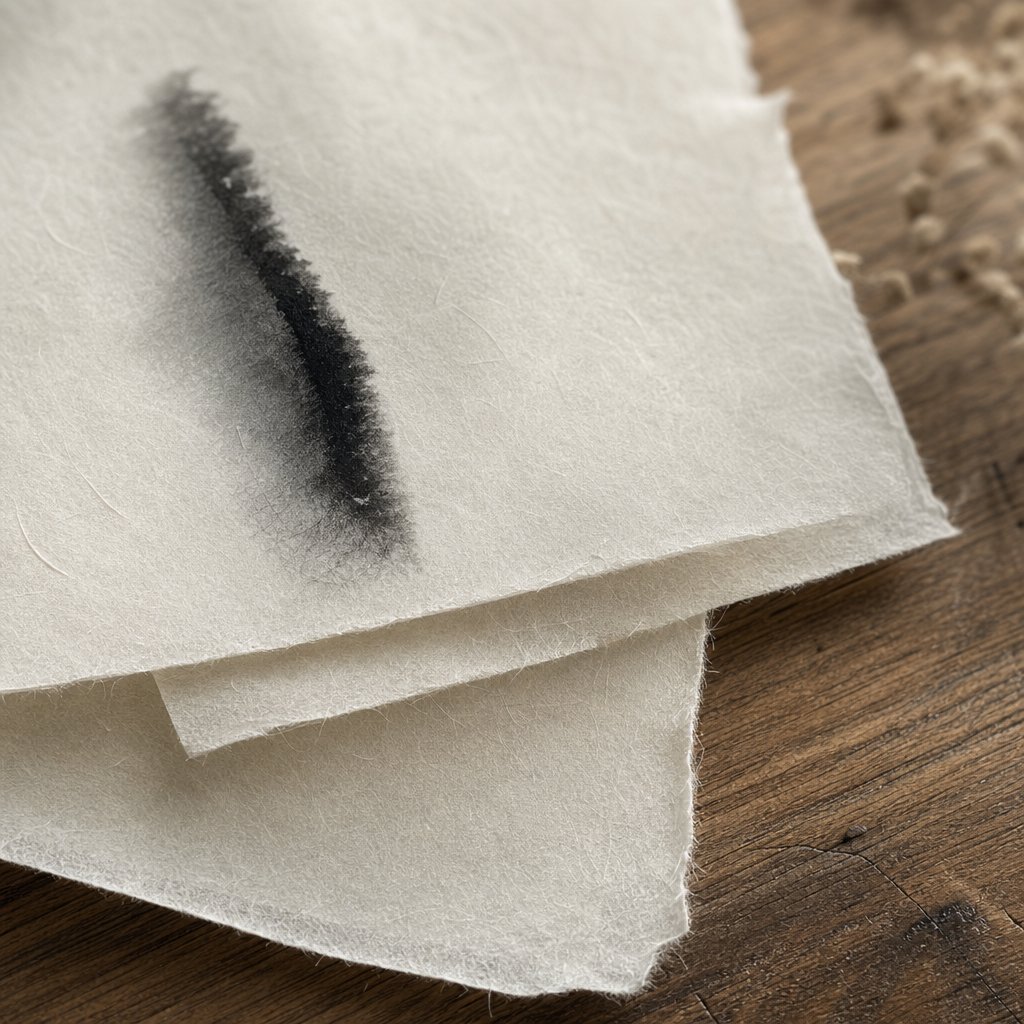
Carbon particles ground from a fine ink stick need somewhere to land, and where they land changes everything. A single brushstroke on one type of paper might bleed into a soft, atmospheric cloud. The same stroke on a different sheet stays razor-sharp. That difference is not incidental. It is the reason paper earned its place among the four treasures rather than being treated as disposable material. In the calligraphy definition in art, the medium is never passive. Paper actively shapes the final work.
Xuan Paper and Its Fiber Composition
Xuan paper (宣纸) takes its name from Xuancheng in Anhui Province, where production began during the Tang dynasty. Historical records show it appeared among tribute items during the Tianbao Period (742-756), confirming that the region was already producing paper of exceptional quality over 1,200 years ago. The craft was inscribed on UNESCO's Representative List of the Intangible Cultural Heritage of Humanity in 2009, recognizing both its cultural significance and the complexity of its production.
What makes Xuan paper different from ordinary paper? Two raw materials: the bark of the Tara Wing-Celtis tree (青檀, also called blue sandalwood) and rice straw. The bark fibers are long, tough, and flexible, giving the paper its remarkable tensile strength and resistance to creasing. Rice straw contributes shorter fibers that fill gaps and create a smooth, even surface. The ratio between these two ingredients determines the paper's grade. Professional-grade sheets contain 60 to 80 percent bark fiber, while practice-grade paper reverses that proportion to roughly 40 percent bark and 60 percent straw.
The production process itself involves more than one hundred steps performed entirely by hand: steeping, washing, fermenting, bleaching, pulping, molding, drying, and cutting. The full cycle from raw bark to finished sheet takes over two years. True mastery of the entire process, as UNESCO notes, is won only by a lifetime of dedicated work.
Three types of Xuan paper serve different artistic purposes, distinguished by how much sizing (a coating of alum and gelatin) is applied after the base sheet is formed:
Raw Xuan (生宣, sheng xuan) receives no sizing at all. It absorbs ink instantly and completely, recording every subtle variation in brush pressure, speed, and moisture. Professionals prize it for expressive landscape painting and bold calligraphy, but it is unforgiving. Mistakes cannot be hidden because the paper captures everything with absolute honesty.
Sized or "cooked" Xuan (熟宣, shu xuan) is treated with alum and gum to dramatically reduce absorbency. Ink sits on the surface rather than sinking in, allowing artists to build up fine, detailed strokes layer by layer. This type suits Gongbi (工笔) fine-detail painting, where precision matters more than spontaneity. The tradeoff is that sized paper can become slightly brittle over time.
Half-sized Xuan (半熟宣, ban shu xuan) splits the difference. It absorbs ink more slowly than raw paper but still allows some natural bleeding and tonal variation. Many practitioners find it the most versatile option, flexible enough for both calligraphy writing and painting without demanding the advanced ink-control skills that raw Xuan requires.
| Type | Chinese Name | Absorbency | Ink Behavior | Recommended Use |
|---|---|---|---|---|
| Raw Xuan | 生宣 (sheng xuan) | Very high | Absorbs instantly, records every brush detail | Expressive calligraphy, freehand landscape painting, large-scale works |
| Sized (Cooked) Xuan | 熟宣 (shu xuan) | Very low | Ink stays on surface, allows layering | Gongbi fine-detail painting, precise small characters, decorative work |
| Half-Sized Xuan | 半熟宣 (ban shu xuan) | Moderate | Slow absorption, controlled bleeding | General calligraphy, versatile painting, intermediate practitioners |
How Paper Absorbency Shapes Calligraphic Technique
Paper choice is not a background decision. It fundamentally alters how an artist must move. On raw Xuan, hesitation is visible. If you pause mid-stroke, ink pools and bleeds outward, creating an unintended dark spot. Skilled calligraphers working on raw paper develop a rhythm of confident, continuous motion. Their description of calligraphy on this surface often emphasizes breath control and decisiveness as much as technical skill.
On sized paper, the opposite challenge emerges. Because ink does not penetrate the fibers, strokes can look flat and lifeless unless the artist deliberately varies pressure and speed to create visual interest. The calligraphy writing meaning shifts: instead of capturing spontaneous energy, the work becomes an exercise in deliberate construction, building beauty through patience and layered refinement.
Beyond technique, fiber composition directly determines longevity. The high bark-fiber content in quality Xuan paper makes it resistant to moths, mold, and corrosion. Ancient Chinese painting and calligraphic art that survives today owes its preservation largely to this material durability. Sheets with higher bark content can last over a thousand years without significant degradation, and aged blank Xuan paper itself becomes a valuable collectible, with century-old sheets selling for over a thousand dollars each.
This extraordinary lifespan means that paper choice carries a kind of responsibility. When an artist selects raw Xuan for a major work, they are choosing a surface that will outlast them by centuries. The paper preserves not just the image but the exact quality of every gesture, every breath-pause, every moment of confidence or hesitation. It is, in the most literal sense, a record of the artist's living presence frozen in fiber.
Yet paper alone does not grind the ink that stains it. That task belongs to the fourth and final treasure, the inkstone, where geology, craftsmanship, and centuries of connoisseurship converge around a single slab of carved stone.
The Inkstone Where Stone Meets Water and Art
Geology becomes artistry in the inkstone. Among the four treasures, the inkstone holds a unique dual identity: it is both the most functional object on the desk and the one most likely to be treated as sculpture. A brush wears out. Ink is consumed. Paper receives a single work and is finished. But an inkstone, properly cared for, outlasts its owner by centuries. That permanence made it the most collected, most inscribed, and most emotionally charged item in scholar studios across imperial China.
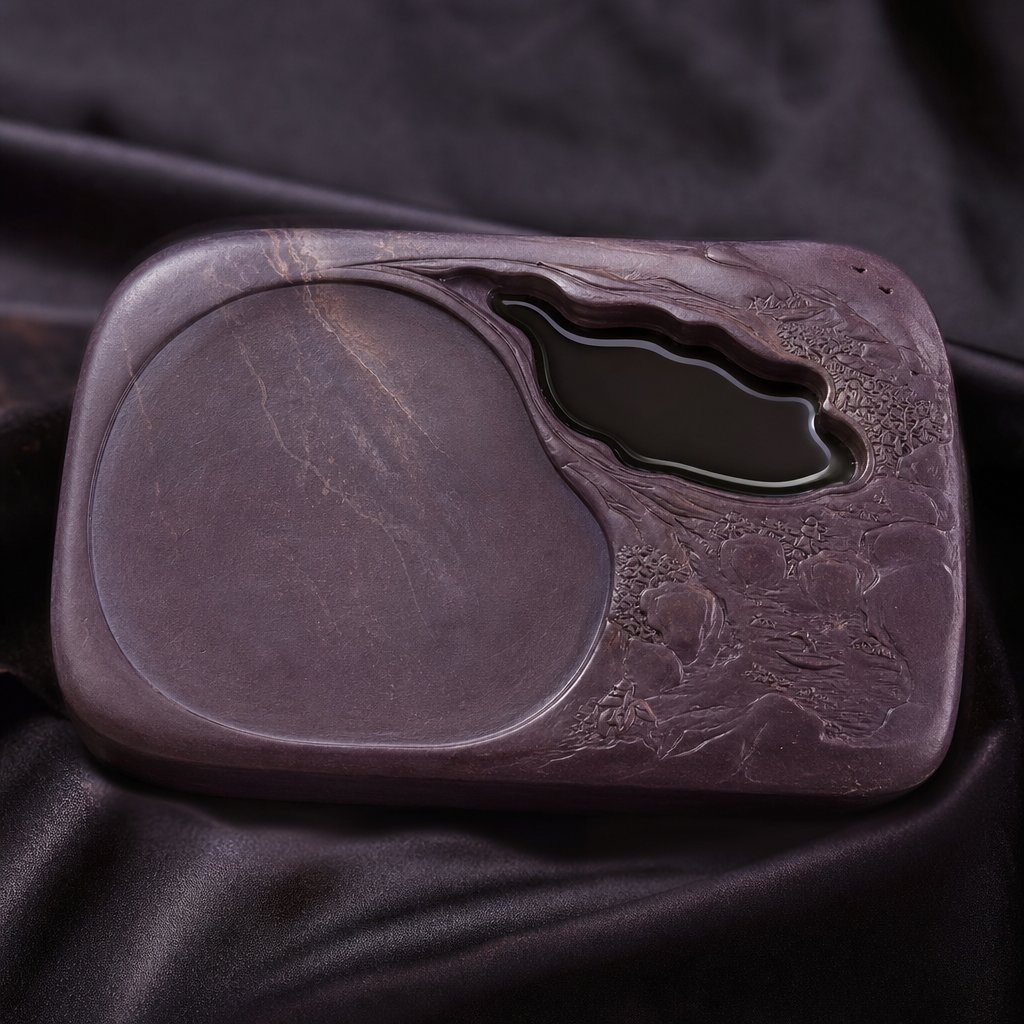
The inkstone's job is straightforward. You add a few drops of water to its flat grinding surface, then rub the ink stick in slow circles until the water thickens into usable liquid ink. The ground ink collects in a recessed well at one end, ready for the brush. Simple enough. But the stone's mineral composition determines how finely it grinds the ink particles, how smoothly the stick glides, and how long the prepared ink stays wet before evaporating. These variables matter enormously to the final artwork, which is why practitioners have obsessed over stone quality for over a thousand years.
Duan and She Inkstones and Their Stone Qualities
Two varieties sit at the top of the hierarchy, and they could hardly be more different in character.
Duan inkstone (端砚) comes from Zhaoqing in Guangdong Province, where quarries along the Xi River have produced stone since the Tang dynasty. The stone is a type of green tuff with a Mohs hardness of approximately 3.5, making it relatively soft. That softness is its gift. When you grind an ink stick across a Duan stone, the surface feels almost as if the ink is melting into it. The microscopic texture, called houbou in Japanese terminology, creates an extremely fine abrasion that produces smooth, even ink without scratching or resistance.
Duan inkstones are classified by the specific quarry pit from which the stone was extracted. The most celebrated is Roko (老坑), one of the "Three Great Ancient Mines." Roko stone has exceptional water retention, meaning ground ink stays moist on its surface far longer than on lesser stones. It also displays rich natural markings, including the famous "eye patterns" that resemble pupils set in concentric rings of color. Unfortunately, the Roko pit is no longer open for mining, making surviving pieces extremely valuable. Other notable pits include Koushigan (坑仔岩), prized for its dense smoothness, and Mashiko (麻子坑), known for effortless grinding. All three ancient mines are now exhausted.
Because Duan stone is soft, it pairs best with oil soot ink (油烟墨), which is itself relatively gentle. Using a hard pine soot stick on a soft Duan stone risks damaging the delicate grinding surface over time.
She inkstone (歙砚) originates from Dragon Tail Mountain in what is now Wuyuan County, Jiangxi Province. The stone is a type of slate with a Mohs hardness of 4, noticeably harder and denser than Duan. Its surface texture is rougher, sometimes compared to shark skin, which makes it ideal for grinding the harder pine soot ink sticks that would damage a softer stone. She inkstones have been produced since the Tang dynasty and are classified by their distinctive natural surface patterns rather than by quarry pit.
The most recognizable She patterns include Kinsei-mon (金星紋), where gold-colored flecks scatter across the dark surface like stars in a night sky, and Bishi-mon (眉子紋), where fine parallel lines resemble delicate eyebrows. Gyoshi-mon (魚子紋) displays a fingerling-like pattern that creates a sense of movement across the stone. These natural markings are not decorative additions. They are geological features inherent to the slate, and their presence, clarity, and distribution directly affect a stone's grading and value.
Where Duan rewards the painter seeking smooth, lustrous ink, She rewards the calligrapher who needs to grind hard, aged ink sticks quickly and efficiently. The two stones complement each other, and serious practitioners in any antique Chinese calligraphy set often own both.
The Inkstone as Collector's Art
Functionality alone does not explain why emperors, poets, and prime ministers competed to own specific inkstones. The inkstone became an object of connoisseurship because it sits at the intersection of geology, sculpture, and personal history. A stone carries the marks of its quarry, the vision of its carver, and often the inscriptions of every scholar who owned it across the centuries.
Carving traditions transform raw stone into sculptural masterpieces through a multi-stage process that can take months. First, the stone block is cut and polished to size. Then the carver outlines a design, typically drawn from natural scenes, mythological creatures, or literary themes. A second pass adds three-dimensional depth to the outline. A final stage refines every detail. After carving, the grinding surface is polished to ensure it remains functionally smooth despite the surrounding decoration. The result is an object that works as a tool and stands as art simultaneously.
Historical specimens owned by celebrated calligraphers carry provenance that multiplies their value. Emperors Kangxi and Qianlong of the Qing dynasty were devoted inkstone collectors who catalogued their holdings and inscribed personal poems directly onto prized pieces. Su Shi, the Song dynasty polymath, famously wrote about his inkstones with the same affection others reserved for close friends. These layers of human connection, carved into the stone itself, turn an inkstone into a living document of cultural history.
What separates a masterwork inkstone from a basic one? The distinction rests on several converging qualities:
- Stone origin and rarity: Pieces from exhausted ancient mines like Roko or old-pit She command the highest regard. New-mine stone, while functional, lacks the geological prestige.
- Grinding texture (houbou): The microscopic abrasive surface must be fine enough to produce smooth ink without visible grit, yet effective enough to grind efficiently.
- Water retention: A superior stone holds moisture on its surface, preventing ground ink from drying too quickly during use.
- Natural markings: Eye patterns on Duan stone or gold-star patterns on She stone add visual distinction and confirm the stone's geological authenticity.
- Carving artistry: The design should harmonize with the stone's natural form and markings rather than imposing an arbitrary shape. Master carvers work with the stone, not against it.
- Resonance: When tapped gently, a fine inkstone produces a clear, sustained tone. Dull or flat sound suggests internal fractures or inferior density.
- Provenance and inscriptions: Historical ownership, scholar inscriptions, or imperial marks transform a fine stone into an irreplaceable cultural artifact.
The inkstone, then, is where the four treasures tradition reaches its most concentrated expression of value. A single stone can embody geological rarity, artistic mastery, functional excellence, and centuries of human connection all at once. It is the anchor of the set, the object most likely to be passed down through generations, and the one that collectors pursue with the greatest intensity.
Each treasure, examined individually, reveals extraordinary depth. But the real power of these tools emerges not from any single piece in isolation. It emerges from the conversation between all four, where grinding technique, ink consistency, paper absorbency, and stone texture interact as a unified system that the practitioner must learn to orchestrate.
How the Four Treasures Work Together as a System
A practitioner who understands each treasure individually still faces a deeper challenge: making them speak to one another. The 4 treasures of the study are not four separate purchases that happen to share a desk. They form a closed loop where every variable in one tool ripples through the others. Change the water ratio on your inkstone, and the brush behaves differently. Switch from raw to sized paper, and the ink you ground five minutes ago may be too thick or too thin. The art of calligraphy, at its highest level, is the art of managing these interdependencies in real time.
How Ink Consistency Affects Brush Performance
Grinding ink is not a mechanical chore you finish before the real work begins. It is the first creative decision of the session. The traditional method calls for dropping a small amount of water onto the inkstone's grinding surface, then moving the ink stick gently and slowly with only the weight of the stick itself. Pressing harder does not produce better ink. It produces coarser particles and damages the stone's delicate surface.
Why does particle size matter to the brush? Imagine loading a soft goat-hair brush with thick, coarsely ground ink. The heavy liquid weighs down the already flexible fibers, making the brush sluggish and hard to control. The same brush loaded with finely ground ink at a lighter consistency moves freely, releasing pigment in smooth, graduated strokes. A stiff weasel-hair brush, by contrast, can handle thicker ink without collapsing because its elastic fibers resist the added weight.
Experienced practitioners adjust their grinding based on what they plan to write. For bold running script with a large goat-hair brush, they grind to moderate concentration, keeping the ink fluid enough to flow without resistance. For precise regular script with a small wolf-hair brush, they grind longer and use less water, producing a denser liquid that holds crisp edges. The ink is not one thing. It is a variable tuned to the brush and the task.
Water temperature and freshness also play a role. Tradition holds that freshly drawn, cool water produces the truest color. Warm water accelerates grinding but can break down the gelatin binder prematurely, causing the ink to lose its cohesion on paper. These are subtle distinctions, but they accumulate into visible differences in the finished work.
The Interplay of Paper, Ink, and Stone
The inkstone's grinding surface is not uniformly smooth. Its microscopic texture, determined by the stone's mineral composition, controls how finely the ink stick is abraded. A soft Duan stone with its fine-grained tuff produces extremely small, uniform carbon particles. A harder She stone with its rougher slate surface grinds faster but yields slightly coarser particles. Those particle sizes interact directly with paper absorbency.
On raw Xuan paper, finely ground ink from a Duan stone spreads evenly through the fibers, creating smooth tonal gradations and soft edges. Coarser particles from a She stone, applied to the same raw paper, tend to settle unevenly, producing a grainier texture with more visible variation. Neither result is wrong. They are different aesthetic choices made possible by different stone-paper combinations.
On sized paper, the equation shifts again. Because ink sits on the surface rather than penetrating the fibers, particle fineness matters less for spread and more for sheen. Ultra-fine particles from a Duan stone produce a glossy, lacquer-like surface on sized paper. Coarser particles look matte and slightly textured. A painter working on sized Xuan for a Gongbi piece would naturally reach for the Duan stone and oil soot ink, knowing that combination delivers the smooth, luminous finish the style demands.
This three-way relationship between stone, ink, and paper means there is no single "correct" setup. The four treasures form a system of variables, and mastery means understanding which combinations produce which results. A calligrapher preparing for a large cursive piece on raw Xuan will grind oil soot ink on a Duan stone to moderate consistency, load a large goat-hair brush, and work quickly before the paper absorbs too much moisture. Every element supports every other.
Mastery of the four treasures is not mastery of four separate skills. It is the ability to hear the dialogue between stone, ink, brush, and paper, and to adjust one voice when another shifts, until all four speak as one.
This systemic thinking is what separates a technician from an artist. A technician learns to grind ink, load a brush, and write on paper. An artist learns to listen to how those actions affect each other, adjusting in real time until the tools disappear and only the expression remains. That sensitivity cannot be taught through theory alone. It develops through years of hands-on practice, which raises a practical question: how does a beginner choose tools that work well together from the start, and how do you care for them so they perform consistently over time?
Selecting and Caring for Your Own Four Treasures
Understanding how the 4 treasures interact as a system is one thing. Walking into a shop or browsing online and choosing your first set is another challenge entirely. Prices range from a few dollars to several thousand, and without clear guidance, beginners often overspend on one item while neglecting another. The goal is balance. A well-matched set of modest chinese calligraphy tools will outperform a mismatched collection where one expensive piece sits alongside three cheap ones.
Choosing Your First Set as a Beginner
When you are starting out with calligraphy china traditions, resist the temptation to buy the finest materials immediately. Student-grade tools exist for a reason: they let you develop technique without the pressure of wasting expensive supplies. As your skill grows, you will naturally feel the limitations of entry-level tools and know exactly what to upgrade.
Brush: A mixed-bristle brush is the best starting point. The combination of soft goat hair on the inside and stiff weasel or nylon on the outside gives you decent ink absorption and enough spring-back to control your strokes. Look for a medium size suitable for characters around 6 to 8 centimeters. Avoid pure goat-hair brushes at this stage. Their lack of resilience makes them frustrating for anyone still building muscle memory.
Ink: Beginners benefit from bottled ink rather than an ink stick. Bottled ink removes the variable of grinding consistency, letting you focus entirely on brush control. Once your strokes become confident and you want finer tonal control, transition to a student-grade oil soot ink stick. It grinds smoothly and produces a rich black without requiring the extended grinding time of pine soot.
Paper: Start with half-sized Xuan paper (半熟宣). It absorbs ink more slowly than raw Xuan, giving you a fraction of a second longer to correct your movements. Partially treated alum rice paper is also more affordable and forgiving. Save raw Xuan for later, when your brush speed and confidence can match its unforgiving honesty.
Inkstone: If you are using bottled ink, a simple ceramic or plastic dish works fine for holding and dipping. When you graduate to an ink stick, invest in an entry-level stone inkstone with a smooth grinding surface. You do not need a Duan or She stone at this stage. A functional stone from a reputable supplier grinds ink adequately and teaches you the rhythm of preparation without risking damage to a collector-grade piece.
The quality hierarchy within each category follows a clear pattern. Here is how beginner, intermediate, and advanced levels compare across all four treasures:
| Treasure | Beginner Level | Intermediate Level | Advanced/Professional Level |
|---|---|---|---|
| Brush | Mixed-bristle (goat + weasel or nylon), machine-sorted hair, bamboo handle | Pure weasel or quality goat hair, hand-sorted, selected bamboo or wood handle | Hu brush (湖笔) from Huzhou, hand-selected winter hair, 120+ step assembly, premium shaft material |
| Ink | Bottled ink or basic carbon-soot stick, quick-dry production | Handmade oil soot stick from Anhui, natural gelatin binder, 3-6 months drying | Collector-grade Hui ink (徽墨), aged gelatin, rare fragrance, years of natural drying, artistic mold carving |
| Paper | Half-sized Xuan or machine-made practice paper, higher straw content | Handmade half-sized or raw Xuan, 50-60% bark fiber, standard production cycle | Premium raw Xuan (生宣), 70-80% bark fiber, full 2+ year handmade cycle, aged sheets |
| Inkstone | Basic stone or ceramic dish, functional grinding surface, no notable origin | New-pit Duan or She stone, decent grinding texture, minimal carving | Old-pit Duan (端砚) or She (歙砚), rare natural markings, master carving, historical provenance |
You'll notice the jump from beginner to intermediate is mostly about material authenticity: real animal hair instead of blends, handmade ink instead of factory-produced, genuine Xuan paper instead of imitations. The jump from intermediate to advanced is about rarity, aging, and artisanal mastery. Each level delivers a noticeable improvement in performance, but the law of diminishing returns applies. A good intermediate set handles 90 percent of what most practitioners need.
Care and Maintenance for Longevity
Fine tools reward careful treatment. A well-maintained brush lasts years. A neglected one hardens into uselessness after a single session. The same principle applies across all four treasures: a few minutes of care after each use prevents damage that no amount of money can reverse.
Brush care: Rinse your brush thoroughly in cool water immediately after each session. Gently squeeze the bristles from base to tip, working out residual ink until the water runs clear. Reshape the brush head into its natural point with your fingers, then hang it tip-down on a brush stand or hook to dry. Never leave a brush standing upright in a cup. Water seeps into the ferrule, dissolves the glue holding the hair bundle, and eventually causes the head to loosen and fall apart. Store dry brushes horizontally or hanging, away from direct sunlight.
Ink stick care: After grinding, wipe the wet end of the ink stick dry with a soft cloth before storing it. Never leave the stick standing vertically on the inkstone. Over time, residual moisture will bond the stick permanently to the stone surface, and pulling it free can damage both objects. Store ink sticks in a cool, dry place away from humidity and temperature extremes. Excessive moisture causes mold on the gelatin binder, while extreme dryness can crack the stick. A simple wooden box or cloth-lined drawer works well.
Paper care: Xuan paper is remarkably durable once used, but blank sheets are vulnerable to humidity, insects, and creasing. Store paper flat in a dry room, ideally wrapped in acid-free tissue or kept inside a sealed portfolio. Avoid rolling, which creates permanent curl marks that disrupt ink flow. If you live in a humid climate, consider adding silica gel packets near your paper storage. Aged paper develops a warmer tone and slightly different absorbency, which many artists prefer, so proper storage is an investment in future quality.
Inkstone care: The inkstone demands the most attentive routine. After every session, wash the grinding surface with clean water and a soft brush or high-density nano sponge to remove all residual ink. Dried ink clogs the stone's microscopic pores and gradually reduces its grinding effectiveness. Never use hot water, tea, or acidic cleaners. Hot water causes thermal shock that can crack the stone, and acidic liquids corrode the surface over time. Between sessions, keep the inkstone lightly moistened by placing a thin layer of clean water in the well area, but avoid submerging the grinding surface for extended periods. Store the stone in its fitted box, away from direct sunlight and heat sources that cause drying and potential cracking.
One additional point deserves emphasis: avoid contact between your inkstone and any hard objects. Inkstone material is brittle despite its density. A single collision with a metal edge or a drop onto a hard floor can chip or crack a stone that has survived centuries. Handle it with the same care you would give a piece of fine ceramics.
These maintenance habits are not burdensome once they become routine. Five minutes of care after each practice session preserves tools that might otherwise degrade within months. And there is something meditative in the ritual itself: rinsing the brush, wiping the ink stick, washing the stone. It mirrors the unhurried preparation that begins each session, closing the circle between practice and preservation.
Tools maintained this way do not merely survive. They improve. Brushes soften into a personalized shape that fits your hand and style. Ink sticks age into subtler tonal ranges. Inkstones develop a seasoned surface that grinds more smoothly with each year of use. The four treasures are not consumables to be replaced. They are companions that grow alongside the artist, connecting daily practice to a tradition that stretches across centuries and across borders.
Modern Relevance and the Living Legacy Across East Asia
Tools that grow alongside the artist also grow alongside entire cultures. The four treasures did not freeze in place when the last imperial dynasty fell. They adapted, migrated, and found new purposes in hands that ancient Chinese calligraphers could never have imagined. What is the definition of calligraphy in an age of digital screens and ballpoint pens? For a growing community of practitioners worldwide, the answer still involves grinding ink on stone, loading a brush with intention, and meeting paper with a gesture that cannot be undone.
Contemporary Artists and Cultural Preservation
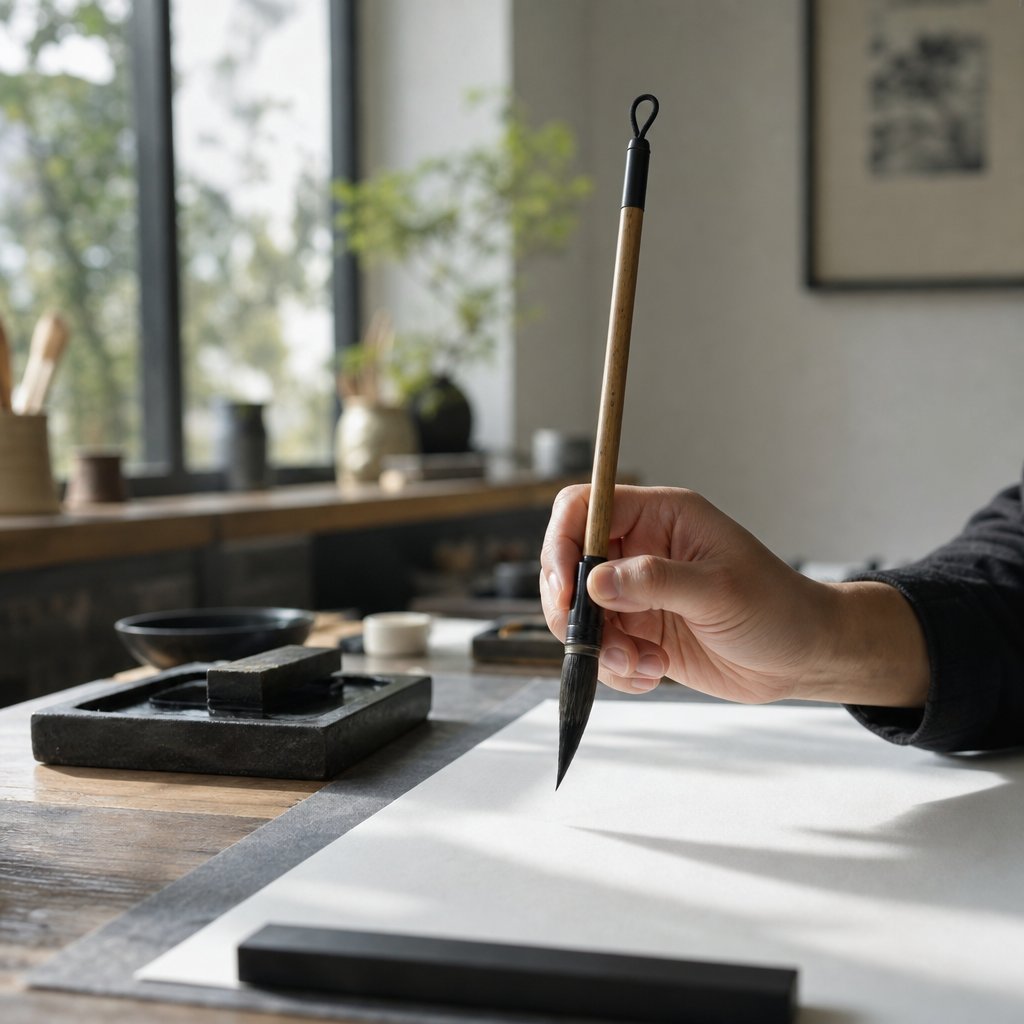
Modern calligraphers and ink painters have not abandoned traditional tools for convenience. Many actively choose them precisely because the physical process shapes the creative outcome in ways that digital media cannot replicate. The posture, the breathing, the pressure on the brush, and the concentration required to pour ink onto paper all contribute to what practitioners describe as a meditative operation where body and art merge into a single act.
Contemporary artists also push the tradition into new territory. Xu Bing, former vice-president of the Central Academy of Fine Arts of China, created an installation featuring 4,000 invented characters built from real Chinese radicals but arranged into meaningless combinations. He used traditional brush and ink on traditional paper, yet the result challenged viewers to question the boundary between language and visual art. Gu Wenda, a Shanghai-born artist now based in New York, merges ancient Chinese dialects with English, Hindi, and Arabic in brush-and-ink works that dissolve cultural boundaries while preserving calligraphic technique. These artists define calligraphy art not as a museum relic but as a living medium capable of expressing contemporary ideas.
Rather than viewing calligraphy as a dying art in the digital age, a growing body of research suggests it is emerging in new fields, imbued with fresh narratives and expressing generational needs that earlier centuries never faced. Some practitioners experiment with classical techniques using concepts borrowed from modern art, creating what scholars call a "Pseudo-Language" that communicates visually even to viewers who cannot read Chinese characters.
Institutional preservation efforts run parallel to artistic innovation. The craft of making Xuan paper was listed as a national-level intangible cultural heritage in China in 2006 and was inscribed as a UNESCO world intangible cultural heritage in 2009. Jingxian County in Anhui Province, the birthplace of Xuan paper, has promoted deep integration of paper preservation with tourism and cultural industry, allowing visitors to experience the handmade papermaking process firsthand. Similarly, Huizhou ink-making skills received national intangible cultural heritage status in 2006, protecting the knowledge of artisans whose techniques span more than a hundred procedures refined over a millennium.
These designations do more than confer prestige. They channel government funding toward apprenticeship programs, workshop maintenance, and public education. Without active intervention, crafts requiring decades of mastery and offering modest financial returns would struggle to attract new practitioners. The designations ensure that the human chain of knowledge, passed hand to hand across generations, does not break.
Cross-Cultural Traditions Across East Asia
China originated the tradition, but it did not remain there. As Chinese writing, Buddhism, and scholarly culture spread across East Asia, the four treasures traveled with them, adapting to local aesthetics, scripts, and materials in each new home.
In Japan, the tradition is known as bunbo shiho (文房四宝). Japanese calligraphers developed distinct preferences: they favored harder ink sticks ground to lighter concentrations for the flowing kana syllabary, and they cultivated regional papermaking traditions like washi that use kozo (mulberry bark) rather than blue sandalwood. Japanese inkstones from Ogatsu in Miyagi Prefecture became prized for their dense, fine-grained slate. The tools are recognizably the same four categories, yet each reflects Japanese sensibilities around restraint, asymmetry, and natural texture.
Korea calls the tradition munbangsau (문방사우), literally "the four friends of the study." Korean calligraphers historically preferred a slightly different brush construction and developed hanji paper from mulberry bark, which has its own distinctive absorbency and texture. The Korean tradition emphasizes the scholarly companionship of these tools, treating them less as treasures to be collected and more as trusted friends in the pursuit of learning.
Vietnam adopted the tradition as van phong tu bao (văn phòng tứ bảo) during centuries of Chinese cultural influence. Vietnamese scholars used the same four tools to write in classical Chinese and later adapted them for chu Nom, the indigenous Vietnamese script. Local papermaking traditions using do (Rhamnoneuron balansae) bark developed alongside the imported model.
Beyond East Asia, Western calligraphers and ink painters have increasingly turned to these tools. The growing international interest is driven partly by the meditative quality of brush practice and partly by the unique aesthetic results that no Western pen or paint can replicate. Art schools in Europe and North America now offer courses in East Asian brush techniques, and online communities connect practitioners across continents who share grinding routines, paper recommendations, and brush-care tips in English, French, and Spanish.
This global spread does not dilute the tradition. It confirms something the ancient literati always understood: these tools speak a language that transcends the specific characters written with them. The dialogue between brush, ink, paper, and stone communicates through gesture, rhythm, and material interaction, qualities that any human hand can learn to feel regardless of native script.
Key cultural preservation efforts and organizations maintaining the tradition include:
- UNESCO Intangible Cultural Heritage: Xuan papermaking (inscribed 2009) and Chinese calligraphy (inscribed 2009) both receive international recognition and protection frameworks.
- China National Intangible Cultural Heritage List: Huizhou ink-making, Hu brush craftsmanship, Duan inkstone carving, and She inkstone carving are all individually designated, ensuring each craft receives dedicated preservation support.
- Jingxian Xuan Paper Cultural Industrial Park: Combines active production, artisan training, and cultural tourism to sustain the papermaking community economically while educating the public.
- The Palace Museum (Beijing) and National Palace Museum (Taipei): Both institutions maintain extensive collections of historical four treasures specimens and mount regular exhibitions that connect contemporary audiences to the tradition's material history.
- Japan's Agency for Cultural Affairs: Designates traditional washi papermaking and Ogatsu inkstone carving as Important Intangible Cultural Properties, providing funding and recognition to master craftspeople.
- Korean Cultural Heritage Administration: Protects hanji papermaking and traditional brush-making as national intangible cultural properties under a Living National Treasures system.
- International academic and artist networks: Organizations like the International Calligraphy Association and university East Asian art departments train new generations of practitioners and researchers across linguistic boundaries.
The four treasures of the study began as practical tools on a single scholar's desk in ancient China. They became symbols of intellectual cultivation, then objects of connoisseurship, then protected cultural heritage. Today they are something more expansive still: a living system of material knowledge shared across cultures, practiced by hands on every continent, and capable of producing art that speaks as clearly now as it did a thousand years ago. The soot still burns. The stone still grinds. The paper still waits. And the brush, held in a steady hand, still transforms intention into visible form.
Frequently Asked Questions About the Four Treasures of the Study
1. What are the four treasures of the study in Chinese culture?
The four treasures of the study (文房四宝) are the brush (毛笔), ink stick (墨), paper (纸), and inkstone (砚). These tools were essential to the Chinese literati tradition, used for calligraphy, painting, and scholarly writing. They originated as practical implements but evolved into cultural artifacts representing intellectual cultivation, with each treasure tied to specific regional craftsmanship traditions in China.
2. Why is Xuan paper considered the best for Chinese calligraphy?
Xuan paper is prized because its unique fiber composition of blue sandalwood bark and rice straw gives it exceptional absorbency, tensile strength, and longevity. High-quality Xuan paper can last over a thousand years without significant degradation. It comes in three types: raw (for expressive work), sized (for fine detail), and half-sized (for versatile use). Its ability to faithfully record every nuance of brush pressure and speed makes it the preferred surface for serious calligraphic and painting work.
3. What is the difference between pine soot ink and oil soot ink?
Pine soot ink (松烟墨) is made from burned pine wood and produces a cool, matte black with subtle blue-gray undertones when aged. It is ideal for calligraphy that demands understated depth. Oil soot ink (油烟墨) is made from burned vegetable oils like tung or rapeseed oil, yielding a glossy, lustrous black with warm reddish-brown undertones when diluted. Oil soot ink is preferred for painting where rich tonal variation and luminosity are important. Many practitioners keep both types for different artistic purposes.
4. How do I choose my first Chinese calligraphy set as a beginner?
Start with a mixed-bristle brush that combines goat and weasel hair for balanced control and ink absorption. Use bottled ink initially to eliminate grinding variables while you build technique. Choose half-sized Xuan paper (半熟宣) for its forgiving absorbency that allows slight corrections. A simple ceramic dish works for holding ink until you graduate to an ink stick, at which point a basic stone inkstone with a smooth grinding surface is sufficient. Prioritize a balanced set over one expensive piece paired with cheap companions.
5. What makes Duan and She inkstones different from each other?
Duan inkstones from Zhaoqing, Guangdong are softer (Mohs 3.5), grind ink with minimal resistance, and produce extremely fine, uniform particles ideal for painting. They feature natural eye patterns and pair best with oil soot ink. She inkstones from Jiangxi are harder (Mohs 4), have a rougher grinding surface, and work efficiently with harder pine soot ink sticks. She stones display distinctive gold-star or eyebrow-line patterns. Duan suits painters seeking smooth, lustrous ink, while She serves calligraphers who need to grind hard ink quickly.