Understanding Gender Neutral Chinese Names
Gender neutral Chinese names are given names built from characters (hanzi) whose meanings carry no inherent masculine or feminine association. Unlike Western unisex names such as "Jordan" or "Taylor," which rely on sound and cultural habit, Chinese names operate through a meaning-first system. Each character is a unit of meaning, not just a unit of sound. That distinction changes everything about how gender neutrality works in naming.
In English, you hear a name and associate it with a gender based on familiarity. In Chinese, you read a character and interpret its meaning. A character like 明 (ming, meaning "bright") or 安 (an, meaning "peace") describes a quality, not a person. These characters can belong to anyone because brightness and peace are not gendered concepts. This is why the question "are Chinese names gender neutral?" has a more nuanced answer than most people expect.
Chinese characters encode meaning rather than sound. A name is not just a label you hear — it is an idea you see. This makes gender neutrality in Chinese naming a matter of semantics, not convention.
As linguist Victor Mair noted in a Language Log discussion, you normally cannot determine a person's gender simply by hearing their Mandarin name spoken aloud. Even seeing the characters written down does not always resolve the question. Some characters lean masculine or feminine through cultural association, but many sit comfortably in between, and those associations shift over time.
What Makes a Chinese Name Gender Neutral
A Chinese given name becomes gender neutral when its component characters describe universal qualities rather than traits culturally tied to one gender. Think of characters related to nature (forest, cloud, light), virtue (wisdom, perseverance, harmony), or aspiration (excellence, clarity, resilience). None of these ideas belong exclusively to men or women. The Asia Media Centre explains that Chinese parents often choose names expressing hopes for their children, such as Kang (healthy), Yong (brave), or Ling (wise). Many of these aspirational characters work across genders without modification.
The structure matters too. Chinese given names are typically one or two characters long, and the family name comes first. When you combine two characters, their joint meaning creates something new. A single character that might lean slightly gendered on its own can become fully neutral in the right pairing. This layered system gives parents and individuals remarkable flexibility.
Who Seeks Gender Neutral Chinese Names
The audience for chinese gender neutral names is broader than you might think. New parents looking for a name that will not box their child into expectations are one group. Adults choosing a Chinese name for Mandarin language study or professional use in Chinese-speaking contexts are another. Fiction writers creating authentic characters need them too. Diaspora families navigating dual cultural identities often prefer names that feel balanced in both Chinese and English-speaking worlds.
Each of these groups approaches naming with different priorities, but they share a common thread: they want a name where meaning leads and gender follows, or steps aside entirely. The character-meaning system makes this not just possible but deeply rooted in Chinese linguistic tradition.
That tradition did not appear overnight. It grew from centuries of philosophical thought about nature, virtue, and what a name should represent about a person's inner qualities rather than their outward identity.
The Cultural Roots of Gender Neutral Naming in China
Chinese naming traditions stretch back thousands of years, and the history of gender neutral Chinese names is inseparable from the philosophical systems that shaped Chinese thought. Confucianism, Daoism, and Buddhism each contributed ideas about human nature, balance, and the relationship between people and the natural world. These ideas flow directly into how families choose characters for their children's names.
Imagine a culture where the forest, the ocean, and the morning sky are not "he" or "she" but simply what they are. In Chinese philosophy, nature carries no gender. A mountain does not belong to men. A flower does not belong to women. This worldview, deeply embedded in Daoist thought about harmony and the unity of opposites, created fertile ground for chinese names neutral gender long before modern conversations about identity began.
Nature and Virtue Characters in Chinese Naming
Nature-themed characters have always been among the most naturally unisex chinese name meanings available to parents. Characters like 林 (lin, forest), 云 (yun, cloud), and 海 (hai, sea) describe elements of the world that exist beyond human categories. When a parent names a child after a forest, they are evoking depth, growth, and quiet strength. When they choose cloud, they suggest freedom and lightness. These qualities belong to everyone.
Virtue characters operate on the same principle. As noted in a discussion of Confucian values in Chinese naming, characters like 仁 (ren, benevolence) and 德 (de, virtue) represent universal human ideals rather than gendered traits. The character 仁 combines "person" with the number "two," suggesting that humanity exists in relationship. That concept applies equally to any person, regardless of gender.
Here are the main categories of traditionally gender-neutral character types in Chinese naming:
- Nature elements — Characters depicting landscapes, weather, and natural phenomena (林 forest, 云 cloud, 海 sea, 岚 mountain mist). Nature itself is ungendered in Chinese philosophy.
- Universal virtues — Characters expressing moral qualities valued in all people (安 peace, 德 virtue, 仁 benevolence, 信 trustworthiness). These describe aspirational human traits, not gendered ones.
- Light and clarity — Characters related to brightness, understanding, and illumination (明 bright, 晖 sunlight, 智 wisdom). Clarity of mind and spirit transcends gender.
- Resilience and growth — Characters conveying perseverance and steady development (恒 perseverance, 勤 diligence, 松 pine). Strength of character is a universal hope.
- Harmony and balance — Characters rooted in the Daoist concept of equilibrium (和 harmony, 平 balance, 宁 tranquility). The pursuit of balance is central to Chinese philosophy for all people.
The concept of yin and yang itself reinforces this approach. As traditional naming principles emphasize, parents strive to choose characters that create balance and harmony. A name should feel complete and whole, not tilted toward one extreme. This philosophical commitment to equilibrium naturally produces names that sit comfortably between masculine and feminine associations.
How Generational Shifts Reshape Gender Associations
Chinese naming traditions gender neutral have also evolved through generational change. Characters that once carried strong gender associations have shifted over time as cultural attitudes transform. Consider 慧 (hui, intelligent). A generation ago, this character appeared almost exclusively in women's names. Today, it shows up in names for children of any gender because intelligence is increasingly recognized as a universal aspiration rather than a gendered compliment.
The reverse happens too. Characters like 勇 (yong, courage) were once considered firmly masculine. As families move away from rigid gender expectations, courage becomes something parents wish for all their children. The character itself did not change. Its cultural context did.
This fluidity is built into the system. Because Chinese characters carry meaning through their visual structure and historical usage rather than through grammatical gender markers, they can shift associations more easily than names in languages with gendered grammar. A character is not locked into a category by its ending or its sound. It moves with the culture that uses it.
What remains constant is the underlying philosophy: a name should express something true about human potential. Whether that potential is described through the steadiness of a pine tree, the clarity of morning light, or the quiet strength of perseverance, the best characters point toward qualities that any person can embody. The specific names parents choose from this rich tradition depend on which qualities resonate most, and how those characters combine to create something greater than the sum of their parts.
Nature-Themed Gender Neutral Chinese Given Names and Meanings
Nature does not have a gender. A rainstorm is not masculine. A pine forest is not feminine. This simple truth is exactly why nature-inspired chinese unisex names have remained popular across centuries of Chinese naming tradition. When parents reach for a character rooted in the natural world, they are choosing imagery that belongs to everyone.
These gender neutral chinese given names work because they point outward, toward landscapes and phenomena, rather than inward toward culturally gendered traits. You'll notice that the best nature-themed names evoke a feeling or an image so vivid that the question of gender simply never arises. A child named after morning light carries the promise of new beginnings. A child named after mountain mist carries an air of mystery and depth. Neither image asks anything about the person's gender.
Below is a curated collection of gender neutral chinese given names and meanings, organized by the natural element they draw from. Each entry includes the character, its pinyin pronunciation with tone marks, and an explanation of the meaning and imagery it carries.
Sky and Weather Inspired Names
The sky belongs to no one and everyone. Characters drawn from weather and atmospheric phenomena carry a sense of vastness and possibility. As explored in a discussion of natural elements in Chinese names, morning light represents hope grounded in natural cycles, while rain symbolizes nourishment and quiet generosity. These associations make sky and weather characters ideal for chinese names meaning nature gender neutral.
晨 (chen) means early morning, that liminal time before the world fully wakes. It suggests freshness, productivity, and the energy of new beginnings. Parents who choose this character hope their child will be someone who initiates, who starts things, who embodies the optimism of dawn without naivety.
霖 (lin) refers to continuous, steady rain lasting several days. Unlike a sudden downpour, 霖 suggests patience and sustained nourishment. It carries the idea of someone whose kindness is not flashy but reliable, falling gently and consistently where it is needed most.
雪 (xue) means snow. It evokes purity, quietness, and a kind of transformative beauty. Snow covers everything equally, softening sharp edges and creating stillness. As a name, it suggests clarity of character and a calm presence that changes the atmosphere of any room.
Earth and Nature Inspired Names
Plants and landscapes carry some of the deepest symbolism in Chinese culture. As noted in a discussion of plant-inspired Chinese names, characters like pine represent endurance and constancy, while forest suggests depth and community. These are not decorative choices. They encode entire philosophies about how to live.
林 (lin) means forest. Trees in a forest support each other, creating an ecosystem greater than any individual trunk. This character suggests someone who thrives in community, who provides shelter and stability to those around them. It is one of the most common nature-themed gender neutral given names because its imagery is so universally positive.
松 (song) means pine tree. Pines stay green through winter when other trees go bare. They represent longevity, consistency, and the refusal to change one's core nature under pressure. A person named 松 is expected to be both self-reliant and supportive, weathering storms without losing their essential character.
岚 (lan) means mountain mist or the haze that clings to peaks at dawn. It combines the character for mountain with the character for wind, creating an image of something ethereal yet grounded. This name suggests depth that reveals itself slowly, beauty that requires patience to fully appreciate.
Water and Light Inspired Names
Water and light are perhaps the most poetic categories in Chinese naming. Water adapts to any container without losing its nature. Light illuminates without demanding anything in return. Both qualities transcend gender entirely.
泉 (quan) means spring water, the kind that emerges fresh from the earth. Springs are sources, origins, beginnings. This character suggests someone who is a wellspring of ideas or energy, someone others come to for refreshment and clarity. There is a purity to spring water that has not yet been muddied by the world downstream.
晖 (hui) means sunlight, specifically the warm glow of sunshine rather than its harsh glare. It carries gentleness alongside brightness. A person named 晖 is expected to bring warmth to others naturally, the way sunlight warms a room without effort or intention.
澄 (cheng) means clear or limpid, like water so transparent you can see straight to the bottom. It suggests honesty, clarity of thought, and a character free from hidden agendas. This name works beautifully for anyone because transparency and integrity are qualities every parent hopes to see in their child.
Here is a complete reference table of these nature inspired chinese unisex names for easy comparison:
| Character | Pinyin | Meaning | Usage Notes |
|---|---|---|---|
| 晨 | chen | Early morning, dawn | Very common across all regions; pairs well with many characters |
| 霖 | lin | Continuous rain, steady nourishment | Elegant and literary; popular in Taiwan and mainland China |
| 雪 | xue | Snow, purity | Slightly more common for girls historically, but increasingly neutral |
| 林 | lin | Forest, grove of trees | Also a common surname; very versatile as a given name |
| 松 | song | Pine tree, endurance | Classical feel; associated with scholarly tradition |
| 岚 | lan | Mountain mist, haze on peaks | Poetic and less common; stands out without being obscure |
| 泉 | quan | Spring water, source | Fresh and clean imagery; works well as single-character name |
| 晖 | hui | Sunlight, warm glow | Gentle brightness; often paired with virtue characters |
| 澄 | cheng | Clear, limpid, transparent | Literary tone; suggests intellectual clarity and honesty |
What connects all these names is a shared logic: they describe the world as it is, not as culture divides it. A forest does not ask who walks through it. Morning light does not choose whom to illuminate. By anchoring a name in natural imagery, parents give their child something that will never feel limiting or outdated, because nature itself does not follow trends.
Of course, nature is only one source of gender neutral meaning. The same principle applies to characters that describe inner qualities rather than outer landscapes. Wisdom, resilience, and moral excellence are just as universal as rain or sunlight, and they form their own rich category of naming possibilities.
Wisdom and Virtue Gender Neutral Chinese Names
Wisdom does not belong to one gender. Neither does perseverance, moral excellence, or the quiet strength of someone who keeps going when things get hard. Virtue based chinese gender neutral names draw their power from this simple fact: they describe who a person strives to become, not what category they were born into.
These characters are among the most popular gender neutral chinese names and meanings available to families today. Why? Because aspirational qualities feel timeless. A name rooted in intelligence or resilience never goes out of style, and it never boxes a child into expectations based on gender. As research into Confucian naming traditions shows, Chinese parents have spent millennia selecting characters that function as moral compasses, embedding values directly into a child's identity. The best of these characters work for anyone.
Wisdom and Intelligence Names
When parents choose chinese unisex names meaning wisdom, they are expressing a hope that their child will see clearly, think deeply, and navigate life with understanding rather than confusion. These characters describe mental qualities that transcend gender entirely.
睿 (rui) means wise, sagacious, or possessing keen insight. This character carries a sense of penetrating intelligence, the ability to see through surface appearances to what lies beneath. It has grown steadily in popularity across mainland China and Taiwan as a gender neutral choice because it suggests depth without implying any gendered trait.
慧 (hui) means intelligent, clever, or perceptive. A generation ago, this character appeared more frequently in women's names. That association has faded considerably. Today, 慧 shows up in names for children of any gender, particularly in diaspora communities where parents value its clean, universally positive meaning. Intelligence is something every family wishes for their child.
哲 (zhe) means philosophical wisdom or the ability to think with clarity and logic. It carries a scholarly tone without being stuffy. Families in Taiwan and among overseas Chinese communities use it frequently as a single-character given name or paired with other neutral characters.
Strength and Perseverance Names
Strength in Chinese naming is rarely about physical power. It is about endurance, resolve, and the willingness to persist through difficulty. These qualities make virtue-based characters naturally gender neutral because they describe inner character rather than outward appearance.
毅 (yi) means resolute, determined, or unwavering. This character suggests someone who commits fully and does not waver under pressure. It has long been used across genders in mainland China, and its popularity continues to grow in families who want their child's name to reflect steadfastness.
恒 (heng) means perseverance, constancy, or permanence. The character contains the radical for "heart," suggesting that true perseverance comes from within. It is widely used in all Chinese-speaking regions and pairs beautifully with other neutral characters to create two-character names.
韧 (ren) means resilient or tough in the way that bamboo is tough: flexible enough to bend without breaking. This character has gained traction as a gender neutral choice because resilience is increasingly valued as a universal trait rather than one associated with masculinity.
Harmony and Virtue Names
Some characters describe not a single quality but an overall orientation toward goodness, balance, and positive contribution. These are the broadest and often most versatile gender-neutral chinese names and meanings because they suggest a whole way of being rather than one specific trait.
瑞 (rui) means auspicious, lucky, or blessed. It carries a sense of good fortune that radiates outward, someone whose presence brings positive energy. Common across all Chinese-speaking communities, 瑞 works equally well for any gender because auspiciousness is a universal hope.
嘉 (jia) means excellent, praiseworthy, or admirable. This character suggests someone worthy of respect and recognition. It appears frequently in names across mainland China, Taiwan, and Hong Kong, and its warm, affirming tone makes it a natural fit for any child.
安 (an) means peace, calm, or stability. One of the most recognizable gender neutral characters, 安 expresses the hope that a child will live a life of inner tranquility and bring peace to those around them. Its simplicity and clarity make it popular everywhere Chinese is spoken.
Here is a structured reference of these virtue based chinese gender neutral names:
| Character | Pinyin | Core Meaning | Regional Popularity |
|---|---|---|---|
| 睿 | rui | Wise, sagacious | Very popular in mainland China and Taiwan; rising in diaspora communities |
| 慧 | hui | Intelligent, perceptive | Common across all regions; historically feminine, now fully neutral |
| 哲 | zhe | Philosophical wisdom | Favored in Taiwan and overseas Chinese families; scholarly tone |
| 毅 | yi | Resolute, determined | Widely used in mainland China; strong presence in Hong Kong |
| 恒 | heng | Perseverance, constancy | Popular across all regions; pairs well in two-character names |
| 韧 | ren | Resilient, flexible strength | Growing in popularity; modern feel across mainland and diaspora |
| 瑞 | rui | Auspicious, blessed | Universally common; one of the most popular neutral choices |
| 嘉 | jia | Excellent, praiseworthy | High frequency in mainland China, Taiwan, and Hong Kong |
| 安 | an | Peace, calm, stability | Extremely common everywhere; also works phonetically in English |
What makes these characters so effective as gender neutral choices is their focus on inner life. They do not describe how someone looks or what role they play in society. They describe how someone thinks, how they persist, and what kind of energy they bring into the world. That inward focus is precisely what makes them timeless.
Of course, a single character is only part of the story. The real art of Chinese naming emerges when you combine two characters together, creating compound meanings that can shift, sharpen, or soften the gender perception of each individual character in surprising ways.
The Art of Character Combinations in Gender Neutral Names
A single character carries meaning. Two characters together create a conversation. This is the mechanic that makes a chinese name gender neutral in ways that go far beyond simply picking a "safe" character from a list. When you pair two characters in a given name, their individual meanings interact, overlap, and sometimes transform each other entirely. The result is a compound meaning that can shift gender perception in either direction.
Think of it like mixing colors. Blue on its own reads one way. Yellow on its own reads another. Together, they produce green, something neither could be alone. Chinese name combinations unisex work on the same principle. A character that leans slightly masculine can become fully neutral when paired with the right partner. A character that seems feminine in isolation can shed that association entirely in the right compound.
How Character Pairing Creates New Meaning
Consider the character 文 (wen), meaning literature, culture, or refinement. On its own, 文 has historically appeared more often in male names, as research into Han Chinese naming patterns shows it was among the top characters for sons across multiple decades, connoting someone "cultured." But watch what happens when you pair it differently:
- 文博 (wen bo) — "broad in culture" or "extensively learned." This combination reads neutral because both characters describe intellectual breadth. Neither carries gendered imagery.
- 文静 (wen jing) — "quiet and refined." Here, 静 (quiet, still) pulls the name toward feminine associations because quietness has been culturally coded as a feminine virtue in Chinese tradition.
- 文轩 (wen xuan) — "cultured and grand." The character 轩 (tall, imposing, a high-roofed hall) adds a sense of stature that tilts the name slightly masculine.
The same first character produces three different gender impressions depending on its partner. This is why understanding two character chinese gender neutral names requires looking at the pairing as a unit, not as two separate choices stacked together.
Another example: 子 (zi), meaning child, seed, or a classical honorific for scholars. Paired with 涵 (han, meaning inclusive or containing), you get 子涵 (zi han), which reads neutral and has been one of the most popular names in China for children of any gender. Paired with 强 (qiang, meaning strong or powerful), you get 子强, which leans masculine. Paired with 萱 (xuan, meaning daylily), you get 子萱, which leans feminine because the plant radical in 萱 carries floral associations.
The "Not My Gender" research project on Chinese name gender inference confirms this dynamic. Their analysis shows that in two-character names, both characters contribute to the overall gender association. A slightly masculine character paired with a strongly feminine one will likely produce a name perceived as female overall. The compound impression matters more than either character in isolation.
Here are more pairings that demonstrate how to make chinese name gender neutral through strategic combination:
- 宇航 (yu hang) — "universe voyage" or "space navigation." Both characters evoke exploration and vastness. The combination reads neutral because cosmic ambition is not gendered.
- 思远 (si yuan) — "thinking far" or "far-reaching thought." Intellectual depth paired with distance creates a contemplative, neutral name.
- 嘉禾 (jia he) — "excellent grain" or "bountiful harvest." Combines virtue (嘉, excellent) with nature (禾, grain/rice plant) for a name that feels grounded and neutral.
- 明澈 (ming che) — "bright and clear." Two clarity-related characters reinforce each other, producing a name about transparency and insight with no gender lean.
- 若溪 (ruo xi) — "like a stream." The poetic comparison (若, like/as if) paired with flowing water (溪, stream) creates gentle imagery that sits comfortably between genders.
The key insight is that neutral plus neutral almost always stays neutral. But neutral plus gendered will tilt the whole name. Parents who want to keep a name firmly in the middle can choose two characters from the same semantic field: two nature characters, two virtue characters, or two characters related to light and clarity.
Single Character Versus Two Character Gender Neutral Names
Single-character given names and two-character given names behave differently when it comes to gender perception. A single-character name stands alone, carrying its full weight of meaning and association without any partner to modify it. This can be an advantage or a limitation.
Single-character names peaked in popularity during the 1980s in China, partly due to the one-child policy. As the Kontinentalist analysis of Chinese naming data documents, many parents opted for more direct single-character given names when they had only one child to name. The trend reversed after families realized how many people shared the same name, since Chinese characters are often homonyms with identical pronunciations.
For gender neutrality, single-character names offer simplicity but less flexibility. A character like 安 (an, peace) or 瑞 (rui, auspicious) works perfectly on its own because its meaning is so clearly universal. But a character with even a slight gender lean has no partner to balance it out. You are relying entirely on that one character's associations.
Two-character names, by contrast, give you a second chance. If one character carries a faint gendered association, the other can counterbalance it. This is why two character chinese gender neutral names offer more creative range. You can pair a slightly feminine character with a slightly masculine one to land squarely in the middle. Or you can double down on neutral territory by combining two characters that both describe universal qualities.
The tradeoff is complexity. Two characters mean more strokes to write, more potential for unintended homophones, and more combinations to evaluate. But for anyone asking how to make chinese name gender neutral with precision and intention, the two-character format provides the most control over the final impression.
This pairing mechanic also explains why the same character can feel gendered in one person's name and neutral in another's. Context is everything. The character is not inherently one thing. It becomes what its partner makes it. That fluidity is one of the most distinctive features of the Chinese naming system, and it is exactly what makes regional and cross-cultural naming strategies so interesting to explore.
Regional Differences and Cross-Cultural Naming Strategies
A character's meaning stays the same whether it is written in simplified or traditional form. But the cultural context surrounding that character, the associations it carries, the names it commonly appears alongside, these shift depending on where in the Chinese-speaking world you are. Choosing a mandarin chinese gender neutral name in Beijing involves different considerations than choosing one in Taipei, Hong Kong, or Toronto.
Regional Naming Preferences Across Chinese Communities
Mainland China uses simplified characters, while Taiwan, Hong Kong, and Macau use traditional characters. As Chuniversiteit explains, the difference between traditional and simplified Chinese is largely cosmetic: the meaning and pronunciation remain the same. A character like 龙 (simplified) and 龍 (traditional) both mean dragon. For gender neutral naming, this means the same character choices work across regions, though the written form will differ.
What does vary is cultural preference. In mainland China, names like 子涵 (zi han) and 宇轩 (yu xuan) have dominated popularity charts for children of all genders. Taiwanese families tend toward slightly more literary or classical choices, favoring characters with traditional scholarly associations. Hong Kong, where Cantonese is the primary spoken language, adds another layer: the same character will have a different romanized spelling and pronunciation than in Mandarin-speaking regions. A gender neutral name chinese families choose in Hong Kong might be romanized using Jyutping or older Wade-Giles conventions rather than pinyin.
These regional differences matter most when a name needs to travel. A family in Shanghai choosing a name for a child who will grow up locally faces fewer constraints than a family in Vancouver choosing a name that must function across two languages and multiple cultural contexts.
Cross-Cultural Names for Diaspora Families
For overseas Chinese families, naming becomes a balancing act. As writer Cecilia Huang describes in Cold Tea Collective, her family navigated this exact challenge: choosing an Anglo first name, a middle name, and a Chinese name for their daughter, weighing cultural tradition against personal values and practical identity concerns. They preferred gender-neutral options for the English name and then had to reconcile that preference with a more traditional Chinese name chosen by a great-grandfather.
This dual-naming reality is common among gender neutral chinese names for diaspora families. Many parents want a Chinese name that honors heritage while also being pronounceable by English-speaking teachers, coworkers, and friends. The solution often involves finding characters whose pinyin romanization sounds natural in English.
Here are chinese unisex names that work in english-speaking contexts because their pronunciation bridges both worlds:
- 安 (an) — Means peace. Sounds like "Ann" or "An" in English. Simple, elegant, and immediately recognizable in both languages.
- 凯 (kai) — Means triumphant or victorious. Sounds like "Kai," which is already a familiar name in English, Hawaiian, and Scandinavian cultures.
- 林 (lin) — Means forest. Sounds like "Lin," which reads naturally as an English given name or surname.
- 明 (ming) — Means bright. Sounds like "Ming," recognizable and easy to pronounce for English speakers.
- 瑞 (rui) — Means auspicious. Approximates "Ray" in casual English pronunciation, making it accessible across contexts.
- 乐 (le) — Means joy or happiness. Sounds like "Luh" in Mandarin, but can approximate "Le" as used in English-speaking settings.
- 天 (tian) — Means sky or heaven. The "tee-en" sound is intuitive for English speakers to attempt.
The key consideration for diaspora families is not just sound but also meaning integrity. A name should not lose its significance just because it crosses a language border. Characters like 安 and 凯 succeed because their meanings (peace, triumph) are universally valued, and their sounds do not require English speakers to master tonal pronunciation to say them respectfully.
Huang's experience also highlights another tension: whether to include the Chinese name on legal documents. Some families register it officially. Others keep it as an informal family name. Either approach works, but as Huang's friend pointed out, "just because someone has a Chinese name, it doesn't mean that they will learn to speak Chinese." The name's role in identity is personal, not automatic.
What matters most is intentionality. Whether a family is in Shenzhen or San Francisco, the goal remains the same: finding a gender neutral name chinese tradition can support, one where meaning leads and gender steps aside. The regional and linguistic context shapes the practical constraints, but the underlying philosophy of meaning-first naming stays constant across every community where Chinese is spoken, written, or remembered.
With the right name identified, the final challenge is evaluation. How do you confirm that a character truly works as intended? That it sounds right, writes well, avoids unfortunate homophones, and carries the meaning you want it to carry across every context your child will encounter?
Choosing the Right Gender Neutral Chinese Name
Finding the right character is one thing. Confirming it actually works in practice is another. A beautiful meaning can be undermined by an awkward homophone, an impractical stroke count, or a character so rare that people struggle to read it. Modern gender neutral chinese names succeed when meaning, sound, and usability all align.
Contemporary Acceptance of Gender Neutral Names
Chinese society has shifted considerably in how it views non-gendered naming. A generation ago, parents who chose a name that did not clearly signal their child's gender might have faced raised eyebrows or unsolicited advice. Today, the trend runs in the opposite direction. Naming data from mainland China shows that many of the most popular names for newborns, characters like 子涵, 宇轩, and 梓睿, appear on both boys' and girls' popularity lists simultaneously. Parents are actively choosing names that prioritize meaning over gender signaling.
This shift reflects broader cultural conversations about identity and self-expression. Younger Chinese parents, particularly millennials and Gen Z, tend to view rigid gender expectations as limiting rather than protective. They want their children's names to express aspiration, character, and beauty without prescribing a narrow identity. The result is a naming landscape where a gender neutral chinese name is no longer unusual. It is increasingly the default for families who think carefully about what they want a name to do.
Overseas communities mirror this trend. Diaspora families who already navigate multiple cultural identities often find that neutral names offer flexibility. A name that does not lock a child into gendered expectations in one culture is less likely to create friction when moving between cultures.
Practical Tips for Choosing Your Name
Whether you are naming a baby, selecting a Chinese name for language study, or choosing a name for professional use, the evaluation process involves the same core considerations. Sounds complex? It does not have to be. Here is a step-by-step checklist for how to choose a gender neutral chinese name that holds up under scrutiny:
- Start with meaning. Identify the quality or image you want the name to express. Nature, virtue, wisdom, resilience? Narrow your thematic category first, then explore characters within it.
- Check for homophones. Mandarin has many characters that share the same pinyin and tone. Say the full name aloud and consider whether it sounds like an unintended word or phrase. For example, a name that sounds like a common negative word will cause problems regardless of how beautiful the written character looks.
- Evaluate stroke count. In traditional Chinese naming practice, the number of strokes in each character matters. Characters are classified as yin (even strokes) or yang (odd strokes), and the name should follow balanced patterns. While not every family observes this tradition, it remains important in many communities, particularly in Taiwan and among families who consult naming specialists.
- Test the character pairing. If you are choosing a two-character given name, read both characters together and ask: does the compound meaning stay neutral? Does one character pull the name toward a gendered association? Adjust the pairing until the overall impression matches your intention.
- Verify the character is not too rare. A character that most people cannot read or write creates daily friction. Government systems, school forms, and digital platforms may not support extremely uncommon characters. Aim for a character that is distinctive without being obscure.
- Say it with the surname. The full name, surname plus given name, needs to flow naturally when spoken aloud. Check that the tonal pattern does not create an awkward rhythm or an unintended meaning when combined with the family name.
- Consider cross-cultural usability. If the name will be used in English-speaking contexts, test whether the pinyin romanization is easy to pronounce. Names with sounds that do not exist in English (like the "x" or "q" in pinyin) may require constant correction.
- Ask a native speaker. Cultural associations are subtle and shift over time. A character that reads neutral to you might carry a gendered lean that only a native speaker from the relevant region would catch. Get a second opinion from someone immersed in the culture.
These tips for picking a chinese unisex name apply whether you are working alone or consulting with family elders, a naming specialist, or a language teacher. The goal is not perfection on every criterion but awareness of the tradeoffs. A slightly higher stroke count might be worth it for a character with exactly the right meaning. A minor pronunciation challenge might be acceptable if the name bridges Chinese and English beautifully.
What matters most is intentionality. A name chosen with care, evaluated against real-world constraints, and rooted in genuine meaning will serve its bearer well across every context they encounter. With these practical considerations in hand, you are ready to browse a comprehensive reference of options organized by theme, making it easy to compare characters side by side and find the combination that feels right.
Complete List of Popular Gender Neutral Chinese Names by Theme
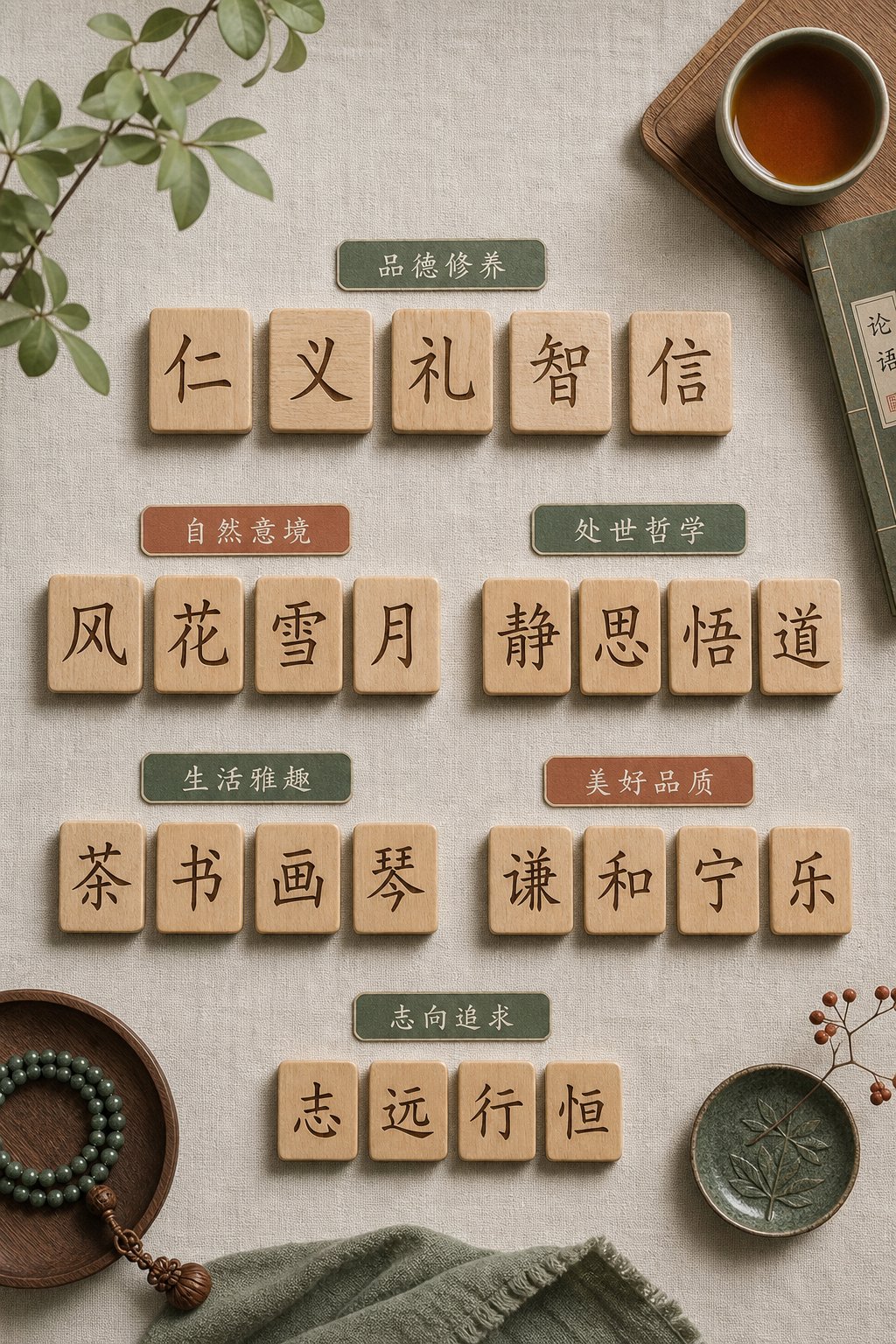
Everything discussed so far, the philosophy, the pairing mechanics, the regional considerations, comes together in one place here. This is your bookmarkable reference: a popular gender neutral chinese names list organized by meaning category so you can scan, compare, and shortlist characters that resonate with the qualities you value most.
Each entry includes the character, pinyin with tone, English meaning, and a brief note on context or usage. Whether you are naming a baby, choosing a name for language study, or building a character for fiction, this table gives you a starting point grounded in real usage across Chinese-speaking communities.
Complete Reference by Meaning Category
| Theme | Character | Pinyin | Meaning | Notes |
|---|---|---|---|---|
| Harmony and Balance | 安 | an | Peace, calm | One of the most common chinese names gender neutral; works phonetically in English |
| Harmony and Balance | 和 | he | Harmony, togetherness | Rooted in Confucian and Daoist philosophy; classic and timeless |
| Harmony and Balance | 宁 | ning | Tranquility, serenity | Very popular across mainland China and Taiwan; pairs well with most characters |
| Harmony and Balance | 平 | ping | Level, balanced, peaceful | Simple and direct; slightly traditional feel but fully neutral |
| Harmony and Balance | 悦 | yue | Joy, delight | Modern and warm; increasingly popular in two-character neutral names |
| Nature and Seasons | 林 | lin | Forest | Also a common surname; versatile as a given name across all regions |
| Nature and Seasons | 云 | yun | Cloud | Poetic and light; suggests freedom and imagination |
| Nature and Seasons | 霖 | lin | Continuous rain | Literary tone; conveys steady nourishment and patience |
| Nature and Seasons | 秋 | qiu | Autumn | Seasonal imagery; suggests maturity and harvest without gender lean |
| Nature and Seasons | 岚 | lan | Mountain mist | Elegant and uncommon; stands out without being obscure |
| Nature and Seasons | 泉 | quan | Spring water, source | Fresh imagery; works well as a single-character name |
| Aspiration and Achievement | 嘉 | jia | Excellent, praiseworthy | High frequency across mainland China, Taiwan, and Hong Kong |
| Aspiration and Achievement | 瑞 | rui | Auspicious, blessed | Universally popular; one of the best gender neutral chinese names for any region |
| Aspiration and Achievement | 翔 | xiang | Soaring, flying | Suggests ambition and freedom; neutral across generations |
| Aspiration and Achievement | 诺 | nuo | Promise, commitment | Modern and meaningful; appears on top name lists for all genders |
| Aspiration and Achievement | 鑫 | xin | Prosperity, abundance | Three gold radicals stacked; visually striking and fully neutral |
| Light and Clarity | 明 | ming | Bright, clear | Classic character; combines sun and moon radicals for balance |
| Light and Clarity | 晨 | chen | Early morning, dawn | Very common across all regions; fresh and optimistic |
| Light and Clarity | 晖 | hui | Sunlight, warm glow | Gentle brightness; often paired with virtue characters |
| Light and Clarity | 熙 | xi | Bright, prosperous, joyful | Popular modern choice; warm and energetic feel |
| Light and Clarity | 澄 | cheng | Clear, limpid, transparent | Literary tone; suggests intellectual honesty and depth |
| Resilience and Growth | 恒 | heng | Perseverance, constancy | Contains the heart radical; popular across all Chinese-speaking regions |
| Resilience and Growth | 松 | song | Pine tree, endurance | Classical scholarly associations; evergreen symbolism |
| Resilience and Growth | 毅 | yi | Resolute, determined | Strong presence in mainland China and Hong Kong; unwavering tone |
| Resilience and Growth | 新 | xin | New, fresh, innovative | Forward-looking; suggests renewal and adaptability |
| Resilience and Growth | 睿 | rui | Wise, sagacious | Rising steadily in popularity; penetrating insight without gender lean |
How to Use This Name List
Start by identifying which theme resonates with the values you want the name to carry. A family that prizes calm stability will gravitate toward the harmony category. Parents who want their child's name to reflect ambition might focus on aspiration and achievement. There is no wrong category, only different priorities.
Once you have a theme, look at the characters within it and consider how each one sounds with your surname. Say the full name aloud several times. Then think about pairing: if you want a two-character given name, try combining one character from this list with another from the same or a complementary theme. Two harmony characters together (like 安宁, an ning, meaning "peaceful tranquility") reinforce each other. A nature character paired with a light character (like 林晖, lin hui, meaning "forest sunlight") creates vivid imagery that stays firmly neutral.
You can also mix categories. 嘉宁 (jia ning, "excellent peace") blends aspiration with harmony. 晨松 (chen song, "morning pine") combines light with resilience. These cross-category pairings often produce the most distinctive names because they layer two different kinds of meaning into a single identity.
Keep in mind that this list represents chinese unisex names by category that are well-established and widely recognized. None of these characters are so rare that they will cause problems on official documents or digital systems. They are all practical choices that carry genuine depth, the kind of names people remember not because they are unusual but because their meaning stays with you.
The best name on this list is the one that makes you pause and think: yes, that is the quality I want this person to carry through life. Trust that instinct. It is the same instinct Chinese families have followed for thousands of years, choosing characters that speak to who someone might become rather than what category they were assigned at birth.
Embracing the Tradition of Gender Neutral Chinese Naming
The character-meaning system gives Chinese a structural advantage when it comes to gender neutral naming. Every character is a self-contained idea, not a gendered sound. That single fact opens up a naming landscape where identity is built from qualities, images, and aspirations rather than from categories assigned at birth.
Key Takeaways for Naming with Intention
Whether you arrived here looking for a chinese gender neutral name for a baby, a language-study identity, or a fictional character, the core principles stay the same:
- Nature characters (forest, cloud, morning light) transcend gender because the natural world itself does not observe it.
- Virtue and wisdom characters (perseverance, intelligence, peace) describe universal human aspirations, not gendered traits.
- Character pairing is where precision lives. Two neutral characters together stay neutral; one gendered partner can tilt the whole name.
- Sound, stroke count, and regional context all matter in practice. A beautiful meaning still needs to survive daily use.
So are chinese names gender neutral by nature, more so than Western names? The honest answer is: structurally, yes, but culturally, it depends. Chinese has no grammatical gender, no gendered suffixes like "-a" or "-o," and no equivalent of names that are phonetically locked to one gender the way "Jessica" or "Robert" are in English. Research on Chinese name-to-gender associations found that roughly 4.82% of individuals carry names falling squarely in the gender-neutral range when measured by usage data, while many more names sit in a soft middle ground. The system permits neutrality more easily, but cultural habit still steers many families toward gendered choices. The difference is that stepping outside those habits requires no linguistic workaround. You simply choose a character whose meaning speaks to everyone.
Embracing Meaning Over Gender in Chinese Names
Gender neutral names chinese families have used for centuries share one quality: they point toward who a person might become rather than what box they fit into. A child named for morning light, for perseverance, for the quiet clarity of spring water, carries a name that grows with them without ever feeling too small.
In Chinese naming philosophy, a name is not a label that sorts you. It is a meaning you spend a lifetime growing into.
That philosophy is worth carrying forward, wherever you are and whatever language surrounds you. Start with meaning. Let gender step aside. The right character will find you.
Frequently Asked Questions About Gender Neutral Chinese Names
1. Are Chinese names inherently gender neutral?
Chinese names are structurally more suited to gender neutrality than Western names because the language has no grammatical gender, no gendered suffixes, and characters encode meaning rather than gendered sound. However, cultural associations still steer many families toward traditionally masculine or feminine characters. Research shows roughly 4.82% of names fall squarely in the neutral range by usage data, while many more sit in a soft middle ground. The key difference is that choosing a neutral name requires no linguistic workaround in Chinese — you simply select characters whose meanings describe universal qualities like peace, wisdom, or nature.
2. How do you make a two-character Chinese name gender neutral?
The most reliable strategy is pairing two characters from the same neutral semantic field. Two nature characters together (like forest plus sunlight) or two virtue characters (like perseverance plus clarity) reinforce each other's neutrality. Avoid pairing a neutral character with one that carries strong gendered associations, as the gendered partner can tilt the entire name's perception. For example, 文博 (wen bo, broadly cultured) reads neutral, while 文静 (wen jing, quiet and refined) leans feminine because quietness is culturally coded as a feminine trait in Chinese tradition.
3. What are the most popular gender neutral Chinese names right now?
In mainland China, names like 子涵 (zi han), 梓睿 (zi rui), and 宇轩 (yu xuan) appear on popularity lists for children of all genders. Single-character choices like 安 (an, peace), 瑞 (rui, auspicious), and 嘉 (jia, excellent) remain consistently popular across all Chinese-speaking regions. Nature-themed characters such as 晨 (chen, morning) and 林 (lin, forest) also rank highly. The trend across generations is moving toward aspirational meaning-based names rather than names that signal gender.
4. Which gender neutral Chinese names work well in English-speaking countries?
Characters whose pinyin romanization sounds natural in English make the best cross-cultural choices. Top options include 安 (an, peace — sounds like Ann/An), 凯 (kai, triumphant — already familiar in English), 林 (lin, forest — reads naturally as an English name), and 明 (ming, bright — recognizable and easy to pronounce). The ideal cross-cultural name maintains its Chinese meaning while requiring no tonal mastery from English speakers to say respectfully.
5. How do stroke count and homophones affect choosing a gender neutral Chinese name?
In traditional naming practice, characters are classified as yin (even strokes) or yang (odd strokes), and the name should follow balanced patterns. Many families in Taiwan and those consulting naming specialists still observe this convention. Homophones pose a separate challenge: Mandarin has many characters sharing identical pronunciation and tone, so a name that looks beautiful written down might sound like an unintended negative word when spoken aloud. Always say the full name (surname plus given name) out loud multiple times and check whether it resembles any common words with unfortunate meanings.