Understanding Gender Neutral Chinese Zodiac Names
Imagine choosing a name for your child that honors centuries of astrological tradition, carries deep meaning in Mandarin, and sounds natural in English, all without boxing them into a gender category. That is exactly what gender neutral Chinese zodiac names offer modern families.
A growing number of parents are blending two powerful traditions: the Chinese zodiac system, which assigns an animal and element to each birth year, and the practice of selecting chinese unisex names that work for any child regardless of gender. The result is a naming approach rooted in cultural depth rather than outdated conventions.
What Makes a Chinese Name Gender Neutral
In English, names like "James" or "Elizabeth" carry strong gender signals. Chinese works differently. The language has no grammatical gender, so a character's perceived masculinity or femininity comes entirely from its meaning and the radical it contains, not from linguistic rules.
Characters tied to beauty or flowers, often featuring the female radical (女) or the grass radical (艹), tend to read as feminine. Characters evoking strength or containing the metal radical (钅) or wood radical (木) lean masculine. But a vast number of characters, think 安 (an, peace), 欣 (xin, joy), or 明 (ming, bright), sit comfortably in the middle. These are the building blocks of chinese gender neutral names.
In Chinese naming philosophy, a character's energy comes from its meaning and radical composition, not from a gendered grammar system. This makes true gender neutrality far more natural in Chinese than in most Western languages.
Why Zodiac-Based Naming Matters in Chinese Culture
Chinese names typically place the surname first, followed by one or two given-name characters. Parents weigh tonal balance between the surname and given name just as carefully as they weigh meaning. A name needs to sound harmonious when spoken aloud.
Adding the zodiac layer brings another dimension. Each birth year corresponds to one of twelve animals and one of five elements, and specific character radicals are considered auspicious for each combination. Rather than sorting names by "boy" or "girl," this framework organizes choices by animal sign and elemental harmony, giving parents a culturally grounded path to finding gender neutral chinese names that feel intentional rather than random.
Modern Chinese families are already moving in this direction. Parents increasingly choose characters conveying broad aspirations like wisdom, resilience, or light over traits tied to appearance or physical strength. This shift, combined with the zodiac's structured guidance, creates a rich system for selecting names that honor tradition while embracing inclusivity.
The zodiac framework also answers a practical question bilingual families face: how do you narrow thousands of possible characters down to a meaningful shortlist? Animal signs and elemental cycles do that filtering naturally, pointing you toward specific radicals and character families that carry built-in cultural significance.
How Chinese Naming Conventions Differ From Western Traditions
When English-speaking parents browse baby name lists, they typically see two columns: boys and girls. The entire Western naming infrastructure is built around this binary. Chinese naming operates on a fundamentally different architecture, one where gender is not baked into the language itself but layered on through cultural association. Understanding these structural differences reveals why chinese names with meaning can flow so naturally across genders.
Chinese Name Structure and Family Name Placement
Picture introducing yourself in English: first name, then last name. In Chinese, the order flips entirely. The surname (xing) comes first, anchoring the person within their ancestral lineage before any individual identity is expressed. In the name Yao Ming (姚明), "Yao" is the family name and "Ming" is the given name.
This surname-first structure shapes everything about how a name sounds and feels. The given name, either one or two characters, must create tonal harmony with the surname that precedes it. Mandarin has four tones plus a neutral tone, and a well-crafted name moves through contrasting tones to produce a natural rhythm when spoken aloud. A name like Li Jinze (李金泽) flows from a falling-rising third tone (Lǐ) to a high-level first tone (Jīn) to a rising second tone (Zé), creating melodic movement rather than tonal monotony.
Here are the key structural differences that set Chinese naming apart from Western conventions:
- Character count: A full Chinese name is typically two or three characters total. The surname is almost always one character (with rare two-character exceptions like Ouyang 欧阳), and the given name is one or two characters that function as a single unit, not a first-and-middle combination.
- Tone pairing: Parents select characters partly based on how their tones interact with the surname's tone. Clashing tonal sequences or awkward homophones with negative words eliminate otherwise beautiful characters from consideration.
- Radical selection: Each character contains a radical, a structural component that signals meaning category. The water radical (氵), grass radical (艹), or metal radical (钅) within a character connects it to elemental and zodiac associations, adding layers beyond pure definition.
- Meaning layering: Characters carry dictionary definitions, literary allusions, and cultural echoes simultaneously. A single character like 泽 (ze) means "pool of water" literally but evokes grace, brilliance, and benevolence in literary contexts.
No middle names exist in the traditional system. When a given name has two characters, they work together as one cohesive unit, not as separate names. This compression means every character must pull extraordinary weight across multiple dimensions: sound, visual form, meaning, and elemental balance.
Why Many Classical Chinese Characters Are Inherently Unisex
Here is where the structural difference matters most for families seeking chinese names and their meanings that transcend gender. English assigns gender through convention and usage history. "Michael" is male because culture says so, not because of any linguistic rule. Chinese characters, by contrast, carry no grammatical gender whatsoever. The language does not conjugate by gender, does not assign gendered articles, and does not mark nouns as masculine or feminine.
So what creates gendered perception in Chinese names? Two things: radical composition and meaning association. Characters containing the female radical (女) or referencing flowers and beauty tend to read as feminine. Characters evoking military strength or containing the blade radical (刂) lean masculine. But an enormous category of characters, those referencing nature, light, wisdom, virtue, seasons, and abstract qualities, carry no gender signal at all.
Characters like 晨 (chen, morning), 瑞 (rui, auspicious), 宁 (ning, tranquility), and 辰 (chen, celestial) appear in chinese names with meanings that work beautifully for any child. Classical texts like the Book of Songs (诗经) and Chu Ci (楚辞) are filled with nature imagery and philosophical concepts that have served as naming sources for centuries without gender restriction.
Regional variation adds another layer. Mainland China has seen a strong trend toward unisex naming in recent decades, with characters like 子 (zi) and 宇 (yu) appearing frequently across genders. Taiwan tends to maintain slightly more traditional gendered naming patterns, though this is shifting among younger parents. Diaspora communities often prioritize cross-linguistic usability, which naturally pushes toward characters whose meanings and sounds work in both Chinese and English contexts, further expanding the pool of gender-neutral options.
This structural openness is precisely what makes zodiac-based naming so effective for families wanting unisex options. When you filter characters by zodiac compatibility and elemental harmony rather than by gender, you are working with the grain of the language rather than against it. The zodiac system points you toward specific radicals and character families, and within those families, gender-neutral choices abound.
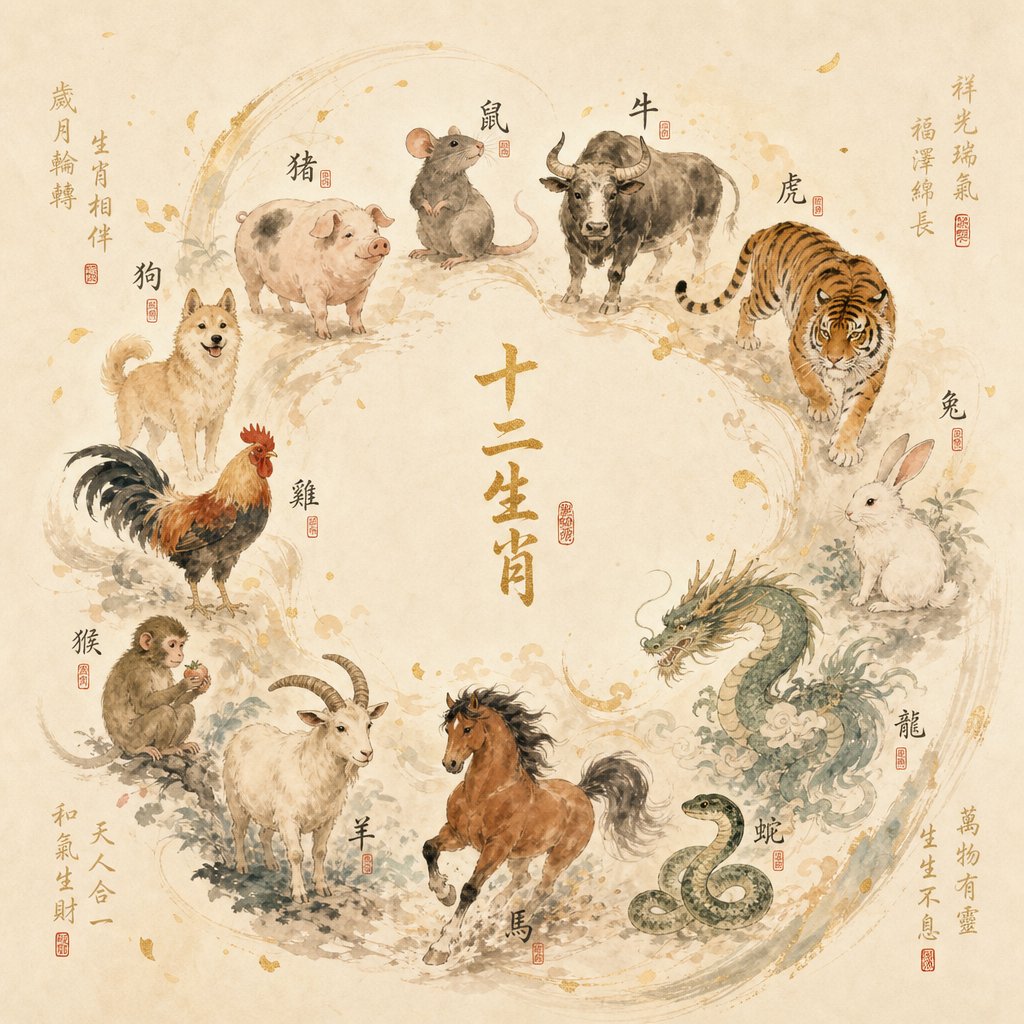
The 12 Chinese Zodiac Animals and Their Naming Influence
Filtering characters by zodiac compatibility is not a modern invention. Chinese naming traditions have linked birth year animals to specific character types for centuries, treating the zodiac as a practical framework for narrowing thousands of possible characters into a focused, auspicious shortlist. Each of the twelve animals carries distinct symbolic energy, and that energy points toward particular radicals and character families that are considered harmonious for a child born under that sign.
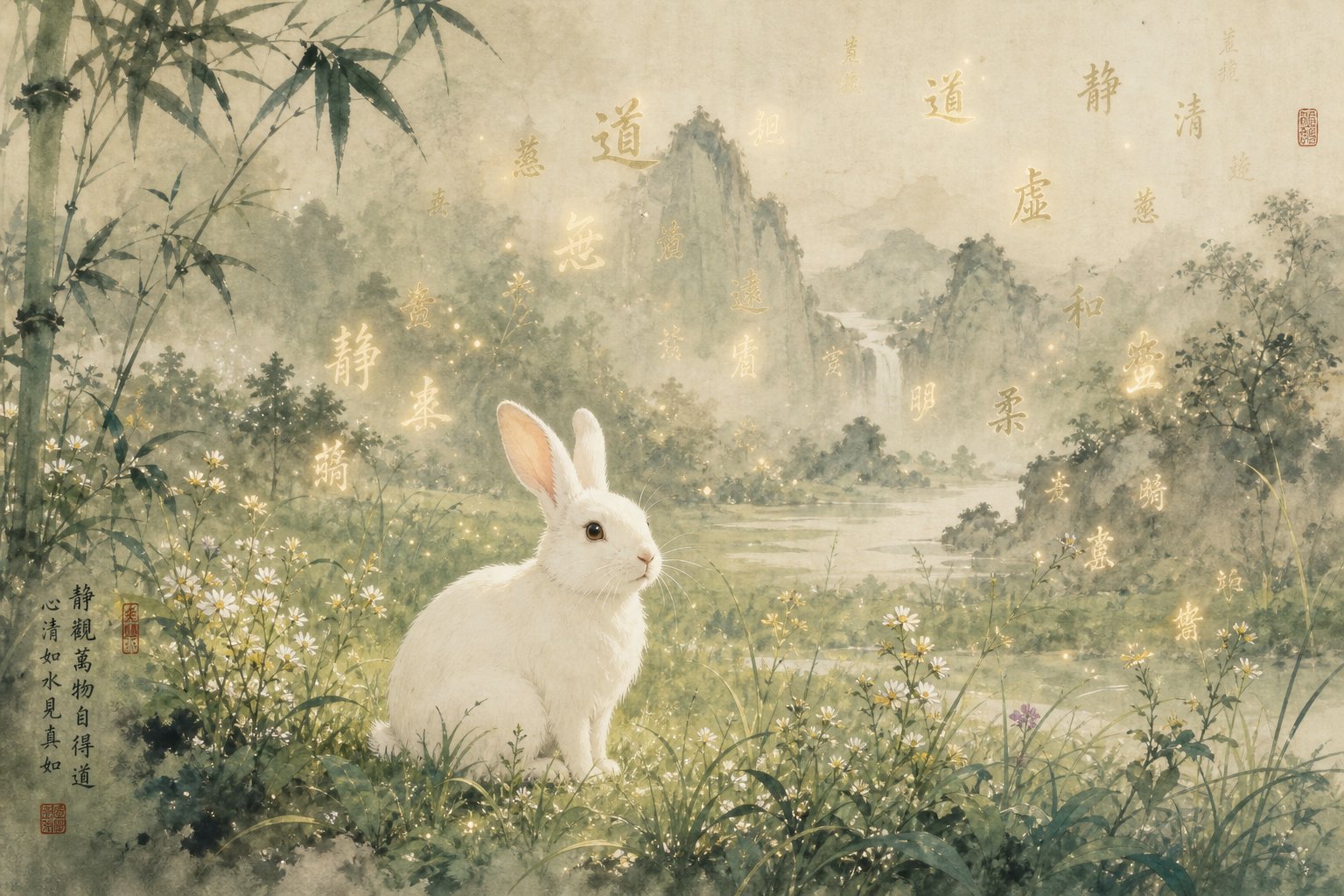
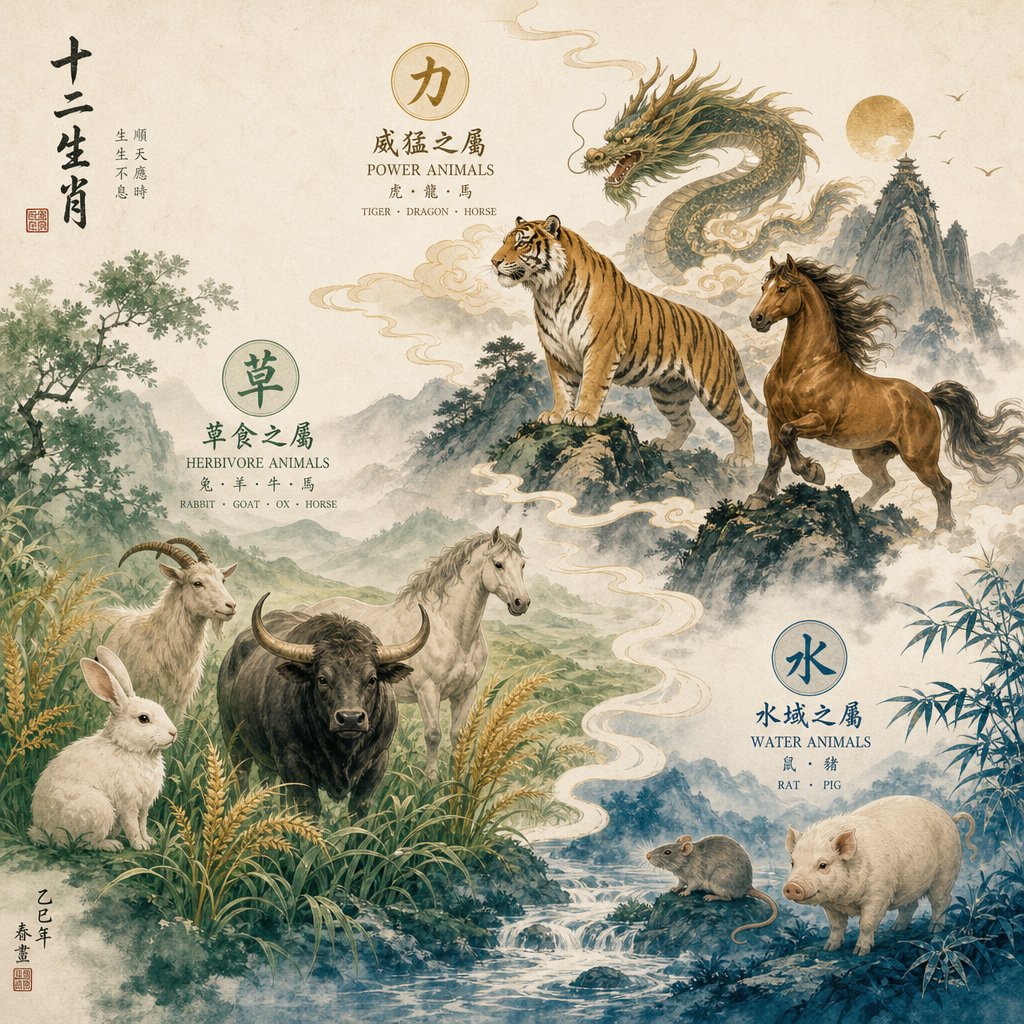
Sounds complex? The underlying logic is surprisingly intuitive. Think of each zodiac animal's natural habitat, diet, and behavior. A Rabbit thrives in grasslands, so characters containing the grass radical (艹) are considered nourishing for Rabbit-year children. A Rat is nocturnal and seeks shelter, so characters with the roof radical (宀) suggest safety and comfort. This nature-based reasoning makes the system accessible even if you are new to Chinese naming.
How Each Zodiac Animal Shapes Name Selection
The Chinese horoscope naming method combines information about the named person's birth with references to the specific features of their symbolic animal. It considers both the lexical meaning of name characters and their formal aspects, including the radicals and graphical elements that compose each character. This means a chinese name related to luck is not just about picking a character that means "fortunate." It is about selecting characters whose internal structure resonates with the animal's nature.
Three broad groupings help organize the twelve animals by their naming preferences:
- Herbivore animals (Rabbit, Goat, Ox, Horse): These animals eat grass and grains. Characters containing the grass radical (艹), grain radical (禾), or rice radical (米) are considered nourishing and supportive for children born under these signs.
- Water-associated animals (Rat, Pig): The Rat is linked to the Earthly Branch zi (子), which corresponds to water. The Pig also has strong water associations. Characters with the water radical (氵) or rain radical (雨) suit these signs well.
- Power animals (Tiger, Dragon, Horse): These animals carry yang energy and benefit from characters suggesting strength, movement, or open space. Characters with the mountain radical (山), king radical (王), or large radical (大) align with their nature.
For families choosing lunar new year names or planning ahead for a specific birth year, this animal-to-radical connection provides a clear starting point. You identify the child's zodiac animal, then look for gender-neutral characters that contain compatible radicals.
Symbolic Traits and Compatible Characters by Animal
The table below gives you a quick-reference framework for all twelve animals. Each animal's fixed element refers to its permanent elemental association within the zodiac cycle, separate from the rotating yearly element that changes every two years. The recommended radicals column shows which character components are traditionally considered auspicious for names for chinese new year babies born under that sign.
| Zodiac Animal | Fixed Element | Key Symbolic Traits | Recommended Radicals for Naming |
|---|---|---|---|
| Rat (鼠) | Water | Clever, resourceful, adaptable | 氵(water), 宀 (roof), 口 (mouth), 米 (rice) |
| Ox (牛) | Earth | Diligent, dependable, patient | 艹 (grass), 禾 (grain), 田 (field), 宀 (roof) |
| Tiger (虎) | Wood | Brave, confident, commanding | 山 (mountain), 木 (wood), 王 (king), 氵(water) |
| Rabbit (兔) | Wood | Gentle, artistic, diplomatic | 艹 (grass), 木 (wood), 口 (mouth), 禾 (grain) |
| Dragon (龙) | Earth | Ambitious, charismatic, powerful | 氵(water), 日 (sun), 星 (star), 王 (king) |
| Snake (蛇) | Fire | Wise, intuitive, sophisticated | 木 (wood), 口 (mouth), 宀 (roof), 艹 (grass) |
| Horse (马) | Fire | Energetic, free-spirited, warm | 艹 (grass), 禾 (grain), 木 (wood), 山 (mountain) |
| Goat (羊) | Earth | Gentle, creative, harmonious | 艹 (grass), 木 (wood), 禾 (grain), 口 (mouth) |
| Monkey (猴) | Metal | Clever, curious, innovative | 木 (wood), 山 (mountain), 王 (king), 口 (mouth) |
| Rooster (鸡) | Metal | Hardworking, courageous, precise | 禾 (grain), 米 (rice), 山 (mountain), 金 (metal) |
| Dog (狗) | Earth | Loyal, honest, protective | 宀 (roof), 人 (person), 心 (heart), 口 (mouth) |
| Pig (猪) | Water | Generous, compassionate, optimistic | 氵(water), 口 (mouth), 禾 (grain), 木 (wood) |
Notice how several radicals appear across multiple animals. The grass radical (艹) benefits nearly all herbivores, while the roof radical (宀) suits animals that seek shelter like the Rat, Dog, and Snake. This overlap means certain gender-neutral characters work beautifully for multiple zodiac signs, giving you flexibility if you are choosing a name before knowing the exact birth date.
The fixed element column also hints at deeper compatibility. A Tiger's wood element means wood-radical characters feel doubly aligned, while a Dragon's earth element pairs naturally with characters suggesting stability and grounding. These elemental layers interact with the yearly rotating element to create precise guidance, a topic that deserves its own focused exploration.

Five Elements and How They Guide Compatible Name Characters
Every zodiac animal has a fixed element, but your child's birth year also carries its own rotating element that shifts every two years. This rotating element, determined by the Wu Xing (Five Elements) system, adds a second layer of guidance when selecting chinese baby names and meanings that feel harmonious rather than random. Think of it this way: the zodiac animal tells you which radicals to favor, while the birth year element tells you which energetic qualities to amplify or balance within those characters.
The Wu Xing Cycle and Birth Year Elements
The Five Elements, Wood, Fire, Earth, Metal, and Water, are considered the fundamental substances of everything in the universe within Chinese cosmology. Each element carries distinct qualities: Wood represents growth and flexibility, Fire embodies passion and transformation, Earth signifies stability and nourishment, Metal reflects strength and determination, and Water symbolizes wisdom and adaptability.
Figuring out your child's birth year element is straightforward. You only need the last digit of the birth year:
- Metal: Birth year ending in 0 or 1
- Water: Birth year ending in 2 or 3
- Wood: Birth year ending in 4 or 5
- Fire: Birth year ending in 6 or 7
- Earth: Birth year ending in 8 or 9
A child born in 2025 (ending in 5) carries the Wood element. A child born in 2026 (ending in 6) carries Fire. This rotating element combines with the zodiac animal to create a unique profile. The full cycle takes 60 years to complete, which is why Chinese astrology uses a sexagenary cycle that pairs twelve animals with five elements (12 x 5 = 60). A Wood Snake born in 2025 is a fundamentally different profile from a Fire Snake born in 1977, and each benefits from different name characters.
This is where the system becomes genuinely useful for choosing new year names. Rather than facing thousands of possible characters, you can narrow your search by understanding which elements support your child's birth element and which ones create friction.
Choosing Characters That Harmonize With Your Child's Element
The Five Elements interact through two cycles that directly shape name selection. The productive cycle (also called the generating cycle) describes how elements nourish each other in sequence:
Metal generates Water. Water nourishes Wood. Wood feeds Fire. Fire creates Earth. Earth bears Metal.
The destructive cycle (also called the overcoming cycle) describes how elements control or weaken each other:
Fire melts Metal. Metal chops Wood. Wood breaks Earth. Earth absorbs Water. Water quenches Fire.
When choosing a chinese name with meaning that aligns with your child's element, you want characters associated with the element that produces your child's birth element, or characters that share the same element. You generally want to avoid characters tied to the element that overcomes your child's element.
Imagine your child is born in a Water year (birth year ending in 2 or 3). Metal produces Water in the generating cycle, so characters containing the metal radical (钅) or carrying metallic meanings strengthen and support the child's elemental nature. Earth absorbs Water in the destructive cycle, so earth-heavy characters could create imbalance. Same-element Water characters also work well, reinforcing the child's innate qualities.
The table below maps each element to its compatible naming elements and provides example gender-neutral characters with their pinyin. These characters work across genders because they reference nature, virtue, or abstract qualities rather than gendered imagery.
| Birth Year Element | Year Ending | Supportive Elements for Naming | Element to Avoid | Example Gender-Neutral Characters (Pinyin) |
|---|---|---|---|---|
| Metal | 0, 1 | Earth (produces Metal), Metal (same) | Fire (melts Metal) | 鑫 (xin, prosperous), 铭 (ming, inscribe), 坤 (kun, earth/vast) |
| Water | 2, 3 | Metal (produces Water), Water (same) | Earth (absorbs Water) | 泽 (ze, grace), 淳 (chun, pure), 鑫 (xin, prosperous) |
| Wood | 4, 5 | Water (nourishes Wood), Wood (same) | Metal (chops Wood) | 林 (lin, forest), 沐 (mu, bathe/nourish), 润 (run, moist) |
| Fire | 6, 7 | Wood (feeds Fire), Fire (same) | Water (quenches Fire) | 楷 (kai, model), 森 (sen, forest), 晗 (han, dawn light) |
| Earth | 8, 9 | Fire (creates Earth), Earth (same) | Wood (breaks Earth) | 煜 (yu, radiant), 晨 (chen, morning), 安 (an, peace) |
Notice how some characters serve double duty. 沐 (mu) contains both the water radical (氵) and the wood component (木), making it an excellent bridge character for Wood-element children since water nourishes wood. Similarly, 晗 (han) combines the sun radical (日) with a component suggesting containment, blending fire energy with grounding structure, ideal for Fire-element births.
A practical example ties this together. Say you are expecting a child in 2027, a Fire Goat year. The Goat's zodiac preferences point toward grass-radical and wood-radical characters (from the animal compatibility table in the previous section). The Fire element tells you that Wood-associated characters are especially supportive because wood feeds fire. A character like 蕊 (rui, flower pistil) contains the grass radical favored by the Goat and carries botanical energy aligned with Wood, making it doubly auspicious and entirely gender-neutral.
This layered approach, combining animal sign with elemental cycle, is what transforms a generic list of chinese baby names and meanings into a personalized, culturally grounded shortlist. The zodiac animal narrows your radical choices, and the Five Elements refine those choices further by revealing which elemental energies will support your child's innate nature.
The next question becomes practical: how do you identify which radicals within a character connect to which element? That requires understanding the radical system itself and how specific structural components map to zodiac animal groups.
Character Radicals and Zodiac Compatibility Explained
You know which element supports your child's birth year, and you know which zodiac animal shapes their naming profile. The missing piece is the radical, the structural component inside each character that physically connects it to a specific element or natural category. Radicals are where theory becomes tangible. When you look at a character like 润 (run, moist), the three-dot water radical (氵) on its left side is not decorative. It signals that this character belongs to the water family, making it inherently compatible with zodiac animals that thrive near water.
Understanding Radicals and Their Zodiac Connections
Chinese characters are built from approximately 214 radicals that form the core of character meaning and structure. Each radical functions like a DNA marker, telling you what elemental and natural category a character belongs to before you even read its full definition. The grass radical (艹) at the top of a character signals plant life. The water radical (氵) on the left signals liquid or flow. The wood radical (木) indicates trees, growth, or flexibility.
For zodiac-based naming, this matters because each animal has natural affinities rooted in its behavior and habitat. A Horse grazes on open plains, so grass-radical characters symbolize abundance and nourishment for Horse-year children. A Rat seeks shelter and stores grain, so roof-radical (宀) and rice-radical (米) characters represent security and prosperity. The radical inside your chosen character is what creates the auspicious connection between name and birth year.
Think of it as matching a character's internal architecture to your child's zodiac nature. You are not just picking a character that means something nice. You are selecting one whose structural composition resonates with the animal's symbolic needs.
Auspicious Radicals for Each Zodiac Group
The table below organizes the most commonly used radicals by the zodiac animal groups they benefit. Each entry shows the radical, what it represents, example gender-neutral characters that contain it, pinyin with tone marks, and which animals gain the strongest auspicious connection. These characters work across genders because they reference natural phenomena, virtues, or abstract qualities rather than gendered imagery.
| Radical | Meaning | Example Characters | Pinyin | Best Zodiac Animals |
|---|---|---|---|---|
| 氵(water) | Water, flow, fluidity | 泽, 淳, 沐 | ze, chun, mu | Rat, Pig, Tiger, Dragon |
| 艹 (grass) | Plants, vegetation, growth | 芮, 蕊, 茗 | rui, rui, ming | Rabbit, Goat, Horse, Ox |
| 木 (wood) | Trees, flexibility, vitality | 林, 楷, 桐 | lin, kai, tong | Rabbit, Tiger, Pig, Horse |
| 金/钅 (metal) | Metal, strength, precision | 铭, 鑫, 锦 | ming, xin, jin | Rooster, Monkey, Dog |
| 火/灬 (fire) | Fire, warmth, transformation | 煜, 熙, 烨 | yu, xi, ye | Snake, Horse, Dragon |
| 宀 (roof) | Shelter, home, security | 安, 宁, 宸 | an, ning, chen | Rat, Snake, Dog, Pig |
| 禾 (grain) | Harvest, abundance, nourishment | 秋, 穆, 稳 | qiu, mu, wen | Ox, Rabbit, Goat, Rooster |
| 山 (mountain) | Stability, grandeur, endurance | 岚, 峻, 崇 | lan, jun, chong | Tiger, Monkey, Rooster |
| 日 (sun) | Light, clarity, warmth | 晨, 晗, 昕 | chen, han, xin | Dragon, Horse, Tiger |
| 王 (king/jade) | Nobility, preciousness, virtue | 瑞, 琪, 璟 | rui, qi, jing | Tiger, Dragon, Monkey |
A few patterns stand out. The grass radical (艹) benefits the largest group of animals, all herbivores that depend on vegetation for survival. Water-radical characters serve animals linked to the Water element or those that naturally seek water sources. The roof radical (宀) works for animals that burrow, hide, or seek enclosed spaces, making characters like 安 (an, peace) and 宁 (ning, tranquility) versatile choices across multiple signs.
Notice how characters like 沐 (mu) contain multiple radical signals. Its left side carries the water radical (氵) while its right component is 木 (wood). This dual composition makes it compatible with both water-associated animals like the Rat and wood-associated animals like the Rabbit or Tiger. Characters with layered radical structures give you more flexibility when a child's zodiac animal and birth year element point toward different elemental families.
With this radical-to-animal map in hand, the next step is seeing these principles in action: specific name suggestions organized by zodiac animal, showing exactly how radical compatibility, elemental harmony, and gender-neutral meaning come together in real character choices.
Gender Neutral Names for the First Six Zodiac Animals
Radicals and elements give you the map. Specific characters give you the destination. Below, you will find curated chinese baby names organized by the first six zodiac animals, each selected because their meaning, radical composition, and tonal quality work beautifully regardless of gender. These are not random picks from a dictionary. Every character here contains a radical compatible with its zodiac animal, carries a nature-based or virtue-based meaning that transcends gender associations, and sounds balanced as a standalone given name.
Gender Neutral Names for Rat Through Snake
For each animal, the table shows the character, its pinyin with tone marks, core meaning, and the specific zodiac reasoning that makes it auspicious. After each table, you will find a note on which element years within that animal sign make certain names especially powerful.
Rat (鼠) — Born 2020, 2032
The Rat thrives with water-radical characters (氵), roof-radical characters (宀), and grain-radical characters (米). These reflect the Rat's resourceful, shelter-seeking nature and its fixed Water element.
| Chinese Character | Pinyin | Meaning | Zodiac Connection |
|---|---|---|---|
| 淳 | chun | Pure, honest, genuine | Water radical (氵) aligns with Rat's Water element; meaning of sincerity suits Rat's clever nature |
| 宁 | ning | Tranquility, peace | Roof radical (宀) represents shelter and security, essential for the Rat's comfort |
| 泽 | ze | Grace, brilliance, marshland | Water radical (氵) directly nourishes Rat's Water nature; meaning evokes abundance |
| 安 | an | Peace, calm, stability | Roof radical (宀) provides the sense of home and protection Rat-year children benefit from |
| 沐 | mu | To bathe in, to nourish | Water radical (氵) plus wood component (木) creates dual nourishment for Water-element Rat |
Metal Rat years (2020) benefit most from water-radical names like 泽 and 淳, since metal produces water in the generating cycle, amplifying the supportive energy. Water Rat years (2032) pair beautifully with same-element characters like 沐, reinforcing the child's innate adaptability.
Ox (牛) — Born 2021, 2033
The diligent Ox favors grass-radical (艹), grain-radical (禾), and field-radical (田) characters. These reflect the Ox's connection to agriculture, patience, and steady growth.
| Chinese Character | Pinyin | Meaning | Zodiac Connection |
|---|---|---|---|
| 茗 | ming | Tea, refined taste | Grass radical (艹) symbolizes nourishment for the herbivore Ox; tea evokes cultivation and patience |
| 穆 | mu | Solemn, reverent, harmonious | Grain radical (禾) represents harvest and abundance, matching Ox's agricultural nature |
| 芮 | rui | Small, flourishing, budding | Grass radical (艹) provides sustenance; meaning of new growth suits Ox's steady energy |
| 宸 | chen | Imperial, celestial, vast | Roof radical (宀) offers shelter and stability, grounding the dependable Ox |
| 禾 | he | Grain, harvest, abundance | The grain radical itself as a character, directly embodying the Ox's connection to fertile land |
Metal Ox years (2021) gain extra harmony from earth-radical characters like 宸, since earth produces metal. Wood Ox years (2033) thrive with water-nourishing characters, making 茗 (which also carries water associations through tea) a particularly balanced choice.
Tiger (虎) — Born 2022, 2034
The Tiger commands mountain-radical (山), wood-radical (木), and king-radical (王) characters. These reflect the Tiger's status as king of the mountain, its Wood element, and its need for open, powerful terrain.
| Chinese Character | Pinyin | Meaning | Zodiac Connection |
|---|---|---|---|
| 岚 | lan | Mountain mist, ethereal haze | Mountain radical (山) places the Tiger in its natural domain; mist adds grace without gendering |
| 琪 | qi | Fine jade, precious gem | King/jade radical (王) honors the Tiger's regal status; jade symbolizes virtue across genders |
| 林 | lin | Forest, grove | Wood radical (木) doubled, creating the Tiger's natural habitat of dense woodland |
| 峻 | jun | Towering, steep, lofty | Mountain radical (山) evokes the high terrain where Tigers roam; meaning suggests aspiration |
| 桐 | tong | Paulownia tree, noble wood | Wood radical (木) feeds Tiger's Wood element; the paulownia is associated with wisdom in Chinese culture |
Water Tiger years (2022) pair exceptionally well with wood-radical names like 林 and 桐, because water nourishes wood in the productive cycle. This makes 2022 Tiger babies especially suited to these cute chinese names rooted in forest imagery. Fire Tiger years benefit from wood characters too, since wood feeds fire.
Rabbit (兔) — Born 2023, 2035
The gentle Rabbit flourishes with grass-radical (艹), wood-radical (木), and mouth-radical (口) characters. These represent the Rabbit's vegetarian nature, its woodland habitat, and the safety of an enclosed burrow.
| Chinese Character | Pinyin | Meaning | Zodiac Connection |
|---|---|---|---|
| 蕊 | rui | Flower pistil, delicate core | Grass radical (艹) tripled in structure, maximizing the Rabbit's botanical nourishment |
| 茉 | mo | Jasmine | Grass radical (艹) feeds the herbivore Rabbit; jasmine carries elegance without gender weight |
| 楷 | kai | Model, standard, exemplary | Wood radical (木) provides the Rabbit's forest shelter; meaning of excellence is gender-neutral |
| 萌 | meng | Sprout, budding, beginning | Grass radical (艹) nourishes Rabbit; sprouting imagery connects to new life and potential |
| 若 | ruo | Like, as if, gentle | Grass radical (艹) at the top provides sustenance; the character's soft meaning suits Rabbit's diplomatic nature |
Water Rabbit years (2023) benefit from wood-radical characters like 楷 since water nourishes wood, creating a supportive flow. Wood Rabbit years (2035) double down on the Rabbit's fixed Wood element, making grass-radical names like 萌 and 蕊 especially resonant as the botanical energy reinforces the child's innate nature.
Dragon (龙) — Born 2024, 2036
The Dragon soars with water-radical (氵), sun-radical (日), and king-radical (王) characters. Water gives the Dragon its mythical rain-bringing power, the sun reflects its celestial status, and the king radical honors its imperial symbolism.
| Chinese Character | Pinyin | Meaning | Zodiac Connection |
|---|---|---|---|
| 晗 | han | Dawn light, pre-sunrise glow | Sun radical (日) connects to Dragon's celestial nature; dawn imagery is gender-neutral and aspirational |
| 瑞 | rui | Auspicious, lucky omen | King/jade radical (王) honors Dragon's imperial status; auspiciousness is the Dragon's core energy |
| 润 | run | Moist, smooth, to enrich | Water radical (氵) feeds the rain-bringing Dragon; meaning of enrichment suits Dragon's generous spirit |
| 璟 | jing | Luster of jade, radiance | King/jade radical (王) reflects Dragon's nobility; jade luster is a chinese name for beautiful without gendering |
| 昕 | xin | Dawn, first light of morning | Sun radical (日) aligns with Dragon's brightness; morning light carries hope and new beginnings |
Wood Dragon years (2024) gain particular strength from water-radical characters like 润, since water nourishes wood in the productive cycle while also feeding the Dragon's rain-bringing mythology. Fire Dragon years benefit from wood-radical characters, though the Dragon's primary affinity remains with water and celestial imagery.
Snake (蛇) — Born 2025, 2037
The wise Snake favors wood-radical (木), roof-radical (宀), and mouth-radical (口) characters. These reflect the Snake's preference for sheltered, enclosed spaces and its connection to vegetation where it finds warmth and concealment.
| Chinese Character | Pinyin | Meaning | Zodiac Connection |
|---|---|---|---|
| 宁 | ning | Tranquility, serenity | Roof radical (宀) provides the enclosed shelter Snakes seek; tranquility matches Snake's contemplative wisdom |
| 榆 | yu | Elm tree, steadfast | Wood radical (木) feeds Snake's Fire element through the productive cycle; elm symbolizes resilience |
| 安 | an | Peace, safety, contentment | Roof radical (宀) creates the secure environment Snake-year children thrive in |
| 茗 | ming | Tea, cultivation, refinement | Grass radical (艹) provides ground cover for the Snake; tea culture echoes Snake's sophistication |
| 宣 | xuan | To declare, spacious, open | Roof radical (宀) offers shelter while the meaning of openness balances Snake's introspective nature |
Wood Snake years (2025) align powerfully with wood-radical characters like 榆, since the yearly Wood element matches the character's radical, creating reinforced energy. Fire Snake years benefit from wood-radical names too, because wood feeds fire. For 2025 babies specifically, characters combining shelter radicals with growth meanings, like 宣, offer both security and aspiration.
Why These Characters Work for Any Gender
Look across all six tables and you will notice a pattern. Every character references something beyond human appearance or physical traits: morning light, jade, forests, tea, mountain mist, tranquility. These are the domains where Chinese naming naturally transcends gender. A character like 瑞 (rui, auspicious) carries no more masculine or feminine energy than the concept of good fortune itself. Similarly, 岚 (lan, mountain mist) describes a natural phenomenon, not a gendered quality.
This is what separates zodiac-aligned unisex naming from simply picking "soft" characters and calling them neutral. The zodiac framework guides you toward characters whose radicals serve a functional, auspicious purpose for your child's birth year. Gender neutrality becomes a natural byproduct of choosing characters for their elemental and symbolic resonance rather than their perceived masculinity or femininity.
The remaining six animals, Horse through Pig, follow the same principles but open up additional character families, particularly those rooted in mountain imagery, harvest symbolism, and the loyalty-and-heart radical combinations that suit the later zodiac signs.
Gender Neutral Names for the Last Six Zodiac Animals
The first six animals lean heavily on water, grass, and wood radicals. Horse through Pig open up a broader palette, bringing mountain imagery, heart-radical virtue characters, and grain-based harvest symbolism into play. Many of these characters appear on lists of chinese girl names and meanings or masculine name compilations, yet their core references to nature, wisdom, and resilience make them genuinely unisex when you strip away cultural assumptions.
Gender Neutral Names for Horse Through Pig
Horse (马) — Born 2026, 2038
The free-spirited Horse thrives with grass-radical (艹), grain-radical (禾), wood-radical (木), and mountain-radical (山) characters. These reflect the Horse's open-plains habitat and its need for nourishment and expansive terrain.
| Chinese Character | Pinyin | Meaning | Zodiac Connection |
|---|---|---|---|
| 萱 | xuan | Daylily, carefree joy | Grass radical (艹) nourishes the herbivore Horse; daylilies symbolize freedom from worry |
| 秋 | qiu | Autumn, harvest season | Grain radical (禾) represents abundance for the Horse; autumn evokes maturity and richness |
| 栩 | xu | Vivid, lifelike, spirited | Wood radical (木) feeds Horse's Fire element through the productive cycle; meaning matches Horse's energetic nature |
| 岳 | yue | Great mountain, lofty peak | Mountain radical (山) gives the Horse open terrain to roam; evokes grandeur without gendering |
| 苒 | ran | Luxuriant, passing gently | Grass radical (艹) provides sustenance; the flowing quality mirrors Horse's graceful movement |
Fire Horse years (2026) pair naturally with wood-radical characters like 栩, since wood feeds fire. The name 萱 (xuan) also works phonetically for bilingual families, sounding close to "Shwan" in English conversation, making it easy to use across languages.
Goat (羊) — Born 2027, 2039
The creative Goat flourishes with grass-radical (艹), wood-radical (木), and grain-radical (禾) characters. These reflect the Goat's gentle grazing nature and its Earth element's connection to fertile ground.
| Chinese Character | Pinyin | Meaning | Zodiac Connection |
|---|---|---|---|
| 蔚 | wei | Luxuriant, grand, flourishing | Grass radical (艹) nourishes the Goat; meaning of lush abundance suits Goat's creative spirit |
| 柯 | ke | Branch, stem, pattern | Wood radical (木) provides shelter for the Goat; branches suggest organic growth and structure |
| 莘 | shen | Numerous, thriving, studious | Grass radical (艹) feeds the herbivore Goat; scholarly meaning adds intellectual depth |
| 萧 | xiao | Dignified, free, artemisia | Grass radical (艹) provides sustenance; the character carries literary elegance across genders |
| 禹 | yu | Ancient sage-king, to control floods | Contains grain associations; references the legendary ruler who tamed waters, a virtue-based meaning |
Fire Goat years (2027) benefit from wood-radical characters like 柯, since wood feeds fire in the productive cycle. The name 柯 (ke) translates effortlessly into English-speaking contexts, sounding like "Kuh" and requiring no pronunciation explanation. Similarly, 禹 (yu) reads naturally in both languages.
Monkey (猴) — Born 2028, 2040
The clever Monkey favors wood-radical (木), mountain-radical (山), and king/jade-radical (王) characters. These reflect the Monkey's tree-dwelling habitat, its love of high vantage points, and its Metal element's connection to precious materials.
| Chinese Character | Pinyin | Meaning | Zodiac Connection |
|---|---|---|---|
| 松 | song | Pine tree, resilient, relaxed | Wood radical (木) places the Monkey in its arboreal home; pine symbolizes endurance through all seasons |
| 琛 | chen | Treasure, precious gem | King/jade radical (王) honors Monkey's cleverness; treasure imagery is gender-neutral and aspirational |
| 嵘 | rong | Towering, distinguished, lofty | Mountain radical (山) gives the Monkey high ground to survey; meaning suggests rising above |
| 珩 | heng | Jade ornament, top gem of a pendant | King/jade radical (王) connects to Monkey's Metal element; jade virtue transcends gender |
| 杉 | shan | Cedar, fir tree | Wood radical (木) provides the Monkey's climbing habitat; evergreen trees suggest constancy |
Earth Monkey years (2028) align well with metal-radical or jade-radical characters like 琛 and 珩, since earth produces metal. The name 琛 (chen) is particularly bilingual-friendly, as "Chen" is already familiar in English-speaking countries and requires zero pronunciation coaching.
Rooster (鸡) — Born 2029, 2041
The precise Rooster benefits from grain-radical (禾), rice-radical (米), mountain-radical (山), and metal-radical (钅) characters. These reflect the Rooster's grain-pecking nature and its fixed Metal element.
| Chinese Character | Pinyin | Meaning | Zodiac Connection |
|---|---|---|---|
| 秉 | bing | To uphold, to grasp, principled | Grain radical (禾) nourishes the Rooster; meaning of integrity matches Rooster's precise nature |
| 岑 | cen | Small hill, quiet, tranquil | Mountain radical (山) provides elevated ground for the Rooster to perch; calm meaning balances Rooster's intensity |
| 锐 | rui | Sharp, keen, perceptive | Metal radical (钅) directly feeds Rooster's Metal element; sharpness suits Rooster's discerning eye |
| 稳 | wen | Stable, steady, composed | Grain radical (禾) provides sustenance; stability is a beautiful chinese name for any child regardless of gender |
| 铮 | zheng | Clang of metal, upright character | Metal radical (钅) reinforces Rooster's fixed element; uprightness is a virtue-based meaning |
Earth Rooster years (2029) gain extra support from metal-radical characters like 锐 and 铮, since earth produces metal in the generating cycle. For bilingual families, 岑 (cen) works as a given name that English speakers can approximate as "Tsen" with minimal difficulty.
Dog (狗) — Born 2030, 2042
The loyal Dog thrives with roof-radical (宀), heart-radical (心/忄), and person-radical (人/亻) characters. These reflect the Dog's devotion to home, its emotional depth, and its connection to human companionship.
| Chinese Character | Pinyin | Meaning | Zodiac Connection |
|---|---|---|---|
| 恒 | heng | Eternal, constant, persevering | Heart radical (忄) connects to Dog's emotional loyalty; constancy is the Dog's defining virtue |
| 宥 | you | To forgive, broad-minded, merciful | Roof radical (宀) provides home and shelter; forgiveness reflects Dog's compassionate nature |
| 忻 | xin | Joyful, glad, delighted | Heart radical (忄) honors Dog's emotional warmth; joy is inherently gender-neutral |
| 宏 | hong | Grand, vast, magnificent | Roof radical (宀) grounds the Dog in security; grandness of spirit suits Dog's protective energy |
| 恺 | kai | Joyful, harmonious, triumphant | Heart radical (忄) feeds Dog's emotional core; harmony is a virtue that transcends gender |
Metal Dog years (2030) benefit from earth-radical characters since earth produces metal, but heart-radical characters like 恒 remain powerful because they speak directly to the Dog's core nature. The name 恺 (kai) is a standout for bilingual families since "Kai" already functions as a recognized name in English, Hawaiian, and Scandinavian cultures.
Pig (猪) — Born 2031, 2043
The generous Pig favors water-radical (氵), wood-radical (木), and grain-radical (禾) characters. These reflect the Pig's Water element, its love of natural abundance, and its connection to nourishment and generosity.
| Chinese Character | Pinyin | Meaning | Zodiac Connection |
|---|---|---|---|
| 涵 | han | To contain, inclusive, cultivated | Water radical (氵) feeds Pig's Water element; inclusiveness matches Pig's generous spirit |
| 梓 | zi | Catalpa tree, hometown, craftsmanship | Wood radical (木) is nourished by Pig's Water element; catalpa represents rootedness and skill |
| 澄 | cheng | Clear, limpid, to purify | Water radical (氵) directly reinforces Pig's Water nature; clarity is a beautiful chinese name meaning for any child |
| 渝 | yu | To change, the Yu River, Chongqing | Water radical (氵) nourishes Pig's element; river imagery evokes flow and adaptability |
| 栎 | li | Oak tree, strength, longevity | Wood radical (木) benefits from Pig's Water element through the productive cycle; oak symbolizes enduring strength |
Metal Pig years (2031) pair beautifully with water-radical characters like 涵 and 澄, since metal produces water. The name 涵 (han) works seamlessly in English as "Han," while 梓 (zi) can function as "Zee" in bilingual settings.
Nature and Virtue Names That Transcend Gender
Scan across all six tables and a clear pattern emerges. The strongest gender-neutral characters fall into two families: nature imagery and virtue concepts. Mountain peaks, pine trees, autumn harvests, clear rivers, and jade treasures carry no gender weight in either Chinese or English. Similarly, virtues like constancy (恒), forgiveness (宥), stability (稳), and inclusiveness (涵) describe qualities any parent would wish for any child.
Many of these characters show up on lists labeled as chinese girl names and meanings or as masculine options, but that categorization reflects cultural habit rather than linguistic reality. A character like 萧 (xiao, dignified) has been used across genders for centuries in literary contexts. The zodiac framework sidesteps this false binary entirely by selecting characters for their radical compatibility and elemental resonance rather than perceived gender energy.
You will also notice that several names in these tables, like 恺 (kai), 琛 (chen), 涵 (han), and 柯 (ke), cross linguistic boundaries with minimal friction. They sound natural in English without requiring anglicization or awkward spelling adjustments. This phonetic crossover is not accidental. Characters with simple initial consonants and open vowel sounds tend to travel well between Mandarin and English, a practical consideration that becomes central when choosing a name meant to function in two languages daily.
Practical Tips for Bilingual Families Choosing Names
A name that looks perfect on paper can stumble the moment it crosses a language border. Bilingual families face a unique challenge: the character you choose needs to carry meaning in Mandarin, sound natural in English, and avoid embarrassing homophones in both directions. Phonetic crossover is a starting point, but real-world usability demands more deliberate testing.
Choosing Names That Work in English and Chinese
Some Mandarin sounds simply do not exist in English. Characters with initials like "zh," "q," or "x" force English speakers into awkward approximations. A name like 琪 (qi) might get mangled into "Chee" or "Key" depending on who is reading it. Meanwhile, characters with clean consonant-vowel pairings, think 凯 (kai), 安 (an), or 林 (lin), travel between languages without friction.
The reverse problem is equally real. As one naming guide illustrates, the English name "Charlotte" sounds eerily close to 杀了他 (sha le ta), meaning "kill him" in Mandarin. Tonal coincidences can turn a lovely character combination into slang for something unflattering. The name 杨伟 (yang wei), perfectly reasonable in isolation, shares its pronunciation with the word for impotence.
Testing across languages is not optional. It is essential.
- Check tonal flow with the surname: Say the full name aloud in Mandarin. Avoid sequences where all characters share the same tone, which creates a flat, unnatural rhythm. Contrasting tones produce the melodic quality that marks a well-crafted Chinese name.
- Verify character stroke count traditions: Some families follow numerological practices where total stroke count should be auspicious. Confirm whether your family observes this before finalizing characters.
- Consult Chinese-speaking family members: Run your shortlist past multiple native speakers of different ages. Slang evolves quickly, and a character that seemed neutral a decade ago may carry new connotations today. As naming experts note, crowd-sourcing reactions from several people catches problems a single opinion might miss.
- Test pronunciation across languages: Ask English-speaking friends to read the pinyin cold. If they consistently mispronounce it or hesitate, consider whether your child will spend years correcting people. Names with simple syllable structures like "han," "kai," "lin," or "an" rarely cause confusion.
- Use one romanization system consistently: Stick with Hanyu Pinyin for all official documents. Mixing Wade-Giles, Cantonese romanization, or improvised spellings creates identity fragmentation across passports, school records, and professional profiles.
Balancing Family Tradition With Modern Naming Preferences
Here is where things get personal. Grandparents who grew up consulting fortune tellers or generation-name traditions may not immediately embrace a gender-neutral approach. In many Chinese families, naming is a collective act. Grandparents, aunts, and uncles are often called upon to suggest or approve names, and their expectations may lean toward clearly gendered characters.
The zodiac framework actually helps bridge this gap. When you explain that a character was chosen because its radical aligns with the child's birth year animal and element, you are speaking a language older generations understand and respect. Zodiac compatibility carries cultural weight that can satisfy traditional expectations while the character itself remains gender-neutral in meaning. A grandparent who might question why you did not choose from conventional lists of female chinese names and meanings may feel reassured knowing the name follows astrological principles they recognize.
Framing matters. Rather than presenting the name as a rejection of tradition, position it as a deeper engagement with tradition. You are not ignoring chinese names female and meanings conventions. You are going further back, to a system where elemental harmony and zodiac resonance guided naming before modern gendered associations narrowed the field. That reframing often transforms resistance into pride.
Putting It All Together to Choose the Perfect Name
You have the zodiac animal, the elemental cycle, the radical map, and the bilingual testing checklist. Individually, each layer narrows your options. Combined, they form a single coherent process that transforms thousands of possible characters into a focused, meaningful shortlist. Here is that process distilled into clear steps you can follow from birth year to final name.
Step by Step Process to Find Your Child's Perfect Name
- Identify the zodiac animal. Determine which of the twelve animals governs your child's birth year. Remember that the Chinese zodiac follows the lunar calendar, so babies born in January or early February may fall under the previous year's animal.
- Determine the birth year element. Check the last digit of the birth year: 0-1 is Metal, 2-3 is Water, 4-5 is Wood, 6-7 is Fire, 8-9 is Earth. This gives you the rotating element that combines with the animal for a precise profile.
- Find compatible radicals. Cross-reference your child's zodiac animal with the radical compatibility table. Then layer in the Five Elements productive cycle to identify which elemental radicals support the birth year element. Characters whose radicals satisfy both the animal and the element are your strongest candidates.
- Select characters with gender-neutral meanings. Within your compatible radical families, look for characters referencing nature, virtue, light, wisdom, or abstract qualities rather than gendered imagery. These carry no inherent masculine or feminine weight in Chinese or English.
- Check tonal harmony with the family name. Say the full name aloud in Mandarin. Vary the tones across syllables for melodic flow. Eliminate combinations that create awkward homophones or tonal monotony.
- Verify cross-cultural usability. Test the pinyin with English speakers. Confirm no unfortunate sound-alikes exist in either language. Choose a romanization that looks intuitive on paper and does not require constant correction.
- Gather family feedback. Share your top two or three finalists with native speakers of different generations. As Bazi naming experts recommend, the final name should be checked against family traditions and cultural expectations to ensure it brings the intended positive energy.
Bringing Together Zodiac Animal Element and Meaning
This process works because each step filters from a different angle. The zodiac animal eliminates characters with incompatible radicals. The element cycle removes characters that create energetic friction. The gender-neutrality filter strips away characters tied to appearance or gendered traits. Tonal testing catches names that look beautiful on paper but sound flat when spoken. And bilingual verification ensures the name functions in daily life across both languages.
The best gender-neutral Chinese name balances three forces: cultural tradition that gives it roots, personal meaning that gives it soul, and practical usability that gives it a life beyond paper.
You do not need to be a Bazi master or a linguistics professor to use this framework. The zodiac system has guided Chinese naming for centuries precisely because it is structured enough to provide direction yet flexible enough to leave room for personal resonance. Trust the process, but also trust your instincts. When a character feels right, when its meaning moves you and its sound fits naturally after your family name, that recognition matters as much as any compatibility chart.
Gender-neutral naming is not a departure from Chinese tradition. It is a return to the language's deeper architecture, where characters carry meaning through radicals and elements rather than through gendered grammar. The zodiac framework simply gives you a culturally grounded path to find those characters, one that honors your child's birth year while leaving their identity entirely their own.
Frequently Asked Questions About Gender Neutral Chinese Zodiac Names
1. What makes a Chinese name gender neutral?
Chinese has no grammatical gender, so a character's perceived masculinity or femininity comes from its meaning and radical composition rather than linguistic rules. Characters referencing nature, light, wisdom, virtues, or abstract qualities like 安 (peace), 明 (bright), or 瑞 (auspicious) carry no inherent gender signal. This structural openness means true gender neutrality is more natural in Chinese than in most Western languages, where names are gendered by convention and usage history.
2. How does the Chinese zodiac influence baby name selection?
Each of the twelve zodiac animals has associated radicals and character types considered auspicious for children born under that sign. The logic follows the animal's natural habitat and behavior. For example, herbivore animals like Rabbit and Goat favor grass-radical characters because vegetation represents nourishment. Water-associated animals like Rat and Pig benefit from water-radical characters. This system narrows thousands of possible characters into a focused shortlist based on your child's birth year.
3. How do the Five Elements affect Chinese name choices?
The Five Elements (Wu Xing) add a second layer of guidance beyond the zodiac animal. Your child's birth year element is determined by the last digit of the year: 0-1 is Metal, 2-3 is Water, 4-5 is Wood, 6-7 is Fire, 8-9 is Earth. The productive cycle shows which elements support each other. For instance, a Water-year child benefits from metal-radical characters because metal produces water, while earth-radical characters should be avoided since earth absorbs water.
4. Can Chinese zodiac names work in English-speaking countries?
Yes, many gender-neutral Chinese characters translate phonetically into English with minimal friction. Names like 凯 (kai), 安 (an), 林 (lin), and 涵 (han) use simple consonant-vowel pairings that English speakers pronounce naturally. The key is avoiding Mandarin sounds that do not exist in English, such as zh, q, or x initials, and testing the pinyin with non-Chinese speakers before finalizing. Consistent use of Hanyu Pinyin across all documents prevents identity fragmentation.
5. How do I balance traditional family naming expectations with gender-neutral preferences?
The zodiac framework bridges this gap effectively. When you explain that a character was chosen because its radical aligns with the child's birth year animal and element, older generations recognize and respect that reasoning. Position the name as a deeper engagement with tradition rather than a rejection of it. Zodiac compatibility carries cultural weight that satisfies traditional expectations while the character itself remains gender-neutral in meaning, often transforming family resistance into pride.