Han Dynasty Naming Laws and the Power Behind Every Name
Imagine a world where writing the wrong character could end your career, where an emperor's ascension to the throne instantly erased specific words from every official document in the realm. This was life under the Han Dynasty (206 BCE - 220 CE), where naming was never a private family matter. It was a regulated political act, enforced through imperial edicts and backed by real consequences.
Most discussions of ancient Chinese names focus on cultural traditions or poetic meanings. The reality was far more coercive. The Han state built a system of naming regulations that dictated which characters citizens could use, how many syllables a personal name should contain, and what happened when your name collided with imperial power. These were not suggestions. They were decrees.
What Were Han Dynasty Naming Laws
Han Dynasty naming laws were the set of imperial edicts, character taboo systems (bihui), and Confucian-derived regulations that governed how individuals in the Han Empire could be named, what characters were permissible in public use, and what penalties applied for violations. They encompassed birth-name restrictions, the imperial naming taboo (whereby characters in an emperor's personal name became forbidden), and structural mandates like the single-character name decree.
These regulations touched every level of society. Officials submitting documents to the throne had to scan their writing for forbidden characters. Families naming newborns had to consider which words the current emperor had claimed. Even place names across the empire were subject to forced revision when a new ruler took power. The naming taboo system was enforced by several laws throughout Imperial China, but its cultural and possibly religious origins predate even the Qin Dynasty.
Why Naming Was a Political Act in Ancient China
Why would any government care what you called your child? In the Han worldview, names carried cosmic and social weight. Confucian philosophy taught that correct naming maintained proper relationships between ruler and subject, parent and child. The state took this principle and turned it into enforceable policy. Controlling names meant controlling language itself, and controlling language meant controlling thought, loyalty, and public memory.
Political naming laws in ancient China served multiple purposes at once. They reinforced the emperor's supreme status by making his very name untouchable. They provided a loyalty test for bureaucrats who had to demonstrate awareness of current taboos. And they gave the state a tool to humiliate enemies, as when foreign leaders were forced to adopt degrading name forms. What emerged was a system where every personal name existed at the intersection of family identity, state authority, and ideological control, a system whose specific mechanisms deserve far closer examination than they have received.
Birth Names Versus Courtesy Names in Han Society
A person in the Han Dynasty did not carry just one name through life. The ming and zi naming system gave individuals two distinct personal names, each governed by different rules and serving different social functions. Think of it as a layered identity: one name belonged to the state and family hierarchy, while the other belonged to your peers and public life. Understanding how each layer operated is essential to grasping how these naming regulations worked in practice.
Every Han-era name consisted of several components, each carrying specific legal and social weight:
- Xing (姓) - Family name: Inherited patrilineally, recorded in official registers, and used in all bureaucratic documents. It identified your lineage and clan membership.
- Ming (名) - Birth name: Given shortly after birth through a formal ceremony. Subject to the strictest taboo enforcement and rarely spoken aloud by social equals or superiors.
- Zi (字) - Courtesy name: Bestowed at the capping ceremony around age twenty. Used in daily social interactions among peers and carried fewer taboo restrictions.
The Birth Name Ceremony and Its Regulations
The Han Dynasty birth name ceremony took place on the third day after a child was born. The father, or in some cases a respected elder, selected the ming. This was not a casual decision. The Liji (Book of Rites) laid out explicit guidelines about what a birth name should avoid: it should not duplicate the name of a state, a month, a hidden illness, or a mountain or river. These were not mere etiquette suggestions during the Han period. They functioned as codified expectations that families internalized.
The birth name carried the heaviest regulatory burden. Because the ming was the name recorded in government household registers and used in official correspondence with the throne, it fell directly under imperial taboo enforcement. If your birth name happened to share a character with a newly enthroned emperor, you faced pressure to change it. The ming was, in effect, the name the state could reach.
Courtesy Names and the Capping Ritual
When a young man reached approximately twenty years of age, he underwent the guanli, or capping ceremony, marking his transition into adulthood. At this ritual, he received his zi, the courtesy name that peers, colleagues, and friends would use to address him. Calling someone by their ming in casual conversation was considered disrespectful, reserved only for parents, rulers, or official contexts.
The Chinese courtesy name zi carried a meaningful relationship to the birth name, often complementing or elaborating on its meaning. For example, if a man's ming meant "bright," his zi might reference "illumination" or "dawn." This creative pairing gave families and mentors more expressive freedom. Crucially, the zi faced far less scrutiny from imperial taboo systems. Since it rarely appeared in formal state documents, it existed in a space slightly beyond the direct reach of naming regulations.
How Family Names Functioned Under Han Law
The family name, or xing, was the most legally significant component. Han Dynasty family name inheritance rules followed strict patrilineal descent, and the xing appeared on census records, tax documents, military rosters, and appointment registers. It was the primary identifier linking an individual to their household and obligations to the state.
During the Han period, there were roughly a few hundred common surnames in active use. The state relied on these inherited names to track population, collect taxes, and manage conscription. Changing your family name without authorization was a serious matter, as it disrupted the bureaucratic machinery that held the empire together. While the ming could be altered under taboo pressure, the xing remained fixed, an anchor of identity that even imperial power rarely disturbed.
This layered system meant that naming regulations did not apply uniformly across all parts of a person's identity. The state focused its coercive power where it mattered most: on the birth name that appeared in official records and on the characters that might trespass on imperial dignity. Yet even this targeted enforcement could reshape lives, especially when a new emperor's ascension suddenly made your given name a forbidden word.
Wang Mang's Radical Decree That Reshaped Chinese Names
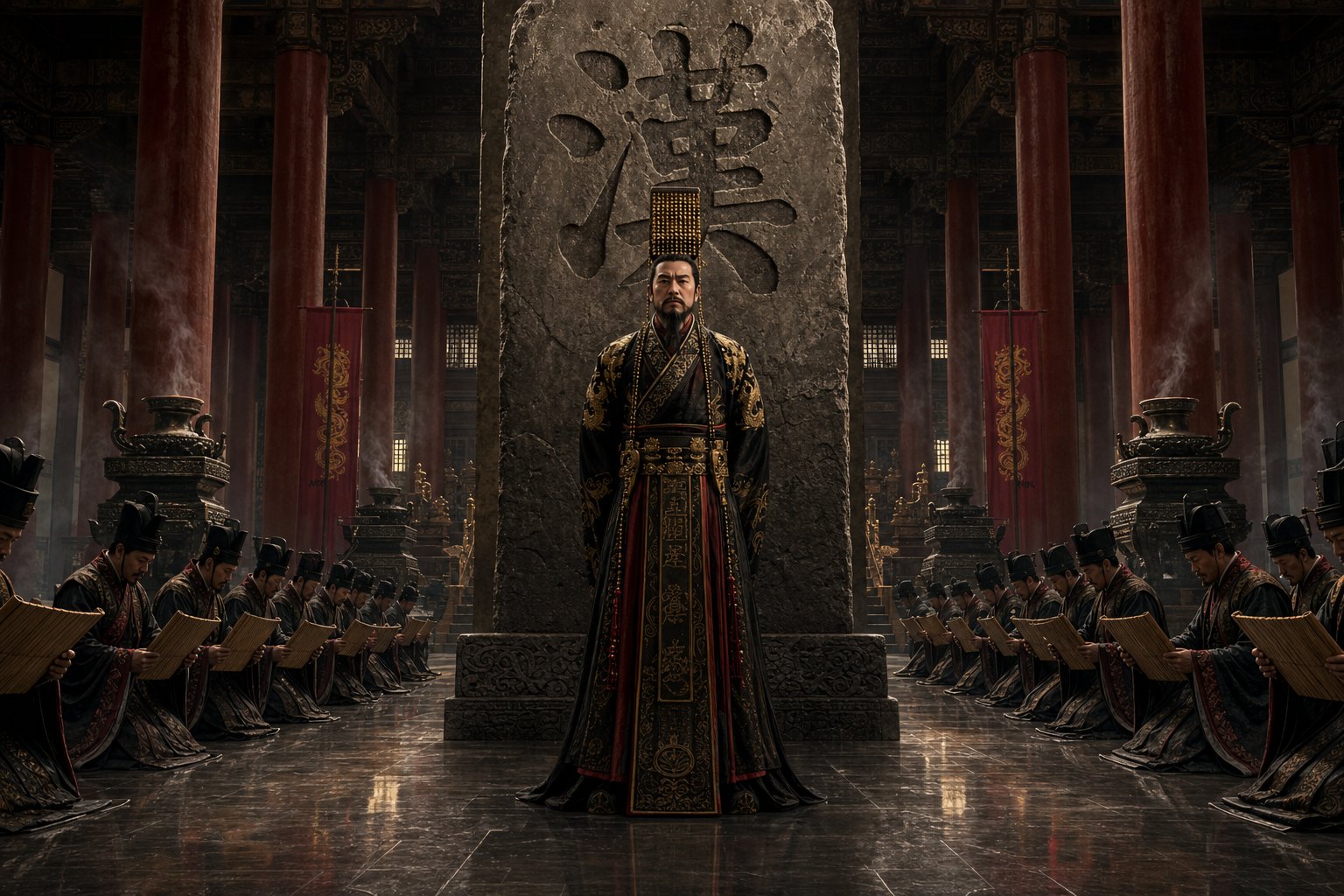
A new emperor's ascension could forbid a single character. But what happens when a ruler decides to regulate the very structure of names themselves, not just which characters are allowed, but how many? In 9 CE, Wang Mang seized the Han throne and established his short-lived Xin Dynasty. Among his sweeping reforms was one of the most extraordinary naming laws ever issued anywhere in the ancient world: the two-name prohibition, or er ming zhi jin (二名之禁). With a single edict, he declared that all personal names in the empire must consist of exactly one character.
Wang Mang and the Two-Name Prohibition
Wang Mang framed his single character name rule as a return to classical purity. He argued that the ancient sages and virtuous rulers of antiquity all bore single-character given names, and that two-character names represented a degraded, uncivilized practice. This was not merely aesthetic preference. It was ideological warfare dressed as linguistic reform. By mandating single-character names, Wang Mang positioned himself as a restorer of ancient virtue, someone correcting centuries of cultural drift.
The decree applied broadly. Families across the empire were expected to conform, and new children had to receive single-character birth names. Those who already carried two-character given names faced social and bureaucratic pressure to shorten them. You might wonder how enforceable such a sweeping mandate really was in a vast agrarian empire. The answer lies in the bureaucratic system itself: since names appeared on household registers, tax records, and official appointments, the state had leverage at every point where a citizen interacted with government machinery.
Wang Mang's reasoning drew on a selective reading of history. Many Zhou Dynasty rulers and Confucian sages did indeed bear single-character names. But two-character given names had also existed throughout Chinese history without controversy. What Wang Mang did was elevate a statistical tendency into an absolute moral standard, then back it with imperial authority. The result was a naming law that reached into every household in the realm.
Naming as a Weapon Against Foreign Powers
The Wang Mang two-name prohibition decree had a darker application beyond domestic regulation. It became a tool of diplomatic humiliation. When the Xiongnu, the powerful nomadic confederation on China's northern frontier, violated treaty agreements, Wang Mang weaponized his own naming law against them. Xiongnu leaders who had previously been addressed with single-character Chinese-style names were deliberately reassigned two-character names as a mark of degradation.
Consider the logic at work here. If single-character names signified civilization and virtue, then forcing someone to carry a two-character name branded them as barbaric. Wang Mang essentially created a naming hierarchy where the structure of your name advertised your moral and political status. This was naming as a weapon against foreign powers, a way to assert dominance without deploying armies. The Xiongnu chanyu (supreme leader) Nangzhiyasi had his Chinese-style name altered to signal his fallen status in the eyes of the Han court.
This practice reveals something important about how naming regulations functioned beyond mere bureaucratic tidiness. They were instruments of statecraft. Controlling the form of a name, not just its content, gave the state power to classify entire peoples as civilized or barbaric, loyal or rebellious, worthy or degraded.
The Lasting Legacy of Single-Character Names
Wang Mang's Xin Dynasty collapsed in 23 CE, barely fifteen years after its founding. His reforms were largely reversed. Yet the two-name prohibition outlived him by centuries. Why? Because cultural inertia is powerful. Once single-character given names became the dominant norm, reinforced by an entire generation of naming under the decree, the pattern self-perpetuated through social expectation alone.
A single decree issued by a failed usurper reshaped Chinese naming patterns for over three hundred years. Long after Wang Mang's dynasty crumbled, single-character given names remained the overwhelming standard through the Eastern Han, Three Kingdoms, and Jin Dynasty periods, proving that naming laws can outlast the regimes that create them.
If you look at historical records from the Eastern Han (25-220 CE) through the Western Jin (265-316 CE), the dominance of single-character given names is striking. Figures like Cao Cao, Liu Bei, Sun Quan, Zhuge Liang (where Liang is the single-character ming), and Sima Yi all reflect this pattern. Two-character given names only began their gradual return during the period of disunion following the Jin collapse, when social norms loosened and non-Han peoples brought different naming conventions into northern China.
This is why Chinese names have one character in so many historical records from this era. It was not an organic cultural preference that emerged naturally. It was the downstream effect of a political decree, one that fused ideology with law and reshaped how millions of people named their children for generations. The Wang Mang naming law impact demonstrates that even brief, unstable regimes can leave permanent marks on a civilization's most intimate practices.
Wang Mang's decree regulated the structure of names. But the broader system of imperial naming taboos regulated their content, dictating which specific characters could and could not appear in anyone's name throughout the empire. That content-based prohibition system operated on an entirely different mechanism, one tied directly to the person sitting on the throne at any given moment.
The Imperial Naming Taboo System Explained
Wang Mang's decree dictated how many characters a name could contain. But a far older and more pervasive mechanism controlled which characters were available in the first place. This was the bihui (避讳) system, the imperial naming taboo that could instantly remove a perfectly common word from public circulation the moment a new emperor took the throne. Under this system, the characters composing an emperor's personal name became forbidden territory, banned from official documents, erased from place names, and avoided in everyday speech across the entire empire.
The bihui naming taboo system in the Han Dynasty operated on a simple but far-reaching principle: the emperor's person was sacred, and his name was an extension of that sacred status. To write or speak the imperial name casually was to violate the boundary between ruler and subject. What made this more than symbolic reverence was the bureaucratic machinery behind it. Scribes, officials, and scholars all had to actively monitor their language, replacing forbidden characters with approved substitutes or risk serious consequences.
The Bihui System and Imperial Character Prohibition
How did a single character vanish from an empire's vocabulary? The process began the moment a new emperor ascended. His personal name, the ming given at birth, became what scholars call a "taboo character." Every government office received notification of the new prohibition. Scribes copying documents replaced the banned character with an approved alternative. Stonecutters carving official inscriptions used substitutes. Even students preparing for civil examinations had to memorize which characters were currently off-limits.
The scope was remarkable. When an imperial name taboo took effect, the banned characters disappeared from:
- All official government documents, memorials, and edicts
- Place names of counties, commanderies, and geographic features
- Personal names of living officials and citizens
- Newly copied editions of classical texts and historical records
- Formal speech in court audiences and official proceedings
This was not a polite request. The Han emperor name character prohibition carried the weight of imperial authority. Officials who failed to observe current taboos in their written submissions demonstrated either ignorance or disrespect, neither of which was tolerable in a system built on hierarchical propriety.
State Taboos Versus Private Family Taboos
The Han taboo system operated on two distinct levels, and understanding the difference is key to grasping how these regulations actually functioned in daily life.
State taboos (guohui 國諱) were imperially mandated and legally enforceable. They applied to every person in the empire regardless of rank or region. When the state declared a character taboo, compliance was not optional. The guohui state naming taboo covered the reigning emperor's personal name and, in many cases, extended to the names of his immediate ancestors who had been posthumously honored. These taboos appeared in legal codes and were enforced through the bureaucratic appointment system.
Private taboos (jiahui 家諱) operated within individual families and clans. A family would avoid using characters from their own ancestors' names when naming children or writing family documents. These were socially enforced through Confucian filial piety rather than state law. You would not be arrested for violating a private taboo, but you might face social censure, damaged reputation, or strained relationships within your community.
The practical difference mattered enormously. A scholar writing a memorial to the throne had to observe all active state taboos or face official punishment. But when writing a personal letter, he might also observe his own family's private taboos out of respect for his ancestors. The two systems overlapped and reinforced each other, creating a layered web of character avoidance that touched nearly every act of writing.
How Emperor Names Erased Characters From Public Life
The most vivid way to understand this system is to look at specific cases. Each Han emperor's ascension triggered a new round of character substitution across the empire. Some taboos caused minimal disruption because the emperor's name used a rare character. Others created widespread upheaval because the forbidden character was a common, everyday word.
| Emperor | Personal Name | Banned Character | Meaning | Substitute Character |
|---|---|---|---|---|
| Gaozu | Liu Bang | 邦 (bang) | State, country | 國 (guo) |
| Hui | Liu Ying | 盈 (ying) | Full, surplus | 滿 (man) |
| Wen | Liu Heng | 恆 (heng) | Constant, eternal | 常 (chang) |
| Jing | Liu Qi | 啟 (qi) | To open, begin | 開 (kai) |
| Wu | Liu Che | 徹 (che) | Thorough, penetrating | 通 (tong) |
| Xuan | Liu Xun (changed) | 詢 (xun) | To inquire | Minimal disruption (rare character) |
| Guangwu | Liu Xiu | 秀 (xiu) | Elegant, outstanding | 茂 (mao) |
Consider Emperor Gaozu's case. His birth name, Bang (邦), meant "state" or "country." This was an extremely common character used constantly in political writing. Once it became taboo, every official document in the empire had to use guo (國) instead. The disruption was enormous. Scholars writing about the ancient feudal states of the Zhou era had to substitute characters throughout their texts. Place names containing bang were revised. The ripple effects touched thousands of documents.
Emperor Wen's taboo on heng (恆) similarly forced the replacement of a common word meaning "constant" or "permanent." The substitute, chang (常), carried a similar meaning, but the switch still required active vigilance from every literate person producing official texts. The Heng Mountain, one of China's sacred peaks, was renamed in official documents during his reign.
One emperor recognized the burden this system placed on his subjects. Emperor Xuan, who originally bore the name Liu Bingyi (劉病已), deliberately changed his own name to Liu Xun (劉詢) after ascending the throne. His reasoning was practical and unusually compassionate: the characters bing (病, meaning "illness") and yi (已, meaning "already" or "to stop") were so commonly used in everyday writing that enforcing their taboo would cause genuine hardship across the empire. He issued an edict explaining that he chose a rarer character specifically to minimize the disruption his taboo would cause. This case reveals that even within the system, rulers understood its coercive weight.
Emperor Wu's taboo on che (徹) produced one of the most famous alterations in Chinese historiography. The historical figure Kuai Che (蒯徹), an advisor during the founding of the Han, appears in Sima Qian's Records of the Grand Historian as Kuai Tong (蒯通) because Sima Qian was writing under Emperor Wu's reign and could not use the taboo character. This means that one of China's greatest historical texts contains deliberate name alterations that readers must decode to recover the original forms.
These were not isolated incidents. Every imperial succession triggered a fresh wave of substitutions, and the cumulative effect over four centuries of Han rule meant that the literary and administrative record was riddled with deliberate alterations. For modern scholars, identifying which characters were changed and when has become an essential tool for dating documents and verifying their authenticity. But for the people living under these regulations, the more immediate question was simpler and more urgent: what happened if you failed to comply?

Enforcement and Punishment Under Han Naming Regulations
The taboo system described above was not merely decorative protocol. It carried teeth. For officials, scholars, and ordinary citizens navigating the Han bureaucracy, a single overlooked character could trigger consequences ranging from public humiliation to the abrupt end of a career. The punishment for breaking a naming taboo in the Han Dynasty depended on context, intent, and the political mood of the moment, but the risk was always real enough to keep every literate person vigilant.
Punishments for Violating Imperial Name Taboos
Imagine drafting a memorial to the emperor, a document you have spent weeks perfecting, only to realize after submission that you accidentally used a taboo character. In the best case, your document would be returned and you would face embarrassment. In the worst case, your oversight could be interpreted as deliberate disrespect toward the throne.
The consequences of violating an imperial name taboo fell along a spectrum. Not every violation led to execution or imprisonment. The system was more nuanced than that, calibrated to the severity of the offense and the political climate. Documented types of consequences faced by taboo violators included:
- Rejection of official documents: Memorials, petitions, and examination papers containing taboo characters were returned or discarded without consideration.
- Forced name changes: Officials or citizens whose personal names shared a character with the emperor were compelled to adopt new names for all official purposes.
- Dismissal from office: Bureaucrats who repeatedly failed to observe taboos in their administrative work could lose their posts entirely.
- Demotion or blocked promotion: Even a single careless use of a forbidden character in a formal submission could stall an official's advancement.
- Social disgrace: Violations signaled a lack of education and propriety, damaging a person's reputation among peers and superiors.
- Criminal charges: In periods of strict enforcement or political tension, deliberate taboo violations could be treated as acts of lese-majeste, carrying serious legal penalties.
The research of Piotr Adamek on the tabooing of names in China documents that people "had to stop their careers or change their style of life in order to maintain a naming taboo," and that some were even killed in connection with taboo violations. The stakes were not hypothetical.
Career Consequences for Han Dynasty Officials
The bureaucratic appointment system was where naming taboos hit hardest. Every official in the Han government existed within a paper trail: appointment records, performance evaluations, correspondence with superiors, and memorials submitted to the throne. Your name appeared on all of these documents. If that name suddenly became taboo because a new emperor shared one of your characters, you faced an immediate problem.
Han Dynasty officials forced to change their names had no real choice in the matter. The bureaucratic machinery simply could not process documents containing the forbidden character. Your name could not appear on appointment registers, promotion lists, or salary records if it violated the current taboo. The practical result was straightforward: change your name or become administratively invisible.
This was not a rare occurrence. Consider that the Han Dynasty lasted over four centuries and saw more than two dozen emperors. Each succession potentially created a new set of forbidden characters. An official who served across multiple reigns might face taboo pressure more than once in a career. The system created a kind of perpetual uncertainty, where your own identity was always conditionally permitted rather than permanently secure.
Scholars submitting memorials to the throne faced particular pressure. These documents were scrutinized by court secretaries before reaching the emperor. A taboo character in a memorial was not just a typo. It was a failure of propriety that reflected on the writer's competence and loyalty. Officials learned to triple-check their writing, sometimes employing assistants whose sole job was to scan documents for inadvertent taboo violations before submission.
Social Versus Legal Enforcement Mechanisms
How were naming laws actually enforced in ancient China? The answer involves two overlapping systems working in tandem. Legal enforcement operated through the state bureaucracy: court secretaries flagged violations, superiors reprimanded subordinates, and the appointment system filtered out non-compliant names. Social enforcement operated through community pressure, peer judgment, and the internalized values of Confucian education.
Legal enforcement was most visible at the upper levels of society. Officials, scholars, and anyone interacting directly with the imperial government faced formal consequences for violations. The state had clear mechanisms: document rejection, forced name changes, career penalties. These were systematic and institutional.
Social enforcement reached further down the social ladder. Even in villages far from the capital, families understood that naming a child with a character belonging to the emperor's name was improper. This knowledge spread not through police enforcement but through the educational system, community elders, and the general cultural understanding that not respecting naming taboos was considered a sign of lacking education and respect. The shame fell on both the offender and, by extension, their family.
The balance between these two mechanisms shifted with political conditions. During stable, prosperous periods when the central government was strong, legal enforcement was more consistent and violations more dangerous. During times of upheaval, civil war, or weak central authority, social enforcement continued operating even as the legal apparatus weakened. This dual structure explains why the taboo system proved so durable: even when the state could not actively punish every violation, social pressure maintained compliance across most of the population.
The cumulative effect of this enforcement system extended far beyond individual punishments. It shaped how people wrote, how scribes copied texts, and how entire geographic regions were labeled on maps. The consequences were not just personal. They were inscribed into the documentary record itself, altering the very sources that later generations would use to reconstruct Han Dynasty history.
How Naming Taboos Altered Literature and Historical Records
Every punishment described above left a mark on an individual. But the taboo system left marks on something far larger: the written record itself. When scribes, historians, and copyists obeyed imperial naming prohibitions, they did not simply avoid a character in their own original writing. They altered texts that already existed, changing words in classical works, historical chronicles, and administrative archives that had been written decades or centuries earlier. The Han Dynasty naming taboo effect on texts was not incidental. It was systematic, cumulative, and permanent.
The result is that surviving Han-era documents are not pristine transmissions of their authors' original words. They are filtered versions, passed through layers of character substitution imposed by successive imperial taboos. For anyone reading these texts today, this creates a puzzle: which words are original, and which were silently swapped by a scribe obeying a long-dead emperor's naming prohibition?
How Taboo Characters Were Altered in Official Texts
When a character became forbidden, scribes tasked with copying or preserving older documents had several techniques at their disposal. None of these methods announced themselves to the reader. They were designed to be invisible, to make the altered text read smoothly as though nothing had changed. The main approaches included:
- Character substitution: Replacing the taboo character with a synonym or near-synonym. This was the most common method. For example, every instance of bang (邦) in pre-Han texts became guo (國) in copies made during Gaozu's reign.
- Stroke omission: Writing the taboo character with one or more strokes deliberately left out, signaling avoidance without fully replacing the word. Later dynasties used this technique extensively, and evidence suggests it appeared during the Han as well.
- Leaving blanks: Simply leaving an empty space where the taboo character should appear, a gap that later copyists might fill incorrectly or leave untouched.
- Using homophones or near-homophones: Substituting a different character with similar pronunciation, even if the meaning shifted slightly.
Consider what this meant in practice. Sima Qian, writing the Records of the Grand Historian under Emperor Wu, could not use the character che (徹). Every historical figure whose name contained that character was silently renamed in his text. The advisor Kuai Che became Kuai Tong. Readers encountering the text had no footnote alerting them to the switch. The alteration simply existed as fact, embedded in what became one of China's most authoritative historical works.
This was not a one-time event. Each new reign introduced fresh prohibitions, and each fresh prohibition triggered another round of silent edits across the documentary landscape. Texts copied during the Western Han carried one set of substitutions. The same texts recopied during the Eastern Han might carry additional layers, as new taboo characters accumulated. The character substitution in Han Dynasty documents was not a single filter but a series of overlapping filters applied across four centuries.
Renamed Places and Rewritten Records
The most visible alterations were geographic. When an emperor's name collided with a place name, the place lost. Entire counties and commanderies were renamed by imperial decree, their old identities erased from maps and administrative records. These were not obscure hamlets. Some were significant administrative units governing tens of thousands of people.
Emperor Guangwu's taboo on xiu (秀) forced changes to any locality bearing that character. Emperor Wen's prohibition of heng (恆) meant that Heng Mountain and Heng county required new designations in official usage. When the Ming Emperor of Han (Liu Zhuang) ascended the throne, his personal name character zhuang (莊) triggered widespread renaming, and most people with the surname Zhuang were ordered to change it to the synonym Yan (嚴). An entire surname, shared by thousands of families, was rewritten because it collided with one man's birth name.
Place names changed by imperial taboo created cascading confusion in the historical record. A county might appear under three different names across documents from different reigns, not because it was reorganized administratively, but simply because successive emperors' names forced successive renamings. Modern researchers tracing administrative geography through Han sources must constantly cross-reference which taboo was active when a given document was produced, just to identify which place is actually being discussed.
Han Dynasty naming laws did not merely regulate the living. They reached backward into the past, rewriting classical texts, renaming ancient places, and altering the names of historical figures. The result is that no surviving Han-era document can be read at face value without first asking: which characters here are original, and which were changed to satisfy a long-forgotten imperial prohibition?
This is how naming laws altered Chinese historical records at the most fundamental level. They did not just suppress a word in the present. They retroactively edited the past, ensuring that the version of history transmitted to future generations was one filtered through imperial naming power. For modern scholars, decoding these layers of alteration has become a specialized discipline in itself, one that uses taboo-character analysis to date manuscripts, identify copyists' eras, and recover original readings buried beneath centuries of enforced substitution.
The system's reach into literature and geography raises a deeper question: where did the intellectual authority for such sweeping regulation come from? Imperial power alone does not explain why an entire civilization accepted that a single name could rewrite its textual heritage. The answer lies in the philosophical tradition that gave these naming laws their moral legitimacy.

The Confucian Legal Framework Behind Naming Regulations
Raw imperial authority can compel obedience, but it cannot sustain a system across four centuries without a deeper justification. The Han state did not simply decree naming taboos and dare people to disobey. It grounded every regulation in a philosophical tradition that most educated Chinese already accepted as morally binding. That tradition was Confucianism, and its ritual texts provided the intellectual scaffolding that transformed naming control from arbitrary tyranny into what the state presented as cosmic necessity.
Confucian Ritual Texts as Legal Foundation
The Liji (Book of Rites), one of the Five Classics that formed the backbone of Han education, contained explicit passages governing how names should be chosen and what naming practices were forbidden. These were not vague philosophical musings. The Liji laid out specific Liji Book of Rites naming rules: a child's name should not duplicate the name of a ruling state, should not use the names of the sun or moon, should not replicate the designation of a hidden illness, and should not echo the names of mountains or rivers within the domain.
During the pre-Han period, these guidelines existed as ritual propriety, observed by educated families out of respect for tradition rather than fear of punishment. The Han Dynasty changed their status. When Emperor Wu formally elevated Confucianism to state orthodoxy around 136 BCE, the ritual texts gained a new kind of authority. They were no longer merely respected classics. They became the ideological foundation for imperial governance. What the Liji recommended, the state could now enforce.
This gave naming regulations a legitimacy that pure coercion could never achieve. An official forced to change his name was not simply bowing to a tyrant's whim. He was participating in a system of propriety (li/禮) endorsed by the sages themselves. The Confucian basis for Han Dynasty naming laws meant that compliance was framed as virtue, not submission.
The Rectification of Names Doctrine in Practice
Confucius himself articulated a principle that would echo through centuries of Chinese political thought: the rectification of names, or zhengming (正名). When asked what he would do first if given political authority, Confucius reportedly answered that he would rectify names. His reasoning was direct. If names are incorrect, speech does not accord with reality. If speech does not accord with reality, affairs cannot be carried out successfully. If affairs cannot be carried out, ritual and music decay. If ritual and music decay, punishments miss their mark. And if punishments miss their mark, the people have nowhere to put hand or foot.
This chain of reasoning, preserved in the Analerta, elevated naming from a private family matter into a prerequisite for functional governance. The Confucian rectification of names zhengming doctrine taught that social order literally depended on correct naming. Han rulers seized on this idea. If proper names maintained cosmic and social harmony, then the state had not just the right but the obligation to regulate naming practices.
In practice, zhengming justified everything from the imperial taboo system to Wang Mang's structural decree. If the emperor's name was sacred and unique, then allowing common people to share his characters created a naming disorder that threatened the proper hierarchy between ruler and subject. Prohibiting those characters was not censorship. It was rectification, a restoration of correct relationships through correct language.
From Philosophy to Enforceable Law
How did abstract Confucian principles become regulations backed by real punishment? The progression followed a clear institutional path during the Han Dynasty:
- Classical text as moral authority: The Liji and other ritual texts established naming propriety as a component of li (ritual correctness), binding on all who aspired to civilized conduct.
- State adoption of Confucian orthodoxy: Emperor Wu's elevation of Confucianism to official ideology gave ritual texts the backing of imperial prestige and institutional support.
- Imperial edict citing classical precedent: When emperors issued naming decrees, they framed them as implementations of classical principles, not innovations. Wang Mang explicitly cited ancient sage-kings to justify his single-character mandate.
- Bureaucratic enforcement mechanisms: The examination system, appointment registers, and document review processes created practical checkpoints where compliance could be monitored and violations flagged.
- Social internalization through education: Because every aspiring official studied the Confucian classics, the philosophical justification for naming regulations was absorbed during the same process that prepared men for government service.
This progression explains how Confucianism influenced Chinese naming regulations so durably. The system was self-reinforcing. The same education that taught you to revere the classics also taught you why naming taboos were legitimate. By the time you entered government service, compliance felt less like obedience to external force and more like participation in a moral order you had already accepted.
The Han state understood something that purely coercive regimes often miss: a regulation grounded in shared values requires far less active enforcement than one imposed against popular belief. By anchoring naming laws in Confucian orthodoxy, the Han created a system where most people policed themselves, where violation felt like personal moral failure rather than mere rule-breaking. This fusion of philosophy and power did not end with the Han. It became the template that every subsequent dynasty inherited, adapted, and expanded upon.
How Han Naming Laws Shaped Every Dynasty That Followed
That template was not merely inherited. It was expanded, refined, and in some periods intensified to a degree that would have surprised even the most zealous Han-era enforcers. Every major Chinese dynasty from the Tang through the Qing maintained the core bihui system first systematized under the Han, but each generation added its own layers of complexity. The history of Chinese imperial naming regulations is essentially a story of escalation, with the Han providing the foundation and later dynasties building ever more elaborate structures on top of it.
What makes this continuity remarkable is its durability across radically different political circumstances. Dynasties founded by nomadic conquerors, dynasties born from peasant rebellions, dynasties that lasted three centuries and dynasties that barely survived a generation, nearly all of them adopted the same basic framework: the emperor's name is sacred, its characters are forbidden, and violators face consequences. The Han established that logic. Everyone else followed it.
From Han to Tang and the Expansion of Taboo Lists
The centuries between the Han collapse in 220 CE and the Tang Dynasty's founding in 618 CE saw political fragmentation, but the naming taboo system never disappeared. The short-lived Sui Dynasty (581-618) observed imperial taboos, and when the Tang consolidated power, it inherited a fully operational tradition. What the Tang added was bureaucratic precision.
The Tang Dynasty naming taboo list expansion transformed what had been a somewhat ad hoc system into a formalized, documented protocol. Tang emperors issued explicit taboo registers (huipu) that catalogued every forbidden character, its approved substitutes, and the scope of its prohibition. These were not informal guidelines circulated among court scribes. They were official reference documents distributed to government offices across the empire, ensuring uniform compliance from the capital in Chang'an to the most distant frontier prefecture.
Tang enforcement also grew more systematic. The examination system, which had expanded dramatically under Tang rule, became a primary enforcement mechanism. Candidates who used taboo characters in their exam essays were failed outright, regardless of the quality of their arguments. This created powerful incentive for every aspiring official to memorize the current taboo list before sitting for examinations. The Tang also extended taboo observance further back in the imperial lineage, requiring avoidance of characters from multiple ancestral names rather than just the reigning emperor's.
One telling detail: the Tang poet Du Fu reportedly avoided certain characters throughout his poetry not because of imperial taboos but because of his own father's name (his father was named Du Xian). This illustrates how deeply the Han-era distinction between state taboos and private family taboos had penetrated literary culture by the Tang period. The system was no longer just law. It was instinct.
The Persistence of Single-Character Name Preferences
Wang Mang's two-name prohibition, issued in 9 CE, collapsed along with his dynasty in 23 CE. Yet the single character name tradition after Wang Mang persisted with astonishing tenacity. Look at the major figures of the Three Kingdoms period (220-280 CE): Cao Cao, Liu Bei, Sun Quan, Guan Yu, Zhang Fei, Zhou Yu, Lu Su. Every one of these men carried a single-character given name. This was not coincidence. It was the cultural residue of a decree issued two centuries earlier.
The pattern held through the Western Jin (265-316) and into the early stages of the period of disunion. Single-character given names remained the overwhelming norm among the Chinese elite for roughly three hundred years after Wang Mang's fall. The shift back toward two-character names happened gradually, driven by several factors: population growth made single-character names increasingly likely to produce duplicates, non-Han peoples entering northern China brought different naming conventions, and the weakening of centralized authority loosened the social pressure that had maintained the norm.
By the Sui and Tang periods, two-character given names had returned to common use, though single-character names never disappeared entirely. The Song Dynasty saw a relatively even mix. But the fact that one usurper's fifteen-year reign could reshape naming patterns for three centuries demonstrates something important about how naming regulations work. They do not need continuous enforcement to persist. Once embedded in social expectation, they become self-sustaining until some countervailing force dislodges them.
Han Naming Laws as the Blueprint for Imperial China
The Song Dynasty (960-1279) represents the peak of taboo elaboration. Song rulers extended the avoidance principle to homophones, meaning that characters merely sounding like the emperor's name, even if written completely differently, also became restricted. This was a significant escalation. Under the Han, you only needed to avoid the specific character in the emperor's name. Under the Song, you had to avoid every character that shared its pronunciation. The number of forbidden words multiplied dramatically.
The research of Piotr Adamek confirms that the practice persisted throughout the imperial period from the Qin dynasty (221 BCE) through the Qing emperor's abdication in 1912, "with a peak in the Song period." Song-era scholars produced the first detailed commentaries analyzing bihui as a systematic phenomenon, and the sheer volume of taboo-related scholarship from this period reflects how complex the system had become.
The Qing Dynasty (1644-1912), despite being founded by Manchu conquerors rather than ethnic Han Chinese, maintained the core bihui framework with lethal seriousness. The case of scholar Wang Xihou in 1777 illustrates the extremes: he accidentally printed the personal names of three emperors in a dictionary introduction. The oversight cost him his life. He was executed, his property confiscated, his books burned, and his sons and grandsons killed or enslaved. An entire provincial administration faced reprimand. This happened during the Qing's Literary Inquisition, but the underlying logic, that imperial names are sacred and their misuse constitutes treason, traced directly back to the Han-era system.
The following table maps how key features of the Han naming law system evolved across major dynasties:
| Dynasty | Period | Taboo Scope | Enforcement Level | Key Development |
|---|---|---|---|---|
| Han | 206 BCE - 220 CE | Emperor's exact characters | Moderate (career consequences) | Established systematic bihui; single-character name decree |
| Tang | 618 - 907 CE | Emperor + multiple ancestors | High (exam failures, dismissals) | Formalized taboo registers; extended to ancestral names |
| Song | 960 - 1279 CE | Exact characters + homophones | Very high (peak of system) | Extended avoidance to homophones; extensive scholarly commentary |
| Yuan | 1271 - 1368 CE | Reduced scope | Low (Mongol rulers less invested) | Relaxation under non-Han dynasty |
| Ming | 1368 - 1644 CE | Emperor's exact characters | Moderate | Restored Han-style system after Mongol interruption |
| Qing | 1644 - 1912 CE | Emperor + ancestors + homophones | Extreme (capital punishment possible) | Manchu rulers adopted and intensified Han-origin system; Literary Inquisition |
Notice the pattern. The Yuan Dynasty, founded by Mongol conquerors with their own naming traditions, represents the one significant interruption. But the Ming Dynasty, which expelled the Mongols and restored Han Chinese rule, immediately reinstated the full taboo apparatus. And the Qing, also foreign conquerors, not only adopted the system but enforced it more harshly than any previous dynasty. The Han Dynasty naming law influence on later dynasties was so deep that even rulers from entirely different cultural backgrounds found the system indispensable for projecting imperial legitimacy.
This two-thousand-year continuity raises a final question that scholars still debate. Was this system, at its core, truly a body of enforceable law? Or was it something more ambiguous: a set of social expectations with legal backing that varied wildly depending on who sat on the throne and how secure they felt? The answer matters, because it determines whether we understand Han naming regulations as legislation or as something harder to categorize.
Were Han Naming Taboos Enforced Laws or Social Customs
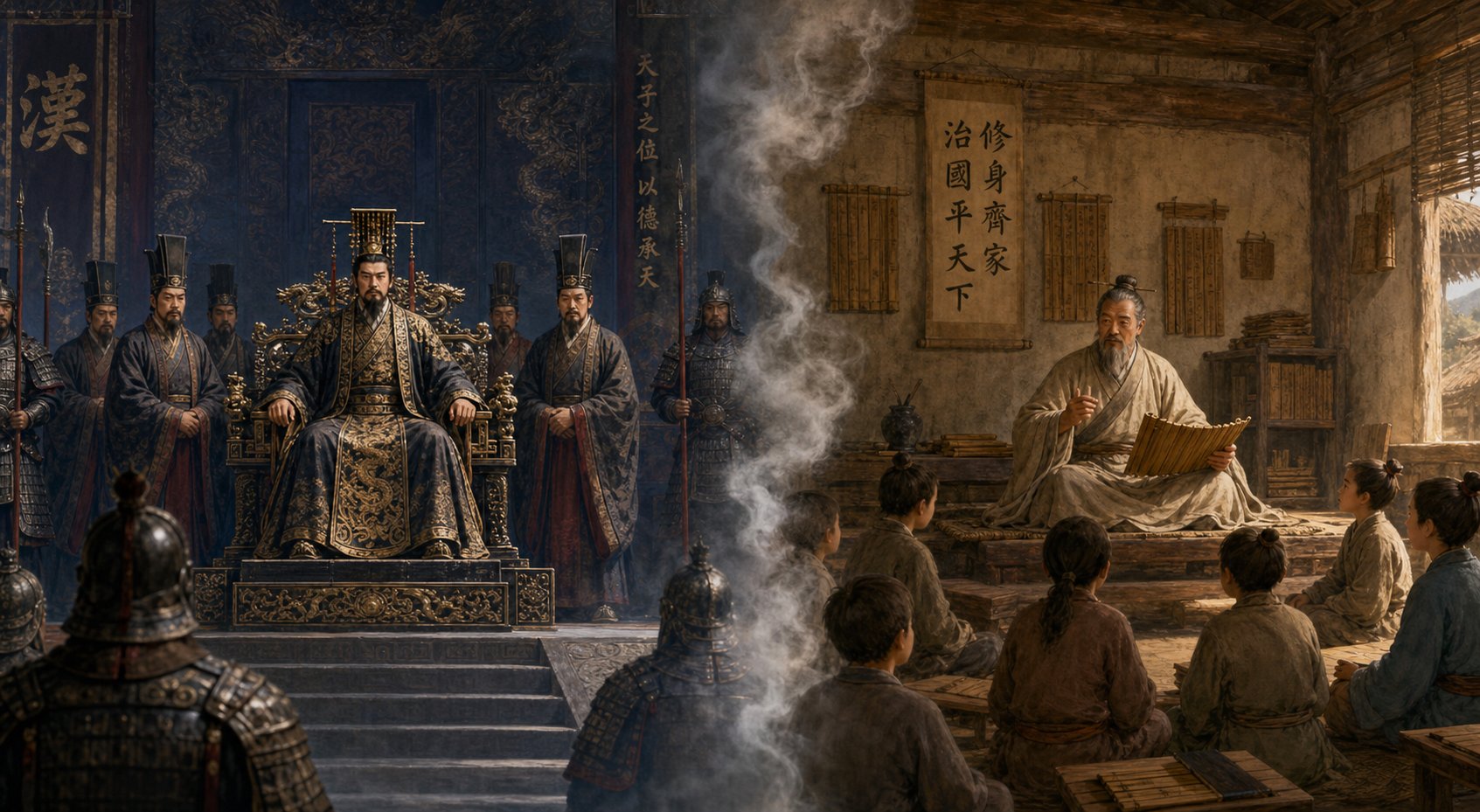
That question, whether these regulations constituted hard law or soft custom, sits at the center of a scholarly debate that has occupied historians of early China for decades. You might assume the answer is straightforward: either the state punished violators or it did not. But the surviving evidence resists such clean categories. Some scholars point to documented career consequences and systematic textual alterations as proof that these were genuine laws with real enforcement. Others note that violations appear in the historical record without any mention of punishment, suggesting the system operated more like a strong social expectation than a criminal statute. The truth, as with most things in a four-century dynasty, almost certainly shifted depending on who held power and how secure they felt.
The Case for Strict Legal Enforcement
Scholars who argue that Han naming taboos were legally enforced point to several categories of hard evidence. First, there is the sheer scale of textual alteration. Thousands of character substitutions across official documents, historical texts, and geographic records do not happen through polite suggestion alone. The bureaucratic apparatus required to implement empire-wide character replacement implies institutional enforcement, not voluntary compliance. When every government office in the realm simultaneously stops using a specific character and adopts an approved substitute, that coordination reflects a directive backed by authority.
Second, the documented cases of forced name changes among officials demonstrate legal compulsion. When an official's personal name shared a character with the emperor, the change was not optional. The bureaucratic system literally could not process documents containing the forbidden character. Appointment registers, salary records, and correspondence all required compliant names. This was not social pressure. It was administrative exclusion, a mechanism that functioned identically to legal enforcement even if no explicit criminal statute was cited.
Third, the research of Piotr Adamek documents that people were killed in connection with naming taboo violations and that others had to abandon their careers entirely. These are not the consequences of a mere social custom. They are the outcomes of a system with coercive power. The evidence for Han naming law enforcement includes career destruction, geographic renaming by imperial decree, and the physical alteration of texts across the entire empire. Taken together, these facts suggest a system that functioned as law in every practical sense, regardless of whether a single unified statute codified it.
The Case for Social Custom Over Codified Law
The opposing argument is equally compelling. Scholars in this camp observe that no surviving Han legal code contains a specific statute reading "anyone who uses the emperor's name character shall receive X punishment." The Han legal system, as reconstructed from excavated bamboo strips and transmitted texts, was remarkably detailed about other offenses. The absence of an explicit naming-taboo statute is notable. If the system were truly codified law, you would expect to find it alongside regulations governing theft, assault, and administrative misconduct.
More telling are the violations that went unpunished. Instances survive in the historical record where writers used taboo characters without any documented consequence. Some scholars interpret these cases as evidence that enforcement was inconsistent, selective, or even performative. The system may have functioned less like a criminal code and more like a loyalty signal: observing taboos demonstrated your education and political awareness, while violations marked you as careless or provincial rather than criminal.
This interpretation frames the naming taboo as a social custom with occasional legal backing rather than a law with occasional social reinforcement. The distinction matters. A social custom can be powerful, even coercive, without being a statute. Think of it this way: no law required Tang-era poets to avoid their fathers' name characters in their verse, yet they did so meticulously. The force driving compliance was internalized propriety, not fear of prosecution. Proponents of this view argue that Han-era taboo observance operated on the same principle, scaled up to the imperial level.
Reconciling the Evidence
Which side is right? The most honest answer is that both are describing real aspects of a system that defies neat classification. The naming taboo was neither purely law nor purely custom. It occupied a space between the two, a space that modern Western legal categories struggle to accommodate.
The key variable was political stability. During periods of strong central authority, when the emperor's power was unquestioned and the bureaucracy functioned smoothly, enforcement tightened. Violations became more dangerous. The system behaved like law. During periods of upheaval, succession crises, or weak emperors, enforcement relaxed. The system reverted to social custom, still observed by most people out of habit and propriety, but without the institutional teeth to punish those who slipped.
Consider the contrast between the early Western Han, when the dynasty was consolidating power and needed every tool of legitimacy available, and the late Eastern Han, when central authority was crumbling and regional warlords operated with increasing independence. The same taboo system existed in both periods, but its practical force was entirely different. A violation in 150 BCE, when the empire was strong, carried far more risk than the same violation in 190 CE, when the court could barely control its own capital.
Han Dynasty naming taboos were neither a fixed legal code nor a mere cultural preference. They were a flexible instrument of power whose force expanded and contracted with the political confidence of the state, functioning as hard law when the throne was strong and as social expectation when it was weak.
This flexibility is precisely what made the system so durable. A rigid statute can be repealed. A pure custom can fade. But a hybrid system, one that draws legitimacy from Confucian philosophy, enforcement from bureaucratic machinery, and compliance from social internalization, adapts to changing conditions without ever fully disappearing. The Han created exactly this kind of hybrid, and it survived for two thousand years because it could operate at whatever intensity the current political moment required.
Stepping back from the scholarly debate, the broader picture is clear. Han Dynasty naming laws, whether we classify them as legislation, custom, or something in between, accomplished something extraordinary. They turned personal names into instruments of imperial power. They erased characters from public life, rewrote historical texts, renamed geographic features, ended careers, and reshaped how an entire civilization structured its most basic unit of identity. A single person's name, chosen at birth by a parent, could be overridden by the state at any moment. That is political power operating at the most intimate possible scale, reaching not just into your household but into the syllables by which you are known. Few systems of control in human history have achieved anything comparable.
Frequently Asked Questions About Han Dynasty Naming Laws
1. What were the main Han Dynasty naming laws?
Han Dynasty naming laws consisted of three major regulatory mechanisms. First, the imperial naming taboo system (bihui) banned characters from the emperor's personal name across all official documents, place names, and public speech. Second, Wang Mang's two-name prohibition (er ming zhi jin) mandated that all personal names contain only a single character. Third, Confucian-derived guidelines from ritual texts like the Liji restricted which types of words could be used in naming, prohibiting names that duplicated states, celestial bodies, illnesses, or geographic features. Together, these created a comprehensive system where the state controlled both the structure and content of personal names throughout the empire.
2. Why did Chinese names historically use only one character?
The dominance of single-character given names in Chinese history traces back to Wang Mang's two-name prohibition decree issued in 9 CE. After usurping the Han throne, Wang Mang declared that two-character personal names were barbaric and mandated single-character names for everyone in the empire. Although his Xin Dynasty lasted only fifteen years, the cultural pattern persisted for over three centuries through the Eastern Han, Three Kingdoms, and Jin Dynasty periods. Figures like Cao Cao, Liu Bei, and Sun Quan all reflect this norm. The pattern only faded gradually during the period of disunion when population growth, non-Han naming conventions, and weakened central authority loosened the social expectation.
3. What happened if someone violated an imperial naming taboo in ancient China?
Violating an imperial naming taboo carried a range of consequences depending on the political climate and the severity of the offense. Officials could face rejection of their documents, forced name changes, demotion, blocked promotions, or outright dismissal from government posts. Scholars submitting memorials containing taboo characters risked having their work discarded and their reputations damaged. In periods of strict enforcement or political tension, deliberate violations could be treated as lese-majeste with serious criminal penalties. Historical research documents cases where people lost their careers entirely or were even killed in connection with taboo violations. Social consequences also applied broadly, as violations signaled a lack of education and respect.
4. How did the bihui naming taboo system work in practice?
When a new emperor ascended the throne, the characters in his personal birth name became immediately forbidden throughout the empire. Government offices received notification of the prohibition, and scribes replaced the banned character with an approved substitute in all new and existing documents. Place names containing the forbidden character were officially renamed. Citizens and officials whose personal names shared the character faced pressure to adopt new names. For example, when Emperor Gaozu (Liu Bang) took power, the common character bang meaning 'state' was replaced empire-wide with guo. The system operated continuously across four centuries of Han rule, with each new emperor triggering a fresh wave of character substitutions.
5. Did Han Dynasty naming laws influence later Chinese dynasties?
Han naming laws established the foundational template that every subsequent major dynasty adopted and expanded. The Tang Dynasty formalized the system by creating official taboo registers distributed to government offices across the empire and extended avoidance to multiple ancestral names. The Song Dynasty escalated further by requiring avoidance of homophones, not just the exact taboo characters. Even the Qing Dynasty, founded by Manchu conquerors, maintained and intensified the Han-origin bihui system, with violations potentially carrying capital punishment. The only significant interruption came during the Yuan Dynasty under Mongol rule, but the Ming immediately restored the full apparatus after expelling the Mongols. This two-thousand-year continuity demonstrates the Han system's enduring influence on Chinese imperial governance.