Why Hong Kong Names Look Nothing Like Their Pinyin Equivalents
Imagine you are searching a business directory for a Hong Kong colleague named Wong. You type the name into a mainland Chinese database and get zero results. The reason? In Mandarin Pinyin, that same surname is spelled Huang. Same Chinese character, same family, two completely different romanized spellings. Welcome to one of the most confusing aspects of written Chinese for anyone working across Greater China.
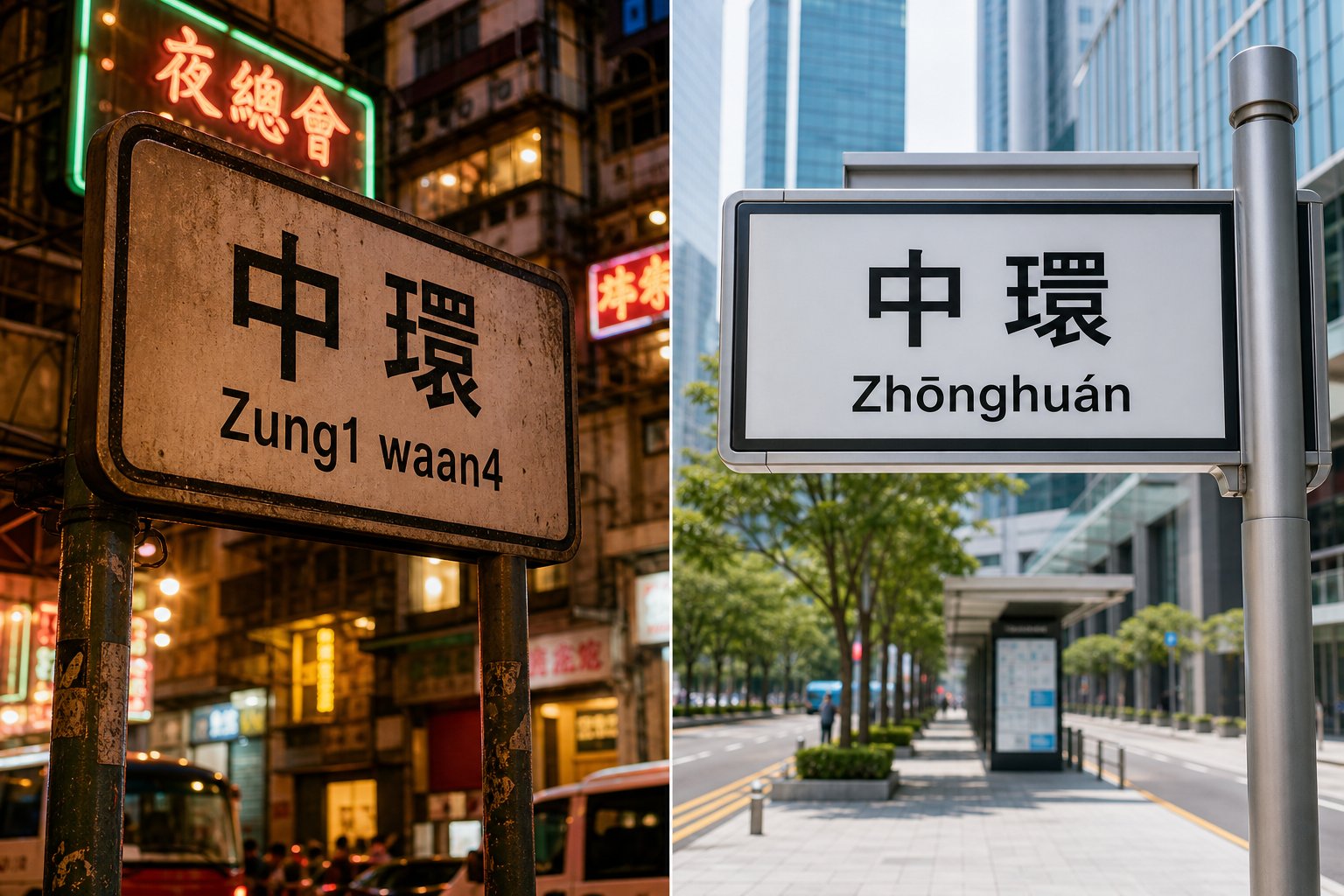
This disconnect exists because Hong Kong romanization and Pinyin are not two versions of the same system. They reflect two entirely different spoken languages: Cantonese and Mandarin. When you see chinese text romanized from Hong Kong, it captures Cantonese pronunciation. When you see Pinyin, it captures Mandarin. The underlying Chinese characters may be identical, but the sounds they represent diverge dramatically between these two languages.
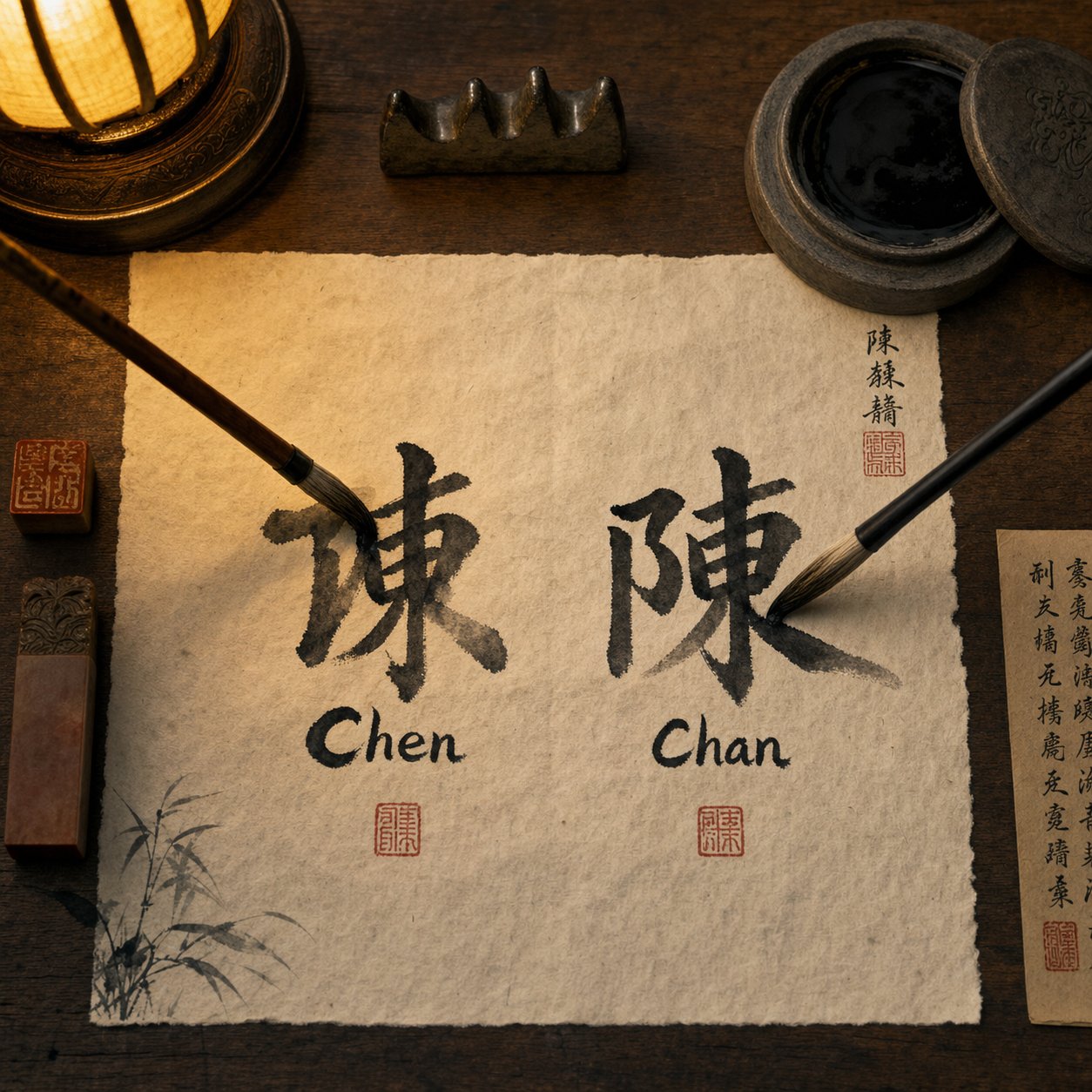
Ng in Hong Kong equals Wu in Pinyin. Chan becomes Chen. Leung becomes Liang. The same families, the same characters, spelled in ways that look completely unrelated.
Why Hong Kong Names Look Nothing Like Pinyin
The core issue is linguistic, not just technical. Cantonese preserves ancient Chinese sounds that Mandarin lost centuries ago, including final consonants like -k, -t, and -p, plus a broader tonal range. A single character like 黄 sounds like "Wong" to a Cantonese speaker and "Huang" to a Mandarin speaker. Without a standardized romanization system during the colonial era, Hong Kong officials simply transcribed what they heard into English-friendly spellings. Mainland China, meanwhile, adopted Pinyin as its official standard in 1958, creating a fully systematic approach tied exclusively to Mandarin pronunciation. The result is two parallel worlds of chinese romanization text that rarely overlap.
Who This Comparison Helps
If you are a traveler puzzled by street signs in Kowloon that bear no resemblance to your Mandarin textbook, this guide is for you. If you work in international business and need to match client records across Hong Kong and mainland databases, you will find practical clarity here. Researchers tracing Chinese genealogy, language learners choosing their first romanization system, and anyone who has ever wondered what romanized Chinese actually represents will benefit from understanding how these systems diverge. The romanization of Chinese is not a single, unified practice. It is a family of competing approaches shaped by dialect, history, and politics.
This article breaks down the major chinese romanization systems side by side, from Hong Kong's informal colonial spellings to Pinyin's global standard, along with academic systems like Jyutping and Yale. The goal is straightforward: give you the knowledge to navigate both worlds confidently, whether you are reading a passport, a street sign, or a scholarly paper.
How We Evaluated Each Chinese Romanization System
Not all romanization systems are built for the same purpose. Some prioritize consistency for computers. Others aim for readability by English speakers. A few exist purely as historical artifacts embedded in legal documents. Comparing them requires a clear framework, not a subjective ranking of which one "sounds better."
The comparison throughout this article focuses on practical utility for different user groups rather than declaring any single chinese romanization system linguistically superior. A system that works perfectly for academic research may be useless for reading Hong Kong street signs, and vice versa.
Evaluation Criteria for Each System
Each romanization system used for chinese characters is measured against six dimensions that matter most in real-world use:
- Standardization level - Does the system follow a published, consistent set of rules? Can every syllable be spelled in exactly one way, or do multiple spellings exist for the same sound?
- Official adoption - Which governments, institutions, or international bodies recognize the system? Does it appear on passports, ID cards, or street signs?
- Ease of learning - How intuitive is the system for English speakers encountering it for the first time? Does it require memorizing unfamiliar letter combinations?
- Tone marking method - How does the system indicate tonal differences? Diacritics, numbers, spelling changes, or not at all?
- Coverage of sounds - Does the system account for every phonemic distinction in the target language, including all tones, initials, and finals?
- Real-world usage contexts - Where will you actually encounter this system? Textbooks, apps, government forms, library catalogs, or databases?
These criteria reveal why no single system dominates every scenario. A system scoring high on standardization might score low on ease of learning. One with deep official adoption might lack the precision needed for chinese romanization pronunciation and orthography research.
Why Phonetic Differences Matter for Romanization
Here is where things get interesting. Cantonese and Mandarin are not just different accents of the same language. They have fundamentally different sound inventories, and those differences dictate what each romanization system needs to accomplish.
Mandarin has 4 tones plus a neutral tone. Cantonese has 6 full tones (some analyses count up to 9 when including checked syllables). That alone means any Cantonese romanization system needs a more complex tone-marking apparatus than Pinyin requires.
The consonant picture is equally divergent. Cantonese retains initial sounds like /ng/ at the start of syllables (think "Ng" as a surname) that Mandarin lost entirely. It also preserves final stop consonants: -k, -t, and -p. A word like 十 (ten) ends in a sharp "-p" sound in Cantonese (sap) but a smooth "-i" in Mandarin (shi). These unreleased stops are a hallmark of older Chinese phonology, and any chinese romanization system designed for Cantonese must represent them accurately.
The practical consequence? A romanization system built for Mandarin's 4 tones and limited finals simply cannot capture Cantonese speech. Pinyin has no mechanism for writing -k, -t, or -p endings because Mandarin does not use them. It has no way to distinguish 6 tones because Mandarin only needs 4. This is not a flaw in Pinyin. It is a reflection of the fact that different chinese romanization systems solve different phonetic problems.
With these criteria and phonetic realities in mind, each system reveals its strengths and trade-offs when examined on its own terms. The oldest and most widely encountered system in Hong Kong has no formal rulebook at all, which makes it both deeply familiar and deeply frustrating.
Hong Kong Government Romanisation and Its Colonial Legacy
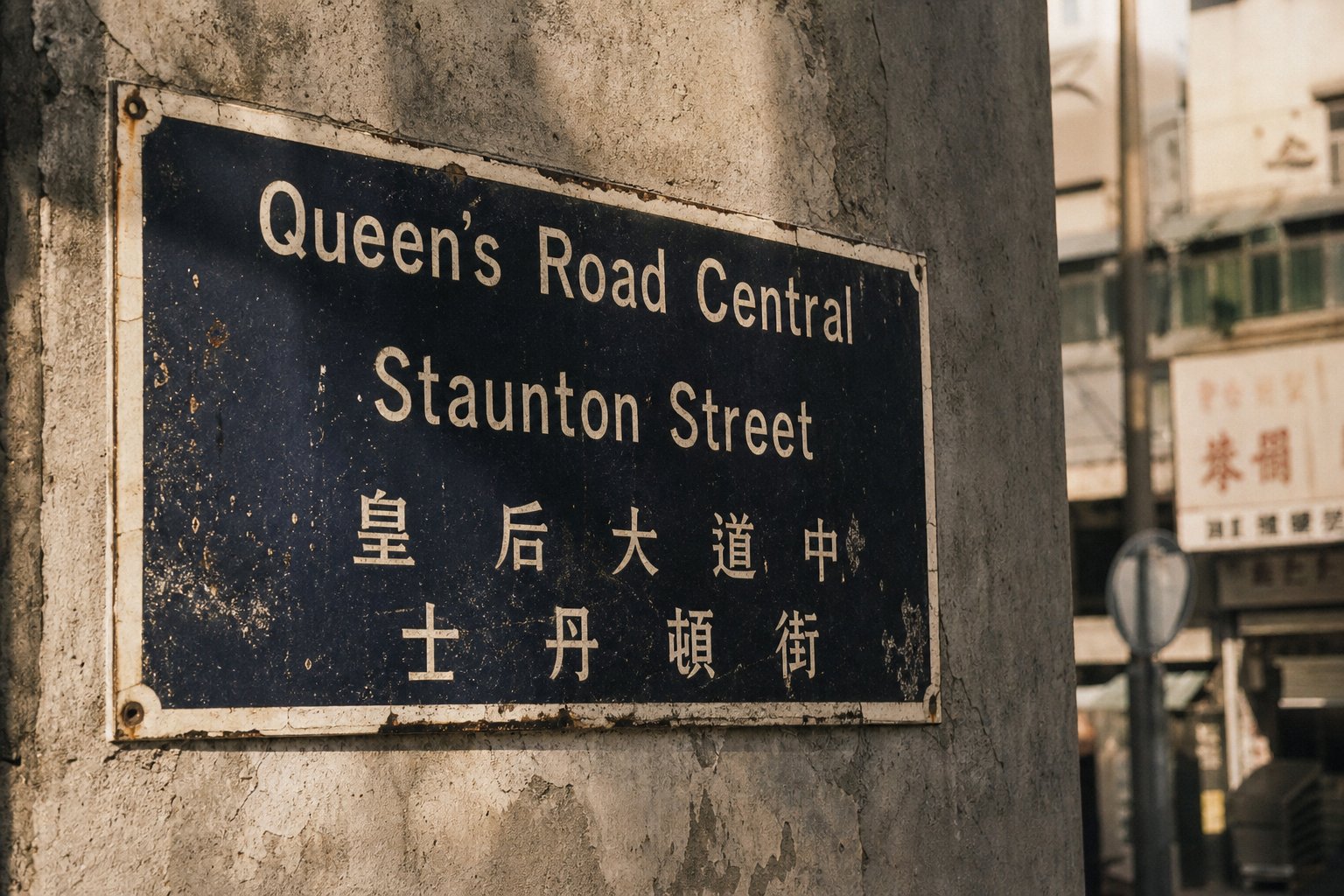
That system without a formal rulebook? It has a name: Hong Kong Government Cantonese Romanisation. And despite its lack of published standards, it is the single most visible form of chinese character romanization you will encounter anywhere in the city. Every ID card, every street sign, every birth certificate carries its imprint. It is not a system anyone consciously chose to learn. It is simply the way things have always been spelled in Hong Kong.
Origins and Official Use in Hong Kong
The roots of this system trace back to the British colonial administration in the late 19th century. The approach has remained broadly consistent since before 1888, when colonial officials needed a practical way to render Cantonese place names and personal names into the Latin alphabet for maps, land records, and government correspondence. There was no grand linguistic project behind it. British administrators simply wrote down what Cantonese sounded like to English-trained ears, using spelling conventions that felt intuitive to native English speakers.
The Hong Kong Government has never formally or publicly disclosed its method for determining romanisation in any given instance. Government departments consult internal references, particularly the Three Way Chinese Commercial/Telegraphic Code Book, originally published by the Royal Hong Kong Police Force Special Branch in 1971. This code book contains no tone indications and uses a grossly simplified approach that is susceptible to confusion.
For identity documents, the Registration of Persons Office uses this system by default when assigning romanized chinese names to ID cards. Individuals can request alternative spellings, but the vast majority of Hong Kong residents carry names spelled under this informal standard. The result is that millions of legal identities are locked into spellings that follow no published, verifiable set of rules.
Common Surnames and Place Names
You will recognize these spellings immediately if you have spent any time in Hong Kong or worked with Hong Kong contacts. The system produces distinctive romanizations that look nothing like their Pinyin equivalents:
| Chinese Character | HK Government Romanisation | Mandarin Pinyin |
|---|---|---|
| 黄 | Wong | Huang |
| 陈 | Chan | Chen |
| 吴 | Ng | Wu |
| 梁 | Leung | Liang |
| 林 | Lam | Lin |
| 李 | Lee | Li |
| 张 | Cheung | Zhang |
| 刘 | Lau | Liu |
Place names follow the same pattern. Tsim Sha Tsui, Mong Kok, Sham Shui Po, Kwun Tong - these are all products of the Government Romanisation approach. Some older spellings predate even the 1888 standard. "Kowloon" itself is a historical artifact; under the post-1888 system, it would be spelled "Kau Lung." Similarly, "Hong Kong" would technically be "Heung Kong" if respelled today.
One of the most telling inconsistencies involves the same Cantonese sound being spelled multiple ways. The /ts/ initial appears as both "ts" (Tsim Sha Tsui) and "ch" (Heng Fa Chuen). The /s/ sound can be written as either "s" or "sh" (compare So Kon Po with Shau Kei Wan). These alternately romanized chinese spellings exist because the system preserves a historical distinction between palatal and alveolar sounds that modern Cantonese speakers no longer make.
Strengths and Weaknesses
Understanding the trade-offs of this system helps explain why it persists despite its obvious flaws. When you encounter chinese romanized text from Hong Kong official sources, you are reading a system shaped by pragmatism rather than linguistic precision.
Pros
- Immediately readable for English speakers - Spellings like "Wong," "Chan," and "Lee" require no special training to pronounce approximately correctly.
- Deeply embedded in Hong Kong identity - Generations of families carry these spellings on passports, property deeds, and legal documents. They are not just transliterations; they are identities.
- Universal recognition within Hong Kong - Every street sign, MTR station, and government form uses this system. It is the shared written landscape of the city.
- Historical continuity - The approach has remained broadly stable for over a century, making older maps and records still legible.
Cons
- No published standard document - Unlike Pinyin or Jyutping, there is no official reference that defines correct spellings. The system exists through convention, not codification.
- Inconsistent spelling of identical sounds - The same phoneme can appear as "ch" or "ts," "s" or "sh," making chinese name romanization unpredictable even for experienced readers.
- No tone marking whatsoever - All tonal distinctions are completely omitted, which means dozens of different characters can produce identical romanized spellings.
- Impossible to reverse-engineer pronunciation reliably - Given a Government Romanisation spelling, you cannot determine the exact Cantonese pronunciation without already knowing the character. The mapping is many-to-one in both directions.
- Aspiration distinctions are lost - The system does not differentiate between aspirated and unaspirated stops, collapsing sounds that Cantonese speakers clearly distinguish.
The practical impact of these weaknesses hits hardest in database and record-linkage scenarios. When the same surname can be spelled "Cheng" or "Tsang" depending on which office processed the paperwork, matching records across systems becomes a guessing game. And because the system omits tones and merges distinct sounds, a single romanized spelling like "Chan" could correspond to multiple different Chinese characters with entirely different meanings.
Despite all this, the system is not going anywhere. It is woven into the legal fabric of Hong Kong society, carried on every identity card and stamped on every property title. For anyone navigating the city, recognizing these spellings is not optional. But for anyone trying to learn Cantonese systematically, this informal approach offers almost no help. That gap is precisely what motivated linguists to build something more rigorous from the ground up.
Jyutping as the Academic Standard for Cantonese
That more rigorous system arrived in 1993, when the Linguistic Society of Hong Kong published its Cantonese Romanization Scheme, known simply as Jyutping. The goal was direct: create a single, unambiguous way to romanize chinese Cantonese syllables so that every sound maps to exactly one spelling, and every spelling maps back to exactly one sound. No guesswork. No inconsistencies. No colonial-era approximations.
How Jyutping Standardizes Cantonese Sounds
Where Government Romanisation relies on English phonetic intuition, Jyutping uses a strict set of rules built on alphanumeric characters alone. There are no diacritics, no special symbols. The system covers 19 initial consonants, 9 vowel nuclei, 8 possible codas, and 6 tones marked by the numbers 1 through 6 appended to each syllable.
A few letter choices surprise English speakers at first. The letter "j" represents the y-sound (so "yes" would start with j-), while "z" and "c" handle the affricate sounds that Government Romanisation writes inconsistently as "ch" or "ts." The vowel "eo" captures a rounded mid-front sound that has no clean English equivalent. Once you learn these conventions, though, the system is completely predictable. The surname 黄 is always wong4. The character 陈 is always can4. No exceptions.
Tones appear as trailing numbers: fu1 (夫), fu2 (虎), fu3 (副), fu4 (扶), fu5 (婦), fu6 (父). This numbering approach makes chinese romanization pronunciation explicit in a way that Government Romanisation never attempts. You can look at a Jyutping string and know exactly how to read chinese romanization back into spoken Cantonese, tone and all.
Where Jyutping Is Used Today
Jyutping has become the default in academic linguistics, Cantonese dictionaries, and most modern language-learning apps. If you search for chinese romanization online tools for Cantonese, the majority now output Jyutping. Popular resources like CantoDict, Pleco's Cantonese add-on, and the open-source CC-Canto dictionary all use it as their primary romanization. University courses on Cantonese linguistics across Asia and North America have largely adopted it as well.
It also functions as a computer input method. Because Jyutping uses only standard ASCII characters, learners can type Cantonese on any keyboard without installing special fonts or memorizing stroke orders. Several Chinese romanization online input tools support Jyutping natively, making it practical for daily digital communication.
What Jyutping does not appear on: Hong Kong street signs, ID cards, or government forms. The general public in Hong Kong rarely encounters it outside educational contexts, which limits its everyday visibility despite its technical superiority.
Pros and Cons for Learners
For anyone deciding how to approach romanized chinese pronunciation systematically, Jyutping offers clear trade-offs:
Pros
- Fully consistent - One syllable, one spelling. No ambiguity in either direction.
- Complete phonetic coverage - Every Cantonese initial, final, and tone is represented without exception.
- Computer-friendly - Pure alphanumeric characters mean easy searching, sorting, and database storage.
- Active institutional support - The Linguistic Society of Hong Kong maintains and updates the scheme, most recently adding new rimes in 2018.
Cons
- Unintuitive letter assignments for English speakers - Using "j" for a y-sound and "z" for a ts-sound requires unlearning English habits.
- No presence on official documents - You will never see Jyutping on a Hong Kong passport or street sign.
- Limited public recognition - Most Hong Kong residents have never heard of it, making it useless for casual communication about pronunciation.
- Tone numbers feel clinical - Learners accustomed to diacritical marks may find trailing digits less visually intuitive for reading flow.
Jyutping solves the precision problem that Government Romanisation ignores. But it was not the first attempt at a systematic Cantonese romanization. For decades before Jyutping existed, Western learners relied on a different academic system, one that took the opposite approach to tone marking and dominated Cantonese textbooks throughout the English-speaking world.
Yale Cantonese Romanization for Western Learners
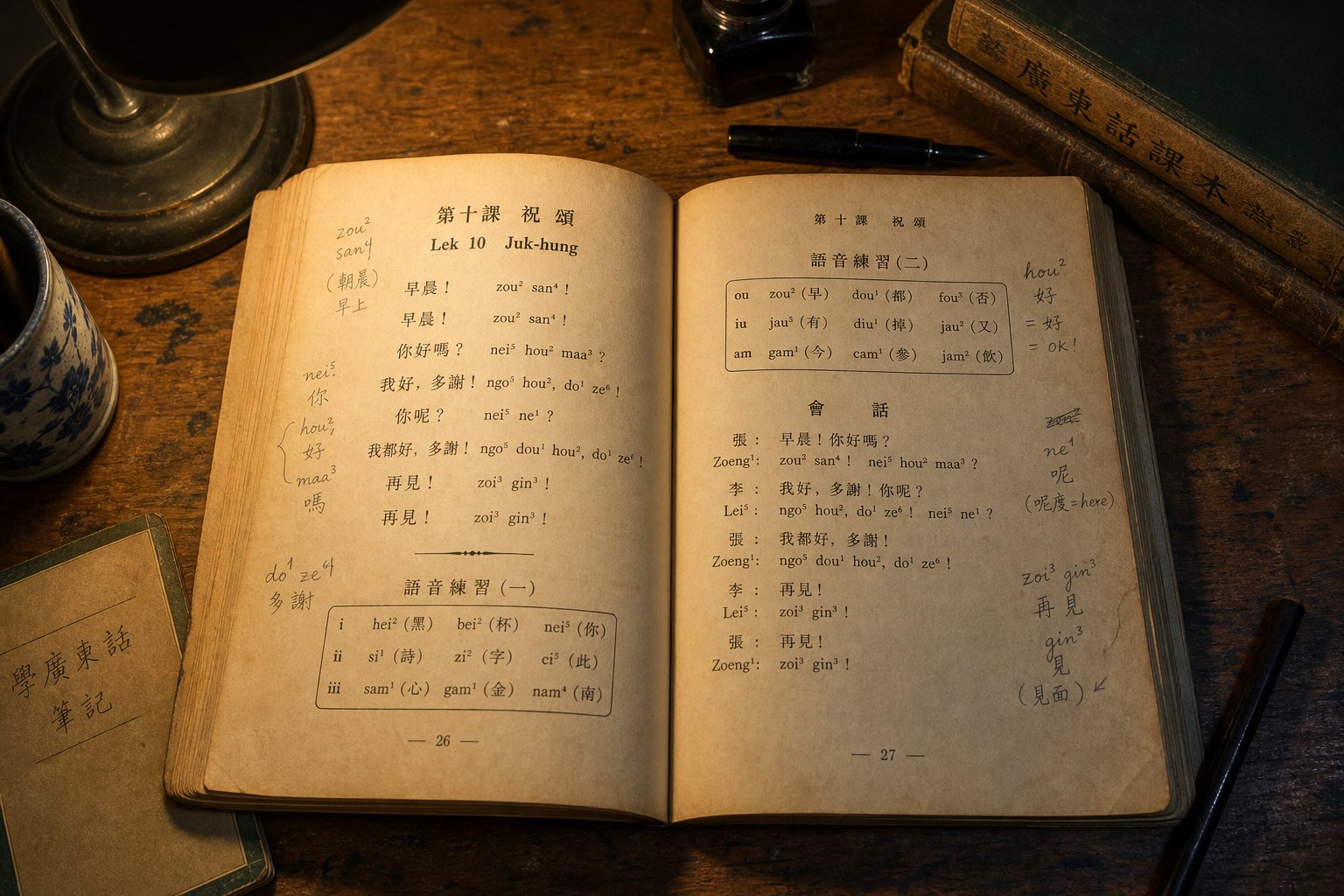
That earlier system was Yale romanization, and for half a century it was the way most English speakers learned how to read romanized chinese Cantonese. Developed by Yale scholar Gerard P. Kok for the textbook Speak Cantonese in the 1950s, the chinese cantonese yale romanization system was designed with one audience in mind: Western students who needed Cantonese pronunciation rendered in the most English-friendly way possible.
Yale's Approach to Tone Marking
Where Jyutping appends numbers to syllables, Yale uses a combination of diacritical marks and the letter "h" to indicate tones. High-register tones (1, 2, 3) are marked with accent diacritics alone: a macron for high-flat (sī), an acute accent for mid-rising (sí), and no mark for mid-flat (si). Low-register tones (4, 5, 6) add an "h" after the vowel: sìh for low-falling, síh for low-rising, sih for low-flat.
This split between high and low registers feels intuitive once you grasp the pattern. The "h" acts as a visual flag that drops you into the lower tonal range, while the diacritics handle direction within that range. For learners already familiar with accent marks from French or Spanish, the system clicks quickly. Chinese words romanized in Yale look approachable on the page: néih hóu for 你好, gwóng jāu wá for 廣州話.
Historical Dominance in Cantonese Education
From the late 1950s through the early 2000s, Yale was the undisputed standard in Cantonese textbooks aimed at English speakers. North American universities, including Yale's own Chinese Language Center and the Chinese University of Hong Kong's New-Asia Yale-in-China program, taught generations of students using this system. Classic references like Cantonese: A Comprehensive Grammar and countless phrasebooks presented chinese phrases romanized in Yale notation.
The system's dominance meant that anyone studying Cantonese in an academic setting before roughly 2010 almost certainly encountered Yale first. Entire libraries of chinese sentences romanized for pedagogical use exist exclusively in this format, from dialogue drills to literary translations of Tang Dynasty poetry.
Why Yale Is Losing Ground to Jyutping
Despite its pedagogical strengths, Yale faces practical problems in the digital age. Diacritical marks are difficult to type on standard keyboards, making it cumbersome for online communication, database entry, and app development. You cannot easily search for a Yale-romanized term without special character input. Jyutping's pure ASCII approach solves this instantly.
The Linguistic Society of Hong Kong's active promotion of Jyutping since 1993 has also shifted institutional momentum. Newer dictionaries, language apps, and academic papers increasingly default to Jyutping, leaving Yale as a legacy system found primarily in older textbooks.
Pros
- Highly intuitive for English speakers - Letter choices align closely with English phonetic expectations, reducing the initial learning curve.
- Visual tone marking - Diacritics convey pitch direction at a glance, making tonal patterns easier to internalize while reading.
- Extensive textbook documentation - Decades of published materials provide rich learning resources for self-study and classroom use.
Cons
- Declining adoption - Fewer new materials are published in Yale, making it increasingly a historical artifact rather than a living standard.
- Diacritics are hard to type - Without special keyboard setups, writing Yale romanization digitally is frustrating and slow.
- Less precise for computational use - The reliance on special characters makes Yale poorly suited for database indexing, search functions, and input methods.
- No official institutional backing - Unlike Jyutping, no active linguistic body maintains or updates the Yale system.
Yale and Jyutping both solve the same problem: giving Cantonese a systematic written form in Latin letters. But neither one is the romanization system that most of the world actually encounters. That distinction belongs to Mandarin Pinyin, a system built for an entirely different language, yet constantly confused with Cantonese romanization by anyone unfamiliar with the divide.
Mandarin Pinyin as the Global Standard
Pinyin is the romanization system the rest of the world knows. It is the one taught in schools from Berlin to Buenos Aires, printed on mainland Chinese passports, and embedded in every library cataloging system that handles Chinese-language materials. If you have ever typed a Chinese character on a phone or computer, you have almost certainly used Pinyin to do it. Its reach is unmatched by any other chinese to romanization system in existence.
Yet for all its global dominance, Pinyin was designed for one language only: Mandarin. That single fact is the source of endless confusion when people try to apply it to Hong Kong names, Cantonese pronunciation, or any context outside the Mandarin-speaking world.
Pinyin's Global Standardization and Adoption
The People's Republic of China officially adopted the Scheme for the Chinese Phonetic Alphabet in 1958. Unlike Hong Kong's informal colonial approach, Pinyin was engineered from the start as a complete, rule-governed system. Every Mandarin syllable maps to exactly one spelling. Every spelling maps back to exactly one syllable (when tones are included). The four tones are marked with diacritics placed over vowels: a macron for first tone (mā), an acute accent for second (má), a caron for third (mǎ), and a grave accent for fourth (mà).
International recognition followed steadily. In 1977, the Third United Nations Conference on the Standardization of Geographical Names passed a resolution recommending Pinyin as the international standard for romanizing Chinese geographical names. By 1979, the UN Secretariat issued formal explanations on using Pinyin for both personal and geographical names. Then in 1982, the International Organization for Standardization published ISO 7098, making Pinyin the official international standard for the romanization of chinese characters in documentation. That standard has been revised twice since, most recently in 2015, reflecting new developments in digital and automated environments.
Where does Pinyin appear in daily life? The list is extensive:
- Mainland Chinese passports and ID cards - Every citizen's name is rendered in Pinyin alongside Chinese characters.
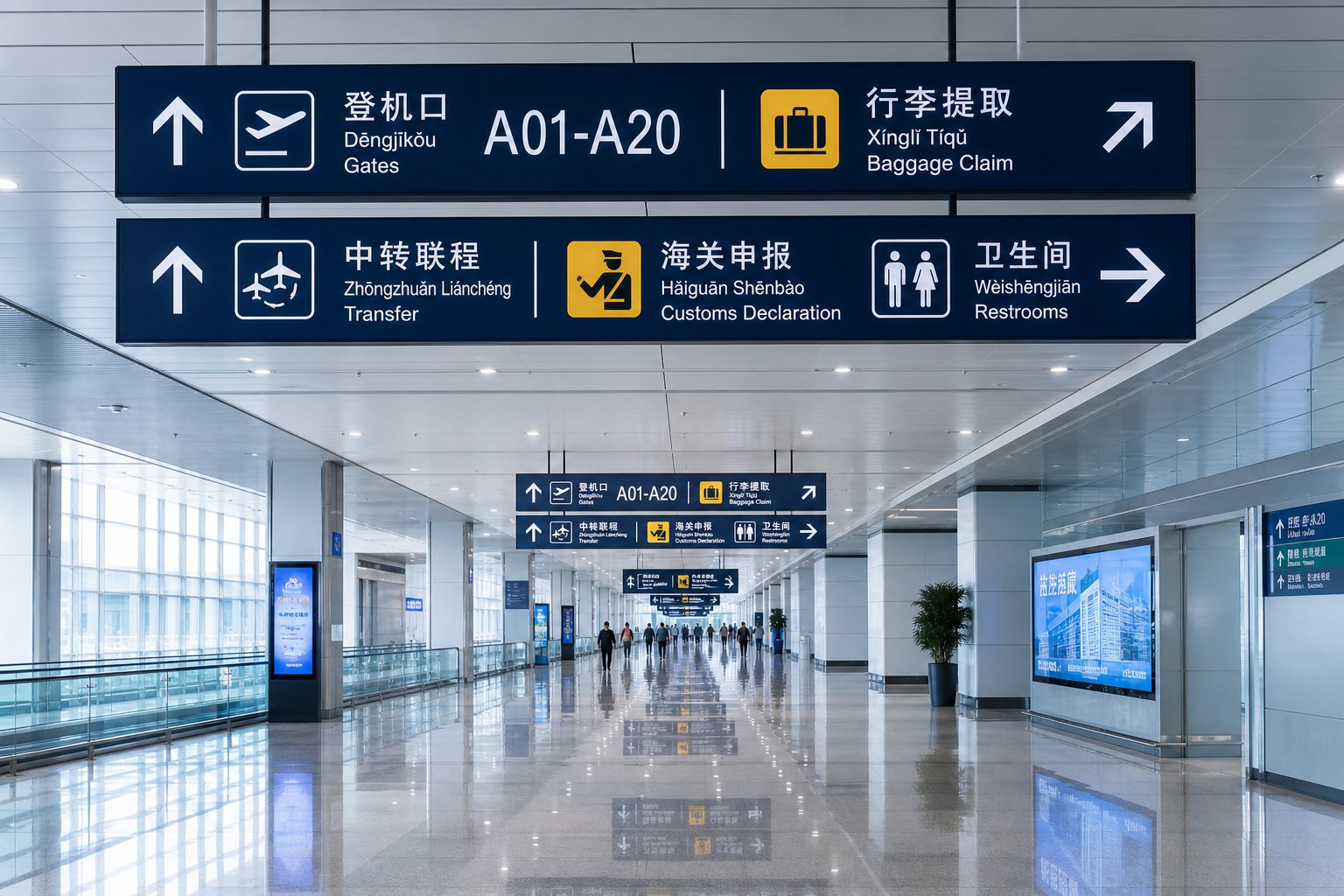
- International signage - Road signs, airport terminals, and railway stations across mainland China display Pinyin beneath Chinese text.
- Language education worldwide - Virtually every Mandarin textbook, app, and course uses Pinyin as the primary pronunciation guide. China's 1958 phonetic scheme has become the cornerstone of international Chinese language teaching.
- Library cataloging - The Library of Congress, national libraries, and academic institutions globally use Pinyin for indexing chinese romanized titles and author names.
- Computer input - Pinyin-based keyboard input is the dominant method for typing Chinese on smartphones and computers, used by hundreds of millions daily.
- Loanwords entering other languages - Terms like "kung fu" (gongfu), "dim sum" (dianxin), and "tofu" (doufu) increasingly appear in their Pinyin forms in international media.
This breadth of adoption means that when most people outside China think of chinese to romanized text, they think of Pinyin, whether they realize it or not.
Why Pinyin Cannot Represent Cantonese
Here is where the confusion starts. Pinyin was built around Mandarin's phonetic inventory: 21 initials, 35 finals, and 4 tones plus a neutral tone. It handles Mandarin beautifully because it was designed for Mandarin and nothing else.
Cantonese, however, operates with a fundamentally different sound system. It has 19 initials (some overlapping with Mandarin, some unique), over 50 possible finals, and 6 full tones. Crucially, Cantonese preserves final stop consonants (-p, -t, -k) that Mandarin lost centuries ago. Pinyin has no mechanism for writing these sounds because they simply do not exist in the language it represents.
Consider a practical example. The character 十 (ten) is pronounced "sap" in Cantonese, ending with a sharp unreleased -p. In Pinyin, it is "shi" - a completely different syllable with no final consonant at all. No amount of creative Pinyin spelling can capture that -p ending, because the system was never built to accommodate it.
The tonal mismatch is equally severe. Pinyin's four diacritical marks cannot distinguish between Cantonese's six tones. Even if you forced Cantonese syllables into Pinyin spelling conventions, you would lose tonal distinctions that change meaning entirely. The word "si" in Cantonese can mean "poem" (tone 1), "to try" (tone 3), "matter" (tone 6), or "death" (tone 2), among others. Pinyin's four-tone framework cannot handle this range.
This is not a flaw to be patched. It is a fundamental design boundary. Pinyin represents Mandarin. Jyutping and Government Romanisation represent Cantonese. They are parallel systems for parallel languages, not competing versions of the same tool.
The Database Mismatch Problem
The real-world consequences of this divide hit hardest in record linkage and data management. Imagine a hospital in London trying to match patient records for someone named "Lam" (Hong Kong romanisation) with records from a mainland Chinese system listing the same person as "Lin" (Pinyin). Same character 林, same individual, two spellings that share only one letter.
Research from University College London quantified this problem directly. A 2025 study analyzing 771 Hong Kong student names found that blocking strategies based on Hong Kong Government Romanisation achieved only 68.8% recall, meaning nearly a third of true matches were missed. Standardized systems like Jyutping and Pinyin (with tonal information) achieved over 95% recall. The inconsistency of HK romanisation, combined with its many-to-one and one-to-many character mappings, makes automated matching unreliable.
The study also revealed a counterintuitive finding: the same Chinese character can produce different romanized codes even within a single system. In HK Government Romanisation, the character 周 appears as "Chow," "Chau," or "Chiau" depending on which office processed the name. Jyutping would consistently render it as "zau1" every time. For databases handling cross-border records, this inconsistency introduces systematic bias against people whose names were romanized under non-standardized systems.
Historical data linkage suffers even more dramatically. A US Census linkage study matched only 3.6% of male Chinese migrants between 1880 and 1900, compared to 16.3% of English migrants. The romanization inconsistencies in early immigration records made it nearly impossible to track the same individual across multiple documents.
For anyone working with chinese romanized data across jurisdictions, the practical lesson is clear: you cannot assume that two different romanized spellings refer to different people, nor that identical spellings refer to the same person. The system used, the language it reflects, and the era it was created in all determine what a romanized name actually means.
Pros
- Globally recognized - Adopted by the UN, ISO, and virtually every international institution that handles Chinese-language materials.
- Fully standardized - One syllable, one spelling. Published rules cover every possible Mandarin sound without exception.
- Extensive learning resources - Thousands of textbooks, apps, courses, and dictionaries support Pinyin-based Mandarin learning.
- Computer-friendly - Functions as the dominant input method for Chinese text on digital devices worldwide.
- Institutional continuity - Actively maintained and updated through ISO revisions, most recently ISO 7098:2015.
Cons
- Cannot represent Cantonese pronunciation - Lacks the phonetic inventory to capture Cantonese finals (-p, -t, -k), tonal range (6 tones), and unique initials.
- Creates confusion when applied to Hong Kong names - A person named "Wong" in Hong Kong becomes "Huang" in Pinyin, leading to misidentification in cross-border databases.
- Tone marks frequently omitted in practice - Most real-world uses of Pinyin (signage, passports, casual typing) drop the diacritics, collapsing distinct characters into identical spellings.
- Unintuitive letter choices for some sounds - Letters like "q" (ch-sound), "x" (sh-sound), and "c" (ts-sound) confuse English speakers unfamiliar with the system's conventions.
Pinyin's dominance in the Mandarin world is absolute and well-earned. But its very success creates a blind spot: people assume it covers all of Chinese, when it covers only one variety. That gap leaves room for niche systems that serve specific communities, including one developed specifically for training British civil servants to speak Cantonese in colonial Hong Kong.
Sidney Lau and Other Niche Cantonese Systems
That civil-servant training system was the work of Sidney Lau, a Hong Kong government language officer who developed his romanization scheme in the 1970s specifically to teach expatriate officials functional spoken Cantonese. Unlike Government Romanisation, which was never designed as a learning tool, the Sidney Lau system was built from the ground up for classroom instruction.
Sidney Lau's Government Training Origins
Sidney Lau's approach structures every Cantonese syllable into three components: an optional initial sound, a final sound, and a tone. The system uses numeric superscripts from 1 to 6 to mark tones, making pitch distinctions explicit in written form. For example, "ma1" means mother while "ma4" means hemp. The initial consonant inventory covers 19 sounds, with letter choices that lean toward English phonetic intuition: "ch" for the affricate in "chat," "gw" for the rounded velar in "Gwendoline," and "ng" for the nasal in "sing."
The system gained additional reach through Martha Lam and Stanley Po's course Functional Cantonese, which adopted the same romanization with one modification: diacritics replaced numerical superscripts for tone marking. This variant made the system slightly more readable on the printed page while preserving its structural logic.
Sidney Lau's textbooks remained the standard training material for Hong Kong government language courses for decades, giving the system a well-defined but narrow audience: civil servants, police officers, and administrative staff who needed conversational Cantonese for their postings.
Chinese Postal Romanization for Place Names
An even older niche system deserves mention. Chinese postal romanization was the standard used by China's Imperial Post Office from 1906 onward to render place names on international mail. It drew from a mix of local dialect pronunciations and Wade-Giles conventions, producing spellings like "Peking" (Beijing), "Canton" (Guangzhou), and "Amoy" (Xiamen). Many of these forms persisted in English-language maps and atlases well into the late 20th century.
For researchers working with historical documents, the ala lc romanization chinese tables maintained by the Library of Congress provide a bridge between these older systems and modern Pinyin. The ala lc romanization tables chinese libraries use today follow Pinyin conventions but include cross-references to legacy postal spellings, making them essential for cataloging pre-1979 materials where place names appear in their historical forms.
Niche Systems and Their Limited Reach
Both Sidney Lau and Chinese postal romanization serve as reminders that romanization systems often emerge to solve very specific problems for very specific audiences. Their strengths and limitations reflect those narrow origins.
Pros
- Practical for structured learning - Sidney Lau's system was purpose-built for classroom instruction, with clear tone indication and systematic coverage of all Cantonese sounds.
- Explicit tone marking - Numeric superscripts leave no ambiguity about which of the six tones a syllable carries.
- English-friendly letter choices - Initial consonants map closely to English pronunciation expectations, reducing the learning curve for Western students.
- Historical utility - Chinese postal romanization remains valuable for interpreting pre-modern documents, maps, and archival records.
Cons
- Extremely limited adoption - Sidney Lau's system never spread beyond government training courses and a handful of associated textbooks.
- Largely superseded by Jyutping - Modern Cantonese learners and linguists overwhelmingly prefer Jyutping's consistency and digital compatibility.
- No presence in public life - Neither system appears on street signs, ID cards, or any documents a visitor to Hong Kong would encounter.
- Postal romanization is obsolete - China officially replaced postal spellings with Pinyin in 1979, making the older forms purely historical artifacts.
These niche systems fill gaps in the romanization landscape, but none of them competes with the major players for everyday relevance. What matters most for practical use is understanding how the dominant systems compare when placed directly side by side, with the same characters rendered across every scheme simultaneously.
Complete Side-by-Side Comparison of All Systems
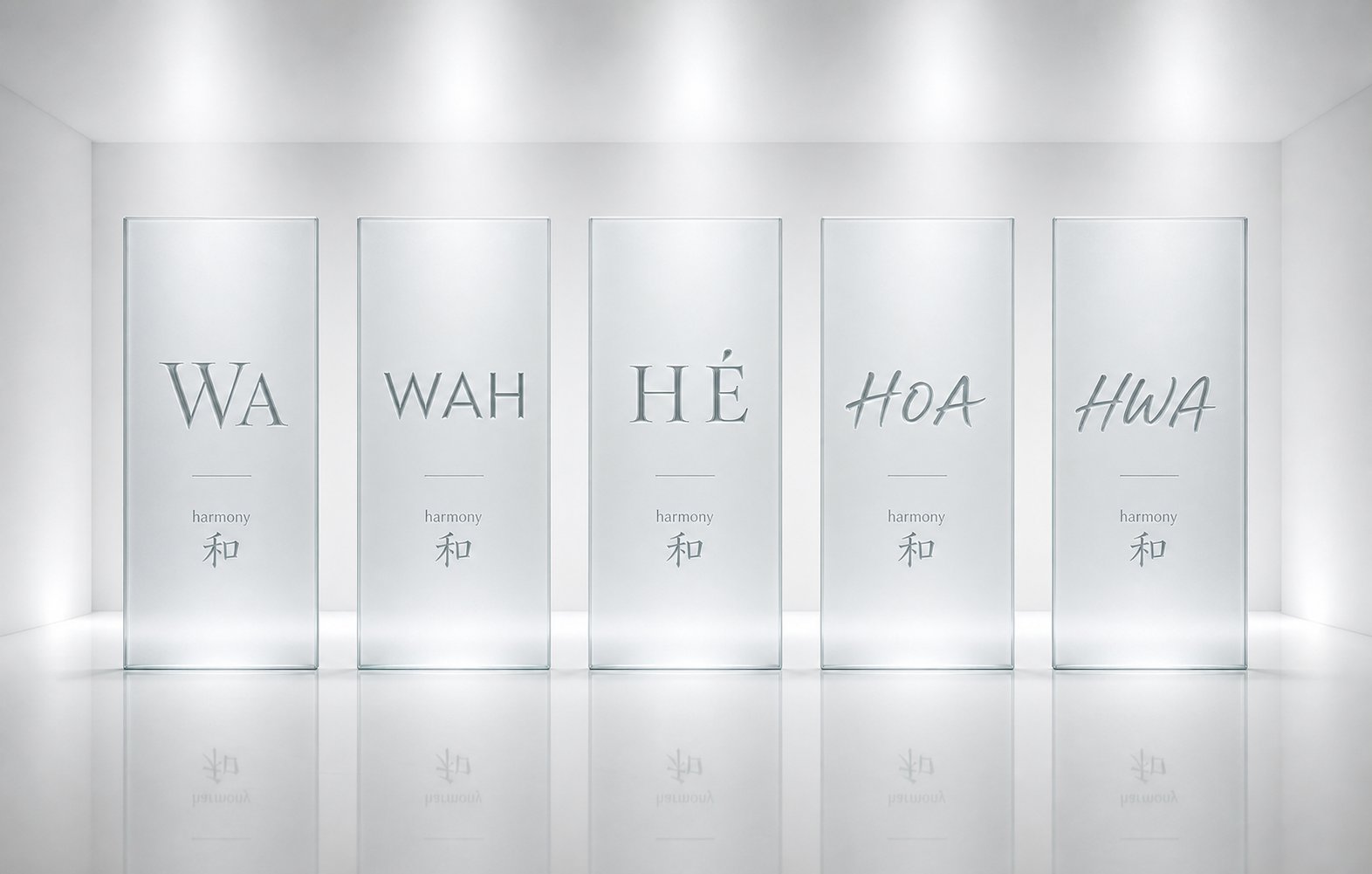
Seeing the same Chinese character spelled five different ways makes the divergence between these systems impossible to ignore. A single table does what paragraphs of explanation cannot: it shows you exactly how far apart these romanizations land, and why anyone working with cross-system records needs a reliable chinese romanization converter to bridge the gap.
Common Surnames Across All Systems
The ten most frequently encountered Hong Kong surnames illustrate the full range of variation. Notice how some systems produce nearly identical output (Sidney Lau and Jyutping share structural logic) while others diverge completely (HK Government vs. Pinyin share almost nothing).
| Character | HK Government | Jyutping | Yale | Sidney Lau | Pinyin |
|---|---|---|---|---|---|
| 黄 | Wong | wong4 | wohng | wong4 | Huang |
| 陈 | Chan | can4 | chahn | chan4 | Chen |
| 吴 | Ng | ng4 | ngh | ng4 | Wu |
| 梁 | Leung | loeng4 | leuhng | leung4 | Liang |
| 林 | Lam | lam4 | lahm | lam4 | Lin |
| 李 | Lee | lei5 | leih | lei5 | Li |
| 张 | Cheung | zoeng1 | jeung | jeung1 | Zhang |
| 刘 | Lau | lau4 | lauh | lau4 | Liu |
| 何 | Ho | ho4 | hoh | ho4 | He |
| 周 | Chow | zau1 | jau | jau1 | Zhou |
Look at the "Ng" row. In HK Government Romanisation, it is two consonants with no vowel at all. In Pinyin, it becomes "Wu" - a completely different syllable. Anyone trying to convert romanized chinese to chinese characters without knowing which system produced the spelling faces an immediate identification problem. Is "Ng" a romanization of 吴, 伍, or 五? Without context, there is no way to tell.
Feature Comparison Matrix
Beyond individual spellings, the systems differ in structural design. This matrix captures the dimensions that matter most when choosing which system to use or which chinese to romanization converter to rely on for a specific task.
| Feature | HK Government | Jyutping | Yale | Sidney Lau | Pinyin |
|---|---|---|---|---|---|
| Standardization | None (convention only) | Full (LSHK published) | Full (textbook-defined) | Full (course materials) | Full (ISO 7098) |
| Tone Marking | None | Numbers 1-6 | Diacritics + "h" | Superscript numbers 1-6 | Diacritics (4 tones) |
| Official Use | HK ID cards, street signs | Academic papers, dictionaries | Older textbooks | Government language courses | PRC passports, UN, ISO |
| Learning Curve | Low (English-intuitive) | Medium (unfamiliar letters) | Low-Medium (familiar marks) | Medium (structured) | Medium (q, x, c confuse) |
| Computational Use | Poor (inconsistent) | Excellent (ASCII only) | Poor (diacritics) | Fair (superscripts needed) | Excellent (ASCII + marks) |
| Language Represented | Cantonese | Cantonese | Cantonese | Cantonese | Mandarin |
The final row is the most critical distinction. Four of these five systems represent Cantonese. Pinyin represents Mandarin. They are not interchangeable, and no chinese romanization tool can meaningfully "convert" between them without first identifying the underlying Chinese character and then re-romanizing it in the target system.
Mapping Between Systems for Practical Use
So how do you actually move between systems? Imagine you have a Hong Kong client named "Cheung" and need to find their records in a mainland database. The process requires three steps:
- Identify the Chinese character - "Cheung" in HK Government Romanisation most likely corresponds to 张, though it could also be 蒋 in some cases.
- Confirm the character - Cross-reference with other identifying information (given name, ID number) to verify which character is correct.
- Re-romanize in the target system - Once you know the character is 张, you can produce the Pinyin equivalent: Zhang.
This is not a simple letter-substitution exercise. You cannot build a direct lookup table from "Cheung" to "Zhang" because the mapping passes through the Chinese character as an intermediary. A chinese romanization converter to english that works reliably must operate at the character level, not the spelling level.
Several digital tools handle this workflow. Apps like Pleco and online platforms such as CantoDict allow you to input a character and receive its romanization in multiple systems simultaneously. For bulk processing, open-source libraries like pycantonese (Python) can batch-convert character lists into Jyutping, which then serves as a stable key for cross-referencing against Pinyin databases.
The key insight for anyone seeking a chinese romanized translation across systems: there is no shortcut that bypasses the character. Every reliable chinese romanizer works by resolving the romanized input back to its source character first, then outputting the equivalent in whatever target system you need. Attempting a direct romanized chinese to english phonetic mapping without this step produces unreliable results, especially for HK Government spellings where one romanization can correspond to dozens of different characters.
For genealogy researchers, immigration record analysts, and cross-border compliance teams, understanding this three-step process is not optional. It is the only reliable method for linking identities across the Hong Kong and mainland systems. The question that remains is which system deserves your attention first, and that depends entirely on what you are trying to accomplish.
Which Romanization System You Should Learn First
Your goal determines your system. That is the simplest way to cut through the complexity. No single romanization scheme covers every scenario, and trying to master all five at once is a recipe for confusion. The practical move is to identify what you actually need, then invest your time accordingly.
Decision Guide Based on Your Goals
Think of this as a priority list matched to real-life situations. Where do you fall?
- Living or working in Hong Kong - Start by learning to recognize Government Romanisation patterns. You will see them on every street sign, MTR map, and official form. You do not need to memorize rules (there are none), but you do need pattern recognition: "Tsim Sha Tsui," "Mong Kok," "Kwun Tong." Once you are comfortable navigating daily life, add Jyutping for systematic Cantonese study. It gives you the precision that Government Romanisation lacks, letting you look up any word in a dictionary and nail the correct tone.
- Doing business with mainland China - Pinyin is non-negotiable. Every mainland database, government form, and corporate directory uses it. If your work also involves Hong Kong clients, learn to recognize HK Government spellings so you can perform the character-level conversion described in the previous section. A chinese romanization translator tool like Pleco or CantoDict bridges the gap when you need to match "Cheung" to "Zhang."
- Academic research on Cantonese linguistics - Jyutping is the current standard, full stop. Peer-reviewed journals, the Linguistic Society of Hong Kong, and modern corpus tools all expect it. If you are reading older scholarship, you will encounter Yale notation in citations and transcriptions, so familiarity with both helps. But for your own publications, Jyutping is what reviewers and readers expect.
- Genealogy and historical record research - Government Romanisation literacy is essential here, but with a critical caveat: you must understand its inconsistencies. The same ancestor might appear as "Cheng" on one document and "Tsang" on another. Knowing that these variant spellings can map to the same character prevents you from treating one person as two. Cross-referencing romanized chinese sentences in old immigration records against character-level databases is the only reliable method for confirming identity matches.
- Traveling through Greater China - Recognize both systems on signs and maps. Hong Kong and Macau use Cantonese-based romanization. Cross the border into Shenzhen and everything switches to Pinyin overnight. A traveler who knows that "Kowloon" and "Jiulong" refer to the same place (九龙) navigates with far less friction than one who assumes they are different locations.
- Building language technology or databases - Jyutping for Cantonese data, Pinyin for Mandarin data. Both are fully standardized, ASCII-compatible, and computationally friendly. Avoid Government Romanisation as a primary key in any system that requires reliable matching. Use it only as a display layer or secondary search field.
Notice the pattern: Government Romanisation is something you recognize, not something you produce. Jyutping and Pinyin are systems you actively use. That distinction matters. You need passive literacy in the informal system and active fluency in whichever standardized system matches your language of focus.
The Cultural Identity Behind Romanization Choice
Here is something that purely technical comparisons miss. In Hong Kong, romanization is not just a phonetic convenience. It is an identity marker. When a Hong Kong resident writes their name as "Wong" rather than "Huang," they are not making a linguistic error or using an outdated system. They are asserting a Cantonese identity, a connection to a specific place, language, and cultural tradition that predates Mandarin's political dominance.
This is why proposals to "standardize" Hong Kong names into Pinyin meet fierce resistance. The suggestion implies that Cantonese pronunciation is somehow less legitimate than Mandarin, that "Wong" is a deviation from the "correct" spelling "Huang." For Hong Kong residents, the opposite is true. Their romanization reflects their actual spoken language. Pinyin reflects someone else's.
The same dynamic plays out in diaspora communities worldwide. A family named "Ng" in San Francisco's Chinatown carries a spelling that encodes Cantonese heritage across generations. Converting it to "Wu" for administrative convenience erases that history. Understanding this cultural weight helps explain why Government Romanisation persists despite its technical shortcomings. It is not merely a legacy system waiting to be replaced. It is a living expression of linguistic identity that millions of people carry on their most important documents.
For anyone approaching chinese romanization translation as a purely technical problem, this cultural dimension adds a necessary layer of sensitivity. The "best" system depends not only on precision and standardization but also on whose language and identity the romanization is meant to represent.
Final Verdict on Which System to Prioritize
If you could learn only one system, which should it be? The answer splits cleanly along the Mandarin-Cantonese line:
- For Mandarin contexts - Learn Pinyin. There is no serious alternative for mainland China, international Mandarin education, or any institution that follows ISO standards.
- For Cantonese contexts - Learn Jyutping. It gives you complete, unambiguous coverage of every Cantonese sound and tone, works seamlessly in digital environments, and is the system that modern dictionaries, apps, and academic resources support.
- For Hong Kong daily life - Develop recognition of Government Romanisation patterns alongside your Jyutping study. You will need both: one for reading the city around you, the other for understanding the language beneath it.
The romanization to chinese pathway always runs through the character. No matter which system you start from, the Chinese character is the anchor point that connects all romanized forms. Master the system that matches your primary language of study, build recognition of the systems you will encounter passively, and use character-level tools to bridge between them when cross-referencing is required. That approach turns the apparent chaos of competing romanizations into a navigable, logical landscape.
Frequently Asked Questions About Hong Kong Romanization and Pinyin
1. Why are Hong Kong names spelled differently from Pinyin?
Hong Kong names reflect Cantonese pronunciation while Pinyin reflects Mandarin. These are two distinct spoken languages with different sound systems, tones, and consonant inventories. A character like 黄 sounds like 'Wong' in Cantonese and 'Huang' in Mandarin, producing completely unrelated spellings. The Hong Kong system also lacks standardized rules, having evolved from British colonial-era transcriptions based on English phonetic intuition rather than linguistic precision.
2. Can you convert Hong Kong romanization directly to Pinyin?
No direct letter-for-letter conversion exists between the two systems. Reliable conversion requires a three-step process: first identify the underlying Chinese character from the Hong Kong spelling, confirm it using additional context, then re-romanize that character in Pinyin. Tools like Pleco and CantoDict handle this by operating at the character level. A simple lookup table fails because one Hong Kong spelling can correspond to multiple characters with different Pinyin equivalents.
3. What is Jyutping and how does it differ from Hong Kong Government Romanisation?
Jyutping is a fully standardized Cantonese romanization system published by the Linguistic Society of Hong Kong in 1993. Unlike Government Romanisation, it assigns exactly one spelling to each Cantonese syllable and includes tone numbers (1-6) for complete phonetic accuracy. It uses only ASCII characters, making it computer-friendly. However, it does not appear on Hong Kong street signs or ID cards and remains primarily an academic and language-learning tool.
4. Is Pinyin useful for learning Cantonese?
Pinyin cannot represent Cantonese pronunciation. It lacks mechanisms for Cantonese's six tones (Pinyin handles only four), final stop consonants (-p, -t, -k) that Cantonese preserves, and several initial sounds unique to Cantonese. For systematic Cantonese learning, Jyutping is the recommended system because it covers every phonemic distinction in the language. Pinyin remains essential only for Mandarin contexts such as mainland Chinese business or international Mandarin education.
5. Which romanization system should I learn first for visiting Hong Kong?
For travel, develop passive recognition of Hong Kong Government Romanisation since it appears on all street signs, MTR maps, and official signage. You do not need to memorize rules but should recognize common patterns like 'Tsim Sha Tsui' and 'Mong Kok.' If you plan to study Cantonese seriously during your stay, add Jyutping for dictionary lookups and pronunciation accuracy. If your trip also includes mainland China, basic Pinyin knowledge helps you navigate the switch at the border.