Why Chinese Names Have Confusing Double Spellings
Imagine you're reading a history book that mentions "Mao Tse-tung" and then open a news article referencing "Mao Zedong." Same person, two completely different spellings. The same thing happens with "Peking" and "Beijing," or "Chiang Kai-shek" and "Jiang Jieshi." If you've ever wondered whether these are different people or places, you're not alone. The culprit behind this confusion is surprisingly simple: two competing romanization systems have been transliterating Chinese characters into the Latin alphabet for over a century.
Tao Te Ching or Dao De Jing? Both refer to the same classical Chinese text. The first uses Wade-Giles romanization, the second uses Pinyin.
Why the Same Person Has Two English Spellings
Chinese is a tonal language with a logographic script, meaning its characters don't directly represent phonemes the way English letters do. To write Chinese words using the Latin alphabet, linguists developed romanization systems. The Wade-Giles system dominated English-language texts for most of the 20th century, appearing in standard reference books and virtually all Western publications about China before 1979. Then Pinyin, developed by the Chinese government and approved in 1958, gradually took over. After the normalization of Sino-American diplomatic relations in 1979, Pinyin became the standard in mass media and scholarship. The result? Decades of books, records, and databases split between two systems, with the same names spelled differently depending on when and where a text was published.
Who This Guide Helps
This wade giles vs pinyin naming gap creates real problems for specific groups of people. Genealogy researchers tracing family immigration records encounter older Wade-Giles spellings that don't match modern databases. Students reading pre-1979 academic texts find names they can't cross-reference with current sources. Librarians deal with catalog entries in both systems daily. Journalists need to know which historical names stay in their older form by convention and which ones follow modern Pinyin standards. If any of these scenarios sound familiar, this guide walks you through the best tools, charts, and pattern-recognition techniques for decoding both systems quickly and accurately.
The confusion runs deeper than just famous names, though. Systematic letter-swap patterns govern how one system translates to the other, and learning to spot those patterns turns an overwhelming problem into a manageable skill.
How We Evaluated These Conversion Resources
Not all wade giles pinyin conversion tools are created equal. Some handle standard textbook examples perfectly but fall apart when you feed them a Taiwanese passport name that drops the apostrophes. Others give you a lookup table without explaining why "ch'" becomes "q" in one context and "ch" in another. To separate genuinely useful resources from superficial ones, we applied a consistent set of criteria across every tool and reference reviewed in this guide.
Evaluation Criteria for Conversion Resources
Each resource was measured against six core factors:
- Conversion accuracy - Does the tool reliably produce correct output for both common and uncommon syllable combinations in the wade-giles system?
- Name coverage - Does it handle personal names, place names, and historical terms equally well, or does it favor one category?
- Ease of use for non-linguists - Can someone without a background in Chinese phonology get useful results quickly?
- Pronunciation guidance - Does the resource help users understand how a name actually sounds, or does it only swap letters between systems?
- Handling of Taiwanese modified Wade-Giles - Can it process names that omit apostrophes, tone numbers, and umlauts, as is common practice in Taiwan?
- Educational value - Does the resource teach the underlying rules so users build lasting skills, or is it purely a one-off lookup?
Testing Methodology and Name Sources
We tested each resource against names drawn from three real-world pools: academic texts published before and after 1979, English-language news archives covering China and Taiwan, and genealogy databases containing immigration and census records. This mix ensures the recommendations hold up whether you're deciphering a wade gile spelling on a family document or cross-referencing a scholar's name across decades of journal citations. Resources that only handled clean, textbook-standard inputs scored lower than those robust enough to manage the messy variants you actually encounter in the wild.
Pinyin Cross-Reference Charts and Conversion Tables
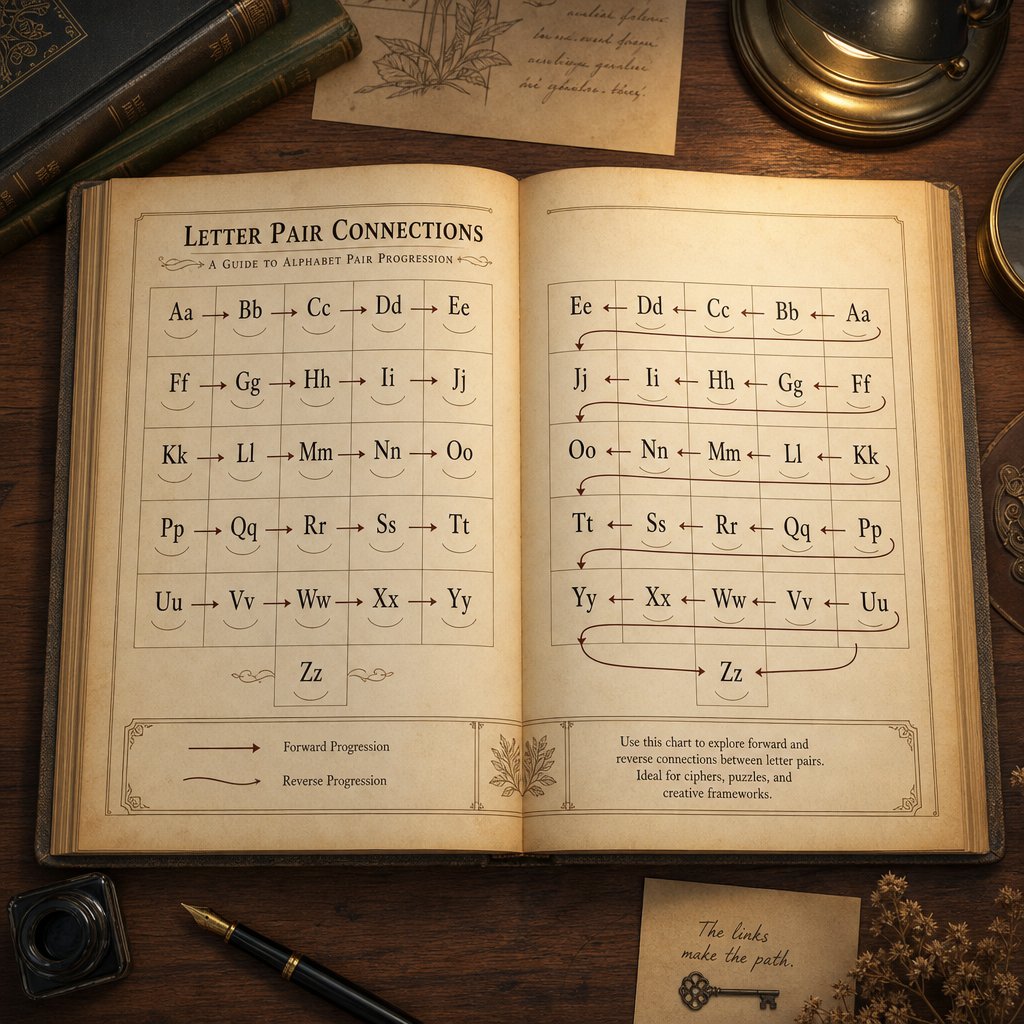
Of all the resource types available for navigating romanization differences, a well-built pinyin cross reference chart remains the single most broadly useful starting point. These tables lay out every valid Mandarin syllable in both systems side by side, giving you a reliable anchor when a name or term doesn't look familiar. But not every chart is equally helpful. The difference between a frustrating wall of text and a genuinely practical reference comes down to how the information is organized.
What Makes a Cross-Reference Chart Effective
A good pinyin cross reference table does more than list hundreds of syllable pairs alphabetically. The best ones are organized by initial consonant, grouping all syllables that share the same onset sound together. This structure lets you scan quickly when you already know the first letter or two of the name you're trying to convert. You'll also want a chart that includes all valid syllable combinations in Mandarin, not just the most common ones, because obscure finals like "-iung" or "-uei" show up in personal names more often than you'd expect.
Other features that separate a useful chart from a mediocre one: tone marks or tone numbers displayed alongside each entry, clear visual distinction between aspirated and unaspirated pairs, and coverage of variant spellings. Mandarin Portal's conversion table, for example, sorts entries alphabetically within each letter category and places apostrophe variants after all non-apostrophe entries, making it easier to locate aspirated consonants without confusion.
Key Letter-Swap Patterns to Look For
Here's where a pinyin wade giles chart becomes genuinely educational rather than just a lookup tool. The best charts group entries so you can see the systematic consonant swaps that govern the entire relationship between these two systems. Once you internalize these patterns, you won't need to check the chart for every single name.
The core conversions follow predictable rules based on how Wade-Giles uses apostrophes to mark aspiration:
| Wade-Giles | Pinyin | Example (WG → PY) |
|---|---|---|
| p | b | Pei → Bei |
| p' | p | P'ing → Ping |
| t | d | Tao → Dao |
| t' | t | T'ang → Tang |
| k | g | Kung → Gong |
| k' | k | K'ung → Kong |
| ts / tz | z | Tse → Ze |
| ts' / tz' | c | Ts'ao → Cao |
| ch (before i/ü) | j | Chiang → Jiang |
| ch' (before i/ü) | q | Ch'ing → Qing |
| hs | x | Hsi → Xi |
Notice the logic: in Wade-Giles, the plain consonant (without an apostrophe) represents the unaspirated sound, while the apostrophe marks aspiration. Pinyin handles this differently by assigning separate letters entirely. So "p" in Wade-Giles isn't the same sound as "p" in Pinyin. That single fact trips up more readers than any other detail in the system.
Beyond consonants, you'll also spot the vowel shift where Wade-Giles "-ung" consistently maps to Pinyin "-ong" (as in kung → gong), and Wade-Giles "j" corresponds to Pinyin "r" (as in jan → ran). A chart that highlights these groupings visually, through color coding or section headers, teaches you the underlying logic rather than forcing rote memorization of individual entries.
Limitations of Static Charts
Even the most comprehensive pinyin cross reference chart has blind spots. Static tables assume you're working with properly formatted Wade-Giles, complete with apostrophes, hyphens, and diacritics. In practice, many of the names you'll encounter in the real world don't follow those conventions. Taiwanese personal names routinely drop apostrophes, meaning "Chang" could represent either "Zhang" or "Chang" in Pinyin depending on whether a missing apostrophe was involved. A static chart can't resolve that ambiguity for you.
Similarly, older documents sometimes use postal romanizations or hybrid spellings that don't conform neatly to either system. Duke University's romanization guide, based on Library of Congress standards, acknowledges these edge cases by noting that real-world usage often deviates from textbook forms. When you hit these ambiguous cases, you need something more flexible than a fixed table, which is exactly where automated converter tools pick up the slack.
Online Wade-Giles Converter Tools
Static charts work beautifully when you're dealing with textbook-standard romanizations, but real-world names rarely cooperate that neatly. You find a name on a family immigration document, type it into a search engine, and get nothing. Or you're staring at a library catalog entry that uses one system while your citation needs the other. This is where a dedicated wade giles converter becomes indispensable. These online tools let you type in a romanized name and instantly receive its equivalent in the opposite system, no manual pattern-matching required.
But not all converters deliver the same quality of results. Some handle only the most common syllables. Others choke on names missing their apostrophes. The gap between a basic tool and a genuinely useful one comes down to a handful of critical features.
Features That Separate Good Converters From Basic Ones
When you're choosing a wade giles to pinyin converter, look for these distinguishing capabilities:
- Bidirectional conversion - The tool should work both ways. You might need wade giles to pinyin one day and pinyin to wade giles the next, depending on whether you're modernizing an old reference or tracking down a historical source.
- Apostrophe flexibility - A good converter recognizes that many real-world names omit the apostrophe entirely. When you type "Chiang" without the apostrophe that would technically distinguish it from "Jiang," the tool should flag both possibilities rather than silently picking one.
- Batch processing - If you're working through a list of names from a genealogy database or a bibliography, entering them one at a time is tedious. The better tools accept multiple names in a single input field.
- Chinese character output - Romanization is inherently lossy. Multiple Chinese characters can share the same pronunciation. Converters that display possible character matches alongside the romanized output help you confirm you've found the right person or place.
- Ambiguity flagging - This is the feature that separates truly sophisticated tools from simple lookup scripts. When an input could map to more than one character or pronunciation, the converter should tell you rather than guessing silently.
Best Use Cases for Automated Conversion
Imagine you're a genealogy researcher holding a ship manifest from 1923 that lists your great-grandfather as "Ts'ai Ming-ch'uan." You need to search modern databases that use Pinyin. A converter instantly tells you the equivalent is "Cai Mingquan," opening up records that were previously invisible to your searches.
Academic citation work presents a similar challenge. A scholar cited in a 1965 journal article as "Ch'en Hsiu-mei" might publish under "Chen Xiumei" in post-1979 sources. Without converting between systems, you could miss half their publication history. Library catalog searches face the same split: older entries cataloged under Wade-Giles standards won't surface when you search using Pinyin, and vice versa.
Journalists verifying historical claims also benefit. When a source references "T'eng Hsiao-p'ing" and you need to confirm this is indeed Deng Xiaoping, a quick pinyin to wade giles check eliminates any doubt.
Handling Ambiguous or Modified Spellings
Here's where automated tools face their toughest test. Taiwanese names routinely use modified Wade-Giles without apostrophes, tone numbers, or umlauts. The name "Chang" on a Taiwanese passport could represent either "Zhang" (from Wade-Giles "Chang" without the expected apostrophe on "Ch'ang") or the actual syllable "Chang" in Pinyin. A basic converter might not catch this distinction at all.
The strongest tools handle this by presenting multiple possible interpretations ranked by frequency. They might show you that "Chang" most commonly corresponds to the character meaning "Zhang" in mainland contexts but could also represent "Chang" depending on the original tone. Some converters let you add context, like specifying whether the name originates from Taiwan or mainland China, to narrow results.
Pros of Automated Converters
- Speed: convert dozens of names in seconds rather than manually scanning a chart
- Reduced human error, especially with complex multi-syllable names
- Character output helps disambiguate homophones
- Accessible to users with zero knowledge of Chinese phonology
Cons of Automated Converters
- Garbage in, garbage out: misspelled inputs produce wrong conversions without warning
- Most tools assume standard formatting and struggle with postal romanizations or hybrid spellings
- Over-reliance can prevent users from learning the underlying patterns
- Free online tools vary widely in maintenance and accuracy, with some using outdated databases
The practical takeaway? A wade giles converter handles the heavy lifting for bulk work and unfamiliar syllables, but it works best when you already understand the basic consonant-swap logic from a good reference chart. That combination of automated speed and human pattern recognition covers the vast majority of real-world scenarios. Still, certain famous names don't follow either system's rules cleanly, having been frozen in English at a particular historical moment, and knowing which names those are requires a different kind of resource entirely.
Quick Pattern Recognition Rules for Instant Identification
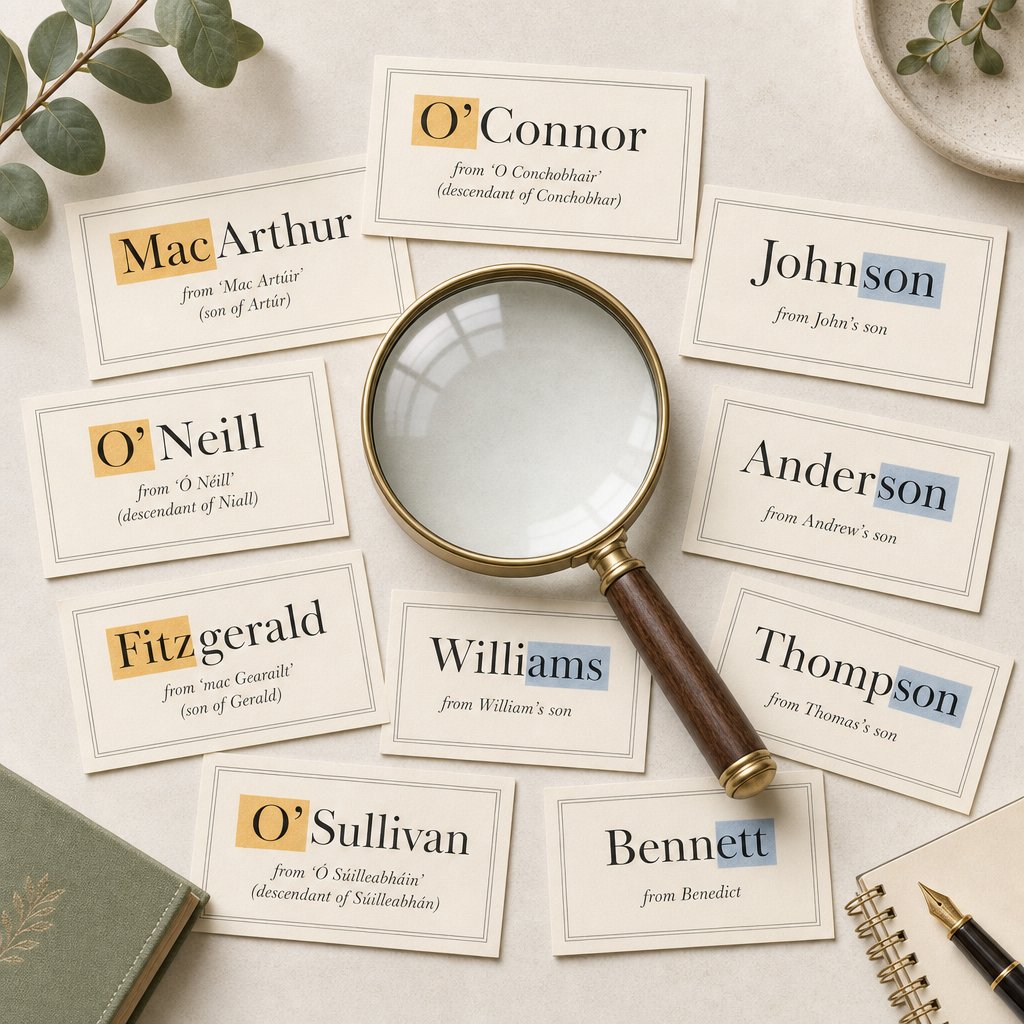
Converter tools and charts are great when you're at your desk, but what about when you're scanning a bookshelf, reading a journal article, or browsing a genealogy index? You don't always have time to pull up a tool. The good news: the wade giles romanization system and Pinyin each leave distinct fingerprints on every name they produce. Learn to spot those fingerprints, and you can identify which system you're looking at in seconds, no lookup required.
Think of it like recognizing a language by its visual texture. You don't need to speak French to notice that a block of text full of accents and "-eux" endings probably isn't German. The same principle applies here. Each system has letter combinations and punctuation habits that the other system simply never uses.
Telltale Signs of Wade-Giles Spelling
The wade giles system has several unmistakable markers. The most obvious is the apostrophe (or a character resembling one) used to indicate aspirated consonants. When you see p', t', k', or ch' in a name, you're looking at Wade-Giles. No other major romanization system uses this convention for Mandarin.
Beyond the apostrophe, watch for these patterns:
- "hs" at the start of a syllable - This combination doesn't exist in Pinyin. Wade-Giles uses "hs" where Pinyin uses "x" (e.g., Hsi = Xi, Hsiao = Xiao).
- Syllables ending in "-ung" - Pinyin never ends a syllable this way. Wade-Giles writes "-ung" where Pinyin writes "-ong" (e.g., Kung = Gong, Tung = Dong).
- "ts" or "tz" at the start of a syllable - Pinyin doesn't use these clusters. They correspond to Pinyin "z" (unaspirated) or "c" (when written as ts').
- Syllables ending in "-ieh" - Pinyin uses "-ie" instead (e.g., Chieh = Jie).
- Hyphens between syllables in personal names - Wade-Giles typically hyphenates given names like "Tse-tung" or "Kai-shek," while Pinyin joins them as "Zedong" or runs them together.
The Library of Congress Pinyin Conversion FAQ puts it concisely: Wade-Giles syllables can begin with HS and TS, while Pinyin syllables cannot. That single rule eliminates ambiguity for a large percentage of names you'll encounter.
Telltale Signs of Pinyin Spelling
Pinyin has its own set of exclusive markers that never appear in standard Wade-Giles. The easiest to spot are certain initial consonants:
- Syllables beginning with B, D, G, Q, X, or Z - Wade-Giles never starts a syllable with any of these letters. If you see "Beijing," "Deng," "Guangzhou," "Qing," "Xian," or "Zhang," you're reading Pinyin.
- The "zh" combination - This retroflex initial is unique to Pinyin. Wade-Giles represents the same sound as "ch" (without an apostrophe).
- Syllables ending in "-ong" - Wade-Giles never uses this ending; it writes "-ung" instead.
- Syllables ending in "-ie" or "-ue" - Wade-Giles uses "-ieh" and "-ueh" for these sounds.
- Joined multi-syllable given names without hyphens - "Zedong" rather than "Tse-tung," "Xiaoping" rather than "Hsiao-p'ing."
Here's a side-by-side summary you can use as a quick mental checklist:
| Wade-Giles Markers | Pinyin Markers |
|---|---|
| Apostrophes for aspiration (p', t', k', ch') | Letters B, D, G, Q, X, Z as initials |
| "hs" as a syllable initial | "zh" as a syllable initial |
| Syllables ending in "-ung" | Syllables ending in "-ong" |
| "ts" or "tz" as syllable initials | "c" or "z" as syllable initials |
| Syllables ending in "-ieh" | Syllables ending in "-ie" |
| Syllables ending in "-ien" | Syllables ending in "-ian" |
| Hyphens between given-name syllables | Joined syllables in given names |
| Umlauts used frequently (u) | Umlauts only after n and l |
Recognizing Taiwan's Modified Wade-Giles Names
Here's where pattern recognition gets trickier. Most people in Taiwan romanize their names using a simplified version of Wade-Giles that strips away apostrophes, tone numbers, and umlauts entirely. According to documentation on Taiwanese romanization practices, this simplified form also doesn't follow standard capitalization conventions, with given-name syllables often both capitalized ("Hsiu-Lien" instead of the proper "Hsiu-lien").
Without the apostrophe, the most reliable Wade-Giles marker disappears. So how do you recognize these names? Look for the other fingerprints that survive the simplification:
- "hs" still appears - Names like Hsiu, Hsin, and Hsieh remain distinctly Wade-Giles even without apostrophes.
- "-ung" endings persist - Chung, Hung, and Tung still signal Wade-Giles origin.
- "ts" and "tz" initials remain - Tsai, Tseng, and Tzu are common Taiwanese surnames that clearly come from the wade giles system.
- Absence of Pinyin-exclusive letters - If a name avoids B, D, G, Q, X, and Z as initials, it's likely modified Wade-Giles rather than Pinyin.
Consider a name like "Rui Zhu Ou." The presence of both "Z" and the structure of the syllables immediately signals Pinyin rather than any form of Wade-Giles. Contrast that with a Taiwanese name like "Tsai Ing-wen," where the "Ts" initial and hyphenated given name point clearly to Wade-Giles origins, even though the apostrophe is missing.
The practical value of this skill compounds over time. Once you can glance at a name and instantly categorize it, you know which conversion direction to apply, whether to search library catalogs under alternate spellings, and how to pronounce the name more accurately. Pattern recognition turns a confusing landscape of variant spellings into something predictable, but certain famous names have become so entrenched in one system that no conversion is expected at all, and knowing which names those are saves you from unnecessary corrections.
Famous Name Pair Lists and Historical Reference Guides
Some names have become so cemented in English that converting them would confuse more people than it helps. Others made the jump to Pinyin decades ago and never looked back. Knowing which category a name falls into is just as important as knowing how to convert between systems. Curated reference lists of famous Chinese names shown in both romanizations serve as a practical shortcut, letting you confirm at a glance whether a name should stay in its older form or follow modern conventions.
Names That Permanently Stayed in Wade-Giles
Certain names became so deeply embedded in English-language media, diplomacy, and branding that switching them to Pinyin would create more confusion than it resolves. These names are essentially frozen in their Wade-Giles (or postal romanization) forms by convention, regardless of what system a publication officially uses.
The most prominent examples include:
- Chiang Kai-shek (Pinyin: Jiang Jieshi) - The Nationalist leader's name remains in Wade-Giles across virtually all English sources, including academic texts.
- Sun Yat-sen (Pinyin: Sun Yixian) - His name actually derives from Cantonese romanization rather than strict Wade-Giles, but it functions the same way in English: permanently fixed.
- Taipei (Pinyin: Taibei) - Taiwan's capital retains its Wade-Giles-derived spelling on maps, in news, and in official international communications.
- Tsingtao Beer (Pinyin: Qingdao) - The brand name preserves the older romanization even though the city itself is now written as Qingdao in most contexts.
- Peking University (Pinyin: Beijing Daxue) - One of mainland China's top institutions still uses its historical English name internationally.
Taiwan presents a special case. The majority of Taiwanese people still romanize their legal names using Wade-Giles-derived spellings. Names like T'ing Chung, Lao Nai-hsuan, or Jui Heng Tseng appear on passports and official documents in forms that reflect this older system, even though Taiwan officially adopted Pinyin for street signs in 2009.
Names That Shifted to Pinyin After 1979
When China extended Pinyin to official overseas communications on January 1, 1979, major news organizations gradually followed suit. The Christian Science Monitor, for instance, formally switched its remaining Wade-Giles holdouts to Pinyin in January 1989, a full decade after the initial transition began. The names that shifted include some of the most recognizable figures and places in Chinese history:
- Mao Tse-tung → Mao Zedong - The founding chairman of the People's Republic.
- Chou En-lai → Zhou Enlai - China's first premier.
- Teng Hsiao-p'ing → Deng Xiaoping - The leader who launched economic reforms.
- Peking → Beijing - The capital city, though "Peking" survives in certain legacy uses.
- Canton → Guangzhou - The southern port city.
- Nanking → Nanjing - The former Nationalist capital.
The general rule? Names associated with the People's Republic of China shifted to Pinyin. Names associated with Taiwan, pre-1949 Nationalist figures, or international brand identities stayed in their older forms. Some names like Tibet remain in neither system because their Pinyin equivalents (Xizang) are too unfamiliar to English readers.
Categorized Reference Lists by Domain
The most useful name-pair references organize entries by category rather than dumping everything into a single alphabetical list. When you're researching a philosopher, you don't want to scroll past dozens of city names to find them. The best guides break entries into domains like political leaders, classical philosophers, literary figures, geographic names, and dynastic terms.
A strong reference list also includes brief biographical context or geographic identifiers alongside each name pair. This matters because romanization is lossy. "Li" in Wade-Giles could refer to dozens of different people with different characters. A list that notes "Li Po (Li Bai) - Tang dynasty poet" versus "Li Hung-chang (Li Hongzhang) - Qing dynasty statesman" helps you confirm you've matched the right person.
Here are the name pairs that cause the most confusion for English-language readers, ranked by how frequently they appear across academic texts, news archives, and reference searches:
- Mao Tse-tung / Mao Zedong - Appears in both forms across pre- and post-1979 sources constantly.
- Peking / Beijing - Still causes confusion in historical references, university names, and recipes (Peking duck).
- Chiang Kai-shek / Jiang Jieshi - The Wade-Giles form dominates, but Pinyin appears in mainland Chinese scholarship.
- Teng Hsiao-p'ing / Deng Xiaoping - Older news archives use the first; everything after 1979 uses the second.
- Chou En-lai / Zhou Enlai - Same temporal split as Deng.
- Tao Te Ching / Dao De Jing - Both forms remain actively used in publishing.
- Confucius (K'ung-tzu / Kongzi) - The Latinized name dominates, but both romanizations appear in scholarly work.
- Canton / Guangzhou - The older form persists in "Cantonese" as a language and cuisine descriptor.
Lists that include pronunciation guidance, even a simple phonetic respelling for English speakers, add another layer of value. They help readers connect the visual spelling to the actual sound, which reinforces memory and reduces the chance of mixing up similar-looking names. A reference that tells you "Qing" is pronounced roughly like "ching" immediately clarifies why the Wade-Giles form "Ch'ing" looks so different despite representing the same dynasty.
These curated lists solve the recognition problem, but they can't help you when you're searching databases that split their records between systems. Finding a person across decades of library catalogs and academic indexes requires a different set of strategies entirely.

Library Catalogs and Academic Database Search Tools
Knowing that "Chou En-lai" and "Zhou Enlai" are the same person is one thing. Actually finding all the books, articles, and records associated with that person across decades of library catalogs is a different challenge entirely. Library systems and academic databases are where the wade giles vs pinyin split creates its most practical headaches, because records cataloged before and after the transition live side by side in the same search interfaces, often without any visible link between them.
Library of Congress Romanization Standards
The Library of Congress officially switched from Wade-Giles to Pinyin for cataloging Chinese-language materials in the year 2000. That transition didn't erase the past. Millions of older bibliographic records remained in Wade-Giles, and a massive machine-conversion project was launched through RLG and OCLC to convert existing records in the RLIN database and WorldCat. The conversion program processed all records coded as Chinese, starting with Library of Congress records and working outward.
Here's the catch: machine conversion wasn't perfect. The program used data dictionaries and conversion sequences to transform Wade-Giles syllables into Pinyin, but certain subfields converted differently depending on context. A place name might convert correctly in a subject heading but remain unconverted in a title field because the mixed-text algorithm couldn't reliably separate Chinese romanization from English words. Records flagged for manual review received a local MARC field (987) indicating their conversion status, but not every inconsistency was caught.
The result? You might search a library catalog today and find the same author's name spelled two different ways across their own publication records. The ALA-LC Chinese Romanization Table includes a full "Correspondence of Wade-Giles to Pinyin" section spanning pages 9 through 21, which North American libraries use as their standard reference. But knowing the standard exists doesn't help if you only search under one spelling.
Searching Academic Databases Effectively
Databases like JSTOR, WorldCat, and ProQuest index materials from multiple decades and multiple cataloging standards. A journal article from 1970 might list an author as "Ch'en Ta-tuan" while the same scholar's 1985 publication appears under "Chen Datuan." Neither database nor search engine automatically connects these variants for you.
The University of Michigan Library's research guide on searching non-English materials highlights this exact problem. Their guidance notes that the form of a name used in a catalog record might not always conform strictly to one single standard. They offer a telling example: one person's name can appear in six different versions, including Ailing Zhang, Ai-ling Chang, Ying Zhang, and Eileen Chang, all referring to the same author.
WorldCat's authority records sometimes link variant name forms together, but coverage is inconsistent. JSTOR indexes article metadata as it was originally published, meaning pre-1979 articles retain their Wade-Giles author names permanently. If you search only the Pinyin form, those older articles simply won't appear in your results.
Genealogy and Historical Record Searches
For genealogy researchers, the stakes are even higher. Immigration records, ship manifests, census entries, and naturalization documents from the late 1800s through the mid-1900s used Wade-Giles exclusively, and often a simplified or inconsistent version at that. The term 威妥玛拼音 (Wade-Giles romanization, sometimes written 威妥瑪拼音 in traditional characters or referred to as 韦氏拼音 informally) appears in Chinese-language genealogy guides as the system most likely to show up in historical Western documents about Chinese immigrants.
A family name recorded as "Ts'ai" on an Ellis Island manifest won't surface when you search for "Cai" in a digitized database. Worse, handwritten records sometimes introduced additional spelling variations that don't match either system cleanly. The clerk might have written "Tsai" (dropping the apostrophe) or even "Chai" (a phonetic approximation).
Here's a practical checklist for maximizing your search results across library catalogs, academic databases, and historical record archives:
- Search both romanizations - Always run your query in both Wade-Giles and Pinyin forms. If you're looking for works by or about someone, try "Liang Ch'i-ch'ao" and "Liang Qichao" as separate searches.
- Use truncation wildcards - Most catalog systems support asterisks or question marks as wildcards. Searching "Ts?ai" or "Ch*eng" can catch variant spellings in a single query.
- Check authority records - Library authority files link variant name forms to a single preferred heading. In WorldCat or your university catalog, look for "see also" references that connect Wade-Giles and Pinyin forms of the same name.
- Browse by author rather than keyword - Author browse functions in library catalogs often display cross-references and variant forms that keyword searches miss entirely.
- Try with and without hyphens - Wade-Giles given names are typically hyphenated (Hsiao-p'ing), but some catalog entries drop the hyphen. Search both ways.
- Account for word division differences - Pinyin cataloging joins certain multi-syllable terms that Wade-Giles separated with spaces. "Zhongguo" versus "Chung kuo" for China is a common example.
- Look for the 987 marker on converted records - If you're deep in Library of Congress catalog records, the presence of a 987 field with "PINYIN" in subfield $a confirms the record has been converted from Wade-Giles.
These strategies matter most when you're conducting exhaustive research, the kind where missing a single record could mean overlooking a key source or losing track of a family connection. Casual searches might get by with a single spelling, but serious academic work and genealogy research demand systematic coverage of both romanization systems across every database you touch.
With individual resource types now covered, from charts and converters to pattern recognition, name lists, and database strategies, the question becomes: which combination of tools fits your specific situation best?
Comparison Summary of All Conversion Resources
Five distinct resource types, each with different strengths and blind spots. Which one deserves your time depends entirely on what you're trying to accomplish. A genealogy researcher digging through ship manifests has very different needs than a student skimming a pre-1979 textbook. Rather than declaring a single winner, the practical answer is understanding which tool fits which situation, and where combining two resources covers gaps that neither handles alone.
Side-by-Side Feature Comparison
Each resource type reviewed in this guide was tested against the six evaluation criteria established earlier: conversion accuracy, name coverage, ease of use for non-linguists, pronunciation guidance, handling of Taiwanese modified Wade-Giles variants (威妥瑪拼音 without apostrophes or tone numbers), and educational value. Here's how they stack up:
| Resource Type | Accuracy | Name Coverage | Ease of Use | Pronunciation Guidance | Taiwanese Variants | Educational Value |
|---|---|---|---|---|---|---|
| Cross-Reference Charts | High | Broad (all syllables) | Moderate | Sometimes (tone marks) | Limited | High |
| Online Converter Tools | High | Broad (personal + place names) | Very High | Varies by tool | Moderate | Low |
| Pattern Recognition Rules | Moderate | Unlimited (mental skill) | High (once learned) | Indirect | Moderate | Very High |
| Famous Name Pair Lists | Very High (curated) | Narrow (famous names only) | Very High | Often included | Moderate | Moderate |
| Library Catalog Strategies | High | Broad (all cataloged works) | Low | None | Low | Moderate |
A few patterns jump out immediately. Online converters score highest on ease of use because they require zero background knowledge. You type a name, you get a result. But that convenience comes at a cost: they teach you nothing about why the conversion works, and they struggle with the informal 韦氏拼音 variants common on Taiwanese documents. Cross-reference charts and pattern recognition rules flip that tradeoff. They demand more upfront effort but build lasting skills that work offline, in any context, without relying on a specific tool staying maintained.
Famous name pair lists occupy a unique niche. Their accuracy is essentially perfect for the names they cover, because each entry has been individually verified by scholars and editors. The limitation is obvious: they only help with names someone already thought to include. Encounter an obscure historical figure not on the list, and you're back to charts or converters.
Library catalog strategies score lowest on ease of use because they require familiarity with database interfaces, wildcard syntax, and authority record structures. But for exhaustive research, nothing else matches their coverage. A converter can tell you that "Ch'en" becomes "Chen" in Pinyin, but only a proper catalog search strategy ensures you actually find every book and article associated with that author across decades of records split between 威妥玛拼音 and modern Pinyin cataloging.
Best Resource by Use Case
Matching the right tool to your situation eliminates wasted effort. Here's how each scenario maps to an ideal resource combination:
- Quick lookups while reading - Pattern recognition rules handle this fastest. Spot the "hs" or the apostrophe, identify the system, and mentally swap the consonants. No tool needed.
- Deep genealogy or academic research - Library catalog strategies combined with an online converter. Use the converter to generate both spellings of a name, then apply wildcard searches and authority record checks across every database.
- Academic writing and citations - Famous name pair lists plus a cross-reference chart. The list tells you which names stay in their conventional form (Chiang Kai-shek, Sun Yat-sen). The chart handles everything else with precision.
- Casual reading comprehension - A bookmarked cross-reference chart covers most needs. When you hit an unfamiliar name in a history book, a quick scan of the chart confirms the modern equivalent.
- Processing large batches of names - Online converter tools with batch input capability. No other resource type matches their speed for bulk work.
The single most effective combination for everyday use? Pattern recognition skills paired with a reliable converter tool. The mental rules let you instantly identify which system a name uses and make a rough conversion on the fly. The converter confirms your guess and handles edge cases where multiple characters share the same romanization. Together, they cover roughly 90% of real-world scenarios without requiring deep expertise in Chinese phonology or library science.
That said, no single combination works perfectly for everyone. A journalist on deadline has different priorities than a librarian cataloging a special collection. The final step is matching these resources to your specific reader profile and identifying the handful of conversions worth committing to memory permanently.

Final Recommendations for Every Reader Type
Different readers hit the wade giles vs pinyin names problem from different angles, and a one-size-fits-all answer doesn't exist. A graduate student parsing Cold War-era diplomatic cables needs a different toolkit than someone tracing their grandmother's immigration paperwork. The comparison table above gives you the raw data, but here's how it translates into concrete action steps based on who you are and what you're actually trying to accomplish.
Recommendations by Reader Profile
Your starting point should match the kind of work you do most often:
- Students reading older academic texts - Start by learning the pattern recognition rules. Once you can spot apostrophes, "hs" initials, and "-ung" endings at a glance, you'll identify Wade-Giles names instantly without breaking your reading flow. For unfamiliar names that don't match patterns you recognize, keep a converter tool bookmarked. This two-layer approach means you rarely need to leave the page you're reading.
- Genealogy researchers - Combine library catalog search strategies with comprehensive name pair lists. Your challenge isn't just converting a name; it's finding every record associated with that name across databases that may use either system, informal variants, or even postal romanizations. Run every search in both forms, use wildcards liberally, and check authority records for cross-references. A name like "han cho bai" on an old document might not conform cleanly to either standard, so flexibility matters more than precision here.
- Journalists and writers - Learn which famous names stay in Wade-Giles by convention (Chiang Kai-shek, Sun Yat-sen, Taipei) and use Pinyin for everything else. AP style and most major English-language publications follow this rule. When in doubt, check whether the person or place is associated with Taiwan (often Wade-Giles) or the People's Republic (Pinyin after 1979). For a lian yu translation or any lesser-known name, default to Pinyin unless the individual has an established English-language preference.
- Librarians and catalogers - The Yale Library's romanization guide and the ALA-LC Romanization Table remain your primary standards. Be aware that some Taiwanese place names in subject headings stay in Wade-Giles ("T'ai-chung shih") while the same place appears as Pinyin in title fields ("Taizhong Shi"). Well-established personal names like Chiang Ching-kuo and Lee Teng-hui also remain unconverted.
- Casual readers - Bookmark a single good cross-reference chart and memorize the five essential consonant swaps below. That's genuinely all you need. When you encounter an unfamiliar spelling in a history book or news article, a 10-second chart scan will resolve it.
The Five Essential Conversions Everyone Should Memorize
You don't need to internalize an entire conversion table. These five patterns cover the vast majority of names you'll encounter in everyday reading:
| Wade-Giles | Pinyin | Remember It As |
|---|---|---|
| hs | x | "Hsi" = "Xi" (as in Xi'an, Xi Jinping) |
| ts' / tz' | c | "Ts'ao" = "Cao" (as in Cao Cao) |
| ch' (before i, u) | q | "Ch'ing" = "Qing" (as in Qing dynasty) |
| p / p' | b / p | "Pei" = "Bei" (as in Beijing) |
| k / k' | g / k | "Kung" = "Gong" (as in gongfu) |
Commit these five to memory and you can decode roughly 80% of the confusing name pairs you'll run into. The apostrophe rule is the key insight: in Wade-Giles, the plain letter (without apostrophe) is the unaspirated sound, which Pinyin writes with a completely different letter. Once that clicks, the whole system stops feeling arbitrary.
Understanding both romanization systems is becoming more important, not less. Historical digitization projects are putting millions of pages of older texts online, from university archives to government records to newspaper databases. Those materials use Wade-Giles almost exclusively. As the Library of Congress notes, even converted catalog records sometimes retain traces of the older system in certain fields. The ability to move fluidly between 韋氏拼音 and modern Pinyin isn't a niche academic skill anymore. It's a practical literacy that connects you to over a century of English-language writing about China, its people, and its history.
The same person shouldn't become invisible just because a romanization system changed. Learn the patterns, use the tools, and both spellings lead you to the same place.
Frequently Asked Questions About Wade-Giles vs Pinyin Names
1. What is the difference between Wade-Giles and Pinyin romanization?
Wade-Giles and Pinyin are two systems for writing Chinese words using the Latin alphabet. Wade-Giles, developed in the 19th century, uses apostrophes to mark aspirated consonants (like p', t', k') and combinations like 'hs' and 'ts.' Pinyin, created by the Chinese government in 1958 and adopted internationally after 1979, uses distinct letters instead (x, z, c, q). The same Chinese name looks completely different in each system because they assign different Latin letters to the same sounds. For example, 'p' in Wade-Giles represents an unaspirated sound that Pinyin writes as 'b,' while Wade-Giles 'p'' (with apostrophe) equals Pinyin's 'p.'
2. How can I tell if a Chinese name is written in Wade-Giles or Pinyin?
Each system leaves distinct visual markers. Wade-Giles names often contain apostrophes between consonants (p', t', ch'), use 'hs' at the start of syllables, end in '-ung,' and feature 'ts' or 'tz' as initials. Pinyin names never use apostrophes for aspiration and instead begin syllables with letters that Wade-Giles never uses as initials: B, D, G, Q, X, Z, and the combination 'zh.' Pinyin syllables end in '-ong' rather than '-ung' and join given-name syllables without hyphens. If a name starts with 'Zh,' 'X,' or 'Q,' it is always Pinyin. If it contains 'hs' or aspiration apostrophes, it is always Wade-Giles.
3. Why do some Chinese names stay in Wade-Giles even though Pinyin is the modern standard?
Certain names became so deeply embedded in English-language media, diplomacy, and branding before 1979 that switching them would cause more confusion than clarity. Names like Chiang Kai-shek, Sun Yat-sen, and Taipei remain in their older romanized forms by universal convention. The general rule is that names associated with Taiwan, pre-1949 Nationalist figures, or established international brands (like Tsingtao Beer or Peking University) keep their Wade-Giles or postal romanization spellings. Names associated with the People's Republic of China after 1979, such as Mao Zedong and Deng Xiaoping, shifted permanently to Pinyin in English-language publications.
4. How do I search library catalogs when records use both Wade-Giles and Pinyin?
Always search under both romanization forms of a name, since the Library of Congress switched from Wade-Giles to Pinyin cataloging in 2000 but older records were not all perfectly converted. Use truncation wildcards (asterisks or question marks) to catch variant spellings in a single query. Check authority records for cross-references linking name variants. Browse by author rather than keyword, as author browse functions often display alternate forms. Try searches with and without hyphens, and account for word-division differences where Pinyin joins terms that Wade-Giles separates with spaces.
5. What are the most important Wade-Giles to Pinyin conversions to memorize?
Five core patterns cover roughly 80% of confusing name pairs: 'hs' converts to 'x' (Hsi becomes Xi), 'ts' or 'tz' with apostrophe converts to 'c' (Ts'ao becomes Cao), 'ch'' before i or u converts to 'q' (Ch'ing becomes Qing), plain 'p' converts to 'b' while 'p'' converts to 'p' (Pei becomes Bei), and plain 'k' converts to 'g' while 'k'' converts to 'k' (Kung becomes Gong). The key insight is that Wade-Giles uses the plain consonant for the unaspirated sound and adds an apostrophe for aspiration, while Pinyin assigns entirely different letters to each sound.