Japanese Kanji and Chinese Characters Are Not the Same
You see a character like 鉄 in a Japanese text and 铁 in a Chinese one. Both mean "iron." Both trace back to the same ancient symbol. So is Japanese the same as Chinese when it comes to writing? Not quite. While these two systems grew from the same root, centuries of independent development have turned them into distinct writing traditions with their own rules, forms, and logic.
Many learners assume that knowing one system automatically unlocks the other. The reality is more nuanced. Chinese vs Japanese characters share a deep historical bond, but they diverge in simplification methods, pronunciation, meaning, and how they interact with grammar. Understanding these differences saves you from confusion and gives you a clearer path through either language.
Why This Comparison Matters for Language Learners
If you are studying Mandarin and pick up a Japanese newspaper, you will recognize many characters. That recognition can be both helpful and misleading. Some shared characters carry identical meanings. Others are false friends that will trip you up. Knowing what is the difference between Japanese and Chinese writing systems helps you leverage your existing knowledge without falling into traps. It also answers a question that comes up constantly in language-learning communities: are Chinese and Japanese the same in their written form? The short answer is no, but the long answer is far more interesting.
A Shared Origin With Divergent Paths
The Japanese word "kanji" (漢字) literally translates to "Han characters," a direct reference to the Chinese dynasty that shaped much of East Asian culture. Japan adopted these characters over 1,400 years ago, and for a time, the written forms were essentially identical. Then both countries evolved independently. China simplified nearly 2,000 traditional characters in the 1950s and 1960s. Japan carried out its own separate simplification after World War II. The result is a three-way split: traditional Chinese, simplified Chinese, and Japanese shinjitai.
Kanji literally means "Han characters," yet modern kanji and hanzi differ in simplification, pronunciation, meaning, and usage. They are cousins, not twins.
The difference of Chinese and Japanese writing goes beyond visual form. Each character in Mandarin typically has a single pronunciation, while the same kanji in Japanese can have two, three, or even more readings. Grammar integration is entirely different too. Chinese relies solely on characters, while Japanese weaves kanji together with two phonetic scripts, hiragana and katakana. These layers of divergence make the Japanese and Chinese difference far more substantial than most people expect at first glance.
In the sections ahead, you will find a structured comparison covering historical origins, simplification paths, pronunciation systems, meaning shifts, and practical transfer between the two. Each dimension reveals how one shared ancestor produced two writing systems that now operate by different rules.
How We Compared These Two Writing Systems
Comparing two writing systems that share DNA but evolved separately requires more than a surface-level glance. You need a structured lens, one that accounts for history, form, sound, meaning, and function. Without that structure, it is easy to cherry-pick similarities or overstate differences. Here is the framework that guides every section of this comparison.
Our Comparison Framework
What is kanji in Japanese? It is a set of logographic characters used alongside two phonetic scripts. What is the Chinese writing called? The characters are called hanzi, meaning "Han characters" in Chinese, and they form the sole script for written Mandarin. Both terms point to the same ancestral system, yet the modern realities are far apart. To capture that gap accurately, we evaluate these systems across six dimensions:
- Historical development - when and how characters traveled from China to Japan, and the dynasties that shaped each reading layer
- Visual form - how traditional characters were simplified differently in each country, producing shinjitai in Japan and jiantizi in China
- Pronunciation - single readings per character in Mandarin versus multiple on'yomi and kun'yomi readings in Japanese
- Meaning - shared meanings, shifted meanings, and outright false friends between the two systems
- Grammar integration - how characters interact with surrounding scripts and sentence structure
- Character inventory - the scope of characters in active use and official literacy standards
What Counts as a Meaningful Difference
Numbers help ground the comparison. Japan's Joyo kanji list contains 2,136 characters designated for daily use, expanded most recently in 2010. Chinese literacy, by contrast, requires roughly 3,500 hanzi to read a newspaper comfortably. The gap is not just quantity. It reflects different philosophies about how much work characters should do in a sentence. In Chinese, hanzi carry the entire communicative load. In Japanese, kanji share that burden with hiragana and katakana.
Most comparisons online treat this as a two-way split: Chinese characters versus Japanese kanji. That framing misses a critical layer. There are actually three modern forms to consider: traditional Chinese (used in Taiwan and Hong Kong), simplified Chinese (used in mainland China and Singapore), and Japanese shinjitai. About 30% of simplified Chinese characters match their Japanese shinjitai counterparts, according to documented comparisons. The remaining 70% diverge, sometimes subtly, sometimes dramatically. Recognizing this three-way distinction is what separates a useful comparison from an oversimplified one.
Chinese characters are called hanzi in Chinese, and that term carries a specific scope: thousands of characters functioning as the complete writing system. Kanji occupies a narrower role within a broader toolkit. This difference in scope shapes everything from how children learn to read to how dictionaries are organized. Each of the six dimensions above unpacks a piece of that puzzle, starting with the historical timeline that set these two systems on separate tracks.
Historical Origins and the Adoption Timeline
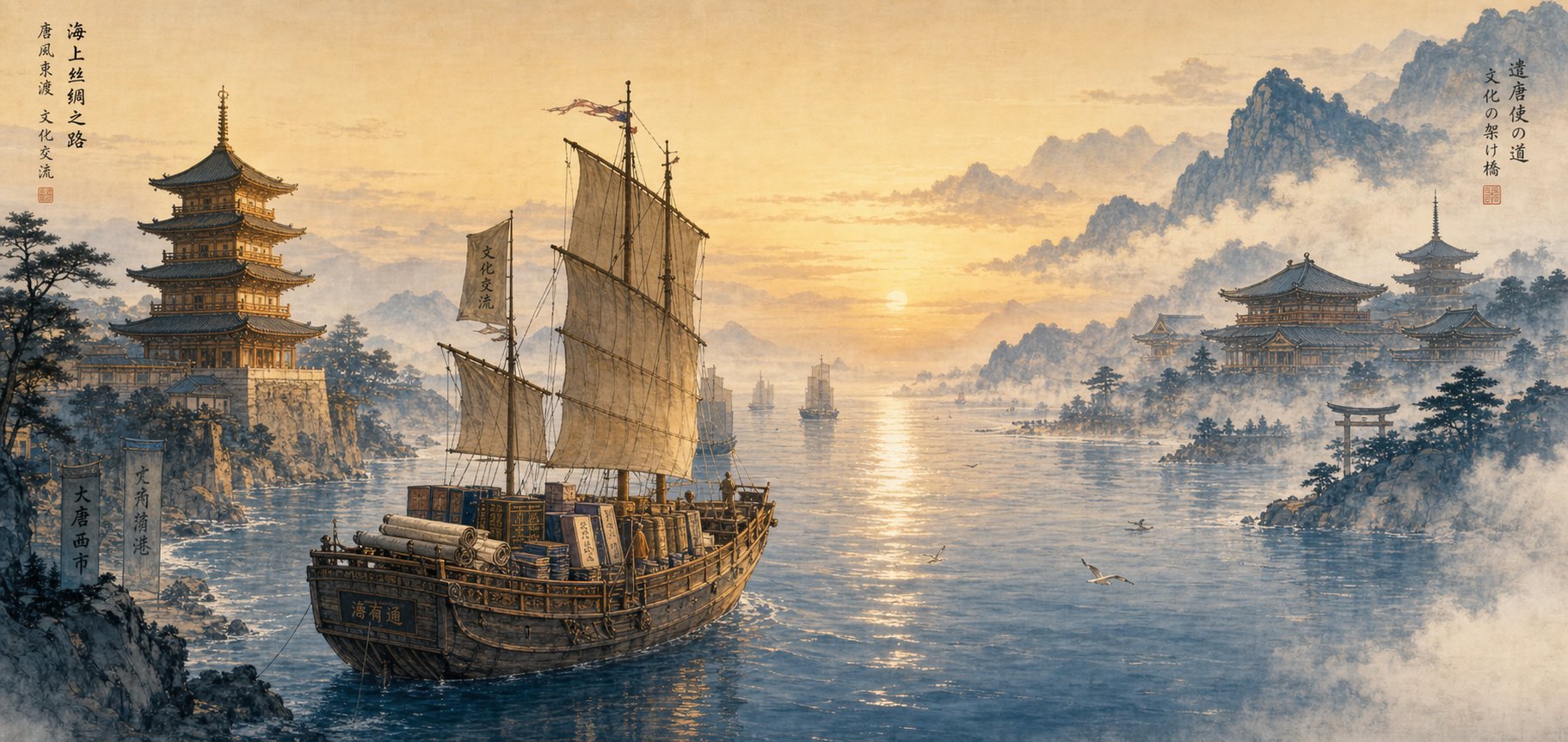
Japan had a rich spoken language long before it had a way to write it down. When Chinese characters finally arrived on Japanese shores, they did not simply replace something older. They filled a void, giving form to a language that had existed only in speech. That adoption was not a single event but a centuries-long process shaped by trade, religion, and diplomacy with the Asian mainland.
When and How Japan Adopted Chinese Characters
The earliest contact between Japanese people and Chinese characters likely occurred through artifacts, coins, and metal goods bearing inscriptions that arrived as early as the 1st century CE. Meaningful adoption, however, began in the 4th and 5th centuries when scholars and monks from the Korean peninsula brought texts and literacy practices to the Japanese court. At that time, Japan had no native script, so Chinese characters served double duty: recording the Chinese language in official documents and, gradually, representing Japanese words phonetically.
By the 8th century, Japanese chinese writing had matured into a sophisticated system. The Man'yoshu, Japan's oldest poetry anthology, used characters purely for their sound values to capture native Japanese verse. This creative adaptation marked the moment when kanji stopped being a foreign import and became something distinctly Japanese.
Which Chinese Dynasties Shaped Kanji Readings
One of the most fascinating aspects of kanji japanese and chinese history is how different Chinese dynasties left distinct pronunciation layers in the Japanese language. Each wave of cultural exchange brought a new set of sounds, and Japan preserved them all rather than replacing old readings with new ones. According to Hiragana Times, these layers accumulated like annual rings of a tree:
- Go-on (呉音) - The earliest layer, derived from the Wu region (modern Nanjing area) during the Eastern Jin and Southern Dynasties periods (4th-6th centuries). These readings arrived alongside Buddhism and remain dominant in religious terminology today.
- Kan-on (漢音) - Brought from the Tang Dynasty capital of Chang'an during the 7th to 9th centuries. These readings became standard in government, scholarship, and formal writing.
- To-on (唐音) - A later layer from the Song and Yuan dynasties (10th century onward), associated with trade, Zen Buddhism, and craftsmanship. Words like futon (布団) carry To-on readings.
In China, whenever a dynasty changed, the new rulers' dialect reshaped the national standard. The same character was pronounced differently depending on the era. Japan absorbed each of these shifts without discarding the previous layer, which is why a single kanji can have multiple on'yomi readings today. This layering is unique to japanese chinese characters and has no parallel in modern Chinese, where historical pronunciations were replaced rather than stacked.
The Timeline of Independent Evolution
Imagine the full arc of this story as a timeline. Here are the key milestones that shaped chinese and japanese writing into the separate systems they are today:
- 1st-3rd century CE - Chinese inscriptions on trade goods reach Japan, providing first exposure to characters.
- 4th-5th century - Korean scholars introduce systematic literacy to the Japanese court. Go-on readings begin entering the language.
- 6th century - Buddhism arrives in Japan, accelerating character adoption. Sutras and religious texts spread Go-on pronunciations widely.
- 7th-9th century - Japan sends envoys directly to Tang Dynasty China. Kan-on readings become the prestige standard. Hiragana and katakana develop from simplified character forms.
- 10th-14th century - To-on readings arrive through Zen monks and traders. Japan increasingly develops characters independently.
- 1946 - Japan introduces shinjitai, its own simplified character forms.
- 1956-1964 - China introduces jiantizi, a separate and more extensive simplification system.
The critical turning point came after the 9th century, when Japan stopped sending official envoys to China. From that point forward, kanji and chinese characters evolved on parallel but independent tracks. Japan coined new compounds, invented characters that never existed in Chinese, and developed readings unique to its own linguistic sensibility. China, meanwhile, continued its own evolution through successive dynasties.
What makes this history so relevant for learners is that it explains why the relationship between these systems is not a clean one-to-one mapping. The term japanese in chinese is written 日本語, and both countries would recognize those characters. But the pronunciation, the grammar surrounding them, and even some simplified forms differ because of over a thousand years of separate development. That divergence became most visible in the 20th century, when both nations independently decided their traditional characters needed modernizing.
How Simplification Diverged Between Japan and China
Both Japan and China looked at their traditional characters in the mid-20th century and reached the same conclusion: too many strokes, too hard to learn, too slow to write. But the solutions they chose were remarkably different. When you compare chinese kanji vs japanese kanji in their modern simplified forms, you are looking at two independent reform projects that started from the same raw material and arrived at different destinations.
Japan's Shinjitai Simplification
Japan moved first. In 1946, the Japanese government introduced the Toyo Kanji list, designating 1,850 characters for everyday use. Alongside this list came shinjitai (新字体), meaning "new character forms." The approach was conservative by design. Rather than inventing new shapes from scratch, Japanese reformers typically selected simpler historical variants that already existed in handwriting or older texts. A comparative study from the University of Hawaii describes the Japanese method as "instating simpler historical character variants," which preserved the visual logic of the original characters while trimming unnecessary strokes.
The result? Japanese simplified forms tend to stay visually close to their traditional ancestors. You can usually see the family resemblance. The character for "iron," for instance, went from 鐵 to 鉄. The left radical (金, metal) stayed intact, and only the right component was streamlined. This conservative philosophy meant fewer characters were altered overall, and the changes felt less disruptive to readers already familiar with the traditional forms.
China's Jiantizi Simplification
China took a bolder path. The People's Republic introduced its first round of simplified characters (jiantizi, 简体字) in 1956, followed by a second batch in 1964. The goal was ambitious: raise literacy rates across a massive population by making characters faster to learn and easier to write. Nearly 2,000 traditional characters were modified through these reforms.
Chinese simplification employed more radical techniques. Some characters adopted whole cursive script forms, compressing flowing handwritten shapes into new standard prints. Others used phonetic substitution, replacing complex components with simpler ones that shared the same sound. The character for "iron" became 铁, where the right side was replaced entirely with the phonetic element 失 (shi). This approach prioritized stroke reduction over visual continuity with the traditional form.
The trade-off, as noted in the same University of Hawaii research, is that Chinese simplifications have faced criticism for their "detrimental effects on character recognition, semantic and phonetic clarity, and consistency." Issues less present with the more cautious Japanese approach. That said, China's reforms achieved their primary goal: simplified characters are now standard across mainland China, Singapore, and Malaysia.
Same Traditional Character, Different Modern Forms
Here is where things get interesting for anyone studying kanji vs chinese characters side by side. When you write chinese in kanji, you are using Japan's shinjitai system. When you write the same concept in mainland Chinese, you are using jiantizi. Both descend from the same traditional form, but they often look noticeably different. The table below shows how the same ancestor character split into two distinct modern forms:
| Meaning | Traditional Form | Japanese Shinjitai | Chinese Simplified | Key Difference |
|---|---|---|---|---|
| Study/Learn | 學 | 学 | 学 | Identical simplification in both countries |
| Country | 國 | 国 | 国 | Identical simplification in both countries |
| Iron | 鐵 | 鉄 | 铁 | Japan kept the metal radical intact; China replaced the right component entirely |
| Drawing/Map | 圖 | 図 | 图 | Different interior simplification despite same outer frame |
| Language/Words | 語 | 語 (unchanged) | 语 | Japan retained the traditional form; China simplified the left radical |
| Wide/Broad | 廣 | 広 | 广 | Japan kept a middle component; China reduced to the radical alone |
A few patterns emerge from this comparison. Sometimes both countries arrived at the same simplified form, as with 学 and 国. These cases make kanji chinese characters feel interchangeable. Other times, Japan made a modest trim while China performed a more dramatic overhaul, as with 鉄 versus 铁. And in some cases, Japan left the traditional form untouched while China simplified it, as with 語 versus 语.
Is japanese kanji traditional or simplified? The answer is: it depends on the character. Japan's shinjitai reformed only a subset of its kanji. Many characters remain in their traditional form, identical to what you would see in Taiwan or Hong Kong. Chinese vs japanese kanji differences are therefore not uniform. Some pairs match perfectly, some differ slightly, and some look like distant relatives at best.
Most of the time, the Japanese simplified version retains more strokes than its Chinese counterpart. This means a learner moving from Chinese simplified characters to Japanese kanji will occasionally encounter more complex forms, not simpler ones. It is a detail that surprises many people who assume simplification always means fewer strokes everywhere.
These visual differences matter beyond aesthetics. They affect how you read, how you type, and which fonts render correctly on screen. A character simplified one way in Japan may display incorrectly if your device defaults to a Chinese font, and vice versa. The divergence also means that recognizing a character's meaning across both systems requires awareness of which simplification path it took, a skill that becomes second nature with practice but catches beginners off guard.
Visual form, though, is only half the story. Two characters can look identical across both systems and still behave completely differently once you try to pronounce them.
Reading Systems and Pronunciation Differences
Two characters can look identical on paper and mean the exact same thing, yet sound nothing alike when spoken aloud. This is where the comparison of hanzi vs kanji gets truly interesting. Pronunciation is the dimension where these two systems diverge most dramatically, and it is the reason why reading Chinese does not prepare you to speak Japanese, or vice versa.
On'yomi and Kun'yomi Explained
When Japan adopted Chinese characters, it faced a dilemma. The Japanese already had spoken words for concepts like water, mountain, and fire. Should they abandon those native words and start using Chinese pronunciations instead? Their answer was: keep both. This decision created the dual-reading system that defines kanji today.
Every kanji can potentially carry two types of readings:
- On'yomi (音読み) - the "sound reading," an approximation of the original Chinese pronunciation filtered through Japanese phonetics. These readings dominate in multi-kanji compound words.
- Kun'yomi (訓読み) - the "meaning reading," the native Japanese word that existed before the character arrived. These readings appear when a kanji stands alone or has hiragana attached to it.
So is kanji chinese or japanese? The characters themselves originated in China, but the reading system is uniquely Japanese. No other language layers historical Chinese pronunciations on top of native vocabulary in quite this way. A single kanji like 生 can have over ten valid readings depending on context, something that would never happen with the same character in Mandarin.
To complicate things further, on'yomi readings are not drawn from a single Chinese source. As documented in linguistic research, they arrived in distinct historical waves: Go-on from the Wu region (5th-6th century), Kan-on from Tang Dynasty Chang'an (7th-9th century), and To-on from Song and Ming Dynasty trade (10th century onward). Each wave deposited a different pronunciation layer, and Japan kept them all. The character 明, for example, carries three on'yomi readings: myo (Go-on), mei (Kan-on), and min (To-on), each a fossil of a different era of Chinese speech.
How Chinese Pronunciation Works Differently
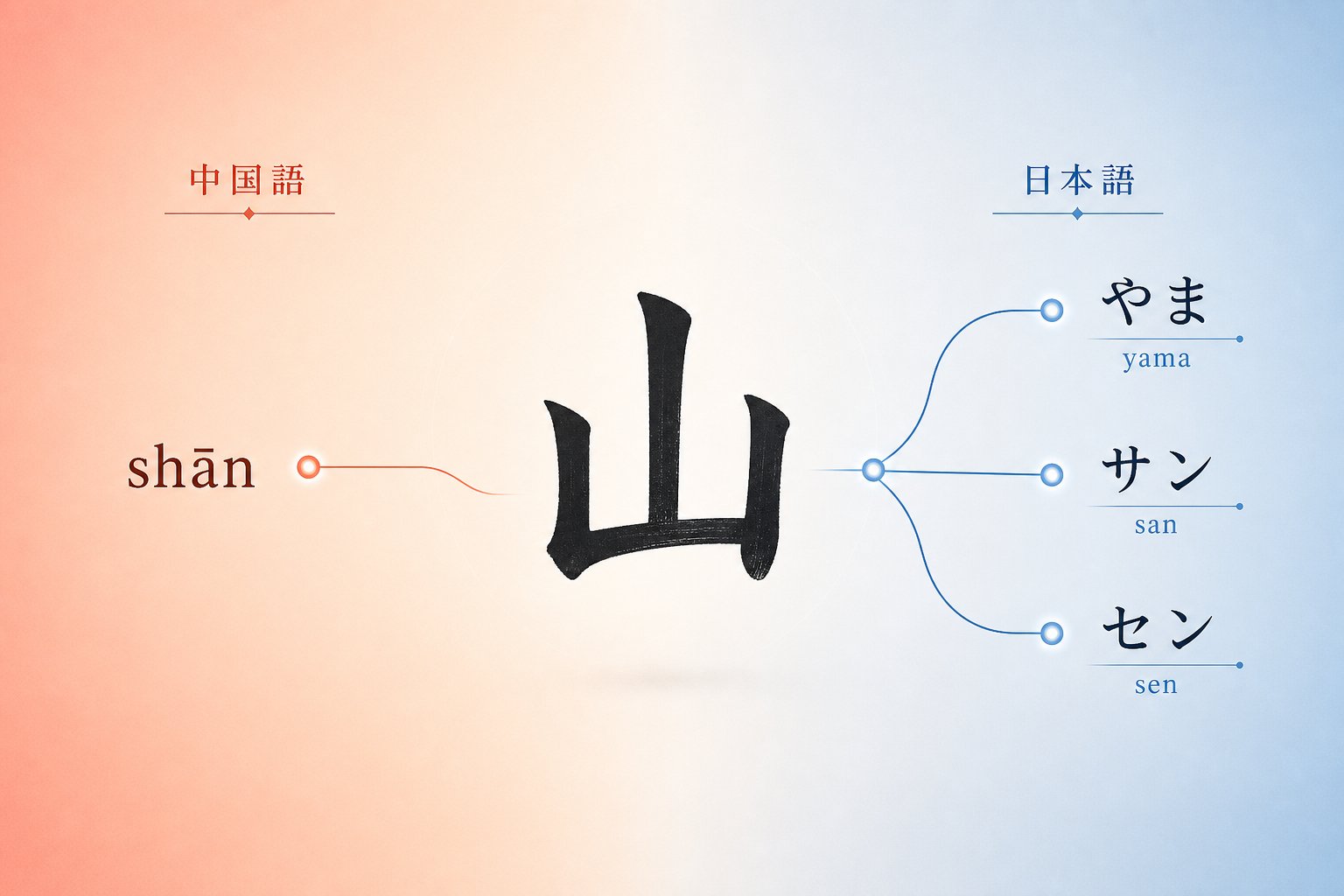
Mandarin Chinese takes a fundamentally simpler approach. Each character typically maps to one pronunciation, expressed as a syllable with one of four tones (plus a neutral tone). The character 山 is always shan (first tone). The character 水 is always shui (third tone). There is no second system of native readings layered underneath.
This does not mean Chinese pronunciation is easy. Tones change meaning entirely: ma with a first tone means "mother," while ma with a third tone means "horse." But the relationship between character and sound is largely one-to-one. When you learn a character in Mandarin, you learn one pronunciation and you are done. When comparing kanji vs mandarin reading systems, this single-reading simplicity is the most striking contrast.
There are exceptions in Chinese. Some characters are duoyinzi (多音字), homographs with more than one reading depending on meaning. The character 行 can be xing (to walk) or hang (a row, a profession). But these cases are relatively rare compared to the systematic multiplicity built into every Japanese kanji.
Why the Same Character Sounds Completely Different
Imagine picking up the character 山 and hearing it pronounced in both languages. In Mandarin, it is shan (first tone). In Japanese, it could be san (the on'yomi, used in compounds like 富士山, Fujisan) or yama (the kun'yomi, used when the character stands alone). The on'yomi san is a distant echo of the original Chinese, adapted to fit Japanese phonetics, which lack tones and many consonant clusters. The kun'yomi yama has no Chinese connection at all. It is the word Japanese people used for mountains long before they ever saw a Chinese character.
Here is how this plays out across several common characters:
| Character | Meaning | Mandarin Pronunciation | Japanese On'yomi | Japanese Kun'yomi |
|---|---|---|---|---|
| 山 | Mountain | shan (1st tone) | san | yama |
| 水 | Water | shui (3rd tone) | sui | mizu |
| 火 | Fire | huo (3rd tone) | ka | hi |
| 人 | Person | ren (2nd tone) | jin, nin | hito |
| 木 | Tree | mu (4th tone) | moku, boku | ki |
You will notice that some on'yomi readings bear a faint resemblance to their Mandarin counterparts. San and shan, sui and shui, moku and mu: these are cousins separated by over a thousand years of phonetic drift. The kun'yomi readings, by contrast, share nothing with Chinese because they never came from Chinese in the first place.
This is why asking "is kanji japanese or chinese" does not have a simple answer. The characters are Chinese in origin. The on'yomi readings are approximations of ancient Chinese sounds. But the kun'yomi readings, the grammar, and the way multiple readings coexist within a single text are entirely Japanese innovations. When you see kanji in chinese, each character speaks with one voice. In Japanese, the same character can speak with several, and context determines which voice you hear.
That context, it turns out, depends heavily on what surrounds the character. The scripts and grammar particles sitting next to a kanji do not just add meaning. They tell you how to pronounce it.
Grammar Context and Surrounding Scripts
A character sitting in a Chinese sentence and the same character sitting in a Japanese sentence are doing fundamentally different jobs. Not because the character changed, but because everything around it changed. The difference between chinese and japanese writing is not just about the characters themselves. It is about the entire ecosystem each character lives in.
How Chinese Relies Solely on Characters
Written Chinese operates with a single script. Every word, every grammatical particle, every verb tense marker is expressed through hanzi. There is no secondary alphabet to fall back on. When you look at a Chinese sentence, you see an unbroken stream of characters with no spaces between them. Readers parse word boundaries through context, familiarity, and the natural groupings of two- or three-character compounds.
Consider this Mandarin sentence:
我每天在图书馆学习中文。
(Wo mei tian zai tushuguan xuexi zhongwen.)
"I study Chinese at the library every day."
Every element, from the pronoun 我 to the time word 每天 to the verb 学习, is written entirely in characters. There is no visual distinction between content words and grammar words. The character 在 functions as a preposition, but it looks no different from the noun 图书馆. Readers rely on word order and context to decode the structure. This is the chinese vs japanese alphabet difference at its most fundamental: Chinese has one script doing all the work.
How Hiragana and Katakana Change Everything
Japanese takes a radically different approach. A typical sentence mixes three scripts simultaneously: kanji for core meaning, hiragana for grammar and native words, and katakana for foreign loanwords. This blending is not optional or decorative. It is structurally essential. As Migaku explains, the Japanese writing system is formally called kanji kana majiri bun (漢字仮名交じり文), literally "text with a mixture of kanji and kana."
Here is the same idea expressed in Japanese:
私は毎日図書館で中国語を勉強しています。
(Watashi wa mainichi toshokan de chugokugo wo benkyo shiteimasu.)
"I study Chinese at the library every day."
Look at how the scripts divide labor. The kanji 私, 毎日, 図書館, 中国語, and 勉強 carry the semantic weight: "I," "every day," "library," "Chinese language," and "study." The hiragana は, で, を, and しています handle grammar: marking the subject, indicating location, flagging the object, and conjugating the verb into present continuous tense. When comparing kanji vs katakana, you will notice katakana does not appear in this particular sentence because there are no foreign loanwords. But in a sentence like コーヒーを飲みます ("I drink coffee"), katakana immediately signals that コーヒー is borrowed from English.
This visual layering means japanese vs chinese writing looks completely different on the page, even when both contain identical characters. Chinese text appears as a uniform wall of complex blocks. Japanese text has a rhythm of dense kanji interspersed with simpler, curvier hiragana and angular katakana. According to Glossika, the easiest way to identify Japanese is to look for "a few things that are Chinese characters and a few things that aren't" in the same sentence.
Okurigana and Grammatical Context
One of the most elegant features of the Japanese system is okurigana: the hiragana characters attached to the end of a kanji to show its grammatical form. The verb "to eat" is written 食べる. The kanji 食 carries the meaning "eat," while べる is hiragana that tells you this is the dictionary form of the verb. Change it to 食べた and you have past tense. Change it to 食べません and you have polite negative. The kanji never changes. Only the surrounding kana shifts to express tense, politeness, and negation.
Chinese has no equivalent mechanism. The character 吃 (eat) stays the same regardless of tense. You add separate words like 了 (completed action) or 没 (negation) elsewhere in the sentence. Grammar is handled through word order and auxiliary characters, not through visual attachments to the verb itself.
Chinese uses context and word boundaries to disambiguate meaning and grammar. Japanese uses okurigana and particles to clarify both the reading and the grammatical function of each character, making structure visible on the page.
This distinction reshapes how readers process text. In Chinese, you must hold the full sentence in mind to determine how each character functions. In Japanese, the chinese and japanese letters surrounding a kanji give you immediate grammatical cues. The particle は tells you something is a topic. The particle を tells you something is a direct object. The okurigana tells you whether a verb is past, present, conditional, or imperative. The difference between chinese and japanese script is not just aesthetic. It is architectural.
For learners, this means that studying the chinese and japanese alphabet systems requires entirely different reading strategies. In Mandarin, you train yourself to recognize multi-character words as units. In Japanese, you learn to read the kana scaffolding around each kanji to unlock pronunciation and grammar simultaneously. Both approaches work, but they exercise different cognitive muscles, and mastering one does not automatically prepare you for the other.
These structural differences also explain why the same character can carry different meanings across the two languages. When grammar is built into the surrounding script rather than the character itself, meaning has room to drift independently over centuries.
False Friends and Characters Unique to Each System
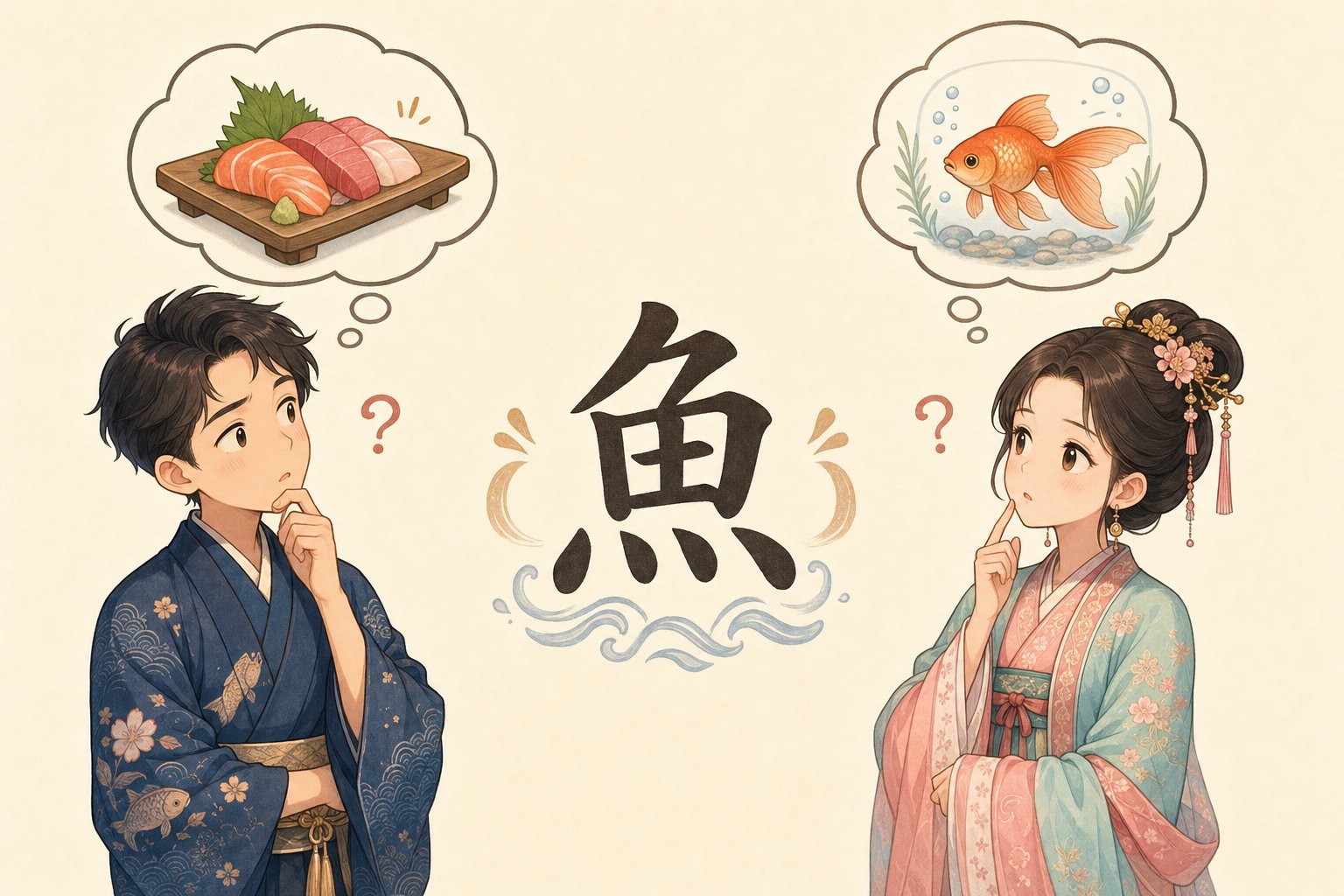
Meaning drift is not just a theoretical concern. It produces real-world confusion, sometimes hilarious, sometimes embarrassing. Among the thousands of words that are similar in chinese and japanese, a subset look identical on paper yet carry completely unrelated definitions. Linguists call these "false friends," and they are one of the most practical differences between chinese and japanese for anyone navigating both languages.
The Most Misleading Shared Characters
Imagine you are a Japanese speaker visiting China. You need toilet paper, so you ask for 手紙. In Japanese, tegami means "letter" as in written mail. In Chinese, shouzhi means "toilet paper." The characters are identical. The meanings could not be further apart. This is not an isolated case. Dozens of common compounds create similar traps.
Here are some of the most surprising false friends between japanese and chinese characters:
| Character/Compound | Japanese Meaning | Chinese Meaning |
|---|---|---|
| 手紙 | Letter (written mail) | Toilet paper |
| 勉強 | Studying | To force someone; reluctantly |
| 大丈夫 | All right; okay | Real man; man of character |
| 先生 | Teacher | Mister; sir |
| 汽車 | Train (locomotive) | Automobile; motor vehicle |
| 新聞 | Newspaper | News (reports of current events) |
| 人参 | Carrot | Ginseng |
| 暗算 | Mental arithmetic | To plot against; to scheme |
| 娘 | Daughter | Woman; mother |
| 湯 | Hot water; hot spring | Soup |
These false friends catch learners off guard precisely because the japanese and chinese symbols look trustworthy. You recognize the characters, you assume you know the meaning, and then context collapses. A Japanese student telling a Chinese host they plan to 勉強 tonight sounds like they are being coerced into something rather than hitting the books.
Why Meaning Shifted Over Centuries
How did identical compounds end up with such different chinese kanji meanings? The answer lies in how languages evolve independently. When Japan borrowed these character combinations, both the Japanese and Chinese meanings may have been similar or even identical. Over centuries, each language extended, narrowed, or replaced the original sense based on its own cultural needs.
Take 湯 as an example. In classical Chinese, this character referred broadly to hot water. Chinese eventually specialized it toward soup, while Japanese preserved the older "hot water" sense and extended it to hot springs. Neither language is wrong. They simply followed different semantic paths from the same starting point. The same pattern explains why 娘 drifted from "woman" toward "daughter" in Japanese while retaining its older "mother" sense in Chinese. As noted by Kokoro, these shifts often trace back to which era's usage each language froze into its standard vocabulary.
Characters Unique to Japan (Kokuji)
False friends are confusing enough, but at least both languages recognize the characters involved. Kokuji (国字), literally "national characters," present a different situation entirely. These are kanji japanese symbols that Japan invented from scratch. They do not exist in Chinese and never did.
Japan created kokuji to express concepts specific to its geography, culture, or daily life that had no ready-made Chinese character. Some well-known examples include:
- 峠 (toge) - mountain pass. Combines the radicals for mountain (山), up (上), and down (下). A purely Japanese invention reflecting the country's mountainous terrain.
- 畑 (hatake) - dry crop field, as opposed to a rice paddy. The combination of fire (火) and field (田) suggests slash-and-burn agriculture.
- 込 (komu) - to be crowded; to include. Used in extremely common verbs like 申し込む (to apply) and 飛び込む (to jump in).
- 働 (hataraku) - to work; labor. Combines person (人) and movement (動). This character appears in everyday japanese characters chinese speakers cannot find in their own dictionaries.
- 辻 (tsuji) - crossroads; street. Frequently appears in Japanese surnames like 辻村.
Kokuji reveal something important about how the japanese and chinese characters systems diverged. Japan did not just passively receive Chinese writing. It actively shaped the system, filling gaps where Chinese offered no ready solution. A Chinese reader encountering 峠 or 畑 would recognize the individual radicals but find no entry in any Chinese dictionary. These characters belong exclusively to the Japanese branch of the family tree.
Between false friends that mislead and kokuji that simply do not translate, the overlap between chinese and japanese characters is smaller than it first appears. Shared appearance does not guarantee shared meaning, and shared ancestry does not prevent one system from inventing entirely new members. For learners working across both languages, awareness of these gaps is just as valuable as knowledge of the genuine overlaps, which brings up a practical question: when you line up these two systems feature by feature, what does the full picture actually look like?
The Complete Side-by-Side Comparison
You have seen how these systems diverge across history, form, sound, meaning, and grammar. Viewing japanese and chinese side by side in a single reference makes those differences scannable at a glance. The table below consolidates every major dimension into one place, so you can quickly grasp the full scope of how japanese characters vs chinese characters differ in practice.
Complete Feature Comparison Table
| Feature | Japanese Kanji | Chinese Hanzi |
|---|---|---|
| Characters in common use | 2,136 (Joyo kanji list) | ~3,500 for newspaper literacy |
| Simplification system | Shinjitai (post-1946) | Jiantizi (1956-1964) |
| Readings per character | Multiple (on'yomi + kun'yomi) | Typically one (with tones) |
| Surrounding scripts | Hiragana, katakana alongside kanji | Hanzi only |
| Grammar marking | Particles and okurigana in kana | Word order and auxiliary characters |
| Writing direction | Vertical (traditional) or horizontal (modern) | Horizontal (standard); vertical in Taiwan |
| Spaces between words | No (kana provides visual breaks) | No (context determines word boundaries) |
| Unique invented characters | Yes (kokuji, e.g., 峠, 畑, 働) | No equivalent category |
| Stroke order conventions | Based on traditional Chinese with minor variations | Standardized in mainland China |
| Verb conjugation | Shown through attached kana | Expressed through separate words |
The difference between chinese and japanese characters is not any single feature but the accumulation of all these distinctions working together. A character that looks identical in both systems can still behave differently because of the reading system, the grammar scaffolding, and the simplification history surrounding it.
Visual Identification Tips
So how to tell chinese from japanese when you encounter unfamiliar text? You do not need to read a single character. The visual texture of the page gives it away. Japanese text has a distinctive rhythm of dense, complex kanji blocks interrupted by simpler, curvier shapes. Chinese text looks uniform, an unbroken wall of similarly complex characters with no script mixing.
Here is a quick checklist for how to tell japanese from chinese writing at a glance:
- Look for curved, simple characters mixed in. Hiragana characters like は, の, を, and に are rounded and visually lighter than kanji. If you see them scattered throughout the text, it is Japanese.
- Spot angular, sharp characters alongside complex ones. Katakana like ア, カ, and ト have straight, clipped strokes. Their presence confirms Japanese.
- Check for visual uniformity. If every character has roughly the same density and complexity with no simpler script mixed in, you are likely looking at Chinese.
- Look for the long vowel mark (ー). This horizontal dash extending katakana sounds appears only in Japanese.
- Notice specific simplified forms. Characters like 广 (with nothing inside) signal simplified Chinese. Characters like 広 (with a small component inside) signal Japanese shinjitai.
These visual cues work even if you cannot read either language. The difference between japanese and chinese characters becomes obvious once you train your eye to notice script mixing versus script uniformity. Japanese text always looks heterogeneous. Chinese text always looks homogeneous.
With the full picture of japanese vs chinese characters laid out, a practical question remains: if you already know one of these systems, how much of that knowledge actually carries over to the other?
Does Learning One Help You Learn the Other
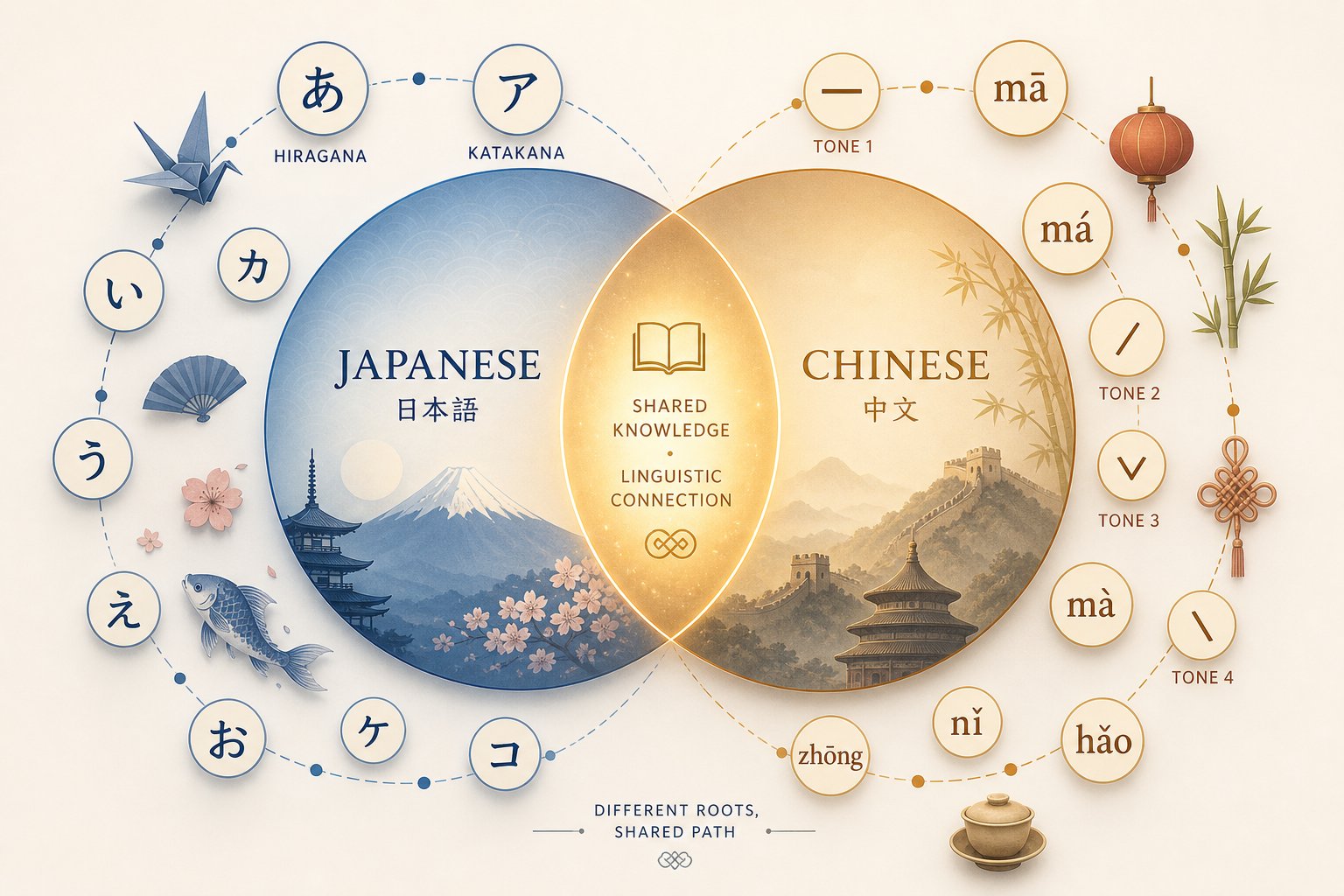
Knowing the full scope of the chinese and japanese difference naturally leads to a practical question: if you have already invested months or years in one system, does that effort pay off when you start the other? The answer is a qualified yes. Some skills transfer beautifully. Others do not transfer at all. Understanding which is which saves you from false confidence and helps you plan a realistic study path.
What Transfers Between the Two Systems
Are chinese and japanese similar enough for cross-system leverage? In certain dimensions, absolutely. A Skritter analysis for Chinese learners approaching Japanese confirms that time invested in one language does pay off when switching to the other, particularly in written recognition. Here is what carries over effectively:
- Meaning recognition for shared characters - Roughly 60% of common kanji share the same or closely related meanings with their Chinese counterparts. Words like 電話 (telephone), 必要 (necessary), and 図書館/图书馆 (library) work identically in both languages.
- Stroke order fundamentals - The core rules (top to bottom, left to right, outside before inside) apply in both systems. Once you internalize these principles for one language, they carry over with only minor variations.
- Radical knowledge - The building blocks of characters, radicals like 水 (water), 木 (tree), and 金 (metal), function the same way in both systems. Knowing radicals helps you guess meaning and look up unfamiliar characters regardless of which language you are reading.
- Compound word logic - Both languages build vocabulary by combining characters into multi-character words. The logic of how 電 (electric) + 車 (vehicle) = 電車 (electric train) works the same way conceptually.
- Partial pronunciation hints - Some on'yomi readings in Japanese echo modern Mandarin closely enough to provide memory hooks. Words like 電話 (denwa/dianhua) and 試験/试验 (shiken/shiyan) share audible similarities.
Chinese speakers approaching Japanese have a particular advantage: they can often grasp the gist of written Japanese text by reading the kanji alone and skipping the kana, at least for simple content. As Maayot notes, Chinese speakers can read kanji to a certain extent because many characters were originally borrowed from Chinese and retain the same or similar meanings.
Where Knowledge Does Not Transfer
Is japanese and chinese the same when it comes to the skills needed for fluency? Not remotely. The areas where prior knowledge fails you are just as important to recognize:
- Pronunciation - Mandarin tones do not prepare you for Japanese pitch accent, and vice versa. The on'yomi/kun'yomi system has no Chinese equivalent. You are essentially learning pronunciation from scratch.
- Grammar patterns - Chinese is SVO (subject-verb-object). Japanese is SOV (subject-object-verb). Japanese uses particles, verb conjugations, and agglutinative structures that have zero parallel in Chinese. As Skritter's guide emphasizes, Japanese verbs and adjectives conjugate with different tenses, something Chinese never requires.
- Simplified character forms - Knowing simplified Chinese does not mean you know shinjitai. About 70% of simplified forms differ between the two systems. You will encounter unfamiliar shapes for characters you thought you knew.
- False friends - The compounds that look identical but mean different things (手紙, 勉強, 大丈夫) can actively mislead you. Prior knowledge becomes a liability rather than an asset for these words.
- Kana scripts - Chinese learners approaching Japanese must learn hiragana and katakana from zero. There is no shortcut here. These phonetic scripts are entirely new territory.
- Reading selection - Knowing which reading to use for a kanji in context is a skill built only through Japanese immersion. Chinese knowledge provides no guidance on when to use on'yomi versus kun'yomi.
Learning one system gives you a meaningful head start on character recognition and meaning, covering perhaps 30-40% of the effort needed for basic reading. But pronunciation, grammar, and contextual reading skills must be built from the ground up. Expect a boost, not a bypass.
Recommended Learning Path for Both
What is the difference between chinese and japanese in terms of how you should approach them as a second system? The strategy depends on which direction you are moving.
If you know Chinese and are learning Japanese:
- Start with hiragana and katakana immediately. These are your gateway to grammar and pronunciation.
- Focus heavily on grammar and verb conjugation. This is where Chinese gives you the least help.
- Learn vocabulary in context rather than assuming meanings transfer. Build a mental list of false friends early.
- Use your radical knowledge to accelerate kanji learning, but always learn the Japanese readings alongside meaning.
- Take advantage of shared written vocabulary for reading practice, but verify meanings before assuming.
If you know Japanese and are learning Chinese:
- Prioritize tones from day one. Japanese pitch accent does not prepare you for Mandarin's four-tone system.
- Learn simplified character forms systematically. Many will look familiar but differ in specific strokes.
- Enjoy the simpler reading system: one character, one pronunciation. This is a genuine relief after managing on'yomi and kun'yomi.
- Study word order carefully. The SOV patterns you internalized in Japanese reverse to SVO in Chinese.
- Leverage your kanji knowledge for reading comprehension. You will recognize more characters than you expect.
Is japanese similar to chinese enough to make dual study worthwhile? For anyone interested in East Asian languages, the answer is yes. The shared character foundation means you are never truly starting from zero with the second language. You already understand how radicals combine, how compound words form, and how characters carry meaning across contexts. That foundation is real and valuable. Just pair it with honest expectations about what's the difference between japanese and chinese at the functional level: grammar, sound, and contextual reading are separate skills that demand their own dedicated practice.
Frequently Asked Questions About Japanese Kanji vs Chinese Characters
1. Are Japanese kanji and Chinese characters the same thing?
They share the same ancient origin but are not the same today. Japan adopted Chinese characters over 1,400 years ago, and both countries independently simplified them in the mid-20th century. Modern kanji and hanzi differ in simplified forms, pronunciation systems, meaning for many compounds, and how they integrate with surrounding grammar. About 60% of common characters retain similar meanings, but the remaining 40% have shifted, split, or been replaced entirely.
2. Can a Chinese speaker read Japanese kanji?
A Chinese speaker can often grasp the general meaning of Japanese text by recognizing shared kanji, especially in written signs, menus, and headlines. However, they cannot read Japanese fluently because they lack knowledge of hiragana, katakana, grammar particles, verb conjugations, and the many false friends where identical characters carry different meanings. Reading comprehension is partial at best without dedicated Japanese study.
3. Why does one Japanese kanji have multiple pronunciations while Chinese characters usually have one?
When Japan adopted Chinese characters, it kept native Japanese words (kun'yomi) alongside borrowed Chinese pronunciations (on'yomi) for the same character. Additionally, different Chinese dynasties introduced different pronunciation layers over centuries, and Japan preserved all of them rather than replacing old readings. Chinese, by contrast, standardized each character to typically one pronunciation with a tone, discarding historical variants over time.
4. Is Japanese kanji traditional or simplified Chinese?
Japanese kanji is neither. It follows its own simplification system called shinjitai, introduced in 1946. Some shinjitai forms match simplified Chinese (like 学 and 国), some match traditional Chinese (like 語), and many differ from both. Japan simplified fewer characters overall and used more conservative methods, so Japanese kanji often retains more strokes than its simplified Chinese equivalent while being simpler than the traditional form.
5. Does learning Chinese characters help with learning Japanese kanji?
Yes, but with limits. Knowledge of Chinese characters transfers well for meaning recognition, stroke order fundamentals, radical identification, and compound word logic. However, pronunciation must be learned from scratch since Japanese uses a completely different sound system with multiple readings per character. Grammar, kana scripts, and contextual reading selection also require dedicated study with no shortcut from Chinese knowledge.