Traditional and Simplified Chinese Characters Explained
When you start exploring written Chinese, you quickly run into a fork in the road. The same language appears in two distinct character systems, each used across different regions, media, and contexts. One looks dense and intricate. The other appears streamlined. Most guides treat this as a simple either-or choice, but the real differences between traditional and simplified Chinese characters are far more layered than a surface-level comparison suggests.
Two Writing Systems, One Language
Here is a point that trips up many newcomers: Chinese traditional vs simplified is a distinction of script, not language. Mandarin is a spoken language. Both writing systems represent it equally. A sentence written in traditional characters and the same sentence in simplified characters sound identical when read aloud. The grammar is the same. The meaning is the same. Only the visual form of certain characters differs. Think of it like the relationship between printed and cursive English, except the gap is wider and carries political and cultural weight.
So what is the difference between simplified and traditional Chinese at a practical level? It comes down to how characters are structured, where they are used, and how they map onto each other. That last part, the mapping, is where things get genuinely tricky.
Why Understanding the Differences Matters
This article breaks down the top 7 specific differences between the two systems using real character examples, frequency data, and concrete scenarios. Whether you are a language learner choosing which system to study first, a developer building multilingual software, or a translator navigating Chinese characters simplified vs traditional, these distinctions have direct consequences for your work.
Both systems share thousands of identical characters. In typical usage, only about 20% to 30% of characters have simplified forms. The differences are more nuanced, and more systematic, than most learners expect.
The difference between simplified and traditional Chinese is not a clean split between two alien scripts. It is a set of specific, pattern-driven modifications applied to a shared foundation. Understanding those patterns gives you a real advantage, whether you are reading, writing, or converting between the two. The structured breakdown ahead covers each major difference in order of practical impact, starting with the most visible change: stroke count reduction.
How We Identified the Top Differences
Not all differences between the two writing systems carry equal weight. Some affect characters you encounter daily. Others show up only in classical texts or rare surnames. To build a ranking that actually helps learners and professionals, you need a framework, and that framework starts with understanding why the split happened in the first place.
Historical Context Behind the Split
So what is simplified Chinese, and where did it come from? In 1949, literacy in China hovered around 20%. The newly established government saw traditional Chinese writing as a barrier. Characters with 15, 20, even 30 strokes were difficult to teach at scale, especially in rural areas with limited schooling infrastructure.
The response was the Scheme of Simplified Chinese Characters, formally introduced in 1956 and stabilized in 1964. This created what we now call jiǎntǐzì (简体字), or 简体中文 in its full written form. The original system, fántǐzì (繁體字), continued in use across Taiwan, Hong Kong, and Macau. Hundreds of characters like 機 and 龜 were reduced to 机 and 龟, with drastic stroke reductions designed to speed up handwriting and lower the learning curve.
The story did not end there. In 1977, a Second Round of Simplified Characters was released as a draft, affecting 853 additional characters. It pushed simplification further, reducing characters like 餐 to 歺 and 蛋 to 旦. The reception was poor. By 1978, publishers were asked to stop using the second-round forms, and in 1986, the State Council officially retracted the scheme. The reasons remain partly classified, though many attribute the failure to a lack of expert consultation during the Cultural Revolution era and the sheer number of characters affected.
What is traditional Chinese, then? It is not an invention or a reform. It is the inherited writing system that predates simplification by centuries, preserved in its fuller form. Understanding what is simplified Chinese language requires recognizing it as a deliberate, policy-driven modification of that inherited system, not a separate language.
How We Ranked These Differences
With that history in mind, we evaluated the differences between the two systems using four criteria:
- Frequency of occurrence in modern text - How often does this type of difference appear in everyday reading and writing?
- Impact on learner comprehension - Does this difference create confusion, or is it easy to bridge once you see the pattern?
- Practical relevance for reading and writing - Does it affect tasks like translation, software localization, or academic research?
- Degree of visual divergence - How different do the two forms actually look? A minor stroke change ranks lower than a complete structural overhaul.
These criteria favor differences that matter in practice over those that are merely interesting in theory. The result is a ranking that starts with the most visually striking change, stroke count reduction, and builds toward subtler but equally important distinctions like the one-to-many mapping problem that gives this article its name.
Stroke Count Reduction and Visual Complexity
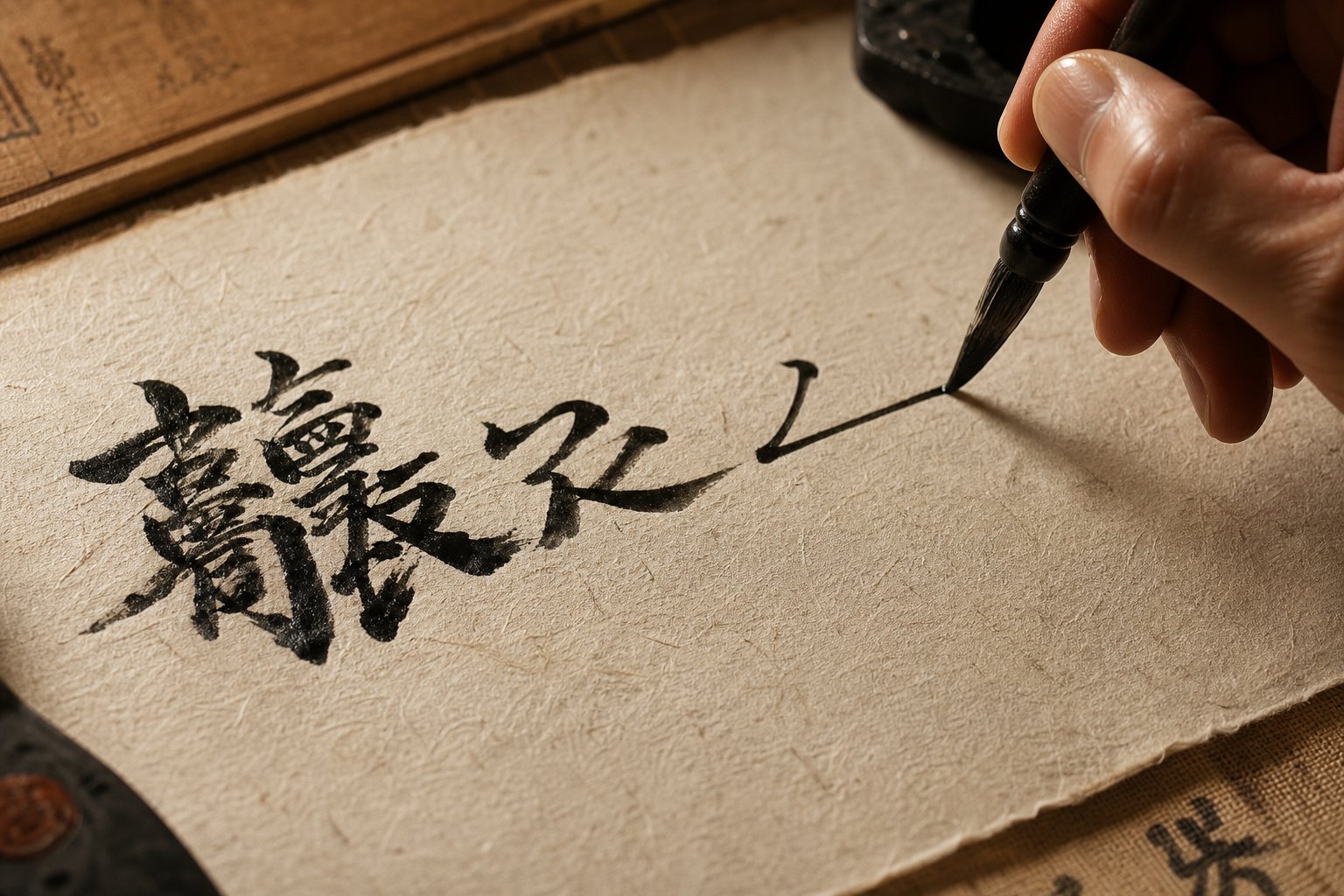
Place a traditional Chinese character next to its simplified counterpart, and the first thing you notice is the difference in density. One looks like a detailed sketch. The other looks like shorthand. This visual gap is the most immediately obvious distinction when comparing traditional chinese characters vs simplified forms, and it was the entire point of the reform.
How Stroke Reduction Works
Approximately 2,000 characters were modified during the simplification process, with many losing anywhere from 5 to 15 strokes. The goal was straightforward: make characters faster to write by hand. In an era when pen and paper were the only tools for mass communication and education, shaving strokes off high-frequency characters meant faster note-taking, quicker letter writing, and a lower barrier for new learners.
Consider these pairs: 龍→龙 (dragon, from 16 strokes down to 5), 學→学 (study, from 16 to 8), 書→书 (book, from 10 to 4), and 飛→飞 (fly, from 9 to 3). The transformation from 龍 to 龙 is so dramatic that the two forms barely resemble each other. As noted by Chinasage, many of these reduced forms were adopted from cursive calligraphy scripts that had been in informal use for centuries. The simplification committee did not always invent new shapes. They often promoted existing shorthand into official print.
Common Examples of Reduced Characters
The table below shows how simplified chinese characters compare to their traditional equivalents in terms of stroke count:
| Traditional Character | Simplified Character | Meaning | Stroke Count Reduction |
|---|---|---|---|
| 龍 | 龙 | Dragon | 16 → 5 (−11) |
| 學 | 学 | Study | 16 → 8 (−8) |
| 書 | 书 | Book | 10 → 4 (−6) |
| 飛 | 飞 | Fly | 9 → 3 (−6) |
| 聽 | 听 | Listen | 22 → 7 (−15) |
| 龜 | 龟 | Tortoise | 16 → 7 (−9) |
| 鐵 | 铁 | Iron | 21 → 10 (−11) |
| 廣 | 广 | Vast | 15 → 3 (−12) |
Looking at these pairs, you might assume that fewer strokes always means easier to learn. That is a common myth. Recognition depends on distinctiveness as much as simplicity. Traditional chinese characters, with their greater visual complexity, can actually be easier to distinguish from one another at a glance. When chinese simplified characters reduce multiple complex forms to visually similar shapes, readers sometimes lose the quick differentiation that density provides.
There is another factor worth noting. In the digital age, stroke count matters far less than it did in 1956. Modern pinyin input methods let you type a romanized pronunciation and select the correct character from a list. Whether you are producing simplified vs traditional chinese characters, your typing speed is essentially identical. As Stanford research on Chinese computing highlights, the engineering behind predictive text and character retrieval has made handwriting speed largely irrelevant for everyday communication. The original advantage of fewer strokes, writing speed, has quietly faded.
Stroke reduction remains the most visible difference between the two systems, but it is far from the most complex. Some simplifications did more than trim strokes. They collapsed multiple distinct characters into a single form, creating a mapping problem that no amount of visual comparison can reveal on its own.
The One-to-Many Mapping Problem
Stroke reduction is easy to see. You compare two characters side by side, count the lines, and the difference is obvious. The one-to-many mapping problem is different. It is invisible until you try to convert simplified chinese to traditional chinese and realize that a single simplified character can split into two, three, or even five distinct traditional forms, each with a completely different meaning.
This is the trap that gives this article its name, and it is the single most underappreciated challenge when working across both writing systems.
When One Character Replaces Many
During simplification, the Chinese government did not just reduce strokes. In some cases, they merged multiple traditional characters into one simplified form. The logic was efficiency: if several characters shared a similar pronunciation, why not consolidate them into a single, simpler shape?
The result is a set of simplified characters that carry far more semantic weight than their traditional counterparts. Consider these examples:
- 后 now represents both 後 (behind, after) and 后 (empress). In traditional Chinese, these were entirely separate characters with unrelated meanings.
- 发 covers both 發 (to emit, to develop) and 髮 (hair). The phrase 发展 (development) and 头发 (head hair) use the same simplified character for completely different concepts.
- 干 absorbs three traditional characters: 幹 (to do, trunk), 乾 (dry), and the original 干 (shield, to offend). Three meanings, three etymologies, one shape.
Native readers handle this effortlessly through context. You will never confuse "the empress" with "behind the house" in a real sentence. But imagine a machine trying to do the same thing without understanding meaning. That is where the problem becomes practical.
Real-World Ambiguity Examples
The table below shows how one-to-many mappings create potential confusion, especially for automated systems and learners converting simplified to traditional Chinese:
| Simplified Character | Traditional Equivalents | Meanings | Example of Potential Confusion |
|---|---|---|---|
| 后 | 後, 后 | Behind/after; Empress | 皇后 (empress) vs 后来 → 後來 (afterward) |
| 发 | 發, 髮 | Emit/develop; Hair | 发现 → 發現 (discover) vs 头发 → 頭髮 (hair) |
| 干 | 幹, 乾, 干 | Do/trunk; Dry; Shield | 干净 → 乾淨 (clean) vs 干部 → 幹部 (cadre) |
| 台 | 臺, 檯, 颱, 台 | Platform; Table; Typhoon; Surname | 台风 → 颱風 (typhoon) vs 台湾 → 臺灣 (Taiwan) |
| 面 | 面, 麵 | Face/surface; Noodles | 面条 → 麵條 (noodles) vs 面对 → 面對 (to face) |
| 钟 | 鐘, 鍾 | Clock/bell; Surname/concentrate | 时钟 → 時鐘 (clock) vs 钟情 → 鍾情 (devoted to) |
As Skritter's analysis of character mappings notes, the simplified character 台 alone maps to five different traditional characters. Learning these cases from traditional to simplified chinese is straightforward: multiple forms collapse into one, and you simply memorize the single replacement. Going the other direction, from simplified chinese to traditional chinese, requires you to know which meaning is intended before you can pick the correct traditional form.
This asymmetry has real consequences for anyone building or using a simplified to traditional chinese converter. Converting traditional chinese to simplified chinese is essentially a lookup table: each traditional character has exactly one simplified equivalent (or stays the same). But when you try to translate simplified chinese to traditional, the software must perform contextual analysis. It needs to understand the sentence, not just the character.
Modern conversion tools handle common cases well. High-frequency words like 发展 and 头发 are resolved correctly by most chinese simplified to traditional engines because they match against known word boundaries. The failures tend to appear in ambiguous short phrases, classical allusions, or proper nouns where context is thin. For formal publishing, legal documents, and literary translation, automated conversion still requires human review.
For learners, the one-to-many problem is a reminder that the relationship between these two systems is not perfectly symmetrical. The simplification process was a many-to-one compression, and decompressing it back requires knowledge that no character table alone can provide. It requires understanding how the language works at the word and sentence level.
This compression did not happen randomly, though. The methods behind simplification followed identifiable patterns, systematic substitutions of radicals and components that, once you recognize them, make the entire system far more predictable.
Radical Substitution and Systematic Simplification Methods
The patterns behind simplification are not random. When you look at how traditional chinese characters to simplified forms were created, clear rules emerge. The reformers did not redesign each character from scratch. They identified high-frequency components, the building blocks that appear inside hundreds of characters, and replaced them with shorter alternatives. Once you learn these substitution rules, you can predict the simplified form of characters you have never seen before.
Three distinct methods account for the vast majority of changes between traditional and simplified chinese. Each follows its own logic, and understanding all three gives you a map for navigating both systems.
Radical and Component Substitution Patterns
The most productive simplification method was component substitution: taking a complex radical that appears in many characters and replacing it with a streamlined version everywhere it occurs. This single principle generated thousands of simplified characters, constituting the vast majority of all simplifications.
Imagine you learn that the speech radical 言 (7 strokes) always becomes 讠 (2 strokes) on the left side of a character. Instantly, you can read dozens of simplified characters you have never studied: 說→说 (say), 話→话 (speech), 語→语 (language), 詩→诗 (poem), 評→评 (comment), 訂→订 (to order). One rule, dozens of characters unlocked.
Here are the most common radical substitutions that apply across the writing system:
- 言 → 讠 (speech radical): 7 strokes reduced to 2. Affects characters like 認→认, 議→议, 記→记
- 金 → 钅 (metal radical): 8 strokes reduced to 5. Affects 鐵→铁, 銀→银, 鏡→镜
- 食 → 饣 (food radical): 9 strokes reduced to 3. Affects 飯→饭, 餓→饿, 餅→饼
- 糸 → 纟 (silk radical): 6 strokes reduced to 3. Affects 線→线, 織→织, 紅→红
- 車 → 车 (vehicle radical): 7 strokes reduced to 4. Affects 輪→轮, 轉→转, 軟→软
- 門 → 门 (gate radical): 8 strokes reduced to 3. Affects 開→开, 關→关, 間→间
- 馬 → 马 (horse radical): 10 strokes reduced to 3. Affects 駕→驾, 驗→验, 騎→骑
- 鳥 → 鸟 (bird radical): 11 strokes reduced to 5. Affects 雞→鸡, 鴨→鸭, 鵝→鹅
- 韋 → 韦 (leather radical): 9 strokes reduced to 4. Affects 違→违, 圍→围, 緯→纬
- 頁 → 页 (page/head radical): 9 strokes reduced to 6. Affects 題→题, 預→预, 領→领
When a character contains more than one of these components, multiple rules apply simultaneously. The character 韻 (rhyme), for example, contains both 韋 and a reducible phonetic element, producing 韵. This stacking effect is why learning the substitution patterns gives you such high leverage when converting traditional to simplified in your head.
Cursive Script Adoption into Print
The second method drew from centuries of calligraphic tradition. Cursive script, known as caoshu (草书), had been in use since the Han dynasty, over 2,000 years ago. Writers using cursive naturally reduced strokes for speed, connecting lines, dropping components, and smoothing angular shapes into flowing curves. As Sixth Tone's analysis of script history explains, caoshu emphasized minimalism in every regard: the path of the brush on paper, the movement of the brush in the air, and the action of lifting and dropping the brush.
The simplification committee took some of these informal cursive forms and promoted them into standard print. The character 書 (book) became 书, a form that traces directly to how calligraphers had been writing it for centuries. Similarly, 為 (to do/for) became 为, a simplification that had appeared in handwriting since at least the Song dynasty, roughly a thousand years ago. Other examples include 東→东 (east), 樂→乐 (music/joy), and 長→长 (long).
These were not inventions. They were officializations. The cursive forms already existed in the cultural memory of literate Chinese. The reform simply gave them the status of standard print characters. This is why some simplified characters feel organic and familiar even to readers trained in traditional writing, while others feel jarring. The cursive-derived forms carry historical weight. However, as type designers have noted, cursive's frequent use of curved and slanted lines can feel aesthetically awkward when transplanted into the rigid grid of standard print, and some of these adoptions left characters feeling visually unbalanced.
Phonetic Simplification Method
The third method is phonetic borrowing: replacing a complex character with a simpler existing character that shares the same pronunciation. Instead of redesigning the shape, the reformers simply reassigned a simpler homophone to carry the meaning of the more complex original.
For example, the character for "only then" was traditionally written 纔 (cai, 21 strokes). A much simpler character, 才 (cai, 3 strokes), already existed with the meaning "talent." Since both shared the same sound, 才 was officially assigned to cover both meanings. Similarly, 穀 (grain) was replaced by the simpler homophone 谷 (valley), and both meanings now coexist in the single character 谷.
This method is efficient but comes with a tradeoff: it increases the semantic load on individual characters. Each phonetic borrowing creates a new case where one simplified character carries meanings that were previously kept separate. You will recognize this as the one-to-many problem from the previous section, generated through a different mechanism.
Understanding these three methods, component substitution, cursive adoption, and phonetic borrowing, transforms the relationship between simplified and traditional chinese from a memorization task into a pattern-recognition exercise. Once you see the rules, converting traditional chinese characters to simplified forms in your head becomes predictable rather than arbitrary.
There is a cultural dimension to these changes worth acknowledging. Critics of simplification point to cases where the systematic methods stripped characters of meaningful internal structure. The most cited example is 愛 (love), which contains the component 心 (heart) at its center. The simplified form 爱 removes the heart entirely, replacing the interior with a friendlier-looking but semantically empty shape. Opponents frame this as "taking the heart out of love." Defenders counter that the character still functions perfectly as a written symbol and that etymological transparency was never the primary purpose of writing.
Similar arguments surround 親 (close/parent) becoming 亲, which drops the component 見 (to see), prompting the complaint that "closeness without seeing" loses something essential. These debates are more cultural than linguistic. Simplified characters work. Billions of people read and write them daily without confusion. But the emotional resonance of these arguments reveals how deeply script is tied to identity, a theme that extends well beyond individual characters into the broader question of which characters stayed the same in both systems, and why.
Characters That Are Identical in Both Systems
Radical substitutions, cursive adoptions, phonetic borrowings — the previous sections might leave you with the impression that simplified chinese and traditional chinese are vastly different scripts. They are not. The modifications, dramatic as they look in isolation, apply to a minority of the total character set. The majority of Chinese characters look exactly the same whether you are reading a newspaper in Taipei or a website in Beijing.
The Overlap Most People Miss
Here is the number that reframes the entire conversation: of the roughly 8,000 characters in common use, only about 2,236 were simplified. That means approximately 70% to 75% of characters you encounter in daily reading are identical across both systems. The American Translators Association confirms this figure, noting that the 1964 General List of Simplified Characters contains a total of 2,238 simplified characters, with the rest remaining unchanged.
Think about what that means in practice. If you are literate in one system, you can already read the majority of text written in the other. The characters for numbers (一, 二, 三, 四, 五), common verbs (去, 来, 做, 看), basic nouns (人, 山, 水, 火, 天), and thousands of everyday words are visually identical. When people compare chinese simplified vs chinese traditional, they tend to focus on the dramatic cases like 龍→龙 or 聽→听. Those examples are real, but they are not representative of the typical reading experience.
So which characters survived simplification untouched? They fall into predictable categories:
- Characters that were already simple — Characters with few strokes had no need for reduction. Examples: 大 (big), 小 (small), 上 (up), 下 (down), 中 (middle), 日 (sun), 月 (moon)
- Characters with balanced visual structure — Some complex characters were considered aesthetically well-proportioned and left alone. Examples: 美 (beautiful), 森 (forest), 晶 (crystal)
- Basic radicals and components — Many standalone radicals were not simplified when used as independent characters, even if their forms changed when used as components inside other characters. Examples: 言 (speech) remains 言 as a standalone character, even though it becomes 讠inside compounds
- Numerals and measure words — 零, 百, 千, 万 (zero, hundred, thousand, ten-thousand) and common measure words like 个, 只, 条 stayed the same or were already in their simplest form
- High-frequency function words — Grammatical particles and conjunctions like 的, 了, 是, 在, 和, 但 are identical in both systems
- Characters where simplification would cause confusion — Some characters were left unchanged because reducing them further would make them too similar to other existing characters
When you add up all these categories, the shared territory between traditional chinese and simplified chinese is enormous. The two systems are variations on a single foundation, not parallel inventions.
Mutual Intelligibility Between Systems
This overlap creates a practical phenomenon: cross-system readability. An educated reader trained in simplified Chinese can typically recognize 60% to 80% of a traditional Chinese text without any formal study of the traditional system. The shared characters carry them through most of the content, and context fills in many of the gaps. The same works in reverse. A reader from Taiwan or Hong Kong encountering simplified text will recognize the majority of characters immediately and can often infer the simplified forms of unfamiliar ones through radical substitution patterns.
This is not the same as full literacy. Recognizing 70% of characters in a text does not mean you understand 70% of the meaning — unfamiliar characters tend to cluster around key nouns and verbs that carry the most semantic weight. But it does mean the jump from one system to the other is far shorter than learning a new script from zero. A Mandarin speaker literate in simplified who moves to Taiwan does not start from scratch. They start from a strong foundation and fill in the gaps.
Traditional versus simplified chinese is not a divide between two separate writing systems. It is a set of targeted modifications applied to a shared base of thousands of identical characters. The two systems are far more alike than they are different.
This reality gets lost in most discussions because the differences are more interesting to talk about than the similarities. Articles and textbooks naturally highlight the dramatic cases, the characters that changed the most. But for anyone making practical decisions about which system to study, work with, or build software around, the overlap is the more important fact. It means skills transfer. It means partial comprehension comes quickly. And it means the cultural and political weight placed on the distinction between simplified chinese vs traditional chinese is, in linguistic terms, applied to a relatively thin layer of divergence sitting on top of a massive shared core.
That thin layer, however, carries outsized significance when you zoom out from individual characters to regional identity. Where each system is used, and why communities hold onto their preferred script, involves far more than stroke counts and radical patterns.
Regional Usage and Cultural Identity
Characters do not exist in a vacuum. They live on street signs, government forms, school textbooks, and smartphone screens, and the system a region uses says something about its history, its politics, and how it sees itself in relation to the broader Chinese-speaking world. The geographic split between simplified chinese and traditional chinese is clean on a map but messy in practice, layered with cultural pride, political decisions, and vocabulary differences that go beyond script alone.
Geographic Distribution of Each System
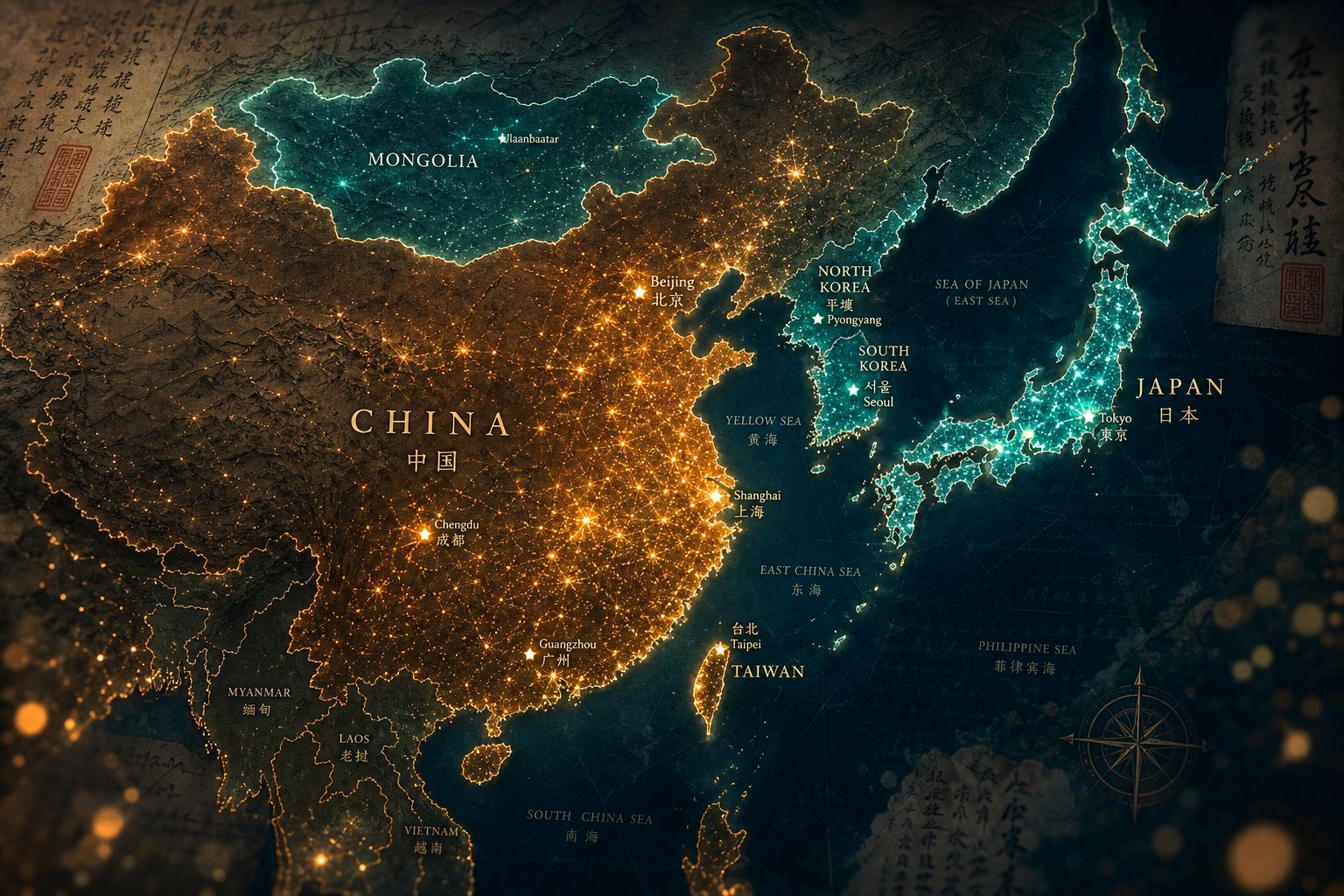
The broad strokes are straightforward. China simplified chinese as its official standard in the 1950s and 1960s, and that standard applies across all of Mainland China today, including regions where Cantonese, Shanghainese, or other dialects are the local spoken language. Singapore and Malaysia also adopted simplified characters for their Chinese-language education systems and official publications. United Nations documents in Chinese have used simplified characters exclusively since 1971, when the People's Republic of China took over the China seat, a fact the American Translators Association confirms in its overview of the two systems.
Traditional chinese remains the standard in Taiwan, Hong Kong, and Macau. Many overseas Chinese communities, particularly those established before the 1980s in North America, Europe, and Australia, also use traditional characters. However, as the ATA notes, with more immigrants arriving from Mainland China in recent decades, overseas communities have evolved into a mixture of both systems. Chinatown signage in cities like San Francisco or Sydney now features both scripts side by side.
The table below maps the major regions to their script and highlights vocabulary preferences that differ even when two regions share the same writing system:
| Region | Script Used | Notable Vocabulary Differences |
|---|---|---|
| Mainland China | Simplified | 软件 (software), 信息 (information), 网络 (network), 出租车 (taxi) |
| Taiwan | Traditional | 軟體 (software), 資訊 (information), 網路 (network), 計程車 (taxi) |
| Hong Kong | Traditional | 軟件 (software), 資訊 (information), 網絡 (network), 的士 (taxi) |
| Macau | Traditional | Similar to Hong Kong usage |
| Singapore | Simplified | 软件 (software), 德士 (taxi), blends Mainland and local terms |
| Malaysia | Simplified | Similar to Singapore with local Malay-influenced terms |
| Overseas communities | Mixed (trending simplified) | Varies by generation and origin of community |
Notice something important in that table. Taiwan and Hong Kong both use traditional characters, but they do not use the same vocabulary. The word for "software" in Taiwan is 軟體 (ruanti), while Hong Kong uses 軟件 (ruanjian), the same word choice as Mainland China but written in traditional script. These vocabulary differences exist independently of the script question and reflect separate paths of linguistic development shaped by local culture, colonial history, and media influence.
Cultural Identity and Political Dimensions
Choosing a script is never purely practical. In Taiwan, traditional characters are viewed as a direct link to thousands of years of Chinese literary and artistic heritage. As Taiwan Panorama reports, scholars and cultural commentators frame traditional characters as "the quintessence of Chinese culture and a treasure of world civilization." The concern is not abstract. Young people in Mainland China often cannot read classical calligraphy, historical documents, or pre-modern literature in their original form because those texts use traditional characters. Taiwan sees its continued use of the traditional system as preserving access to that heritage.
Hong Kong carries a similar sentiment, though the dynamics shifted after the 1997 handover to China. Simplified characters have become more visible in commercial contexts, particularly in areas catering to Mainland tourists. For many Hong Kong residents, insisting on traditional characters is a statement of local identity, a way of marking cultural distinctiveness within a political framework that trends toward integration.
On the Mainland side, simplified characters carry their own identity weight. They represent modernization, mass literacy, and the founding narrative of the People's Republic. The reform succeeded in its stated goal: China's literacy rate rose from roughly 20% in 1949 to over 97% today, though improved schooling infrastructure and compulsory education played equally large roles. Suggesting a return to traditional characters in Mainland China is politically sensitive, though as Professor Roderich Ptak of Munich University observes, a quiet traditionalist trend has emerged in recent years. Academic publications in literature and history sometimes appear in traditional characters, and shop signs written in the older script have become fashionable in certain circles.
Vocabulary Differences Beyond Script
A common misconception is that converting between the two systems is purely a character-swapping exercise. It is not. Regional vocabulary differences mean that a text written for a Taiwanese audience and a text written for a Mainland audience will differ in word choice even if you ignore the script entirely. Consider these pairs:
- Software: 軟體 (Taiwan) vs 軟件/软件 (Mainland and Hong Kong)
- Information: 資訊 (Taiwan and Hong Kong) vs 信息 (Mainland)
- Video: 視頻/视频 (Mainland) vs 影片 (Taiwan)
- Printer: 印表機 (Taiwan) vs 打印機/打印机 (Mainland)
- Blog: 部落格 (Taiwan) vs 博客 (Mainland)
- Yogurt: 優格 (Taiwan) vs 酸奶 (Mainland)
These are not script differences. They are lexical differences, separate word choices for the same concept. A simplified-to-traditional converter will not catch them. Proper localization for a Taiwanese audience requires more than flipping characters from china simplified to traditional forms. It requires adjusting terminology, and sometimes phrasing, to match regional expectations.
This brings us to a question that confuses many learners: is mandarin chinese simplified or traditional? The answer is neither. Mandarin is a spoken language, a system of sounds, tones, grammar, and vocabulary. Both simplified and traditional characters represent Mandarin equally. A Mandarin speaker in Beijing reads simplified characters. A Mandarin speaker in Taipei reads traditional characters. They are speaking the same language and writing it in different scripts. Cantonese speakers in Hong Kong also use traditional characters, but they are writing a different spoken language in the same script that Taiwanese Mandarin speakers use. The script and the spoken language are independent variables.
Understanding this separation between speech and script is essential for anyone making decisions about translation, localization, or language learning. The question is never simply "which characters should I use?" It is "who am I communicating with, where are they, and what conventions do they expect?" The answer depends on geography, audience, and purpose, a combination that the next section consolidates into a direct side-by-side comparison across every practical dimension.
Simplified vs Traditional Chinese: Side-by-Side Comparison
Geography, identity, vocabulary, mapping asymmetry — the previous sections covered each dimension individually. But when you need a quick reference that puts everything in one place, a consolidated comparison is more useful than scattered details. The table below distills the difference between chinese simplified and traditional into a single scannable format, covering every practical dimension that matters for learners, developers, and professionals.
Complete Feature Comparison Table
This master table compares simplified vs traditional chinese across the dimensions most relevant to real-world decisions:
| Dimension | Simplified Chinese | Traditional Chinese |
|---|---|---|
| Stroke complexity | Lower average stroke count per character | Higher average stroke count; more visual detail |
| Number of unique characters | ~2,236 characters differ from traditional forms | Retains all original forms; no mergers |
| Primary regions | Mainland China, Singapore, Malaysia | Taiwan, Hong Kong, Macau, older overseas communities |
| Digital input methods | Pinyin, Wubi | Pinyin, Zhuyin (Bopomofo), Cangjie |
| Learning curve (non-native speakers) | Slightly easier to handwrite; fewer strokes to memorize | Easier character-to-character distinction; richer semantic cues from radicals |
| Available learning resources | More beginner textbooks and apps default to simplified | Fewer beginner resources; stronger for classical literature study |
| Formal and academic usage | Standard in Mainland academic publishing | Preferred for classical Chinese studies, calligraphy, and historical research |
| Conversion difficulty | Traditional → Simplified: straightforward lookup | Simplified → Traditional: requires contextual analysis (one-to-many problem) |
| Character encoding | GB2312 / GBK / GB18030 | Big5 (Taiwan), HKSCS (Hong Kong) |
| Typing speed | Identical to traditional when using pinyin input | Identical to simplified when using pinyin input |
You will notice that several rows come out roughly even. The difference between traditional and simplified chinese is significant for handwriting, conversion tools, and regional targeting, but it narrows to almost nothing when you look at typing speed, digital input, or grammatical structure. The two systems diverge in form, not in function.
Digital Age Considerations
When the simplification reforms launched in the 1950s, every character was written by hand. Fewer strokes meant faster writing, and that mattered enormously for a nation trying to educate hundreds of millions of people. In the digital era, that advantage has largely evaporated.
Pinyin input works identically for both systems. You type the romanized pronunciation, a candidate list appears, and you select the correct character. Whether your system outputs simplified or traditional depends on a single setting toggle, not on any difference in effort. As TypeChinese points out, if you use pinyin, you type pronunciation rather than strokes, so visual complexity has no effect on speed. OS-level switching between the two is seamless on every major platform. Handwriting recognition engines support both systems equally well.
For web developers, the difference between chinese traditional and simplified shows up in character encoding. Mainland Chinese websites historically used GB2312 (introduced in 1980) and its superset GBK. Taiwanese sites used Big5. Hong Kong extended Big5 with HKSCS for Cantonese-specific characters. Today, UTF-8 and Unicode have largely unified these into a single encoding standard, but legacy systems, older databases, and some government portals still rely on region-specific encodings. If you are building software that handles both scripts, testing against both GB and Big5 encoded sources remains a practical necessity.
The bottom line for mandarin simplified vs traditional in a digital context: typing speed is identical, input methods are interchangeable, and the original handwriting advantage of fewer strokes no longer drives everyday communication. The choice between chinese simplified vs traditional is now almost entirely about audience, region, and purpose rather than efficiency. That makes the final question, which system to learn first, a matter of goals rather than difficulty.
Which System Should You Learn First: Traditional Chinese or Simplified
Goals, not difficulty, should drive your decision. Both systems represent the same language, share the same grammar, and overlap in the majority of their characters. The question of whether to study traditional chinese or simplified comes down to where you plan to use the language, who you want to communicate with, and what kind of content you want to access. Generic advice like "simplified is easier" misses the point. Here is a framework that matches specific scenarios to concrete recommendations.
Decision Framework for Language Learners
When learners ask whether they should choose chinese traditional or simplified, the answer depends on a handful of practical variables: your target region, your professional goals, your personal connections, and the type of content you want to engage with. Rather than picking based on perceived difficulty, pick based on where the language will actually live in your daily life.
The table below maps common learner goals to a recommended starting system, with reasoning grounded in the regional, cultural, and practical realities covered throughout this article:
| Your Goal | Recommended System | Reasoning |
|---|---|---|
| Business or career in Mainland China | Simplified | All corporate, legal, and government documents use simplified. Your colleagues, clients, and partners expect it. |
| Academic Chinese studies (literature, history, philosophy) | Traditional first, then simplified | Pre-modern texts, classical poetry, and historical documents are all in traditional. Simplified can be added later through pattern recognition. |
| Heritage speaker reconnecting with family | Match your family's region | If your family is from Taiwan or Hong Kong, learn traditional. If from Mainland China or Singapore, learn simplified. The goal is connection, not abstraction. |
| Travel across multiple Chinese-speaking regions | Simplified | Mainland China's population dwarfs other Chinese-speaking regions. Simplified gives you broader coverage for signage, menus, and everyday interactions. |
| Consuming Chinese media and literature | Both (start with either) | Modern Mainland media uses simplified. Taiwanese dramas and Hong Kong films use traditional subtitles. Serious media consumers need both eventually. |
| Professional translation or localization work | Both (non-negotiable) | Clients expect output in whichever system their audience uses. The one-to-many mapping problem means you cannot rely on automated conversion alone. |
| Taking the HSK exam | Simplified | The HSK is administered exclusively in simplified characters. All official study materials use simplified. |
| Calligraphy or traditional arts | Traditional | Calligraphy has used traditional forms for centuries. Simplified characters lack the structural balance that calligraphic aesthetics depend on. |
Scenario-Based Recommendations
A few scenarios deserve extra context beyond what a table can capture.
If your primary motivation is career-oriented and focused on Mainland China, simplified chinese or traditional chinese is not really a debate. Simplified is the only practical choice. Every contract, every WeChat message, every internal memo at a Chinese company uses simplified. As Mandarin Blueprint's business guide emphasizes, proficiency in simplified Chinese positions you as a valuable asset to companies expanding their presence in China, enabling direct communication with partners and the ability to navigate legal and financial documents.
For academic learners, the calculus flips. If you want to read Tang dynasty poetry, Song dynasty philosophy, or Republican-era novels in their original form, traditional characters are your entry point. Every Chinese text written before 1956 uses traditional characters, and even modern scholarly editions of classical works in Taiwan preserve the original script. Starting with traditional also gives you a structural advantage: once you understand the full forms, recognizing their simplified equivalents through radical substitution patterns is relatively straightforward. Going the other direction, from simplified to traditional, is harder because of the one-to-many problem discussed earlier.
Heritage speakers face a different kind of decision. The question is not "which is more useful globally" but "which connects me to my family." If your grandparents write in traditional characters and your goal is to read their letters or communicate in the family group chat, traditional is the obvious starting point. If your family emigrated from Fujian or Guangdong after the 1980s and uses simplified, start there. Language learning motivated by personal connection benefits from immediate emotional payoff, and that comes from matching the system your family actually uses.
For travelers planning to visit multiple Chinese-speaking regions, simplified offers broader geographic coverage simply because Mainland China accounts for the vast majority of Chinese speakers. That said, as China Admissions notes, even if you only study one script, you will encounter both in daily life. University logos in Mainland China often use traditional characters. Street signs in Taiwan occasionally include simplified forms for Mainland tourists. Exposure to both is inevitable regardless of which you choose first.
Learning one system makes acquiring the other significantly easier. The differences are systematic, not random. Once you internalize the radical substitution patterns and the one-to-many mappings, bridging the gap between simplified chinese or traditional chinese becomes a matter of weeks, not years.
This is the most important point to internalize: your choice is not permanent. Most serious learners of Chinese eventually gain working familiarity with both systems. The patterns covered in this article, stroke reduction, radical substitution, cursive adoption, phonetic borrowing, are all learnable rules. They are not thousands of arbitrary exceptions. A learner who has spent two years mastering simplified characters can pick up traditional reading ability in a fraction of the time it took to learn the first system, because the shared foundation (those 70%+ identical characters) is already in place.
So pick the system that serves your immediate goals. Use it. Build fluency. And when the time comes to cross over, you will find the bridge far shorter than you expected.
Frequently Asked Questions About Traditional vs Simplified Chinese Characters
1. Is Mandarin Chinese simplified or traditional?
Mandarin is a spoken language, not a writing system. Both simplified and traditional characters represent Mandarin equally. A Mandarin speaker in Beijing reads simplified characters while a Mandarin speaker in Taipei reads traditional characters. They speak the same language but write it in different scripts. The choice of script depends on geographic region and political context, not on the spoken language itself.
2. Can someone who reads simplified Chinese understand traditional Chinese?
Partially, yes. About 70% to 75% of Chinese characters are identical in both systems since only around 2,236 characters were simplified. An educated reader trained in simplified Chinese can typically recognize 60% to 80% of traditional text without formal study. Context and shared characters carry them through most content, though full literacy in the other system requires learning the systematic differences like radical substitutions and one-to-many mappings.
3. Why is converting simplified to traditional Chinese harder than the reverse?
The difficulty is asymmetric because of the one-to-many mapping problem. Converting traditional to simplified is a straightforward lookup since each traditional character has exactly one simplified equivalent. However, going from simplified to traditional requires contextual analysis because one simplified character can map to multiple traditional forms with different meanings. For example, the simplified character 发 could be either 發 (emit) or 髮 (hair) in traditional, and only sentence context determines the correct choice.
4. How many Chinese characters were actually changed during simplification?
Approximately 2,236 characters were simplified according to the 1964 General List of Simplified Characters. Out of roughly 8,000 characters in common use, this means about 70% to 75% remained completely unchanged. Characters that were already simple, basic radicals, numerals, and high-frequency function words like 的, 了, and 是 look identical in both systems. The dramatic examples often shown in comparisons are real but not representative of typical reading.
5. Should I learn simplified or traditional Chinese first for business purposes?
For business focused on Mainland China, simplified is the only practical choice. All corporate documents, legal contracts, WeChat communications, and government filings use simplified characters exclusively. For business targeting Taiwan, traditional is necessary. If your work spans multiple Chinese-speaking markets, start with simplified for broader geographic coverage, then add traditional through pattern recognition of radical substitutions and systematic differences.