What Lao Po Really Means in Chinese
What Lao Po Means in English
So what does lao po mean in English? Here's the short answer:
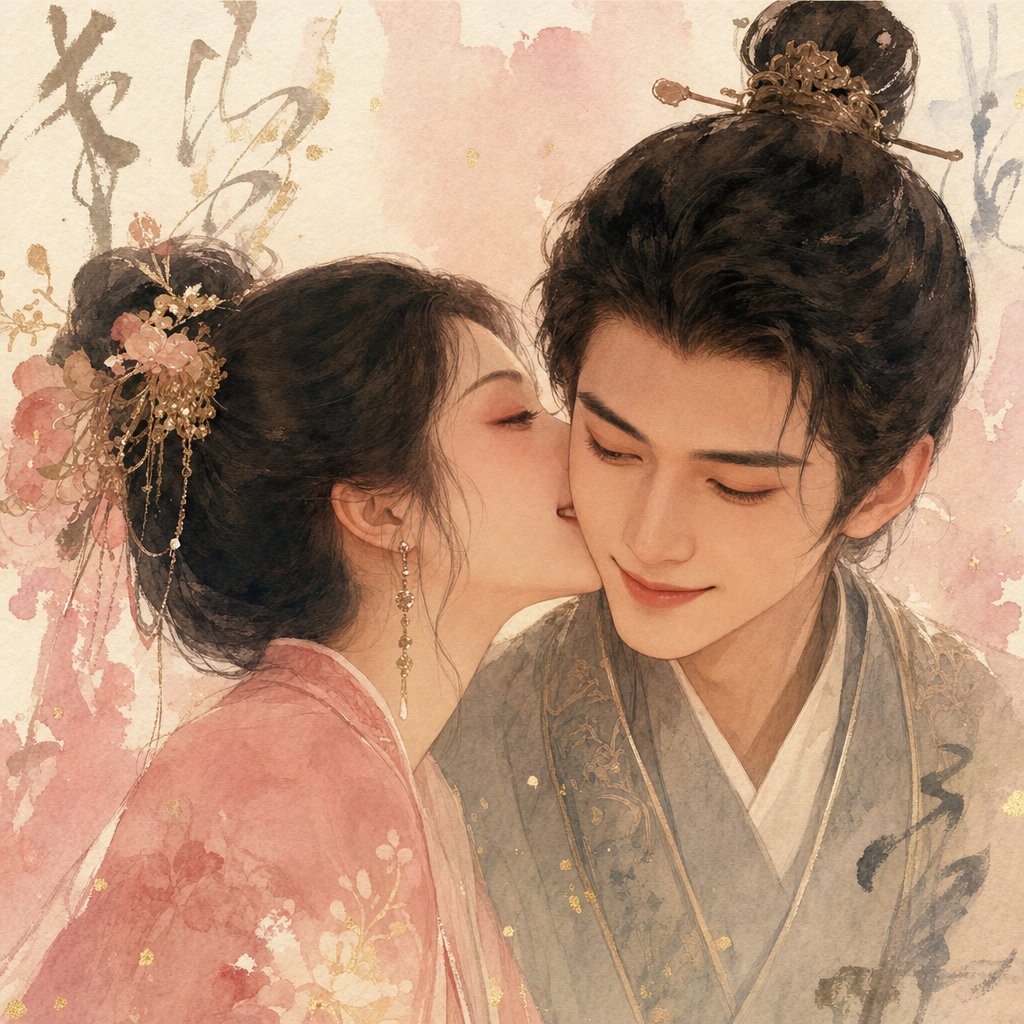
Lao po (老婆, pinyin: lǎo pó) is the most common informal Chinese word for "wife." It is the everyday term Chinese husbands use when speaking to or about their spouse, carrying a tone of affection and familiarity rather than formality.
If you've heard this phrase in a Chinese drama, spotted it in a text conversation, or had a Chinese-speaking partner use it with you, you're looking at the go-to term millions of Mandarin speakers reach for daily. Think of it as the Chinese equivalent of calling your spouse "my wife" in a relaxed, loving way. It's warm, personal, and used far more often than any formal alternative like 妻子 (qīzi), which tends to appear in legal documents and written contexts.
Why This Term Matters for Language Learners
Imagine you're learning Mandarin and you look up "wife" in a dictionary. You'll likely find 妻子 (qīzi) listed first. But step into any Chinese household, scroll through social media, or listen to how couples actually talk to each other, and you'll hear 老婆 far more frequently. The lao po translation to English is simply "wife," yet the word carries layers of casual intimacy that a textbook definition can't fully capture.
For Chinese language learners, understanding this term is essential because it reflects how real people communicate. Textbook vocabulary gets you through exams, but knowing the chinese word for wife lao po gets you through real conversations. If you're in a cross-cultural relationship or building friendships with Chinese speakers, recognizing and using this term correctly signals cultural awareness. It tells people you understand not just the language but the social texture behind it.
The lao po meaning in Chinese also opens a fascinating window into how the language handles familiarity and endearment. Unlike English, where "wife" stays the same whether you're filling out a tax form or whispering to your partner, Chinese draws a clear line between formal and intimate registers. Lao po sits firmly on the intimate side, and that distinction shapes everything from how you introduce your spouse to how you navigate polite conversation.
The real surprise for most learners? The literal character-by-character translation of this affectionate term is "old woman." That gap between literal meaning and actual usage tells a deeper story about how Chinese builds warmth into its vocabulary.
The Characters Behind Lao Po Explained
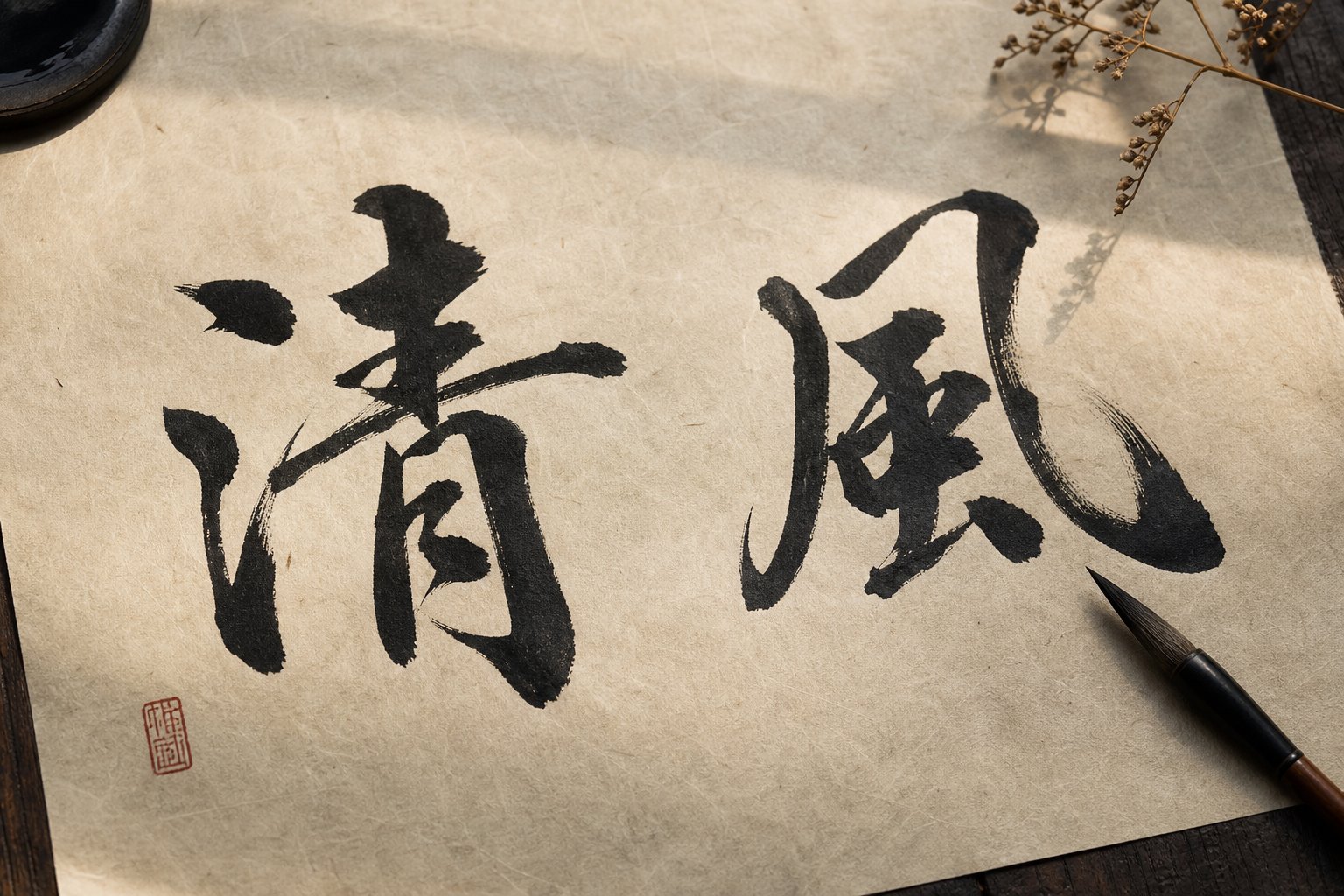
Breaking Down the Characters 老 and 婆
The lao po literal translation old woman makes most English speakers do a double take. Why would anyone call their wife "old woman" as a term of love? The answer lies in how each character actually functions in Mandarin.
Let's look at the chinese character breakdown lao po piece by piece:
The first character, 老 (lǎo), is where the confusion starts. In isolation, yes, it can mean "old." But what does lao mean in Chinese when it's placed before another word? It shifts into something closer to "familiar," "respected," or "dear." Think of it less like the English word "old" and more like a marker that says, "I know this person well, and I value them."
The second character, 婆 (pó), refers to a woman, often an older or married woman. On its own, it can mean "grandmother" or "elderly lady" (as in 外婆, wài pó, maternal grandmother). But paired with 老, it sheds that elderly connotation entirely and simply means "wife" in the intimate, everyday sense.
Together, 老婆 doesn't describe an old woman at all. It describes a woman who is deeply familiar, cherished, and central to your life.
Why Old Does Not Mean Old in This Context
So why does lao po mean old woman on paper but "beloved wife" in practice? Because 老 is one of the most versatile prefixes in Mandarin. When attached to surnames or role words, it signals warmth, respect, and closeness rather than age. It's a social marker, not a physical description.
You'll notice this pattern across many common Chinese terms:
- 老师 (lǎo shī) - teacher. Literally "old master," but it simply means "teacher" with built-in respect.
- 老板 (lǎo bǎn) - boss. Literally "old board/plank," yet it's the standard casual word for a boss or business owner.
- 老王 (Lǎo Wáng) - a familiar way to address someone surnamed Wang, like saying "good old Wang" among friends or colleagues.
- 老朋友 (lǎo péngyǒu) - old friend. Here "old" does reference time, but the emphasis is on depth of connection, not wrinkles.
- 老百姓 (lǎo bǎi xìng) - common people. The 老 adds a sense of groundedness and familiarity to "the people."
In every case, 老 functions as a prefix that wraps the following word in a layer of familiarity or respect. It tells the listener, "This isn't distant or formal. This is close, trusted, known." When a husband says 老婆, he's not commenting on his wife's age. He's expressing that she's the person closest to him, the one he's most comfortable with in the world.
English doesn't have an exact equivalent for this kind of prefix. The closest comparison might be how "old" works in the phrase "old friend" or "good old days," where it signals fondness rather than decay. Chinese simply takes that emotional logic and applies it more broadly, across relationships, titles, and everyday speech.
This prefix pattern is also why the term feels natural to Chinese speakers of any age. A 25-year-old newlywed calling his wife 老婆 sounds perfectly normal because everyone understands that 老 here means "my dear" or "my one," not "my elderly." The character's emotional weight completely overrides its dictionary definition.
The Historical Journey of Lao Po Through Chinese Culture
That emotional override didn't happen overnight. The word 老婆 traveled a long road from its earliest recorded use to the affectionate spousal term you hear in Chinese households today. Understanding the origin of chinese word for wife reveals how language bends under the weight of everyday human connection.
From Literal Meaning to Term of Endearment
In its earliest appearances, 老婆 meant exactly what the characters suggest: an old woman. Tang Dynasty poet Han Shan used the term in his poems to describe an elderly neighbor, writing about "a certain old woman from the east household" who grew wealthy over several years. No spousal affection, no romantic undertone. Just a descriptor for an aged female figure. This usage dates back over a thousand years, placing the history of lao po in chinese culture firmly in the Tang era.
The shift began during the Song Dynasty. In Wu Zimu's Mengliang Lu, a record of daily life in Hangzhou, the phrase appears in the context of "taking a wife." By the Yuan Dynasty, theatrical scripts used 老婆 as a straightforward synonym for one's spouse. Something had changed. The word was no longer pointing at a stranger's age. It was pointing at a relationship.
The lao po meaning evolution over time mirrors a pattern common across languages: words that start as neutral descriptors absorb emotional color through repeated intimate use, until the feeling overtakes the original definition entirely.
What drove this transformation? Daily life. Couples used the term at home, between themselves, in moments of warmth and routine. Each use layered another coat of affection over the literal meaning. By the time of Dream of the Red Chamber in the Qing Dynasty, 老婆 appeared naturally in domestic scenes, fully established as a colloquial word for wife. The literary record shows a clear arc: Tang Dynasty literal usage, Song Dynasty transitional usage, and Yuan through Qing Dynasty spousal usage becoming standard.
How Modern Chinese Speakers Use Lao Po Today
Fast forward to contemporary Mandarin, and 老婆 has completed its transformation. It's not just accepted as a word for wife. It's the default in casual speech. A sociolinguistic survey conducted in Henan province with 269 participants found that while terms like "husband" and "wife" (老公/老婆) are widely recognized, their heaviest presence is in media, film, and television, which then reinforces their use in everyday conversation.
Younger generations have pushed this even further. On Chinese social media platforms like Weibo and Douyin, 老婆 appears constantly in relationship content, couple vlogs, and humorous posts about married life. The term carries zero "old" connotation for these speakers. If anything, it skews young and playful. Newlyweds in their twenties use it without a second thought. Dating couples sometimes adopt it early as a signal of commitment and closeness.
How lao po became term of endearment is ultimately a story about repetition and context. Say any word often enough in moments of love, comfort, and daily partnership, and it absorbs those emotions permanently. The literal meaning fades into background noise while the felt meaning takes over completely. Chinese speakers today don't hear "old woman" when someone says 老婆. They hear "my person. My wife. The one I come home to."
This emotional weight also explains why the term travels in a pair. If 老婆 carries all that warmth for "wife," the language needed an equally intimate counterpart for "husband," and that's exactly what developed alongside it.
Lao Po and Lao Gong: Chinese Terms for Husband and Wife Pair
Lao Gong as the Male Counterpart to Lao Po
So what does lao gong mean in English? It's simply "husband," delivered with the same casual intimacy that 老婆 carries for "wife." The term 老公 (lǎo gōng) follows the identical structural logic: the 老 prefix wraps the word in familiarity and affection, while 公 (gōng) refers to a man, specifically a husband or lord in classical usage. Together, the pair forms a perfectly symmetrical set of chinese terms for husband and wife.
This symmetry matters. Older Chinese spousal terms were anything but equal. A wife might call her husband 相公 (xiàng gōng, "my lord") or 官人 (guān rén, "official"), both implying the husband held higher status. Meanwhile, a husband might refer to his wife as 内人 (nèi rén, "the one inside"), suggesting her place was confined to the home. These terms encoded a hierarchy directly into everyday speech.
The lao po and lao gong difference from those older terms is structural equality. Both words use the same prefix. Both carry the same register of warmth. Neither elevates one partner above the other. When a couple calls each other 老公 and 老婆, they're using language that treats the relationship as a partnership between equals rather than a hierarchy between roles.
How Couples Use These Terms Together
In practice, these two terms function as a reciprocal pair. A wife calls her husband 老公. A husband calls his wife 老婆. The exchange is mutual, expected, and carries no imbalance in tone or respect. Imagine it like "honey" and "dear" in English, except each word is gender-specific and reserved exclusively for your spouse.
Here's how the paired terms break down side by side:
- 老婆 (lǎo pó) - Wife. Used by a husband to address or refer to his wife. Casual, affectionate, everyday register.
- 老公 (lǎo gōng) - Husband. Used by a wife to address or refer to her husband. Same casual, affectionate register.
- Context: at home - Both terms are the default. Couples use them constantly in daily conversation, from "老公, dinner's ready" to "老婆, I'm heading out."
- Context: with close friends - Perfectly natural. Saying "my 老公" or "my 老婆" to friends signals comfort and closeness in the relationship.
- Context: on social media - Extremely common. Couples tag each other with these terms in posts, comments, and short videos.
- Context: formal settings - Both terms are typically swapped for more polished alternatives like 先生 (xiān sheng) or 太太 (tài tai).
The popularity of this pairing in contemporary Chinese is well documented. Research notes that 老公 and 老婆 have become the dominant casual appellations for spouses, reinforced heavily through film, television, and social media. Their presence in pop culture keeps them feeling fresh and current rather than dated, even though both terms have roots stretching back centuries. Historical records show 老公 appearing as a spousal address as early as the Water Margin, where a wife refers to her husband using the term in a domestic scene.
What you'll notice is that this matched pair does something subtle but important: it creates linguistic equality within the relationship. Both partners get the same prefix, the same level of informality, and the same emotional weight. Neither term sounds more respectful or more dismissive than the other. For modern Chinese couples, that balance reflects how they see their partnerships, as two people on the same level, sharing the same language of love.
Of course, knowing what these terms mean is one thing. Saying them correctly is another, and Mandarin tones make pronunciation a genuine challenge for learners encountering these words for the first time.
How to Pronounce Lao Po Correctly in Mandarin
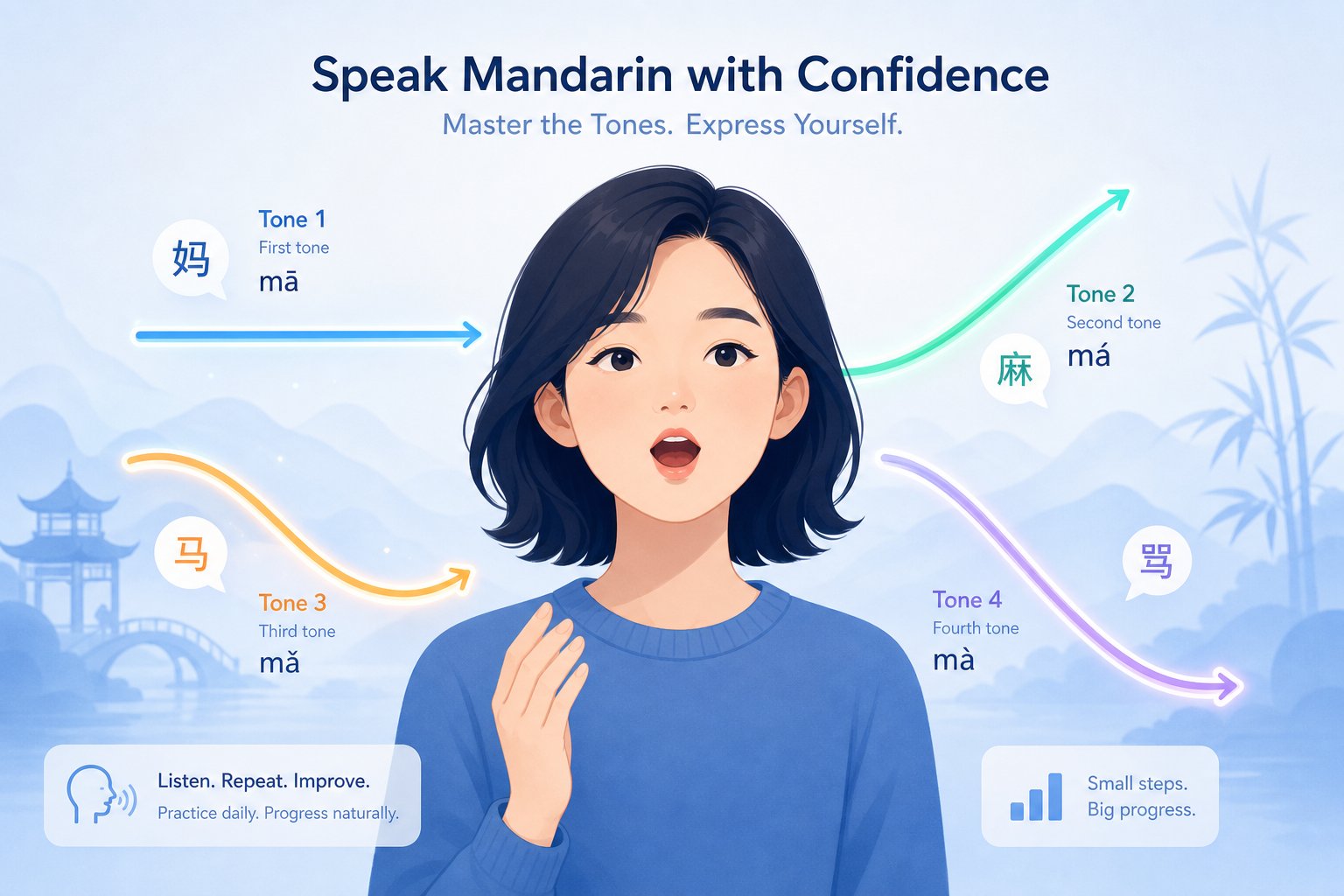
Mandarin tones aren't optional seasoning on top of a word. They're baked into the word itself. Get the tones wrong on 老婆, and you might get a confused look instead of a smile. Here's a lao po pronunciation guide mandarin learners can follow without needing audio files.
Pronouncing Lǎo Pó with Correct Tones
The pinyin for this term is lǎo pó, and those little marks above the vowels are everything. The lao po tone marks pinyin tells you exactly what your voice needs to do:
老 (lǎo) carries the third tone. In isolation, the third tone follows a dipping contour: your pitch starts at a mid level, drops to the lowest point of your vocal range, then rises slightly. Think of the skeptical sound you make when someone tells you something unbelievable: that low, creaky "reeeeally?" The bottom of that sound is where the third tone lives.
But here's what most textbooks won't tell you. In connected speech, the third tone almost never completes that full dip-and-rise shape. When followed by another syllable (any tone), it shortens to just the low dip without the rise at the end. Linguists call this the "half third tone," and it's what native speakers actually produce in everyday conversation. So when you say 老 before 婆, your voice simply goes low and stays there. No need to force it back up.
婆 (pó) carries the second tone. The second tone rises from mid-pitch to high, like the intonation at the end of a surprised "what?" or the way your voice lifts when you ask a genuine yes-or-no question in English. Start at a comfortable middle pitch and slide upward. That rising motion is the entire tone.
For the phonetic approximation: "lao" rhymes roughly with "cow" (not "lay-oh"), and "po" sounds close to the English word "paw" but with your lips slightly more rounded and your pitch rising. Put them together and you get something close to "l-OW p-AW" with the first syllable low and the second sliding up.
Common Pronunciation Mistakes to Avoid
English speakers tend to make a few predictable errors when learning how to pronounce lao po in chinese:
- Forcing the full third tone rise on 老. If you produce the complete falling-rising contour before 婆, you'll sound slow and unnatural. Keep 老 low and flat in this context.
- Flattening the second tone on 婆. English speakers often let sentence-final syllables trail off. In Mandarin, that rising second tone needs to stay strong all the way through. Commit to the upward pitch.
- Pronouncing "lao" like "lay-oh." The vowel combination "ao" in pinyin is a single diphthong that sounds like the "ow" in "cow," not two separate syllables.
- Adding an English "l" release. The Mandarin "l" is lighter and quicker than the English one. Don't let your tongue linger.
One important note on tone sandhi: the third-tone-before-second-tone combination in 老婆 does not trigger any sandhi change. The well-known rule where two consecutive third tones cause the first to shift into a second tone (like 你好 becoming "ní hǎo" in practice) doesn't apply here because 婆 is second tone, not third. You simply produce a low third tone followed by a rising second tone. No adjustments needed.
Ready to practice? Here's a step-by-step sequence for how to say wife in chinese mandarin:
- Say "ow" (as in "cow") at the lowest comfortable point of your voice. Hold it there. That's your third tone on 老.
- Now say "paw" starting at your mid-range and sliding your pitch upward, like you're asking a question. That's your second tone on 婆.
- Put them together: low "l-ow" immediately followed by rising "p-aw." Keep the transition smooth with no pause between syllables.
- Speed it up. Native speakers say 老婆 quickly, almost as a single rhythmic unit. The low syllable flows directly into the rising one.
- Test yourself by saying it in a short phrase: "我老婆" (wǒ lǎo pó, "my wife"). Notice that 我 (wǒ) is also third tone, but because it comes before another third tone (老), it shifts to second tone in natural speech. So the actual pronunciation sounds like "wó lǎo pó."
Tones feel awkward at first, but they become muscle memory faster than most learners expect. The key is practicing in pairs and phrases rather than drilling single syllables in isolation. Once your mouth knows the low-then-rising shape of 老婆, you'll produce it without thinking, the same way native speakers do.
Getting the sound right is half the battle. The other half is knowing which word to choose, because Mandarin offers at least six different ways to say "wife," each suited to a different situation.

All Chinese Terms for Wife Compared by Formality and Region
Mandarin doesn't give you one word for "wife" and call it a day. It gives you a spectrum, from pillow-talk intimate to podium-level formal, with regional flavor mixed in. Picking the wrong one won't cause a disaster, but it can make you sound either too stiff or too casual for the room you're in. Here's the full picture.
Six Chinese Words for Wife Compared
Below is a side-by-side breakdown of the different ways to say wife in Chinese. Each term occupies its own lane in terms of tone, setting, and geography.
| Term | Pinyin | Literal Meaning | Formality Level | Regional Usage | Best Context |
|---|---|---|---|---|---|
| 老婆 | lǎo po | Old woman | Informal / intimate | All Mandarin-speaking regions | At home, with close friends, casual conversation |
| 妻子 | qī zi | Wife (direct) | Neutral / slightly formal | All regions, common in writing | Written documents, news, factual statements |
| 太太 | tài tai | Great great (honorific doubling) | Polite / semi-formal | Widespread; especially common in Taiwan and southern China | Introductions, social gatherings, meeting elders |
| 夫人 | fū rén | Lord's person | Formal / honorific | All regions | Referring respectfully to someone else's wife, diplomatic or official settings |
| 爱人 | ài rén | Loved one | Neutral / warm | Mainland China (especially northern regions and older generations) | Gender-neutral spousal reference, workplace introductions in mainland China |
| 媳妇 | xí fù | Daughter-in-law / wife | Informal / colloquial | Northern China (especially Beijing and surrounding areas) | Casual speech among northerners, family contexts |
A few things jump out from this comparison. The qi zi vs lao po difference is primarily about register: 妻子 belongs in writing and formal speech, while 老婆 belongs in your living room. You'll see 妻子 in news articles, legal documents, and official forms. You'll hear 老婆 in kitchens, bedrooms, and group chats.
The tai tai meaning in chinese carries a polite, socially smooth energy. It's the safest polite choice for introductions and works well when meeting someone's family for the first time. In Taiwan, 太太 is used more broadly than on the mainland, where 老婆 dominates casual speech and 爱人 still appears in certain professional circles.
Then there's the ai ren vs lao po meaning distinction, which trips up many learners. 爱人 literally translates to "loved one" and was promoted during the mid-20th century as a gender-neutral, egalitarian term for one's spouse. It remains common among older mainland Chinese speakers and in some workplace settings. However, in Taiwan and Hong Kong, 爱人 can imply a secret lover or mistress rather than a spouse, making it a term you want to use with geographic awareness.
媳妇 (xí fù) adds another layer of complexity. Its dictionary definition is "daughter-in-law," but across northern China, particularly in Beijing and the northeast, people use it casually to mean "wife." A man in Beijing saying 我媳妇 (wǒ xí fù) is simply saying "my wife" in local dialect. Move south, and the same phrase would confuse people or sound like you're talking about your son's wife.
Choosing the Right Term for Each Situation
With six formal and informal chinese words for wife available, how do you decide? Match the term to the social temperature of the moment:
- Intimate and private (talking to your wife, texting her, chatting with close friends): 老婆 is the natural pick. It's warm, direct, and universally understood.
- Polite and public (introducing your wife at a dinner party, meeting her colleagues, speaking with acquaintances): 太太 strikes the right balance. It's courteous without sounding stiff.
- Neutral and factual (explaining your family situation, filling out forms, writing an email): 妻子 keeps things clean and appropriate for any audience.
- Respectful and formal (referring to someone else's wife, speaking at an event, diplomatic contexts): 夫人 signals deference and polish. Use it for others' spouses more than your own.
- Regional and generational (speaking with older mainland Chinese colleagues or in northern dialect contexts): 爱人 or 媳妇 may surface naturally. Follow the lead of the people around you.
The underlying principle is simple: the closer the relationship and the more relaxed the setting, the more informal your word choice can be. Formal settings push you toward 太太, 妻子, or 夫人. Casual settings pull you back toward 老婆. And regional context can override everything, so pay attention to what the people around you actually say.
Knowing which term fits which register is useful in theory. But the real test comes when you're standing in a specific moment, deciding whether this particular room calls for 老婆 or something more polished.
When to Use Lao Po and When to Avoid It
Picture this: you're at a business dinner with your Chinese partner's colleagues, and you want to mention your wife. Do you reach for 老婆, the word you use at home every day? Or do you shift gears? The answer depends entirely on who's listening and what the social stakes are. Understanding the lao po usage rules in chinese culture saves you from moments that range from mildly awkward to genuinely disrespectful.
The core question is straightforward: is lao po formal or informal? It's firmly informal. It belongs to the same register as calling someone "honey" or "babe" in English. Perfect between partners. Perfectly wrong in a boardroom.
Appropriate Contexts for Using Lao Po
Here's when to use lao po in chinese without hesitation:
- Speaking directly to your wife at home. This is the term's natural habitat. "老婆, 吃饭了" (wife, time to eat) is as standard as it gets.
- Referring to your wife with close friends. Among people you're comfortable with, saying "我老婆" (my wife) sounds warm and natural. It signals you're relaxed in the group.
- Texting or messaging your spouse. Digital communication between partners almost always uses 老婆 and 老公. Formal terms in a text to your own wife would feel cold and distant.
- Casual social gatherings. At a barbecue, a house party, or a casual dinner with friends, 老婆 fits the energy of the room.
- Speaking with peers your own age in relaxed settings. Coworkers you're friendly with, neighbors you chat with regularly, old classmates at a reunion. These are all safe territory.
The pattern is clear: anywhere the social temperature is warm and the audience is familiar, 老婆 is the right call.
When to Choose a More Formal Term Instead
The flip side matters just as much. Using 老婆 in the wrong setting can make you sound overly casual, immature, or even disrespectful to the people around you. Here's where you should swap it for something more polished:
- Formal business settings. In meetings, conferences, or professional introductions, switch to 太太 or 妻子. Saying 老婆 in front of a client or senior executive sounds like you forgot which room you're in.
- Speaking with elders or your spouse's parents. When talking to older family members or people of a higher generation, use 太太 or simply your wife's name. Using 老婆 in front of your mother-in-law can come across as too casual or lacking respect for the family context.
- Introducing your wife to strangers or acquaintances. First impressions call for polite address terms. "这是我太太" (this is my wife) reads as courteous. "这是我老婆" in front of someone you just met can feel overly familiar, as if you're skipping social steps.
- Written or official documents. Legal forms, wedding invitations, formal letters, and workplace communications all call for 妻子 or 夫人. 老婆 has no place in print that carries any official weight.
- Referring to someone else's wife. Can you call someone else wife lao po? Generally, no. Using 老婆 for another man's wife sounds presumptuous or even flirtatious. Stick with 太太 or 夫人 when referring to someone else's spouse. For example, "你太太" (your wife) is polite, while "你老婆" can feel intrusive unless you're extremely close friends with the couple.
- Public speeches or formal toasts. If you're giving a speech at a wedding, company event, or any gathering with mixed audiences, 太太 or 夫人 shows you understand the occasion's weight.
The underlying logic mirrors what Chinese speakers learn instinctively growing up: intimacy stays intimate. The warmth of 老婆 works precisely because it's reserved for close, comfortable spaces. Drag it into a formal setting, and it loses that warmth. It just sounds out of place, like showing up to a job interview in pajamas.
Conversely, don't overcorrect. Using 夫人 at home with your wife would sound absurdly stiff, like you're addressing a diplomat rather than the person you share a bed with. The goal isn't to avoid 老婆. It's to match your word choice to the room, the audience, and the relationship you have with the people listening.
These guidelines work well when you already know the rules. But real conversations are messier than lists. Seeing how 老婆 actually lands in natural dialogue, complete with the playful variations Chinese speakers have invented around it, gives you a much better feel for the word in action.
Example Sentences and Common Phrases with Lao Po
Rules and formality charts are helpful, but nothing teaches you how to use lao po in a sentence quite like hearing it in context. Chinese couples drop this word into dozens of daily micro-conversations, from shouting across the apartment to firing off a quick WeChat message. Below are real-world scenarios showing how the term actually sounds in natural dialogue.
Lao Po in Everyday Conversations
Each example below covers a different situation you're likely to encounter or use yourself. Pay attention to how the tone shifts depending on who's listening.
- Calling out to your wife at home:
老婆,吃饭了!
Lǎo pó, chī fàn le!
"Wife, time to eat!"
This is the most common domestic use. Short, warm, and completely routine. - Introducing your wife to a close friend:
来,认识一下,这是我老婆小丽。
Lái, rèn shi yí xià, zhè shì wǒ lǎo pó Xiǎo Lì.
"Come, let me introduce you. This is my wife, Xiao Li."
Casual enough for friends, but you'd swap 老婆 for 太太 in a more formal introduction. - Texting your spouse during the workday:
老婆,今天晚上想吃什么?
Lǎo pó, jīn tiān wǎn shang xiǎng chī shén me?
"Wife, what do you want to eat tonight?"
Digital messages between partners almost always use 老婆 and 老公. Formal terms would feel oddly distant. - Referring to your wife when chatting with coworkers:
我老婆说这家餐厅不错,要不要一起去试试?
Wǒ lǎo pó shuō zhè jiā cān tīng bú cuò, yào bú yào yì qǐ qù shì shi?
"My wife says this restaurant is good. Want to go try it together?"
Among friendly colleagues, this sounds natural. In a formal meeting, you'd switch to 我太太 or 我妻子. - Saying goodbye before heading out:
老婆我走了,晚上早点回来。
Lǎo pó wǒ zǒu le, wǎn shang zǎo diǎn huí lái.
"Wife, I'm heading out. I'll be back early tonight."
This casual departure phrase is a staple of married life. The structure "老婆我去" or "老婆我走了" signals you're leaving while keeping the tone affectionate and brief. - Praising your wife to friends:
我老婆做的菜比饭店的还好吃。
Wǒ lǎo pó zuò de cài bǐ fàn diàn de hái hǎo chī.
"My wife's cooking is even better than a restaurant's."
Bragging about your spouse in casual company is common and endearing in Chinese social culture.
You'll notice a pattern across these lao po example sentences in chinese: the term always appears in relaxed, familiar settings. The speaker is either talking directly to their wife or referencing her among people they're comfortable with. That's the word's natural territory.
Understanding Lao Po Da Ren and Other Variations
Chinese speakers love playing with language, and 老婆 has spawned a few humorous variations that you'll encounter in conversation, on social media, and in Chinese TV dramas.
The most popular one is 老婆大人 (lǎo pó dà rén). The lao po da ren meaning chinese speakers understand instantly is something like "my dear wife" or, more playfully, "the boss at home." The 大人 (dà rén) portion historically meant "your honor" or "my lord," used to address officials and authority figures. In traditional usage, 大人 conveyed respect and elevated status, and attaching it to 老婆 creates a humorous effect: you're jokingly treating your wife as the household authority.
Here's how it sounds in practice:
- Asking for pocket money (a classic scenario):
老婆大人,这个月零花钱可以多给点吗?
Lǎo pó dà rén, zhè ge yuè líng huā qián kě yǐ duō gěi diǎn ma?
"My dear wife, can you spare a little extra pocket money this month?"
This playful phrasing acknowledges that the wife manages the household finances, a common dynamic in Chinese families. - Asking permission to go out with friends:
老婆大人,周末我能跟朋友去打球吗?
Lǎo pó dà rén, zhōu mò wǒ néng gēn péng yǒu qù dǎ qiú ma?
"Your honor (my wife), can I go play ball with friends this weekend?"
The humor here is self-deprecating. The husband positions himself as "requesting permission" from the household boss.
The phrase is never serious. It's affectionate comedy, a way of saying "I respect you and I know who really runs things around here" with a wink. You'll see it in chinese conversation examples with wife across sitcoms, variety shows, and social media posts where husbands joke about their domestic dynamics.
Another variation worth knowing is the departure phrase 老婆我去了 (lǎo pó wǒ qù le), meaning "wife, I'm off" or "honey, I'm leaving now." It's the verbal equivalent of a quick kiss on the way out the door. Short, routine, and entirely casual. Some speakers shorten it even further to just "老婆,走了" (heading out) or "老婆,我先走" (I'll go first). The key element is always the same: 老婆 as the opening address, followed by a brief statement of action.
These variations reveal something important about how the term lives in daily speech. It's not a static vocabulary word you memorize and deploy. It's a flexible building block that Chinese speakers attach to all kinds of everyday moments, from the mundane to the playful. The more comfortable you get with these patterns, the more natural your Mandarin sounds in the spaces where it matters most: at home, with the people closest to you.
Of course, flexibility also means there are ways to get it wrong. Learners and foreigners navigating Chinese spousal terms for the first time tend to stumble into a few predictable traps, and those mistakes are worth knowing before they happen.

Common Mistakes and Cultural Tips for Using Lao Po
Knowing the vocabulary is one thing. Knowing the invisible social rules wrapped around it is another. Foreigners learning Chinese or dating a Chinese partner tend to hit the same handful of stumbling blocks with spousal terms, and most of those mistakes come from applying English-language logic to a system that works differently. Here are the traps worth sidestepping.
Cultural Mistakes Foreigners Make with Lao Po
These are the most common errors, along with why each one creates friction:
- Using 老婆 to refer to someone else's wife. In English, saying "your wife" is perfectly neutral. But calling another man's spouse 你老婆 can sound presumptuous or overly familiar, as if you're claiming a closeness to the couple that doesn't exist. The term carries intimacy, and intimacy directed at someone else's relationship feels intrusive. Stick with 你太太 or 你夫人 when referring to another person's wife.
- Adopting the term too early in a relationship. Some learners hear that 老婆 means "wife" and start using it with a girlfriend they've been dating for two weeks. In Chinese dating culture, jumping to 老婆 before a relationship is serious signals that you're either rushing toward marriage or not taking the weight of the word seriously. As one cross-cultural blogger noted, her Chinese partner began using 老婆 early because in his mind, they were already headed for marriage. That intentionality matters. Without it, the term can feel presumptuous rather than sweet.
- Mispronouncing the tones and accidentally saying something else. Mandarin tones aren't decoration. Say "lao" with a flat first tone instead of the dipping third tone, and you've shifted the meaning entirely. Pronounce 婆 with a falling fourth tone and you're no longer saying "wife" at all. Tone errors don't just sound awkward. They can produce words that confuse or amuse native speakers in ways you won't realize until someone points it out.
- Assuming the term is rude or disrespectful because of the literal translation. Is lao po rude or disrespectful? Not even slightly. English speakers who learn that 老婆 literally means "old woman" sometimes hesitate to use it, worried they'll offend their partner. But as the earlier sections of this article explain, the 老 prefix carries familiarity and endearment, not age. Chinese speakers hear warmth in this word, not insult. Refusing to use it because of the English translation actually misses the point entirely.
- Using 老婆 in formal situations out of habit. Learners who practice one word for "wife" tend to default to it everywhere. But dropping 老婆 in front of your partner's boss, during a formal dinner, or when meeting her parents for the first time signals that you don't understand register differences in Chinese. It's the equivalent of calling your spouse "babe" during a job interview. The word isn't wrong. The room is.
- Calling a Chinese woman 老婆 as a joke or flirtation when you're not in a relationship with her. This isn't playful. It's inappropriate. The term implies a spousal or deeply committed romantic bond. Using it casually toward someone you're not partnered with can come across as disrespectful or harassing, regardless of your intent.
Tips for Cross-Cultural Couples Using Chinese Terms
If you're in a relationship where one partner speaks Chinese and the other is learning, navigating how to call chinese wife properly becomes a real daily question. Here are practical guidelines that cross cultural couples chinese terms of endearment conversations tend to surface:
- Ask your partner what they prefer. Some Chinese partners love hearing a foreigner use 老婆 or 老公. Others prefer their name, an English pet name, or a mix. There's no universal rule. The best approach is a direct conversation about what feels good to both of you.
- Follow your partner's lead on timing. If your Chinese girlfriend or boyfriend starts calling you 老公 or 老婆, that's a signal they see the relationship as serious and are inviting you into that linguistic space. Reciprocate if it feels right. If they haven't used it yet, don't force it.
- Learn the register differences early. Knowing when to say 老婆 versus 太太 versus 妻子 shows cultural fluency that Chinese families notice and appreciate. It tells your in-laws you respect the social fabric, not just the vocabulary list.
- Don't overthink the literal meaning. Cross-cultural couples sometimes get stuck on translations. "You're calling me old woman?" is a common first reaction from Western partners hearing the term explained. Let it go. The emotional meaning is what matters, and that meaning is purely affectionate.
- Practice tones with your partner. Your spouse or partner is your best pronunciation coach. Ask them to correct your tones gently and often. Getting 老婆 to sound natural in your mouth is a small effort that carries outsized emotional reward.
The mistakes foreigners make saying lao po almost always come from the same root: treating Chinese as a code you can swap word-for-word with English. It isn't. Every term carries social context, relational weight, and tonal precision that English simply doesn't require. But that complexity is also what makes getting it right so satisfying. When you use 老婆 correctly, in the right moment, with the right tone, you're not just speaking Chinese. You're speaking the private language of a relationship, and that's something no textbook can teach you.
Frequently Asked Questions About Lao Po Meaning
1. What does lao po mean in English?
Lao po (老婆, pinyin: lǎo pó) translates to 'wife' in English. It is the most widely used informal term Chinese husbands use to address or refer to their spouse. Despite its literal character-by-character translation of 'old woman,' the term carries affection and intimacy rather than any reference to age. It functions similarly to how English speakers might say 'my wife' in a warm, casual tone among friends or at home.
2. Is lao po a rude or disrespectful term?
No, lao po is not rude or disrespectful in any way. The confusion arises because the character 老 (lǎo) can mean 'old' in isolation, but when used as a prefix in relationship terms, it conveys familiarity, closeness, and endearment. Native Chinese speakers hear warmth and love in this word, not insult. The same prefix pattern appears in respectful terms like 老师 (teacher) and 老板 (boss), where 'old' signals respect rather than age.
3. What is the difference between lao po and qi zi?
The key difference is formality and context. Lao po (老婆) is informal and intimate, used in everyday conversation at home, with friends, or in text messages between spouses. Qi zi (妻子) is neutral to slightly formal, appearing primarily in written documents, news reports, legal forms, and official contexts. Think of it like the difference between saying 'my wife' casually to a friend versus writing 'spouse' on a government form. Both mean wife, but they belong to different social registers.
4. What does lao gong mean and how does it relate to lao po?
Lao gong (老公, lǎo gōng) means 'husband' and serves as the direct male counterpart to lao po. Both terms share the same 老 prefix and carry identical levels of casual intimacy. A wife calls her husband 老公, and a husband calls his wife 老婆, creating a symmetrical pair that reflects equality in the relationship. This matched structure contrasts with older Chinese spousal terms that encoded hierarchical differences between partners.
5. Can you use lao po for someone else's wife or before marriage?
Using lao po to refer to another man's wife is generally inappropriate because the term carries personal intimacy. It can sound presumptuous or overly familiar. Instead, use 太太 (tài tai) or 夫人 (fū rén) when mentioning someone else's spouse. Similarly, using lao po with a girlfriend before marriage or serious commitment can feel rushed. The term implies a spousal-level bond, so most Chinese speakers reserve it for relationships where marriage is either established or clearly intended.