The Chinese Symbol for Love at a Glance
In English, one word handles a lot of heavy lifting. You love your partner, love your dog, love pizza, and love a good sunset. Chinese takes a different approach. Instead of stretching a single word thin, it builds an entire system of compounds from one powerful root character, each specifying exactly what kind of love you mean.
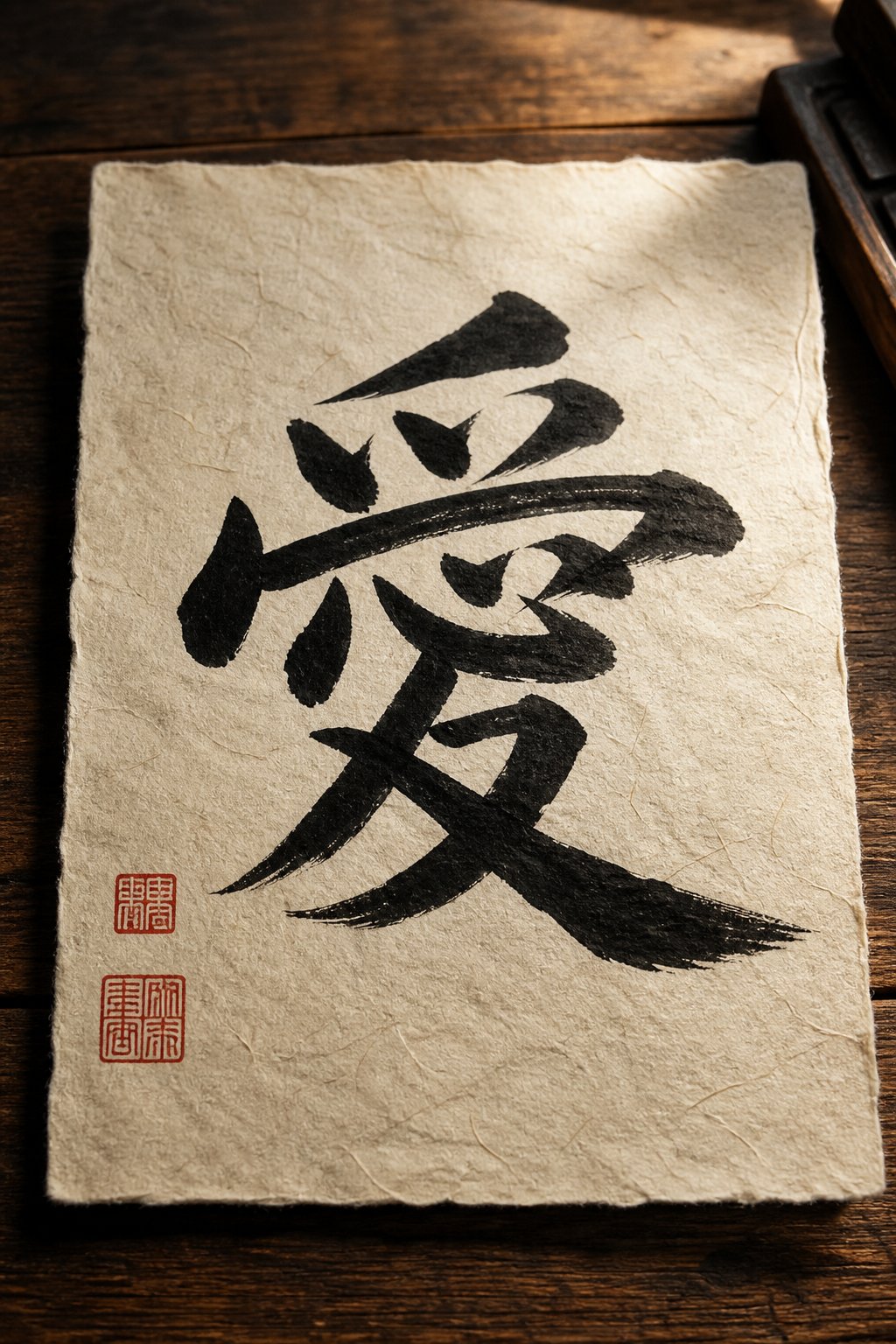
That root character is 爱 (ai) in simplified Chinese, or 愛 in its traditional form. Pronounced "ai" with a sharp falling fourth tone (like saying "eye" with firm emphasis downward), it functions as both a noun and a verb meaning "love" or "to love." If you have ever wondered what is the Chinese symbol for love, this is it. Mainland China uses the simplified 爱 (10 strokes), while Taiwan, Hong Kong, and Macau preserve the traditional 愛 (13 strokes). Both are correct, both are current, and the difference between them sparks one of the most fascinating cultural debates in the Chinese-speaking world.
What Does the Chinese Character for Love Look Like
Side by side, the two forms share a recognizable silhouette but differ in their internal structure. The traditional 愛 visibly contains the component 心 (xin, heart) at its center. The simplified 爱 replaces that heart section with 友 (you, friend). This single structural swap carries centuries of cultural weight, which we will unpack throughout this article.
Why This Character Matters Beyond Language Learning
So what is the love symbol in Chinese really telling us? Understanding the chinese character for love goes far beyond memorizing strokes. It opens a window into how an entire civilization conceptualizes affection, duty, and connection differently from Western traditions. The love chinese character is not just a word. It is a philosophical statement compressed into a few brushstrokes.
Unlike alphabetic scripts where letters represent sounds, each component of 爱 carries its own meaning, making the character a layered visual argument about what love is and how it moves through the world.
The 愛 meaning has shifted across millennia, from ancient poetry where it described concealment and longing, to modern internet slang where it gets reduced to the number 520. This article traces that full arc: etymology, radical structure, philosophical depth, and everyday usage. Whether you are exploring the chinese symbol that means love for a tattoo, a language class, or pure curiosity, the story behind this character rewards a closer look. Think of it as a chinese symbol for in love with its own history, and that history has a missing heart at its center.
Radical and Component Breakdown of 爱 and 愛
Looking at the ai chinese character on a screen or page, you might assume its parts are decorative. They are not. Every component in a Chinese character carries semantic or phonetic weight, and 爱 is no exception. But here is where things get tricky: popular explanations circulating online often oversimplify or outright misattribute what each piece means. Separating rigorous chinese etymology from poetic storytelling matters if you want to understand what does this chinese character mean at a structural level.
Before diving in, a necessary caveat. Many viral breakdowns treat characters like puzzles where each piece contributes a neat, intuitive meaning to the whole. In reality, chinese character semantic analysis is more complex. Some components serve as phonetic indicators (suggesting pronunciation, not meaning), while others have been graphically simplified beyond recognition over centuries. The classical source for Chinese character etymology is the Shuowen Jiezi (说文解字), a dictionary compiled around 100 CE by Xu Shen. Even this authoritative text occasionally gets things wrong, as modern scholars have noted when cross-referencing it against oracle bone discoveries.
Breaking Down Traditional 愛 Stroke by Stroke
The traditional form 愛 contains 13 strokes and can be visually segmented into four layers from top to bottom:
- 爫 (zhao) — Often described as a claw or hand reaching downward. This component appears at the top of many characters and suggests grasping or covering.
- 冖 (mi) — A cover or roof-like element, indicating something sheltered or concealed beneath.
- 心 (xin) — Heart. This is the most emotionally resonant component and the one that sparks the biggest cultural debate.
- 夂 (sui) or 夊 — Walking feet, suggesting slow movement or walking.
Sounds poetic, right? A hand reaching over a sheltered heart, carried forward by walking feet. Many teachers and websites present this decomposition as the definitive chinese characters definition of love: "a heart protected and carried forward." It is a beautiful story, but scholarly research tells a different one.
According to the Shuowen Jiezi, 愛 is actually a phono-semantic compound. Its structure is 㤅 (ai, phonetic component providing the sound) placed over 夊 (sui, semantic component meaning "to walk slowly"). The original meaning was not "love" at all but rather described "a type of appearance a person has when walking." The character only acquired its meaning of love later through semantic drift. The upper portion that we now read as 爫 over 冖 over 心 is actually a graphical simplification of the phonetic element 㤅, which itself consists of 旡 (ai, phonetic) over 心 (semantic). So the heart is genuinely there in the etymology, but it belongs to the sub-component 㤅, not to the overall character's original meaning.
This distinction matters. When someone asks about chinese character meaning at a deep level, the honest answer is often "it is more complicated than the internet suggests."
How Simplified 爱 Differs in Structure
The simplified form 爱 reduces the stroke count from 13 to 10. Visually, the middle and lower sections undergo the most dramatic change. The 心 (heart) and 夊 (walking feet) are replaced by 友 (you, meaning "friend"). According to The World of Chinese, this simplification traces back to cursive script traditions around the sixth century, where writers merged the heart and walking components into a form resembling 友. The 1950s standardization simply adopted what calligraphers had been doing informally for centuries.
The simplified 爱 retains:
- 爫 (zhao) — The same claw or hand element at the top.
- 冖 (mi) — The cover element beneath it.
- 友 (you) — Friend, replacing both 心 and 夊 from the traditional form.
Some learners find a new folk etymology here: love is friendship sheltered by a caring hand. Again, this is storytelling rather than science, but it illustrates how chinese character meaning invites interpretation at every turn.
| Form | Components | Stroke Count | Component Meanings |
|---|---|---|---|
| 愛 (Traditional) | 爫 + 冖 + 心 + 夊 | 13 | Claw/hand + cover + heart + walking feet (scholarly: phonetic 㤅 over semantic 夊) |
| 爱 (Simplified) | 爫 + 冖 + 友 | 10 | Claw/hand + cover + friend (historically derived from cursive merging of 心 and 夊) |
One important takeaway: the traditional 愛 is itself already a simplification of earlier forms. The ai in chinese writing has never been static. Each era reshaped the character while preserving enough visual continuity for readers to recognize it. That process of reshaping, especially the leap from oracle bones to modern print, reveals even more about how love was understood across Chinese history.
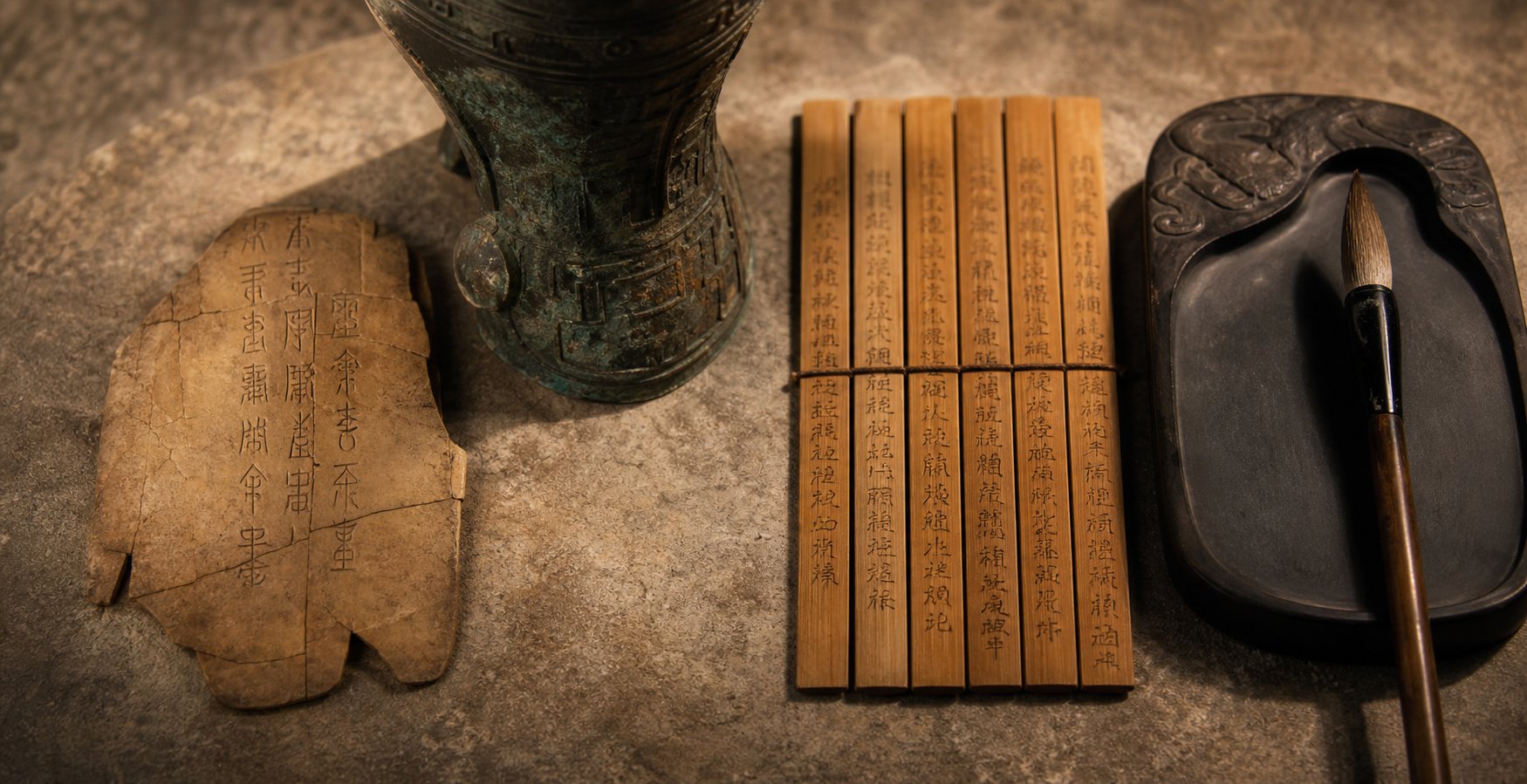
Historical Evolution from Oracle Bones to Modern Script
Characters do not appear fully formed. They evolve over thousands of years, shaped by the tools people write with, the surfaces they write on, and the speed at which bureaucracies need documents produced. The love character chinese speakers use today is the product of at least 3,000 years of graphic transformation. Tracing that journey from carved bone to printed page reveals how chinese writing meanings shift not just semantically but visually, dynasty by dynasty.
Oracle Bone and Bronze Age Origins
The earliest attested form of the love character dates to the oracle bone script of the Shang Dynasty (roughly 1600 to 1100 BCE). These inscriptions were carved into turtle shells and animal bones for divination purposes. In this archaic form, the character depicted a figure with hands placed over the heart, or in some variants, a person in a posture of care, cradling something precious. The composition combined elements resembling "heart" and "claw," symbolizing a hand caressing the heart and conveying tender emotion.
Imagine scratching a pictograph into bone with a sharp stylus. The lines are angular, stiff, dictated by the medium. Yet even in these constraints, Shang scribes managed to encode an embodied gesture of affection into love in chinese writing at its most ancient stage.
Bronze script (金文, roughly 1400 to 700 BCE) carried the character forward onto cast ritual vessels. The form remained similar to oracle bone versions but grew more regular and abstract, with smoother curves made possible by the clay-mold casting process. The emotional core, a figure expressing care, stayed intact even as the lines softened.
From Seal Script to the Modern Character
After the Bronze Age, the mandarin character love passed through several more transformations as writing technology and political standardization reshaped the entire script system. Each stage left its mark on how love in chinese letters appeared on the page:
- Greater Seal Script (大篆, ~1000-200 BCE) — Used during the late Shang and Zhou dynasties, primarily on bronze vessels. Strokes became more uniform and stylized, moving away from raw pictographic representation toward balanced, symmetrical forms.
- Lesser Seal Script (小篆, ~221 BCE onward) — Standardized under the Qin Dynasty's unification reforms. The character took on the rigid, wire-like strokes characteristic of all seal script: geometric, dignified, and uniform in width. This is where the structure recognizable in traditional 愛 solidified.
- Clerical Script (隶书, ~200 BCE onward) — Developed for the speed demands of Han Dynasty bureaucracy. Flowing, varied stroke widths replaced the mechanical uniformity of seal script. The love chinese writing form became more concise and fluid, significantly faster to produce with brush and ink.
- Regular Script (楷书, ~200 CE onward) — The final major stage before modern print. Each stroke became precise and standardized, producing the traditional 愛 form that remains in use across Taiwan, Hong Kong, and Macau today.
What is remarkable about this progression is continuity through change. The tools shifted from stylus to mold to brush. The surfaces shifted from bone to bronze to silk to paper. Yet the character retained its core identity, a recognizable descendant of that Shang-era figure with hands over heart. People searching for the chinese kanji for love (a common cross-reference from Japanese, where the traditional 愛 is used unchanged) are looking at a form that crystallized during the seal script era and has remained visually stable for over two millennia.
This stability makes the 1956 simplification reform all the more striking. After surviving thousands of years of gradual, organic evolution, the character underwent its most radical structural change not through calligraphic drift but through government policy, and the component that was removed happened to be the heart.
Simplified vs Traditional: The Missing Heart Debate in Love's Chinese Symbol
A government policy in 1956 did what three thousand years of calligraphic evolution never quite managed: it cut the heart out of love. The People's Republic of China's first official simplification scheme transformed 愛 into 爱, reducing the stroke count from 13 to 10 and, in the process, removing the 心 (heart) component entirely. That single editorial decision turned the character for love in chinese into one of the most debated symbols in modern Chinese culture.
Why the Heart Was Removed from Love
The motivations were practical, not philosophical. When the PRC launched its language reform campaign, China's literacy rate hovered around 20 percent. Complex characters with high stroke counts were seen as barriers to mass education. The goal was straightforward: make characters faster to write and easier to learn so that hundreds of millions of people could become literate within a generation.
The simplification of 愛 was not invented from scratch. As Sixth Tone notes, many simplifications were "not new inventions, but continuations of older variant forms." Cursive script writers had been merging the 心 and 夊 components into a form resembling 友 since at least the sixth century. The 1956 reform simply standardized what calligraphers had practiced informally for hundreds of years. In this light, the simplified love in chinese character is less a revolutionary break and more a bureaucratic stamp on an existing trend.
The reform applied unevenly across the script. Not every complex character was simplified, and the rules were not applied to all characters with the same components. This inconsistency, combined with the cultural weight of certain chinese characters for love and family, made some simplifications feel more jarring than others. Removing the heart from love was, symbolically, the most visible casualty.
The Cultural Argument That Persists
The phrase "love without heart is not love" (有爱无心) has become a viral cultural talking point, repeated in classrooms, social media debates, and cross-strait conversations. Critics of simplification argue that the chinese symbol of love lost something essential when 心 disappeared. For them, the traditional 愛 is not just a writing convention but a philosophical statement: real love requires heart.
The traditional form 愛 visually insists that love must contain heart. Removing it strips the character of its moral instruction and reduces a cultural inheritance to mere efficiency.
Proponents of simplification push back with data. China's literacy rate climbed from roughly 20 percent in the 1950s to over 97 percent today. They argue that preserving every historical component in every character would have kept millions locked out of education. The heart may be gone from the page, but love in chinese traditional regions did not disappear from the mainland. People still love. They just write it faster.
Characters are tools for communication, not museums. A simpler form that more people can read and write serves love better than a beautiful form that most cannot access.
The geographic split reinforces the debate. Taiwan, Hong Kong, and Macau continue using the traditional 愛, preserving the heart as part of daily written life. Mainland China and Singapore use 爱. When people from these different regions encounter each other's chinese symbols of love, the difference is immediately visible and culturally charged. It is not just a matter of stroke count. It is a question about what a writing system owes to its past versus its future.
The irony, as Sixth Tone's reporting highlights, is that the boundaries between simplified and traditional are blurring. Young mainland Chinese read traditional characters through Taiwanese and Hong Kong media. Young Taiwanese encounter simplified text through mainland social platforms. The love in chinese symbol exists in both forms simultaneously for a growing number of readers, and the debate itself has become part of the character's cultural meaning.
Whether you see the simplified 爱 as a practical improvement or a cultural loss depends largely on what you believe a character should do: communicate efficiently, or carry its history in every stroke. That tension is not going away. And it extends far beyond a single character, touching every compound word that 爱 builds when paired with other characters across different types of relationships.
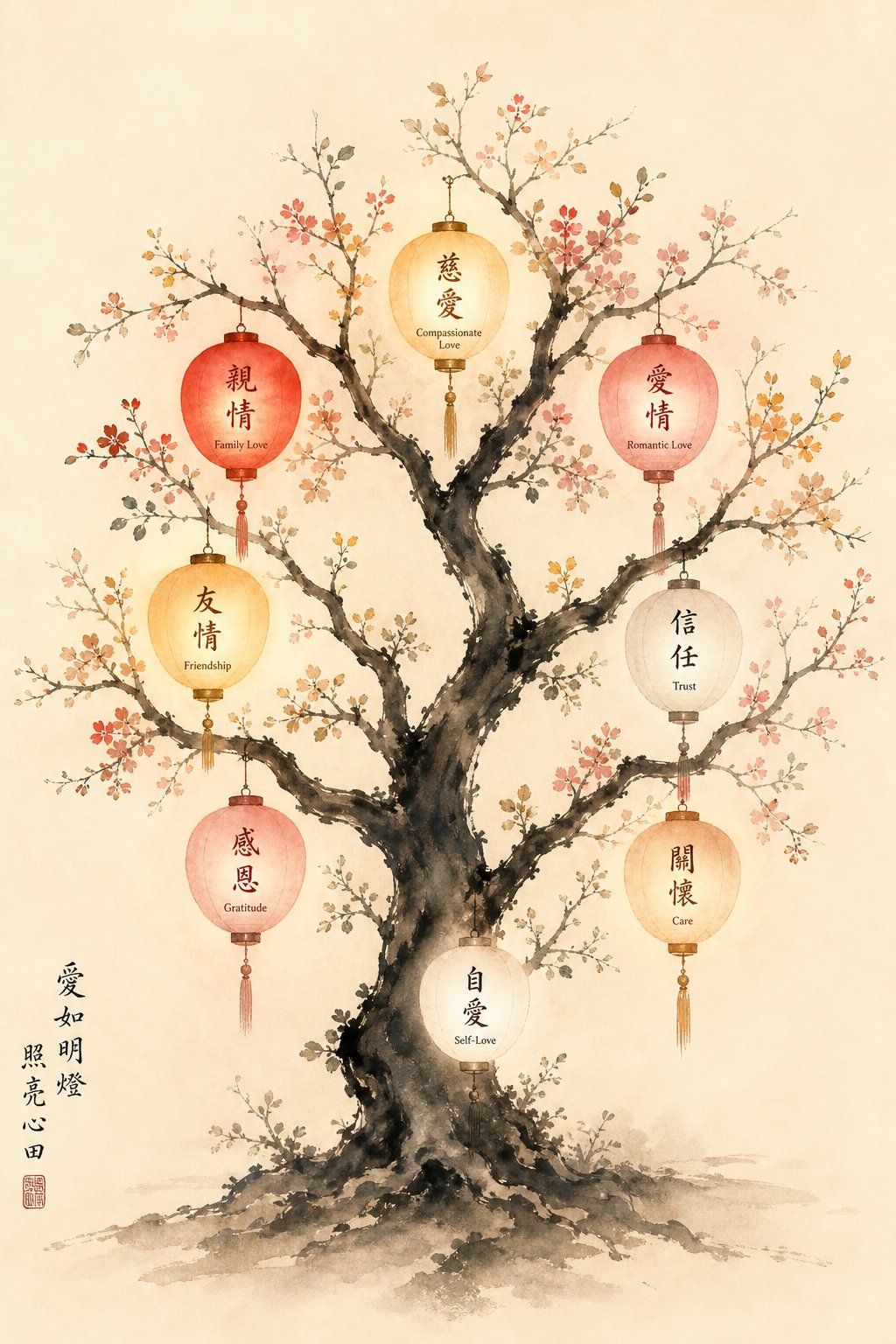
Love Compounds and Vocabulary Across Relationship Types
English speakers say "I love you" to a romantic partner, a parent, a child, and a best friend, relying entirely on context to signal which kind of love they mean. The chinese word for love works differently. Instead of one overloaded verb, the language builds specific two-character compounds that tell you exactly what category of affection is in play. Each compound pairs 爱 with another character that narrows the scope, creating a precision toolkit for emotional expression that has no direct equivalent in English.
This system means that love words in chinese are never ambiguous. When you see or hear a compound, you immediately know whether someone is talking about passion between lovers, devotion between parent and child, or loyalty to a nation. Think of 爱 as a root that branches in every direction, each branch labeled clearly.
Romantic and Familial Love Compounds
Romantic love gets its own dedicated vocabulary in the chinese word love system. The most common term is 爱情 (aiqing), which combines 爱 (love) with 情 (emotion, feeling). This is the word for romantic love as a concept, the kind you find in novels, films, and heartfelt confessions. When someone is actively in a relationship or dating, the term shifts to 恋爱 (lian'ai), which pairs 恋 (to long for, to be attached) with 爱. You will hear 谈恋爱 (tan lian'ai, "to be in a romantic relationship") constantly in everyday Mandarin. A lover in chinese is often called 爱人 (airen), though this term has an interesting quirk: in mainland China it typically means "spouse" rather than a casual romantic partner, while in Taiwan it can sound more literary or old-fashioned.
Familial love uses equally specific compounds. 母爱 (mu'ai) means "motherly love," pairing 母 (mother) with 爱. Its counterpart 父爱 (fu'ai) covers "fatherly love." These are not interchangeable. A sentence about a mother's sacrifice uses 母爱; a sentence about a father's quiet support uses 父爱. The language insists on distinguishing them. You might also encounter 爱女 (ainü, "beloved daughter") or 爱妻 (aiqi, "beloved wife"), where 爱 functions as an adjective meaning "dear" or "cherished." Being loved in chinese can be expressed through these terms of endearment, where the character shifts from verb to descriptor.
Platonic Love and Abstract Love Expressions
Here is where the love in chinese language truly diverges from English. The character 爱 extends far beyond interpersonal relationships into territory that English would never label "love" at all.
友爱 (you'ai) means "fraternal love" or "friendly affection," combining 友 (friend) with 爱. It describes the caring bond between comrades, classmates, or community members. 爱国 (aiguo) means "to love one's country" or "patriotic," pairing 爱 with 国 (country). This compound appears everywhere in Chinese public life, from school slogans to government documents. A loving in chinese context can be civic as easily as personal.
Then there is 爱好 (aihao), which means "hobby" or "interest." This might surprise learners. How does love become a hobby? The logic is straightforward: 爱 (love) plus 好 (to like, good) creates a word for something you are passionate about. "My hobbies" in Chinese is literally "my loves." Finally, 自爱 (zi'ai) means "self-love" or "self-respect," combining 自 (self) with 爱. The Daoist philosopher Laozi used this concept over 2,500 years ago, instructing people to love themselves without elevating themselves above others.
The full scope of chinese of love vocabulary becomes clearer when you see these compounds side by side:
| Chinese Compound | Pinyin | English Meaning | Context of Use |
|---|---|---|---|
| 爱情 | aiqing | Romantic love | Describing love as a concept or emotion between partners |
| 恋爱 | lian'ai | Romantic relationship; to be in love | Talking about dating or being in a relationship |
| 母爱 | mu'ai | Motherly love | Describing a mother's devotion or sacrifice |
| 父爱 | fu'ai | Fatherly love | Describing a father's care or support |
| 友爱 | you'ai | Fraternal love; friendly affection | Bonds between friends, classmates, or community members |
| 爱国 | aiguo | Patriotic; to love one's country | Civic contexts, education, public discourse |
| 爱好 | aihao | Hobby; interest | Casual conversation about personal passions |
| 自爱 | zi'ai | Self-love; self-respect | Philosophical, moral, or personal development contexts |
| 爱人 | airen | Spouse; lover | Referring to one's husband or wife (mainland China) |
| 宠爱 | chong'ai | To pamper; to dote on | Describing excessive affection, often toward children |
What this table reveals is a philosophical commitment embedded in the language itself. Chinese does not treat love as a single undifferentiated emotion. It treats love as a family of related but distinct experiences, each deserving its own name. The same character, 爱, anchors all of them, but the second character in each compound acts like a lens, focusing the meaning precisely. This compounding logic shaped not just vocabulary but entire schools of thought, as ancient philosophers debated which forms of love should govern society and which might lead it astray.
How Chinese Philosophy Shaped the Meaning of Love
Those ancient debates were not abstract exercises. They produced competing visions of what love chinese civilization should be built on, and each vision crystallized into a specific compound word that remains in active use today. When you encounter chinese words with deep meaning love embedded in their structure, you are often looking at the residue of philosophical arguments that raged over two thousand years ago.
Four major traditions each claimed 爱 for their own purposes, attaching different modifiers to create distinct concepts. The result is a philosophical landscape where the 爱 meaning shifts dramatically depending on which school of thought is speaking. Understanding these distinctions is essential for accurate chinese character interpretation, because the same root character carries radically different ethical weight in each context.
Confucian Benevolence vs Mohist Universal Love
The most consequential philosophical clash over chinese love happened between Confucians and Mohists during the Warring States period (475-221 BCE). Both schools were considered "outstanding schools" of their era, and both placed love at the center of their ethical systems. But they disagreed fundamentally on how love should be distributed.
Confucian 仁爱 (ren'ai, "benevolent love") operates on a principle of graded affection. You love your parents more than your neighbors, your neighbors more than strangers, your own state more than distant ones. This is not selfishness in the Confucian view but natural human feeling organized into a workable social order. Love radiates outward from the family in concentric circles, growing weaker with distance. The concept of 仁 (ren, "humaneness" or "benevolence") that Confucius placed at the heart of his ethics is listed alongside righteousness (yi) as one of the greatest virtues in classical Chinese philosophy. Confucian love is relational, hierarchical, and rooted in specific duties: a son's love for his father differs in kind from a ruler's love for his people.
Mohist 兼爱 (jian'ai, "universal love") rejected this hierarchy entirely. Mozi (circa 470-391 BCE) argued that graded love was the root cause of social conflict. If rulers loved other states as their own, there would be no war. If people loved others' families as their own, there would be no theft. His solution was radical: love everyone equally, without distinction. As comparative research on these two schools notes, the core difference lies between "distinctive love" (爱有差等) and "undifferentiated love" (爱无差等), reflecting a deeper split between Confucian moralism and Mohist utilitarianism.
History picked a winner. Confucian 仁爱 aligned with the needs of imperial governance, where hierarchical relationships maintained social order. It became the mainstream of Chinese philosophy for over two millennia. Mohist 兼爱, dismissed as too idealistic for practical statecraft, gradually faded until the school nearly disappeared entirely. Yet the concept of universal love chinese thinkers articulated 2,400 years ago continues to resurface in modern discussions of equality and human rights.
Buddhist and Daoist Perspectives on Love
When Buddhism arrived in China during the Han Dynasty (around the 1st century CE), it introduced yet another framework. Buddhist 慈爱 (ci'ai, "compassionate love") combines 慈 (ci, "compassion" or "loving-kindness") with 爱. Unlike Confucian love, which flows through social relationships, or Mohist love, which demands equal treatment, Buddhist compassionate love arises from recognizing the suffering of all sentient beings. It is not an obligation or a policy but a natural response to shared vulnerability. The related term 慈悲 (cibei, "compassion") became central to Chinese Buddhist practice, influencing how millions understood the love chinese spiritual traditions could offer.
Daoism took a different path altogether. Rather than prescribing how love should be directed or distributed, Daoist thinkers like Laozi emphasized naturalness (自然, ziran) and non-interference (无为, wuwei). Love in the Daoist framework is not something you engineer or mandate. It arises spontaneously when people stop forcing artificial social structures onto natural feeling. Laozi's concept of 自爱 (zi'ai, "self-love") was not narcissism but a grounded self-respect that precedes genuine care for others. You cannot pour from an empty cup, as the Daoist might say.
Each tradition left its mark on how the character functions in modern Chinese:
- Confucianism — Key concept: 仁爱 (ren'ai). Core principle: Love is graded by relationship. You love those closest to you most intensely, extending outward through duty and ritual.
- Mohism — Key concept: 兼爱 (jian'ai). Core principle: Love must be universal and equal. Treating all people as equally deserving of care prevents conflict and injustice.
- Buddhism — Key concept: 慈爱 (ci'ai). Core principle: Compassionate love arises from awareness of shared suffering. It transcends social categories and extends to all sentient beings.
- Daoism — Key concept: Natural affection (自爱 as foundation). Core principle: Authentic love is uncontrived. It emerges when people align with nature rather than imposing artificial hierarchies.
These are not museum pieces. When a modern Chinese speaker uses 仁爱 in a sentence about a charitable leader, or 兼爱 in an essay about social justice, they are drawing on philosophical DNA that predates the Roman Empire. The 爱 meaning in each compound is technically the same character, but the ethical universe it inhabits shifts completely depending on its partner. This layered philosophical heritage is precisely what makes chinese love so different from the Western romantic tradition, where "love" tends to default to personal, emotional experience rather than a structured ethical program.
Philosophy shaped how love was conceptualized. But how do you actually say it, write it, and use it in a sentence? The mechanics of pronunciation and stroke order bring the character from the realm of ideas back into the body, where tone and hand movement carry their own kind of meaning.
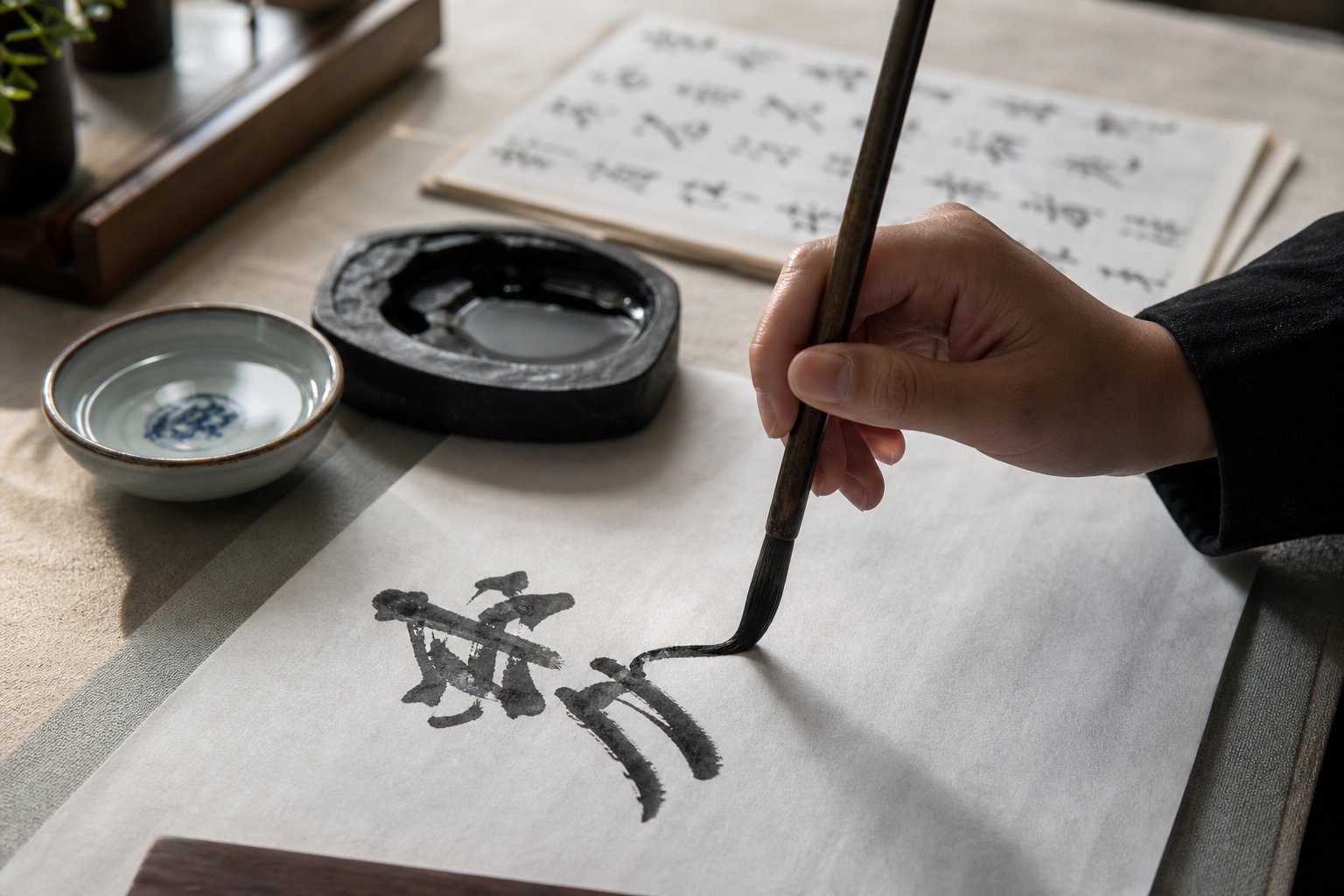
How to Say and Write Love in Chinese
Philosophy gives the character depth. But at some point you need to open your mouth and produce the sound, or pick up a pen and get the strokes right. Knowing how to say love in chinese and how to write love in chinese are two separate skills, each with its own set of common mistakes. Let's tackle pronunciation first, then move to the physical act of writing.
How to Pronounce 爱 with Correct Tone
The character 爱 is pronounced "ai" with the fourth tone in Mandarin. How do you say love in chinese with the right intonation? Think of the fourth tone as a sharp, decisive drop in pitch, like saying "no" firmly to a misbehaving dog, or the way English speakers naturally say "right!" when they are annoyed. Your voice starts high and falls quickly to the bottom of your range. The phonetic transcription is ai (rhymes with English "eye"), and the tone mark goes over the "a": ai.
The most common mistake learners make is producing a flat or rising tone instead of that decisive downward slash. A flat "ai" sounds closer to a question or hesitation. The fourth tone needs confidence. Drop it like you mean it. Another frequent error is softening the vowel into something like "uh" or "eh." Keep it clean: the "a" is open (like "ah" at the dentist) and the "i" glides in naturally to create a diphthong.
Writing 爱 and Saying I Love You in Chinese
If you want to know how do you write love in chinese, the simplified 爱 requires 10 strokes written in a specific order. Stroke order is not arbitrary. It affects the character's balance, legibility, and flow when written by hand. Here is the sequence:
- A short horizontal stroke (the top of 爫)
- A left-falling dot (upper left of 爫)
- A right-falling dot (upper right of 爫)
- A left-falling stroke (beginning the 冖 cover)
- A horizontal stroke connecting the cover
- A horizontal stroke (top of 友)
- A left-falling stroke (left side of 友)
- A horizontal stroke (middle of 友)
- A right-falling stroke (right leg of 友)
- A final dot (completing the lower portion)
Practice each stroke in order. Resist the urge to draw the character as a picture. Chinese writing follows top-to-bottom, left-to-right logic, and skipping steps creates awkward proportions.
With the character mastered, you are ready for the most famous phrase in Chinese: 我爱你 (wo ai ni), i love you in chinese writing broken down character by character. According to ChinaCLife, the structure is straightforward:
- 我 (wo, third tone) — I, the subject
- 爱 (ai, fourth tone) — love, the verb
- 你 (ni, third tone) — you, the object
No conjugation, no articles, no auxiliary verbs. The chinese letters for i love you are exactly three characters in subject-verb-object order, identical to English syntax. For a more respectful version directed at parents or elders, swap 你 for 您 (nin, second tone): 我爱您 (wo ai nin).
The grammatical flexibility of 爱 extends beyond declarations of affection. It follows two core patterns that you will encounter constantly:
- 爱 + noun (to love someone or something): 我爱你 (I love you), 我爱中国 (I love China)
- 爱 + verb (to love doing something): 我爱游泳 (I love swimming), 她爱读书 (She loves reading)
Notice that in the second pattern, 爱 functions almost like English "love to" without needing an infinitive marker. You simply place the activity directly after 爱. This makes i love you in chinese characters just one application of a versatile grammatical structure that covers everything from romance to hobbies.
The simplicity of chinese writing i love you, just three characters with no inflection, might suggest that Chinese speakers toss the phrase around casually. In practice, the opposite is true. Cultural norms around expressing love directly, especially between family members and in public, add layers of context that numbers and slang have stepped in to fill.
Modern Usage and Internet Slang for Love in Mandarin
That cultural reluctance to say i love in chinese directly did not disappear with the internet. It adapted. Rather than spelling out 我爱你 in a text message, Chinese netizens found a workaround that feels lighter, more playful, and perfectly suited to digital communication: they turned love into a number.
520 and Digital Love Language
The number 520 (wu er ling) became shorthand for "I love you" because its pronunciation loosely mimics wo ai ni. What started as a clever phonetic trick on early 2000s chat rooms and messaging apps evolved into a fully recognized cultural occasion. May 20th (5/20) is now an unofficial Valentine's Day in China, complete with themed promotions, couple photos flooding social media, and timed gift deliveries. Unlike the imported Western Valentine's Day or the ancient Qixi Festival, 520 Day is entirely homegrown and internet-born, reflecting how love in mandarin adapts to digital-first lifestyles.
The number code extends further. 5201314 (wu er ling yi san yi si) sounds like "I love you for a lifetime," turning a numeric string into a romantic vow. Sending a red envelope of 5.20 yuan or 520 yuan on WeChat carries the same weight as whispering the words themselves. For many young couples, the chinese i love you symbol is not a character at all but a string of digits.
This indirectness is not shyness. It reflects a broader cultural pattern where Chinese speakers often express love through actions, gifts, and coded language rather than blunt verbal declarations. A parent who never says 我爱你 might peel fruit for their adult child every evening. A partner might transfer exactly 13.14 yuan (yi san yi si, "one lifetime") instead of composing a love letter. The i love you chinese symbol, whether written as 爱 or typed as 520, lives in a culture where showing consistently outweighs telling.
Terms of Endearment and Everyday Love Expressions
Beyond number codes, everyday terms of endearment in chinese reveal how 爱 weaves into daily affection. The most versatile is 亲爱的 (qin'ai de), meaning "dear" or "darling." It works for romantic partners, close friends, and even letter openings, much like English "dear." Its abbreviated form 亲 (qin) functions like "babe" in casual texting. When someone is in love in chinese social contexts, you will hear these terms constantly.
宝贝 (baobei, "treasure" or "baby") is the go-to pet name for partners and children alike. Its literal meaning combines "precious" and "shellfish," a reference to ancient times when shells served as currency. Other common endearments include 老公 (laogong, "hubby") and 老婆 (laopo, "wifey"), used even by unmarried couples in long-term relationships.
Here is a quick reference for modern love expressions you will encounter across Chinese social media, messaging apps, and daily conversation:
- 520 (wu er ling) — "I love you" in number code; used in texts, red envelopes, and as a date (May 20th)
- 5201314 (wu er ling yi san yi si) — "I love you for a lifetime"; a romantic numeric vow
- 亲爱的 (qin'ai de) — "Dear" or "darling"; suitable for partners, close friends, and letters
- 宝贝 (baobei) — "Baby" or "treasure"; the most popular pet name for partners and children
- 老公/老婆 (laogong/laopo) — "Hubby/wifey"; casual spousal terms used by dating couples too
- 甜心 (tianxin) — "Sweetheart"; a direct translation that works the same way as in English
- 心肝 (xin'gan) — "Heart and liver"; poetic way of saying "you are my everything"
The character 爱 also saturates commercial and pop culture. Brand names like 爱奇艺 (iQiyi, a major streaming platform) embed it for emotional resonance. Song titles, movie names, and social media hashtags lean on 爱 as a universal hook. The chinese symbol for i love you appears on merchandise, phone cases, and couple accessories, functioning as both a linguistic expression and a visual brand. Whether typed as three characters, coded as three digits, or printed on a matching t-shirt, love in mandarin keeps finding new surfaces to inhabit, even as the underlying cultural preference for indirect expression remains remarkably stable.
All of this digital and spoken usage eventually circles back to a physical question: what happens when someone wants to make the love character permanent, whether inked on skin or brushed onto a wedding scroll?
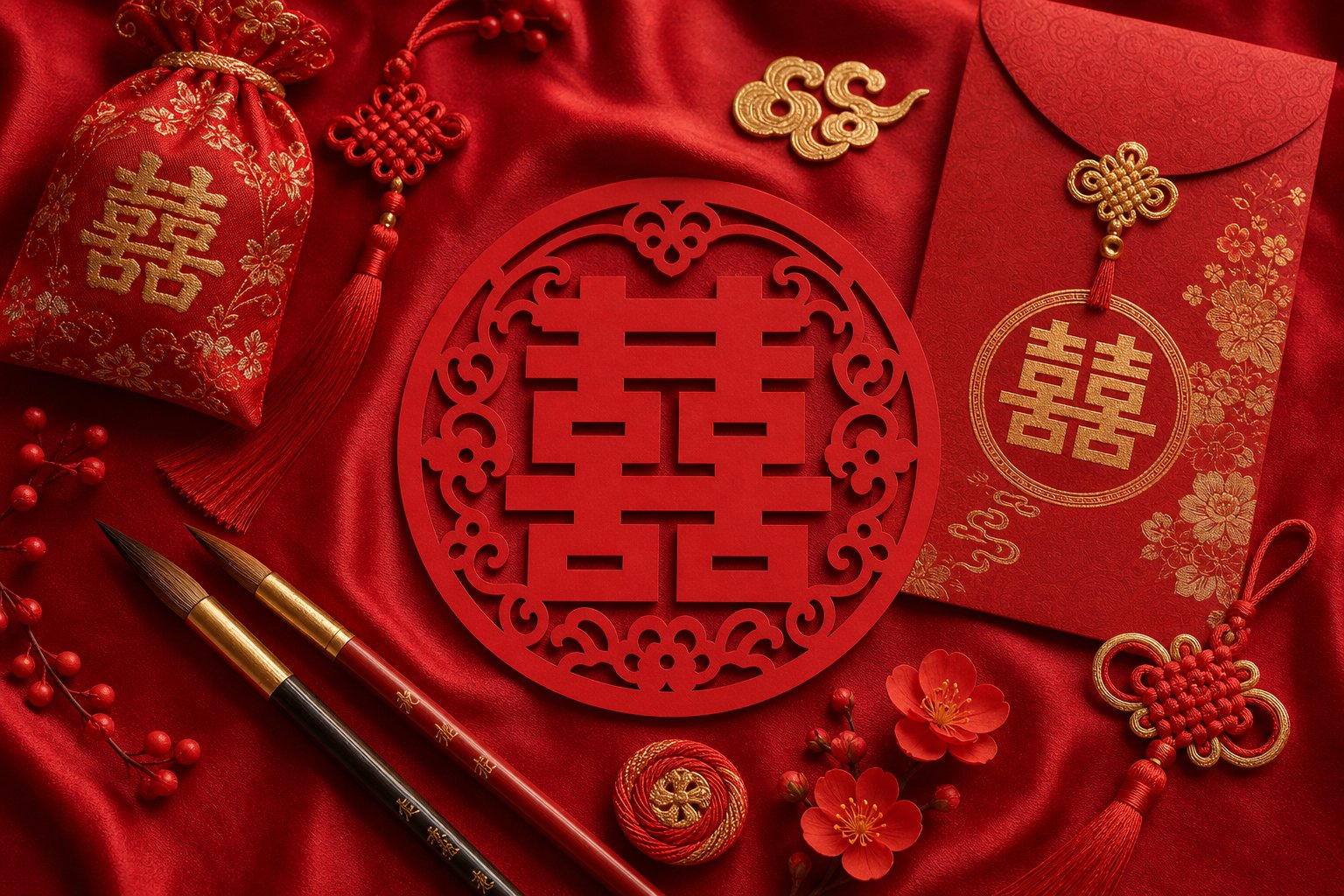
Tattoos, Calligraphy, and Using the Chinese Love Symbol
Making the chinese symbol for love permanent on skin or prominent in your home carries higher stakes than typing it into a chat window. A misplaced stroke lives on a forearm forever. A poorly chosen form on a wedding scroll becomes the backdrop of every anniversary photo. Whether you are considering a tattoo, commissioning calligraphy, or simply need to copy and paste chinese symbols for a design project, getting the details right matters more here than anywhere else.
Getting a Love Character Tattoo Done Right
The chinese love symbol is one of the most requested characters at tattoo studios worldwide. It is also one of the most frequently botched. According to Typing Mandarin's guide on Chinese tattoos, the mistakes fall into predictable categories that are entirely avoidable with basic preparation.
The first and most common error is choosing the wrong character entirely. The simplified 爱 (love) looks dangerously similar to 受 (shou, "to receive" or "to endure"). A tattoo artist unfamiliar with Chinese can easily confuse the two, leaving someone with "endure" permanently inked where they wanted "love." The visual similarity is subtle enough that even a quick Google image search might not catch it.
The second pitfall is mixing simplified and traditional forms. If you want the traditional 愛 because it contains the heart radical and carries more visual weight, commit fully to that form. Do not let a tattoo artist blend elements from both systems. The result reads as neither one nor the other to any native speaker.
Third, stroke rendering matters. Chinese characters are brushwork, not geometric shapes. A font-based stencil pulled from a computer screen produces flat, lifeless lines that lack the energy of genuine calligraphy. The best approach, as tattoo experts recommend, is to have a native Chinese speaker who writes by hand produce your reference character on paper. Use that handwritten version, not a screenshot, as the basis for your design.
A quick verification checklist before the needle touches skin:
- Ask a native speaker to write the character from scratch based on your intended meaning (do not show them the design and ask them to "confirm" it)
- Verify the stencil is not mirrored, since Chinese characters are not symmetrical and a flipped version is simply wrong
- Decide between simplified 爱 (10 strokes, modern mainland China) and traditional 愛 (13 strokes, more visual complexity, contains the heart)
- Choose a tattoo artist with demonstrated experience in Chinese calligraphy work, not just general lettering
For many people seeking an asian symbol for love as body art, the traditional 愛 is the stronger choice. Its 13 strokes offer more visual texture, the heart component adds philosophical depth, and it carries the weight of the calligraphic tradition. But either form is correct. The key is accuracy, not preference.
Copy and Paste Chinese Love Symbols
If your needs are digital rather than dermal, here are the essential love-related characters ready to use. Whether you are designing a card, creating wall art, or verifying a tattoo reference, this table gives you the symbol of love in chinese across its most common forms and contexts.
| Character | Form Type | Meaning | Best Use Context |
|---|---|---|---|
| 爱 | Simplified Chinese | Love | Modern digital text, mainland Chinese contexts, casual designs |
| 愛 | Traditional Chinese | Love (with heart radical) | Calligraphy, tattoos, formal art, Taiwan/Hong Kong contexts |
| 我爱你 | Simplified phrase | I love you | Cards, messages, romantic gifts |
| 囍 | Wedding symbol | Double happiness | Wedding decor, invitations, marriage gifts |
| 心 | Radical/character | Heart | Complementary designs, poetry, paired with 爱 |
| 缘 | Simplified Chinese | Fate/destined connection | Relationship-themed art, romantic contexts |
| 情 | Standard Chinese | Feeling/affection | Literary contexts, paired designs with 爱 |
The character 囍 deserves special mention. This doubled form of 喜 (xi, "happiness") is not a standard dictionary character but a decorative ligature used exclusively in wedding contexts. You will find it on red paper cutouts, banquet decorations, and bridal accessories across Chinese-speaking communities. It represents the joy of two people uniting, and its symmetrical structure makes it visually striking as both an asian symbol of love in the marital sense and a standalone design element. For wedding calligraphy and gifts, pairing 囍 with blessings like 百年好合 (bai nian hao he, "a harmonious union for a hundred years") creates culturally resonant compositions that carry genuine meaning for Chinese families.
Whether you are choosing chinese love tattoo symbols for permanent ink, selecting a calligraphy piece for your living room, or copying a character into a design file, the same principle applies: understand what you are using before you commit it to a surface that matters. The love character has survived three millennia of transformation precisely because people kept caring about getting it right.
Frequently Asked Questions About the Chinese Character for Love
1. What is the Chinese symbol for love and how is it pronounced?
The Chinese symbol for love is 爱 (simplified) or 愛 (traditional), both pronounced 'ai' with a fourth tone, a sharp falling pitch similar to saying 'eye' with firm downward emphasis. Mainland China uses the 10-stroke simplified form, while Taiwan, Hong Kong, and Macau use the 13-stroke traditional form that visibly contains the heart radical 心.
2. Why was the heart removed from the Chinese love character?
The heart radical 心 was removed during China's 1956 character simplification reform, which aimed to boost literacy rates by reducing stroke counts. The change was not invented from scratch but adopted from cursive script traditions dating back to the sixth century, where calligraphers had already merged the heart and walking components into a form resembling 友 (friend). Critics argue that 'love without heart is not love,' while supporters point to China's literacy rate rising from 20% to over 97%.
3. How do you write 'I love you' in Chinese characters?
I love you in Chinese is written as 我爱你 (wo ai ni), using three characters in subject-verb-object order: 我 (wo, I) + 爱 (ai, love) + 你 (ni, you). No conjugation or auxiliary verbs are needed. For a more respectful version directed at elders, replace 你 with 您 (nin): 我爱您. The number 520 is also used as internet shorthand because its pronunciation loosely mimics wo ai ni.
4. What is the difference between 爱情, 恋爱, and 母爱 in Chinese?
These compounds use 爱 as a root but specify different types of love. 爱情 (aiqing) refers to romantic love as a concept or emotion. 恋爱 (lian'ai) describes being actively in a romantic relationship or dating. 母爱 (mu'ai) means motherly love specifically. Chinese builds precise two-character compounds for each relationship type, unlike English which relies on context to distinguish between kinds of love.
5. Should I use simplified 爱 or traditional 愛 for a tattoo?
For tattoos, many people prefer the traditional 愛 because its 13 strokes offer more visual texture, it contains the heart radical for philosophical depth, and it carries the weight of the calligraphic tradition. However, either form is correct. The key is accuracy: have a native speaker write the character from scratch, verify the stencil is not mirrored, and choose a tattoo artist experienced with Chinese calligraphy rather than general lettering. Avoid confusing 爱 with the similar-looking 受 (meaning 'to endure').