What Makes a Chinese Name Lucky
When you hear the phrase "lucky Chinese names," you might picture a random character plucked from a dictionary because it sounds pleasant. The reality is far more deliberate. Luck in Chinese naming is an engineered outcome, built on layers of character meaning, phonetic harmony, stroke count, and cosmological alignment that most families outside the tradition never fully grasp.
Why Luck Is Central to Chinese Naming Culture
In Chinese culture, a name is not simply a label. It is a vessel believed to carry a person's fortune from birth through old age. Chinese parents invest weeks, sometimes months, into selecting the right characters for a child's name because the stakes feel genuinely high. A name can influence health, career trajectory, relationships, and overall prosperity, at least within the traditional worldview that still shapes naming decisions across East Asia today.
A Chinese name is believed to be one of the key factors that decide a person's destiny, alongside the timing of birth and the accumulation of good deeds.
This insight, shared by Hong Kong feng shui practitioner Lee Shing-chak, captures why families treat naming as a serious cosmological exercise rather than a creative preference. The concept of luck in Chinese naming goes beyond wishful thinking. It is rooted in a system where each character carries elemental energy, tonal weight, and symbolic meaning that either harmonizes with or disrupts a person's birth chart.
What Makes a Chinese Name Auspicious
So what separates a genuinely auspicious name from one that merely sounds nice? Three pillars hold the system together:
- Character meaning - Each Chinese character embodies specific virtues, aspirations, or natural forces. Characters associated with prosperity, wisdom, or longevity are favored over neutral or ambiguous ones.
- Phonetic balance - The tonal flow between surname and given name matters. Clashing tones or homophones that echo unlucky words can undermine an otherwise strong name.
- Cosmological fit - The Five Elements system (Wu Xing) and BaZi birth chart analysis determine which elemental energies a person lacks. A well-chosen name compensates for that imbalance.
Unlike many popular Chinese names chosen purely for modern appeal, a truly lucky name addresses all three layers simultaneously. Even common chinese names like 伟 (Wei, meaning "great") or 丽 (Li, meaning "beautiful") carry auspicious weight because their characters encode positive attributes parents wish upon their children.
This article breaks down the full system behind a Chinese name related to luck, from the essential auspicious characters and Five Elements framework to zodiac influences and curated name lists for boys and girls. Whether you are naming a child, choosing a name for yourself, or simply curious about how this ancient tradition works, understanding the mechanics behind the luck changes everything.
Essential Lucky Characters and Their Meanings
Every lucky Chinese name starts with the right building blocks. While thousands of characters exist in the Chinese writing system, only a handful carry universally recognized auspicious power. These characters have been embedded in naming traditions for centuries because their meanings directly invoke blessings, protection, and prosperity. Understanding the chinese name meaning behind each one is the first step toward building a name that genuinely works within this cultural framework.
The Most Auspicious Chinese Characters for Names
Imagine you are selecting ingredients for a recipe where each component must carry its own positive energy. That is exactly how Chinese parents approach character selection. The six characters below represent the core vocabulary of fortune in Chinese naming. Each one functions as a standalone symbol of luck, but their real power emerges when paired thoughtfully with complementary characters.
| Character | Pinyin | Meaning | Cultural Context | Example Names |
|---|---|---|---|---|
| 福 | fu (second tone) | Blessing, fortune | The most iconic chinese word for good fortune. Displayed upside-down on doors during Lunar New Year to signify "fortune has arrived." Represents complete happiness and divine favor. | 福明 (Fuming), 福瑞 (Furui), 嘉福 (Jiafu) |
| 瑞 | rui (fourth tone) | Auspicious omen | Originally referred to jade tokens given by heaven as signs of approval. Symbolizes divinely sanctioned good luck and rare blessings. | 瑞轩 (Ruixuan), 瑞雪 (Ruixue), 瑞安 (Rui'an) |
| 祥 | xiang (second tone) | Good fortune, auspiciousness | Closely tied to harmony and peace. Often paired with 瑞 in the compound 瑞祥 to amplify lucky energy. Appears frequently in temple inscriptions and blessings. | 祥瑞 (Xiangrui), 祥安 (Xiang'an), 嘉祥 (Jiaxiang) |
| 吉 | ji (second tone) | Lucky, propitious | The most direct chinese word for lucky. Found in everyday phrases like 吉祥如意 ("may all go well"). One of the oldest luck-related characters in the language. | 吉辉 (Jihui), 吉瑞 (Jirui), 永吉 (Yongji) |
| 禄 | lu (fourth tone) | Prosperity, official salary | Part of the famous trio 福禄寿 (fortune, prosperity, longevity). Historically linked to career success and financial stability through government service. | 禄安 (Lu'an), 嘉禄 (Jialu), 禄祥 (Luxiang) |
| 安 | an (first tone) | Peace, safety | One of the most versatile lucky characters. Conveys both physical safety and emotional tranquility. Parents use it to wish a child a life free from hardship. | 安琪 (Anqi), 安宁 (Anning), 瑞安 (Rui'an) |
You will notice that several example names combine two lucky characters together, like 瑞祥 (Ruixiang) or 福瑞 (Furui). This doubling is intentional. When two auspicious characters appear in the same given name, their meanings reinforce each other, creating what naming practitioners consider a compounded blessing.
How Lucky Characters Combine in Full Names
Here is where meaning chinese names gets more nuanced. These six characters do not all function the same way within a name's structure. In Chinese naming conventions, the surname comes first, followed by a one- or two-character given name. Lucky characters almost always appear in the given name portion rather than the surname, since surnames are inherited and fixed within family lineage.
However, placement within the given name itself matters. When a two-character given name is used, the first character often sets the tone or category of blessing, while the second character refines it. For example, in 瑞轩 (Ruixuan), 瑞 establishes the auspicious foundation and 轩 (meaning grand or noble) directs that fortune toward status and dignity. The lucky in chinese writing tradition treats this sequencing as a narrative: the first character opens the door, and the second character decides what walks through it.
Stroke count adds yet another dimension. According to traditional naming numerology, the total number of strokes across all characters in a name should fall within specific auspicious totals such as 8 (wealth), 11, 13, or 16. Characters with even stroke counts are classified as Yin, while odd-stroke characters are Yang. A balanced name typically alternates between Yin and Yang characters to maintain harmony. For instance, 安 has 6 strokes (Yin) while 瑞 has 13 strokes (Yang), making them a naturally complementary pairing from a numerological standpoint.
This layering of meaning, sequence, and stroke mathematics explains why families who understand the system rarely settle for a single "lucky-sounding" character. The real craft lies in how these characters interact with each other and with the surname they follow, a dynamic that becomes even more complex once elemental balance enters the equation.
The Five Elements System Behind Lucky Names
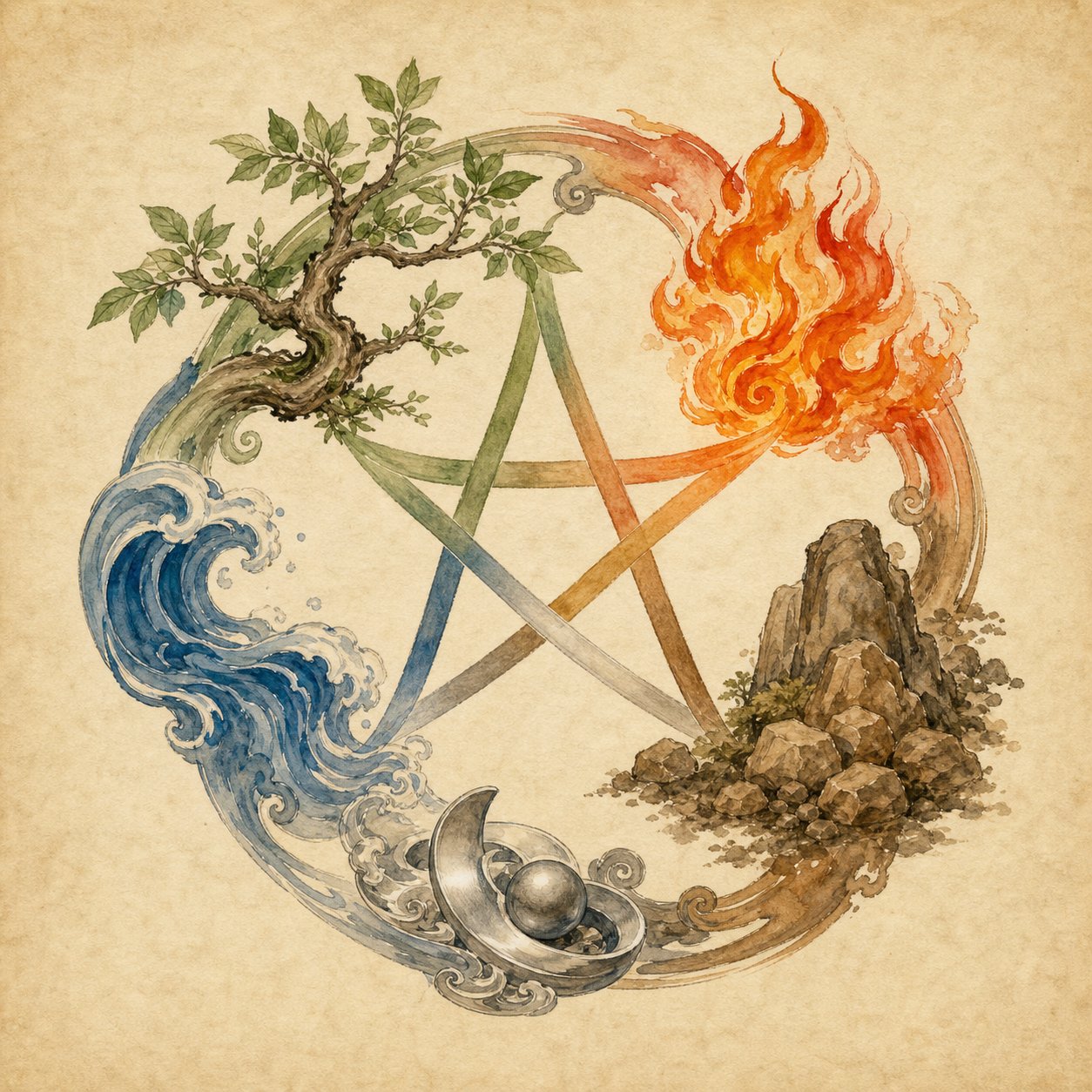
Character meaning and stroke count only tell part of the story. The real engine behind traditional chinese names is a cosmological framework called Wu Xing (五行), the Five Elements, or more accurately, the Five Phases. This system determines which characters will actually bring luck to a specific person, not just any person. Two children born on different days may need entirely different characters in their names, even if both families want the same type of fortune.
Understanding the Five Elements in Name Selection
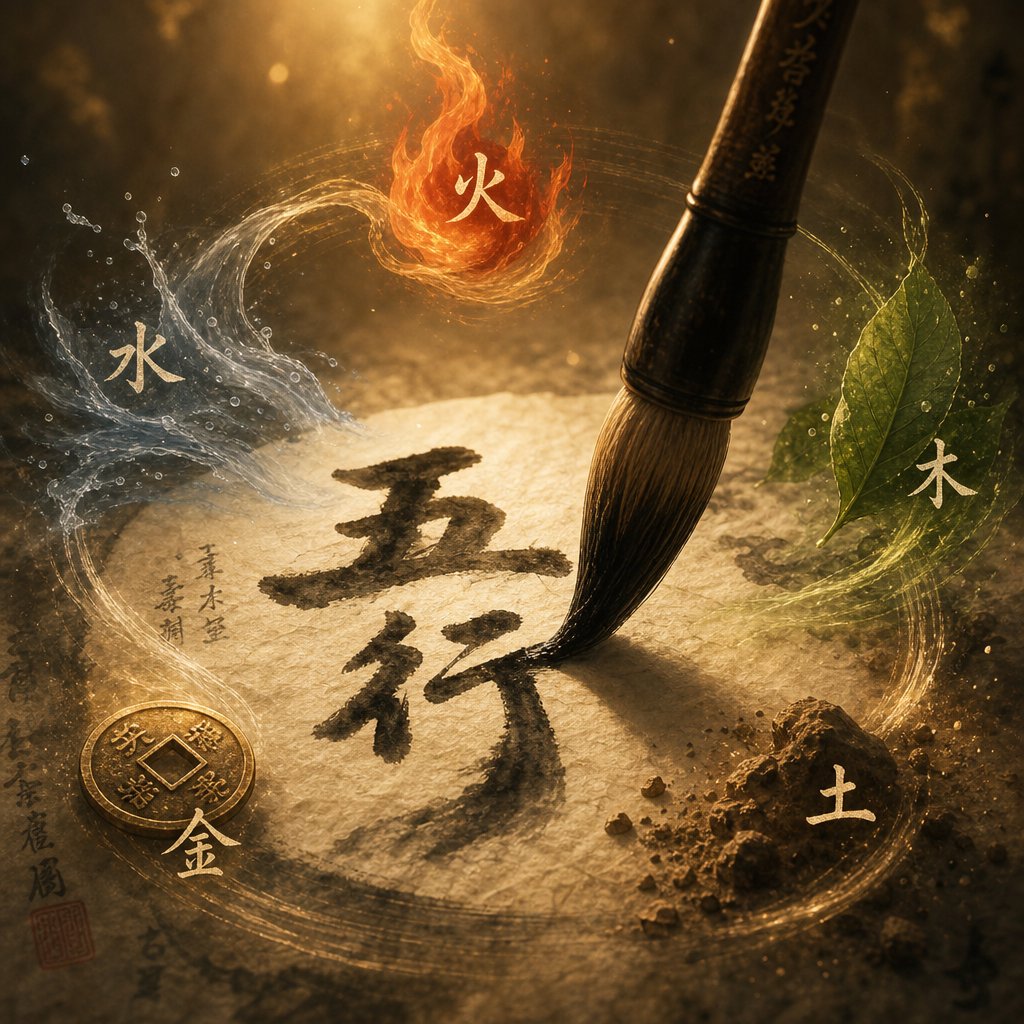
Wu Xing describes five patterns of energy that cycle through nature and human life: Wood, Fire, Earth, Metal, and Water. The character Xing (行) literally means "movement" or "phase," not "element" in the chemical sense. As naming specialists note, these are dynamic forces that generate and regulate each other in continuous loops, first documented in the Book of Documents around 1000 BCE.
Each phase carries specific personality traits, seasonal energy, and associated Chinese characters identified by their radicals. When you are searching for chinese names with meanings that go beyond surface-level translation, this is the layer that matters most.
- Wood (木, Mu) - Season: Spring. Traits: growth, vitality, flexibility, benevolence. Associated radicals: 木 (wood), 艹 (grass). Example characters: 林 (forest), 芳 (fragrant), 桐 (paulownia). Compatible with Water (which nourishes it) and Fire (which it feeds).
- Fire (火, Huo) - Season: Summer. Traits: passion, warmth, leadership, illumination. Associated radicals: 火 (fire), 灬 (fire dots). Example characters: 炎 (flame), 煜 (radiant), 照 (illuminate). Compatible with Wood (which fuels it) and Earth (which it creates).
- Earth (土, Tu) - Season: Transitional periods. Traits: stability, trust, nurturing, patience. Associated radicals: 土 (earth), 山 (mountain). Example characters: 坤 (feminine earth), 岳 (peak), 城 (city). Compatible with Fire (which produces it) and Metal (which it bears).
- Metal (金, Jin) - Season: Autumn. Traits: discipline, clarity, righteousness, precision. Associated radicals: 金 (metal), 钅 (metal variant). Example characters: 鑫 (prosperity), 铭 (inscription), 锐 (sharp). Compatible with Earth (which supports it) and Water (which it generates).
- Water (水, Shui) - Season: Winter. Traits: wisdom, adaptability, depth, fluidity. Associated radicals: 氵 (water), 雨 (rain). Example characters: 涵 (contain), 泽 (marsh/beneficence), 润 (moist). Compatible with Metal (which collects it) and Wood (which it nourishes).
You will notice that each element both generates and controls others. Wood feeds Fire, Fire creates Earth, Earth bears Metal, Metal collects Water, and Water nourishes Wood. This generating cycle (相生) runs alongside a controlling cycle (相克) where Wood parts Earth, Earth dams Water, Water quenches Fire, Fire melts Metal, and Metal cuts Wood. Both cycles operate simultaneously in a healthy system.
How Elemental Balance Creates a Lucky Name
Here is where the system becomes personal. Your birth date and time produce a BaZi (八字) chart, an eight-character map that reveals exactly which elements dominate your constitution and which are weak or missing. A person born in summer with heavy Fire energy but almost no Water might be charismatic and driven yet struggle with emotional regulation. Someone born in winter with abundant Water but deficient Wood could be deeply intelligent but lack forward momentum.
A lucky name compensates for these gaps. If your chart lacks Metal, a naming practitioner introduces characters carrying Metal energy, like 铭 (ming, meaning "to engrave") or 锐 (rui, meaning "sharp"), to cultivate discipline and clarity. If Water is missing, characters like 涵 (han, meaning "to contain") or 泽 (ze, meaning "marsh" or "beneficence") bring adaptability and depth.
This is the core method Chinese families have used for centuries when selecting mandarin names and meanings that go beyond aesthetics. The name is not decoration. It is a prescription, carefully formulated to balance what nature left incomplete. A common misconception is that you simply count elements and add whatever is missing. Professional practitioners look for the "Favorable Element" (用神), the specific energy that harmonizes your Day Master rather than just filling a numerical gap.
Sounds complex? It is. Full BaZi analysis requires calculating your exact birth hour and converting it to true solar time based on geographic longitude. But the underlying principle is straightforward: chinese names with meaning are not meaningful in the abstract. They are meaningful relative to the person who carries them. The same Water character that brings balance to one child could overwhelm another whose chart already runs cold.
This elemental logic also explains why families consult naming masters rather than simply picking characters from a list. The "luckiest" character in isolation might be the worst possible choice for a specific birth chart. True luck is not universal. It is calibrated.
BaZi and Zodiac Influences on Lucky Name Choices
Elemental balance does not exist in a vacuum. It comes from somewhere specific: the exact moment a child enters the world. In traditional Chinese families, the first question after a birth is not about weight or length. It is "what hour was the baby born?" That answer unlocks the entire naming process through a system called BaZi (八字), literally meaning "Eight Characters," which maps a person's elemental DNA before a single name character is chosen.
BaZi Birth Chart Analysis for Name Selection
BaZi, also known as the Four Pillars of Destiny, takes four units of time, your birth year, month, day, and hour, and converts each into a pair of characters from the Gan-Zhi (干支) system. Each pair consists of one Heavenly Stem (天干) and one Earthly Branch (地支). Four time units multiplied by two characters each gives you eight characters total. That is your elemental fingerprint.
These eight characters arrange into Four Pillars, each governing a different life domain:
- Year Pillar (年柱) - Ancestral heritage and social environment
- Month Pillar (月柱) - Career trajectory and parental influence
- Day Pillar (日柱) - Core identity and marriage. The Heavenly Stem here is your "Day Master," essentially your elemental self
- Hour Pillar (时柱) - Ambitions, children, and inner world
The Day Master is the anchor. If your Day Master is Yang Wood (甲), you are fundamentally a Wood person whose nature resonates with growth and upward movement. A naming practitioner then examines how the remaining seven characters support or drain that core identity. A "weak" Day Master lacking support needs strengthening characters in the name. A "strong" one surrounded by too much of the same energy needs moderating forces.
This is why two babies born just hours apart might need completely different chinese character names. A child born at 3 AM versus 3 PM on the same day will have identical Year, Month, and Day Pillars but a different Hour Pillar, potentially shifting the entire elemental balance and changing which characters qualify as lucky.
Chinese Zodiac Animals and Compatible Name Elements
Full BaZi analysis requires precise birth-time calculations and years of study. But the Chinese zodiac offers a simplified entry point that most families can use immediately. Each of the 12 zodiac animals carries an inherent elemental association through its Earthly Branch, and each birth year adds a cycling element based on the last digit of the birth year: years ending in 0 or 1 are Metal, 2 or 3 are Water, 4 or 5 are Wood, 6 or 7 are Fire, and 8 or 9 are Earth.
The table below shows each zodiac animal's fixed element and the character types that traditionally complement it in mandarin chinese names:
| Zodiac Animal | Fixed Element | Personality Traits | Recommended Name Elements | Suggested Character Types |
|---|---|---|---|---|
| Rat (鼠) | Water | Intelligent, resourceful | Wood, Metal | Characters with grass (艹) or metal (金) radicals to channel or collect Water energy |
| Ox (牛) | Earth | Hardworking, reliable | Fire, Metal | Characters evoking warmth or structure to energize steady Earth |
| Tiger (虎) | Wood | Brave, confident | Water, Fire | Characters with water (氵) radical to nourish, or fire to direct ambition |
| Rabbit (兔) | Wood | Gentle, diplomatic | Water, Fire | Flowing characters that support growth without overwhelming softness |
| Dragon (龙) | Earth | Charismatic, bold | Fire, Metal | Characters suggesting brilliance or refinement to complement natural power |
| Snake (蛇) | Fire | Wise, strategic | Wood, Earth | Characters with wood (木) radical to sustain Fire, or earth for grounding |
| Horse (马) | Fire | Energetic, free-spirited | Wood, Earth | Grounding earth characters to stabilize intense Fire energy |
| Goat (羊) | Earth | Creative, kind | Fire, Metal | Characters evoking warmth or artistic precision |
| Monkey (猴) | Metal | Clever, inventive | Earth, Water | Characters with earth (土) radical for support, or water for flow |
| Rooster (鸡) | Metal | Observant, ambitious | Earth, Water | Stabilizing earth characters or fluid water characters for adaptability |
| Dog (狗) | Earth | Loyal, honest | Fire, Metal | Characters suggesting illumination or strength to complement devotion |
| Pig (猪) | Water | Generous, warm | Wood, Metal | Growth-oriented wood characters or structured metal for direction |
Notice the pattern: recommended elements follow the generating cycle. Water animals benefit from Metal (which produces Water) and Wood (which Water produces). Fire animals benefit from Wood (which feeds Fire) and Earth (which Fire creates). The logic is consistent across all chinese traditional names, whether the family consults a master or uses this table as a starting framework.
Here is the practical bridge between tradition and modern life. A full BaZi reading accounts for all eight characters, Hidden Stems within Earthly Branches, and the "Favorable Element" that specifically harmonizes your Day Master. That level of precision is why naming masters still thrive across names in china today. But if you know your child's zodiac animal and birth-year element, you already have two data points that narrow the field considerably. A Metal Rat (born in a year ending in 0 or 1 during a Rat year) carries double Water-Metal energy, making Wood characters an especially strong complement to prevent elemental flooding.
This zodiac-element pairing gives families a grounded starting point, one that respects the traditional system without requiring decades of metaphysical training to apply.
Lucky Names Organized by Type of Fortune
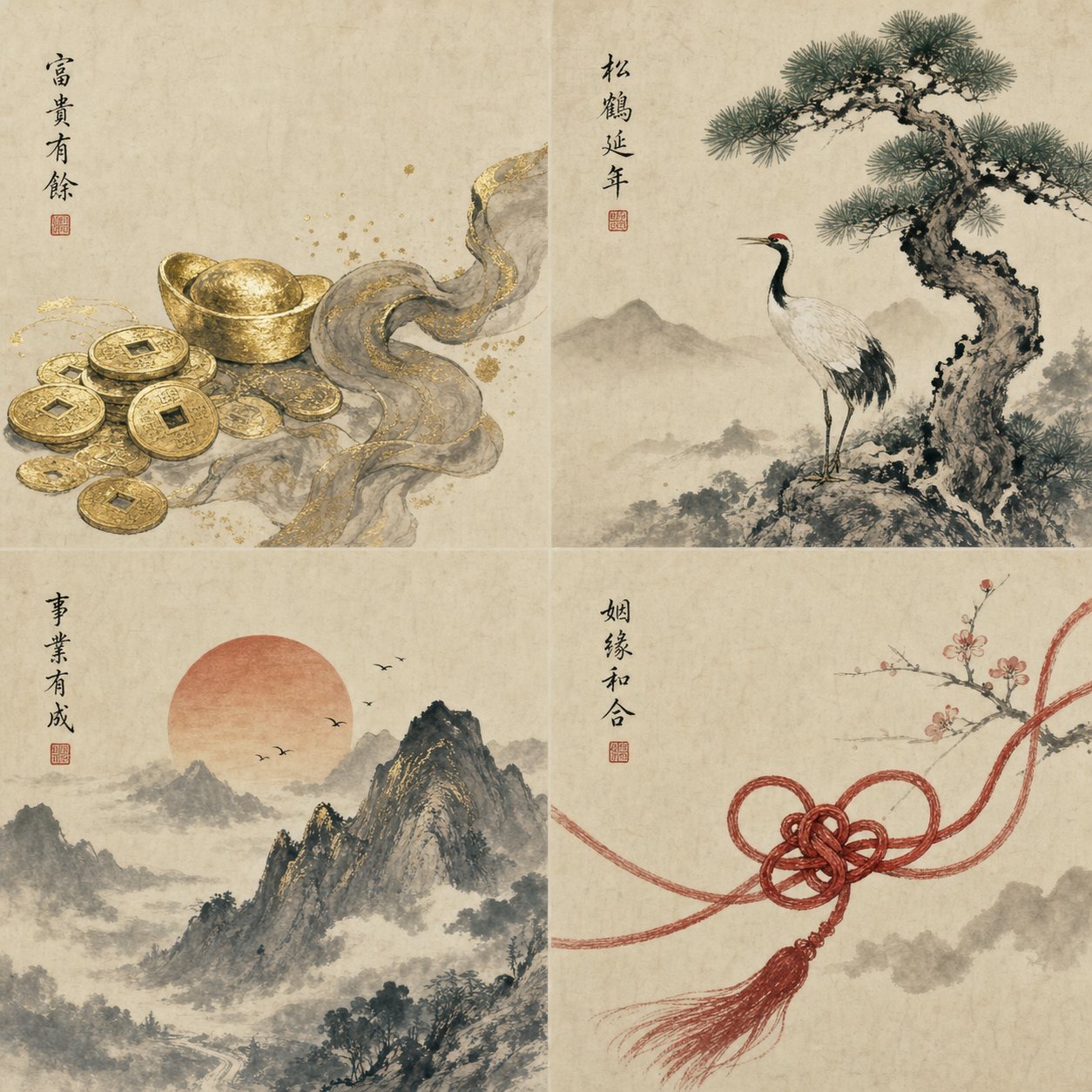
Elemental balance tells you which energies a name should carry. But families also want to direct that energy toward a specific outcome. Should the name attract financial abundance? Long life? Professional recognition? Romantic harmony? In Chinese philosophy, different character combinations channel fortune into distinct life domains, and choosing the right pairing is what separates a generic chinese good name from one that targets exactly what a family hopes for.
Think of it this way: the Five Elements determine the fuel, but the characters you select determine where that fuel burns. Below are four fortune categories with names meaning good fortune in each specific area, complete with the cultural reasoning behind why these combinations work.
Names for Wealth and Prosperity
Wealth-oriented names draw from characters historically tied to abundance, material flow, and the accumulation of resources. The cultural logic traces back to the concept of 禄 (Lu), one of the Three Stars (福禄寿) representing career income and financial stability.
- 鑫瑞 (Xinrui) - 鑫 stacks three 金 (gold) radicals, tripling Metal energy and symbolizing wealth from multiple sources. Paired with 瑞 (auspicious omen), this name invokes divinely blessed prosperity. The triple-gold structure makes it one of the strongest names for luck in financial matters.
- 嘉禄 (Jialu) - 嘉 means excellence or praise, while 禄 directly references official salary and material reward. Together they suggest prosperity earned through merit, not chance. This combination appeals to families who value wealth built on reputation.
- 泽丰 (Zefeng) - 泽 (beneficence, marsh) carries Water energy suggesting resources flowing toward you, while 丰 (abundance, harvest) evokes overflowing grain stores. The Water-Earth interaction here mirrors rain nourishing crops into a bountiful yield.
- 富安 (Fu'an) - 富 (wealthy) paired with 安 (peace) reflects the Chinese ideal that true prosperity includes security. Wealth without stability is considered incomplete fortune, so this name requests both simultaneously.
Names for Health and Longevity
Longevity names connect to 寿 (Shou), the third of the Three Stars, representing vitality and a long life. Characters in this category often reference nature's enduring forces: mountains, pine trees, cranes, and flowing water. The underlying philosophy holds that health is the foundation all other fortunes rest upon.
- 永康 (Yongkang) - 永 means eternal or everlasting, and 康 means health and well-being. The name康瑞 (Kangrui) appears in popular naming lists as an auspicious choice precisely because 康 carries such strong vitality energy. Pairing it with 永 extends that vitality across an entire lifetime.
- 松瑞 (Songrui) - 松 (pine tree) symbolizes resilience and longevity because pines remain green through harsh winters. Combined with 瑞 (auspicious), this name asks for health that endures through adversity, not just comfort.
- 寿宁 (Shouning) - 寿 directly means longevity, while 宁 (tranquility) adds emotional peace. Chinese medicine views stress as a primary life-shortener, so pairing long life with inner calm reflects a holistic understanding of health.
- 瑞鹤 (Ruihe) - 鹤 (crane) is one of the most potent longevity symbols in Chinese culture, often depicted alongside the God of Longevity (寿星). Paired with 瑞, this name invokes the blessing of a crane's legendary lifespan.
Names for Career Success and Love
Career-focused names draw from the 禄星 (Lu Star) tradition, where professional achievement and social standing are considered forms of fortune. Love and harmony names, meanwhile, tap into characters associated with unity, joy, and complementary energies. Some of the best chinese names manage to address both domains through carefully chosen pairings.
Career and Success:
- 俊杰 (Junjie) - 俊 (talented, handsome) combined with 杰 (outstanding, heroic) creates one of the most recognized strong chinese names for professional ambition. The pairing suggests someone who rises above peers through both natural ability and effort.
- 博文 (Bowen) - 博 (broad, knowledgeable) with 文 (literature, culture) targets intellectual achievement and scholarly success. Chinese naming traditions associate this combination with academic excellence and refined leadership.
- 志远 (Zhiyuan) - 志 (ambition, will) paired with 远 (far, distant) literally means "far-reaching ambition." This name channels fortune toward long-term career vision rather than short-term gains.
Love and Harmony:
- 嘉欣 (Jiaxin) - 嘉 (excellent, praiseworthy) with 欣 (joyful) creates a name radiating warmth and relational harmony. The character 欣 specifically evokes the joy found in connection with others.
- 和瑞 (Herui) - 和 (harmony, peace) is the foundational character for relational fortune in Chinese philosophy. Paired with 瑞, it requests auspicious relationships across all life domains, from family to romance.
- 婉仪 (Wanyi) - 婉 (graceful, gentle) with 仪 (deportment, ceremony) invokes the kind of personal magnetism that attracts harmonious partnerships. This name channels fortune toward social grace and emotional intelligence.
Notice how each category uses different elemental energies. Wealth names lean heavily on Metal and Earth. Health names favor Water and Wood. Career names emphasize Fire and Wood for drive and growth. Love names balance Yin characters with harmonizing Earth energy. This is not coincidence. It is the Five Elements system expressing itself through specific life goals, a principle that becomes even more targeted when applied to gender-specific naming traditions.
Lucky Chinese Names for Boys
Gender shapes how fortune is channeled through a name. For boys, Chinese naming tradition gravitates toward characters that project outward strength, upward momentum, and protective energy. Male chinese given names tend to draw from Yang-dominant characters, those associated with mountains, dragons, sunlight, and heroic action, because the cultural expectation is that a boy's name should propel him forward into the world rather than shelter him within it.
That does not mean every chinese boy name needs to sound like a warrior's battle cry. The best names balance ambition with wisdom, power with grace. Below you will find both time-tested classics and contemporary options that reflect how modern families in China approach naming sons today.
Traditional Lucky Boy Names With Deep Roots
Traditional names of chinese male children often reference Confucian virtues, natural forces, or historical ideals of masculine excellence. These names have survived centuries because their character combinations consistently produce strong phonetic flow and auspicious stroke counts. You will recognize some as popular chinese names for men across multiple generations.
Characters like 俊 (talented), 杰 (outstanding), 龙 (dragon), and 天 (heaven) appear repeatedly in traditional naming because they carry concentrated Yang energy. When paired with auspicious modifiers like 瑞 (auspicious) or 佑 (divine protection), they create names that invoke specific blessings while maintaining the bold, forward-driving quality families want for sons.
Consider 天佑 (Tianyou), which literally means "heaven's blessing" or "protected by the divine." This name works on multiple levels: 天 carries Fire energy and cosmic authority, while 佑 invokes active spiritual guardianship. The combination does not just wish for luck. It requests ongoing divine intervention throughout the child's life. Names like these feel timeless precisely because they tap into beliefs that predate any single dynasty.
Modern Lucky Boy Names for Contemporary Families
Modern china names male trends show a shift toward characters that blend traditional auspicious energy with aesthetic sophistication. Parents today want names that sound distinctive in a classroom of thirty children, not just names that repeat the same handful of virtue characters their grandparents used.
Names like 梓轩 (Zixuan) and 景皓 (Jinghao) reflect this evolution. They retain elemental balance and positive meaning but use less common character pairings that feel fresh. That's Mandarin identifies 梓轩 as one of the most popular modern choices because 梓 (catalpa tree) symbolizes resilience and growth while 轩 (pavilion, grandeur) adds elegance without sacrificing strength.
Some families even draw inspiration from wuxia literature when searching for cool chinese names for guys, selecting characters that evoke the heroic wanderers of martial arts fiction. Names with cool chinese names jianghu energy, like 逸风 (Yifeng, meaning "free wind") or 剑锋 (Jianfeng, meaning "sword's edge"), carry a romantic, adventurous quality while still maintaining auspicious structure through proper elemental pairing.
The table below spans both traditional and modern options, covering multiple fortune categories so you can compare how different character combinations target different types of luck:
| Chinese Characters | Pinyin | Meaning | Element Association | Type of Luck Invoked |
|---|---|---|---|---|
| 俊杰 | Junjie | Outstanding hero; exceptional talent | Fire + Wood | Career success and leadership |
| 天佑 | Tianyou | Heaven's blessing; divine protection | Fire + Earth | Overall fortune and spiritual protection |
| 瑞轩 | Ruixuan | Auspicious and grand; noble omen | Metal + Earth | Status, dignity, and prosperity |
| 浩然 | Haoran | Vast righteousness; moral grandeur | Water + Fire | Integrity and influential character |
| 梓轩 | Zixuan | Resilient tree with elegant bearing | Wood + Earth | Growth, refinement, and steady success |
| 康瑞 | Kangrui | Healthy and auspicious | Wood + Metal | Health, vitality, and good fortune |
| 博文 | Bowen | Broad knowledge and literary culture | Water + Water | Academic excellence and wisdom |
| 伟龙 | Weilong | Great dragon; powerful and grand | Earth + Fire | Power, authority, and ambition |
| 景皓 | Jinghao | Bright scenery; radiant clarity | Wood + Water | Vision, optimism, and positive spirit |
| 奕程 | Yicheng | Great journey; steady progress | Fire + Fire | Ambition and long-term achievement |
| 志远 | Zhiyuan | Far-reaching ambition | Fire + Earth | Career vision and determination |
| 鑫瑞 | Xinrui | Triple gold with auspicious omen | Metal + Metal | Wealth and financial prosperity |
A few patterns emerge from this list. Names targeting career success tend to pair Fire characters (drive, visibility) with Wood characters (growth, upward movement). Wealth-oriented names lean into Metal energy, sometimes doubling it for emphasis. Health names balance opposing elements to create internal harmony rather than outward force.
Also notice how two-character given names dominate modern choices. Single-character names like 杰 or 龙 still exist but feel increasingly rare in contemporary naming. The two-character structure gives parents room to layer meaning: one character sets the elemental foundation, and the second directs that energy toward a specific life outcome.
When selecting from this reference, remember that the "right" name depends on the child's birth chart. A name heavy in Fire energy like 奕程 (Yicheng) would strengthen a child whose BaZi lacks Fire but could overwhelm one already born with abundant Fire. The table provides the raw materials. The child's elemental profile determines which materials to use.
Girls' names operate on the same elemental principles but channel fortune through a different aesthetic and energetic lens, one where Yin balance and grace carry equal weight to strength and ambition.
Lucky Chinese Names for Girls
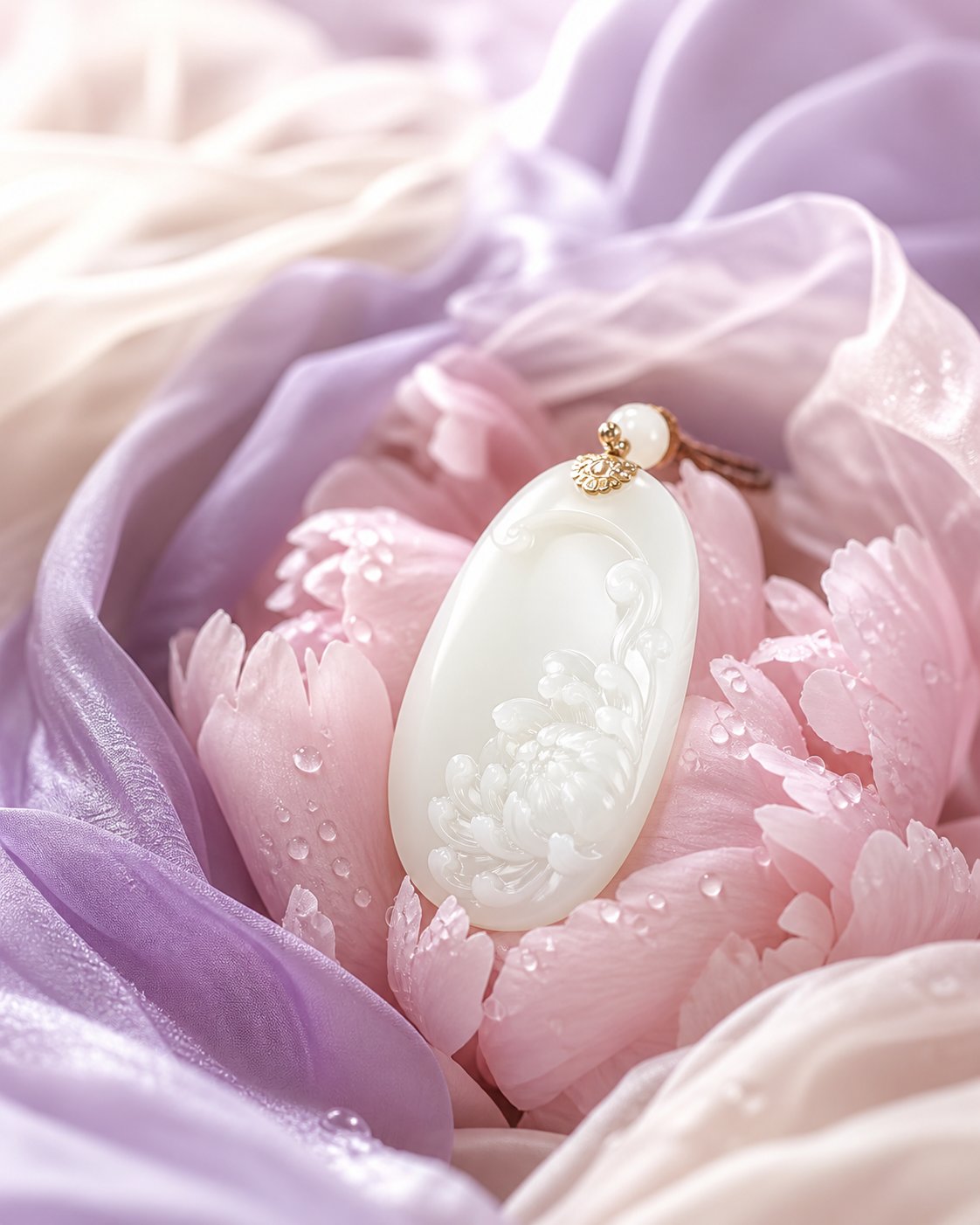
Where boys' names push outward with Yang force, girls' names in the Chinese tradition draw fortune inward through Yin receptivity. This does not mean feminine names are passive. Yin energy is the force that attracts, nurtures, and transforms. It is the gravity that holds systems together. When families select chinese baby names for daughters, they are choosing characters that invoke a different kind of power: the ability to gather blessings rather than chase them.
In practice, this means pretty chinese names for girls favor characters tied to flowing water, luminous jade, blooming flowers, and quiet wisdom. These are not decorative choices. Each carries specific elemental energy that interacts with a girl's birth chart just as deliberately as the bold Metal and Fire characters used for boys. The difference lies in how that energy expresses itself: through grace rather than force, through depth rather than height.
Traditional Lucky Girl Names With Elegant Meanings
Traditional naming for daughters draws heavily from classical poetry and Confucian feminine ideals. There is an old saying in Chinese culture: "Men's names come from the Songs of Chu, women's names come from the Book of Songs." This literary tradition means that many time-honored girl names carry layers of poetic allusion alongside their auspicious energy.
Characters like 婉 (graceful), 瑾 (lustrous jade), 慧 (wisdom), and 淑 (virtuous) have anchored female naming for centuries. They endure because they satisfy multiple requirements simultaneously: positive meaning, balanced stroke count, and Yin-dominant elemental energy that complements rather than competes with a girl's natural constitution.
Take 瑞雪 (Ruixue) as an example. 瑞 (auspicious omen) provides Metal energy and divine blessing, while 雪 (snow) carries Water energy and symbolizes purity. The combination invokes fortune that arrives cleanly, without complication, like fresh snow covering the world in stillness. For a girl whose birth chart lacks Water or Metal, this name simultaneously fills elemental gaps and paints a vivid aesthetic image.
Similarly, 嘉欣 (Jiaxin) pairs 嘉 (excellent, praiseworthy) with 欣 (joyful). Cantonese naming traditions particularly favor this structure, combining an aspirational character with an emotional one to form a compounded blessing. The name channels fortune toward relational warmth and personal fulfillment rather than material wealth alone.
Modern Lucky Girl Names Blending Culture and Style
Modern parents searching for cute chinese names that still carry genuine auspicious weight face a specific challenge. The trend for 2026 leans toward what Chinese naming experts call "atmospheric" (大气) names: choices that feel open, intelligent, and confident rather than overly sweet or delicate. Characters like 溪 (stream), 玥 (mythical pearl), and 毅 (perseverance) are gaining popularity because they break the stereotype that girl names must be soft to be beautiful.
A name like 安琪 (Anqi) bridges both worlds. 安 (peace) provides grounding Earth energy and invokes safety, while 琪 (fine jade) carries the preciousness and rarity associated with Metal. The result is a chinese name for beautiful that feels modern in its simplicity yet traditional in its elemental logic. Parents who want chinese baby names and meanings that work across cultural contexts often gravitate toward names like this because the phonetics translate well internationally while the characters retain deep cultural resonance.
The table below presents both traditional and contemporary options spanning multiple fortune categories:
| Chinese Characters | Pinyin | Meaning | Element Association | Type of Luck Invoked |
|---|---|---|---|---|
| 嘉欣 | Jiaxin | Joyful excellence; praiseworthy happiness | Wood + Wood | Love, harmony, and relational joy |
| 瑞雪 | Ruixue | Auspicious snow; blessed purity | Metal + Water | Purity, fresh beginnings, and divine favor |
| 安琪 | Anqi | Peaceful jade; serene treasure | Earth + Metal | Protection, stability, and inner worth |
| 慧妍 | Huiyan | Wise beauty; insightful grace | Water + Water | Wisdom and intellectual achievement |
| 芷宁 | Zhining | Angelica herb with tranquility | Wood + Fire | Moral purity and emotional peace |
| 玥瑶 | Yueyao | Mythical pearl and precious jade | Metal + Earth | Uniqueness, rarity, and treasured fortune |
| 思涵 | Sihan | Thoughtful depth; reflective containment | Metal + Water | Wisdom, emotional intelligence, and depth |
| 婉清 | Wanqing | Graceful clarity; gentle purity | Earth + Water | Social grace and harmonious relationships |
| 溪然 | Xiran | Stream flowing naturally; effortless clarity | Water + Fire | Vitality, clarity, and enduring health |
| 恒悦 | Hengyue | Constant joy; persistent happiness | Water + Metal | Resilience and lasting contentment |
| 禾安 | He'an | Grain seedling at peace; simple prosperity | Wood + Earth | Health, growth, and grounded abundance |
| 星瑶 | Xingyao | Star jade; celestial treasure | Fire + Earth | Hope, guidance, and bright future |
A few patterns distinguish this list from the boys' names. Water and Earth elements appear more frequently, reflecting the Yin principle that feminine fortune flows through receptive, nurturing energies. You will also notice more paired-Yin combinations (Water + Water, Earth + Metal) compared to the Yang-heavy Fire + Wood pairings common in male names. This is not arbitrary. In traditional Chinese cosmology, Yin-dominant names for girls create resonance with their natural energetic constitution rather than working against it.
That said, modern families increasingly choose characters like 毅 (perseverance) or 卓 (outstanding) for daughters, deliberately introducing Yang energy to wish for resilience and leadership. The "rule" is not rigid. It is a starting principle that families adapt based on what they want their daughter's life to look like and what her birth chart actually needs.
Whether you lean toward the poetic elegance of 婉清 or the confident simplicity of 溪然, the underlying mechanics remain the same: match elemental energy to the child's chart, verify stroke count harmony, and ensure the phonetics flow smoothly with the family surname. That last point, phonetic harmony, introduces an entirely separate layer of luck considerations that trips up even families who get everything else right.
Chinese Naming Conventions and Luck Taboos
Phonetic harmony is where most families outside the tradition stumble hardest. You can select characters with perfect elemental balance, beautiful calligraphic form, and deeply auspicious meaning, yet still end up with a name that native speakers wince at. Why? Because chinese naming conventions layer structural rules and phonetic taboos on top of everything else, and breaking even one can cancel out the luck you carefully built.
Chinese Name Order and Structure Explained
The most fundamental rule of chinese name structure is sequence: the family name always comes first, followed by the given name. In the name 李金泽 (Li Jinze), Li is the surname and Jinze is the given name. This chinese name first name last name order is the reverse of Western convention, and it reflects a cultural priority where family lineage precedes individual identity.
A standard Chinese name contains two or three characters total. The last name in chinese is almost always a single character, though rare compound surnames like 欧阳 (Ouyang) or 司马 (Sima) exist. The given name is one or two characters. When people ask about chinese middle names, the answer is straightforward: traditional Chinese names do not have middle names in the Western sense. A two-character given name functions as a single unit, not as a first name plus a middle name.
This compact structure means every character must work harder. In a name with only two or three total characters, there is no room for filler. Each stroke carries weight across what naming practitioners call four simultaneous dimensions: Sound, Form, Meaning, and Element. A character that satisfies three dimensions but fails on the fourth is considered incomplete.
Generational names (字辈, zibei) add another structural layer. In many families, one character in the given name is shared by all siblings and cousins of the same generation. This fixed character limits which complementary characters can be paired with it, since the remaining character must compensate for whatever elemental or tonal gaps the generational character creates. Families following this tradition have less flexibility, but the constraint itself carries luck: it anchors the child within a lineage, connecting their fortune to ancestral energy.
Avoiding Unlucky Sounds and Homophones
Mandarin is a tonal language with only about 400 distinct syllables, meaning homophones are everywhere. A name that looks beautiful on paper can sound identical to something deeply unfortunate when spoken aloud. This is the single most common mistake families make when choosing chinese first and last names without native-speaker guidance.
The taboos below are not superstitions in the casual sense. They are rules that native speakers internalize from childhood, and violating them marks a name as careless or culturally uninformed:
- Avoid homophones of 死 (si, death) - Any character pronounced "si" in the same tone as death requires extreme caution. The character 思 (si, to think) is acceptable because its tone differs, but combinations that produce the sound "siwang" (death) are universally rejected.
- Never echo 苦 (ku, bitterness) or 病 (bing, illness) - Characters whose pronunciation overlaps with suffering or disease are excluded regardless of their written meaning.
- Avoid the number 4 in stroke-count totals - Since four (四, si) sounds like death, total stroke counts of 4, 14, or 24 are considered inauspicious by many families.
- Do not reuse characters from elders' names - Using a character that appears in a parent's, grandparent's, or respected ancestor's name is considered deeply disrespectful in Confucian tradition. This taboo extends to teachers and mentors in some families.
- Watch for vulgar homophones - Characters like 日 (ri, sun) carry vulgar slang meanings in colloquial speech. A name might reference sunlight poetically yet sound crude in everyday conversation.
- Avoid tonal monotony - Three characters all sharing the same tone (e.g., three first-tone characters in a row) create a flat, droning sound. Ideally, the surname and given name should move through different tones to produce natural rhythm.
- Check the full-name sound as a phrase - Some character combinations form unintended words when the surname and given name are read together. A surname like 杨 (Yang) paired with 伟 (Wei) produces "Yangwei," which sounds like the Chinese term for impotence.
Tonal balance deserves special emphasis. A well-crafted name moves through contrasting tones the way a melody moves through different notes. The sequence Li (third tone) + Jin (first tone) + Ze (second tone) creates a rising, dynamic flow. Three consecutive third-tone characters would force awkward tone sandhi adjustments in speech, making the name physically uncomfortable to say. As naming experts explain, the test is simple: does the name sound right when you introduce yourself across a crowded room?
For diaspora families and non-Chinese speakers navigating the first name last name chinese structure, these phonetic pitfalls are nearly impossible to catch without help. A character's written beauty tells you nothing about its spoken associations. The practical solution is to always test a candidate name with multiple native Mandarin speakers from different regions, since homophones and slang vary between northern and southern dialects. Online naming tools can check stroke counts and elemental balance, but only a human ear catches the social landmines hidden in sound.
Understanding these structural rules and taboos completes the theoretical framework. The remaining question is practical: how do you actually apply all of this, the elements, the zodiac pairings, the phonetic checks, into a coherent selection process without spending months on research or hiring a naming master?
How to Choose a Lucky Chinese Name Today
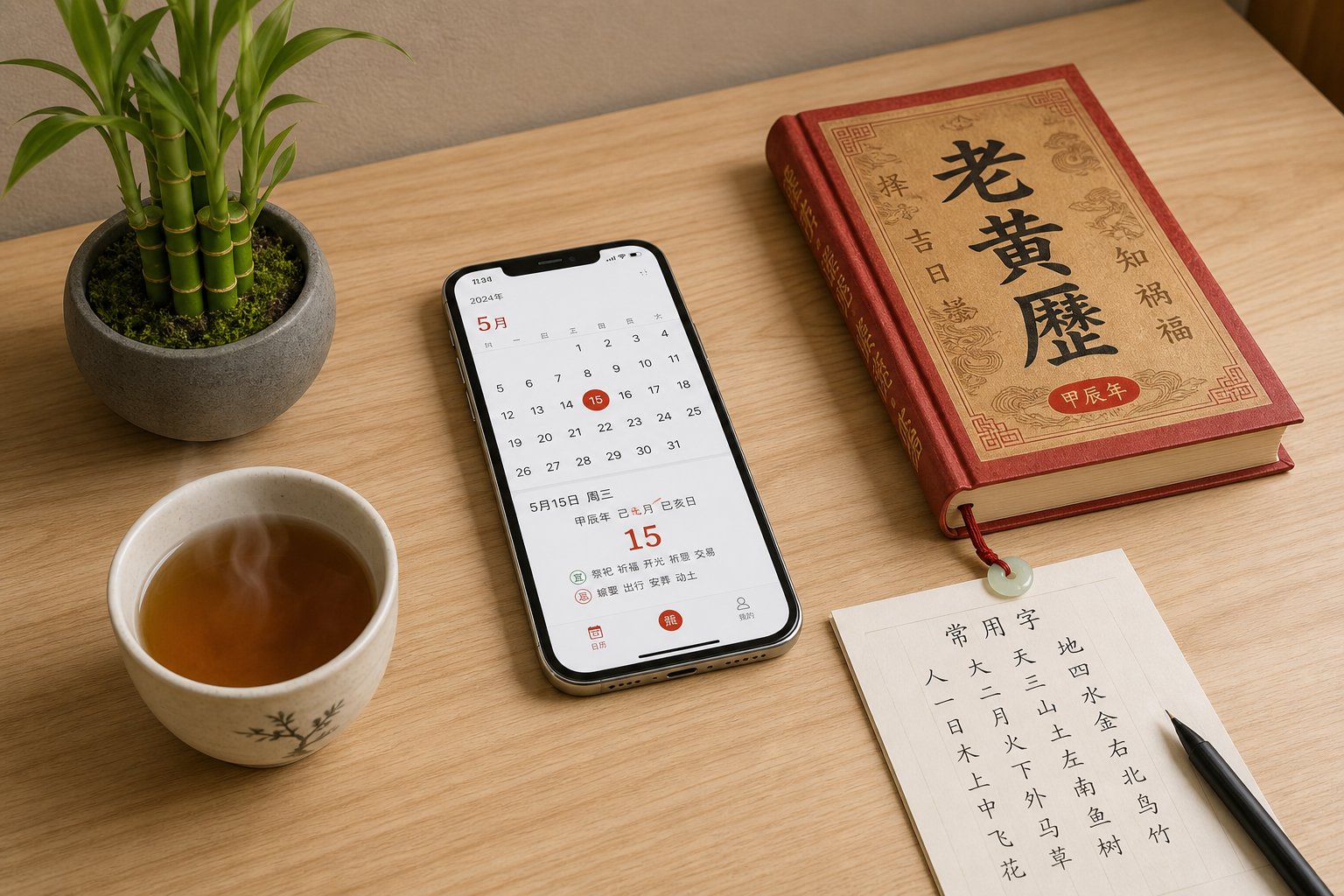
The theory is rich, but the practical question remains: how do you actually pick a name that works? Whether you are a parent searching for chinese name ideas for a newborn, an adult wondering "what is my chinese name" for professional or cultural reasons, or a language learner preparing for the inevitable moment someone asks what's your name in china, the process below distills centuries of tradition into a workable modern method.
A Simplified Modern Method for Choosing Lucky Names
You do not need a naming master to get started. A full BaZi consultation adds precision, but these steps give you a structurally sound foundation that respects the system without requiring years of metaphysical training:
- Identify your birth element quickly. Use a free BaZi calculator online. Enter your birth date and time to find your Day Master element and, more importantly, which element is weak or missing from your chart. If you cannot find your exact birth hour, use your zodiac animal's fixed element plus your birth-year element (last digit: 0-1 Metal, 2-3 Water, 4-5 Wood, 6-7 Fire, 8-9 Earth) as a starting approximation.
- Select characters from your complementary element. Once you know which element you need, choose characters carrying that energy through their radicals. Missing Water? Look for characters with the 氵 radical like 涵 or 泽. Missing Wood? Characters with 木 or 艹 radicals like 林 or 芳 bring growth energy. The italki naming guide recommends pairing your elemental character with a second character from the most popular chinese names lists to ensure the name sounds natural rather than forced.
- Check phonetic harmony with your surname. Say the full name aloud, surname first. Do the tones rise and fall naturally, or do they flatten into monotony? Avoid three consecutive characters sharing the same tone. Test for embarrassing homophones by asking a native speaker or searching the full-name pronunciation online for unintended meanings.
- Verify stroke count. Count the total strokes across all characters. Auspicious totals include 8, 11, 13, 16, and 24. Avoid totals containing 4 or 14. Free stroke-count tools exist online for quick verification.
- Test with native speakers from different regions. A name that sounds fine in Beijing Mandarin might carry awkward associations in Cantonese or Taiwanese Hokkien. As one language learner discovered, a perfectly acceptable mainland name can sound like a child's nickname or worse in Taiwan. Run your candidate past at least two or three speakers from different backgrounds before committing.
Tips for Non-Native Speakers Selecting a Chinese Name
If you are asking "what is my name in chinese" as someone without Chinese heritage, you face an additional layer of decisions. Should the name sound like your English name? Should it carry independent meaning? Both approaches are valid, but transliteration alone is risky. One expat in Taiwan nearly named himself the Chinese equivalent of "euthanasia" by transliterating without checking meaning. A safer path combines phonetic similarity with intentional character selection.
Here is what works for non-native speakers navigating chinese first names:
- Choose a common Chinese surname that echoes your family name phonetically. Smith becomes 石 (Shi), Garcia becomes 高 (Gao), Brown becomes 布 (Bu). Using a recognizable surname signals cultural awareness and makes the name feel authentic rather than invented.
- Pick a first name chinese speakers would actually use. Avoid characters that are beautiful in isolation but never appear in real names in chinese conversation. Cross-reference your candidates against naming databases or ask a native speaker whether the combination sounds like a real person's name.
- Prioritize meaning and personal connection over perfect elemental balance. For non-native speakers, a name you can explain confidently when asked matters more than flawless BaZi alignment. In Chinese culture, strangers commonly ask the meaning behind your name upon first meeting. Having a clear, thoughtful answer builds immediate rapport.
- Keep it pronounceable for yourself. A name you struggle to say undermines its purpose. Test the tones repeatedly until the name flows naturally from your mouth. If a character's pronunciation feels physically awkward, swap it for one with similar meaning but easier phonetics.
The most popular chinese names shift with generational trends, but the underlying principles remain constant. Whether you land on a traditional combination like 瑞安 (Rui'an) or a modern pairing like 溪然 (Xiran), the name carries genuine luck when three conditions align: it compensates for your elemental gaps, it sounds harmonious spoken aloud, and it holds personal meaning you can articulate with confidence. That intersection of cosmic logic, phonetic beauty, and individual resonance is where names in chinese culture stop being labels and start becoming what tradition always intended them to be: quiet engines of fortune, working on your behalf every time someone speaks your name.
Frequently Asked Questions About Lucky Chinese Names
1. What makes a Chinese name lucky?
A Chinese name is considered lucky when it satisfies three interconnected layers: character meaning (using characters that embody virtues like prosperity or wisdom), phonetic harmony (tonal flow that avoids unlucky homophones), and cosmological fit (elemental balance based on the person's birth chart through the Five Elements system). A truly auspicious name addresses all three simultaneously rather than relying on a single pleasant-sounding character.
2. How do the Five Elements affect Chinese name selection?
The Five Elements (Wood, Fire, Earth, Metal, Water) form the core framework for traditional Chinese naming. A person's birth date and time produce a BaZi chart revealing which elements are strong or deficient in their constitution. A lucky name compensates for missing elements by incorporating characters with the needed elemental energy through their radicals. For example, someone lacking Water energy might receive a name with characters containing the water radical (氵) like 涵 or 泽.
3. What Chinese characters are considered the luckiest for names?
Six characters are universally recognized as highly auspicious in Chinese naming: 福 (fu, blessing), 瑞 (rui, auspicious omen), 祥 (xiang, good fortune), 吉 (ji, lucky), 禄 (lu, prosperity), and 安 (an, peace). These characters carry centuries of cultural weight and are often combined in pairs within given names to create compounded blessings. Their power increases when paired with characters that complement the bearer's elemental birth chart.
4. What naming taboos should you avoid when choosing a Chinese name?
Key taboos include avoiding homophones of 死 (si, death), never reusing characters from elders' or ancestors' names, steering clear of stroke-count totals containing the number 4, and checking that the full name does not form unintended vulgar or negative phrases when spoken aloud. Tonal monotony (three characters sharing the same tone) is also avoided because it creates an unnatural, droning sound that makes the name uncomfortable to say.
5. Can non-Chinese speakers choose an authentic lucky Chinese name?
Yes, but transliteration alone is risky since it can produce embarrassing or unlucky meanings. A safer approach combines phonetic similarity to your original name with intentional character selection. Choose a common Chinese surname that echoes your family name, select given-name characters that native speakers actually use, and prioritize meaning you can explain confidently. Testing the name with multiple native speakers from different regions helps catch phonetic pitfalls that written characters alone cannot reveal.