How Chinese Nicknames Evolved Into a Digital Art Form
Imagine choosing a name for yourself — not the one your parents gave you, not the one dictated by your clan's genealogy, but a name that captures your personality, your humor, or your mood on a Tuesday afternoon. For most of Chinese history, that kind of freedom simply did not exist. Today, it defines how hundreds of millions of people present themselves online every single day.
Modern Chinese nicknames represent a radical departure from centuries of naming tradition. They are creative, self-chosen, and constantly evolving — shaped by internet culture, pop trends, and personal identity rather than family hierarchy or Confucian convention.
Why Modern Chinese Nicknames Are Different
Traditional Chinese naming followed strict rules. A person's full name typically consisted of a family name, a generation name, and a given name. The generation name system — dating back to the Han Dynasty (206 BC - 220 AD) — placed individuals within their clan's hierarchy, with predetermined character sequences sometimes encoded in poems spanning 40 generations. A Chinese courtesy name (字) was formally bestowed at adulthood, often by a teacher or elder, reflecting social expectations rather than personal choice.
Do Chinese people have middle names in the Western sense? Not exactly. What outsiders sometimes interpret as a middle name is often that generation name — a shared character linking siblings and cousins within the same generational tier. Research on generation names in China found that their use declined dramatically during the Mao era, dropping from over 90% among pre-1950 males to just 41% during the 1960-1976 period, before partially recovering in the post-Mao years.
A Chinese nickname today operates on entirely different logic. It is self-selected, informal, and fluid. You might change it seasonally, match it with a partner, or craft it to signal membership in a fandom. The shift from assigned identity to chosen identity is the defining feature of contemporary nickname culture.
The Cultural Forces Behind New Naming Trends
Social media fundamentally rewrote Chinese nickname culture by doing something traditional society never required: asking every individual to choose their own name.
Three forces converged to create this shift. First, the one-child generation grew up as the singular focus of family attention, developing a stronger sense of individual identity than previous generations raised among many siblings sharing a generation name. Second, globalization exposed young Chinese speakers to naming conventions from Korean pop culture, Japanese anime, and English-language internet platforms. Third — and most powerfully — social media platforms like QQ, WeChat, Weibo, and Douyin required every user to pick a display name, turning nickname creation into a universal creative act.
This article is not a static vocabulary list. It is a guide to understanding how Chinese nicknames function as living cultural artifacts — how they are built, what they signal, and why they change. From romantic pet names to competitive gaming handles, each context carries its own rules, aesthetics, and inside jokes. The patterns behind these names reveal something deeper about how identity, humor, and affection operate in contemporary Chinese-speaking communities.
The real magic lies in the mechanics — the linguistic building blocks that make these nicknames possible.
The Building Blocks of Chinese Nickname Creation
Every nickname in Chinese follows a pattern — even the ones that look random. Once you understand the formation rules, you can decode almost any nick name in Chinese and start building your own. Think of these patterns as a toolkit: each one produces a different emotional tone, from baby-cute to internet-edgy.
Mandarin's tonal system and compact syllable structure make it uniquely suited for wordplay. A single character can be doubled, prefixed, abbreviated, or swapped with a homophone to create something entirely new. Here are the core mechanics behind nickname Chinese speakers use every day.
Reduplication and Prefix Patterns
The simplest and most widespread formation patterns rely on syllable repetition or adding a short prefix. These techniques produce nicknames that feel familiar and affectionate — the kind of cute Mandarin expressions you hear between close friends, family members, and couples.
- Reduplication (叠字 diezi): Repeat one syllable from a name twice. If someone is named 婷 (Ting), they become 婷婷 (Tingting). The classic 宝宝 (baobao, "baby") follows this same doubling pattern. It softens any name and adds warmth — though as one Chinese speaker notes, calling an adult by a reduplicated name can imply they are six years old.
- 小 (xiao) prefix: Add "little" before a surname or given name character. 小张 (Xiao Zhang) or 小明 (Xiao Ming) signals casual friendliness. This works for virtually any name and is the default nickname Mandarin speakers reach for in workplaces and classrooms.
- 老 (lao) prefix: Add "old" before a surname for someone senior or well-established. 老王 (Lao Wang) carries a tone of familiarity and respect — not actual age commentary.
- 阿 (a) prefix: Common in southern dialects and Taiwan, 阿 adds a soft, familiar feel. 阿美 (A-Mei) or 阿杰 (A-Jie) sound warm without implying childishness.
- Animal-based names: Calling someone 小猪 (xiao zhu, "little pig") or 小熊 (xiao xiong, "little bear") expresses affection through cute animal imagery rather than literal description.
- Food-based names: Nicknames like 汤圆 (tangyuan, "glutinous rice ball") or 小笼包 (xiaolongbao, "soup dumpling") use beloved foods to convey roundness, sweetness, or comfort.
Numbers and Pinyin Abbreviations as Nicknames
Sounds complex? It is not — once you hear the logic. Chinese numbers double as coded messages because their pronunciation overlaps with common words and phrases. These numeric nicknames in Chinese pop up constantly in usernames, chat messages, and couple names.
- 520 (wu er ling): Sounds like 我爱你 (wo ai ni, "I love you"). Couples use it in display names, and May 20th has become an unofficial Valentine's Day because of this homophone connection.
- 1314 (yi san yi si): Sounds like 一生一世 (yi sheng yi shi, "one life, one lifetime") — a promise of forever. Often paired with 520 for the ultimate romantic username: 5201314.
- 666 (liu liu liu): Sounds like 溜溜溜 (liu liu liu, "smooth/slick"). Used as a nickname element to signal skill or coolness.
- 88 (ba ba): Sounds like "bye bye" — sometimes used playfully in screen names to suggest a carefree attitude.
Pinyin abbreviations take this shorthand further. Internet users reduce full phrases to their initial letters, creating nicknames and reactions that only insiders decode instantly:
- yyds (永远的神, yong yuan de shen): "Forever god" — the Chinese equivalent of GOAT. Fans use it in display names to honor idols.
- xswl (笑死我了, xiao si wo le): "Laughing to death" — the Chinese "lmao," sometimes embedded in humorous usernames.
- zqsg (真情实感, zhen qing shi gan): "Genuine feelings" — used in fan account names to signal sincere devotion.
Homophone Play and Character Games
Mandarin's tonal system means hundreds of characters share identical or near-identical pronunciations. Nickname creators exploit this constantly:
- Homophone substitution: Replacing a character with one that sounds the same but carries a funnier or cuter meaning. The name 杰 (Jie, "outstanding") might become 姐 (Jie, "big sister") as a teasing nickname among friends.
- Character decomposition: Breaking a complex character into its component parts. Someone named 明 (Ming) might be called 日月 (ri yue, "sun and moon") because those are the two radicals that form the character. It is an inside joke built into the writing system itself.
- Tone-shifted puns: Changing the tone of a syllable to create double meanings. This works especially well in text-based communication where tones are invisible.
These formation patterns do not exist in isolation. The most creative nicknames layer multiple techniques — a food name with reduplication (糖糖, Tangtang, "sugar sugar"), a number code combined with a pinyin abbreviation, or an animal name twisted through homophone play. Understanding these building blocks means you can read the intent behind any nickname you encounter and craft ones that actually land with native speakers.
Where these patterns get especially interesting is in romantic contexts, where couples combine them into private languages only two people understand.
Romantic Chinese Nicknames for Couples and Crushes
Couples everywhere develop their own private vocabulary. In Chinese, that vocabulary draws on a rich set of chinese terms of endearment — some centuries old, others invented last week on Douyin. What makes romantic nicknames fascinating is how they reveal the relationship's tone. A couple using 亲爱的 (qin'ai de, "darling") signals something very different from a pair who call each other 土豆 (tudou, "potato").
The shift is generational. Older couples tend toward formal chinese endearments that emphasize devotion and permanence. Younger couples lean into irony, humor, and food metaphors — treating pet names as inside jokes rather than declarations. Both approaches express affection, just through different cultural registers.
Sweet Nicknames for Your Girlfriend in Chinese
When you want to call your girlfriend in chinese with something more personal than her given name, you have options ranging from classic to playful. The most common terms work across relationship stages, while others signal a specific level of intimacy.
Classic endearments like 宝贝 (baobei, "treasure/baby") and 亲爱的 (qin'ai de, "dear/darling") remain the go-to choices for most couples — they are the Chinese equivalents of "babe" or "honey." But younger speakers increasingly reach for something with more personality. 小公主 (xiao gongzhu, "little princess") pampers without being too serious. 小傻瓜 (xiao shagua, "little silly melon") teases affectionately when she does something endearingly clumsy. And 甜甜 (tiantian, "sweetie") uses reduplication to create something that sounds as sweet in chinese as it means.
Food-based nicknames deserve special mention. Calling someone 小汤圆 (xiao tangyuan, "little glutinous rice ball") or 奶茶 (naicha, "milk tea") connects affection to comfort and warmth — the same feelings those foods evoke. These work particularly well because they are specific enough to feel personal but common enough to be understood.
Pet Names for Boyfriends and Partners
Chinese nicknames for boyfriends follow slightly different patterns. Where girlfriend nicknames often emphasize cuteness and sweetness, boyfriend nicknames tend to play with status, strength, or ironic contrast.
老公 (laogong, "husband") is used widely even by unmarried couples — it signals commitment and a shared future rather than legal status. 小哥哥 (xiao gege, "little brother") flips the literal meaning into something flirtatious, emphasizing youthfulness and charm. For couples who enjoy playful teasing, 老头子 (lao touzi, "old man") works like calling your partner an "old fart" in English — affectionate precisely because it is absurd. And 熊熊 (xiongxiong, "bear") uses animal imagery to describe someone cuddly or protective.
Gender-neutral options have also gained traction. 宝宝 (baobao, "baby") and 亲爱的 work regardless of gender, and younger couples increasingly use terms of endearment in chinese that avoid gendered assumptions entirely — especially in online spaces where identity expression is more fluid.
Code Names and Secret Couple Nicknames
Here is where things get creative. Many couples develop code names for crushes chinese internet culture made popular — nicknames designed to be unreadable by outsiders. These private names serve a practical purpose: you can mention your partner in group chats or social media posts without everyone knowing who you mean.
Common strategies include using numeric codes (520 for "I love you," 1314 for "forever"), initials only, or deliberately obscure references to shared memories. A couple who met at a hotpot restaurant might call each other 火锅 (huoguo) in their contacts. Someone whose partner always orders the same drink might save them as 美式 (meishi, "Americano"). These chinese words of endearment are not found in any dictionary — they are built from the relationship itself.
The table below organizes romantic nicknames by category so you can find the right tone for your context:
| Category | Chinese | Pinyin | English Meaning | Usage Context |
|---|---|---|---|---|
| Classic Endearment | 亲爱的 | Qin'ai de | Darling / Dear | Universal; messages, calls, daily conversation |
| Classic Endearment | 宝贝 | Baobei | Treasure / Baby | Most popular pet name for any partner |
| Classic Endearment | 爱人 | Airen | Lover / My love | More formal; often used by married couples |
| Classic Endearment | 心肝 | Xingan | Heart and liver (Sweetheart) | Intimate; old-fashioned but deeply tender |
| Playful / Modern | 老公 / 老婆 | Laogong / Laopo | Husband / Wife | Dating couples showing deep commitment |
| Playful / Modern | 小哥哥 | Xiao gege | Little brother (flirty) | Girlfriend to boyfriend; youthful, playful |
| Playful / Modern | 傻瓜 | Shagua | Silly / Fool | Teasing when partner does something cute |
| Playful / Modern | 小公主 | Xiao gongzhu | Little princess | Pampering a girlfriend or daughter |
| Food-Based | 小汤圆 | Xiao tangyuan | Little rice ball | Someone round, sweet, or comforting |
| Food-Based | 糖糖 | Tangtang | Sugar | Someone sweet-natured; uses reduplication |
| Food-Based | 土豆 | Tudou | Potato | Humorous; someone who loves lounging |
| Code Name | 520 | Wu er ling | I love you (homophone) | Saved contact names, couple usernames |
| Code Name | 5201314 | Wu er ling yi san yi si | I love you forever | Matching profile names, anniversary posts |
| Code Name | 心上人 | Xin shangren | The one in my heart | Poetic; social media bios, love letters |
What stands out across all these categories is how chinese terms of affection have moved away from formality and toward personalization. The "correct" romantic nickname is no longer the most respectful or traditional one — it is the one that makes your partner laugh, feel seen, or remember a private moment only you two share.
This same impulse toward self-expression and insider language drives nickname culture far beyond romance — into the social media platforms where millions of users craft display names as carefully as any love letter.
Chinese Social Media Nicknames and Internet Culture
A chinese username is never just a username. On Chinese social platforms, your display name functions as a micro-biography, a mood ring, and a cultural signal all compressed into a handful of characters. The fascinating part? Each platform has developed its own unwritten rules about what a "good" name looks like — and users instinctively know the difference.
With over one billion active social media users across China's major platforms, the sheer volume of chinese display names being created daily has turned nickname selection into a competitive creative exercise. Your name has to stand out in a feed, communicate something about you instantly, and fit the vibe of the platform you are on.
Platform-Specific Naming Culture on Weibo and Douyin
Each platform attracts different demographics and rewards different content styles — and naming conventions follow suit. A name that works perfectly on Xiaohongshu might feel completely wrong on Douyin. Here is how the naming aesthetics break down across China's major platforms:
- Weibo (570+ million users): As China's open microblogging platform, Weibo favors punchy, opinion-forward names. Users often pick chinese usernames that reference hot takes, fandom allegiances, or self-deprecating humor. Think names like 今天也没有暴富 ("Still didn't get rich today") or 追星废物 ("Idol-chasing waste"). Celebrity fan accounts use structured formats like [idol name] + 超话粉丝 ("super topic fan").
- Douyin (800+ million users): Attention is everything on China's short-video giant. Douyin handles tend to be bold, memorable, and slightly provocative — designed to make someone pause mid-scroll. Common patterns include exaggerated claims (全网最会吃的人, "The internet's best eater"), rhyming phrases, or names that tease the content you will find (三秒学穿搭, "Learn outfits in 3 seconds").
- Xiaohongshu (300+ million users): The lifestyle platform skews heavily toward aspirational aesthetics. Names here feel curated and polished — think 巴黎的小雨 ("Light rain in Paris"), 咖啡与猫 ("Coffee and cats"), or 极简生活家 ("Minimalist living expert"). The naming culture mirrors the platform's visual identity: clean, tasteful, and slightly idealized.
- WeChat (1.3 billion users): Because WeChat contacts are real-life connections, display names tend to be more personal and less performative. Many users simply go by their real name, a childhood nickname, or a short poetic phrase. Seasonal name changes are common — updating your WeChat name to match your current mood or life phase is a quiet form of self-expression visible only to people who already know you.
The contrast is striking. Cool chinese nicknames on Douyin prioritize grabbing strangers. WeChat names speak to people who already care. Xiaohongshu names project who you want to become. Weibo names declare what you believe.
How Viral Moments Create New Nickname Trends
Chinese internet nicknames do not emerge in a vacuum — they ride waves. A single viral moment can spawn millions of copycat display names within days. When a meme phrase catches fire on Weibo or Douyin, you will suddenly see variations of it in usernames everywhere.
The pattern works like this: a celebrity says something quotable, a reality show produces an iconic moment, or a random user coins a phrase that perfectly captures a collective feeling. Within hours, people start incorporating it into their screen names. Recent cycles have produced waves of names built around:
- Meme phrases: When 摆烂 ("bai lan" — letting things rot / giving up gracefully) became a cultural moment, thousands of users adopted names like 今日摆烂冠军 ("Today's champion of giving up") or 专业摆烂三十年 ("Professional quitter for 30 years").
- Pop culture references: C-drama character names, song lyrics, and idol catchphrases cycle through display names seasonally. A hit show can make a character's name appear in millions of usernames overnight.
- Current events humor: Collective experiences — exam season, job hunting, holiday travel chaos — generate shared nickname themes like 考研上岸人 ("Person who survived the grad school exam") or 打工人 ("Working person" — a self-deprecating solidarity term).
These trends have short lifespans. Using a nickname that peaked six months ago signals you are out of touch — which is itself a form of social information.
Self-Chosen Names and Digital Identity
Two cultural currents shape how people approach their chinese display names: 丧文化 (sang wenhua, "dejected culture") and 萌文化 (meng wenhua, "cute culture"). They pull in opposite directions, and most users lean toward one or the other.
Sang culture produces names dripping with ironic self-deprecation. These are the people whose usernames translate to things like "Professionally useless," "Salted fish dreaming of the sea," or "My wallet and I are both empty." The humor is dark but communal — it says "life is hard and I am choosing to laugh about it." This style dominates among urban millennials and older Gen Z users navigating career pressure and housing costs.
Meng culture goes the other direction entirely. Cute-culture names use soft sounds, animal imagery, and childlike language to project warmth and approachability. Names like 软软的云 ("Soft soft cloud"), 小奶猫 ("Little milk kitten"), or 草莓味的风 ("Strawberry-flavored wind") create a gentle digital persona. This aesthetic thrives on Xiaohongshu and among younger users who treat their online presence as a cozy personal space.
What both styles share is intentionality. Whether someone chooses a name that is darkly funny or impossibly cute, they are making a deliberate statement about how they want to move through digital space. The chinese username is not an afterthought — it is the first creative decision in building an online self.
This creative energy intensifies even further in spaces where your name is not just a label but a competitive tool — where the right handle can intimidate opponents before a match even begins.

Gaming Names and Chinese Online Handle Culture
In a lobby full of strangers, your name is your first move. Chinese gamertags carry weight — they signal skill level, personality, and intent before a single ability is cast. Unlike social media names that project lifestyle or mood, a chinese game name exists in a competitive ecosystem where intimidation, humor, and cultural literacy all serve strategic purposes.
Gaming communities across titles like Honor of Kings (王者荣耀, with over 100 million daily active players) and Genshin Impact (原神) have developed distinct naming subcultures. The conventions differ sharply between casual players who treat names as jokes and ranked competitors who craft handles designed to get inside an opponent's head.
Naming Conventions in Chinese Gaming Communities
Walk into any match lobby and you will notice patterns immediately. Chinese names for games tend to cluster around a few recognizable archetypes, each serving a different social function within the community:
- Classical warrior references (古风名): Names drawn from wuxia novels, historical generals, or poetic imagery. Examples include 剑指苍穹 ("Sword pointing at the heavens"), 孤影残月 ("Lone shadow, fading moon"), or 醉卧沙场 ("Drunk on the battlefield"). These project seriousness and cultural depth — the player is saying they belong to a tradition of warriors, not just a game.
- Ironic humor names (搞笑名): The deliberate opposite of intimidation. Names like 我打不过你别打我 ("I can't beat you, please don't hit me"), 躺赢专业户 ("Professional carried player"), or 菜到抠脚 ("So bad I'm picking my toes") use self-deprecation as a psychological tool. Opponents underestimate you. Teammates laugh. Either way, you are memorable.
- Number-letter combos: Functional and fast. Players use combinations like xX影子Xx, names ending in 666 (signaling skill), or clan tags followed by initials. These are common among competitive players who change accounts frequently or belong to organized teams where the clan prefix matters more than the individual name.
- Intimidation names (霸气名): Designed to make opponents hesitate. Think 不服来战 ("Fight me if you dare"), 一刀秒杀 ("One-hit kill"), or 你已经死了 ("You're already dead"). These tuff chinese names borrow from anime villain energy and competitive trash talk, compressed into a display name that does the talking before the match starts.
- Character or role-specific names: Players who main a specific hero often build their name around that identity. A Zhuge Liang main in Honor of Kings might use 卧龙出山 ("The sleeping dragon emerges"), directly referencing the historical figure the character is based on. This signals both dedication and expertise with that pick.
The layering matters. A name like 醉剑仙666 combines classical imagery ("Drunken Sword Immortal") with the numeric skill signal — blending old and new in a way that reads as both cultured and confident.
How to Create a Chinese Gamertag That Stands Out
Casual and competitive naming styles serve fundamentally different goals. Casual players optimize for humor and social connection — their name is a conversation starter, a way to make teammates smile during loading screens. Competitive players optimize for psychological impact and brand recognition — especially in ranked modes where you might face the same opponents repeatedly.
If you are building a chinese gamertag for competitive play, the most effective approach combines brevity with cultural resonance. Four-character phrases (四字成语 or chengyu-style constructions) hit a sweet spot: they are compact enough to read at a glance, carry classical weight, and sound authoritative. Names like 破军斩将 ("Shatter armies, slay generals") or 风卷残云 ("Wind sweeping away clouds") use this structure to maximum effect.
For casual play, the meta leans toward absurdist humor. The funnier or more unexpected your name, the more likely teammates will remember you and want to queue again. Food references work surprisingly well here too — 火锅英雄 ("Hotpot Hero") or 奶茶战神 ("Milk Tea God of War") create a comedic contrast between mundane comfort food and epic gaming language.
One practical consideration: character limits vary by game. Honor of Kings allows up to 7 Chinese characters, while other titles may cap at 12 or allow mixed alphanumeric input. Experienced players test how their name displays in kill feeds and scoreboards — because that is where opponents actually see it during high-pressure moments.
Gaming handles represent one of the purest forms of self-branding in Chinese internet culture. But they do not emerge from nowhere. The same pop culture machinery that feeds memes into social media names also shapes what sounds cool, funny, or powerful in a gaming context — and nowhere is that influence more visible than in how fan communities turn celebrity culture into everyday language.
Pop Culture and Generational Shifts in Chinese Nicknames
Fan communities do not just consume pop culture — they remix it into language. Across Weibo, Douban, and Bilibili, millions of fans collectively invent nicknames for their favorite idols, and those names leak outward until people who have never watched the show start using them in daily conversation. This pipeline — from fandom inside joke to mainstream slang — is one of the most powerful engines driving funny chinese nicknames into everyday speech.
Fandom Nicknames From C-Drama and C-Pop Culture
Every major celebrity in China carries a constellation of fan-created names. These are not random — they follow specific creative logic that rewards cleverness and insider knowledge. The most common formation patterns include:
- Character trait compression: Fans distill an idol's personality into a single image. Actor Gong Jun became 龚鸡 (Gong Ji, "Gong Chicken") among fans who found his energetic stage presence bird-like. The nickname stuck because it was affectionate, visual, and slightly absurd.
- Name-based wordplay: Fans decompose or pun on the characters in a celebrity's real name. Singer Xiao Zhan (肖战) gets called 战战 (Zhanzhan) through reduplication, softening his sharp stage name into something intimate and cute.
- Role bleed: When an actor becomes inseparable from a character, fans merge the two identities. After The Untamed aired, Wang Yibo was widely called 蓝忘机 (Lan Wangji) — his character's name — even in contexts completely unrelated to the show.
- Contrast humor: Giving a glamorous idol a deliberately mundane or funny chinese name creates comedic affection. Calling a polished performer something like 老干部 ("old cadre") because of their serious interview style turns formality into a joke only fans understand.
These fandom nicknames function as loyalty markers. Using the "correct" insider name for an idol signals you belong to the community. Using an outdated one reveals you as a casual observer. The naming itself becomes a form of participation.
When actor Yang Mi's fans nicknamed her 大幂幂 (Da Mimi, "Big Mimi") using reduplication on the character 幂 from her name, the term spread so far beyond her fandom that it became a template — suddenly everyone was adding 大 before reduplicated names as a playful honorific, even for non-celebrities.
This is how celebrity culture rewrites everyday language. A funny chinese name born inside a fan group migrates to Weibo trending topics, gets picked up by variety shows, and eventually lands in casual group chats between people who could not name a single song by the original artist. The nickname outlives its origin story.
Gen Z Versus Millennial Nickname Styles
Generational differences in nickname culture go deeper than vocabulary — they reflect fundamentally different attitudes toward humor, sincerity, and social boundaries.
Chinese millennials (born roughly 1985-1995) came of age on QQ and early Weibo. Their nickname style tends toward poetic aesthetics, literary references, and earnest self-expression. Think names like 风中追风 ("Chasing wind in the wind") or 安静的夜 ("Quiet night"). There is a sincerity to these names — they aim to sound beautiful or meaningful without ironic distance.
Gen Z speakers (born after 1997) operate differently. Their nicknames prioritize absurdist humor, deliberate ugliness, and layered irony. A Gen Z username might read 废物本废 ("Waste itself"), 摆烂小天才 ("Little genius at giving up"), or 哈哈哈哈哈哈哈 (just seven "ha" characters). The comedy is the point. Sincerity feels risky; humor feels safe.
This generational split also shows up in how each group handles funny asian nicknames and cross-cultural humor. Millennials are more likely to adopt straightforward English names or elegant bilingual handles. Gen Z leans into absurdist mashups — mixing languages, memes, and references in ways that deliberately resist easy categorization. They are also more aware of and resistant to chinese stereotype names, actively subverting expectations by choosing names that are intentionally weird rather than fitting any predictable mold.
The difference is not just aesthetic — it is philosophical. Millennials built online identities they wanted to grow into. Gen Z builds identities they can discard tomorrow. When your nickname is a joke, changing it costs nothing emotionally. That disposability is itself a form of freedom, and it is reshaping what asian nicknames funny enough to share actually look like in practice.
Both generations, though, share one thing: they navigate multiple naming contexts simultaneously. The same person might use a poetic WeChat name, an ironic Weibo handle, and a completely different identity in English-language spaces — which raises a question about what happens when Chinese nickname culture collides with other languages entirely.
Bilingual Nicknames and Cross-Cultural Naming
When you operate in two languages daily, your identity splits — not in a fractured way, but like light through a prism. Bilingual Chinese speakers do not simply translate their names across languages. They maintain parallel naming systems, each activated by context, audience, and platform. Understanding how chinese nicknames in english actually function means looking at the spaces where these two linguistic worlds overlap, collide, and remix each other.
English Names in Chinese Workplaces and Tech Culture
Walk into any major Chinese tech company — Alibaba, ByteDance, Tencent — and you will hear colleagues calling each other by English names that have no connection to their legal Chinese identities. This is not imitation of Western culture. As The World of Chinese explains, English names solve a real social problem: traditional Chinese address conventions require you to calculate your hierarchical relationship to every person before choosing the correct title. English names sidestep that entirely, creating an egalitarian shortcut that makes fast-paced collaboration possible.
The practice traces back to the reform era of the late 1970s, when businesspeople needed smoother communication with foreign investors. Today it has become standard in corporate environments regardless of whether any foreigners are present. A developer named 张伟 (Zhang Wei) becomes "Kevin" at work — not because his colleagues cannot pronounce his name, but because "Kevin" exists outside the emotional weight and social hierarchy embedded in his Chinese name.
What makes this interesting from a nickname perspective is that these English names function like the ancient hao (号) — self-chosen, context-specific, and easily changed. Sixth Tone draws this parallel directly: English names today play the same role as hao did in traditional China, both self-selected and aimed at revealing an aspect of the individual's personality. Some employees cycle through multiple English names over a career, treating each one as disposable in a way they would never treat their birth name.
Code-Switching Patterns in Bilingual Nicknames
Diaspora communities and bilingual speakers develop hybrid naming patterns that neither language owns entirely. You will see asian nicknames that blend scripts, mix phonetic systems, or layer meanings across both languages simultaneously.
Common code-switching patterns include:
- Phonetic bridging: Choosing an English name that echoes the sound of your Chinese name. Someone named 丽 (Li, "beautiful") might go by "Lily" — close enough phonetically to feel connected, different enough to function independently.
- Meaning translation: Picking an English name that mirrors the meaning of your Chinese characters. 星 (Xing, "star") becomes "Stella." 雪 (Xue, "snow") becomes "Snow" or "Crystal."
- Ironic mismatch: Gen Z bilingual speakers deliberately choose English names that clash with their Chinese identity for comedic effect — a serious finance professional named 德龙 (Delong, "virtuous dragon") introducing himself as "Bob" at international meetings.
- Pinyin-English hybrids: Usernames that mix romanized Chinese with English words, like "XiaoMing_dreams" or "LaoWang_official." These are especially common on platforms like Instagram or Twitter where diaspora users address both Chinese and English-speaking audiences.
For couples navigating two languages, the nickname landscape doubles in complexity. A partner might be 宝贝 (baobei) in Chinese texts but "babe" in English ones — or something entirely different in each language. Searching for the right chinese name for girlfriend or bf in chinese often leads bilingual couples to maintain separate pet name systems rather than translating one into the other. The emotional register simply differs across languages, and a term that feels natural in Mandarin can sound stiff or overly literal in English.
Navigating Chinese Nicknames as a Non-Native Speaker
If you are a non-Chinese speaker entering Chinese social platforms, gaming lobbies, or dating apps, your naming choices communicate more than you might realize. Using a clearly foreign name signals outsider status immediately — which can be an advantage (curiosity factor) or a barrier (assumptions about language ability) depending on context.
The most effective approach for non-native speakers is to adopt naming conventions appropriate to the specific platform rather than defaulting to a romanized version of your English name. On WeChat, a simple Chinese phrase or poetic reference works better than "John_Smith_NYC." In gaming, a four-character classical-style name earns more respect than an obviously foreign handle. For dating contexts, understanding how asian girlfriend nicknames or boyfriend terms work helps you participate in the relationship's linguistic culture rather than standing outside it.
One practical tip: avoid names that sound like you pulled them from a textbook. Native speakers can instantly tell the difference between a name chosen with cultural fluency and one assembled from a dictionary. When in doubt, ask a native-speaking friend to gut-check your choice — not just for meaning, but for vibe.
The table below maps how nickname styles shift across different life contexts for bilingual speakers:
| Context | Typical Chinese Style | Typical English Style | Bilingual Hybrid Pattern |
|---|---|---|---|
| Workplace | 姓 + 总/哥/姐 (surname + title) | Self-chosen English first name | English name at work, Chinese name with family |
| Social Media | Poetic phrase or meme reference | Aesthetic English words or initials | Mixed-script handles (e.g., 小林_vibes) |
| Gaming | Classical four-character phrase or humor name | Gamertag with numbers/symbols | Pinyin + English combo (e.g., YingXiong_Pro) |
| Dating / Romance | 宝贝, 亲爱的, food-based pet names | Babe, honey, partner's English name | Separate pet name systems per language |
What emerges from this bilingual landscape is a key insight: chinese nicknames in english are not translations — they are parallel creations. Each language offers emotional textures the other cannot replicate, and fluent speakers move between them the way a musician switches between instruments depending on the song.
This multiplicity of naming contexts extends beyond language pairs. Even within Chinese alone, the same person might carry a dozen different nicknames — and some of the most creative ones belong to the smallest members of the family.
Cute and Funny Chinese Nicknames for Every Context
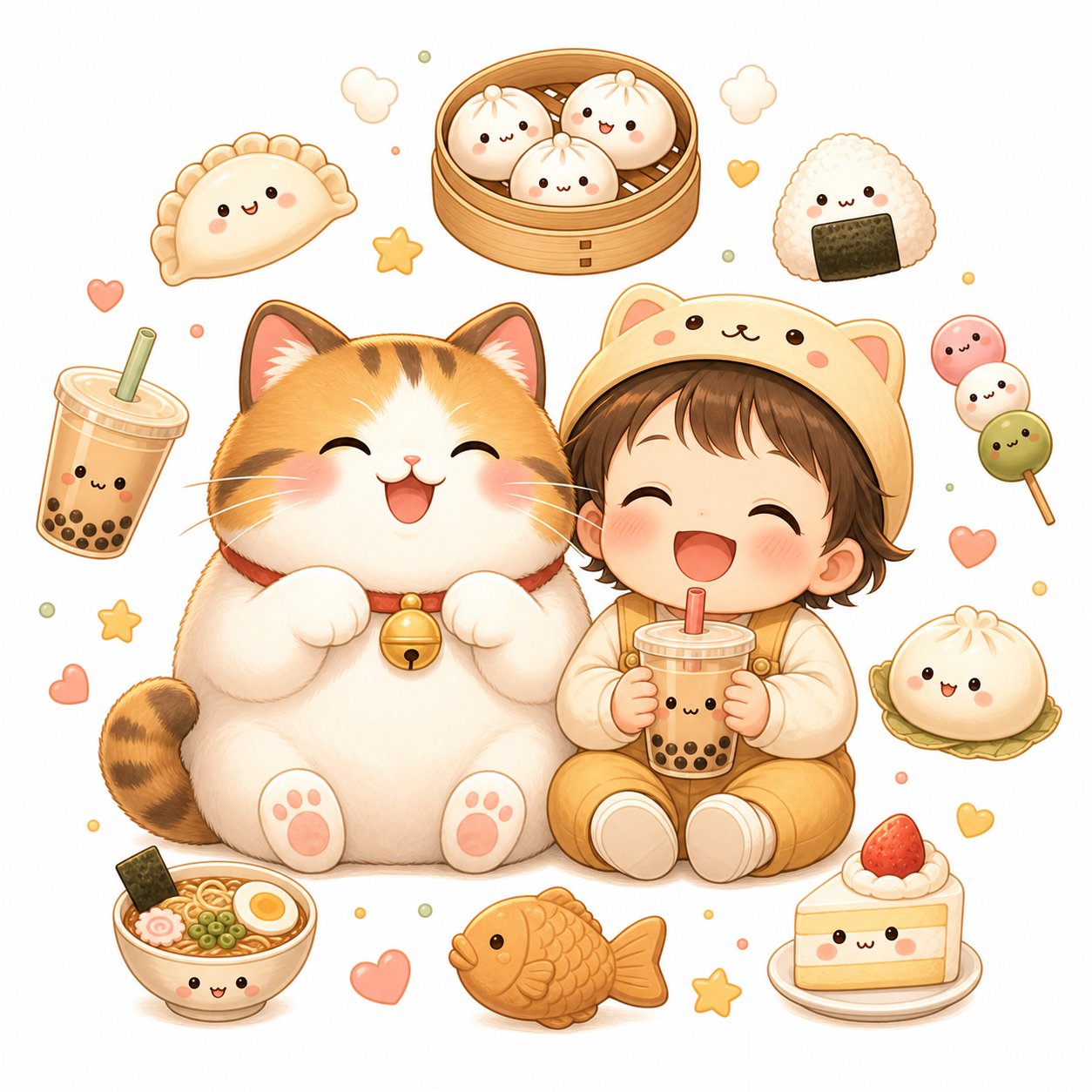
A toddler called "Sticky Rice." A cat named "Little Dumpling." A college roommate everyone calls "Potato." In Chinese culture, the most affectionate names often sound like a restaurant menu — and that is entirely the point. Food, animals, and playful personality traits form the backbone of cute chinese names used for children, pets, and the people you tease most lovingly.
These nicknames share a common logic: the cuter or funnier something sounds, the deeper the affection behind it. Calling someone by a dignified name keeps them at arm's length. Calling them a snack pulls them close.
Chinese Milk-Names and Nicknames for Children
Every Chinese child has two names — the formal one on their birth certificate and the 小名 (xiao ming), or "milk name," used exclusively by family. These chinese nicknames for children are chosen by parents or grandparents shortly after birth, and they stick for life within the household. Your boss might be a feared executive at work, but at home his mother still calls him 蛋蛋 (Dandan, "Little Egg").
Historically, milk names were deliberately humble. As Yoyo Chinese explains, ancient families feared evil spirits would target precious children, so they gave babies names like 狗剩 (gou sheng, "dog's leftovers") or 臭蛋 (chou dan, "stinky egg") to make them seem unworthy of attention. That superstition has faded, but the tradition of choosing playful, informal names endures.
Today's parents draw from different inspiration. Young Chinese families increasingly pick funny chinese names tied to foods, drinks, and snacks — finding these categories irresistibly cute. Common formation patterns for children's nicknames include:
- Food-themed names: 糯米 (nuomi, "sticky rice") — symbolizing happiness and prosperity in traditional culture; 小汤圆 (xiao tangyuan, "little rice ball") — round, sweet, and comforting; 布丁 (buding, "pudding") — soft and adorable; 奶茶 (naicha, "milk tea") — trendy and sweet
- Animal-themed names: 虎子 (huzi, "little tiger") — representing strength and bravery for boys; 小鱼 (xiao yu, "little fish") — lively and quick; 崽崽 (zaizai, "baby animal") — a generic term of deep parental affection
- Personality-based names: 乐乐 (lele, "cheerful") — for babies who smile constantly; 闹闹 (naonao, "rowdy") — for energetic, restless infants; 甜甜 (tiantian, "sweet") — for gentle, easy-going children
- Nature-inspired names: 石头 (shitou, "rock") — sturdy and dependable; 雷雷 (leilei, "thunder") — powerful and vivacious; 小星星 (xiao xingxing, "little star") — bright and precious
- Good-wish names: 来福 (laifu, "incoming blessings"); 大宝 (dabao, "big treasure") and 二宝 (erbao, "second treasure") — for families with multiple children; 喜儿 (xi'er, "happy child")
The formation mechanics are familiar from earlier patterns: reduplication (乐乐, 甜甜), the 小 prefix (小鱼, 小宝), or standalone food and animal words used as-is. What makes milk names special is their permanence — unlike a social media handle you swap every season, your 小名 follows you from cradle to grave within your family circle.
One important etiquette note: milk names are deeply personal. You would never call someone older than you by their 小名, and even among peers, using it without permission feels intrusive. These names belong to the intimate space of family and very close friends.
Chinese Names for Cats and Dogs
The same naming instincts that produce adorable children's nicknames also shape how Chinese pet owners name their animals. If you are searching for a chinese name for cat or dog, you will find that chinese pet names follow remarkably similar patterns to baby milk-names — because in many households, the pet essentially occupies that same emotional role.
Popular chinese cat names lean heavily on food and texture words. A chinese name for cat might be:
- Food names: 豆腐 (doufu, "tofu") — for white or soft-looking cats; 芝麻 (zhima, "sesame") — for black cats; 橘子 (juzi, "orange") — for orange tabbies; 年糕 (niangao, "rice cake") — for chubby, squishy cats
- Personality names: 懒懒 (lanlan, "lazy lazy") — self-explanatory for most cats; 咪咪 (mimi) — an onomatopoeia for cat sounds; 小胖 (xiao pang, "little chubby") — affectionate teasing
- Elegant names: 墨墨 (momo, "ink") — for black cats with a literary flair; 雪球 (xueqiu, "snowball") — for white, fluffy cats
Chinese puppy names tend toward energetic, loyal, or lucky themes. Common choices include 旺财 (wangcai, "prosperous wealth" — also a famous movie dog name), 豆豆 (doudou, "little bean"), 来福 (laifu, "incoming blessings"), and 球球 (qiuqiu, "ball ball" — for round, bouncy puppies). Notice how many of these chinese puppy names use reduplication to add cuteness, just like children's nicknames do.
The overlap between pet names and baby names is not accidental. In a culture where food represents love and care, naming a living creature after something delicious is the ultimate expression of "I want to squeeze you because you are that precious."
Funny Nicknames Between Friends
Friendship nicknames operate on different rules. Where family milk-names express tenderness, friend nicknames thrive on roasting — the more ridiculous the name, the closer the bond it signals. If your Chinese friend calls you something that sounds vaguely insulting, congratulations: you are in.
Common patterns for humorous friend nicknames include:
- Exaggerated traits: 大头 (datou, "big head") — for someone slightly overconfident or literally large-headed; 吃货 (chihuo, "foodie/glutton") — for the friend always thinking about their next meal; 肉肉 (rourou, "chubby/meaty") — affectionate teasing about someone's soft build
- Ironic animal comparisons: 土豆 (tudou, "potato") — for someone short or couch-shaped; 小猪 (xiao zhu, "little pig") — for someone who loves eating and sleeping; 阿呆 (a dai, "dummy") — for the lovably clumsy friend
- Surname-based play: Adding 老 (lao) or 阿 (a) before a surname, or using the surname plus an exaggerated title like 哥 (ge, "bro") or 大佬 (dalao, "big boss") to create mock-respectful addresses
- Shared memory names: Nicknames born from embarrassing moments — the friend who tripped becomes 摔神 (shuai shen, "god of falling"), or the one who burned dinner becomes 黑暗料理大师 ("master of dark cuisine")
The key distinction with funny chinese names between friends is consent and context. These nicknames only work when both parties find them amusing. Using someone's embarrassing nickname in front of their boss or a new romantic interest crosses a line — the humor depends on the safety of the in-group.
What connects all these contexts — children, pets, and friends — is a single cultural principle: in Chinese, affection often wears a disguise. The most loving names sound silly, the deepest bonds get expressed through teasing, and calling someone a dumpling says more than calling them "dear" ever could. That emotional logic is worth understanding before you try creating your own nickname, because getting the tone right matters as much as getting the characters right.
How to Create Your Own Modern Chinese Nickname
You have the building blocks. You understand the cultural logic. The question now is practical: how do you actually assemble a nickname in chinese that sounds natural, fits your context, and does not accidentally mean something embarrassing?
Whether you are crafting cute chinese nicknames for a partner, picking a handle for Douyin, or choosing chinese pet names for boyfriend that feel personal rather than generic, the process follows the same core steps. Here is a framework that works across contexts.
Choosing the Right Nickname for Your Context
Context determines everything. A nickname that charms on a dating app might confuse in a gaming lobby. A chinese name for my love works beautifully in private messages but sounds bizarre in a professional WeChat group. Before picking characters, decide where this name will live.
- Define your context and audience. Are you naming yourself on social media, choosing chinese girlfriend nicknames for a partner, creating a gamertag, or picking something for a professional setting? Each space has different expectations for tone, length, and formality.
- Choose a formation pattern. Refer back to the core mechanics: reduplication for warmth (糖糖), the 小/老 prefix for casual familiarity, number codes for hidden meaning (520, 1314), four-character phrases for gravitas, or food and animal imagery for playfulness. Pick the pattern that matches your intended emotional register.
- Select your base material. Draw from a name character, a personality trait, a shared memory, a favorite food, or an inside joke. The best nicknames connect to something real. If you are looking for chinese names for boyfriend, think about what makes him specifically him — not what a generic list suggests.
- Test for unintended meanings. This is critical. Chinese is full of homophones, and a name that looks fine in characters might sound identical to something vulgar, unlucky, or absurd when spoken aloud. Search your chosen name on Weibo or Douyin to see how others use it. Check whether the tones create unfortunate puns.
- Calibrate for relationship level. A reduplicated name (宝宝, 甜甜) signals deep intimacy — do not use it with someone you met last week. Xiao + surname works for friendly acquaintances. Full names maintain professional distance. Match the nickname's warmth to the actual closeness of the relationship.
- Run it past a native speaker. Even if your Chinese is strong, cultural intuition matters. Ask a friend: does this sound natural? Does it carry any connotation I am missing? A quick gut-check prevents the kind of mistakes that are funny in retrospect but awkward in the moment.
For chinese nicknames for lovers specifically, the strongest choices reference something only you two understand — a shared meal, a private joke, the place you met. Generic endearments like 宝贝 work fine, but a name built from your actual relationship carries more weight.
Common Mistakes to Avoid With Chinese Nicknames
Knowing how to call someone hot in chinese or express affection through a nickname is one thing. Avoiding pitfalls is another. Here are the missteps that trip up learners and even native speakers most often:
- Ignoring tonal collisions. Your chosen characters might look elegant, but say them aloud quickly. Do the tones blur into something that sounds like a swear word or a body part? Native speakers catch these instantly.
- Over-intimacy too soon. Jumping to a reduplicated pet name or a food-based endearment before the relationship warrants it feels presumptuous. Start with lighter forms (Xiao + name) and let intimacy develop naturally.
- Using outdated internet slang. A nickname built on a meme from two years ago signals you are behind. If your reference is no longer trending, it reads as stale rather than clever.
- Forgetting platform norms. A poetic Xiaohongshu-style name on a gaming platform looks out of place. A joke name on a professional profile undermines credibility. Match the register to the space.
- Literal translation from English. Translating "honey" directly into 蜂蜜 (fengmi, literal honey) instead of using the culturally appropriate 亲爱的 produces confusion, not affection. Chinese endearments follow their own logic — work within it rather than importing foreign patterns word-for-word.
The underlying principle is simple: a good nickname in chinese feels like it belongs. It sounds natural in the mouth of the person saying it, appropriate for the relationship it describes, and fitting for the platform where it appears. When all three align, you have something that works — not because it follows a formula, but because it reflects genuine understanding of how Chinese speakers actually use language to express connection, humor, and identity.
Frequently Asked Questions About Modern Chinese Nicknames
1. What are the most common Chinese nicknames for couples?
The most popular romantic Chinese nicknames include 宝贝 (baobei, treasure/baby), 亲爱的 (qin'ai de, darling), and 老公/老婆 (laogong/laopo, husband/wife) even among unmarried couples. Younger generations increasingly prefer playful food-based names like 小汤圆 (little rice ball) or ironic pet names like 土豆 (potato). Many couples also use numeric codes such as 520 (sounds like 'I love you') and 5201314 (I love you forever) as secret contact names or matching usernames.
2. How do Chinese internet nicknames differ across social media platforms?
Each Chinese platform has distinct naming aesthetics. Weibo favors punchy, opinion-forward names tied to fandoms or self-deprecating humor. Douyin rewards bold, attention-grabbing handles designed to stop mid-scroll. Xiaohongshu leans toward aspirational, curated names with poetic or lifestyle themes like 'Coffee and Cats.' WeChat names tend to be more personal and understated since contacts are real-life connections. Understanding these platform-specific norms helps users fit in and signal cultural fluency.
3. What is a Chinese milk name (小名) and how is it chosen?
A milk name (小名, xiao ming) is an informal childhood nickname given by parents or grandparents shortly after birth, used exclusively within the family circle. Historically, these names were deliberately humble to ward off evil spirits. Today, parents choose playful names based on foods (糯米, sticky rice), animals (虎子, little tiger), or personality traits (乐乐, cheerful). Unlike social media handles, a milk name stays with a person for life within their household, though using it outside the family without permission is considered intrusive.
4. How do you create a Chinese gaming name that sounds authentic?
Effective Chinese gamertags typically follow one of several archetypes: classical four-character warrior phrases like 剑指苍穹 (Sword pointing at the heavens) for competitive gravitas, ironic self-deprecating humor names for casual play, or intimidation names like 一刀秒杀 (One-hit kill) for psychological impact. The key is matching your name style to your play style. Competitive players benefit from concise four-character phrases that display well in kill feeds, while casual players can use absurdist food-gaming mashups like 火锅英雄 (Hotpot Hero) for memorability.
5. Why do Chinese people use English names at work instead of their real names?
English names in Chinese workplaces solve a practical social problem. Traditional Chinese address conventions require calculating your hierarchical relationship to every colleague before choosing the correct title, which slows down fast-paced collaboration. English names create an egalitarian shortcut that bypasses this complexity. The practice became standard in tech companies like Alibaba and ByteDance regardless of whether foreigners are present. These self-chosen English names function similarly to the ancient Chinese 号 (hao) — context-specific identities that reveal personality while remaining easily changeable.