Why China Has So Few Surnames for So Many People
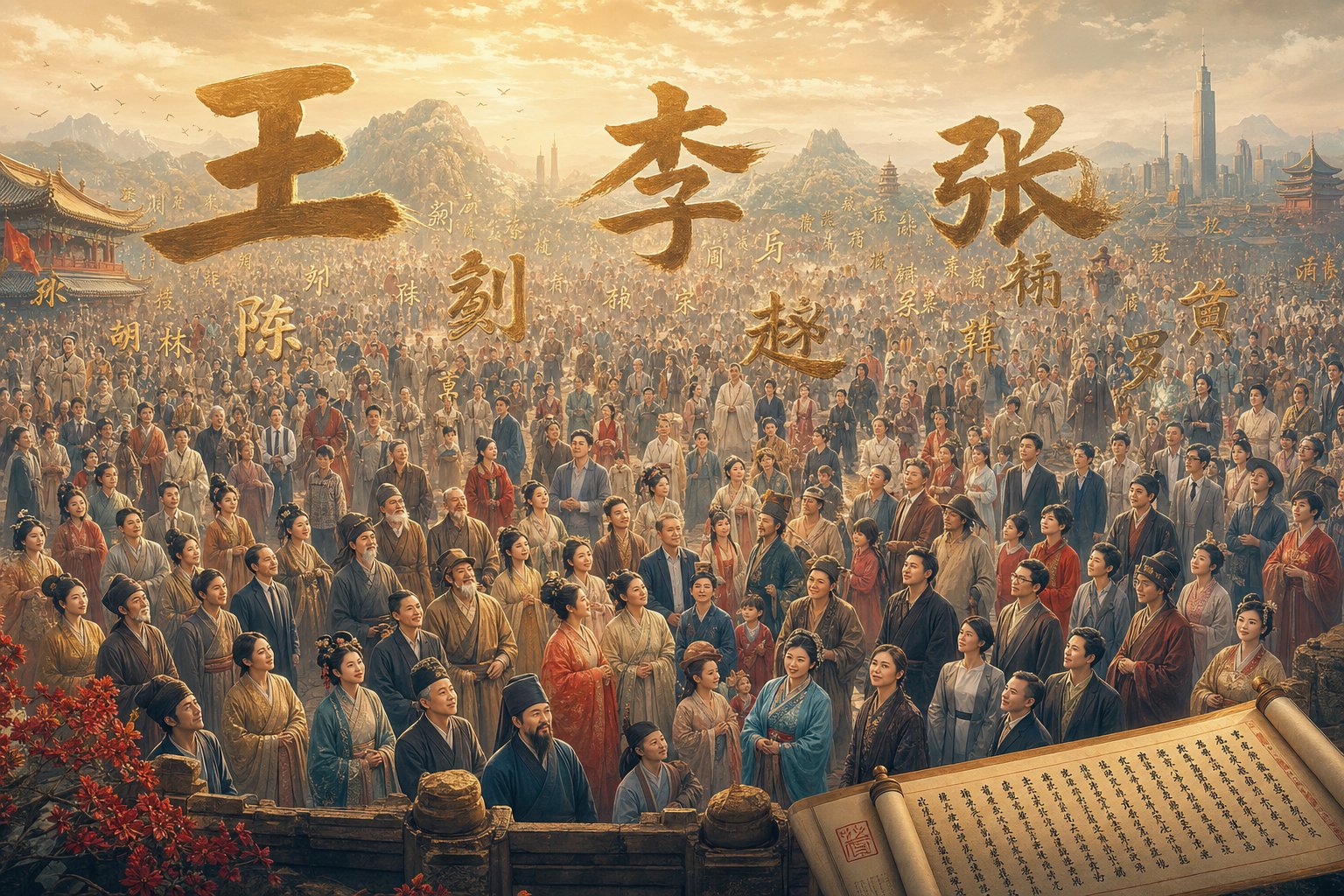
Imagine stopping a random person on the street in China. There is a roughly one-in-three chance their last name is Wang, Li, Zhang, Liu, or Chen. These five surnames alone cover more than 433 million people, which is larger than the entire population of the United States. Scale that up and the picture gets even more striking: almost 86% of China's 1.4 billion citizens share fewer than 100 surnames. Only about 6,000 Chinese last names are in active use today, compared to the 6.3 million surnames recorded in the U.S. 2010 census.
So how did the world's most populous country end up with one of its smallest surname pools? The answer sits at the intersection of ancient clan systems, imperial politics, language structure, and thousands of years of cultural consolidation. Understanding the most common Chinese surnames means tracing a story that stretches back to the Bronze Age and still shapes daily life for over a billion people.
What Makes Chinese Surnames Unique
A Chinese surname, called 姓 (xing), works differently from a Western family name in two fundamental ways. First, it comes before the given name rather than after it. The basketball star Yao Ming, for example, carries the surname Yao and the given name Ming. This ordering reflects a Confucian principle: family identity precedes individual identity.
Second, most Chinese family names consist of a single character. A typical full name is just two or three characters total, one for the surname and one or two for the given name. Each character carries its own meaning and pronunciation, making common chinese names far more compact than their Western equivalents. You cannot simply add a letter or syllable to invent a new surname the way English speakers can. That linguistic constraint is one reason the pool of chinese surnames has stayed so small relative to the population it serves.
The United States, with less than a quarter of China's population, has over 6.3 million recorded surnames. China, with 1.4 billion people, uses roughly 6,000. That concentration means a single Chinese surname can be shared by more people than the entire population of Germany.
The Hundred Family Surnames Tradition
By the Song Dynasty (960-1279 CE), the pattern of surname concentration was already well established. A classic text called the Hundred Family Surnames (百家姓, Baijiaxing) catalogued several hundred common chinese surnames in rhyming verse, making it easy for children to memorize. Despite its title suggesting just one hundred, the original text listed around 500 surnames, and the full modern inventory runs to roughly 6,000. Still, the name stuck because it captured a cultural truth: a relatively small set of family names defined the vast majority of the population.
The Baijiaxing became one of the foundational texts taught to young students alongside the Three Character Classic and the Thousand Character Classic. It was not merely a reference list. It was a cultural statement about lineage, belonging, and the deep roots of chinese names in national identity.
What follows in this guide is a deep look at where these surnames came from, which ones rank highest today, what their characters actually mean, and why they still carry so much cultural weight. Whether you are a language learner, a genealogy researcher, or simply curious about how naming works in the world's oldest continuous civilization, the story of these family names reveals something essential about Chinese history itself.
The Ancient Origins of Chinese Family Names
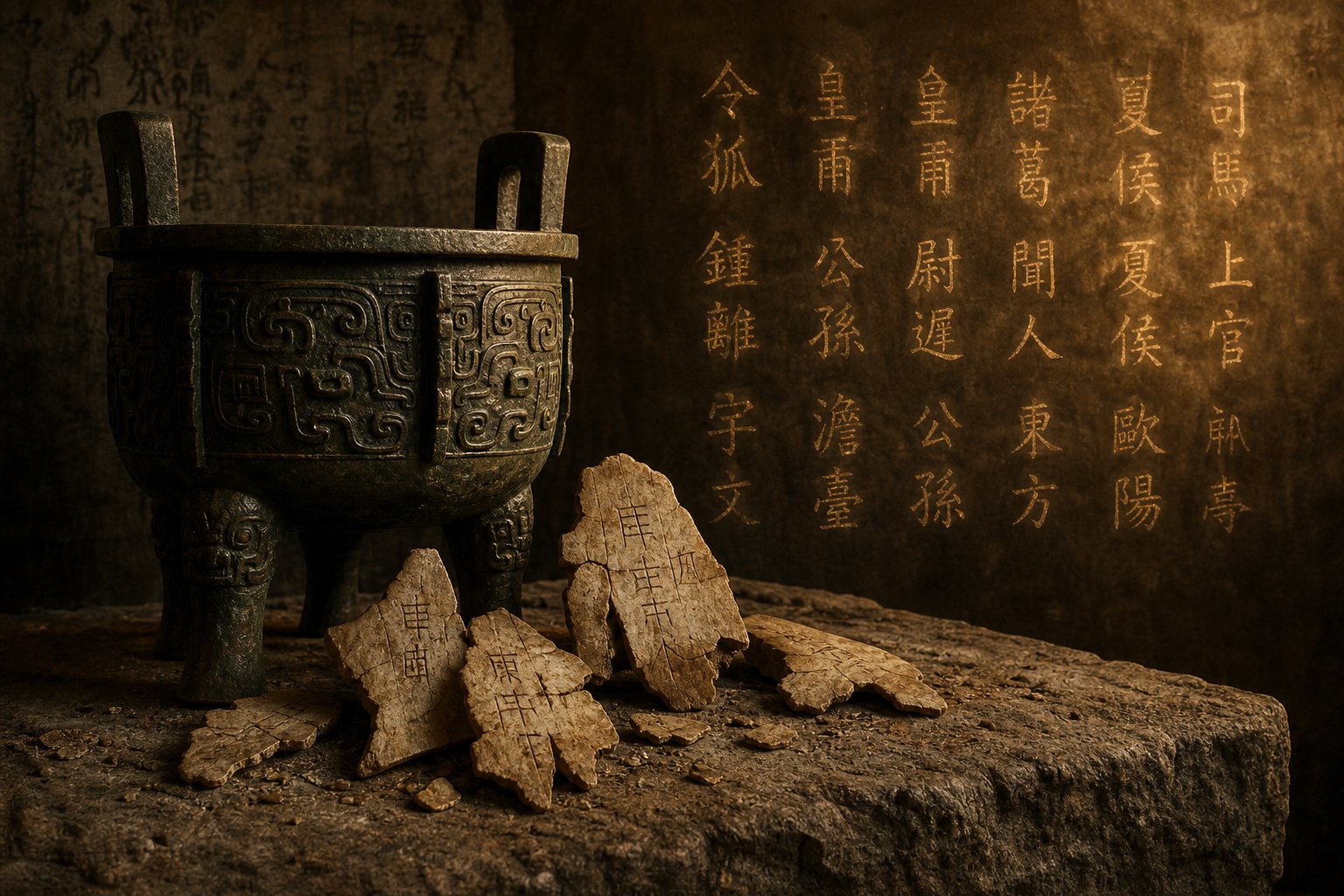
Chinese surnames did not appear overnight. They emerged from a naming tradition stretching back over 4,000 years, rooted in a society that looked very different from the patriarchal dynasties most people associate with China. Anyone conducting a surname origin search into ancient chinese last names will eventually trace the trail back to matrilineal clans, where identity passed through the mother's line rather than the father's.
Ancient Clan Names and Matriarchal Roots
The earliest Chinese surnames originated during the matriarchal period of clan society, roughly in the third millennium BC. A telling piece of evidence sits inside the characters themselves: the Eight Ancient Surnames (Ji, Jiang, Si, Ying, Yun, Gui, Yao, and Ren) all contain the radical for "woman" (女). This was not coincidental. In matrilineal communities, children belonged to the mother's clan, and the surname functioned primarily to identify which bloodline a person came from so that intermarriage between different clans could be properly arranged.
At this stage, the system distinguished between two concepts: xing (姓), the broader clan name indicating shared ancestry, and shi (氏), a branch name that marked social rank or territorial affiliation. Xing determined who you could marry. Shi determined your place in the social hierarchy. These two functions would not merge into a single "surname" concept until much later.
How Dynasties Shaped Surname Distribution
The Zhou Dynasty (1046-256 BC) transformed the surname landscape through its feudal system. When the Zhou kings granted fiefdoms to loyal ministers and relatives, those territories often became the basis for new surnames. State names like Qi, Lu, Song, Zheng, and Chen all evolved into family names still carried by millions today. Beyond fiefdoms, surnames also emerged from official titles (Sima, Sikong), occupations (Tao for potters, Bu for diviners), places of residence (Dongguo, Ximen), and even birth order within a family.
The meaning of chinese surnames often reveals their origin category. A name derived from a feudal state tells you an ancestor held territory there. A name from an official title tells you an ancestor served in government. Understanding chinese surnames and meanings is essentially reading compressed family histories encoded in single characters.
From Thousands to Hundreds Through Consolidation
Over 12,000 chinese family names and meanings have been recorded throughout Chinese history, yet only about 25% remain in active use. What happened to the rest? Political upheaval, forced migrations, and the dominance of imperial clans steadily compressed the surname pool. When a dynasty fell, its ruling clan's surname often spread as loyalists scattered across the empire. When populations migrated south to escape northern invasions, smaller local surnames were absorbed by larger ones.
Research on Chinese surname distribution confirms that long-term drift, combined with massive migratory movements, pushed populations toward a handful of dominant surnames. Regions that experienced heavy immigration show less surname diversity than isolated mountain communities where rare names persisted for centuries. The result is the extreme concentration visible today: a system where chinese surname meanings trace back to specific historical moments, yet the names themselves now blanket hundreds of millions of people.
This consolidation did not erase the stories embedded in each character. It simply concentrated them, so that a small set of surnames and meanings now carries the weight of an entire civilization's genealogical memory. The question that naturally follows: which surnames rose to the very top, and why?
The Top 10 Most Common Chinese Surnames Ranked
Three surnames dominate China's population so thoroughly that they each claim over 90 million bearers. Together, the top 10 most common chinese last names account for roughly 44% of the country's citizens. That means nearly 600 million people share just ten family names. Each of these characters carries a story, an etymology, and a historical reason for its extraordinary reach.
Wang, Li, and Zhang - The Big Three
If you had to guess the most common last name in China, Wang (王) would be the right answer. With over 100 million bearers representing about 7.25% of the population, it edges out Li by a narrow margin. The character 王 means "king," and its dominance traces back to a simple historical pattern: when royal houses fell across multiple dynasties, their descendants took the surname 王 to mark their imperial origin. The Zhou royal lineage, the Shang remnants, and several Warring States noble families all converged on this single character. No other common surname in China draws from so many separate royal pedigrees.
Li (李) runs a close second at roughly 7.19%, also exceeding 100 million people. The character means "plum" or "plum tree," but its explosive growth came during the Tang Dynasty (618-907 AD) when Li was the imperial surname. Emperors granted the Li surname to loyal generals, foreign allies, and meritorious officials as a mark of honor. That political generosity inflated the surname's numbers far beyond its original clan, making it one of the most popular chinese last names in history.
Zhang (张) rounds out the top three at approximately 6.8%, covering about 95 million people. The character depicts the act of drawing a bow, and tradition links its origin to a son of the Yellow Emperor who invented the bow and arrow. Its association with military strength and readiness helped it spread across northern and central China over millennia.
The Stories Behind Each Character
Beyond the big three, each of the remaining top chinese last names carries its own etymological fingerprint. Liu (刘) originally referenced a battle axe or the act of killing, but its prestige comes from Liu Bang, the commoner who founded the Han Dynasty in 206 BC. For over four centuries, Liu was the imperial surname, and its bearers today number around 80 million.
Chen (陈) means "to display" or "to exhibit" and originated from the feudal Chen State during the Zhou Dynasty. It is especially dominant in southern China and stands as the most common surname in both Taiwan and Singapore. Yang (杨) takes its meaning from the poplar tree and traces back to royal grants during the Zhou and Sui Dynasties. Huang (黄) means "yellow," a color associated with royalty in imperial China, and its bearers descend from at least three ancient Huang kingdoms.
Zhao (赵) holds a special cultural position: it was the first surname listed in the classic Hundred Family Surnames text, placed there because it was the imperial surname of the Song Dynasty when the text was compiled. Wu (吴) derives from the ancient state of Wu, established in the 13th century BC by elder sons of the Zhou king. Zhou (周) itself completes the top ten, directly linked to the Zhou Dynasty that shaped so much of Chinese civilization between 1046 and 256 BC.
| Rank | Character | Pinyin | Meaning | Estimated Population |
|---|---|---|---|---|
| 1 | 王 | Wang | King | ~101 million |
| 2 | 李 | Li | Plum tree | ~100 million |
| 3 | 张 | Zhang | To draw a bow | ~95 million |
| 4 | 刘 | Liu | Battle axe / to kill | ~80 million |
| 5 | 陈 | Chen | To display | ~75 million |
| 6 | 杨 | Yang | Poplar tree | ~45 million |
| 7 | 黄 | Huang | Yellow | ~35 million |
| 8 | 赵 | Zhao | Ancient state name | ~33 million |
| 9 | 吴 | Wu | Ancient state name | ~30 million |
| 10 | 周 | Zhou | Circumference / dynasty name | ~30 million |
You'll notice a pattern running through these common chinese last names: nearly all of them connect to political power. Royal lineages, dynastic founders, feudal states, and imperial grants account for the vast majority. The surnames that rose to the top were not random. They were amplified by the machinery of empire, spreading each time a dynasty rewarded loyalty or a fallen kingdom scattered its descendants across the land.
These ten characters look simple on paper, most are fewer than twelve strokes. But each one functions as a compressed archive of clan history, political allegiance, and geographic migration. And while the characters themselves are fixed, the way they appear in English varies wildly depending on which dialect a family speaks and which romanization system their country adopted.
How Chinese Surnames Work and Why Structure Matters
A single character carrying the weight of an entire family lineage, placed before everything else in a person's name. That structural choice is not arbitrary. The mechanics of how a chinese surname operates, how it combines with a given name, and how it passes between generations reveal a naming philosophy fundamentally different from anything in the Western tradition.
Single Character Versus Compound Surnames
The overwhelming majority of Chinese surnames are single characters, known as 单姓 (danxing). Wang, Li, Zhang, Chen, these are all one syllable last names written with a single character. Roughly 96% of the Chinese population carries a single-character surname, which is why most people associate a chinese last name with just one syllable and one written character.
Then there are the compound surnames, 复姓 (fuxing), which use two or more characters. These are far rarer but carry strong historical and literary resonance. Many derive from Zhou dynasty noble titles, official positions, and place names. If you have encountered characters from Chinese historical fiction or the Three Kingdoms saga, you have likely seen compound surnames in action.
Here are some notable compound surnames and their origins:
- Sima (司马) - Meaning "Master of the Horse," an ancient military title equivalent to Marshal. The historian Sima Qian is its most famous bearer.
- Ouyang (欧阳) - Derived from a place name meaning "south of Mount Ou Yu." It remains the most commonly encountered compound surname today.
- Zhuge (诸葛) - A branch of the Ge (葛) clan. Zhuge Liang, the legendary strategist of the Three Kingdoms period, made this name iconic.
- Shangguan (上官) - Meaning "high official," originally a place name tied to aristocratic rank.
- Xiahou (夏侯) - Meaning "Marquess Xia," granted to descendants of Yu the Great during the Spring and Autumn period.
- Huangfu (皇甫) - A branch of the Zi (子) clan from the Duchy of Song in the Eastern Zhou dynasty.
- Situ (司徒) - Meaning "Minister over the Masses," one of the Three Excellencies of the Han dynasty government.
Many compound surnames eventually collapsed into single-character forms over the centuries. Clans simplified their names for convenience, or political pressure pushed them to blend in with the majority. The result is that compound surnames, while historically numerous, are now carried by a tiny fraction of the population.
How Chinese Names Are Structured
A complete Chinese name follows a strict formula: surname first, given name second. There are no middle names in the Western sense. The total length is almost always two or three characters. A 3 letter chinese name like Wang Li (王力) uses one character for the surname and one for the given name. A three-character name like Zhang Xiaoming (张小明) uses one character for the surname and two for the given name. That is the entire range for the vast majority of common chinese full names.
This compactness creates a naming system where every character must carry significant meaning. Parents choose given-name characters for their sound, visual balance, stroke count, and semantic content. The Cultural Atlas notes that many parents believe a good name brings luck, and an unfit name may bring misfortune. Some families even consult fortune tellers to align a child's name with their birth date and the five elements.
Because the surname in chinese always occupies the first position, it functions as an immediate identifier of clan membership. When Chinese speakers introduce themselves, they often say "I am surnamed X" (我姓X) before offering their full name. The last name in chinese is, structurally and socially, the first thing people learn about you.
Patrilineal Tradition and Modern Changes
For most of recorded history, a chinese name surname passed from father to child without exception. Women retained their maiden surnames after marriage but did not pass them to their children. This patrilineal inheritance is why certain surnames grew so dominant: successful clans produced many sons, each carrying the family name forward, generation after generation.
One distinctive tradition reinforced this continuity: the generational naming system, called 字辈 (zibei). Under this practice, all children within the same generation of a clan shared one character in their given names. Imagine three brothers named Zhang Qingzhao, Zhang Qingxi, and Zhang Qingyu. The shared character "Qing" marks them as belonging to the same generation. The next generation might all share a different character, creating a readable sequence that preserved lineage order across centuries. Clan genealogies often pre-selected these generational characters decades in advance, so a family's naming pattern was essentially scripted before a child was even born.
This system is fading in urban China, where parents increasingly prioritize individual expression over generational markers. Yet it persists in many rural communities and overseas Chinese families who maintain traditional clan records. The structural bones of the chinese surname system, single character, first position, patrilineal descent, remain intact even as the details around them shift.
That structural consistency within China, however, masks a layer of complexity that emerges the moment these surnames cross a border or pass through a different dialect. The same character, the same family, can appear under completely different English spellings depending on whether the bearer speaks Mandarin, Cantonese, or Hokkien.
Romanization Variations Across Dialects and Countries
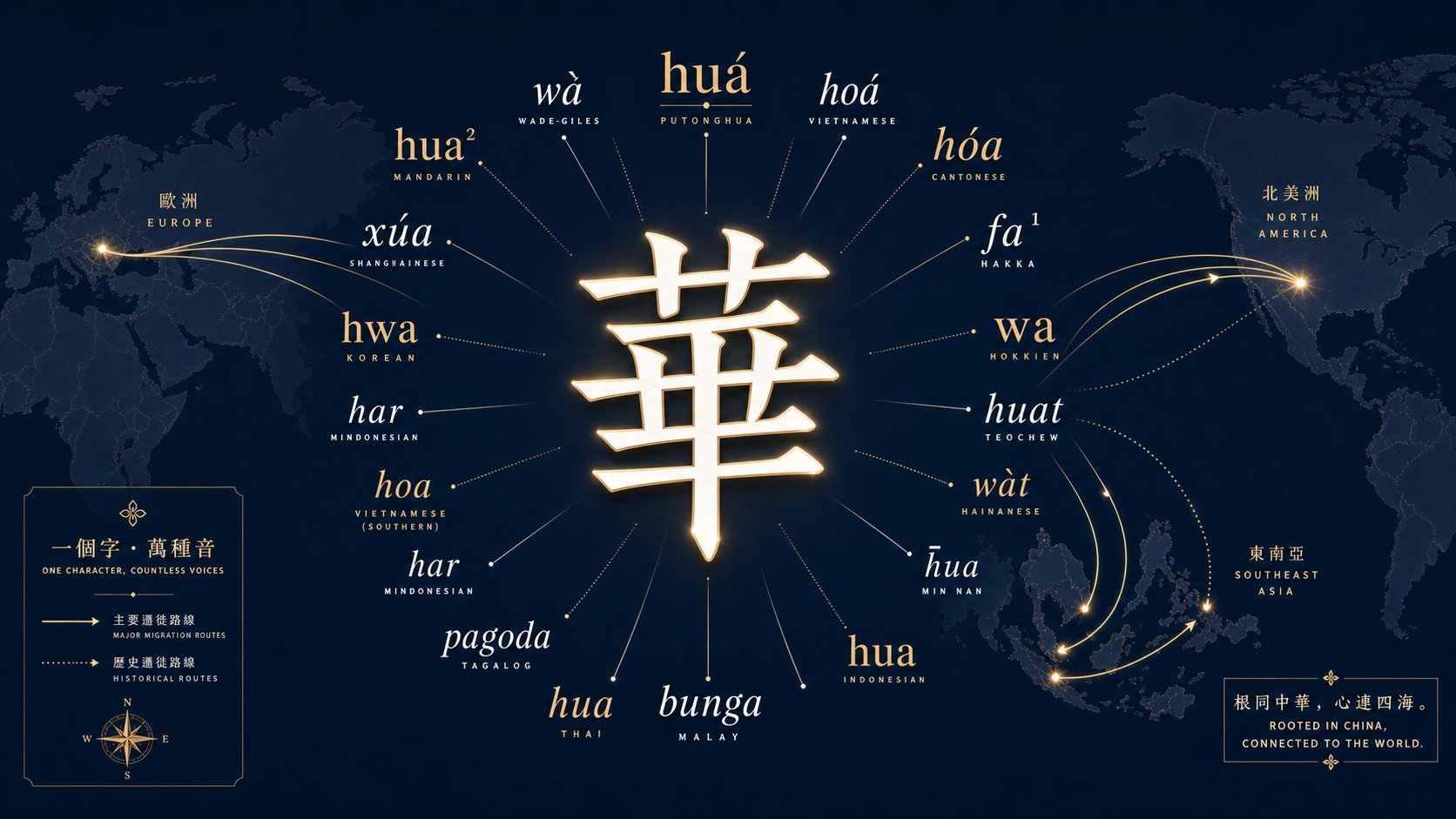
Someone named Wong in Hong Kong, Huang in Beijing, Ng in Singapore, and Ooi in Penang might sit at the same ancestral reunion table. They all carry the surname 黄. The character is identical, the lineage is shared, but the English spelling looks completely unrelated. This is the romanization puzzle that makes tracing cantonese surnames, mandarin surnames, and taiwanese last names so confusing for diaspora families and researchers alike.
One Surname, Many Spellings
The Chinese language splits into roughly seven to ten major dialect groups, each with its own pronunciation system. When Chinese immigrants arrived at foreign ports, officials transcribed whatever sounds they heard into the local alphabet. There was no universal standard. A Cantonese speaker saying their surname 黄 produced something like "Wong." A Hokkien speaker produced "Ng" or "Ooi." A Mandarin speaker said "Huang." All three walked away with completely different official last names despite sharing the same ancestral character.
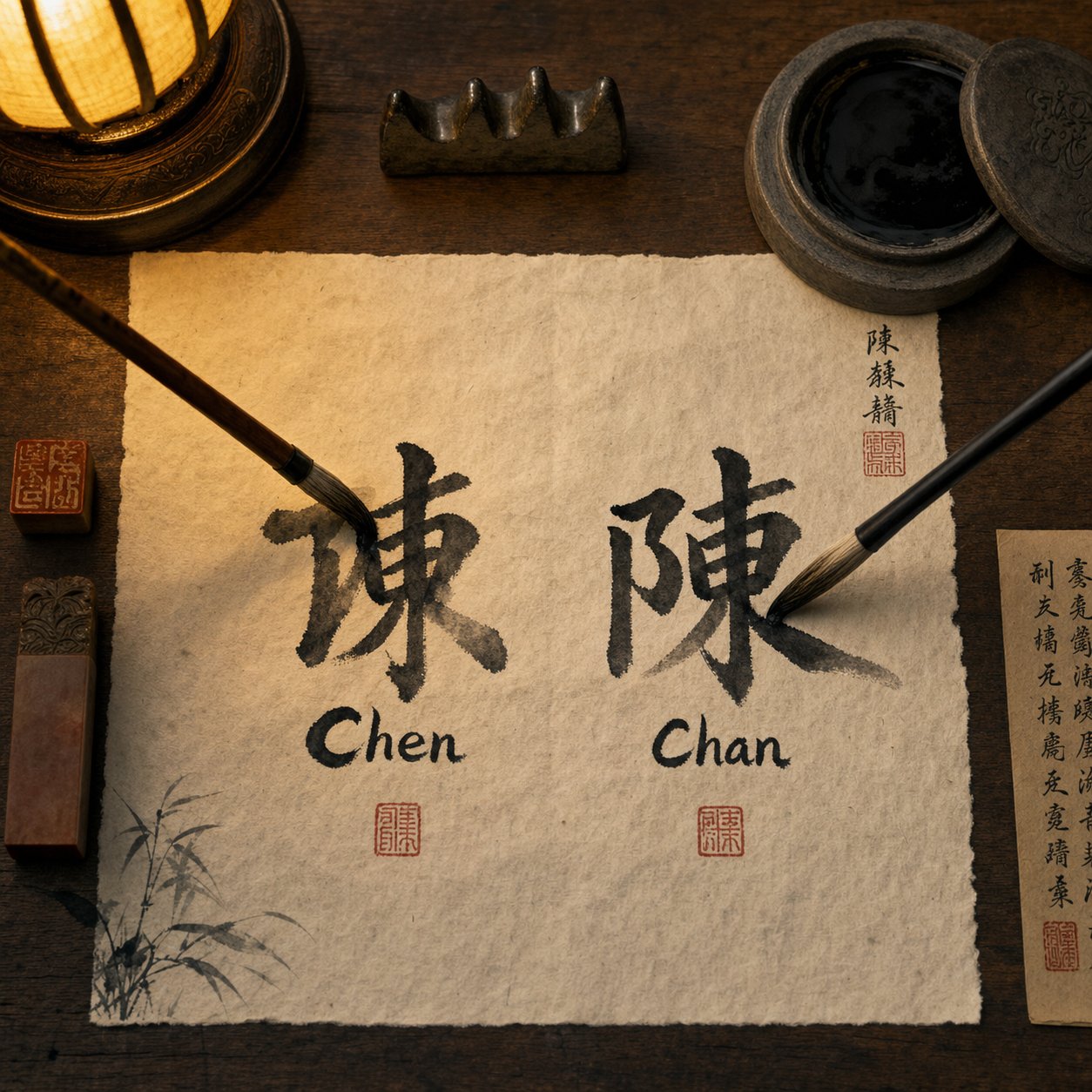
The surname 陈 illustrates this even more dramatically. It has been romanized as Chen, Chan, Chin, Chinn, Ching, Chun, Tan, Tang, Tchen, Tin, Ting, Tjin, Jin, Dan, Zan, and Zen, among others. One character, over a dozen English spellings, each reflecting a different dialect, a different immigration port, or a different clerk's best guess at what they heard.
For cantonese last names specifically, the romanization often follows the Jyutping or Yale system rather than Mandarin Pinyin. That is why mandarin last names like Wang, Zhang, and Liu appear as Wong, Cheung, and Lau in Hong Kong identity documents. Surnames in Taiwan follow yet another pattern. Because Taiwan adopted Wade-Giles romanization rather than Hanyu Pinyin, taiwan last names often look different from their mainland equivalents. Chen might appear as Ch'en, Zhang as Chang, and Huang as Huang but with different tonal markings in official records. These taiwanese surnames are the same characters, just filtered through a different transcription system.
Pinyin, Wade-Giles, and Regional Systems
Understanding why these variations exist requires knowing the major romanization systems in play:
| Character | Pinyin (Mainland China) | Wade-Giles (Taiwan) | Cantonese (Hong Kong) | Hokkien (SE Asia) |
|---|---|---|---|---|
| 王 | Wang | Wang | Wong | Ong / Heng |
| 李 | Li | Li | Lei / Lee | Lee / Li |
| 张 | Zhang | Chang | Cheung | Teo / Tio |
| 刘 | Liu | Liu | Lau | Lau / Low |
| 陈 | Chen | Ch'en | Chan | Tan |
| 杨 | Yang | Yang | Yeung | Yeo / Iu |
| 黄 | Huang | Huang | Wong | Ng / Ooi |
| 赵 | Zhao | Chao | Chiu | Teo / Tio |
| 吴 | Wu | Wu | Ng | Goh / Go |
| 周 | Zhou | Chou | Chow / Jau | Chew / Jiu |
You'll notice that mandarin surnames in the Pinyin column look nothing like their Cantonese or Hokkien equivalents. Someone researching cantonese surnames like Cheung or Lau might not realize they correspond to Zhang and Liu in Mandarin. The disconnect runs both ways: a mainland Chinese person encountering the Hokkien surname "Goh" would not immediately recognize it as 吴 (Wu).
This fragmentation has real consequences for genealogy. Diaspora families trying to reconnect with relatives in China often hit a wall because their romanized surname does not match any Pinyin spelling in mainland databases. The surname 黄 alone appears as Huang, Wong, Ng, Ooi, Vong, Wee, and Oei across different communities, all tracing back to the same ancient Huang state in Henan province.
The practical takeaway? If you carry a Chinese surname spelled in English, the spelling tells you which dialect your ancestors spoke and which country processed their immigration, not necessarily which family you belong to. Two people with entirely different-looking last names may share a common ancestor, while two people with identical romanized spellings might carry completely different characters. The written character is the true identifier. The English spelling is just an echo of one dialect, frozen at one moment in history.
This romanization complexity is more than a linguistic curiosity. It shapes how Chinese communities organize themselves, how clan associations identify members, and how cultural identity persists across generations, even when the original character has been obscured by layers of transliteration.
Cultural Significance of Surnames in Chinese Society
Clan associations, ancestral halls, marriage rules, centuries-old genealogical books. Surnames in China do far more than label individuals. They function as living social infrastructure, binding people to ancestors, to each other, and to a shared sense of obligation that extends across generations. A chinese family name is not just inherited. It is performed, maintained, and defended through rituals and institutions that have persisted for millennia.
In Chinese culture, a surname is not merely an identifier. It is a social contract, connecting the bearer to a web of ancestral obligations, clan resources, and collective identity that no individual can fully separate from.
Same-Surname Marriage Taboos
For most of Chinese history, marrying someone who shared your surname was forbidden. The principle, called 同姓不婚 (tongxing buhun), rested on the assumption that people with the same surname descended from a common ancestor, making the union essentially incestuous regardless of how many generations separated them. This taboo was not merely social pressure. It carried legal weight across multiple dynasties.
The logic extended specifically to patrilateral connections. As research from the Library of Congress notes, marriages between children of two male siblings (who shared the same surname) were strictly prohibited throughout dynastic China because they were seen as equivalent to marriages between siblings. Marrying the child of a paternal aunt or maternal uncle, however, was generally acceptable since those cousins carried different surnames.
Modern Chinese law no longer enforces the same-surname marriage ban. The current Marriage Law only prohibits unions between close blood relatives within three degrees of kinship. Yet the cultural memory lingers. In rural communities, older generations still raise eyebrows when two people surnamed Wang or Li announce an engagement, even when no traceable family connection exists.
Ancestral Halls and Clan Associations
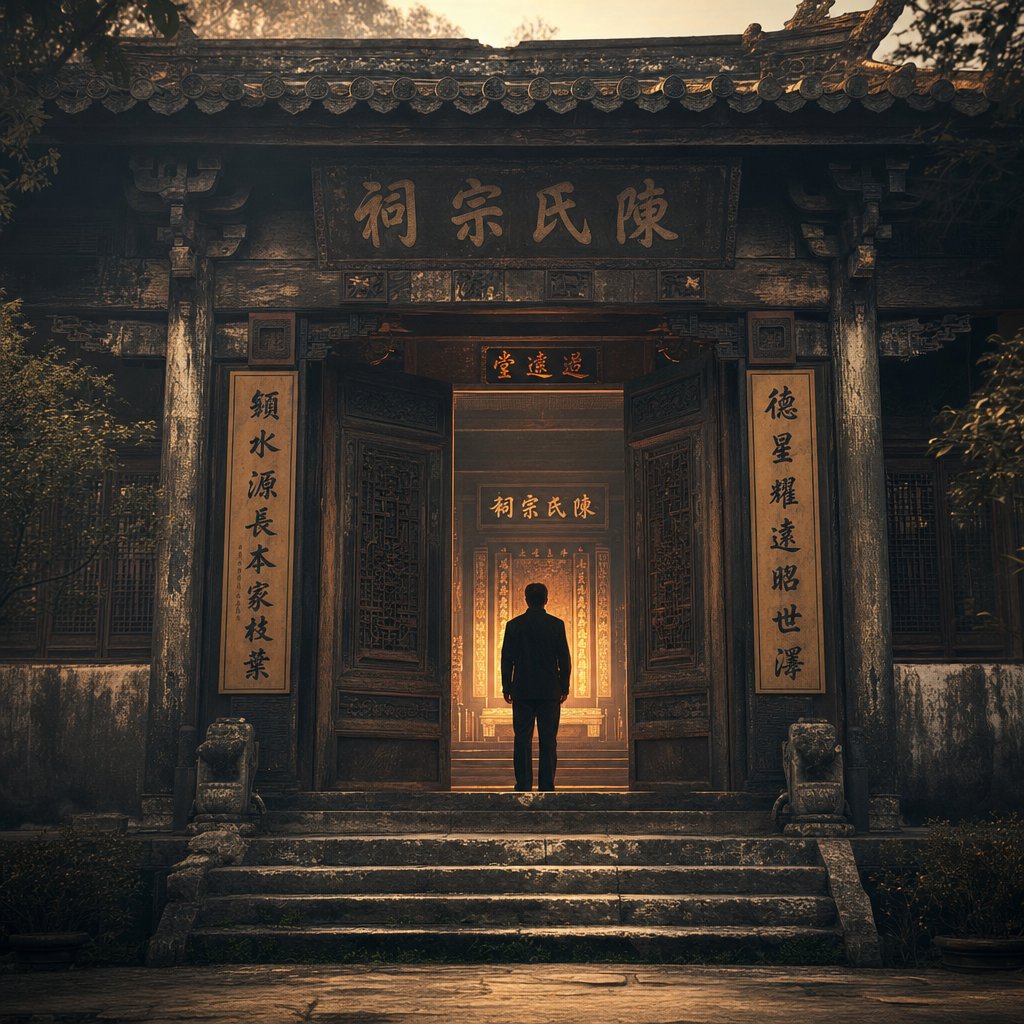
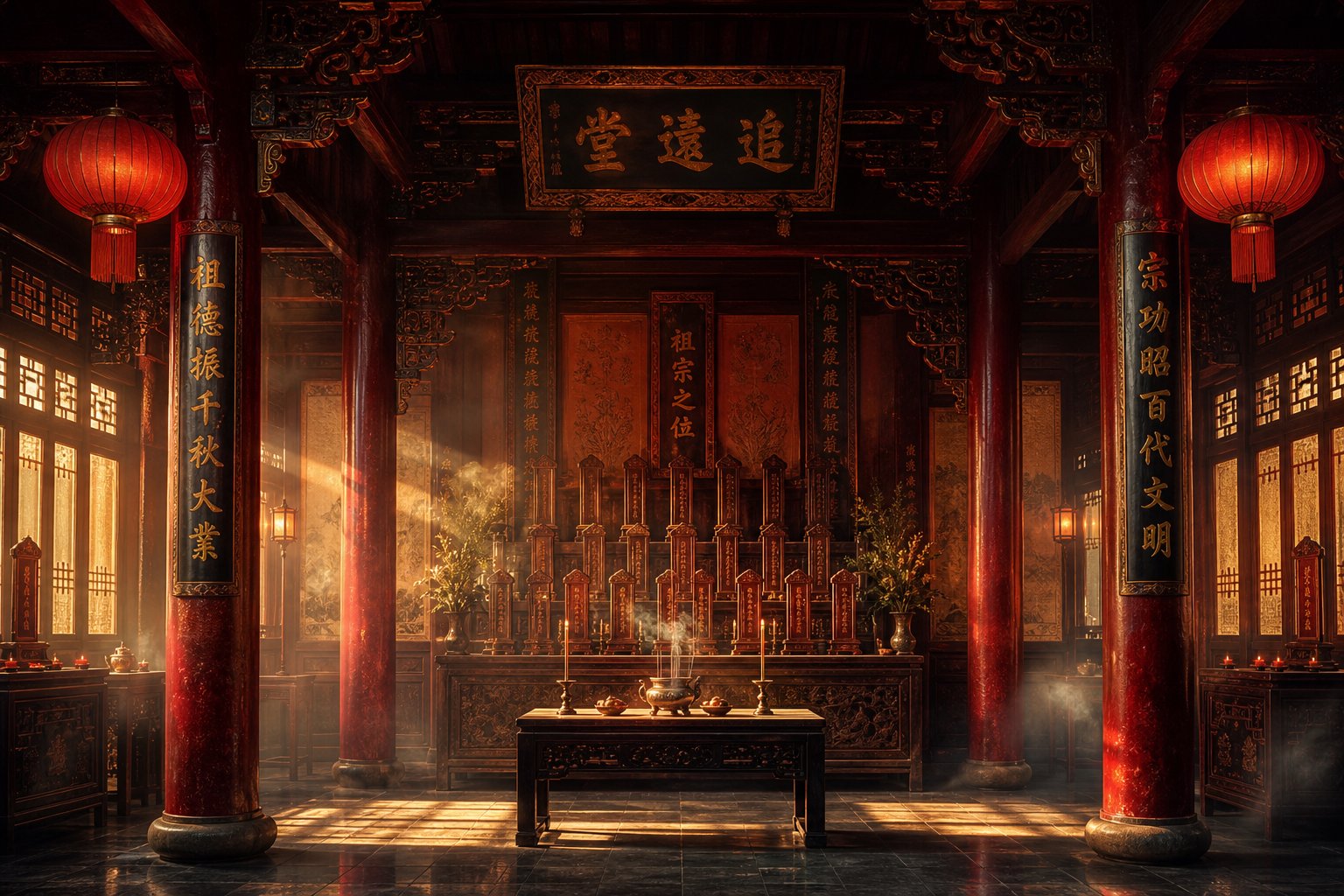
Walk through a village in Fujian, Guangdong, or Jiangxi province and you will likely find an ancestral hall, called 祠堂 (citang). These buildings serve as the physical headquarters of a surname clan. Weddings, funerals, dispute resolutions, and seasonal ancestor-worship ceremonies all take place within their walls. Each hall typically represents a branch of a larger clan and is identified by a hall name known as Tanghao (堂号), which often reflects the branch's place of origin or core values.
Surname villages, where nearly all residents share one chinese family name, still dot rural China. In these communities, the ancestral hall is the social center, the genealogical archive, and the moral authority rolled into one structure. The hall name functions almost like a sub-brand within the broader surname, distinguishing one branch from another across geographic distances.
Overseas Chinese communities replicated this model. From San Francisco to Penang to Sydney, clan associations organized by surname provided new immigrants with housing, employment networks, and dispute mediation. A list of chinese family names in any major Chinatown often doubles as a directory of these associations. The surname was your entry ticket to a support system in a foreign land, making asian family names far more than a bureaucratic detail for diaspora communities.
Genealogy and Family Records
The most tangible expression of surname culture is the zupu (族谱), or clan genealogy book. These privately maintained records document a chinese family tree stretching back dozens of generations, listing births, marriages, deaths, migrations, and notable achievements. Unlike Western countries where churches and governments kept vital records, in China it was traditionally the duty of the individual family or clan to maintain these documents.
A zupu is not just a list of names. It typically includes clan rules, ancestral biographies, property records, and the generational naming sequence (字辈) that dictates which character each generation shares. Some zupu trace lineages back over 2,000 years, making them among the longest continuous family records anywhere in the world. For anyone researching surnames in china, these books are the primary source, though many were destroyed during the Cultural Revolution and are only now being reconstructed from memory and surviving fragments.
This deep infrastructure of halls, genealogies, and marriage customs reveals something essential: the most common Chinese surnames are not just statistical curiosities. They are organizational units, each carrying institutional weight that shapes how people relate to their past and to each other. That weight, however, is not static. Modern China is actively renegotiating which traditions survive and which give way to new patterns of family formation.
Modern Trends Reshaping Chinese Surname Traditions
That renegotiation is already well underway. Across urban China, young couples are quietly rewriting the rules of patrilineal naming, sometimes by giving children the mother's surname, sometimes by inventing entirely new compound surnames that honor both sides. These shifts are not happening in a vacuum. They reflect colliding pressures: declining birth rates, rising gender consciousness, accumulated family wealth, and a legal system that technically permits what tradition long forbade.
New Compound Surnames From Both Parents
Imagine a couple surnamed Li and Zhang. Traditionally, their child would be surnamed Li without question. Increasingly, some families choose to combine both into a new compound surname like Li-Zhang or Zhang-Li. This is not the same as the ancient compound surnames like Sima or Ouyang, which trace back to feudal titles and place names. These are modern inventions, created as a symbol of fairness or love between partners who each want their lineage represented.
Research suggests that these new compound surnames are more common in modernized cities and in households where the mother is well-educated. Neither the relative socioeconomic status of the couple nor the presence of brothers on the husband's side significantly affects the choice. This pattern points toward a genuinely ideological shift rather than a strategic response to demographic pressure. Families choosing compound surnames tend to view the decision as an expression of equality, a statement that both parents' lineages carry equal weight.
The South China Morning Post notes that having two characters in a surname does not automatically make it a traditional compound surname. Some parents today blend both sides' surnames for their children purely as a modern innovation, distinct from the historically rooted fuxing that descend from ancient official titles or state names.
Surname Trends in Modern China
The shift toward maternal surnames tells a different story. Unlike compound surnames, giving a child the mother's surname is more common in villages in eastern regions like Shanghai, Zhejiang, and Jiangsu, and among families where the mother has a lower level of education. Children are also more likely to take their mother's name when the husband has lower socioeconomic status, especially if the wife has no brothers and the husband does. In other words, maternal surnaming often functions as a strategic move to preserve a family line that would otherwise end, rather than a progressive statement about gender.
A particularly striking arrangement has emerged among only-child couples. Known as liang-tou-dun, or "two places to stay," this practice involves each set of parents providing the young couple with a wedding apartment. If the couple has two children, one typically takes the father's surname and the other the mother's, ensuring both family lines continue. Grandparents then tend to direct resources, educational, recreational, and medical, toward the grandchild who shares their surname. The result is a new form of family where siblings may carry different surnames and different access to intergenerational wealth.
Chinese law supports this flexibility. The Marriage Law and subsequent Civil Code allow children to take either parent's surname, removing any legal barrier to maternal or compound naming. The legal framework has been permissive for decades, but social norms are only now catching up in certain demographics.
Here are the most notable modern naming trends reshaping the surname landscape:
- Maternal surnames - Children taking the mother's surname to preserve her family line, especially in daughter-only families created by the one-child policy era.
- New compound surnames - Parents combining both surnames into a novel two-character surname as an expression of partnership equality.
- Liang-tou-dun splitting - Siblings in the same family receiving different surnames, one from each parent, tied to separate grandparent households.
- Rare surname preservation - Women advocating for children to inherit uncommon chinese surnames that face extinction if not passed on.
- Diaspora simplification - Overseas Chinese families adopting anglicized or shortened versions of their surnames for practical integration, sometimes losing the original character entirely.
The question of last name rarity adds urgency to some of these choices. China has dozens of rare chinese surnames carried by fewer than a thousand people. The compound surname Xushi, for example, reportedly has only one inheritor left, a woman named Xushi Yin'e descended from a 15th-century Ceylon prince who settled in Fujian province. When a surname reaches that level of name rarity, every generational decision about naming becomes an act of cultural preservation or erasure.
China once had over 1,000 compound surnames. Fewer than 100 remain in active use. Many collapsed into single-character forms over the centuries, with bearers of Ouyang sometimes simplifying to just Ou or Yang. Others vanished entirely when families produced only daughters under patrilineal rules. The irony is that modern trends, particularly the push for women to pass on rare chinese last names and the creation of new compound forms, may actually reverse centuries of consolidation and increase surname diversity for the first time in recorded history.
For chinese female names and surnames specifically, these shifts carry particular weight. Historically, a woman's surname was something she kept personally but could not transmit. The emerging patterns give women's surnames a future they never had under strict patrilineal tradition. Whether this represents genuine social progress or a pragmatic response to demographic realities likely depends on which family you ask, and which region of China they call home.
These evolving traditions raise a practical question for anyone encountering Chinese surnames outside of China: how do you navigate this system respectfully and accurately in a global context?
A Practical Guide to Understanding Chinese Surnames
Whether you are a professional collaborating with Chinese colleagues, a writer building authentic characters, or someone tracing your own family roots, knowing how chinese names and surnames work in practice saves you from awkward missteps. The history and structure covered so far provide context, but daily interactions demand something more immediate: how to pronounce, address, and research these names without stumbling.
Pronunciation Guide for Common Surnames
English speakers often trip over the same handful of sounds. The letters C, X, Q, and Zh in Pinyin do not map to anything intuitive in English, and mispronouncing a surname can signal carelessness even when no offense is intended.
Here are the most commonly mispronounced surnames and how to get closer to the correct sound:
- Zhang - Not "zang." The "zh" sounds like the "j" in "judge" but with the tongue curled slightly back. Rhymes roughly with "jong."
- Chen - Not "shen." The "ch" is aspirated, like the "ch" in "church." The vowel sounds like "un" in "fun."
- Xu - Not "zoo" or "ex-oo." The "x" sounds like "sh" but with the tongue positioned as if saying "see." Think of a soft hiss.
- Qian - Not "kee-an." The "q" sounds like "ch" in "cheese" but lighter. The full name sounds close to "chee-en."
- Zhao - Not "zow." Same curled-tongue "zh" as Zhang, followed by "ow" as in "how."
- Huang - Not "hwang." Two syllables: "hoo-ahng," spoken quickly enough to blend into one.
Mandarin Chinese has four tones, and names with the same spelling can carry different tones and different meanings. The surname Li in the third tone is a completely different character from Li in the second tone. In casual conversation, most Chinese speakers will not expect foreigners to nail tones perfectly, but making an effort with the consonant sounds goes a long way.
Chinese Surnames in the Global Context
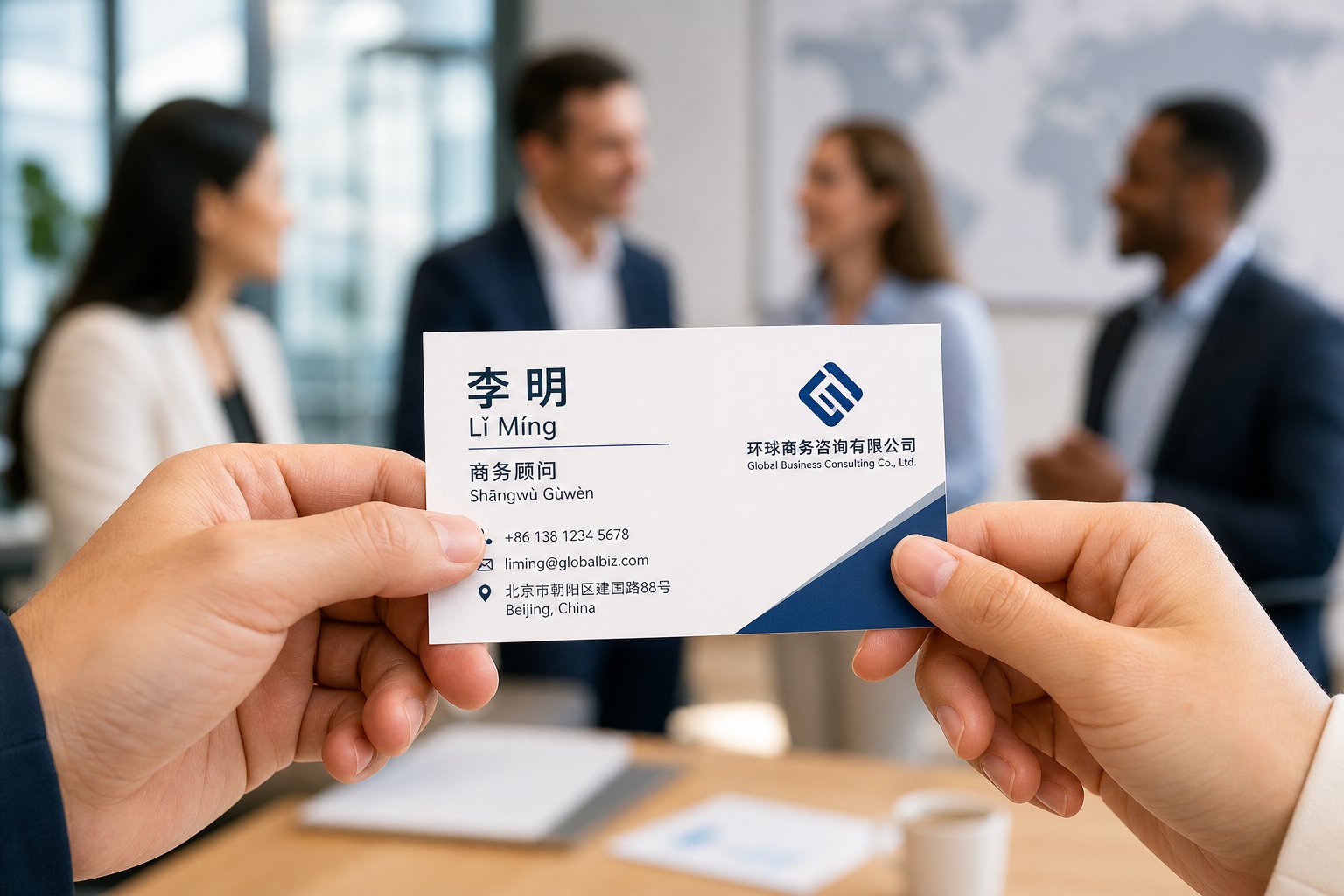
Beyond pronunciation, the structural differences between Chinese and Western naming conventions create real confusion in professional settings. The most common mistake? Assuming the last word in a Chinese name is the surname. When you see "Wang Xiaoming" on a business card, Wang is the surname and Xiaoming is the given name. Calling this person "Mr. Xiaoming" is the equivalent of someone calling you by your first name while thinking it is your last.
In Chinese business culture, the standard form of address is surname plus title or honorific. You would say "Wang xiansheng" (Mr. Wang) or "Li jingli" (Manager Li). Friends use given names, but colleagues and acquaintances default to the surname. Many Chinese professionals working internationally capitalize their surname on business cards or place it last to match Western conventions, but this is not universal.
Here are practical tips for navigating asian surnames and chinese first and last names in professional and social settings:
- When unsure which part is the surname, look for the single-syllable element in a three-syllable name. In most cases, that one-syllable component is the surname.
- If a Chinese colleague introduces themselves as "David Wang," they have already adapted to Western order. Use "David" casually or "Mr. Wang" formally.
- Never assume two people with the same asian last name are related. Wang, Li, and Zhang each cover tens of millions of unrelated families.
- To politely ask someone's surname in Chinese, say "Nin gui xing?" (您贵姓?), which literally means "What is your honorable surname?" This is the standard respectful phrasing.
- Avoid shortening or anglicizing a Chinese surname without permission. "Huang" should not become "Hwang" or "Huan" for your convenience.
- When writing about Chinese public figures, follow their own preferred romanization. Xi Jinping uses Pinyin. Jackie Chan uses his Cantonese stage name. Respect the individual's choice.
- If you encounter an unfamiliar asian surnames spelling, ask which character it represents rather than guessing the pronunciation from the English letters alone.
For genealogy researchers, several databases now bridge the gap between romanized spellings and original characters. The My China Roots platform, available through institutions like UC Irvine Libraries, gathers millions of historical records of the Chinese diaspora and includes a surname database covering 400+ surnames with over 9,400 recorded spelling variants. Their ancestral village database spans 31 regions of China and 700,000 place names, making it possible to trace a romanized surname back to a specific character and geographic origin. China's national census data, published periodically by the Ministry of Public Security, provides the most authoritative ranking of popular chinese names and surname frequency.
Understanding typical chinese names and how they function is increasingly relevant beyond academic curiosity. Common asian last names like Wang, Kim, Nguyen, and Tanaka each carry their own structural logic, but Chinese surnames stand out for their extreme concentration and deep historical layering. Whether you encounter these names on a conference call, in a novel, or on a family document tucked away in a drawer, the same principles apply: surname first, character matters more than spelling, and a little cultural awareness transforms confusion into connection.
What Chinese Surnames Reveal About History and Identity
Fewer than 100 china last names serve over a billion people, yet each one encodes a specific origin story: a fallen kingdom, a feudal grant, a matrilineal clan from the Bronze Age. That compression is what makes the most common surnames in china so remarkable. They are not generic labels. They are living fossils, carrying four millennia of political upheaval, migration, and cultural consolidation in a single character.
Key Takeaways About Chinese Surname Culture
The concentration phenomenon has no parallel among surnames in asia or anywhere else. Wang alone covers more people than most European nations contain. The romanization puzzle means a single surname can wear a dozen English spellings depending on dialect and immigration history. And the cultural infrastructure of ancestral halls, genealogy books, and marriage taboos gives these names institutional weight far beyond identification.
Over one billion people alive today carry surnames that trace back to specific moments in Chinese history thousands of years ago, making the most common last names in china among the oldest continuously inherited identifiers on Earth.
Why Chinese Surnames Still Matter
In a globalizing world, these ancient naming traditions are not fading. They are adapting. New compound surnames emerge from modern marriages. Rare names find advocates fighting to preserve them. Diaspora families use digital genealogy tools to reconnect romanized spellings with their original characters. The most common name in china today, Wang, still means "king," still traces to royal lineages, and still connects its bearers to a shared past that predates written history in most other civilizations. That continuity, quiet and persistent, is what makes common surnames china has carried for millennia more than a demographic curiosity. They are a record of who survived, who thrived, and who chose to remember.
Frequently Asked Questions About Chinese Surnames
1. What is the most common surname in China?
Wang (王) is the most common surname in China, carried by over 101 million people, roughly 7.25% of the population. The character means 'king' and became dominant because multiple royal lineages from different dynasties all adopted it when their houses fell. Li (李) follows closely at around 100 million bearers, with Zhang (张) in third place at approximately 95 million.
2. Why does China have so few surnames for such a large population?
China's small surname pool results from thousands of years of political consolidation, forced migrations, and the dominance of imperial clans. When dynasties rose and fell, ruling families scattered across the empire, spreading their surnames widely. Linguistic constraints also play a role since Chinese surnames are single characters that cannot be easily invented or modified. Over 12,000 surnames have existed historically, but only about 6,000 remain in active use, with fewer than 100 covering 85% of the population.
3. Why are Chinese surnames spelled differently in different countries?
The same Chinese character is pronounced differently across dialect groups like Mandarin, Cantonese, and Hokkien. When immigrants arrived at foreign ports, officials transcribed whatever sounds they heard into English. For example, the character 黄 becomes Huang in Mandarin, Wong in Cantonese, and Ng or Ooi in Hokkien. Different romanization systems like Pinyin, Wade-Giles, and Jyutping further multiply the variations, so one surname can have over a dozen English spellings.
4. Can Chinese children take their mother's surname?
Yes, Chinese law allows children to take either parent's surname. This practice is becoming more common, particularly in eastern regions like Shanghai and Zhejiang, and in families where the mother has no brothers to continue her family line. Some couples also create new compound surnames combining both parents' surnames, while others split surnames between siblings in an arrangement called liang-tou-dun, where each child carries a different parent's surname.
5. What is the difference between single-character and compound Chinese surnames?
Single-character surnames (danxing) like Wang, Li, and Chen consist of one character and one syllable, covering about 96% of the Chinese population. Compound surnames (fuxing) use two or more characters, such as Sima (司马, meaning Master of the Horse) or Ouyang (欧阳, a place name). Compound surnames typically originated from ancient official titles, feudal territories, or noble ranks during the Zhou Dynasty. Fewer than 100 compound surnames remain in active use today.