What a Name Mashup Generator Does and Why It Matters
You type in two names, hit a button, and get back something that sounds like a fantasy character nobody asked for. That's the experience most people have with a name mashup generator, and it's why the results usually end up ignored. But the concept itself is solid. The tool just needs better inputs and a user who understands what's happening under the hood.
What Is a Name Mashup Generator
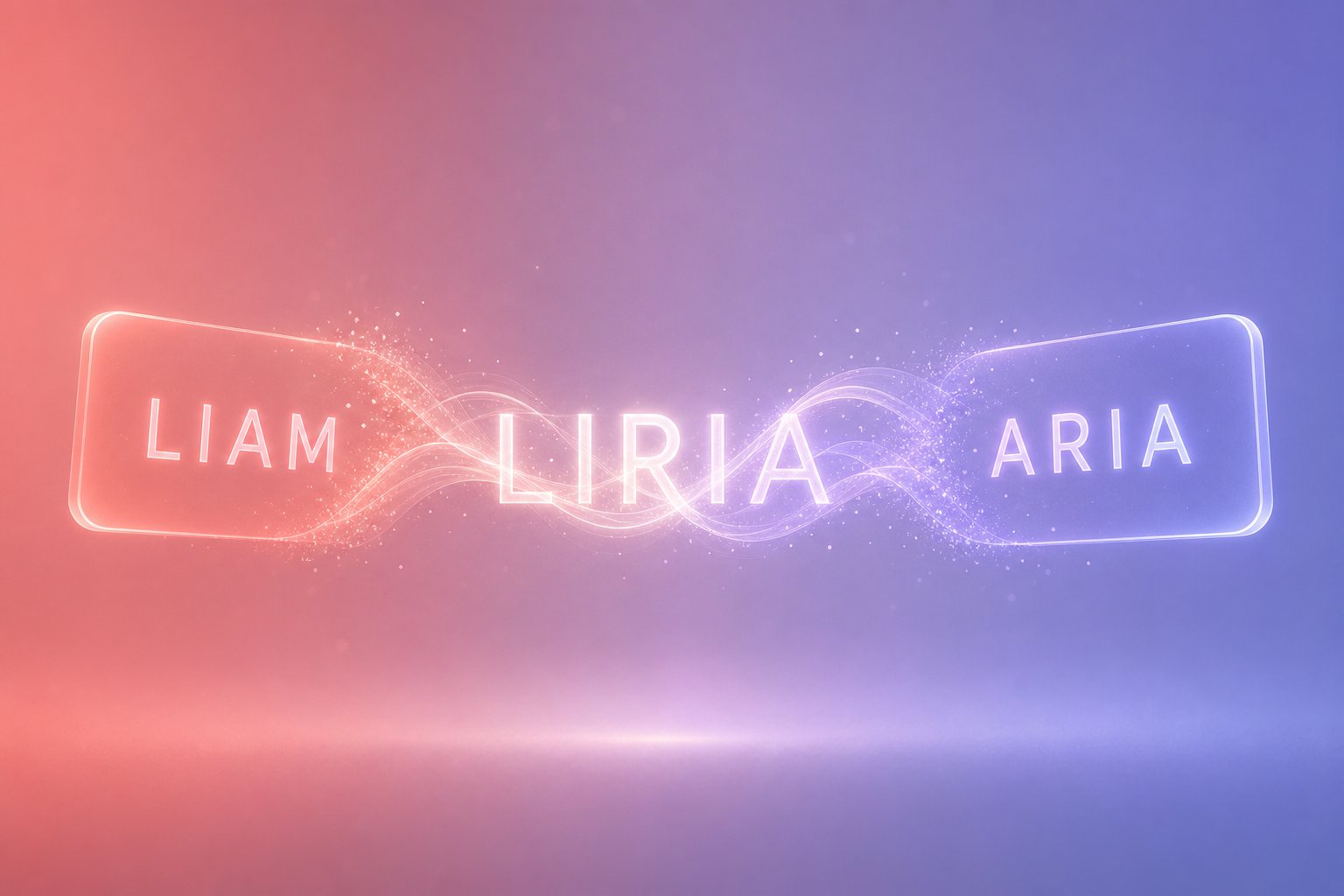
A name mashup generator is a tool that takes two or more names as input and combines them into a single blended result using portmanteau principles, producing a new name that carries recognizable elements from each source.
Think of it as a name combiner that works by splitting names at strategic points and fusing the pieces together. The most famous example? "Bennifer," the combo name the media created for Ben Affleck and Jennifer Lopez back in 2002. That blend takes the beginning of "Ben" and attaches the ending of "Jennifer" to produce something instantly recognizable yet entirely new. The portmanteau concept, borrowed from linguistics, is the engine driving every name mixer tool you'll find online.
At its core, the process involves identifying where names can be split, which fragments carry the most phonetic weight, and how those fragments sound when joined. A name combiner generator automates this by testing multiple split points and outputting several candidates. The problem is that most tools do this without any awareness of how English sounds actually work together, which is why so many results feel forced or unpronounceable.
Why Name Mashups Have Become So Popular
The cultural momentum behind getting names mashed together started with celebrity couples but has expanded far beyond tabloid headlines. When "Brangelina" entered everyday vocabulary for Brad Pitt and Angelina Jolie, it demonstrated something powerful: a blended name can carry more cultural weight than the two names separately. As Robert Thompson, director of the Centre for the Study of Popular Television, noted, "Brangelina has more cultural equity than their two star parts."
That same energy now drives real-world decisions. Couples blend surnames upon marriage to create a fresh shared identity. In the UK alone, hundreds of couples each year opt for blended surnames rather than traditional name changes, particularly among younger couples in their twenties and thirties. Parents derive baby names by mixing their own names together. Entrepreneurs fuse founder names into brand identities. Gamers craft unique tags. Fandom communities create ship names for fictional pairings they support.
The use cases keep multiplying, but the underlying challenge stays the same: most people don't know why some combinations sound natural while others sound like a keyboard smash. This article breaks down the linguistics, the methods, and the evaluation criteria you need to turn any name mashup from awkward to effortless. You'll walk away understanding not just how to use these tools, but how to fix their output when it inevitably misses the mark.
The difference between a forgettable result and a name that actually sticks comes down to phonetic principles most generators completely ignore.
The Linguistics Behind Effective Name Blends
Why does "Brangelina" roll off the tongue while something like "Jedward" feels clunky? The answer isn't random luck. It's rooted in how the English language structures sound. Every time you're mixing names together, you're performing a miniature linguistics experiment, whether you realize it or not. Understanding the rules governing that experiment is what separates a smooth name fusion from an unpronounceable mess.
Phonetic Principles Behind Smooth Name Blends
Every syllable in English follows a predictable internal structure: an onset (the opening consonant or consonants), a nucleus (the vowel sound at the center), and a coda (the closing consonant or consonants). When you split a name for blending, where you cut relative to these parts determines whether the result sounds natural or forced.
Imagine cutting the name "Brandon" after the "Bran-" and attaching "-ina" from "Angelina." That works because "Bran" ends cleanly at a syllable boundary, and "-ina" begins with a vowel that flows easily from the "n" coda. The transition follows what linguists call phonotactic rules — the constraints a language places on which sounds can appear next to each other.
English has strict opinions about consonant clusters. You'll notice that "str" works at the start of a syllable (like "strong"), but "tsr" never does. These aren't arbitrary preferences. They follow the Sonority Sequencing Principle, which states that sounds generally increase in loudness (sonority) as they move toward the vowel nucleus and decrease as they move away from it. Vowels sit at the top of the sonority hierarchy, followed by approximants, nasals, fricatives, and stops at the bottom.
When a name blend creates a consonant cluster that violates this principle, your ear immediately flags it as wrong. A mixed name like "Markatherine" (Mark + Katherine) jams "rk" against "ath," creating a cluster that doesn't occur naturally in English. The result? It sounds like two names awkwardly glued together rather than a genuine fusion of names.
Vowel harmony matters too. Adjacent vowels in a blend should either match in height (both open or both close) or transition smoothly. Jumping from a back vowel like the "o" in "John" directly into a front vowel like the "ee" in "Leena" without a consonant bridge creates an audible seam that makes the blend feel artificial.
Morphological Strategies for Splitting and Joining Names
Effective name mixtures depend on where you segment the source names. The goal is to preserve the most recognizable phonemes from each name while creating a junction point that sounds like it belongs in a single word.
Think of it this way: every name has "identity-carrying" sounds. In "Jessica," the opening "Jess-" carries most of the recognition. In "Michael," it's "Mi-" or "Mic-." A good name blender approach preserves these high-recognition fragments and discards the less distinctive portions. The mixing of names works best when each source contributes its strongest phonetic signature.
Stress patterns play a critical role too. English speakers expect stressed syllables to land in predictable positions. If your blend places stress on a syllable that would be unstressed in normal speech, the whole thing sounds off-rhythm. A two-syllable blend typically wants stress on the first syllable (matching the most common English pattern), while a three-syllable blend often sounds best with stress on the second.
Here are the key phonetic compatibility factors that determine whether a name fusion will sound natural:
- Syllable boundary alignment — Cut names at natural syllable breaks, not in the middle of a consonant cluster or diphthong
- Sonority compliance — Ensure the junction point doesn't create consonant sequences that violate English phonotactic rules
- Vowel bridging — Use a shared or compatible vowel at the merge point to smooth the transition between name fragments
- Stress pattern preservation — Maintain a natural rhythmic pattern that matches common English word stress
- Onset-coda compatibility — The coda of the first fragment should transition cleanly into the onset of the second fragment
- Recognition balance — Both source names should remain identifiable in the final blend, not just one dominating the other
These principles aren't just academic. They're the exact factors that separate a name blend people remember and repeat from one they stumble over and forget. Every automated tool that ignores these rules produces output that sounds robotic, because it's treating names as strings of letters rather than strings of sounds with their own internal logic.
The real question becomes: how do you apply these principles systematically? That requires comparing different combination methods and understanding which technique works best for which type of name pairing.
Name Mashup Methods Compared Side by Side
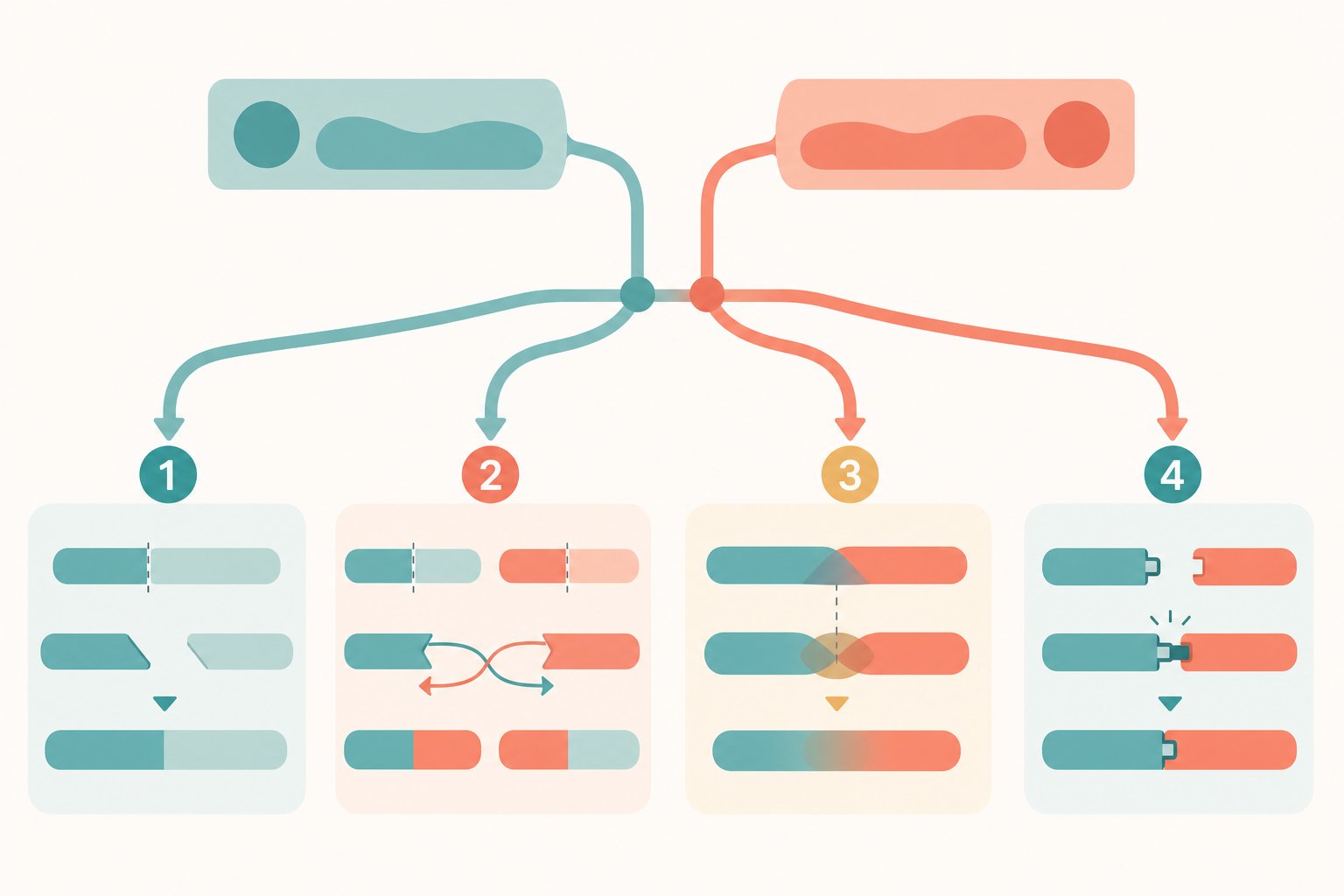
Not every name pairing responds to the same technique. Trying to combine a name like "Alexander" with "Maria" using the same approach you'd use for "Ben" and "Jennifer" is a recipe for awkward output. The method you choose should depend on the syllable structure, shared sounds, and phonetic weight of your source names. Here's how the four primary methods stack up when you actually apply them.
Portmanteau Method vs Syllable Swap Technique
The portmanteau method is the most familiar approach. You take the opening portion of one name and attach the closing portion of another. It's the technique behind "Bennifer" (Ben + Jennifer) and "Brangelina" (Brad + Angelina). The key is choosing a split point where the first fragment's ending consonant flows naturally into the second fragment's opening vowel or compatible consonant.
Here's how it works in practice when you mix a name pair:
- Daniel + Isabella — Split after "Dan-" and before "-bella" = Danella
- Marcus + Elena — Split after "Marc-" and before "-elena" = Marcelena
The syllable swap technique takes a different angle. Instead of front-to-back splicing, you exchange syllable positions between names. Think of it as trading puzzle pieces rather than cutting and pasting.
- Sarah + David — Swap first syllables: "Da-rah" or "Sa-vid" = Savid or Darah
- Kevin + Laura — Swap second syllables: "Ke-ra" or "Lau-vin" = Kera or Lauvin
Syllable swapping tends to produce shorter, punchier results. It works especially well when both source names have a similar syllable count, giving you balanced material to trade.
Phonetic Blend vs Prefix-Suffix Merge
The phonetic blend method hunts for shared sounds between two names and uses them as a natural bridge point. When names share a common phoneme, that overlap becomes the seam where they fuse. This is what a good name combo generator does when it identifies overlapping letter sequences.
- Olivia + Vivian — Shared "vi" sound bridges the names = Olivian
- Liam + Amelia — Shared "am" sound = Liamelia
The prefix-suffix merge is more mechanical but reliable. You isolate the prefix of one name (typically the first one or two syllables) and attach the suffix of another (the final syllable or ending sound). Any combinations of names generator you've used online likely defaults to this method because it's the simplest to automate.
- Christopher + Amanda — Prefix "Chris-" + suffix "-anda" = Chrisanda
- Nathan + Elise — Prefix "Nath-" + suffix "-lise" = Nathlise (awkward) or adjusted to Natalise
Notice how the last example needed adjustment. That's the prefix-suffix method's biggest weakness: it doesn't account for phonetic compatibility at the junction. A combo generator using only this approach will frequently produce results that look fine on screen but stumble when spoken aloud.
The table below puts all four methods next to each other so you can quickly identify which name combination generator approach fits your specific situation:
| Method Name | How It Works | Strengths | Weaknesses | Ideal Use Case |
|---|---|---|---|---|
| Portmanteau | Takes the beginning of one name and the ending of another | Produces natural-sounding results; preserves strong identity from both names | Requires compatible junction sounds; limited options if names are short | Celebrity-style couple names, brand naming, combine name maker projects |
| Syllable Swap | Exchanges syllable positions between two names | Creates short, punchy results; offers multiple swap combinations | Can lose recognizability of source names; works poorly with unequal syllable counts | Gamertags, social media handles, quick creative brainstorming |
| Phonetic Blend | Finds shared sounds between names and uses them as a bridge | Produces the smoothest, most natural fusions; seamless transitions | Only works when names share common phonemes; not always possible | Baby names, formal blended surnames, any case where elegance matters |
| Prefix-Suffix Merge | Combines the prefix of one name with the suffix of another | Simple and predictable; easy to automate; works with any name pair | Often creates awkward consonant clusters; sounds mechanical without manual adjustment | Rapid brainstorming, generating large candidate lists to refine later |
The method that works best depends entirely on what your source names give you to work with. Names with overlapping sounds are perfect candidates for phonetic blending. Names with clean syllable boundaries respond well to portmanteau or swap techniques. And when nothing else clicks, the prefix-suffix merge at least gives you raw material to refine.
Knowing which method to reach for is half the battle. The other half is understanding where each technique actually gets applied in the real world, because a couple creating a wedding hashtag has very different needs than a parent crafting a baby name.
Every Use Case for Name Mashups Explained
A wedding hashtag doesn't follow the same rules as a gamertag. A blended baby name carries weight that a fandom ship name never needs to. The technique stays the same, but the stakes, the tone, and the evaluation criteria shift dramatically depending on what you're actually trying to accomplish. Here's how name mashup approaches play out across every major use case.
Couple Ship Names and Relationship Mashups
Fandom culture invented the ship name tradition. Fans paired fictional characters, blended their names, and used the result as a rallying flag for their preferred pairing. That same energy migrated into real life. Couples now use blended names as Instagram handles, wedding hashtags, and even joint email addresses. If you've ever searched for a couple name generator or ship name creator, you were tapping into this exact tradition.
What makes relationship mashups unique is that they prioritize fun and instant recognition over elegance. The blend needs to be obvious enough that friends and family immediately see both names in it. A wedding hashtag like "Jasonique" (Jason + Monique) works because guests can decode it on sight. Subtlety isn't the goal here. Clarity is.
Ship generator names in fandom communities follow slightly different logic. They tend to be shorter, punchier, and optimized for typing speed since they'll appear in thousands of social media posts. Think "Destiel" (Dean + Castiel) or "Zutara" (Zuko + Katara). The portmanteau method dominates this space because it preserves the opening sound of one name and the closing rhythm of another, making the result feel like a single natural word.
Baby Names Derived from Parent Names
This is where the stakes get real. A ship name lives on social media. A baby name lives on a birth certificate. Parents exploring mixed baby names by combining their own names need results that stand alone as legitimate given names, not just clever wordplay.
Imagine parents named "Adrian" and "Elena." A phonetic blend produces "Adriena" or "Eladrian." The first works beautifully as an independent name. The second sounds like a medication. The difference comes down to whether the result follows established naming patterns in the parents' language and culture.
The phonetic blend method tends to produce the strongest results for baby naming because it creates seamless transitions that sound like they could have existed independently. Parents using a nickname combiner approach, pulling familiar shortened forms of their names and blending those, often get more natural-sounding results than working with full formal names.
Brand Naming and Creative Projects
Entrepreneurs, gamers, writers, and team organizers all reach for name mashups, but each group optimizes for something different. Here's how the techniques apply across creative contexts:
- Business naming — Founders blend their surnames or combine concept words to create brand identities. The result needs to be spellable, domain-available, and free of unintended meanings in other languages. Portmanteau and phonetic blend methods work best here.
- Gamertag creation — A gamertag generator approach favors syllable swaps and prefix-suffix merges because they produce short, punchy, memorable tags. Speed of recognition matters more than elegance when your name flashes on a leaderboard.
- Team and group names — Sports teams, D&D parties, and hackathon squads blend member names into collective identities. Syllable swapping shines here because it can pull fragments from multiple names, not just two.
- Character naming for fiction — Writers blend real-world name elements to create characters that feel grounded yet original. The phonetic blend method helps produce names that sound like they belong in a specific cultural or linguistic setting.
- Social media usernames — Couples and individuals combine name fragments with aesthetic suffixes or numbers to secure available handles. Shorter blends from syllable swaps tend to have better platform availability.
Each use case demands a different balance between creativity and practicality. A ship name can afford to be playful. A baby name cannot. A brand name needs legal clearance. A gamertag just needs to fit a character limit.
Regardless of the use case, though, every one of these scenarios benefits from knowing how to build a mashup by hand rather than relying entirely on automated output. The manual process gives you control over exactly where names split and how they reconnect.

How to Create Name Mashups Manually
Automated tools treat names as strings of letters. You can do better by treating them as strings of sounds. When you create a combined name by hand, you control every split point, every junction, and every phonetic decision. The process isn't complicated once you see the logic laid out step by step.
Step-by-Step Manual Name Combination Process
Whether you're trying to mix a name together for a wedding hashtag or craft something meaningful for a baby, the manual workflow follows the same five stages. Think of this as your personal name generator from two names, except you're the engine making the decisions.
- Write out both names and identify syllable breaks. Separate each name into its natural syllables. "Jonathan" becomes "Jon-a-than." "Melissa" becomes "Me-lis-sa." Mark these breaks with hyphens so you can see your options clearly.
- Mark stressed syllables and dominant phonemes. Underline or bold the syllable that carries the most weight when spoken aloud. In "Jonathan," stress falls on "Jon." In "Melissa," it lands on "lis." These stressed syllables carry the name's identity and should survive into the final blend.
- Identify potential bridge points. Look for places where the ending sound of one fragment flows naturally into the opening sound of another. Shared consonants, compatible vowels, or overlapping letter sequences all serve as bridges.
- Generate multiple candidate combinations using different split points. Don't settle on the first option. Try splitting after the first syllable, after the second, at the stressed syllable. Each split produces a different candidate. Aim for at least four or five options per name pair.
- Test candidates aloud for flow. Say each option out loud three times quickly. If you stumble, the blend has a phonetic problem. If it rolls off the tongue without effort, you've found a winner.
This process works whether you're trying to make a name with letters from both parents' names or building a brand identity from scratch. The key is generating volume before judging quality.
Text-Based Examples Showing the Logic
Theory only clicks when you see it applied. Here are three worked examples using different methods from the comparison section, showing exactly how to create a name by combining two names manually.
Example 1: Portmanteau Method — "Sebastian" + "Ariana"
Syllable breaks: Se-bas-tian | A-ri-a-na. The stressed syllable in Sebastian is "bas." In Ariana, it's "a" (the third syllable). Splitting Sebastian after "Sebas-" and taking "-riana" from Ariana gives us Sebasriana — too long. Splitting after "Seb-" and taking "-ariana" produces Sebariana — still clunky. Cutting tighter: "Se-" + "-riana" = Seriana. Clean, pronounceable, and both names remain recognizable.
Example 2: Phonetic Blend — "Cameron" + "Veronica"
Syllable breaks: Cam-er-on | Ve-ron-i-ca. Shared sound: both names contain "ron" (Came-ron and Ve-ron-ica). That overlap becomes the bridge. Fusing at the shared phoneme: Cameronica. The "ron" serves double duty, belonging to both source names simultaneously. This is the smoothest type of blend because the seam is invisible.
Example 3: Syllable Swap — "Lucas" + "Naomi"
Syllable breaks: Lu-cas | Na-o-mi. Swap first syllables: "Na-cas" or "Lu-o-mi." The second option sounds awkward (vowel collision at "u-o"). Try swapping differently: take "Lu-" and attach "-omi" = Luomi. Or take "Na-" and attach "-cas" = Nacas. Luomi has a gentle vowel flow and works as a name generator using letters from both sources without forcing anything unnatural.
Notice how each example required testing multiple split points before landing on something that worked. That's normal. A combine name generator automates this trial-and-error, but doing it manually means you catch phonetic problems that algorithms miss entirely. The tradeoff is time for quality.
Having a reliable process is one thing. Knowing whether your final result is actually good is another, and that requires a different kind of framework altogether.
Evaluating Whether Your Name Mashup Actually Works
You've generated a list of candidates. Maybe five, maybe fifteen. They all look reasonable on screen. But which one is actually good? Without a structured way to evaluate, you'll either pick based on gut feeling or spiral into indecision. Neither gets you to the strongest name combination. What you need is a repeatable checklist that separates the names that stick from the ones that stumble.
The Five-Point Name Mashup Quality Checklist
Every candidate, whether it came from an automated tool or your own manual process, should pass through these five filters. Score each one on a simple yes/no or 1-to-3 scale, and the strongest option will surface quickly.
- Pronounceability — Can someone read this name aloud correctly on their very first attempt, with zero guidance? If you have to explain how to say it, it fails. The phone test applies here: say the name over a call and ask the other person to spell it back. If they can't, you have a friction problem.
- Memorability — Does the name stick after a single hearing? Tell someone your combined names result, change the subject for five minutes, then ask them to repeat it. Names that engage rhythm, familiar syllable patterns, or emotional associations survive this test. Names that feel like random letter strings don't.
- Balanced representation — Can listeners identify both source names within the blend? If one name dominates and the other disappears, the mashup isn't doing its job. Combined couple names should honor both people equally. A baby name derived from parents should carry recognizable traces of each.
- Meaning check — Does the blend accidentally spell a real word with negative connotations, in English or any other language your audience speaks? A tool like Word Safety checks words against swear words and unwanted associations across 19 languages covering nearly 4 billion native speakers. Run every finalist through it.
- Aesthetic appeal — Does the name look good written down? Some names combined sound fine aloud but look awkward in text, with too many consonants stacked together or an unusual letter pattern that reads as a typo. Imagine it on a wedding invitation, a social media profile, or a business card. If it looks wrong, it is wrong.
How to Score and Compare Candidate Names
Rate each candidate from 1 (poor) to 3 (strong) on all five criteria. A perfect score is 15. In practice, anything above 12 is a solid option. Anything below 9 should be discarded or reworked using a different mashup method.
Here's where most people stop, and it's exactly where they shouldn't. Your own judgment is biased. You've been staring at these mixed names together for hours, and familiarity has warped your perception. The fix is simple: test with other people.
Read your top three candidates aloud to friends, family, or colleagues without explaining the source names. Watch their faces. Do they smile? Wince? Look confused? First reactions are data. Ask them to spell what they heard. Ask them which one they'd remember tomorrow. These responses reveal problems you can't see from the inside.
For combined names of couples heading toward a wedding hashtag or shared social handle, test with people from both sides of the family. Cultural context matters. A name combination that sounds playful to one group might sound odd or even disrespectful to another.
The meaning check deserves extra attention. Beyond automated tools, search your finalist in Google with quotes around it. Check Urban Dictionary. If you're creating matching names for an international audience or a brand, search the term in the native scripts of your target markets. The Mitsubishi Pajero famously carries an unfortunate meaning in Spanish, a mistake that a simple cross-language check would have caught before launch.
A name that scores well on all five points and survives real-world testing is ready for use. But what about the candidates that fail? The ones that sound terrible no matter how you tweak them? Those failures follow predictable patterns, and each pattern has a specific fix.
Common Mistakes and How to Fix Awkward Combinations
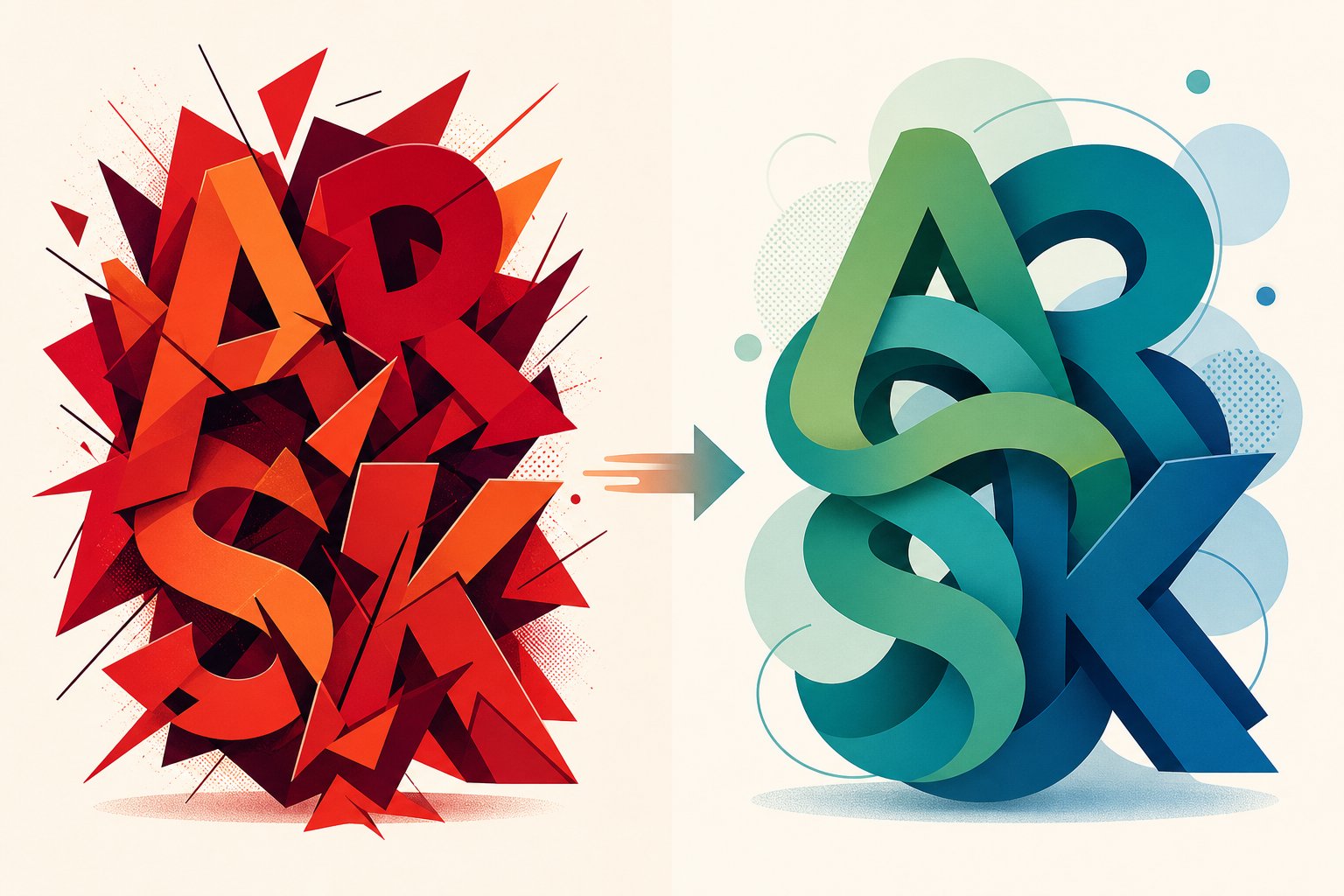
Some mashups fail the five-point checklist so badly that no amount of scoring will save them. They sound like someone dropped a handful of Scrabble tiles. The good news? Terrible results almost always trace back to the same handful of root causes, and each one has a targeted fix. Knowing why a blend sounds awful is the fastest path to making it sound right.
Why Some Name Mashups Sound Terrible
When you try to fuse names and the result makes people wince, one of these four problems is almost certainly responsible:
Consonant cluster collisions. This is the most common culprit. When the end of one name fragment slams into the beginning of another without a vowel buffer, you get clusters that English speakers physically struggle to pronounce. Try saying "Markgreta" (Mark + Greta) quickly. That "rkg" sequence in the middle? It violates the sonority sequencing principle — the rule that sounds should rise in openness as they approach a vowel. Research on consonant cluster production shows that stop-stop sequences like /gd/ or /kt/ are among the hardest for English speakers to produce, even with practice. When your name masher output creates these illegal clusters at the junction point, the result is guaranteed to sound forced.
Missing vowel bridges. Vowels are the glue that holds syllables together. When you combine 2 names and the merge point has no vowel nearby, the blend loses its rhythmic flow. "Johnlise" (John + Elise) drops the "E" that would have smoothed the transition. Without it, the name merger produces something that reads like two separate words jammed together rather than a single fluid name.
Unbalanced syllable counts. A blend that pulls four syllables from one name and one from another sounds lopsided. "Alexandr-a" (Alexander + Anna) gives almost everything to Alexander and nearly erases Anna. When merging two names of very different lengths, the longer name tends to swallow the shorter one whole.
Accidental word formation. Sometimes when you mix the names together, the junction creates an unintended real word hiding inside the blend. "Analise" looks elegant until you notice "anal" sitting right at the front. "Shitara" (Shiloh + Tara) speaks for itself. These accidents are invisible to the person who created the blend because they're focused on the source names, not on what a stranger reads cold.
Cultural insensitivity. Combining names from different linguistic backgrounds without awareness of each language's phonetic rules creates a separate category of problems. A blend that works in English might be unpronounceable in the other name's origin language, or worse, it might accidentally form an offensive word in that language. When a name fuser tool processes "Haruki" and "Christine" without understanding Japanese syllable structure, the output often disrespects both naming traditions.
Practical Fixes for Awkward Combinations
Here's the critical mindset shift: if a blend sounds bad after two small adjustments, stop tweaking and try a completely different method. Shifting one letter left or right won't fix a fundamentally incompatible junction. The table below maps each common problem to its specific solution:
| Problem | What's Happening | Fix |
|---|---|---|
| Consonant cluster collision | Two or more consonants crash together at the junction (e.g., "rkg," "thl," "ndr") | Insert a linking vowel between the fragments. "Markgreta" becomes "Markagreta" or shift the split point: "Mar-" + "-greta" = "Margreta" (drops one consonant from the cluster) |
| Missing vowel bridge | No vowel near the merge point, creating a choppy transition | Shift the split point one letter into the second name to capture its opening vowel. "Johnlise" becomes "Johnelise" or try the reverse order: "Elisohn" |
| Unbalanced syllable count | One name dominates the blend while the other nearly disappears | Use the syllable swap method instead of portmanteau. Pull equal syllable counts from each name, or use the shorter name's full first syllable as the blend's opening |
| Accidental word formation | An unintended word appears inside the blend | Shift the split point by one or two letters to break up the accidental word. If that doesn't work, try the phonetic blend method using a different shared sound as the bridge |
| Unpronounceable result | The blend violates English phonotactic rules entirely | Abandon the current method. Switch from prefix-suffix merge to phonetic blend, or reverse which name contributes the opening vs. closing fragment |
| Cultural clash | The blend disrespects one name's linguistic origin | Research the syllable structure of both names' origin languages. Split each name according to its own language's rules before combining |
The linking vowel trick deserves special attention because it solves the most common failure mode. When you fuse names and hit a consonant pileup, dropping in a short neutral vowel (typically an "a," "i," or "e") between the fragments often transforms the result from unpronounceable to smooth. "Mattgwen" becomes "Mattigwen." "Carlnessa" becomes "Carlanessa." The inserted vowel acts as a phonetic bridge that gives the tongue somewhere to rest between difficult consonant transitions.
Reversing the order is another underused strategy. Most people default to putting the first person's name at the front. But "Saralex" (Sarah + Alex) might sound worse than "Alexara" (Alex + Sarah). When one direction creates a problem cluster, flipping the order often eliminates it entirely because you're working with different sounds at the junction point.
The biggest mistake people make? Spending twenty minutes nudging the same broken blend one letter at a time. If two small adjustments haven't fixed it, the combination method itself is wrong for that name pair. Switch from portmanteau to phonetic blend. Try syllable swap instead of prefix-suffix merge. A fundamentally different approach will get you further than incremental patches on a structurally flawed result.
These fixes assume both names share the same language and phonetic system. When they don't — when you're blending names from entirely different linguistic traditions — the challenges multiply in ways that require a broader cultural awareness.
Name Mashups Across Languages and Cultures
English phonotactic rules are just one set of constraints. When you're blending a name rooted in Hindi with one rooted in English, or combining a Greek name with a Spanish one, you're navigating two entirely different sound systems simultaneously. A mashup that flows beautifully in one language can be physically impossible to pronounce in another. Most name mashup generator tools assume English-only input, which is why their output falls apart the moment multicultural name pairs enter the picture.
How Phonetic Rules Change Across Languages
Every language has its own phonotactic constraints governing which sounds can appear next to each other. Japanese, for instance, strongly prefers consonant-vowel syllable patterns and avoids consonant clusters entirely. A blend that ends in "nk" or "st" would feel alien to Japanese phonology. Spanish doesn't permit words to begin with "sp" or "st" without a preceding vowel, which is why English "stop" becomes "estop" in Spanish-influenced pronunciation. If you're trying to combinar nombres from Spanish and English origins, a blend starting with "str" will sound natural to English ears but wrong to Spanish speakers.
Tonal languages introduce an even deeper complication. In Mandarin, tones change the meaning of syllables entirely. The syllable "ma" means "mother" with a high flat tone but "horse" with a dipping tone. When you splice syllables from a tonal language into a blend, you might inadvertently create a word with an embarrassing or offensive meaning simply because the tone shifted. Vietnamese and Thai carry similar risks. Any mashup involving names from these languages needs a native speaker's ear before you commit to a result.
Arabic and Hebrew add another layer: root-based morphology. Names in these languages often derive from three-consonant roots that carry core meaning. Breaking a name at the wrong point can sever it from its root meaning entirely, which may feel disrespectful to someone whose name carries religious or familial significance. A muslim name generator or any tool handling Arabic-origin names should preserve root consonants whenever possible.
Tips for Cross-Cultural Name Blending
Multicultural couples, international brands, and anyone searching for an indian name generator or greek name generator to blend with English-origin names faces a specific challenge: honoring both linguistic traditions without producing something unpronounceable in either. Here's what to consider for common language families:
- Romance languages (Spanish, French, Italian, Portuguese) — These languages favor open syllables ending in vowels. Blends work best when the junction point lands on a vowel. Avoid final consonant clusters that don't exist in the target language.
- Indo-Aryan languages (Hindi, Bengali, Punjabi) — Names often carry specific suffixes indicating gender or family lineage. An indian nickname generator approach should preserve these meaningful endings. Retroflex consonants (like the "d" in many Indian names) don't map cleanly onto English equivalents, so blends should avoid splitting at these sounds.
- Greek names — Greek phonology permits clusters like "ps" and "ks" at word beginnings, which English doesn't. A greek names generator blending Greek with English names should place Greek-specific clusters at the start (where Greek speakers expect them) rather than mid-word where they'd confuse English speakers.
- East Asian languages (Mandarin, Japanese, Korean) — Syllable boundaries are rigid. Japanese names split cleanly into CV (consonant-vowel) pairs. Korean names typically have one-syllable family names and one or two-syllable given names with specific hanja meanings. Respect these natural divisions rather than cutting arbitrarily.
- Arabic and Hebrew — Preserve the trilateral root structure. Split names between root-based segments rather than through them. Many names carry direct religious meaning, so verify that your blend doesn't accidentally alter or mock that meaning.
If you're using a name generator india tool or any region-specific generator, check whether it accounts for these structural differences or simply applies English-centric splitting logic to non-English names. Most don't, which means manual adjustment is almost always necessary for cross-cultural blends.
The practical takeaway: always test your blend with a native speaker of each source language. What reads as creative in your language might read as nonsensical or offensive in theirs. Cultural respect isn't just good manners — it's what separates a thoughtful name blend from one that alienates half its audience.
Getting the linguistics right is essential, but even a perfectly crafted mashup needs to survive contact with the real world. Domain availability, social media handles, and trademark conflicts can disqualify an otherwise flawless name before it ever gets used.
What to Do After You Generate the Perfect Name
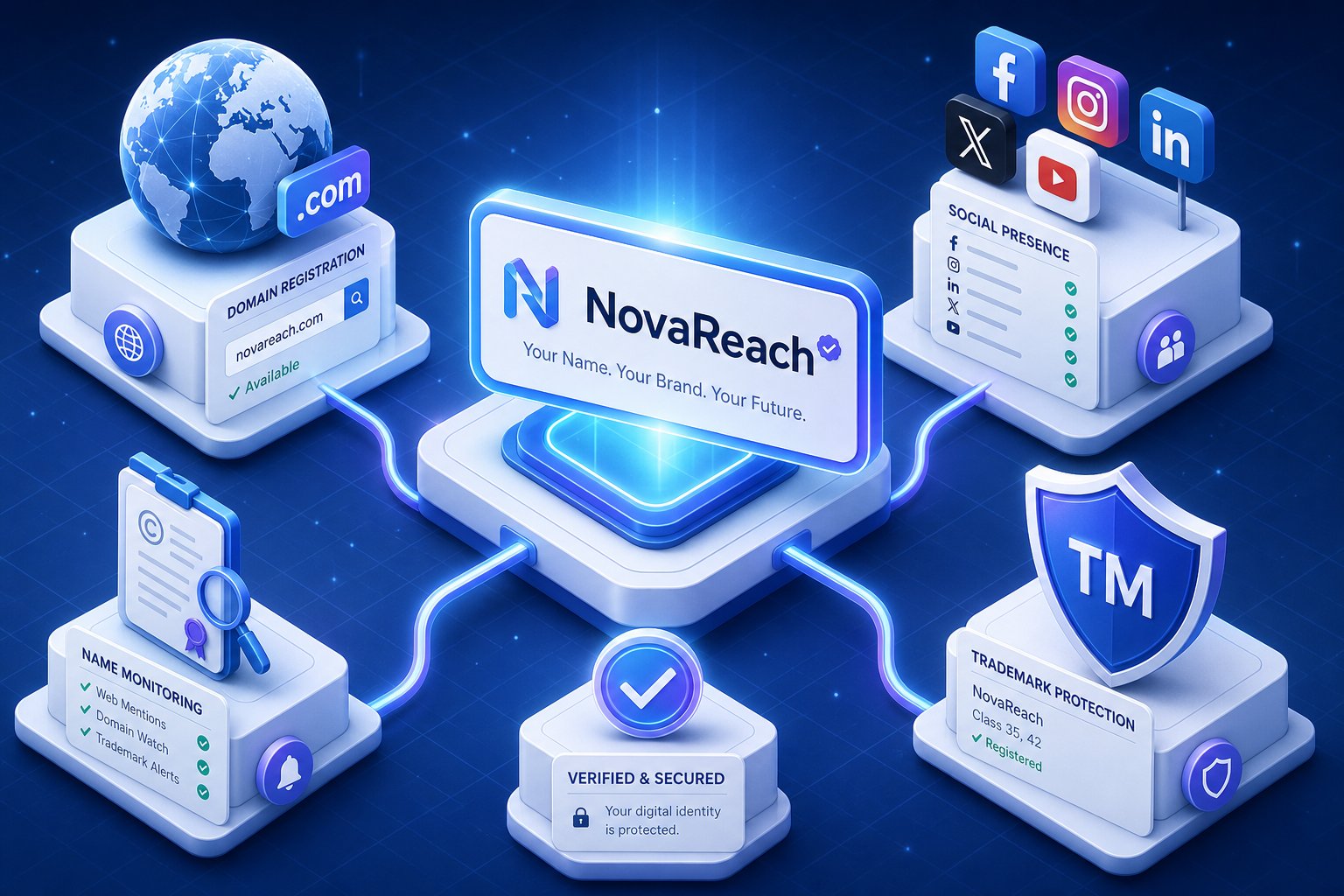
A mashup that scores 15 out of 15 on the quality checklist and passes every phonetic test still isn't ready for use. Not yet. The real world imposes constraints that linguistics can't predict: someone else might already own that exact string as a domain, a social handle, or a registered trademark. Discovering this after you've printed wedding invitations or ordered business cards is the kind of problem you want to catch early.
Checking Domain and Social Media Availability
Your blended name needs to exist somewhere online. Whether it's a wedding hashtag, a brand identity, or one of those cool gamertags you've been crafting for a new account, the name only works if you can actually claim it on the platforms where it matters.
Start with the platforms most relevant to your use case. A couple building a wedding hashtag needs Instagram and TikTok availability. An entrepreneur needs a .com domain and matching handles across LinkedIn, X, and Instagram. A gamer exploring gamertag ideas needs availability on their specific platform, whether that's Steam, Xbox, PlayStation, or Discord.
Domain registrars like Namecheap or GoDaddy let you search availability instantly. For social media, tools like Namechk or KnowEm scan dozens of platforms simultaneously and show you where your name is taken versus available. This matters more than most people realize. If your mashup is available as a .com but taken on Instagram, you'll end up with a fragmented identity that confuses people trying to find you.
For couples searching for cute couple usernames to match across platforms, consistency is everything. The same blended name on both partners' profiles creates a cohesive identity. If the exact blend is taken, try adding a short suffix like "official" or a meaningful number rather than abandoning the name entirely.
Anyone brainstorming cute username ideas from their mashup results should check availability before getting emotionally attached to a specific option. Run your top three candidates through a platform search simultaneously so you can pivot quickly if your first choice is claimed.
Basic Trademark and Uniqueness Considerations
This section is general awareness, not legal advice. If you're building a business around your mashup name, consult an attorney. That said, a basic trademark search takes five minutes and can save you from serious headaches down the road.
The U.S. Patent and Trademark Office maintains a free searchable database of registered and pending trademarks. Search your mashup there to see if anyone has already claimed it for goods or services similar to yours. A trademark registration doesn't mean you can never use the word anywhere, but it does mean you can't use it in the same commercial category without risking legal action.
Beyond formal trademark databases, a simple Google search in quotes reveals how heavily your mashup is already used online. If the first page of results is filled with existing businesses, influencers, or products using that exact name, you'll struggle to build visibility around it regardless of trademark status. Uniqueness in search results is its own form of availability.
For anyone using a ship name maker result as a brand name or monetized social presence, this step is non-negotiable. Fandom ship names that go viral sometimes get claimed as trademarks by merchandise sellers, which can create conflicts if you try to build a business around the same term later.
Here's the recommended post-generation verification workflow, ordered by priority:
- Say it aloud to three people. Confirm pronunciation and first impressions before investing time in availability checks.
- Search it in Google with quotes. Check for existing usage, unintended associations, and whether the name already belongs to someone else's identity.
- Check domain availability. Search .com first, then country-specific extensions relevant to your audience.
- Scan social media platforms. Use a multi-platform checker to verify handle availability across every network you plan to use.
- Run a trademark database search. Check the USPTO trademark database and equivalent databases in your country for conflicts in your category.
- Search in other languages. Verify the name doesn't carry negative meanings in languages spoken by your audience.
- Secure what's available. Register the domain and claim social handles immediately. Available names don't stay available forever.
That last point deserves emphasis. If your mashup passes every check, act fast. Domains get scooped by bots that monitor search activity, and popular username patterns get claimed daily. The gap between "available" and "taken" can close in hours for anything remotely catchy.
The best name mashup balances creativity with practical usability. A phonetically perfect blend that nobody can find online is just as useless as an available domain that nobody can pronounce. The sweet spot lives at the intersection: a name that sounds natural, looks good on screen, carries meaning from both sources, and exists freely in the digital spaces where you need it. That's the result worth keeping.
Frequently Asked Questions About Name Mashup Generators
1. How does a name mashup generator work?
A name mashup generator splits two or more input names at strategic phonetic points and recombines the fragments into a single blended result. Most tools use one of four methods: portmanteau (front of one name plus end of another), syllable swap (exchanging syllable positions), phonetic blend (using shared sounds as a bridge), or prefix-suffix merge (mechanical combination of name beginnings and endings). The quality of output depends heavily on whether the tool respects English phonotactic rules, particularly consonant cluster limitations and vowel bridging at junction points.
2. What is the best method for combining two names into one?
The best method depends on the specific names you are working with. The phonetic blend method produces the smoothest results when both names share a common sound that can serve as a natural bridge point. The portmanteau method works well for names with clean syllable boundaries and compatible junction sounds. Syllable swapping creates short, punchy results ideal for gamertags or social handles. If no shared sounds exist and syllable structures differ significantly, try multiple methods and test each candidate aloud three times quickly to identify which flows most naturally.
3. Why do some name combinations sound awkward or unpronounceable?
Awkward name combinations almost always stem from one of four root causes: consonant cluster collisions where too many consonants crash together at the junction point, missing vowel bridges that create choppy transitions, unbalanced syllable counts where one name dominates the blend, or accidental word formation where an unintended word appears inside the result. Each problem has a specific fix, from inserting a linking vowel to shifting the split point or switching to an entirely different combination method.
4. Can I use a name mashup for a baby name or brand name?
Yes, but the evaluation criteria differ significantly between use cases. Baby names need to stand alone as legitimate given names that follow established naming patterns in the parents' language and culture. Brand names require additional verification including domain availability, social media handle checks, and trademark database searches. For both cases, the phonetic blend method tends to produce the most natural-sounding results, and you should test candidates with native speakers of all relevant languages before committing.
5. How do I check if my mashup name is already taken?
Follow a priority-ordered verification workflow: first say the name aloud to others to confirm pronunciation, then search it in Google with quotes to check existing usage, next verify domain availability through registrars like Namecheap, scan social media platforms using multi-platform checkers like Namechk, run a trademark database search through the USPTO or your country's equivalent, and finally check for negative meanings in other languages. If everything clears, register the domain and claim social handles immediately since available names can be claimed by others at any time.