What Are Pinyin Chinese Names and Why They Matter
When you see a name like "Zhang Wei" or "Li Mingyu" written in Latin letters, you are looking at pinyin in action. Pinyin, short for Hanyu Pinyin, is the official romanization system for Standard Mandarin Chinese. Developed by the Chinese government in 1958, it translates the sounds of Chinese characters into the familiar A-to-Z alphabet, giving non-readers of Chinese a way to access names in Chinese without learning thousands of characters first.
So what are Chinese names in pinyin, exactly? They are mandarin Chinese names spelled out phonetically using a standardized set of rules. Every Chinese passport, international publication, and news headline uses this system when rendering names in Latin script. If you have ever read a byline, a conference badge, or a LinkedIn profile featuring a Chinese name, pinyin is almost certainly what you encountered.
What Pinyin Actually Means for Chinese Names
Here is where most people trip up. Pinyin looks like English, but it does not sound like English. The letters carry different values. A "q" is not the "q" in "queen." An "x" is not the "x" in "box." Each letter maps to a specific Mandarin sound that must be learned on its own terms.
Pinyin is not phonetic English. It is a complete pronunciation system with its own rules, and reading it as if it were English will lead to consistent mispronunciation.
This single misunderstanding is responsible for most of the errors people make when saying Chinese common names aloud. The spelling may look approachable, but the sounds behind those letters follow Mandarin logic, not English logic.
Why Pinyin Knowledge Matters in a Global Context
Pronouncing a person's name correctly is a sign of respect and cultural understanding. As Temple University's Center for Chinese Language Instruction notes, Chinese names carry culturally rich meanings that reflect philosophical traditions, family aspirations, and personal identity. Getting the pronunciation wrong can unintentionally change the meaning entirely or signal indifference.
With over a billion Mandarin speakers worldwide, the chances of encountering chinese common names in professional, academic, or social settings grow every year. A basic grasp of how pinyin works gives you the confidence to say a colleague's name without guessing, and that small effort rarely goes unnoticed.
Of course, knowing that pinyin exists is only the first step. The real clarity comes from understanding how a Chinese name is actually built, which syllables belong to the surname, and which form the given name.
How Chinese Names Are Structured in Pinyin
A typical Chinese name follows a structure that is essentially the reverse of Western naming conventions. If you have ever wondered whether the surname is the last name or the first name in a Chinese context, the answer is straightforward: the surname comes first. This single difference causes most of the confusion when English speakers encounter chinese full names for the first time.
Surname First and Given Name Second
In Chinese naming conventions, names are arranged as family name followed by given name. Imagine meeting someone named Wang Xiaoming. "Wang" is the family name, shared with parents and siblings. "Xiaoming" is the chinese given name, chosen at birth as a personal identifier. There is no middle name in the traditional sense.
This ordering reflects a cultural emphasis on family lineage before individual identity. Chinese people names place the collective first, which is why you will see the surname leading in every official document, news report, and formal introduction within China. Many professionals fully capitalize their surname on business cards to prevent any mix-up, writing WANG Xiaoming rather than Wang Xiaoming.
One-Syllable vs Two-Syllable Given Names
Most Chinese surnames are a single syllable. The top 100 family names in China all have one syllable, and they cover roughly 85 percent of the population. Chinese given names, on the other hand, can be either one or two syllables. A two-syllable given name like "Mingyu" is often written as one joined unit to clearly signal it belongs together as a single name.
When you see a three-syllable name, the pattern is almost always one-syllable surname plus two-syllable given name. A two-syllable name means one syllable for each. This rule makes it easy to identify which part is which among common names in China. The table below breaks down several examples, including both chinese female names and surnames and male names, so you can see the pattern clearly:
| Full Pinyin Name | Surname | Given Name | Approximate English Pronunciation |
|---|---|---|---|
| Zhang Wei | Zhang | Wei | Jahng Way |
| Li Mingyu | Li | Mingyu | Lee Ming-yoo |
| Wang Xiaoli | Wang | Xiaoli | Wahng Shyow-lee |
| Chen Jing | Chen | Jing | Chuhn Jing |
| Liu Yifei | Liu | Yifei | Lyoh Ee-fay |
| Zhao Xinran | Zhao | Xinran | Jaow Shin-rahn |
Notice how each surname is a single syllable while the given name carries one or two. This consistent structure makes a typical Chinese name predictable once you know the rule. The real challenge is not identifying the parts but pronouncing them accurately, because those familiar-looking letters follow Mandarin sound rules that diverge sharply from English.
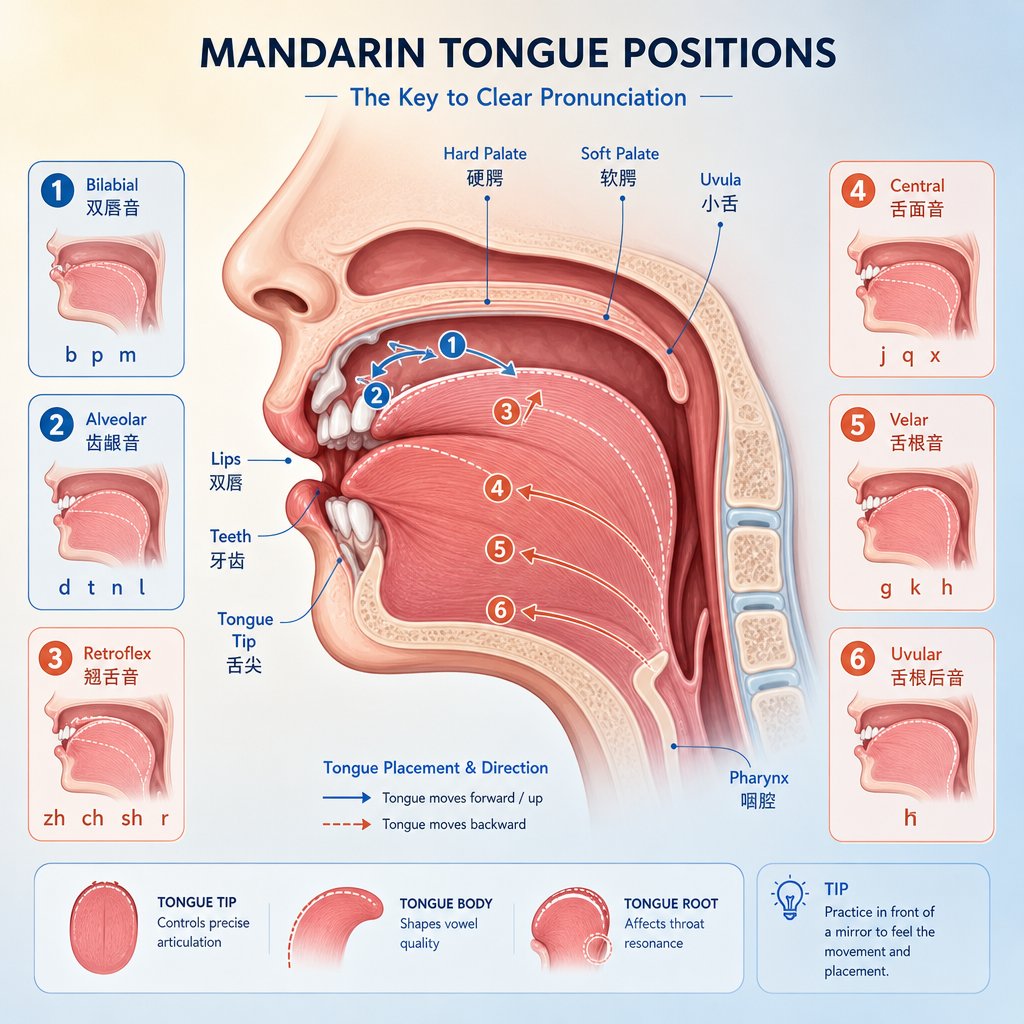
A Pronunciation Guide for Pinyin Name Sounds
Those familiar-looking letters are exactly where the trouble starts. When you see a name like "Qian" or "Xu" for the first time, your brain defaults to English pronunciation rules. The result? Something that sounds nothing like the actual name. Pinyin uses the Latin alphabet, but several letters and letter combinations map to Mandarin sounds that have no direct English equivalent. Mastering these differences is the key to pronouncing mandarin names with confidence rather than guesswork.
The good news: only a handful of initials and vowels behave in truly unexpected ways. Learn these specific sounds, and you will be able to handle the vast majority of names in mandarin you encounter.
Pinyin Initials That Trick English Speakers
Six consonant sounds cause the most confusion for English speakers reading pinyin Chinese names aloud. Each one looks deceptively familiar on paper but produces a sound your instincts will not predict.
- Q - Forget everything you know about the English "q." In pinyin, "q" sounds close to "ch" in "cheese," but with the tongue positioned further forward, near the teeth. Think of saying "cheese" with a slight hiss. Names like Qian, Qiang, and Qin all start with this sound.
- X - This is not the "ks" sound from "box" or "xylophone." Pinyin "x" is close to "sh" in "sheep," but lighter and produced with the tongue flat behind the lower teeth. Imagine whispering "she" very softly. You will hear this in names like Xu, Xia, and Xie.
- Zh - Sounds like the "j" in "judge" or the "dr" in "dream," with the tongue curled slightly back. It is a heavier, more retroflex sound than English "j." Common in names like Zhang, Zhao, and Zhu.
- Ch - Similar to English "ch" in "church," but with the tongue curled back in the same retroflex position as "zh." You will find it in names like Chen, Cheng, and Chu.
- C - This one surprises everyone. Pinyin "c" sounds like the "ts" at the end of "cats" or "boots," but placed at the beginning of a syllable. The name Cai, for example, sounds roughly like "tsai," not "kai" or "sai."
- Z - Similar to "c" but without the puff of air. It sounds like the "dz" combination, as if you started to say "kids" and isolated just the "dz" ending. The surname Zou sounds closer to "dzoh" than "zoo."
A useful pattern to notice: j, q, x form one group (tongue forward, near the teeth), while zh, ch, sh form another (tongue curled back). As one pronunciation guide puts it, a good approximation for j, q, and x is appending a "y" sound to zh, ch, and sh, because Mandarin rules mandate a "y"-like glide after these consonants most of the time.
Vowel Sounds and Finals in Common Names
Beyond the tricky initials, a few vowel sounds in mandarin characters deserve special attention. The most notorious is the u with umlaut (ü), which appears far more often than you might expect because pinyin hides it in plain sight.
When "u" follows j, q, x, or y, it is actually pronounced as "ü" even though the two dots are not written. This means the name "Xu" is not pronounced "zoo" or "soo." The correct sound is closer to saying the English letter "u" itself, or the French "tu." Purse your lips as if whistling while trying to say "ee," and you are close. The same applies to names like Yu, Qu, and Jun.
Other vowel combinations that catch people off guard:
- -ian sounds like "yen," not "ee-ann." The name Qian sounds roughly like "chyen."
- -ao sounds like "ow" in "how." The name Hao rhymes with "how."
- -iu is actually "-iou" with the middle vowel abbreviated. Liu sounds like "lyoh," not "loo."
- -ui is actually "-uei." The name Hui sounds closer to "hway" than "hooey."
- -e alone (not in a combination) sounds like the "u" in "duh" or the "e" in "the." So the surname He is not "hee" but closer to "huh."
These abbreviations are a well-documented source of confusion because pinyin omits certain vowels in writing while still expecting them in speech. Knowing they exist is half the battle.
The table below brings initials and finals together, using real name examples so you can practice reading english in mandarin Chinese contexts without needing audio files:
| Pinyin Sound | English Approximation | Example Name | Pronunciation |
|---|---|---|---|
| q | "ch" in cheese (tongue forward) | Qian | Chyen |
| x | "sh" in sheep (lighter, tongue low) | Xu | Shyoo (with pursed lips) |
| zh | "j" in judge (tongue curled back) | Zhang | Jahng |
| ch | "ch" in church (tongue curled back) | Chen | Chuhn |
| c | "ts" in cats | Cai | Tsai |
| z | "dz" in kids | Zou | Dzoh |
| j | "j" in jeep (tongue forward) | Jing | Jing |
| r | "r" blended with "zh" (like vision) | Rui | Rway |
| u (after j/q/x/y) | French "u" or say English letter "u" | Yu | Yoo with pursed lips |
| -ian | "yen" | Tian | Tyen |
| -ao | "ow" in how | Zhao | Jaow |
| -iu | "yo" in trio (actually -iou) | Liu | Lyoh |
| -ui | "way" (actually -uei) | Hui | Hway |
| -e (alone) | "u" in duh | He | Huh |
| -eng | "ung" in lung (but with schwa) | Cheng | Chuhng |
Keep this table as a quick reference whenever you encounter an unfamiliar name. You will notice that most pronunciation errors come from just a few sounds, and once those click, the rest of the system falls into place naturally.
Still, even perfect consonants and vowels tell only part of the story. The same syllable pronounced with a different pitch contour can point to an entirely different character and meaning, which is where Mandarin's tone system enters the picture.
How Tones Change Everything in Chinese Names
Imagine two colleagues both named "Li" in pinyin. On paper, the spelling is identical. In speech, though, one name rises in pitch while the other drops sharply, and each points to a completely different chinese hanzi character with its own given meaning. This is the reality of Mandarin tones: they are not optional inflection or emotional emphasis. They are part of the word itself, as fundamental as the consonants and vowels.
Mandarin has four main tones plus a neutral (unstressed) tone. Each tone changes the pitch contour of a syllable, and that shift determines which character, and which meaning, the speaker intends. When it comes to chinese name characters, tone is what separates one person's identity from another's, even when the romanized spelling looks the same.
The Four Tones and How They Shape Names
Here is a quick breakdown of how each tone works:
- First tone (high and flat): Your pitch stays steady at a high level, like holding a musical note. Marked with a flat line: ā, ō, ē.
- Second tone (rising): Your pitch climbs from middle to high, similar to the intonation of asking "What?" in English. Marked with a rising stroke: á, ó, é.
- Third tone (dipping): Your pitch falls low and then rises again, creating a scoop shape. Marked with a curved dip: ǎ, ǒ, ě.
- Fourth tone (falling): Your pitch drops sharply from high to low, like a firm command. Marked with a falling stroke: à, ò, è.
A fifth option, the neutral tone, is light and short with no specific pitch direction. It appears in some given name syllables and grammatical particles but carries no tone mark in writing.
When you consider how many chinese characters are there in total (estimates range from 50,000 to over 100,000, with around 20,000 in common use), it becomes clear why tones are essential. Mandarin has a relatively limited number of possible syllables, roughly 400 without tones. Tones multiply those options by four, helping distinguish thousands of characters that would otherwise sound identical.
Same Pinyin, Different Name, Different Meaning
The syllable "li" is a perfect case study. Depending on the tone, it maps to entirely different characters used as both surnames and given names:
| Pinyin with Tone Mark | Tone Number | Character Example | Meaning | Used As |
|---|---|---|---|---|
| lī | 1st tone | 丽 (variant reading) | beautiful | Given name |
| lí | 2nd tone | 黎 | dawn, many | Surname |
| lǐ | 3rd tone | 李 | plum tree | Surname (one of China's most common) |
| lì | 4th tone | 力 | strength, power | Given name |
| lì | 4th tone | 丽 | beautiful, elegant | Given name |
| lì | 4th tone | 立 | to stand, independent | Given name |
A person surnamed Lǐ (李) and a person surnamed Lí (黎) share the same consonant and vowel but belong to entirely different family lineages. Without tone awareness, you cannot tell them apart in writing that lacks tone marks, which is most informal pinyin you will encounter online or on business cards.
Without tones, pinyin is ambiguous. The spelling "Zhang" alone maps to at least three different surname characters: 张 (zhāng), 章 (zhāng), and 长 (zhǎng), each with a distinct meaning and family history.
This ambiguity is why the chinese for name in Mandarin, "mingzi" (名字), always implies a specific character with a specific tone. Two people can share the same pinyin spelling yet have names with completely different characters, meanings, and tonal patterns. Parents choose characters for their visual beauty, stroke balance, and the given meaning each one carries, and tone is inseparable from that choice.
The practical takeaway? When you see names and characters written in pinyin without tone marks, you are looking at an incomplete picture. The tones are still there in speech, shaping identity and meaning even when the marks are absent from the page. Recognizing this gap is what separates someone who reads pinyin from someone who truly understands it.
Tone awareness becomes especially useful when you start encountering the most frequently used surnames in China, where a small set of family names covers hundreds of millions of people, and subtle tonal differences are often the only thing distinguishing one lineage from another.
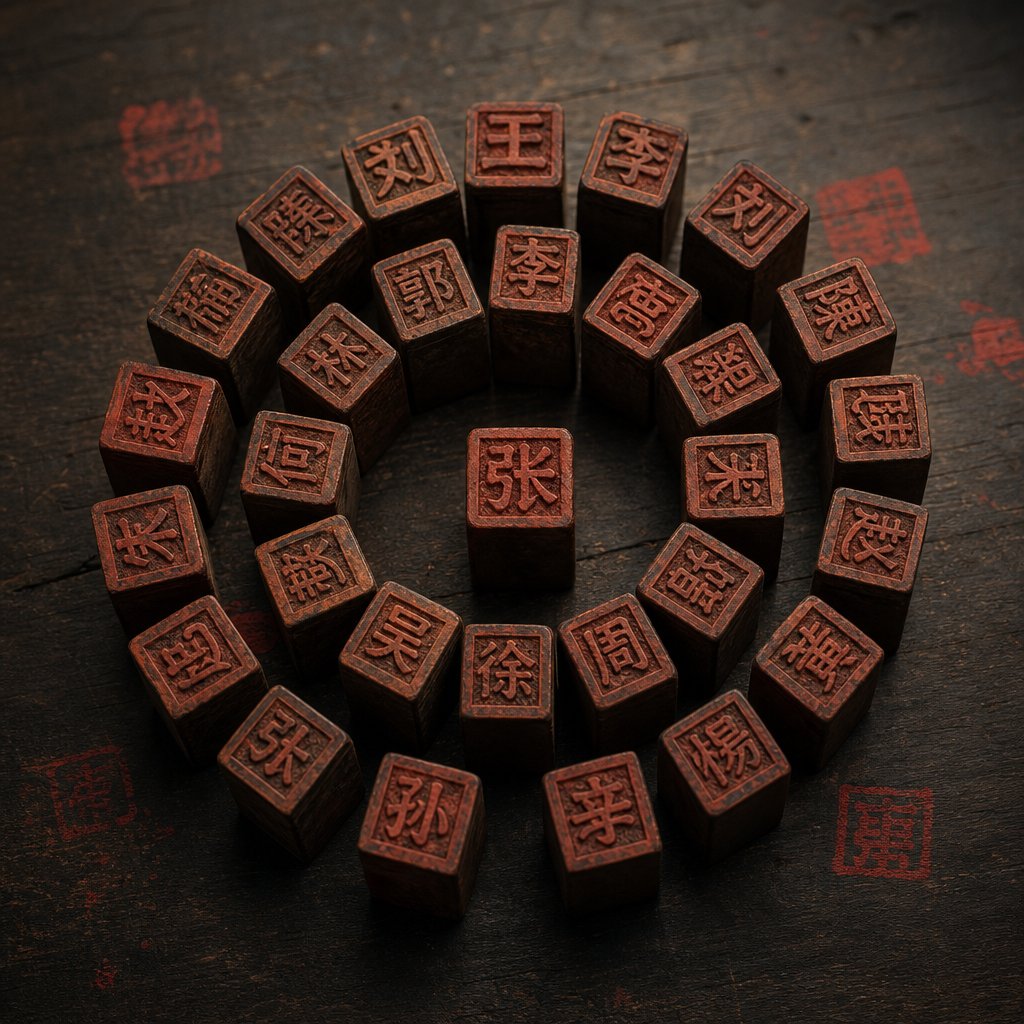
Most Common Chinese Surnames and How to Say Them
A handful of chinese family names dominate the population in a way that has no Western equivalent. While English-speaking countries spread their populations across tens of thousands of surnames, China concentrates a massive share of its 1.4 billion people under just a few hundred. The top 100 chinese last names alone account for roughly 85 percent of the country's citizens, and the top five, Wang, Li, Zhang, Liu, and Chen, each belong to more than 60 million people.
Knowing how to pronounce these common chinese last names gives you practical coverage for the vast majority of Chinese people you will meet in professional or social settings. Below is a pronunciation-focused reference for the twenty most common chinese surnames, drawn from national census and public security data.
The Top Twenty Chinese Surnames in Pinyin
This table covers the most common chinese last names ranked by population. The "English Approximation" column gives you a phonetic starting point. Remember that tones shape the exact sound, so treat these as close guides rather than perfect translations.
| Rank | Pinyin (with tone) | Character | English Approximation | Approx. Population |
|---|---|---|---|---|
| 1 | Wang (wáng) | 王 | Wahng (rhymes with "song") | 95.2 million |
| 2 | Li (lǐ) | 李 | Lee (with a dipping tone) | 93.4 million |
| 3 | Zhang (zhāng) | 张 | Jahng (tongue curled back) | 89.6 million |
| 4 | Liu (liú) | 刘 | Lyoh (rising tone) | 67.7 million |
| 5 | Chen (chén) | 陈 | Chuhn (rising tone) | 61.3 million |
| 6 | Yang (yáng) | 杨 | Yahng (rising tone) | 42.7 million |
| 7 | Huang (huáng) | 黄 | Hwahng (rising tone) | 32.6 million |
| 8 | Zhao (zhào) | 赵 | Jaow (falling tone, like "how") | 26.7 million |
| 9 | Wu (wú) | 吴 | Woo (rising tone) | 26.8 million |
| 10 | Zhou (zhōu) | 周 | Joe (high flat tone) | 25.2 million |
| 11 | Xu (xú) | 徐 | Shyoo (lips pursed, rising) | 19.3 million |
| 12 | Sun (sūn) | 孙 | Swuhn (high flat tone) | 18.3 million |
| 13 | Ma (mǎ) | 马 | Mah (dipping tone) | 17.2 million |
| 14 | Zhu (zhū) | 朱 | Joo (tongue curled back, high flat) | 17.0 million |
| 15 | Hu (hú) | 胡 | Hoo (rising tone) | 15.5 million |
| 16 | Guo (guō) | 郭 | Gwaw (high flat tone) | 15.0 million |
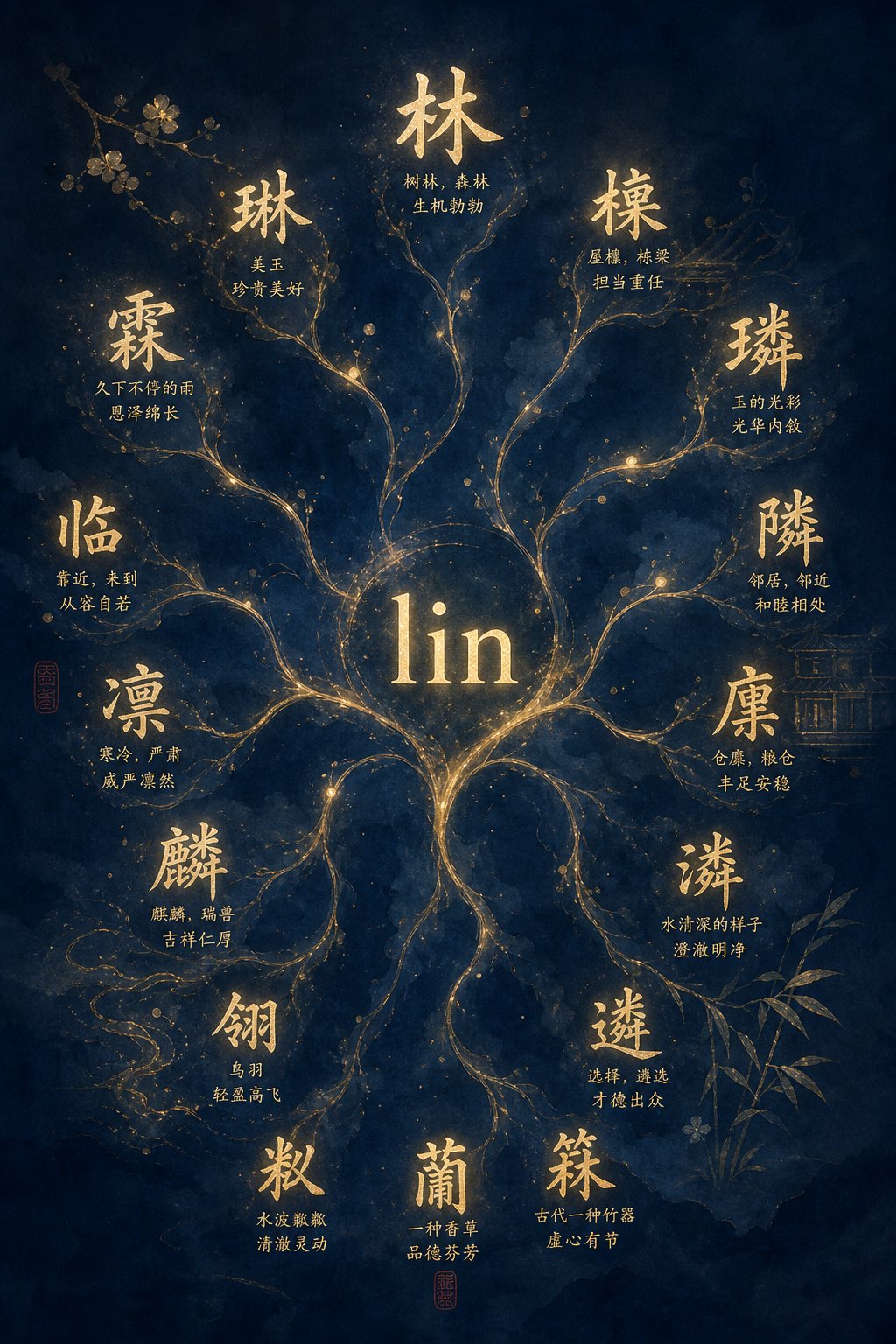
| 17 | Lin (lín) | 林 | Lin (rising tone) | 15.1 million |
| 18 | He (hé) | 何 | Huh (rising tone, not "hee") | 14.0 million |
| 19 | Gao (gāo) | 高 | Gow (high flat, rhymes with "cow") | 13.3 million |
| 20 | Luo (luó) | 罗 | Lwaw (rising tone) | 12.6 million |
Combined, these twenty chinese surnames represent over 700 million people, more than twice the population of the United States. The concentration is remarkable: just these most common surnames cover roughly half of China's entire population.
Pronouncing Each Surname Correctly
A few patterns in this list deserve extra attention. You will notice that several surnames start with the retroflex sounds covered in the pronunciation guide: Zhang, Zhao, Zhou, and Zhu all begin with "zh," which sounds like a heavier English "j" with the tongue curled back. If you can nail that single sound, you have unlocked four of the top fourteen chinese last names in one go.
The surname He trips up nearly everyone. English speakers instinctively say "hee," but the pinyin "e" alone produces a sound closer to the "u" in "duh." So He sounds like "huh" with a rising pitch, not like the English pronoun.
Xu is another common stumbling point. That "x" is the soft, forward "sh" sound, and the "u" after it is actually the pursed-lip "u" (the hidden umlaut). The result is something like "shyoo" said quickly, not "zoo" or "ksoo."
For the surnames that look straightforward, like Li, Ma, or Lin, the main thing to watch is tone. Li with a third tone (dipping pitch) is the surname 李, one of the most common chinese last names in the world. Li with a second tone (rising pitch) is 黎, a much rarer family name. The spelling is identical, but the identity is not.
These twenty names give you a solid foundation. But chinese surnames are only half the picture. The given names that follow them carry equally rich sounds and, more importantly, deliberate meanings chosen by parents to shape a child's identity and future.

Popular Chinese Given Names for Boys and Girls
Chinese given names are not arbitrary labels. Each character is handpicked for its meaning, sound, and visual balance, encoding the hopes parents hold for their child's future. Unlike English names, where meaning often fades into the background (how many Jessicas know their name means "God beholds"?), Chinese names wear their meanings on the surface. Anyone with basic character knowledge can read the aspiration built into a name.
This makes exploring common chinese names a window into cultural values. Traditional chinese female names lean toward beauty, grace, and nature. Traditional chinese male names emphasize strength, ambition, and moral character. And increasingly, modern parents are blending these categories or choosing gender-neutral characters altogether.
Popular Pinyin Names for Girls with Meanings
Chinese girl names draw heavily from the natural world, elegance, and emotional warmth. You will notice recurring themes: flowers, seasons, jade, and poetic imagery. Here are popular chinese names for girls organized by theme:
Nature and flower names:
- 花 (huā) - flower
- 梅 (méi) - plum blossom
- 莲 (lián) - lotus
- 兰 (lán) - orchid
- 春 (chūn) - spring
- 秋 (qiū) - autumn
- 燕 (yàn) - swallow (the bird)
Beauty and elegance names:
- 丽 (lì) - beautiful, elegant
- 雅 (yǎ) - graceful
- 秀 (xiù) - refined, graceful
- 芳 (fāng) - fragrance
- 静 (jìng) - calm, serene
- 敏 (mǐn) - clever, nimble
Poetic two-character names:
- 梦瑶 (mèng yáo) - dream jade
- 欣妍 (xīn yán) - joyful beauty
- 语桐 (yǔ tóng) - speaking firmiana tree
- 诗云 (shī yún) - poem cloud
- 美莲 (měi lián) - beautiful lotus
- 明珠 (míng zhū) - bright pearl
According to surveys by China's Ministry of Public Security, the most popular chinese names girl parents choose today include 一诺 (yī nuò, "one promise"), 欣怡 (xīn yí, "happy and content"), and 梓涵 (zǐ hán, "catalpa tree, mellow"). These modern picks blend poetic imagery with aspirational meaning, moving beyond the purely floral tradition.
Popular Pinyin Names for Boys with Meanings
Chinese boy names traditionally channel strength, moral virtue, and grand ambition. Where girls' names evoke beauty and nature, boys' names project power and purpose. Here are popular chinese names for boys by theme:
Strength and virtue names:
- 强 (qiáng) - strength
- 伟 (wěi) - greatness
- 刚 (gāng) - firm, strong
- 德 (dé) - virtue, morality
- 成 (chéng) - success, achievement
- 达 (dá) - attainment
Aspiration and prosperity names:
- 博 (bó) - abundant, learned
- 文 (wén) - literate, cultured
- 豪 (háo) - heroic, prosperous
- 国 (guó) - nation, country
- 明 (míng) - bright, brilliant
- 超 (chāo) - surpass, exceed
Modern two-character names:
- 浩宇 (hào yǔ) - vast universe
- 宇轩 (yǔ xuān) - universe, lofty
- 子墨 (zǐ mò) - refined ink
- 浩然 (hào rán) - boundless, righteous
- 俊杰 (jùn jié) - outstanding hero
- 博文 (bó wén) - broadly literate
The current top chinese boy names lean cosmic: 奕辰 (yì chén, "grand celestial"), 宇航 (yǔ háng, "space voyage"), and 梓豪 (zǐ háo, "catalpa heroic") all reflect a generation of parents inspired by China's space program and technological ambition.
Unisex and Modern Naming Trends
A notable shift has emerged since the 1980s. Research on Chinese naming patterns shows that popular characters for men and women are becoming more gender-neutral over time. Daughters are now expected to be "excellent" (佳, jiā) and "cultured" (文, wén), while sons increasingly carry characters associated with warmth and emotional depth rather than raw power alone.
Common gender-neutral characters include:
- 安 (ān) - peace
- 晨 (chén) - dawn
- 熙 (xī) - bright, happy
- 翔 (xiáng) - soaring
- 恒 (héng) - eternal
- 诺 (nuò) - promise
- 林 (lín) - forest
- 聪 (cōng) - clever
One stylistic distinction worth noting: single-character given names feel punchy and direct, while two-character names allow for richer layered meaning. Single-character names peaked during the one-child policy era of the 1980s, when parents no longer needed generation characters shared among siblings. Two-character names returned to dominance afterward, partly because so many people ended up sharing the same one-character names that calling one out in a crowded market would turn dozens of heads.
Whether you are browsing chinese female names or chinese male names, the underlying logic is the same: every character is a deliberate choice carrying weight, history, and aspiration. The pinyin spelling gives you the sound, but the character behind it holds the story.
Of course, once you know a name's characters and meaning, a practical question remains: how should that name actually be written in formal contexts? The answer depends on official formatting rules that govern capitalization, spacing, and the order in which pinyin names appear on documents.
Official Rules for Writing Pinyin Names
Knowing how to pronounce a name is one thing. Knowing how to write it correctly on a document, email signature, or conference badge is another challenge entirely. Chinese mandarin names follow a specific set of formatting rules that govern capitalization, spacing, and syllable grouping. These are not loose suggestions. They come from a national standard, GB/T 28039-2011, published by China's national standards body and in effect since 2012.
If you have ever been confused about whether to write "Xiao Ming," "Xiaoming," or "Xiao-Ming," these rules give you a definitive answer.
Capitalization and Spacing Standards
The core formatting rules for writing full chinese names in pinyin are surprisingly concise. Here they are in order of importance:
- Surname comes first, given name second. No comma separates them. Write Zhang Mingyu, not Mingyu Zhang (unless adapting to a Western-order context).
- Capitalize the first letter of both the surname and the given name. The rest stays lowercase: Zhang Mingyu, not zhang mingyu or Zhang MINGYU.
- Join two-syllable given names into one unit with no space, no hyphen, and no internal capital. Write Mingyu, not Ming Yu, Ming-Yu, or MingYu. This is the rule that trips people up most often.
- Use an apostrophe when a syllable boundary is ambiguous. If a given name starts with a, o, or e after another syllable, insert an apostrophe for clarity. For example, the name pinyin Xi'an separates "xi" from "an" so it is not misread as "xian."
- Double-character surnames are written together. Ouyang Xiuwen, not Ou Yang Xiuwen.
As Allset Learning's pinyin guide confirms, two-syllable given names should be written as one word, with no intercaps and not hyphenated. This keeps the given name visually distinct from the surname and prevents readers from mistaking a two-character given name for a surname-plus-given-name pair.
How Pinyin Names Appear on Passports and Business Cards
Official documents add one more layer. On Chinese passports, names in china appear in ALL CAPS with the surname printed on a separate line above the given name. Internationally, a common convention puts the surname in full capitals while the given name stays in standard case: ZHANG Mingyu. This instantly signals which part is the family name, solving the order confusion for anyone unfamiliar with Chinese naming structure.
On business cards used across borders, you will often see both formats side by side: the Chinese characters on one side and the pinyin rendering on the other. Academic publications follow a similar pattern, with many journals adopting the ALL CAPS surname style in author lists to maintain clarity across a chinese name list that might include Western, Korean, and Japanese names alongside Chinese ones.
The practical takeaway? When writing china names in pinyin, join the given name syllables, capitalize only the initials, and use the ALL CAPS surname trick whenever the audience might not know which name is which. These small formatting choices eliminate ambiguity before it starts.
Formatting rules, however, only apply cleanly when everyone uses the same romanization system. Step outside mainland China, and the same character can appear spelled in surprisingly different ways depending on the region, the dialect, and the era in which the name was first romanized.
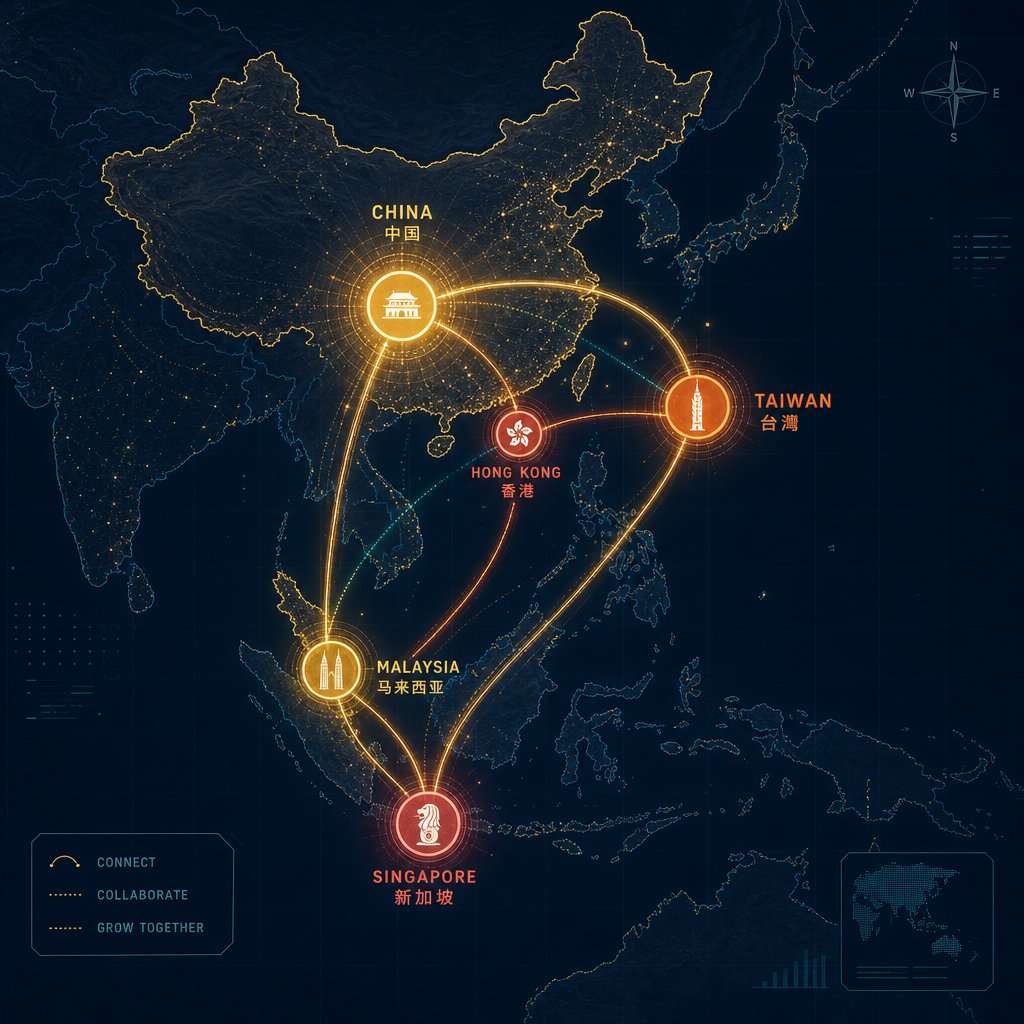
Why the Same Name Looks Different Across Regions
You have learned the formatting rules for standard Hanyu Pinyin, but here is the catch: not everyone uses Hanyu Pinyin. A person surnamed 陈 might spell it Chen, Ch'en, Tan, or Chan depending on where their family registered the name. Same character, same lineage, completely different English spelling. If you have ever been confused by the variety of asian last names that seem to overlap or contradict each other, regional romanization systems are the reason.
Mainland China and Standard Hanyu Pinyin
Since 1958, the People's Republic of China has used Hanyu Pinyin as its sole official romanization system. Every passport, street sign, and international document from mainland China renders names using this standard. If you see a name spelled with letters like q, x, or zh, you are almost certainly looking at han mandarin romanized through Hanyu Pinyin. The system is consistent and government-enforced, which makes mainland Chinese names the most predictable to read once you know the rules.
Taiwan and Hong Kong Romanization Differences
Taiwan's situation is far less uniform. For decades, the island used Wade-Giles romanization, a 19th-century British system that looks quite different from pinyin. As the Library of Congress pinyin conversion guide explains, Wade-Giles uses apostrophes to mark aspiration and hyphens between given-name syllables, features that Hanyu Pinyin avoids entirely. A name like Mao Zedong in pinyin becomes Mao Tse-tung in Wade-Giles. Taiwan later introduced Tongyong Pinyin and eventually adopted Hanyu Pinyin for some official uses, but many Taiwanese people retain older spellings on their passports by personal choice. This is why taiwanese mandarin names can appear in multiple romanization styles even within the same family.
People sometimes ask, is Taiwanese a language? Linguistically, "Taiwanese" usually refers to Taiwanese Hokkien (a Southern Min dialect), which is distinct from Mandarin. But most official names in Taiwan are romanized from Mandarin pronunciation regardless of which language the family speaks at home, adding another layer of complexity to how asian names and surnames appear in English.
Hong Kong follows yet another path. Because Cantonese, not Mandarin, is the dominant spoken language there, names are romanized based on Cantonese pronunciation using a local system with no official standard. The surname 陈 is pronounced "chan" in Cantonese, so it appears as Chan on Hong Kong identity documents rather than the Mandarin-based Chen.
Diaspora Naming Conventions in Southeast Asia
Across Singapore, Malaysia, Indonesia, and the Philippines, asia surnames among Chinese communities reflect the dialect their ancestors spoke when they emigrated, often Hokkien, Teochew, Cantonese, or Hakka. The character 陈 becomes Tan in Hokkien and Teochew, Chan in Cantonese, and Chin in Hakka. These spellings were fixed during colonial-era registration and have persisted for generations, even as younger family members may now speak Mandarin fluently.
The table below shows how a single surname character maps to different romanizations depending on region and dialect:
| Region | System Used | Example Surname (陈) | Pinyin Equivalent |
|---|---|---|---|
| Mainland China | Hanyu Pinyin | Chen | Chén |
| Taiwan (older documents) | Wade-Giles | Ch'en | Chén |
| Hong Kong | Cantonese romanization | Chan | Chén |
| Singapore / Malaysia (Hokkien) | Dialect-based | Tan | Chén |
| Singapore / Malaysia (Teochew) | Dialect-based | Tan | Chén |
| Singapore / Malaysia (Hakka) | Dialect-based | Chin | Chén |
The same pattern applies to other common asian surnames. The character 林 appears as Lin in pinyin, Lim in Hokkien and Teochew, and Lam in Cantonese. The character 黄 becomes Huang in pinyin, Ng or Ooi in Hokkien, Ng in Teochew, and Wong in Cantonese. Once you recognize that these are dialect pronunciations of the same character rather than different names entirely, the apparent chaos of asian names and surnames starts to make sense.
The practical lesson? When you encounter an unfamiliar romanization, consider the person's regional background before assuming it follows Hanyu Pinyin rules. A "Tan" from Singapore and a "Chen" from Beijing may share the exact same surname character, the same family origin, and the same written identity in Chinese. Only the romanization differs, shaped by which dialect and which era produced the English spelling.
Regional variation explains why a name looks different on paper. But even within standard Hanyu Pinyin, plenty of people still stumble over the pronunciation itself, making the same predictable errors over and over again.
Common Mistakes When Reading Pinyin Names Aloud
You know the rules now. You have seen the tables, learned the tricky initials, and understand that pinyin is not English. Yet in the moment, when a name like Qiu or Xue appears on a slide at a conference, old instincts kick in. The same handful of errors show up again and again, regardless of how well-intentioned the speaker is. If you have ever wondered what are some chinese names that people consistently mangle, the answer is almost any name containing q, x, c, zh, or the hidden u-umlaut.
The good news? These mistakes are predictable, which means they are fixable. The table below captures the most common errors English speakers make with basic chinese names and offers a quick correction for each one.
The Most Common Pinyin Pronunciation Errors
| Common Mistake | What People Say | Correct Pronunciation | Tip to Remember |
|---|---|---|---|
| Reading "q" as English "kw" | "Kwing" for Qing | "Ching" (like cheese without the ee) | Q = ch in cheese, always |
| Reading "x" as "ks" | "Ksoo" for Xu | "Shyoo" (soft sh, pursed lips) | X = a whispered "sh" |
| Reading "zh" as plain "z" | "Zang" for Zhang | "Jahng" (like judge + ahng) | Zh = j with tongue curled back |
| Reading "c" as English "k" or "s" | "Kai" for Cai | "Tsai" (like the end of cats) | C = ts, every time |
| Reading "z" as English "z" | "Zoo" for Zou | "Dzoh" (like the end of kids) | Z = dz, not a buzzy z |
| Ignoring tones entirely | Flat "lee" for both Lǐ and Lí | Dipping pitch for Lǐ, rising for Lí | Different tone = different person |
| Stressing the wrong syllable | "MING-yu" with heavy first stress | Even stress across both syllables | Mandarin syllables carry equal weight |
| Splitting joined given names | "Xiao... Li" with a pause | "Xiaoli" as one smooth unit | Two-syllable given names flow together |
Notice a pattern? Most errors come from applying English letter values to pinyin letters. Your brain sees a "q" and reaches for "queen." It sees "x" and thinks "fox." Overriding these reflexes takes conscious effort the first few times, but once you have corrected the mapping, it sticks. As one CMU pronunciation guide puts it, pinyin has fixed rules with no exceptions for these initials, so once you learn them, they apply every single time.
Quick Fixes for Getting Names Right
If you are scanning a list of chinese name examples and feeling overwhelmed, focus on just three substitutions that cover the majority of errors: Q becomes "ch," X becomes "sh," and Zh becomes "j." These three fixes alone will dramatically improve how you handle generic chinese names and chinese popular names you encounter in daily life.
A few more practical pointers for common names in chinese contexts:
- Give each syllable roughly equal time. Mandarin does not have the strong-weak stress patterns of English.
- Keep syllable boundaries clean. Say "Tian-an" not "Tia-nan." Each character maps to one syllable, and boundaries between characters are clearly reflected in speech.
- When you see sample chinese names with two-syllable given names, glide through them without pausing in the middle.
And here is the most important advice of all: when you are unsure, ask. Many Chinese people working in international settings have already developed an adapted pronunciation they accept from non-native speakers. Some go by an English name entirely. Others prefer the full tonal version. A simple "How do you like your name pronounced?" shows respect without requiring you to be a Mandarin expert. The effort matters more than perfection, and most people will happily guide you toward something close enough.
Frequently Asked Questions About Pinyin Chinese Names
1. How do you read a Chinese name written in pinyin?
Read the first syllable as the surname (family name) and the remaining one or two syllables as the given name. Remember that pinyin letters do not follow English pronunciation rules. Key differences include: Q sounds like 'ch' in cheese, X sounds like a soft 'sh,' and Zh sounds like 'j' in judge. Two-syllable given names are read as one flowing unit without a pause between them. Tone marks, when present, indicate pitch changes that distinguish different characters sharing the same spelling.
2. Why do Chinese names have the surname first?
Chinese naming conventions place the family name before the given name to reflect a cultural emphasis on collective identity and family lineage over individual identity. This ordering appears in all official Chinese documents, news reports, and formal introductions. When Chinese names are used in international contexts, the surname is sometimes written in all capitals (e.g., WANG Mingyu) to help non-Chinese readers identify which part is the family name without confusion.
3. What is the difference between pinyin and Wade-Giles for Chinese names?
Hanyu Pinyin is the official romanization system used in mainland China since 1958, while Wade-Giles is an older British system still seen in some Taiwanese names and historical texts. They represent the same Mandarin sounds using different spelling conventions. For example, 'Zhang' in pinyin becomes 'Chang' in Wade-Giles, and 'Mao Zedong' becomes 'Mao Tse-tung.' Wade-Giles uses apostrophes to mark aspiration and hyphens between given-name syllables, features pinyin avoids entirely.
4. What are the most common Chinese surnames in pinyin?
The five most common Chinese surnames are Wang (王), Li (李), Zhang (张), Liu (刘), and Chen (陈), each belonging to over 60 million people. The top twenty surnames collectively cover more than 700 million people, roughly half of China's population. Other frequently encountered surnames include Yang, Huang, Zhao, Wu, Zhou, Xu, Sun, Ma, Zhu, Hu, Guo, Lin, He, Gao, and Luo. These names appear consistently in professional, academic, and social settings worldwide.
5. Do tones really matter when saying a Chinese name?
Yes, tones are essential to Chinese name identity. Mandarin has four tones plus a neutral tone, and the same pinyin syllable pronounced with different tones points to entirely different characters and meanings. For example, Lǐ (third tone) is the surname 李 meaning plum tree, while Lí (second tone) is the surname 黎 meaning dawn. Without correct tones, a single spelling like 'Zhang' could refer to three different surname characters. While non-native speakers are not expected to produce perfect tones, awareness of their importance shows cultural respect.