What Is Pinyin Name Character Matching and Why It Matters
Imagine you're reviewing a visa application and the passport reads "Li Wei." Sounds straightforward, right? But which Li? Which Wei? In Mandarin Chinese, those two simple syllables could correspond to dozens of different character combinations, each carrying a completely different identity. This is the core problem behind pinyin name character matching, and getting it wrong can stall legal cases, delay immigration paperwork, or fracture genealogy records.
What Pinyin Name Character Matching Means
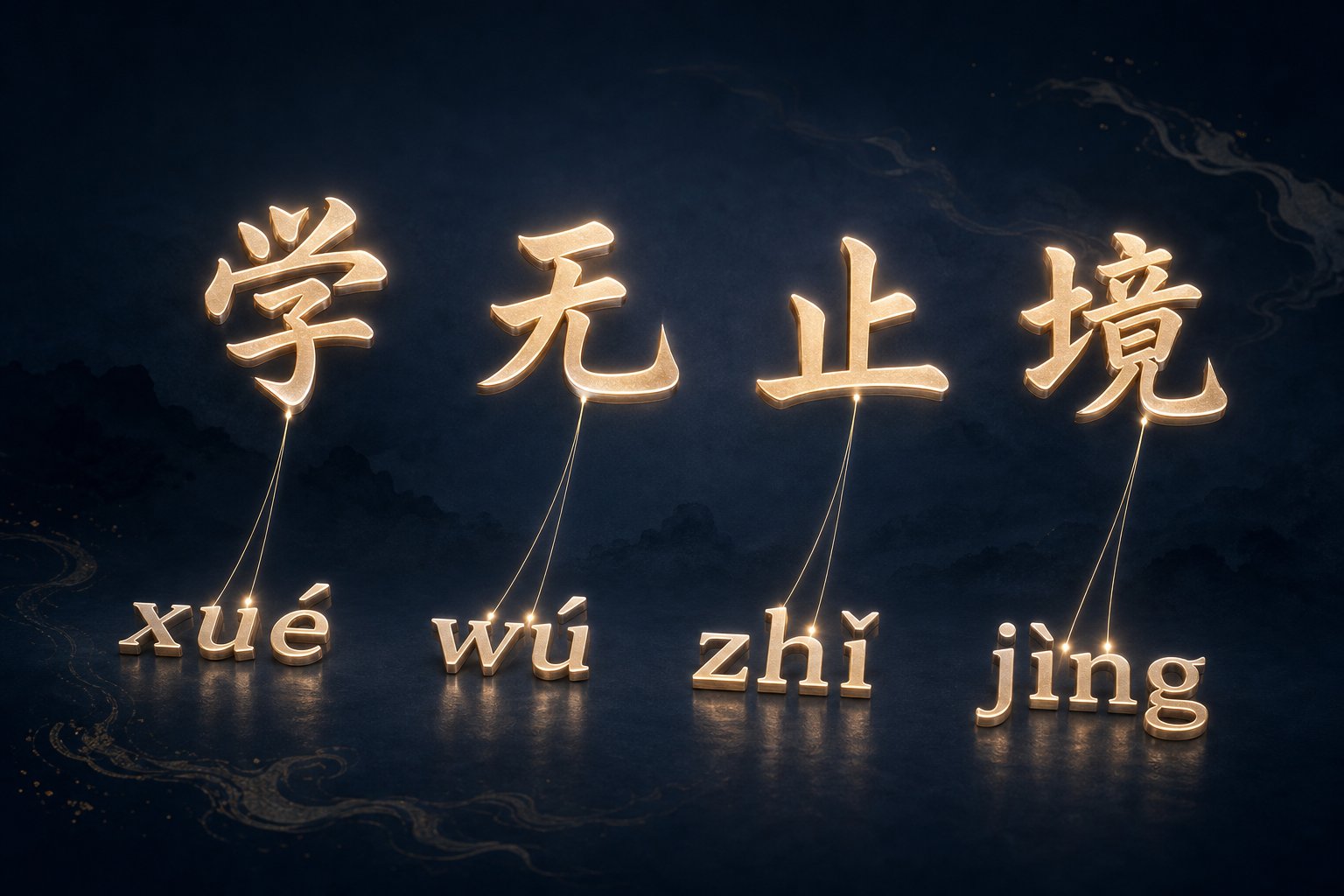
Pinyin name character matching is the process of identifying the correct Chinese characters (hanzi) that correspond to a romanized pinyin spelling of a person's name. Pinyin itself is a phonetic system, designed to represent how Mandarin Chinese sounds using the Latin alphabet. It was never built to provide a one-to-one link back to specific characters. As linguist Victor Mair noted in a Language Log discussion, there are simply too many homophones among the tens of thousands of Chinese characters for any automatic, one-to-one conversion between pinyin and hanzi to be reliable.
Pinyin name character matching is the systematic process of determining which specific Chinese characters (hanzi) a romanized pinyin name represents, using tonal, contextual, and cultural signals to resolve phonetic ambiguity.
When someone asks "what is my name in Chinese?" they're often looking at this exact challenge from the opposite direction. Converting a name in Chinese characters to pinyin is relatively simple. Going from pinyin back to characters is where the real complexity lives.
Why Phonetic Ambiguity Makes Matching Complex
Mandarin has a limited sound inventory. A single pinyin syllable can map to dozens or even hundreds of distinct characters. Take the syllable "li" as an example. Depending on tone and context, it could represent:
- 力 (li) meaning strength
- 丽 (li) meaning beauty
- 李 (li) meaning plum, and one of the most common Chinese surnames
- 礼 (li) meaning ritual or propriety
- 理 (li) meaning reason or logic
Each of these characters carries vastly different connotations for Chinese names. A person named 李伟 and a person named 力伟 share the same pinyin spelling but have entirely different identities. The pinyin system was designed to represent sound, not meaning. It consists of initials (consonants), finals (vowels), and four tones plus a neutral tone. Even when tones are marked, ambiguity persists because multiple characters share the same toned syllable.
This is why converting pinyin to Chinese characters for a name requires more than a dictionary lookup. You'll notice that context, cultural conventions, and naming patterns all play a role. The framework ahead gives you a repeatable, step-by-step method for resolving these ambiguities rather than guessing, whether you're verifying a legal document or researching Chinese names in a family archive.
How Pinyin Structure Guides Character Selection
Phonetic ambiguity is the problem. Pinyin's internal structure is the first tool for solving it. Every Mandarin syllable breaks into three components, and each one narrows the pool of possible characters. When you translate a name to Mandarin characters, understanding these building blocks turns a guessing game into a systematic search.
Initials, Finals, and Tones in Name Context
Think of a pinyin syllable as a formula: Initial + Final + Tone = Complete Syllable. The initial is the consonant onset, the final is the vowel core (sometimes with a nasal ending), and the tone is the pitch contour that distinguishes meaning. Standard Mandarin has 23 initials and about 24 finals, which combine into roughly 400 unique syllables. Add four tones plus a neutral tone, and you get around 1,300 toned syllables total.
For name matching, each layer acts as a filter. Consider the surname syllable "zhang":
- The initial zh (a retroflex consonant) immediately eliminates all characters starting with other initials.
- The final ang (a back nasal) further restricts candidates to characters pronounced with that specific vowel-nasal combination.
- Adding tone 1 (flat, high pitch) narrows the field to characters like 张 (a surname meaning "to stretch" or "to open"), 章 (chapter or seal), and 彰 (manifest).
Without tone information, "zhang" could match first-tone 张, third-tone 掌 (palm), or fourth-tone 丈 (measure word). You'll notice that tone alone can be the difference between a correct identity match and a completely wrong person. This is why anyone trying to figure out how to write your name in Mandarin characters needs tonal data, not just the consonant-vowel skeleton.
How Tone Marks vs Tone Numbers Affect Searchability
Pinyin tones appear in two notation styles. Diacritical marks place a symbol directly above the vowel (zhāng, lǐ, wèi). Numeric notation appends a number after the syllable (zhang1, li3, wei4). Both encode the same phonetic information, but they behave very differently in digital systems.
Diacritical marks are visually intuitive and standard in textbooks, but many databases, passport systems, and search tools strip them out. Numeric notation survives plain-text environments and is easier to process programmatically, making it more reliable as input for any phonetic pronunciation generator or character lookup tool. When you're trying to find my name in Mandarin characters from a romanized source, the notation format determines whether your search tool can actually use the tone data or silently ignores it.
| Name | Tone Marks | Tone Numbers | Character Match |
|---|---|---|---|
| Zhang Wei | Zhāng Wěi | Zhang1 Wei3 | 张伟 |
| Zhang Wei | Zhāng Wèi | Zhang1 Wei4 | 张蔚 |
| Li Na | Lǐ Nà | Li3 Na4 | 李娜 |
| Li Na | Lí Nà | Li2 Na4 | 黎纳 |
| Wang Jing | Wáng Jìng | Wang2 Jing4 | 王静 |
| Wang Jing | Wáng Jīng | Wang2 Jing1 | 王京 |
The table makes the stakes clear. "Zhang Wei" without tone data could be 张伟 or 张蔚, two entirely different people. "Wang Jing" splits into 王静 (quiet) or 王京 (capital), depending on whether the given name carries tone 4 or tone 1. Passport romanizations almost never include tones, which is exactly why pinyin name character matching demands additional context beyond the raw spelling. The question becomes: where does that context come from? The answer lies in understanding how many characters compete for the same toned syllable, and what signals help you choose among them.
Why One Pinyin Syllable Maps to Many Characters
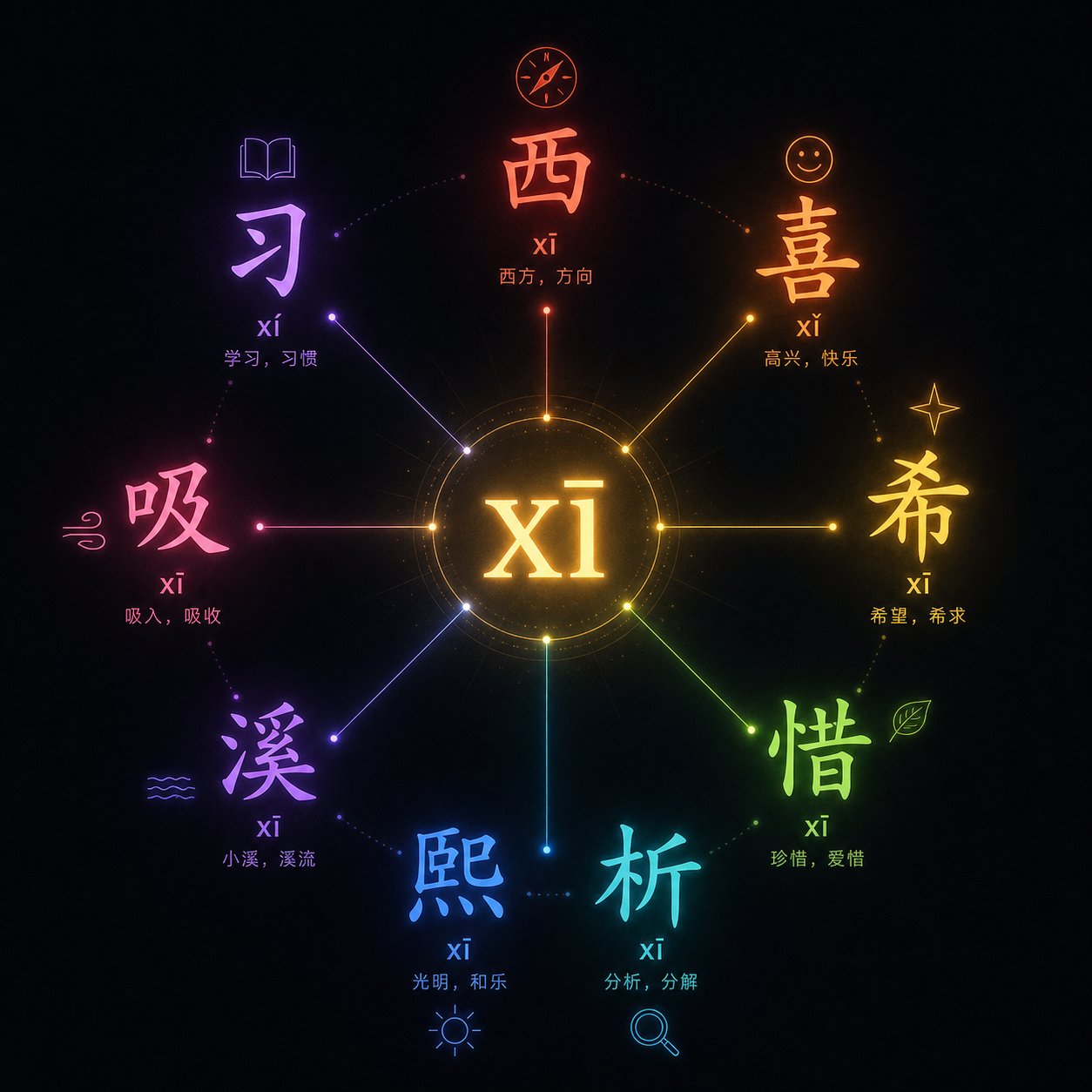
The tone narrows the field, but it rarely settles the question. Mandarin's roughly 1,300 toned syllables must cover over 20,000 commonly used characters. That ratio, roughly 15 characters per toned syllable on average, is the mathematical root of the matching problem. For popular syllables used in names, the ratio climbs much higher. A 2026 study on Chinese author name disambiguation found that a single Pinyin name like "Wang Wei" can map to distinct individuals named 王伟, 王威, or 王维, each a completely different person with a different chinese name meaning.
The Homophone Problem in Chinese Names
Imagine you encounter the given name syllable "yi" with a fourth tone (yi4) on a document. Even with the tone confirmed, you're still looking at a crowded field of candidates. Each character carries a vastly different connotation for a name:
- 义 (yi4) - righteousness, justice. A name evoking moral integrity.
- 艺 (yi4) - art, skill. Suggests creativity and talent.
- 意 (yi4) - meaning, intention. Implies thoughtfulness and depth.
- 益 (yi4) - benefit, increase. Conveys prosperity and growth.
- 毅 (yi4) - perseverance, resolve. Projects strength of character.
- 奕 (yi4) - grand, radiant. One of the most popular characters for newborn names in 2020, ranking 11th overall.
Six characters, one toned syllable, six entirely different identities. And this list is far from exhaustive. The names in chinese and meanings they carry are not interchangeable. A person named 张艺 (Zhang Yi, "art") and a person named 张毅 (Zhang Yi, "perseverance") share identical romanized spellings but have no overlap in identity or intent.
This homophone density is not a quirk of a few syllables. As Khanji School explains, because Chinese has few syllables but thousands of characters, homophones are extremely common, and context becomes essential for determining which character is being referenced. In name matching, you rarely have sentence-level context to rely on. You have a romanized string and, if you're lucky, a tone number.
Narrowing Candidates Through Meaning and Context
So how do you choose among a dozen valid characters sharing the same pronunciation? The answer is a layered decision framework that uses multiple disambiguation signals simultaneously. No single signal is definitive on its own, but stacking them together progressively eliminates unlikely candidates.
Here are the primary signals that help resolve homophonic ambiguity in name matching:
- Tone - The first and most powerful filter. If tone data is available, it immediately eliminates all characters with non-matching tones. A yi2 cannot be 义 (yi4).
- Radical category - Chinese characters contain semantic components called radicals. A character with the jade radical (玉) like 瑜 or 琪 signals the jade name meaning tradition, where parents choose gem-related characters to wish preciousness upon a child. Knowing the radical narrows the semantic field.
- Stroke count - Some families consult numerology (风水) when naming children, selecting characters with specific stroke counts believed to bring fortune. This cultural practice creates statistical patterns in name character selection.
- Semantic field - Characters cluster into thematic groups commonly used in names: nature, virtue, beauty, strength, prosperity. Gender associations further narrow the pool. Characters like 婷 (graceful) or 娜 (elegant) skew heavily female, while 刚 (firm) or 勇 (brave) skew male.
- Cultural usage frequency - Not all characters appear in names with equal likelihood. The chinese name definition of a "common" given-name character is one that appears frequently in census data. Characters like 伟 (great), 静 (quiet), and 涵 (encompassing) dominate naming statistics across decades, making them statistically more probable matches than obscure homophones.
Consider a practical example. You encounter the name "Yu" (yu4, fourth tone) in a female name context. The character 玉 (jade) becomes a strong candidate because it sits at the intersection of multiple signals: correct tone, the jade radical, a name in chinese meaning associated with preciousness and femininity, and high cultural usage frequency in women's names. A character like 遇 (encounter), while sharing the same pronunciation, almost never appears in given names.
This layered approach transforms the matching process from random guessing into informed probability. You're not picking from a flat list of homophones. You're weighting each candidate against cultural, structural, and statistical evidence. The challenge intensifies, though, when you realize that surnames and given names play by entirely different rules in terms of how constrained the character pool actually is.
Surname vs Given Name Pinyin Matching Differences
Chinese surnames and given names occupy completely different statistical universes. A surname like "wang" draws from a tiny, well-documented pool of characters. A given name like "wei" floats in an ocean of thousands. Recognizing which part of a romanized name you're dealing with changes the entire matching strategy.
Surname Matching and the Limited Character Pool
The Hundred Family Surnames (百家姓), a classic text from the Song Dynasty, cataloged the most common chinese family names over a thousand years ago. The tradition still holds. China has only about 400 different family names in active use, and the top 100 chinese surnames cover approximately 85% of the population. The most common chinese last names, Wang (王), Li (李), and Zhang (张), are shared by more than 270 million people in mainland China alone.
For pinyin name character matching, this constraint is a gift. When you see the pinyin "wang" in the surname position, you're not searching through thousands of candidates. You're choosing from a handful of known characters, with 王 (king) being overwhelmingly the most probable match. The same applies to "zhang," which almost always maps to 张 (bow-maker) rather than the rarer surname 章 (chapter).
| Pinyin | Character | Meaning | Frequency Rank |
|---|---|---|---|
| wang | 王 | King | 1 |
| li | 李 | Plum | 2 |
| zhang | 张 | Bow-maker | 3 |
| liu | 刘 | Kill (archaic) | 4 |
| chen | 陈 | Ancient | 5 |
| yang | 杨 | Poplar | 6 |
| huang | 黄 | Yellow | 7 |
| zhao | 赵 | Beyond | 8 |
| wu | 吴 | Wu state | 9 |
| zhou | 周 | Cycle | 10 |
The meaning of chinese last names often traces back to ancient kingdoms, occupations, or natural features. Wang literally means "king," Li means "plum tree" and connects to the Tang Dynasty, and Zhang derives from the character for "bow," referencing the legendary inventor of the bow and arrow. These historical roots make each chinese surname highly stable across centuries. A "chen" in a surname slot today maps to the same 陈 it did a thousand years ago.
This predictability extends across asian last names more broadly. In diaspora communities from Singapore to New Zealand, the spelling of a family name often signals regional origin. A person surnamed "Wong" likely has Cantonese heritage, while "Ong" points to Hokkien roots, even though both represent the same character 王.
Given Name Matching Across Thousands of Characters
Given names follow no such constraints. Parents can draw from virtually any character in the language when naming a child. Where the most common chinese last names number in the hundreds, given-name characters number in the tens of thousands. A pinyin syllable like "jing" in a given name could be 静 (quiet), 晶 (crystal), 京 (capital), 景 (scenery), 敬 (respect), or dozens more.
This is where context beyond phonetics becomes essential. Several cultural signals help narrow the field:
- Generational characters - In traditional families, males of the same generation share the first character of their given names. These generation names are predetermined, sometimes written into family poems generations in advance. If you know the generational character, half the given name is already solved.
- Gender associations - Characters like 婷 (graceful), 美 (beautiful), and 娜 (elegant) appear almost exclusively in female names. Characters like 刚 (firm), 勇 (brave), and 伟 (great) skew heavily male. Knowing the person's gender eliminates large swaths of candidates.
- Auspicious meanings - Chinese parents commonly choose names expressing hopes for their children: 康 (healthy), 智 (wise), 乐 (happy). Names reflecting negative or unlucky connotations are actively avoided, which means certain homophones almost never appear in given names regardless of how common the character is in other contexts.
- Era-specific naming trends - Names like 建国 (Jianguo, "establish the nation") cluster in the 1950s and 1960s. Names using characters like 奕 (radiant) or 梓 (catalpa tree) surge in recent decades. The person's approximate birth year can shift probability toward certain characters.
Family naming traditions add another layer. Some parents deliberately choose given-name characters whose meaning complements the surname. A family named 刘 (Liu, "willow") might name a child 青 (Qing, "green"), creating 刘青, "green willow." This semantic pairing between surname and given name is a well-documented convention in Chinese naming culture.
The practical takeaway is clear: surname matching is a lookup problem with a short, known list. Given name matching is an inference problem requiring cultural, temporal, and contextual evidence. Any reliable workflow for pinyin name character matching must treat these two halves of a name as fundamentally different tasks. But even within the surname pool, complications arise when the romanization on a document doesn't follow standard Mandarin pinyin at all, pointing instead to a completely different romanization system.
How Different Romanization Systems Affect Matching
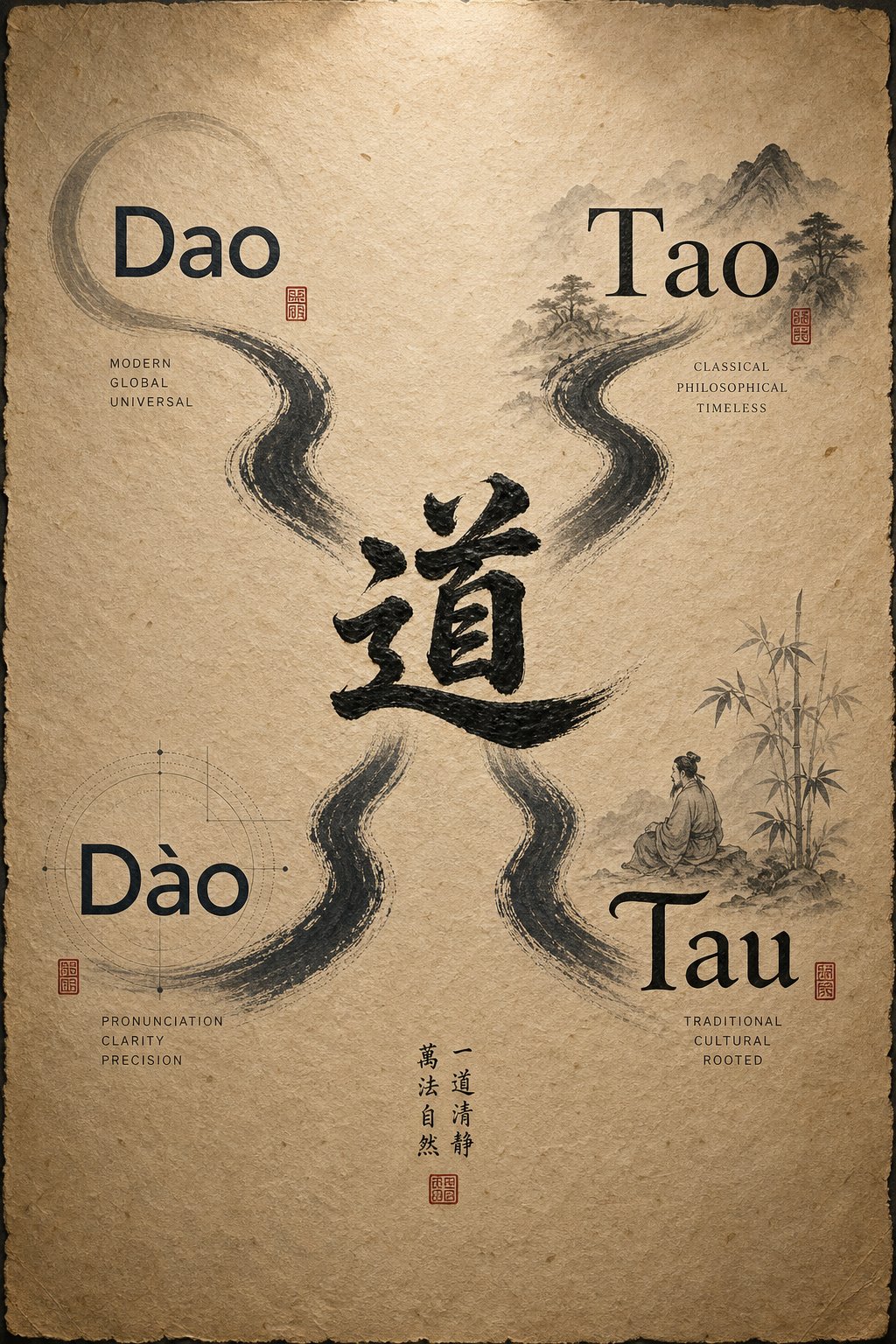
A romanized Chinese name on a passport, academic transcript, or immigration form doesn't always follow the same spelling rules. Multiple romanization systems have been used across different eras, regions, and institutions, and each one renders the same Chinese characters into completely different Latin-letter strings. If you assume every romanized name uses Hanyu Pinyin, you'll hit dead ends fast. Understanding romanization meaning in this context is straightforward: it's the method used to represent Chinese sounds with the Latin alphabet. The problem is that at least five major methods exist, and they disagree on how to spell the same name.
Here's what that divergence looks like in practice. The name 张伟 (a male name meaning "great expanse") appears differently depending on which system produced the romanization:
| Character | Hanyu Pinyin | Wade-Giles | Tongyong Pinyin | Yale | Jyutping (Cantonese) |
|---|---|---|---|---|---|
| 张伟 | Zhang Wei | Chang Wei | Jhang Wei | Jang Wei | Zoeng1 Wai5 |
| 陈静 | Chen Jing | Ch'en Ching | Chen Jing | Chen Jing | Can4 Zing6 |
| 许志明 | Xu Zhiming | Hsu Chih-ming | Syu Jhihming | Syu Jr-ming | Heoi2 Zi3ming4 |
| 周学文 | Zhou Xuewen | Chou Hsueh-wen | Jhou Syuewen | Jou Sywe-wen | Zau1 Hok6man4 |
Look at the surname 张 alone. It appears as "Zhang," "Chang," "Jhang," "Jang," or "Zoeng" depending on the system and dialect. A database search for "Zhang" will never return records filed under "Chang" unless the system accounts for cross-romanization equivalence. This is where matching failures happen in real-world document processing.
Hanyu Pinyin vs Wade-Giles in Name Records
Hanyu Pinyin became the international standard for romanizing Mandarin Chinese in 1979 when the People's Republic of China adopted it officially. Before that, and still in many older records, Wade-Giles dominated academic and diplomatic contexts. Taiwan used Wade-Giles on passports for decades before gradually shifting toward other systems. The result is a massive archive of names spelled in Wade-Giles that must be matched against modern Pinyin-based records.
The Library of Congress Pinyin Conversion Project documents the key visual differences between these two systems. Wade-Giles uses apostrophes (technically ayns) to mark aspiration, hyphens to separate syllables in given names, and letter combinations like "hs" and "ts" that never appear in Pinyin. Pinyin uses letters like B, D, G, Q, X, and Z at the start of syllables, which Wade-Giles never does.
Consider these practical examples from the Library of Congress documentation:
- Wang T'ieh-jen (Wade-Giles) becomes Wang Tieren (Pinyin) - same person, 王铁人
- Mao Tse-tung (Wade-Giles) becomes Mao Zedong (Pinyin) - same person, 毛泽东
- Tzu-hsi (Wade-Giles) becomes Cixi (Pinyin) - same person, 慈禧
You'll notice the spelling differences are dramatic. "Tzu-hsi" and "Cixi" share zero visual similarity, yet they represent the same two characters. If you're trying to convert to Mandarin characters from a romanized name and you don't first identify which system was used, you'll feed the wrong input into your lookup tools and get garbage results.
The spacing conventions compound the problem. Wade-Giles separates given-name syllables with a hyphen (Chih-ming), while Pinyin joins them (Zhiming). A system parsing "Chih-ming" as two separate name elements might misidentify the name structure entirely. Taiwan's passport system historically used a modified Wade-Giles, and many Taiwanese citizens still carry passports with spellings like "Hsu" (Pinyin: Xu) or "Tsai" (Pinyin: Cai). Taiwanese Mandarin pronunciation is essentially the same as mainland Mandarin for naming purposes, but the romanization on official documents tells a different story.
Cantonese and Dialect Romanizations
The challenge deepens when a name wasn't romanized from Mandarin at all. Hong Kong, Macau, and many overseas Chinese communities romanize names from Cantonese, Hokkien, Teochew, or other regional languages. These aren't just different spelling systems for the same sounds. They represent entirely different pronunciations of the same characters.
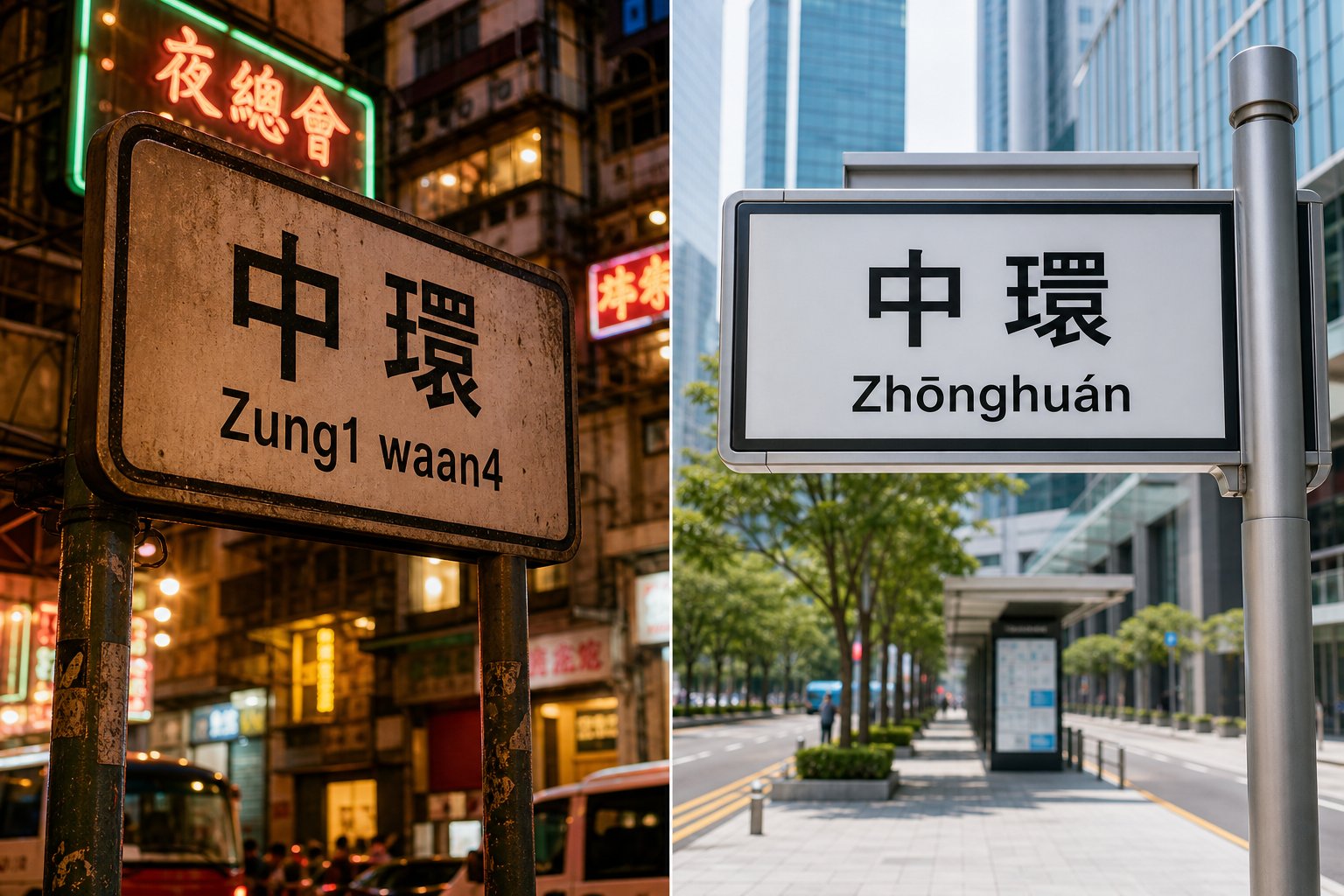
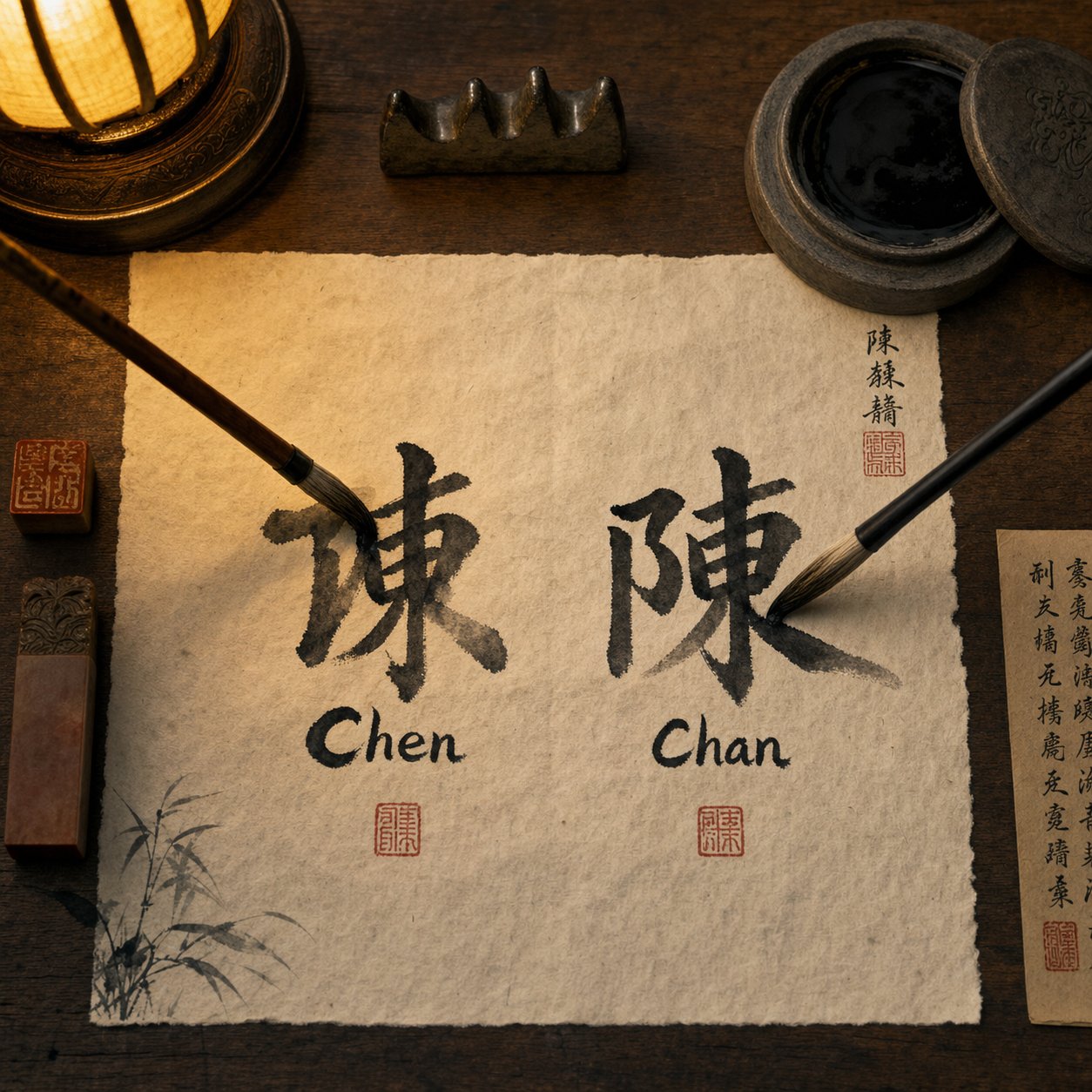
The character 陈 (a common surname) is pronounced "Chen" in Mandarin but "Chan" in Cantonese, "Tan" in Hokkien, and "Ting" in some Teochew dialects. Standard Mandarin pinyin tables are useless here. You cannot look up "Chan" in a Pinyin dictionary and find 陈 because the Pinyin entry for that character is "Chen." Matching dialect-romanized names requires dialect-specific lookup systems or cross-dialect conversion tables.
Cantonese romanization itself has multiple competing standards. Jyutping (developed by the Linguistic Society of Hong Kong) is the most systematic, but Hong Kong government romanization follows its own conventions, and many residents use informal spellings passed down through families. A person surnamed 黄 might appear as "Wong" (Hong Kong government style), "Huang" (Mandarin Pinyin), or "Ng" (another Cantonese reading of a different character that sounds similar). Anyone using a cantonese name generator or lookup tool needs to specify which Cantonese romanization standard applies.
Hokkien adds another layer. As Language Log documents, Taiwanese Hokkien has its own official romanization system called Tai-lo (Taiwan Romanization), derived from the older Pe̍h-oe-ji (Church Romanization) developed by missionaries in the 19th century. These systems use conventions like "ts" and "tsh" that look nothing like Mandarin Pinyin. A Hokkien-romanized name like "Tan Ah-kiat" maps to characters 陈亚杰, which in Mandarin Pinyin would be "Chen Yajie." The gap between these two spellings is so wide that no automated system will bridge it without explicit dialect identification.
The question of whether Taiwanese is a language separate from Mandarin or a dialect remains politically charged, but for name matching purposes the practical reality is clear: Hokkien-romanized names require Hokkien-specific tools, and Cantonese-romanized names require Cantonese-specific tools. Mandarin Pinyin tables simply cannot resolve them.
This romanization fragmentation creates a critical first step in any matching workflow: before you attempt to identify characters, you must identify the romanization system. A name spelled "Hsu" signals Wade-Giles. A name spelled "Xu" signals Pinyin. A name spelled "Hui" could be either system, requiring additional context. And a name spelled "Heoi" signals Cantonese Jyutping, pointing you toward an entirely different phonetic universe. The character set you search within, simplified or traditional, adds yet another variable to the equation.
Simplified vs Traditional Characters in Name Matching
Identifying the romanization system gets you to the right phonetic universe. But even after you've confirmed a name is in standard Mandarin Pinyin, a second fork in the road appears: which character set are you matching against? Simplified and traditional Chinese hanzi don't map one-to-one, and the same pinyin input can produce different matching results depending on which set you search within.
Merged Characters and Split Meanings
When the People's Republic of China introduced simplified characters in the 1950s, the reform didn't just reduce stroke counts. It merged some traditional characters into a single simplified form, collapsing distinct meanings into one written shape. For pinyin name character matching, this creates a specific problem: a simplified character that looks like one entity may actually represent two or more traditional characters with completely different connotations.
The classic example is the syllable "fa." In simplified Chinese, the character 发 does double duty. It represents both:
- 髮 (fa4) - hair. A name containing this character might reference beauty or vitality.
- 發 (fa1) - to emit, to develop, to prosper. A name using this character suggests growth and success.
In simplified text, both collapse into 发. If you encounter a name written as 发 in a mainland Chinese document and need to convert it to traditional characters for a Taiwanese record, you face an immediate ambiguity. Is this person's name about hair or prosperity? The pinyin alone won't tell you, because the two traditional characters even carry different tones. As UC San Diego's analysis of simplified characters explains, there is not a one-to-one correspondence between simplified and traditional characters, and any conversion process is destined to make mistakes if it does not account for context.
This isn't an isolated case. Several mergers affect names directly:
- 后 (simplified) represents both 後 (hou4, "behind/after") and 后 (hou4, "empress/queen"). Two different surnames collapsed into one character.
- 松 (simplified) represents both 松 (song1, "pine tree") and 鬆 (song1, "loose/relaxed"). A name evoking steadfastness (pine) versus ease (loose) becomes indistinguishable.
- 谷 (simplified) represents both 谷 (gu3, "valley") and 榖 (gu3, "grain"). Both appear as surnames, but they trace to different ancestral lineages.
Imagine trying to translate a name into symbols on a legal document and encountering 后 as a surname. In simplified Chinese, it's one character. In traditional Chinese, it could be 後 or 后, and these historically represent two different family names from two different ancient descent lines. Getting this wrong doesn't just produce a typo. It assigns someone to the wrong family.
The reverse problem also exists. When converting traditional characters to simplified for a mainland database, distinct names in chinese letters may collapse into identical entries. Two people with different traditional-character names could end up with the same simplified spelling, creating false duplicates in identity systems.
Regional Context as a Matching Signal
Knowing where a name originates tells you which character set to search within, and that single piece of information eliminates entire categories of ambiguity. A person from Taipei uses traditional characters. A person from Shanghai uses simplified. A person from Hong Kong uses traditional but with local conventions that differ slightly from Taiwan's. Each region has its own chinese word symbols and orthographic standards that shape how a name appears in official records.
Here are the key regional conventions that affect matching decisions:
- Mainland China - Simplified characters are standard on all official documents (ID cards, household registration, passports). Names registered after 1956 use the simplified set exclusively. Match against the GB (Guobiao) standard character list.
- Taiwan - Traditional characters remain the sole official standard. Passports, national ID cards, and all government records use traditional forms. Taiwan also maintains its own Standard Form of National Characters, which occasionally differs from Hong Kong's traditional forms in minor stroke details.
- Hong Kong and Macau - Traditional characters are standard, but local conventions include some character variants not used in Taiwan. Names romanized from Cantonese add a phonetic layer on top of the character-set question.
- Singapore and Malaysia - Simplified characters are official, following mainland China's standard. However, older records from pre-simplification eras use traditional characters, and many families retain traditional forms for their chinese name in chinese on ancestral documents.
- Overseas Chinese communities - Character usage depends on the era of emigration and community of origin. Communities established before the 1950s typically use traditional characters. More recent immigrants from mainland China use simplified. A single Chinatown may contain both systems on adjacent shop signs.
The practical implication is direct. When you receive a romanized name and need to match it to characters, ask first: where was this name registered? A "Huang Fa" from Shenzhen almost certainly uses simplified 发. A "Huang Fa" from Taipei uses traditional characters, and you need to determine whether it's 髮 or 發. The regional signal doesn't resolve every ambiguity, but it immediately halves the search space by telling you which character set contains the answer.
This regional dimension also explains why cross-border identity verification is so error-prone. A person born in Taiwan with the traditional name 黃發財 emigrates to the United States, where their name is romanized as "Huang Facai." Years later, a mainland Chinese database tries to match this romanization against simplified records and produces 黄发财. The characters look different, but they represent the same person. Without understanding that simplified and traditional forms are involved, a system might flag this as a mismatch or, worse, create a duplicate identity.
Character set identification feeds directly into the broader matching workflow. Once you know the romanization system (from the previous step) and the character set (from regional context), you've established the two foundational parameters that every subsequent matching decision depends on. The next question is where these parameters matter most: the real-world scenarios where a wrong match carries legal, financial, or personal consequences.
Real-World Applications Where Matching Is Critical
Romanization systems and character sets are technical variables. But the stakes of getting them wrong are anything but abstract. Pinyin name character matching surfaces in high-consequence scenarios where a single misidentified character can delay a visa, block a bank transfer, or sever a genealogical connection. These aren't edge cases. They're everyday realities for immigration attorneys, HR departments processing international hires, and families piecing together ancestral records.
Immigration and Legal Document Verification
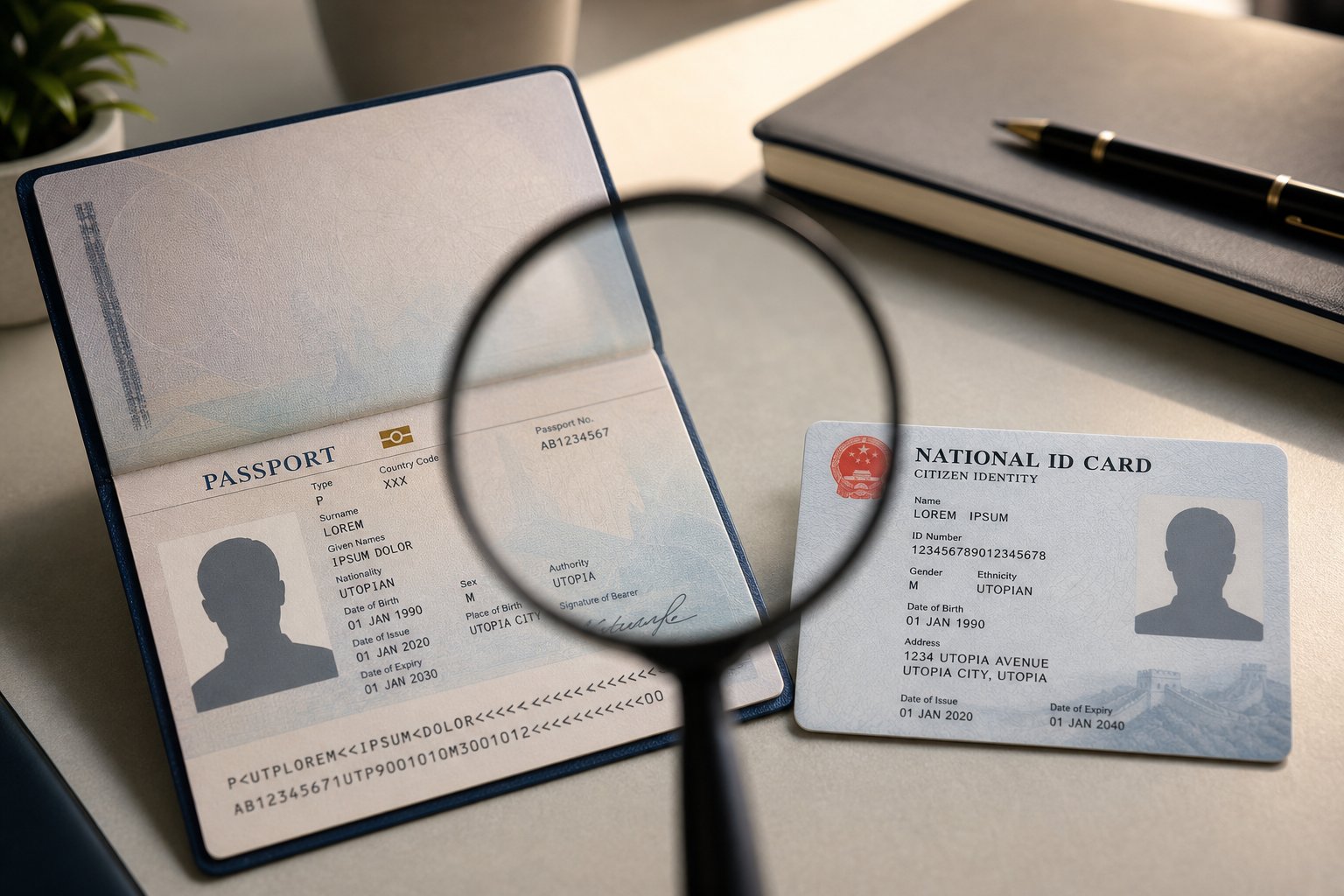
Visa and immigration cases present a bidirectional matching problem. In one direction, an officer needs to verify that the romanized name on a passport corresponds to the correct characters on a Chinese national ID card or household registration (hukou). In the other direction, a chinese name translation to english must be confirmed as an accurate rendering of the original characters. Both directions carry risk.
Consider a work permit application where the passport reads "Chen Jing" but the supporting Chinese documents show 陈晶. Is that correct? Or should it be 陈静 or 陈京? Each is a valid reading of "Chen Jing," but only one matches the actual person. As TropicalHainan documents, China's administrative systems have no unified automated bridge between departments to ensure a single version of a name is used consistently. Each system records the name independently, and errors introduced during manual data entry persist indefinitely because nothing cross-checks one record against another.
The consequences are tangible. A name mismatch between a bank record and a current passport can block salary payments, prevent mobile payment linkages, and cause overseas transfers to be rejected. A discrepancy on a work permit now propagates automatically to social security records. ASAP Translate reports that name discrepancies across translated documents are one of the most common causes of USCIS Requests for Evidence, processing delays, and outright rejections. The burden falls on the applicant to explain and resolve every inconsistency.
English to chinese name conversion errors compound the problem in cross-border contexts. When a foreign name is rendered into Chinese characters for a work permit or residence registration, the chosen characters become part of the person's official Chinese identity. If a different set of characters is selected during a later registration, the two records won't match, even though both are legitimate attempts at names translated to chinese phonetics.
Genealogy and Historical Record Research
Researchers working with 19th and early 20th century records face a different flavor of the same problem. Before Hanyu Pinyin existed, names were romanized using Wade-Giles, postal romanization, or informal phonetic spellings by clerks who may not have known any standardized system at all.
The New Jersey State Library's research guide on 19th century Chinese immigrants illustrates this vividly. A man known as "Sing Lee" in Trenton, New Jersey, was also recorded as "Eng Wing Fou," "Eng Wing Foon," and "Wing Fow" across different documents. His death certificate could only be located by searching all deaths on the known date rather than by name. The guide notes that "it would be unwise to assume every 19th century record transcriber understood or even knew of" any standardized system. Names were often written phonetically as heard, with dialect differences further distorting the spellings.
For anyone trying to find an english name to chinese name connection in historical records, or attempting a chinese name translation back to original characters, the workflow requires patience and multiple lookup strategies. A chinese translator to english working with archival materials must account for the possibility that the romanized form follows no recognizable system at all.
Here is the typical verification workflow used in document processing contexts, whether for immigration cases or genealogical research:
- Collect all available romanized forms - Gather every spelling variant of the name from all documents, noting the source, date, and issuing authority for each.
- Identify the romanization system - Determine whether each variant follows Pinyin, Wade-Giles, Cantonese romanization, or an informal phonetic rendering.
- Normalize to a single system - Convert all variants into Hanyu Pinyin (or the appropriate dialect romanization) to establish a common phonetic baseline.
- Separate surname from given name - Use the constrained surname pool to match the family name first, since it has the highest probability of a correct match with minimal context.
- Apply contextual filters to the given name - Use gender, era, regional origin, and any available character-set information to narrow given-name candidates.
- Cross-reference against primary identity documents - Compare the proposed character match against the highest-authority document available (national ID, hukou, or original birth record).
- Document the reasoning - Record which signals led to the final match, creating an audit trail for legal or administrative review.
This workflow applies whether you're verifying a visa applicant's identity, reconciling a corporate HR record, or reconstructing a family tree from century-old immigration manifests. The common thread is that no single document or romanized spelling is sufficient on its own. Reliable matching requires triangulation across multiple sources, systems, and contextual signals. The question that remains is how to execute each of these steps efficiently, with the right tools and in the right sequence.
A Practical Workflow for Matching Pinyin to Characters
You've seen the variables: romanization systems, character sets, tonal ambiguity, and the vast gap between surname and given-name matching. Individually, each concept makes sense. But when you're sitting in front of an actual document with a romanized name that needs character verification, you need a repeatable process, not a collection of theories. This section pulls everything together into a single workflow you can follow from start to finish.
Step-by-Step Pinyin to Character Matching Process
Always match the surname first. The constrained pool of roughly 500 common Chinese family names makes surname identification far more reliable than given-name matching, and a confirmed surname provides contextual anchoring for the harder given-name step that follows.
Here's the complete sequence, from raw romanized input to verified character output:
- Identify the romanization system - Look for telltale markers. Apostrophes and hyphens suggest Wade-Giles. Letters like Q, X, or Zh at syllable onsets confirm Hanyu Pinyin. Spellings like "Heoi" or "Zoeng" point to Cantonese Jyutping. If the system is unclear, check the document's country of origin and era of issuance.
- Normalize the spelling - Convert the romanized name into standard Hanyu Pinyin (or the appropriate dialect system). "Hsu" becomes "Xu." "Chang" becomes "Zhang." This step creates a consistent phonetic baseline for all subsequent lookups.
- Determine tones if available - Check for diacritical marks, numeric tone indicators, or any supplementary documentation that specifies tones. Even partial tone data (knowing just the surname tone) dramatically reduces candidates.
- Separate surname from given name - Chinese names place the surname first. Most surnames are one syllable, though a small set (like Ouyang or Sima) use two. Use the known surname pool as your reference. A reliable name matching system always begins with this structural separation.
- Match the surname against the known pool - Cross-reference the surname pinyin against the top 400-500 family names. In most cases, a single dominant character emerges. "Wang" maps to 王 with near certainty. "Li" maps to 李 in the vast majority of cases.
- Gather contextual signals for the given name - Collect every available clue: gender, approximate birth year, regional origin, simplified vs traditional context, and any meaning-related information from the person or their documents.
- Generate given-name character candidates - Use the toned pinyin syllable(s) plus your contextual signals to produce a ranked list of probable characters. Weight candidates by naming frequency, gender association, era-specific popularity, and semantic fit.
- Cross-verify against primary documents - Compare your proposed match against the highest-authority source available, whether that's a national ID card, birth certificate, or household registration. If no primary document exists, flag the match as provisional and note the confidence level.
This workflow applies whether you're processing a single visa application or running batch verification across hundreds of records. The sequence matters. Skipping straight to given-name matching without first confirming the surname wastes effort and introduces compounding errors.
Tools and Resources for Accurate Matching
No single tool handles every step of this process. Effective matching combines multiple resource types, each covering a different layer of the problem:
| Resource Type | What It Does | Best For |
|---|---|---|
| Pinyin dictionaries | Map toned syllables to all possible characters | Generating initial candidate lists |
| Surname databases | List all known Chinese family names with characters and frequency data | Step 5: surname confirmation |
| Name frequency tables | Show which characters appear most often in given names by decade and gender | Ranking given-name candidates by probability |
| Cross-romanization converters | Translate between Wade-Giles, Pinyin, Jyutping, and other systems | Step 2: normalization |
| Character databases (Unihan) | Provide radical, stroke count, and reading data for every CJK character | Disambiguation using structural features |
A chinese name converter that only handles Pinyin-to-character lookup covers just one step. A more complete mandarin name translator integrates romanization detection, surname separation, and contextual ranking into a unified pipeline. When evaluating any english to chinese name converter or chinese name translator tool, check whether it accounts for tone input, regional character sets, and multiple romanization systems. Tools that ignore these variables produce unreliable results.
For researchers and legal professionals who need to generate plausible character candidates from limited information, a chinese name generator with characters can help explore the possibility space. These tools let you input a pinyin syllable and browse all characters that match, filtered by usage frequency in names. Think of a chinese character name generator not as a definitive answer machine but as a structured brainstorming tool that surfaces candidates you might otherwise overlook.
The most reliable approach combines automated tools with human judgment. Run the romanized name through a mandarin name generator or lookup database to produce candidates, then apply your contextual knowledge (gender, era, region, family conventions) to rank them. Automated systems excel at exhaustive candidate generation. Humans excel at contextual disambiguation. The workflow above leverages both strengths in sequence.
Even with a solid process and good tools, certain cases resist clean resolution. Some names genuinely have multiple valid character interpretations with no available context to break the tie. Knowing where the process breaks down, and what to do when it does, is just as important as knowing the steps themselves.

Common Pitfalls and Edge Cases in Name Matching
A solid workflow handles the majority of cases. But some names fight back. They sit in gray zones where the process stalls, where multiple valid answers compete, or where a hidden assumption sends you down the wrong path entirely. Recognizing these failure points before you hit them saves hours of backtracking and prevents costly errors on legal documents.
Common Matching Errors and How to Avoid Them
Most matching failures trace back to a small set of recurring mistakes. You'll notice the same patterns whether someone is trying to find a chinese name on a visa application or verify identity records across borders. Here are the pitfalls that trip people up most often:
- Ignoring tones entirely - Treating "ma" as a single lookup when it could be 妈 (ma1, mother), 麻 (ma2, hemp), 马 (ma3, horse), or 骂 (ma4, scold). Without tone data, you're searching a candidate pool four to five times larger than necessary. Always check whether tone information exists anywhere in the source documents before defaulting to a toneless search.
- Assuming Mandarin when the name is Cantonese or Hokkien - A name spelled "Chan" isn't a misspelling of "Chen." It's the Cantonese pronunciation of 陈. Feeding dialect romanizations into Mandarin Pinyin lookup tools produces zero results or, worse, incorrect matches. Check the document's issuing region before choosing your reference system.
- Confusing simplified and traditional forms - Searching for 发 in a traditional-character database won't return results because the entry is filed under 髮 or 發. As Wikipedia's documentation of simplification ambiguities shows, merged characters like 后 (which collapses 后 and 後) create false matches when you don't account for the character set in use.
- Overlooking variant spellings in older documents - Pre-standardization records used ad hoc romanizations. "Soong" might be Wade-Giles for 宋, or it might be an informal phonetic rendering by a clerk who spoke no Chinese. Treating every historical spelling as if it follows a known system leads to dead ends.
- Applying given-name logic to surnames - Searching the full character universe for a surname wastes time. The surname pool is small and well-documented. If "huang" appears in the surname position, it's 黄 in virtually every case. Don't overthink it.
- Ignoring gender and era signals - A name from the 1950s with the syllable "hong" is far more likely to be 红 (red, reflecting revolutionary-era naming) than 虹 (rainbow). Stripping away contextual clues and treating every homophone as equally probable produces unreliable rankings.
Each of these errors compounds. Assume Mandarin on a Cantonese name, then ignore tones, then search the wrong character set, and you've stacked three mistakes that make a correct match nearly impossible.
Handling Ambiguous Cases With No Clear Match
Sometimes you do everything right and still end up with multiple valid candidates. The pinyin is confirmed, the tone is known, the surname is locked, but the given name has three or four equally plausible character interpretations. What then?
This is where probability-based reasoning replaces certainty. If you're wondering what would my chinese name be in characters based solely on a romanized spelling, the honest answer is often "it depends." But "it depends" isn't useful on a legal form. Here's how to handle genuine ambiguity:
- Default to frequency - When no other signal exists, choose the character that appears most often in Chinese names for that toned syllable. Census data and naming databases provide these statistics. A "wei3" in a male given name is more likely 伟 (great) than 玮 (precious jade) simply because 伟 appears in millions more names.
- Consult a native speaker - Ideally someone from the same region and generation as the name holder. Native speakers carry intuitive knowledge about naming conventions that no database fully captures. They can often identify the "obvious" character that a foreigner would miss.
- Cross-reference naming patterns - If you know siblings' names, parents' names, or generational naming conventions in the family, use those as constraints. A family where all sons share the character 建 (establish) in their given names immediately narrows the search for any brother's name.
- Flag and document uncertainty - In legal and immigration contexts, it's better to present ranked candidates with confidence levels than to assert a single answer you can't verify. Note which signals support each candidate and let the adjudicator or the name holder confirm.
For anyone asking how to find my chinese name from a romanized source, the core lesson is this: certainty requires context. Phonetics alone rarely produce a single definitive answer. The workflow described throughout this article maximizes your probability of a correct match, but intellectual honesty about remaining ambiguity is itself a professional skill. A provisional match clearly labeled as such is far more useful than a confident wrong answer on a document that follows someone for life.
Knowing how to find your chinese name in characters, or how to get a chinese name verified across systems, ultimately comes down to layering every available signal: tone, region, era, gender, family patterns, and character frequency. When all signals align, the match is clear. When they conflict or are absent, the disciplined response is to narrow the field as far as evidence allows, then stop and seek additional confirmation rather than guessing.
Frequently Asked Questions About Pinyin Name Character Matching
1. How do you match a pinyin name to the correct Chinese characters?
Start by identifying the romanization system used on the document, then normalize the spelling to standard Hanyu Pinyin. Separate the surname from the given name and match the surname first against the known pool of roughly 500 common Chinese family names. For the given name, gather contextual signals like gender, birth era, regional origin, and tone data, then generate ranked character candidates using frequency tables and naming databases. Cross-verify your proposed match against the highest-authority identity document available.
2. Why does one pinyin syllable correspond to so many different Chinese characters?
Mandarin has only about 400 unique syllables, which expand to roughly 1,300 when tones are included. However, the language uses over 20,000 commonly written characters. This means each toned syllable must serve an average of 15 or more characters. For popular name syllables like 'yi' or 'jing,' the ratio is even higher, with dozens of characters sharing identical pronunciation but carrying completely different meanings, radicals, and cultural connotations.
3. What is the difference between matching a Chinese surname and a given name in pinyin?
Surname matching draws from a small, well-documented pool of about 400-500 family names that cover over 99% of the Chinese population. This makes it a straightforward lookup task with high confidence. Given name matching, by contrast, can involve virtually any character in the language. Parents choose from tens of thousands of possibilities based on meaning, sound, gender associations, generational traditions, and cultural trends, making given-name resolution an inference problem that requires layered contextual evidence.
4. How do different romanization systems cause name matching errors?
Systems like Hanyu Pinyin, Wade-Giles, Tongyong Pinyin, and Cantonese Jyutping render the same Chinese characters into completely different Latin-letter spellings. For example, the surname 张 appears as 'Zhang' in Pinyin but 'Chang' in Wade-Giles and 'Zoeng' in Jyutping. If you search a database using one system's spelling while the record was filed under another, you get zero results. Identifying the romanization system before attempting character lookup is essential to avoid these cross-system failures.
5. What should you do when multiple Chinese characters are equally valid matches for a pinyin name?
When genuine ambiguity remains after applying all available signals, default to character frequency data from census records and naming databases, choosing the character that statistically appears most often in names for that toned syllable. Consulting a native speaker from the same region and generation can surface intuitive knowledge no database captures. Cross-referencing family naming patterns, such as siblings' shared generational characters, provides additional constraints. In legal contexts, present ranked candidates with confidence levels rather than asserting an unverifiable single answer.