What a Pinyin Name Really Means for Foreigners
When you type "what is my Asian name" or "my Chinese name" into a search bar, you probably expect a simple conversion tool. Type in "Michael," get back something in Chinese characters. Done. But here's the thing: that expectation is built on a misunderstanding of what pinyin actually is and how Chinese names work.
What Pinyin Actually Is and Why It Matters
Pinyin is not a naming system. It is the official romanization system for Standard Mandarin Chinese, designed to represent the pronunciation of Chinese characters using the Latin alphabet. Every Chinese character has a pinyin spelling, but pinyin itself is just a phonetic guide. It does not carry meaning on its own.
Pinyin is the romanization of Chinese characters, not a standalone naming convention. Your "pinyin name" is really a Chinese name, written in characters, with pinyin serving as its pronunciation key.
This distinction matters because when you set out to get a Chinese name, you are not simply transliterating letters. You are selecting Chinese characters, each carrying its own meaning, tone, and cultural weight. Pinyin just tells people how to say those characters out loud.
Why Foreigners Need a Chinese Name
If you are living, working, or studying in China, a proper Chinese name makes daily life smoother. Native speakers can remember and pronounce it easily. It appears cleanly on business cards, social media profiles, and official paperwork. It also signals cultural awareness, something colleagues and friends genuinely appreciate.
Without one, you risk being assigned a clunky phonetic transliteration by a busy official or an overloaded teacher, one that might sound like nonsense syllables strung together with no coherent meaning.
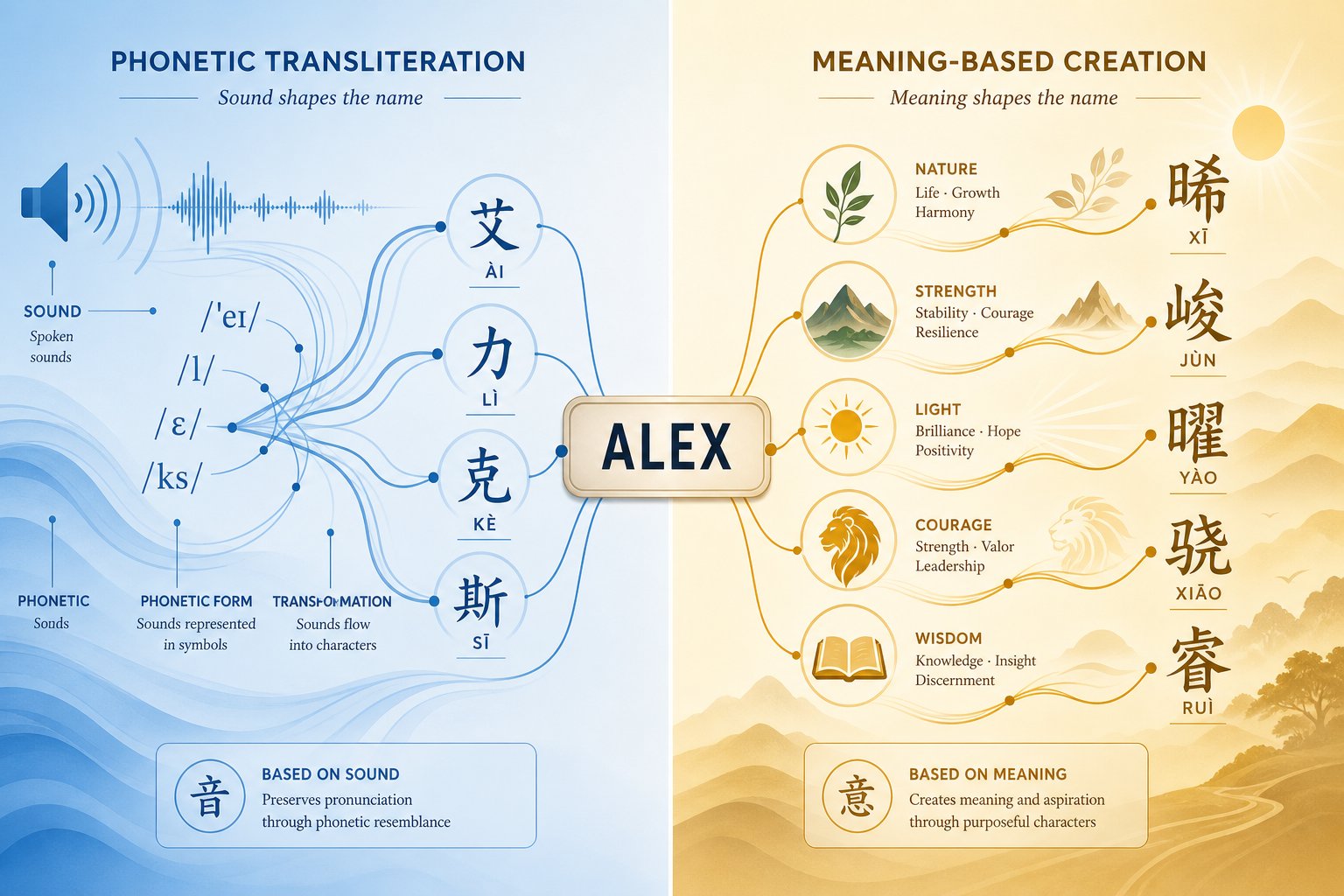
There are two main paths to creating a name that actually works: phonetic transliteration, which matches the sound of your original name using Chinese characters, and meaning-based creation, which selects characters for their significance regardless of how your birth name sounds. Each approach fits different situations, and understanding both gives you the flexibility to choose wisely.
Chinese Naming Conventions Every Foreigner Should Know
Before you pick characters or map sounds, you need to understand the structural rules that govern how Chinese names work. A name that ignores these conventions will immediately sound off to native ears, no matter how beautiful the individual characters might be.
Surname First and Character Count Norms
In English, you introduce yourself as "given name, family name." In Chinese, the order flips. The surname always comes first. So if your family name is Wang and your given name is Xiaoming, you are Wang Xiaoming, never the reverse.
Most Chinese names are either two or three characters total: one character for the surname and one or two for the given name. The overwhelming majority of Chinese people's names use single-character surnames. In fact, the top 100 one-syllable surnames cover roughly 85 percent of China's population. Four-character names exist but are rare and would sound unusual for a foreigner to adopt.
Here are the core chinese name structure rules you should follow:
- Surname comes first, given name follows
- Total length is two or three characters (one surname + one or two given-name characters)
- Single-character surnames are the standard; compound surnames like Ouyang or Zhuge are uncommon
- Each character is one syllable, so a three-character name is exactly three syllables
How Chinese Naming Conventions Differ from Western Ones
Naming in chinese culture involves layers of consideration that most Western parents never think about. Chinese families often select characters based on meaning, choosing words like Kang (healthy), Yong (brave), or Mei (beautiful) to express hopes for the child. Some families follow generational naming patterns, where all males of the same generation share one character in their given name, predetermined by family records or a poem written generations earlier.
Stroke count also plays a role. Some parents consult numerology charts to ensure the total strokes across all characters produce a "lucky" number. As a foreigner, you do not need to follow stroke-count superstitions or generational naming poems. But you should absolutely pay attention to character meaning and how the full name sounds when spoken aloud.
Gendered Characters and Tonal Considerations
Chinese characters carry gendered associations. Female names frequently include the radical 女 (woman), characters related to beauty or flowers like 莉 (jasmine), or repeated characters such as in the celebrity name Fan Bingbing. Male names lean toward characters conveying strength, often featuring the radicals 木 (tree) or 钅 (metal). Picking a character with the wrong gendered connotation is one of the fastest ways to get an awkward reaction.
Tones add another dimension. Mandarin has four main tones, and the same pinyin spelling can mean completely different things depending on which tone you use. The name "Mei" in the third tone means beautiful, but in the second tone it means plum blossom. When you string two or three characters together, the tonal combination affects how natural the name sounds. Certain tone pairings flow smoothly while others feel clunky or create unintended homophones.
The takeaway for foreigners: respect the surname-first structure, keep it to two or three characters, choose gender-appropriate characters, and read the full name aloud to check tonal flow. These fundamentals shape whether your name lands as authentic or amateur, and they apply regardless of which creation method you choose.
Transliteration vs. Meaning-Based Names
Those structural rules give you the framework, but they do not tell you how to fill it. That decision comes down to two distinct approaches: matching the sound of your original name or building something entirely new from meaning. Each method produces a legitimate Chinese name, but they serve different purposes and land differently in conversation.
Phonetic Transliteration Explained
Chinese name transliteration works by selecting Chinese characters whose pronunciations approximate the sounds of your foreign name. Imagine your name is "David." A transliteration might render it as 大卫 (Dawei), where 大 (da) captures the "Da-" and 卫 (wei) approximates "-vid." The characters chosen are not random. China's official Xinhua News Agency maintains standardized transliteration tables that map foreign phonemes to specific Chinese characters, ensuring consistency across state media, diplomatic documents, and official publications.
These tables are why every news outlet in China writes "Obama" as 奥巴马 (Aobama) and "Trump" as 特朗普 (Telangpu). The characters are selected primarily for sound, though editors avoid characters with strongly negative meanings. When you translate your name to Chinese pinyin through this method, you are following the same system used for world leaders and international celebrities.
The result? Chinese names that sound like English names, or at least echo them closely enough that colleagues can connect your Chinese name to your original one. The tradeoff is that transliterated names often sound obviously foreign to native ears. They work, but they rarely feel like "real" Chinese names.
Meaning-Based Name Creation
A meaning-based Chinese name takes a completely different path. Instead of mimicking your original name's sound, you choose characters for what they mean. Someone named "Peter" might skip any phonetic connection entirely and select 志远 (Zhiyuan), meaning "ambitious and far-reaching," because it reflects their personality or aspirations.
This approach produces names that sound natural and native. Chinese colleagues will often forget you are a foreigner when they see a well-chosen meaning-based name on an email signature or WeChat profile. The downside is that there is no obvious link back to your birth name, which can cause confusion in international settings where people know you by your Western name.
Which Approach Fits Your Situation
The right choice depends on context. Here is how the two methods compare across the factors that matter most:
| Criteria | Phonetic Transliteration | Meaning-Based Creation |
|---|---|---|
| Formality | High — used on legal documents, visas, and official records | Moderate — preferred for business cards and daily professional use |
| Memorability | Lower for Chinese speakers; sounds foreign | Higher; feels like a native Chinese name |
| Cultural integration | Minimal; signals you are a foreigner | Strong; signals cultural effort and awareness |
| Connection to birth name | Direct phonetic link | None unless intentionally designed |
| Common use cases | Passports, news media, academic publications | Workplace introductions, social media, personal relationships |
| Ease of creation | Straightforward with standard tables | Requires deeper knowledge of character meanings and connotations |
Many foreigners living in China long-term end up with both: a transliterated version for paperwork and a meaning-based Chinese name for everything else. You are not locked into one path. But if you only want a single name, consider how you will use it most often. A short business trip calls for a quick transliteration. A multi-year stay where you want genuine relationships? A thoughtful, meaning-based name pays dividends every time someone says it.
Whichever direction you lean, the real work begins with the specific characters you select and how they interact with each other inside the name's structure.
How to Create Your Own Chinese Pinyin Name Step by Step
Selecting characters is where theory becomes personal. You know the structural rules, you have picked an approach, and now you need to make concrete decisions that produce an actual name. The process below walks you through how to choose a Chinese name from scratch, one decision at a time.
- Pick a Chinese surname
- Choose one or two given-name characters
- Check the full name for unintended meanings and tone clashes
- Verify the pinyin reads naturally as a complete unit
- Test it with native speakers before committing
Step One — Pick a Chinese Surname
Your surname anchors the entire name, so start here. The simplest strategy is finding a common Chinese surname that sounds phonetically close to your family name. If your last name is "Martin," the surname 马 (Ma) captures the opening syllable. "Lee" maps directly to 李 (Li). "Carter" works with 卡 (Ka) or 柯 (Ke).
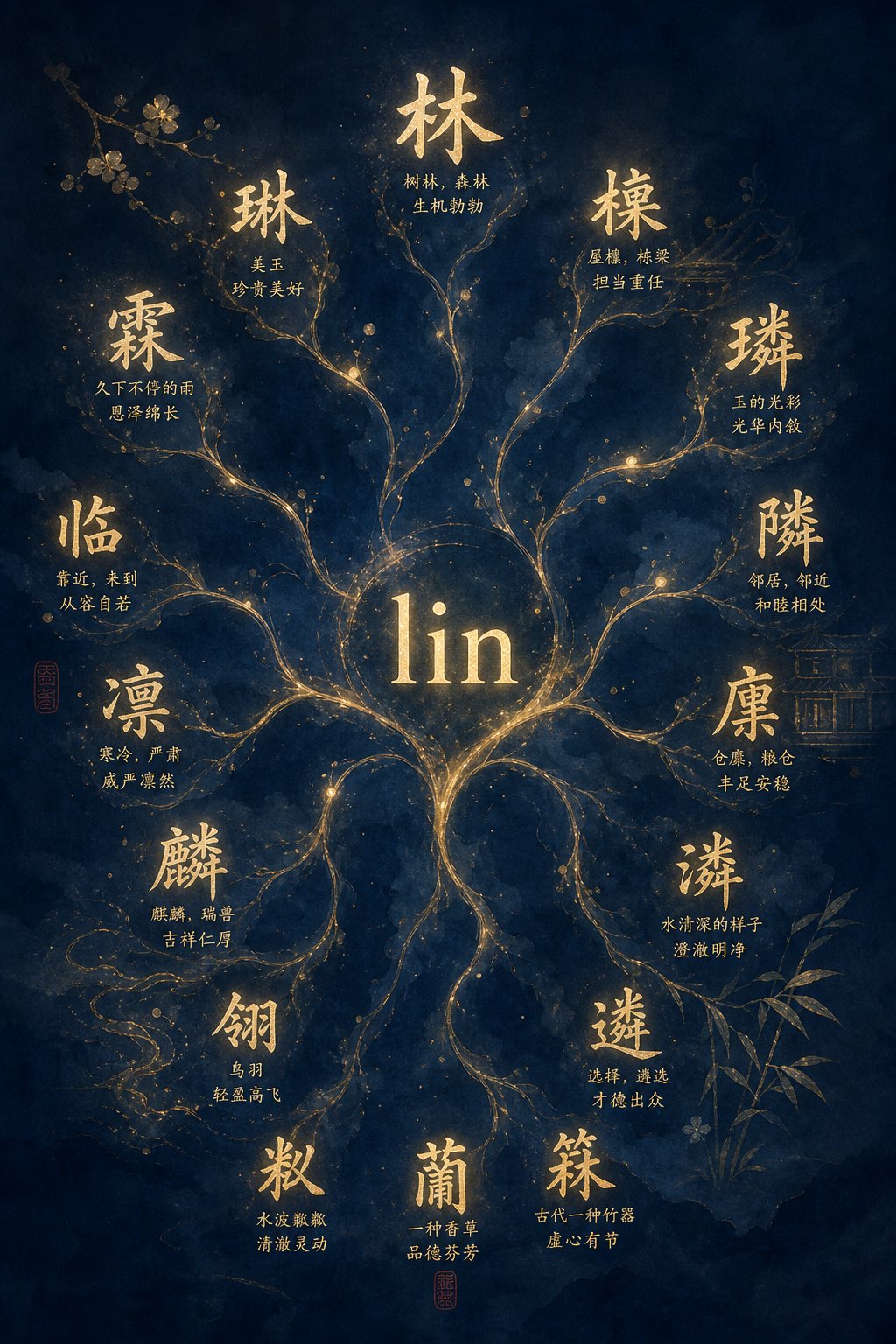
Stick to the Hundred Family Surnames list, the traditional registry of Chinese surnames. Choosing a recognized surname from this list ensures your name sounds legitimate rather than invented. Avoid obscure or archaic surnames unless a native speaker specifically recommends one. If no common surname matches your family name phonetically, pick one you simply like the sound and meaning of. The surname 林 (Lin, meaning "forest") or 王 (Wang, meaning "king") are both extremely common and easy to pronounce.
Step Two — Choose Given Name Characters
This is where how to pick a Chinese name gets creative. You are selecting one or two characters that will follow your surname, and each character should carry a meaning you connect with personally.
Start by brainstorming qualities or concepts that matter to you: strength, wisdom, calm, ambition, nature, light. Then look up characters that express those ideas. A few examples to illustrate:
- 志 (zhi) — ambition, will
- 明 (ming) — bright, clear
- 安 (an) — peace, calm
- 瑞 (rui) — auspicious, lucky
- 文 (wen) — literature, culture
If you want a phonetic echo of your first name, look for characters whose pinyin approximates your name's opening sound. "Sarah" might lead to 思 (si) or 诗 (shi). "James" could start with 杰 (jie). You are balancing sound, meaning, and gender appropriateness here. A male name built from 花 (flower) or a female name using 刚 (steel) will raise eyebrows immediately.
Pair your characters and say the full name aloud. Does the combination of tones flow smoothly? Three consecutive third tones, for instance, create an awkward rhythm that even native speakers find tiring to pronounce.
Step Three — Check for Unintended Meanings and Tone Clashes
Chinese is dense with homophones. A name that looks fine character by character can sound like a common word or phrase when spoken aloud. The pinyin "shijie" could mean "world" or "older sister" depending on tones. "Fangpi" means something you definitely do not want as a name.
Run these checks before finalizing:
- Say the full name quickly and listen for words that emerge from the combined syllables
- Search the characters together online to see if the combination appears as a word, brand, or slang term
- Check whether the name overlaps with a famous historical figure or fictional character
- Read the pinyin without tone marks and consider what other tonal interpretations a listener might hear
Finally, bring your candidate name to at least two or three native speakers from different regions. Connotations shift between northern and southern China, and between generations. A name that sounds elegant to a 50-year-old professor in Beijing might remind a 25-year-old in Guangzhou of a soap opera villain. This feedback step is not optional. Even experienced Chinese learners miss cultural associations that native speakers catch instantly.
Once your name passes these checks, you have something real: a Chinese name with intentional meaning, natural pronunciation, and social credibility. The next question is whether your specific Western name already has a standard Chinese rendering you should know about.
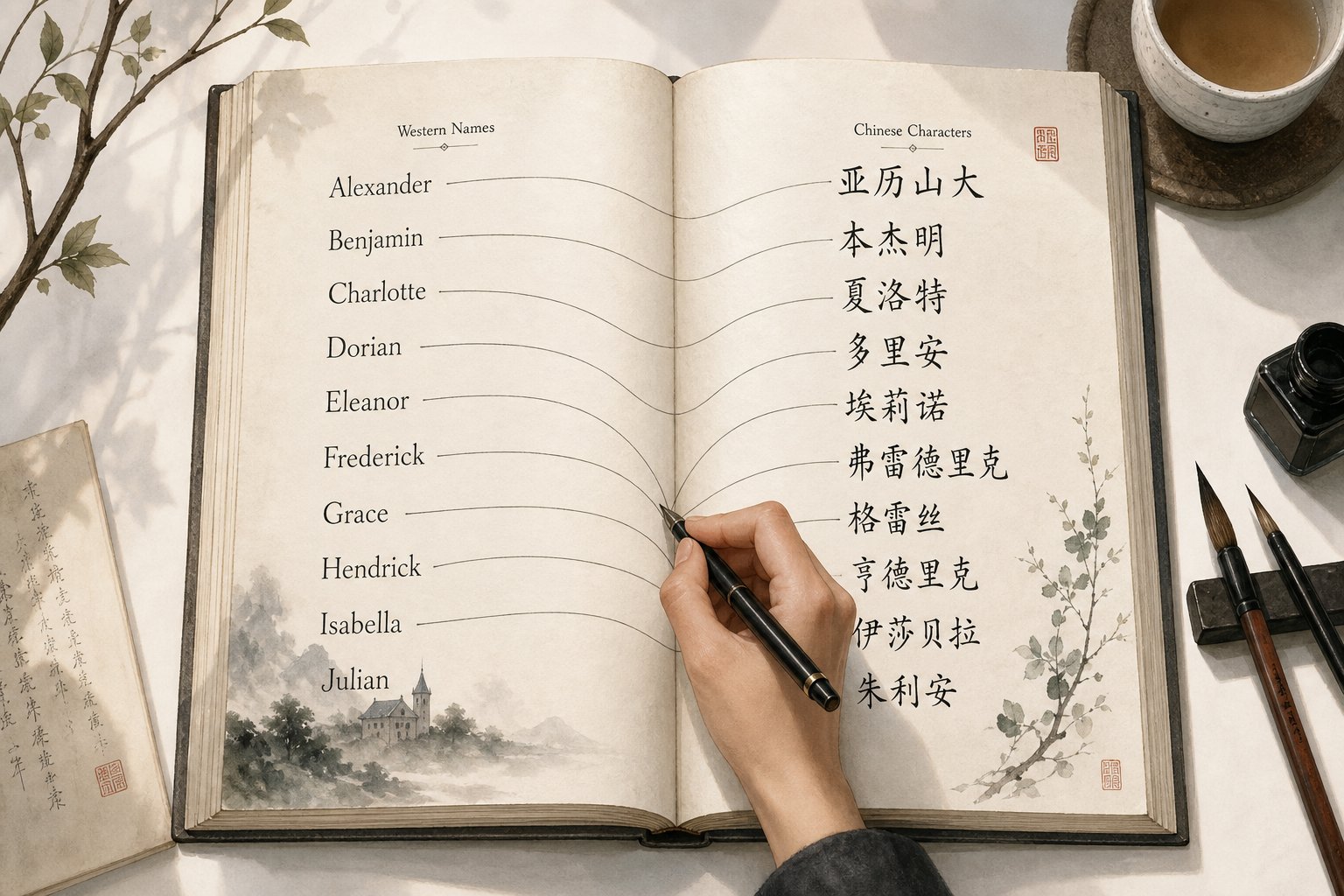
Western Names and Their Standard Chinese Transliterations
Your name might already have an established Chinese version. Many common Western names have been transliterated so frequently in textbooks, media, and official documents that their Chinese equivalents are essentially standardized. Before you build something from scratch, it is worth checking whether a ready-made rendering exists for your english name to chinese pinyin conversion.
Common English Names and Their Chinese Pinyin Equivalents
The table below covers names from English, Spanish, French, and German backgrounds. You will notice that each transliteration prioritizes phonetic closeness while using characters that are neutral or mildly positive in meaning. These are the versions you would encounter in Chinese language textbooks and official media transcriptions.
| Western Name | Chinese Characters | Pinyin | Transliteration Logic |
|---|---|---|---|
| Anna | 安娜 | Anna | 安 (an) mirrors "An-"; 娜 (na) is a standard female-name character for the "-na" sound |
| David | 大卫 | Dawei | 大 (da) captures "Da-"; 卫 (wei) approximates "-vid" through the closest available syllable |
| Lisa | 丽莎 | Lisha | 丽 (li) means "beautiful"; 莎 (sha) renders the "-sa" ending with a soft consonant shift |
| Mary | 玛丽 | Mali | 玛 (ma) is reserved almost exclusively for transliterating foreign names; 丽 (li) covers "-ry" |
| Jake | 杰克 | Jieke | 杰 (jie) approximates "Ja-"; 克 (ke) is the standard character for hard "-k" endings |
| Alice | 爱丽丝 | Ailisi | A rare phono-semantic match: 爱 (love), 丽 (beauty), 丝 (silk) while still echoing the original sound |
| Maria (Spanish) | 玛丽亚 | Maliya | Extends the "Mary" base with 亚 (ya) to capture the final vowel |
| Pierre (French) | 皮埃尔 | Pi'ai'er | 皮 (pi) for "Pi-"; 埃尔 (ai'er) is the standard rendering of the French "-erre" ending |
| Hans (German) | 汉斯 | Hansi | 汉 (han) captures the vowel; 斯 (si) is the go-to character for "-s" endings in foreign names |
| Sophie (French) | 索菲 | Suofei | 索 (suo) approximates "So-"; 菲 (fei) renders "-phie" with a common female-name character |
| Carlos (Spanish) | 卡洛斯 | Kaluosi | 卡 (ka) for "Car-"; 洛 (luo) for "-lo-"; 斯 (si) closes the "-s" |
| Heinrich (German) | 海因里希 | Haiyinlixi | Each syllable gets its own character: 海 (hai), 因 (yin), 里 (li), 希 (xi) |
If your name appears on this list or follows a similar phonetic pattern, you can adopt the standard version with confidence. These transliterations are widely recognized, and using them means Chinese speakers will immediately connect your western name in chinese characters back to the original.
Transliteration Patterns You Can Apply to Any Name
You will not find every name in a reference table. But once you understand the recurring sound-to-character mappings, you can pick a chinese name transliteration for almost anything. Here are the patterns that drive the system:
- Hard "k" and "g" endings become 克 (ke). Think "Jack" becoming 杰克, "Mark" becoming 马克, or "Eric" becoming 埃里克.
- The "-s" or "-ce" ending maps to 斯 (si). "James" becomes 詹姆斯, "Thomas" becomes 托马斯, "Grace" becomes 格蕾丝.
- The "-er" or "-re" sound uses 尔 (er). "Peter" becomes 彼得尔 or is shortened to 彼得. French names ending in "-re" like Pierre use 尔 consistently.
- The "th" sound does not exist in Mandarin. It gets replaced by 斯 (si) or 特 (te) depending on whether it is soft ("th" in "Thomas") or hard ("th" in "Theodore").
- The "v" sound also has no Mandarin equivalent. It shifts to 夫 (fu) or 维 (wei). "David" uses 卫 (wei); "Steve" uses 夫 (fu).
- Opening "Ma-" or "Mi-" almost always uses 玛 (ma) or 米 (mi), characters that appear in foreign names so frequently they have become dedicated transliteration tools.
Chinese media applies these patterns consistently. When a new foreign public figure appears in the news, editors at Xinhua do not invent fresh logic. They pull from the same phoneme-to-character mappings that have been standardized over decades. That is why celebrity names offer such useful reference points. Leonardo DiCaprio's formal media name is 莱昂纳多·迪卡普里奥 (Lai'angnadu Dikapuli'ao), a syllable-by-syllable rendering that follows every rule above. His popular nickname 小李子 (Xiao Lizi, "little plum") shows how informal culture diverges from official transliteration, but the formal version demonstrates the system at work.
The practical takeaway: break your name into individual syllables, find the standard character for each sound using the patterns above, and assemble them in sequence. If your name is "Christopher," you get 克里斯托弗 (Kelistuofu): 克 for "Chr-," 里斯 for "-ris," 托 for "-to-," 弗 for "-pher." Predictable, systematic, and immediately recognizable to any Chinese reader familiar with foreign names.
These standard transliterations give you a functional name for formal contexts. But a string of phonetic characters, however accurate, still reads as unmistakably foreign. The real question is how and where you actually deploy this name versus a more culturally integrated alternative.
Where and How to Use Your Chinese Name
Having a Chinese name is one thing. Knowing when to pull out the transliterated version versus the meaning-based one, and where each belongs on a card, a screen, or a form, is what separates someone who chose a name from someone who actually uses it well.
Business Cards and Professional Settings
Your chinese name on business card placement follows a specific convention. Most bilingual business cards in China use a two-sided layout: Chinese on one side, English on the other. On the Chinese side, your name appears in characters with pinyin optionally printed in smaller text beneath. On the English side, your Western name takes priority.
If you are picking a chinese name for professional networking, here is how to handle the card layout:
- Chinese side: Full Chinese name in characters (surname first), company name in Chinese, title in Chinese
- English side: Western name in standard order (given name first), company name in English, title in English
- If you only have a meaning-based name with no phonetic link to your Western name, include both names on the Chinese side so recipients can connect the two
- Use your meaning-based name for cards distributed at networking events, dinners, and relationship-building meetings
- Use your transliterated name on cards for formal government or legal contexts where document consistency matters
When introducing yourself verbally in Mandarin at a meeting, lead with your Chinese name. Say it clearly, pause, and then add your Western name as a reference point. Something like: "Wo jiao Lin Zhiyuan, yingwen mingzi shi James." This gives Chinese colleagues a name they can actually remember while linking it back to what international contacts call you.
Social Media Profiles and WeChat
WeChat is where your Chinese name lives its most visible daily life. Your display name is what every contact sees, what appears in group chats, and what people search for when adding you. Using chinese name on wechat signals that you are genuinely embedded in Chinese-speaking circles rather than passing through.
- Set your WeChat display name to your meaning-based Chinese name for maximum cultural integration
- Add your Western name in the "English name" field in your profile settings so people can find you either way
- On Xiaohongshu, Douyin, or Weibo, a Chinese name in your handle makes your content feel local and increases engagement with Chinese-speaking audiences
- Avoid mixing pinyin and characters in the same display name. Choose one script and commit to it
- If your Chinese name is new and contacts already know your Western name, update your WeChat signature temporarily to explain the connection
The social media context is where a meaning-based name truly shines. A transliterated name like 杰克 (Jieke) on a WeChat profile immediately flags you as foreign. A name like 林哲远 blends in seamlessly until someone meets you in person.
Legal Documents vs. Everyday Introductions
Official paperwork operates by different rules. Your Chinese visa, residence permit, and bank account will use the transliterated version of your name because it must match your passport. You do not choose which name goes on these documents. The Public Security Bureau assigns a standard transliteration based on your passport spelling, following the same Xinhua conventions discussed earlier.
- Visa and residence permit: Transliterated name only, assigned by authorities
- Bank accounts: Must match the name on your passport or residence permit
- Employment contracts: Typically include both your legal transliterated name and your chosen Chinese name
- Everyday introductions at dinners, language exchanges, or casual meetups: Use whichever name you prefer, almost always the meaning-based one
- University enrollment: Often allows you to register a preferred Chinese name alongside your legal name
Think of it as a two-name system. Your transliterated name handles bureaucracy. Your meaning-based name handles relationships. Many long-term expats in China operate with both without any confusion, switching between them the same way a Chinese professional might use an English name at an international company while keeping their Chinese name for everything else.
The flexibility is a feature, not a complication. But it only works if both names are well-constructed. A poorly chosen name, no matter where you deploy it, creates problems that compound every time someone reads it or says it aloud.
Common Mistakes Foreigners Make with Chinese Names
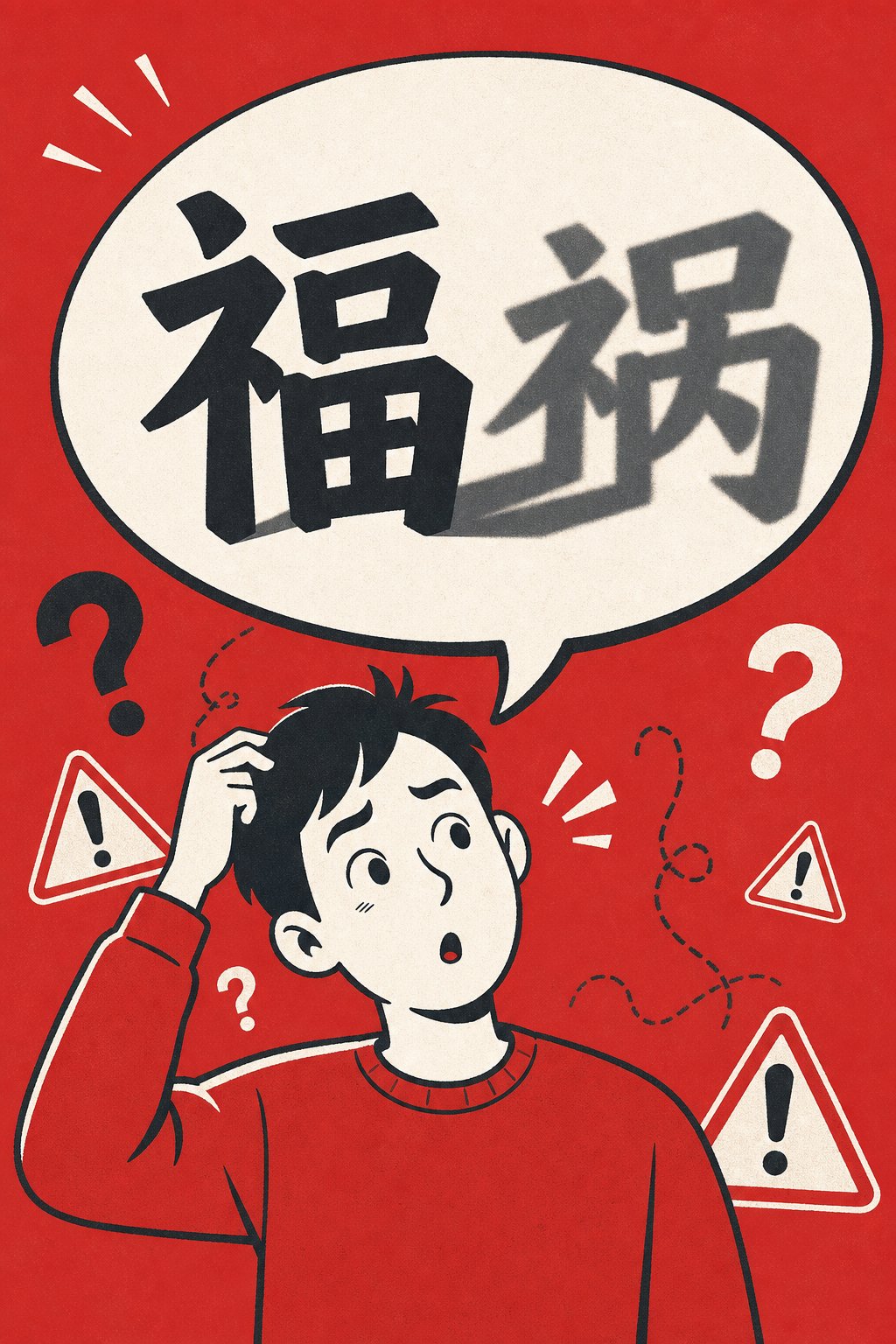
What kinds of problems, exactly? Some are embarrassing. Others are genuinely offensive. And nearly all of them are invisible to the person who made the mistake, because the issue lives in connotations, homophones, or cultural associations that only native speakers catch immediately. If you are searching for the right Chinese name and want to avoid becoming a cautionary tale, here are the pitfalls that trip up foreigners most often.
Characters That Sound Right but Mean Wrong
Chinese is packed with homophones. Two characters can share identical pinyin yet carry wildly different meanings. When you assemble a name based purely on how it sounds, you risk creating something that reads like a joke or worse.
- Unintended morbid meanings: Combining characters like 思 (si, "to think") and 旺 (wang, "prosperous") seems positive on paper. But spoken aloud, "Siwang" is nearly identical to 死亡, the Chinese word for "death."
- Vulgar associations: The character 日 (ri) literally means "sun," but in colloquial Mandarin it functions as a vulgar expletive. Including it in a name invites snickering.
- Slang traps: "Caihua" (采花) translates as "picking flowers," which sounds poetic until you learn it is a euphemism for sexual assault in Chinese slang.
- Transliteration gone wrong: A direct phonetic rendering of "Charlotte" produces "Xialuote" (夏洛特), whose pronunciation uncomfortably echoes "sha le ta" (杀了她), meaning "killed her."
The pattern here is consistent: characters chosen for sound alone, without checking what the combined syllables evoke, create names that native speakers cannot hear without flinching.
Tonal Pitfalls and Homophone Traps
Even when individual characters are fine, the tonal combination across a full name can produce unintended words. Mandarin's four tones mean that a single pinyin syllable like "ma" can mean mother (first tone), hemp (second tone), horse (third tone), or scold (fourth tone). String two or three syllables together and the potential for accidental meaning multiplies.
- Tone-shifted meanings: You intend 马力 (Mali, "horsepower," a strong-sounding name), but a slight mispronunciation lands on 骂你 (ma ni, "curse you"). Listeners hear what their ears expect, not what you intended.
- Rapid-speech blending: When Chinese speakers say a name quickly, adjacent syllables blur together. A name like "Shi Si" (诗思, "poetic thought") becomes a tongue-twister that sounds like the number fourteen (十四) or, worse, like someone trying to say "death" (死) repeatedly.
- Regional variation: A name that sounds clean in standard Mandarin might hit a homophone in Cantonese, Shanghainese, or Sichuanese dialect. If you live outside Beijing, local pronunciation shifts can turn an innocent name into local slang.
The safest defense is reading your candidate name aloud at conversational speed, then asking native speakers from different regions what they hear.
Names That Sound Unnatural to Native Ears
Beyond homophones, foreigners frequently choose names that are technically correct but culturally off-key. These names do not offend anyone. They just sound strange, the way a name like "Magnificent Thunderbolt Johnson" would sound in English.
- Overly literary or grandiose characters: Picking characters like 龙 (dragon), 凤 (phoenix), or 天 (heaven) feels dramatic and meaningful to a foreigner, but to Chinese ears these read as pretentious or old-fashioned. Native speakers might describe such names as "too revolutionary" or "too literary."
- Too many characters: A four- or five-character name immediately signals a full transliteration rather than a real Chinese name. Chinese colleagues will shorten it themselves, and you lose control over what they call you.
- Pet names and childish words: Names like 旺财 (Wangcai, "prosperous wealth") or 铁柱 (Tiezhu, "iron pillar") are traditionally given to dogs or used as childhood nicknames in rural areas. Using them as an adult name draws laughter, not respect.
- Gender mismatch: A man named 美花 (Meihua, "beautiful flower") or a woman named 军强 (Junqiang, "military strength") will spend every introduction correcting assumptions. Chinese given names carry clear gender signals, and ignoring them creates friction in every interaction.
- Historical figure names: Naming yourself after Li Bai or Zhuge Liang is the equivalent of a Chinese person moving to London and introducing themselves as "Shakespeare." It reads as either ignorant or presumptuous.
The common thread across all these mistakes is the same: the foreigner chose characters in isolation, evaluating meaning or sound one piece at a time, without considering how the complete name lands in the ears and cultural context of a native speaker. A name is not a collection of characters. It is a single unit that gets heard, read, and judged as a whole.
That judgment happens fast, often within the first second of hearing your name. Which raises a practical question: how do you actually confirm that your chosen name passes muster before you commit to printing it on cards and introducing yourself with it for years?

Getting Native Speaker Feedback on Your Name
You have a candidate name. It follows the structural rules, the characters carry meanings you like, and the tones flow smoothly when you say it aloud. But here is the reality: you are still evaluating it from the outside. Connotations, slang, regional associations, and generational impressions live inside the language in ways that dictionaries and online tools simply cannot capture. The only reliable way to verify your chinese name with a native speaker is to actually ask one, and to ask the right questions.
What to Ask Native Speakers About Your Name
Not all feedback is equally useful. Asking "Is this a good name?" invites a polite nod and nothing more. Chinese culture leans toward indirect communication, especially with foreigners who are clearly making an effort. You need specific, targeted questions that make it easy for someone to flag a problem without feeling rude.
The single most important question to ask: "If you saw this name on a resume with no photo, what would you assume about the person — their gender, age, education level, and background?"
That question works because it sidesteps politeness entirely. You are not asking whether the name is "good" or "bad." You are asking what image it projects. If the answers do not match who you are, something needs to change. Beyond that core question, ask these follow-ups:
- Does this sound like a name a real person would have, or does it feel made up?
- Does it remind you of any slang, brand names, or pop culture references?
- Would this name sound normal in your hometown, or only in Beijing/Shanghai?
- If you heard this name without seeing the person, would you guess male or female?
- Does anything about it sound old-fashioned, childish, or overly formal?
Ask each question separately and give the person time to think. Rapid-fire questioning produces surface-level answers. You want the pause, the slight frown, the "well, actually..." that signals a genuine reaction.
Where to Get Honest Feedback
Finding native speakers willing to give candid chinese name feedback is easier than you might expect. The key is asking people who have no reason to flatter you and who represent different demographics.
Language exchange partners are a natural first stop. Apps like Tandem and HelloTalk connect you with Mandarin speakers who are already in a reciprocal relationship with you. They are helping you with Chinese while you help them with English, which creates a dynamic where honest correction feels normal rather than confrontational. Physical language exchange meetups work even better because face-to-face reactions are harder to mask. You will see the micro-expression before the polite words arrive.
Chinese colleagues or classmates offer a different angle. They know the professional context where you will actually use the name, so they can tell you whether it fits a workplace environment or sounds out of place in a meeting room. A name that charms a 22-year-old language partner might confuse a 45-year-old department head.
Online communities provide volume and regional diversity. Platforms like Reddit's r/ChineseLanguage, Chinese learning Discord servers, or even posting in a WeChat group can surface opinions from speakers across different provinces and age groups. The advantage here is anonymity. Strangers online have zero social pressure to be nice about your name choice.
Aim for feedback from at least three to five people who differ in age, region, and relationship to you. One opinion is anecdotal. A pattern across multiple speakers is data.
Red Flags That Mean You Should Revise
Sometimes the feedback is subtle. People will not always say "this name is bad." Instead, watch for these signals that indicate your name needs work:
- Laughter or a suppressed smile when they first hear it. Amusement is never the reaction you want to a name.
- Asking you to repeat it more than once. A natural-sounding name registers immediately. If listeners keep asking "what?" the phonetic combination is fighting against their expectations.
- Suggesting alternatives unprompted. When someone immediately says "Oh, maybe you could try..." they are diplomatically telling you the current version has a problem.
- Gender confusion. If two out of three people guess the wrong gender, the characters carry associations you did not intend.
- Regional warnings. "That sounds fine in Mandarin, but in Cantonese it means..." is a flag you cannot ignore if you spend time in southern China or Hong Kong.
- The phrase "it's... interesting." In Chinese social communication, "interesting" (有意思) used hesitantly about a name is almost always a polite deflection from a negative reaction.
Any single red flag warrants a follow-up conversation. Two or more mean you should go back to the character-selection stage and rebuild. Do not get attached to a name that native speakers are quietly uncomfortable with. The whole point of having a Chinese name is to make interactions smoother, not to create a small awkwardness that repeats itself hundreds of times.
Is your chinese name correct? You will know the answer not from a dictionary or a translation app, but from the faces of the people who hear it for the first time. Their unguarded reaction in that first half-second tells you everything a reference book cannot.
Frequently Asked Questions About Pinyin Names for Foreigners
1. Can I just translate my English name directly into pinyin?
Not exactly. Pinyin is the romanization of Chinese characters, not a direct letter-for-letter conversion. To get a Chinese name in pinyin, you first need to select Chinese characters, either through phonetic transliteration (matching your name's sound) or meaning-based creation (choosing characters for their significance). The pinyin then serves as the pronunciation guide for those characters. A direct letter swap would produce nonsense syllables that do not correspond to any real Chinese characters.
2. What is the difference between a transliterated Chinese name and a meaning-based Chinese name?
A transliterated name uses Chinese characters whose pronunciations approximate the sounds of your foreign name, like David becoming Dawei (大卫). A meaning-based name ignores your original name's sound entirely and selects characters for their meanings, such as Zhiyuan (志远, meaning ambitious and far-reaching). Transliterated names are used on legal documents and in media, while meaning-based names integrate better into daily Chinese social and professional life because they sound natural to native speakers.
3. How many characters should a foreigner's Chinese name have?
A foreigner's Chinese name should follow the same convention as native Chinese names: two or three characters total. This means one character for the surname and one or two characters for the given name. Four or five character names immediately signal a full transliteration rather than a genuine Chinese name, and Chinese colleagues will likely shorten it on their own. Sticking to the standard length makes your name sound authentic and easy to remember.
4. Do I need both a transliterated name and a meaning-based name in China?
Many long-term foreigners in China maintain both. Your transliterated name is required for official documents like visas, residence permits, and bank accounts because it must match your passport. Your meaning-based name handles professional networking, social media profiles like WeChat, and everyday introductions. Think of it as a two-name system where each version serves a distinct purpose, similar to how Chinese professionals often use an English name at international companies alongside their Chinese name.
5. How do I know if my chosen Chinese name sounds natural or has unintended meanings?
The only reliable method is testing it with native speakers. Ask at least three to five people from different regions and age groups specific questions like what gender and background they would assume from the name, whether it reminds them of any slang or pop culture references, and whether it sounds like a name a real person would have. Watch for red flags such as laughter, repeated requests to hear it again, or unprompted alternative suggestions, as these indicate the name needs revision.