What Is Pinyin Name Seal Translation
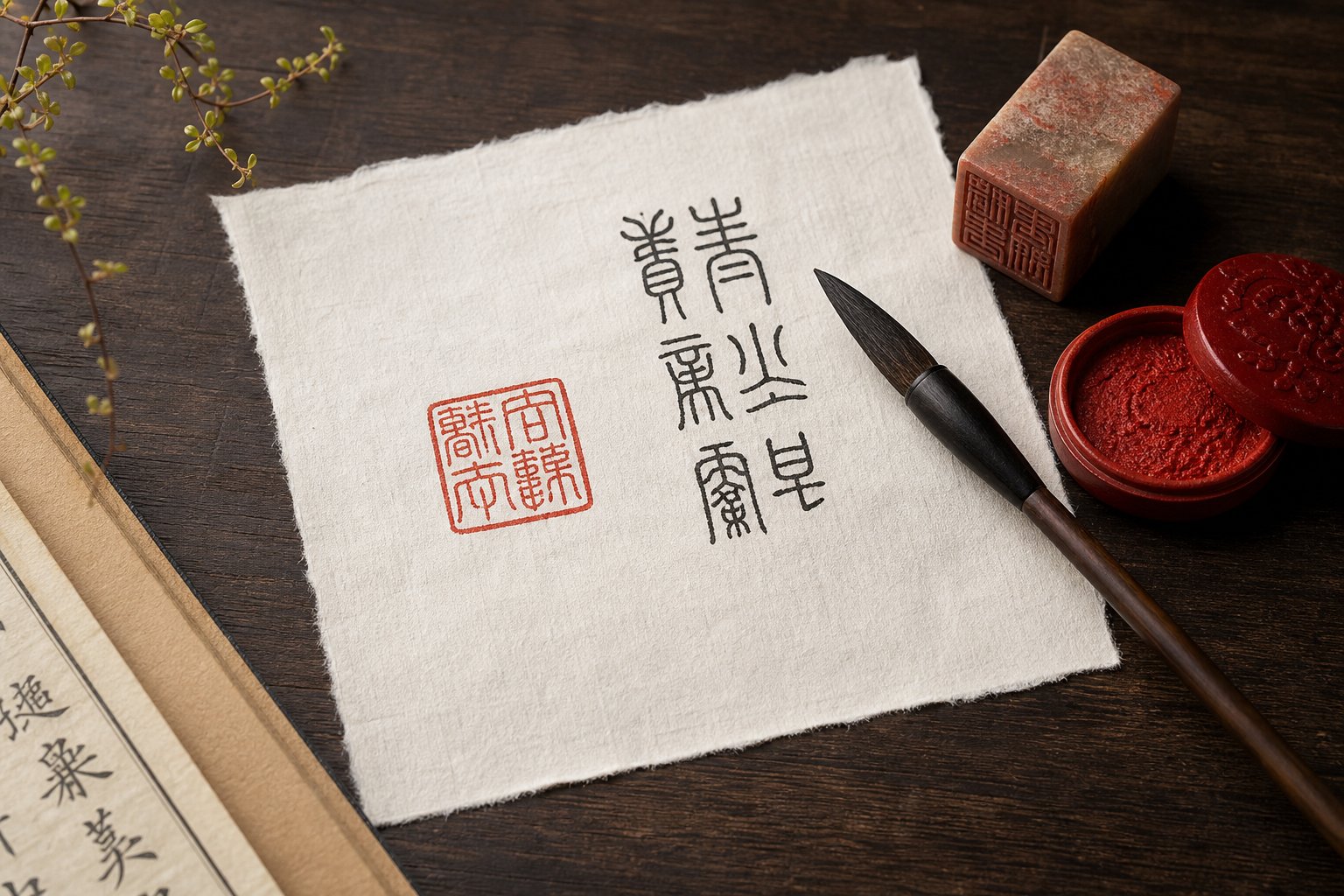
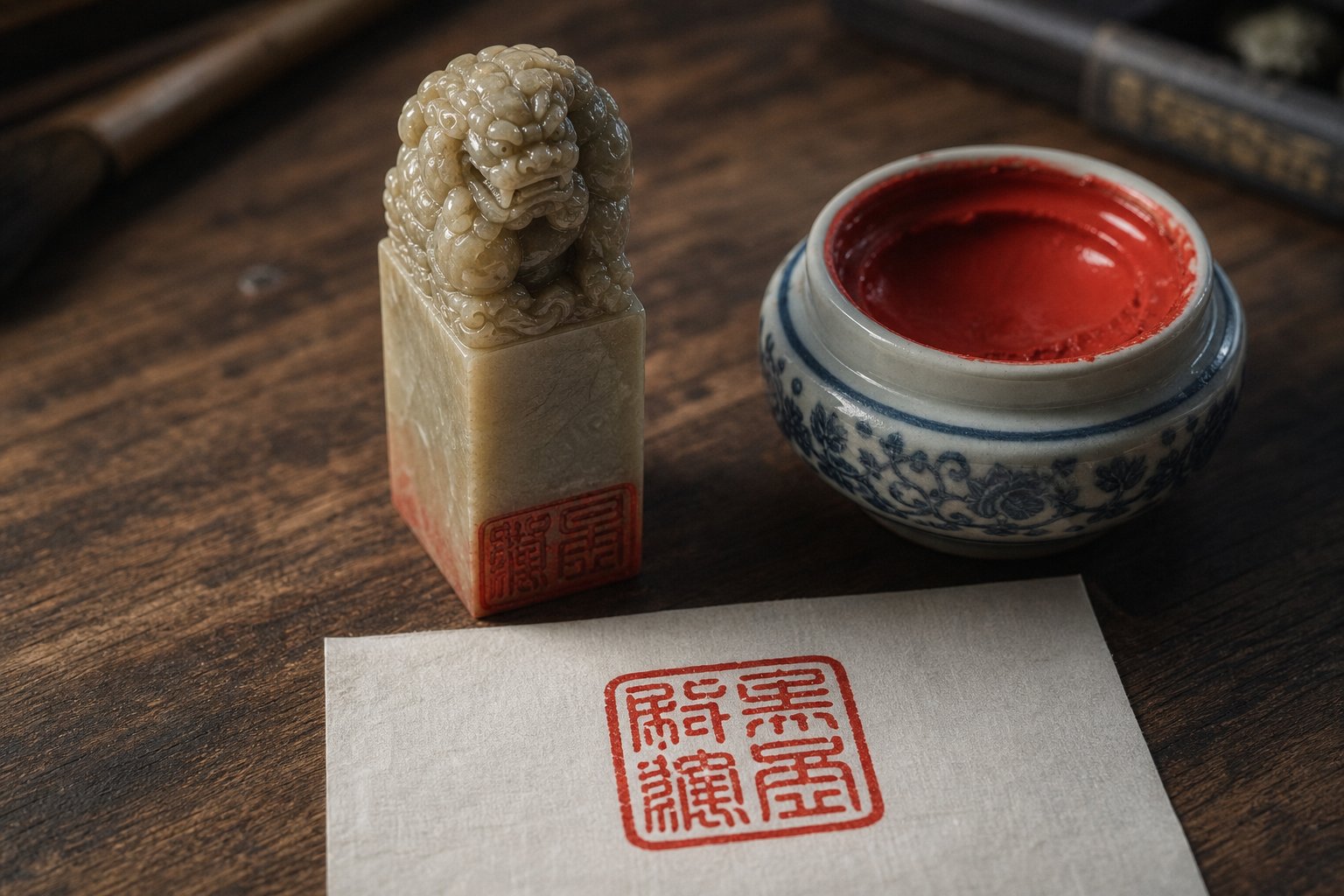
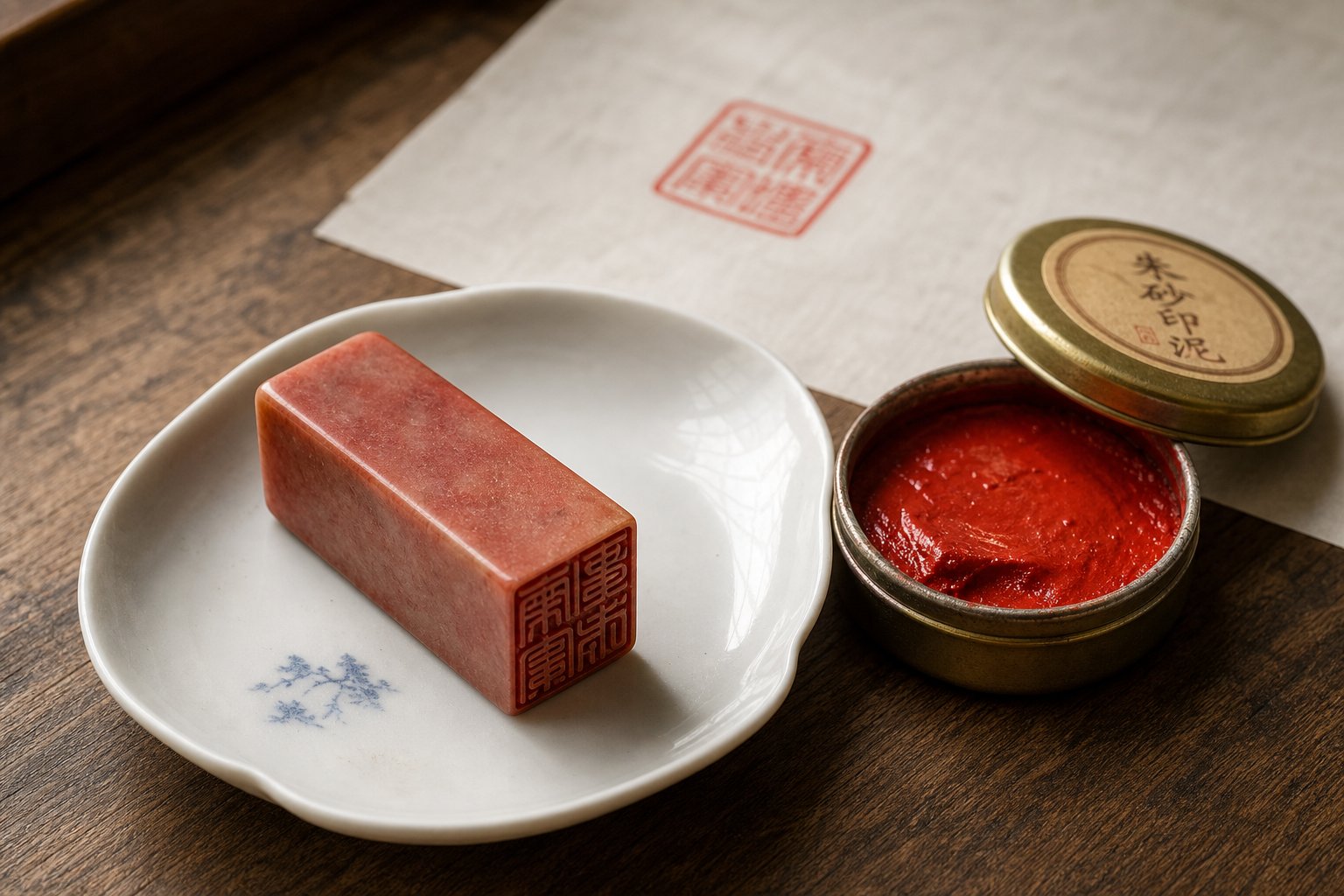
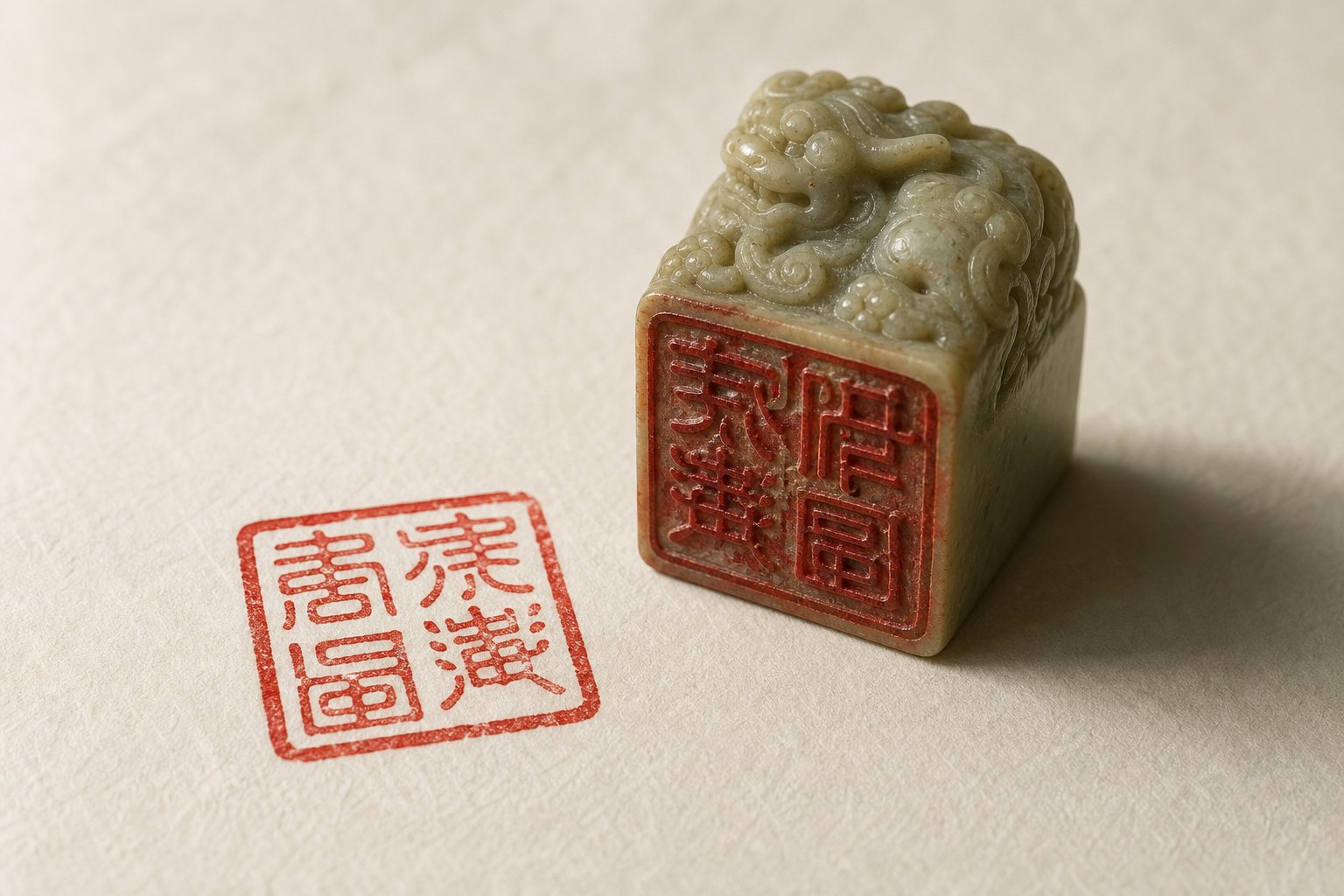
Pinyin name seal translation is the process of converting a Western name into Chinese characters, using pinyin romanization as the phonetic bridge, so those characters can be carved onto a traditional Chinese name seal. The finished seal does not display Latin letters. It displays Chinese characters rendered in an ancient script style, pressed into vermillion ink to leave a distinctive red impression.
Think of it this way: pinyin is the map you use to get there, not the destination itself. The pinyin system maps Mandarin sounds to Latin letters, giving you a way to match your name's pronunciation to valid Chinese syllables. Those syllables then point you toward specific characters suitable for carving on a Chinese seal or stamp.
What Pinyin Name Seal Translation Actually Means
A Chinese name stamp functions the same way it has for thousands of years: carved characters pressed into cinnabar paste produce a red imprint that serves as a personal mark of identity. When Westerners seek their own version of this tradition, the process starts with phonetics. Your name gets broken into syllables, matched to the closest pinyin equivalents, and then paired with Chinese characters that carry those sounds. The result is a Chinese name seal that sounds like your name when read aloud in Mandarin.
Why This Process Confuses Western Users
The confusion is understandable. Many people assume they can simply engrave their name in pinyin letters onto a Chinese chop and call it authentic. But traditional chinese chops display characters, not alphabetic letters. Pinyin was designed to teach pronunciation and standardize spelling, not to serve as a writing system for seals or formal documents. An asian stamp carved with Roman letters would look out of place in the same way a Western wax seal stamped with Chinese characters might puzzle a European notary.
Pinyin translates sound, but a seal displays characters. The romanization system is your translation tool, never the final output carved into stone.
This distinction shapes every decision that follows, from choosing characters with the right phonetic match to selecting a script style that honors the seal's deep cultural lineage.
How Pinyin Bridges Western Names and Chinese Characters
Every pinyin name seal translation relies on the same phonetic engine that Chinese embassies use when transliterating foreign leaders' names for state media, or that passport offices apply when romanizing Chinese names for international travel. Pinyin is the official romanization system for Mandarin Chinese, adopted in 1958 and recognized by the United Nations in 1986 as the international standard. It assigns a specific combination of Latin letters to each possible Mandarin syllable, creating a fixed phonetic code with 23 initials and 36 finals that combine into several hundred valid syllables.
When you want a chinese signature rendered in carved stone, pinyin is the lookup table that connects your name's sounds to the Mandarin sound inventory. The same standardized phonetic tables that produce "Ao-ba-ma" (奥巴马) for Obama or "Te-lang-pu" (特朗普) for Trump guide the process for any Western name headed for a seal face.
How Pinyin Romanization Works for Names
Unlike English, where spelling and pronunciation often disagree (think "through" versus "though" versus "thought"), pinyin follows rigid, consistent rules. Each letter combination maps to exactly one sound. The syllable "ang" is always pronounced "ang." The letter "x" always produces a soft, breathy "sh"-like sound. This predictability is what makes pinyin useful as a bridge for name translation: you can work backward from your name's sounds to find the closest valid pinyin syllables, then select characters that carry those syllables.
Pinyin also includes four tone marks — a flat line, a rising tick, a dip-and-rise, and a falling slash — placed over vowels to indicate pitch. In spoken Mandarin, tones change meaning entirely: "ma" with a flat tone means "mother," while "ma" with a falling-rising tone means "horse." However, for seal creation, tone marks are irrelevant. A carved seal displays characters, not romanized letters, so the tonal distinction is already embedded in the character itself. You choose the character; the tone comes with it. This is why any chinese writing name generator focused on seals will ask you to pick characters rather than worry about diacritical marks.
Mapping English Sounds to Mandarin Syllables
Here is where the real challenge lives. Mandarin has a limited set of possible syllables — roughly 400 without tones — and English contains many sounds that simply do not exist in that set. The process requires approximation, not perfection. Imagine trying to spell a word using only the keys on a piano that are in tune; you pick the closest available note.
Common English-to-pinyin approximations include:
- "th" (as in Thomas): No equivalent in Mandarin. Typically approximated as "t" — giving "Tuo-ma-si" (托马斯).
- "v" (as in David): Mandarin lacks a "v" sound. It gets replaced by "w" or "f" — producing "Da-wei" (大卫).
- "r" at the end of a syllable (as in Carter): Mandarin trailing consonants are limited to "n" and "ng" only. The "r" gets dropped or the syllable is restructured — yielding "Ka-te" (卡特).
- Consonant clusters (as in "str" in Strong): Pinyin does not allow consonant clusters. Each cluster gets broken into separate syllables — becoming "Si-te-lang" (斯特朗).
This syllable-boundary logic is the same whether you are a diplomat's translator or someone using a chinese signature generator for my name. The phonetic constraints of Mandarin shape every transliteration. A trailing consonant can only be "n" or "ng" — never "t," "d," "k," or "s." So a name like "Roberts" cannot end on that final "ts"; it becomes "Luo-bo-ci" (罗伯茨), with each consonant given its own vowel to form a legal Mandarin syllable.
The result is always an approximation, not a mirror image. Your translated name will sound recognizably like you when spoken in Mandarin, but it will follow Mandarin's phonetic rules rather than English ones. That phonetic approximation then becomes the raw material for the next critical decision: which specific characters, among all those sharing the same sound, deserve a place on your seal.
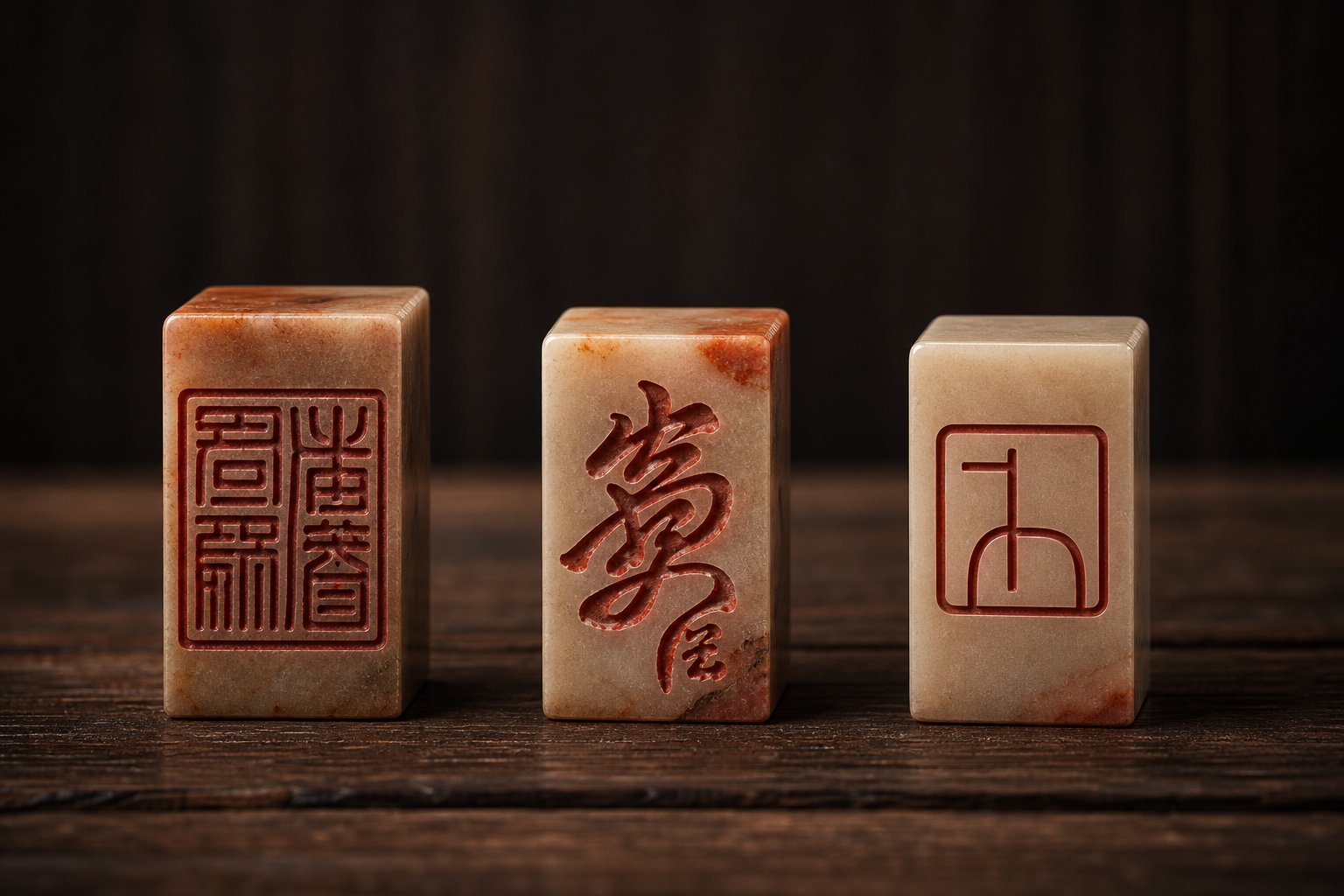
Three Paths From Your Name to a Chinese Seal
That decision about which characters belong on your seal is not just a matter of picking pretty symbols. It reflects a fundamental choice between three distinct translation methods, each with different cultural weight, visual results, and appropriate use cases. Before you commission a chinese signature stamp or pick up a carving knife yourself, you need to understand what each path produces and where it fits within tradition.
Phonetic Transliteration vs Meaning-Based Translation
The most common approach for personal name seals is phonetic transliteration. You match your name's sounds to Chinese characters that carry those pronunciations, producing a name that sounds like you when read aloud in Mandarin. This is the same method Chinese media uses for foreign names, and it carries full cultural legitimacy on a seal. The characters chosen still have individual meanings, but their primary job is to represent sound.
The second path is meaning-based translation. Instead of matching sounds, you select characters that convey the meaning or spirit of your name. Someone named "Stone" might choose 石 (shi, meaning stone) rather than a phonetic approximation. This approach works well for studio seals, artistic pseudonyms, or leisure seals where personal expression matters more than phonetic recognition. It produces a chinese calligraphy signature that reads as a poetic concept rather than a transliterated foreign name.
The third option — engraving raw pinyin letters onto the seal face — is the least traditional. It places Roman alphabet characters where seal script has lived for over two thousand years.
When Raw Pinyin Letters Appear on Seals
Can you put pinyin on a seal? Technically, yes. Some contemporary artists and designers create hybrid seals that incorporate Latin letters as a deliberate stylistic statement. You might see this on modern art prints or experimental calligraphy pieces where the fusion of East and West is the point. However, within traditional seal culture, this approach lacks cultural grounding. A chinese red signature stamp carved with alphabetic letters would not be recognized as a proper name seal (名章) in any classical sense. It functions more as a novelty or design object than a culturally rooted identity mark.
Which Approach Suits Your Purpose
Your intended use determines the right method. A seal for signing artwork, stamping correspondence, or marking a personal collection calls for phonetic transliteration — it is the standard, culturally appropriate choice for a personal name seal. A studio seal or leisure seal invites more creative freedom, making meaning-based translation a natural fit. Raw pinyin is best reserved for graphic design contexts where tradition is intentionally being reinterpreted.
| Method | Example Output | Cultural Appropriateness | Best Use Case |
|---|---|---|---|
| Phonetic Transliteration | Characters matching your name's sound (e.g., 马丁 for "Martin") | High — follows established convention for foreign names | Personal name seals, formal use, art authentication |
| Meaning-Based Translation | Characters reflecting your name's meaning (e.g., 石 for "Stone") | Moderate — traditional for studio names and artistic pseudonyms | Studio seals, leisure seals, poetic or artistic contexts |
| Raw Pinyin Letters | Latin alphabet letters (e.g., "MARTIN") | Low — unconventional, not recognized as traditional seal form | Contemporary design, experimental art, novelty items |
Most people seeking a pinyin name seal translation want the first option: a phonetically faithful rendering in proper Chinese characters, carved in a script style that honors the tradition. That script style — the ancient, visually distinctive form used on seals for millennia — is itself a deliberate choice with deep historical roots.
Why Seal Script Is the Traditional Choice for Name Seals
Chinese calligraphy encompasses six major script styles developed over more than three thousand years, yet only one has remained the default for carved seals across that entire span. Seal script — known as zhuanshu (篆书) — is the script you will encounter on virtually every traditional chinese seal script stamp, from ancient imperial signets to the personal name seal you might commission today. Its dominance is not accidental. The visual properties that make seal script difficult to read in everyday contexts are precisely what make it ideal for the compact, square face of a carved stone.
Consider the alternatives. Standard script (kaishu) is clean and legible — the font you see in modern books and newspapers. Running script (xingshu) resembles fluid handwriting, with strokes connecting between characters. Clerical script (lishu) features prominent horizontal strokes with distinctive flared endings. Each of these evolved for brush-on-paper efficiency. They look natural flowing across a page, but they lose their visual balance when compressed into a one-inch square. Seal script, by contrast, was born for confined spaces and symmetrical composition.
Seal Script Origins and Why It Endures
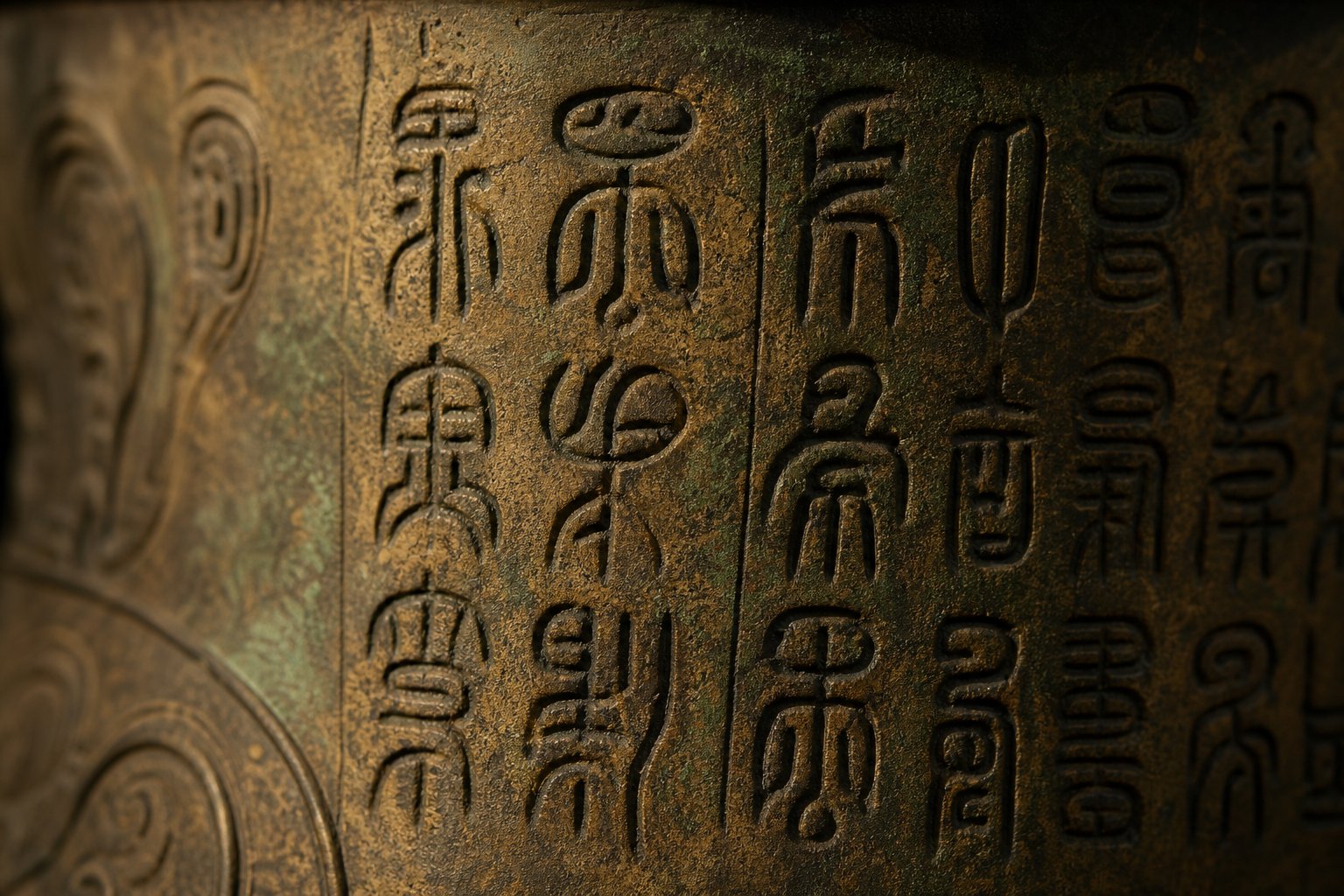
The roots of chinese seal script reach back to bronze ritual vessels of the Shang and Zhou dynasties, spanning the eleventh to third century BCE. Characters cast into bronze needed to be legible at small scale, evenly weighted, and visually balanced within a defined area — the same constraints a seal face imposes. This shared DNA explains why seal script feels so natural on a stamp surface. The Smithsonian's National Museum of Asian Art describes seal script as characterized by "a symmetrical structure formed with thin, even lines executed with balanced movements." That symmetry is the key. Each character occupies roughly the same visual weight, filling its allotted space without crowding or leaving awkward gaps.
Three qualities keep seal script as the default for a seal script stamp even in modern practice:
- Archaic aesthetic: The ancient forms signal tradition, gravitas, and cultural continuity. A seal carved in seal script immediately communicates respect for the art form's heritage.
- Balanced structure: Characters in seal script are naturally suited to square and rectangular formats. Their even line weight and symmetrical composition fill a seal face harmoniously.
- Cultural gravitas: Using seal script connects your personal name seal to a lineage stretching back millennia. It carries the same weight as choosing a serif typeface for a legal document — convention reinforces authority.
Modern seals sometimes use standard or clerical script for stylistic variety, and a chinese seal script generator can help you preview how your translated characters look in different styles. But if authenticity and historical weight matter to you, seal script remains the clear choice.
Small Seal Script vs Large Seal Script
Seal script itself divides into two major forms. Large seal script (dazhuan, 大篆) is the older variety, derived from symbols cast on bronze vessels during the Shang and Zhou periods. Characters in large seal script vary in size and complexity — a simple character might be compact while a complex one sprawls wider. The forms are less standardized, reflecting regional variation across ancient Chinese states.
Small seal script (xiaozhuan, 小篆) emerged as a deliberate standardization effort. When the first Qin emperor unified China in 221 BCE, his chancellor Li Si formalized a consistent writing system from the varied regional scripts. Small seal script gave every character uniform size and structure, with thin, even strokes and a tall, elegant proportion. It became the standard for official inscriptions on stone monuments and, critically, for seals and tallies used across the empire.
For personal name seals today, small seal script is the more common choice. Its uniformity makes layout predictable — you will know exactly how two, three, or four characters will fill the seal face. A seal script generator designed for name seals will typically default to small seal script forms for this reason. Large seal script appears on seals intended to evoke a more archaic, rustic quality, but its irregular sizing can make composition trickier for names with mixed character complexity.
Whichever form you choose, the script itself predates the simplified-versus-traditional character debate by well over a thousand years — a distinction that raises its own set of questions when selecting characters for your seal.
Choosing Between Simplified and Traditional Characters
Simplified or traditional? It is one of the first questions any Chinese learner faces, and it resurfaces when you are selecting characters for a seal. But here is the nuance most people miss: seal script predates both systems by well over two thousand years. The simplification reforms of the 1950s altered how characters appear in standard script for books, newspapers, and everyday writing. They did not change how those same characters look in seal script, because seal script has its own ancient forms that existed long before anyone proposed reducing stroke counts.
When you carve chinese character stamps using seal script, you are reaching back to forms standardized during the Qin dynasty — roughly 221 BCE. The simplified-versus-traditional debate, by contrast, is a product of the twentieth century. This timeline gap means the question is less about "which system" and more about which reference forms your seal carver uses to render the characters.
Simplified vs Traditional Characters for Seals
Traditional characters are generally preferred for chinese seals, and the reasoning is straightforward. Seal script forms were derived from the same ancient writing that traditional characters descend from. When a carver looks up the seal script version of a traditional character, the lineage is direct and unbroken. Simplified characters, on the other hand, were often created through methods like replacing phonetic components, fusing separate characters, or borrowing grass-script shorthand — processes that have no parallel in the seal script tradition.
Here is where it gets interesting for phonetic name translations specifically. Many characters commonly used to transliterate foreign names — like 马 (ma), 丁 (ding), or 安 (an) — are either identical in both systems or so structurally simple that their seal script forms look the same regardless. The character 马 is the simplified form of 馬, and their seal script renderings differ. But a character like 安 has never been simplified at all, so the seal script form is universal. The practical impact depends entirely on which characters end up in your translated name.
Regional Conventions and Personal Preference
Geography plays a role if your seal has a functional context. A taiwan name stamp used for signing documents in Taipei should use traditional character forms — that is the standard across Taiwan, Hong Kong, and Macau. A seal in chinese intended for use in mainland China or Singapore could technically use simplified forms, though even there, traditional characters on seals are widely accepted and often expected because of their classical association.
If your seal is primarily artistic or personal — a mark for your book collection, a signature on calligraphy practice, or a keepsake — tradition leans heavily toward traditional characters regardless of region. The aesthetic argument is strong: traditional forms tend to have more visual complexity, which fills a seal face with richer detail and better compositional balance.
- Seal script has its own historical forms — it does not follow modern simplified or traditional conventions directly.
- Traditional characters align more naturally with seal script because both descend from the same ancient writing lineage.
- Simple transliteration characters (those never simplified or identical in both systems) render the same in seal script either way.
- Regional use matters — match the character system to where the seal will be used if it serves a functional purpose.
- Artistic and personal seals default to traditional forms across all Chinese-speaking regions.
- Consult your seal carver — they will reference seal script dictionaries that map characters to their ancient forms, resolving ambiguity for you.
The character system you choose shapes the raw material. But the visual identity of your seal depends just as much on how those characters are carved — whether they appear as raised red forms or recessed white shapes, pressed from a square stone or a round one, cut into soapstone or jade. Those stylistic decisions carry their own traditions and conventions.
Name Seal Styles and How to Pick the Right One
Imagine pressing your finished seal into a pad of vermillion paste and stamping it onto paper. What do you see — red characters on a white background, or white characters surrounded by red? That visual outcome is not random. It is determined by the carving style, and it carries specific cultural meaning depending on whether your seal is formal, artistic, or somewhere in between. For a chinese seal stamp bearing your translated name, this choice shapes both the look and the traditional appropriateness of the finished piece.
Zhuwen Relief Seals vs Baiwen Intaglio Seals
Two primary carving methods have defined seal art for millennia. Understanding the difference is simple once you see what each produces on paper.
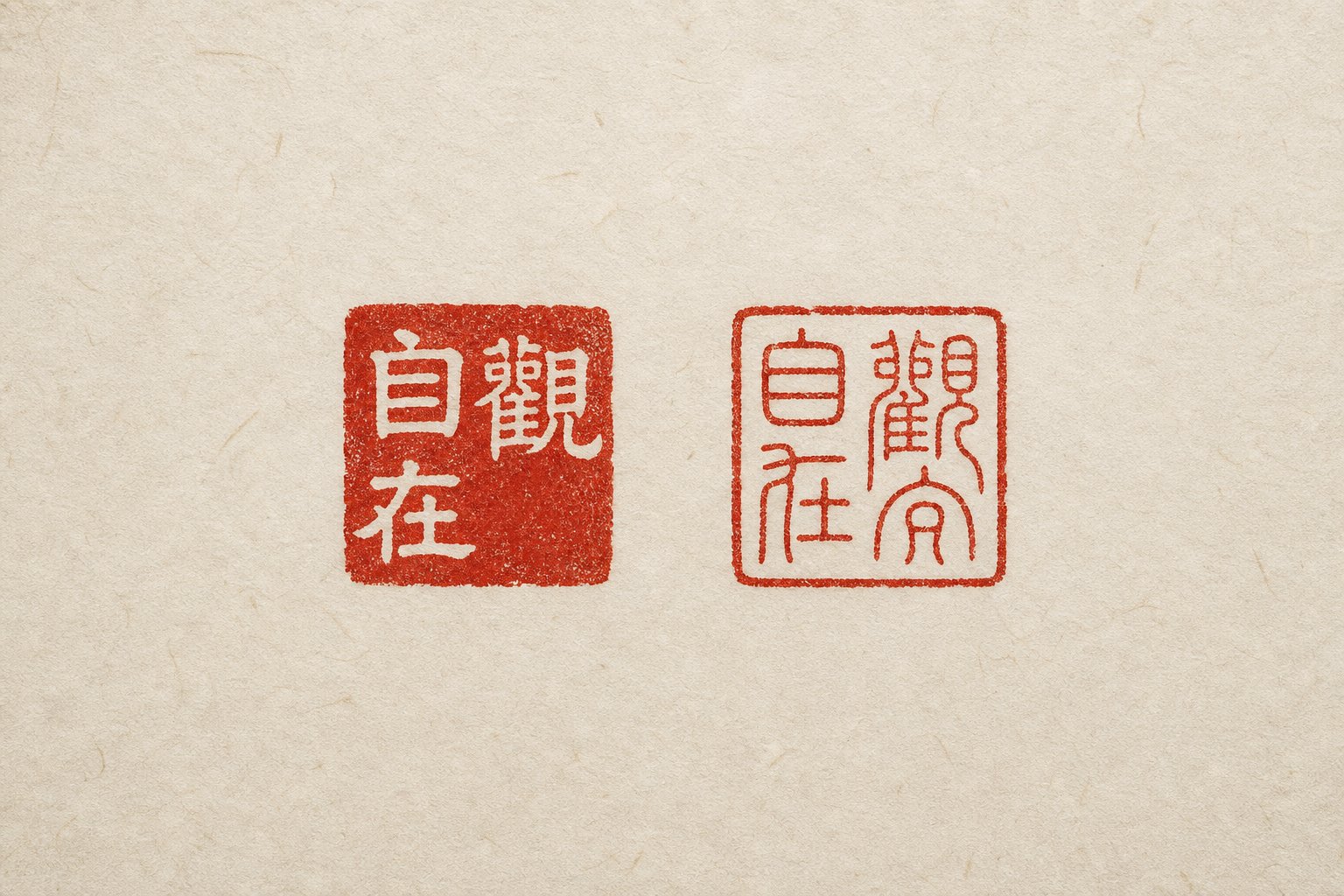
Zhuwen (朱文) — also called relief or positive carving — means the characters themselves are raised on the seal face. The background stone is carved away, leaving the strokes standing proud. When stamped, the characters print in red against the unmarked white paper. The impression looks like red writing on a clean page. According to the Art Gallery of Greater Victoria, seal imprints come in two types: relief, where characters are carved in relief with the background removed, and incised, where the imprint is reversed.
Baiwen (白文) — also called intaglio or negative carving — is the opposite. The characters are carved into the stone surface, cut below the flat face. When stamped, the surrounding flat surface prints red while the carved-away characters remain white (the color of the paper showing through). The result is white characters floating in a field of red. This produces a bolder, more visually striking impression.
Zhubaiwen (朱白文) — the combination style — splits the seal face so that some characters appear in relief and others in intaglio. A four-character name seal might render the first two characters in Zhuwen and the last two in Baiwen, or divide them left-right. This approach adds visual complexity and is sometimes used when a seal contains both a name and a title or phrase.
Which style belongs on your personal name seal? Tradition offers clear guidance. Inkston's guide to Chinese seals notes that it is common practice to prepare two name seals: one carved in Yin (Baiwen) and the other in Yang (Zhuwen), used as a pair on a single artwork. Baiwen carries more formal weight for name seals — its bold red field commands attention and signals identity with authority. Zhuwen, with its lighter, more delicate impression, suits leisure seals, studio seals, and artistic contexts where elegance matters more than formality.
For a chinese chop stamp bearing your phonetically translated name, the traditional recommendation is straightforward: if you are making one seal, Baiwen is the safer default for formal identification. If you plan a pair, one Baiwen and one Zhuwen gives you full versatility.
| Style | Appearance | Traditional Use | Recommended For |
|---|---|---|---|
| Zhuwen (朱文) — Relief | Red characters on white background | Leisure seals, artistic seals, introduction seals | Studio names, artistic pseudonyms, decorative use |
| Baiwen (白文) — Intaglio | White characters in a red field | Formal name seals, official identification | Personal name seals with translated names, primary identity marks |
| Zhubaiwen (朱白文) — Combination | Mixed red and white characters on one seal | Complex seals with names plus titles or phrases | Seals combining a name with a studio title or motto |
Seal Shape and Size for Personal Names
Shape is not purely aesthetic — it signals what type of seal you are using. The renowned painter Zhang Daqian held that name seals should be square, with round as an acceptable alternative. All other shapes, he argued, should not be used for name seals. This convention persists. Square seals dominate for personal names because the format naturally accommodates two or four characters in a balanced grid layout. Round seals work for single-character or two-character names but can feel cramped with longer transliterations. Oval and irregular shapes are reserved for introduction seals, leisure seals, and studio seals — never for formal name identification.
Size conventions follow a practical rule: your seal impression should be no larger than the characters in the artwork or document it accompanies. For calligraphy and painting, name seals typically range from 1.5 to 3 centimeters per side. Beginners often find the 2 to 2.5 centimeter range easiest to work with — large enough to carve cleanly, small enough to look proportional on standard paper sizes. If you plan to use a pair of seals (one Zhuwen, one Baiwen), both should be similar in size so they appear balanced when stamped together.
Materials From Soapstone to Jade
The material you choose for your chinese seal stone affects both the carving process and the finished aesthetic. Seal stones have been made from a wide variety of substances throughout history — jade, bronze, wood, bamboo, ivory, and various types of hard and soft stone. For personal name seals today, stone dominates, with options ranging from affordable to museum-grade.
Soapstone is the most accessible material for chinese soapstone seals. It is soft enough to carve with basic tools, inexpensive, and widely available in colors ranging from creamy white to deep green. Most beginner seal-carving kits include soapstone blanks precisely because the material forgives mistakes and responds well to a simple chisel. A chinese stone stamp made from soapstone can produce thousands of clean impressions without showing significant wear.
Qingtian stone and Shoushan stone are the traditional choices for serious seal carvers in China. These semi-precious stones offer a satisfying resistance under the blade — harder than soapstone but still workable by hand. Colors and patterns vary naturally, making each chinese carved stone stamp unique. Shoushan stone from Fujian province is particularly prized, with rare varieties like tianhuang (field yellow) commanding extraordinary prices at auction.
Jade sits at the top of the material hierarchy. Imperial seals were traditionally carved from jade, and the material carries associations of virtue, permanence, and authority in Chinese culture. Jade is significantly harder than soapstone or Qingtian stone, requiring more specialized tools and greater skill. For a personal name seal, jade signals serious investment in the tradition.
Chinese ink stamps — the impressions these seals produce — look slightly different depending on the stone's surface texture. A polished, fine-grained stone produces crisp, sharp-edged impressions. A coarser stone leaves subtle texture in the printed areas, which some artists prefer for its handmade quality. When selecting material for your translated name seal, consider whether you want precision or character in your impressions.
The interplay between carving style, shape, size, and material gives you a wide palette of options. But all of these physical decisions follow from one prior step: having the right characters in hand, properly vetted for sound, meaning, and connotation. That vetting process — the practical, step-by-step journey from your Western name to a finished seal — is where careful attention pays off most.
Step-by-Step Process for Creating Your Translated Name Seal
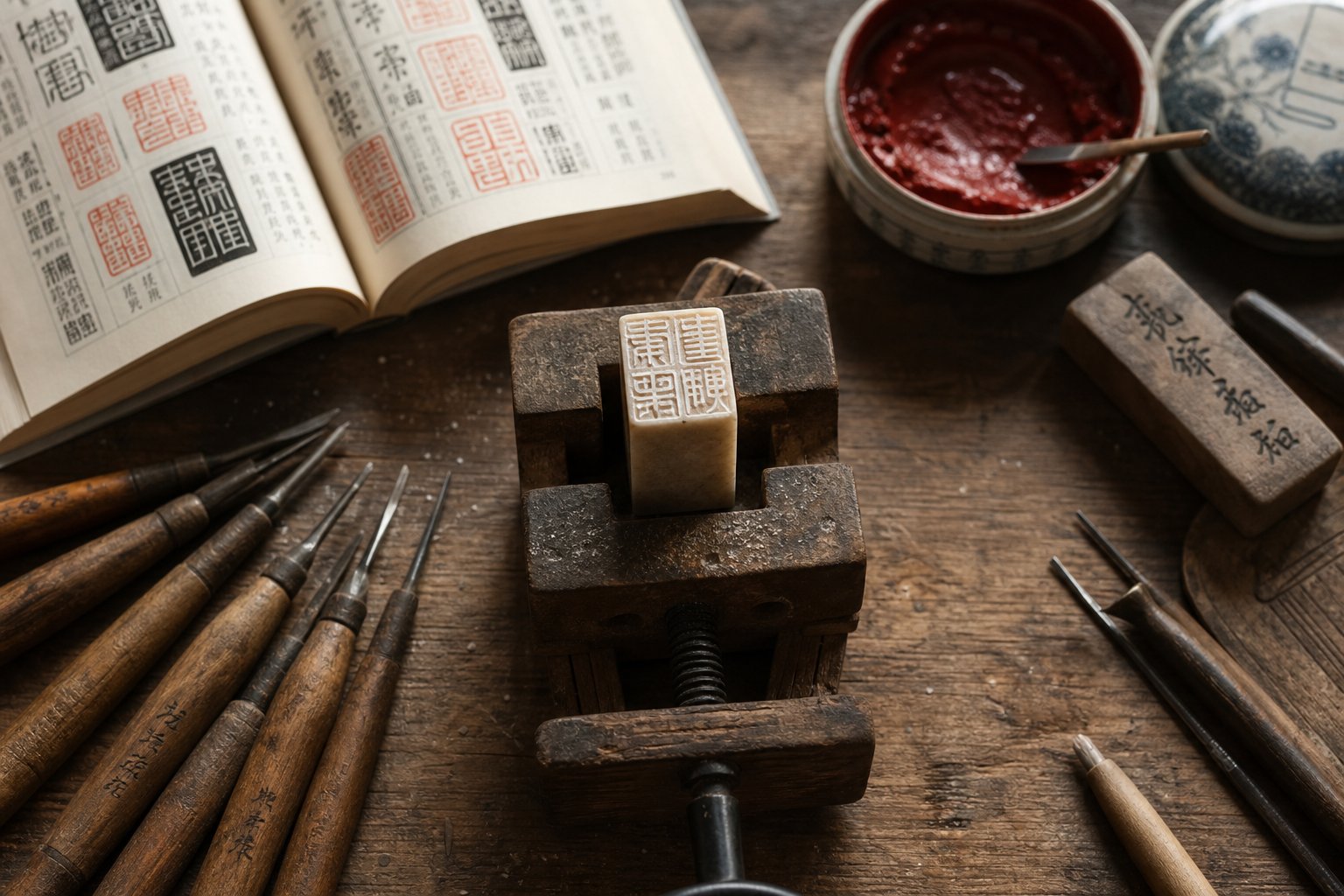
You have the theory. You understand pinyin mechanics, character selection logic, script styles, and carving methods. What does the actual process look like from start to finish? Here is the complete walkthrough, broken into seven sequential steps that take you from a Western name to a finished seal ready for ink.
- Break your name into syllables. Separate your name into its component sounds, ignoring English spelling. Focus on pronunciation. "Christopher" becomes something like "Kris-tuh-fer." "Michelle" becomes "Mih-shell." Write down each distinct syllable as you hear it spoken aloud.
- Find the closest pinyin equivalents for each syllable. Match each sound to a valid Mandarin syllable from the pinyin chart. Remember: Mandarin syllables cannot end in most consonants, and consonant clusters must be split apart. "Kris" might become "ke-li-si" because Mandarin needs a vowel after each consonant. Use a chinese calligraphy generator or pinyin reference chart to confirm valid syllable combinations.
- Select Chinese characters that match those pinyin syllables. Each pinyin syllable maps to dozens of possible characters. This is where the real craft begins — you are choosing not just sounds but meanings, visual weight, and cultural resonance.
- Verify character choices with a native speaker or reference. This step is non-negotiable. Have at least two or three native Mandarin speakers review your character selections for unintended meanings, awkward combinations, or cultural red flags.
- Choose seal script forms for those characters. Look up how your selected characters appear in small seal script (xiaozhuan). A chinese seal generator or seal script dictionary will show you the ancient forms. Some characters look dramatically different in seal script than in standard script — confirm you are happy with the visual result.
- Select seal style and material. Decide between Baiwen (intaglio) for formal use or Zhuwen (relief) for artistic contexts. Pick your stone — soapstone for accessibility, Qingtian or Shoushan for tradition, jade for prestige.
- Commission or carve the seal. Bring your finalized characters, script forms, and style preference to a professional seal carver, or carve it yourself if you have the tools and training. A skilled artisan practicing chinese seal carving will handle layout, spacing, and border design as part of the commission.
Breaking Your Name Into Pinyin Syllables
The syllable breakdown is where most people rush and later regret it. Longer Western names do not need every syllable represented. Chinese personal names are typically two or three characters — rarely more. A name like "Alexander" does not need to become a six-syllable transliteration. Instead, you might use "Ya-li-shan-da" (亚历山大), the established four-character convention, or shorten it to a two-character approximation that captures the name's essence. Fewer characters produce a more balanced seal composition and feel more natural as a Chinese name.
Think about which syllables carry the most recognizable weight. For "Jonathan," the opening "Jon" is the most distinctive sound — a two-character rendering starting with that syllable will still feel like your name. A calligraphy generator chinese tools can help you experiment with different syllable counts to see what looks and sounds best.
Selecting Characters With Good Connotations
This is the step that separates a thoughtful seal from an embarrassing one. Every Chinese character carries meaning, and as language educator Olle Linge notes, foreign names directly transcribed with Chinese characters often produce incoherent or unintentionally humorous results if you focus only on sound. The character 死 (si) is phonetically useful but means "death." The character 苦 (ku) sounds like many English syllables but means "bitter" or "suffering." No one wants these on a seal they will use for decades.
The goal is finding characters that are phonetically close and carry neutral or positive connotations. Characters suggesting beauty (美), wisdom (智), strength (强), elegance (雅), or prosperity (瑞) are popular choices for transliterated names precisely because they add a layer of auspicious meaning without sacrificing phonetic accuracy. A chinese calligraphy creator tool might suggest multiple character options per syllable — always check what each one means before committing.
When in doubt, lean toward characters commonly used in Chinese given names. These have been vetted by centuries of naming tradition and carry associations that native speakers recognize as appropriate for a personal identity mark. Avoid obscure characters that might puzzle a reader, and avoid characters with strong associations to specific famous people unless you want that connection.
From Character Choice to Finished Seal
With your characters selected and verified, the remaining steps are largely practical. Use a chinese font generator or seal script dictionary to preview how your characters look in their ancient forms. Some characters that appear simple in standard script become beautifully complex in seal script, while others remain minimal. This preview helps you anticipate the visual balance of your finished seal face.
When commissioning from a professional seal carver, provide your characters in both standard script and seal script forms so there is no ambiguity. Specify your preferred carving style, stone material, and seal dimensions. A good artisan will suggest minor layout adjustments — perhaps rotating the reading order or adjusting character spacing — to produce the most harmonious composition. Chinese seal carving is as much about negative space and visual rhythm as it is about the characters themselves.
The entire process, from first syllable breakdown to holding a finished seal, typically takes one to three weeks when working with a professional. Rushing the character selection phase to save a few days is the single most common source of regret. Take your time with steps three and four — the stone will wait, but a poorly chosen character is carved permanently.
Common Mistakes When Translating Names for Chinese Seals
Even with a solid process in hand, pitfalls lurk at every stage. Some are linguistic, some are visual, and some are cultural misunderstandings that only become obvious after the chisel has already done its work. The errors below appear repeatedly among Westerners commissioning their first chinese artist stamp or personal name seal — and each one is entirely avoidable with a little awareness.
Mistakes in Character Selection
Character choice is where the highest-stakes errors happen. A wrong character is not a typo you can white out — it is carved into stone. Here are the most common selection mistakes and why they matter:
- Choosing characters solely for sound without checking meaning. Every Chinese character carries semantic weight. The syllable "si" maps to characters meaning "think" (思), "silk" (丝), or "death" (死). Picking based on phonetics alone is how people end up with names that accidentally evoke words like "death" or vulgar slang. Always verify what each character means individually and in combination with its neighbors.
- Ignoring homophone traps in character pairs. Two characters that seem fine individually can produce an unfortunate compound when placed side by side. Chinese is rich in homophones, and native speakers will immediately hear the unintended word. Have multiple native speakers read your full character sequence aloud before committing.
- Using modern simplified forms when seal script versions differ significantly. Some simplified characters were created by replacing entire structural components. Their seal script equivalents may not exist in classical dictionaries, or they may look visually awkward because the simplification logic has no ancient precedent. The character 马 (simplified for horse) has a recognized seal script form, but more aggressively simplified characters may not translate cleanly into the ancient script.
- Including pinyin tone marks on the seal. This mistake comes from a fundamental misunderstanding of what a seal displays. Tone marks are diacritical aids for pronunciation — they belong in textbooks and language apps, not carved into stone. A seal shows characters, not romanization. Adding tone marks above pinyin letters on a seal face looks visually awkward and signals unfamiliarity with the tradition.
- Confusing a chop name with a legal name translation. Your chinese painting signatures — the seal impressions on artwork — do not need to match your passport transliteration. A chop name is a personal artistic identity, not a legal document. Many people waste effort forcing their full legal name into a seal when a shorter, more elegant phonetic approximation would serve better and look more balanced.
If you study old chinese seals in museum collections, you will notice that the names carved on them are almost always concise — two to four characters at most. Brevity was not a limitation; it was a deliberate aesthetic and cultural choice.
Layout and Composition Errors
Even with perfectly chosen characters, poor layout decisions can undermine the seal's visual impact. Composition errors are subtler than character mistakes, but they are immediately visible to anyone familiar with the tradition.
- Selecting too many characters. A five- or six-character transliteration crammed onto a standard seal face produces cramped, illegible results. Two or four characters create the most balanced layouts because they divide evenly into a square grid. Three characters work with careful spacing. Five or more characters require either a larger-than-standard seal or uncomfortably compressed forms. When your full name transliterates to six syllables, consider shortening to a two- or three-character approximation.
- Ignoring character count and grid harmony. Chinese seal composition follows a grid logic. Two characters stack vertically. Four characters fill a 2x2 grid. These arrangements produce natural symmetry. Odd numbers — especially one or three — require deliberate spacing strategies to avoid visual imbalance. A chinese artist signature on a painting typically uses a two-character or four-character seal for exactly this reason.
- Mixing script styles within one seal. If one character's seal script form comes from a small seal script dictionary and another from a large seal script reference, the visual inconsistency will be obvious. Stroke weight, proportions, and structural logic differ between the two forms. Stick to one source and one style throughout.
- Neglecting border weight relative to character strokes. The border (or lack of border) frames the entire composition. A border that is too thick overwhelms delicate seal script strokes; one that is too thin looks fragile against bold Baiwen carving. Professional carvers calibrate border thickness to match the stroke weight of the characters inside — a detail amateurs often overlook.
Anyone researching chinese seal identification on antique pieces will notice how consistently historical carvers followed these compositional rules. An antique chinese stamp seal from the Han dynasty or Ming period almost always features two or four characters in a clean grid, with border weight proportional to stroke thickness. These were not arbitrary preferences — they were refined over centuries of practice into reliable principles.
The takeaway is straightforward: fewer characters, consistent script style, and attention to spatial balance will produce a seal that looks intentional rather than improvised. When you are unsure, study examples. Museum collections, auction catalogs, and reputable seal-carving references all demonstrate what works — and by contrast, what does not. A well-composed seal speaks quietly and clearly. A poorly composed one announces its mistakes before anyone reads a single character.
Frequently Asked Questions About Pinyin Name Seal Translation
1. Can I put my name in pinyin letters on a Chinese seal?
Technically yes, but it is not recommended for traditional seals. Chinese name seals have displayed carved characters in seal script for over two thousand years. Placing Roman alphabet letters on a seal face is considered unconventional and lacks cultural grounding. The proper approach is to use pinyin as a phonetic bridge to identify Chinese characters that approximate your name's sound, then carve those characters in seal script. Raw pinyin letters are best reserved for contemporary design or novelty items rather than authentic personal name seals.
2. How many characters should a translated name seal have?
Two or four characters produce the most balanced seal compositions because they divide evenly into a square grid layout. Three characters work with careful spacing adjustments. Avoid five or six characters, as they create cramped, hard-to-read results on a standard seal face. Even if your full Western name transliterates into many syllables, consider shortening to a two- or three-character phonetic approximation that captures the most recognizable sounds of your name while maintaining visual harmony.
3. Should I use simplified or traditional Chinese characters for my name seal?
Traditional characters are generally preferred for name seals regardless of region. Seal script predates both simplified and traditional systems by over two thousand years, and traditional characters share a more direct lineage with ancient seal script forms. However, many characters commonly used for phonetic transliteration of foreign names are either identical in both systems or structurally simple enough that their seal script forms look the same either way. If your seal serves a functional purpose in a specific region, match the local convention, but for artistic or personal seals, traditional forms are the standard choice.
4. What is the difference between Zhuwen and Baiwen seal carving styles?
Zhuwen (relief carving) produces red characters on a white background by carving away the background stone and leaving the strokes raised. Baiwen (intaglio carving) produces white characters in a red field by cutting the characters into the stone surface. For formal personal name seals, Baiwen is the traditional default because its bold red impression commands attention and signals identity with authority. Zhuwen suits leisure seals, studio names, and artistic contexts. Many seal owners commission one of each style to use as a complementary pair.
5. How do I avoid choosing Chinese characters with bad meanings for my name seal?
Always verify each character's meaning individually and in combination with adjacent characters before committing to a seal. Many phonetically suitable characters carry negative connotations like death, bitterness, or illness. The safest approach is to select characters commonly used in Chinese given names, as these carry centuries of positive naming associations. Have at least two or three native Mandarin speakers read your full character sequence aloud to catch homophone traps or unfortunate compound meanings that may not be obvious from a dictionary lookup alone.