What Makes Chinese Nicknames So Uniquely Playful
Imagine you're at a dinner party in Beijing. Your Chinese friend has been calling you by your full name all evening. Then, around the second hour, he switches to something shorter, softer, maybe with a repeated syllable or a little prefix you don't recognize. Everyone at the table follows suit. You haven't changed, but the way people address you just did. That shift? It means you've been accepted.
Playful Chinese nicknames carry weight that English pet names rarely do. In English, calling someone "honey" or "buddy" is sweet but socially ambiguous. In Chinese, a single nickname choice broadcasts your exact relationship status, your level of closeness, and even your regional background to every native speaker within earshot. These aren't just cute words. They're social signals encoded in sound.
What separates a "playful" nickname from a merely informal one? It comes down to creative intent. Informal Chinese names might simply shorten a formal name for convenience. Playful ones go further. They bend language through repetition, animal metaphors, food references, or affectionate prefixes to create something that feels warm, funny, or intimate. Think of 宝宝 (bǎobao, "baby"), where the repeated character turns a simple word into a verbal hug. Or 小傻瓜 (xiǎo shǎguā, "little silly melon"), where teasing becomes tenderness.
Why Playful Nicknames Matter in Chinese Culture
Nicknames in Chinese culture function as relationship markers. They tell the world how close two people are without either person needing to explain. A colleague who calls you by your full name keeps professional distance. The moment that same colleague switches to a nickname with the 小 (xiǎo) prefix, they're signaling friendship. And if they start using a doubled form of your name, like calling Li Ming "Mingming," they're claiming a deeper bond altogether.
This matters because Chinese social life operates on layers of formality. The name on someone's ID card is almost ceremonial. Their real name, the one that signals belonging, is something else entirely. Understanding nicknames in chinese social contexts means understanding who you are to someone and who they're allowing you to be.
A single nickname choice in Chinese tells every listener in the room your exact relationship with that person, your level of intimacy, and whether you've earned the right to use it.
The Intimacy Spectrum of Chinese Nicknames
Chinese nicknames don't work as a binary switch between formal and casual. They operate on a gradient with multiple stops along the way:
- Full formal name (李明, Lǐ Míng) — first meetings, professional settings, documents
- Given name only (明, Míng) — friendly peer groups where context is clear
- Prefix variants (小明, Xiǎo Míng or 阿明, Ā Míng) — established friendship, casual warmth
- Doubled forms (明明, Míngming) — close friends, family, romantic partners
- Creative playful names (小太阳, xiǎo tàiyáng, "little sun") — deep affection, personality-based intimacy
Each step requires social permission. You don't jump from full name to doubled form overnight. The transition happens organically as trust builds. When someone moves you down this spectrum, they're granting access to a more personal version of themselves. And when you hear funny chinese nicknames being tossed around a friend group, you're witnessing bonds that took time to earn.
This spectrum is what makes chinese nicknames so fascinating for outsiders. It's not just about learning a list of funny chinese names to try out. It's about understanding which level fits your relationship and knowing that the wrong choice at the wrong time can feel presumptuous rather than playful.
The creative patterns behind these names, from reduplication to animal metaphors to internet slang, each carry their own emotional register and social rules. Knowing how they work gives you the power to create your own rather than borrowing someone else's.
The Creative Patterns Behind Every Playful Nickname
Here's the thing about funny names in chinese: they aren't random. Every playful nickname you hear follows one of a handful of creative patterns, each carrying its own emotional weight. Learn these patterns and you won't need a pre-made list. You'll be able to generate nicknames on the fly, tailored to the person and the relationship.
Think of these patterns as building blocks. Some sound childlike and tender. Others feel casual and buddy-like. A few land somewhere between teasing and flirtatious. The pattern you choose determines the emotional register before the meaning of the words even kicks in.
Reduplication and the Power of Repeated Sounds
Reduplication, or 叠字 (diézì), is the most instinctive pattern in Chinese nickname culture. You take a single character and repeat it, creating a rhythmic, musical sound that feels inherently affectionate. The repetition softens everything. It turns a name into something you'd whisper, not shout.
Why does this work? Chinese is a syllable-timed language where each character gets roughly equal emphasis. When you double a syllable, you create a gentle, rocking cadence that mimics the way parents speak to children. That childlike quality is intentional. It strips away adult formality and grants permission to be unguarded. As linguistic research on Mandarin reduplication shows, this pattern serves to soften tone and convey warmth across multiple contexts.
The doubled form also intensifies meaning. 宝 (bǎo) means "treasure." But 宝宝 (bǎobao) doesn't just mean "treasure treasure." It becomes "baby" or "precious one," a complete term of endearment that's greater than the sum of its parts. Some of the funniest chinese names come from doubling characters that sound perfectly normal alone but become hilarious or adorable when repeated.
The 小 Prefix and Other Affectionate Markers
If reduplication creates intimacy through sound, prefixes create it through framing. The two most common are 小 (xiǎo, "little") and 阿 (ā), and they signal very different things.
The 小 prefix dominates in northern China. Walk into any Beijing office and you'll hear Xiǎo Wáng, Xiǎo Lǐ, Xiǎo Zhāng bouncing off the walls. It suggests youth, approachability, and peer-level friendliness without assuming deep closeness. It's the nickname equivalent of grabbing coffee together rather than sharing secrets.
Travel south to Guangdong, Hong Kong, or Taiwan, and 阿 (ā) takes over. Where 小 emphasizes casualness, 阿 suggests familiarity built through time. It's warmer, more familial. Someone named Zhang Xiaoming might become Ā Míng among close friends, dropping both the surname and part of the given name. That truncation says: "I know you well enough that I don't need the full identifier."
There's also the 老 (lǎo, "old") prefix for close male friends, but that belongs to a different emotional category, one we'll explore in the friendship section.
Animal Metaphors and Food References
This is where playful nicknames get genuinely creative, and where you'll find some of the most humorous chinese names in daily use. Chinese speakers draw freely from the animal kingdom and the kitchen to build nicknames that capture personality, appearance, or pure affection.
Animal metaphors carry specific connotations:
- 小兔子 (xiǎo tùzi, "little rabbit") — shy, gentle, cute
- 小猪 (xiǎo zhū, "little pig") — endearingly lazy or cuddly, used romantically
- 小猫咪 (xiǎo māomī, "little kitty") — graceful, independent, slightly aloof
- 小熊 (xiǎo xióng, "little bear") — warm, huggable, protective
Food-based nicknames tap into a culture where food equals love:
- 小汤圆 (xiǎo tāngyuán, "little glutinous rice ball") — round, sweet, comforting
- 糖糖 (tángtang, "sugar sugar") — sweet-natured, using reduplication for extra warmth
- 豆豆 (dòudou, "little bean") — small, adorable, often used for children
- 包子 (bāozi, "steamed bun") — chubby-cheeked, lovable
What makes these hilarious chinese names to outsiders is often the literal translation. Calling your partner "little pig" sounds insulting in English. In Chinese, it's tender. The humor lives in that gap between literal meaning and emotional intent, and native speakers play with that gap constantly.
Character puns add another layer. Because Mandarin has so many homophones, a single funny chinese name can carry double meanings depending on which characters the listener imagines. A nickname that sounds like "little happiness" might also sound like "little shrimp" depending on tone, and sometimes that ambiguity is the entire joke.
Each of these patterns, reduplication, prefixes, animals, food, and puns, operates at a different emotional frequency. Reduplication feels intimate and soft. Prefixes feel friendly and accessible. Animal names feel playful and personality-driven. Food names feel warm and nurturing. And puns? Puns feel clever, a shared joke that bonds two people through wordplay only they fully appreciate.
The real magic happens when patterns combine. 小豆豆 (xiǎo dòudou) layers the 小 prefix onto a reduplicated food name, tripling the affection. These funny chinese characters stack on top of each other to create nicknames that are simultaneously a description, a compliment, and an inside joke.
Understanding these building blocks means you're no longer stuck copying nicknames from a list. You can mix patterns, swap characters, and craft something original, something that fits the exact person you're naming and the exact relationship you share with them.

Romantic Nicknames That Chinese Couples Actually Use
Patterns are useful, but what do real Chinese couples actually call each other behind closed doors? The answer depends entirely on where they are in the relationship. Early-dating sweetness sounds different from the comfortable teasing of a couple who's been together for years. Chinese terms of endearment shift as intimacy deepens, and picking the right one at the right stage matters more than you might expect.
Chinese pet names for lovers fall roughly into two camps: the universally sweet (safe for any romantic stage) and the playfully irreverent (reserved for couples who've earned the right to tease). Here's how they break down.
Sweet Nicknames for Your Girlfriend
When you're looking for chinese nicknames for girlfriend use, the classics dominate for good reason. They're warm without being presumptuous, and they scale from early dates to long-term commitment.
| Chinese | Pinyin | Literal Meaning | English Equivalent | Intimacy Level |
|---|---|---|---|---|
| 亲爱的 | qīn'ai de | dear one | darling / dear | Any stage |
| 宝贝 | bǎobei | treasure | baby / babe | Any stage |
| 宝宝 | bǎobao | precious baby | baby (cuter) | Casual dating+ |
| 小仙女 | xiǎo xiānnǚ | little fairy | angel / goddess | Casual dating+ |
| 小可爱 | xiǎo kě'ai | little cutie | cutie pie | Casual dating+ |
| 老婆 | lǎopo | wife | wifey | Committed relationship |
In conversation, these sound natural and effortless. Imagine texting your girlfriend in chinese: "宝贝, 你吃饭了吗?" (Bǎobei, nǐ chīfan le ma? — "Babe, have you eaten?"). That single word at the start transforms a routine check-in into something intimate. Or picture greeting her after work with "小仙女回来啦" (Xiǎo xiānnǚ huílai la — "The little fairy is home"), which is playful flattery wrapped in everyday language.
The term 老婆 (lǎopo) deserves special attention. It literally means "wife," yet unmarried couples commonly use it to signal deep commitment. Calling your girlfriend 老婆 before marriage isn't presumptuous in Chinese culture. It's aspirational. It says: "I see a future here."
Playful Names for Your Boyfriend
Chinese pet names for boyfriend use tend to run a wider emotional range, from sincere admiration to outright roasting. That contrast is part of the fun.
| Chinese | Pinyin | Literal Meaning | English Equivalent | Intimacy Level |
|---|---|---|---|---|
| 老公 | lǎogōng | husband | hubby | Committed relationship |
| 帅哥 | shuàigē | handsome guy | handsome | Any stage |
| 亲爱的 | qīn'ai de | dear one | darling | Any stage |
| 大猪蹄子 | da zhū tizi | big pig's trotter | you jerk (affectionate) | Committed relationship |
| 傻瓜 | shǎguā | silly melon | dummy / silly | Casual dating+ |
| 小胖 | xiǎo pang | little fatty | chubby (endearing) | Committed relationship |
大猪蹄子 (da zhū tizi) is a perfect example of chinese couple nicknames that baffle outsiders. It literally translates to "big pig's trotter" and became wildly popular as internet slang for a boyfriend who's being unreliable or forgetful. But here's the key: it's said with a smile. A girlfriend saying "你这个大猪蹄子" (Nǐ zhege da zhū tizi — "You big pig's trotter") is performing mock outrage. The insult is the affection.
Similarly, 老公 (lǎogōng, "husband") mirrors 老婆 in usage. Unmarried couples adopt it freely. When a girlfriend calls her boyfriend 老公 in front of friends, she's publicly claiming him without needing a marriage certificate to do it.
Why Calling Someone Fat Can Be Romantic
This is where terms of endearment in chinese diverge most sharply from Western expectations. Calling someone fatty in chinese, using terms like 胖子 (pangzi) or 小胖 (xiǎo pang), doesn't carry the sting it would in English. In romantic contexts, it's a sign of comfort and closeness.
Why? Because commenting on someone's body in Chinese culture often signals that you're paying attention, that you care about their wellbeing, and that you're close enough to say what others wouldn't. A partner who says "小胖, 过来" (Xiǎo pang, guolai — "Little fatty, come here") is expressing the kind of unfiltered familiarity that only deep trust allows. It's the verbal equivalent of stealing fries off someone's plate. You'd never do it with a stranger.
This extends to other "insult" nicknames like 傻瓜 (shǎguā, "silly melon") and 笨蛋 (bendan, "dumb egg"). The logic is consistent: if you can tease someone without them flinching, you've reached a level of security that polished compliments can't touch. The playfulness lives in the gap between what the words literally say and what both people know they actually mean.
Of course, context and tone do the heavy lifting. These nicknames land as affection only when both people share the understanding that teasing equals trust. Use them too early or with the wrong tone, and they're just insults. That's why they sit firmly in the "committed relationship" column of the tables above.
Family and friendship circles have their own version of this dynamic, with childhood nicknames that stick for decades and buddy names built on shared history rather than romance.
Playful Names for Family and Close Friends
Romantic partners aren't the only ones trading playful names. In Chinese families, the nickname tradition starts at birth and often outlasts every other relationship in a person's life. Your partner might call you 宝贝, but your grandmother? She's been calling you 豆豆 since you were three days old, and she's never going to stop.
Childhood Nicknames That Last a Lifetime
Every Chinese child receives a 小名 (xiǎomíng), a "little name" created by parents or grandparents as a term of pure affection. Unlike formal given names, which carry ancestral weight and careful character selection, a 小名 is chosen from the heart. It's playful, often silly, and deeply personal. As Yoyo Chinese explains, these names are created out of love and typically used by family and very close friends throughout a person's entire life.
Chinese nicknames for children follow a few beloved patterns:
- 糖糖 (tángtang, "sugar sugar") — for a sweet-natured baby, using reduplication to double the warmth
- 豆豆 (dòudou, "little bean") — for a tiny, round infant, one of the most common cute chinese nicknames
- 小虎 (xiǎo hǔ, "little tiger") — for a strong, energetic boy, drawing on nature imagery
- 乐乐 (lèle, "cheerful cheerful") — for a baby who smiles constantly
- 石头 (shítou, "rock") — for a sturdy child, expressing hopes for resilience
- 来福 (láifú, "incoming blessing") — an auspicious name wishing the child good fortune
Some families choose names based on the child's characteristics as an infant. A baby who squirms might become 动动 (dòngdong, "wiggly"). One who jumps in the crib could earn 跳跳 (tiàotiao, "bouncy"). Others express good wishes outright: 大宝 (dàbǎo, "big treasure") for the firstborn, 二宝 (èrbǎo, "second treasure") for the next child, and 小宝 (xiǎobǎo, "little treasure") for the youngest.
Here's what this sounds like in real life. Imagine a mother calling her son to dinner:
Formal tone: "李明轩, 吃饭了!" (Lǐ Míngxuān, chīfàn le! — "Li Mingxuan, dinner's ready!")
Everyday warmth: "豆豆, 快来吃饭!" (Dòudou, kuài lái chīfàn! — "Beanie, come eat!")
The first version means business. Maybe homework isn't done, or she's called three times already. The second is how dinner actually gets announced on a normal Tuesday. That shift between formal name and 小名 is one of the most reliable emotional barometers in a Chinese household. When mom uses your full name, you know the temperature just dropped.
How Friends Create Playful Names for Each Other
Friend nicknames operate on different rules than family ones. Where parents choose chinese words of endearment rooted in hope and tenderness, friends build names from shared experience, physical traits, and mutual roasting.
The 老 (lǎo, "old") prefix is the classic friendship marker for close male buddies. It attaches to the surname: 老王 (Lǎo Wáng), 老李 (Lǎo Lǐ), 老张 (Lǎo Zhāng). Despite the literal meaning of "old," age has nothing to do with it. A group of twenty-somethings will call each other 老王 with zero irony. The prefix signals brotherhood, the kind of bond where you show up unannounced and raid someone's fridge without asking.
Physical-trait nicknames are where chinese terms of affection among friends get genuinely funny. A tall friend becomes 大个子 (dà gèzi, "big tall one"). Someone with a round face might earn 包子 (bāozi, "steamed bun"). A friend who's always cold could be 企鹅 (qǐ'é, "penguin"). These names stick precisely because they're slightly embarrassing. The willingness to tolerate a teasing nickname is itself proof of closeness, the same dynamic that makes romantic "insult" names work, just without the romance.
Among close female friends, the dynamic leans softer. Doubled names and 小 prefixes dominate: 小美 (Xiǎo Měi), 甜甜 (Tiántian), or personality-based tags like 小太阳 (xiǎo tàiyáng, "little sunshine") for the friend who's always upbeat.
Zodiac Animals and Food References in Family Nicknames
The Chinese zodiac plays a quiet but persistent role in how families choose childhood nicknames. A child born in the Year of the Tiger might naturally become 小虎 (xiǎo hǔ) or 虎子 (hǔzi, "tiger cub"). A Dragon-year baby could be 小龙 (xiǎo lóng, "little dragon") or 龙龙 (lónglóng). These zodiac-inspired names carry built-in cultural meaning: the tiger represents bravery, the dragon symbolizes power and good fortune.
- 虎子 (hǔzi) — Year of the Tiger, symbolizing courage and strength
- 小龙 (xiǎo lóng) — Year of the Dragon, representing power and luck
- 兔兔 (tùtù) — Year of the Rabbit, suggesting gentleness
- 小马 (xiǎo mǎ) — Year of the Horse, implying energy and freedom
Food references in family nicknames reflect something deeper than cuteness. In Chinese culture, naming a child after food connects them to abundance and nourishment. 小汤圆 (xiǎo tāngyuán, "little rice ball") evokes the round, sweet dumplings eaten during family reunions. 小馒头 (xiǎo mántou, "little steamed bun") suggests a chubby, healthy baby. These names say: you are something warm, something that brings people together around a table.
The overlap between family nicknames and friend nicknames reveals how deeply this naming culture runs. A childhood 小名 might follow someone from the crib to the college dorm to the office, morphing slightly along the way but never fully disappearing. Your grandmother's 豆豆 becomes your college roommate's 老豆, and somehow both versions feel right.
This same creative energy has found a new playground in the digital world, where younger Chinese speakers are inventing entirely new nickname conventions shaped by platforms, memes, and internet shorthand.

Modern Internet Nicknames and Social Media Culture
Scroll through any WeChat contact list or Douyin comment section and you'll notice something: the playful nickname tradition hasn't just survived the digital age. It's mutated into something entirely new. Chinese internet nicknames, called 网名 (wǎngmíng), blend number codes, pinyin shortcuts, memes, and pure wordplay into chinese display names that function as mini personality statements. Where family nicknames are given to you, online nicknames are chosen by you, and that freedom has unleashed a wave of creativity.
WeChat and Weibo Nickname Trends
On WeChat, your display name is the first thing friends see. Younger users treat it like a rotating mood board. One week it's a self-deprecating joke. The next, it's a cryptic lyric reference only their inner circle will decode. Popular patterns include mixing Chinese characters with emoji (like 小太阳☀️ or 奶茶续命🧋), using trending slang phrases as full usernames, and embedding number codes that carry hidden meaning.
Weibo and Xiaohongshu push this further. Users craft chinese usernames that double as personal branding. A food blogger might go by 吃货日记 (chīhuò rìjì, "foodie diary"). A photography account could choose 浪浪山小妖怪 (lànglàng shān xiǎo yāoguài, "little monster from Mount Langlang"), a trending phrase that resonates with ordinary people quietly chasing their dreams. These names aren't random. They signal values, humor, and cultural awareness in a single glance.
Gaming Tags and Digital Personas
Gaming culture has its own nickname ecosystem. Chinese gamertags tend to lean dramatic, poetic, or deliberately absurd. You'll find players named 一剑封喉 (yī jiàn fēng hóu, "one sword seals the throat") next to someone called 今天吃什么 (jīntiān chī shénme, "what should I eat today"). The contrast is intentional. Chinese names for games let players construct alternate identities, and the range runs from ancient warrior fantasy to deadpan comedy.
Common patterns in chinese gamertags include four-character idiom references (成语 chéngyǔ), martial arts novel character names, food puns, and self-deprecating humor like 菜鸟一只 (càiniǎo yī zhī, "just a noob"). Competitive players often choose names that sound intimidating, while casual gamers lean into absurdity. Either way, the name becomes part of the persona.
Number Codes and Pinyin Slang as Nicknames
The most distinctly Chinese innovation in digital nicknames is the number code system. Because Mandarin digits sound similar to common words and phrases, strings of numbers become compressed love notes, jokes, or greetings. These codes show up in usernames, chat messages, and even as standalone nicknames between couples.
| Number Code | Pinyin Sound | Chinese Meaning | English Translation | Common Use |
|---|---|---|---|---|
| 520 | wǔ èr líng | 我爱你 (wǒ ài nǐ) | I love you | Couple nicknames, bios, gifts |
| 1314 | yī sān yī sì | 一生一世 (yī shēng yī shì) | For a lifetime | Romantic usernames, paired with 520 |
| 888 | bā bā bā | 发发发 (fā fā fā) | Prosperity / get rich | Lucky usernames, gaming tags |
| 666 | liù liù liù | 溜溜溜 (liū liū liū) | Awesome / smooth | Gaming praise, display names |
| 233 | èr sān sān | 哈哈哈 | LOL / laughing hard | Comment reactions, casual names |
| 88 | bā bā | 拜拜 (bàibài) | Bye-bye | Chat sign-offs |
| 9420 | jiǔ sì èr líng | 就是爱你 (jiù shì ài nǐ) | Just love you | Romantic bios, song references |
A couple might set their WeChat names to "520" and "521" as a paired set, visible to anyone who sees their profiles. May 20th (5/20) has even become an unofficial Valentine's Day built entirely around this number code.
Pinyin abbreviations represent the other major digital nickname trend. Phrases get compressed to their first letters: yyds (永远的神, yǒng yuǎn de shén, "forever god" or GOAT), xswl (笑死我了, xiào sǐ wǒ le, "dying laughing"), and zqsg (真情实感, zhēn qíng shí gǎn, "genuine feelings"). These pinyin shortcuts started as typing conveniences but evolved into identity markers. A username containing "yyds" signals that the person lives in meme culture and speaks fluent internet.
The generational divide here is sharp. Older Chinese internet users, those who came online during the QQ era, tend toward poetic or philosophical display names: 静水流深 (jìng shuǐ liú shēn, "still waters run deep") or 淡泊明志 (dànbó míng zhì, "simplicity reveals ambition"). Gen Z users flip that entirely. Their names are ironic, self-aware, and disposable. They change usernames the way previous generations changed ringtones, treating each one as a temporary expression rather than a permanent identity.
This digital nickname culture doesn't exist in a vacuum. It spills over into how people name their pets, where the same playful instincts meet even fewer social rules.
Playful Chinese Names for Cats and Dogs
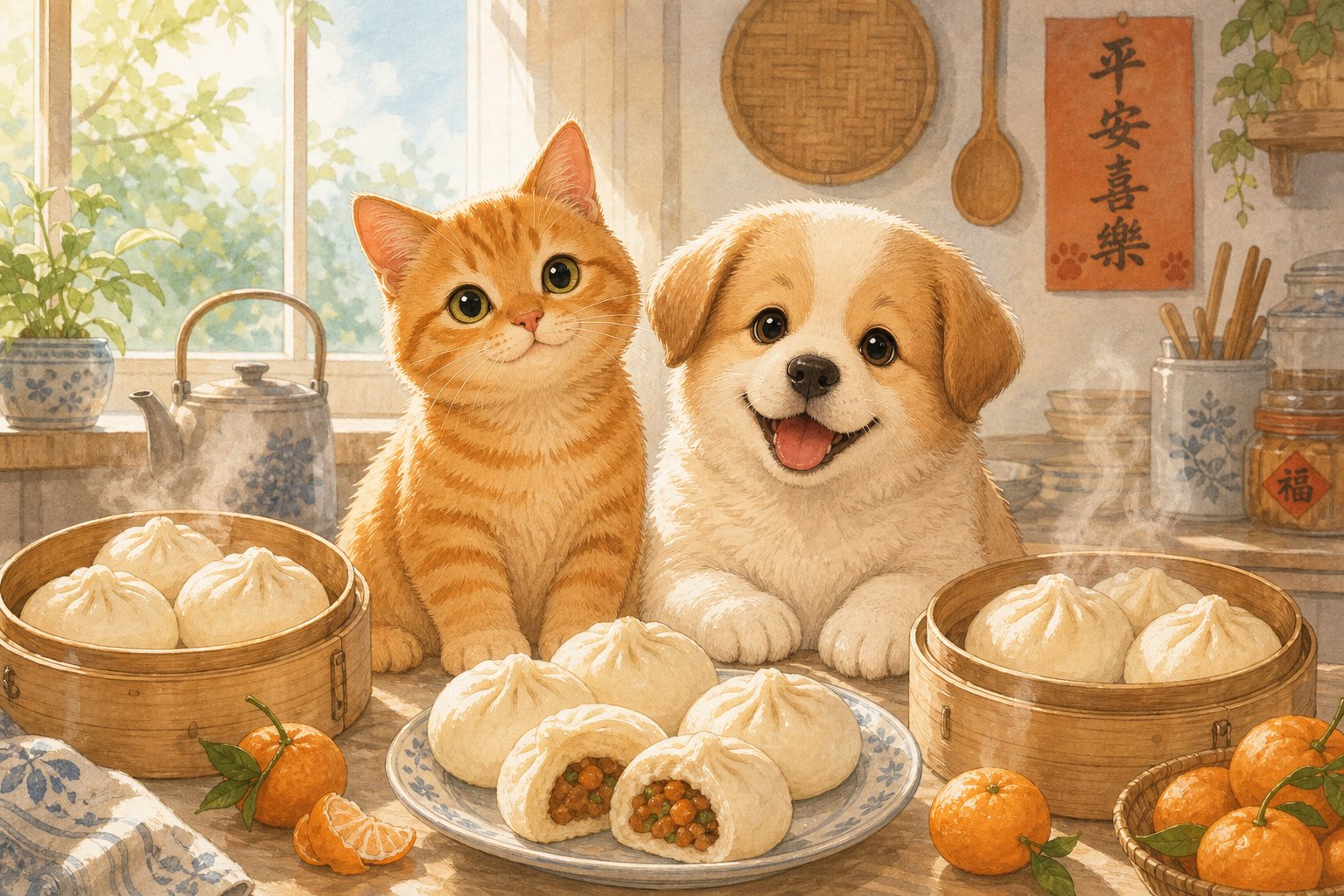
Fewer social rules means more creative freedom. When you're choosing a chinese name cat owners will recognize, or picking a chinese name for dog lovers to appreciate, you're working with the same playful patterns covered earlier — reduplication, food references, lucky meanings — but without the weight of ancestral expectations. Nobody consults a fortune teller to name their golden retriever. That freedom makes chinese pet names some of the most inventive and entertaining examples of the nickname tradition in action.
In Chinese culture, pet names often reflect the pet's personality, appearance, or the owner's best wishes for their companion's life. The same impulse that turns a baby into 豆豆 turns a kitten into 橘子 or a puppy into 包子. The emotional logic is identical. Only the audience has changed.
Adorable Chinese Names for Cats
Cats get names that match their reputation: independent, elegant, and slightly mysterious. The most popular chinese cat names lean into sound mimicry, appearance, and food metaphors.
- Sound-based: 咪咪 (Mīmī, "Meow Meow") — the classic onomatopoeia name, using reduplication for extra cuteness
- Appearance-based: 橘子 (Júzi, "Orange") — for orange tabbies, one of the most common coat colors in China
- Food-inspired: 豆腐 (Dòufu, "Tofu") — for a soft, white cat with a gentle personality
- Personality-based: 大王 (Dà Wáng, "King") — for the cat that rules the household like royalty
- Luck-inspired: 灵猫 (Líng Māo, "Spirit Cat") — mystical and ethereal, for a cat who appears and vanishes at will
- Color-based: 雪儿 (Xuě'ér, "Snowy") — ideal for a fluffy white cat, with the 儿 suffix adding tenderness
Playful Chinese Names for Dogs
Dog names in Chinese tend to be warmer, goofier, and more auspicious than cat names. Dogs are seen as loyal family members who bring fortune into the home, and their names often reflect that belief. If you're searching for chinese puppy names with cultural depth, these categories cover the range.
- Luck-inspired: 旺财 (Wàng Cái, "Prosperity") — the quintessential Chinese dog name, expressing hope that the pet brings wealth to the family
- Luck-inspired: 来福 (Lái Fú, "Incoming Blessing") — a traditional name symbolizing good fortune arriving at your door
- Food-inspired: 包子 (Bāozi, "Steamed Bun") — for a round, squishy-faced dog with irresistible cheeks
- Appearance-based: 毛毛 (Máomao, "Fluffy") — reduplication at work, perfect for any long-haired breed
- Personality-based: 乖乖 (Guāiguāi, "Well-behaved") — for the dog that actually listens, using doubled characters for affection
- Strength-based: 大壮 (Dà Zhuàng, "Big and Strong") — suited for muscular breeds like bulldogs or labs
The Cultural Logic Behind Chinese Pet Names
Why do so many chinese pet names revolve around food and fortune? Two cultural forces are at work. First, food equals love in Chinese culture. Naming a pet after something edible — 包子, 豆腐, 小馒头 (xiǎo mántou, "little steamed bun") — expresses the same nurturing instinct that drives food-based childhood nicknames. Second, auspicious naming reflects a genuine belief that words carry energy. A dog named 旺财 isn't just cute. The name is a small daily wish for household prosperity.
Regional preferences add another layer. Mainland Chinese pet owners tend toward lucky names and food references. In Hong Kong, where Cantonese dominates and English influence runs deep, pet owners often blend languages — a cat might be called "Mochi" using the English spelling, or given a Cantonese-specific name like 肥仔 (Féi Zǎi, "Chubby Boy") that carries different tonal warmth than its Mandarin equivalent. Hong Kong owners also commonly give pets English names alongside Chinese ones, mirroring the dual-naming convention used for people.
One important cultural note: avoid names containing the number four or the character 死 (sǐ, "death"), since the sounds overlap. Names built around 福 (fú, "blessing") or 旺 (wàng, "prosperous") are always safe bets.
Whether you're naming a new kitten or a rescue dog, the same principle applies: pick a pattern that matches their personality, layer in meaning that feels right, and don't overthink it. The best pet names, like the best human nicknames, come from observation and affection rather than a rulebook. That said, there are real rules worth knowing when you're using playful names with people — especially across cultural lines where a wrong tone or a too-familiar term can land very differently than intended.
Common Mistakes and Cultural Etiquette to Know
A wrong tone or a too-familiar term can turn affection into awkwardness fast. For non-Chinese speakers using playful nicknames with a Chinese partner, friend, or colleague, the gap between intention and impact is often just one syllable wide. The good news: most mistakes are predictable and avoidable once you know where the pitfalls sit.
Tonal Mistakes That Change Everything
Mandarin's four tones mean that mispronouncing a single syllable can swap one word for another entirely. As Hacking Chinese research explains, the tone errors that cause real confusion aren't the funny-but-obvious ones (like saying "chest hair" instead of "panda"). They're the subtle swaps where both words fit the same context, so neither speaker notices the mistake immediately.
When it comes to nicknames, tonal slips hit harder because you're using these words repeatedly with someone who matters to you. Calling your partner 亲 (qīn, "dear") with the wrong tone doesn't just sound off — it can land as a completely different word that breaks the mood.
| Intended Word | Pinyin | Meaning | Accidental Word | Pinyin | Meaning |
|---|---|---|---|---|---|
| 亲 | qīn (1st tone) | dear / intimate | 琴 | qín (2nd tone) | musical instrument |
| 宝 | bǎo (3rd tone) | treasure / baby | 报 | bào (4th tone) | newspaper / report |
| 小熊 | xiǎo xióng | little bear | 小凶 | xiǎo xiōng | little fierce one |
| 杯子 | bēizi (1st tone) | cup (cute object name) | 被子 | bèizi (4th tone) | quilt |
The fix isn't perfection — it's awareness. Practice the specific tones of the nicknames you plan to use, not just their meanings. Record yourself, play it back, and compare against a native speaker's pronunciation. A nickname you can't say correctly is a nickname that works against you.
When Playful Nicknames Cross Cultural Lines
Beyond tones, the bigger risk for outsiders is misjudging intimacy level. Jumping to a doubled name or a teasing "insult" nickname before the relationship warrants it doesn't come across as playful. It reads as presumptuous. Imagine a new acquaintance calling you by a childhood nickname they overheard your mother use. That's the equivalent of deploying 宝宝 or 小胖 with someone you've known for two weeks.
There's also the issue of approaching Chinese nicknames as novelty rather than genuine connection. Searching for silly chinese names or funny asian nicknames to try out as party tricks reduces a rich cultural system to entertainment. The same applies to leaning on chinese stereotype names pulled from outdated media — names like "Chang" or "Ching" that carry painful historical associations with anti-Chinese mockery. What might seem like harmless fun to an outsider can land as disrespect to the person being named.
Never use a playful Chinese nickname with someone unless you've heard them use it themselves, or they've explicitly invited you to. The right to use a nickname is granted, not assumed.
Navigating Nickname Etiquette with Confidence
Chinese social hierarchy shapes every nickname interaction. A few rules keep you safe:
- With elders: Never use playful nicknames upward. A partner's parents are addressed by title (阿姨, āyí for "auntie" or 叔叔, shūshu for "uncle"), never by first name or casual terms.
- In professional settings: Stick to surname + title (王老师, Wáng lǎoshī) or full name. Playful names in the office signal a closeness that can make colleagues uncomfortable.
- With new acquaintances: Use their full name or the form they introduce themselves with. Wait for them to offer a nickname or use one with you first.
- When unsure: Ask directly. "我可以叫你...吗?" (Wǒ kěyǐ jiào nǐ... ma? — "Can I call you...?") shows respect and cultural awareness in one sentence.
The underlying principle is simple: playful nicknames are earned through relationship, not claimed through enthusiasm. When you do earn one — when a Chinese friend starts calling you 小 + your name, or a partner gives you a food-based term of endearment — that's a genuine marker of acceptance. It means more precisely because it can't be rushed.
With these boundaries clear, you're ready to move from avoiding mistakes to actively creating. The next step is building your own nickname from scratch, one that fits both the person and the relationship you actually have.
How to Invent Your Own Playful Chinese Nickname
Knowing the rules means you can finally break them creatively. Instead of borrowing a nickname from a list and hoping it fits, you can build one from scratch — something that captures exactly who the person is to you and what your relationship actually feels like. The best cool chinese nicknames aren't found. They're made.
Think of this as a creative recipe. You already know the ingredients (reduplication, prefixes, animal metaphors, food references, character puns). You know the etiquette boundaries. What you need now is a system for combining those elements into something personal, pronounceable, and pitched at the right intimacy level.
A Step-by-Step System for Creating Nicknames
Whether you're crafting a chinese name for my love or inventing code names for crushes chinese friends will actually recognize, the process follows the same logic:
- Identify the core trait or emotional connection. What stands out about this person? Their laugh? Their obsession with milk tea? The way they fall asleep during movies? Pick one defining quality or one feeling they consistently give you. This becomes your raw material.
- Choose a formation pattern. Decide which structure fits the emotional tone you want. Reduplication (doubling a character) feels soft and intimate. The 小 prefix feels friendly and warm. Animal metaphors feel playful and personality-driven. Food references feel nurturing. Pick the pattern that matches your relationship's current temperature.
- Select your characters. Find the Chinese character or word that captures your chosen trait. A person who radiates warmth might connect to 阳 (yáng, "sun"). Someone who's always snacking connects to 吃 (chī, "eat") or a specific food they love. Use a dictionary to explore options and check for unintended meanings.
- Test the tonal flow. Say the nickname out loud. Does it roll off the tongue, or does it stumble? Chinese nicknames work best when the tones create a natural rhythm. Two third tones in a row can feel clunky. A rising tone followed by a falling tone often sounds musical. If it feels awkward to say, try a different character with the same meaning.
- Verify the intimacy level. Ask yourself: does this nickname match where we actually are? A doubled food name like 糖糖 signals deep closeness. A 小 + trait name works for developing friendships. If you'd feel weird saying it in front of the person's parents, it might be too intimate for your current stage.
- Float it gently. Don't announce the nickname like a formal christening. Use it casually in a text or conversation and see how they respond. A smile or a laugh means it landed. Confusion or silence means you recalibrate.
Matching Nicknames to Personality Types
Not sure where to start? Here are personality-based suggestions that demonstrate how the system works in practice. Each one connects a character trait to a specific pattern and explains why the combination clicks.
For someone shy or gentle:
- 小兔子 (xiǎo tùzi, "little rabbit") — rabbits are soft, quiet, and a little timid. The 小 prefix adds tenderness without overwhelming a reserved person. This is cute mandarin at its most gentle.
- 乖乖 (guāiguāi, "well-behaved one") — reduplication makes it sound like a whisper. Works for someone who's quietly sweet rather than loud about it.
For someone energetic or cheerful:
- 小太阳 (xiǎo tàiyáng, "little sun") — for the person who lights up every room. The metaphor is instantly understood and universally positive.
- 跳跳 (tiàotiao, "bouncy") — reduplication captures their restless energy in sound. The repeated syllable mimics the rhythm of someone who can't sit still.
For someone who loves food:
- 吃货 (chīhuò, "foodie" / "eating machine") — affectionately blunt. It's a badge of honor in Chinese culture, not an insult. Works between close friends or partners.
- 小馋猫 (xiǎo chánmāo, "little greedy cat") — layers the 小 prefix onto an animal metaphor that captures both their appetite and their sneaky charm.
For someone bookish or intellectual:
- 书虫 (shūchóng, "bookworm") — direct and familiar, mirroring the English equivalent but carrying the same affection in Chinese contexts.
- 小博士 (xiǎo bóshì, "little doctor/scholar") — playfully elevates their intelligence with a title that's clearly tongue-in-cheek among friends.
For a crush you're not yet close to:
- 小 + one character from their name — safe, warm, and doesn't assume too much. If their name is 林雨 (Lín Yǔ), try 小雨 (Xiǎo Yǔ, "little rain"). It's personal without being presumptuous.
- A subtle trait reference — if they always wear blue, 蓝蓝 (lánlán) works as a private code name for crushes chinese friends won't immediately decode.
Testing Your Nickname Before Using It
Before you commit, run your creation through three quick checks:
The homophone check. Look up whether your chosen characters sound like anything unfortunate in the tones you're using. Mandarin is full of homophones, and what sounds poetic in one tone can sound ridiculous or rude in another. A quick search on a Chinese dictionary app takes seconds and saves embarrassment.
The audience check. Imagine saying this nickname in front of the person's close friends. Does it fit the social context? A name that works in private texts might feel too intimate at a group dinner. The best nicknames survive both settings without making anyone cringe.
The reciprocity check. Would you be comfortable if they gave you a nickname at the same intimacy level? If the answer is no, you're probably reaching beyond your current relationship stage. Scale back to a lighter pattern — swap reduplication for a simple 小 prefix, or choose a less loaded metaphor.
The beauty of building your own nickname is that it carries meaning no borrowed list can replicate. When someone hears a nickname you invented specifically for them, based on something only you noticed, it communicates attention and care in a way that 宝贝 alone never could. It says: I see you clearly enough to name what I see.
Of course, the nickname you create will land differently depending on where you are — geographically and generationally. A term that feels natural in Beijing might sound odd in Taipei, and what resonates with a Gen Z speaker could puzzle their parents entirely.

Regional and Generational Differences You Should Know
A term that feels natural in Beijing might sound odd in Taipei, and what resonates with a Gen Z speaker could puzzle their parents entirely. That's because nickname chinese culture isn't monolithic. It shifts depending on geography, dialect, and the decade someone grew up in. The same impulse — expressing closeness through creative naming — produces wildly different results depending on whether you're in Shenzhen, Taipei, Hong Kong, or a Chinatown in Vancouver.
Understanding these regional flavors matters if you're using playful nicknames across Chinese-speaking communities. A nickname mandarin speakers find perfectly normal might confuse a Cantonese speaker, and vice versa. Here's how the landscape breaks down.
Mainland China vs. Taiwan vs. Hong Kong Styles
Each region has developed its own affectionate vocabulary, shaped by local dialects, media influence, and cultural attitudes toward directness. The differences become obvious when you compare how speakers in each region express the same concept.
| Concept | Mainland China | Pinyin | Taiwan | Pinyin | Hong Kong (Cantonese) | Romanization |
|---|---|---|---|---|---|---|
| Calling a partner "baby" | 宝贝 / 宝宝 | bǎobei / bǎobao | 北鼻 | běibí | BB / 阿B | bi-bi / aa B |
| Calling someone "dear" | 亲爱的 | qīn'ài de | 亲爱的 / 达令 | qīn'ài de / dálìng | 老公 / 老婆 | lou5 gung1 / lou5 po4 |
| Affectionate prefix | 小 (xiǎo) | xiǎo | 小 (xiǎo) | xiǎo | 阿 (aa3) | aa3 |
| Playful insult for boyfriend | 大猪蹄子 | dà zhū tízi | 臭男生 | chòu nánshēng | 死蠢 | sei2 ceon2 |
| Cute reduplication | 宝宝 / 乖乖 | bǎobao / guāiguāi | 水水 (pretty) | shuǐshuǐ | 靓靓 | leng3 leng3 |
Notice how Taiwan's 北鼻 (běibí) is a direct phonetic transliteration of the English word "baby." This reflects Taiwan's long history of absorbing English and Japanese loanwords into everyday Mandarin. Taiwanese speakers also use 达令 (dálìng, from "darling") without irony, something that would sound overly foreign on the mainland. These borrowed terms sit comfortably alongside native chinese nicknames in english-influenced Taiwanese speech.
Hong Kong's Cantonese nicknames carry a different energy altogether. The 阿 (aa3) prefix dominates over 小, and tonal differences between Cantonese's six tones and Mandarin's four create entirely separate sound palettes. A Hong Kong couple might call each other 老公/老婆 (lou5 gung1 / lou5 po4) in Cantonese with a tonal warmth that the Mandarin equivalents don't quite replicate. The city's bilingual culture also means English nicknames blend seamlessly into Cantonese conversation — someone might be "阿Tom" or "BB" without anyone blinking.
How Diaspora Communities Blend Languages
Overseas Chinese communities take this blending even further. In cities like Toronto, Sydney, or San Francisco, second and third-generation speakers often create hybrid nicknames that wouldn't exist in any single language alone. You'll hear constructions like "小Kevin" (xiǎo Kevin), where a Chinese affectionate prefix attaches to an English name, or "Amy姐" (Amy jiě), where an English name gets a Chinese relational suffix.
These hybrid asian nicknames reflect a genuine lived experience. Diaspora speakers navigate between languages daily, and their nicknames mirror that navigation. A Chinese-American might call their grandmother 奶奶 (nǎinai) but their best friend "小J" — using the 小 prefix with just an English initial. The creativity here isn't confusion. It's fluency in two systems simultaneously, producing combinations that feel natural to bilingual ears even if they'd puzzle a monolingual speaker in Beijing or London.
Among younger diaspora communities, you'll also find TikTok and social media driving nickname trends that cross regional boundaries entirely. A viral term from mainland Douyin might get adopted by a Cantonese-speaking teen in Melbourne within days, stripped of its regional origin and absorbed into a global Chinese internet vocabulary.
Generational Shifts in Nickname Culture
Geography isn't the only dividing line. Generation shapes nickname chinese preferences just as powerfully. The pattern is consistent across all regions: older speakers favor meaning-heavy names while younger speakers prioritize sound, humor, and cultural references.
Grandparents and great-grandparents chose nicknames rooted in virtue and aspiration. Names like 建国 (Jiànguó, "build the nation") or 淑芬 (Shūfēn, "gentle fragrance") reflected the values of their era. Even playful childhood names leaned toward auspicious meanings — 福宝 (fúbǎo, "fortune treasure") or 安安 (ān'ān, "peaceful"). The nickname carried a wish for the child's future.
Parents in the 1980s and 1990s shifted toward pop culture. A generation of children got nicknamed after characters from Hong Kong dramas, martial arts novels, or Taiwanese pop stars. The meaning mattered less than the cultural reference — being called 小龙女 (Xiǎo Lóngnǚ, after a famous wuxia character) signaled what your parents watched, not what they hoped you'd become.
Gen Z and younger millennials have pushed further still. Their nicknames are disposable, ironic, and often deliberately absurd. A chinese nickname in this generation might reference a meme that's three weeks old, a viral sound clip, or an inside joke from a gaming community. The nickname's lifespan matches the trend's lifespan. Where grandparents gave names meant to last a lifetime, Gen Z gives names meant to last a group chat.
This generational evolution doesn't mean older patterns have disappeared. They coexist. A twenty-something in Shanghai might answer to 豆豆 from her grandmother, 小美 from her college friends, and a rotating series of ironic internet handles from her online circles — all simultaneously, all appropriate in their own context. The chinese nickname system is additive, not replaceable. Each generation layers new patterns on top of old ones rather than erasing what came before.
That layering is what makes this entire naming tradition so rich. Whether you're drawn to the poetic weight of traditional terms, the playful warmth of food and animal names, or the rapid-fire creativity of internet slang, you're participating in a cultural practice that stretches back centuries while reinventing itself daily. The best way in isn't memorizing a list. It's paying attention to how the people around you use names — what they choose, when they switch, and what shifts when they do. Every nickname you hear is a small window into how someone sees their relationships, their culture, and themselves.
Frequently Asked Questions About Playful Chinese Nicknames
1. What are the most common playful Chinese nicknames for couples?
Chinese couples frequently use terms like 宝贝 (bǎobei, treasure/baby), 亲爱的 (qīn'ài de, darling), and 老婆/老公 (lǎopo/lǎogōng, wifey/hubby). More playful options include teasing names like 大猪蹄子 (dà zhū tízi, big pig's trotter) for an unreliable boyfriend or 小胖 (xiǎo pàng, little fatty) as a sign of deep comfort and trust. The key distinction is that Chinese romantic nicknames operate on an intimacy spectrum, with some reserved for early dating and others only appropriate in committed relationships.
2. Why do Chinese people use food names as nicknames?
Food-based nicknames reflect a core cultural value: food equals love and togetherness in Chinese society. Calling someone 小汤圆 (little rice ball) or 包子 (steamed bun) connects them to warmth, nourishment, and family gatherings. For children, food names like 豆豆 (little bean) or 糖糖 (sugar sugar) express nurturing affection. For pets, names like 豆腐 (tofu) capture softness and sweetness. These names carry emotional weight far beyond their literal meaning because sharing food is one of the primary ways Chinese families express care.
3. Is it rude to call someone a nickname in Chinese without permission?
Yes, using a playful nickname without social permission can feel presumptuous rather than affectionate. Chinese nicknames signal specific relationship levels, so jumping to an intimate form too early breaks unspoken social rules. The safest approach is to wait until the other person uses a nickname with you first, or ask directly with the phrase 我可以叫你...吗 (Wǒ kěyǐ jiào nǐ... ma, Can I call you...?). Never use playful names with elders or in professional settings, and avoid using nicknames you overheard family members use unless explicitly invited to do so.
4. What do Chinese number codes like 520 and 1314 mean as nicknames?
Chinese number codes work because Mandarin digits sound similar to common words. The number 520 (wǔ èr líng) sounds like 我爱你 (wǒ ài nǐ, I love you), while 1314 (yī sān yī sì) echoes 一生一世 (yī shēng yī shì, for a lifetime). Couples use these as paired display names on WeChat, and May 20th has become an unofficial Valentine's Day based on the 520 code. Other popular codes include 888 for prosperity, 666 for awesome, and 9420 meaning just love you. These numbers appear in usernames, chat messages, and even monetary gifts.
5. How do playful Chinese nicknames differ between mainland China, Taiwan, and Hong Kong?
Each region has distinct nickname conventions shaped by local dialects and cultural influences. Mainland China favors the 小 (xiǎo) prefix and native terms like 宝贝. Taiwan incorporates English and Japanese loanwords, using phonetic transliterations like 北鼻 (běibí, from baby) and 达令 (dálìng, from darling). Hong Kong relies on the Cantonese 阿 (aa3) prefix and freely blends English into nicknames, producing forms like 阿Tom or BB. Diaspora communities create hybrid constructions like 小Kevin that combine Chinese affectionate structures with English names.