Understanding Singaporean Chinese Surnames and Their Dialect Roots
Imagine two people sharing the exact same Chinese character for their family name, yet their passports read completely differently. One says "Tan," the other says "Chan," and a third says "Chen." They all write 陈 in Chinese. This is the reality of Singaporean Chinese surnames, where a single character can fracture into multiple English spellings depending on which dialect your ancestors spoke.
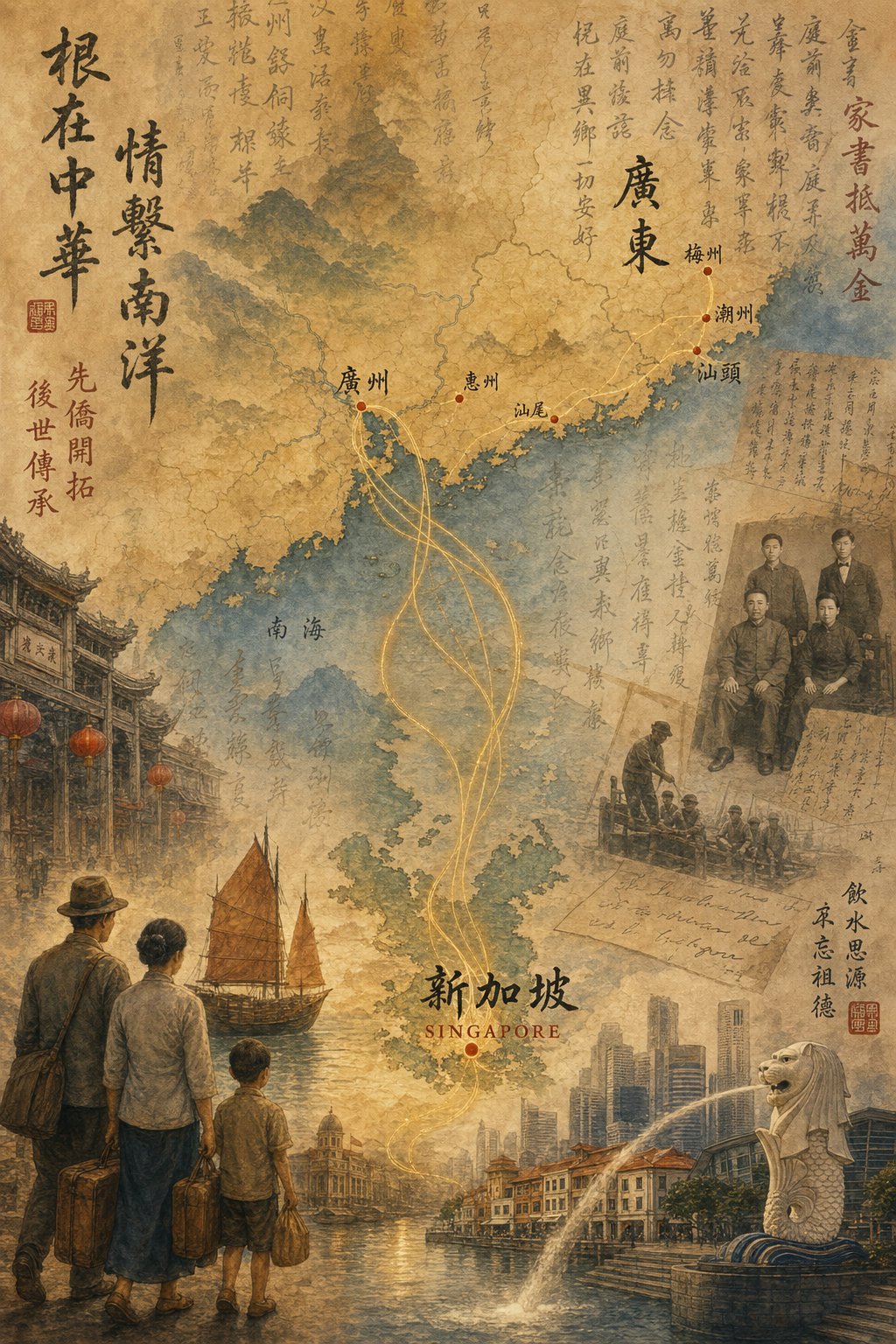
These surnames are far more than administrative labels. They are living records of migration, dialect heritage, and colonial-era registration practices, each one encoding a specific story about where a family came from and when they arrived on the island.
What Makes Singaporean Chinese Surnames Unique
In mainland China, everyone romanizes their surname using Hanyu Pinyin. Taiwan uses a mix of Wade-Giles and other systems. Hong Kong leans on Cantonese-based romanization. Singapore, however, operates differently from all of them. Here, surnames are spelled based on the pronunciation in a person's ancestral dialect, whether that is Hokkien, Teochew, Cantonese, Hakka, or Hainanese.
This means Singapore's surname landscape carries a diversity that no other Chinese-majority society preserves in quite the same way. As columnist Wee Kek Koon explained, his name is an approximation of the pronunciation of his Chinese characters in the southern Fujian tongue, also known as Hokkien. His surname character 黄 becomes "Wee" in Hokkien, while the same character reads "Wong" in Cantonese and "Huang" in Mandarin Pinyin.
The same Chinese character can produce completely different English spellings depending on dialect group. A single surname like 王 becomes Wang in Mandarin, Wong in Cantonese, Ong in Hokkien, and Heng in Teochew.
Why Singapore Spells Surnames Differently From China
So why are Chinese surnames spelled differently in Singapore compared to China? The answer lies in history. When Chinese immigrants arrived in Singapore during the 19th and early 20th centuries, there was no standardized romanization system in place. Colonial administrators registered names based on how migrants pronounced them, and those migrants spoke southern Chinese dialects, not Mandarin.
The naming convention for people of Chinese descent in Singapore is romanized based on the pronunciation in their ancestral dialect. Unlike China, which adopted Pinyin nationwide in the 1950s, Singapore never retroactively converted existing surnames. The result is a population where dialect group surname origins remain visible in every phone directory, every school register, and every government document.
In territories with a sizeable Chinese diaspora like Singapore, the way a family name is spelled functions as a signifier of the region a person's ancestors hail from. A person surnamed "Tan" is understood to have Hokkien heritage, likely tracing back to Fujian province. Someone named "Chan" likely has Cantonese roots in Guangdong.
This article serves as a comprehensive single-page reference for understanding these dialect-based naming patterns, combining statistical data on the most common family names, cultural history behind each dialect group, and practical comparison tables that map the same characters across all five major dialect systems. The story begins, as it must, with the waves of migration that brought these names to Singapore's shores.
Chinese Immigration Waves That Built Singapore's Surname Landscape
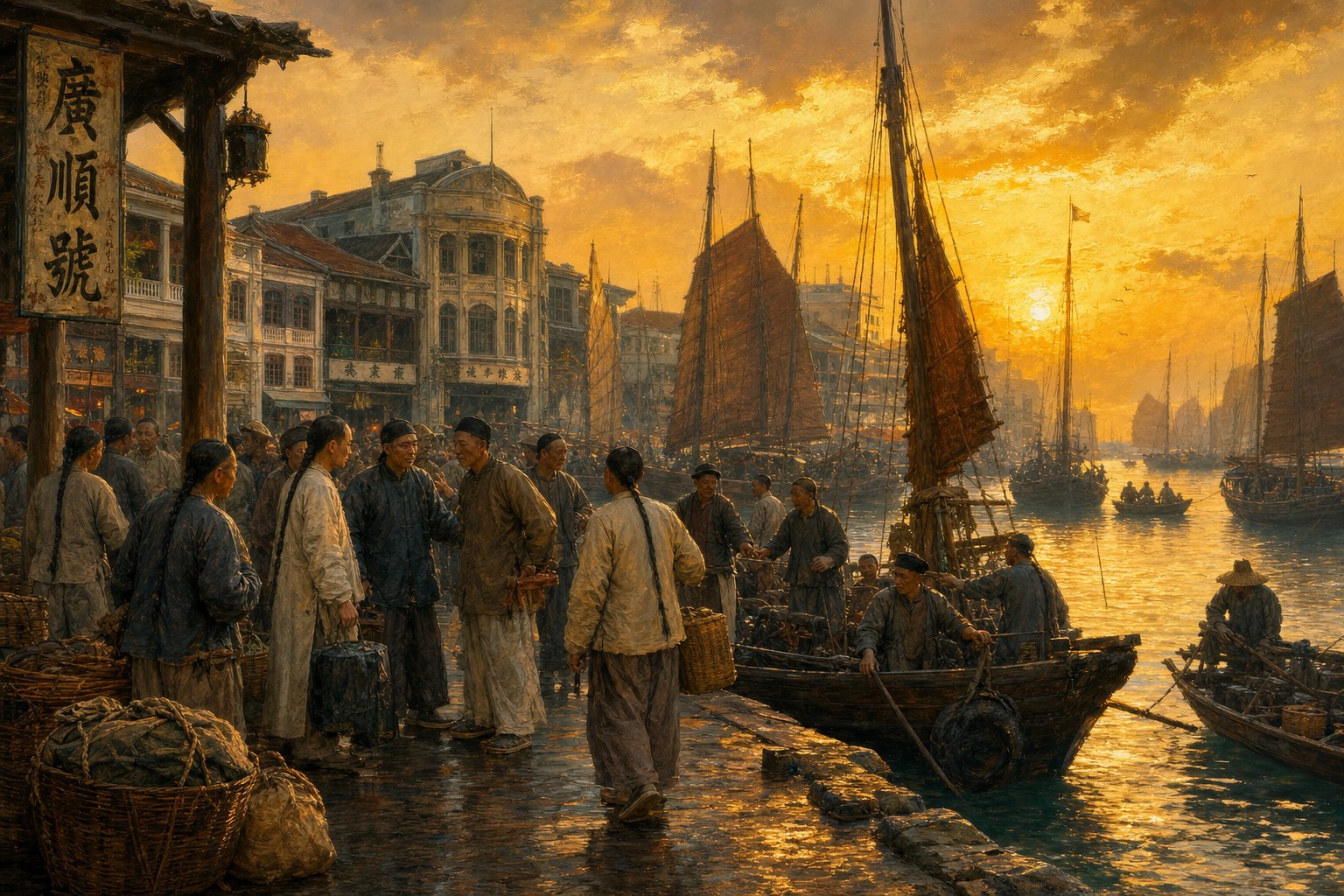
Every surname spelling you encounter in Singapore today traces back to a specific moment in history: the arrival of a family from a particular corner of southern China. The Chinese immigration to Singapore history stretches from the founding of modern Singapore in 1819 through the mid-20th century, and each wave of migrants carried a distinct set of family names pronounced in their own regional tongue.
These immigrants did not come from all over China. They came overwhelmingly from three southern provinces: Fujian, Guangdong, and Hainan. The geography matters because each province, and even each sub-region within a province, spoke a different dialect. That dialect determined how surnames would be spelled on arrival, and those spellings stuck.
Southern Chinese Provinces That Shaped Singapore
Which Chinese provinces did Singaporeans come from? The answer is remarkably concentrated. The vast majority of Chinese settlers originated from the coastal and southern regions of China, drawn by Singapore's position as a British colonial port that actively recruited skilled workers and labourers throughout the 19th century.
Fujian province, located along China's southeastern coast, sent the largest number of migrants. These were the Hokkien speakers from the Minnan region, people whose surnames like Tan, Lim, and Ong would become some of the most common family names on the island. Guangdong province, directly south of Fujian, contributed three separate dialect communities: Teochew speakers from the eastern Chaozhou region, Cantonese speakers from the Pearl River Delta area, and Hakka speakers from the province's northeastern highlands. Hainan Island, China's southernmost province, sent a smaller but culturally distinct group of Hainanese speakers.
These migrants were not arriving into a vacuum. British colonial rule had created demand for labour, and Chinese settlers responded in waves. They worked as traders, craftsmen, and coolies, transforming Singapore from a quiet trading post into a thriving commercial hub. As they registered with colonial authorities, their dialect pronunciations became permanently fixed in official records.
The Five Major Dialect Groups and Their Arrival
The five major Chinese dialect groups in Singapore, known collectively as bang, each arrived with their own timeline and settled into distinct economic niches. Population census data tracked by researchers at the Singapore Chinese Cultural Centre reveals how these proportions shifted over more than a century:
- Hokkien (Min bang) — From Fujian's Minnan region, they arrived earliest and in the greatest numbers. By 1881, they already comprised 28.8% of the Chinese population, growing to around 40% by the mid-20th century. Their dominance explains why Hokkien-romanized surnames like Tan, Lim, Goh, and Chua are so prevalent today.
- Teochew (Chao bang) — From eastern Guangdong's Chaozhou prefecture, they formed the second-largest group at roughly 22% of the Chinese population. Many worked in pepper and gambier cultivation. Their surnames carry distinctive Teochew pronunciations: Teo, Seah, and Goh appear frequently.
- Cantonese (Guang bang) — From the Pearl River Delta in central Guangdong, they made up about 17-22% of the population across different census periods. Cantonese surnames like Chan, Wong, and Leung reflect their origins.
- Hakka (Ke bang) — From northeastern Guangdong and parts of Fujian, they represented around 7-8% of the Chinese population. Hakka romanizations produce spellings like Chong, Fong, and Yap.
- Hainanese (Qiong bang) — From Hainan Island, they arrived later than the other groups and comprised about 7% of the population. Their community did not establish its first temple until 1857, decades after the Hokkien and Teochew communities had already built theirs.
You'll notice a pattern here. The earlier and larger a dialect group's presence, the more frequently you encounter their surname spellings in modern Singapore. Hokkien speakers from Fujian formed the largest group, followed by Teochew from eastern Guangdong, Cantonese from central Guangdong, Hakka from northeastern Guangdong, and Hainanese from Hainan Island. This hierarchy of arrival and population size directly shaped which romanizations became dominant.
Consider the surname character 陈. In a population where 40% trace their roots to Hokkien-speaking Fujian, the Hokkien spelling "Tan" naturally appears far more often than the Cantonese "Chan" or the Hakka "Chin." The same logic applies across the board: the demographic weight of each dialect group determined which spelling of any given surname became the "default" Singaporean version in everyday life.
These five communities did not simply blend together on arrival. As historian Hue Guan Thye documented, they settled in groups based on their place of origin, forming distinct local communities where different dialects were spoken. The Chinese population "was divided into disparate groups distinguished not only by the dialects they spoke, but also by the locations where they congregated, worked and lived." Each group built its own temples, cemeteries, schools, and clan associations, reinforcing dialect-based identity across generations.
This separation meant that surname spellings remained consistent within each community. A Hokkien family registering their name in the 1880s would produce the same romanization as another Hokkien family arriving in the 1920s. The dialect acted as a filter, converting Chinese characters into English letters through a consistent phonological system, one that differed sharply from the systems used by neighboring dialect groups writing the very same characters.
Most Common Chinese Surnames in Singapore Ranked
The demographic weight of each dialect group does not just influence which spellings dominate. It determines which surnames you encounter most often in daily life. The top 10 Singaporean Chinese family names reveal a clear Hokkien and Teochew dominance, reflecting the historical migration patterns outlined above.
One important quirk of Singapore's surname statistics: because the government tracks names by romanized spelling rather than Chinese character, the same character can appear multiple times in the rankings under different spellings. The character 陈, for instance, shows up as both "Tan" (Hokkien/Teochew) and "Chan" (Cantonese) in separate positions. Similarly, 王 appears as both "Ong" (Hokkien) and "Wong" (Cantonese). This split actually reinforces how deeply dialect identity is embedded in the data.
The Top Ten Surnames by Population
Data from the Singapore Statistics Department Report 2000 provides the most cited breakdown of the list of popular Chinese surnames in Singapore by percentage. Here are the top ten romanized surnames and their share of the total Chinese population:
| Rank | Character | Hokkien | Teochew | Cantonese | Hakka | Hainanese | Mandarin Pinyin | % of Chinese Pop. |
|---|---|---|---|---|---|---|---|---|
| 1 | 陈 | Tan | Tan | Chan | Chin | Tan | Chen | 9.5% |
| 2 | 林 | Lim | Lim | Lam | Lim | Lim | Lin | 6.6% |
| 3 | 李 | Lee | Lee | Lee | Lee | Lee | Li | 4.5% |
| 4 | 黄 | Ng / Ooi | Ng | Wong | Vong | Wee | Huang | 4.2% |
| 5 | 王 | Ong | Heng | Wong | Vong | Wang | Wang | 2.7% |
| 6 | 王 | — | — | Wong | — | — | Wang | 2.6% |
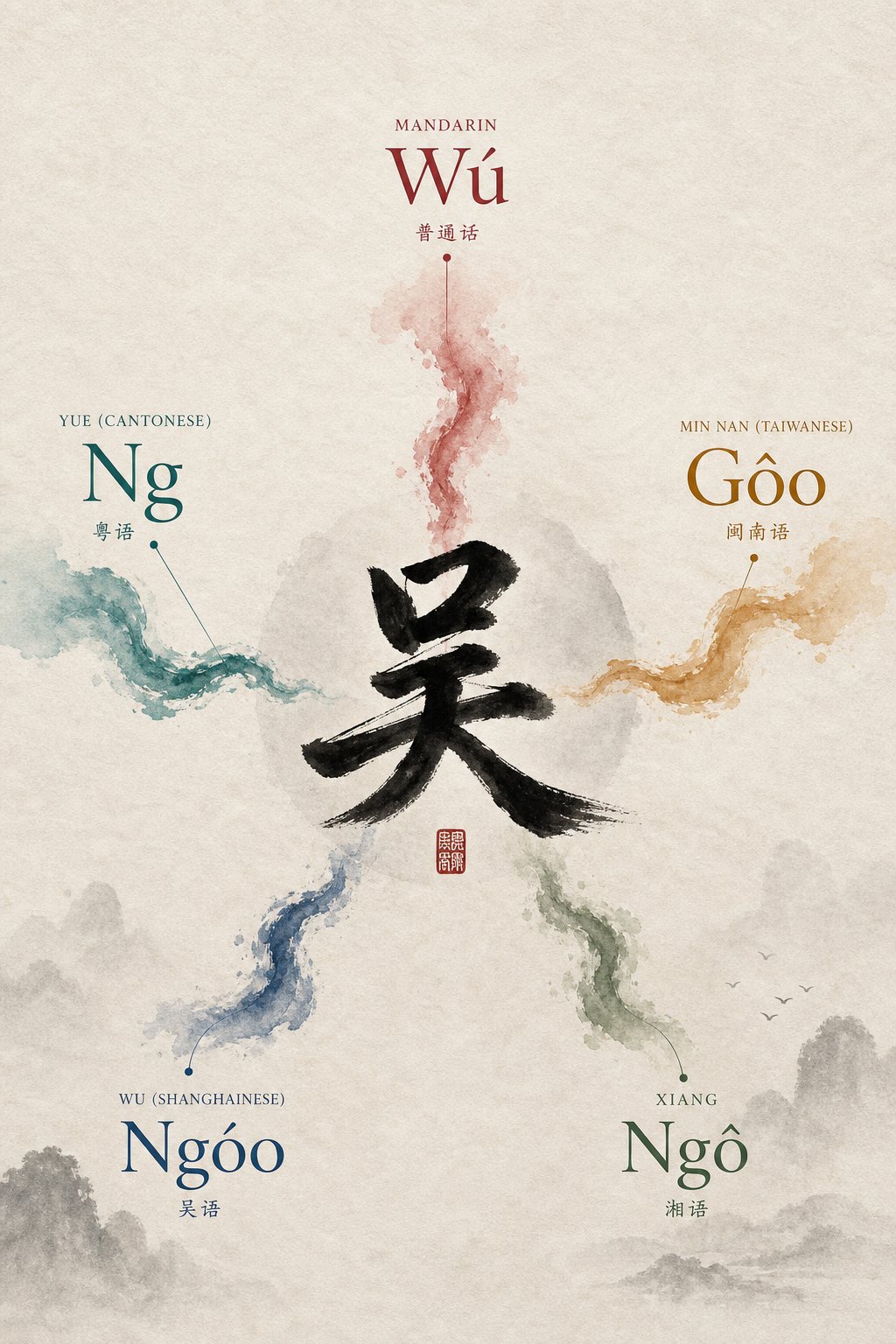
| 7 | 吴 | Goh | Goh | Ng | Ng | Goh | Wu | 2.2% |
| 8 | 蔡 | Chua | Chua | Choi | Tshai | Chua | Cai | 2.2% |
| 9 | 陈 | — | — | Chan | — | — | Chen | 1.9% |
| 10 | 许 | Koh | Koh | Hui | Hee | Koh | Xu | 1.9% |
Notice that ranks 6 and 9 are Cantonese-romanized duplicates of characters already listed higher. When you combine spellings by character, 陈 accounts for roughly 11.4% of the Chinese population and 王 for about 5.3%, making them even more dominant than individual line items suggest.
The Tan Lim Lee Ng Ong surname statistics for Singapore confirm a clear pattern: Hokkien and Teochew romanizations occupy the top positions because those two dialect groups together make up over 60% of Singapore's Chinese community.
Surnames Ranked Eleven Through Fifteen
Beyond the top ten romanized entries, several other surnames appear frequently across Singapore. While the Statistics Department report focused on the top ten by spelling, these characters round out the most common Chinese surnames in Singapore based on available community and clan association data:
| Rank | Character | Hokkien | Teochew | Cantonese | Hakka | Hainanese | Mandarin Pinyin |
|---|---|---|---|---|---|---|---|
| 11 | 张 | Teo / Teoh | Teo | Cheung | Chong | Cheong | Zhang |
| 12 | 杨 | Yeo / Yeoh | Yeo | Yeung | Yong | Yeong | Yang |
| 13 | 洪 | Ang | Ang | Hung | Fung | Hong | Hong |
| 14 | 郑 | Tay / Teh | Tay | Cheng | Chang | Thang | Zheng |
| 15 | 刘 | Lau | Lau | Lau | Liew | Lew | Liu |
Each of these characters carries a meaning that resonated with the communities who bore them. Here is a quick guide to what the most prominent surname characters actually signify:
- 陈 (Tan/Chan) — Originally the name of an ancient feudal state in present-day Henan province. The Chen state was founded around 1046 BC and its people adopted the state name as their surname after its fall. It is the most common surname in both Singapore and Taiwan.
- 林 (Lim/Lam) — Means "forest." The surname traces to Lin Jian, whose mother gave birth to him while hiding in a forest to escape persecution during the fall of the Shang Dynasty.
- 李 (Lee) — Means "plum tree." One origin legend connects it to a minister's family who survived on plum fruit while fleeing a tyrant king. The Tang Dynasty emperors carried this surname, elevating it to immense prestige across China.
- 黄 (Ng/Wong) — Means "yellow." It derives from the ancient Huang state, and the clan's ancestral hall name "Jiangxia" (江夏) references the Hubei region where the clan consolidated after their state fell in 648 BC.
- 王 (Ong/Wong) — Means "king" or "monarch." Descendants of various royal lineages adopted this character as their surname, making it one of the most common in all of China.
- 吴 (Goh/Ng) — Named after the ancient state of Wu in the Yangtze Delta region. The character relates to speaking loudly or expressively.
- 蔡 (Chua/Choi) — Named after the state of Cai, a Zhou Dynasty vassal state in present-day Henan. The character originally referred to a type of wild grass.
- 许 (Koh/Hui) — Means "to permit" or "to promise." It traces to the ancient state of Xu, also in Henan province.
- 张 (Teo/Cheung) — Means "to draw a bow" or "to stretch open." The character depicts the act of stringing a bow, connecting to an ancestor who was said to have invented the bow and arrow.
- 洪 (Ang/Hung) — Means "flood" or "vast." Many Ang families in Singapore trace their roots to Fujian's coastal communities.
These etymologies matter in the Singaporean context because clan associations organized around each surname actively preserve and teach this history. A Tan family in Bedok and a Chan family in Clementi may attend different clan halls, speak different dialects at home, yet share the same 3,000-year-old ancestral narrative rooted in the fall of the Chen state.
The statistics also reveal something subtle about how dialect groups interact with specific surnames. Certain characters cluster heavily within one dialect community. The surname 蔡 (Chua), for example, is overwhelmingly Hokkien and Teochew in Singapore, while 刘 (Lau) spans both Teochew and Cantonese communities. These overlaps and distinctions become clearer when you map each character systematically across all five dialect romanization systems, a comparison that reveals the phonological logic hiding beneath what might otherwise look like random spelling variation.
How Five Dialect Groups Spell the Same Surname Differently
Why is Chen spelled Tan in Singapore? The short answer is phonology. Each of Singapore's five major dialect groups inherited a different branch of ancient Chinese pronunciation, and those sound systems produce predictable, rule-based differences when the same character gets written in English letters. These are not random variations or clerical errors. They are systematic sound correspondences rooted in how Chinese phonology evolved across regions over centuries.
The table below maps 20 common surname characters across all five dialect groups plus Mandarin Pinyin, giving you a comprehensive Chinese surname dialect romanization comparison table in one place.
| Character | Hokkien | Teochew | Cantonese | Hakka | Hainanese | Mandarin Pinyin |
|---|---|---|---|---|---|---|
| 陈 | Tan | Tan | Chan | Chin | Tan | Chen |
| 林 | Lim | Lim | Lam | Lim | Lim | Lin |
| 李 | Lee | Lee | Lee | Lee | Lee | Li |
| 黄 | Ng / Ooi | Ng | Wong | Vong | Wee | Huang |
| 王 | Ong | Heng | Wong | Vong | Wang | Wang |
| 吴 | Goh | Goh | Ng | Ng | Goh | Wu |
| 蔡 | Chua | Chua | Choi | Tshai | Chua | Cai |
| 许 | Koh | Koh | Hui | Hee | Koh | Xu |
| 张 | Teo / Teoh | Teo | Cheung | Chong | Cheong | Zhang |
| 杨 | Yeo / Yeoh | Yeo | Yeung | Yong | Yeong | Yang |
| 洪 | Ang | Ang | Hung | Fung | Hong | Hong |
| 郑 | Tay / Teh | Tay | Cheng | Chang | Thang | Zheng |
| 刘 | Lau | Lau | Lau | Liew | Lew | Liu |
| 周 | Chew | Chew | Chow | Chew | Chew | Zhou |
| 吕 | Loo / Lee | Loo | Lui | Lui | Lee | Lu |
| 谢 | Chia / Cheah | Chia | Tse | Chia | Sia | Xie |
| 何 | Ho | Ho | Ho | Ho | Ho | He |
| 曾 | Chan | Chan | Tsang | Tsen | Chan | Zeng |
| 方 | Png / Pang | Png / Pung | Fong | Fong | Pang | Fang |
| 郭 | Kuek / Kwek | Kuek | Kwok | Kok | Kuek | Guo |
Hokkien and Teochew Romanization Patterns
Scan the table and you'll notice something immediately: Hokkien and Teochew spellings are often identical or nearly so. This is no coincidence. Both belong to the Southern Min language family, sharing a common ancestor in the speech of ancient Fujian. Their phonological systems diverged only partially, which is why surnames like Tan, Lim, Goh, and Chua appear the same in both columns.
The key phonological features that define Hokkien and Teochew surname romanization include:
- Loss of initial fricatives. Where Mandarin has "Ch-" (as in Chen), Hokkien and Teochew shift to a plain "T-" sound, producing Tan. The Mandarin "zh-" in Zhang similarly becomes "T-" in Teo.
- Preservation of final stop consonants. Characters ending in "-k" sounds (like 郭, Kuek) retain that abrupt ending, a feature lost in Mandarin centuries ago.
- Nasal initials standing alone. The character 黄 loses its initial vowel entirely in Teochew, leaving just the nasal "Ng." Hokkien preserves more variation here, producing Ooi, Wee, or Ng depending on sub-dialect.
- Vowel shifts from Mandarin "u" to "o." Mandarin's Wu (吴) becomes Goh, and Xu (许) becomes Koh. The "oh" vowel is a hallmark of Min pronunciation.
Where the two systems diverge is revealing. The character 王 is Ong in Hokkien but Heng in Teochew, a split that reflects different tonal and vowel developments within the Min family. This single difference is often enough to distinguish a Hokkien family from a Teochew one when both carry the same surname character.
Cantonese Hakka and Hainanese Variants
Cantonese romanization follows a distinctly different logic. It preserves initial consonant clusters and aspirated sounds that Min dialects simplified away. The Mandarin "Ch" in Chen stays as "Ch" in Cantonese (Chan), while Hokkien drops it to "T" (Tan). Cantonese also retains the "w-" initial in characters like 黄 (Wong) and 王 (Wong), producing the well-known situation where two completely different characters share the same Cantonese spelling.
Hakka romanization sits somewhere between Cantonese and Min systems. It often preserves voiced or aspirated initials (Tshai for 蔡, Chin for 陈) and uses "v-" where Cantonese uses "w-" (Vong for both 黄 and 王). The "-iew" ending in Liew (刘) is a distinctly Hakka vowel pattern you won't find in other groups.
Hainanese, though part of the Min family like Hokkien and Teochew, developed in relative isolation on Hainan Island. Its romanizations often resemble Hokkien but with subtle vowel differences. The character 黄 becomes Wee (not Ng or Ooi), and 郑 becomes Thang rather than Tay. These small shifts reflect centuries of independent phonological drift after the Hainanese community separated from mainland Min speakers.
The practical takeaway? These spelling differences are not arbitrary. They follow predictable phonological rules that, once understood, let you reverse-engineer a person's likely dialect heritage from nothing more than the English letters on their identity card. That reverse-engineering process, however, gets complicated when you consider that official registration practices were never perfectly consistent, and the same family could end up with different spellings across generations.
When One Family Carries Multiple Surname Spellings
Here is a scenario that puzzles many Singaporeans: two brothers, born to the same parents, carry different surname spellings on their NRICs. One is registered as "Ng" and the other as "Wee." Both share the character 黄. Neither spelling is wrong. They simply reflect different moments, different officers, and different interpretations during the registration process.
This is not a rare edge case. Families across Singapore live with this reality, where cousins, siblings, or even a parent and child carry visibly different romanizations of the same ancestral surname character. The reasons are rooted in how names were recorded across different eras of Singapore's administrative history.
Why Siblings Can Have Different Surname Spellings
Imagine walking into a registration office in colonial Singapore. You speak Hokkien. The clerk behind the counter may or may not speak your dialect. He listens to your pronunciation, interprets it through his own linguistic filter, and writes down what he hears in Roman letters. There was no standardized spelling chart on the wall. No official conversion table. The result depended entirely on that single interaction.
If your older sibling was registered by a different clerk, on a different day, or even at a different office, the spelling could come out differently. One officer might hear "Ng" while another writes "Wee" for the same Hokkien pronunciation of 黄. A third might record it as "Ooi." All three are legitimate phonetic interpretations of the same dialect sound.
The common reasons for intra-family spelling differences include:
- Different registering officers. Each clerk had their own ear and their own habits for transliterating dialect sounds into English letters. No two officers were guaranteed to produce the same spelling.
- Different registration eras. A child born in 1940 under British colonial administration and a sibling born in 1950 under a transitional government might encounter entirely different registration protocols.
- Sub-dialect variation. Even within Hokkien, pronunciation varies between speakers from Xiamen, Zhangzhou, and Quanzhou. A family might pronounce their surname slightly differently from one generation to the next as sub-dialect influences shifted.
- Voluntary changes or corrections. Some family members later amended their registered spelling to match a preferred romanization, while others kept the original entry unchanged.
- Influence of English-educated intermediaries. If a relative or employer accompanied the registrant and provided the spelling on their behalf, the result could differ from what the person would have produced independently.
The cumulative effect is that a single extended family might carry three or four different romanizations of the same character across their collective identity documents, each one a small artifact of the specific circumstances under which it was recorded.
The Role of NRIC Registration in Surname Standardization
Singapore's National Registration Identity Card system, introduced in 1966 after independence, brought more structure to the process. But it did not retroactively correct existing inconsistencies. If your name was already registered under colonial-era records, that spelling typically carried forward into the new system. Families who had already accumulated different spellings simply kept them.
Post-independence registration did become more consistent. Officers worked with better guidelines, and the pool of dialect pronunciations they encountered was more predictable. Yet even within this improved system, variation persisted. The fundamental challenge remained: converting a tonal dialect pronunciation into English letters is an inherently interpretive act, and reasonable people can disagree on the "correct" way to do it.
A significant cultural shift arrived in 1979 with the launch of the Speak Mandarin Campaign. Initiated by then-Prime Minister Lee Kuan Yew, the campaign encouraged Chinese Singaporeans to use Mandarin rather than dialects in daily life. Its effects on surname awareness were indirect but real. As dialect use declined in homes and public spaces, younger Singaporeans grew up knowing their surname primarily through its Mandarin pronunciation rather than its dialect form.
The campaign's impact was dramatic. By 1989, the proportion of ethnic Chinese students from predominantly dialect-speaking families had dropped from 64% to just 7%, while those speaking mainly Mandarin at home rose from 26% to 69%. From 1 January 1981, Ministry of Education schools began addressing ethnic Chinese students by the Hanyu Pinyin versions of their registered names. The Accounting and Corporate Regulatory Authority also encouraged companies to use Hanyu Pinyin when registering.
For surnames specifically, this created a generational split. Older family members understood that "Tan" was the Hokkien reading of 陈 and could explain exactly which dialect sound it represented. Younger family members might know their surname is "Tan" on paper and "Chen" in Pinyin, but lack the dialect fluency to understand why the two sound so different. The living connection between the romanized spelling and its dialect origin began to fade, even as the spelling itself remained permanently fixed on identity documents.
This generational gap means that many younger Singaporeans today carry a surname spelling that functions almost like a fossil: it preserves a dialect pronunciation that the bearer may no longer speak or even fully recognize. The spelling on your NRIC tells a story about your family's dialect group, their era of arrival, and the specific administrative moment when their name was first written in English letters. Whether you can still read that story depends largely on whether the dialect knowledge survived the shift to Mandarin and English that reshaped Singapore's linguistic landscape over the past four decades.
The inconsistency, though sometimes frustrating for official paperwork, carries a hidden benefit. It means that surname spellings function as dialect-group markers with surprising precision. If you know what patterns to look for, a single romanized surname can reveal whether its bearer likely traces to Hokkien, Teochew, Cantonese, Hakka, or Hainanese heritage, a skill that turns out to be more systematic than most people realize.

How to Identify Dialect Group From a Surname Spelling
You see a name on a business card, a school roster, or a LinkedIn profile. The surname is "Teo." Without asking a single question, you can make an educated guess: this person likely has Hokkien or Teochew roots, and their ancestral surname character is probably 张 (Zhang in Mandarin). That kind of instant recognition is not guesswork. It follows predictable phonological patterns that anyone can learn.
The spelling patterns embedded in Singaporean Chinese surnames act like dialect fingerprints. Each romanization system leaves behind consistent clues, specific consonant clusters, vowel combinations, and letter pairings that point toward one dialect group over another. Once you know what to look for, a surname becomes a readable code.
Spelling Patterns That Reveal Dialect Group Origins
Each dialect group favors certain sounds that English letters capture in distinctive ways. Here are the key markers to watch for:
Hokkien and Teochew markers: These two groups share many features because they belong to the same Min language family. Look for surnames that end in "-oh" or "-eo" (Goh, Teo, Yeo), use "Ng" as a standalone surname for 黄, or begin with plain unaspirated consonants where you might expect a "Ch" sound (Tan instead of Chan, Tay instead of Cheng). The "-ua" ending in names like Chua and Hua is another strong Min indicator. Surnames with a final "-k" sound (Kuek, Kwek) also point to Hokkien or Teochew, since these dialects preserve ancient stop consonants that other groups dropped long ago.
Cantonese markers: Cantonese romanizations tend to preserve aspirated initial consonants. You'll see "Ch-" where Hokkien uses "T-" (Chan vs. Tan), "Ts-" or "Ts" clusters (Tsang for 曾), and the distinctive "W-" initial in Wong. Endings like "-ung" (Hung, Leung) and "-eung" (Cheung, Yeung) are strongly Cantonese. The surname Wong is a particularly clear Cantonese signal, though it can represent either 黄 or 王 since both characters sound like "wong" in Cantonese.
Hakka markers: Hakka spellings often feature a "V-" initial (Vong for both 黄 and 王), the "-iew" vowel combination (Liew for 刘), and aspirated clusters like "Tsh-" or "Tsch-" (Tshai for 蔡). The ending "-ong" in names like Chong and Yong frequently signals Hakka heritage.
Hainanese markers: Hainanese romanizations resemble Hokkien but with telltale vowel shifts. The character 黄 becomes Wee (not Ng or Ooi), and 郑 becomes Thang rather than Tay. The "Th-" initial and certain vowel substitutions distinguish Hainanese from its Min cousins.
A Quick Recognition Guide for Common Variants
When you encounter a surname and want to identify the dialect group behind it, follow this step-by-step approach:
- Check if the surname uses Mandarin Pinyin. Spellings like Huang, Chen, Zhang, or Wang follow standard Pinyin and suggest the person either registered their name in the post-1979 Speak Mandarin era or has mainland Chinese heritage. These spellings are uncommon among older Singaporean families.
- Look for Cantonese giveaways. Does the surname start with "Ch-" (Chan, Cheung, Chow), "W-" (Wong), or end in "-ung" or "-eung"? If yes, Cantonese is the likely origin. The surname Ng paired with the character 吴 also points to Cantonese or Hakka rather than Hokkien (where 吴 becomes Goh).
- Test for Hokkien or Teochew patterns. Does it end in "-oh" (Goh, Koh), "-eo" (Teo, Yeo), or "-ua" (Chua)? Does it use a plain "T-" where Cantonese would use "Ch-" (Tan, Tay, Teo)? These are strong Min-dialect indicators. To distinguish between Hokkien and Teochew specifically, check the character 王: if it is spelled Ong, the family is likely Hokkien; if Heng, they are likely Teochew.
- Identify Hakka through unique consonant patterns. A "V-" initial, "-iew" ending, or unusual aspirated clusters (Tshai, Tsen) suggest Hakka. The surname Liew for 刘 is a reliable Hakka marker, since Hokkien, Teochew, and Cantonese all produce Lau for the same character.
- Consider Hainanese if vowels seem slightly off. If a surname looks almost Hokkien but uses unexpected vowels, like Wee for 黄 instead of Ng or Ooi, Hainanese is a strong possibility.
Let's apply this to a real-world puzzle. You meet three people surnamed Ng, Wong, and Huang. All three could potentially share the same character 黄. The Ng is likely Hokkien or Teochew. The Wong is almost certainly Cantonese. And the Huang registered using Mandarin Pinyin, suggesting either a younger generation influenced by the Speak Mandarin Campaign or a family with mainland Chinese ties. Three completely different spellings, one ancestral character, three distinct heritage stories.
Or consider the surname Goh. It could represent 吴 (Wu in Mandarin) if the person is Hokkien or Teochew. But in some cases, Goh can also be a Hokkien rendering of 黄. Context helps here: if the person's relatives include people surnamed Ng or Wee, the character is likely 黄. If their relatives are surnamed Ng in the Cantonese sense, the character might be 吴. The overlap is real, but the surrounding family context usually resolves it.
This recognition skill is not just a party trick. It carries genuine practical value for anyone researching their genealogy, connecting with clan associations, or simply understanding the cultural tapestry of Singapore's Chinese community. It also reveals something deeper: that even the most common-looking surnames can carry rare and unexpected stories, particularly when they belong to smaller dialect subgroups whose romanization patterns fall outside the five major systems entirely.
Rare and Overlooked Chinese Surnames in Singapore
Beyond the five major dialect groups lies a constellation of smaller communities whose surnames rarely appear in standard reference lists. These are the Foochow, Henghua (Putian), and Hokchiu speakers, groups that migrated in smaller numbers but left distinctive marks on Singapore's surname landscape. Their romanizations can look unfamiliar even to other Chinese Singaporeans, yet the underlying characters are often perfectly common. The spelling just follows a phonological system most people have never encountered.
Rare Surnames From Lesser Known Dialect Groups
Singapore's Chinese community includes several dialect subgroups that fall outside the Hokkien-Teochew-Cantonese-Hakka-Hainanese framework. Each brought its own romanization logic, producing surname spellings that can puzzle even seasoned observers.
Foochow (Fuzhou) speakers came from the capital region of Fujian province, speaking Eastern Min rather than the Southern Min of Hokkien communities. Their romanization system, based on the Foochow Romanised tradition developed by missionaries, produces distinctive results. The character 林 becomes "Ling" rather than the familiar "Lim," and 陈 can appear as "Ding" or "Deng" instead of "Tan." A person surnamed "Diong" might carry the character 张, which most Singaporeans know only as "Teo" or "Cheung."
Henghua (Putian/Hinghwa) speakers originated from the Putian and Xianyou areas of Fujian, situated geographically between the Hokkien and Foochow regions. Their dialect, classified as Pu-Xian Min, produces romanizations like "Ding" for 陈 and "Huang" for 黄, spellings that can be mistaken for Mandarin Pinyin but actually reflect a completely different phonological path. The Hinghwa Romanised system gives these surnames their English form.
Hokchiu speakers and other sub-dialect communities from smaller Fujian localities add further variety. Their surnames may appear as one-off oddities in school registers or company directories, recognizable to members of the same community but opaque to everyone else.
Here are notable rare surnames and their origins that you might encounter in Singapore:
- Ting / Ding (陈) — Foochow or Henghua romanization of the same character that produces "Tan" in Hokkien. A person surnamed Ting is not carrying a rare character at all. They are carrying Singapore's most common surname, just spelled through a different dialect lens.
- Diong / Tiong (张) — Foochow rendering of the character most Singaporeans know as Teo or Cheung. The community is small but maintains active cultural networks.
- Iu / Eu (余) — A surname common in Hakka and Foochow communities. The character means "surplus" and traces to a branch of the ancient royal family of the Qin state.
- Bong / Pung (冯) — Appears in Hakka and some Cantonese sub-dialect communities. The character 冯 is moderately common in China but rare enough in Singapore that its bearers form a tight-knit group.
- Sim (沈) — A Hokkien romanization that many Singaporeans recognize, but the same character appears as "Sum" in Cantonese and "Shim" in some Hakka variants, creating confusion about whether these are the same family name.
- Quek / Kuek (郭) — While 郭 is not extremely rare, its Hokkien spelling "Quek" looks unusual enough that people sometimes assume it is an uncommon surname. It is actually well-represented, particularly among Hokkien families from Zhangzhou.
- Seow / Siew (萧) — A surname with deep historical roots tracing to the royal house of the Liang Dynasty. The Hokkien spelling "Seow" and Teochew "Sio" mark it as distinctly southern.
Some of these surnames appear rare only because their romanization is unusual. The underlying Chinese character may rank among the top 50 in China, but when filtered through a minority dialect's phonology, the English spelling becomes unrecognizable to outsiders. A "Ding" in Singapore is not a different family from a "Tan." They share the same ancestral character, the same clan history, and potentially the same village of origin in Fujian. The only difference is which branch of Min Chinese their specific ancestors spoke.
Surnames That Reveal Unique Migration Stories
Rare surnames in Singapore often function as precision genealogical markers. While a common surname like Tan could trace to dozens of villages across Fujian, a less common spelling or character narrows the origin dramatically. If your surname is "Chia" (谢) with a specific sub-spelling variant, it might point to one particular county in Fujian. If you carry the surname "Kwek" with a specific generational name pattern, clan association records can sometimes trace your family to a single village.
This specificity is why clan associations organized by surname remain so valuable for genealogical research. According to Wu Hua's Records of Chinese Associations in Singapore, more than 200 bloodline-based clan associations were established between the early 19th century and Singapore's independence in 1965. These organizations, categorized by shared surname or closely related surnames, served as mutual aid networks for immigrants who arrived with no local connections.
Smaller locality-based associations often indicated in their names that members came from the same villages. Groups like the Koh Leng Association, Song Heng Association, and Geok Shee Association connected people from specific home communities in China. For bearers of rare surnames, these associations preserve records that mainstream databases simply do not contain: ship manifests, village genealogies, ancestral hall registries, and oral histories that link a Singaporean family to a precise point on the map of southern China.
The Foochow and Henghua communities maintain their own dedicated associations in Singapore, separate from the larger Hokkien organizations. These groups serve members whose dialect and cultural practices differ enough from mainstream Hokkien that a shared provincial origin in Fujian is not sufficient common ground. Their surname records, kept in dialect-specific romanization, offer a parallel archive that complements the better-known Hokkien and Teochew clan databases.
Even within the five major groups, certain surname-and-dialect combinations are rare enough to function as village-level identifiers. A Hakka family surnamed "Chung" (钟) from the Meixian district, for instance, can often be connected to specific Hakka heartland villages through the Ying Fo Fui Kun, a Hakka clan association established in 1822 by settlers from the five districts of Kar Yeng. The association's records span two centuries of membership, making it possible to trace lineage connections that would otherwise be lost.
These rare surnames and their associated communities represent something fragile. As Singapore's older generation passes and dialect fluency continues to decline, the living knowledge that connects an unusual romanization to its specific village origin grows thinner. The clan associations that preserve this heritage face their own challenges: an ageing membership base, with active participants predominantly in their 60s and 70s. The question of whether these surname-based communities can transmit their knowledge to younger generations shapes not just individual family histories but the broader cultural fabric of Chinese Singaporean identity.
Surname Culture in Modern Singapore
The ageing membership rolls of clan associations tell only part of the story. Surnames in Singapore still carry cultural weight that extends well beyond administrative paperwork. They shape social customs, community networks, and even marriage decisions. For many families, the surname remains the single strongest thread connecting a modern Singaporean life to an ancestral village thousands of kilometers away.
Clan Associations and Surname Based Communities
Singapore Chinese clan associations by surname have operated continuously since the 1800s, adapting their purpose with each generation. The earliest associations served as lifelines for newly arrived migrants, offering shelter, job referrals, and burial arrangements. Their modern incarnations look quite different, but the organizing principle remains the same: shared surname, shared obligation.
The Singapore Federation of Chinese Clan Associations (SFCCA), established in 1986 as an umbrella body for all Chinese clan organizations, coordinates activities across more than 200 member associations. Under its guidance, individual surname-based groups now provide:
- Scholarships and bursaries for members' children and grandchildren, funded through property holdings and donations accumulated over generations.
- Networking events that connect professionals sharing the same surname, sometimes linking Singaporean members with counterparts in Malaysia, Indonesia, and China.
- Cultural preservation programs including dialect classes, ancestral worship ceremonies during Spring and Autumn festivals, and publication of clan genealogies.
- Youth activity groups designed to attract younger members who might otherwise view clan associations as relics of their grandparents' era.
- International conferences organized by larger associations that bring together global diaspora communities sharing a common surname character.
A 1984 seminar attended by 185 clan associations set the direction for this transformation. Then-Second Deputy Prime Minister Ong Teng Cheong outlined five priorities: open membership regardless of dialect or ethnicity, groom younger leadership, intensify cultural activities, establish community care services, and coordinate with other organizations. The associations that thrived took this advice seriously, reinventing themselves as cultural hubs rather than purely mutual-aid societies.
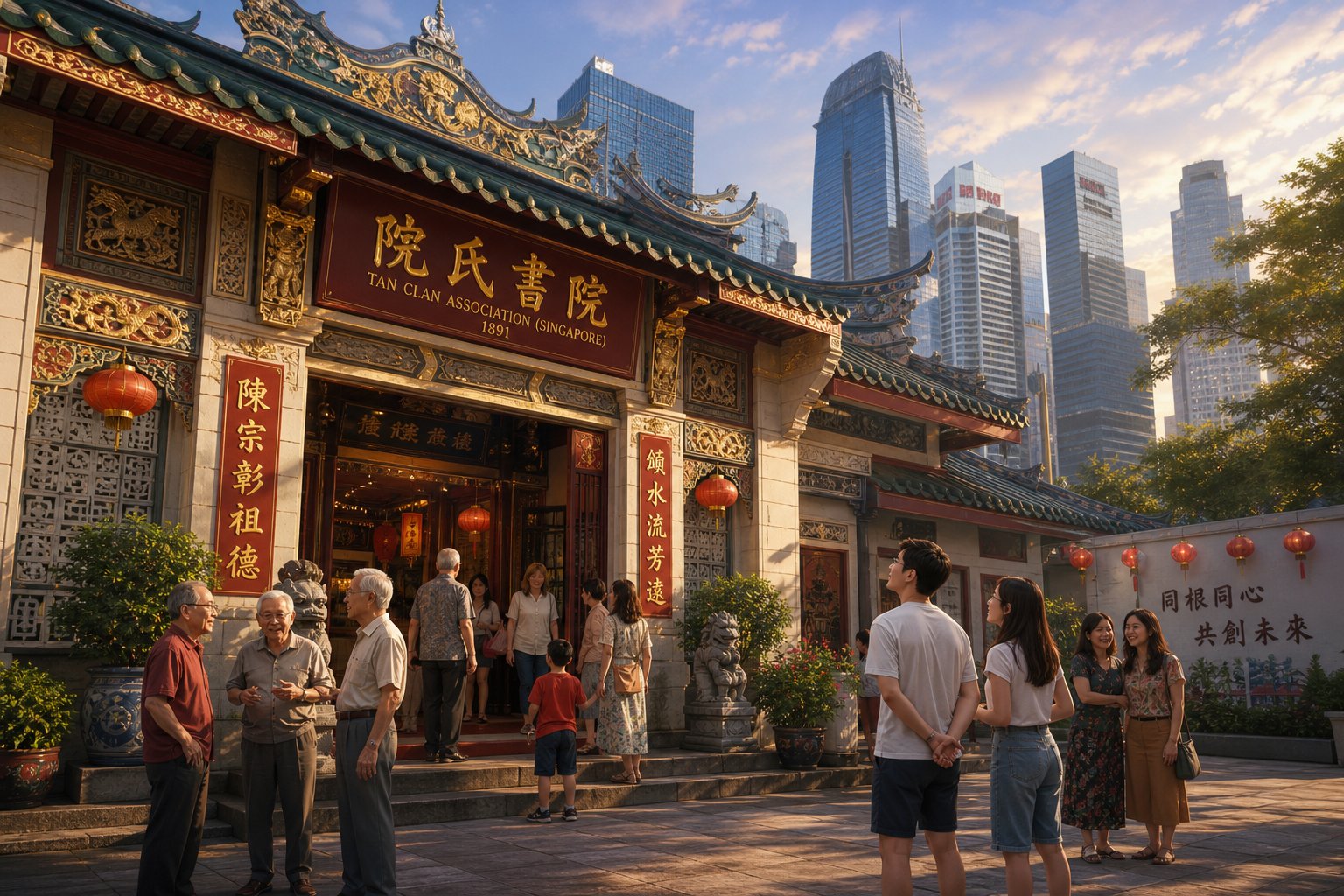
The result is a network where a surname like Tan (陈) connects a young professional in Tanjong Pagar to a retiree in Ang Mo Kio, both linked through the Singapore Tan Clan Association to a shared ancestral narrative stretching back to the ancient Chen state. The association maintains genealogical records, organizes ancestral homeland visits, and publishes materials tracing the surname's history across Southeast Asia.
Surnames serve as connective tissue between Singapore's modern identity and its ancestral roots, binding a 21st-century city-state to centuries-old village networks through nothing more than a few letters on an identity card.
Same Surname Marriage Traditions and Modern Attitudes
One of the most persistent cultural traditions surrounding Chinese surnames involves marriage. The same surname marriage taboo among Singapore Chinese communities traces back thousands of years to Confucian principles of exogamy. The logic was straightforward: people sharing a surname were assumed to share a common ancestor, making marriage between them a form of incest regardless of how distant the actual relationship might be.
In practice, this meant a Tan could not marry another Tan, even if one family was Hokkien from Xiamen and the other was Cantonese from Guangzhou with no genealogical connection whatsoever. The taboo applied to the Chinese character, not the romanized spelling. A "Tan" (陈) marrying a "Chan" (陈) would still violate the tradition because both share the same underlying character.
How does this play out in contemporary Singapore? Among older generations, the taboo retains real force. Grandparents may express discomfort or outright opposition when a grandchild brings home a partner with the same surname. Some families consult genealogical records to confirm whether the two branches share any traceable connection before giving their blessing.
Younger Singaporeans, however, largely treat the tradition as a cultural curiosity rather than a binding rule. Surveys and anecdotal evidence suggest that same-surname marriages have become increasingly common, particularly among couples who identify more strongly with their English names than their Chinese surname heritage. The practical reality of Singapore's small population also plays a role. When 9.5% of the Chinese community shares the character 陈, strictly avoiding all Tans and Chans would eliminate a significant portion of the dating pool.
Still, the tradition has not disappeared entirely. Wedding planners in Singapore report that some couples quietly check surname compatibility as part of their preparation, and certain clan associations still maintain advisory positions on the matter. The taboo exists in a middle space: no longer enforced, but not yet forgotten.
Beyond marriage customs, tracing Chinese ancestry from a Singapore surname has become an increasingly popular pursuit. Genealogical research using surname data allows Singaporeans to identify their specific village of origin in China, a process that typically begins with three pieces of information: the surname character, the dialect group, and any family oral history about provincial origins.
Clan associations play a central role here. Their membership records, some dating back over a century, often contain village-level detail that no government database preserves. A person who knows they are "Koh" (许) and Hokkien can approach the relevant clan association and potentially trace their lineage to a specific township in Fujian's Nan'an or Jinjiang counties. The association may hold records of which ship their ancestor arrived on, which street they first lived on in Singapore, and which village they sent remittances back to.
For those without clan association connections, the genealogical research process typically involves examining tombstone inscriptions at Chinese cemeteries, consulting immigration records from the colonial era, and cross-referencing surname-and-dialect combinations with village databases. Tombstones in particular often record the ancestral village name in Chinese characters on the rightmost column, providing a direct link between a Singaporean family and a specific point on the map of southern China.
The modern Singaporean Chinese surname heritage culture sits at a crossroads. Dialect fluency continues to decline, and with it the intuitive understanding of what a surname spelling represents. Yet interest in heritage has arguably never been higher. Young Singaporeans who cannot speak a word of Hokkien are booking ancestry trips to Fujian, joining clan association youth wings, and using DNA testing services to supplement what their surname already tells them. The surname itself remains the starting point, a single word that encodes province, dialect, era, and lineage for anyone willing to decode it.
What Your Surname Reveals About Your Family History
A single romanized surname on your identity card carries three layers of encoded information: the southern Chinese province your ancestors left, the dialect group they belonged to, and the approximate era when a colonial clerk first wrote their name in English letters. That is a remarkable amount of history compressed into a few characters on a laminated card.
The spelling itself is the clue. If your surname is Tan, your family almost certainly traces to Hokkien or Teochew speakers from Fujian or eastern Guangdong. If it is Chan, the trail leads to Cantonese-speaking communities in the Pearl River Delta. If it is Chin, Hakka heritage from northeastern Guangdong becomes the likely story. Each romanization points to a specific branch of the Chinese diaspora, a specific phonological tradition, and a specific chapter in Singapore's immigration history.
Your Surname as a Key to Ancestral Origins
How do you trace family history using a Chinese surname in Singapore? Start with what you already have. Your romanized spelling identifies the dialect group. The dialect group narrows the province. The province, combined with any oral history your family preserves, can narrow the search to a county or even a village.
This is not abstract. A person surnamed "Koh" (许) who knows their family is Hokkien can reasonably focus their search on the Nan'an and Jinjiang counties of Fujian's Quanzhou prefecture, where the majority of Hokkien Koh families originated. Someone surnamed "Cheung" (张) with Cantonese heritage would look toward the Guangzhou or Taishan regions instead. The surname spelling does the first round of filtering for you.
Singapore Chinese genealogy surname research has become more accessible than ever, but it still requires combining multiple sources. No single database holds the complete picture. The process works best when you layer different types of evidence on top of each other, letting each source confirm or refine what the others suggest.
Preserving Surname Heritage for Future Generations
If you want to find your ancestral village from your Singaporean surname, here are practical resources and approaches that work:
- Consult your surname's clan association. Singapore has over 200 bloodline-based clan associations, many holding membership records, ship manifests, and village genealogies dating back more than a century. The Singapore Federation of Chinese Clan Associations (SFCCA) can direct you to the right organization for your surname and dialect group.
- Interview older family members systematically. Ask specifically about dialect group, province of origin, village names, and any relatives still in China. The National Library of Singapore's family history resource guide recommends starting with oral history before turning to archival records.
- Check tombstone inscriptions. Chinese cemeteries in Singapore, including records from Bukit Brown, often display the ancestral village name in Chinese characters. These inscriptions provide direct links to specific locations in southern China.
- Use the dialect romanization tables in this article. Cross-reference your surname spelling against all five dialect systems to confirm which character you carry and which dialect group produced your specific romanization.
- Search the National Archives of Singapore. Government records, burial registers, and immigration documents are searchable through the Archives Online portal. Colonial-era records may contain your ancestor's registered name alongside their stated place of origin.
- Explore the National Library's newspaper archives. If your ancestors were active in community organizations, their names may appear in historical Chinese-language newspapers, often with dialect group and provincial origin mentioned.
- Connect with homeland associations. Beyond surname-based clans, locality-based associations connect members from the same villages or counties. These groups sometimes organize return trips to ancestral villages and maintain contact with communities in China.
The key insight for Chinese surname heritage preservation in Singapore is this: the window for gathering first-hand knowledge is narrowing. The generation that arrived speaking dialect, that understood intuitively why their name was spelled a certain way, is passing. Their children may still hold fragments of the story. Their grandchildren often hold only the spelling itself, a fossil waiting to be decoded.
Yet that fossil is remarkably durable. Unlike dialect fluency, which fades without daily practice, a surname spelling persists unchanged across generations of identity documents. It will still be there in fifty years, still encoding the same provincial origin, the same dialect group, the same moment of colonial registration. The question is whether future generations will retain the knowledge to read it.
Understanding your surname spelling reveals which province, dialect group, and approximate era of immigration your family likely came from. That single piece of information opens doors to clan records, village connections, and ancestral narratives that stretch back centuries before your family ever reached Singapore's shores. The dialect map hidden in your name has always been there. You just need to know how to read it.
Frequently Asked Questions About Singaporean Chinese Surnames
1. Why are Chinese surnames spelled differently in Singapore compared to China?
Singapore romanizes surnames based on ancestral dialect pronunciation rather than Mandarin Pinyin. When Chinese immigrants arrived in the 19th and early 20th centuries, colonial clerks recorded names as they heard them spoken in Hokkien, Teochew, Cantonese, Hakka, or Hainanese. Since China adopted Pinyin nationwide in the 1950s but Singapore never retroactively converted existing surnames, the dialect-based spellings became permanent. This is why the character 陈 appears as Tan (Hokkien), Chan (Cantonese), or Chin (Hakka) on Singaporean identity documents instead of the standardized Chen used in mainland China.
2. What are the most common Chinese surnames in Singapore?
According to Singapore Statistics Department data, the most common Chinese surname character is 陈 (Tan/Chan), accounting for roughly 11.4% of the Chinese population when all dialect spellings are combined. It is followed by 林 (Lim/Lam) at 6.6%, 李 (Lee) at 4.5%, 黄 (Ng/Wong/Wee) at 4.2%, and 王 (Ong/Wong/Heng) at about 5.3% combined. Hokkien and Teochew romanizations dominate the top positions because these two dialect groups together represent over 60% of Singapore's Chinese community.
3. How can I tell which dialect group a Singaporean Chinese surname belongs to?
Specific spelling patterns reveal dialect origins. Hokkien and Teochew surnames often end in -oh (Goh, Koh), -eo (Teo, Yeo), or -ua (Chua), and use plain T- where Cantonese uses Ch- (Tan vs Chan). Cantonese markers include W- initials (Wong), -ung endings (Hung, Leung), and aspirated Ch- sounds. Hakka surnames may feature V- initials (Vong) or -iew endings (Liew). Hainanese spellings resemble Hokkien but with vowel shifts, such as Wee for 黄 instead of Ng. Mandarin Pinyin spellings like Huang or Chen suggest post-1979 registration or mainland Chinese heritage.
4. Why do siblings sometimes have different surname spellings on their Singapore NRIC?
Intra-family spelling differences arose because colonial-era name registration lacked standardization. Different clerks transliterated dialect pronunciations differently, so a child registered in 1940 might get a different spelling than a sibling registered in 1950. Sub-dialect variations, the influence of English-educated intermediaries who provided spellings on behalf of registrants, and voluntary amendments by some family members all contributed. Post-independence NRIC registration brought more consistency but did not retroactively correct existing records, so families that accumulated different spellings simply kept them.
5. How can I trace my ancestral village in China using my Singaporean Chinese surname?
Start by identifying your surname character and dialect group from your romanized spelling. This combination narrows your ancestral origin to a specific province and often a specific prefecture. Next, consult your surname's clan association through the Singapore Federation of Chinese Clan Associations, as many hold membership records and village genealogies dating back over a century. Interview older family members about provincial origins and village names. Check tombstone inscriptions at Chinese cemeteries, which often display ancestral village names in Chinese characters. The National Archives of Singapore and National Library newspaper archives also contain immigration records with stated places of origin.