The Chinese Character for Snow 雪 at a Glance
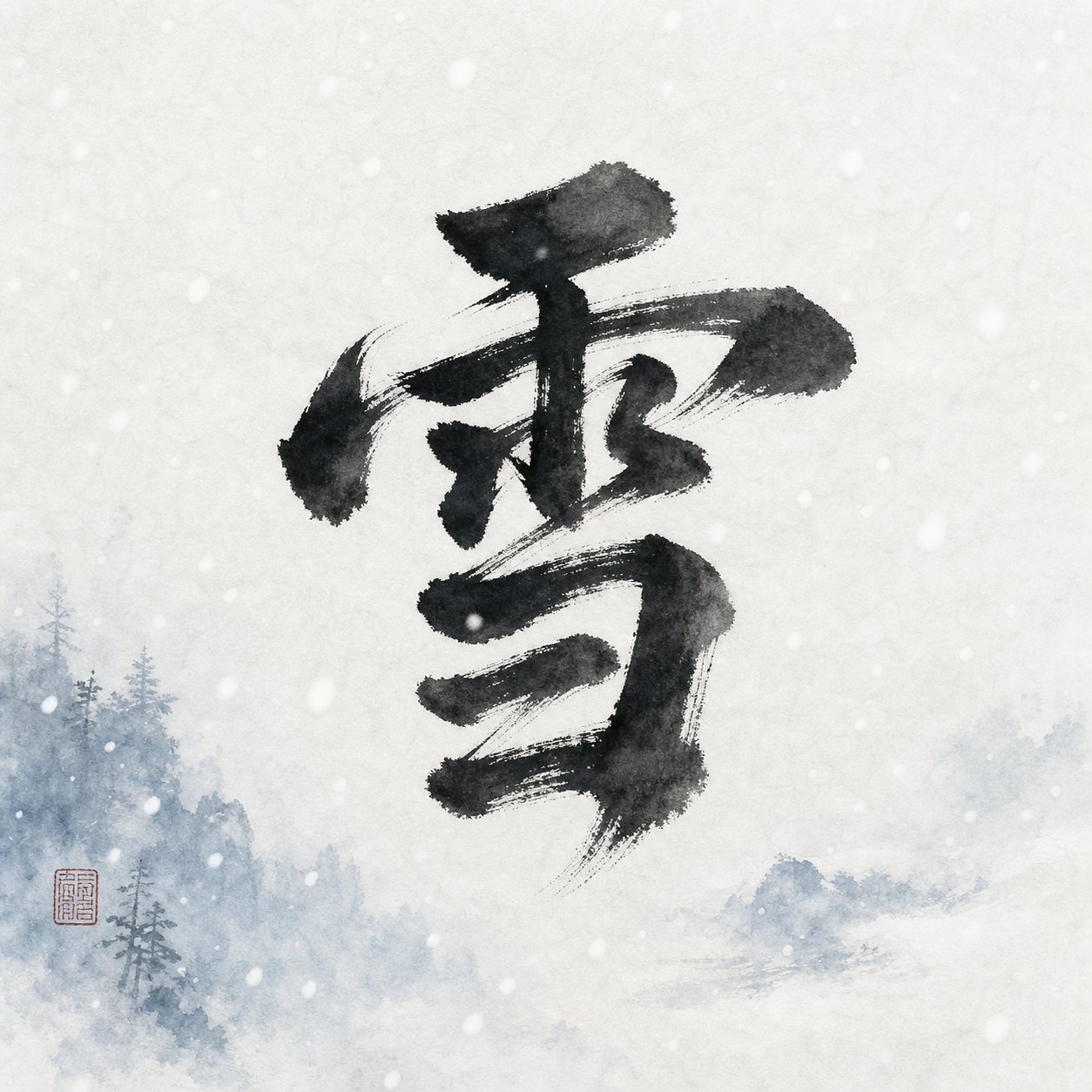
Wondering how to say snow in Chinese? The answer is one elegant character: 雪, pronounced xuě (third tone) in Mandarin. It refers to the frozen precipitation we all recognize, but in Chinese, this single character carries layers of meaning that stretch far beyond the weather forecast.
What Does 雪 Mean in Chinese
At its most literal level, 雪 means snow — the white flakes that fall from winter skies. It is composed of the rain radical (雨) on top and the component 彐 on the bottom, visually signaling that this is a form of precipitation distinct from rain. The character is identical in both simplified and traditional Chinese, so you will encounter the same form whether you are reading texts from Mainland China, Taiwan, or Hong Kong.
雪 (xuě): snow; a weather phenomenon of frozen crystalline water falling from clouds. Extended meanings include purity, whiteness, and — as a verb — to cleanse or wipe away.
That dual nature is what makes the Chinese character for snow meaning so rich. Beyond describing weather, 雪 evokes purity, ethereal beauty, and even the act of cleansing a wrong. Poets have leaned on it for centuries to paint images of quiet elegance, and it remains one of the most culturally loaded nature words in the language.
Why This Character Matters for Learners
If you are studying Mandarin, 雪 is a character you will meet early and often. It appears on HSK vocabulary lists and ranks among the most common nature-related characters in frequency data drawn from both written and spoken Chinese. It also serves as a building block for dozens of compound words — from 下雪 (to snow) and 雪人 (snowman) to idioms that native speakers use in everyday conversation. Understanding what xue means in Chinese gives you a gateway into weather vocabulary, classical poetry, and naming culture all at once.
Its visual structure, meanwhile, offers a perfect case study in how Chinese characters encode meaning through radicals and components — a topic worth exploring piece by piece.
How the Character 雪 Is Built from Radicals
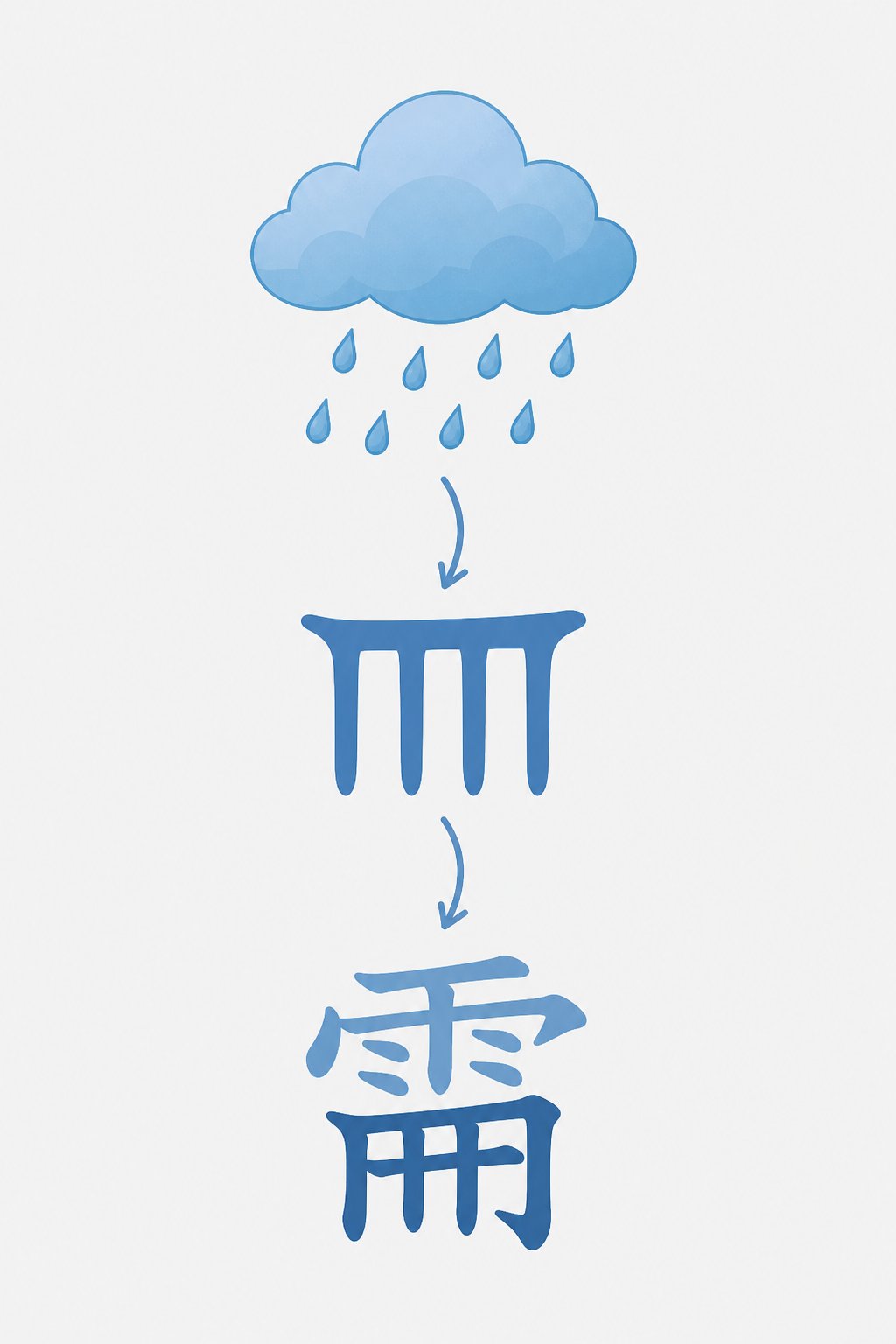
Chinese characters are not random squiggles. Most of them are assembled from smaller, meaningful parts called radicals and components. When you understand the snow character radical breakdown, the whole character stops looking foreign and starts telling a story. Let's pull 雪 apart and see what's inside.
Breaking Down the Radicals of 雪
The character 雪 is a top-bottom structure made of two distinct pieces:
- Top: 雨 (yu) — the rain radical. This eight-stroke component represents rain and appears in dozens of weather-related characters. Think of it as a label that says "this word involves something falling from the sky."
- Bottom: 彐 — a component sometimes called "fork" or likened to a hand or comb shape. It sits beneath the rain radical and modifies the meaning, distinguishing 雪 from plain rain.
Imagine the character as a simple diagram:
雨 (rain from clouds) on top + 彐 (catching/freezing element) on bottom = 雪 (snow)
The rain radical 雨 is Kangxi Radical 173 and functions as a semantic signpost across many characters. You will find it in 雷 (lei, thunder), 零 (ling, fragment or zero), 霜 (shuang, frost), and of course 雪 itself. Whenever you spot 雨 sitting on top of a character, you can safely guess the word relates to weather or atmospheric phenomena.
The lower component 彐 does not carry a standalone weather meaning on its own. In the context of 雪, it serves to differentiate this particular type of precipitation from ordinary rain. The logic is elegant: rain that has been altered — frozen, solidified, transformed — becomes snow. The structure tells you what category (precipitation) and what kind (not liquid) in just eleven strokes.
A Mnemonic to Remember 雪
Knowing the 雪 radical components explained above is useful, but how do you make the character stick in memory? A vivid mental image works far better than rote repetition.
Picture this: rain (雨) is pouring down from heavy clouds. Just below, a hand or comb-like shape (彐) reaches up and catches the falling droplets. The moment those droplets land on the comb's teeth, they freeze solid — liquid rain transformed into crystalline snow. That catching, freezing action is your bridge between the two components.
Another way to think about it: 彐 looks like a small rake or fork. Imagine holding a fork out in a rainstorm. The rain hits the cold metal tines and instantly turns to ice crystals. Rain plus freezing contact equals snow. This narrative mirrors what HanziHero's mnemonic system does — it connects the visual form to a short, memorable scene so you never confuse 雪 with other rain-radical characters.
Why does this matter for learners? Because rain radical Chinese characters form a large family, and they can blur together if you only memorize them by brute force. Characters like 雷, 雲 (cloud), 霧 (fog), and 雪 all share that same 雨 on top. The bottom component is what makes each one unique. When you attach a story to that bottom piece, you give your brain a hook — and hooks are what turn short-term cramming into long-term recall.
With the character's internal architecture clear, a natural question follows: how did this structure come to be? The answer lies thousands of years in the past, scratched into turtle shells and cast in bronze.
The Historical Evolution of 雪 Through Centuries
Turtle shells, ox bones, and a sharp stylus — that is where the story of 雪 begins. Over three thousand years ago, scribes in the Shang dynasty carved early Chinese characters into animal bones and shells for divination purposes. These oracle bone inscriptions represent the oldest verified forms of Chinese writing, and 雪 was already among them. Tracing the chinese snow character history from those ancient carvings to the form you write today reveals just how consistent this character's core logic has remained.
From Oracle Bones to Modern Script
The 雪 oracle bone script origin dates to roughly 1200-1050 BCE. In its earliest known form, the character showed the rain radical on top — recognizable even then as a depiction of drops falling from a horizontal cloud line — with small dots or feathery strokes beneath it. Those dots represented flakes drifting downward, a direct pictographic rendering of snow descending from clouds.
Here is how the evolution of chinese character xue unfolded across major script stages:
- Oracle bone script (circa 1200 BCE): The rain element sat above scattered dots or short diagonal strokes representing falling snowflakes. The image was intuitive — precipitation, but not liquid drops. The flakes were visually distinct from the straight vertical lines used for rain.
- Bronze script (circa 800-500 BCE): As characters were cast into bronze vessels, the forms became slightly rounder and more stylized. The lower portion still depicted falling flakes, though the individual dots began merging into more connected strokes.
- Seal script (circa 200 BCE): During the Qin dynasty's standardization effort, the character took on the elegant, flowing lines typical of seal script. The lower section became more abstract, moving away from literal snowflake imagery toward a compact, brushable form.
- Clerical and regular script (Han dynasty onward): The bottom portion settled into the angular 彐 shape we recognize today. What once depicted scattered flakes was now a streamlined three-stroke component suited to brush and ink writing at speed.
The transformation is a textbook case of how pictographic elements gradually become abstract through centuries of daily use. Scribes needed to write faster, brushes replaced sharp styli, and the delicate snowflake dots compressed into a single efficient component. Yet the top half — the rain radical 雨 — remained remarkably stable throughout every stage, anchoring the character's meaning to atmospheric precipitation no matter how the bottom evolved.
Why Etymology Helps You Learn
You might wonder: why bother with ancient script forms when you just want to read modern Chinese? Because etymology turns a seemingly arbitrary character into a logical picture. When you know that 雪 has always depicted snow falling from clouds — from oracle bones to your smartphone screen — the character stops being a shape to memorize and becomes a scene to recognize. The rain radical on top is not a random design choice; it is a three-thousand-year-old label that has never changed its job.
This historical consistency also reinforces radical classification. If you are studying characters grouped by radical (a common dictionary and textbook approach), knowing that 雪 belongs under the 雨 radical makes perfect sense once you see that every version of this character, across every dynasty, placed rain on top and snow's distinguishing feature below.
One more practical detail worth noting: unlike many Chinese characters that differ between simplified and traditional forms, the traditional vs simplified snow character is identical. Whether you are reading a newspaper in Beijing, a novel published in Taipei, or a sign in Hong Kong, 雪 looks exactly the same. This makes it one of the easiest nature characters to recognize across all Chinese-reading contexts — no conversion table needed, no second form to memorize.
That visual consistency across regions mirrors the character's phonetic side, which carries its own set of challenges. The pronunciation xue involves sounds and tones that do not map neatly onto English, and getting them right requires more than just reading pinyin off a page.

How to Pronounce Xue in Mandarin: A Snow Chinese Pronunciation Guide
Pinyin tells you xuě, but what does your mouth actually need to do? The syllable combines an initial consonant, a vowel final, and a tone that English speakers routinely get wrong. Let's break each piece down so you can say snow in Chinese with confidence.
Pronouncing Xuě Correctly in Mandarin
The syllable xuě has three moving parts: the initial x-, the final -üe, and the third tone.
The x- initial. This sound does not exist in English. You might be tempted to substitute "sh" or "s," but neither is right. To produce x-, position your tongue as if you are about to say "sh" — then slide it forward so the tip rests just behind your lower front teeth. The airflow passes over the blade of the tongue, creating a softer, more hissing friction than English "sh." Think of it as a whispered "she" with the tongue pulled forward and flattened.
The -üe final. Start with the German "ü" sound: round your lips tightly as if saying "oo," but try to say "ee" instead. Hold that lip shape and glide into an "eh" sound. The combination produces -üe. A common shortcut: say "you-eh" quickly, then round and tighten the lips on the first part. After x-, j-, and q-, pinyin drops the umlaut dots and writes "ue" — but the pronunciation still uses ü, not a plain "u."
The third tone. In isolation, the xue third tone mandarin contour follows a 214 pattern — your pitch starts mid-range, dips to the lowest point in your register, then rises slightly. However, in connected speech before another syllable, the full dip-and-rise almost never appears. Instead, you produce just the low dip (a "half third tone") and move on. Forcing the full rise in conversation sounds slow and unnatural.
Tone Behavior in Compound Words
Here is where pronunciation gets interesting in real speech. Mandarin has a rule called third-tone sandhi: when two third-tone syllables sit side by side, the first one shifts to a second tone (rising). You still write the third-tone mark in pinyin, but you pronounce it as a rising tone.
Consider 雪景 (xuějǐng, snow scenery). Both characters carry a third tone. In natural speech, 雪 shifts upward and sounds like xuéjǐng — rising then dipping. The same pattern applies to any compound where 雪 precedes another third-tone character. Your eyes see ǎ + ǎ; your voice produces á + ǎ.
For learners interested in regional variation, the cantonese pronunciation of snow character is syut3 — a mid-level tone with a clipped ending typical of Cantonese checked tones. The vowel and consonant structure differ entirely from Mandarin, which is a reminder that Chinese characters carry meaning across dialects even when their spoken forms diverge completely.
Before you practice, watch out for these common pitfalls:
- Substituting "sh" for x- — this pushes the sound too far back in the mouth and produces a different Mandarin initial entirely (sh- is its own consonant in pinyin).
- Pronouncing a flat "oo" instead of ü — forgetting to round and tense the lips turns xue into something closer to shuo, which means "to speak."
- Flattening the third tone into a monotone low pitch — the third tone is not simply "low." It dips and, in isolation, rises again. A flat low delivery sounds like an incomplete fourth tone to native ears.
- Ignoring sandhi in compounds — saying xuě-xuě with two full dips in a row sounds choppy and unnatural. Let the first syllable rise.
Getting the pronunciation right is one thing. Knowing which words to actually use 雪 in — and at what level of difficulty — is the next step toward making this character part of your active vocabulary.
Essential Snow Vocabulary: Chinese Words with the Snow Character from Beginner to Advanced
A single character only becomes truly useful when you know the words it builds. In Mandarin, 雪 rarely appears alone in conversation — it teams up with other characters to form compound words that cover everything from basic weather talk to vivid idioms. If you want to move beyond recognizing 雪 on a flashcard and start using it in real sentences, this xue compound words list is your roadmap.
Beginner Compounds with 雪
These are the words you will encounter first in textbooks and daily life. They are high-frequency, structurally simple, and essential for anyone learning how to say snowing in Chinese or describe a winter scene.
- 下雪 (xiaxue) — to snow / it's snowing. This is the standard way to express snowfall as an action. You cannot simply say 雪 by itself to mean "it's snowing"; you need the verb 下 (to fall, to descend) in front of it. Example: 今天下雪了 (It snowed today).
- 雪人 (xueren) — snowman. A straightforward combination of snow + person. Example: 孩子们在堆雪人 (The kids are building a snowman).
- 大雪 (daxue) — heavy snow. Also the name of one of the 24 traditional solar terms in the Chinese calendar, marking the period when snowfall typically intensifies. Example: 天气预报说明天有大雪 (The forecast says there will be heavy snow tomorrow).
Notice a pattern? At the beginner level, 雪 pairs with simple, concrete characters — actions (下), descriptors (大), or everyday nouns (人). The meanings are transparent and predictable.
Intermediate and Advanced Compounds
As your vocabulary grows, 雪 starts appearing in more specialized and figurative contexts. These compounds require slightly more background knowledge but unlock richer expression.
Intermediate words expand your ability to describe winter landscapes and activities:
- 雪花 (xuehua) — snowflake. Literally "snow flower," a poetic and visually accurate name. You will also see this word on winter vocabulary lists for learners preparing for seasonal conversations.
- 雪山 (xueshan) — snow mountain / snow-capped peak. Common in geography and travel contexts, especially when discussing regions like Yunnan or Tibet.
- 滑雪 (huaxue) — skiing. The character 滑 means "to slide," so skiing in Chinese characters literally reads as "slide on snow." Related terms include 滑雪板 (huaxueban, snowboard) and 滑雪场 (huaxuechang, ski resort).
- 雪崩 (xuebeng) — avalanche. The second character 崩 means "to collapse," giving you a vivid image: snow collapsing.
Advanced words and idioms move into figurative territory, where 雪 carries metaphorical weight:
- 雪中送炭 (xue zhong song tan) — literally "send coal in snow," meaning to provide help exactly when someone needs it most. This Song Dynasty idiom originated from stories of wealthy merchants distributing fuel to poor families during harsh winters. It remains one of the most widely used snow idioms in Mandarin.
- 雪上加霜 (xue shang jia shuang) — "frost on top of snow," meaning to make a bad situation worse. The English equivalent is "adding insult to injury."
- 雪耻 (xuechi) — to avenge a humiliation. Here 雪 functions as a verb meaning "to wipe clean" or "to cleanse" — a usage that surprises many learners encountering it for the first time.
Complete Compound Reference Table
The table below organizes all key compounds into a tiered structure so you can study at your current level and preview what comes next.
| Level | Characters | Pinyin | English Meaning | Example Context |
|---|---|---|---|---|
| Beginner | 下雪 | xiaxue | to snow / snowing | Describing current weather |
| Beginner | 雪人 | xueren | snowman | Winter activities with kids |
| Beginner | 大雪 | daxue | heavy snow / solar term | Weather forecasts, calendar |
| Intermediate | 雪花 | xuehua | snowflake | Describing scenery or patterns |
| Intermediate | 雪山 | xueshan | snow mountain | Travel, geography discussions |
| Intermediate | 滑雪 | huaxue | skiing | Sports, vacation planning |
| Intermediate | 雪崩 | xuebeng | avalanche | News reports, nature documentaries |
| Advanced | 雪中送炭 | xue zhong song tan | timely help in need | Praising someone's generosity |
| Advanced | 雪上加霜 | xue shang jia shuang | to make things worse | Describing compounding problems |
| Advanced | 雪耻 | xuechi | to avenge a humiliation | Sports comebacks, historical narratives |
How to Use This List Effectively
A few practical tips as you work through these compounds. Start with the beginner tier and make sure you can produce those words in conversation — not just recognize them on a page. Pay special attention to 下雪 versus 雪 alone. English speakers often try to say "it's snowing" by using the bare character, but Mandarin requires the verb-object structure 下雪 to express the action of snowfall.
At the intermediate level, focus on context. You will notice that 滑雪 and 雪山 tend to cluster together in travel and sports conversations, while 雪花 appears more in descriptive or poetic settings. Grouping words by situation — rather than memorizing them in alphabetical order — helps your brain retrieve them faster when you actually need them.
The advanced idioms deserve special attention because they reveal something unexpected about 雪: it is not always a noun. In expressions like 雪耻 and 雪中送炭, the character takes on verbal and metaphorical roles that stretch well beyond frozen precipitation. That symbolic dimension — purity, cleansing, timely rescue — is where the character's cultural depth truly lives.
Beyond Weather: Snow Symbolism in Chinese Culture
That verbal, metaphorical side of 雪 is not a modern quirk. It runs through centuries of Chinese literature, philosophy, and aesthetics. In classical Chinese, snow is never just frozen water falling from the sky. It is a symbol system — a shorthand for purity, resilience, and moral clarity that poets and writers have drawn on since antiquity. Understanding this symbolic layer transforms the snow Chinese character meaning from a vocabulary item into a cultural key.
Purity and Beauty in Classical Literature
In Chinese poetry and prose, 雪 meaning purity appears so frequently that the association is almost automatic for native readers. Snow's whiteness represents an unblemished state — moral cleanliness, spiritual clarity, and untouched beauty. When a poet describes a landscape blanketed in snow, the image carries an implicit statement about simplicity and transcendence.
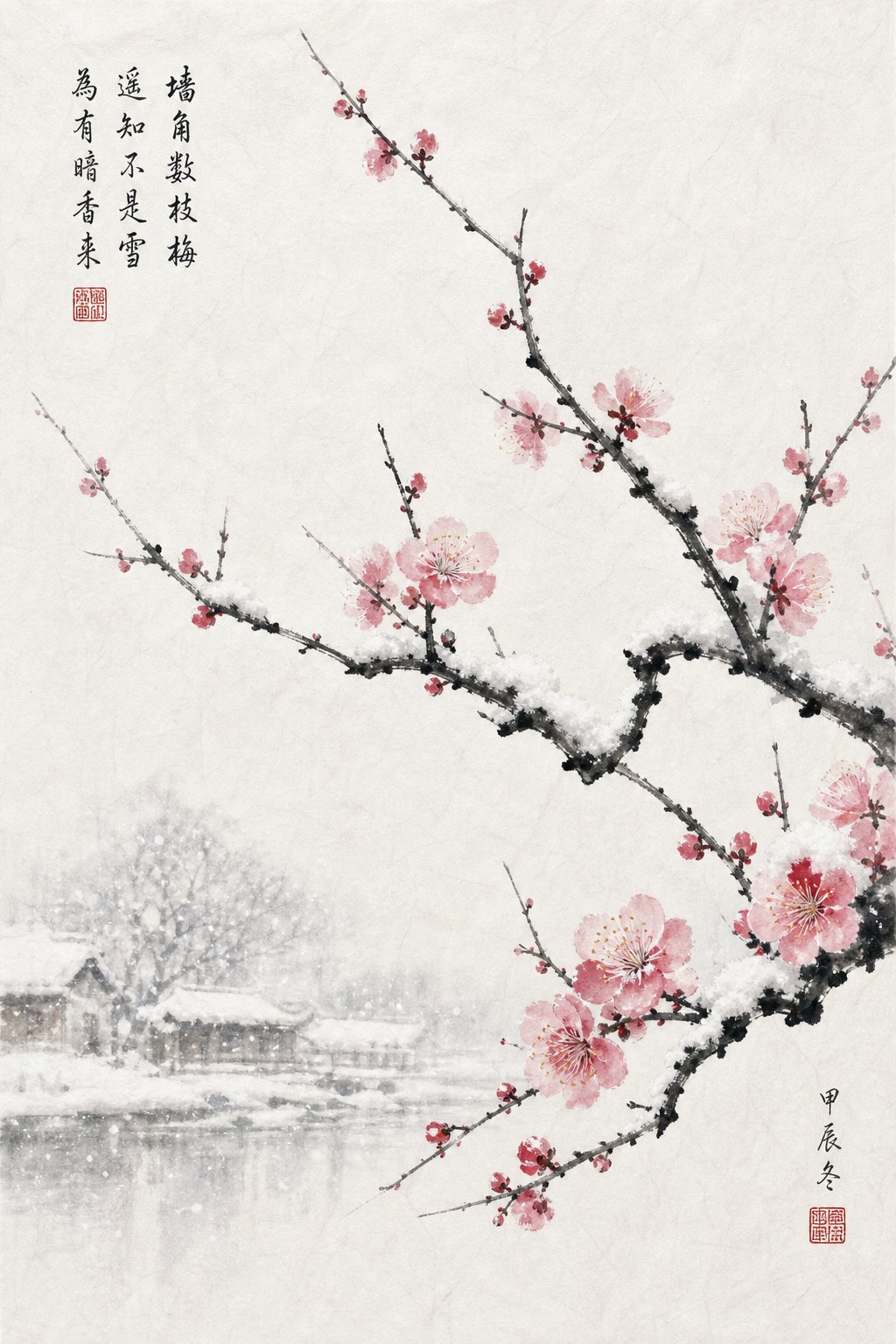
The snow and plum blossom symbolism is perhaps the most celebrated pairing in Chinese aesthetics. Plum blossoms (梅花) bloom in late winter, often while snow still covers the ground. This timing made them a powerful metaphor: beauty and vitality persisting through hardship. The Song dynasty poet Lin Bu captured this relationship in his famous Plum Blossom in a Mountain Garden, where a snow-white bird steals a glance at plum blossoms blooming against the cold. Plum blossoms were considered symbols of purity, courage, hope, and longevity precisely because they flower when other plants have retreated — standing alone in a world of frost and snow.
Snow also carries associations with white jade in traditional Chinese culture, linking it to dignity and royalty. The cold, translucent texture of snow mirrors jade's qualities, and both materials evoke something precious yet untouchable. Chinese people particularly value the first snowfall of each year, believing it brings good fortune to agriculture — a belief crystallized in the idiom 瑞雪兆丰年 (ruixue zhao fengnian), meaning a timely snow promises a bountiful harvest.
疏影横斜水清浅,暗香浮动月黄昏 — "Sparse shadows slant across the clear, shallow water; hidden fragrance floats beneath the yellow moon." (Lin Bu, Song dynasty)
Lin Bu's couplet does not mention snow directly, yet the entire poem exists within a winter landscape where plum and snow coexist. This is how 雪 operates in classical literature — sometimes explicit, sometimes implied, always shaping the emotional atmosphere of a scene.
Cleansing and Vengeance in Idiomatic Use
Here is where the character surprises most learners. Beyond its noun meaning, 雪 functions as a verb in classical and modern Chinese, meaning to cleanse, wipe away, or avenge. The logic is intuitive once you see it: snow blankets everything in white, covering what was dirty or stained. By extension, to "snow" something is to purify it — to restore honor or clear a name.
Two key compounds demonstrate xue as a verb to cleanse in Chinese:
- 雪耻 (xuechi) — to avenge a humiliation. The character 耻 means shame or disgrace, so 雪耻 literally reads as "snow away the shame." You will encounter this in sports commentary, historical narratives, and any context where someone redeems a past failure.
- 昭雪 (zhaoxue) — to exonerate or rehabilitate. 昭 means to make clear or bring to light. Together, the compound means to publicly clear someone of a false charge — to let the snow of truth cover the stain of wrongful accusation.
- 洗雪 (xixue) — to wash away (a grievance). Here 雪 reinforces the cleansing action of 洗 (to wash), doubling down on the purification metaphor.
This dual nature — literal weather phenomenon and metaphorical agent of purity — is what gives 雪 its extraordinary cultural weight. A single character holds both a winter landscape and a moral philosophy. When you read 雪 in a poem, you are seeing snowflakes. When you read it in a historical text about justice, you are seeing redemption.
That richness of meaning also explains why 雪 has become one of the most beloved characters for Chinese given names — a choice that says as much about parental aspirations as it does about aesthetics.
The Character 雪 in Chinese Names and Culture
A character that symbolizes purity, beauty, and moral cleansing in poetry naturally becomes a favorite for parents naming their children. And that is exactly what has happened with 雪. It ranks among the most popular chinese names with the snow character, especially for girls, appearing in curated lists of beloved Chinese girl names alongside characters like 美 (beautiful) and 静 (serene). But what makes xue in chinese girl names so enduring? The answer lies in what the character promises.
Why Parents Choose 雪 for Names
When Chinese parents select a given name, they are encoding a wish. Every character carries aspirational weight — a hope for the child's future personality, appearance, or fortune. The meaning of xue in a name communicates several qualities at once:
- Purity — Snow is white, unblemished, untouched. A name containing 雪 expresses the hope that the child will possess a clean heart and honest character.
- Elegance — Snow falls silently, covers the world in quiet beauty. The character evokes gracefulness without loudness.
- Fresh beginnings — A snowfall transforms a landscape overnight. Parents may choose 雪 to signal renewal, potential, and a life full of possibility.
- Resilience — Snow endures cold. Paired with the right companion character, 雪 can suggest strength beneath softness.
These layered associations make 雪 versatile. It works as a standalone given name (just 雪, simple and striking) or as one half of a two-character combination where the second character refines the meaning further.
Here are some of the most popular chinese names with 雪 and what each pairing signifies:
- 雪梅 (Xuemei) — Snow + plum blossom. This combination draws directly from the classical pairing discussed earlier. It suggests beauty that thrives in adversity, elegance paired with inner toughness.
- 雪莲 (Xuelian) — Snow + lotus. The snow lotus is an actual alpine flower that grows at extreme altitudes in the Himalayas and Tianshan mountains. As a name, it evokes rare beauty and extraordinary resilience.
- 雪芳 (Xuefang) — Snow + fragrance. This pairing blends visual purity (snow) with sensory charm (fragrance), painting a picture of someone whose goodness is both seen and felt.
- 雪琴 (Xueqin) — Snow + zither (a stringed instrument). The combination suggests artistic refinement and cultured elegance — a person as delicate and harmonious as music played on a winter evening.
- 雪婷 (Xueting) — Snow + graceful. A direct statement of poised beauty, popular among parents who want the name's meaning to be immediately clear.
- 雪晴 (Xueqing) — Snow + clear sky. Imagine the moment after a snowstorm when the clouds part and sunlight hits fresh powder. This name captures brightness emerging from stillness.
You will notice a pattern. The companion character typically adds warmth, vitality, or sensory richness to balance snow's coolness. Parents instinctively pair 雪 with something living (梅, 莲), something warm (芳), or something bright (晴) to create a name that feels complete rather than cold.
雪 in Pop Culture and Public Figures
Beyond real-life naming, 雪 appears frequently in fictional character names across Chinese literature, film, and television. Writers use it as a signal. When you encounter a character named 雪 or carrying 雪 in their name, you can often expect that person to embody purity, nobility, or a tragic elegance.
In classical novels, characters with snow-related names tend to be morally upright or hauntingly beautiful — sometimes both. The name sets audience expectations before the character even speaks. In modern television dramas and wuxia (martial arts) fiction, 雪 names frequently belong to heroines who are principled, emotionally restrained, and quietly powerful. The character functions almost like a costume choice: it tells you something about the role before the story unfolds.
This cultural shorthand works because audiences share the same associations. Everyone who reads Chinese understands that 雪 implies purity and elegance. A screenwriter or novelist can lean on that shared knowledge, using the name itself as a form of characterization.
Whether on a birth certificate or a book cover, 雪 carries its full symbolic weight into every context where it appears. That weight, though, only becomes fully accessible when you can write and use the character correctly — a practical skill with its own set of common stumbling blocks.
Practical Tips for Learning and Using 雪
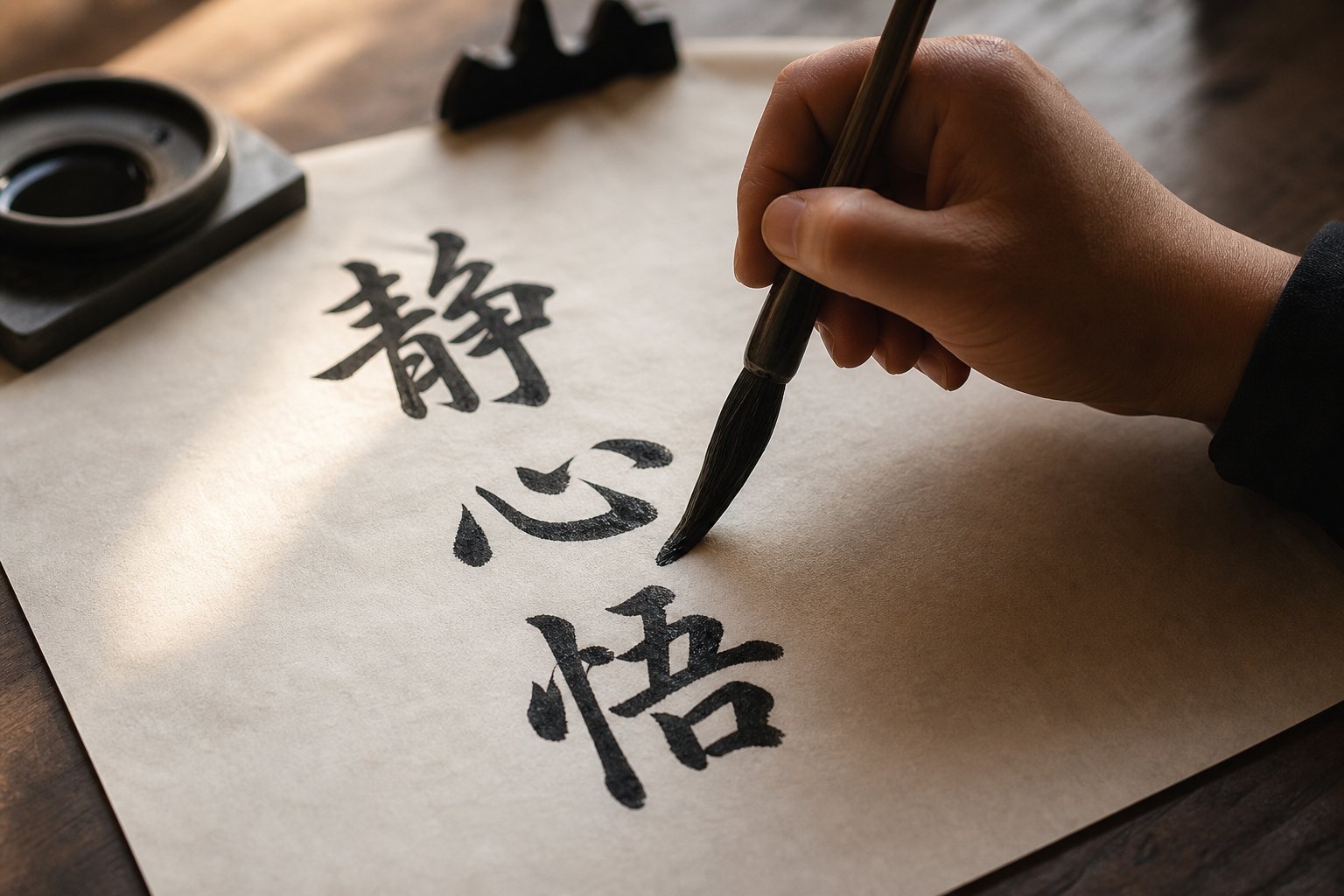
Knowing the history, symbolism, and pronunciation of 雪 gives you a deep understanding of the character. But can you write it from memory? Can you use it correctly in a sentence without hesitating? That gap between passive recognition and active use is where most learners stall. These practical steps will help you close it.
Writing 雪 with Correct Stroke Order
The character 雪 contains 11 strokes total. The rule is straightforward: finish the rain radical (雨) on top before moving to the lower component (彐). Within each section, strokes follow the standard top-to-bottom, left-to-right principle. Here is the 雪 stroke order step by step:
- Stroke 1: Horizontal stroke — the top line of the rain radical (一).
- Stroke 2: Vertical stroke down the center-left, forming the left side of the enclosure (丨).
- Stroke 3: Horizontal turning stroke (フ) — this creates the top-right corner and right side of the rain radical's frame.
- Stroke 4: Vertical stroke — the center line dropping down inside the frame (丨).
- Stroke 5: Left dot inside the frame (丶).
- Stroke 6: Right dot inside the frame (丶).
- Stroke 7: Left dot, lower row inside the frame (丶).
- Stroke 8: Right dot, lower row inside the frame (丶).
- Stroke 9: Horizontal stroke — the top line of 彐 (一).
- Stroke 10: Horizontal turning stroke — the middle and left side of 彐 (フ).
- Stroke 11: Final horizontal stroke — the bottom line of 彐 (一).
A quick tip: the four dots inside the rain radical represent raindrops. Many beginners rush through them or place them unevenly. Take a moment to space them symmetrically — two on the left, two on the right — and your character will look balanced and natural. If you are practicing how to write snow in Chinese on grid paper, keep the rain radical slightly wider than the 彐 below it. This top-heavy proportion is what gives 雪 its correct visual weight.
Common Mistakes and How to Avoid Them
Even after you have the stroke order down, a few recurring errors can trip you up in conversation and writing. Here are the most frequent ones and how to fix them:
Mistake 1: Using 雪 alone to mean "it's snowing." This is the single most common mistake learning xue character that English speakers make. In English, "snow" works as both a noun and a verb — "it's snowing" uses the same word. In Mandarin, you need the verb-object structure 下雪 (xiaxue) to express the action of snowfall. Saying just 雪 in isolation sounds like you are naming the substance, not describing weather. When to use 下雪 vs 雪 comes down to grammar: use 下雪 when talking about the event ("it snowed yesterday"), and use 雪 when referring to the substance itself ("the snow on the ground is melting").
Mistake 2: Confusing 雪 with visually similar characters. The rain radical family is large. Characters like 雲 (cloud), 雷 (thunder), and 霜 (frost) all share that same top component. If you are reading quickly, the bottom half is what distinguishes them. Train your eye to check below the rain radical first — 彐 means snow, 田 with a hook means thunder, and so on. Flashcard drills that mix these rain-radical characters together force your brain to notice the differences rather than glossing over them.
Mistake 3: Flattening the third tone. As covered in the pronunciation section, the third tone is not a monotone low pitch. It dips and recovers. Many learners flatten it into a sustained low drone, which makes 雪 sound uncertain or incomplete to native ears. Practice by exaggerating the dip in isolation — let your voice drop to the bottom of your range and bounce back up — then gradually smooth it out for natural speech.
Mistake 4: Forgetting tone sandhi in compounds. When 雪 appears before another third-tone character (like 雪景), it shifts to second tone in speech. If you ignore this rule, your compounds will sound choppy. The fix is simple: practice common third-tone pairs out loud until the rising shift becomes automatic.
Mistake 5: Writing the bottom component as ヨ instead of 彐. The direction matters. In 雪, the middle horizontal stroke of the lower component extends to the left, not the right. Double-check your handwriting against a printed reference to make sure you have not mirrored it.
Putting It All Together
Learning a character like 雪 is not a single event — it is a layered process. You started this article with a definition and end it with the ability to write, pronounce, and deploy the character in context. Here is what to carry forward:
- The rain radical (雨) on top tells you the character belongs to the weather family. Use that as your memory anchor.
- The pronunciation xuě requires a forward tongue position for x-, rounded lips for -üe, and a dipping third tone that shifts to rising before other third tones.
- In conversation, reach for compounds — 下雪 for the action, 雪花 for flakes, 滑雪 for skiing — rather than the bare character alone.
- The symbolic meanings (purity, cleansing, resilience) unlock idioms, poetry, and naming conventions that make your Chinese richer and more culturally aware.
Whether you are describing a winter morning, reading a Tang dynasty poem, or simply recognizing a friend's name, 雪 is a character that rewards deep familiarity. Write it a few times today, say it out loud, and use it in a sentence. That is how eleven strokes become second nature.
Frequently Asked Questions About the Snow Chinese Character 雪
1. What does the Chinese character 雪 (xue) literally mean?
The character 雪 (pronounced xue with a third tone) literally means snow as a weather phenomenon. It depicts frozen crystalline water falling from clouds. However, its meaning extends beyond weather into symbolic territory. In classical and modern Chinese, 雪 also represents purity, whiteness, and ethereal beauty. As a verb, it means to cleanse or wipe away, appearing in compounds like 雪耻 (to avenge a humiliation) and 昭雪 (to exonerate). This dual nature as both a noun and a verb makes it one of the most culturally rich nature characters in the Chinese language.
2. How do you pronounce 雪 correctly in Mandarin Chinese?
The pinyin for 雪 is xue with a third tone (xue3). The x- initial requires placing your tongue behind your lower front teeth, producing a softer hissing sound than English 'sh.' The -ue final uses the German-style u sound: round your lips tightly as if saying 'oo' but pronounce 'ee,' then glide into 'eh.' The third tone dips low and rises slightly in isolation, but in connected speech before another syllable, only the low dip is produced. In Cantonese, the pronunciation is syut3 with a mid-level clipped tone.
3. What radicals make up the Chinese character for snow?
The character 雪 is a top-bottom structure composed of two parts. The top component is 雨 (yu), the rain radical (Kangxi Radical 173), which signals that the character relates to atmospheric precipitation. The bottom component is 彐, sometimes called the 'fork' shape. Together they convey the idea of precipitation that is not liquid rain but has been transformed into something solid. This structure logically communicates that snow is a frozen form of what falls from rain clouds, making the character's meaning intuitive once you understand its components.
4. Is the snow character different in simplified and traditional Chinese?
No, 雪 is identical in both simplified and traditional Chinese writing systems. Unlike many characters that have distinct forms depending on the region, 雪 looks exactly the same whether you encounter it in Mainland China (simplified), Taiwan (traditional), or Hong Kong. This consistency makes it one of the easiest nature-related characters to recognize across all Chinese-reading contexts, requiring no conversion table or second form to memorize.
5. Why is 雪 so popular in Chinese girl names?
Chinese parents choose 雪 for names because it encodes multiple aspirational qualities: purity (snow is white and unblemished), elegance (snow falls silently and gracefully), fresh beginnings (snowfall transforms landscapes overnight), and resilience (snow endures cold). Popular combinations include 雪梅 (snow + plum blossom, suggesting beauty in adversity), 雪莲 (snow + lotus, evoking rare alpine beauty), and 雪晴 (snow + clear sky, capturing brightness after a storm). The companion character typically adds warmth or vitality to balance snow's coolness.