Understanding the Water Element in Chinese Naming
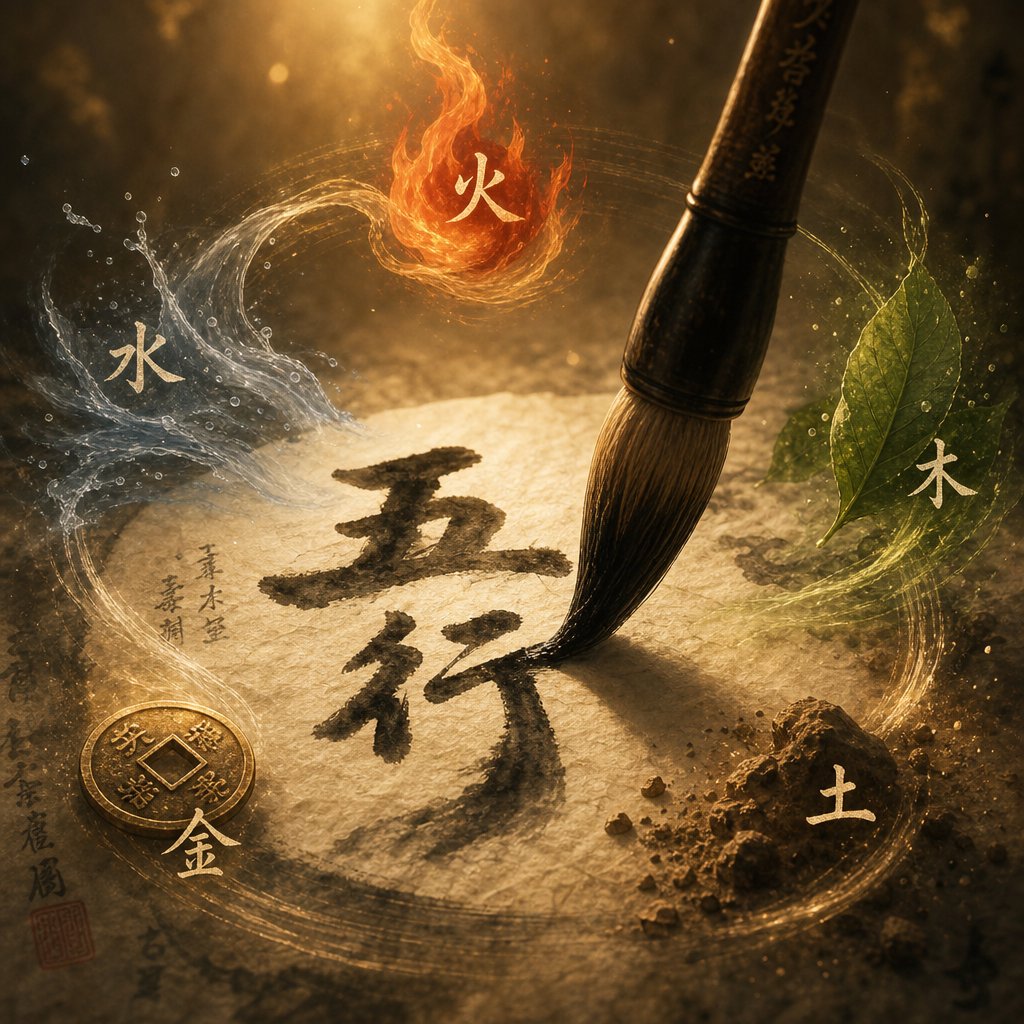
Imagine picking a name that does more than sound pleasant. In Chinese tradition, a name carries elemental energy, and the water element (水, shuǐ) is one of the most sought-after forces to embed in a person's identity. It belongs to the Wu Xing (五行) system, a framework of five dynamic phases — Wood, Fire, Earth, Metal, and Water — that has shaped Chinese philosophy, medicine, and naming practices for over two thousand years.
The character Xing (行) actually means "movement" or "phase," not "element" in the Western chemical sense. As the MingShu Library explains, Wu Xing is better understood as Five Movements: fundamental patterns of energy describing how the universe transforms. This distinction matters because when you select water element Chinese names, you are not stacking a physical substance into a name. You are aligning a person's life path with a specific energetic rhythm.
This guide combines that philosophical depth with a practical character database, tonal harmony rules, and step-by-step guidance so you can choose a name that genuinely flows.
What the Water Element Represents in Chinese Culture
Water in Chinese language and philosophy carries a rich web of associations. Within the wuxing framework, it represents the energy of winter — a time of stillness, conservation, and deep contemplation. Its direction is north, its color is black (or deep blue), and its season is the coldest, quietest part of the year.
What does water represent at a deeper level? Think of its core qualities:
- Wisdom — Water seeks the lowest place, gathering knowledge through patience rather than force.
- Flexibility — It adapts to any container, flowing around obstacles instead of breaking against them.
- Depth — Still water runs deep, reflecting the introspective and contemplative nature of this phase.
- Persistence — A stream carves through rock not by strength but by continuity.
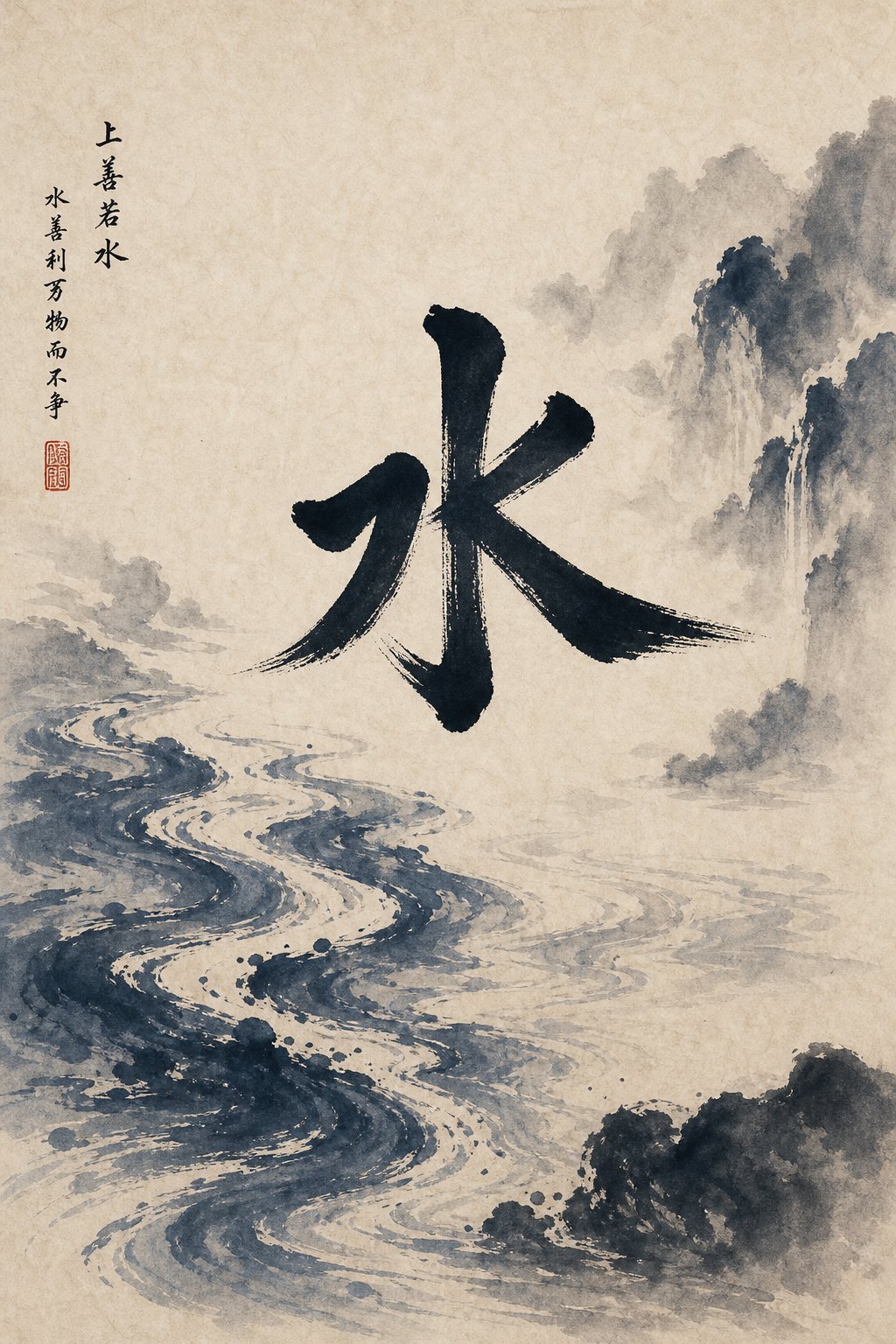
This water element symbolism extends into visual art as well. Traditional Chinese aesthetics depict water through undulating, wavy lines and amorphous fluid shapes, using blacks and deep blues to evoke a sense of movement and seamless transition. Water as a symbol appears across calligraphy, landscape painting, and architectural design — always suggesting something that yields yet endures.
Why Water Element Names Matter in Chinese Naming Tradition
Chinese parents don't choose names purely for how they sound. They select characters to balance elemental energy based on a child's BaZi (八字) birth chart — a calculation of the Heavenly Stems and Earthly Branches present at the exact time of birth. When that chart reveals a deficiency in water energy, the name becomes the primary tool for restoring balance.
A name reinforced with water carries connotations of intelligence, adaptability, and profound inner depth. Characters associated with this phase suggest someone who can navigate complexity with grace, who thinks before acting, and who possesses the quiet strength to outlast louder forces. The symbolic meaning of water — yielding yet ultimately unstoppable — becomes woven into the bearer's identity from the moment the name is spoken.
Lao Tzu captured this paradox perfectly in Chapter 78 of the Tao Te Ching:
Nothing in the world is softer and weaker than water. Yet, to attack the hard and strong, nothing surpasses it. Nothing can take its place.
This Daoist insight sits at the heart of why water names hold such power. The weak overcomes the strong. The soft overcomes the hard. A child given a water element name inherits that philosophy — the understanding that true strength comes through yielding, not force.
The question, of course, is how to know whether water is the right element for a specific person. That answer lives in the birth chart itself, where the balance of all five phases reveals exactly which energy needs reinforcement.
How to Determine If You Need a Water Element Name
You might be wondering, "what is my chinese element, and does my name need to reflect it?" The answer isn't based on preference or aesthetics. It comes from a specific calculation rooted in your birth data — a system called BaZi (八字), or the Four Pillars of Destiny. This framework maps the elemental energies present at the exact moment you were born, revealing which phases are strong, which are weak, and which might need reinforcement through your name.
How BaZi Birth Charts Reveal Your Missing Element
A BaZi chart consists of four pillars — Year, Month, Day, and Hour — each representing a different dimension of your life. Every pillar contains two components: a Heavenly Stem (天干) on top and an Earthly Branch (地支) on the bottom. Each of these eight characters corresponds to one of the five elements: Wood, Fire, Earth, Metal, or Water.
The Day Stem holds special importance. Known as the Daymaster (日元), it represents your core self — your fundamental elemental identity. A person whose Daymaster is Water, for instance, has water as their self-element. But having a Water Daymaster doesn't automatically mean you have enough water energy. The surrounding pillars might be dominated by Fire or Earth, leaving your water isolated and weak.
As BaZi practitioner Sean Chan explains, accurate chart reading requires identifying the Daymaster, assessing the season of birth for elemental strength, and finding the "Useful God" — the balancing element the chart most needs. The season matters because a Water Daymaster born in summer (a fire-dominant season) is inherently weakened, while one born in winter is naturally supported.
Signs That You Need Water Element in Your Name
So how do you know if water is deficient in your chart? Several patterns point toward a water element sign that needs strengthening:
- Fire-heavy charts — Born during summer months or in years dominated by Fire stems and branches, water gets evaporated. Excessive fire dries out the chart's fluidity.
- Earth-dominant charts — Earth controls water in the destructive cycle (克). Too much earth acts like a dam, blocking water's natural flow.
- Absent or isolated water — If none of your eight characters carry water energy, or if a single water character sits unsupported, the deficiency is clear.
- Weak Daymaster needing resource support — If your Daymaster is Water but surrounded by elements that drain or control it, reinforcement through naming becomes especially relevant.
This connects to the productive and destructive cycles (生克关系) that govern elemental interactions. In the productive cycle, Metal generates Water — metal surfaces collect condensation, so metal energy feeds water. In the destructive cycle, Earth dams Water and Water extinguishes Fire. These relationships matter for name selection: someone with excessive fire might benefit directly from water characters, while someone with strong metal might already have indirect water support through the generative relationship.
Curious about what element am i chinese? Here's a simplified self-assessment process:
- Record your birth year, month, day, and hour (as precise as possible — even the two-hour window matters).
- Convert your birth data into the Chinese solar calendar using a BaZi calculator. The Chinese year begins around February 4th, not January 1st, so births in January or early February may fall under the previous year.
- Identify your four pillars — each with its Heavenly Stem and Earthly Branch — and note which element each character belongs to.
- Find your Daymaster (the Heavenly Stem of your Day Pillar) to determine your self-element.
- Count the distribution of all five elements across your eight characters. Look for which elements appear rarely or not at all.
- Consider the season of birth. A water Daymaster born in summer is weaker than one born in winter. A fire Daymaster born in winter may actually need fire reinforcement, not water.
- Identify whether water is your missing element, your weak element, or your "Useful God" — the element that brings balance to the overall chart.
A word of caution: this self-assessment gives you a starting point, not a final verdict. Professional BaZi analysis accounts for hidden stems within Earthly Branches, the interactions between pillars, and the 10-Year Luck Phases that shift your elemental landscape over time. The manual plotting process involves converting your Gregorian birth date into the sexagenary cycle and cross-referencing stem-branch tables — a process that rewards patience and precision.
Still, even a basic assessment helps you understand whether water element Chinese names align with your chart's needs. If your pillars show fire and earth stacking up with little metal or water in sight, you have a strong case for embedding water energy into your name. The chinese zodiac water connection also plays a role — those born in Rat (子) or Pig (亥) years carry water in their Year Branch, which may or may not be sufficient depending on the rest of the chart.
With your elemental needs clarified, the next step is understanding which characters actually carry water energy — and that starts with recognizing the water radical and the surprisingly diverse family of characters it marks.
The Water Radical and Key Characters for Naming
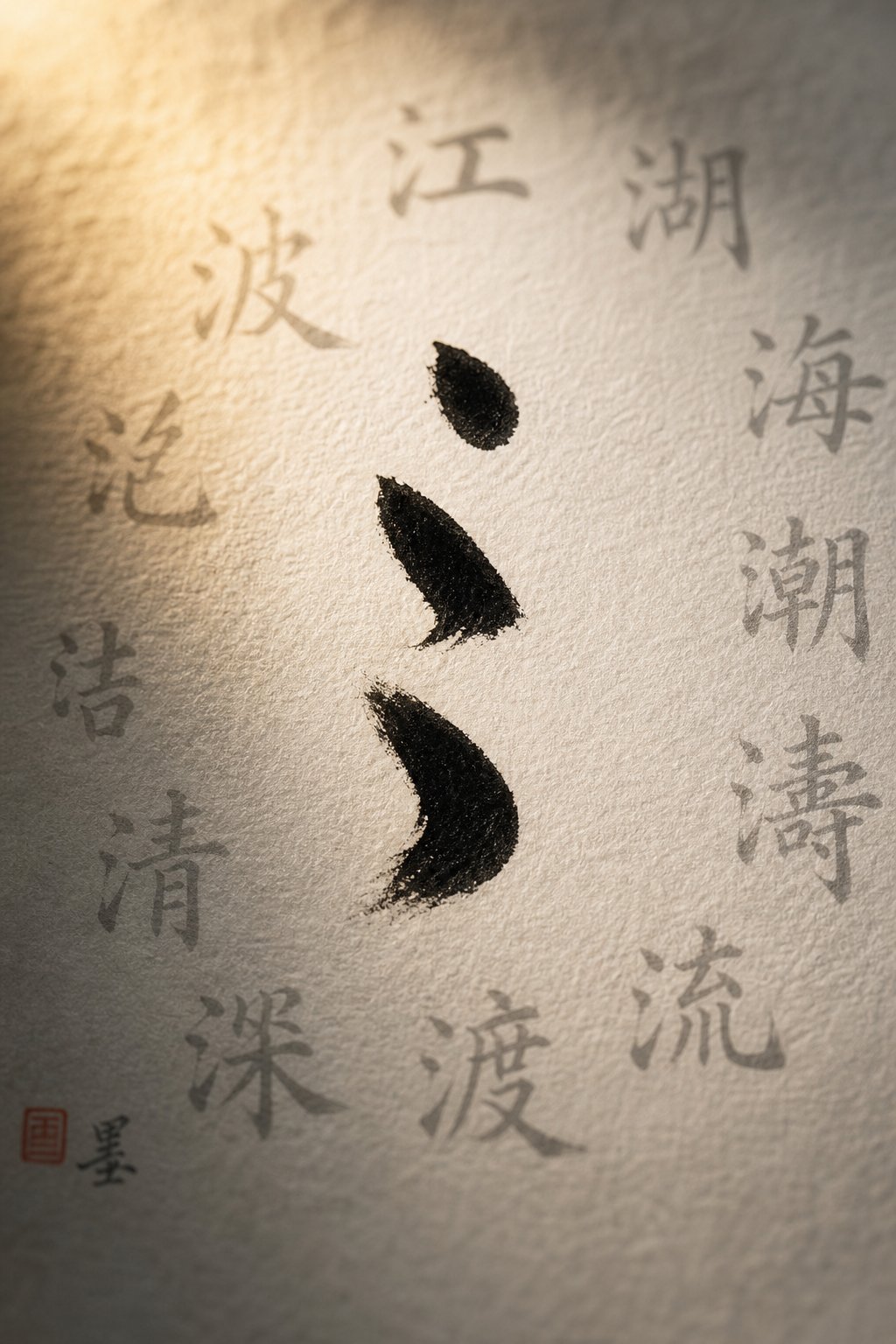
Every Chinese character tells a story through its components, and the fastest way to identify a water element character is by looking at its left side. The water radical (氵), known as "three drops of water" (三点水, sān diǎn shuǐ), is a compressed form of the standalone character 水 (shuǐ). When you spot those three small strokes cascading down the left edge of a character, you're looking at a chinese symbol for water embedded directly into the character's structure.
This radical is remarkably prolific. The Hanzi Stroke database catalogs 190 common characters containing the water radical, and the historical Kangxi Dictionary lists over 1,500. That gives parents an enormous pool of characters to draw from when building water element Chinese names — far more options than any other element offers.
But here's where things get interesting for naming purposes: not all water-radical characters work the same way in a name. Some literally describe bodies of water. Others carry water's philosophical energy — nourishment, clarity, depth — without referencing a river or ocean at all. Understanding this distinction is the difference between a name that sounds like a geography lesson and one that resonates with genuine meaning.
The Water Radical and How It Works in Characters
The chinese character for water in its full form is 水 (shuǐ) — four strokes depicting flowing currents. When this character functions as a radical inside other characters, it compresses into 氵, just three strokes that sit on the left side. As DigMandarin notes, this radical usually appears on the left of a character and immediately signals a connection to water, liquids, or fluidity.
You'll notice that the water element symbol in Chinese writing works differently from Western elemental notation. There's no single abstract glyph for "water energy." Instead, the radical 氵 acts as a semantic marker — a visual tag that tells you this character belongs to the water family. When naming practitioners assess whether a character carries water element energy, the presence of this radical is their primary indicator.
A quick tip to avoid confusion: don't mix up 氵 (three dots, meaning water) with 冫 (two dots, meaning ice). They look similar at a glance, but 冫 appears in characters like 冰 (bīng, ice) and 冷 (lěng, cold). For naming purposes, only 氵 counts as the water radical that signals water element association.
The radical's position is also worth noting. While 氵 almost always sits on the left, the full form 水 occasionally appears at the bottom of characters — as in 泉 (quán, spring). Both positions carry water element energy, but the three-dot left-side version is far more common in naming characters.
Literal Water Characters vs. Water Energy Characters
Here's the distinction that separates thoughtful naming from surface-level choices. Characters containing the water radical fall into two broad categories:
- Literal water characters — These directly name bodies of water or physical water phenomena. Think 海 (hǎi, sea), 河 (hé, river), 湖 (hú, lake), 溪 (xī, stream). They carry water element energy, yes, but their meaning is concrete and geographic.
- Water energy characters — These use the water radical but carry abstract, philosophical, or metaphorical meanings. Characters like 润 (rùn, to nourish/moisten), 涵 (hán, to contain/cultivate), 泽 (zé, grace/blessing), and 清 (qīng, clear/pure) reference water's qualities rather than water itself.
For naming, water energy characters tend to be more versatile and elegant. A name built around 涵 suggests intellectual depth and cultivation. A name using 润 implies someone who nourishes others gently. These characters let you embed the water in chinese symbol form while pointing toward personality traits rather than landscape features.
That said, literal water characters aren't off-limits. 海 (hǎi) remains popular in names because "ocean" carries connotations of vastness and ambition. 溪 (xī, stream) works beautifully in female names for its gentle, flowing imagery. The key is understanding what each character communicates beyond its elemental classification.
The following table compares common water-radical characters across both categories. Stroke count is included because it directly affects naming numerology (五格, the five-grid system), where the total strokes across surname and given name influence perceived fortune:
| Character | Pinyin with Tone | Meaning | Stroke Count | Type |
|---|---|---|---|---|
| 海 | hǎi | Sea, ocean; vastness | 10 | Literal water |
| 河 | hé | River | 8 | Literal water |
| 溪 | xī | Brook, stream | 13 | Literal water |
| 泽 | zé | Grace, blessing, moisture | 8 | Water energy |
| 润 | rùn | To nourish, to moisten | 10 | Water energy |
| 涵 | hán | To contain, to cultivate | 11 | Water energy |
| 清 | qīng | Clear, pure, distinct | 11 | Water energy |
| 淑 | shū | Kind, gentle, virtuous | 11 | Water energy |
| 浩 | hào | Vast, grand, expansive | 10 | Water energy |
| 源 | yuán | Source, origin, spring | 13 | Water energy |
Notice the pattern: literal water characters name what water does or where it goes. Water energy characters describe what water is like — its qualities of clarity, nourishment, vastness, and depth. When you encounter the chinese symbol of water within a character, ask yourself: does this character point to a place, or to a quality? For naming, qualities tend to age better and carry richer personal meaning.
The stroke counts in this table also reveal a practical consideration. Characters range from 8 strokes (泽, 河) to 13 strokes (溪, 源). Since the 五格 system calculates fortune grids based on total stroke sums between surname and given name characters, you'll want to match your chosen water character's stroke count with your surname's count to hit favorable numerical combinations. A character like 泽 at 8 strokes pairs differently than 源 at 13 strokes — and that difference matters in traditional naming practice.
With this foundation in place — knowing which characters carry water energy and how their stroke counts factor into numerology — the next question becomes which specific characters work best for daughters versus sons, and what cultural resonance each one brings to a name.
Water Element Characters for Female Names
Female names in Chinese carry a particular expectation: they should sound graceful, evoke beauty, and still hold substance beneath the surface. Water element characters meet all three criteria naturally. Their meanings tend toward clarity, gentleness, and flowing elegance — qualities that have appeared in Chinese poetry and literature for millennia. These aren't arbitrary associations. Many of these characters trace their naming popularity back to ancient symbols of water found in classical texts, where poets used water imagery to describe feminine virtue, intelligence, and inner strength.
When choosing my chinese name or naming a daughter, the water radical characters below offer a rich palette. Each one carries distinct cultural weight, and understanding that context helps you move beyond simple dictionary definitions into names that resonate on multiple levels.
Elegant Water Characters for Girls' Names
The following characters represent the most refined options for female water element Chinese names. Each carries the 氵 radical and has been used in women's names across centuries of Chinese literary tradition:
- 淑 (shū) — Virtuous, gentle, kind. 11 strokes. This character's naming pedigree is unmatched. It appears in the opening poem of the Classic of Poetry (《诗经》), in the famous line 窈窕淑女, 君子好逑 — "The graceful and virtuous maiden is a fine match for the gentleman." That single phrase, written over 2,500 years ago, cemented 淑 as the quintessential character for feminine grace in Chinese culture. Its water radical hints at the gentle, nourishing quality of a stream rather than the force of a river.
- 洁 (jié) — Pure, clean, spotless. 9 strokes. Purity here isn't fragile — it's the clarity of fresh spring water, untouched and transparent. 洁 suggests moral integrity and cleanliness of spirit. It pairs well with surnames ending in open vowels, creating a crisp, decisive sound.
- 澜 (lán) — Rippling water, great waves. 15 strokes. This character carries more power than most feminine water characters. It describes the undulating surface of a large body of water — not a gentle brook but a lake stirred by wind. For parents who want their daughter's name to suggest both beauty and strength, 澜 delivers that duality. Its higher stroke count makes it visually complex and distinctive.
- 溪 (xī) — Brook, mountain stream. 13 strokes. Imagine a clear stream winding through a forested valley — that's the imagery 溪 evokes. It's a literal water character, yes, but its connotations lean poetic: natural beauty, quiet persistence, and a path that finds its own way. The first tone (high and level) gives it a bright, clear sound.
- 漫 (màn) — Overflowing, boundless, free-flowing. 14 strokes. This character suggests abundance without constraint. Water that overflows its banks isn't destructive here — it's generous, expansive, romantic. 漫 appears frequently in literary Chinese to describe leisurely wandering or boundless imagination, making it ideal for parents who value creativity and freedom.
- 滢 (yíng) — Clear and lustrous, sparkling water. 13 strokes. Picture sunlight catching the surface of still water — that crystalline shimmer is 滢. It's less common than characters like 洁 or 淑, which gives it a distinctive quality. The second tone (rising) creates a lilting, musical sound that pairs beautifully with falling-tone surnames.
Beyond these core six, a few additional characters deserve mention for their water symbolic qualities in female naming: 沁 (qìn, to permeate/refresh, 7 strokes) evokes the feeling of cool water seeping into parched earth — refreshing and quietly powerful. 潇 (xiāo, natural and unrestrained, 14 strokes) describes both the sound of rain and an elegant, free-spirited demeanor. Both carry the symbolism for water through their radical while pointing toward personality rather than geography.
Example Full Names with Water Characters for Girls
A character's beauty means little if it clashes with the surname. Tonal harmony, semantic coherence, and stroke count balance all matter. Here are five complete name examples that demonstrate how these water characters work in practice:
- 林溪悦 (Lín Xīyuè) — Surname 林 (lín, 2nd tone) + 溪 (xī, 1st tone) + 悦 (yuè, 4th tone). The tonal pattern rises, levels, then falls — a smooth, musical arc. Meaning: "joyful stream." The combination suggests someone whose happiness flows naturally, like water finding its course. Stroke count: 8 + 13 + 10 = 31.
- 王淑宁 (Wáng Shūníng) — Surname 王 (wáng, 2nd tone) + 淑 (shū, 1st tone) + 宁 (níng, 2nd tone). Meaning: "virtuous tranquility." This name directly echoes the Classic of Poetry tradition, pairing ancient symbols of water virtue with peaceful composure. The tones move 2-1-2, avoiding the awkwardness of consecutive third tones. Stroke count: 4 + 11 + 5 = 20.
- 陈澜心 (Chén Lánxīn) — Surname 陈 (chén, 2nd tone) + 澜 (lán, 2nd tone) + 心 (xīn, 1st tone). Meaning: "heart of rippling waves." Two consecutive second tones can work when the third character shifts to first tone, creating a rising-rising-level pattern that resolves cleanly. The name suggests emotional depth paired with inner calm. Stroke count: 7 + 15 + 4 = 26.
- 赵滢然 (Zhào Yíngrán) — Surname 赵 (zhào, 4th tone) + 滢 (yíng, 2nd tone) + 然 (rán, 2nd tone). Meaning: "naturally sparkling and clear." The falling-rising-rising pattern gives the name a sense of lift and brightness. 然 adds a philosophical quality — "thus, naturally so" — suggesting effortless clarity. Stroke count: 9 + 13 + 12 = 34.
- 张漫琪 (Zhāng Mànqí) — Surname 张 (zhāng, 1st tone) + 漫 (màn, 4th tone) + 琪 (qí, 2nd tone). Meaning: "boundless jade beauty." The tonal pattern descends then rises — 1-4-2 — creating dynamic movement. 琪 (fine jade) adds a non-water element that balances the name, preventing it from feeling one-dimensional. Stroke count: 7 + 14 + 12 = 33.
You'll notice each example avoids pairing two third-tone characters in sequence — a combination that forces one tone to shift in natural speech, creating ambiguity in how the name is actually pronounced. The best water element names sound as fluid spoken aloud as their meanings suggest on paper.
These feminine characters lean toward grace, clarity, and quiet strength. But water's energy also manifests as vastness, power, and unstoppable momentum — qualities that shape an entirely different set of characters traditionally chosen for sons.
Water Element Characters for Male Names
Where feminine water characters evoke streams and sparkling clarity, masculine water characters channel the ocean's vastness and a river's unstoppable force. The element water in Chinese naming for boys draws on imagery of grand scale — surging tides, boundless horizons, and the deep source from which all rivers spring. These characters don't whisper. They resonate.
What does the water represent when applied to a son's name? Power through depth rather than aggression. The ability to fill any space, to nourish everything it touches, and to persist across time. In Daoist thought, water tao philosophy teaches that the greatest strength lies in flowing rather than forcing — and the best male water characters embody exactly that paradox: immense power expressed through fluid grace.
Strong Water Characters for Boys' Names
The following characters represent the most culturally resonant options for male water element Chinese names. Each carries the 氵 radical and has deep roots in classical literature, philosophy, or historical usage:
- 浩 (hào) — Vast, grand, expansive. 10 strokes. This is arguably the most popular chinese water character in male naming. Its power comes from the classical idiom 浩然正气 (hàorán zhèngqì) — "noble and righteous spirit" — attributed to the philosopher Mencius. 浩 describes water so vast you cannot see its edges, and by extension, a person whose spirit is equally boundless. The fourth tone gives it a decisive, commanding sound.
- 泽 (zé) — Marsh, grace, benevolence. 8 strokes. This character carries a double meaning that makes it exceptional for naming. Literally, it refers to a wetland or marsh — a place where water gathers and nourishes life. Figuratively, it describes the grace that flows from a benevolent leader, like rain falling on dry land. Historical texts use 泽 to describe rulers who bring benefit to their people, giving this character connotations of generosity and moral leadership. Its low stroke count also makes it practical for balancing numerology.
- 涛 (tāo) — Great waves, billowing surf. 10 strokes. Where 浩 is still vastness, 涛 is water in motion — powerful, rhythmic, awe-inspiring. It evokes the sound and fury of ocean waves crashing against cliffs. Names containing 涛 suggest someone with dynamic energy and the courage to face turbulence head-on. The first tone (high and level) gives it a strong, clear pronunciation.
- 瀚 (hàn) — Vast ocean, boundless expanse. 19 strokes. This character describes water so immense it merges with the sky — think open ocean or the endless desert (瀚海 originally referred to the Gobi's vastness). Its high stroke count makes it visually impressive and distinctive, though parents should consider whether a child will find 19 strokes manageable in daily writing. The payoff is a character that communicates ambition and limitless potential.
- 润 (rùn) — To moisten, to nourish, smooth. 10 strokes. Unlike the dramatic force of 涛 or 瀚, 润 represents water's gentler power — the quiet moisture that makes things grow. It suggests someone who improves everything around them without demanding attention. In literary Chinese, 润 describes a polished writing style or a person of refined character. For parents who value subtlety over spectacle, this character offers depth without volume.
- 源 (yuán) — Source, origin, spring. 13 strokes. Every river begins somewhere, and 源 names that beginning point. It carries connotations of originality, foundational strength, and inexhaustible supply. A person named with 源 is positioned as someone from whom good things flow — a source rather than a recipient. The character also implies deep roots and authenticity.
A few additional characters worth considering: 洲 (zhōu, continent/islet, 9 strokes) suggests broad ambition and stability, while 潇 (xiāo, natural and unrestrained, 14 strokes) describes an elegant, free-spirited demeanor — the chinese for water energy expressed as effortless confidence.
Example Full Names with Water Characters for Boys
Pairing these characters with common surnames requires attention to tonal flow and semantic coherence. Here are five complete names that demonstrate strong combinations:
- 李浩然 (Lǐ Hàorán) — Surname 李 (lǐ, 3rd tone) + 浩 (hào, 4th tone) + 然 (rán, 2nd tone). Tonal pattern: 3-4-2, a descending-then-rising arc that sounds natural and confident. Meaning: "noble and vast spirit." This name directly references the Mencius idiom 浩然正气, giving it immediate literary weight. Stroke count: 7 + 10 + 12 = 29.
- 王泽宇 (Wáng Zéyǔ) — Surname 王 (wáng, 2nd tone) + 泽 (zé, 2nd tone) + 宇 (yǔ, 3rd tone). Tonal pattern: 2-2-3, rising-rising-dipping. Meaning: "grace that spans the universe." 宇 (universe, space) amplifies 泽's benevolence to cosmic scale. The combination suggests someone whose generosity knows no bounds. Stroke count: 4 + 8 + 6 = 18.
- 陈涛远 (Chén Tāoyuǎn) — Surname 陈 (chén, 2nd tone) + 涛 (tāo, 1st tone) + 远 (yuǎn, 3rd tone). Tonal pattern: 2-1-3, a smooth descent from rising to level to dipping. Meaning: "waves reaching far distances." The name suggests ambition carried by powerful momentum — someone whose influence travels far. Stroke count: 7 + 10 + 7 = 24.
- 张润泽 (Zhāng Rùnzé) — Surname 张 (zhāng, 1st tone) + 润 (rùn, 4th tone) + 泽 (zé, 2nd tone). Tonal pattern: 1-4-2, level-falling-rising. Meaning: "nourishing grace." This name doubles down on water elements, combining the quiet nourishment of 润 with the benevolent generosity of 泽. Two water characters in one name works here because both carry abstract "water energy" rather than literal water imagery. Stroke count: 7 + 10 + 8 = 25.
- 刘源博 (Liú Yuánbó) — Surname 刘 (liú, 2nd tone) + 源 (yuán, 2nd tone) + 博 (bó, 2nd tone). Three consecutive second tones might seem risky, but the different initial consonants (l, y, b) prevent monotony. Meaning: "a deep source of broad knowledge." 博 (broad, learned) pairs with 源 to suggest someone whose wisdom runs deep and wide. Stroke count: 6 + 13 + 12 = 31.
Unisex Water Characters
Some water elements transcend gender associations entirely. Two characters stand out for their versatility:
- 涵 (hán) — To contain, to cultivate, inclusive. 11 strokes. This character describes water's capacity to hold and nurture — a lake that contains multitudes without overflowing. In naming, it suggests intellectual depth, tolerance, and cultivated character. You'll find 涵 in both male names (李泽涵, Lǐ Zéhán) and female names (王诗涵, Wáng Shīhán) with equal elegance. Its neutrality comes from describing an internal quality rather than an external force.
- 清 (qīng) — Clear, pure, distinct. 11 strokes. Clarity has no gender. 清 works in masculine names where it suggests sharp thinking and moral uprightness (张清远, Zhāng Qīngyuǎn), and in feminine names where it evokes refined beauty and transparency (林清月, Lín Qīngyuè). The character's first tone gives it a bright, clean sound that complements almost any surname.
Both 涵 and 清 rank among the most frequently used water chinese characters in contemporary naming across mainland China, appearing in naming databases for children born in recent years regardless of gender. Their popularity reflects a broader cultural shift toward valuing inner qualities — depth, clarity, cultivation — over gendered expectations of strength or softness.
Selecting the right character is only half the equation, though. A beautiful water character can still produce an awkward name if the tones clash, the stroke counts misalign, or the combination creates unintended meanings. The mechanics of assembling these characters into harmonious full names follow specific rules — rules that separate a name that merely contains water energy from one that truly flows.

Rules for Building Harmonious Water Element Names
A water character with a beautiful meaning can still produce a clunky name if the mechanics are off. Tones collide, stroke counts land on unfavorable numbers, or the combination accidentally sounds like an embarrassing phrase in a regional dialect. Understanding the element of water in naming philosophy is one thing — assembling it into a name that actually works requires a different kind of attention.
Think of it this way: the character is your ingredient, but tonal harmony, stroke balance, and cultural awareness are the recipe. Get the recipe wrong, and even the finest ingredient falls flat.
Tonal Harmony Rules for Chinese Names
Mandarin has four tones plus a neutral tone. When you string two or three characters together in a name, the tonal sequence determines whether it sounds musical or awkward. Here's what you need to know:
- First tone (high, level) — like holding a steady note: 清 (qīng)
- Second tone (rising) — like asking a question: 涵 (hán)
- Third tone (dipping) — drops low then rises slightly: 海 (hǎi)
- Fourth tone (falling) — sharp and decisive: 浩 (hào)
The critical rule: avoid placing two third-tone characters next to each other. In natural speech, consecutive third tones force the first one to shift into a second tone — a phenomenon called tone sandhi. Your name ends up being pronounced differently from how it's written, creating ambiguity. For example, 李海 (Lǐ Hǎi) technically becomes "Lí Hǎi" in spoken Mandarin. The surname loses its intended sound.
Strong tonal combinations create contrast and movement. A pattern like 2-4-2 (rising-falling-rising) or 1-4-2 (level-falling-rising) gives the name a dynamic arc. Monotone sequences — three first tones in a row, for instance — sound flat and robotic. The best water element Chinese names mirror water itself: they rise, fall, and flow.
Stroke Count Balance and Naming Numerology
The 五格 (wǔ gé) system, or "five-grid" naming numerology, calculates fortune based on the stroke counts of each character in a full name. A Chinese name typically has three characters — the single-character surname (天格, tiān gé) and the two-character given name (地格, dì gé). The system also evaluates the 人格 (rén gé), formed by the surname plus the first given-name character, and the total stroke count of all three characters combined (总格, zǒng gé).
Certain total stroke counts are considered auspicious: 3, 5, 6, 7, 8, 11, 13, 15, 16, 17, 18, 21, 23, 25, 29, 31, 32, 33, 37, 39, and others. Characters are also classified as Yin (even stroke count) or Yang (odd stroke count), and the name should follow balanced Yin-Yang patterns such as Yang-Yang-Yin or Yin-Yang-Yang.
What does this mean practically? If your surname 王 has 4 strokes and you want to use 涵 (11 strokes) as the first given-name character, your 人格 value is 4 + 11 = 15 — an auspicious number. Your second given-name character then needs a stroke count that brings the total (总格) to another favorable number. This is where knowing the exact stroke count of each water element symbol for water becomes essential before committing to a combination.
A quick caution: simplified and traditional characters often have different stroke counts. 泽 is 8 strokes in simplified form but 17 strokes in traditional (澤). If your family follows traditional character conventions — common in Taiwan and Hong Kong — verify stroke counts against the traditional forms.
Characters to Avoid in Water Element Names
Not every water-radical character belongs in a name. Some carry hidden problems that only surface after the name is already in use. When considering what are the water elements that work for naming, it helps to know which ones don't:
| Character | Pinyin | Reason to Avoid |
|---|---|---|
| 淼 | miǎo | Overly literal (three 水 stacked). Looks like you're trying too hard to load water energy. Also a third tone, creating pairing difficulties with common surnames. |
| 泄 | xiè | Means "to leak" or "to release." Carries connotations of loss, exposure, and lack of containment — the opposite of what you want in a name. |
| 沫 | mò | Means "foam" or "froth." Suggests something insubstantial and fleeting. Also sounds similar to 没 (méi/mò, "nothing/gone") in some dialects. |
| 淹 | yān | Means "to flood" or "to drown." Water's destructive side — no parent wants drowning imagery in a child's name. |
| 泥 | ní | Means "mud." While it contains the water radical, the meaning is murky and stuck — the opposite of water's flowing nature. |
| 渣 | zhā | Means "dregs" or "residue." In modern slang, 渣 describes a morally worthless person (渣男/渣女). Strongly negative connotations. |
Beyond individual characters, naming experts warn against combinations where two characters together sound like an unfortunate word. A name like 思旺 (sī wàng) has individually positive characters — "to think" and "prosperous" — but spoken aloud, it echoes 死亡 (sǐ wáng, death). Always say your proposed name out loud, quickly and casually, to catch any unintended homophones.
Also consider the child's daily life. Characters exceeding 15 strokes — like 瀚 (19 strokes) or 澜 (15 strokes) — mean a young child will spend significantly more time writing their name on homework, tests, and forms. The water element meaning you embed in a name should serve the person, not burden them with a character they dread writing at age six.
These structural rules — tonal flow, stroke numerology, and avoidance patterns — form the mechanical foundation. But names don't exist in a vacuum. They interact with the bearer's personality, and water element philosophy has specific things to say about the traits a water-dominant person carries through life.
Water Element Personality Traits and Name Selection
A name doesn't just label a person — it shapes expectations about who they might become. In Wu Xing philosophy, each element corresponds to a distinct personality archetype, and the water element personality is among the most complex. Understanding these traits helps parents make intentional choices: do you reinforce water's natural qualities in a name, or do you introduce balancing energy to temper its extremes?
Water Element Personality Traits and Name Alignment
People with strong water energy in their BaZi chart tend to share a recognizable cluster of characteristics. They're the deep thinkers, the ones who observe before acting and process the world through intuition rather than impulse.
Core water personality traits: intellectual curiosity, emotional depth, adaptability, strong intuition, philosophical contemplation, and quiet persistence.
Imagine someone who listens more than they speak, who finds creative solutions by flowing around problems rather than smashing through them. That's water energy at work. These individuals often excel in fields requiring analysis, creativity, or emotional intelligence — research, writing, counseling, strategy. Their strength lies in flexibility: like water filling any container, they adapt to new environments without losing their essential nature.
This water personality profile directly informs character selection. A child whose chart already shows abundant water might not need characters like 涵 (hán, to contain depths) or 深 (shēn, deep) — adding more introspective energy could tip the balance toward overthinking or emotional withdrawal. Instead, parents might pair a water-radical character with an earth-element character for grounding. A name like 泽坤 (Zé Kūn) combines water's grace (泽) with earth's stability (坤), creating internal balance rather than elemental overload.
Conversely, a child whose chart lacks water entirely might benefit from characters that strongly reinforce these traits. Characters like 浩 (hào, vast) or 涛 (tāo, great waves) inject water's expansive wisdom into a chart that might otherwise lean too rigid or impulsive. The name becomes a counterweight — a daily reminder of the qualities the person is growing into.
Water Element in Traditional Chinese Medicine and Naming
The connection between water element chinese medicine and naming runs deeper than abstract philosophy. In TCM, the water element governs the Kidneys — considered the root of all vitality and the body's foundational energy reserve. As TCM practitioner Helen Olivia explains, the Kidneys store Jing (essence), your life force energy that fuels growth, reproduction, and long-term resilience. They're described as the "batteries" of the body, generating the vital energy that supports every other organ system.
This kidney-water association connects to the spirit aspect called Zhi (志) — your willpower, determination, and capacity to pursue dreams with quiet devotion. When Kidney energy is strong, a person remains flexible and adaptable to life's flow while still persisting toward their goals. When it's depleted — through overwork, insufficient rest, or living out of alignment with one's truth — fear takes root. Fear is water's shadow emotion, just as wisdom is its virtue.
The TCM water element also aligns with winter, the season of retreat and regeneration. Nature goes dormant not from weakness but from wisdom — conserving energy for the explosive growth of spring. This seasonal philosophy mirrors how water element personality traits manifest: periods of quiet contemplation followed by decisive, well-considered action.
How does this inform naming? Parents aware of TCM principles might choose characters that invoke water's positive spiritual qualities — wisdom, willpower, depth — while avoiding characters that could amplify its shadow side. A character like 源 (yuán, source) connects to the Kidney's role as the origin of vitality. 润 (rùn, to nourish) mirrors water's sustaining function. Even 清 (qīng, clear) reflects the mental clarity that comes when water energy flows unobstructed.
The goal isn't to diagnose a child's health through their name. It's to align the name's energetic signature with a philosophical framework that has guided Chinese families for centuries — one where personality, physical constitution, and elemental balance are understood as interconnected rather than separate domains.
These personality and philosophical considerations add an internal dimension to naming. But names also exist in a social context — one that varies significantly depending on whether a family lives in Beijing, Taipei, Hong Kong, or Toronto. Regional conventions, character systems, and modern trends all shape how water element names are chosen and received in practice.
Modern Trends and Choosing Your Water Element Name
A name that sounds elegant in Mandarin might land differently in Cantonese. A stroke count that's auspicious under simplified characters could shift entirely in traditional form. And for families living outside China, the question "whats my chinese name" often comes tangled with practical concerns about pronunciation, cultural authenticity, and dual-language identity. Water element naming doesn't happen in a cultural vacuum — where you are shapes how you choose.
Regional Differences in Water Element Naming
The most immediate practical difference is the writing system itself. Mainland China uses simplified characters, while Taiwan and Hong Kong use traditional forms. This matters for naming numerology because stroke counts change between systems. The character 泽 is 8 strokes simplified but 17 strokes in its traditional form 澤. A name that hits auspicious numbers in one system may not in the other — so families need to decide which system governs their naming calculations before selecting characters.
Tonal considerations also diverge. Cantonese uses six to nine tones compared to Mandarin's four, meaning a name that flows smoothly in Mandarin might create tonal collisions in Cantonese. The character 水 itself is pronounced "shuǐ" in Mandarin but "séui" in Cantonese — entirely different sounds for the same written word. Hong Kong families often test a proposed name in both spoken Cantonese and written form, checking that it sounds natural in daily conversation rather than just looking good on paper.
Taiwan's naming culture leans heavily on classical literary references. As recent reporting from the Global Times shows, post-1990 generation parents across Chinese-speaking regions increasingly draw names from classical texts like the Tao Te Ching and the Book of Songs. One mother in Chengdu named her daughter "Chirou" from a Daoist passage about the quiet power of softness — a philosophy deeply aligned with water element energy. This trend toward culturally rooted names has gained cross-regional popularity, with poetic names appearing on newborn lists from Sichuan to Zhejiang.
Diaspora families face a layered challenge. They're balancing what would my chinese name be within tradition against how it functions in an English-speaking environment. Many overseas parents choose water characters that are easier to transliterate — 涵 (hán) works well because "Han" is intuitive for English speakers, while 泽 (zé) can confuse people unfamiliar with the "z" initial in pinyin. The practical reality: a child will hear their Chinese name spoken by non-Chinese teachers, friends, and colleagues, so pronunciation accessibility matters alongside elemental meaning.
Choosing a Water Element Name as a Non-Native Speaker
If you're a non-Chinese speaker looking to find your chinese name — whether for cultural connection, professional use in Chinese-speaking markets, or personal practice — water element characters offer a forgiving starting point. Their meanings tend to be universally positive (clarity, depth, nourishment), and many have straightforward pronunciations.
A few guidelines to keep in mind:
- Prioritize characters you can pronounce confidently. A name you stumble over when introducing yourself defeats its purpose. Characters with simple initials — 清 (qīng), 涵 (hán), 海 (hǎi) — are easier for non-native speakers than those requiring retroflex sounds like 润 (rùn).
- Avoid characters whose meanings require cultural context to appreciate. 泽 (zé, grace/benevolence) carries rich connotations for Chinese speakers but translates flatly as "marsh" in a dictionary. If you'll frequently explain your name's meaning to non-Chinese audiences, choose characters with meanings that land clearly across cultures — 清 (clear), 源 (source), 海 (ocean).
- Match the character to your adopted surname's tone. If you've been given or chosen a Chinese surname, test the tonal combination aloud. A surname like 李 (Lǐ, 3rd tone) pairs poorly with another 3rd-tone water character like 海 (hǎi) but works beautifully with 涛 (tāo, 1st tone).
- Consult a native speaker. Even with research, subtle connotations and dialect-specific associations can escape non-native awareness. A quick check with someone fluent in your target region's Chinese prevents unintended meanings.
Many people who want to get a chinese name start with online generators, but these tools rarely account for elemental balance or tonal harmony. They're useful for brainstorming, not for final decisions. A more reliable path: identify your elemental need (water, in this case), narrow your character options using the tables and guidelines in this article, then verify your combination with a native speaker or naming consultant.
Water Element Names for Special Purposes
Personal names aren't the only context where water element energy gets embedded into Chinese characters. Business names, pen names, and spiritual practice names each follow slightly different conventions:
- Business names — Water characters suggest flow, abundance, and adaptability. Characters like 源 (yuán, source) and 润 (rùn, nourish) work well for businesses in consulting, education, or wellness. Avoid overly personal characters like 淑 (shū, virtuous) that feel out of place in a commercial context. The 五格 stroke count system applies to business names too — total strokes across all characters should land on auspicious numbers.
- Pen names (笔名) — Writers and artists have more creative freedom. Literary water characters like 澜 (lán, rippling waves) or 潇 (xiāo, natural and unrestrained) signal artistic sensibility. Pen names can lean more poetic than birth names because they're chosen by the bearer rather than imposed by parents — they reflect aspiration rather than destiny.
- Spiritual practice names (法名) — In Buddhist or Daoist practice, a dharma name often incorporates elemental balance specific to the practitioner's spiritual path. Water characters like 清 (qīng, clear) and 净 (jìng, pure) appear frequently in monastic names, emphasizing purification and mental clarity. These names follow their own conventions separate from secular naming numerology.
Whatever the purpose, the underlying principle stays consistent: a water element name should feel like water — fluid in the mouth, clear in meaning, and deep enough to grow into over a lifetime. Whether you're naming a newborn in Shanghai, choosing a professional name in Toronto, or selecting a pen name for creative work, the characters themselves carry the same elemental energy. Your job is simply to arrange them in a way that flows.
Frequently Asked Questions About Water Element Chinese Names
1. How do I know if I need a water element in my Chinese name?
Your need for water element energy is determined by your BaZi (Four Pillars of Destiny) birth chart. If your chart shows dominant fire or earth elements, absent or isolated water characters, or a Water Daymaster weakened by a fire-heavy birth season, you likely benefit from water reinforcement in your name. A basic self-assessment involves converting your birth data into the Chinese solar calendar, identifying your four pillars, and counting the elemental distribution across all eight characters. Professional BaZi practitioners can provide deeper analysis by evaluating hidden stems and 10-Year Luck Phases.
2. What are the best water element characters for Chinese names?
The strongest water element characters for naming fall into two categories. For boys, popular choices include 浩 (hao, vast), 泽 (ze, grace), 涛 (tao, great waves), and 源 (yuan, source). For girls, elegant options include 淑 (shu, virtuous), 洁 (jie, pure), 澜 (lan, rippling water), and 滢 (ying, sparkling). Unisex characters like 涵 (han, to cultivate) and 清 (qing, clear) work across genders. All carry the three-dot water radical and embed water energy through meaning rather than just literal water imagery.
3. What is the difference between the water radical and the ice radical in Chinese characters?
The water radical (氵) consists of three dots on the left side of a character and signals water element association. The ice radical (冫) has only two dots and appears in characters related to cold or freezing, such as 冰 (ice) and 冷 (cold). For naming purposes, only characters containing the three-dot water radical (氵) or the full form 水 at the bottom count as water element characters. Confusing the two radicals could lead to selecting a character that carries ice or cold energy rather than the flowing, nourishing qualities associated with the water phase.
4. Can I use two water element characters in one Chinese name?
Yes, doubling water characters in a given name can work well when both carry abstract water energy rather than literal water meanings. A combination like 润泽 (run ze, nourishing grace) succeeds because both characters describe qualities of water rather than naming specific bodies of water. However, pairing two literal water characters like 海河 (sea-river) reads more like a geography label than a personal name. Balance is key: ensure the tonal pattern flows smoothly and the combined stroke count aligns with favorable numerology in the five-grid system.
5. How do simplified and traditional characters affect water element name selection?
The choice between simplified and traditional characters directly impacts naming numerology because stroke counts often differ between systems. For example, 泽 is 8 strokes in simplified form but 17 strokes as traditional 澤. Since the five-grid (五格) system calculates fortune based on stroke totals, a name that hits auspicious numbers in simplified may not work in traditional, and vice versa. Families in mainland China typically use simplified counts, while those in Taiwan and Hong Kong follow traditional. Diaspora families should decide which system governs their calculations before finalizing character choices.