Understanding the Water Tiger and Why It Shapes Baby Names
Imagine you are choosing a name for a child born under one of the most dynamic combinations in Chinese astrology: the Water Tiger. You search online and find plenty of lists for Tiger zodiac names. You find separate guides on Water element characters. But almost nothing brings these two forces together into a single, coherent naming strategy. That gap matters more than you might think, because in Chinese metaphysics, a name is not just a label. It is a deliberate act of alignment between a child's cosmic blueprint and the life you hope they will lead.
A Water Tiger baby is born in what the Chinese calendar calls a Ren Yin year. Ren is the Heavenly Stem associated with yang Water, and Yin is the Earthly Branch of the Tiger. The most recent Ren Yin year ran from February 1, 2022 through January 21, 2023. The next one will not arrive until 2082, which is why parents of these children often feel a special urgency to get the naming right. This particular combination appears only once every sixty years in the full sexagenary cycle.
What Makes Water Tiger Babies Special
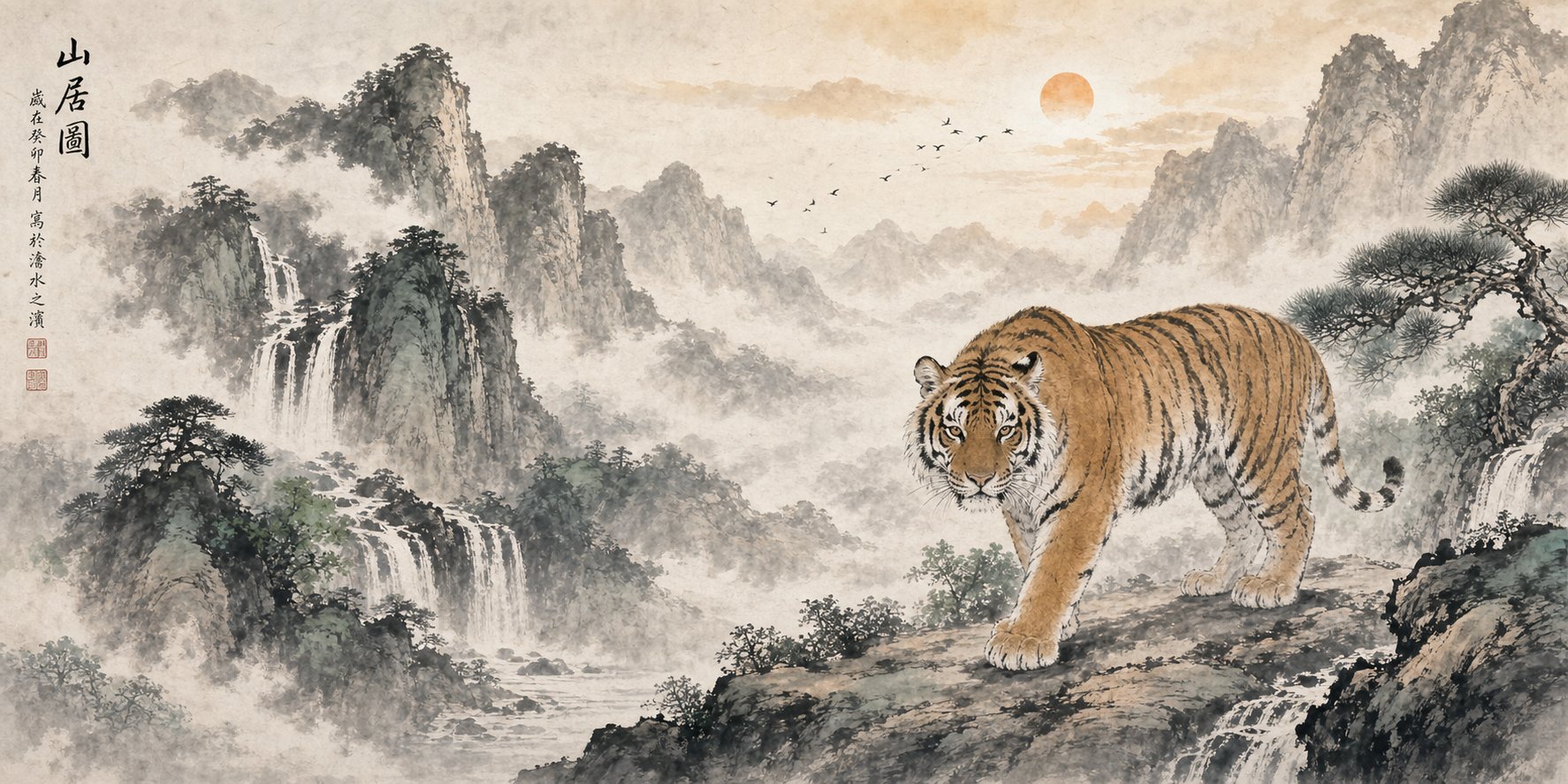
The Tiger in Chinese culture is regarded as the king of all beasts, a symbol of bravery, power, and natural authority. Tigers radiate confidence and possess a fierce sense of justice paired with an appetite for adventure. They are bold, honest, and deeply principled. Yet the Chinese astrology water tiger personality is distinctly different from a Fire Tiger or Metal Tiger. The Water element introduces qualities that pure Tiger energy alone does not carry: intuition, emotional depth, adaptability, and a gentle persuasiveness that draws people in without force.
Water softens the Tiger's intensity without diminishing its courage, creating a personality that is both fearless and emotionally intelligent. A well-chosen name should mirror this rare balance, reinforcing strength while honoring sensitivity.
People born with the Water element are described as elegant and gentle, possessing great depth beneath a calm exterior. They are empathetic, introspective, and creatively gifted. When you layer these traits onto the Tiger's natural boldness and leadership, you get a child who can command a room and read it at the same time.
Why Element and Zodiac Must Work Together in Naming
Traditional Chinese naming draws on multiple layers of meaning. A name might honor family lineage, carry poetic imagery, or encode philosophical aspirations. For parents guided by astrology, the water tiger baby name meaning goes deeper. It must resonate with both the animal sign and the governing element simultaneously. Choosing characters that only suit the Tiger ignores the child's elemental nature. Choosing only Water characters misses the Tiger's need for strength, authority, and movement.
This is why water element tiger zodiac naming requires a unified approach. You are not picking from two separate lists and hoping for the best. You are looking for characters where Water and Tiger energy reinforce each other, where flowing rivers meet forested mountains, where gentle wisdom sits alongside bold action. The goal is harmony, and harmony in Chinese naming is never accidental.
The personality traits encoded in a Ren Yin birth chart give parents a clear direction. But translating those traits into actual characters, radicals, and stroke patterns requires understanding the system that connects them all: Wu Xing, the Five Elements theory, and the specific radicals that Chinese astrology considers auspicious for Tiger-born children.
Water Tiger Personality Traits and Their Naming Implications
Every Tiger in the Chinese zodiac shares a core set of qualities: courage, ambition, confidence, and a natural pull toward leadership. But the element governing a Tiger's birth year reshapes how those qualities express themselves. Think of the element as a lens that refracts the same light into different colors. A Fire Tiger burns with visible intensity. A Metal Tiger cuts with precision. A Water Tiger flows with depth and emotional intelligence, and that distinction changes everything about how you approach naming.
Water Tiger Personality Traits That Inform Name Choices
The water tiger personality traits in the Chinese zodiac center on a fascinating duality. On one side, you have the Tiger's raw power, decisiveness, and hunger for action. On the other, the Water element introduces intuition, adaptability, and a gift for reading people and situations before acting. Where other Tigers might charge forward on instinct alone, the Water Tiger pauses, observes, and then moves with both force and finesse.
Specific strengths that define Water Tiger children include:
- Emotional intelligence paired with natural authority
- Strong communication skills and persuasive charm
- Creative thinking that finds unconventional solutions
- Adaptability in unfamiliar environments without losing confidence
- Deep empathy that earns loyalty from others
These are not abstract personality sketches. In Chinese naming philosophy, each trait points toward specific character choices. A child with strong communication skills benefits from characters evoking clarity and eloquence. A child with emotional depth deserves characters that honor wisdom and inner richness rather than brute force alone.
Water Tiger weaknesses also matter for naming. These children can be overly sensitive to criticism, prone to indecision when emotions cloud judgment, or inclined to scatter their energy across too many pursuits. Chinese naming tradition addresses this directly: you select characters that reinforce positive traits while subtly counterbalancing vulnerabilities. A name with grounding imagery, like mountains or deep roots, can anchor a Water Tiger's tendency to drift.
How Water Tiger Differs From Other Tiger Types
To understand why water tiger chinese baby names require their own strategy, it helps to see how dramatically the five element types diverge. Each Tiger element combination produces a distinct temperament, and each temperament calls for different naming priorities.
| Tiger Type | Element Year | Key Personality Traits | Naming Focus |
|---|---|---|---|
| Wood Tiger | Jia Yin (e.g., 1974, 2034) | Compassionate, cooperative, growth-oriented, idealistic | Characters emphasizing community, flourishing, and steady expansion |
| Fire Tiger | Bing Yin (e.g., 1986, 2046) | Passionate, dramatic, energetic, impulsive | Characters that channel intensity into purpose and temper impulsiveness |
| Earth Tiger | Wu Yin (e.g., 1998, 2058) | Stable, pragmatic, patient, methodical | Characters reinforcing reliability while adding warmth and vision |
| Metal Tiger | Geng Yin (e.g., 1950, 2010) | Determined, disciplined, sharp-minded, competitive | Characters that soften rigidity and encourage flexibility |
| Water Tiger | Ren Yin (e.g., 1962, 2022) | Intuitive, adaptable, emotionally deep, persuasive | Characters honoring fluidity and wisdom while grounding scattered energy |
You'll notice that naming focus shifts significantly across the five types. A Fire Tiger name might prioritize calming, stabilizing characters. A Water Tiger name does the opposite work in some ways: it honors the element's natural flow while ensuring the Tiger's strength does not dissolve into passivity. The balance point is different for every element combination.
This is precisely why generic "Tiger zodiac name" lists fall short. They treat all Tigers as identical, ignoring the elemental layer that shapes half the personality equation. A name built for a Metal Tiger's sharp discipline would feel misaligned on a Water Tiger child whose gifts lie in emotional perception and creative adaptability.
Chinese naming, as described in traditional four-dimensional naming practice, requires that Sound, Form, Meaning, and Element all work together simultaneously. For Water Tiger babies, the Element dimension carries specific instructions: reinforce Water's gifts, support the Tiger's authority, and create balance where the two energies might otherwise pull in opposing directions. The characters you choose become a quiet blueprint for how those traits develop over a lifetime.
Translating these personality insights into actual character selections requires a working knowledge of Wu Xing theory, the productive and destructive cycles between elements, and the specific radicals that carry elemental energy within Chinese characters.

The Five Elements Theory Behind Water Tiger Name Selection
Chinese baby naming is not guesswork dressed up in tradition. It operates on a structured cosmological framework called Wu Xing, literally translated as "five phases" or "five elements." This system maps the relationships between Wood, Fire, Earth, Metal, and Water, describing how energy transforms, supports, and sometimes conflicts across these five states. When parents apply wu xing five elements baby naming principles, they are working within a logic system that has governed Chinese metaphysics, medicine, and philosophy for over two thousand years.
Sounds complex? It does not need to be. At its core, Wu Xing tells you which energies feed your child's nature and which ones drain it. For a Water Tiger baby, this means identifying characters whose elemental resonance strengthens the Water birth element or channels it productively, rather than working against it.
Wu Xing Theory Simplified for Baby Naming
The five elements cycle Chinese names are built upon involves two primary relationships: the Productive Cycle and the Controlling Cycle. Think of the Productive Cycle as a chain of nourishment. Each element feeds the next in a continuous loop:
- Wood feeds Fire
- Fire feeds Earth (through ash and volcanic material)
- Earth bears Metal (minerals form within the ground)
- Metal generates Water (metal surfaces collect condensation; in classical thought, metal melts to liquid)
- Water nourishes Wood (rivers and rain sustain forests)
The Controlling Cycle works differently. Here, each element restrains another to prevent excess: Wood stabilizes Earth, Earth contains Water, Water dampens Fire, Fire melts Metal, and Metal cuts Wood. This cycle is not inherently negative. It represents necessary regulation, the way a riverbank contains a flood or a firebreak limits a blaze.
For naming purposes, the Productive Cycle tells you which elements support your child. The Controlling Cycle warns you which elements may suppress or weaken them. A Water Tiger baby sits at a specific point in both cycles, and that position dictates which characters will harmonize with their birth chart.
Here is what matters most for Water Tiger naming: Water produces Wood. This means Water energy naturally flows toward and nourishes Wood. Characters associated with Wood do not drain a Water Tiger child. Instead, they represent a productive outlet, a direction where the child's innate energy can grow into something tangible. Meanwhile, Earth controls Water. Characters heavy in Earth energy can contain or restrict the child's natural flow, which is why excessive earth-radical characters are generally avoided.
Water also controls Fire. This gives the Water Tiger child a natural ability to regulate intensity and passion, but it also means Fire-heavy characters can create internal tension, pulling the child's energy into a battle rather than a flow.
Water Element Characters and Their Radicals
Chinese characters carry elemental energy through their radicals, the structural components that signal meaning and category. When you see a character with a water radical, it belongs to the Water family regardless of its full meaning. This is how parents select water element characters for baby names with precision rather than guesswork.
The most common water radical Chinese characters for names include those built on these foundational components:
- 氵(san dian shui) - the three-dot water radical, appearing in characters like 洁 (jie, pure/clean), 涵 (han, contain/encompass), 澜 (lan, great waves), 溪 (xi, stream), and 润 (run, moist/smooth). This is the most frequently used water radical in given names.
- 水 (shui) - the standalone water character, sometimes appearing as a component within more complex characters. It carries direct, unfiltered Water energy.
- 雨 (yu) - the rain radical, found in characters like 霖 (lin, continuous rain), 霏 (fei, misty rain), 雪 (xue, snow), and 露 (lu, dew). Rain-radical characters evoke Water descending from heaven, suggesting grace and nourishment from above.
- 冫(liang dian shui) - the ice radical, appearing in characters like 冰 (bing, ice) and 凝 (ning, condense/concentrate). These carry Water energy in its most still, crystallized form.
- 川 (chuan) - river, sometimes used as a radical component. It suggests flowing movement and the power of water in motion.
Each of these radicals signals Water energy to anyone literate in Chinese character structure. A naming practitioner scanning a character immediately recognizes its elemental alignment through these visual markers. For Water Tiger babies, characters built on these radicals reinforce the child's birth element, strengthening their natural gifts of intuition, adaptability, and emotional depth.
Popular water element characters for baby names include 泽 (ze, marsh/grace), 淳 (chun, pure/honest), 沐 (mu, to bathe/receive), 瀚 (han, vast water), and 汐 (xi, evening tide). Each carries Water energy while offering distinct poetic imagery and tonal qualities that parents can match to their surname and personal taste.
Balancing Water With Complementary Elements
A name composed entirely of Water characters might seem like the obvious choice for a Water Tiger baby, but experienced practitioners take a more nuanced approach. Too much Water without direction can create stagnation or emotional overwhelm. The five elements cycle Chinese names rely on is about dynamic balance, not elemental saturation.
This is where wood and water element name pairing becomes especially powerful for Water Tiger children. The Tiger's Earthly Branch already carries a strong Wood affinity. In Chinese astrology, the Tiger is associated with the direction East and the season of early spring, both Wood-dominant. When you pair Water-radical characters with Wood-radical characters in a two-character given name, you create a name that mirrors the Productive Cycle itself: Water nourishing Wood, the parent element feeding the child's growth energy.
Wood-associated characters include those with the radicals 木 (mu, tree/wood), 林 (lin, forest), 艹 (cao, grass/plant), and 竹 (zhu, bamboo). Characters like 林 (lin, forest), 桐 (tong, paulownia tree), 芷 (zhi, angelica/iris), and 楠 (nan, cedar) all carry Wood energy. Paired with a Water character, they create names like 泽林 (ze lin, "grace of the forest") or 沐桐 (mu tong, "bathed in paulownia"), where the elemental relationship is both productive and poetically resonant.
Metal is another supportive element for Water Tiger babies because Metal produces Water in the Productive Cycle. Characters with the metal radical 金 (jin) or 钅can subtly feed the child's Water energy. However, Metal characters tend to carry sharp, rigid connotations that may conflict with the Water Tiger's fluid nature, so they are used sparingly and with care.
The key principle is this: reinforce Water as the foundation, channel it productively through Wood, and avoid overwhelming the name with Earth or Fire energy that works against the child's elemental grain. A well-constructed name reads like a miniature ecosystem where every character supports the others, and the whole structure aligns with the child's cosmic identity.
Elemental theory provides the framework, but the actual character selection depends on one more layer of knowledge: which specific radicals and components Chinese astrology considers auspicious for Tiger-born children, and how those Tiger-favorable radicals intersect with Water element characters to create names that satisfy both systems simultaneously.
Auspicious Radicals and Characters for Water Tiger Babies
Elemental alignment tells you which energies to draw on. But Chinese astrology adds a second filter: the zodiac animal itself carries preferences for specific character structures. The Tiger, as a creature of forests, mountains, and wild authority, responds to radicals that mirror its natural habitat and symbolic role. When you understand the tiger zodiac auspicious radicals, you can select characters that satisfy both the animal sign and the Water element in a single stroke.
Think of it this way. The Five Elements theory gives you the "what" (Water and Wood energy). The Tiger's radical preferences give you the "where" (mountains, forests, rivers) and the "who" (a king dressed in dignity). Combining both layers produces names that resonate on every level Chinese naming tradition considers meaningful.
Tiger Zodiac Auspicious Radicals Explained
Chinese astrology assigns favorable radicals to each zodiac animal based on symbolic logic rooted in the animal's nature, habitat, and cultural role. For the Tiger, these associations are vivid and intuitive. A tiger thrives in mountain forests, commands its territory as king of beasts, and carries itself with unmistakable presence. The best Chinese characters for tiger babies reflect these realities through their structural components.
Here are the primary auspicious radical categories for Tiger-born children and the reasoning behind each:
| Radical Category | Radicals | Symbolic Logic | Example Characters | Pinyin |
|---|---|---|---|---|
| Mountain | 山 | Tigers rule mountain territories; mountains represent power, stability, and elevated status | 岚 (mist over mountains), 峻 (lofty/steep), 岳 (great mountain), 嵘 (towering) | lan, jun, yue, rong |
| Forest/Wood | 木, 林 | Tigers inhabit dense forests; wood represents growth, vitality, and natural shelter | 林 (forest), 柏 (cypress), 桐 (paulownia), 楠 (cedar), 梓 (catalpa) | lin, bai, tong, nan, zi |
| King/Jade | 王, 玉 | The Tiger is king of all beasts; the character 王 appears in the stripes on a tiger's forehead, symbolizing royalty | 瑞 (auspicious), 琪 (fine jade), 瑾 (lustrous jade), 珩 (jade ornament) | rui, qi, jin, heng |
| Clothing/Adornment | 衣, 彡, 巾 | A dressed tiger suggests dignity, honor, and social standing; the tiger's striped coat is its natural "clothing" | 彬 (refined), 衫 (garment), 彤 (vermilion), 帆 (sail) | bin, shan, tong, fan |
| Water/River | 氵, 水, 冫 | Tigers drink from rivers and streams; water represents wisdom and the ability to nourish one's domain | 涵 (encompass), 泽 (grace/marsh), 澜 (waves), 润 (smooth) | han, ze, lan, run |
The king radical deserves special attention. In Chinese culture, the character 王 (wang, king) is said to appear naturally in the pattern of a tiger's forehead markings. This is not just folklore. It is the reason the Tiger holds the title "king of beasts" in Chinese tradition rather than the lion. Characters containing the king radical Chinese name tiger zodiac practitioners recommend include 瑞 (rui, auspicious jade), 琳 (lin, beautiful jade), 瑾 (jin, lustrous gem), and 珺 (jun, fine jade). Each carries connotations of nobility, preciousness, and inherent worth.
Mountain radical tiger baby names work on a similar principle. A tiger without a mountain is a tiger without a kingdom. Characters like 岚 (lan, mountain mist), 峻 (jun, steep and lofty), and 崇 (chong, lofty/sublime) place the Tiger in its natural seat of power. These characters suggest a child who will command respect and occupy positions of influence, which aligns perfectly with the Tiger's innate leadership energy.
The clothing and adornment radicals carry a subtler message. In Chinese symbolism, a tiger with beautiful markings is a tiger in its full glory. Characters with 彡 (the three-stroke radical suggesting pattern or decoration) or 衣 (clothing) imply that the child will be recognized, respected, and carry themselves with natural elegance. For a Water Tiger, whose personality already blends strength with grace, these radicals reinforce the outward expression of inner refinement.
Combining Water Characters With Tiger Radicals
Here is where the two systems converge into a unified naming strategy. A Water Tiger baby benefits most from names where at least one character carries Water elemental energy and at least one character contains a Tiger-auspicious radical. In a two-character given name, this creates a pairing where both the element and the zodiac are honored simultaneously.
Some water tiger lucky characters do double duty, satisfying both requirements in a single character. Consider these examples:
- 涵 (han) - contains the water radical 氵 and means "to encompass, to contain." Its meaning of holding depth within resonates with both Water's nature and the Tiger's hidden power.
- 澜 (lan) - built on the water radical, meaning "great waves." It evokes the Tiger's grandeur expressed through Water imagery.
- 岚 (lan) - contains the mountain radical 山 and means "mountain mist." It merges the Tiger's mountain habitat with Water's atmospheric presence.
- 润 (run) - water radical character meaning "moist, smooth, to enrich." It suggests nourishment and gentle influence, core Water Tiger qualities.
- 沐 (mu) - water radical, meaning "to bathe, to receive grace." It implies being blessed and cleansed, carrying both Water energy and a sense of dignity.
When building a two-character given name, you might pair a Water character with a Tiger-radical character to cover both bases explicitly. For example:
- 泽峻 (ze jun) - "grace" (water) + "lofty mountain" (mountain radical). Water nourishes while the mountain grounds.
- 涵琪 (han qi) - "encompass" (water) + "fine jade" (king radical). Depth meets preciousness.
- 润林 (run lin) - "enrich" (water) + "forest" (wood radical). Water feeding the Tiger's forest home.
- 澜彬 (lan bin) - "great waves" (water) + "refined" (clothing radical). Power expressed with elegance.
Notice how each pairing creates a miniature narrative. The characters do not just sit beside each other. They interact, with Water flowing toward the Tiger's domain, nourishing its strength, honoring its status, or reflecting its natural environment. This is what separates a thoughtfully constructed Water Tiger name from a random selection of pleasant-sounding characters.
The productive relationship between Water and Wood makes forest and tree characters especially harmonious partners for Water-radical characters. A name like 沐林 (mu lin, "bathed in forest") or 泽桐 (ze tong, "grace of the paulownia") activates the Productive Cycle within the name itself: Water nourishing Wood, the parent element feeding growth. For a Tiger child whose zodiac animal lives among trees, this pairing feels both cosmologically correct and poetically alive.
With these radicals and combination principles in hand, the next step is seeing them applied to actual names. The character breakdowns that follow translate theory into ready-to-use options, starting with names crafted specifically for Water Tiger girls.
Water Tiger Baby Girl Names With Character Breakdowns
Theory only takes you so far. At some point, you need actual names you can speak aloud, write on a birth certificate, and feel good about for decades. The names below are crafted specifically for Water Tiger girls, each one drawing on the elemental and zodiac principles covered earlier. Every entry incorporates water radicals, Tiger-auspicious radicals, or both, so you are not just picking something that sounds pretty. You are choosing characters that align with your daughter's cosmic blueprint.
These water tiger girl names are organized by their primary elemental or symbolic emphasis. Some lean into Water energy directly. Others honor the Tiger's mountain-and-forest domain. A third group blends wind and water imagery for names that feel dynamic and free, matching the Water Tiger's adaptable spirit.
Girl Names With Water Element Characters
These names feature characters built on water radicals like 氵 and 雨, reinforcing the birth element while carrying poetic imagery of streams, tides, and gentle rain. Each one reflects the Water Tiger's emotional depth and intuitive grace.
| Chinese Characters | Pinyin | Meaning | Water Tiger Connection |
|---|---|---|---|
| 沁瑶 | Qin Yao | 沁 (permeate/refresh) + 瑶 (precious jade): refreshing as jade-clear water | Water radical 氵 reinforces birth element; 瑶 contains the king radical 王, honoring the Tiger as king of beasts |
| 涵悦 | Han Yue | 涵 (encompass/contain) + 悦 (joy/delight): a heart that holds joy within its depths | 涵 carries the water radical and means depth and inclusiveness, mirroring the Water Tiger's emotional intelligence |
| 澜歆 | Lan Xin | 澜 (great waves) + 歆 (admire/joyful): admiration vast as ocean waves | 澜 evokes the Tiger's grandeur through Water imagery; the name suggests a girl whose presence inspires others |
| 汐宁 | Xi Ning | 汐 (evening tide) + 宁 (tranquility): the peaceful rhythm of tidal waters | 汐 carries Water energy in its gentlest form; 宁 provides grounding stability that balances the Water Tiger's scattered tendencies |
| 清妍 | Qing Yan | 清 (clear/pure) + 妍 (beautiful/graceful): beauty as clear as spring water | 清 is a classic water-radical character suggesting moral clarity, a trait that channels the Tiger's strong sense of justice |
Girl Names With Tiger Auspicious Radicals
These beautiful Chinese names for water tiger girls prioritize the Tiger's zodiac-favorable radicals: king/jade (王), mountain (山), and forest/wood (木). They place your daughter symbolically in the Tiger's natural domain of power and beauty.
| Chinese Characters | Pinyin | Meaning | Water Tiger Connection |
|---|---|---|---|
| 瑾萱 | Jin Xuan | 瑾 (lustrous jade) + 萱 (daylily/forget-worry herb): radiant as jade, carefree as wildflowers | 瑾 contains the king radical 王, affirming the Tiger's royal status; 萱 carries the grass radical linking to Wood energy that Water naturally nourishes |
| 岚溪 | Lan Xi | 岚 (mountain mist) + 溪 (stream): mist drifting over a mountain stream | 岚 holds the mountain radical 山, placing the Tiger in its kingdom; 溪 carries the water radical, blending both zodiac and element in one name |
| 梓琪 | Zi Qi | 梓 (catalpa tree) + 琪 (fine jade): precious as jade, rooted as an ancient tree | 梓 carries the wood radical 木, representing the Tiger's forest home; 琪 contains the king radical, doubling the Tiger's auspicious energy |
| 琳珺 | Lin Jun | 琳 (beautiful jade) + 珺 (fine jade): twin jades of exceptional quality | Both characters contain the king radical 王, strongly honoring the Tiger's royal nature; the repeated jade imagery suggests a girl of rare and recognized worth |
| 彤瑶 | Tong Yao | 彤 (vermilion/red) + 瑶 (precious jade): a gem glowing with warm color | 彤 contains the adornment radical 彡, suggesting the Tiger's beautiful coat; 瑶 carries the king radical for royal dignity |
Girl Names Blending Wind and Water Imagery
Wind and water share a dynamic relationship in Chinese cosmology. The term feng shui literally means "wind-water," and names that evoke both elements carry a sense of movement, freedom, and natural power. These water element girl names with pinyin capture the Water Tiger's restless creativity and adaptive strength.
| Chinese Characters | Pinyin | Meaning | Water Tiger Connection |
|---|---|---|---|
| 凌霏 | Ling Fei | 凌 (soar above/ice) + 霏 (misty rain): rising above like mist ascending from rain | 凌 carries the ice radical 冫 (Water in crystallized form); 霏 holds the rain radical 雨, creating layered Water energy with upward momentum befitting a Tiger's ambition |
| 霏然 | Fei Ran | 霏 (misty rain) + 然 (naturally so/serene): rain falling as naturally as breathing | 霏 reinforces Water through the rain radical; 然 suggests effortless grace, reflecting how the Water Tiger leads without force |
| 岚汐 | Lan Xi | 岚 (mountain wind/mist) + 汐 (evening tide): mountain breezes meeting coastal tides | 岚 combines mountain (Tiger habitat) with atmospheric movement; 汐 grounds the name in Water energy, creating a wind-over-water landscape |
| 沐岚 | Mu Lan | 沐 (bathe in/receive grace) + 岚 (mountain mist): bathed in the mist of high peaks | 沐 carries the water radical for elemental alignment; 岚 contains the mountain radical for Tiger territory; together they evoke a girl blessed by nature's grandest forces |
| 凝露 | Ning Lu | 凝 (condense/concentrate) + 露 (dew): morning dew gathering in stillness | 凝 holds the ice radical (Water family); 露 contains the rain radical 雨; the name suggests focused clarity and quiet power, balancing the Tiger's boldness with Water's patience |
You'll notice that several names appear in more than one category because their characters do double duty. 岚 (lan), for instance, satisfies both the mountain radical requirement for Tiger babies and the atmospheric water imagery that strengthens the Water element. These crossover characters are especially valuable because they compress maximum auspicious energy into a single syllable.
When selecting from these options, consider how the given name sounds alongside your family surname. Tonal flow matters. A surname ending in a flat tone pairs well with a given name that rises or dips, creating a musical quality when spoken aloud. Also consider stroke count balance: a visually complex character like 澜 (15 strokes) pairs better with a simpler partner like 心 (4 strokes) than with another high-stroke character that would make the full name exhausting to write.
These same principles of elemental alignment and radical selection apply equally to boys, though the character choices shift toward imagery of strength, ambition, and expansive landscapes.

Water Tiger Baby Boy Names With Character Breakdowns
Strength without wisdom is recklessness. Wisdom without strength is hesitation. The Water Tiger boy lives at the intersection of both, and his name should reflect that duality. The water tiger boy names below draw on the same elemental and zodiac principles as the girl names, but the character choices shift toward imagery of peaks, vast waters, and commanding presence. Each name conveys leadership tempered by emotional intelligence, ambition guided by intuition.
These strong tiger zodiac boy names are grouped by their dominant imagery: mountain-and-water landscapes, the king radical honoring the Tiger's royal status, and wind-over-water dynamism that captures the Water Tiger's restless creative energy.
Boy Names With Water and Mountain Imagery
Mountains give the Tiger a kingdom. Water gives it depth. These mountain and water Chinese boy names place your son symbolically in a landscape where both forces converge, creating names that feel grounded yet fluid.
| Chinese Characters | Pinyin | Meaning | Water Tiger Connection |
|---|---|---|---|
| 泽峰 | Ze Feng | 泽 (grace/marsh) + 峰 (peak): grace that rises to the highest summit | 泽 carries the water radical 氵 reinforcing the birth element; 峰 contains the mountain radical 山, placing the Tiger in its seat of power |
| 瀚岳 | Han Yue | 瀚 (vast water) + 岳 (great mountain): an ocean's breadth meeting a mountain's height | 瀚 is a classic water-radical character suggesting limitless scope; 岳 is among the most auspicious mountain-radical characters for Tiger babies, evoking sacred peaks |
| 涵峻 | Han Jun | 涵 (encompass/contain) + 峻 (lofty/steep): depth that supports towering ambition | 涵 (water radical) mirrors the Water Tiger's emotional intelligence; 峻 (mountain radical) suggests a boy who will rise to commanding heights |
| 沐岩 | Mu Yan | 沐 (bathe in grace) + 岩 (cliff/rock): blessed by nature, solid as stone | 沐 carries Water energy with connotations of receiving blessings; 岩 contains the mountain radical and suggests unshakable resolve grounding the Water Tiger's fluid nature |
| 泓嵘 | Hong Rong | 泓 (deep pool) + 嵘 (towering/extraordinary): still waters beneath extraordinary peaks | 泓 (water radical) evokes concentrated depth rather than scattered flow; 嵘 (mountain radical) implies a boy destined for remarkable achievement |
Boy Names Honoring the Tiger King Radical
The king radical 王 appears naturally in a tiger's forehead markings, which is why Chinese tradition calls the Tiger king of all beasts. Chinese baby boy names with water meaning gain extra auspicious weight when paired with jade and king-radical characters that affirm this royal identity.
| Chinese Characters | Pinyin | Meaning | Water Tiger Connection |
|---|---|---|---|
| 瑞泽 | Rui Ze | 瑞 (auspicious/lucky) + 泽 (grace/beneficence): auspicious blessings flowing like water | 瑞 contains the king radical 王, honoring the Tiger's sovereignty; 泽 carries the water radical, creating a name where royal fortune meets elemental alignment |
| 琛林 | Chen Lin | 琛 (treasure/gem) + 林 (forest): a treasure hidden within the forest | 琛 holds the king radical suggesting inherent worth; 林 is the forest radical directly tied to the Tiger's natural habitat and Wood energy that Water nourishes |
| 珩溪 | Heng Xi | 珩 (jade ornament) + 溪 (mountain stream): jade polished smooth by flowing water | 珩 carries the king radical for Tiger royalty; 溪 holds the water radical and evokes a stream running through Tiger territory, blending both zodiac and element |
| 瑾森 | Jin Sen | 瑾 (lustrous jade) + 森 (dense forest): a gem glowing within deep woods | 瑾 (king radical) suggests a boy of rare inner quality; 森 triples the wood radical 木, powerfully evoking the Tiger's forest kingdom while activating the Water-produces-Wood cycle |
| 璟涵 | Jing Han | 璟 (jade luster/brilliance) + 涵 (encompass/depth): brilliance contained within deep waters | 璟 carries the king radical affirming Tiger authority; 涵 reinforces Water birth element; together they suggest a boy whose true power lies beneath a composed surface |
Boy Names Inspired by Wind and Flowing Water
The Water Tiger is not a still pond. He is a current, always moving, always adapting. These water element boy names with pinyin capture that dynamic quality, pairing flowing Water characters with imagery of movement, openness, and natural momentum.
| Chinese Characters | Pinyin | Meaning | Water Tiger Connection |
|---|---|---|---|
| 浩然 | Hao Ran | 浩 (vast/grand) + 然 (naturally so/righteous spirit): a spirit vast and upright as nature itself | 浩 carries the water radical suggesting limitless capacity; 然 contains the fire radical 灬 which is productive for Tiger's Wood nature; the name echoes Mencius's concept of cultivating a grand, moral spirit |
| 凌峰 | Ling Feng | 凌 (soar above/surpass) + 峰 (peak): rising above the highest summit | 凌 holds the ice radical 冫 (Water in crystallized form) suggesting sharp clarity; 峰 contains the mountain radical; together they evoke a boy who ascends beyond limits |
| 潇楠 | Xiao Nan | 潇 (free-spirited/natural and unrestrained) + 楠 (cedar/nanmu wood): free as wind through ancient cedars | 潇 carries the water radical with connotations of effortless elegance; 楠 holds the wood radical and is specifically listed among auspicious characters for Tiger zodiac names |
| 沛恒 | Pei Heng | 沛 (abundant/copious) + 恒 (eternal/constant): abundant energy that never fades | 沛 reinforces Water energy with a sense of overflowing vitality; 恒 contains the heart radical 忄, which is Tiger-auspicious as it relates to a rich inner world and emotional steadfastness |
| 澈朗 | Che Lang | 澈 (limpid/crystal clear) + 朗 (bright/open): clarity as transparent as sunlit water | 澈 carries the water radical and suggests moral transparency; 朗 contains the moon radical 月, which is auspicious for Tiger babies as it relates to nourishment and fullness |
A few practical notes as you compare options. Names like 浩然 (Hao Ran) carry heavy literary weight in Chinese culture, referencing Mencius's philosophy of cultivating righteous energy. If your family values classical resonance, this kind of name signals education and depth. Names like 泓嵘 (Hong Rong) are less common and more distinctive, which appeals to parents who want their son to stand apart without straying into obscurity.
Consider how each name sounds with your surname. Two-syllable surnames like 欧阳 (Ouyang) pair best with shorter, punchier given names. Single-syllable surnames like 王 (Wang) or 李 (Li) give you more room for two-character names with complex tonal movement. Also weigh stroke count: a name your child will write thousands of times should not exhaust their hand before they finish their homework.
Choosing the right characters is only half the equation. Equally important is knowing which characters to avoid, because Chinese astrology is as specific about naming taboos as it is about auspicious choices.
Naming Taboos and Characters to Avoid for Water Tiger Babies
Knowing what to include in a name is only half the picture. Chinese astrology is equally precise about what to leave out. Water tiger naming taboos in Chinese astrology are rooted in clash principles that have governed naming practice for centuries. Violating these taboos does not just miss an opportunity for harmony. It actively introduces conflict into the name's energetic structure, working against the child's natural strengths rather than supporting them.
Think of it like building a house. You can choose the finest materials, but if you place them on unstable ground or orient the structure toward a destructive wind, the quality of the materials cannot save you. The same logic applies to characters to avoid in tiger zodiac names. Even a beautiful, meaningful character becomes problematic if its radical structure or animal association clashes with the Tiger's energy.
Zodiac Clash Characters to Avoid
In Chinese astrology, certain zodiac animals exist in direct opposition. The Tiger's primary clashes are with the Monkey (Shen) and the Snake (Si). These are not mild incompatibilities. They represent fundamental energetic conflicts where one animal's nature undermines the other's. The tiger monkey zodiac clash naming principle is straightforward: avoid characters that contain radicals or components associated with these clashing animals.
Characters and radicals to steer clear of include:
- 申 (shen) - the Earthly Branch character for Monkey. Any character containing this component carries Monkey energy that directly opposes the Tiger. Examples include 伸 (shen, stretch), 绅 (shen, gentleman), and 坤 (kun, which contains the 申 component in some traditional analyses).
- 袁 (yuan) - associated with the Monkey through the character 猿 (yuan, ape). Characters built on this component, like 远 (yuan, far) in its traditional form, may carry subtle Monkey associations.
- 巳 (si) - the Earthly Branch for Snake. Characters containing this component introduce Snake energy that clashes with the Tiger. Related forms include 己 (ji, self), 巴 (ba, to cling), and characters with the serpentine radical 虫 (chong, insect/reptile) like 蜿 or 蛇.
- 辶 (chuo) - the walking radical, sometimes associated with Snake movement. Characters like 逸 (yi, escape) or 遥 (yao, distant) carry this radical, though opinions vary among practitioners on how strongly it triggers the Snake clash.
- 弓 (gong) - the bow radical, which visually resembles a coiled snake. Characters like 强 (qiang, strong) or 张 (zhang, a common surname) contain this radical. When it appears in a surname, practitioners work around it rather than avoiding it entirely.
The logic behind these avoidances is not arbitrary superstition. In the twelve-animal cycle, the Tiger sits at the Yin position (northeast, early spring), while the Monkey occupies the Shen position (southwest, autumn), creating a direct six-clash opposition across the zodiac wheel. The Snake forms a punishment relationship with the Tiger. Introducing these energies into a child's name is believed to create internal friction that manifests as obstacles, interpersonal conflict, or self-sabotaging patterns.
Element Conflicts in Name Selection
Beyond zodiac clashes, the earth element conflict in water tiger names deserves careful attention. In the Controlling Cycle of Wu Xing, Earth dams Water. Earth energy contains, restricts, and absorbs Water's natural flow. For a Water Tiger baby whose birth element is Water, excessive Earth-radical characters can suppress the very qualities that make them special: intuition, adaptability, emotional depth, and fluid intelligence.
Earth-associated radicals to use sparingly or avoid include:
- 土 (tu) - the earth radical, found in characters like 城 (cheng, city), 坚 (jian, firm), and 培 (pei, cultivate). While grounding energy is sometimes needed, too much Earth in a Water Tiger name creates a dam effect.
- 田 (tian) - the field radical, appearing in characters like 思 (si, think) and 畅 (chang, smooth). Fields represent cultivated, contained earth, the opposite of the Tiger's wild mountain territory.
- 石 (shi) - the stone radical, in characters like 磊 (lei, open and upright) and 碧 (bi, jade-green). Stone is compressed Earth that blocks Water's movement entirely.
Fire-radical characters also warrant caution, though for a different reason. Water controls Fire in the Wu Xing cycle, meaning the Water Tiger child naturally suppresses Fire energy. Loading a name with Fire characters (火, 灬) does not strengthen the child. It creates a dynamic where their innate Water energy is constantly working to extinguish something, draining resources rather than building them. One Fire-radical character in a name is rarely problematic, but stacking multiple Fire components tips the balance toward internal conflict.
Using Bazi to Refine Your Name Choice
Everything discussed so far applies broadly to all Water Tiger babies. But here is where naming gets truly personalized: bazi birth chart baby naming takes the child's exact birth date and time into account, analyzing not just the year pillar (which gives us Water Tiger) but also the month, day, and hour pillars. Each pillar contains its own Heavenly Stem and Earthly Branch, creating a unique eight-character chart that reveals which elements are abundant, which are missing, and which serve as the child's beneficial elements.
This matters because not every Water Tiger baby needs the same elemental support. As practitioner Master Sean Chan explains, a common mistake is assuming that a missing element should automatically be added to the name. A chart lacking Fire does not necessarily benefit from Fire characters if introducing Fire would collapse the chart's overall structure. The chart's flow, interactions, and seasonal adjustments must all be assessed before determining which elements truly help.
Bazi analysis also refines stroke count considerations. The Wu Ge (five structures) method calculates auspicious stroke counts based on the mathematical relationships between surname strokes and given name strokes. Practitioners reference the Kangxi Dictionary for accurate stroke counts, since some characters have more strokes than they visually appear. The character 王, for example, looks like four strokes but counts as five in traditional naming calculations.
For parents who want maximum precision, the process follows this sequence: first, analyze the bazi chart to identify beneficial elements. Second, select characters with auspicious stroke counts that fit the five-structure framework. Third, verify that chosen characters avoid zodiac clashes and element conflicts. Only names that pass all three filters are considered truly optimized.
A name that satisfies zodiac radicals and elemental alignment but ignores the individual bazi chart is like a well-tailored suit in the wrong size. It looks correct from a distance but never quite fits the person wearing it.
Most parents will not perform full bazi analysis themselves, and that is perfectly reasonable. The zodiac and elemental guidelines in this article provide a strong foundation that works for any Water Tiger child. But if you want the deepest level of personalization, consulting a practitioner who can read your child's complete four-pillar chart will reveal whether your chosen name truly serves their unique energetic blueprint, or whether adjustments are needed to account for elements the year pillar alone cannot show.
With both the auspicious and the avoidable now mapped out, the remaining challenge is practical: how do you assemble all these pieces into a complete, functional Chinese name that works across cultures, generations, and daily life?
How to Build a Complete Water Tiger Chinese Name
You have the radicals, the elemental logic, and the character options. The question now is assembly. How do you take individual characters and build them into a complete name that works on paper, sounds right when spoken aloud, and functions across the different contexts your child will move through? Knowing how to choose a Chinese name for a water tiger baby means understanding the structural rules that hold everything together.
Full Name Structure and How Given Names Fit
A Chinese name follows a fixed architecture: surname first, given name second. The surname (xing) is inherited from the father's family in most traditions, though maternal surnames are increasingly used. Given names (ming) consist of one or two characters. That gives you either a two-character full name (one surname + one given name character) or a three-character full name (one surname + two given name characters).
In mainland China, three-character names dominate. Two-character names were common in earlier generations but have fallen out of favor partly because they create more duplication in a population of 1.4 billion. Taiwan follows a similar pattern, though two-character names remain slightly more common there than on the mainland. Hong Kong naming adds a layer of complexity: many families assign both a Chinese name and a separate English name that may have no phonetic relationship to the Chinese one.
For Water Tiger naming specifically, a two-character given name offers the most flexibility. It lets you dedicate one character to Water elemental energy and one to a Tiger-auspicious radical, covering both systems within a single name. A one-character given name forces you to find a single character that does double duty, which limits your options considerably.
Surname interaction matters more than most parents realize. The surname is not just a prefix. It participates in the name's tonal melody, visual balance, and even stroke-count calculations used in the Wu Ge method. A surname like 林 (Lin, forest) already carries Wood energy, which means your given name characters can lean more heavily into Water without worrying about elemental imbalance. A surname like 石 (Shi, stone) carries Earth energy that controls Water, so your given name might need stronger Water reinforcement to compensate.
Guidance for Diaspora Parents and Bilingual Families
This Chinese naming guide for diaspora parents starts with an honest acknowledgment: many second- and third-generation families no longer read Chinese fluently. That does not disqualify you from giving your child a meaningful Chinese name rooted in Water Tiger principles. It simply means your process looks different.
Here are some bilingual Chinese English baby name tips that bridge the gap between traditions:
- Start with pinyin pronunciation. Even if you cannot read characters, you can evaluate how a name sounds. Say the full name aloud with your surname. Does it flow? Are there awkward tonal collisions or unintended homophones in your regional dialect?
- Consider phonetic bridges. Some families choose a Chinese name whose pinyin echoes the English name, or vice versa. A girl named "Lynn" might carry the Chinese name 琳 (Lin, beautiful jade), which contains the Tiger-auspicious king radical. A boy named "Kai" could pair with 凯 (Kai, triumphant) or the Water-element character 海 (Hai, ocean) depending on which sound you prioritize.
- Consult family elders early. Grandparents and great-aunts often hold naming knowledge that never made it into English-language guides. They may know which generation name (zi bei) your child should carry, or which characters have been used by ancestors and should be avoided to prevent disrespect.
- Work with a naming professional if budget allows. Practitioners who specialize in Chinese baby naming can analyze your child's bazi chart, verify stroke counts, check for zodiac clashes, and produce a shortlist of names that satisfy all traditional criteria. Many now offer consultations in English specifically for diaspora families.
One common concern among bilingual families is whether the Chinese name will be "usable" in daily life. In practice, many diaspora children carry their Chinese name as a middle name on legal documents while using an English first name socially. Others use the Chinese name within family contexts and the English name at school. Neither approach is wrong. What matters is that the Chinese name exists as a meaningful anchor to identity, culture, and the cosmic alignment you chose for your child.
Blending Tradition With Modern Naming Trends
Traditional Water Tiger astrology does not require old-fashioned names. Modern Chinese naming trends have shifted toward characters that feel literary, nature-inspired, and gender-flexible while still honoring elemental and zodiac principles. Parents today gravitate toward names that sound elegant in Mandarin, look balanced when written, and carry meanings that resonate across cultural contexts.
Current trends that pair well with Water Tiger naming include:
- Nature imagery over abstract virtues. Names like 溪岚 (Xi Lan, stream and mountain mist) feel more contemporary than older virtue-heavy names, while still satisfying Water and Tiger radical requirements.
- Softer sounds for boys. The rigid expectation that boy names must sound forceful is fading. Characters like 涵 (Han, encompass) and 润 (Run, smooth) appear increasingly in boys' names, and both carry Water energy perfectly suited to the Water Tiger's emotionally intelligent nature.
- Rare but readable characters. Parents want names that stand out without being unpronounceable. Characters like 泓 (Hong, deep pool) or 璟 (Jing, jade luster) are uncommon enough to feel distinctive but familiar enough that teachers and peers can read them.
- Unisex options. Characters like 沐 (Mu, bathe in grace) and 岚 (Lan, mountain mist) work beautifully for any gender, appealing to parents who prefer not to encode gender expectations into the name itself.
The step by step Chinese baby naming process below brings everything together into a practical sequence you can follow regardless of your familiarity with Chinese characters:
- Identify your child's birth data. Confirm the year (Ren Yin for Water Tiger), and if possible, note the month, day, and hour for a more detailed bazi analysis later.
- Assess your surname's elemental energy. Determine whether your family surname carries Water, Wood, Fire, Earth, or Metal energy based on its radical structure. This tells you what your given name needs to compensate for or reinforce.
- Set your elemental priorities. For most Water Tiger babies, prioritize Water-radical characters as the foundation, with Wood as a productive complement. Avoid heavy Earth or stacked Fire characters.
- Select Tiger-auspicious radicals. Choose at least one character containing a mountain, forest, king/jade, or clothing radical to honor the zodiac animal's preferences.
- Check for zodiac clashes. Verify that no chosen character contains Monkey (申) or Snake (巳) components, and avoid excessive Earth radicals that dam Water energy.
- Test the sound. Say the full name (surname + given name) aloud in Mandarin. Listen for tonal flow, avoiding three consecutive characters in the same tone. Check for unintended homophones that might cause teasing or confusion.
- Evaluate visual balance. Write the full name and assess stroke-count harmony. A 4-stroke surname pairs well with moderate-stroke given name characters (8-12 strokes each). Avoid pairing very simple and very complex characters unless the contrast is intentional.
- Verify with family and, optionally, a professional. Share your shortlist with elders who may catch generational naming conflicts or cultural associations you missed. If precision matters to you, a naming practitioner can run Wu Ge stroke calculations and bazi cross-checks.
- Live with the name for a few days. Write it, say it, imagine calling it across a playground. A name that looks perfect on paper but feels awkward in your mouth is not the right name, no matter how auspicious its radicals.
This process works whether you are in Beijing, Taipei, Toronto, or Sydney. The principles are universal. The application adapts to your family's specific cultural position, language comfort, and personal aesthetics. A Water Tiger name built through this framework carries both the weight of tradition and the lightness of a name chosen with genuine care, one that your child can grow into across every stage of life.
Frequently Asked Questions About Water Tiger Chinese Baby Names
1. What year is the Water Tiger in Chinese astrology?
The most recent Water Tiger (Ren Yin) year ran from February 1, 2022 through January 21, 2023. This combination appears only once every sixty years in the full sexagenary cycle, with the next Ren Yin year not arriving until 2082. Babies born during this window carry yang Water as their Heavenly Stem and Tiger as their Earthly Branch, creating a personality blend of emotional intelligence, adaptability, and natural courage that should be reflected in their name choices.
2. What characters should be avoided in Water Tiger baby names?
Water Tiger names should avoid characters containing Monkey-associated components like 申 (shen) and Snake-related radicals like 巳 (si), since these animals clash directly with the Tiger in the zodiac cycle. Earth-heavy radicals such as 土 (earth), 田 (field), and 石 (stone) should also be minimized because Earth controls Water in the Wu Xing cycle, potentially suppressing the child's natural intuition and emotional depth. Stacking multiple Fire-radical characters can also create internal tension.
3. What are the best radicals for Tiger zodiac baby names?
Tiger-auspicious radicals include 山 (mountain) because tigers rule mountain territories, 木 and 林 (wood and forest) representing their natural habitat, 王 and 玉 (king and jade) honoring the tiger as king of beasts, and 衣 and 彡 (clothing and adornment) symbolizing the tiger's dignified striped coat. For Water Tiger babies specifically, combining these with water radicals like 氵, 雨, or 冫 creates names that honor both the zodiac animal and the birth element simultaneously.
4. How do you balance Water and Tiger energy in a Chinese name?
The most effective approach uses a two-character given name where one character carries Water elemental energy through radicals like 氵 or 雨, and the other contains a Tiger-favorable radical such as 山 or 王. Wood-radical characters also work well because Water produces Wood in the productive cycle, and the Tiger has a natural Wood affinity through its association with forests and spring. The goal is dynamic harmony rather than elemental saturation, ensuring neither Water's fluidity nor Tiger's strength overwhelms the other.
5. Do diaspora parents need to read Chinese to choose a Water Tiger name?
No. Diaspora parents can start by evaluating names through pinyin pronunciation, checking how the full name sounds with their surname and listening for tonal flow. Phonetic bridges between Chinese and English names are common, such as pairing the English name Lynn with 琳 (lin, beautiful jade). Consulting family elders for generational naming traditions and working with bilingual naming professionals who offer English-language consultations are practical options that ensure traditional principles are honored without requiring character literacy.