What Are Wuxia Inspired Chinese Names and Why Do They Matter
Wuxia inspired Chinese names are character names built from deliberate selections of Chinese characters (hanzi) that encode a person's destiny, moral alignment, martial prowess, or philosophical outlook. Unlike everyday Chinese names chosen for auspicious meaning or family tradition, wuxia names draw from classical poetry, Daoist cosmology, Confucian virtue, and martial arts mythology to compress an entire character arc into two or three syllables. They function as foreshadowing tools, status markers, and cultural symbols that shape how readers perceive a character before a single sword is drawn.
What Makes a Name Wuxia
Imagine naming a warrior "Wu Yong" only to discover it means "useless." In wuxia fiction, that kind of mismatch shatters immersion instantly. The genre's naming tradition operates under a different set of rules than modern Chinese naming. A hero named "Xue Feng" (Blood Wind) carries the weight of a violent destiny. A monk called "Wu Xin" (Heartless) signals an internal struggle between detachment and emotion. Every character, from the radical structure of each hanzi to the tonal pattern of the full name, is chosen to reflect cultivation path, personality, and fate. Natural elements like wind, mountain, and frost indicate martial affinities. Philosophical terms signal inner character. References to heaven or void foreshadow transcendence. This system is rooted in centuries of literary tradition, where names act as layered palimpsests carrying echoes of classical novels, Daoist scriptures, and historical figures.
Why Wuxia Names Resonate Across Cultures
The global appeal of cool Chinese names from the jianghu has exploded through drama adaptations, RPGs, fantasy novels, and online writing communities. Gamers building characters in martial arts titles want names that feel authentic. Writers crafting wuxia fantasy worlds need naming systems that hold up under scrutiny. Even readers who have never studied Mandarin recognize that these names carry weight, that "Linghu Chong" or "Dongfang Bubai" sound fundamentally different from a random output of a chinese name generator.
A well-crafted wuxia name is not just poetic. It is a prophecy, a reputation, and a philosophical statement compressed into the space of a breath.
This article goes beyond surface-level lists. It teaches the underlying system so you can recognize why certain wuxia names work, how master authors construct them, and how to build your own from scratch. Think of it as both a reference guide and a creative naming workshop, one that replaces guesswork with genuine understanding of how Chinese characters combine to tell stories before the story even begins.
Two Schools of Wuxia Naming Philosophy
Not all wuxia characters are named the same way. Within the genre, two distinct naming traditions emerged from its greatest authors, and understanding the difference between them is the single most useful thing you can learn before crafting chinese fantasy names of your own. Jin Yong and Gu Long both wrote martial arts fiction, but their approaches to naming reflect fundamentally different storytelling philosophies.
Jin Yong's Literary-Allusive Naming Style
Jin Yong was a historian and classical scholar. His names reward readers who catch the literary references buried inside them. Consider Guo Jing (郭靖, Guo Jing) from The Legend of the Condor Heroes. The character 靖 means "to pacify" and directly references the historical Jingkang Incident, tying the hero's identity to a national wound. His companion Yang Kang (杨康, Yang Kang) carries 康 (prosperity), but the irony is deliberate. Named by a Jurchen prince, the character's name foreshadows his moral corruption through misplaced loyalty.
Linghu Chong (令狐冲, Linghu Chong) uses 冲, meaning "to rush forward" or "unrestrained," perfectly encoding his rebellious, convention-breaking personality. Mu Wanqing (木婉清, Mu Wanqing) draws from the Book of Songs, where 婉清 evokes a woman both gentle and pure. These names feel grounded. You could encounter them in real life, and that verisimilitude is intentional. Jin Yong wanted his wuxia characters to inhabit a world that felt historically plausible, where names carried the weight of Confucian texts and dynastic poetry without announcing themselves as fictional.
Gu Long's Minimalist-Evocative Naming Style
Gu Long took the opposite path. As a self-described innovator who constantly sought "breakthroughs" in the genre, he built names that function like mood paintings rather than scholarly footnotes. Ximen Chuixue (西门吹雪) translates to "West Gate Blowing Snow," conjuring an image of a lone swordsman against a winter landscape before you know anything else about him. Hua Manlou (花满楼, Hua Manlou) means "Flowers Fill the Tower," evoking warmth and sensory richness for a character who is blind yet perceives the world more fully than anyone around him.
Where Jin Yong's names ask you to decode allusions, Gu Long's names hit you with atmosphere instantly. Ye Gucheng (叶孤城, Ye Gucheng) means "Leaf, Lonely City." Zhongyuan Yidianhong (中原一点红) translates to "A Dot of Red in the Central Plains." These names are cinematic. They don't reference classical texts so much as create original imagery, and that distinction shapes the entire reader experience in wuxia fantasy fiction.
The contrast can be summarized simply: Jin Yong's names are traditional, authentic, and layered with scholarly depth. Gu Long's names are modern in spirit, fantastical, and visually gorgeous. Jin Yong excelled at female names. Gu Long's male names remain unmatched for sheer aesthetic impact.
| Dimension | Jin Yong's Style | Gu Long's Style |
|---|---|---|
| Typical Character Length | 2-3 characters (surname + given name) | 3-5 characters (often poetic phrases) |
| Source Material | Classical poetry, Confucian texts, Buddhist philosophy, historical events | Original imagery, natural scenery, emotional atmosphere |
| Emotional Effect | Layered meaning that deepens on re-reading; intellectual satisfaction | Immediate visual or sensory impact; cinematic mood |
| Verisimilitude | High (names could exist in real life) | Low (names feel otherworldly and stylized) |
| Typical Archetypes Served | Righteous heroes, conflicted scholars, tragic lovers | Lone swordsmen, eccentric rogues, mysterious assassins |
| Iconic Examples | 郭靖 (Guo Jing), 杨过 (Yang Guo), 周芷若 (Zhou Zhiruo) | 楚留香 (Chu Liuxiang), 西门吹雪 (Ximen Chuixue), 花无缺 (Hua Wuque) |
When you sit down to name your own wuxia characters, the first decision is which school you are drawing from. A grounded historical epic calls for Jin Yong's method. A stylized, atmosphere-driven story benefits from Gu Long's approach. And the most interesting naming work often happens when you blend both traditions, anchoring a poetic image inside a historically plausible surname structure.
Compound Surnames That Define Wuxia Characters
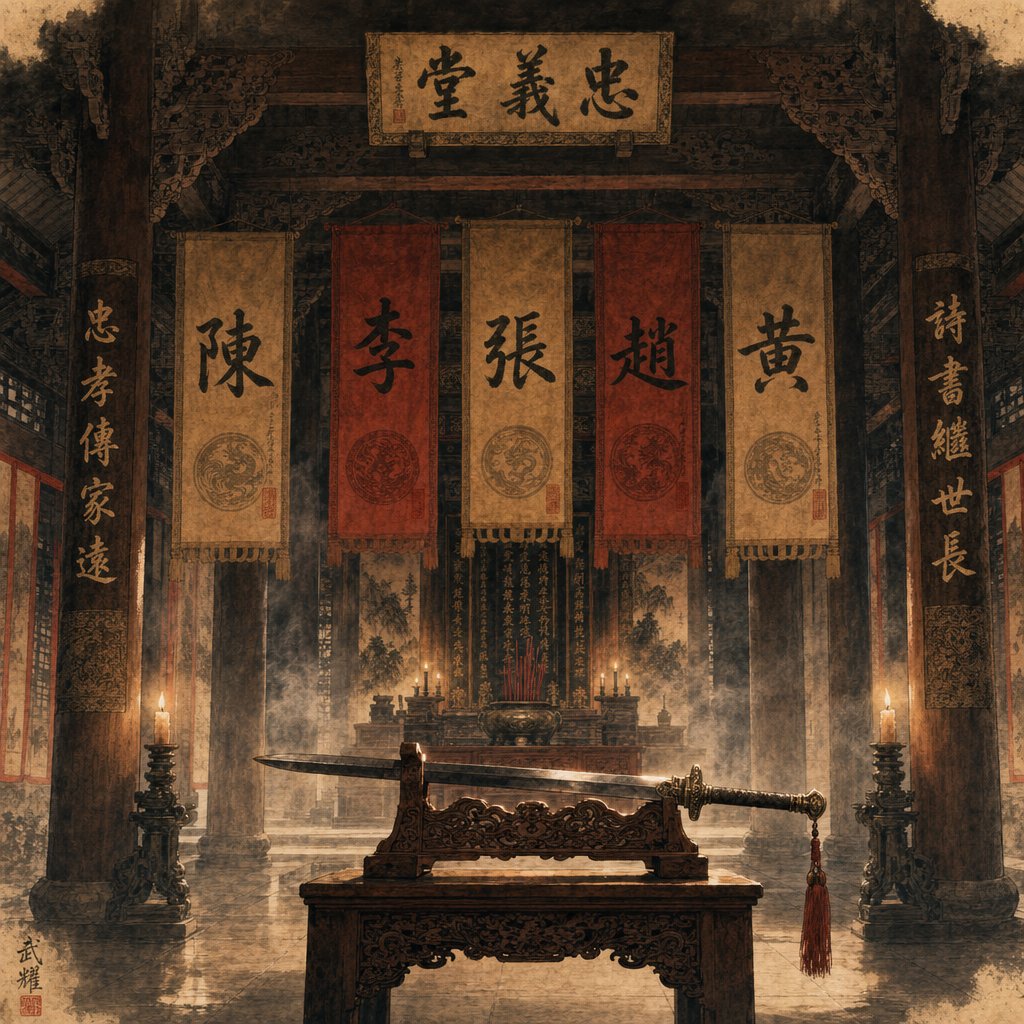
Both Jin Yong and Gu Long relied on a shared secret weapon: compound surnames. The moment a character is introduced with a two-character surname, readers instinctively know they have entered wuxia territory. These surnames are rare in modern China — fewer than 100 remain in active use — but they carry an antique, poetic weight that single-character surnames simply cannot replicate. In fiction, they function as instant genre markers and narrative shorthand, telling readers what kind of character they are about to meet before a single action is taken.
Famous Compound Surnames and Their Wuxia Associations
Each compound surname below carries a distinct historical origin and has been claimed by wuxia literature for a specific narrative role. If you have ever used a chinese character name generator and wondered why certain outputs feel more "wuxia" than others, the answer often lies in the surname itself.
- 独孤 (Dugu, du2 gu1) — Meaning "solitary" or "alone and orphaned." Originates from a Xianbei tribal name during the Northern Wei dynasty. In wuxia, Dugu characters are typically unmatched martial geniuses who stand apart from the world. Think Dugu Qiubai (独孤求败, "Seeking Defeat Alone"), whose very name encodes the loneliness of supreme skill.
- 慕容 (Murong, mu4 rong2) — Meaning "admiring glory" or "yearning for splendor." Traces back to the Xianbei Murong clan that founded the Former Yan kingdom. Wuxia tradition casts Murong characters as aristocratic, ambitious, and often antagonistic — fallen royalty scheming to restore lost empires.
- 上官 (Shangguan, shang4 guan1) — Literally "above the officials," derived from an ancient court title. Signals high-born characters with political connections, often women of dangerous elegance or court-adjacent strategists. The surname implies someone who operates above ordinary social structures.
- 令狐 (Linghu, ling2 hu2) — Named after an ancient territory in present-day Shanxi province. In wuxia, Linghu is almost synonymous with unconventional heroes who reject orthodoxy. Linghu Chong (令狐冲) cemented this association permanently — the free-spirited swordsman who defies his own sect.
- 东方 (Dongfang, dong1 fang1) — Meaning "Eastern" or "the East." Originally a directional surname indicating geographic origin. Wuxia uses it for larger-than-life, almost mythic figures. Dongfang Bubai (东方不败, "Invincible East") is the definitive example — a character whose name announces absolute dominance.
- 西门 (Ximen, xi1 men2) — Meaning "West Gate," originally denoting families who lived near the western gate of a city. Gu Long claimed this surname for cold, lethal swordsmen. Ximen Chuixue (西门吹雪, "West Gate Blowing Snow") is purity distilled into violence — a white-robed killer whose name paints a winter landscape.
How Surname Choice Shapes Reader Expectations
You'll notice a pattern: each compound surname carries built-in narrative gravity. A writer who names their protagonist "Murong" is implicitly promising readers an aristocratic storyline involving lost kingdoms or political intrigue. Naming a hero "Linghu" signals rebellion and unorthodox behavior. These associations are so deeply embedded in the genre that subverting them — say, a gentle, humble Dongfang character — creates deliberate tension that experienced readers will recognize as intentional.
This is what separates a thoughtful name generator chinese tool from genuine craft. A random output might pair "Murong" with a humble peasant archetype, breaking the internal logic that wuxia readers expect. Understanding these associations lets you either honor them for instant resonance or deliberately invert them for narrative surprise.
When pairing compound surnames with given names, tonal harmony matters. Compound surnames already occupy two syllables, so given names of one or two characters both work, but the tonal flow across all three or four syllables needs to feel natural. A useful principle from traditional Chinese naming practice: avoid stacking identical tones in sequence. Dongfang (tone 1, tone 1) pairs well with a falling-tone given name to create contrast — Dongfang Mo (东方墨, tone 4) feels commanding. Linghu (tone 2, tone 2) benefits from a rising-then-falling pattern in the given name, which is exactly why Linghu Chong (tone 1) works so cleanly. The ancient chinese name generator in your head becomes far more effective once you internalize these tonal pairings rather than relying on random combinations.
Male Wuxia Names Organized by Character Archetype
Compound surnames give a character lineage and genre identity. The given name is where you encode who that character actually is — their martial philosophy, their moral compass, their fate. Most chinese name generator male tools spit out random pairings without considering archetype, which is why the results often feel hollow. Wuxia male names gain their power from deliberate alignment between character type and character selection.
The names below are organized by the role a character plays in a story, not alphabetically. Each entry breaks down the individual hanzi, explains how the characters interact to create layered meaning, and shows how the name would read to a Chinese-speaking audience familiar with the genre.
Names for Heroes and Righteous Swordsmen
Righteous heroes in wuxia carry names built from characters associated with the sky, mountains, swords, and moral clarity. These chinese warrior names announce virtue without subtlety — they are meant to inspire trust on first introduction.
- 顾天义 (Gu Tianyi, gu4 tian1 yi4) — 顾 (Gu): to look back, to care for — a surname implying protectiveness. 天 (tian): heaven, sky — the highest moral authority. 义 (yi): righteousness, justice — the core Confucian virtue of the jianghu. Together: "One who looks to heaven for righteousness." This name signals a hero bound by duty, someone who would die before breaking an oath. The falling-rising-falling tone pattern (4-1-4) gives it a commanding, declarative sound.
- 沈剑峰 (Shen Jianfeng, shen3 jian4 feng1) — 沈 (Shen): a common surname with the water radical, suggesting depth. 剑 (jian): sword — the weapon of the gentleman warrior. 峰 (feng): mountain peak — the highest point, supremacy. Together: "Sword at the summit." A name for a character who has reached or is destined to reach the pinnacle of martial skill. The tone sequence (3-4-1) descends then rises, mirroring a climb.
- 岳正山 (Yue Zhengshan, yue4 zheng4 shan1) — 岳 (Yue): great mountain, a surname evoking the sacred peaks of China. 正 (zheng): upright, correct, orthodox. 山 (shan): mountain — stability, immovability. Together: "The upright mountain." This is a name for the unshakeable leader, the sect master who holds the line. Double mountain imagery (surname + given name) reinforces absolute steadfastness.
- 萧云天 (Xiao Yuntian, xiao1 yun2 tian1) — 萧 (Xiao): a surname associated with melancholy and autumn wind. 云 (yun): cloud — freedom, wandering. 天 (tian): heaven, sky — boundless aspiration. Together: "Clouds across heaven." The surname's wistful quality combined with the expansive given name creates a hero who is noble but carries sorrow. Xiao Feng (萧峰) from Jin Yong's Demi-Gods and Semi-Devils established this surname as a marker for tragic, powerful heroes.
Names for Rogues and Wandering Knights
Not every swordsman walks the righteous path. Rogues, wandering knights, and morally ambiguous loners need names built from wind, shadow, solitude, and wildness. These are the china warrior name choices that signal unpredictability — characters who might save you or rob you depending on their mood.
- 风孤影 (Feng Guying, feng1 gu1 ying3) — 风 (Feng): wind — a nature surname signaling restlessness and freedom. 孤 (gu): alone, orphaned — isolation by choice or fate. 影 (ying): shadow — something that follows but cannot be grasped. Together: "Wind's lonely shadow." A name for the drifter who leaves no trace. The tone pattern (1-1-3) stays level before dipping, like a figure disappearing into mist.
- 叶狂歌 (Ye Kuangge, ye4 kuang2 ge1) — 叶 (Ye): leaf — fragile, transient, carried by forces beyond control. 狂 (kuang): wild, mad, unrestrained. 歌 (ge): song — joy, defiance, expression. Together: "Wild song of a falling leaf." This name belongs to the laughing rogue, the swordsman who drinks and fights with equal abandon. The character 狂 is a signature of Gu Long's naming aesthetic — it announces a character who refuses all social constraints.
- 陆无痕 (Lu Wuhen, lu4 wu2 hen2) — 陆 (Lu): land, earth — a grounded, common surname that contrasts with the ethereal given name. 无 (wu): without, nothing — negation, emptiness. 痕 (hen): trace, mark, scar. Together: "Without a trace." A name for the assassin or thief who vanishes completely. The negation character 无 appears frequently in wuxia names for morally complex characters — it suggests someone who has erased part of themselves.
- 独孤狂 (Dugu Kuang, du2 gu1 kuang2) — 独孤 (Dugu): the compound surname meaning "solitary." 狂 (kuang): wild, arrogant, unhinged. Together: "The wild loner." Pairing the already-isolated Dugu surname with 狂 creates maximum intensity. This is a name for someone dangerous — not evil, but ungovernable. A single-character given name after a compound surname creates a punchy, aggressive rhythm.
Names for Scholar-Warriors and Strategists
The scholar-warrior is a uniquely Chinese archetype — someone whose martial skill is matched or exceeded by intellectual depth. Their names draw from literary characters, ink, books, and philosophical concepts rather than weapons or natural forces. If you are using a chinese male names generator and want results that feel cerebral rather than purely martial, these are the character pools to draw from.
- 苏墨言 (Su Moyan, su1 mo4 yan2) — 苏 (Su): a literary surname associated with the great Song dynasty poet Su Shi. 墨 (mo): ink — scholarship, calligraphy, the brush arts. 言 (yan): words, speech, discourse. Together: "Ink and words." A name for the strategist who fights with intelligence first and steel second. The literary associations are immediate and unmistakable.
- 谢文渊 (Xie Wenyuan, xie4 wen2 yuan1) — 谢 (Xie): a surname linked to the aristocratic Xie clan of the Eastern Jin dynasty, famous for poets and generals alike. 文 (wen): literature, culture, the civil arts. 渊 (yuan): abyss, depth — profound knowledge. Together: "Depths of literature." This signals a character whose knowledge runs dangerously deep, someone who has read forbidden texts or mastered lost arts through study rather than combat.
- 白书鹤 (Bai Shuhe, bai2 shu1 he4) — 白 (Bai): white — purity, clarity, also a surname associated with the poet Li Bai. 书 (shu): book, writing. 鹤 (he): crane — longevity, Daoist transcendence, the hermit's companion. Together: "White crane of books." A name for the reclusive master who has withdrawn from the jianghu to study, only to be drawn back by circumstance. The crane imagery signals someone operating on a higher plane.
Picture these names coexisting in a single story. Xiao Yuntian and Yue Zhengshan might lead rival orthodox sects — one melancholic and flexible, the other rigid and immovable. Ye Kuangge could be the wildcard who disrupts their careful balance. Su Moyan might advise one side while secretly manipulating both. The names themselves create narrative tension before you write a single scene, because each one carries built-in expectations about how that character will behave, what they value, and who they will inevitably clash with. That is the difference between a random output from a chinese male name generator and a name system designed to serve your story.
Female Wuxia Names Beyond the Love Interest
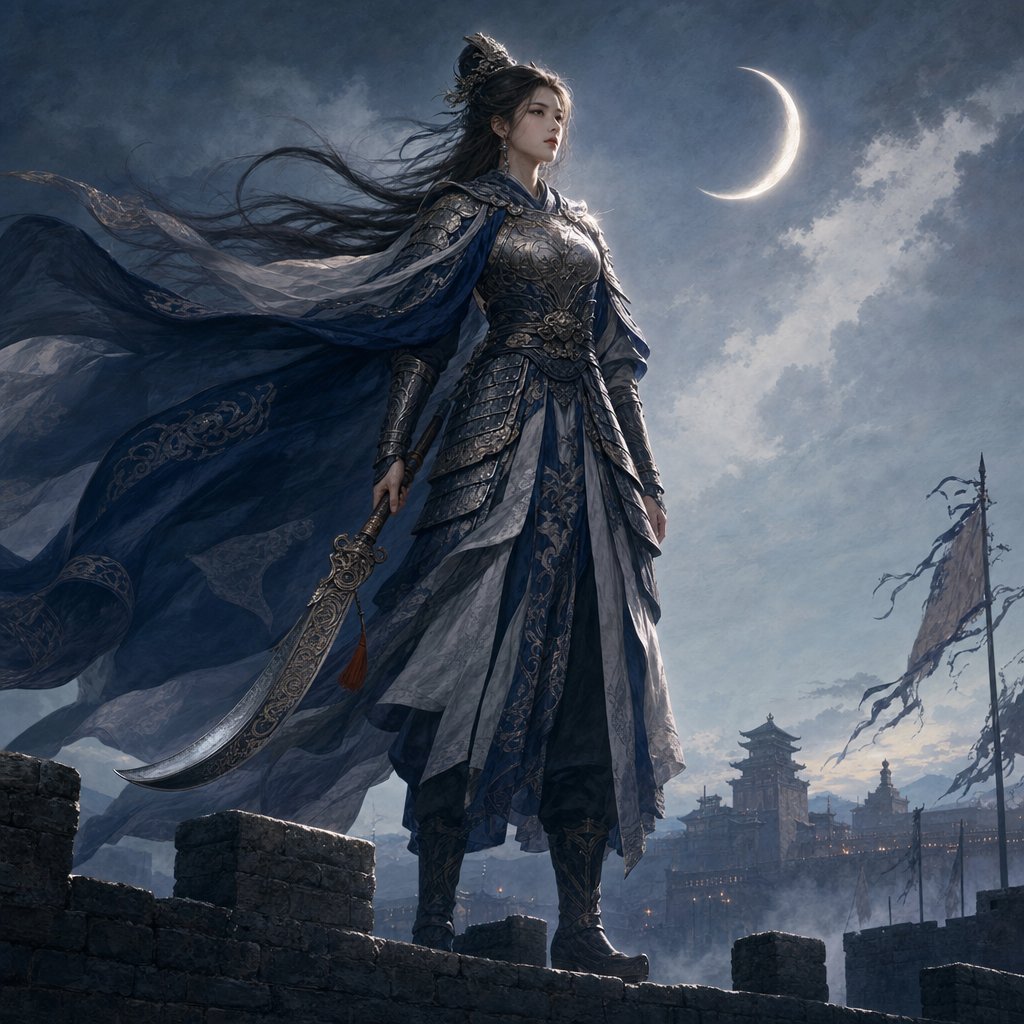
Male archetypes in wuxia fiction span heroes, rogues, scholars, and strategists. Female characters deserve the same range. Yet too many naming guides — and too many outputs from a chinese name generator female tool — default to beauty-and-flower combinations that reduce women to decorative roles. The wuxia tradition itself is far richer than that. From the cold-blooded Miejue Shitai to the scheming Li Mochou, from the warrior-queen Xiao Longnu to the politically brilliant Zhao Min, the genre has always contained women who lead sects, command armies, and reshape the jianghu through force or cunning. Their names should reflect that full spectrum.
The names below follow the same archetype-based structure used for male characters. Each entry breaks down the hanzi, explains the layered meaning, and addresses how the tonal pattern shapes the name's emotional register. If you are searching for wuxia names female characters can carry with authority, these are built for that purpose.
Names for Warrior Women and Sect Leaders
A woman who leads a martial sect or commands a battlefield needs a name built from characters that signal power, not prettiness. Phoenix (凤), frost (霜), jade (玉), and blade (刃) are the core character pools here. Each carries martial weight while remaining phonetically elegant — a balance that defines the best wuxia female names.
- 凌霜玉 (Ling Shuangyu, ling2 shuang1 yu4) — 凌 (Ling): to rise above, to soar, to dominate — a surname that implies someone who transcends ordinary limits. 霜 (shuang): frost — cold precision, lethal beauty, the killing edge of winter. 玉 (yu): jade — incorruptible, hard beneath a polished surface. Together: "Frost and jade rising above." This name belongs to a sect leader whose authority is absolute and whose temperament runs cold. The tone sequence (2-1-4) rises, holds high, then drops decisively — a pattern that sounds commanding in Mandarin, like a verdict being delivered.
- 沈凤刃 (Shen Fengren, shen3 feng4 ren4) — 沈 (Shen): depth, the water radical suggesting hidden currents. 凤 (feng): phoenix — rebirth, supremacy among birds, the empress's symbol. 刃 (ren): blade edge — not the full sword, but the sharpest part of it. Together: "Phoenix blade from the depths." A name for a warrior woman who has survived destruction and emerged more dangerous. The double falling tone in the given name (4-4) creates a hard, percussive rhythm that sounds martial rather than decorative.
- 上官霜华 (Shangguan Shuanghua, shang4 guan1 shuang1 hua2) — 上官 (Shangguan): the compound surname meaning "above officials" — aristocratic, politically powerful. 霜 (shuang): frost — severity, purity, the absence of warmth. 华 (hua): splendor, magnificence, also "China" itself. Together: "Frost splendor of the Shangguan clan." This is a name for the woman born into power who wields it without apology. The compound surname adds weight and formality, while 霜华 balances coldness with grandeur. Readers familiar with wuxia conventions will immediately expect a character who is both beautiful and dangerous.
- 叶青玉 (Ye Qingyu, ye4 qing1 yu4) — 叶 (Ye): leaf — transience, lightness, but also resilience. 青 (qing): blue-green, the color of growing things and tempered steel. 玉 (yu): jade — moral integrity, unbreakable will. Together: "Green jade leaf." A subtler warrior name. This character might not announce her martial skill openly. The 青 connects to both nature and weaponry (青锋 means "blue-green blade" in classical Chinese), creating deliberate ambiguity. The tone pattern (4-1-4) mirrors the commanding fall-high-fall structure that signals authority.
Names for Mysterious and Morally Ambiguous Women
Some of the most memorable female characters in wuxia fiction operate in moral gray zones — poisoners, spies, former villains seeking redemption, or women whose true allegiances remain hidden until the final act. Their names draw from moon (月), mist (雾), dream (梦), and shadow imagery to create an atmosphere of uncertainty. A female chinese names generator rarely captures this nuance, because ambiguity requires intentional layering rather than random pairing.
- 慕容月痕 (Murong Yuehen, mu4 rong2 yue4 hen2) — 慕容 (Murong): the aristocratic compound surname carrying associations of fallen empires and hidden agendas. 月 (yue): moon — beauty that waxes and wanes, illumination that casts shadows. 痕 (hen): trace, scar, mark left behind. Together: "Moon's scar of the Murong clan." A name for a woman haunted by her family's past, whose beauty conceals damage. The 痕 is the key character — it transforms the romantic 月 into something wounded and unpredictable.
- 苏梦雾 (Su Mengwu, su1 meng4 wu4) — 苏 (Su): a literary surname, also meaning "to revive" or "to awaken." 梦 (meng): dream — illusion, desire, the boundary between real and unreal. 雾 (wu): mist, fog — obscured vision, hidden truth. Together: "Dream mist awakening." This name belongs to a woman who manipulates perception. She might be a poisoner who uses hallucinogens, or a spy whose entire identity is constructed. The double falling tone (4-4) in the given name creates an unexpectedly heavy sound for such ethereal imagery — a deliberate mismatch that hints at danger beneath the surface.
- 柳暗影 (Liu Anying, liu3 an4 ying3) — 柳 (Liu): willow — flexibility, grace, but also the weeping willow's association with sorrow and parting. 暗 (an): dark, hidden, secret. 影 (ying): shadow — presence without substance, following without being caught. Together: "Dark shadow of the willow." A name for the assassin or informant who moves unseen. The classical phrase 柳暗花明 ("dark willows and bright flowers") describes finding hope after despair, and this name deliberately truncates that idiom — taking only the darkness, leaving the brightness behind.
- 白月霜 (Bai Yueshuang, bai2 yue4 shuang1) — 白 (Bai): white — purity on the surface, but also blankness, erasure, the color of mourning in Chinese culture. 月 (yue): moon. 霜 (shuang): frost. Together: "White moonlight frost." Every element is cold and luminous. This is a name for the woman who appears ethereal and untouchable but whose coldness is a weapon. The rising-falling-high tone pattern (2-4-1) creates an arc that lifts, drops, then holds — like a blade drawn and suspended mid-air.
Names for Scholar-Healers and Hidden Masters
The female scholar-healer is an archetype that wuxia shares with xianxia: a woman whose power comes from knowledge rather than brute martial force. She might be a physician who understands poisons, a librarian guarding forbidden texts, or a retired master whose cultivation has moved beyond physical combat. Her names draw from medicinal plants, literary references, and characters associated with wisdom and concealment. If you are looking for a chinese female name generator approach that produces intellectual rather than purely martial results, these character combinations serve that purpose.
- 林芷兰 (Lin Zhilan, lin2 zhi3 lan2) — 林 (Lin): forest — seclusion, the hermit's domain. 芷 (zhi): angelica root — a medicinal herb used in classical Chinese medicine, also referenced in the Chu Ci (Songs of the South) as a symbol of moral purity. 兰 (lan): orchid — the gentleman's flower in Confucian symbolism, representing quiet virtue. Together: "Angelica and orchid of the forest." Both characters in the given name are medicinal plants with literary pedigrees. This name signals a healer-scholar who has withdrawn from the world but whose knowledge makes her indispensable. The tone pattern (2-3-2) has a gentle, undulating quality — rising, dipping, rising — that sounds nurturing rather than aggressive.
- 谢书瑶 (Xie Shuyao, xie4 shu1 yao2) — 谢 (Xie): the aristocratic literary surname. 书 (shu): book, writing, scholarship. 瑶 (yao): precious jade, also the mythical Yaochi (瑶池), the Queen Mother of the West's celestial pool. Together: "Jade of books." A name for the woman whose library is her weapon. The 瑶 elevates the scholarly 书 into something almost supernatural — this is not merely a reader but a keeper of dangerous knowledge. The falling-high-rising tone sequence (4-1-2) moves from authority into lightness, suggesting power held gently.
- 沈青薇 (Shen Qingwei, shen3 qing1 wei1) — 沈 (Shen): depth, hidden currents. 青 (qing): blue-green — growth, vitality, the color of living herbs. 薇 (wei): a type of fern, also used in classical poetry to represent the recluse who gathers wild plants rather than serving at court. Together: "Green fern of the depths." This is the hidden master — the woman living as a simple herbalist in a mountain village who turns out to possess knowledge that could reshape the martial world. The tone pattern (3-1-1) dips low then holds steady and high, like someone who keeps their head down before revealing their true stature.
Tonal balance is what separates names that feel elegant from names that feel clunky, regardless of how beautiful the individual characters are. In Mandarin, certain tone combinations produce distinct emotional effects that shape how a name lands on the ear. Falling tones (tone 4) create weight and decisiveness — stack two of them together, as in 凤刃 (feng4 ren4), and the name sounds martial, almost percussive. Rising tones (tone 2) paired with high tones (tone 1) produce a lifting, ethereal quality — 月霜 (yue4 shuang1) drops then soars, creating a sense of cold beauty suspended in air.
The most heroic-sounding female names tend to follow a falling-rising pattern across the full name. A surname in tone 4 followed by a given name that rises (tone 2) or holds high (tone 1) creates the auditory equivalent of a warrior planting her feet then lifting her blade. Ethereal or mysterious names benefit from the opposite: a rising or level surname followed by falling tones in the given name, pulling the listener downward into uncertainty. Compare 凌霜玉 (2-1-4), which rises then commands, against 苏梦雾 (1-4-4), which starts light then drops into shadow. Both are beautiful. Both are wuxia names female characters can carry with full authority. But they signal completely different kinds of power, and that distinction lives in the tones as much as in the meaning of the characters themselves.
These tonal principles apply whether you are building names from scratch or refining outputs from a chinese name generator female tool. The characters give you meaning. The tones give you music. A name that succeeds at both becomes something a reader hears in their mind long after they have closed the book — and that is where the layered identity system of courtesy names, art names, and jianghu titles adds yet another dimension to how wuxia characters are known.
Courtesy Names, Art Names, and the Layers of Wuxia Identity
A wuxia character's birth name is only the first layer. In classical Chinese culture, a single person could accumulate three, four, even five different names across a lifetime — each one unlocked by a milestone, a relationship shift, or a transformation in identity. This layered naming system is what gives wuxia fiction its extraordinary narrative flexibility. A character addressed by their birth name is being treated as a child or an intimate. The same character addressed by their courtesy name is being treated as an equal. Called by their jianghu title, they become a legend. Understanding these layers turns a flat label into a dynamic storytelling tool that shifts meaning depending on who is speaking and when.
Courtesy Names and Their Role in Wuxia Storytelling
The chinese courtesy name — called 字 (zi) — is an additional name bestowed upon a person at adulthood. Historically, men received their courtesy name at age 20 during the capping ceremony, and women sometimes received one upon marriage. The key social rule: after someone reached adulthood, it was considered disrespectful for peers to use their given name (名, ming) directly. The given name became reserved for oneself and one's elders, while the courtesy name was used among equals in formal settings.
For wuxia writers, this creates a powerful narrative mechanism. When a character uses someone's ming instead of their zi, it signals one of three things: deep intimacy, deliberate disrespect, or a power dynamic where the speaker claims seniority. Imagine a scene where a former disciple addresses his old master by birth name for the first time — that single shift communicates betrayal more efficiently than a page of dialogue ever could.
Courtesy names typically relate to the birth name through synonyms, complementary meanings, or shared literary references. The historical pattern is instructive: Yue Fei (岳飞, "flying") received the courtesy name Pengju (鹏举, "the roc rises") — the same concept of flight elevated to mythic scale. Zhuge Liang (诸葛亮, "bright") became Kongming (孔明, "enlightened opening"). In wuxia fiction, you can use this relationship to encode character development. A hero named 剑 (jian, sword) might receive the courtesy name 归鞘 (gui qiao, "returning to the sheath") — suggesting that his destiny is not endless combat but eventual peace.
Courtesy names were typically disyllabic after the Qin dynasty, consisting of two characters. A common formation method uses 子 (zi, a respectful prefix meaning "master") as the first character — which is why you see names like Zijian (子建) or Zilong (子龙) throughout historical and fictional texts. Another method encodes birth order: 伯 (bo) for the eldest, 仲 (zhong) for the second, 叔 (shu) for the third, and 季 (ji) for the youngest. A wuxia writer can use this to instantly communicate family position without exposition.
Art Names and Jianghu Titles
Where the courtesy name operates within formal social structures, the 号 (hao) — art name or style — exists outside them entirely. A hao is freely chosen or earned. It replaces birth identity with reputation, and in the jianghu, reputation is everything.
Jianghu names function as compressed biographies. When someone is called "Invincible East" (东方不败, Dongfang Bubai), that title carries more weight than any birth name could. It tells you what this person has done, what they claim, and what challenging them would cost. "Drunken Sword" tells you a fighting style and a personality in two syllables. "Jade-Faced Scholar" (玉面书生) communicates appearance, education, and the implication that beauty conceals danger.
Historically, literati chose art names referencing their studios, geographic origins, or philosophical aspirations. The Song dynasty writer Ouyang Xiu called himself 醉翁 (Zuiweng, "Old Drunkard"). Zhuge Liang adopted 卧龙 (Wolong, "Sleeping Dragon"). In wuxia fiction, this tradition transforms into the chinese warrior name system that defines the jianghu's social hierarchy. A swordsman earns a title through deeds — "Sword Demon" (剑魔), "Iron Palm" (铁掌), "Thousand Hands" (千手) — and that title eventually eclipses the birth name entirely. Some characters are known only by their hao, their original identity deliberately erased.
This creates a storytelling opportunity that few writers exploit fully. The moment a character's birth name is revealed after chapters of knowing them only by their jianghu title, it recontextualizes everything. The fearsome "Blood Saber Elder" turns out to have a birth name meaning "gentle morning" — and suddenly the reader understands the distance between who this person was and who they became.
Daoist and Buddhist Names in Wuxia
Characters who enter religious orders undergo yet another naming transformation. Buddhist monks and nuns abandon their family name entirely, adopting 释 (Shi, from Shakyamuni) as a shared surname and receiving a two-character dharma name. Famous historical examples include Xuanzang (玄奘) and Faxian (法显, "Evidence of the Dharma"). In wuxia, a character's dharma name often encodes their spiritual struggle: a violent warrior who becomes a monk might receive the name 悔剑 (Hui Jian, "Regretting the Sword") or 空刃 (Kong Ren, "Empty Blade").
Daoist naming conventions are less rigid but equally rich. Daoist practitioners often adopt names ending in 子 (zi, "master") or incorporate terms like 道人 (daoren, "person of the Way"), 真人 (zhenren, "perfected person"), or references to natural phenomena. A Daoist character named 青松子 (Qingsongzi, "Master Green Pine") signals longevity and rootedness. One called 混元道人 (Hunyuan Daoren, "Daoist of Primordial Chaos") claims connection to the universe's origin. These names tell you exactly where a character sits on their spiritual journey — whether they are a novice still attached to worldly identity or a master who has transcended it.
Wuxia fiction also draws authenticity from naming taboos (避讳, bihu). In imperial China, it was forbidden to speak or write the personal name of the reigning emperor. Characters in historically grounded wuxia might avoid certain words, alter characters in writing, or use circumlocutions — all of which signal the political era and add texture to dialogue. A character who refuses to speak a particular name is communicating loyalty, fear, or both. A character who deliberately breaks a naming taboo is committing an act of political rebellion as loud as drawing a sword in court.
These layers — birth name, courtesy name, jianghu title, religious name — do not replace each other. They accumulate. A fully realized wuxia character might be called four different things by four different people in the same scene, and each name choice reveals the speaker's relationship to them. That density of social information, encoded in something as simple as how you address someone, is what makes wuxia inspired chinese names function as living narrative architecture rather than static labels. And it is precisely this richness that demands careful attention to how each name actually sounds when spoken aloud.
A Pronunciation Guide for Every Name
A name that looks stunning on paper but stumbles in the mouth loses half its power. Wuxia in chinese fiction is an oral tradition as much as a written one — characters announce themselves, shout challenges across rooftops, and whisper names in dying breaths. If you have built a name using the principles from earlier sections but cannot pronounce it with confidence, the name remains inert. This section gives you the tools to bring every name in this article to life vocally, whether you are a writer reading dialogue aloud, a gamer introducing your character, or a reader who simply wants to hear these names correctly in your mind.
Pinyin Tones and Why They Shape Name Character
Mandarin Chinese uses four tones plus a neutral tone. Each tone changes the pitch contour of a syllable, and that pitch contour changes the word itself — not just the emphasis or emotion, but the actual meaning. As Hacking Chinese explains, tones in Mandarin function much like vowels in English: get them wrong and you are saying a different word entirely.
Here is how each tone works, described through analogies that connect to how names feel when spoken:
- First tone (high, flat) — the held note. Imagine the steady pitch you produce when a doctor asks you to say "aah." It stays level at the top of your range. In names, first-tone characters sound elevated and calm. A name like 东方 (Dongfang, tone 1 + tone 1) holds steady and high, creating an impression of unshakeable authority.
- Second tone (rising) — the question. Think of how your voice lifts when you say a one-word question: "Tea?" or "What?" That upward sweep is the second tone. In names, rising tones create a sense of aspiration or elegance. 令狐 (Linghu, tone 2 + tone 2) lifts twice, giving the surname an upward momentum that feels restless and seeking.
- Third tone (low, dipping) — the thoughtful murmur. Your voice drops to the bottom of your range and stays low. Contrary to what many textbooks teach, it rarely dips and rises in natural speech — it simply goes low. In names, third-tone characters add gravity and depth. 沈 (Shen, tone 3) grounds a name before it begins.
- Fourth tone (falling) — the command. Picture saying "No!" firmly to a child reaching for something dangerous. Your pitch starts high and drops sharply. In names, falling tones create decisiveness and martial weight. 剑 (jian, tone 4) and 刃 (ren, tone 4) both carry that percussive, blade-like quality precisely because of their falling pitch.
When you string tones together in a two- or three-character name, the sequence creates a melodic contour that shapes emotional perception before meaning even registers. A name built entirely from falling tones sounds aggressive. A name alternating rising and falling tones sounds dynamic. A name holding steady on first tones sounds regal and untouchable.
| Name (Characters) | Pinyin | Tone Numbers | Approximate English Sound | Common Mispronunciation Pitfall |
|---|---|---|---|---|
| 独孤求败 | Dugu Qiubai | 2-1-2-4 | DOO-goo CHYO-bye | Pronouncing 独 with a falling tone instead of rising; flattening 败 instead of letting it drop |
| 西门吹雪 | Ximen Chuixue | 1-2-1-3 | SHEE-men CHWAY-shweh | Saying "zy-men" instead of "shee-men"; missing the low dip on 雪 |
| 令狐冲 | Linghu Chong | 2-2-1 | LING-hoo CHONG | Dropping the rising tone on 令 to sound flat; pronouncing 冲 with a falling tone |
| 慕容月痕 | Murong Yuehen | 4-2-4-2 | MOO-rong YWEH-hun | Flattening the alternating fall-rise pattern into monotone; saying "moo-RONG" with equal stress |
| 凌霜玉 | Ling Shuangyu | 2-1-4 | LING SHWAHNG-yoo | Missing the sharp fall on 玉; pronouncing 霜 with a rising tone |
| 叶狂歌 | Ye Kuangge | 4-2-1 | YEH KWAHNG-guh | Saying "yee" instead of "yeh"; not rising enough on 狂 |
| 苏墨言 | Su Moyan | 1-4-2 | SOO MO-yen | Pronouncing 墨 flat instead of falling; swallowing the rise on 言 |
| 风孤影 | Feng Guying | 1-1-3 | FUNG GOO-ying | Adding a falling tone to 风 (it stays high and flat); not dropping low enough on 影 |
| 上官霜华 | Shangguan Shuanghua | 4-1-1-2 | SHAHNG-gwahn SHWAHNG-hwah | Rushing the compound surname into one syllable; missing the rise on 华 |
| 东方不败 | Dongfang Bubai | 1-1-4-4 | DONG-fahng BOO-bye | Not holding the first two syllables high enough; softening the double falling tones at the end |
Tonal Harmony in Name Construction
Sounds complex? Here is the practical principle: certain tone sequences produce more dramatic or pleasing effects, and wuxia authors exploit this deliberately. Think of it as the musical score beneath the meaning.
Falling tones (tone 4) stacked together create percussive force. 凤刃 (Feng Ren, 4-4) hits like a double strike — each syllable drops from high to low, producing a martial rhythm. This is why weapon-related characters and aggressive archetypes gravitate toward fourth-tone pairings. Rising tones (tone 2) create lift and elegance. A name ending in a rising syllable leaves the listener's ear reaching upward, creating a sense of unfinished beauty or aspiration. First tones held in sequence (1-1) produce an elevated, almost otherworldly steadiness — which is exactly why 东方 (Dongfang) sounds mythic rather than ordinary.
The most satisfying wuxia names tend to create tonal contrast rather than monotony. A falling-then-rising pattern (4-2) feels like a blade drawn and lifted. A rising-then-falling pattern (2-4) feels like a question answered with finality. When you build names from scratch, read them aloud and listen for whether the tonal contour matches the character's energy. A gentle healer should not carry three consecutive falling tones. A ruthless assassin should not float on three rising tones. Let the music match the meaning.
For readers searching for jianghu pronunciation specifically: 江湖 is pronounced jiang1 hu2 — a high flat tone followed by a rising tone. The first syllable holds steady like a river's surface; the second lifts like something emerging from the water. Together they create the sound of the martial world itself: calm on the surface, rising with hidden energy beneath. Many English speakers incorrectly stress the second syllable or pronounce it "jee-ANG-hoo" — keep both syllables even in weight, with the tonal movement doing the work instead of volume.
The wuxian pronunciation question comes up frequently among fans of adaptations. 武侠 (wuxia) is pronounced wu3 xia2 — a low third tone followed by a rising second tone. The common English approximation "WOO-shyah" is close but misses the rising pitch on 侠. Think of it as your voice dipping low on 武 then sweeping upward on 侠, like a swordsman crouching before a leap. The "x" in pinyin sounds like "sh" but with the tongue positioned further forward — closer to a hissing "s" than a round English "sh."
Cantonese pronunciation adds another dimension for writers working with Hong Kong wuxia adaptations or readers familiar with Cantonese cinema. The same characters carry different sounds entirely. Cantonese uses six tones plus three entering tones — nine total tonal distinctions compared to Mandarin's four. A name like 独孤 becomes duk6 gu1 in Cantonese Jyutping, with a clipped entering tone on the first character that gives it a sharper, more abrupt quality. 西门 shifts from Mandarin's xi1 men2 to Cantonese sai1 mun4, changing the entire phonetic character of the name.
If you are using a cantonese name generator or adapting names for a Hong Kong-set story, keep in mind that Cantonese's additional tones and preserved final consonants (-p, -t, -k) give names a crisper, more staccato rhythm compared to Mandarin's smoother flow. A name designed for tonal harmony in Mandarin may need adjustment for Cantonese — the tone sequences that sound elegant in one system do not automatically transfer to the other. The characters remain the same on paper, but the music changes completely, which is why Hong Kong wuxia films often feel sonically distinct from mainland adaptations even when adapting the same source novels.
Pronunciation is what transforms a name from text on a page into something that lives in the air between characters. It is also what separates a name you can actually use — at a gaming table, in a manuscript, in your own creative identity — from one that remains permanently trapped behind a language barrier. With tones understood and practiced, the final step is learning to build complete names from scratch using every principle covered so far.
How to Craft Your Own Wuxia Name From Scratch
Knowing how names sound is one thing. Building them yourself is where the real creative work begins. Every principle covered so far — archetype alignment, tonal harmony, compound surname associations, layered identity — feeds into a practical construction method you can use right now. Whether you are populating a novel with an entire martial sect, rolling a character for a tabletop RPG, or choosing a pen name that carries genuine weight, the process follows the same core logic.
The difference between a random output from a chinese name generator fantasy tool and a name that feels alive is intentionality. A generator gives you characters. The system below gives you meaning.
Building Name Family Clusters for Fiction
A single well-crafted name is satisfying. A group of names that work together — reinforcing themes, creating contrast, signaling relationships — transforms a cast of characters into a coherent world. Wuxia fiction excels at this because Chinese naming traditions already contain built-in mechanisms for linking people through shared characters.
Siblings sharing a generational character. In traditional Chinese families, siblings often share one character in their given name, called the generational name (字辈, zibei). This practice translates directly into fiction. Imagine three siblings from the Shen (沈) clan who all share the character 剑 (jian, sword) in their names: 沈剑峰 (Shen Jianfeng, "Sword Peak"), 沈剑霜 (Shen Jianshuang, "Sword Frost"), and 沈剑影 (Shen Jianying, "Sword Shadow"). The shared 剑 instantly communicates family bond, while the differing second characters — peak, frost, shadow — individualize each sibling's personality and martial style. The eldest is direct and dominant. The middle child is cold and precise. The youngest is elusive and unpredictable. A reader grasps all of this from the names alone.
Rivals with contrasting elemental imagery. Two characters locked in opposition should carry names that clash on a symbolic level. Pair fire against water, mountain against wind, light against shadow. A hero named 萧云天 (Xiao Yuntian, "Clouds Across Heaven") finds his natural antagonist in someone like 燕沉渊 (Yan Chenyuan, "Swallow Sinking into the Abyss") — one name reaches upward, the other pulls downward. The elemental contrast tells readers these two characters are destined to collide before they ever share a scene.
Master-student pairs with thematic inheritance. A master named 白书鹤 (Bai Shuhe, "White Crane of Books") might train a disciple named 青书雁 (Qing Shuyan, "Green Goose of Books"). The shared 书 (shu, book) signals intellectual lineage. The shift from 白 (white) to 青 (green) suggests the student is younger, less refined. The shift from 鹤 (crane, solitary and transcendent) to 雁 (wild goose, migratory and social) hints that the student will eventually leave the master's isolated path for the wider world. All of this is encoded before a single line of dialogue.
Here is the step-by-step method for constructing any individual name within these clusters:
- Choose the surname. Decide whether the character needs a compound surname (for instant wuxia recognition and aristocratic weight) or a common surname (for grounded, everyman energy). Match the surname's existing associations to your character's role. A Murong signals ambition. A Ye signals transience. A simple Li or Zhang says "ordinary person in extraordinary circumstances."
- Select the meaning layer. What does this character's name need to communicate? Martial prowess? Moral alignment? Hidden identity? Choose characters from the appropriate pool: nature elements for wanderers, weapons for fighters, literary references for scholars, negation characters (无, 空, 寂) for those who have lost or renounced something.
- Check tonal balance. Read the full name aloud. Does the tone sequence match the character's energy? Falling tones for martial weight, rising tones for elegance, mixed patterns for complexity. Avoid stacking three identical tones in a row — it flattens the name's musicality. Adjust characters if the sound contradicts the meaning.
- Verify character compatibility. Some hanzi look beautiful individually but create unintended meanings when combined. Check that your character pairing does not accidentally form an existing word with a contradictory or embarrassing meaning. For example, 大便 (dàbiàn) means "feces" — you would not want a name where those two characters sit adjacent. Read the full name as a native speaker would parse it, checking for unfortunate homophones or compound-word collisions.
This four-step process works whether you are naming one character or building an entire martial arts name generator system for a fictional world. Apply it to every member of a sect, and you will produce a roster of names that feel like they belong together — unified by shared principles but individualized through deliberate variation.
Modern Applications for Wuxia-Inspired Names
These naming principles are not confined to novels. The same system that produces compelling fiction names adapts to a surprising range of modern contexts — from MMORPGs to professional pen names to creative branding. The key is understanding which conventions translate well to each platform and which ones need modification.
Gaming characters. Online games with martial arts settings — whether Chinese-developed titles or Western RPGs with Eastern-inspired factions — are where most people first encounter the need for a wuxia name generator. The challenge here is character limits and readability. A four-character name like 独孤剑心 (Dugu Jianxin) works beautifully in a Chinese-language game but may need romanization for international servers. The pinyin version "DuguJianxin" preserves meaning for those who recognize it while remaining pronounceable for those who do not. Shorter names — two or three characters — tend to perform better as display names because they are easier to remember and type in chat.
Pen names and creative identities. Writers, artists, and content creators adopting Chinese pen names benefit most from the art name (号, hao) tradition rather than the birth name structure. A hao is self-chosen, aspirational, and freed from family-name conventions. A fantasy illustrator might adopt 墨云 (Moyun, "Ink Cloud") as a studio name. A wuxia fiction writer could use 剑痕客 (Jianhenke, "Sword-Scar Traveler") — a three-character construction that functions like a jianghu title rather than a personal name. These feel authentic because they follow the same pattern as historical literati names.
Social media handles and branding. Platform constraints shape naming choices. A handle needs to be unique, memorable, and available. Pure Chinese characters work on platforms popular in Chinese-speaking communities, but romanized versions or hybrid approaches serve international audiences better. The chinese fantasy name generator approach — combining evocative imagery with brevity — produces handles like "FengWuhen" (Wind Without Trace) or "YueShuang" (Moon Frost) that carry wuxia atmosphere without requiring Chinese literacy to appreciate.
Some creators extend these principles beyond character names entirely. World-builders naming fictional locations draw from the same character pools — a mountain sect headquarters called 青云峰 (Qingyun Feng, "Azure Cloud Peak") uses the same nature-plus-aspiration formula. This is where tools like a chinese city name generator overlap with character naming: the underlying logic of combining meaningful hanzi into evocative compounds applies equally to places and people. A city named 剑门关 (Jianmen Guan, "Sword Gate Pass") follows identical construction principles to a swordsman named 剑门客 (Jianmen Ke, "Sword Gate Traveler"). The system is universal.
Here are practical tips for adapting classical naming principles to modern platforms:
- Keep it to 2-3 characters for digital use. Longer names lose impact on screens. The most memorable jianghu titles — 东邪 (Eastern Heretic), 西毒 (Western Poison) — are just two characters each. Apply the same economy to handles and usernames.
- Prioritize phonetic appeal in romanization. Not everyone reading your name will know Chinese. Choose characters whose pinyin looks and sounds appealing in English. "Xue" (snow) reads elegantly. "Zhu" (bamboo) is clean. Avoid characters whose romanization creates awkward English associations.
- Use the meaning layer as your differentiator. When a china names generator produces something generic, refine it by swapping one character for something more specific to your identity or project. Replace a common 风 (wind) with 岚 (mountain mist) for the same atmospheric effect with greater uniqueness.
- Test across platforms before committing. A name that works as a novel character may not be available as a username. Have two or three variations ready — perhaps the full name, a shortened version, and a romanized alternative.
- Match formality to context. A birth-name structure (surname + given name) suits professional pen names. A jianghu title structure (descriptor + role) suits gaming personas. An art name (two-character poetic image) suits creative branding. Choose the format that fits your platform's culture.
- Respect the source tradition. Avoid combining characters that create nonsensical or culturally offensive meanings. If you are not a Chinese speaker, run your chosen name past someone who is before making it public. A chinese city name generator or character name tool can help with initial combinations, but human verification catches errors that algorithms miss.
A wuxia name generator or chinese fantasy name generator serves as a useful starting point — it surfaces character combinations you might not have considered and exposes you to hanzi you have not encountered before. But the names these tools produce are raw material, not finished products. The principles taught throughout this article — archetype alignment, tonal harmony, surname associations, layered identity, and phonetic elegance — are what transform a random output into something that carries genuine depth. Use generators for inspiration. Use the system for craft.
The real test of a name is whether it can do narrative work on its own. Does it tell you something about the character before you learn anything else? Does it create expectations that the story can fulfill or subvert? Does it sound right when spoken aloud? If the answer to all three is yes, you have built something that belongs in the same tradition as the names that made wuxia fiction resonate across languages and generations — and that holds true whether the name appears in a published novel, a game lobby, or a curated reference list organized by the specific narrative job each name is designed to do.

Quick Reference: Wuxia Names Organized by Narrative Function
Every name in this table was built to do a specific job inside a story. Rather than browsing alphabetically or by gender, you can scan by the narrative problem you are trying to solve: Does this character need a name that hints at their fate? One that hides who they really are? One that announces their loyalties the moment they walk into a scene? This is a chinese name generator with characters organized the way writers actually think — by function first, aesthetics second.
Names That Foreshadow Destiny
These names encode a character's future arc. A reader who understands the hanzi will sense where the story is heading before the character does. Use them for protagonists whose journeys are thematically inevitable, or for tragic figures whose names become ironic in hindsight.
Names That Conceal Identity
A name that hides is just as powerful as one that reveals. These names use common characters, misdirecting imagery, or deliberate blandness to disguise a character's true nature. They work for hidden masters posing as ordinary people, spies embedded in rival sects, or exiled royalty living under assumed identities.
Names That Signal Faction Allegiance
In the jianghu, a name can function like a uniform. These names use elemental imagery, shared generational characters, or philosophical keywords that immediately tell other characters — and readers — which sect, clan, or ideology this person serves. A chinese swordsman name drawn from this category carries built-in world-building.
| Name in Characters | Pinyin | Meaning | Narrative Function | Best Archetype Fit |
|---|---|---|---|---|
| 陆归尘 | Lu Guichen | Returning to dust | Foreshadows destiny | Tragic hero destined to fall |
| 燕破天 | Yan Potian | Swallow that shatters heaven | Foreshadows destiny | Rebel who challenges cosmic order |
| 沈长夜 | Shen Changye | Sinking into endless night | Foreshadows destiny | Hero consumed by darkness |
| 顾明劫 | Gu Mingjie | Witnessing calamity clearly | Foreshadows destiny | Prophet or cursed seer |
| 叶孤鸿 | Ye Guhong | Solitary wild goose leaf | Foreshadows destiny | Wanderer who never finds home |
| 王平安 | Wang Ping'an | Peaceful and safe | Conceals identity | Hidden master disguised as commoner |
| 陈小六 | Chen Xiaoliu | Little Six Chen | Conceals identity | Exiled prince living as a servant |
| 赵闲云 | Zhao Xianyun | Idle cloud | Conceals identity | Retired warrior posing as a drifter |
| 孙墨生 | Sun Mosheng | Ink scholar | Conceals identity | Assassin disguised as a calligrapher |
| 周素衣 | Zhou Suyi | Plain robes | Conceals identity | Sect leader hiding among commoners |
| 林静水 | Lin Jingshui | Still water of the forest | Conceals identity | Poisoner feigning gentleness |
| 慕容霜剑 | Murong Shuangjian | Frost sword of Murong | Signals faction | Murong clan loyalist and enforcer |
| 青云子明 | Qingyun Ziming | Azure Cloud's clarity | Signals faction | Orthodox sect disciple |
| 玄火堂烈 | Xuanhuo Tanglie | Dark Fire Hall's fury | Signals faction | Demonic sect warrior |
| 铁掌韩刚 | Tiezhang Han Gang | Iron Palm Han, unyielding | Signals faction | Martial clan enforcer |
| 寒山道清 | Hanshan Daoqing | Cold Mountain's Daoist purity | Signals faction | Daoist sect elder |
| 血刀门萧 | Xuedaomen Xiao | Blood Saber Sect's Xiao | Signals faction | Heretical sect disciple |
| 碧波宫柳 | Bibo Gong Liu | Willow of Emerald Wave Palace | Signals faction | Female sect member, water-based arts |
Use this table as a starting point, not a ceiling. A chinese warrior name generator can produce hundreds of combinations, but the names above demonstrate how function shapes every character choice — from the tragic weight of 归尘 (returning to dust) to the deliberate blandness of 陈小六 (Little Six Chen) hiding a prince beneath a peasant's name. The narrative job comes first. The poetry follows.
The system taught throughout this article — archetype alignment, tonal harmony, surname associations, layered identity, pronunciation awareness — gives you a framework. But the names that endure in readers' memories always contain one element no system can fully prescribe: surprise. The best wuxia inspired chinese names honor tradition deeply enough to earn the right to break it. A cold-blooded assassin named 平安 (Peaceful). A gentle healer named 破天 (Shattering Heaven). These inversions work precisely because the conventions are so well established that subverting them creates meaning. Learn the rules until they are instinct, then trust your creative judgment to know when breaking one will make a name unforgettable.
Frequently Asked Questions About Wuxia Inspired Chinese Names
1. What is the difference between wuxia names and regular Chinese names?
Regular Chinese names are chosen for auspicious meaning or family tradition, while wuxia names draw from classical poetry, Daoist cosmology, martial arts mythology, and Confucian virtue. Wuxia names function as compressed storytelling devices that encode a character's destiny, moral alignment, and martial prowess through deliberate hanzi selection. They use nature elements like wind and frost to indicate martial affinities, philosophical terms to signal inner character, and references to heaven or void to foreshadow transcendence. This makes them narrative tools rather than simple labels.
2. How do you pronounce wuxia and jianghu correctly?
Wuxia (武侠) is pronounced wu3 xia2, with a low third tone on wu followed by a rising second tone on xia. The common approximation 'WOO-shyah' misses the rising pitch on the second syllable. Jianghu (江湖) is pronounced jiang1 hu2, a high flat tone followed by a rising tone. Both syllables should carry even weight, letting the tonal movement do the work rather than volume or stress. The 'x' in pinyin sounds like 'sh' but with the tongue positioned further forward, closer to a hissing 's' than a round English 'sh.'
3. What are compound surnames in wuxia and why do they matter?
Compound surnames are two-character family names like Dugu (独孤), Murong (慕容), Shangguan (上官), Linghu (令狐), Dongfang (东方), and Ximen (西门). Fewer than 100 remain in active use in modern China, which gives them an antique, poetic weight that instantly signals wuxia territory. Each carries built-in narrative associations: Murong suggests aristocratic antagonists scheming to restore lost empires, Linghu signals unconventional heroes who reject orthodoxy, and Dongfang implies larger-than-life mythic figures. Writers use these associations to set reader expectations or deliberately subvert them for narrative surprise.
4. What are courtesy names and how are they used in wuxia fiction?
A courtesy name (字, zi) is an additional name bestowed at adulthood. After receiving it, peers use the courtesy name in formal settings while the birth name becomes reserved for elders and oneself. In wuxia storytelling, this creates a powerful narrative mechanism: using someone's birth name instead of their courtesy name signals deep intimacy, deliberate disrespect, or a claimed power dynamic. Courtesy names typically relate to the birth name through synonyms or complementary meanings, and writers use the shift between names to communicate relationship changes without exposition.
5. How do I create my own wuxia-inspired Chinese name?
Follow a four-step process: First, choose a surname that matches your character's role, using compound surnames for aristocratic weight or common surnames for everyman energy. Second, select characters that communicate the right meaning layer, drawing from nature elements for wanderers, weapons for fighters, or literary references for scholars. Third, check tonal balance by reading the name aloud, ensuring the tone sequence matches the character's energy without stacking identical tones. Fourth, verify character compatibility to avoid unintended compound meanings or unfortunate homophones. For fiction, build name clusters where siblings share generational characters and rivals carry contrasting elemental imagery.