How Xianxia Names Build Entire Worlds in Two Characters
A character named Ling Xu (灵虚, "Spirit Void") tells you something entirely different from a character named Zhang Wei (张伟). The first signals a cultivator walking a Daoist path toward emptiness and transcendence. The second is one of the most common modern Chinese names. Both are valid Chinese names, but only one belongs in a cultivation novel. That gap between general Chinese naming and xianxia character naming conventions is where worldbuilding lives.
Why Xianxia Names Are More Than Just Chinese Names
Xianxia names operate as a self-contained system. They encode cultivation philosophy, power level, and spiritual alignment into every character choice. A wuxia swordsman might carry a name referencing martial virtue or jianghu honor. A xianxia sword cultivator carries a name referencing cosmic dao, celestial phenomena, or the very nature of immortality. The difference is not cosmetic. It reflects two fundamentally different fictional universes with different rules about what names mean and how they function.
Names in xianxia function as worldbuilding shorthand, signaling a character's path, power, and philosophical alignment before a single action is taken.
Understanding how to name xianxia characters means understanding that each name is a compressed narrative. It tells readers whether someone cultivates the righteous path or the demonic path, whether they belong to a prestigious sect or walk alone, and whether their destiny points toward ascension or tragedy.
Who This Guide Serves
Whether you are writing original cultivation fantasy, crafting fanfiction within an established xianxia universe, or adapting these naming patterns for English-language fiction, this guide provides reproducible formulas rather than broad cultural overviews. You will find specific cultivation novel naming patterns broken down by archetype, tradition, power level, and species. Each section explains the xianxia name meaning behind common character choices so you can build names that carry narrative weight from the first page.
The Six Types of Names Every Xianxia Character Can Hold
A single cultivator in xianxia fiction can carry up to six distinct names across their lifetime, each one earned, bestowed, or chosen at a different stage of their journey. This layered system draws from real Chinese naming traditions but expands them to accommodate the spiritual milestones unique to cultivation fiction. Understanding these types of names in cultivation novels gives you a complete toolkit for building characters whose identities deepen with every arc.
Birth Names and Courtesy Names in Cultivation Settings
The birth name (本名/benming) is the name given by a character's family, typically used only by parents, elders, or very close relations. In ancient Chinese culture, using someone's birth name in public was considered a grave insult, a social violation so serious that even sworn enemies avoided it. Xianxia fiction preserves this convention. You'll notice that protagonists are rarely addressed by their birth name once they enter a sect. Birth names in cultivation settings are often deliberately humble or plain, following the old belief that beautiful names attract misfortune.
The courtesy name (字/zi) arrives at a coming-of-age milestone. Historically, this happened around age twenty during the Guanli ceremony. In xianxia, the trigger shifts to a cultivation milestone instead, often when a disciple formally enters a sect or breaks through their first major realm. The courtesy name is what peers and juniors use to show respect. It typically relates to the birth name through synonyms, antonyms, or thematic expansion. For example, a character with the birth name Liang (亮, "bright") might receive the courtesy name Mingzhe (明哲, "illuminated wisdom").
The key difference between courtesy name vs dao name in xianxia is scope. A courtesy name reflects social identity and personal virtue. A dao name reflects spiritual path and cosmic aspiration. One belongs to the human world; the other belongs to the cultivation world.
Dao Names and Immortal Titles Explained
The dao name (道号/daohao) is self-chosen or bestowed by a master when a cultivator commits to a specific path. Think of it as a spiritual declaration. It announces what a cultivator seeks to embody or transcend. Common xianxia dao name examples include Qingyun Zi (清云子, "Pure Cloud Master"), Xuanming (玄冥, "Mysterious Darkness"), or Wuji Zhenren (无极真人, "Limitless True Person"). These names draw heavily from Daoist cosmological vocabulary and often include honorific suffixes like Zi (子), Zhenren (真人), or Shangren (上人).
Sect titles function differently. They are positional rather than personal, marking a cultivator's rank within their organization. Names like "Qinglian Sword Elder" or "Peak Master of Frozen Cloud" combine the sect's identity with the cultivator's role. These titles change when rank changes.
Immortal titles sit at the top of the Chinese cultivation title naming system. Bestowed after ascension or recognition by the heavenly realm, they carry formal, archaic weight. A character might become Taixu Shangxian (太虚上仙, "Supreme Immortal of the Great Void"). These names are used in formal address and carry cosmic authority.
How Tribulation Names Mark Spiritual Milestones
Tribulation names are the most xianxia-specific category, with no direct parallel in historical Chinese naming customs. When a cultivator survives a heavenly tribulation, the experience often reshapes their identity so fundamentally that they take or receive a new name marking the event. A cultivator who endures nine lightning tribulations might become Jiulei (九雷, "Nine Thunders"). One who passes through a heart demon tribulation might adopt Poxin (破心, "Shattered Heart") as a reminder of what they overcame.
These names function as spiritual scars and badges simultaneously. They tell other cultivators exactly what someone has survived, which communicates power level without exposition.
| Name Type | When Acquired | Who Uses It | Example |
|---|---|---|---|
| Birth Name (本名) | At birth | Family, elders, close relations | Wei Ying (魏婴, Wei Ying) |
| Courtesy Name (字) | Coming of age or sect entry | Peers, juniors, formal address | Wei Wuxian (魏无羡, Wei Wuxian) |
| Dao Name (道号) | Commitment to cultivation path | Fellow cultivators, the jianghu | Qingyun Zi (清云子, "Pure Cloud Master") |
| Sect Title | Upon receiving sect rank | Disciples, outsiders, formal occasions | Hanling Jianzhang (寒灵剑长, "Cold Spirit Sword Elder") |
| Immortal Title | After ascension | All beings, heavenly court | Taixu Shangxian (太虚上仙, "Supreme Immortal of the Great Void") |
| Tribulation Name | After surviving tribulation | Self-chosen or bestowed by witnesses | Jiulei (九雷, "Nine Thunders") |
Each layer in this system adds narrative depth without requiring a single line of exposition. A character introduced as "Qingyun Zi, formerly Wei Ying of the Wei clan" instantly communicates family origin, spiritual path, and the fact that they have progressed far enough to earn a dao name. That density of information packed into a few characters is what makes the xianxia naming system so powerful for worldbuilding, and it is also what makes the philosophical and religious roots behind these names worth examining closely.
Daoist, Buddhist, and Mythological Roots of Cultivation Names
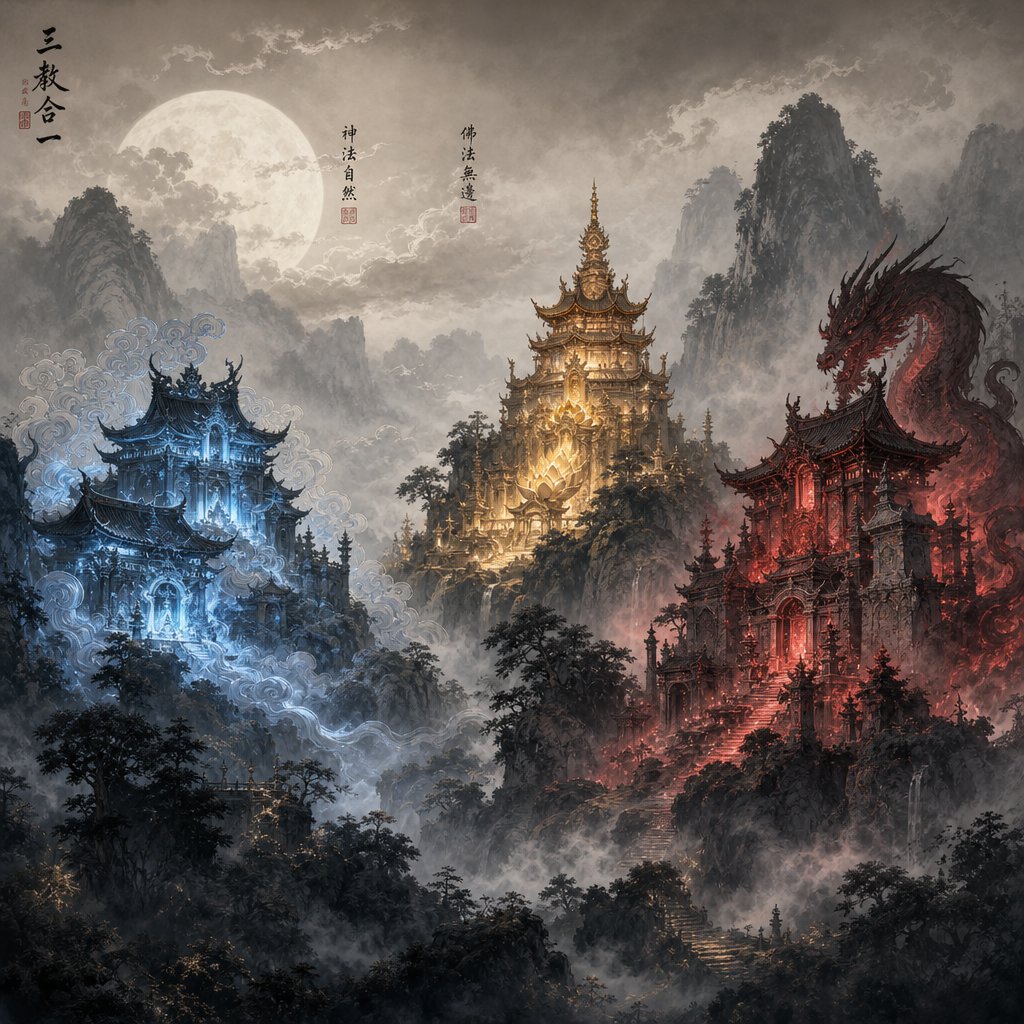
Every xianxia name draws from a specific spiritual tradition, and that tradition shapes the name's texture, sound, and meaning. Three sources dominate: Daoist immortal naming conventions, Buddhist dharma concepts, and Chinese mythological references. When you recognize which tradition a name pulls from, you can immediately identify a character's cultivation path, philosophical alignment, and narrative role.
Daoist Immortal Naming Traditions in Fiction
Daoist naming conventions in xianxia borrow directly from historical Daoist monastic names. Real Daoist priests adopted names following formats like "so-and-so Zi" (Master), "so-and-so Zhenren" (True Person), or "so-and-so Shanren" (Mountain Recluse), with each name carrying the philosophical colors of their respective Daoist schools. Xianxia fiction inherits this system wholesale. A character named Changchun Zi (长春子, "Eternal Spring Master") immediately reads as a Daoist cultivator because the naming structure itself signals the tradition.
The character choices within Daoist-flavored names cluster around celestial phenomena, elemental purity, and cosmological abstraction. You'll notice these characters appearing repeatedly across cultivation novels:
- 云 (yun, second tone) - cloud, suggesting transcendence and freedom from earthly bonds
- 玄 (xuan, second tone) - mysterious or profound, referencing the Daoist concept of primordial mystery
- 清 (qing, first tone) - pure or clear, evoking spiritual refinement and detachment
- 虚 (xu, first tone) - void or emptiness, pointing toward the Daoist ideal of non-attachment
- 元 (yuan, second tone) - origin or primordial, connecting to creation and fundamental essence
- 真 (zhen, first tone) - true or real, central to the Daoist pursuit of authentic nature
- 阳 (yang, second tone) - sun or positive force, representing the active cosmic principle
Historical Daoist figures demonstrate these patterns clearly. Wang Chongyang (the founder of the Quanzhen school) took the dao name Chongyangzi. His seven disciples followed suit: Changchunzi, Danyangzi, Changzhenzi, Yuyangzi, Guangningzi, Changshengzi, and Yunyangzi. Notice how yang, chun, and other nature-referencing characters recur. Xianxia fiction replicates this clustering to create sect-wide naming coherence, where all disciples of a particular lineage share recognizable character patterns.
Buddhist Dharma Name Influences
Buddhist dharma names in cultivation fiction operate differently from Daoist names. Where Daoist names emphasize cosmic harmony and natural phenomena, Buddhist-influenced names center on concepts of perception, wisdom, and liberation from suffering. In historical practice, dharma names are considered aspirational rather than descriptive, representing what the practitioner seeks to become rather than what they already are. Xianxia fiction preserves this aspirational quality.
Characters walking Buddhist-adjacent cultivation paths (often called "Buddhist cultivation" or "Chan cultivation" in novels) draw from a distinct character pool:
- 空 (kong, first tone) - emptiness or void, the core Buddhist concept of sunyata
- 慧 (hui, fourth tone) - wisdom or insight, representing prajna
- 法 (fa, third tone) - dharma or law, the teachings themselves
- 明 (ming, second tone) - illumination or clarity, referencing enlightenment
- 觉 (jue, second tone) - awakening, the literal meaning of "Buddha"
- 禅 (chan, second tone) - meditation or Chan, the contemplative tradition
- 净 (jing, fourth tone) - purity or cleanliness, evoking the Pure Land
A monk cultivator named Kongming (空明, "Empty Illumination") reads as unmistakably Buddhist. Compare that to a Daoist cultivator named Xuanqing (玄清, "Mysterious Purity"). Both names suggest spiritual refinement, but the philosophical flavor is entirely different. Buddhist names in xianxia tend toward shorter, more austere constructions, often using a single dharma character preceded by the surname Shi (释), mirroring the real Chinese Buddhist tradition where ordained monks adopt the surname of Shakyamuni Buddha.
Mythological and Celestial Character References
The third naming tradition draws from Chinese mythological name references, embedding the power and symbolism of ancient divine beasts and celestial entities directly into character names. Imagine a character named Long Xuan (龙玄, "Dragon Mystery") or Feng Qing (凤清, "Phoenix Purity"). These names borrow the weight of creatures that carry millennia of cultural significance.
Common mythological characters used in xianxia names include:
- 龙 (long, second tone) - dragon, symbolizing authority, transformation, and supreme power
- 凤 (feng, fourth tone) - phoenix, representing rebirth, nobility, and auspiciousness
- 麟 (lin, second tone) - qilin, evoking benevolence and righteousness
- 鹏 (peng, second tone) - the great roc from Zhuangzi, suggesting boundless freedom and transcendence
- 鹤 (he, fourth tone) - crane, the immortal's companion, signaling longevity and detachment
- 虎 (hu, third tone) - tiger, representing martial ferocity and mountain sovereignty
These mythological references do more than sound impressive. A character whose name contains long (dragon) signals a connection to authority and cosmic power. One whose name contains peng (roc) suggests a philosophy of absolute freedom, echoing the Kunpeng's legendary journey of ninety thousand li. Writers use these references to foreshadow bloodline secrets, hidden identities, or destined transformations.
Each tradition creates a distinct naming flavor that readers learn to recognize instinctively. Daoist names feel ethereal and flowing. Buddhist names feel spare and contemplative. Mythological names feel ancient and powerful. When a writer mixes traditions intentionally, placing a Buddhist character component in an otherwise Daoist name, it signals something about that character's unorthodox path or conflicted identity. The traditions are not just decorative. They function as a grammar that readers decode, and that grammar extends naturally into how different character archetypes receive their names.
Naming Formulas for Every Character Archetype
Recognizing which spiritual tradition a name draws from is one layer of decoding. The next is understanding how character role shapes naming choices. A protagonist, an elder, and a villain can all pull from Daoist vocabulary, yet their names will feel completely different because each archetype follows its own formula. These formulas are so consistent across cultivation novels that experienced readers can identify a character's narrative function from their name alone, before a single line of dialogue.
Protagonist Naming Patterns and Hidden Destiny Signals
Xianxia protagonist name examples share a counterintuitive pattern: they tend toward the humble, the plain, or the deliberately concealed. Think of Wei Ying (魏婴, where 婴 means "infant"), Xiao Se (萧瑟, "bleak" or "desolate"), or Wu Yong (无用, "useless") used as a starting identity that the character outgrows. This convention mirrors a deep cultural logic. Names that sound too grand attract heavenly jealousy. Names that sound too powerful announce a threat before the character is ready to defend themselves.
The formula works like this: give the protagonist a name that conceals potential rather than announcing it. The concealment takes several forms. Some protagonist names use characters with double meanings, where the surface reading is ordinary but the deeper reading hints at destiny. A name like Yun Fan (云凡, "Cloud Ordinary") reads as humble on the surface, yet 云 (cloud) quietly signals transcendence. Others use negation characters like 无 (wu, "without") or 不 (bu, "not") to create names that sound like limitations but actually point toward boundlessness, echoing the Daoist concept that true fullness appears empty.
Male cultivator name characters for protagonists often include 天 (tian, sky/heaven), 风 (feng, wind), 尘 (chen, dust/mortal world), or 墨 (mo, ink), all of which suggest either vast potential or a connection to the mortal realm that the character will eventually transcend. The tonal quality tends toward balanced or rising tones, giving the name a sense of forward momentum without aggression.
Elder and Mentor Names That Command Authority
Cultivation elder naming patterns flip the protagonist formula entirely. Where protagonists hide their power in plain names, elders announce their authority through archaic, weighty character choices. You'll notice elder names frequently use characters that reference geological permanence, ancient wisdom, or cosmic timescales.
Common character choices for elders and sect leaders include:
- 苍 (cang, first tone) - ancient, vast, grey-green like old pines
- 岳 (yue, fourth tone) - great mountain, sacred peak
- 渊 (yuan, first tone) - abyss, profound depth
- 古 (gu, third tone) - ancient, primordial
- 松 (song, first tone) - pine tree, endurance through seasons
- 远 (yuan, third tone) - far-reaching, distant wisdom
A master named Cangyan Zhenren (苍岩真人, "Ancient Rock True Person") or an elder called Gu Yuanshan (古远山, "Ancient Far Mountain") immediately communicates millennia of accumulated cultivation. These names use lower, heavier tonal combinations. Fourth-tone characters like 岳 and third-tone characters like 古 create a downward, grounding sonic quality that contrasts sharply with the lighter, rising tones found in younger characters' names. The reference material from Cultivating Dragons reinforces this principle: a master named Zhi Yuan (智远, "Far-Sighted Wisdom") conveys deep insight and strategic mastery, while something like Sha Ben (傻笨, "Idiot and Clumsy") would destroy immersion instantly.
Sect leaders add another layer. Their names often incorporate their sect's philosophical identity. A leader of a sword sect might carry 剑 (jian, sword) or 锋 (feng, blade edge) in their title. A leader of an alchemy sect might use 丹 (dan, elixir) or 炉 (lu, furnace). The name binds the individual to the institution.
Love Interest Names and Gender-Specific Conventions
Gender-specific naming in xianxia follows patterns that are both traditional and genre-specific. Female xianxia character name ideas cluster around imagery that combines beauty with spiritual power. Unlike modern Chinese girl names that might emphasize cuteness or simplicity, xianxia female names reach for the ethereal and the dangerous.
Female love interest names commonly draw from:
- Lunar imagery: 月 (yue, moon), 霜 (shuang, frost), 寒 (han, cold)
- Floral references: 莲 (lian, lotus), 兰 (lan, orchid), 梅 (mei, plum blossom)
- Jade and gem characters: 玉 (yu, jade), 琼 (qiong, fine jade), 瑶 (yao, precious jade)
- Ethereal qualities: 灵 (ling, spirit), 仙 (xian, immortal), 梦 (meng, dream)
A character named Leng Yuexian (冷月仙, "Cold Moon Immortal") or Bai Qionglian (白琼莲, "White Jade Lotus") signals both beauty and cultivation power. The xianxia love interest name conventions differ from standard romance because these names must carry martial weight alongside elegance. A name like Ye Ruo Yi (叶若依, "As If Reliant") from Blood of Youth balances gentleness with quiet resilience, painting a character who bends but does not break.
Male love interest names in xianxia lean toward cold elegance rather than raw martial force. Characters like 寒 (han, cold), 墨 (mo, ink), 白 (bai, white), and 夜 (ye, night) appear frequently, creating an aesthetic of restrained power and mystery. A male lead named Lan Wangji (蓝忘机, "Blue Forget-Machine") or Xie Lian (谢怜, "Thank Pity") carries emotional weight through characters that suggest internal conflict or philosophical depth rather than outward aggression.
The contrast with male cultivator name characters used for warrior or sect leader archetypes is stark. Warriors favor 战 (zhan, battle), 剑 (jian, sword), 峰 (feng, peak), and 天 (tian, heaven). Love interests favor introspection and aesthetic refinement. Both are powerful, but the power expresses differently through naming.
| Archetype | Common Character Choices | Tonal Quality | Example Name |
|---|---|---|---|
| Protagonist | 凡 (ordinary), 尘 (dust), 无 (without), 云 (cloud) | Balanced, rising; understated momentum | Yun Fan (云凡, "Cloud Ordinary") |
| Elder/Mentor | 苍 (ancient), 岳 (mountain), 渊 (abyss), 松 (pine) | Low, grounding; heavy fourth and third tones | Gu Yuanshan (古远山, "Ancient Far Mountain") |
| Sect Leader | Sect philosophy + 主 (lord), 尊 (venerable), 帝 (emperor) | Authoritative, formal; sharp falling tones | Jianchen Zongzhu (剑尘宗主, "Sword Dust Sect Master") |
| Female Love Interest | 月 (moon), 玉 (jade), 莲 (lotus), 灵 (spirit) | Flowing, melodic; first and second tones | Leng Yuexian (冷月仙, "Cold Moon Immortal") |
| Male Love Interest | 寒 (cold), 墨 (ink), 白 (white), 夜 (night) | Cool, restrained; even and measured | Mo Hanyi (墨寒衣, "Ink Cold Garment") |
| Villain/Demonic Cultivator | 魔 (demon), 血 (blood), 暗 (dark), 煞 (evil) | Harsh, abrupt; sharp consonants and falling tones | Xue Sha (血煞, "Blood Fiend") |
These formulas are not rigid rules but strong defaults. The most memorable characters in cultivation fiction often work within these patterns while adding one unexpected element, a protagonist with a single ominous character buried in an otherwise plain name, or an elder whose name contains a youthful reference that hints at a tragic backstory. The patterns give readers expectations, and skilled writers use those expectations as narrative tools, especially when crafting villains and demonic cultivators whose names carry the darkest, most distinctive conventions in the genre.
Villain and Demonic Cultivator Naming Decoded
Demonic cultivators, fallen immortals, and heretical path practitioners occupy the most visually and phonetically distinct naming space in the genre. Where protagonist names conceal and elder names anchor, xianxia villain naming conventions announce threat. These names are designed to feel wrong on a visceral level, using characters associated with corruption, violence, and spiritual transgression to signal that a character has stepped outside the orthodox cultivation order.
Demonic Cultivator and Heretical Path Names
Dark cultivation path name characters draw from a specific pool that readers learn to recognize as danger signals. These characters reference death, blood, shadow, and spiritual corruption, creating names that feel heavy and sharp even before you understand their literal meaning.
Common villain-associated characters include:
- 魔 (mo, second tone) - demon or devil, the defining character of demonic cultivation
- 血 (xue, fourth tone) - blood, suggesting violence, blood sacrifice, or forbidden arts
- 暗 (an, fourth tone) - dark or hidden, evoking concealment and moral corruption
- 煞 (sha, fourth tone) - evil spirit or fiend, carrying connotations of killing intent
- 幽 (you, first tone) - ghostly, dim, or netherworld-associated
- 冥 (ming, second tone) - underworld or darkness, referencing death and the afterlife
- 噬 (shi, fourth tone) - devour, suggesting consumption of others' cultivation
- 邪 (xie, second tone) - heretical or wicked, the opposite of orthodox (正/zheng)
Notice the tonal pattern. Demonic cultivator name examples cluster around fourth-tone characters: 血 (xue), 暗 (an), 煞 (sha). The fourth tone in Mandarin is a sharp, falling sound, almost like a verbal strike. When you stack multiple fourth-tone characters together, the name sounds abrupt and aggressive. A villain named Xue Sha (血煞, "Blood Fiend") hits the ear like two hammer blows. Compare that to a righteous cultivator named Qingyun (清云, "Pure Cloud"), where the first and second tones create a rising, open sound. The phonetic contrast mirrors the moral contrast.
Heretical cultivator name patterns often combine these dark characters with words suggesting forbidden knowledge or transgression. Names like Mo Wuji (魔无忌, "Demon Without Taboo") or An Shixue (暗噬血, "Dark Blood Devourer") layer multiple villain-coded characters to create unmistakable alignment signals. The more dark characters stacked in a single name, the more extreme the character's position on the heretical path.
Fallen Immortal and Betrayer Naming Conventions
Fallen immortals present a more nuanced naming challenge. These characters once walked the righteous path, so their names often retain traces of their former alignment. A fallen immortal might keep a name like Qingxuan (清玄, "Pure Mystery") but add a dark title or epithet: Qingxuan the Bloodless, or Fallen Immortal Qingxuan. The contrast between the celestial name and the dark title creates narrative tension. Readers sense the tragedy embedded in the gap between who this character was and what they became.
This brings up a common mistake in cultivation fiction: giving a demonic cultivator a name full of celestial and light characters without narrative justification. When a character named Tianming Guanghui (天明光辉, "Heavenly Bright Radiance") turns out to be a blood-path cultivator with no backstory explaining the contradiction, it reads as author inexperience rather than intentional subversion. The naming system has grammar, and breaking that grammar without purpose creates the same effect as a typo.
Intentional rule-breaking, on the other hand, is one of the most powerful tools in xianxia storytelling. When a character named Guangming (光明, "Bright Light") is revealed as the novel's ultimate villain, the name itself becomes dramatic irony. Readers feel the betrayal more sharply because the name promised righteousness. This works only when the author establishes the naming conventions clearly enough that the violation registers as meaningful. The rule must exist before breaking it carries weight.
The distinction is simple: if the rest of your cast follows consistent naming logic, one character whose name contradicts their alignment becomes a narrative device. If names throughout the novel show no consistent pattern, a light-named villain just looks like a random choice. Xianxia villain naming conventions gain their power from the system they exist within, and that system extends beyond individual characters into how entire sects, clans, and cultivation stages shape the names characters carry throughout their journey.
Names That Evolve With Cultivation Power
A villain's name signals alignment from the start, but what happens when a character's alignment, power, and identity shift across hundreds of chapters? Xianxia fiction answers this through a naming system that evolves alongside the cultivator. A character who begins as mortal Wei Ying does not carry the same name when they stand before the heavenly tribulation. Each cultivation breakthrough can trigger a renaming, a shedding of the old identity like a snake discarding skin. Understanding how cultivator names change with power level reveals one of the genre's most elegant worldbuilding mechanisms.
How Names Change Across Cultivation Stages
The cultivation stage name progression follows a predictable arc that mirrors the character's spiritual transformation. At each major threshold, the cultivator earns, receives, or claims a new name that reflects their expanded understanding and power. Think of it as a naming ladder where each rung carries different weight, formality, and cosmic significance.
Here is the typical progression through cultivation stages and their associated naming shifts:
- Mortal Stage (凡人) - The character uses their birth name and possibly a childhood nickname. Names at this stage are familial, humble, and grounded in the human world. A mortal named Chen Ping (陈平, "Chen Peaceful") carries no cultivation weight whatsoever.
- Qi Refining to Foundation Establishment (练气/筑基) - Upon entering a sect, the character may receive a sect-given name or courtesy name. This marks their transition from civilian to cultivator. The new name often incorporates a generational character shared with fellow disciples.
- Core Formation (结丹) - This is the most common stage for adopting a dao name. Forming a golden core represents commitment to a specific path, and the dao name declares that commitment publicly. A cultivator who was simply "Third Disciple Chen" might now become Qingfeng Zi (清风子, "Pure Wind Master").
- Nascent Soul (元婴) - At this level, cultivators often receive or adopt titles that reference their signature technique, domain, or spiritual achievement. The naming shifts from personal aspiration to recognized authority. Others begin calling them by title rather than name.
- Tribulation Crossing (渡劫) - Surviving heavenly tribulation can trigger a tribulation name, as covered earlier. The name marks what was endured and signals to all observers that this cultivator has faced heaven's judgment and survived.
- Immortal Ascension (飞升) - The final naming transformation. Upon ascending, the cultivator receives or claims an immortal title that carries formal, cosmic weight. Their mortal name may be forgotten entirely, replaced by something like Taiyi Zhenxian (太一真仙, "Supreme Unity True Immortal").
Notice how each stage moves further from the personal and closer to the cosmic. A mortal name belongs to a family. A dao name belongs to a path. An immortal title belongs to the heavens. This progression means that a character's current name immediately communicates their power level to other characters and to readers. When someone is addressed as "Zhenren" (True Person), you know they have reached at least Nascent Soul. When they carry a full immortal title, you know they have transcended the mortal realm entirely.
For writers, this system creates natural dramatic moments. The scene where a character first introduces themselves by their new dao name carries emotional weight because readers understand what that name represents: a threshold crossed, an old self left behind. The cultivation stage name progression is not just a labeling system. It is a storytelling engine.
Sect and Clan Naming Systems That Reflect Hierarchy
Individual naming evolution does not happen in isolation. It occurs within the structure of sects and clans, and these organizations impose their own naming logic on every member. Xianxia sect naming conventions operate on two levels: how the sect itself is named, and how disciples' names reflect their belonging to that sect.
Sect names follow recognizable construction patterns. As outlined in the Cultivating Dragons naming guide, most sect names combine a thematic element (nature, philosophy, or mythology) with a structural suffix that indicates the organization's type and prestige. The suffix alone communicates hierarchy:
- 宗 (zong, Sect) - A major, established cultivation organization with formal structure
- 派 (pai, School) - A recognized lineage, often slightly less formal than a zong
- 宫 (gong, Palace) - Suggests elegance, wealth, and often female-dominated sects
- 阁 (ge, Pavilion) - Typically scholarly or technique-focused organizations
- 谷 (gu, Valley) - Secluded, often associated with alchemy or medicine
- 教 (jiao, Cult/Order) - Frequently used for heterodox or secretive factions
A sect named Azure Cloud Sect (青云宗) signals transcendence and ambition through its thematic element while the 宗 suffix marks it as a major orthodox power. Compare that to Black Lotus Cult (黑莲教), where both the dark imagery and the 教 suffix signal a heterodox faction. Readers decode these instantly.
Disciples' names within a sect often carry markers of their affiliation. Some sects assign all disciples a shared surname or a shared character within their given name. Others use naming conventions tied to their sect's philosophy. A sword sect might give all inner disciples names containing 剑 (jian, sword) or 锋 (feng, edge). An alchemy valley might use 丹 (dan, elixir) or 药 (yao, medicine) as recurring elements. This creates immediate visual cohesion when multiple sect members appear together.
The most structured version of this is generational naming (字辈/zibei), a system borrowed from real Chinese clan traditions and amplified in cultivation fiction. In this system, each generation of disciples shares a specific character in their name, assigned by the sect founder or grand elder according to a predetermined poem or character sequence. Imagine a sect whose generational characters follow the sequence: 天 (tian, heaven), 地 (di, earth), 玄 (xuan, mystery), 黄 (huang, yellow). First-generation disciples all carry 天 in their names. Second-generation disciples carry 地. When you meet a cultivator named Xuanming (玄冥), you immediately know they belong to the third generation of that sect.
Generational naming in cultivation clans serves multiple narrative functions simultaneously. It communicates age and seniority without exposition. It creates instant recognition between sect members who have never met. It establishes family-like bonds between disciples of the same generation who share a character. And it provides a built-in source of dramatic tension when a character's generational name conflicts with their actual power level, such as a third-generation disciple who has surpassed all first-generation elders.
Cultivation families (修仙世家) use generational naming even more rigidly than sects. In a clan like the fictional Gu family, names might follow a pattern where all children of one generation share a radical or character component. The Lei Clan (雷家) from The Blood of Youth demonstrates how a single surname character, 雷 meaning "Thunder," reflects the clan's aggressive and powerful fighting style while binding all members under a shared identity. Every Lei clan member carries that thunderous weight in their surname before their personal name even registers.
For writers building cultivation worlds, the combination of individual naming evolution and organizational naming systems creates extraordinary density. A character introduced as "Qingyun Sect, Third Generation, Inner Disciple Xuan Lingfeng" communicates sect affiliation, generational rank, disciple status, and personal identity in a single introduction. That is five layers of worldbuilding compressed into a name and title. And when that same character later sheds their sect identity to walk alone, adopting a solitary dao name, the absence of those organizational markers tells its own story.
These naming systems work for human cultivators operating within familiar social structures. But xianxia worlds are populated by far more than humans. Demons, spirit beasts, celestial beings, and ghost cultivators all require names too, and their naming rules diverge sharply from anything a mortal sect would recognize.
Non-Human Characters and Their Distinct Naming Rules
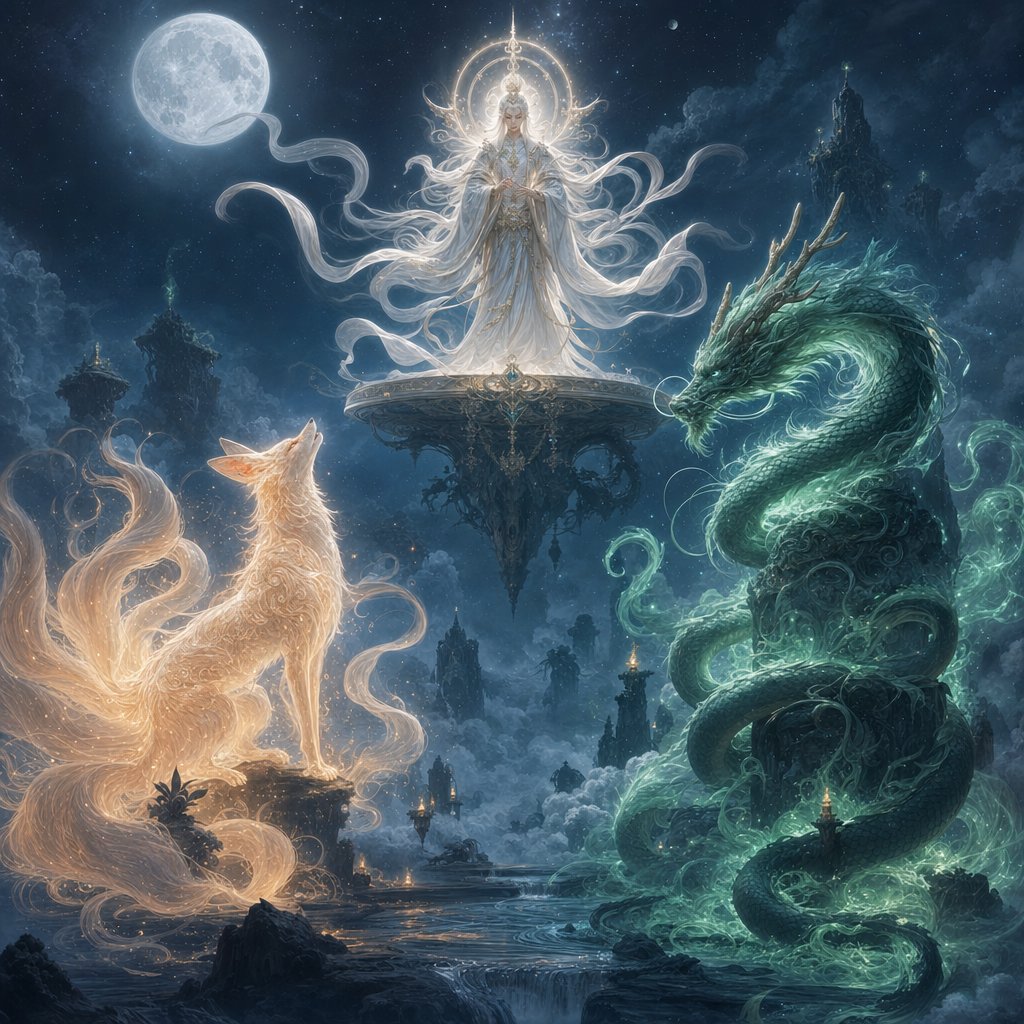
Demons, spirit beasts, celestial beings, and ghost cultivators populate every xianxia world, yet their names follow entirely different structural logic than human cultivators. A human cultivator earns names through social milestones and spiritual breakthroughs. A non-human character's name often encodes what they are at a fundamental, species-level identity. Understanding non-human character naming in xianxia fiction means recognizing that these beings relate to language itself differently, and their names reflect that alien relationship.
Spirit Beast and Demon Naming Structures
Spirit beasts in xianxia tend toward one of two naming patterns: species-embedded names or archaic single-character names that predate human language conventions. A nine-tailed fox spirit might simply be called Jiu (九, "Nine") or carry a name like Bai Jiuwei (白九尾, "White Nine-Tails"), where the species identity remains visible within the name itself. Xianxia spirit beast name examples frequently retain the creature's original nature as a naming root. A thousand-year-old pine spirit might be called Gu Song (古松, "Ancient Pine"). A jade rabbit spirit could carry the name Yue Tu (月兔, "Moon Rabbit"). The species is not hidden; it is the foundation the name builds upon.
This contrasts sharply with human cultivator names, where personal identity and philosophical aspiration drive character choices. Spirit beasts name themselves (or are named) according to what they are first, and who they are second. The older and more powerful the beast, the simpler the name tends to become. An ancient dragon might be known by a single archaic character, something like Ao (鳌) or Hun (浑), carrying weight through age rather than complexity.
Demon naming conventions in cultivation novels operate on a parallel but distinct track. Demons (妖/yao) in xianxia are beings born when animals, plants, or objects absorb spiritual energy and gain awareness, while devils (魔/mo) are inherently malevolent entities. This distinction shapes their naming. A yao-type demon who has cultivated for centuries might adopt a name that blends their original nature with human-style naming, like Hu Mei (狐魅, "Fox Charm") or Liu Qing (柳青, "Willow Green"). The name acknowledges their origin species while reaching toward a more human identity. A mo-type devil, by contrast, often carries names built from raw power concepts: Tianmo (天魔, "Heavenly Devil"), Wansha (万煞, "Ten Thousand Fiends"), or simply Mo (魔) as a title unto itself.
The structural difference is clear. Human cultivators build names from aspiration and philosophy. Spirit beasts build names from species and age. Demons build names from the tension between their original nature and their cultivated identity.
Celestial Being and Ghost Cultivator Names
Celestial being names in xianxia sit at the opposite end of the formality spectrum from spirit beast names. Where a beast might carry a single raw character, a celestial being carries layers of titles, honorifics, and positional markers that read almost like bureaucratic designations. This reflects the structure of the heavenly court itself, which Chinese mythology portrays as a cosmic government with ranks, departments, and formal protocols.
A celestial being might be addressed as Taiyi Jiutian Xuannv (太乙九天玄女, "Supreme Unity Mysterious Lady of the Nine Heavens") or Donghua Dijun (东华帝君, "Emperor Lord of the Eastern Splendor"). These names are not personal in the way human names are personal. They are positional, describing the being's role within the celestial hierarchy rather than their individual character. The naming structure follows a pattern: domain or rank marker + title suffix. Common celestial suffixes include 帝君 (dijun, "Emperor Lord"), 天尊 (tianzun, "Heavenly Venerable"), 星君 (xingjun, "Star Lord"), and 仙子 (xianzi, "Immortal Maiden").
Ghost cultivators occupy a middle ground. These are typically former human cultivators whose cultivation continued after death, or beings native to the netherworld (冥界/mingjie) who developed spiritual awareness. Their names often retain human naming structure but replace life-associated characters with death and yin-associated ones. A ghost cultivator might be named You Hunpo (幽魂魄, "Ghostly Soul-Spirit") or Ming Wuchang (冥无常, "Netherworld Impermanence"). The character 幽 (you, ghostly/dim) and 冥 (ming, netherworld) appear with high frequency, immediately marking these characters as belonging to the realm of the dead.
When non-human characters take human form, a subtler naming game begins. A fox spirit adopting a human identity might choose the surname Hu (胡), which sounds identical to 狐 (hu, fox) but uses a common human surname character. A snake demon in human guise might call herself Bai Suzhen (白素贞), where 白 (white) references her white-snake nature. A crane spirit might adopt the name He Xian (鹤仙, "Crane Immortal") or, more subtly, use the surname He (何) which echoes 鹤 (crane) phonetically without revealing the connection outright. These embedded references function as Easter eggs for attentive readers and as foreshadowing devices that pay off when the character's true nature is revealed.
| Character Type | Name Structure | Typical Length | Character Choices | Example |
|---|---|---|---|---|
| Human Cultivator | Surname + given name or dao name | 2-4 characters | Philosophical, aspirational, path-aligned | Qingyun Zi (清云子) |
| Spirit Beast | Species reference or single archaic character | 1-3 characters | Species, elemental, age-referencing | Ao (鳌) or Bai Jiuwei (白九尾) |
| Demon (妖) | Species-human hybrid naming | 2-3 characters | Origin species + cultivated identity | Hu Mei (狐魅, "Fox Charm") |
| Devil (魔) | Power concept or single title | 1-4 characters | Raw force, destruction, domination | Tianmo (天魔, "Heavenly Devil") |
| Celestial Being | Domain + rank + title suffix | 4-8 characters | Positional, bureaucratic, cosmic | Donghua Dijun (东华帝君) |
| Ghost Cultivator | Human structure with yin-substitution | 2-4 characters | Death, darkness, netherworld imagery | You Hunpo (幽魂魄) |
The key insight across all non-human naming is this: human cultivator names encode what a character chooses to become. Non-human names encode what a character fundamentally is. A human cultivator named Qingyun aspires toward purity and transcendence. A spirit beast named Gu Song simply is an ancient pine. That distinction in naming philosophy, choice versus essence, creates immediate tonal separation between human and non-human characters on the page. Readers feel the difference before they consciously analyze it.
This species-level naming logic also explains why the most compelling non-human characters in xianxia are often those whose names show tension between their nature and their aspirations. A demon who adopts a fully human-style dao name is making a statement about identity that a human cultivator never needs to make. The name becomes a declaration of transformation, a claim that essence can be transcended. And that tension between what a name reveals and what it conceals applies equally when comparing xianxia naming as a whole against its closest genre neighbor: wuxia.
What Separates Xianxia Names From Wuxia Names
Both genres share Chinese linguistic roots and both feature characters who wield swords, yet the xianxia vs wuxia naming differences run deep enough to mark entirely separate fictional universes. Wuxia, meaning "martial heroes," grounds its naming in human-scale virtues: loyalty, honor, martial skill, and jianghu reputation. Xianxia, meaning "immortal heroes," builds names from cosmic philosophy, spiritual transcendence, and the pursuit of godhood. The gap between them is the gap between perfecting a sword technique and using that sword to split the heavens.
Wuxia Names vs Xianxia Names Side by Side
When you compare wuxia character name conventions against cultivation fiction naming, the structural differences become immediately visible. Wuxia names emphasize what a character does in the mortal world. Xianxia names encode what a character seeks to become beyond it.
A wuxia hero named Jian Ming (剑明, "Clear Sword") tells you about martial clarity and weapon mastery. A xianxia cultivator named Ling Xu (灵虚, "Spirit Void") tells you about spiritual philosophy and the pursuit of emptiness. Both are two-character names. Both sound elegant in Mandarin. But they operate in completely different semantic universes.
Wuxia naming draws heavily from Confucian values like righteousness, loyalty, and honor, while xianxia naming leans into Daoist cosmology, celestial imagery, and Buddhist transcendence. This philosophical split shapes every character choice, from surname selection to epithet construction.
| Naming Element | Wuxia Convention | Xianxia Convention |
|---|---|---|
| Primary Identity | Jianghu title or epithet (e.g., "Invincible Eastern Sword") | Dao name or immortal title (e.g., "Qingyun Zhenren") |
| Name Source | Martial skill, weapon, reputation | Cultivation path, spiritual philosophy, cosmic aspiration |
| Common Characters | 剑 (sword), 刀 (blade), 义 (righteousness), 侠 (hero) | 仙 (immortal), 玄 (mysterious), 道 (dao), 天 (heaven) |
| Title Structure | Descriptor + weapon/skill (e.g., "Flying Fox") | Domain + honorific suffix (e.g., "Xuanming Zhenren") |
| Name Evolution | Reputation-earned epithets replace or supplement birth name | Cultivation breakthroughs trigger formal renaming across stages |
| Philosophical Root | Confucian virtue, jianghu codes, historical allusion | Daoist cosmology, Buddhist dharma, celestial hierarchy |
| Power Signal | Fame and fear in the martial world | Cosmic rank and spiritual attainment |
Notice how wuxia titles are earned through reputation. A swordsman becomes "Sword Saint" because the jianghu recognizes his skill. The name flows upward from human society. In xianxia, titles flow downward from cosmic structure. A cultivator becomes "Zhenren" (True Person) because they have achieved a specific spiritual threshold, regardless of whether anyone witnesses it.
When Martial Arts Naming Meets Immortal Cultivation
The sword cultivator name vs swordsman name distinction illustrates this divide perfectly. Imagine two characters who both dedicate their lives to the sword. In wuxia, a master swordsman might be called Dugu Qiubai (独孤求败, "Solitary Seeker of Defeat"). The name references his martial journey: he fought until no opponent remained. It is grounded in human experience, in duels won and rivals exhausted. His identity is built from what he accomplished within mortal limits.
In xianxia, a sword cultivator at the same level of mastery might carry the name Wanjian Zhenren (万剑真人, "True Person of Ten Thousand Swords"). The name references not skill earned through practice but a spiritual state achieved through cultivation. "Ten Thousand Swords" suggests a dao comprehension so deep that every blade in existence answers to his will. The "Zhenren" suffix marks him as having transcended ordinary human identity entirely. Same weapon, same dedication, completely different naming logic.
This distinction matters for writers working in cultivation fantasy naming vs martial arts naming. If your story features mortal martial artists who train for decades and fight within human limits, wuxia conventions apply. Names should reference skill, reputation, and social identity within the jianghu. If your story features cultivators pursuing immortality through spiritual refinement, xianxia conventions take over. Names should reference cosmic philosophy, cultivation attainment, and transcendent aspiration.
Mixing the two without awareness creates tonal confusion. A character with a wuxia-style jianghu epithet sitting in a xianxia cultivation sect feels out of place, like a street fighter wandering into a monastery. The naming system signals which world your story inhabits, and readers familiar with either genre will notice immediately when the conventions clash. That awareness of convention, knowing which rules apply and when to bend them, is exactly what separates competent naming from masterful naming when you sit down to build your own cultivation world from scratch.
Practical Naming Strategies for Cultivation Fantasy Writers
Knowing which conventions apply is one thing. Applying them in your own fiction, especially when writing in English for an audience that may not read Chinese, is an entirely different challenge. The gap between understanding xianxia character naming patterns and actually producing names that feel authentic, consistent, and readable requires deliberate strategy. Whether you are writing Chinese-language web fiction or English-language cultivation fantasy, the approach you take to naming will shape how readers experience your entire world.
Adapting Xianxia Names for English-Language Fiction
Writers working in English face a fundamental choice that Chinese-language authors never encounter: how to present names that originate in a tonal, character-based language to readers who process alphabetic text. There is no single correct answer, but there are three established English xianxia name adaptation strategies, each with distinct strengths.
Direct romanization uses pinyin (with or without tone marks) to preserve the original Chinese sound. A character remains Qingyun Zi rather than becoming "Pure Cloud Master." This approach maintains phonetic authenticity and keeps the cultural texture intact. It works best when your audience is already familiar with cultivation fiction conventions, such as readers of translated web novels or xianxia fanfiction communities. The trade-off is accessibility. Readers unfamiliar with Mandarin phonetics may struggle to distinguish characters whose names look similar on the page, especially when multiple names share common syllables like xian, yun, or tian.
Translated meaning names render the Chinese characters into their English equivalents. Qingyun Zi becomes "Pure Cloud Master." Xue Sha becomes "Blood Fiend." This approach maximizes immediate comprehension. Readers grasp the naming logic instantly without needing any Chinese language knowledge. It works well for cultivation fantasy that draws on xianxia conventions without being set in a Chinese-coded world. The trade-off is that translated names can sound generic or overly literal, losing the poetic compression that makes Chinese names resonate. "Eternal Spring Master" carries less weight than Changchun Zi because the English version reads as description rather than name.
Hybrid approaches combine both strategies. Personal names stay in romanized pinyin while titles and epithets are translated, or surnames remain in pinyin while given names carry English meaning. A character might be introduced as "Shen Wuya, the Boundless" or "Elder Gu of the Thousand-Year Pine." This middle path preserves cultural grounding while giving English-language readers semantic handholds. Many successful English-language cultivation novels use this approach, keeping character names in pinyin but translating sect names, technique names, and formal titles.
The choice depends on your audience and your world. If your setting is explicitly Chinese-inspired and your readers come from the cultivation fiction community, lean toward romanization. If you are building a secondary world that borrows xianxia structures without direct Chinese cultural mapping, translated or hybrid names may serve better. The key is consistency. Pick one strategy and apply it uniformly across your entire cast.
Building a Complete Naming System for Your Cultivation World
A cultivation fantasy naming system for writers goes beyond individual character names. It means designing a coherent set of rules that govern how every name in your world functions, from the lowest outer disciple to the highest immortal emperor. When you build this system deliberately, names stop being isolated creative decisions and become worldbuilding tools that reinforce sect identity, power hierarchies, and philosophical alignments on every page.
Start by defining your world's naming layers. Decide which name types exist (birth names, dao names, sect titles, immortal titles) and at what cultivation stages they change. Establish whether your sects use generational naming, shared surname conventions, or philosophical character pools. Determine how your villain factions' names contrast with your orthodox factions' names at the phonetic and semantic level. These decisions, made once and applied consistently, create the illusion of a living linguistic culture without requiring you to construct an entire language.
Consider the phonetic dimension as well. As A.K. Larkwood's naming language guide demonstrates, even without building a full constructed language, you can create distinctive naming flavors by restricting which sounds, syllable structures, and consonant clusters appear in different factions' names. A sect rooted in water philosophy might favor flowing sounds: liquid consonants, open vowels, and gentle tonal patterns. A demonic faction might cluster harsh stops and falling tones. This phonetic consistency works whether you are using pinyin or translated names.
Here are the most common xianxia naming mistakes to avoid when building your system:
- Using modern Chinese names in ancient settings. A cultivator named Zhang Wei (张伟) or Li Na (李娜) breaks immersion immediately. These are contemporary names that belong in a Shanghai office, not a mountain sect. Cultivation fiction demands archaic, poetic, or philosophically loaded character choices that reflect the pre-modern world your story inhabits.
- Mixing naming conventions from different traditions inconsistently. If one character has a Daoist dao name, another has a Buddhist dharma name, and a third has a modern nickname, your world feels incoherent unless the mixing is narratively justified. Each faction should follow its own internal logic.
- Ignoring tonal aesthetics and phonetic flow. Names that stack awkward syllable combinations or repeat similar sounds across your cast create confusion. As the native speaker's naming guide emphasizes, names should flow well when spoken aloud. Read your character list out loud and check whether names are distinct enough to tell apart.
- Giving characters names that contradict their role without purpose. A ruthless sect leader named Ai He (爱和, "Love and Harmony") or a great hero named Wu Yong (无用, "Useless") undermines the character unless the contradiction serves a deliberate narrative function like irony or hidden identity.
- Creating names that sound exotic but follow no real phonetic rules. Random syllable combinations like "Gon Su Fa" or "Tak Lin Hu" do not follow Chinese phonetic patterns and will immediately register as inauthentic to anyone familiar with the genre.
- Forgetting that names communicate hierarchy. A humble outer disciple should not carry a name grander than the sect patriarch's. A mortal should not have a name that sounds more celestial than an actual immortal's. The naming system must reflect the power structure.
Name generators and character databases like MDBG.net or classical poetry collections can serve as useful starting points for brainstorming. They help you discover character combinations and verify that your chosen characters carry the meanings you intend. But generators produce individual names in isolation. They cannot build the systemic coherence that makes a cultivation world feel real. Understanding the underlying patterns, the archetype formulas, the tradition-specific character pools, the tonal contrasts between factions, produces results that no random generator can match.
The most effective approach is to treat your naming system the way you would treat a magic system or a political structure: as a designed framework with internal rules that create both consistency and meaningful variation. When every name in your novel follows a logic that readers can intuitively sense, even if they never consciously articulate it, your world feels lived-in. Names stop being labels and become architecture. Each one carries the weight of sect history, cultivation philosophy, and cosmic hierarchy. That is what xianxia character naming patterns offer when applied with intention: not just cool-sounding names, but a world that builds itself two characters at a time.
Frequently Asked Questions About Xianxia Character Naming Patterns
1. What is the difference between a dao name and a courtesy name in xianxia?
A courtesy name reflects social identity and personal virtue, given at a coming-of-age milestone or sect entry. It is used by peers and juniors as a sign of respect. A dao name reflects a cultivator's spiritual path and cosmic aspiration, chosen or bestowed when they commit to a specific cultivation direction. The courtesy name belongs to the human social world, while the dao name belongs to the cultivation world and often includes honorific suffixes like Zi, Zhenren, or Shangren.
2. How do xianxia names differ from wuxia names?
Wuxia names emphasize martial prowess, jianghu reputation, and Confucian virtues like righteousness and loyalty. They are earned through human-scale achievements. Xianxia names encode Daoist cosmology, Buddhist transcendence, and celestial hierarchy, reflecting what a character seeks to become beyond mortal limits. A wuxia swordsman earns a title through duels won, while a xianxia sword cultivator carries a name referencing spiritual comprehension of the sword dao itself.
3. What characters are commonly used in demonic cultivator names?
Demonic cultivator names draw from characters associated with darkness, blood, and spiritual corruption. Frequently used characters include mo (demon), xue (blood), an (dark), sha (evil spirit), you (ghostly), ming (underworld), shi (devour), and xie (heretical). These names tend to cluster fourth-tone characters, creating sharp, aggressive phonetic patterns that contrast with the flowing tones of righteous cultivator names.
4. How do xianxia character names change as cultivation progresses?
Names evolve through a predictable arc tied to cultivation breakthroughs. A character starts with a humble birth name at the mortal stage, receives a courtesy or sect name upon entering a sect during Qi Refining, adopts a dao name at Core Formation when committing to a path, earns authority-based titles at Nascent Soul, may gain a tribulation name after surviving heavenly tribulation, and finally receives a formal immortal title upon ascension. Each stage moves the name further from personal identity toward cosmic significance.
5. How should English-language writers adapt xianxia naming conventions?
Three main strategies exist. Direct romanization preserves Chinese phonetics and works best for audiences familiar with cultivation fiction. Translated meaning names render characters into English equivalents for maximum accessibility but can sound overly literal. Hybrid approaches keep personal names in pinyin while translating titles and sect names. The key is choosing one strategy and applying it consistently across your entire cast, then building a systematic naming framework that reflects sect identity, power hierarchy, and philosophical alignment.