The Many Meanings Behind Xiao Bao
You hear someone say "xiao bao" in a Chinese drama. You spot it on a restaurant menu. A friend uses it as a nickname for their baby. Same two syllables, completely different meanings. So what does xiao bao actually mean?
The short answer: it depends. The xiao bao meaning shifts dramatically based on tone, character, and context. In Mandarin Chinese, identical-sounding syllables written in English letters can represent entirely separate words. A tiny shift in vocal pitch turns a sweet pet name into a steamed bun, or even a tabloid newspaper.
When Chinese is written in romanized pinyin without tone marks, critical pronunciation information disappears. That is why English speakers often encounter "xiao bao" and have no way to tell whether it refers to a beloved child, a small package, or a dumpling on a dim sum cart.
Why Xiao Bao Has So Many Different Meanings
Mandarin uses four distinct tones to differentiate words. The syllable "bao" alone maps to characters meaning treasure (宝, bǎo), wrap or bun (包, bāo), and even newspaper (報, bào). Pair each of these with "xiao" (小, meaning small or little), and you get a different xiaobao meaning every time. The Wisdom Library Chinese-English dictionary lists at least three separate entries: 小包 (xiǎo bāo, a packet), 小報 (xiǎo bào, a tabloid), and 小鴇 (xiǎo bǎo, a bird species). Add the widely used endearment 小宝 (xiǎo bǎo, little treasure), and the picture gets even richer.
English romanization flattens all of this into two simple syllables. No wonder it causes confusion.
What You Will Learn About Xiao Bao
This guide covers every dimension of the term in one place. You will find a character-by-character breakdown showing how different "bao" characters change the meaning entirely. You will explore the baobao meaning as a term of endearment deeply rooted in Chinese family culture. The culinary side gets its own section too, connecting "xiao bao" to the world of steamed buns and soup dumplings. A pronunciation guide with tone marks will help you hear and say the differences yourself. And real-world examples from restaurant branding, pop culture, and everyday conversation tie everything together.
Whether you landed here from a menu, a subtitle, or a baby nickname, the answer lives in the characters behind the sound.
Character Breakdown of Xiǎo Plus Bao Combinations
The confusion around xiao bao meaning starts and ends with one character: the second one. The first syllable stays constant. It is always 小 (xiǎo), one of the most common characters in Mandarin, meaning small, little, or young. According to HanziCraft, 小 ranks as the 83rd most frequent character in Chinese and appears as a component in over 343 other characters. It is the linguistic building block behind hundreds of everyday words, from 小时 (xiǎo shí, hour) to 小吃 (xiǎo chī, snack).
So when you see "xiao bao" written without characters or tone marks, the real question is never about the first half. It is always about what comes after.
Understanding 小 Xiǎo as the Shared Root
Think of 小 as a modifier that shrinks or softens whatever follows it. In Chinese naming and daily speech, attaching 小 to a noun or name creates a diminutive, something smaller, younger, or more affectionate. You will notice this pattern everywhere:
- 小狗 (xiǎo gǒu) - puppy (literally "small dog")
- 小鸡 (xiǎo jī) - chick (literally "small chicken")
- 小姐 (xiǎo jiě) - miss or young lady
- 小朋友 (xiǎo péng yǒu) - child (literally "small friend")
This diminutive function is exactly what makes bao bao in Chinese so versatile as a base for nicknames and food terms alike. When 小 precedes a character, it signals intimacy, youth, or simply a reduced size. The emotional weight or literal meaning depends entirely on the character that follows.
How Different Bao Characters Change Everything
Here is where tones become decisive. The syllable "bao" in Mandarin maps to multiple characters across all four tones. Pair each with 小, and you get a completely different word. The bao bao meaning in Chinese shifts from precious treasure to wrapped bun to tabloid newspaper, all depending on which tone you use and which character you intend.
Imagine ordering food and accidentally calling the waiter "little treasure" instead of asking for a small bun. That is the difference a single tone makes. The same principle applies when exploring xiao long meaning in compound food terms: 笼 (lóng, steamer basket) paired with 小 and 包 creates the famous soup dumpling name, xiaolongbao.
The table below lays out the primary "xiao bao" homophone pairs side by side. This is the reference that clarifies which characters, tones, and contexts produce which meaning:
| Chinese Characters | Pinyin with Tones | Literal Translation | Common Usage Context |
|---|---|---|---|
| 小宝 | xiǎo bǎo (3rd + 3rd tone) | Little treasure | Pet name for children, babies, or romantic partners |
| 小包 | xiǎo bāo (3rd + 1st tone) | Small package / small bun | Food menus (steamed buns), postal packages, small bags |
| 小報 | xiǎo bào (3rd + 4th tone) | Small newspaper / tabloid | Journalism, gossip publications, informal bulletins |
| 小鴇 | xiǎo bǎo (3rd + 3rd tone) | Little bustard (a bird) | Ornithology, wildlife references |
| 小保 | xiǎo bǎo (3rd + 3rd tone) | Little guardian / nanny | Informal term for a household helper or babysitter |
The two pairings you will encounter most often are 小宝 and 小包. One carries emotional warmth. The other shows up on dim sum menus and shipping labels. The distinction is invisible in English romanization, but in spoken Mandarin, the tonal difference between bǎo (third tone, falling then rising) and bāo (first tone, high and flat) is unmistakable to a trained ear.
Understanding baobao in chinese as a concept means recognizing that 宝 (bǎo) carries connotations of value, rarity, and affection, while 包 (bāo) centers on the physical act of wrapping or enclosing. One is emotional. The other is structural. And that single character swap, invisible when stripped of tone marks, is what makes the xiao long meaning in food terminology (where 包 refers to a wrapped bun) so different from the xiao bao meaning in family life (where 宝 signals something cherished).
Context usually resolves the ambiguity fast. A restaurant menu pointing to 小包 is not calling you precious. A grandmother cooing 小宝 at a toddler is not thinking about steamed buns. But for anyone reading romanized text without characters, the table above is your decoder ring.
Xiao Bao as a Chinese Term of Endearment
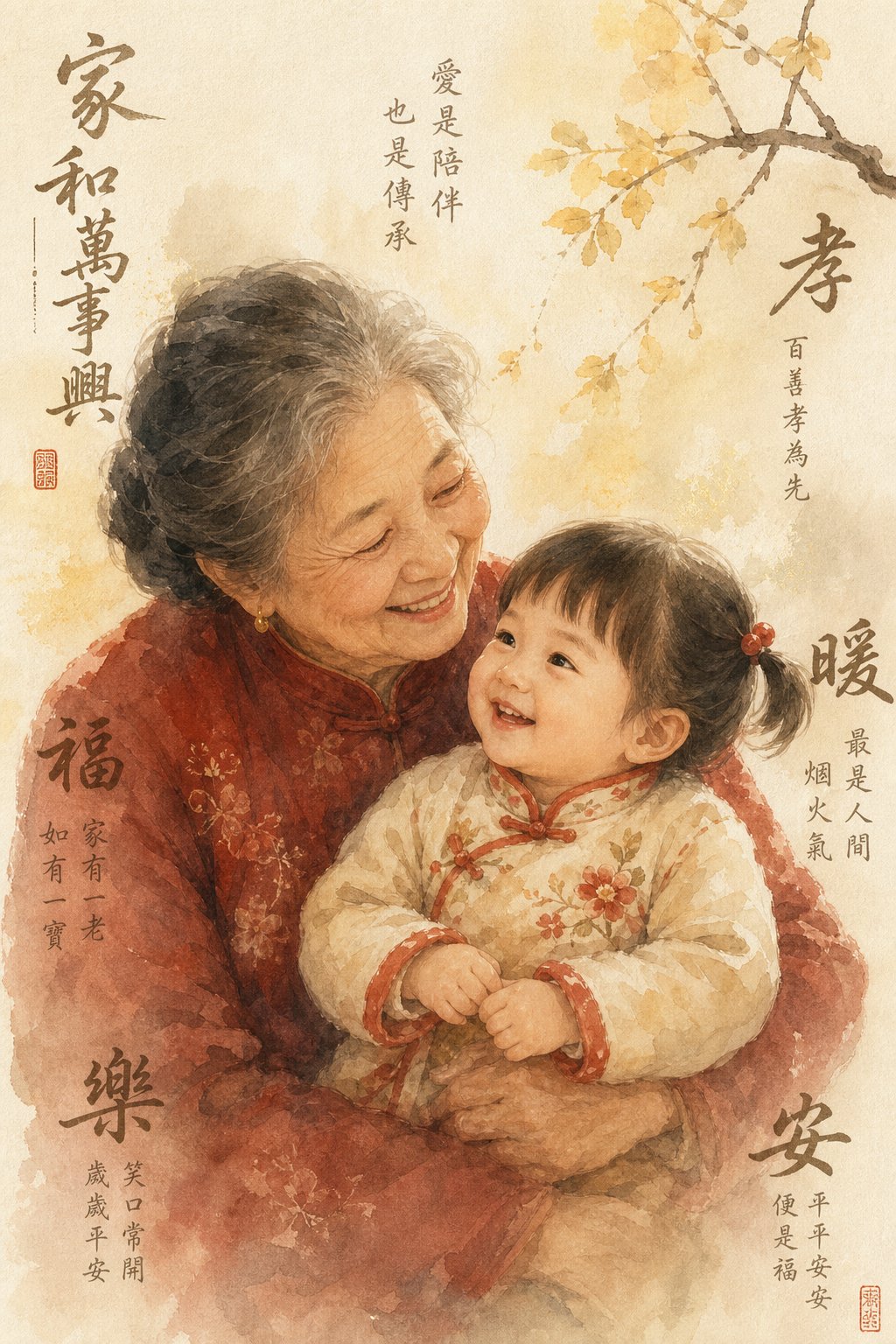
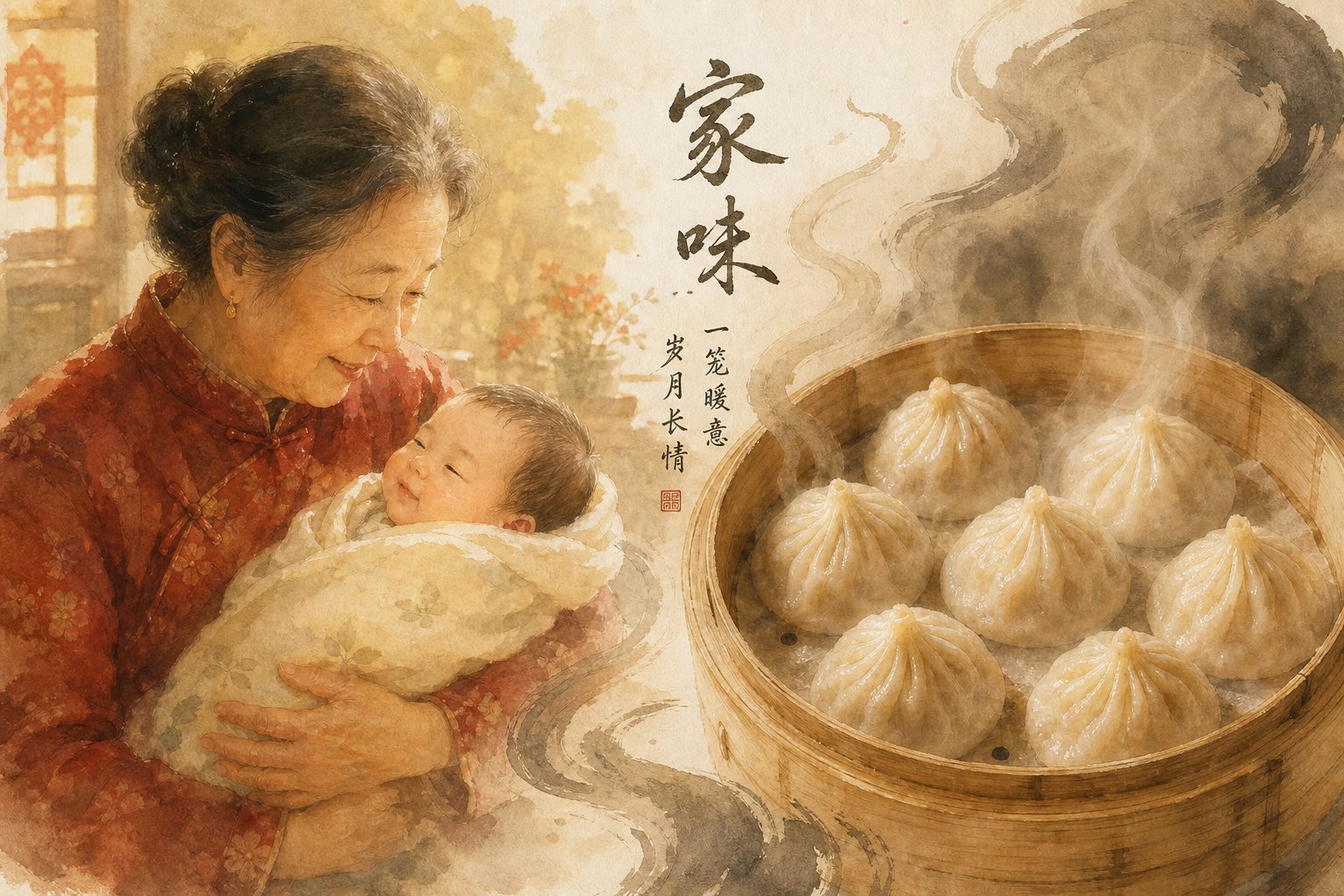
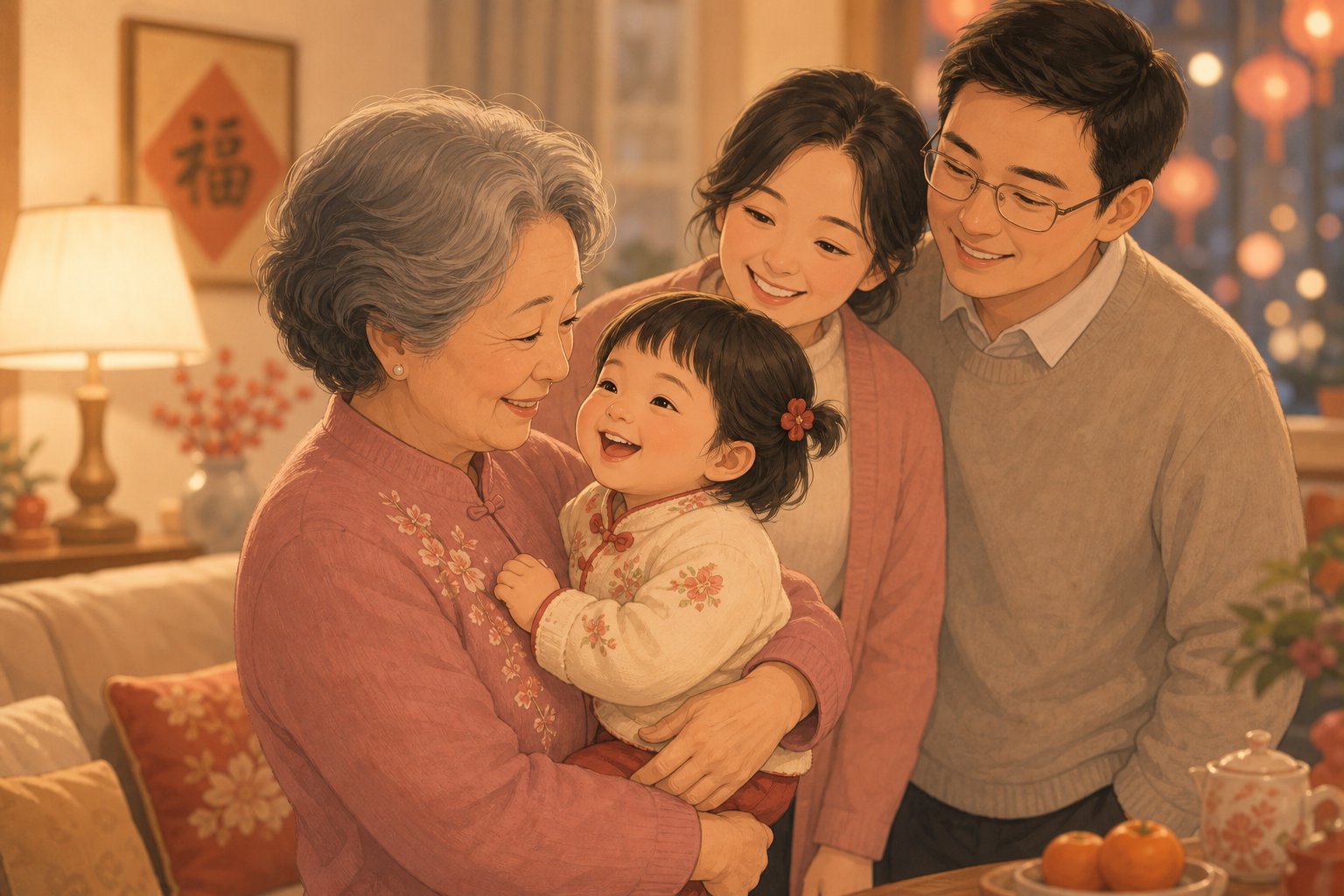
A grandmother leans over a crib and whispers "xiao bao." A boyfriend texts it to his partner with a heart emoji. A livestreamer greets thousands of fans with it. Same two syllables, same warmth every time. Of all the meanings packed into this phrase, 小宝 (xiǎo bǎo) as "little treasure" is the one that carries the most emotional weight in everyday Chinese life.
So what does bao bao mean when it is directed at a person? The character 宝 (bǎo) translates to treasure, precious, or valuable. Doubling it into 宝宝 (bǎobǎo) intensifies the affection, turning it into something close to "baby" or "precious one" in English. Adding 小 in front creates xiao bao bao or simply xiao baobao, a diminutive that feels even more intimate, like saying "my little precious."
Little Treasure as a Family Nickname
In Chinese family culture, children are viewed as the future of the household and something to be deeply cherished. The nickname 小宝 reflects that belief directly. It is not just cute. It is a statement of value. Parents, grandparents, aunts, and uncles all reach for this term because it communicates that the child is treasured, protected, and central to the family's emotional world.
You will also hear the extended form xiao bao bei (小宝贝, xiǎo bǎobèi), which adds 贝 (bèi, shellfish) to the mix. In ancient China, shells served as currency, so 宝贝 literally means "precious shell" but functions as the Mandarin equivalent of calling someone "baby" or "sweetheart." The CultureYard guide to Chinese endearments notes that 宝贝 (bǎobèi) is one of the most popular pet names among couples, used to convey that someone is irreplaceable.
The Cultural Weight of 宝 in Chinese Endearments
The character 宝 does not just appear in nicknames. It is embedded throughout Chinese naming conventions and cultural vocabulary. Jewelry stores use it (珠宝, zhūbǎo). National treasures carry it (国宝, guóbǎo, the term also used for giant pandas). Even the word for "throne" contains it (宝座, bǎozuò). When Chinese speakers call someone 小宝, they are drawing on centuries of linguistic association between this character and things considered rare, valuable, and worth protecting.
That cultural depth is why 小宝 works across so many relationships. It is not limited to babies. Here are the most common contexts where you will encounter it:
- Parent-to-child speech: the default affectionate nickname for infants and toddlers in most Chinese households
- Romantic relationships: couples use 小宝 or 宝宝 as a tender way to say "baby," similar to "babe" or "darling" in English
- Close friendships: friends sometimes use it playfully to express warmth and mutual care
- Online culture and social media: livestreamers and influencers address their audiences as 宝宝们 (bǎobǎo men, "babies") to create a sense of closeness with followers
The versatility is striking. A single term stretches from a nursery to a dating app to a livestream chat room, and it never loses its core meaning: you are valued.
That emotional dimension is what separates 小宝 (xiǎo bǎo) from its near-homophone 小包 (xiǎo bāo). One lives in the heart. The other lives on a menu. And the menu side of this word has its own rich story, rooted in centuries of Chinese culinary tradition built around the simple act of wrapping dough around a filling.
Xiao Bao in Chinese Food and Dumpling Culture
The character 包 (bāo) tells you everything you need to know about this side of the xiao bao meaning. Its etymology literally translates to "to wrap up," and that single verb defines an entire category of Chinese food. When you see a xiao bao bun on a menu, you are looking at a small wrapped item: dough folded around a filling, sealed, and cooked. The method is ancient. The variations are endless.
Small Buns and Wrapped Delicacies
In culinary Chinese, 小包 (xiǎo bāo) functions as a general descriptor for any small-sized bao. The typical bao features a leavened exterior and is usually steamed, though exceptions abound. Some are pan-fried for a crispy bottom. Others use unleavened, paper-thin wrappers that hold soup inside. The word "small" simply narrows the size, distinguishing these bite-sized pieces from their larger cousins like the 大包 (dà bāo, big bun) common in Cantonese dim sum.
Not all baos are dumplings, and not all dumplings are baos. That distinction trips up many English speakers. A dumpling is any piece of dough wrapped around a filling. A bao specifically refers to the Chinese tradition of enclosing fillings in wheat-based dough, usually with a rounded shape and a pinched seal at the top. When someone asks what does xiao long bao taste like, they are asking about one very specific member of this family: a thin-skinned bun bursting with hot, savory broth and seasoned pork.
The Bao Family of Chinese Foods
The range of bao-style dishes across China is staggering. Each region puts its own spin on the concept of wrapping dough around a filling. Here are the main varieties you will encounter:
- Baozi (包子) - The standard steamed bun with leavened dough and pork or vegetable filling, sold at breakfast stalls across China
- Shēngjiān bāo (生煎包) - Shanghai-style pan-fried buns with a crispy golden bottom, soft top, and juicy pork filling seasoned with Shaoxing wine and ginger
- Shuǐjiān bāo (水煎包) - Northern Chinese pan-fried buns, more oblong in shape, with a semi-leavened dough and pork-gelatin filling
- Xiǎolóngbāo (小笼包) - The famous soup dumplings xiao long bao, with paper-thin unleavened skin and a broth-filled interior
- Guā bāo (刈包) - A Taiwanese "cut bun" that opens like a taco, filled with braised pork belly and pickled greens
- Chāshāo bāo (叉烧包) - Cantonese barbecue pork buns, a dim sum staple with sweet-savory filling
The term xiao jian bao sometimes appears on English-language menus as a catch-all for small pan-fried buns. It blends 小 (small) with 煎 (pan-fried) and 包 (bun), pointing to dishes like shengjianbao or shuijianbao depending on the region. Shanghai's shengjianbao first appeared in local tea houses in the 1930s and are traditionally sold in groups of four during breakfast, cooked in giant cast-iron pans in front of queuing customers.
From Street Stalls to Fine Dining
What makes the bao family remarkable is its range. The same structural concept, dough wrapped around filling, shows up at a five-yuan street cart at dawn and a Michelin-starred restaurant at dinner. A humble pork baozi fuels a construction worker's morning. A delicately pleated xiaolongbao with eighteen folds on top becomes a culinary art form at places like Din Tai Fung.
That versatility traces back to the character 包 itself. Wrapping is a technique, not a recipe. It accommodates any protein, any vegetable, any level of refinement. And among all the wrapped creations in this family, one particular member has captured global attention more than any other: the soup-filled bun that carries 小包 right in its name, with just one extra character wedged in between.
How Xiao Bao Connects to Xiaolongbao Soup Dumplings
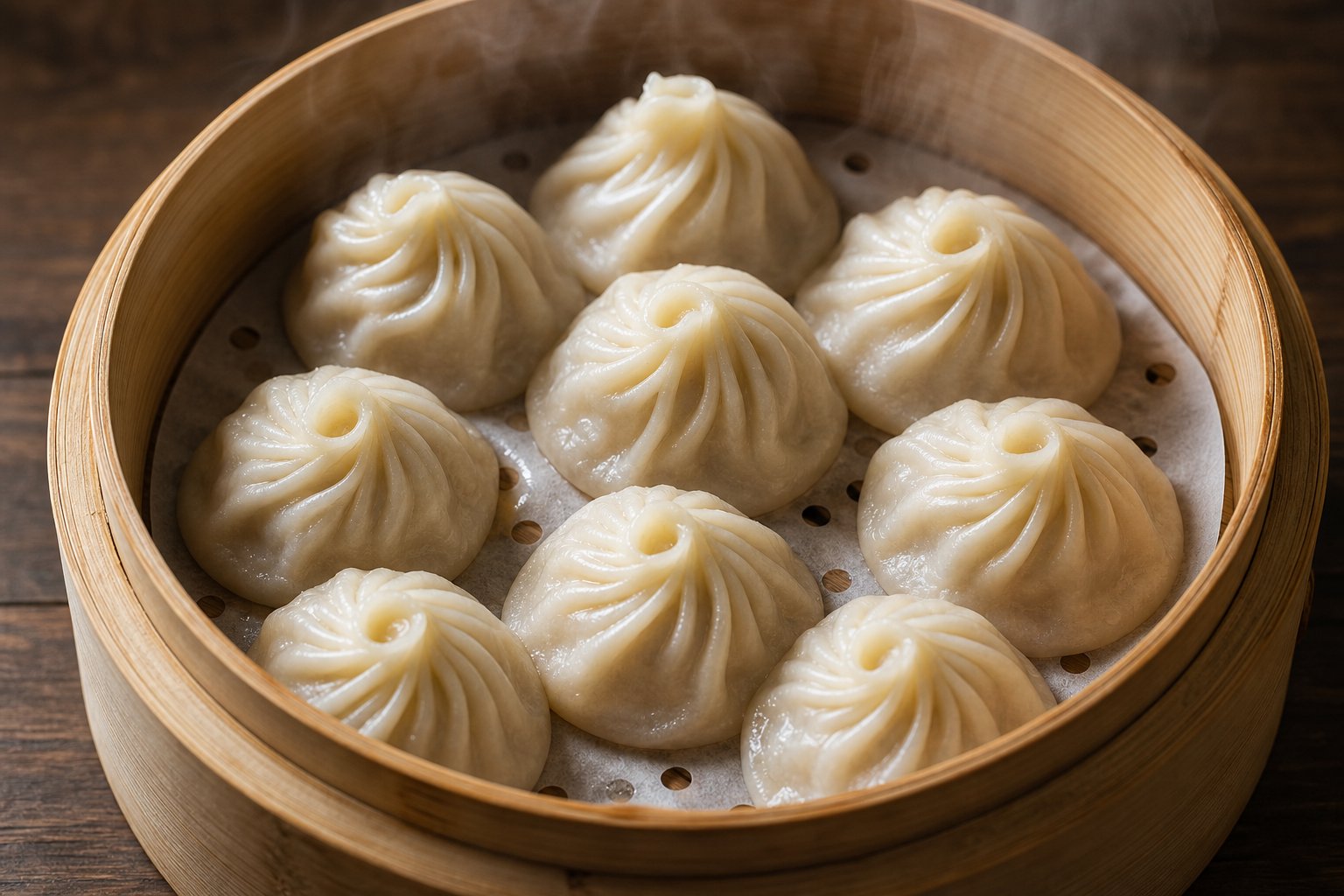
That extra character wedged between 小 and 包 is 笼 (lóng), meaning steamer basket. Together, the three characters form 小笼包 (xiǎolóngbāo), and the xiao long bao translation is beautifully literal: small steamer basket bun. It is a name that describes exactly how the dish is served, nestled inside a bamboo steamer in portions of six, eight, or ten.
You can see why English speakers sometimes shorten xiaolongbao to "xiao bao." Drop the middle character and you are left with the bookends of the full name. But that shortcut erases the steamer basket reference entirely, collapsing a specific dish into the generic term for any small bun. It is like calling every sandwich a "bread" because the outer layers are the same.
Xiaolongbao Translated Character by Character
Breaking down what does xiao long bao mean requires looking at each piece individually:
- 小 (xiǎo) - small, indicating the miniature size compared to larger steamed buns
- 笼 (lóng) - cage or steamer basket, referring to the bamboo vessel used for cooking and serving
- 包 (bāo) - bun or wrapped item, the same character that gives the entire bao food family its name
So what is xiao long bao in its most precise sense? A small bun cooked and presented inside a steamer basket. The name does not mention soup, broth, or filling at all. It focuses on size and cooking method. Yet in practice, the term has become synonymous with the soup-filled variety, the one where biting through the thin pleated skin releases a rush of hot, gelatinized broth that has melted during steaming.
The xiao long bao in Chinese culinary tradition represents a specific technique: cooks fold chilled meat-and-aspic filling into a thin unleavened wrapper, pleat it shut with anywhere from fourteen to eighteen folds, then steam it until the solid aspic liquefies into soup. The result is a xiao long bao dish water shaped by heat into liquid broth trapped inside a delicate skin. That transformation from solid to liquid during cooking is what makes xiaolongbao structurally unique among all bao varieties.
Soup Dumplings vs Regular Dumplings
Is xiao long bao soup dumplings? In English-language menus, yes. The term "soup dumpling" has become the standard translation. But the relationship between xiaolongbao and regular dumplings (饺子, jiǎozi) is more like cousins than siblings.
Jiaozi use a cold-water dough rolled thin and crimped along one edge, then boiled, steamed, or pan-fried. They contain solid fillings like minced pork and cabbage. Xiaolongbao use a slightly different dough, are always steamed, and contain that signature liquid interior. As Goldthread concluded after polling readers and consulting definitions, a xiaolongbao is both a bao and a dumpling. All dumplings are baos in the Chinese sense of wrapped things, but not all baos qualify as dumplings under the English definition, which typically requires boiling or steaming.
The xiao long bao origin traces to the Jiangnan region, the fertile area south of the Yangtze River encompassing Shanghai, Jiangsu, and Zhejiang provinces. Food historians often point to Nanxiang, a town on the outskirts of Shanghai, as the birthplace. Local legend credits a shop owner named Huang Mingxian in the late Qing dynasty with developing the recipe in the 1870s. From that single town, xiaolongbao spread to Shanghai proper, then to Taiwan through post-1949 migration, and eventually to the rest of the world through restaurant chains and food tourism.
Today, what is xiaolongbao to most people outside China is shaped largely by Din Tai Fung, the Taiwanese chain that standardized the eighteen-fold pleat and turned soup dumplings into a global fine-dining experience. But in Nanxiang and across the Jiangnan region, xiaolongbao remain an everyday breakfast food, sold from modest shopfronts for a few yuan per steamer.
That journey from a regional street snack to an internationally recognized dish mirrors how the term itself travels. English speakers searching for xiao long bao dish water shaped descriptions, pronunciation guides, or origin stories are often encountering the word "xiao bao" for the first time through this one famous food. The soup dumpling becomes their entry point into a much larger linguistic landscape, one where a single tone change turns a steamed bun into a term of endearment. And hearing that tonal difference clearly is its own skill, one that depends on understanding how Mandarin pronunciation actually works.
Pronouncing Xiao Bao Correctly With Tones
Mandarin tones are not optional seasoning. They are the difference between calling someone precious and asking for a steamed bun. If you have been reading "xiao bao" as flat English syllables, you have been pronouncing two completely different words the same way.
Mandarin Tones That Change the Meaning
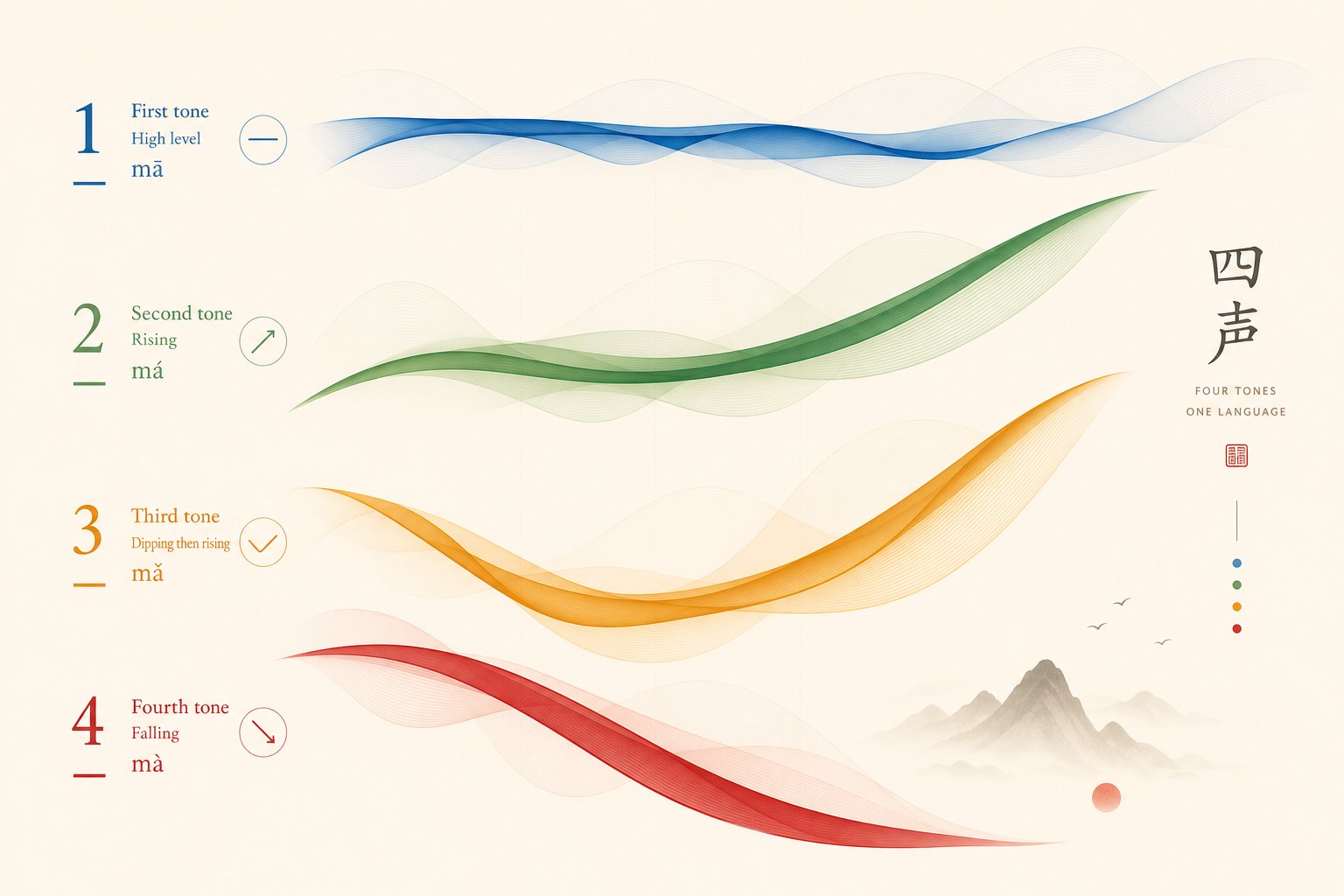
Mandarin Chinese uses four main tones plus a neutral tone. Each tone gives a syllable a distinct pitch contour, and swapping one tone for another changes the word entirely. Here is how they work:
- First tone (ā) - high and level, like holding a steady musical note
- Second tone (á) - rising, like the inflection at the end of a question in English
- Third tone (ǎ) - dipping low then rising, though in connected speech it often stays low without fully rising back up
- Fourth tone (à) - falling sharply, like a firm command
When you say xiǎo bǎo (third tone + third tone), you are saying "little treasure," the endearment. When you say xiǎo bāo (third tone + first tone), you are asking for a small bun. The only audible difference is whether that second syllable dips low or stays high and flat.
There is an extra wrinkle here. As StudyCLI's tone change guide explains, when two third tones appear consecutively, the first one is actually pronounced like a second tone. So 小宝 (xiǎo bǎo) in natural speech sounds closer to xiáo bǎo. The pinyin still writes both as third tones, but your mouth produces a rising tone on 小 followed by a dipping tone on 宝. This tone sandhi rule is mandatory, not stylistic, and it applies every time you say the endearment form aloud.
Common Mispronunciations and Alternate Spellings
English speakers searching for how to pronounce xiao long bao generate a surprising range of creative spellings. Some come from regional Chinese dialects. Others are pure guesswork based on how the sounds look on paper. If you have ever typed "siew long bao" or "ziao long bao" into a search bar, you are not alone.
The spelling "siew" reflects Cantonese or Hokkien romanization, where the "x" sound in Mandarin (a soft "sh" made with the tongue near the palate) gets approximated differently. "Ziao" is a common English phonetic guess, since the Mandarin "x" has no direct English equivalent. People also search for "sha long bao" when they hear the "sh"-like quality of the Mandarin "x" but overshoot into a full English "sh" sound. And for those wondering what does sai bao mean, that spelling typically results from mishearing or misremembering the Mandarin sounds entirely, conflating syllables from different words or dialects.
The table below maps the most common variant spellings back to their intended pronunciation and meaning:
| Variant Spelling | Intended Pinyin | Correct Pronunciation | Meaning |
|---|---|---|---|
| xiao bao | xiǎo bǎo or xiǎo bāo | "shyow baow" (dipping) or "shyow baoh" (high flat) | Little treasure OR small bun |
| siew long bao | xiǎo lóng bāo | "shyow long baoh" | Xiaolongbao (soup dumplings) |
| ziao long bao | xiǎo lóng bāo | "shyow long baoh" | Xiaolongbao (soup dumplings) |
| sha long bao | xiǎo lóng bāo | "shyow long baoh" | Xiaolongbao (soup dumplings) |
| sai bao | Unclear / dialect variant | No standard Mandarin match | Often a mishearing; no single accepted meaning |
| xiao bao bao | xiǎo bǎo bǎo | "shyow baow baow" | Little baby / precious one (endearment) |
The Mandarin "x" sound is the biggest stumbling block. It sits between English "sh" and "s," produced with the tip of the tongue behind the lower teeth while the middle of the tongue rises toward the hard palate. If you can say "she" but pull your tongue slightly forward and flatten the airflow, you are close. That single consonant is why siew long bao, ziao long bao, and sha long bao all appear as search variants for the same dish.
For anyone still puzzling over what does sai bao mean after encountering it online, the answer is usually that it does not correspond to a standard Mandarin term. It may reflect a dialectal pronunciation, a typo, or a phonetic approximation from someone who heard the word spoken quickly and transcribed it from memory. Context matters: if it appeared on a food menu, the intended word was almost certainly 小包 (xiǎo bāo) or a shortened form of xiaolongbao.
The practical takeaway is simple. Tone marks are not decoration. They are the difference between meaning and confusion. Whenever you see pinyin written with diacritics like xiǎo bǎo versus xiǎo bāo, those small marks above the vowels carry the entire meaning. Strip them away, and you are left guessing, which is exactly how so many alternate spellings and misunderstandings enter the picture in the first place.
Xiao Bao in Restaurant Names and Pop Culture
Pronunciation guides help you say the word. But you are just as likely to read it on a storefront sign, spot it in streaming subtitles, or scroll past it on a food blog. The term "xiao bao" has moved well beyond Mandarin-speaking communities and into English-language branding, media, and everyday pop culture.
Xiao Bao in Restaurant Branding
One of the most visible examples is Xiao Bao Biscuit in Charleston, South Carolina. Co-owned by Duolan Li, Josh Walker, and Joey Ryan, the restaurant started as a pop-up in 2010 before opening a permanent location that quickly became a local favorite for Asian comfort food like okonomiyaki, pad kra pow, and mapo tofu. The name plays on the warmth of "xiao bao" as a term of endearment while nodding to the wrapped-food tradition. When the team expanded to Charlotte, North Carolina, they dropped "Biscuit" from the name and went simply with Xiao Bao, leaning even harder into the term's cultural resonance.
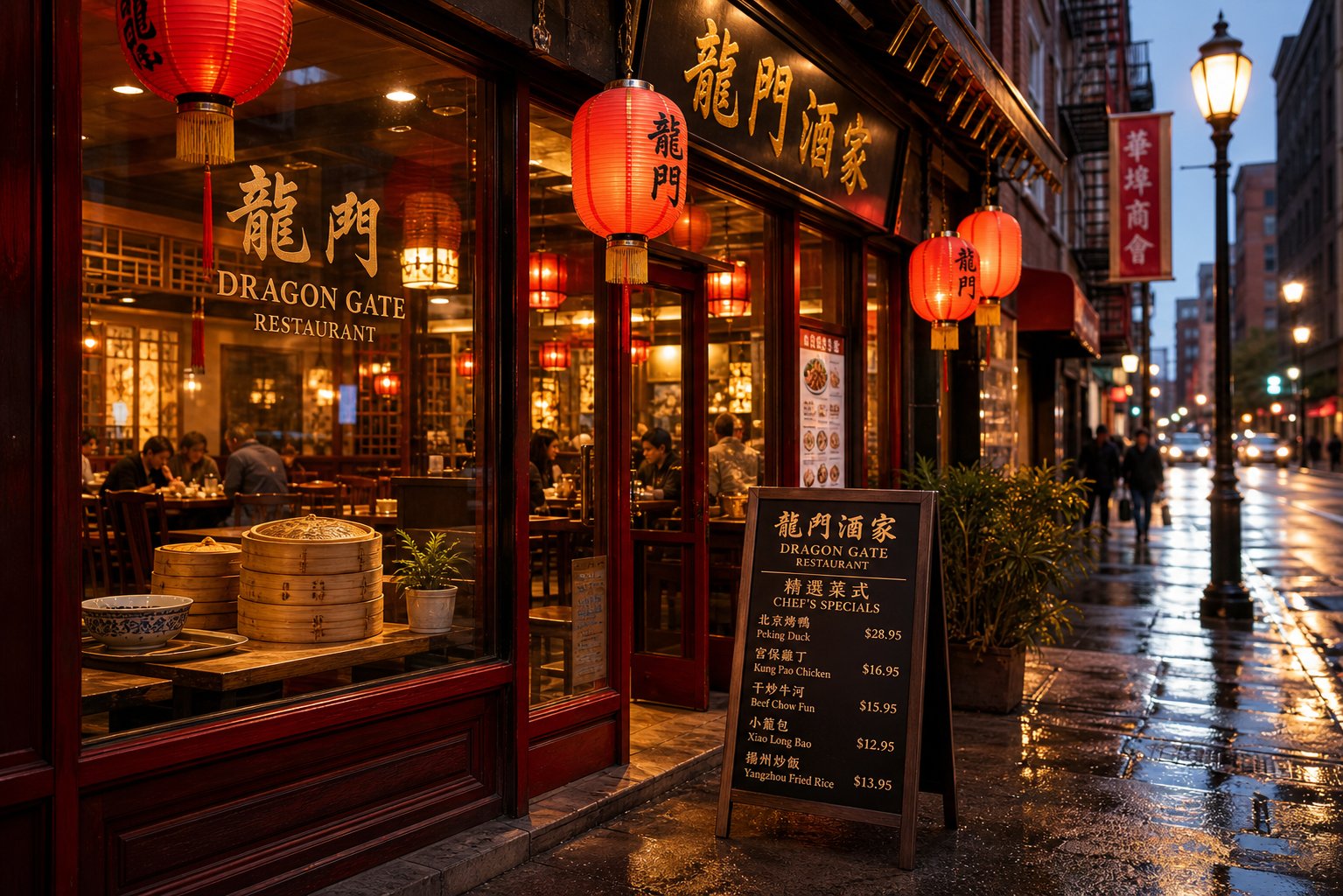
The pattern repeats across the country. Xiao Bao Nashville brings the same naming logic to Tennessee, using the phrase to signal approachable Chinese-inspired cuisine with a personal touch. In major cities, you will find xiao long bao featured prominently on menus at places like You Garden in New York, where the you garden xiao long bao menu draws crowds specifically for soup dumplings. Head to xiao long bao chinatown San Francisco spots, and the term appears on signage in both English and Chinese, bridging two audiences at once.
Restaurant owners gravitate toward "xiao bao" for a reason. It is short, memorable, and carries a double meaning that works whether your customers associate it with comfort food or a comforting nickname. That ambiguity becomes an asset in branding rather than a source of confusion.
Pop Culture and Media References
Beyond restaurant signage, "xiao bao" saturates Chinese-language media that English-speaking audiences now consume in large numbers. If you have watched any Chinese drama on Netflix, Viki, or iQIYI, you have almost certainly heard a character call someone 小宝 or 宝宝. It is one of the most common endearments in romantic storylines, parent-child scenes, and even comedic moments where a character uses it sarcastically.
C-pop (Chinese pop music) lyrics lean on 宝贝 and 小宝 heavily, and social media platforms like Douyin (the Chinese version of TikTok) and Xiaohongshu (RedNote) feature the term in millions of posts. Influencers address their followers as 宝宝们 ("babies") to build intimacy with their audience, turning a family nickname into a parasocial bonding tool.
Here are the most common contexts where English speakers encounter "xiao bao" outside of a Chinese-language setting:
- Restaurant signage and menus, where it names a business or describes a dish
- Streaming subtitles in Chinese dramas and films, usually translated as "baby" or "sweetheart"
- Food blogs and YouTube channels reviewing soup dumplings or bao-style dishes
- Social media captions and comments, especially on posts about Chinese food or culture
- Baby name discussions and parenting forums, where parents explore Chinese nicknames
Each of these touchpoints introduces the term without its tonal context, which is exactly why so many people end up searching for the meaning. They have seen or heard it, recognized it as significant, but cannot pin down which "xiao bao" they encountered. The answer almost always lives in the surrounding context, and knowing how to read those situational clues turns a confusing homophone into a clear, specific word.
Real-World Examples and Context Clues
Situational clues do the heavy lifting every time you encounter "xiao bao" without tone marks or characters attached. You do not need to be fluent in Mandarin to figure out which meaning applies. You just need to pay attention to where and how the term shows up.
Example Sentences for Each Meaning
Imagine these four scenarios playing out in a single day:
At a restaurant: You scan a dim sum menu and see "xiao bao (4 pcs) - $6." The price, the piece count, and the menu context all point to 小包 (xiǎo bāo), small steamed buns. You are looking at food, not a nickname. If the menu says "xiao long bao," you know it refers specifically to soup dumplings, those broth-filled parcels served in bamboo steamers. The question of xiao long bao vs dumpling comes down to structure: xiaolongbao contains liquid broth inside a thin pleated skin, while a standard dumpling (jiǎozi) holds only solid filling.
In conversation: A coworker shows you a photo of her toddler and says, "This is my xiao bao." No menu in sight, no food context. She means 小宝 (xiǎo bǎo), little treasure. The setting is personal, the tone is affectionate, and the subject is a child.
On a menu description: A food blog writes, "We ordered the xiao bao alongside the har gow and shumai." The surrounding dish names confirm a dim sum context. This is 小包 again, or possibly a shortened reference to xiaolongbao. Is xiao long bao soup dumplings? Yes, and when bloggers drop the middle character for brevity, the food context keeps the meaning clear.
In Chinese media: A drama character gazes at their partner and says, "Wǒ de xiǎo bǎo, nǐ zěnme zhème kě'ài?" (My little treasure, how are you so cute?) The romantic setting, the possessive "my," and the compliment that follows all signal the endearment meaning. Subtitles will usually render this as "baby" or "sweetheart."
How to Tell Which Xiao Bao Someone Means
You do not need to hear the tones perfectly or read Chinese characters to decode the intended meaning. A simple decision framework handles most situations:
- Check the context type. Are you looking at a food menu, hearing a conversation, reading a name on a storefront, or watching media? A menu almost always points to 小包 (small bun) or xiaolongbao. A conversation between people signals 小宝 (little treasure). A restaurant name could play on either meaning deliberately.
- Look for surrounding Chinese characters if visible. If you can spot 包子 or 笼 nearby, the topic is food. If you see 宝贝 or 宝宝, the topic is affection. Even a single visible character narrows the field instantly. What is xiaolongbao on a bilingual menu? Look for 小笼包 in characters next to the English text, and you have your confirmation.
- Consider the setting and tone of voice. A warm, soft delivery directed at a person means endearment. A transactional exchange at a counter or a written item with a price tag means food. A headline or publication title might point to 小報 (tabloid). The emotional register of the moment tells you which "bao" is in play.
- Look for quantity or descriptive modifiers. Phrases like "six pieces," "steamed," "pan-fried," or "with vinegar" lock the meaning into culinary territory. Phrases like "my," "our," or a person's name before "xiao bao" lock it into the nickname category.
Most real-world encounters resolve themselves within seconds using just the first step. The ambiguity that exists on paper rarely survives contact with an actual situation. A dim sum cart rolling past your table is not delivering terms of endearment. A parent cooing at a baby is not placing a food order.
What is long bao without the "xiao" in front? You will occasionally see 笼包 (lóng bāo) used as a shortened form of xiaolongbao in casual speech, though it is less common. The full three-character name remains standard on menus and in formal usage.
The core insight across every example is the same one that opened this guide: romanization strips away the information that Chinese speakers rely on to distinguish meanings. But context fills that gap reliably. Whether you are ordering soup dumplings, decoding a subtitle, or understanding why someone just called you their little treasure, the situation itself is your best translator.
Frequently Asked Questions About Xiao Bao Meaning
1. What does xiao bao mean in Chinese?
Xiao bao maps to several distinct Chinese words depending on tone and character. The two most common meanings are 小宝 (xiao bao, third tone + third tone), meaning 'little treasure' used as a term of endearment for children or romantic partners, and 小包 (xiao bao, third tone + first tone), meaning 'small bun' or 'small package' found on food menus. The difference is invisible in English romanization but clear in spoken Mandarin through tonal pitch changes.
2. Is xiao bao the same as xiao long bao?
No, they are different terms. Xiao long bao (小笼包) is a three-character phrase meaning 'small steamer basket bun,' referring specifically to soup dumplings filled with hot broth. Xiao bao (小包) is a general term for any small bun. English speakers sometimes shorten xiaolongbao to 'xiao bao' for convenience, but this drops the middle character 笼 (long, steamer basket) and loses the specific soup dumpling reference.
3. How do you pronounce xiao bao correctly?
The 'x' in xiao sounds like a soft 'sh' made with the tongue positioned behind the lower teeth while the middle of the tongue rises toward the hard palate. For the endearment meaning (little treasure), both syllables use the third tone: xiao dips low then rises, and bao does the same. For the food meaning (small bun), xiao uses the third tone while bao stays high and flat in the first tone. Due to tone sandhi rules, when two third tones appear together, the first shifts to sound like a second (rising) tone in natural speech.
4. What is the difference between bao bao and xiao bao as terms of endearment?
Both are affectionate nicknames in Chinese, but they differ in structure and intensity. Bao bao (宝宝) doubles the character for 'treasure' and functions similarly to 'baby' in English, used widely between couples and for young children. Xiao bao (小宝) adds the diminutive 小 (small/little) before a single 宝, creating a softer, more intimate feel like saying 'little precious.' Parents, grandparents, and partners all use both forms, though xiao bao feels slightly more personal within family settings.
5. Why do restaurants use xiao bao in their names?
Restaurant owners choose 'xiao bao' because it carries a deliberate double meaning that works for branding. It simultaneously evokes the warmth of a Chinese endearment (little treasure) and references the wrapped-bun food tradition. This ambiguity becomes an asset, signaling approachable Chinese-inspired cuisine with a personal, comforting touch. Notable examples include Xiao Bao Biscuit in Charleston, South Carolina, which uses the name to bridge Asian comfort food with Southern hospitality.