What Xin Gan Really Means as a Chinese Term of Endearment
Imagine your Chinese-speaking partner whispers something to you that, when you look it up, literally translates to "heart liver." Confusing? Maybe even a little alarming? You're not alone. For anyone encountering this phrase for the first time, the xin gan meaning can feel strange — until you understand the deep affection packed into those two syllables.
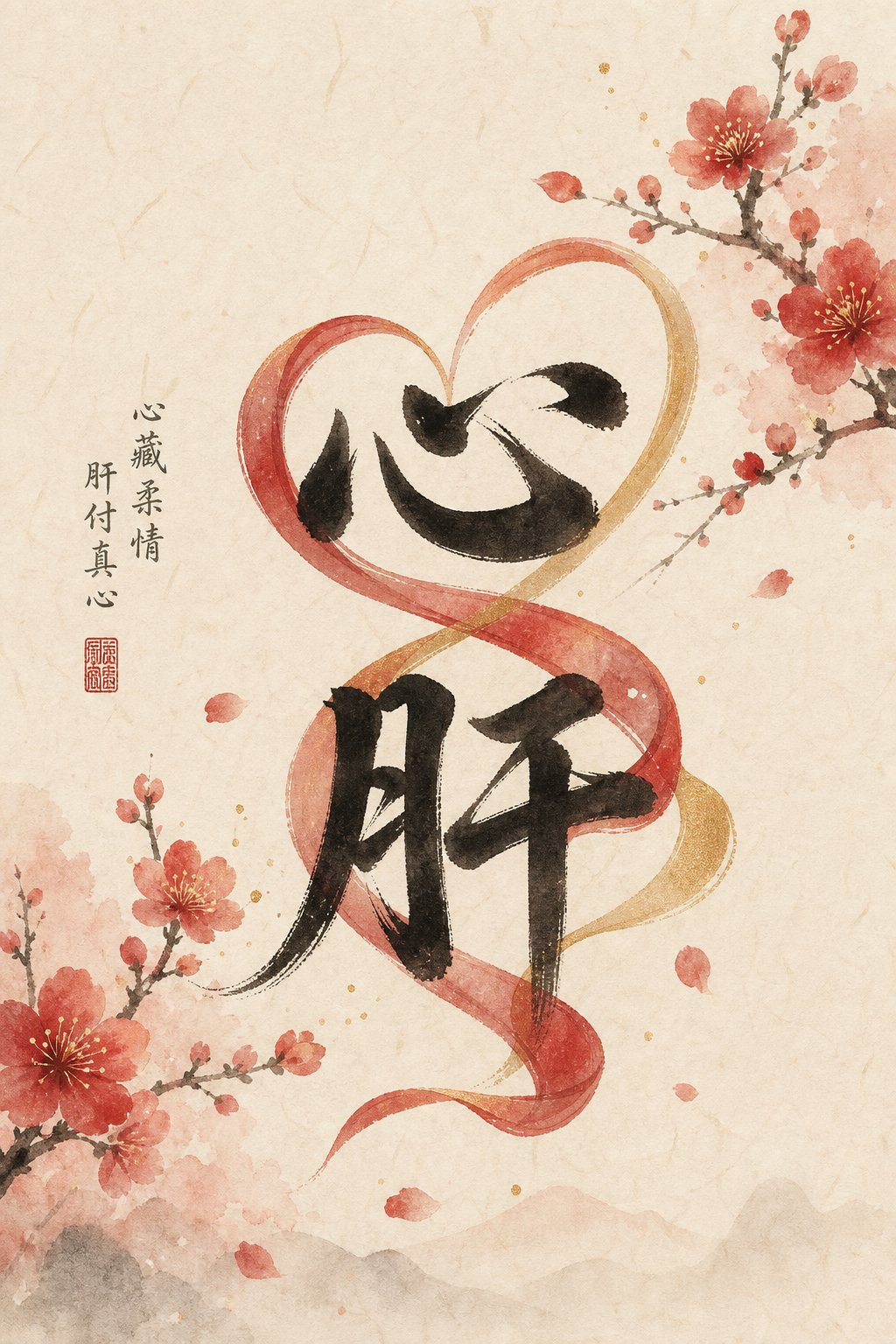
Xin gan (心肝, xīn gān) is a Chinese term of endearment meaning "sweetheart" or "darling." It literally translates to "heart and liver" and expresses that someone is as precious and vital to you as your own organs.
What Does Xin Gan Mean in Chinese
At its core, xin gan is one of the most emotionally intense ways to say "my darling" in Chinese. The term combines two characters — 心 (heart) and 肝 (liver) — to convey that a person is irreplaceable, essential, and deeply loved. Think of it as the Chinese equivalent of calling someone your "everything," but rooted in a body-centered worldview where vital organs represent what you cannot live without.
A simple dictionary lookup gives you the literal translation, but it misses the weight behind the phrase. In Chinese culture, offering someone your heart and liver is offering the most vulnerable, life-sustaining parts of yourself. It's not clinical or strange — it's profoundly tender.
Who Uses This Term and When
So what does xin gan mean in chinese social contexts? You'll hear it in several intimate settings:
- Between romantic partners during tender, private moments — not as casual as "babe" but deeper and more heartfelt
- From parents and grandparents to young children, expressing that the child is the most precious thing in their world
- Among close family members in emotionally charged situations, like reunions after long separations
You won't typically hear xin gan tossed around casually among friends or coworkers. It carries real emotional gravity. Whether you're a language learner trying to decode what your partner said, someone exploring Chinese culture, or simply curious about why "liver" shows up in a love word — the answer lies in centuries of cultural meaning layered into two small characters.
Those two characters, though, each carry their own fascinating story — and understanding them individually reveals exactly why this combination became one of the most powerful endearments in the Chinese language.
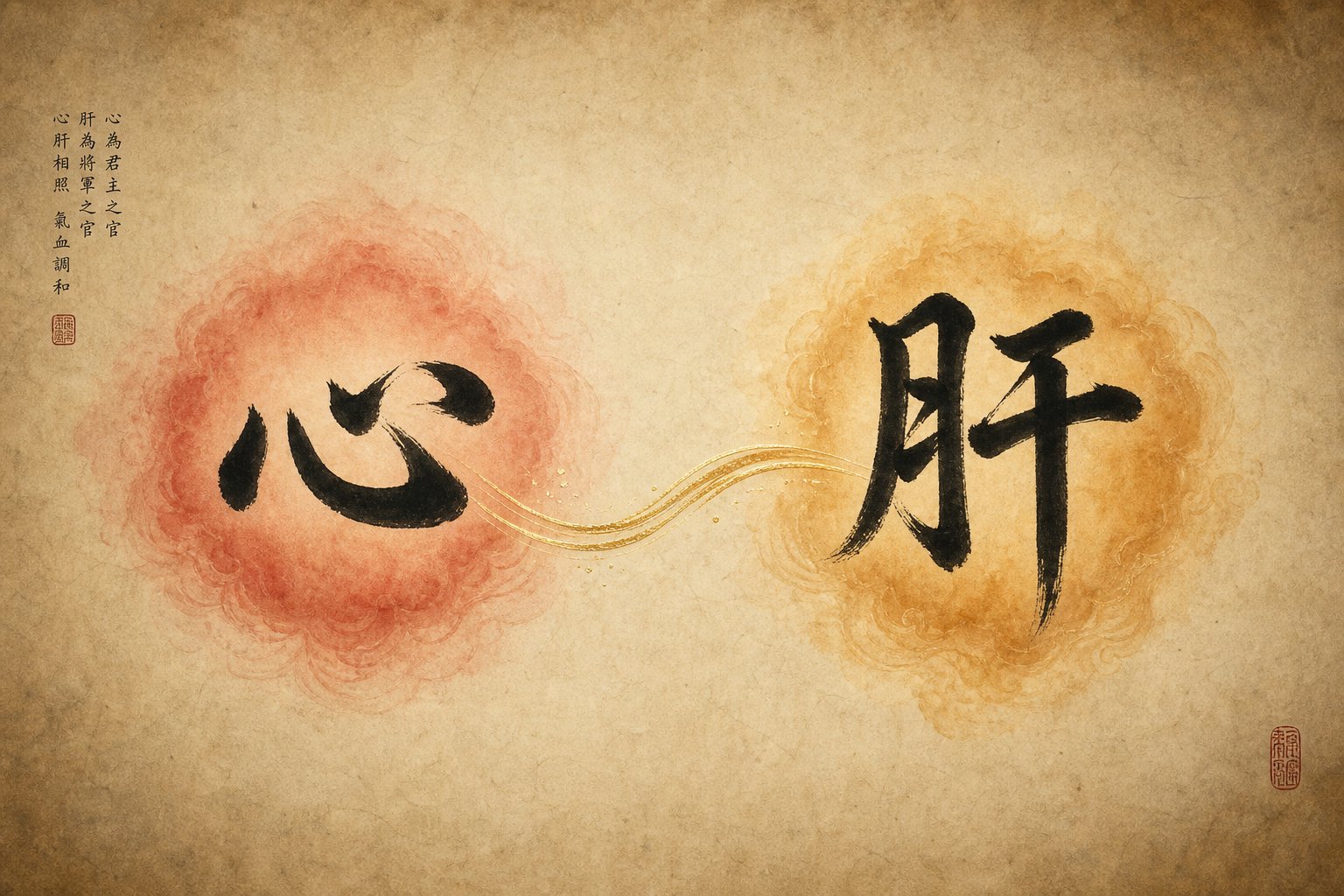
Character Breakdown of 心 and 肝
Two characters. Two organs. One of the most emotionally loaded phrases in the Chinese language. To fully grasp the xin gan meaning, you need to look at each character on its own terms — because both 心 and 肝 carry centuries of philosophical, medical, and emotional significance that English speakers rarely associate with body parts.
| Character | Pinyin | Literal Meaning | Figurative Meaning |
|---|---|---|---|
| 心 | xīn | Heart (physical organ) | Mind, emotions, core of one's being |
| 肝 | gān | Liver (physical organ) | Courage, vitality, something precious and irreplaceable |
The Character 心 and Its Emotional Weight
In Chinese, 心 (xīn) is far more than a word for the muscle pumping blood through your chest. It functions as the seat of both emotion and thought — a concept so distinct that scholars often translate it as "heart-mind." Ancient Chinese thinkers believed the heart was the center of human cognition, meaning emotion and reason were not separate faculties but coextensive aspects of the same organ.
You'll find 心 embedded in dozens of Chinese characters related to feelings: 想 (to think/miss someone), 愛 (love), 忘 (to forget), 怕 (to fear). It shows up as a radical — a building block — in so many emotion-related words that it essentially functions as the Chinese symbol for inner life itself. When someone says xiao xin gan in Chinese to a child, that 心 carries all of this weight: you are my thinking, my feeling, my very center.
Why the Liver 肝 Represents Something Precious
Here's where English speakers usually get stuck. Why the liver? In Western culture, the liver doesn't carry much romantic weight. But in traditional Chinese medicine, the liver is one of the five vital organs (五脏) and plays a critical role in regulating the flow of qi (energy) and storing blood. TCM practitioners historically viewed the liver as essential for emotional balance and physical vitality — protecting it was considered as important as protecting life itself.
The logic is straightforward once you see it through a Chinese cultural lens: the heart governs your spirit and consciousness, while the liver sustains your life force and courage. Together, they represent the two things you absolutely cannot survive without. Calling someone your 心肝 is saying, "You are as essential to me as the organs keeping me alive."
How Two Organs Became a Love Word
This pairing didn't happen by accident. In Chinese philosophical and medical traditions stretching back thousands of years, the heart and liver were ranked as the most vital organs — the ones closest to the core of life. The gan xin Chinese meaning reflects this hierarchy: to give someone your heart and liver is to give them the most essential, irreplaceable parts of yourself.
Consider how English uses "heart" in similar ways — heartfelt, sweetheart, heartbroken. Chinese simply extends that logic one step further by adding the liver, doubling down on the idea of offering your most vulnerable self. The term used as a Chinese term of endearment for children — xin gan er — softens the phrase with the diminutive suffix 儿, but the underlying message stays the same: you are what I cannot live without.
This body-as-metaphor tradition runs deep in Chinese, producing dozens of organ-based expressions for trust, sincerity, and love. But knowing what the characters mean individually is only half the equation — saying them correctly matters just as much, especially when a single tone shift can turn a love word into something entirely different.
How to Pronounce Xin Gan with Correct Tones
Mandarin Chinese has four main tones, and getting them wrong doesn't just sound off — it can change your meaning entirely. With xin gan, you're in luck: both syllables sit on the same tone, making the rhythm predictable once you nail the basics. But slip into the wrong tone on either syllable, and you might accidentally say something awkward or confusing.
Pinyin and Tone Marks for Xin Gan
The standard pinyin for this term of endearment is xīn gān. In tone number notation, that's xin1 gan1. Both syllables use the first tone — the high, flat tone that stays steady at the top of your vocal range without rising or falling. Imagine holding a single musical note: that's the feeling you're going for. The result sounds even, calm, and warm, which fits the tenderness of the phrase perfectly.
Here's how to approach each syllable:
- Xīn — Start with a "sh" sound that's softer than English "sh." Your tongue tip should be behind your lower teeth, with the blade of your tongue raised toward the hard palate. The vowel sounds close to "een" in "seen." Hold the pitch high and level throughout.
- Gān — A hard "g" as in "go," followed by a vowel that sounds like "ahn" (rhymes with "on" in some American dialects, or the "an" in "father" cut short). Again, keep the pitch high and flat from start to finish.
When you say both together — xīn gān — the phrase should sound like a steady, level hum at the top of your voice. No dips, no rises. Think of it as two calm, even beats on the same pitch.
How to Pronounce Each Syllable Correctly
A common English approximation is "sheen gahn," but that's only a rough guide. The Mandarin "x" sound doesn't exist in English — it sits somewhere between "s" and "sh," produced with the tongue flatter and further forward than an English "sh." If you say "she" but spread your lips into a smile instead of rounding them, you'll get closer to the correct mouth shape.
For the "g" in gān, there's good news: it's essentially the same as the English "g" in "garden." The tricky part is the vowel — Mandarin "an" is broader and more open than the English "an" in "can." Drop your jaw slightly and aim for a sound between "on" and "ahn."
The real challenge for most learners isn't the individual sounds — it's maintaining that flat first tone without letting your natural English intonation pull the pitch up or down at the end of the phrase. English speakers tend to drop pitch at the end of statements, which can accidentally turn a first tone into a fourth tone.
Common Mispronunciations and What They Mean
Tones in Mandarin carry as much meaning as vowels do in English. As Hacking Chinese points out, some tone errors are merely amusing, while others cause genuine confusion — especially when both words could logically appear in the same context. Here are the pitfalls to watch for with xin gan:
- Saying gàn (fourth tone) instead of gān (first tone) — This is the big one. 干 (gàn) means "to do" in standard usage, but in colloquial speech — particularly in Taiwan — it doubles as a vulgar expletive. What you intended as a sweet endearment could land very differently.
- Saying gǎn (third tone) instead of gān — 感 (gǎn) means "to feel" or "sense." While less embarrassing, it turns your phrase into nonsense — "heart-feel" isn't a recognized term and will just confuse your listener.
- Saying xìn (fourth tone) instead of xīn — 信 (xìn) means "letter" or "to believe." The phrase loses all meaning as an endearment.
- Saying xín (second tone) instead of xīn — This doesn't correspond to a common standalone word, but it signals to native speakers that your tones need work, which can undermine the intimacy of the moment.
The phrase xin gan qing yuan (心甘情愿), meaning "wholeheartedly willing," uses the same gān but in a completely different context — proof that tone accuracy matters for distinguishing related expressions. And while nothing about xin gan is inherently sexy, some learners confuse the romanization with unrelated words, so precision keeps you safe from misunderstandings.
Pronunciation is the gateway, but knowing how to say the word correctly only gets you so far. The real richness of xin gan emerges in the phrases built around it — variations that shift the emotional register from tender to playful to deeply intimate.
Common Phrases and Expressions Using Xin Gan
On its own, 心肝 already carries deep emotional weight. But in everyday Chinese, you'll rarely hear it standing alone. Instead, speakers build on it — adding characters that shift the tone from warm to playful to intensely intimate. These collocations are where the phrase truly comes alive, and each one fits a slightly different emotional moment.
Xin Gan Bao Bei — The Most Popular Form
If you've encountered xin gan bao bei (心肝宝贝, xīn gān bǎo bèi) in a song, a drama, or a conversation, that's no surprise — it's the most widely recognized endearment built on this root. The phrase combines 心肝 (heart and liver) with 宝贝 (treasure, precious one), creating something like "my precious darling" or "the treasure of my heart."
The classic example sentence you'll find in textbooks and hear in real life is: Ni shi wo de xin gan bao bei (你是我的心肝宝贝) — "You are the apple of my eye." Parents say it to children. Lovers whisper it in private. Grandparents use it when they haven't seen a grandchild in months. The phrase has also become a cultural fixture through music — xin gan bao bei lyrics appear in songs spanning multiple decades and genres, from classic ballads to modern pop. That kind of staying power speaks to how naturally the phrase fits Chinese emotional expression.
What makes 心肝宝贝 so versatile is its balance. It's deeply affectionate without being overly dramatic, intimate without being exclusively romantic. You can use it for a partner or a toddler, and it lands perfectly in both contexts.
Xin Gan Er and Other Affectionate Variations
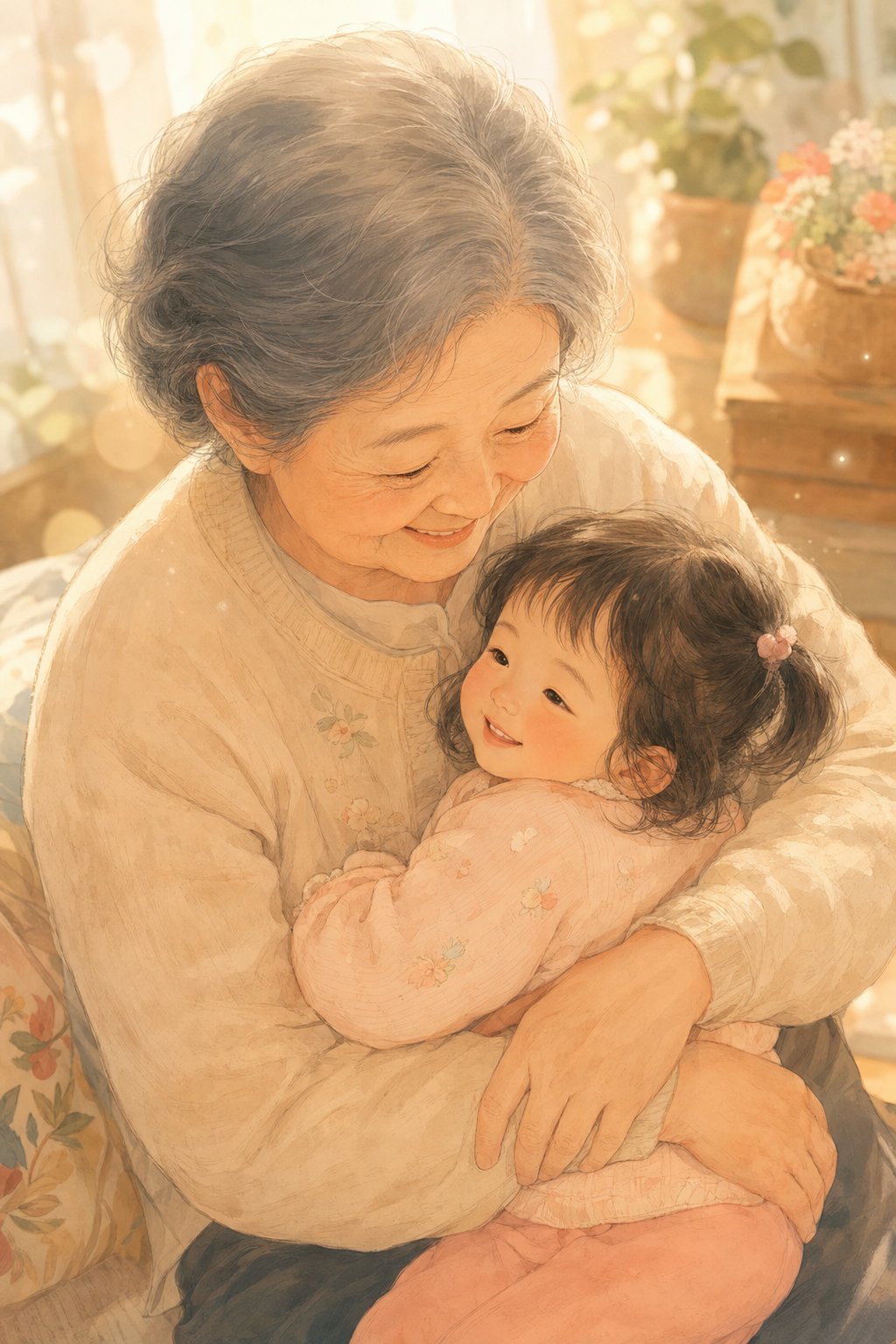
Add the suffix 儿 (er) to 心肝 and you get 心肝儿 (xīn gān er) — a softer, more colloquial form that carries a gentle, doting quality. The 儿 suffix in Mandarin often signals warmth and smallness, so this version feels especially natural when directed at children. Picture a mother scooping up her toddler and murmuring "my little xin gan er" — that's the emotional register.
Then there's 心肝肉 (xīn gān ròu), which literally translates to "heart, liver, and flesh." This one intensifies the endearment by adding yet another body part — your very flesh — to the offering. It's less common in casual speech and carries a heavier emotional charge, often appearing in moments of deep worry, relief, or overwhelming love. You might hear it from a parent reuniting with a child after a frightening separation, or in folk songs expressing raw devotion.
When to Use Each Phrase
Choosing between these variations comes down to context and emotional intensity. Here's how they rank from most common to most intimate:
- 心肝宝贝 (xīn gān bǎo bèi) — The everyday favorite. Works for romantic partners, children, and family. Appears in songs, daily speech, and written messages. Safe, warm, and universally understood.
- 心肝儿 (xīn gān er) — Softer and more colloquial. Best suited for small children or in playful, tender moments between very close people. Common in northern Mandarin dialects where the 儿 suffix is used frequently.
- 心肝肉 (xīn gān ròu) — The most emotionally intense form. Reserved for moments of overwhelming feeling — deep relief, desperate love, or raw vulnerability. Less frequent in casual conversation, more common in folk expressions and emotionally heightened situations.
All three share the same foundation: the idea that someone is as vital to you as your own organs. The differences lie in tone and occasion. 心肝宝贝 is the phrase you'll use most often and hear most frequently. 心肝儿 adds tenderness through diminutive softening. 心肝肉 strips away all restraint and says, plainly, "you are my flesh and blood."
These positive expressions paint a picture of devotion and preciousness. But Chinese has a way of flipping organ metaphors on their head — and when 心肝 appears in its negative form, the emotional meaning reverses completely.
Xin Gan in Negative Expressions and Idioms
If calling someone your 心肝 means they are the most precious thing in your world, what happens when you say someone has no 心肝 at all? The phrase flips from tender endearment to sharp criticism — and this duality reveals just how central organ metaphors are to Chinese emotional vocabulary.
没心没肝 and the Negative Side of Xin Gan
The expression 没心没肝 (méi xīn méi gān) literally means "without heart, without liver." In practice, it describes someone who is heartless, ungrateful, or emotionally shallow — a person who seems incapable of deep feeling or who fails to appreciate what others do for them. You might hear a frustrated parent say it about a child who never calls home, or a friend use it to describe someone who forgot a major favor.
The gan xin definition here shifts dramatically from its positive counterpart. In endearments, 心肝 represents what is most vital and irreplaceable. In 没心没肝, the absence of those same organs signals a person who lacks the emotional core that makes someone fully human — at least in the eyes of the speaker. It's not a clinical diagnosis. It's a gut-level accusation: "You act as though you have no feelings at all."
A related expression worth knowing is 狼心狗肺 (láng xīn gǒu fèi) — "wolf heart, dog lungs" — which describes someone cruel and ungrateful. While it uses different organs, it follows the same logic: assign animal organs to a person, and you're saying their emotional capacity is less than human. Chinese builds an entire moral vocabulary from these body-part metaphors.
Understanding the Full Emotional Range
The contrast between positive and negative uses of 心肝 isn't just a linguistic curiosity — it shows how Chinese treats the body as a map of moral character. When someone is your 心肝, you're saying they hold the place of your most essential organs. When someone lacks 心肝, you're saying they're missing the very thing that makes a person capable of love, loyalty, and gratitude.
This duality also appears in phrases like 甘心 (gān xīn), where the characters reverse order. The gan xin definition means "to be willing" or "to be content with" — often used in the negative form 不甘心 (bù gān xīn), meaning "unwilling to accept" or "not reconciled to." You'll encounter this in the phrase gan xin ti dai ni, which carries the gan xin ti dai ni English translation of "willingly take your place" or "gladly substitute for you" — an expression of selfless devotion that echoes the same organ-based emotional logic.
Here's how the positive and negative uses compare side by side:
| Expression | Pinyin | Literal Meaning | Actual Meaning | Example Sentence |
|---|---|---|---|---|
| 心肝宝贝 | xīn gān bǎo bèi | Heart-liver treasure | Precious darling | 你是妈妈的心肝宝贝。(You are mama's precious darling.) |
| 心肝儿 | xīn gān er | Little heart-liver | Sweetheart (affectionate, often for children) | 来,心肝儿,让奶奶抱抱。(Come, sweetheart, let grandma hold you.) |
| 没心没肝 | méi xīn méi gān | No heart, no liver | Heartless, ungrateful, emotionally shallow | 你怎么这么没心没肝?(How can you be so heartless?) |
| 狼心狗肺 | láng xīn gǒu fèi | Wolf heart, dog lungs | Cruel and ungrateful | 他真是狼心狗肺的人。(He's truly a cruel, ungrateful person.) |
What makes this system so expressive is its internal consistency. The organs always represent emotional capacity — the question is simply whether that capacity is present, offered to someone, or absent entirely. A person with 心肝 to give is loving. A person called someone's 心肝 is treasured. A person described as lacking 心肝 is emotionally bankrupt.
This emotional spectrum — from deepest love to sharpest criticism — positions 心肝 as more than just a pet name. It's a window into how Chinese maps human feeling onto the body. And within that broader landscape of endearments, 心肝 occupies a very specific place on the intimacy scale, one that becomes clearer when you compare it to the other ways Chinese speakers say "I love you" without using those exact words.
Xin Gan Versus Other Chinese Terms of Endearment
Chinese has no shortage of ways to say "darling." But not all endearments carry the same weight. Some are casual enough for a text message to your new boyfriend. Others are reserved for moments when emotion runs so deep that only something visceral will do. Where does 心肝 fit on that spectrum? To answer that, you need to see it alongside the alternatives.
How Xin Gan Compares to Qin Ai De and Bao Bei
The most common Chinese endearment you'll encounter is 宝贝 (bǎo bèi), meaning "treasure" or "baby." It's the go-to term for couples in urban China — casual, modern, and gender-neutral. You'll hear it in text messages, phone calls, and WeChat voice notes dozens of times a day. As CChatty's guide to Chinese partner terms notes, 宝贝 is equivalent to "darling" or "sweetheart" in English and works for both spouses and people who are dating. It's warm without being heavy.
Then there's 亲爱的 (qīn ài de), which translates to "dear" or "beloved." This one carries slightly more emotional weight than 宝贝 and sounds a touch more formal — you'll hear it in Chinese dramas and songs more often than in everyday casual speech. It's gentle, traditional, and safe for any long-term relationship.
甜心 (tián xīn) means "sweetheart" and is a near-direct translation from English. It exists in Chinese, but it sounds somewhat dated or overly poetic to younger speakers. You'll find it in older songs and formal contexts rather than in the rapid-fire texting style of modern couples. Expressions like gan en de xin (感恩的心, grateful heart) and yong gan de xin (勇敢的心, brave heart) show how productive the character 心 is in Chinese — but none of these carry the raw intimacy of 心肝.
老公 (lǎo gōng) and 老婆 (lǎo pó) — literally "old husband" and "old wife" — are the standard spousal terms. They're domestic, comfortable, and imply long-term commitment. Young couples now use them even before marriage as a playful signal of seriousness. They're affectionate, but in a settled, everyday way rather than an emotionally heightened one.
心肝 sits in different territory entirely. It's not casual. It's not playful. It's the term you reach for when ordinary words feel insufficient — when a parent sees their child after months apart, or when a lover wants to express something beyond "I love you." The xin gan bao bei lirik (lyrics) that have circulated across Asia for decades resonate precisely because the phrase taps into an emotional register that lighter terms simply cannot reach.
Choosing the Right Endearment for the Situation
Picking the right term depends on three things: how close you are to the person, how emotionally charged the moment is, and whether you want to sound modern or traditional. Here's how the main options compare:
| Term | Pinyin | Literal Meaning | Intimacy Level | Typical Usage Context |
|---|---|---|---|---|
| 宝贝 | bǎo bèi | Treasure, precious thing | Medium — warm and casual | Daily texts, phone calls, any romantic relationship stage |
| 亲爱的 | qīn ài de | Dear one, beloved | Medium — gentle and slightly formal | Long-term partners, letters, emotional conversations |
| 甜心 | tián xīn | Sweet heart | Low to medium — light and Western-influenced | Older songs, poetic contexts, less common in daily speech |
| 老公 / 老婆 | lǎo gōng / lǎo pó | Old husband / old wife | Medium — domestic and committed | Married couples, serious relationships, daily home life |
| 心肝 | xīn gān | Heart and liver | High — deeply emotional and traditional | Moments of intense tenderness, parents to children, deeply intimate exchanges |
Notice the pattern: 宝贝 and 亲爱的 are versatile enough for everyday use. 老公/老婆 signal relationship status. But 心肝 signals emotional depth. It's not something you drop into a casual "good morning" text. You use it when you mean it — when the feeling is so strong that calling someone your "treasure" doesn't quite capture it, and only "you are my vital organs" will do.
This emotional intensity is also why 心肝 has endured across generations while trendier terms come and go. It's rooted in something older than modern dating culture — something that shows up in classic songs, regional dialects, and cultural moments that have kept the phrase alive for centuries.
Xin Gan in Chinese Pop Culture and Regional Usage
A phrase doesn't survive centuries on grammar alone. It needs cultural oxygen — songs people hum, shows they rewatch, moments that embed the words into collective memory. 心肝宝贝 has had no shortage of that oxygen. From Cantopop ballads to Taiwanese variety shows to lullabies passed down in Hokkien-speaking households, this endearment has threaded itself through Chinese pop culture in ways that keep it fresh for each new generation.
Xin Gan Bao Bei in Chinese Music and Media
The song that cemented 心肝宝贝 in mainstream consciousness is the track of the same name — "Xin Gan Bao Bei" — which has been performed and reinterpreted by multiple major artists across decades. Andy Lau (刘德华) recorded one of the most recognized versions, a warm ballad where the xin gan bao bei Andy Lau lyrics translation centers on expressing unconditional love for a child or partner. The melody is simple and singable, which helped it spread far beyond Cantonese-speaking audiences into Mandarin pop playlists across Asia.
Richie Ren (任贤齐) also delivered a beloved rendition. The xin gan bao bei lyrics Richie Ren version leans into a more upbeat, playful energy — the kind of song that plays at family gatherings and karaoke nights. Meanwhile, Anita Mui (梅艳芳) brought her signature emotional depth to the phrase, and her version of xin gan bao bei carries a tenderness that resonates with listeners who associate the song with maternal or romantic devotion.
Barbie Hsu (徐熙媛) also popularized the phrase through her media presence. The association of Barbie Hsu with xin gan bao bei came through variety show appearances and public expressions of affection that made the term feel accessible and modern — not just something grandmothers say, but something a young celebrity might use naturally on camera.
Beyond individual artists, the phrase shows up consistently in Chinese media:
- Romantic TV dramas, where characters use 心肝宝贝 during emotionally climactic scenes — reunions, confessions, or moments of vulnerability
- Children's programming and lullabies, where parents sing the phrase to soothe infants, reinforcing its cross-generational appeal
- Film soundtracks, particularly in family-centered movies where the bond between parent and child drives the narrative
- Social media and short-video platforms, where users caption clips of their children or pets with 心肝宝贝 as a casual but heartfelt tag
- Wedding ceremonies and anniversary celebrations, where the phrase appears in toasts, vows, and dedication songs
What keeps these cultural references alive isn't just nostalgia. The phrase fills a gap that more modern, casual endearments like 宝贝 cannot — it signals a depth of feeling that lighter terms don't reach. When a songwriter needs to convey "you are everything to me" in two words, 心肝宝贝 delivers that weight instantly.
Regional Differences in How Xin Gan Is Used
While 心肝 exists in standard Mandarin, its emotional home is arguably in southern Chinese dialects — particularly Hokkien (Minnan), Taiwanese Mandarin, and Cantonese. In these linguistic communities, the term carries an everyday warmth that it sometimes lacks in northern Mandarin, where speakers may perceive it as slightly old-fashioned or overly intense for casual use.
In Taiwanese Mandarin and Hokkien, 心肝 functions almost like a default endearment for children. A grandmother in Taipei or Tainan calling her grandchild "xin gan" is as natural as an English-speaking grandmother saying "sweetheart." The term appears frequently in Taiwanese folk songs, local television, and daily family conversation without any sense of being dramatic or archaic.
Research into traditional Minnan nursery rhymes confirms this regional embeddedness. A complex network analysis of Minnan folk songs identified "sweetheart (心肝)" as a core node in the traditional nursery rhyme network — meaning it ranked among the most interconnected and culturally central terms in the entire corpus of Southern Fujian children's songs. The study found that emotional expression terms like 心肝, alongside words for sadness and happiness, formed a dense cluster at the heart of traditional Minnan lyrical culture. This isn't a peripheral term in southern dialects — it's structurally central to how those communities express love.
In Cantonese-speaking regions like Hong Kong and Guangdong, 心肝 also carries strong currency. Cantonese speakers use "sam gon" (the Cantonese pronunciation) in much the same way — for children, for lovers, for anyone precious. The Cantopop tradition, with artists like Anita Mui performing xin gan bao bei, kept the phrase circulating in urban Cantonese culture even as English loanwords and newer slang entered the lexicon.
Northern Mandarin speakers, by contrast, tend to reserve 心肝 for more emotionally heightened moments. In Beijing or Harbin, you're more likely to hear 宝贝 or 亲爱的 in daily conversation, with 心肝 appearing when the emotional stakes are higher — a tearful reunion, a moment of deep worry about a child's safety, or a particularly tender exchange between elderly spouses. The term isn't unknown in the north, but it carries more gravity there, used sparingly rather than casually.
This regional variation matters for learners. If you're speaking with someone from Taiwan or Fujian, using 心肝 will sound natural and warm. If you're speaking with someone from northern China, the same term might land as more intense than you intended — which isn't necessarily bad, but it's worth knowing the difference.
The phrase's deep roots in southern folk culture and its continued life in pop music point to something older than modern Mandarin itself — a literary and philosophical tradition that has been pairing hearts and livers in expressions of love for well over a thousand years.

Historical and Literary Roots of Xin Gan
Chinese civilization stretches back millennia — bronze bells unearthed at Xin'gan in Jiangxi Province date to ca. 1300 BCE, reminding us just how deep these cultural roots run. The literary tradition of using 心肝 as an endearment didn't appear overnight either. It grew from a philosophical worldview that treated the body's organs as a moral and emotional map, one that poets, playwrights, and folk singers drew on for centuries before modern Mandarin even existed.
Literary Origins of Heart-and-Liver Metaphors
The earliest Chinese texts already treated internal organs as symbols of character and devotion. By the Han Dynasty (206 BCE - 220 CE), writers were using organ metaphors to describe loyalty, sincerity, and irreplaceable bonds. The compound 心腹 (xīn fù) — literally "heart and belly" — came to mean a trusted confidant, someone you'd share your innermost secrets with. The idiom 肝胆相照 (gān dǎn xiāng zhào), meaning "to show one's liver and gallbladder to each other," described relationships built on absolute transparency and mutual trust.
These weren't poetic flourishes. They reflected a genuine belief — rooted in early Chinese medicine and cosmology — that organs housed specific virtues. The heart held wisdom and spirit. The liver stored courage and vital energy. The gallbladder governed decisiveness. When classical writers wanted to express that someone was offering their truest self, they reached for organ language because nothing else carried the same weight.
By the Tang and Song dynasties, 心肝 had migrated from philosophical texts into poetry and personal letters. Writers used it to describe what was most precious and irreplaceable — sometimes a beloved person, sometimes a cherished possession or homeland. The emotional logic was always the same: if you would give someone your heart and liver, you are giving them what keeps you alive.
In Yuan dynasty drama (元曲), lovers address each other as 心肝 in moments of raw intimacy — a convention so natural to audiences that it required no explanation, proving the term was already deeply embedded in spoken Chinese by the 13th century.
Body-Organ Endearments in Classical Chinese
The tradition of organ-based endearments in Chinese opera and folk song is remarkably consistent across regions and centuries. In works like Wang Shifu's "The Story of the Western Wing" (西厢记) and countless local opera traditions, characters call their beloved 心肝 during scenes of confession, reunion, or desperate longing. The term carried no strangeness for audiences — it was the natural language of deep feeling.
This pattern extends well beyond 心肝 itself. Classical Chinese built an entire emotional vocabulary from the body:
- 心腹 (xīn fù) — heart and belly — a trusted confidant, someone privy to your deepest plans
- 肝胆相照 (gān dǎn xiāng zhào) — showing liver and gallbladder to each other — complete mutual sincerity
- 肝肠寸断 (gān cháng cùn duàn) — liver and intestines broken inch by inch — overwhelming grief
- 心肝宝贝 (xīn gān bǎo bèi) — heart-liver treasure — the endearment that survived into modern speech
What connects all of these is a single principle: the body's interior represents truth. External appearances can deceive, but your organs cannot lie. Offering them — even metaphorically — is the ultimate act of emotional honesty. The bronze bells from Xin'gan, Jiangxi Province (ca. 1300 BCE) belong to a civilization already developing the cosmological frameworks that would eventually produce this language of the body. By the time those ideas matured into literary convention, organ metaphors had become the most powerful tool Chinese had for expressing what words alone could not.
This literary heritage is precisely why 心肝 still resonates. It isn't slang that appeared last decade. It carries the weight of a thousand years of poetry, opera, and folk tradition behind it — which also means using it carelessly or incorrectly can feel jarring to native speakers who sense that history instinctively.
How to Use Xin Gan Correctly and Avoid Mistakes
A thousand years of literary weight behind a word means it carries expectations. You can't drop 心肝 into just any conversation and expect it to land well. The emotional power that makes this endearment so meaningful also makes it easy to misuse — especially for learners who haven't yet developed an instinct for Chinese social registers. Here's how to get it right.
Common Mistakes Learners Make with Xin Gan
The most frequent error isn't mispronunciation (though that matters too). It's context. Learners who discover the xin gan meaning often want to try it out immediately — but using it in the wrong setting can range from awkward to genuinely uncomfortable for the listener.
Picture this: you've just learned the phrase and decide to call your Chinese tutor 心肝 as a friendly gesture. The result? Stunned silence, possibly followed by a very uncomfortable correction. The term implies deep personal love — romantic or familial — and directing it at someone outside those categories signals either a misunderstanding or an unwanted advance.
Other common missteps include:
- Using it too early in a relationship — 心肝 implies that someone is essential to your survival. Saying it on a third date can feel overwhelming rather than romantic. It's the kind of term that emerges naturally after deep emotional bonds have already formed.
- Directing it at someone of higher social status — Calling your boss, professor, or elder relative's spouse 心肝 crosses social boundaries. The term flows downward (parent to child) or laterally (between partners), not upward in a hierarchy.
- Confusing it with similar romanizations — Learners sometimes mix up xin gan with gan xie xin (感谢信, a thank-you letter) or phrases like gan en de xin in English (grateful heart) and gan an de xin in English (a heart at peace). These share some syllables but occupy completely different emotional and grammatical territory.
- Using it in professional or public settings — Even between genuine partners, 心肝 belongs to private, intimate moments. Saying it loudly in a meeting or in front of colleagues will embarrass your partner rather than flatter them.
- Forgetting tone accuracy — As covered earlier, saying gàn instead of gān turns your endearment into something vulgar. In an intimate moment, that mistake is especially jarring.
Practical Tips for Using Xin Gan Naturally
Getting the context right matters more than perfect pronunciation. Native speakers will forgive a slightly off tone from a learner who clearly understands when and why to use the term. They won't forgive perfect tones deployed in a socially inappropriate moment.
Here's a quick-reference guide for using 心肝 and its variations with confidence:
- Do use 心肝宝贝 with your own young children — it's one of the most natural parent-to-child endearments in Chinese
- Do use 心肝 with a long-term romantic partner in private, tender moments — whispered, not announced
- Do listen for how your partner's family uses the term before adopting it yourself — regional habits vary
- Do pair it with soft vocal tone and gentle body language — the phrase matches quiet intimacy, not loud declarations
- Don't use it with friends, no matter how close — Chinese has other terms for platonic affection
- Don't use it sarcastically or as a joke — native speakers feel the historical weight of the term and sarcasm reads as disrespectful
- Don't use it in written professional communication — not in emails, not in work chats, not even as a sign-off to a colleague you're dating
- Don't assume it works identically across all Chinese-speaking communities — in northern China it carries more gravity than in Taiwan or Fujian, where it's used more casually
- Do start with 宝贝 if you're unsure — it's lighter, more forgiving of context errors, and still affectionate
The safest path for learners is simple: let the term come to you rather than forcing it. If your Chinese-speaking partner or family member uses 心肝 with you, mirror it back. If you haven't heard it used naturally in your relationship yet, 宝贝 or 亲爱的 will serve you well until the emotional moment arrives where only 心肝 feels right.
At its core, understanding the xin gan meaning comes down to one principle: this is not a word you use lightly. It's one of the most emotionally powerful endearments in the Chinese language — a phrase that says "you are as vital to me as the organs keeping me alive." Reserved for people you love deeply, spoken in moments of genuine tenderness, and carrying a thousand years of literary tradition behind it, 心肝 earns its place not through frequency of use but through the weight it carries every single time it's said.
Frequently Asked Questions About Xin Gan
1. What does xin gan literally mean in Chinese?
Xin gan (心肝, xin1 gan1) literally translates to 'heart and liver.' In traditional Chinese medicine, these two organs are considered the most vital for sustaining life. When Chinese speakers call someone their xin gan, they are saying that person is as essential and irreplaceable as the organs keeping them alive. It functions as a deeply emotional term of endearment equivalent to 'sweetheart' or 'darling' in English, but with far more emotional intensity.
2. Is xin gan used for romantic partners or children?
Xin gan works for both. Parents and grandparents commonly use it for young children, especially in southern Chinese dialects and Taiwanese Mandarin where it functions as an everyday endearment. Between romantic partners, it tends to appear during private, emotionally intense moments rather than casual daily conversation. The extended form xin gan bao bei (heart-liver treasure) is the most versatile version, suitable for children, partners, and close family members alike.
3. How do you pronounce xin gan correctly?
Both syllables use Mandarin's first tone — a high, flat pitch that stays steady without rising or falling. Xin (心) sounds close to 'sheen' but with a softer initial consonant produced with the tongue flatter and more forward than English 'sh.' Gan (肝) starts with a hard 'g' as in 'go' followed by a broad 'ahn' vowel. The critical mistake to avoid is using the fourth tone on gan, which produces a vulgar word in colloquial speech instead of the intended endearment.
4. What is the difference between xin gan and bao bei?
Bao bei (宝贝) means 'treasure' or 'baby' and serves as a casual, modern endearment suitable for everyday texts and phone calls. Xin gan carries significantly more emotional weight and traditional resonance. While bao bei works at any relationship stage and in semi-public settings, xin gan is reserved for moments of deep tenderness and genuine emotional vulnerability. Think of bao bei as the Chinese equivalent of 'babe' and xin gan as something closer to 'you are my everything.'
5. What does mei xin mei gan mean?
Mei xin mei gan (没心没肝) means 'without heart, without liver' and describes someone who is heartless, ungrateful, or emotionally shallow. It represents the negative flip side of the xin gan endearment. While calling someone your xin gan means they are precious and vital, saying someone lacks xin gan accuses them of being incapable of deep feeling or appreciation. This duality shows how central organ metaphors are to Chinese emotional expression.