Understanding Year of the Pig and Its Connection to Names
When you search for year of the pig name meanings, you likely want one of two things: a deeper understanding of what this zodiac sign represents, or practical guidance on choosing a meaningful name for a Pig year baby. The good news is these two goals are deeply intertwined in Chinese culture, where a child's birth year shapes the very characters that form their name.
The Pig holds the 12th and final position in the Chinese zodiac cycle. Far from being an afterthought, this placement carries weight. In Chinese tradition, the Pig is closely tied to wealth, abundance, and contentment. When is the year of the pig? It cycles every 12 years, with recent years including 1983, 1995, 2007, 2019, and the next arriving in 2031. Each cycle brings a fresh wave of parents seeking names that channel the Pig's fortunate energy.
What the Year of the Pig Represents in Chinese Culture
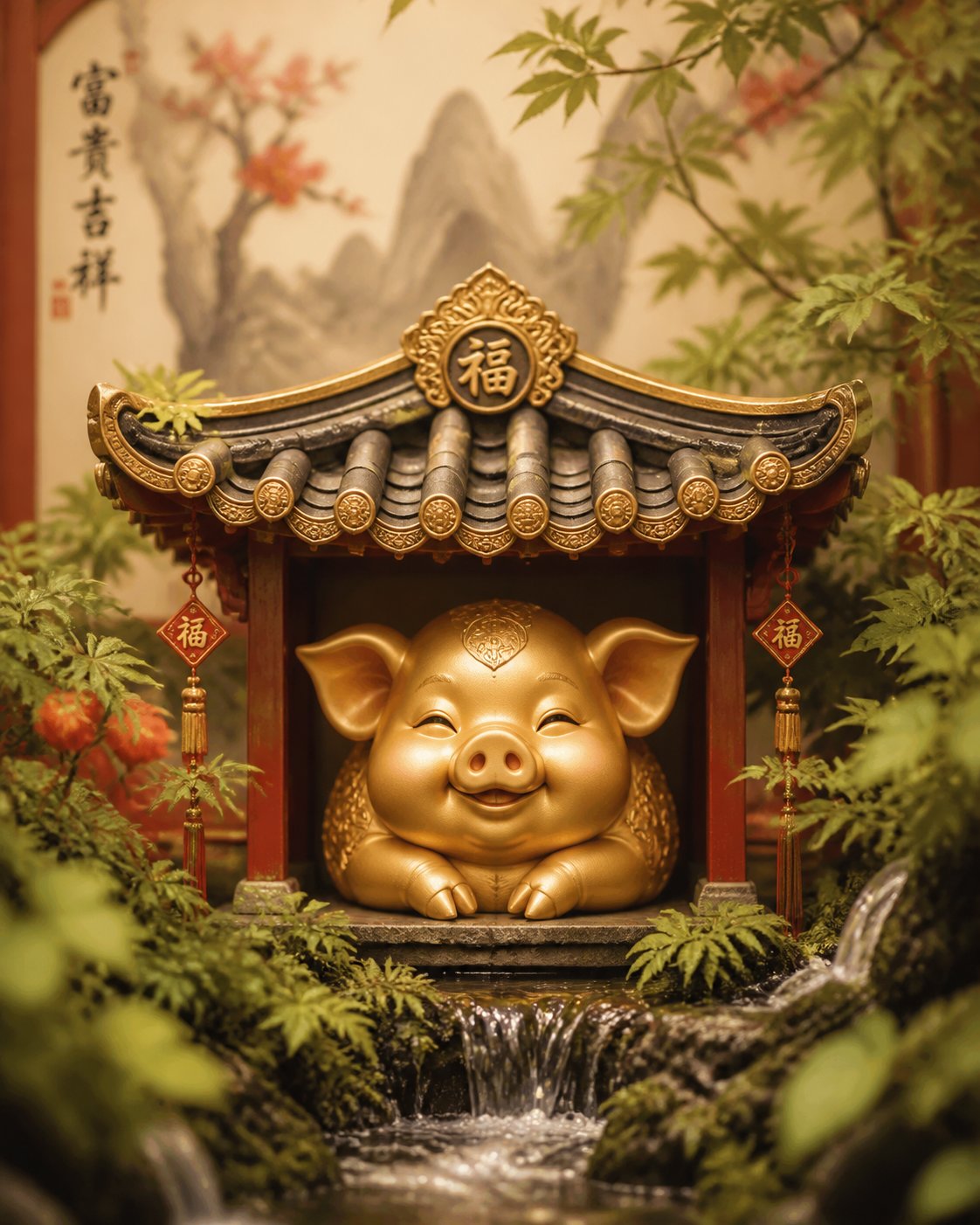
The Pig sign embodies prosperity, fertility, honesty, and generosity. In Chinese culture, its plump figure symbolizes a comfortable life, good harvests, and the promise of abundance for generations to come.
People born in the year of the pig are often described as compassionate, genuine, and optimistic. These aren't just personality labels. They form the foundation for how families approach naming, because Chinese names carry deep symbolic meaning rather than being chosen for sound alone. Each character reflects attributes, virtues, and hopes that parents want to pass on.
Why Pig Year Names Carry Special Significance
Chinese naming traditions treat the birth year as a foundational factor in character selection. The zodiac animal, its associated element, and even the specific radicals within Chinese characters all play a role. Imagine building a name the way you'd compose a blessing: every stroke carries intention.
For Pig year babies, this means parents look for characters that resonate with the sign's generous spirit, reinforce its natural strengths, or gently balance its softer tendencies. The year of the pig meaning extends far beyond a calendar label. It becomes a living blueprint for identity, encoded in the very characters of a child's name.
This guide covers the full picture: from the etymology of the Pig character itself, through elemental variations that shift naming strategy, to the specific radicals and combinations that traditional practice considers most auspicious.
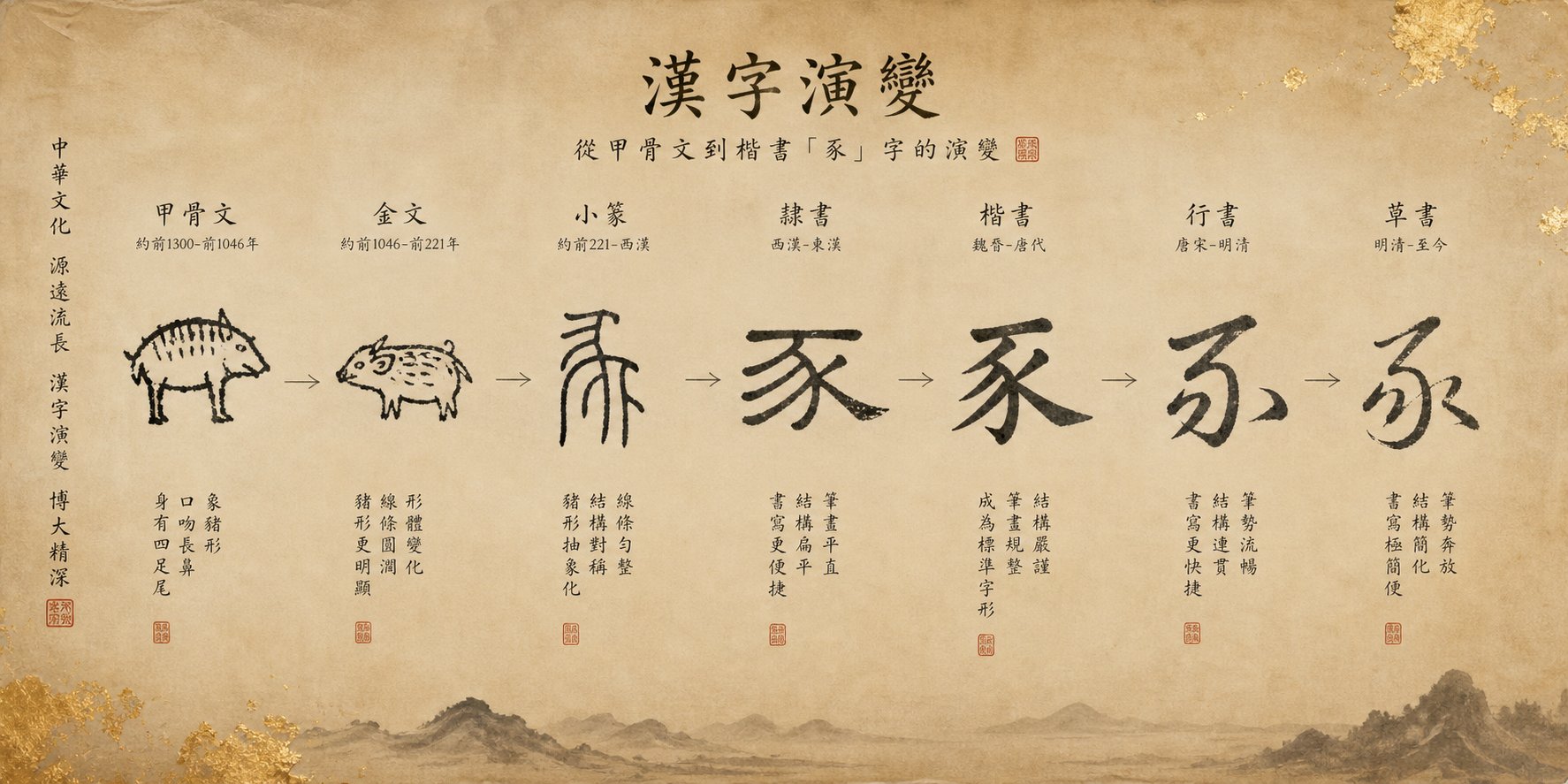
Etymology and Symbolism Behind the Pig Character
Every Chinese character tells a story, and the characters associated with the chinese pig are among the most revealing. Before you can choose a name that means pig in spirit without being too literal, you need to understand how the written language encodes this animal's symbolism across thousands of years of evolution.
The Evolution of 猪 From Ancient Script to Modern Character
The modern character for pig, 猪 (simplified) or 豬 (traditional), is pronounced zhu in Mandarin. But the real story starts with its core component: the radical 豕 (shi), Kangxi Radical 152. This seven-stroke character is one of the 214 traditional radicals cataloged in the Kangxi Dictionary, and it originally depicted a pig in profile, complete with a snout, belly, and legs.
In oracle bone script, dating back over 3,000 years, 豕 was a clear pictograph. You could see the animal's shape in the strokes. As writing evolved through bronze inscriptions, large seal script, and small seal script, the character gradually became more abstract until reaching its modern form. The simplified character 猪 adds the dog radical (犭) on the left as a semantic classifier indicating an animal, paired with 者 (zhe) as a phonetic component. The traditional form 豬 retains the original 豕 radical directly.
What makes this relevant for naming? The radical 豕 doesn't just live inside the word for pig. It appears in several characters with elevated, positive meanings, characters that parents actively seek for chinese piglet babies born under this sign.
How the Earthly Branch 亥 Connects to Naming Traditions
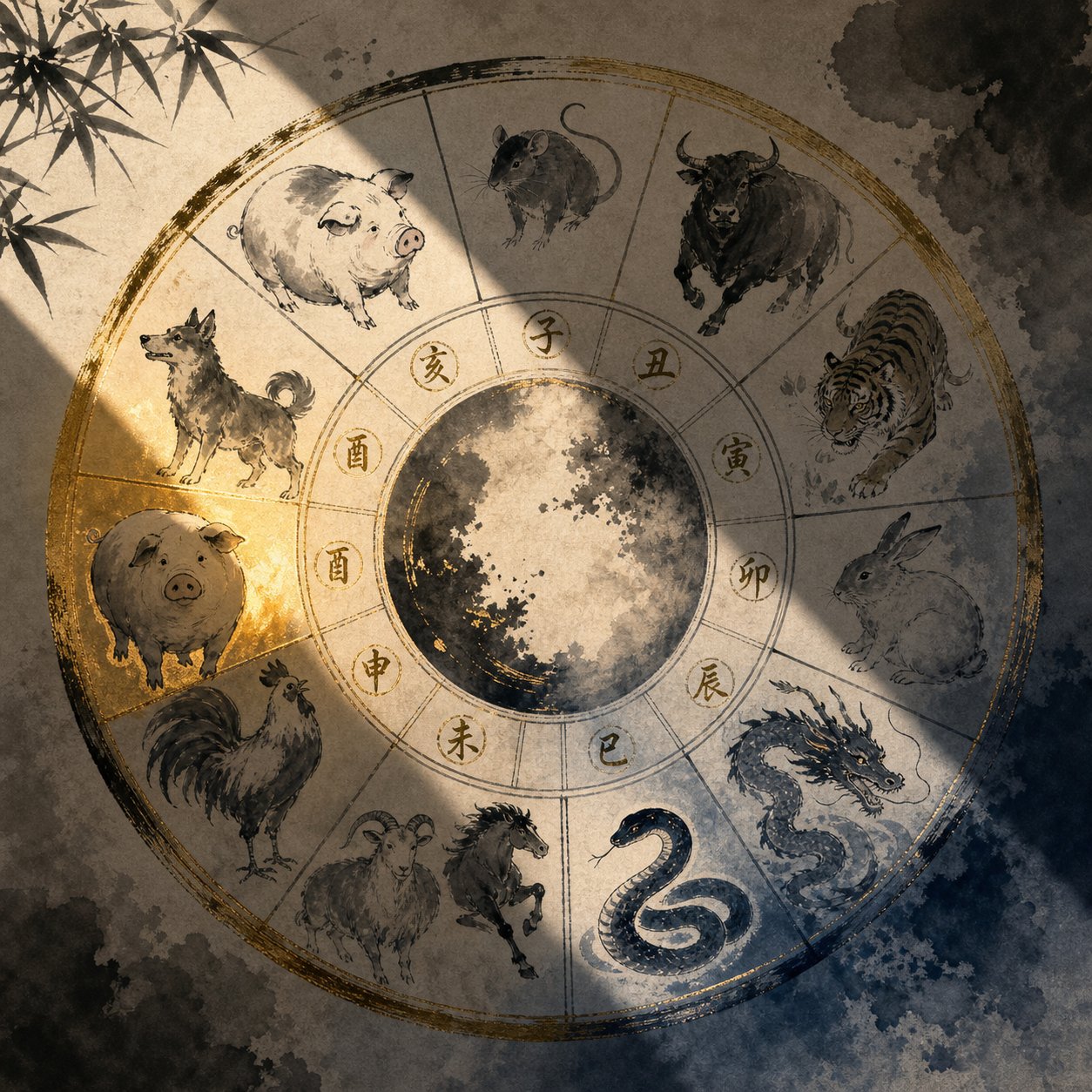
Here's something many people miss: the formal zodiac designation for the Pig isn't 猪 at all. It's 亥 (hai), the 12th Earthly Branch. In the traditional Chinese timekeeping system, 亥 corresponds to the hours between 9 and 11 PM and to the Pig's position in the zodiac cycle. If you're looking up the chinese symbol 1995 zodiac designation, for instance, you'd find 亥 as the branch marker for that Wood Pig year.
Why does this distinction matter for names? The character 猪 is almost never used directly in personal names. It's considered too blunt, too literal. Using 亥 is slightly more refined, though still uncommon in given names. The real art lies in choosing characters that contain the pig radical 豕 while carrying meanings of grandeur, comfort, or prosperity. These characters channel the Pig's energy without naming someone "pig" outright.
Consider the character 家 (jia), meaning home or family. It combines the roof radical 宀 on top with 豕 underneath. A pig under a roof equals home. This reflects the historical reality that domesticated pigs lived inside the household, and their presence signaled a family prosperous enough to keep livestock. The chinese symbol for 95 in the Kangxi radical system is actually 玄 (xuan, meaning profound or mysterious), but Radical 152, 豕, is the one that unlocks the Pig's naming power.
This same radical appears in characters with meanings far removed from the barnyard:
| Character | Pinyin | Radical Breakdown | Meaning | Naming Suitability |
|---|---|---|---|---|
| 猪/豬 | zhu | 犭/豕 + 者 | Pig (literal) | Not used in names |
| 家 | jia | 宀 (roof) + 豕 (pig) | Home, family | Common in names, implies belonging |
| 豪 | hao | 高 (tall) + 豕 (pig) | Heroic, grand, bold | Highly popular, conveys ambition |
| 豫 | yu | 予 (give) + 象/豕 | Comfort, ease, Henan province | Elegant choice, suggests contentment |
Notice the pattern. Characters like 豪 and 豫 carry the pig's essence, abundance, comfort, and boldness, while reading as sophisticated name choices. A child named with 豪 isn't labeled a pig. They're called heroic. Yet the radical connection quietly aligns their name with Pig zodiac energy.
This layered approach is what separates thoughtful Pig year naming from simply picking pleasant-sounding characters at random. The radical acts as a hidden thread, tying the name back to the child's birth year in a way that only those who understand character composition will recognize. And that subtlety is exactly what traditional naming practice values most.
Of course, the pig radical is just one piece of the puzzle. Each Pig year also carries a specific elemental signature, and that element dramatically shifts which characters, radicals, and combinations will serve a child's name best.
Five Elements and How They Shape Pig Year Names
Not all Pig years are created equal. A baby born in 1995 and one born in 2019 both carry the Pig sign, yet their elemental signatures point toward entirely different naming strategies. The 1995 chinese zodiac element is Wood, while the 2019 chinese zodiac element is Earth. That single distinction shifts which radicals strengthen a name and which ones create imbalance.
In Chinese metaphysics, the Five Elements (Wu Xing) cycle through the zodiac in a fixed pattern: Wood, Fire, Earth, Metal, Water. Each element pairs with the Pig sign once every 60 years, creating five distinct Pig personalities with different strengths, vulnerabilities, and ideal name characters. Treating every Pig year baby the same, as many naming guides do, misses this critical layer of specificity.
Wood Pig and Fire Pig Naming Characteristics
The wood pig chinese zodiac personality (1935, 1995) is defined by growth, benevolence, and determination. Wood Pigs have soft hearts and great sympathy, yet they're decisive and courageous when pursuing goals. Their element connects to spring, the color green, and upward expansion. For naming, characters containing the wood radical (木) or those evoking vitality and kindness work naturally. Think 林 (lin, forest), 彬 (bin, refined), or 仁 (ren, benevolence). These reinforce the Wood Pig's generous spirit without overloading an already gentle temperament.
The fire pig chinese zodiac variant (1947, 2007) brings warmth, ambition, and hospitality. Fire Pigs are friendly listeners, modest yet farsighted, brave enough to chase their dreams. Their element ties to summer, red tones, and outward radiance. Name characters that channel warmth without excess intensity suit them well: 煦 (xu, warm sunlight), 明 (ming, bright), or 志 (zhi, aspiration). Since Fire Pigs can sometimes lack independence, characters suggesting inner strength provide useful balance.
You might have heard the phrase year of the golden pig, a concept rooted in Korean tradition (hwanggeum dwaeji) that refers to a rare convergence believed to bring extraordinary prosperity. While this isn't a standard Five Elements category in Chinese astrology, it reflects how elemental associations amplify the Pig's already fortunate symbolism across East Asian cultures.
Earth Pig Metal Pig and Water Pig Name Guidance
Earth Pigs (1959, 2019) are tender, industrious, and financially astute. Their element connects to late summer, yellow and brown tones, and grounded stability. These individuals are born with what traditional sources describe as "flourishing luck in money" and unrivaled practical sense. Names featuring earth-associated characters like 坤 (kun, earth/receptive), 培 (pei, nurture/cultivate), or 安 (an, peace/stability) honor their rooted nature.
Metal Pigs (1911, 1971) are outgoing, broad-minded, and merciful. The 1911 chinese zodiac Metal Pig shares traits with those born in 1971: a grateful heart, forgiving nature, and love of peace. Metal connects to autumn, white and gold tones, and inner resolve. Their naming sweet spot includes characters like 铭 (ming, inscribed/remembered), 锐 (rui, sharp/keen), or 义 (yi, righteousness). Since Metal Pigs can lean toward comfort-seeking, characters suggesting discipline add productive tension.
The water pig chinese zodiac type (1923, 1983) produces clever, eloquent, and socially gifted individuals. The 1983 chinese zodiac element is Water, linking to winter, black and deep blue tones, and fluid adaptability. Water Pigs are quick of action and witty, with strong entrepreneurial instincts. Characters carrying the water radical (氵) align perfectly: 泽 (ze, grace/moisture), 涵 (han, contain/cultivate), or 澄 (cheng, clear/pure). These reinforce their natural intelligence while grounding their occasionally stubborn streak.
| Element | Years | Associated Traits | Recommended Character Types | Example Characters |
|---|---|---|---|---|
| Wood | 1935, 1995 | Growth, benevolence, determination | Wood radical, vitality, kindness | 林 (lin), 彬 (bin), 仁 (ren) |
| Fire | 1947, 2007 | Warmth, ambition, hospitality | Brightness, aspiration, inner strength | 煦 (xu), 明 (ming), 志 (zhi) |
| Earth | 1959, 2019 | Stability, industriousness, practicality | Earth radical, nurturing, grounding | 坤 (kun), 培 (pei), 安 (an) |
| Metal | 1911, 1971 | Broad-mindedness, mercy, resolve | Metal radical, righteousness, discipline | 铭 (ming), 锐 (rui), 义 (yi) |
| Water | 1923, 1983 | Cleverness, eloquence, adaptability | Water radical, clarity, depth | 泽 (ze), 涵 (han), 澄 (cheng) |
The takeaway here is straightforward: a name that perfectly suits a Wood Pig might actively clash with a Metal Pig's energy. Elemental alignment narrows the field from hundreds of possible characters down to a focused set that resonates with a specific child's birth year signature. With the right element identified, the next step is mapping the Pig's core personality traits to individual characters that embody each quality.
Mapping Pig Zodiac Traits to Meaningful Name Characters
The year of the pig chinese zodiac sign carries a distinct personality profile: compassionate, generous, diligent, honest, and warm. These aren't vague compliments. In traditional Chinese naming practice, each trait corresponds to specific characters whose meanings, radicals, and energetic qualities reinforce the Pig's natural strengths. Think of it as choosing a name that speaks the same language as the child's zodiac identity.
Why does this matter? In Chinese metaphysics, a name that echoes a person's innate qualities amplifies those qualities throughout life. A Pig year baby named with characters embodying generosity doesn't just carry a nice meaning. The name is believed to activate and sustain that generous energy, making it easier for the child to live in alignment with their nature.
Characters That Embody Pig Zodiac Generosity and Compassion
People born in pig years are widely recognized as diligent, compassionate, and generous. They concentrate deeply on goals, offer help freely, and approach problems with calm practicality. These core traits map directly to characters that parents have favored across pig years chinese zodiac cycles for centuries.
Here are the primary Pig personality traits paired with their most resonant name characters:
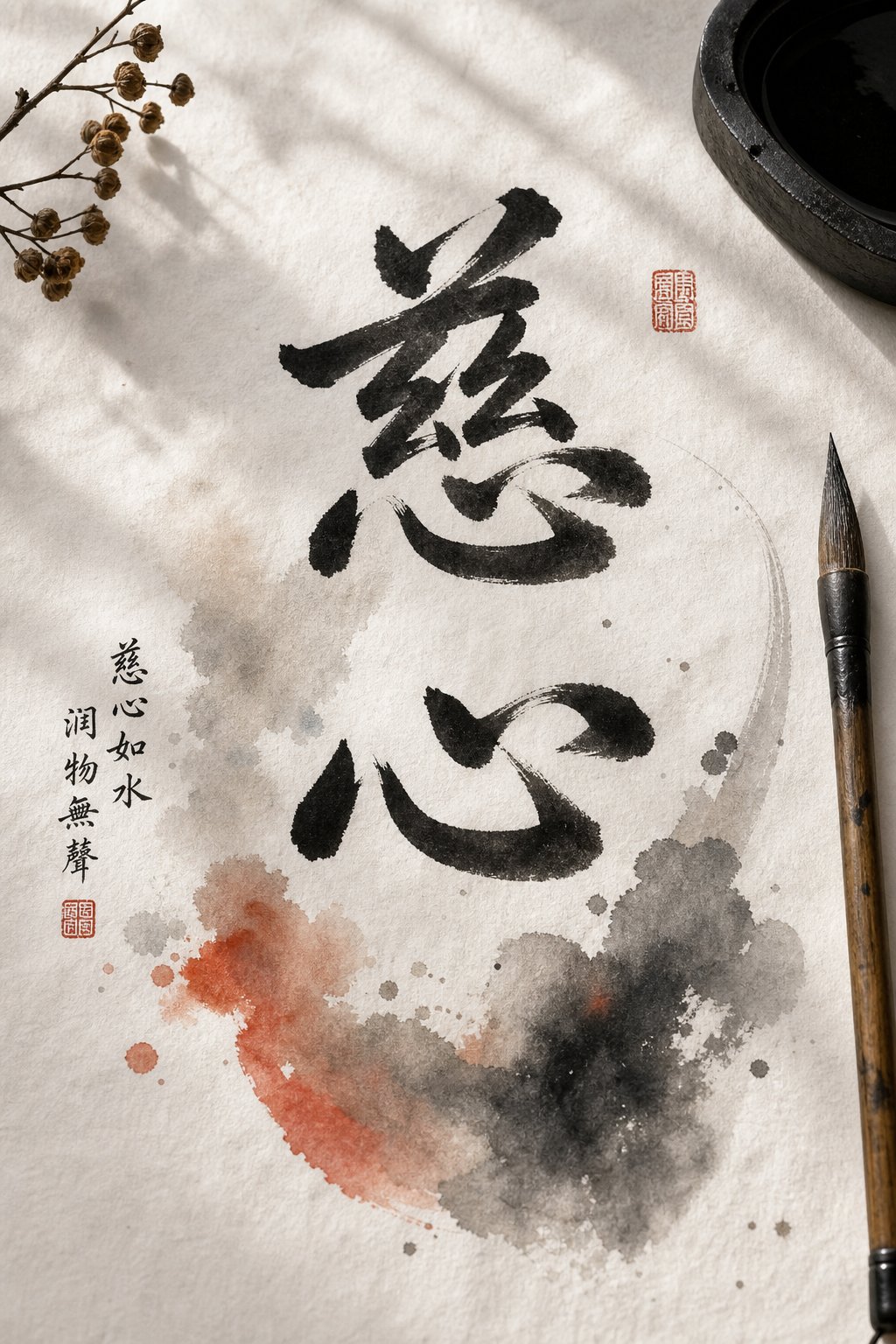
- Compassion - 慈 (ci, loving-kindness) and 仁 (ren, benevolence). The character 慈 combines the heart radical (心) with a component suggesting nourishment, literally depicting a heart that feeds others. Meanwhile, 仁 places the person radical (亻) beside the number two (二), encoding the idea that true humanity exists only in relation to others. Both characters mirror the Pig's instinct to care without expecting return.
- Generosity - 惠 (hui, grace/benefit) and 泽 (ze, moisture/grace). The character 惠 carries the heart radical at its base, grounding generosity in genuine feeling rather than obligation. The character 泽 uses the water radical (氵), evoking the image of rain that nourishes everything it touches without discrimination. This aligns with how Pig natives give freely and broadly.
- Diligence - 勤 (qin, industrious) and 敏 (min, quick/sharp). Pigs devote all their energy to achieving goals once set. The character 勤 contains the strength radical (力), linking effort to physical and moral power. The character 敏 suggests mental agility and responsiveness, balancing the Pig's steady work ethic with intellectual sharpness.
- Honesty - 诚 (cheng, sincerity) and 信 (xin, trust/faith). The speech radical (讠) in 诚 signals that this sincerity manifests through words, through promises kept and truth spoken. The character 信 pairs the person radical with speech (言), meaning a person whose words can be relied upon. Pig natives rarely suspect trickery in others precisely because they themselves are straightforward.
- Warmth - 暖 (nuan, warm) and 煦 (xu, gentle warmth). Both characters contain fire-related components, yet neither suggests intensity or aggression. They evoke the warmth of sunlight rather than a blaze. This matches the Pig's social presence: welcoming, comfortable, never overwhelming.
Balancing Pig Traits With Complementary Name Characters
Reinforcing strengths is only half the equation. Traditional naming also addresses perceived vulnerabilities. In the year of the pig, babies inherit a trusting, easygoing nature that can sometimes tip toward naivety or indecisiveness. Parents who understand this often select one character that honors the Pig's gifts and a second that introduces complementary energy.
For example, pairing 仁 (benevolence) with 毅 (yi, resolute determination) creates a name that says "kind-hearted yet unwavering." Combining 惠 (generous grace) with 明 (ming, clarity/discernment) suggests someone who gives freely but sees situations clearly. The character 勇 (yong, courage) can offset the Pig's tendency to avoid confrontation, while 慧 (hui, wisdom) sharpens the sign's occasionally too-trusting nature.
This balancing act reflects a core principle in Chinese naming philosophy: a name shouldn't just describe who a child is at birth. It should gently guide who they can become. The Pig's generous heart is a gift, but a well-chosen name ensures that generosity is paired with the discernment to protect it.
With the right trait-character pairings identified, the next layer of specificity comes from the radicals themselves. Certain radical groups carry particular fortune for Pig year births, and understanding which ones to prioritize transforms character selection from art into structured practice.
Auspicious Characters and Radicals for Pig Year Babies
Knowing which traits to reinforce is one thing. Knowing which radicals carry structural fortune for a Pig year child is where naming moves from philosophy into craft. In traditional Chinese naming practice, certain radical groups are considered inherently auspicious for specific zodiac signs because they align with the animal's nature, environment, and elemental needs. For the Pig, five radical families stand out as particularly powerful building blocks.
Whether you're exploring the chinese zodiac 1995 for a Wood Pig or looking ahead to 2031's Metal Pig, these radical groups form the foundation of auspicious character selection across all elemental variants.
Auspicious Radicals That Strengthen Pig Year Names
Each radical group connects to a specific aspect of the Pig's nature. Here's how they work and which characters they unlock:
- 木 (wood radical) - Growth and vitality. Wood nourishes the Pig's gentle spirit and supports upward development. Characters like 林 (lin, forest), 桂 (gui, osmanthus/noble), 柏 (bai, cypress/steadfast), and 杜 (du, birch/prevent) all carry this radical. They suggest a life rooted in steady, organic growth.
- 氵(water radical) - Nourishment and flow. Since the Pig's Earthly Branch 亥 belongs to water in the Five Elements, characters with the water radical are a natural fit. Think 泽 (ze, grace/moisture), 泉 (quan, spring), 浩 (hao, vast), 清 (qing, clear), and 温 (wen, warm). These reinforce the Pig's innate element rather than working against it.
- 田 (field radical) - Abundance and contentment. In the field, the pig eats five cereals leisurely, as traditional naming guides describe it. Characters like 甲 (jia, first/armor), 留 (liu, remain/keep), 畴 (chou, farmland), and 当 (dang, equal/appropriate) evoke a life of plenty where basic needs are effortlessly met.
- 口 (mouth radical) - Being well-fed and satisfied. The Pig enjoys eating, and characters with the mouth radical symbolize good fortune in having food throughout life. Examples include 回 (hui, return), 国 (guo, nation), 固 (gu, solid/firm), and 图 (tu, plan/picture). These suggest security and fulfillment rather than hunger or want.
- 宀 (roof radical) - Shelter and security. Remember how 家 (home) places a pig under a roof? That same principle extends to all roof-radical characters for Pig year babies. Characters like 宇 (yu, universe/eaves), 安 (an, peace), 宏 (hong, grand), and 字 (zi, character/word) signal a life of protection and belonging. A Pig with a roof over its head is a Pig at peace.
Beyond these five core groups, characters with the metal radical (钅) also benefit Pig year babies because metal generates water in the Five Elements cycle. Names like 铭 (ming, inscribed), 锋 (feng, sharp/vanguard), and 钟 (zhong, bell/devotion) provide great help by strengthening the Pig's water element from the outside.
If you're researching the chinese sign for 1995 specifically, that year's Wood element means characters from the 木 radical group carry double resonance. The wood radical reinforces both the zodiac animal's needs and the birth year's elemental signature simultaneously.
Complete Name Combinations With Surname Pairing Examples
Individual characters are ingredients. A complete name is the finished dish. Most naming guides stop at listing favorable characters without showing how they combine with surnames into harmonious, meaningful wholes. That gap leaves parents with pieces but no assembly instructions.
In Mandarin, tonal flow matters as much as meaning. A name where all three syllables share the same tone sounds flat and monotonous. Ideally, you want tonal variety, a mix of rising, falling, and level tones that creates a pleasing rhythm when spoken aloud. The year of 1995 chinese zodiac produced millions of Pig babies across China, and the most enduring names from that generation share this quality of phonetic balance paired with layered meaning.
Here are practical name combinations using the auspicious radicals above, paired with common surnames favorable for Pig year births:
| Surname | Given Name Characters | Combined Meaning | Tonal Harmony Notes |
|---|---|---|---|
| 李 (Li, 3rd tone) | 浩铭 (Hao Ming) | Vast and memorable; a grand legacy inscribed | 3-4-2 pattern: rising variety, strong finish |
| 林 (Lin, 2nd tone) | 宇轩 (Yu Xuan) | Boundless sky, elevated spirit | 2-3-1 pattern: smooth ascending flow |
| 黄 (Huang, 2nd tone) | 泽安 (Ze An) | Grace that brings peace; nourishing tranquility | 2-2-1 pattern: gentle, level cadence |
| 杨 (Yang, 2nd tone) | 家勇 (Jia Yong) | Brave protector of home and family | 2-1-3 pattern: dynamic tonal contrast |
| 田 (Tian, 2nd tone) | 秀影 (Xiu Ying) | Elegant beauty, graceful presence | 2-4-3 pattern: expressive, feminine flow |
| 江 (Jiang, 1st tone) | 瑾萱 (Jin Xuan) | Jade elegance with day lily's fragrance | 1-3-1 pattern: balanced, poetic rhythm |
| 金 (Jin, 1st tone) | 存厚 (Cun Hou) | Heart overflowing with kindness | 1-2-4 pattern: steady build to strong close |
Notice that the surnames themselves matter. Traditional practice considers certain surnames more compatible with the Pig sign. Surnames like 李, 杨, 黄, 田, 江, 金, and 林 are considered preferable for Pig year births because their radicals and elemental associations harmonize with the sign's energy.
For anyone exploring the 95 chinese zodiac or chinese horoscope 1995 connections, the 1995 animal year produced Wood Pigs whose names benefit most from doubling down on wood and water radicals. A name like 林彬泽 (Lin Binze) layers the wood surname with a wood-radical given name and a water-radical complement, creating triple elemental alignment.
The zodiac chinese 1995 generation is now in their late twenties and early thirties, and many are choosing names for their own children. Understanding these principles helps them pass forward the same intentional naming tradition their parents used, adapted for whichever elemental Pig year their children arrive in.
Auspicious radicals tell you what to reach for. But equally important, and far less discussed, are the radicals and characters that traditional practice warns against. Certain combinations actively clash with Pig energy, and knowing what to avoid can be just as valuable as knowing what to choose.
Names and Characters to Avoid for Pig Year Births
Choosing the right radicals is half the equation. The other half? Knowing which characters carry energy that actively works against the Pig's nature. Traditional Chinese naming practice treats certain radicals and character combinations as inauspicious for specific zodiac signs, not out of superstition, but because of deeply rooted metaphysical logic about elemental clashes and symbolic conflict.
This protective layer of guidance applies whether you're naming a baby born in 2019, planning for 2031, or even reflecting on the 1971 chinese zodiac Metal Pig generation. The same structural principles hold across every Pig year variant.
Radicals and Characters That Clash With Pig Energy
The most critical avoidance rule stems from zodiac opposition. In the Chinese zodiac, the Snake (巳) directly opposes the Pig (亥). This 巳亥 clash means snake-associated characters introduce conflicting energy into a Pig year name. But the list extends well beyond serpent imagery.
- Snake-related characters (巳, 弓, 廴 components) - The Snake and Pig sit opposite each other on the zodiac wheel, creating what's called a "six clash" (六冲). Characters containing 巳 or components that evoke elongated, serpentine movement, such as 建 (jian, build), 延 (yan, extend), or 张 (zhang, stretch), can introduce oppositional tension. The character 虹 (hong, rainbow) also carries the insect/snake radical 虫 and is traditionally avoided.
- 彳 radical (step/movement) - This radical suggests wandering, restlessness, and instability. Characters like 彷 (pang, wander), 徨 (huang, hesitate), and even common ones like 行 (xing, walk/travel) conflict with the Pig's home-loving, settled nature. The Pig thrives under a roof, not on the road. Names with heavy 彳 energy symbolically pull the child away from security.
- 王/君 radicals (king/ruler energy) - Characters carrying overtly dominant, commanding energy clash with the Pig's gentle, cooperative temperament. While 王 appears in beautiful characters like 琪 (qi, fine jade) and 瑞 (rui, auspicious), traditional practitioners note that royal energy sits uncomfortably on the Pig sign. The reasoning: pigs in imperial contexts were offerings, not rulers. Overly regal characters may symbolically place the Pig in a sacrificial role rather than a prosperous one.
- 刀 radical (knife/blade) - Characters containing 刀 or its variant 刂 suggest cutting, harm, or separation. Examples include 刚 (gang, hard/firm), 利 (li, sharp/profit), and 剑 (jian, sword). For a sign associated with abundance and wholeness, blade imagery introduces an energy of division. This is especially noted for those born in the chinese year of 1971, where the Metal element already carries sharpness that doesn't need further amplification through knife radicals.
- 猴/申 (Monkey) associations - While less severe than the Snake clash, the Monkey (申) creates a "harm" relationship (六害) with the Pig. Characters with the 申 component, like 伸 (shen, stretch) or 神 (shen, spirit/god), are sometimes flagged by strict practitioners, though this avoidance is less universally observed.
These avoidance principles are rooted in traditional Chinese metaphysical systems and centuries of cultural convention, not in superstition. They reflect a coherent logic about elemental harmony, zodiac relationships, and symbolic resonance that has guided naming practice across generations.
Cultural Sensitivities and Modern Naming Considerations
Beyond radical clashes, there's a practical cultural sensitivity worth addressing: the character 猪 itself. You'll almost never find it in a Chinese personal name. In modern Chinese culture, calling someone a pig carries connotations of laziness or clumsiness, a far cry from the zodiac sign's traditional associations with prosperity. Even affectionate nicknames using 猪 (like 猪宝宝, "pig baby") stay in the realm of pet names, never formal given names.
For those researching chinese astrology 1971 or the chinese sign 1971 specifically, there's an additional modern consideration. Metal Pig natives born that year came of age during China's rapid modernization, and many found their traditionally chosen names felt overly old-fashioned. This generational experience highlights why balance matters: a name should honor zodiac principles without sounding archaic to contemporary ears.
The character 亥 (the Earthly Branch for Pig) is similarly rare in given names. While technically more refined than 猪, it reads as overly technical to most Chinese speakers, like naming a child after a calendar notation rather than a living quality.
Modern parents navigating 1971 in chinese zodiac naming retrospectives or planning for future Pig years often find the sweet spot lies in characters that channel the Pig's energy through positive radicals (wood, water, roof) while steering clear of oppositional forces. The goal isn't rigid rule-following. It's creating a name where every component pulls in the same harmonious direction rather than introducing hidden friction.
These principles apply within a single cultural framework, but the Pig sign doesn't belong to Chinese tradition alone. Across East Asia, the same zodiac animal takes on different names, different symbolism, and different naming conventions that families in multicultural households may want to consider.
Cross-Cultural Pig Year Naming Across East Asia
China, Vietnam, Korea, and Japan all share the 12-animal zodiac cycle, yet each culture interprets the final animal differently. For multicultural families or parents drawing on more than one East Asian heritage, these distinctions shape which names feel right and which symbolic associations carry weight. The same birth year can point toward entirely different naming philosophies depending on which cultural lens you apply.
The most striking divergence? In the chinese zodiac boar tradition followed by Japan and Tibet, the 12th animal isn't a domestic pig at all. It's a wild boar. That single substitution shifts the entire symbolic landscape from prosperity and contentment toward courage and forward momentum.
Vietnamese and Korean Pig Year Naming Traditions
In Vietnam, the zodiac system uses the Earthly Branch Hoi (from the Chinese 亥) to designate the Pig year. Vietnamese naming for Pig year babies draws on similar principles to Chinese practice: favorable radicals, elemental alignment, and character meanings that echo the animal's generous nature. However, Vietnamese names use the Quoc Ngu romanized script rather than Chinese characters, which means the radical-based logic operates differently. Parents focus on meaning and phonetic harmony rather than stroke composition.
Common Vietnamese name elements for Pig year babies include Phuc (blessing/fortune), Loc (prosperity), and Tho (longevity), the three traditional wishes that align with the Pig's abundant energy. The word for pig in Vietnamese, "heo" or "lon," carries similar cultural weight to Chinese: never used directly in formal names, but its symbolic associations of wealth and fullness guide character selection behind the scenes.
Korean tradition calls the Pig year 돼지띠 (dwaeji-tti). Korean naming conventions for this zodiac year emphasize hanja (Chinese characters used in Korean names) that reflect the Pig's warmth and sincerity. Popular hanja choices include 仁 (in, benevolence), 惠 (hye, grace), and 福 (bok, fortune). Korea also has the unique concept of the "golden pig year" (황금돼지해), a belief that certain Pig years carry extraordinary wealth luck, which drives even more deliberate name selection during those cycles.
Japanese Boar Year Names and Their Distinct Symbolism
Japan's zodiac diverges most dramatically from the chinese boar and pig traditions. The Japanese zodiac replaces the domestic pig with the wild boar (猪, read as inoshishi rather than the Chinese zhu). In the year of the boar, Japanese naming draws on completely different symbolic territory. Where the Chinese Pig suggests comfortable abundance, the Japanese boar evokes reckless courage, determination, and charging forward without hesitation.
According to the Japanese zodiac fable, the boar finished 12th not because it stopped to eat and sleep (as in the Chinese version), but because it charged forward with such determination that it overshot the finish line and had to turn back. People born in the boar zodiac year are seen as straightforward, strong-willed, and sincere. Japanese names for boar year babies often incorporate characters like 勇 (isamu, courage), 進 (susumu, advance), and 誠 (makoto, sincerity), reflecting this forward-driving energy.
The boar also connects to a specific Buddhist patron deity in Japan. Those born in the year of the boar are paired with Amida Nyorai (Amitabha Buddha), the deity of infinite light and compassion. This spiritual association adds another layer to Japanese naming: characters evoking light, compassion, and infinite potential carry extra resonance for boar year births.
| Culture | Zodiac Animal Name | Key Symbolism Differences | Popular Name Elements |
|---|---|---|---|
| Chinese | 猪 (zhu) - Domestic Pig | Wealth, abundance, contentment, good fortune | 豪 (hao, grand), 泽 (ze, grace), 安 (an, peace) |
| Vietnamese | Hoi / Heo - Pig | Prosperity, fullness, family blessing | Phuc (blessing), Loc (prosperity), Tho (longevity) |
| Korean | 돼지 (dwaeji) - Pig | Fortune, sincerity, golden prosperity | 仁 (in, benevolence), 惠 (hye, grace), 福 (bok, fortune) |
| Japanese | 猪 (inoshishi) - Wild Boar | Courage, determination, reckless bravery | 勇 (isamu, courage), 進 (susumu, advance), 誠 (makoto, sincerity) |
What does this mean practically? A family with both Chinese and Japanese heritage might face a genuine tension when naming a child born in a Pig/Boar year. The chinese horoscope boar interpretation suggests gentle, nurturing characters. The Japanese reading calls for bold, forward-moving ones. Some families resolve this by choosing characters that bridge both traditions, like 誠 (sincerity), which honors the Pig's honesty and the Boar's straightforward nature simultaneously.
For families navigating the zodiac boar versus pig distinction, the underlying principle remains consistent across all four cultures: the name should resonate with the animal's core energy as understood within your specific tradition. A Vietnamese Pig year name built on abundance works beautifully within that framework, just as a Japanese Boar year name built on courage works within its own. The key is choosing one coherent symbolic system rather than mixing metaphors across traditions.
Cultural context shapes which characters feel auspicious, but the mechanics of assembling those characters into a complete, harmonious name follow universal phonetic and structural principles that apply regardless of which tradition you draw from.
Practical Steps for Choosing the Perfect Pig Year Name
Favorable radicals, elemental alignment, and cultural symbolism give you the raw materials. But a name isn't a list of ingredients. It's a spoken thing, a sound that will be called across playgrounds, written on diplomas, and repeated thousands of times throughout a life. The final stage of Pig year naming is where meaning meets music: assembling characters into a name that sounds as good as it reads.
Whether you're working with the 2019 chinese zodiac Earth Pig, reflecting on the 1983 chinese zodiac Water Pig generation, or researching the 2007 chinese zodiac Fire Pig, the assembly process follows the same structural logic. What changes is which elements your specific child needs, and that's where BaZi enters the picture.
Tonal Harmony and Phonetic Flow in Name Selection
Mandarin Chinese has four main tones plus a neutral tone. Every syllable, including every character in a name, carries one of these pitch contours:
- First tone (high and flat) - a sustained, steady pitch, like holding a musical note. Characters like 天 (tian, sky) and 书 (shu, book) sit here.
- Second tone (rising) - pitch climbs from mid to high, like asking a surprised "what?" Characters like 明 (ming, bright) and 泽 (ze, grace) carry this lift.
- Third tone (falling-rising) - dips low then rises slightly. Characters like 宇 (yu, universe) and 好 (hao, good) follow this contour.
- Fourth tone (sharp falling) - drops decisively from high to low, like a firm command. Characters like 志 (zhi, aspiration) and 瑞 (rui, auspicious) land here.
Why does this matter for naming? Imagine a three-character name where the surname and both given name characters all carry the third tone. Spoken aloud, it creates an awkward dipping pattern that sounds hesitant and unresolved. Conversely, a name with all first-tone characters sounds monotonously flat, like a single sustained note with no melody.
The most pleasing name combinations create tonal variety. A surname in the second tone followed by a fourth-tone and first-tone given name (like 林志宏, Lin Zhihong: 2-4-2) produces a natural rise-fall-rise rhythm that feels dynamic and balanced. Traditional naming practitioners listen to how a name sounds when called aloud three times in succession. If it flows easily off the tongue without awkward pauses or tonal collisions, the phonetic harmony passes.
One specific pitfall: two consecutive third tones trigger what linguists call tone sandhi, where the first third tone shifts to sound like a second tone in natural speech. This isn't necessarily bad, but it means the name will sound different from how it looks on paper. Parents should speak the full name aloud repeatedly before committing, testing it in different contexts: a gentle call, a firm shout, a formal introduction.
Integrating BaZi Birth Charts With Zodiac Naming
Here's where many naming guides stop short. They tell you the Pig sign favors water and wood radicals, hand you a list of characters, and leave you to assemble them. But within any single Pig year, babies born in different months, days, and hours have vastly different elemental profiles. A child born on a summer afternoon in a chinese zodiac 2019 Earth Pig year has a completely different energetic makeup than one born on a winter midnight in that same year.
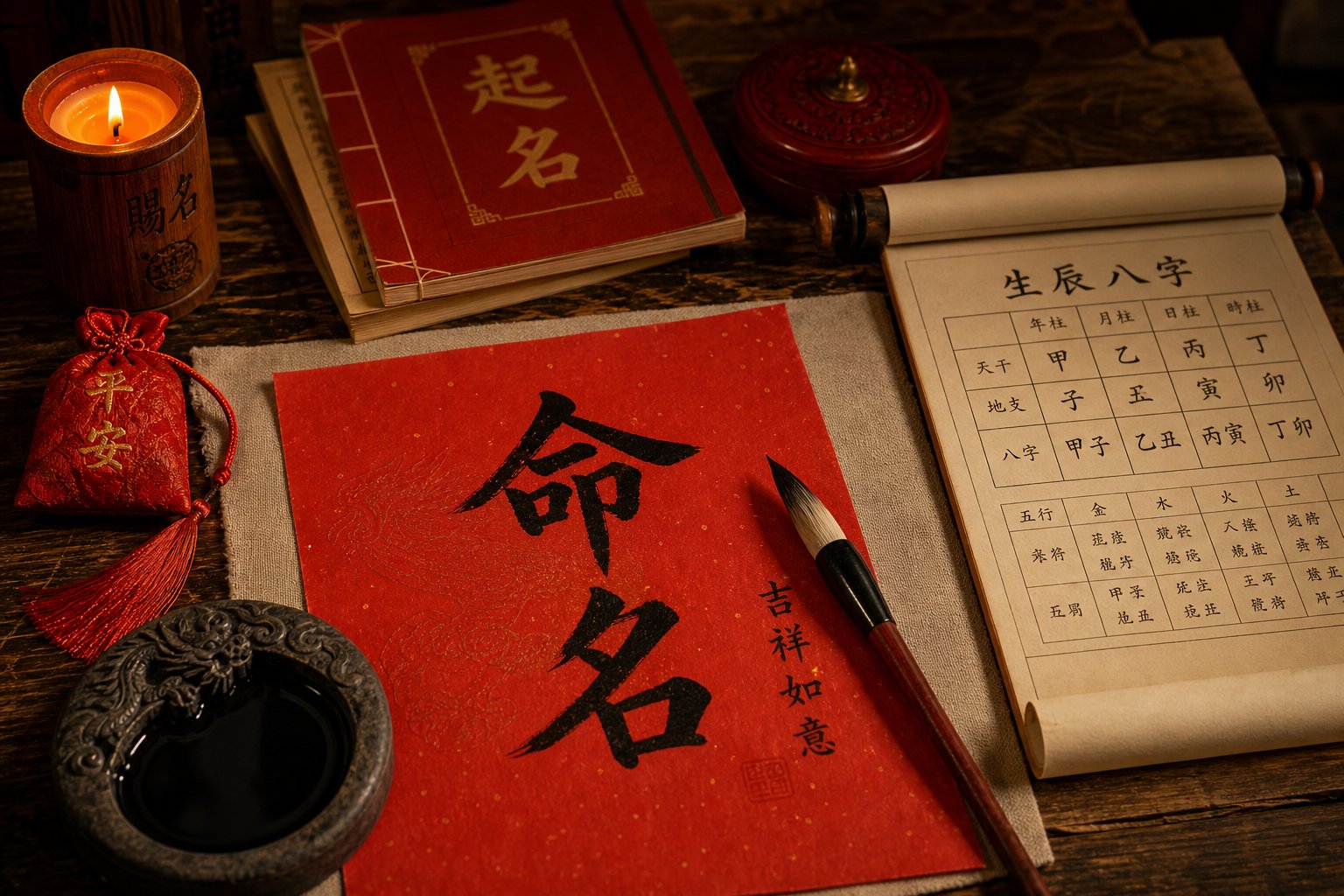
This is where BaZi (Eight Characters) refines the process. BaZi takes four units of time, your birth year, month, day, and hour, and converts each into a pair of characters from the Heavenly Stems and Earthly Branches system. Four time units multiplied by two characters each equals eight characters total. These eight characters map the distribution of the Five Elements across your life chart.
The critical concept is the Day Master: the Heavenly Stem of your Day Pillar, which represents your core elemental identity. If a Pig year baby's Day Master is Yang Wood, they are fundamentally a "Wood person" regardless of their birth year element. The BaZi analyst then assesses whether that Day Master is strong (well-supported by surrounding elements) or weak (drained by them), and identifies which elements the chart needs most.
For someone born in the chinese year 1983, a Water Pig year, their birth year already carries strong Water energy. But if their Day Master is Fire and their chart shows excessive Water overwhelming that flame, the name shouldn't add more water-radical characters despite the zodiac recommendation. Instead, it needs Wood characters (which feed Fire) or Fire characters (which strengthen the Day Master directly). The zodiac provides the broad framework; BaZi provides the individual prescription.
This is also why the chinese horoscope 2007 Fire Pig babies each need individualized attention. Two children born weeks apart in that same Fire Pig year might need opposite elemental support in their names based on their specific birth charts.
Here's the complete process, from zodiac identification through final name selection:
- Determine the elemental Pig variant. Identify whether the birth year is Wood, Fire, Earth, Metal, or Water Pig. This establishes the broad elemental context and narrows your initial character pool. For the 1983 year of the chinese zodiac, that's Water Pig. For chinese zodiac in 2007, it's Fire Pig.
- Calculate the BaZi chart. Using the exact birth date, hour, and geographic location, determine all four pillars and identify the Day Master. Assess whether the Day Master is strong or weak, and identify the Favorable Element (用神) that the chart most needs for balance.
- Cross-reference zodiac and BaZi needs. Where the zodiac's recommended radicals overlap with the BaZi's favorable element, you have your strongest candidates. Where they conflict, BaZi takes priority for individual balance while zodiac principles guide secondary character choices.
- Select characters from auspicious radical groups. Draw from the five core radical families (wood, water, field, mouth, roof) that benefit Pig year births, filtering for characters that also serve the BaZi's elemental needs. Aim for characters whose individual meanings complement each other when read together.
- Check tonal harmony with the surname. Speak the full name aloud. Verify that the tone pattern creates pleasing variety rather than monotony or awkward sandhi clusters. Test it in different emotional registers: a whisper, a call, a formal announcement.
- Verify combined meaning. Read the full name as a phrase. Do the characters together suggest something coherent and aspirational? Watch for unintended homophones or character combinations that might carry negative connotations in regional dialects.
- Consult family and cultural context. Check that the name doesn't clash with generational naming conventions (字辈), duplicate characters used by living elders, or carry associations that feel inappropriate within the family's specific regional or cultural background.
This seven-step process might seem elaborate, but it reflects how traditional naming actually works in practice. The zodiac sign opens the door. The Five Elements narrow the hallway. BaZi points you to the specific room. And tonal harmony ensures the name sounds like it belongs there.
One final consideration worth emphasizing: while this framework provides meaningful structure, it's not meant to replace human judgment and family connection. The most resonant names often emerge when these principles are discussed with grandparents who carry generational naming wisdom, or with a naming specialist who can read the full BaZi chart with trained eyes. A name chosen through both systematic analysis and family intuition carries layers of significance that no formula alone can produce. The zodiac gives you the map. Your family gives it a heartbeat.
Frequently Asked Questions About Year of the Pig Name Meanings
1. What are the luckiest radicals for Pig year baby names?
Five radical groups are considered most auspicious for Pig year births: the wood radical (木) for growth, the water radical (氵) for nourishment since the Pig's Earthly Branch belongs to water, the field radical (田) for abundance, the mouth radical (口) symbolizing being well-fed, and the roof radical (宀) representing shelter and security. Characters with the metal radical (钅) also benefit Pig babies because metal generates water in the Five Elements cycle, strengthening the Pig's innate element.
2. What characters should you avoid in names for Pig year babies?
Traditional practice warns against several character types for Pig year births. Snake-related characters and components like 巳 create a direct zodiac clash since the Snake opposes the Pig. The 彳 radical suggests wandering that conflicts with the Pig's home-loving nature. Characters with 王 or 君 radicals carry overly dominant energy that clashes with the Pig's gentle temperament. The knife radical 刀 introduces cutting energy that opposes the Pig's association with wholeness and abundance.
3. How do the Five Elements change Pig year naming strategies?
Each Pig year carries one of five elemental signatures that shifts which characters work best. Wood Pigs (1935, 1995) benefit from wood-radical characters like 林 and 彬. Fire Pigs (1947, 2007) suit warmth-related characters like 煦 and 明. Earth Pigs (1959, 2019) align with grounding characters like 坤 and 安. Metal Pigs (1911, 1971) resonate with characters like 铭 and 义. Water Pigs (1923, 1983) thrive with water-radical characters like 泽 and 涵. A name perfect for one elemental variant may actively clash with another.
4. Why is the character 猪 never used directly in Chinese names?
Although 猪 is the standard character for pig, it carries modern connotations of laziness or clumsiness in everyday Chinese speech, making it culturally inappropriate for formal names. Instead, parents use characters that contain the pig radical 豕 while carrying elevated meanings, such as 豪 (heroic, grand) or 家 (home, family). The Earthly Branch character 亥 is also avoided in given names because it reads as overly technical, like naming a child after a calendar notation.
5. How does the Japanese Boar year differ from the Chinese Pig year for naming?
Japan replaces the domestic pig with the wild boar (inoshishi) in its zodiac, fundamentally changing the symbolic landscape for naming. While Chinese Pig year names emphasize prosperity, contentment, and gentle abundance, Japanese Boar year names draw on courage, determination, and forward momentum. Popular Japanese name characters for boar year babies include 勇 (courage), 進 (advance), and 誠 (sincerity), reflecting the boar's reputation for charging ahead with unwavering resolve.