Understanding the Year of the Rooster and Chinese Naming Traditions
When you pick a name for your baby in the West, you might focus on how it sounds, what it means, or whether it honors a family member. Chinese baby names operate on an entirely different level. They function as a kind of energetic blueprint, designed to shape a child's fortune from the moment they enter the world.
The Rooster holds the 10th position in the Chinese zodiac's 12-year cycle. People born in Rooster years are associated with confidence, punctuality, and sharp observation. But here's what most parents miss: the zodiac sign alone doesn't determine the ideal name. A child's birth year interacts with specific character radicals, elemental forces, and even the number of brushstrokes in each character to create a name that either supports or undermines their innate energy.
Why the Rooster Year Matters for Baby Naming
In Chinese tradition, a person's constitution and fate are connected to their Eight Characters (BaZi), which encode the year, month, day, and hour of birth using Heavenly Stems and Earthly Branches. These Eight Characters link directly to the 12 zodiac animals and the Five Elements: Metal, Wood, Water, Fire, and Earth. Giving a child the right name is believed to secure a favorable balance among these forces.
For Rooster babies specifically, naming strategy considers which character components (radicals) resonate with the Rooster's nature, which elemental imbalances need correction, and which personality traits deserve reinforcement or softening.
The Cultural Significance of Zodiac-Based Names
In Western naming, a name is primarily an identity label. In Chinese naming philosophy, a name is a prescription, carefully composed to harmonize a child's cosmic energy with the world they'll navigate.
This is why choosing a Chinese baby name involves far more than browsing a list of chinese baby names and meanings. It requires understanding how radicals connect to zodiac symbolism, how the Five Elements theory (Wu Xing) corrects elemental gaps, how stroke count numerology influences luck, and how a Rooster child's personality traits guide character selection.
Each of these layers matters. Skip one, and you might end up with a name that looks beautiful on paper but clashes with your baby's birth chart. The sections ahead break down exactly how these pieces fit together so you can make an informed, culturally grounded choice for your Rooster baby.

Rooster Year Cycles and the Five Elements Connection
Not all Rooster babies are created equal. A child born in 2017 carries fundamentally different elemental energy than one born in 2005 or 1993, even though all three fall under the Rooster sign. The difference comes down to the Five Elements cycle, which pairs each Rooster year with a specific element, creating distinct naming needs for each generation.
Complete List of Rooster Years and Their Elements
The Chinese zodiac operates on a 60-year grand cycle, combining 12 animals with five elements. Each element governs two consecutive years across the full zodiac, meaning the Rooster meets each element once every 60 years. You can determine the element by the last digit of the birth year: 0 or 1 is Metal, 2 or 3 is Water, 4 or 5 is Wood, 6 or 7 is Fire, and 8 or 9 is Earth.
Here's the complete breakdown for all recent and upcoming Rooster years:
| Rooster Year | Associated Element | Dominant Energy | Balancing Elements for Names |
|---|---|---|---|
| 1957 | Fire | Passion, assertiveness | Water or Earth |
| 1969 | Earth | Stability, practicality | Wood or Metal |
| 1981 | Metal | Discipline, determination | Fire or Water |
| 1993 | Water | Wisdom, adaptability | Earth or Wood |
| 2005 | Wood | Growth, creativity | Metal or Fire |
| 2017 | Fire | Passion, assertiveness | Water or Earth |
| 2029 | Earth | Stability, practicality | Wood or Metal |
If you're looking at chinese baby names over time popularity, you'll notice naming trends shift with each elemental cycle. Parents searching for auspicious chinese names for rooster babies 2017, for example, gravitated toward Water and Earth characters to cool the Fire Rooster's intense energy.
How the Five Elements Shape Name Selection
The Wu Xing (Five Elements) system isn't about stacking favorable-sounding characters together. It's a correction principle. The goal is balance, not amplification.
Two cycles govern how elements interact. The Generating Cycle (Sheng) describes how one element nourishes the next: Wood feeds Fire, Fire creates Earth, Earth bears Metal, Metal collects Water, and Water nourishes Wood. The Controlling Cycle (Ke) describes how one element restrains another: Water quenches Fire, Fire melts Metal, Metal cuts Wood, Wood parts Earth, and Earth dams Water.
Imagine a baby chinese name 2017 scenario. That child is a Fire Rooster, already carrying double intensity from both the Rooster's confident nature and Fire's passionate energy. Selecting characters with Water radicals (氵, 雨) introduces a cooling, wisdom-oriented counterbalance through the Controlling Cycle. Alternatively, Earth radicals (土, 山) drain excess Fire through the Generating Cycle, since Fire naturally produces Earth.
A Metal Rooster (1981) faces a different challenge. Metal amplifies the Rooster's already rigid, perfectionist tendencies. Here, Water characters channel that rigidity into flowing adaptability, while Fire characters soften Metal's sharp edges.
This elemental diagnosis is the foundation every other naming decision builds upon. The radicals you choose, the personality traits you want to reinforce or temper, even the stroke count targets all flow from this initial Five Elements assessment of your child's birth year.
How Rooster Personality Traits Should Guide Your Name Choice
Elemental balance gives you the foundation, but personality alignment is where baby chinese name selection gets truly personal. The Rooster's character profile carries distinct strengths and vulnerabilities, and the characters you choose can either amplify what's already strong or introduce qualities that smooth out rough edges.
Key Rooster Personality Traits That Influence Names
Rooster children tend to arrive with a built-in sense of purpose. They're observant, organized, and surprisingly decisive for their age. As they grow, these qualities sharpen into recognizable patterns that Chinese naming tradition has mapped for centuries.
Here's what the Rooster personality looks like when broken into strengths and potential challenges:
- Confidence and decisiveness - Roosters trust their own judgment and act quickly, but this can tip into stubbornness or arrogance when unchecked.
- Honesty and directness - They speak their mind with clarity, though this frankness sometimes lands as bluntness or tactlessness.
- Diligence and punctuality - Roosters are natural hard workers who respect schedules, yet they may become rigid perfectionists who struggle with flexibility.
- Ambition and leadership - They gravitate toward authority and recognition, but the drive for attention can make them appear vain or self-centered.
- Loyalty and moral conviction - Roosters fight for what's right, though their strong opinions can create friction in relationships.
So how do chinese parents name their baby when these traits are in play? They choose one of two deliberate strategies.
Complementing Strengths vs Balancing Weaknesses in Name Choices
The first approach leans into what the Rooster already does well. If you want your child's name to reinforce their natural confidence and leadership, you'd select characters that echo those qualities:
- 信 (xin4) - trust, integrity. Amplifies the Rooster's honest nature and moral compass.
- 志 (zhi4) - ambition, will. Reinforces the Rooster's drive and sense of purpose.
- 明 (ming2) - bright, clear. Supports the Rooster's sharp perception and decisiveness.
- 毅 (yi4) - perseverance, resolve. Strengthens the Rooster's diligent, hardworking character.
The second approach works in the opposite direction. Instead of turning up the volume on existing traits, it introduces counterbalancing energy. Think of it as giving your child access to qualities that don't come as naturally to the Rooster temperament:
- 柔 (rou2) - gentle, soft. Tempers the Rooster's bluntness with grace and diplomacy.
- 忍 (ren3) - patience, endurance. Counteracts the Rooster's tendency toward impatience and rigidity.
- 和 (he2) - harmony, peace. Softens the Rooster's combative streak and encourages cooperation.
- 慧 (hui4) - inner wisdom, intuition. Balances the Rooster's outward confidence with reflective depth.
Neither approach is inherently better. A baby chinese name built on strength-amplification works well when the child's BaZi chart already shows balance in other areas. A name designed for counterbalance makes more sense when the birth chart reveals excess Metal or Fire energy compounding the Rooster's natural intensity.
Many parents blend both strategies within a two-character given name. You might pair 志 (zhi4, ambition) with 柔 (rou2, gentleness) to create a name that says "driven yet graceful." This layered approach reflects how experienced naming masters think: not in single characters, but in combinations that tell a complete story about who the child can become.
Personality alignment points you toward the right meanings. But meaning alone isn't enough. The specific radicals within each character carry their own zodiac significance, and for Rooster babies, certain radical families unlock an additional layer of auspicious energy that pure meaning-based selection would miss entirely.
Auspicious Radicals and Characters for Rooster Babies Explained
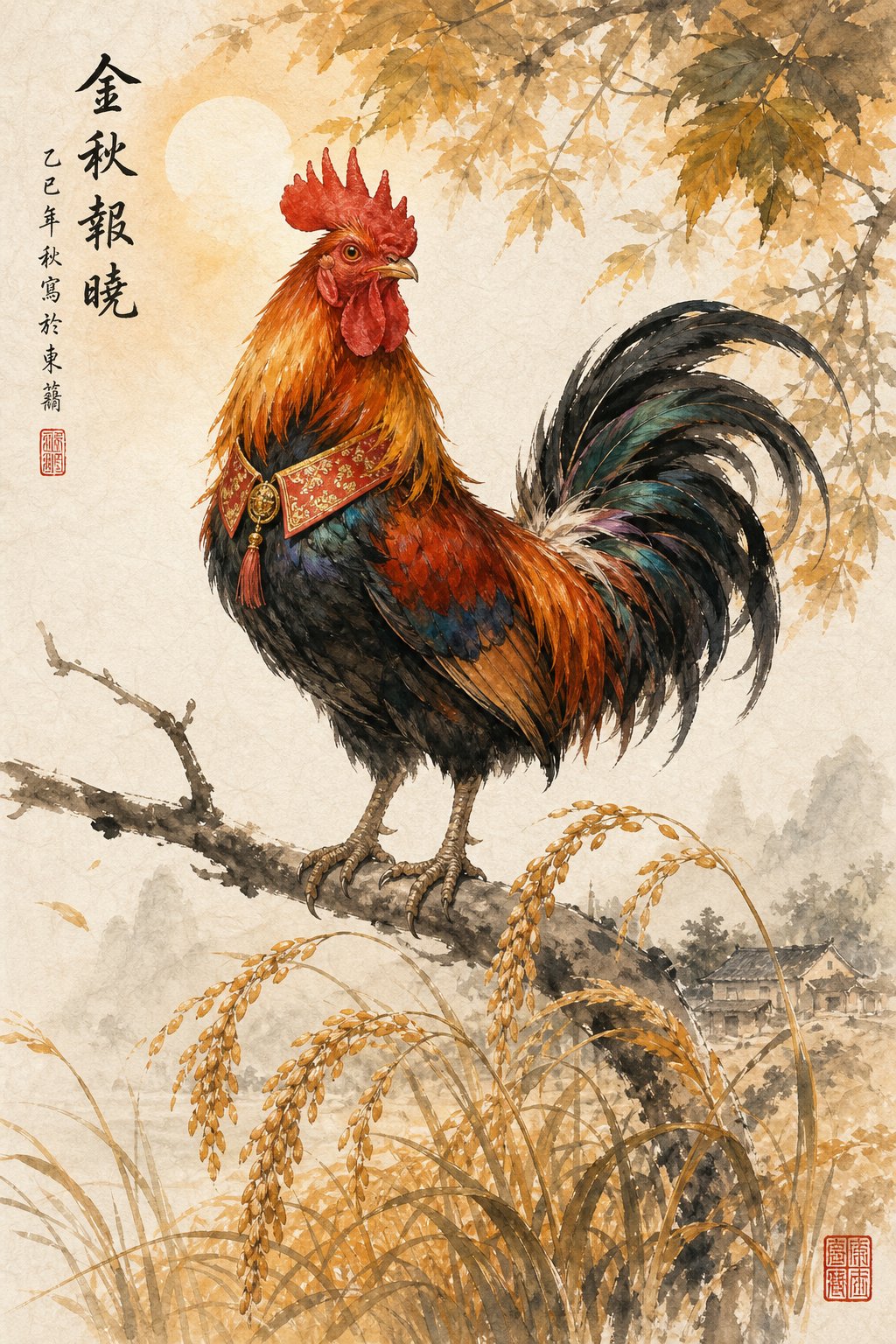
Radicals are the building blocks inside every Chinese character, and for Rooster babies, specific radical families carry zodiac-level significance. The logic isn't arbitrary. Each auspicious radical connects to something the Rooster does, needs, or represents in nature. When you understand the reasoning, selecting baby boy names chinese characters or girl name characters becomes a deliberate, meaningful process rather than guesswork.
The table below summarizes the major radical categories, their zodiac reasoning, and example characters before we explore each one in detail:
| Radical Category | Key Radicals | Zodiac Reasoning | What It Symbolizes |
|---|---|---|---|
| Grain and Harvest | 禾 (he2), 米 (mi3), 豆 (dou4) | Roosters feed on grain and rice, never meat | Abundance, support, nourishment |
| Tree and Nature | 山 (shan1), 宀 (mian2) | Roosters roost in trees and seek shelter | Security, stability, protection |
| Crown and Clothing | 彡 (shan1), 纟 (si1), 衤 (yi1), 采 (cai3) | Roosters have colorful plumage like fine garments | Status, beauty, promotion to phoenix |
| Mountain and Authority | 山 (shan1), 日 (ri4) | Roosters crow atop mountains at sunrise | Authority, leadership, commanding presence |
Grain and Harvest Radicals for Abundance
Roosters eat grain, cereal, and rice. They never hunt meat. In Chinese naming philosophy, characters containing grain-related radicals like 禾, 米, and 豆 signal that the child will always be well-provided for, receiving continual support and help from friends and colleagues throughout life.
Think of it this way: a well-fed rooster is a content, thriving rooster. Placing grain radicals in your child's name symbolically ensures they'll never go hungry, whether that hunger is literal or metaphorical (career opportunities, relationships, resources).
| Full Name Example | Pinyin | Character Breakdown | Rooster Connection |
|---|---|---|---|
| 秀莲 (girl) | xiu4 lian2 | 秀 (禾 radical: elegant, flourishing) + 莲 (lotus, purity) | Grain radical ensures abundance; lotus adds grace |
| 科益 (boy) | ke1 yi4 | 科 (禾 radical: discipline, branch of study) + 益 (benefit, gain) | Grain radical feeds the Rooster; combined meaning suggests scholarly prosperity |
| 香秉 (boy) | xiang1 bing3 | 香 (禾 radical: fragrant, reputable) + 秉 (禾 radical: to hold, uphold) | Double grain energy signals lifelong nourishment and principled character |
Tree and Nature Radicals for Security
Where does a rooster sleep at night? In a tree, safely above predators. Characters containing the 山 (mountain) radical or shelter-related radicals like 宀 (roof) represent a protected environment. A Rooster baby whose name includes these radicals is symbolically given a safe perch, stability in career and relationships, and supportive people around them.
The mountain radical carries a dual meaning. A rooster perched on a mountain appears bright and valiant, suggesting an upgrade to phoenix status and promotion in life. However, note that the 木 (wood) radical requires caution. While roosters roost in trees, the Rooster's Earthly Branch (酉) belongs to Metal, which conflicts with Wood in the Five Elements cycle. Use 木 characters selectively and only when the child's BaZi chart supports it.
| Full Name Example | Pinyin | Character Breakdown | Rooster Connection |
|---|---|---|---|
| 岚宇 (boy) | lan2 yu3 | 岚 (山 radical: mountain mist, ethereal) + 宇 (宀 radical: universe, roof) | Mountain authority plus shelter creates a name of protected ambition |
| 安岭 (boy) | an1 ling3 | 安 (宀 radical: peace, safety) + 岭 (山 radical: mountain ridge) | Shelter and mountain combine for stability and commanding presence |
| 宛容 (girl) | wan3 rong2 | 宛 (宀 radical: graceful, as if) + 容 (宀 radical: appearance, tolerance) | Double shelter energy ensures the Rooster feels protected and at ease |
Crown and Clothing Radicals for Status
Imagine a rooster's plumage: iridescent feathers, a proud red comb, tail feathers fanning out like a royal cape. This visual is exactly why clothing and adornment radicals are considered auspicious chinese names for rooster babies. Characters containing 彡 (decorative strokes), 纟 (silk), 衤 (clothing), or 采 (colorful) symbolize the Rooster being "dressed up" and elevated to phoenix status, bringing recognition, respect, and social standing.
In traditional naming logic, a well-adorned rooster transcends its ordinary nature. It becomes a phoenix. For your child, this translates to rising above peers, gaining respect, and achieving prominence in their field.
| Full Name Example | Pinyin | Character Breakdown | Rooster Connection |
|---|---|---|---|
| 彦彬 (boy) | yan4 bin1 | 彦 (彡 radical: accomplished person) + 彬 (彡 radical: refined, elegant) | Double adornment radicals elevate the Rooster to phoenix; signals cultured leadership |
| 彩维 (girl) | cai3 wei2 | 彩 (彡 radical: colorful, brilliant) + 维 (纟 radical: to maintain, dimension) | Color and silk radicals dress the Rooster in finery; suggests brilliance with substance |
| 裕祺 (boy) | yu4 qi2 | 裕 (衤 radical: abundant, prosperous) + 祺 (礻 radical: auspicious, blessed) | Clothing radical promotes status; combined meaning signals blessed prosperity |
When selecting baby boy names in chinese characters or girl names with these radicals, remember that the most effective approach layers radical symbolism with elemental balance. A name like 彦彬 (yan4 bin1) works beautifully for its Rooster symbolism, but you'd still want to verify it against your child's specific Five Elements profile and stroke count targets.
Auspicious radicals tell you what to include. Equally important is knowing what to avoid. Certain radicals carry energy that directly conflicts with the Rooster's nature, and placing them in a name can introduce challenges that no amount of good intention will offset.
Naming Taboos and Inauspicious Elements to Avoid
Knowing which radicals to include is only half the equation. The other half, the part many parents overlook, is understanding which characters carry energy that actively works against a Rooster child. In Chinese naming tradition, taboo radicals aren't just "less ideal." They introduce conflict, struggle, or symbolic harm into the name's energetic signature. Getting this wrong can undermine all the careful elemental balancing you've done elsewhere.
Radicals and Characters to Avoid for Rooster Babies
Each zodiac animal has natural adversaries within the 12-year cycle, and these conflicts translate directly into naming taboos. For the Rooster, the most significant clash is with the Dog. In the Chinese zodiac's Earthly Branches, the Rooster (酉) and the Dog (戌) form a destructive clash (六害, liu hai). This means radicals and characters associated with dogs introduce friction, opposition, and hidden obstacles into a Rooster child's life path.
Beyond the Dog conflict, several other radical families create problems for Rooster babies. Here's why each one clashes:
- 犬 and 犭 (dog radicals) - The Rooster-Dog zodiac clash (酉戌相害) represents mutual harm. Characters like 狮 (lion), 猛 (fierce), or 献 (offer/sacrifice, which contains 犬) place the Rooster in direct conflict with its zodiac adversary, symbolizing lifelong interpersonal friction.
- Double 口 (mouth radical) - A single 口 is acceptable, but characters containing two or more mouth components (like 吕, 品, or 哥) suggest two roosters crowing at each other. In Chinese folk symbolism, two roosters in one space fight for dominance. This radical pattern signals arguments, competition, and inability to find peace.
- 刀, 刂, and 血 (knife and blood radicals) - Roosters are sacrificial animals in traditional Chinese rituals. Characters containing knife radicals (刂) like 刚 (hard, firm) or 利 (sharp, profit), or the blood radical (血), evoke the image of a rooster being slaughtered. This symbolism introduces vulnerability, loss, or being used by others.
- 心 and 忄 (heart/meat radicals) - Roosters are grain-eating birds, not carnivores. Characters with the heart radical in its "meat" interpretation (忄) suggest food the Rooster cannot digest. This symbolizes frustration, seeing abundance but being unable to access it, or working hard without reward.
- 兔 and 卯 (rabbit-related components) - The Rooster (酉) and Rabbit (卯) sit directly opposite each other in the zodiac, forming a direct clash (冲). Characters containing rabbit-related components introduce head-on opposition and instability.
A practical example: the character 勝 (sheng4, victory) might seem positive, but it contains the 力 (power/force) component alongside elements that evoke struggle. Meanwhile, 献 (xian4, to offer) literally contains the dog radical 犬, making it a clear taboo regardless of its noble meaning.
Stroke Count Numerology Basics for Name Selection
Beyond radicals, the total number of brushstrokes in a name carries its own layer of fortune. This system, called bi hua (笔画), treats each stroke as a unit of energy. Even or odd stroke counts determine whether a character is Yin or Yang, and the total stroke count of the full name must land on specific auspicious numbers.
Sounds complex? Here's how it works in practice. A Chinese name typically has three characters: one surname character (天格, tian ge) and two given name characters (地格, di ge). The combined total of all three characters' strokes is called the zhong ge (忠格), and it should equal one of the traditionally favorable numbers: 3, 5, 6, 7, 8, 11, 13, 15, 16, 17, 18, 21, 23, 25, 29, 31, 32, 33, 37, 39, 45, 47, 48, 52, 63, 65, 67, 68, 73, or 81.
There's also a Yin-Yang balance requirement. Characters with an even number of strokes are Yin; odd-numbered strokes are Yang. The three characters in a name should follow one of these patterns:
- Yang - Yang - Yin (odd, odd, even)
- Yin - Yin - Yang (even, even, odd)
- Yang - Yin - Yin (odd, even, even)
- Yin - Yang - Yang (even, odd, odd)
One critical detail that trips up many parents: when determining whether the surname is Yin or Yang, you add one to its stroke count before classifying it. So a surname with 7 strokes becomes 8 for Yin/Yang purposes, making it Yin rather than Yang.
If you're using a baby chinese name calculator to check stroke counts, pay attention to whether it uses traditional (繁体) or simplified (简体) characters. The stroke counts differ significantly between the two systems. Traditional characters are the standard for numerological calculation in Taiwan, Hong Kong, and among most professional naming masters, even when the family uses simplified characters in daily life. A character like 龙 (dragon) has 5 strokes in simplified form but 16 in traditional (龍). That difference alone can shift a name from auspicious to inauspicious territory.
BaZi Birth Chart Considerations
Everything discussed so far applies broadly to all babies born in a Rooster year. But here's what separates a good name from a precisely calibrated one: two children born in the same Rooster year but on different dates and at different hours will have entirely different elemental profiles. This is where BaZi (Eight Characters) analysis enters the picture.
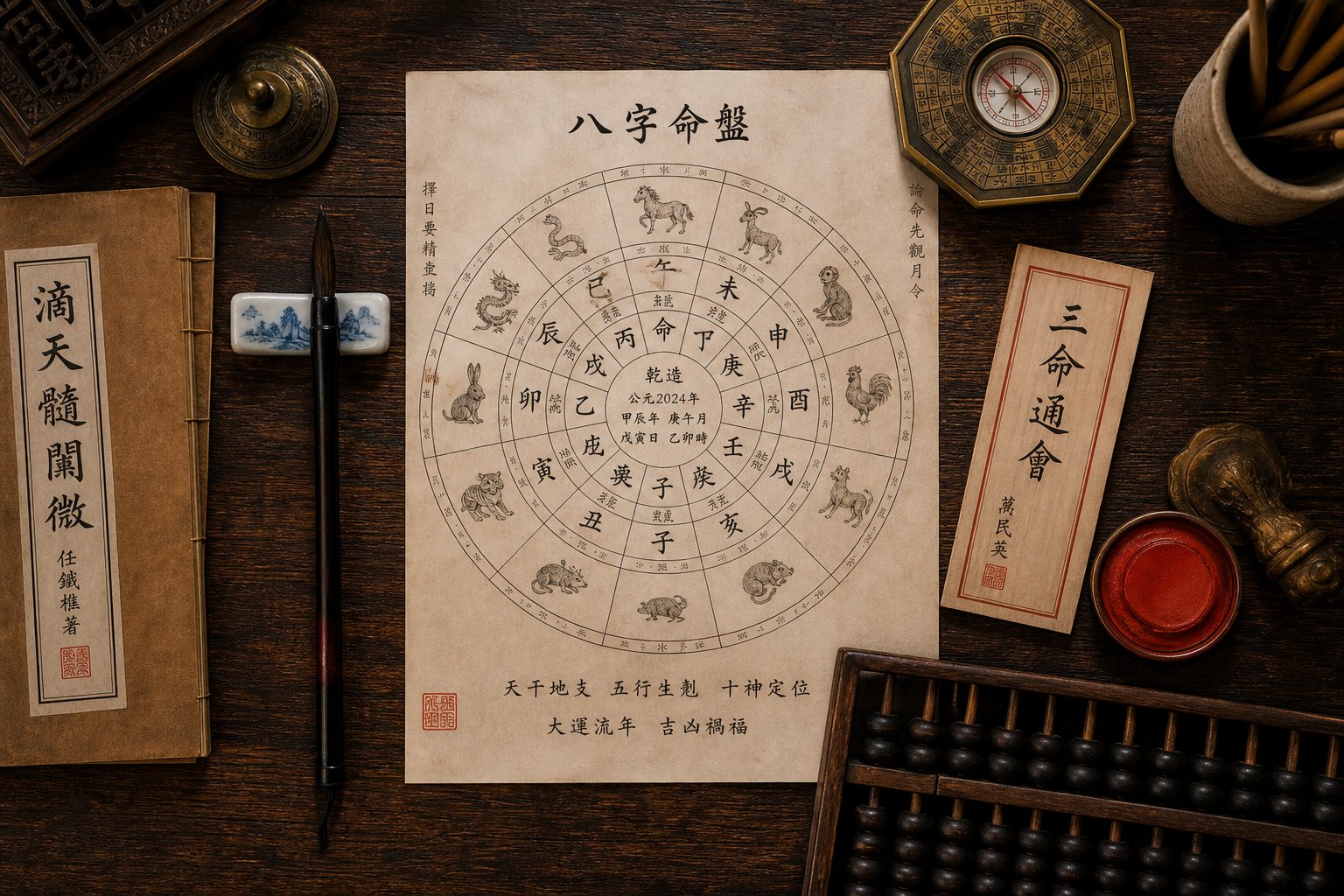
BaZi takes four units of time, your child's birth year, month, day, and hour, and converts each into a pair of characters from the Heavenly Stems and Earthly Branches system. Four time units multiplied by two characters each gives you eight characters total. These eight characters map the elemental distribution across your child's life domains: ancestry (year pillar), career and parents (month pillar), core self and relationships (day pillar), and ambitions and inner world (hour pillar).
The Day Pillar's Heavenly Stem, called the Day Master (日主), represents your child's core elemental identity. If the Day Master is Yang Fire, your child is fundamentally a "Fire person." The surrounding pillars then reveal whether that Fire is well-supported or overwhelmed, strong or weak. A strong Day Master needs different balancing than a weak one, and this distinction directly shapes which characters belong in the name.
For example, imagine two babies both born in the 2017 Fire Rooster year. One is born in June (a Fire month) at midday (a Fire hour), creating a chart saturated with Fire energy. The other is born in November (a Water month) during early morning (a Wood hour). The first child desperately needs Water and Earth characters to cool the excess heat. The second child might actually benefit from Fire or Earth characters to warm a chart that's already being cooled by its month and hour pillars.
This is why a baby chinese name feng shui approach that only considers the birth year will always be incomplete. The year tells you the zodiac animal and its broad element, but the month, day, and hour reveal the specific elemental prescription your child's name needs to fill. Many families consult a baby chinese name fortune teller or professional naming master specifically for this BaZi calculation, since identifying the Day Master's strength and the chart's "Useful God" (用神, the favorable element) requires training that goes beyond general zodiac guidelines.
When should you handle naming yourself versus seeking professional help? If your child's birth chart is relatively straightforward, with clear elemental gaps and no complex clashes between pillars, the zodiac radical guidelines and stroke count rules covered in this article will serve you well. But if the chart shows multiple clashes, an ambiguous Day Master strength, or conflicting elemental needs between pillars, a professional BaZi reading ensures the name addresses the right imbalances rather than accidentally amplifying the wrong ones.
With taboos identified and verification methods in hand, the next step is applying all of this knowledge to actual names. The following sections present curated name options for Rooster girls and boys, each one selected for radical compatibility, elemental balance, and meaningful character pairing.
Beautiful Chinese Girl Names for Rooster Babies
You've identified the right radicals, checked the elemental balance, and mapped out which personality traits to reinforce or soften. The question now is: what does all of that look like when assembled into actual names? This section brings theory into practice with curated chinese baby girl names designed specifically for Rooster year daughters, each one selected for radical compatibility, meaningful character pairing, and zodiac resonance.
Every baby girl chinese name below includes its full character breakdown, pinyin with tones, and a clear explanation of how it connects to Rooster symbolism. The names are organized by the intention behind them, because the first decision isn't which characters look prettiest. It's what energy you want your daughter's name to carry.
Girl Names for Confidence and Leadership
Rooster girls already carry natural confidence and decisiveness. These names lean into that strength, using characters that signal authority, capability, and the kind of presence that commands respect. Each one incorporates auspicious Rooster radicals like 山 (mountain), 彡 (adornment), or 宀 (shelter) to reinforce zodiac harmony.
| Chinese Characters | Pinyin | Meaning Breakdown | Rooster Connection |
|---|---|---|---|
| 岚彤 | lan2 tong2 | 岚 (mountain mist, ethereal presence) + 彤 (red, vibrant) | 山 radical gives mountain authority; 彡 radical in 彤 adorns the Rooster like a phoenix crest |
| 彦宁 | yan4 ning2 | 彦 (accomplished, talented person) + 宁 (tranquil, composed) | 彡 radical elevates status; 宀 radical in 宁 provides shelter and stability for the Rooster |
| 安岑 | an1 cen2 | 安 (peace, security) + 岑 (small mountain peak) | 宀 radical shelters the Rooster; 山 radical in 岑 places her atop the mountain, crowing with authority |
| 宣彰 | xuan1 zhang1 | 宣 (to declare, proclaim) + 彰 (manifest, distinguished) | 宀 radical protects; 彡 radical in 彰 adorns the Rooster with visible distinction and recognition |
These names pair especially well with second-tone (rising) or third-tone (dipping) surnames. For example, 岚彤 flows smoothly after surnames like 陈 (chen2) or 李 (li3), where the tonal contour moves from rising or dipping into the name's second-second tone pattern, creating a melodic lift.
Girl Names for Grace and Beauty
If you'd rather balance the Rooster's sometimes sharp edges with softness and elegance, these chinese baby names for girls introduce gentleness without sacrificing zodiac alignment. The clothing and silk radicals (纟, 彡, 采) are especially powerful here, symbolizing the Rooster's beautiful plumage while carrying meanings of refinement and grace.
| Chinese Characters | Pinyin | Meaning Breakdown | Rooster Connection |
|---|---|---|---|
| 彩薇 | cai3 wei1 | 彩 (colorful, brilliant) + 薇 (fern, rosa) | 采 radical in 彩 represents the Rooster's vibrant plumage; 薇 adds natural elegance and resilience |
| 绮容 | qi3 rong2 | 绮 (fine silk, beautiful) + 容 (appearance, tolerance) | 纟 radical dresses the Rooster in silk finery; 宀 radical in 容 provides sheltered grace |
| 秀婉 | xiu4 wan3 | 秀 (elegant, flourishing) + 婉 (gentle, graceful) | 禾 radical in 秀 ensures abundance; 婉 softens the Rooster's directness with diplomacy |
| 纬宛 | wei3 wan3 | 纬 (latitude, weft thread) + 宛 (graceful, as if) | 纟 radical adorns with silk; 宀 radical in 宛 shelters the Rooster in comfort and beauty |
For baby girl chinese names and meaning rooted in beauty, notice how 秀婉 works on two levels simultaneously. The 禾 grain radical in 秀 feeds the Rooster (abundance symbolism), while the character's surface meaning of "elegant" and its pairing with 婉 (gentle) create a name that reads as "flourishing grace." That's the layered approach that separates zodiac-aligned naming from simple dictionary browsing.
These names complement fourth-tone (falling) surnames beautifully. A surname like 赵 (zhao4) or 宋 (song4) followed by the third-third tone pattern of 绮容 creates a satisfying tonal dip before the name rises, giving the full name a sense of grounded elegance.
Girl Names for Wisdom and Creativity
Rooster children are naturally observant and sharp-minded. These chinese baby girl names with meaning centered on wisdom channel that intelligence into creative and intellectual directions, using characters that encourage depth, curiosity, and artistic sensibility.
| Chinese Characters | Pinyin | Meaning Breakdown | Rooster Connection |
|---|---|---|---|
| 宜彤 | yi2 tong2 | 宜 (suitable, harmonious) + 彤 (red, literary brilliance) | 宀 radical shelters the Rooster; 彡 radical in 彤 adorns with creative fire and visibility |
| 程颖 | cheng2 ying3 | 程 (journey, process, method) + 颖 (clever, outstanding) | 禾 radical in 程 nourishes the Rooster with grain; 颖 amplifies the Rooster's natural intelligence |
| 维岚 | wei2 lan2 | 维 (to maintain, dimension, thinking) + 岚 (mountain mist) | 纟 radical adorns with silk; 山 radical in 岚 grants mountain-top vision and creative perspective |
| 宁秋 | ning2 qiu1 | 宁 (serene, tranquil) + 秋 (autumn, harvest time) | 宀 radical provides shelter; 禾 radical in 秋 signals harvest abundance and reflective maturity |
A note on 宁秋: while the reference material from YourChineseAstrology lists 秋 among characters to use carefully due to its Metal association (秋 relates to the western direction and Metal element), this character works well when the child's BaZi chart needs Metal reinforcement or when paired with a Water or Wood element character elsewhere in the name. Always cross-reference against your child's specific elemental needs.
These wisdom-oriented names work across most surname tones. 程颖 pairs particularly well with single-syllable first-tone surnames like 张 (zhang1) or 王 (wang2), where the flat opening tone gives way to the rising-then-dipping pattern of the given name, creating a sense of forward momentum.
Here are the top recommendations across all three categories, ranked by versatility, radical strength, and ease of surname pairing:
- 秀婉 (xiu4 wan3) - Combines grain radical abundance with graceful softening of Rooster intensity. Works with nearly any surname tone.
- 彦宁 (yan4 ning2) - Double auspicious radicals (彡 + 宀) with a meaning that balances accomplishment and inner peace.
- 程颖 (cheng2 ying3) - Grain radical nourishment paired with intellectual sharpness. Ideal for parents who want to honor the Rooster's natural cleverness.
- 绮容 (qi3 rong2) - Silk and shelter radicals create a name of protected beauty. Excellent for balancing the Rooster's blunt tendencies.
- 彩薇 (cai3 wei1) - The plumage-to-phoenix symbolism is strongest here, making it a standout baby girl chinese name for families who want their daughter's Rooster energy to shine visibly.
When browsing chinese baby names girl lists online, you'll find plenty of beautiful characters. But beauty alone doesn't make a name zodiac-appropriate. Each recommendation above was selected because it satisfies multiple layers simultaneously: radical compatibility with the Rooster, meaningful character pairing, tonal flow potential, and either strength amplification or weakness balancing depending on the parent's intention.
Of course, Rooster daughters aren't the only ones who benefit from this layered approach. The same radical logic, elemental balancing, and personality alignment principles apply to boys, though the character choices and naming intentions shift in distinct ways.
Strong Chinese Boy Names for Rooster Babies
The same radical logic and elemental reasoning that shaped the girl names above applies to chinese baby boy names, but the character pool and naming intentions shift. Boy names in Chinese tradition tend to draw from characters signaling ambition, moral strength, and intellectual sharpness. For Rooster sons, the goal is channeling that natural confidence and drive into characters that also carry zodiac-level support through auspicious radicals.
If you're building a baby boy chinese name list for a Rooster child, start by deciding your intention. Do you want to amplify the Rooster's natural boldness? Reinforce his moral compass? Or cultivate the intellectual depth that balances his outward confidence? Each direction calls for different characters, and the tables below organize recommendations accordingly.
Boy Names for Strength and Ambition
Rooster boys rarely lack drive. They're wired for leadership and recognition. These baby boy chinese names lean into that energy, using mountain radicals (山) for commanding authority, grain radicals (禾) for sustained abundance, and adornment radicals (彡) that elevate the Rooster toward phoenix status. The result: names that say "born to lead" while staying rooted in zodiac harmony.
| Chinese Characters | Pinyin | Meaning Breakdown | Rooster Connection |
|---|---|---|---|
| 彦峰 | yan4 feng1 | 彦 (accomplished, talented person) + 峰 (mountain peak, summit) | 彡 radical adorns the Rooster with distinction; 山 radical in 峰 places him atop the mountain crowing at sunrise |
| 岳秉 | yue4 bing3 | 岳 (great mountain, lofty) + 秉 (to hold, uphold principles) | 山 radical grants commanding presence; 禾 radical in 秉 ensures the Rooster is well-nourished and principled |
| 科峻 | ke1 jun4 | 科 (discipline, branch of study) + 峻 (steep, towering, rigorous) | 禾 radical in 科 feeds the Rooster with grain abundance; 山 radical in 峻 elevates authority and ambition |
| 崇彬 | chong2 bin1 | 崇 (lofty, sublime, to revere) + 彬 (refined, elegant bearing) | 山 radical in 崇 signals mountain-top authority; 彡 radical in 彬 adorns the Rooster with cultured presence |
Notice how 彦峰 layers two auspicious radical families into a single name. The 彡 radical in 彦 dresses the Rooster in fine plumage (status elevation), while the 山 radical in 峰 positions him at the summit (leadership). For parents who want their son's name to carry maximum zodiac resonance, this kind of double-radical stacking is the strongest approach.
These names pair naturally with first-tone (flat) or third-tone (dipping) surnames. A surname like 张 (zhang1) followed by 彦峰 (yan4 feng1) creates a tonal sequence of flat-falling-flat, which sounds steady and authoritative. Similarly, 李 (li3) before 科峻 (ke1 jun4) moves from a dip into level-then-falling tones, giving the full name a sense of rising momentum.
Boy Names for Integrity and Honor
The Rooster's honesty is one of his defining traits, sometimes to a fault. These baby boy names in chinese with meaning centered on moral character reinforce that integrity while introducing warmth and depth. Rather than raw ambition, these names signal a person others trust and respect, someone whose word carries weight.
| Chinese Characters | Pinyin | Meaning Breakdown | Rooster Connection |
|---|---|---|---|
| 宏秩 | hong2 zhi4 | 宏 (grand, magnanimous) + 秩 (order, proper sequence) | 宀 radical in 宏 shelters the Rooster; 禾 radical in 秩 provides grain nourishment while signaling principled structure |
| 裕安 | yu4 an1 | 裕 (abundant, prosperous, generous) + 安 (peace, stability) | 衤 clothing radical in 裕 adorns the Rooster with prosperity; 宀 radical in 安 provides a safe roost |
| 宜彰 | yi2 zhang1 | 宜 (suitable, righteous, proper) + 彰 (manifest, make evident) | 宀 radical shelters; 彡 radical in 彰 makes the Rooster's virtues visible and recognized |
| 秉宁 | bing3 ning2 | 秉 (to uphold, hold firm to principles) + 宁 (tranquil, composed) | 禾 radical in 秉 feeds the Rooster; 宀 radical in 宁 provides calm shelter, balancing the Rooster's intensity |
裕安 deserves special attention. The 衤 (clothing) radical in 裕 symbolically dresses the Rooster in abundance, elevating him toward phoenix status, while 安 with its 宀 (roof) radical gives him a protected home. Together, the name reads as "generously prosperous and at peace," a combination that tempers the Rooster's restless ambition with contentment and groundedness. This makes it an excellent baby boy chinese name for parents who want to soften their son's competitive edge without diminishing his potential.
For baby chinese boy names in this category, fourth-tone (falling) surnames create particularly strong pairings. A surname like 赵 (zhao4) or 宋 (song4) followed by 裕安 (yu4 an1) produces a falling-falling-flat sequence that sounds decisive yet resolves peacefully, mirroring the name's meaning of prosperous stability.
Pairing Names with Surnames for Tonal Harmony
You'll notice each name recommendation above includes surname pairing guidance. This isn't cosmetic. In Mandarin, tonal flow determines whether a name sounds elegant or awkward when spoken aloud. Since your child will introduce themselves thousands of times throughout life, the phonetic impression matters as much as the written meaning.
Here's the core principle: avoid placing identical tones next to each other, especially three characters in a row sharing the same tone. Beyond that, certain tone combinations create natural rhythm:
- Fourth-tone surname + second-tone given name character - Creates a satisfying fall-then-rise pattern. Example: 赵宏秩 (zhao4 hong2 zhi4) drops then lifts before resolving downward.
- First-tone surname + fourth-tone + first-tone given name - Produces a level-drop-level pattern that sounds steady and commanding. Example: 张彦峰 (zhang1 yan4 feng1).
- Second-tone surname + fourth-tone + second-tone given name - Creates a wave-like rise-fall-rise that sounds dynamic and memorable. Example: 陈岳秉 (chen2 yue4 bing3).
- Third-tone surname + first-tone + fourth-tone given name - Moves from a dip into level then falling, creating forward momentum. Example: 李科峻 (li3 ke1 jun4).
The test is simple: say the full name out loud three times quickly. If it flows without your tongue tripping or the tones blurring together, the pairing works. If you find yourself swallowing a syllable or the name sounds monotone, try rearranging the given name characters or selecting an alternative with a different tonal profile.
One more consideration that many baby boy names in chinese guides overlook: avoid homophones with negative meanings. A name might look perfect on paper, but if its spoken form sounds identical to an unfavorable word, native speakers will notice immediately. For example, 宜死 (yi2 si3) would never be used because si3 is a homophone for death (死). Always speak the full name aloud and check whether any syllable combination echoes common words with unfortunate connotations.
Here are the top boy name recommendations ranked by radical strength, tonal versatility, and balanced meaning:
- 彦峰 (yan4 feng1) - Double auspicious radicals with a meaning of "distinguished person at the summit." Works with most surname tones and carries the strongest Rooster-to-phoenix elevation symbolism.
- 裕安 (yu4 an1) - Clothing and shelter radicals combine prosperity with peace. Ideal for balancing the Rooster's restless drive with contentment.
- 崇彬 (chong2 bin1) - Mountain authority paired with refined elegance. Signals a leader who earns respect through cultivation rather than force.
- 秉宁 (bing3 ning2) - Grain nourishment and sheltered calm. The most balancing option for Rooster boys whose charts show excess Fire or Metal energy.
- 科峻 (ke1 jun4) - Grain radical feeds intellectual growth while mountain radical grants towering ambition. Strong choice for parents prioritizing academic and professional success.
Each name on this chinese baby names boy list satisfies multiple dimensions simultaneously: radical compatibility with the Rooster zodiac, meaningful character pairing that tells a coherent story, and tonal patterns that flow naturally with common Chinese surnames. The strongest names aren't just individually beautiful characters placed side by side. They're unified compositions where sound, meaning, and zodiac energy reinforce each other.
Selecting the right characters is one challenge. But for families raising children across cultures, there's an additional layer: finding names that honor Chinese naming traditions while functioning smoothly in English-speaking environments. That cross-cultural bridge introduces its own set of considerations that pure character selection doesn't address.
Rooster Names That Bridge Chinese and Western Cultures
Radical compatibility and elemental balance matter deeply, but for families living between two languages, there's a practical question that no stroke count chart can answer: will this name actually work in my child's daily life? If your daughter introduces herself at school and her classmates can't pronounce her name, or if your son's pinyin spelling accidentally resembles an English word with an embarrassing meaning, the most zodiac-perfect name in the world creates friction instead of flow.
This is the reality for parents navigating chinese american baby names. You want cultural depth and zodiac alignment, but you also need a name that travels smoothly across languages, classrooms, and job applications.
Choosing Names That Work in English and Chinese
The simplest bridge strategy is selecting characters whose pinyin naturally approximates familiar English sounds. A name like 安 (an1) echoes "Ann," while 凯 (kai3) maps onto "Kai," already common in English-speaking countries. For Rooster babies specifically, several zodiac-auspicious characters happen to have pinyin that crosses over cleanly:
- 美宁 (mei3 ning2) - "May" + "Ning." The 宀 shelter radical in 宁 is Rooster-auspicious. "May" works as a standalone English name, and "Mei" is easily pronounced by non-Chinese speakers.
- 彦恩 (yan4 en1) - "Yan" + "En." The 彡 adornment radical elevates the Rooster. "Yan" sounds natural in English, and the full name can pair with an English name like "Ian" phonetically.
- 科林 (ke1 lin2) - "Colin" approximation. The 禾 grain radical in 科 feeds the Rooster. English speakers hear something close to a familiar Western name without the Chinese name losing any zodiac integrity.
Research from the University of Nottingham Ningbo found that mainland Chinese students prioritize uniqueness when selecting English names, using creative approaches to distinguish themselves from peers. The same principle applies in reverse: parents choosing chinese english baby names often want something distinctive in both languages rather than a generic translation.
When evaluating american chinese baby names, watch for these cross-language pitfalls and their solutions:
- Homophone traps - The pinyin "si" (as in 思, meaning "to think") sounds like English "see," which is fine. But "shi" in certain regional accents can sound like an English profanity. Always say the name aloud in both languages before committing.
- Spelling confusion - Names with "x" or "q" in pinyin (like 秀, xiu4) confuse English speakers who read "x" as /ks/. Consider whether your child will use pinyin spelling or a phonetic adaptation on official documents.
- Tonal meaning shifts - English speakers flatten Chinese tones. If your child's name relies on tone to distinguish it from an unfortunate homophone, that distinction disappears in English pronunciation. Choose characters where the toneless pronunciation still sounds neutral.
- Initial sound accessibility - Pinyin initials like "zh," "ch," and "r" have no direct English equivalents. Names starting with "l," "m," "k," "w," or "y" cross over with minimal distortion.
Some parents take a dual-name approach: a full Chinese name chosen for zodiac and elemental precision, plus a separate English name for daily Western contexts. Others prefer a single name that functions in both worlds. Neither approach is wrong. What matters is that the Chinese name retains its cultural and zodiac integrity regardless of whether it doubles as the child's everyday name. American baby names popular with chinese parents, like "Grace" or "Ethan," sometimes get paired with a Chinese name that shares a phonetic thread, creating a subtle bridge between the two identities.
For american chinese baby girl names, combinations like 凯莉 (kai3 li4, "Kaylee" approximation with auspicious radicals) or 安彤 (an1 tong2, "Ann" echo with the 彡 Rooster-adornment radical) let daughters move between cultures without code-switching their entire identity. For baby boy names chinese american families favor, 科文 (ke1 wen2, "Kevin" approximation with the 禾 grain radical) or 岚恩 (lan2 en1, "Lan" + shelter radical) maintain zodiac alignment while sounding accessible in English-speaking settings.
Regional Naming Differences Across Chinese Communities
The bridge between Chinese and English names looks different depending on where your family sits culturally. Naming conventions vary significantly across Chinese-speaking communities, and understanding these differences helps you make choices that feel authentic to your specific background.
In Mainland China, most children receive a Chinese name at birth and may adopt an English name later for school or work. The practice of adopting English names has become normalized among younger generations, with students demonstrating a high degree of agency and creativity in their choices. Parents here typically prioritize the Chinese name's zodiac and elemental alignment, treating any English name as secondary.
In Taiwan, naming masters remain widely consulted, and traditional stroke count calculations use traditional (繁体) characters exclusively. Taiwanese families often select anglo chinese baby names that pair a formal Chinese name with an English name appearing on the birth certificate, a practice influenced by decades of English education emphasis.
Hong Kong families frequently use Cantonese romanization rather than Mandarin pinyin, which changes the cross-language calculation entirely. A character that sounds elegant in Cantonese might romanize awkwardly, and vice versa. Hong Kong naming also draws from a slightly different pool of "auspicious" characters influenced by Cantonese phonetic associations.
In Singapore, children often receive both a Chinese name and an English name at birth, with the English name appearing first on official documents. Dialect group heritage (Hokkien, Teochew, Cantonese, Hakka) influences which romanization system the surname follows, creating additional complexity when choosing american names for chinese babies that harmonize with a dialect-romanized surname.
Diaspora families in North America, Europe, and Australia face the most layered decision. Many want their child's Chinese name to carry full cultural weight, including zodiac alignment, while also functioning as something grandparents in China can call out naturally and teachers in Toronto or Sydney can pronounce without mangling. The compromise often lands on characters with simple, open-vowel pinyin syllables (like an, yi, kai, mei, or lin) that happen to also carry Rooster-auspicious radicals.
Wherever your family falls on this spectrum, the core principle holds: zodiac alignment and elemental balance come first in the Chinese name. Cross-language accessibility is a welcome bonus, not a reason to compromise on radical compatibility or Five Elements correction. A name that sounds smooth in English but clashes with your Rooster baby's birth chart hasn't actually solved the problem. It's just moved the friction from the playground to the cosmic level.
With characters selected and cross-cultural considerations addressed, one final step remains: verifying that every layer, radicals, elements, stroke counts, tonal flow, and meaning, actually works together as a unified whole.
How to Verify and Finalize Your Rooster Baby Name
You've identified auspicious radicals, balanced the Five Elements, and narrowed your list to a handful of candidates. But how do you know the name actually works as a complete package? Individual characters might check every box on their own, yet clash when combined. This final verification process catches those hidden conflicts before the name becomes permanent.
Think of it like assembling furniture: you've got all the right pieces, but the order of assembly determines whether the structure holds. The checklist below walks you through each verification layer in the sequence traditional naming masters follow.
Step-by-Step Name Verification Checklist
赐子千金,不如教子一艺。教子一艺,不如赐子好名 — Giving your child a thousand gold pieces is not as good as teaching them a skill; teaching them a skill is not as good as bestowing them with a good name.
This classical saying captures why verification matters. A name isn't just a label. It's an inheritance that compounds over a lifetime. Here's how to confirm your chosen name delivers on that promise:
- Count strokes using traditional characters. Even if your family uses simplified characters daily, stroke count numerology (笔画) relies on traditional (繁体) forms. Look up each character's traditional version and count every stroke carefully. Add the surname strokes plus one to determine the tian ge (天格). Add both given name characters' strokes for the di ge (地格). Confirm the total falls within favorable numbers: 3, 5, 6, 7, 8, 11, 13, 15, 16, 17, 18, 21, 23, 25, 29, 31, 32, 33, 37, 39, 45, 47, 48, 52, 63, 65, 67, 68, or 81.
- Verify Yin-Yang stroke balance. Classify each character as Yin (even strokes) or Yang (odd strokes). Remember: for the surname, add one to its stroke count before classifying. Confirm the three characters follow an acceptable pattern (Yang-Yang-Yin, Yin-Yin-Yang, Yang-Yin-Yin, or Yin-Yang-Yang). Three identical classifications in a row signals imbalance.
- Check Five Elements alignment against the birth chart. Identify your child's Day Master element from their BaZi chart (or at minimum, their birth year element). Confirm the characters you've chosen contain radicals belonging to the balancing elements your child needs. A Fire Rooster (2017) should see Water or Earth radicals present. An Earth Rooster (2029) should find Wood or Metal energy in the name.
- Review radical compatibility with Rooster guidelines. Scan each character for its radical components. Confirm the presence of at least one auspicious Rooster radical (禾, 米, 山, 宀, 彡, 纟, 衤, 采). Equally important: confirm the absence of taboo radicals (犬, 犭, double 口, 刂, 血, or rabbit-related components). If a character contains both an auspicious and a taboo radical, the taboo takes precedence — replace it.
- Test tonal flow with the full surname. Say the complete name (surname plus given name) aloud three times quickly. Listen for monotone stretches where adjacent characters share the same tone. Check that no syllable combination creates an unintentional homophone with negative meaning. If the name feels clunky or your tongue trips, swap the order of given name characters or try an alternative with a different tonal profile.
- Assess meaning coherence. Read the characters together as a phrase. Do they tell a unified story, or do the meanings pull in contradictory directions? A name combining "fierce ambition" with "quiet withdrawal" sends mixed signals. The strongest names create a single, clear narrative — like 裕安 (prosperous and at peace) or 彦峰 (distinguished person at the summit) — where each character reinforces the other.
- Cross-check against family names. Ensure the chosen name doesn't duplicate characters used by living elders in the family. In Chinese tradition, using a grandparent's or parent's name character is considered disrespectful. Also verify the name doesn't clash with siblings' names in meaning or zodiac energy.
If you're using a baby chinese name generator or baby chinese name app to shortlist candidates, treat the output as a starting point rather than a final answer. These tools typically handle stroke counts and basic elemental matching well, but they rarely account for the full BaZi chart, surname-specific tonal flow, or the nuanced radical layering that separates a functional name from an exceptional one. Run any app-generated suggestions through the manual checklist above before committing.
Gender-Neutral Rooster Year Name Options
Not every parent wants a name that signals gender immediately. Chinese naming tradition offers plenty of characters that carry Rooster-auspicious radicals while reading as neutral in meaning and cultural association. These work well for parents who prefer flexibility, or for families choosing a name before knowing the baby's sex.
Strong gender-neutral options for Rooster babies include:
- 安宁 (an1 ning2) — Peace and tranquility. Double shelter radicals (宀) protect the Rooster. Used across genders without any strong association either way.
- 宜秋 (yi2 qiu1) — Harmonious autumn. Shelter radical plus grain radical (禾 in 秋) creates dual Rooster resonance. 秋 carries harvest imagery without gendered connotation.
- 彦程 (yan4 cheng2) — Accomplished journey. Adornment radical (彡) plus grain radical (禾 in 程). While 彦 leans slightly masculine in some regions, it's increasingly used for all genders, especially among diaspora families.
- 岚禾 (lan2 he2) — Mountain mist and grain. Mountain radical plus the grain radical itself. Evocative and nature-oriented without gendered weight.
- 宣维 (xuan1 wei2) — To proclaim and maintain. Shelter radical (宀 in 宣) plus silk radical (纟 in 维). Signals someone who upholds and communicates, neutral in tone and association.
These names satisfy the same radical compatibility and elemental requirements as the gendered options in earlier sections. The verification checklist applies identically — gender-neutral naming doesn't mean skipping any traditional layer of analysis.
When to Consult a Professional Naming Master
Self-guided naming works well when the situation is straightforward: a clear birth year element, no complex BaZi clashes, and parents who feel confident navigating stroke counts and radical selection. Many families successfully choose names using the principles covered throughout this article, especially when the child's chart shows obvious elemental gaps that are easy to address.
But certain situations genuinely benefit from professional guidance. Consider consulting a naming master when:
- Your child's BaZi chart shows multiple clashes between pillars (year clashing with day, or month clashing with hour), making the "Useful God" element ambiguous.
- The Day Master's strength is borderline — neither clearly strong nor clearly weak — which changes the entire elemental prescription.
- You want to honor a family 字辈 (generational character) that may conflict with Rooster radical guidelines, and need help finding a compatible third character that resolves the tension.
- The surname itself contains a taboo radical for the Rooster (like 犬-containing surnames), requiring creative compensation in the given name.
- You're choosing a baby chinese name singapore families would recognize as properly calibrated, where professional naming services are deeply embedded in the culture and expectations for thoroughness run high.
Professional services in Singapore, Taiwan, and Hong Kong typically range from $300 to $800 and include a full BaZi analysis, a curated list of name options, a written report explaining the reasoning, and a consultation session for questions. The hallmarks of a quality service include requiring detailed birth information (exact time, not just date), offering a reasonable turnaround of at least one to two days for analysis, and providing personalized rather than AI-generated recommendations.
Be cautious of services that deliver results within hours or rely heavily on automated baby chinese name calculator tools without human interpretation. As one Singapore-based consultancy notes, selecting a name is an "extremely personalised event" that deserves more than algorithmic output. A good master balances what's auspicious with what parents actually want, recognizing that you still have the right to name your child while offering honest guidance on which options carry the strongest energetic support.
Whether you verify the name yourself or bring in professional help, the underlying principle stays the same: a Rooster baby's name should work on every level simultaneously. Radicals that feed and shelter the Rooster. Elements that balance the birth chart. Stroke counts that land on favorable totals. Tones that flow with the surname. Meanings that tell a coherent story about who your child can become. Miss any single layer, and the name carries a gap. Nail them all, and you've given your child something genuinely rare — a name that doesn't just identify them, but actively supports them from day one.
Frequently Asked Questions About Year of the Rooster Chinese Baby Names
1. What radicals are considered lucky for Rooster baby names?
Grain radicals (禾, 米) symbolize abundance since roosters eat grain. Shelter radicals (宀) represent safety because roosters roost under cover. Crown and clothing radicals (彡, 纟, 衤) mirror the rooster's colorful plumage and elevate the child to phoenix status. Mountain radicals (山) signal authority, referencing the rooster crowing at sunrise from a high perch. Combining multiple auspicious radical families in a single two-character given name creates the strongest zodiac resonance.
2. Which characters should you avoid in a Rooster year baby name?
Avoid dog-related radicals (犬, 犭) due to the Rooster-Dog zodiac clash that introduces interpersonal friction. Characters with doubled mouth radicals (like 吕 or 品) suggest two roosters fighting. Knife and blood radicals (刂, 血) evoke sacrifice imagery since roosters are traditional ritual animals. Heart radicals in their meat interpretation symbolize food the Rooster cannot digest, representing unrewarded effort. Rabbit-related components also clash because the Rabbit sits directly opposite the Rooster in the zodiac.
3. How do the Five Elements affect naming a baby born in a Rooster year?
Each Rooster year carries a specific element based on the year's last digit. A Fire Rooster (2017) needs Water or Earth characters to cool excess intensity. A Metal Rooster (1981) benefits from Water or Fire to soften rigidity. An Earth Rooster (2029) pairs well with Wood or Metal energy. The Wu Xing system works as a correction principle rather than amplification, using the Generating and Controlling cycles to bring the child's elemental profile into balance through carefully chosen character radicals.
4. Do stroke counts really matter when choosing a Chinese baby name?
In traditional Chinese naming practice, stroke count numerology (笔画) is considered essential. The total strokes across all name characters should equal specific favorable numbers like 8, 11, 15, 16, 21, or 31. Characters are classified as Yin (even strokes) or Yang (odd strokes), and the three-character name should follow balanced patterns rather than three identical classifications. Importantly, calculations use traditional character forms even if the family writes in simplified Chinese, since stroke counts differ significantly between the two systems.
5. Can I choose a Chinese Rooster baby name that also works in English?
Yes. Select characters whose pinyin naturally approximates English sounds while maintaining zodiac-auspicious radicals. For example, 安 (an1) echoes 'Ann' and contains the shelter radical, while 科 (ke1) approximates 'Co-' sounds and carries the grain radical. Avoid pinyin with 'zh,' 'q,' or 'x' initials that confuse English speakers. Always say the full name aloud in both languages to catch unintentional homophones with negative meanings, and prioritize zodiac integrity over cross-language convenience.