What Makes Ancient Chinese Names Unique
Imagine you're watching a Chinese historical drama. One character calls someone Kongming (孔明), another refers to the same person as Zhuge Liang (诸葛亮), and a third mentions Wolong Xiansheng (卧龙先生) - the Sleeping Dragon. Confusing? They're all talking about the same legendary strategist. This is the world of ancient Chinese names, and it's far more layered than any modern chinese name generator can capture with a single click.
Most online tools treat Chinese names like simple two-part combinations: pick a surname, attach a random character, done. But authentic ancient chinese names operated on an entirely different level. A person's identity wasn't contained in one name. It was distributed across a system of interconnected titles, each serving a distinct social function.
Why Ancient Chinese Names Are Different From Modern Names
Modern Chinese naming is relatively straightforward: a family name followed by a one- or two-character given name. Ancient naming, however, was a multi-layered system where a single person could carry up to five different names. The chinese for name itself hints at this complexity - the character 名 (ming) depicts a mouth calling out in the evening to identify someone in the dark.
Here's what that system looked like in practice:
- 姓 (xing) - The family name, inherited through the paternal line
- 名 (ming) - The given name, used only by family and elders
- 字 (zi) - The courtesy name, received around age twenty and used by peers
- 号 (hao) - The art name or alias, freely chosen for self-expression
Using someone's given name (ming) in public was considered a grave insult in ancient China. Peers addressed each other by courtesy names. Even sworn enemies observed this protocol. During the Three Kingdoms period, Ma Chao referred to Cao Cao by his courtesy name Mengde despite Cao Cao having slaughtered his entire family.
The Multi-Layered Naming System at a Glance
Consider the Tang-period poet Li Bai (李白). His given name was Bai, but he's often known by his courtesy name Taibai (太白). Or take Zhuge Liang: his ming (亮) and his zi (孔明) both reference brightness, a common pattern where the courtesy name echoed or expanded the meaning of the birth name. The scholar Ouyang Xiu chose the art name Liu-yi Jushi (六一居士), meaning "Hermit of the Six Ones," referring to his collection of books, inscriptions, a zither, a chess board, a pot of wine, and himself.
Each layer carried meaning. Each followed rules. And those rules shifted across dynasties, social classes, and philosophical traditions.
An ancient Chinese name generator only produces authentic results when it accounts for the relationships between these naming layers. Random character pairing without cultural logic creates names that feel hollow to anyone familiar with the tradition.
This is exactly why understanding the principles behind the system matters more than relying on any chinese name creator alone. The sections ahead break down those principles - from surname traditions and dynasty-specific conventions to the philosophy of elemental balance and tonal harmony - so you can recognize what makes a generated name ring true and what falls flat.
Anatomy of an Ancient Chinese Name
Those naming layers - surname, given name, courtesy name, art name - weren't random labels stacked on top of each other. Each component followed specific structural rules, drew from distinct character pools, and carried social weight that shifted depending on who was speaking and who was listening. Breaking down the anatomy of a real ancient Chinese name reveals why any ancient chinese name generator needs more than a dictionary to produce convincing results.
Surnames and the Hundred Family Names Tradition
Chinese surnames have a history stretching back over 4,000 years. By the Song Dynasty (960-1279 AD), the major chinese family names were catalogued in the Baijiaxing (百家姓), or "Hundred Family Names" - a rhyming poem listing 504 surnames across 564 characters. This text became a standard primer for teaching children to read, and it gave rise to the expression laobaixing (老百姓), meaning "ordinary folk" or literally "the hundred old surnames."
Out of roughly 12,000 chinese surnames recorded throughout history, only about 25 percent remain in use today. The most common chinese last names - Wang (王), Li (李), Zhang (张), and Liu (刘) - have dominated population records across multiple dynasties. A single chinese surname like Li alone accounts for nearly 100 million people in modern China, but its roots trace back to the Tang Dynasty imperial family.
What's fascinating about asian names and surnames in the Chinese tradition is the placement: the family name always comes first. This isn't just convention - it reflects a worldview where clan identity precedes individual identity. When you encounter a name like Zhuge Liang, Zhuge (诸葛) is the compound surname and Liang (亮) is the personal name.
Given Names Versus Courtesy Names in Practice
Here's where things get interesting. A boy received his ming (名) at birth, but this name carried strict social rules. From adulthood onward, the ming became an intimate name - used only by oneself to show self-modesty, while the courtesy name (字 zi) was used by others to show respect. Boys received their zi at the "capping" ceremony (冠 guan) at age twenty. Girls received theirs at the "pinning" ceremony (笄 ji) at fifteen.
The relationship between ming and zi followed patterns. Sometimes the courtesy name echoed the given name's meaning. Other times it offered a deliberate contrast. Consider these historical examples:
| Historical Figure | Surname | Given Name (名) | Courtesy Name (字) | Relationship |
|---|---|---|---|---|
| Zhuge Liang | 诸葛 (Zhuge) | 亮 (Liang) - "bright" | 孔明 (Kongming) - "great brightness" | Echo: both reference light |
| Yue Fei | 岳 (Yue) | 飞 (Fei) - "flying" | 鹏举 (Pengju) - "soaring roc" | Echo: both reference flight |
| Han Yu | 韩 (Han) | 愈 (Yu) - "to surpass" | 退之 (Tuizhi) - "to retreat" | Contrast: advance vs. withdraw |
| Ban Gu | 班 (Ban) | 固 (Gu) - "stable, secure" | 孟坚 (Mengjian) - "firstborn and solid" | Echo: both reference firmness |
| Qu Yuan | 屈 (Qu) | 平 (Ping) - "even, flat" | 原 (Yuan) - "plain, level ground" | Echo: both reference flatness |
You'll notice that Han Yu's names work through opposition - his ming means "to surpass" while his zi means "to retreat." This reflects a Confucian ideal of balancing ambition with humility. The contrast pattern was less common than the echo pattern, but it produced some of the most memorable chinese surnames and meanings pairings in literary history.
How Single-Character Names Gave Way to Two Characters
During the Han Dynasty (206 BC - 220 AD), single-character given names dominated. Emperors like Liu Che (刘彻), Liu Qi (刘启), and Liu Heng (刘恒) all carried one-character ming. This wasn't coincidence - Wang Mang's brief Xin Dynasty (9-23 AD) actually issued edicts promoting single-character names as more "proper" and classical.
The shift toward two-character given names accelerated from the Song Dynasty onward. Why? Partly practical: as the population grew, single characters couldn't provide enough unique combinations with common chinese last names. Partly cultural: two-character names allowed families to embed generational markers. Brothers often shared one character in their names - like the Song-era scholars Su Shi (苏轼) and Su Zhe (苏辙), whose names both contain the cart radical 车, linking them visually as siblings on the page.
This generational naming practice would eventually formalize into something far more structured: the zibei (字辈) system, where entire clans composed poems to assign characters across dozens of future generations. But that system - along with the philosophical principles that guided character selection - belongs to a deeper layer of naming logic tied to cosmology, sound, and elemental balance.
How Names Changed Across Chinese Dynasties
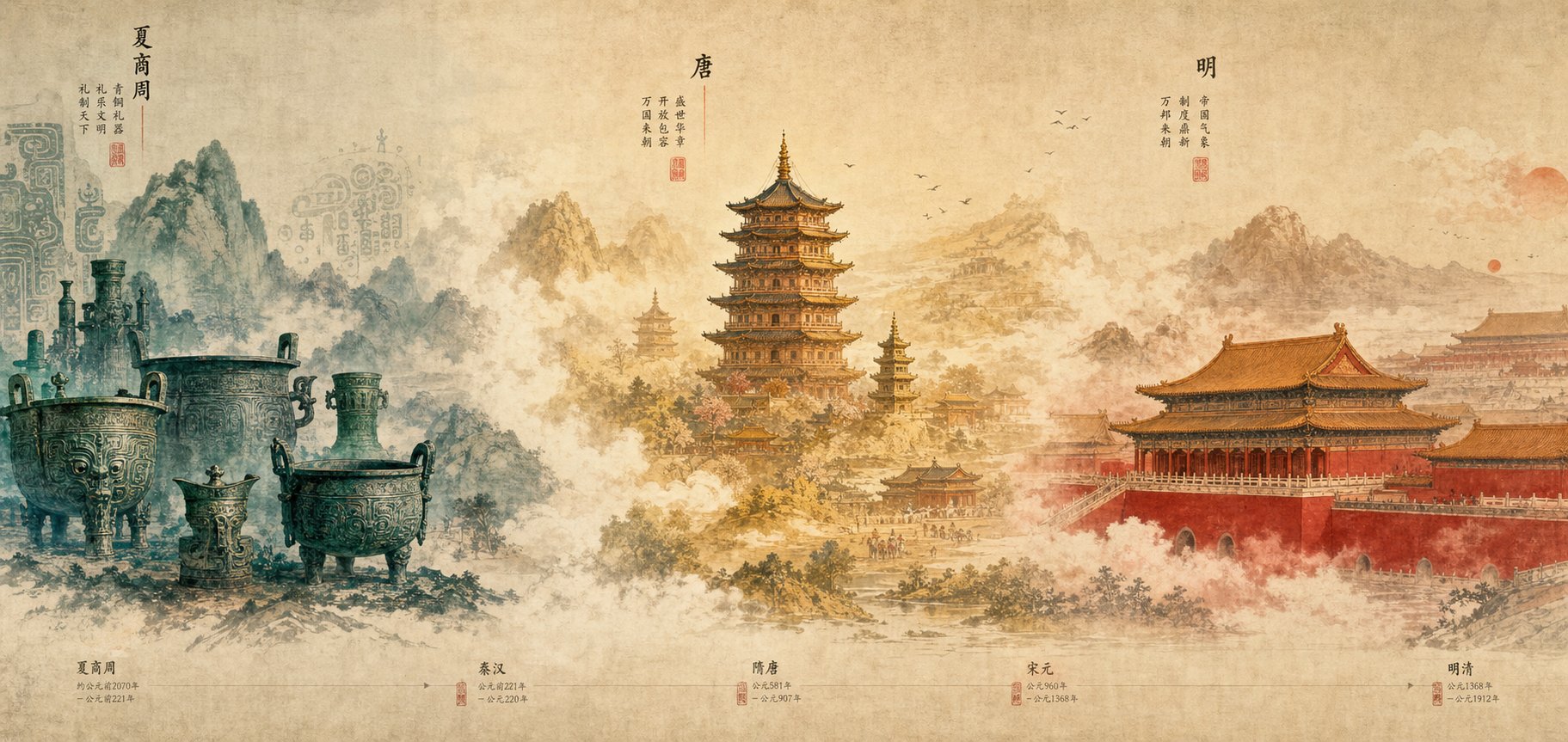
Naming conventions didn't stay frozen across two thousand years of imperial chinese history. Each dynasty brought shifting philosophies, new rulers with new taboos, and evolving literary tastes that reshaped what a "good" name looked like. If you're scanning a chinese dynasties list for inspiration, knowing which era your name belongs to is the difference between authenticity and anachronism.
Zhou and Han Dynasty Naming Patterns
During the Zhou Dynasty (1046-256 BC), names frequently drew from natural phenomena and moral virtues. Characters referencing heaven (天), virtue (德), and cosmic order appeared regularly among the nobility. The regional states of this period also generated surnames that persist today - Zhou, Song, Wei, Qi, and Qin all trace back to state names from this era.
The Han Dynasty (206 BC - 220 AD) brought a dramatic shift. Single-character given names became the overwhelming norm, and Wang Mang's brief Xin Dynasty (9-23 AD) reinforced this trend through edicts promoting monosyllabic names as more classical and proper. Look at any list of chinese dynasties from this period and you'll notice the pattern immediately: Liu Bang, Liu Ying, Liu Qi, Liu Che. One surname, one character. This wasn't mere fashion - it reflected a political ideology that equated simplicity with the virtue of antiquity.
Tang and Song Literary Naming Traditions
The Tang Dynasty (618-907) ushered in what many consider the golden age of literary naming. Poetry saturated elite culture, and names reflected that sensibility. Parents chose characters with poetic resonance - allusions to classical texts, imagery from landscape poetry, and references to Buddhist or Daoist philosophy. The Tang poet Li Bai's given name Bai (白, "white" or "pure") and courtesy name Taibai (太白, "great whiteness," also the Chinese name for Venus) exemplify this literary layering.
Song Dynasty (960-1279) naming shifted toward Neo-Confucian values. Virtue characters like 仁 (ren, benevolence), 义 (yi, righteousness), and 道 (dao, the Way) gained popularity among scholar-official families. The chinese dynasty timeline shows this as a period of intense philosophical revival, and names became vehicles for encoding moral aspirations rather than purely aesthetic choices.
Ming and Qing Era Conventions and Taboos
The Ming Dynasty (1368-1644) formalized generational naming poems (字辈 zibei) on a massive scale. The imperial Zhu family itself followed a prescribed sequence of characters across generations, and clans throughout China adopted similar systems. Brothers shared a generational character - like the Lü brothers Dazhong (大忠), Dafang (大防), Dajun (大钧), and Dalin (大临), all carrying 大 as their generational marker.
Qing Dynasty (1644-1911) naming introduced Manchu conventions alongside Chinese traditions. The ruling Aisin Gioro clan maintained their own clan system (documented in the Baqi Manzhou Shizu Tongpu), and qing dynasty chinese characters used in imperial names often reflected Manchu phonetics adapted into Chinese script.
Running through every dynasty was one universal constraint: taboo naming (避讳 bihui). Using characters from a chinese emperor's personal name was strictly forbidden. When the Tang founder Li Yuan (李渊) took the throne, historians retroactively referred to the earlier figure Liu Yuan by his courtesy name Yuanhai to avoid the taboo character 渊. The book Taixuanjing (太玄经) was renamed Taiyuanjing (太元经) during the Kangxi Emperor's reign because his personal name, Xuanye (玄烨), contained the character 玄. Scribes even resorted to omitting the final stroke of a forbidden character rather than writing it in full.
| Dynasty | Period | Naming Convention | Character Preferences | Key Rule |
|---|---|---|---|---|
| Zhou | 1046-256 BC | Nature and virtue references | 天, 德, 文, 武 | Names often derived from state or fief names |
| Han | 206 BC - 220 AD | Single-character given names | Simple, classical characters | Monosyllabic names seen as proper and ancient |
| Tang | 618-907 | Poetic and literary allusions | Buddhist/Daoist imagery, nature poetry | Courtesy names often referenced famous verses |
| Song | 960-1279 | Neo-Confucian virtue names | 仁, 义, 道, 理 | Moral philosophy encoded in character choice |
| Ming | 1368-1644 | Generational naming poems (zibei) | Clan-assigned generational characters | Siblings share one character; sequence fixed by poem |
| Qing | 1644-1911 | Manchu-Chinese hybrid conventions | Manchu phonetics in Chinese script | Imperial clan followed Aisin Gioro naming rules |
These dynasty-specific patterns reveal something important for anyone using an ancient chinese name generator: a name that feels perfectly Tang will sound wrong in a Ming-era setting. The philosophical underpinnings shifted with each period - from cosmic naturalism to literary aesthetics to moral encoding to clan systematization. And beneath all of it, the invisible hand of imperial taboo quietly reshaping which characters an entire population could use.
Philosophy Behind Ancient Chinese Name Choices
Dynasty conventions and taboo rules shaped which characters were available. But the deeper question - which specific character to choose from thousands of possibilities - was answered by philosophy. Ancient Chinese naming wasn't guesswork. It was a system grounded in cosmology, acoustics, and clan identity, where every stroke in a chinese hanzi carried weight beyond its dictionary definition.
Five Elements Theory in Name Selection
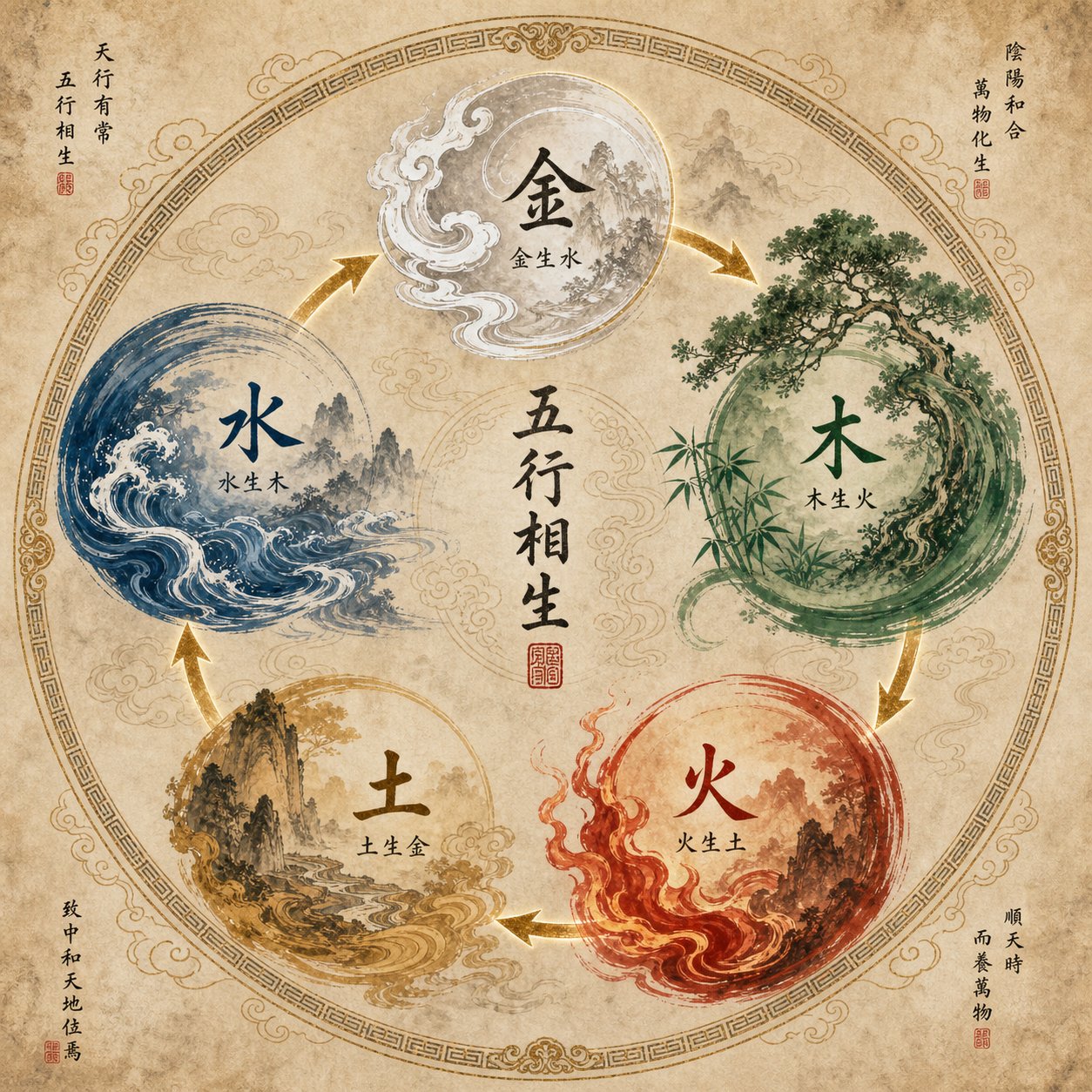
When Chinese parents selected a name, they often started not with meaning but with elemental balance. The Wu Xing (五行) system - Metal, Wood, Water, Fire, Earth - isn't a static list of substances. It's a cycle of dynamic forces: water feeds wood, wood fuels fire, fire creates earth, earth bears metal, metal enriches water. Each element generates the next and controls another.
Here's how it worked in practice. A diviner would calculate a child's "Eight Characters" (八字 bazi) based on the year, month, day, and hour of birth. Each time unit corresponded to an element. If the calculation revealed a deficiency - say, too little water - parents would choose a given name containing the water radical (氵) to restore balance. This wasn't fortune telling in the mystical sense. It was a philosophical framework for harmonizing a person's identity with the natural world.
The five elements and their associated naming radicals break down like this:
- Metal (金 jin) - Radical: 钅. Characters like 铭 (Ming, "to inscribe"), 钧 (Jun, "weight/substance"), and 锋 (Feng, "blade's edge"). Conveys strength, clarity, and decisiveness.
- Wood (木 mu) - Radical: 木. Characters like 梓 (Zi, "catalpa tree"), 柏 (Bai, "cypress"), and 桂 (Gui, "cassia/laurel"). Suggests growth, resilience, and vitality.
- Water (水 shui) - Radical: 氵. Characters like 泽 (Ze, "grace/nourishment"), 润 (Run, "to moisten"), and 清 (Qing, "clear/pure"). Evokes depth, adaptability, and wisdom.
- Fire (火 huo) - Radical: 火. Characters like 煜 (Yu, "to illuminate"), 灿 (Can, "brilliant"), and 炎 (Yan, "flame"). Radiates warmth, energy, and passion.
- Earth (土 tu) - Radical: 土. Characters like 坤 (Kun, "the receptive"), 坚 (Jian, "firm/solid"), and 安 (An, "peace"). Grounds a name in stability and reliability.
Consider the poetic meaning embedded in a name like 泽 (Ze). Its dictionary definition is simply "moist," but in chinese names and meanings, it carries the connotation of grace that nourishes others - like rain making crops grow without asking anything in return. Similarly, the jade name meaning found in characters like 玉 (yu) connects to the earth element, symbolizing moral purity and enduring value. Understanding these layers is what separates a thoughtful chinese name interpretation from a surface-level translation.
Tonal Balance and Euphony in Classical Names
Sound mattered as much as meaning. Classical Chinese divided all syllables into two tonal categories: level tones (平 ping) and oblique tones (仄 ze). The pingze system governed poetry, but it also shaped how educated families constructed names. A name where all characters shared the same tonal category sounded flat and monotonous. Alternating between ping and ze created a pleasing rise and fall - the same principle that made Tang regulated verse (律诗) musical to the ear.
Imagine a three-character name (surname plus two-character given name). If the surname carries a level tone, skilled namers would follow it with an oblique tone, then return to level - or vice versa. The pattern 平仄平 or 仄平仄 produced names that rolled off the tongue naturally. Names in chinese and meanings often lose this acoustic dimension in translation, but for native speakers, tonal flow was an immediate marker of whether a name had been crafted with care or thrown together carelessly.
This is why the ming meaning of a character alone never determined its suitability. A character could carry perfect semantic weight but clash tonally with the surname, producing a name that sounded awkward when spoken aloud. Educated families weighed both dimensions simultaneously - meaning and music working together.
Generational Naming Poems and Clan Identity
Beyond elemental balance and tonal harmony, clans imposed a third structural layer: the generational naming poem (字辈 zibei). This was a poem - sometimes a dozen characters long, sometimes hundreds - where each successive character represented the generational name for every male sibling or patrilineal cousin within one generation.
Here's how it functioned. A committee of family elders composed the poem when establishing a new lineage branch. The poem's characters often expressed virtuous goals - containing words like 俊 (jun, "talented"), 豪 (hao, "heroic"), or 德 (de, "virtue"). Each generation used the next character in sequence. When you met a stranger sharing your surname and recognized their generational character from your clan's poem, you could immediately determine their seniority relative to yours.
This system encoded lineage into chinese hanzi in a way that was instantly legible to anyone from the same clan. Families who emigrated to new regions carried their generational poems with them, treating the sequence as proof of legitimate descent from a common ancestor. Once the poem's final character was reached, clan elders would extend it or restart the cycle.
The practical effect? A person's name wasn't entirely their own. One character belonged to the clan's poem, leaving only one character for parents to select freely. That single free character had to carry the full weight of elemental balancing, tonal harmony, and personal aspiration. It's a remarkable constraint - and it explains why the best ancient names feel so dense with intention. Every stroke was doing multiple jobs at once.
These philosophical systems - elemental balance, tonal aesthetics, generational encoding - operated simultaneously. A truly well-crafted name satisfied all three. And they applied differently depending on whether the child was male or female, noble or common, destined for scholarship or trade. Those social dimensions added yet another filter to the naming process.
Gender and Social Class in Ancient Chinese Naming
Elemental balance, tonal flow, and generational poems gave names their structural backbone. But the character pool a family drew from was shaped just as powerfully by two social realities: the child's gender and the family's class. These filters determined not just which characters were appropriate, but which radicals, which literary registers, and which aspirations a name could encode.
Male Name Characters and Masculine Virtues
Male chinese given names in the classical period drew from a consistent set of ideals. Strength, ambition, scholarly achievement, and cosmic power formed the core vocabulary. You'll find these patterns repeated across dynasties:
- Martial virtue: 武 (wu, martial), 勇 (yong, brave), 威 (wei, awe-inspiring)
- Literary achievement: 文 (wen, cultured), 博 (bo, erudite), 翰 (han, writing brush)
- Ambition and will: 志 (zhi, ambition), 远 (yuan, far-reaching), 鹏 (peng, mythical roc)
- Natural forces: 龙 (long, dragon), 山 (shan, mountain), 雷 (lei, thunder), 海 (hai, ocean)
- Moral steadfastness: 忠 (zhong, loyalty), 义 (yi, righteousness), 刚 (gang, unyielding)
Chinese boy names also favored characters with strong, angular radicals. The "strength" radical (力) appears in characters like 勋 (xun, merit) and 劲 (jin, vigor). The "metal" radical (钅) conveyed sharpness and decisiveness. Research on 1.2 billion Han Chinese names confirms that characters like 明 (ming, "open and forthright"), 志 (zhi, "ambitious"), and 文 (wen, "cultured") remained popular in chinese names for boys across every birth cohort from the 1930s through the 2000s.
Female Name Characters and Feminine Ideals
Chinese female names operated in a different aesthetic universe. Where male names reached outward toward power and achievement, female chinese names turned toward beauty, grace, and natural delicacy. The character pools tell the story clearly:
- Flowers and plants: 花 (hua, flower), 兰 (lan, orchid), 梅 (mei, plum blossom), 莲 (lian, lotus)
- Precious materials: 玉 (yu, jade), 珍 (zhen, treasure), 琳 (lin, fine jade), 瑶 (yao, precious jade)
- Celestial imagery: 月 (yue, moon), 星 (xing, star), 霞 (xia, rosy clouds)
- Beauty and grace: 丽 (li, beautiful), 婉 (wan, graceful), 娴 (xian, refined), 芳 (fang, fragrant)
The "woman" radical (女) appeared frequently in chinese girl names through characters like 婷 (ting, graceful), 娟 (juan, beautiful), and 妍 (yan, lovely). The "grass" radical (艹) signaled botanical beauty in names like 芳 (fang, fragrance), 蕊 (rui, flower bud), and 薇 (wei, fern). These radicals served as immediate visual markers of gender when a name was written.
That said, the gendered divide wasn't absolute. Some characters crossed boundaries depending on context. 英 (ying, "heroic" or "flower") appeared in both chinese names for girls and chinese male names. 瑞 (rui, "auspicious") worked for either gender. But the core pools remained distinct through most of imperial history.
| Convention | Male Names | Female Names |
|---|---|---|
| Core themes | Strength, ambition, scholarship, cosmic power | Beauty, grace, nature, purity |
| Common radicals | 力 (strength), 钅 (metal), 亻 (person) | 女 (woman), 艹 (grass), 王/玉 (jade) |
| Example characters | 武, 文, 志, 龙, 刚, 鹏 | 花, 玉, 月, 兰, 婉, 丽 |
| Nature imagery | Mountains, dragons, thunder, ocean | Moon, orchids, plum blossoms, clouds |
| Dynasty peak | Han-Tang martial names; Song virtue names | Tang poetic names; Song botanical names |
| Tonal preference | Falling/oblique tones for decisiveness | Level tones for softness and melody |
Social Class and Its Impact on Naming
Gender shaped the character pool, but social class determined its literary register. A scholar-official family and a farming household might both name a son with ambition in mind, yet the results looked nothing alike.
Scholar-official families drew characters from classical texts - the Book of Changes, the Analerta, Tang poetry collections. Their names contained allusions that only an educated reader would catch. A name like 思远 (Siyuan, "contemplating the distant") echoes a line from the Shijing (Book of Songs). These families wrote in literary Chinese (文言文), and their naming vocabulary reflected that elevated register.
Merchant families, occupying an ambiguous social position, often chose characters signaling prosperity and fortune - 富 (fu, wealth), 贵 (gui, noble), 盛 (sheng, flourishing) - while aspiring toward the scholarly register for legitimacy. Common people used vernacular Chinese (白话文) vocabulary and practical, earthy names. A farmer might name a son 大牛 (Daniu, "big ox") or 铁柱 (Tiezhu, "iron pillar") - sturdy, unpretentious names that would never appear in a scholar's household.
This class distinction matters enormously for period authenticity. If you're using an ancient chinese name generator for a character who's a Tang Dynasty court poet, names should draw from classical literary vocabulary. A Song Dynasty merchant's daughter needs a different register entirely. And a peasant soldier in the Ming Dynasty would carry a name that sounds nothing like either. The difference between literary Chinese and vernacular Chinese isn't just academic - it's the line between a name that places your character precisely in their world and one that breaks the illusion entirely.
These gendered and class-based conventions provided the raw materials. But certain genres of fiction - particularly wuxia and xianxia - developed their own naming traditions that bent, blended, and sometimes deliberately violated these classical rules to signal a character's outsider status or supernatural nature.
Creating Wuxia and Xianxia Character Names
Classical naming rules governed the real world. But the jianghu - the fictional "rivers and lakes" underworld of wandering martial artists - plays by its own logic. Wuxia and xianxia fiction developed naming traditions that draw from historical conventions while bending them in deliberate, genre-specific ways. If you're writing in these genres or using a wuxia name generator to build characters, understanding those patterns is what separates a name that resonates from one that falls flat.
Naming Conventions for Wuxia Martial Artists
In wuxia fiction, a character's birth name often matters less than their jianghu alias. Wandering swordsmen, sect leaders, and rogue fighters adopt evocative titles that announce their reputation before they even draw a blade. Think of it as a personal brand forged through deeds. Cool chinese names jianghu style tend to follow specific structural patterns:
- Title + Nature Element: Characters like "Xue Feng" (Blood Wind) or "Han Yue" (Cold Moon) pair an intense descriptor with a natural force.
- Virtue or Vice + Weapon: Structures like "Wu Jian" (Formless Sword) or "Kuang Dao" (Mad Blade) tie personality to martial identity.
- Animal + Attribute: Names like "Ying Hu" (Eagle-Tiger) or "Bai He" (White Crane) invoke the creature's fighting spirit.
- Negation + Concept: Using 无 (wu, "without") creates names like "Wu Xin" (Heartless) or "Wu Ming" (Nameless) - suggesting transcendence or mystery.
- Celestial/Cosmic + Power: Names like "Tian Lei" (Heavenly Thunder) or "Xing Chen" (Star Dust) elevate a character beyond the mortal plane.
What makes wuxia names work linguistically? They're compact, imagistic, and loaded with implied narrative. A name like Lei Wu Jie (雷无桀, "Thunder Without Restraint") from The Blood of Youth immediately communicates the character's explosive, unruly personality. The best jianghu names function like two-word poems - they compress an entire character arc into a handful of syllables.
Sect affiliation also shapes naming. Members of a sword sect might share a character related to blades or metal. Disciples of a mountain school often carry characters referencing peaks, clouds, or stone. This mirrors the real-world generational naming poem system, adapted for fictional clan structures.
Xianxia Cultivation Names and Daoist Influence
The difference between wuxia vs xianxia naming comes down to scope. Wuxia names stay grounded in human virtues and martial prowess. Xianxia names reach toward the cosmic - immortality, void, celestial realms, and spiritual transformation.
Cultivation novels lean heavily on Daoist vocabulary. Characters pursuing immortality adopt names or titles drawn from concepts like:
- 玄 (Xuan): Profound, mysterious - a cornerstone of Daoist philosophy
- 虚 (Xu): Void, emptiness - representing spiritual transcendence
- 天 (Tian): Heaven - signaling cosmic authority or aspiration
- 道 (Dao): The Way - connecting directly to Daoist cultivation
- 灵 (Ling): Spirit, soul - evoking supernatural sensitivity
A xianxia hero might be named "Ling Xu" (Empty Spirit), while their wuxia counterpart would more likely be "Jian Ming" (Clear Sword). The xianxia register pulls from religious and philosophical texts rather than martial vocabulary. Titles like "Zhenren" (真人, True Person) or "Shangxian" (上仙, High Immortal) layer onto personal names as characters ascend through cultivation stages - echoing the historical practice of adopting new names at life transitions.
This is also where danmei fiction and xianxia web novels have driven enormous modern demand for authentic-sounding ancient names. Series like Mo Dao Zu Shi and Tian Guan Ci Fu introduced millions of international readers to names built on these Daoist naming principles. Characters like Wei Wuxian (魏无羡, "Wei Without Envy") and Xie Lian (谢怜, "Xie Compassion") demonstrate how a well-constructed name carries thematic weight throughout an entire narrative.
Building Authentic Names for Fiction and Games
Whether you're drafting a novel, building a tabletop RPG character, or searching for the right name in a game, a few principles keep wuxia and xianxia names from breaking immersion:
First, match the register to the genre. Wuxia names should feel grounded and human. Xianxia names can reach toward the ethereal. Mixing registers - giving a street-level martial artist a name that sounds like a celestial deity - creates tonal dissonance that Chinese-speaking audiences notice immediately.
Second, avoid anachronisms. A name using simplified characters or modern slang vocabulary in a Tang Dynasty setting shatters the period illusion. Stick to characters that existed in the era you're depicting.
Third, respect the sound. Random syllable combinations that don't follow Chinese phonetic patterns - like "Gon Su Fa" or "Tak Lin Hu" - aren't Chinese names. They're noise. Every syllable in Mandarin corresponds to a real character with real meaning. If you can't identify the hanzi behind each syllable, the name needs reworking.
Finally, let the name do narrative work. The strongest jianghu names aren't just cool-sounding labels. They foreshadow destiny, encode personality, or create ironic tension. A monk named Wu Xin (Heartless) who secretly feels everything. A villain named Ai He (Love and Harmony) whose actions contradict every syllable. These names become storytelling tools rather than decorative tags.
The genre conventions covered here give you a creative framework. But even the most inspired name can stumble over technical pitfalls - tonal clashes, unintended homophones, and character choices that accidentally say something you never meant. Those traps deserve their own attention.
Common Mistakes When Generating Ancient Chinese Names
Technical pitfalls don't announce themselves. A name can look elegant on paper, carry a beautiful meaning in isolation, and still land wrong because of a tonal clash, an unintended homophone, or a character that didn't exist in the dynasty you're targeting. Whether you're using a random chinese name generator or crafting names by hand, these mistakes are the ones that make Chinese-speaking readers wince.
Here are the most common errors, ranked by how frequently they appear and how much damage they do to authenticity:
- Using simplified characters for pre-modern settings. Simplified Chinese was introduced in the 1950s. If your story is set in the Tang Dynasty, characters like 龙 (simplified) should appear as 龍 (traditional). A chinese last name generator that outputs only simplified forms is already breaking period accuracy before you even reach the given name.
- Ignoring homophone collisions. Chinese is dense with homophones - words that sound identical but carry wildly different meanings. A name like Si Wang (思望, "thoughtful ambition") sounds nearly identical to 死亡 (siwang, "death"). The character 日 (ri, "sun") doubles as a vulgar expletive in colloquial speech. Random chinese names generated without homophone screening routinely produce these accidental meanings.
- Mixing dynasty-era characters inappropriately. Giving a Han Dynasty character a name containing 禅 (chan, "Zen meditation") ignores the fact that Chan Buddhism didn't reach China until centuries later. Similarly, Neo-Confucian virtue characters like 理 (li, "principle") belong to Song Dynasty naming, not Zhou-era names. Anachronistic character choices are the naming equivalent of putting a wristwatch on a Roman gladiator.
- Flat tonal patterns. Three consecutive characters sharing the same tone - say, all first tone like "Fang Qing Fei" - sound monotonous and unnatural to native ears. Classical naming deliberately alternated level and oblique tones for euphony. Most random name generator chinese tools ignore tonal balance entirely.
- Applying modern naming trends to historical contexts. Characters like 梓 (zi, catalpa tree) and 涵 (han, to contain) dominate modern Chinese baby name lists but feel jarringly contemporary in a pre-modern setting. A chinese surname generator paired with trendy given-name characters produces names that sound like a 2020s kindergartener, not a Song Dynasty scholar.
- Ignoring gender and class registers. Assigning a peasant farmer a name drawn from classical literary allusions, or giving a male warrior characters from the feminine botanical pool, breaks social logic that any historically literate reader will catch.
Anachronistic Character Choices to Avoid
The core issue is temporal mismatch. Characters carry historical baggage - they entered common naming usage at specific points and fell out of favor at others. A quick test: can you find the character in texts from your target dynasty? If it only appears in Ming-era documents, it doesn't belong in a Three Kingdoms name. Tools that generate chinese name options from a single undifferentiated character database can't make this distinction. They treat all 50,000+ characters as equally available regardless of period.
Tonal and Homophone Pitfalls
Tonal clashes are subtle but cumulative. A single awkward combination might pass unnoticed, but a name that fights against natural Mandarin phonetics feels effortful to say. Beyond tones, homophones create a second layer of risk. Every syllable in Chinese maps to dozens of possible characters, and listeners hear all of them simultaneously. When you say a name aloud, the audience's brain flickers through every character that shares that sound. If any combination produces something embarrassing, funny, or morbid, that association sticks.
This is why even a well-designed chinese last names generator needs a filtering layer that checks output against known problematic sound combinations - not just character meanings in isolation.
Why Random Generation Falls Short Without Context
A random chinese name generator treats naming as a combinatorial problem: pick a surname from column A, attach one or two characters from column B, output result. But as the previous sections have shown, authentic ancient names emerged from the intersection of elemental philosophy, tonal aesthetics, generational poetry, gender conventions, class registers, and dynasty-specific taboos. Strip away that context and you're left with character salad - technically valid combinations that carry no internal logic.
The gap between random output and authentic naming is the gap between a chinese name gen tool and actual cultural knowledge. Generators are useful starting points. They surface character combinations you might not have considered. But treating their output as final - without screening for homophones, checking dynasty appropriateness, verifying tonal flow, and confirming gender register - produces names that feel hollow to anyone who reads Chinese with cultural fluency.
The good news? These mistakes are avoidable once you know what to screen for. And the practical applications for getting names right extend far beyond fiction writing - from historical drama screenwriting to RPG character creation to academic research, each use case demands a different calibration of accuracy and creative freedom.
Practical Uses for Ancient Chinese Name Generators
Knowing what to screen for is one thing. Knowing how much to screen for depends entirely on what you're building. A novelist writing a Tang Dynasty court drama needs pinpoint historical accuracy. A gamer picking a character name for a weekend session needs something that sounds right without a research bibliography. The principles stay the same - the calibration shifts based on your use case.
Names for Historical Fiction and Period Dramas
Historical fiction and screenwriting demand the highest level of authenticity. If you're writing a novel set during the Five Dynasties period or scripting a period drama, every name needs to pass scrutiny from readers and viewers who know the era. That means matching dynasty-specific conventions, respecting taboo characters, using traditional (not simplified) script, and ensuring class and gender registers align with each character's social position.
A chinese fantasy name generator can surface interesting character combinations, but for serious historical work, treat its output as raw material. Cross-reference against the naming patterns of your target dynasty. A Song Dynasty scholar's name should carry Neo-Confucian virtue characters. A Tang-era courtesan's name should draw from poetic botanical imagery. A Ming general needs martial characters filtered through his clan's generational poem. The generator gives you options - the dynasty conventions tell you which options are valid.
For screenwriters working on period dramas, a chinese mythology name generator can also help when characters interact with legendary or semi-historical figures. Names for deities, immortals, and mythological beings follow their own conventions - typically drawing from Daoist celestial vocabulary - and need to feel distinct from mortal characters sharing the same screen.
RPG and Gaming Character Names
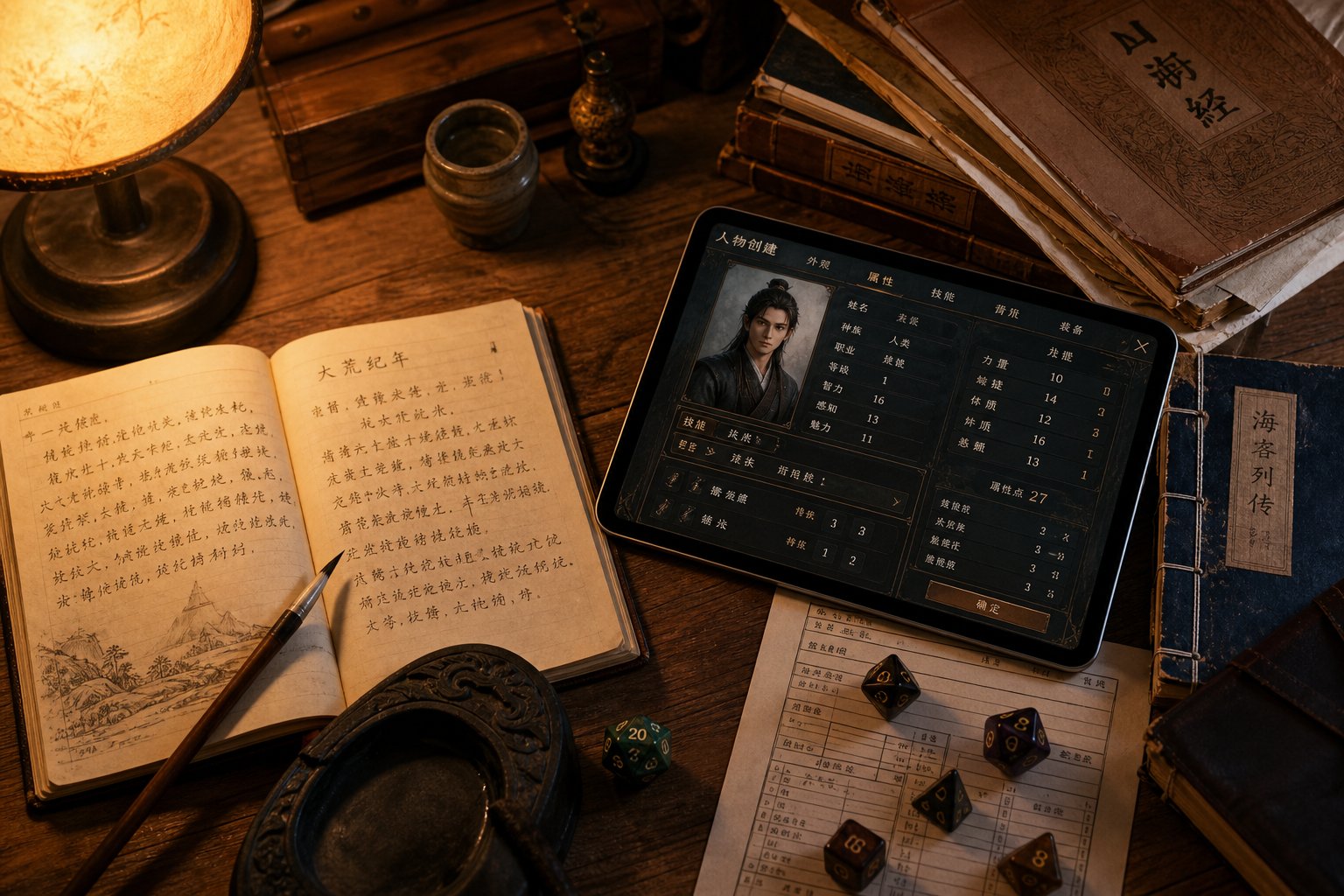
Gaming sits on a spectrum. At one end, you have historically grounded titles like Where Winds Meet, where cultural authenticity is baked into every system. At the other, you have pure fantasy MMORPGs where a cool-sounding name matters more than period accuracy.
For where winds meet character creation specifically, the game is rooted in the Five Dynasties and Ten Kingdoms period and the rise of the Song Dynasty. Names that fit this world should draw from late Tang and early Song conventions - poetic literary allusions, martial virtue characters for fighters, and scholarly registers for physician or calligrapher builds. The game's systems reflect wuxia philosophy directly, so jianghu-style aliases work naturally alongside formal birth names.
For broader MMORPG use, an mmorpg name generator focused on Chinese names needs to balance two priorities: the name should look and sound authentically Chinese, and it should be unique enough to survive a server's duplicate-name filter. Two-character given names paired with less common surnames (like 慕容, 上官, or 欧阳) help with uniqueness while maintaining structural authenticity. Chinese names for games work best when they're short, phonetically clean, and carry an implied personality - the same qualities that make jianghu aliases memorable.
Tabletop RPG players building characters for systems like Legends of the Wulin or homebrew wuxia campaigns have more flexibility. Here, the fantasy chinese name generator approach works well as a brainstorming tool. Generate a batch of options, then filter by the principles covered earlier: check tonal balance, verify gender register, and make sure the name fits your character's social background.
Academic and Educational Applications
Researchers, educators, and students use name generators differently. A history student studying Ming Dynasty clan structures might use a generator to understand how generational naming poems produced sibling name sets. A linguistics researcher could use one to analyze radical distribution patterns across naming eras. Language teachers sometimes use generators to create practice exercises around character recognition and meaning.
For academic purposes, accuracy matters more than aesthetics. The goal isn't a cool name - it's a structurally correct one that demonstrates understanding of the underlying system. A chinese warrior name generator might be useful for a student analyzing martial naming conventions, but only if its output can be traced back to documented historical patterns rather than pure invention.
| Use Case | Recommended Dynasty Focus | Authenticity Level | Naming Style |
|---|---|---|---|
| Historical fiction | Match your setting exactly | High - period-accurate characters, taboos, class registers | Formal birth names with courtesy names for major characters |
| Period drama screenwriting | Match your setting exactly | High - must withstand audience scrutiny | Memorable but historically grounded; avoid modern-sounding combinations |
| Wuxia/xianxia novels | Tang-Song for wuxia; flexible for xianxia | Medium-high - genre conventions allow creative liberty | Jianghu aliases, Daoist cultivation titles, poetic given names |
| MMORPG characters | Flexible; match game setting if historical | Medium - sound and structure matter more than strict accuracy | Short, distinctive, phonetically clean; compound surnames for uniqueness |
| Tabletop RPG | Flexible; campaign-dependent | Medium - internal consistency matters most | Genre-appropriate; wuxia aliases for martial campaigns |
| Academic/educational | Varies by research focus | High - structural correctness over aesthetics | Demonstrably rule-following; traceable to documented patterns |
Across every use case, the workflow is the same: generate, then refine. Let the tool do the combinatorial heavy lifting - surfacing character pairings, suggesting surname-given name matches, offering radical-based options for elemental balance. Then apply the cultural filters yourself. Check the dynasty fit. Listen to the tonal flow. Verify the homophone safety. Confirm the social register. A fantasy chinese name generator gives you the clay. The principles from the sections above are the sculptor's hands that shape it into something that belongs in its world.
Frequently Asked Questions About Ancient Chinese Names
1. How many names did a person have in ancient China?
A single person in ancient China could carry up to five different names. These included the family name (xing), a given name (ming) used only by family and elders, a courtesy name (zi) received at age twenty and used by peers, and an art name or alias (hao) chosen freely for self-expression. Some individuals also held posthumous names or temple names granted after death. Each name served a distinct social function, and using the wrong one in the wrong context was considered a serious breach of etiquette.
2. What is the difference between a courtesy name and a given name in Chinese culture?
The given name (ming) was assigned at birth and considered intimate - using it in public was disrespectful. The courtesy name (zi) was received during a coming-of-age ceremony (age twenty for men, fifteen for women) and served as the socially appropriate form of address among peers and colleagues. Courtesy names typically related to the given name through meaning. For example, Zhuge Liang's given name means 'bright' while his courtesy name Kongming means 'great brightness.' Some courtesy names used contrast instead, like Han Yu whose ming means 'to surpass' while his zi means 'to retreat,' reflecting Confucian ideals of balancing ambition with humility.
3. Why did ancient Chinese names change across different dynasties?
Each dynasty brought new philosophical movements, literary tastes, and political constraints that reshaped naming practices. The Han Dynasty favored single-character names after Wang Mang's edicts promoted them as more classical. The Tang Dynasty embraced poetic and Buddhist-Daoist allusions reflecting its literary golden age. The Song Dynasty shifted toward Neo-Confucian virtue characters like benevolence and righteousness. The Ming Dynasty formalized generational naming poems where entire clans assigned characters across dozens of future generations. Additionally, every dynasty enforced taboo naming rules that forbade using characters from the reigning emperor's personal name, constantly reshaping the available character pool.
4. How does the Five Elements theory affect Chinese name selection?
Parents calculated a child's elemental profile using the Eight Characters (bazi) system based on birth year, month, day, and hour. Each time unit corresponded to one of the five elements: Metal, Wood, Water, Fire, or Earth. If the calculation revealed an elemental deficiency, parents chose name characters containing the corresponding radical to restore balance. For instance, a child lacking water might receive a name with the water radical like Ze (grace) or Qing (clear). This wasn't superstition but a cosmological framework for harmonizing personal identity with natural forces, and it directly determined which characters were considered suitable.
5. What makes wuxia and xianxia character names different from regular ancient Chinese names?
Wuxia names stay grounded in human martial virtues and often feature jianghu aliases that function like personal brands - compact, imagistic titles like 'Cold Moon' or 'Mad Blade' that announce reputation. Xianxia names reach toward the cosmic, drawing from Daoist vocabulary about immortality, void, and spiritual transcendence. Both genres allow creative liberties that historical naming wouldn't permit, such as using negation patterns (Wu Xin meaning 'Heartless') or celestial imagery for mortal characters. The key distinction is register: wuxia names feel earthy and human while xianxia names feel ethereal and otherworldly.