Understanding Chinese Name Radicals and the Snake Zodiac Connection
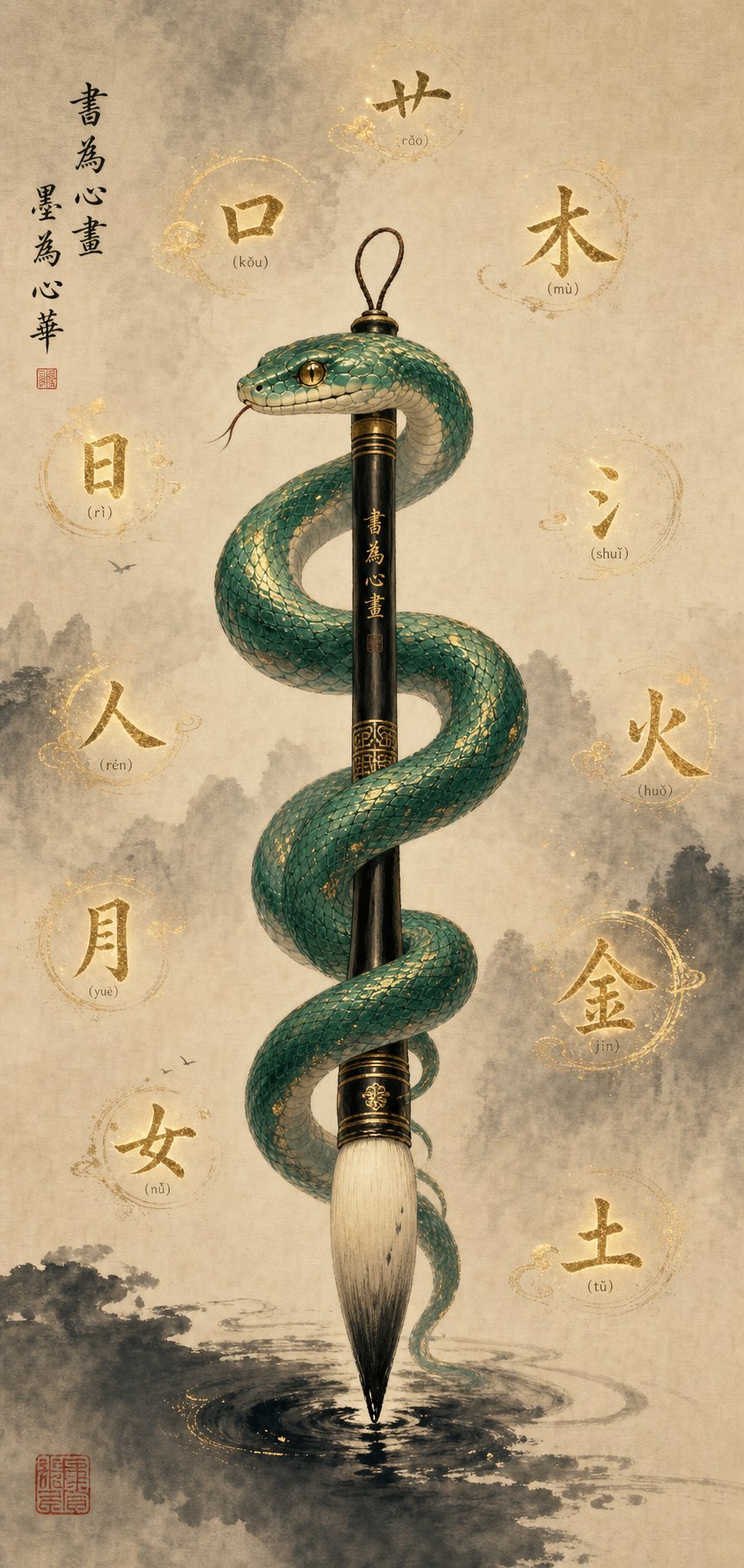
When you pick a Chinese name for your baby, you are doing more than choosing a word that sounds nice. Every Chinese character is built from smaller structural components called radicals, or 部首 (bushou). These radicals act as building blocks, and each one carries its own elemental energy, symbolic meaning, and visual identity. Traditional Chinese naming practice goes beyond surface-level meaning. It looks at the radical sitting inside a character and asks: does this structural root harmonize with the child's zodiac animal?
What Are Chinese Name Radicals
Imagine a Chinese character as a house. The radical is its foundation. For example, the character 芷 (zhi, meaning angelica) contains the grass radical 艹 at the top. The character 安 (an, meaning peace) contains the roof radical 宀. A parent choosing names meaning snake harmony would focus on these foundational pieces rather than only the finished character's dictionary definition. This is the key difference between radical-based naming and character-meaning-based naming. One method looks at what the whole word means. The other examines the structural DNA embedded within it.
Why Radicals Matter for Snake Zodiac Naming
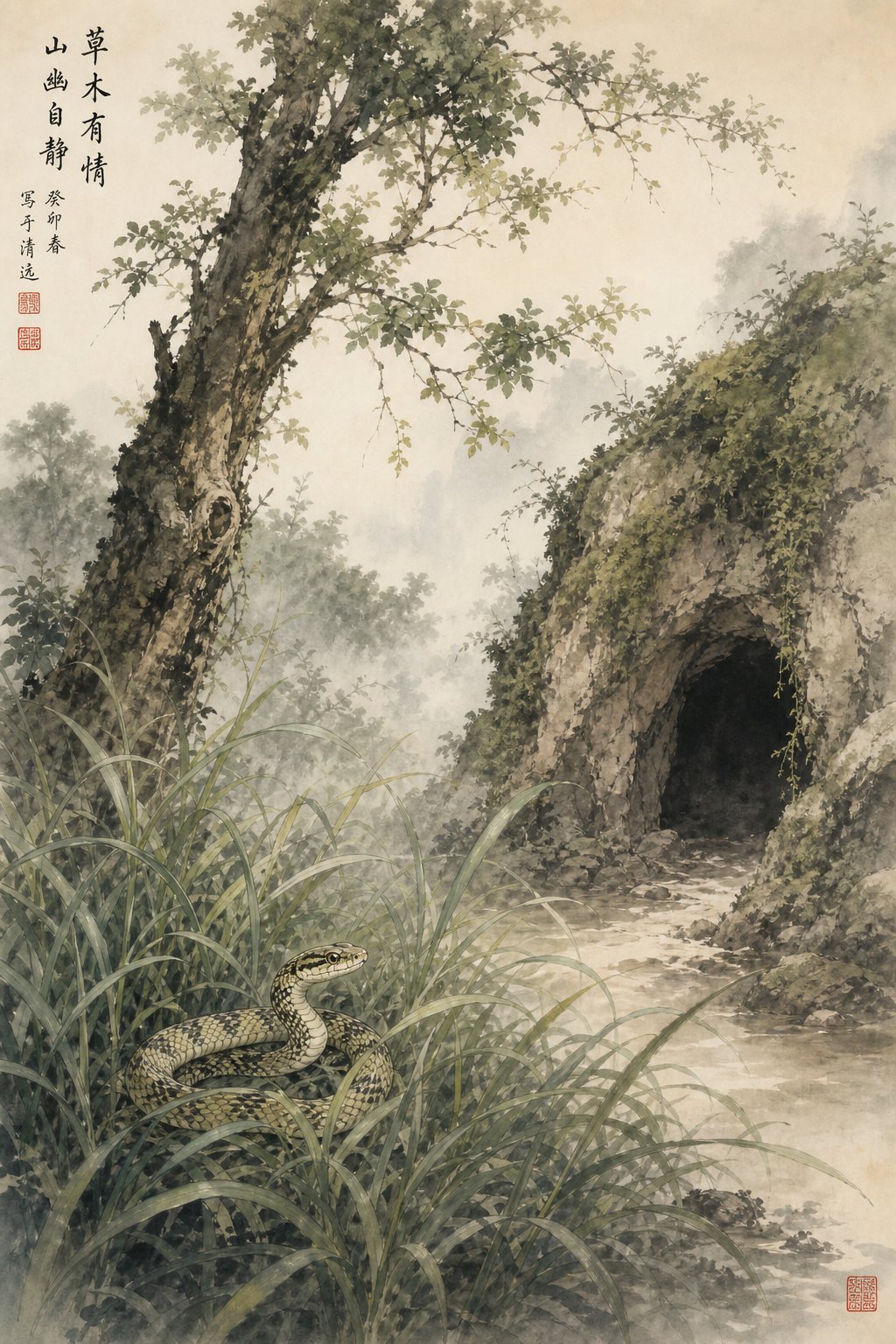
The Chinese Name Selection system teaches that each zodiac animal has intrinsic characteristics, habitat preferences, and elemental associations. A snake hides in caves, coils around trees, and moves through grassland. It belongs to the fire element. Selecting the best Chinese name radicals for snake zodiac babies means choosing structural components that mirror these natural behaviors, placing the snake in an environment where it thrives rather than one that threatens it.
The radical is the structural DNA of a character. Choosing the right radical aligns a name with the Snake's elemental and symbolic energy, creating harmony between identity and destiny.
Whether you are a parent wanting a quick list of favorable radicals, someone seeking the deep theory behind each recommendation, or a family verifying suggestions from a naming master, the methodology stays the same. You start with the snake's nature, translate that nature into compatible radicals, and then find characters containing those radicals that also sound beautiful and carry positive meaning. The logic behind each radical choice is rooted in centuries of observation about what environments help a snake flourish, and which ones put it at risk.
The Cultural and Symbolic Logic Behind Snake Radical Selection
A list of favorable radicals means very little without understanding why those radicals work. The logic is not arbitrary. It flows from a structured system of elemental theory, animal symbolism, and environmental observation that has guided Chinese naming for centuries. Before you evaluate any specific radical, you need to grasp the Snake's core nature and how the year of birth modifies it.
The Snake's Elemental Nature in Wu Xing Theory
In Chinese metaphysics, the Snake occupies the sixth position among the twelve zodiac animals and corresponds to the Earthly Branch 巳 (si). Its native element is Fire (火, huo). This means the Snake carries an inherent warmth, intelligence, and transformative energy. The Five Elements system, known as 五行 (Wu Xing), describes how Wood, Fire, Earth, Metal, and Water interact through cycles of production and destruction. Fire is produced by Wood and produces Earth. It is controlled by Water and controls Metal.
What does this mean for naming? Radicals connected to Wood and Fire generally support the Snake's innate energy because Wood feeds Fire in the productive cycle. Earth radicals can also work well since Fire naturally generates Earth. Metal and Water radicals require more careful consideration. Water directly opposes Fire, and Metal is weakened by it. However, this is where the year-specific element adds nuance.
How Different Snake Year Elements Change Radical Choices
Not every year of the snake baby carries the same elemental signature. Each Snake year is colored by one of the five elements, creating a 60-year cycle where no two Snake years are identical within a generation. For babies born in 2025 Chinese zodiac calculations place them as Wood Snakes, meaning their elemental overlay is Wood on top of the Snake's native Fire. A 1977 baby is a Fire Snake with doubled fire energy. A 1989 baby is an Earth Snake with grounding influence.
This distinction matters because the year element shifts which radicals bring balance versus excess. A Wood Snake already has strong Wood energy feeding its Fire, so adding more Wood radicals could create overheating. A Water Snake (born in 2013) has a natural cooling influence that actually makes some fire-related radicals more beneficial for restoring warmth. You'll notice that the year of the snake in Chinese characters is written differently depending on the Heavenly Stem paired with it, and each pairing tells you exactly which element dominates.
| Snake Year | Element | Favorable Radical Categories | Use with Caution |
|---|---|---|---|
| 1965, 2025 | Wood (木, mu) | Fire, Earth, Grass/Plant | Excess Wood, Strong Water |
| 1977 | Fire (火, huo) | Earth, Wood (moderate), Enclosure | Excess Fire, Strong Water |
| 1989 | Earth (土, tu) | Fire, Metal, Enclosure | Excess Earth, Strong Wood |
| 1941, 2001 | Metal (金, jin) | Earth, Water (moderate), Enclosure | Excess Metal, Strong Fire |
| 1953, 2013 | Water (水, shui) | Wood, Fire, Grass/Plant | Excess Water, Strong Earth |
The table above gives you a framework, not a rigid rule. A skilled naming practitioner weighs the child's birth month, hour, and the family surname's elemental properties alongside the year element. Still, knowing your Snake baby's elemental type is the essential first step.
Habitat Symbolism Behind Radical Selection
Beyond elemental theory, radical selection draws from something more intuitive: where does a snake actually live and thrive? Chinese naming tradition observes that a snake in its natural habitat is a snake at peace. Place it in the wrong environment, and the name carries symbolic tension.
Consider the Snake's preferred habitats:
- Grassland and undergrowth - Snakes hide in tall grass for camouflage and hunting. Radicals connected to vegetation (艹, grass) symbolize a snake in its element, concealed and protected.
- Trees and branches - Many snake species climb trees to rest, hunt, and survey their surroundings. The wood radical (木, mu) represents elevation, growth, and a secure perch.
- Caves and enclosed spaces - Snakes coil inside burrows and rock crevices for warmth and safety. Radicals suggesting enclosure (口, kou meaning mouth/opening; 宀, mian meaning roof) give the snake a symbolic home.
- Warm, sunlit ground - As cold-blooded creatures, snakes seek warmth. Fire-related radicals mirror this need for heat and vitality.
Each habitat preference translates directly into a radical category. When you see a naming guide recommend the grass radical, it is not a random cultural preference. It reflects the observable reality that a snake surrounded by grass is a snake that feels safe, hidden, and empowered. The same logic applies to enclosure radicals: a snake inside a cave has shelter, which symbolically translates to a life with security and protection.
This habitat-based reasoning also tells you what to avoid. Open, exposed environments threaten a snake. Radicals suggesting vast open plains or direct sunlight without shelter can symbolize vulnerability. Similarly, radicals associated with the Snake's natural predators or hostile zodiac animals introduce conflict into the name's energy.
With the elemental framework and habitat logic established, the question becomes practical: which specific radicals carry these energies, and what characters do they appear in?
Habitat-Based Auspicious Radicals for Snake Names
The Snake's natural habitats translate into a clear set of radicals you can use as a starting point for name selection. Each radical below mirrors an environment where the snake thrives, giving the name a symbolic foundation of safety, growth, and empowerment. Think of it this way: when you embed a habitat radical into a chinese character for snake zodiac naming, you are placing your child's identity inside a landscape where the snake feels at home.
Grass Radical 艹 and Its Name Characters
The grass radical 艹 (cao) sits at the top of a character and visually resembles blades of grass. Snakes are creatures of the undergrowth. They hunt, hide, and rest among tall vegetation. A name containing this radical symbolizes concealment, natural protection, and quiet intelligence. It is one of the most commonly recommended radicals for snake zodiac babies because it directly reflects the animal's preferred cover.
Characters featuring the grass radical tend to carry meanings tied to plants, fragrance, and flourishing life. Here are strong naming options:
- 萱 (xuan) - daylily grass, symbolizing joy and freedom from worry
- 芷 (zhi) - angelica, a fragrant herb representing purity and elegance
- 蕊 (rui) - flower pistil, meaning the precious core of a blossom
- 芸 (yun) - rue herb, associated with literary talent and gentle grace
You will notice these characters appear frequently in girls' names, but the radical itself carries no gender restriction. Characters like 荣 (rong, meaning prosperity) and 萧 (xiao, meaning a type of artemisia with a classical, dignified feel) work well for boys. The LingoAce naming guide highlights that combining a grass-radical character with a second character carrying a different elemental energy creates balance and depth in the full name.
Wood Radical 木 for Shelter and Growth
Where the grass radical represents ground-level cover, the wood radical 木 (mu) represents elevation and structure. Snakes climb trees to rest on branches, survey their territory, and escape ground-level threats. A name built on the wood radical gives the snake a perch, symbolizing upward movement, stability, and long-term growth.
The wood radical appears in characters connected to trees, timber, and structural strength:
- 楷 (kai) - model or standard, implying someone who sets an example
- 桦 (hua) - birch tree, representing uprightness and resilience
- 楠 (nan) - phoebe nanmu, a precious hardwood symbolizing nobility and endurance
- 森 (sen) - forest, conveying vitality, abundance, and thriving energy
Wood also feeds Fire in the productive cycle of Wu Xing, which means this radical does double duty for the Snake. It provides habitat comfort and elemental nourishment simultaneously. For a 2025 Wood Snake baby, however, use this radical thoughtfully since the year already carries strong Wood energy. Pairing it with an Earth or Fire character in the second position helps prevent elemental excess.
Enclosure Radicals 口 and 宀 for Protection
A snake coiled inside a cave or burrow is a snake at rest, safe from predators and sheltered from harsh weather. Two radicals capture this energy. The first is 口 (kou), literally meaning mouth or opening, which in character construction represents an enclosed space. The second is 宀 (mian), the roof radical, symbolizing a home or covered shelter.
These radicals give a name the quality of security and belonging. The snake in chinese character naming tradition is understood as an animal that needs a den. Without symbolic shelter, the name leaves the snake exposed.
Characters with enclosure radicals suitable for naming include:
- 宸 (chen) - the emperor's dwelling, carrying the roof radical 宀 and implying nobility and grand ambition
- 安 (an) - peace and safety, built with 宀 over 女, literally a woman under a roof
- 宇 (yu) - universe or eaves, suggesting broad vision sheltered by structure
- 哲 (zhe) - wisdom and philosophy, containing 口 and representing clear, articulate thought
The character 宸 deserves special attention. It contains both the roof radical 宀 and the component 辰 (chen), which connects to the Dragon. Since the Snake is sometimes called the "little dragon" in Chinese culture, and Dragon-related components form part of the Snake's zodiac trinity, 宸 carries layered auspiciousness that goes beyond simple shelter symbolism.
These three radical categories, grass, wood, and enclosure, form the habitat foundation of snake zodiac naming. They address the animal's physical needs for cover, elevation, and shelter. Yet habitat is only one dimension. The Snake's elemental Fire nature and its relationships with allied zodiac animals open additional radical pathways that can strengthen a name even further.
Element-Based Radicals That Harmonize with Snake Energy
Habitat radicals give the Snake a home. Element-based radicals fuel its inner vitality. Since the Snake's native element is Fire, radicals that carry warmth, light, and transformative energy resonate deeply with its core nature. But the elemental picture is richer than just Fire alone. Wood feeds Fire, pattern reflects the Snake's physical beauty, and even Water plays a surprising supporting role under the right conditions.
Fire and Wood Radicals That Strengthen Snake Energy
The fire radical 火 (huo) and its four-dot variant 灬 (also representing fire at the bottom of a character) directly mirror the Snake's elemental identity. Characters built on these radicals carry energy, brilliance, and passion. Think of names with snake meanings rooted in warmth and illumination: 煜 (yu, meaning radiant light), 烨 (ye, meaning splendid flames), 熙 (xi, meaning prosperous brightness), and 照 (zhao, meaning to shine or illuminate).
Wood radicals work here on a different level than habitat. While 木 provides the Snake a physical perch, its elemental function is even more important. Wood generates Fire in the Wu Xing productive cycle. A Wood-radical character paired with a Fire-radical character in a two-character given name creates a miniature productive cycle within the name itself, symbolizing continuous growth and self-sustaining energy. Characters like 林 (lin, meaning grove) or 柏 (bai, meaning cypress) feed the Snake's fire without overwhelming it.
Why Some Water Radicals Can Actually Help
Here is where many parents get confused. The common advice says Water destroys Fire, so avoid all water radicals for Snake babies. This is an oversimplification. A Fire Snake (born in 1977) or a Wood Snake (born in 2025) already carries intense heat. A touch of Water does not extinguish that fire. It tempers it, preventing burnout and adding emotional depth.
The water radical 氵(san dian shui, three-dot water) appears in characters like 涵 (han, meaning to contain or cultivate) and 润 (run, meaning moist or smooth). For an Earth Snake (1989) whose grounding energy can become dry and rigid, a single water-radical character introduces flexibility. The key is moderation. One water-element character in a name provides balance. Building the entire name around water radicals would create genuine elemental conflict.
Pattern and Beauty Radicals Linked to Snake Scales
Picture a snake's body. Its scales form intricate, repeating patterns that shimmer with color. This physical beauty connects the Snake to radicals representing adornment, texture, and silk. The radical 彡 (shan, meaning hair or pattern strokes) appears in characters tied to elegance and form. The silk radical 纟 (si, meaning silk thread) connects to weaving, refinement, and cultural sophistication.
Names that mean serpent grace often draw from these radicals because they honor the Snake's aesthetic nature. Characters like 彤 (tong, meaning vermilion red), 彦 (yan, meaning accomplished person), 绮 (qi, meaning fine patterned silk), and 纬 (wei, meaning weft threads) all carry this energy of beauty through structure, much like the Snake itself.
| Radical | Pinyin | Meaning | Why It Suits Snake | Example Name Characters |
|---|---|---|---|---|
| 火 | huo | Fire | Matches Snake's native Fire element directly | 煜, 烨, 灿 |
| 灬 | huo (variant) | Fire dots | Fire energy in bottom position; warmth and brilliance | 熙, 照, 煦 |
| 木 | mu | Wood | Feeds Fire in the productive cycle; sustains Snake energy | 林, 柏, 桐 |
| 氵 | shui | Water | Provides balance for Fire-heavy or Earth Snake years | 涵, 润, 澄 |
| 彡 | shan | Pattern/strokes | Reflects Snake's scale patterns and elegance | 彤, 彦, 彬 |
| 纟 | si | Silk | Connects to Snake's beauty, refinement, and woven patterns | 绮, 纬, 绎 |
These element-based radicals work alongside habitat radicals rather than replacing them. A well-constructed name might pair a habitat radical character (like 萱 from the grass family) with an elemental radical character (like 煜 from the fire family), giving the Snake both a safe environment and vital energy. The strongest names that mean snake or serpent power tend to layer multiple dimensions of compatibility into just two or three characters.
Elemental and habitat radicals address the Snake's relationship with nature and energy. But the Chinese zodiac is also a social system. Each animal has allies, secret friends, and adversaries among the other eleven, and these relationships open yet another layer of radical strategy.
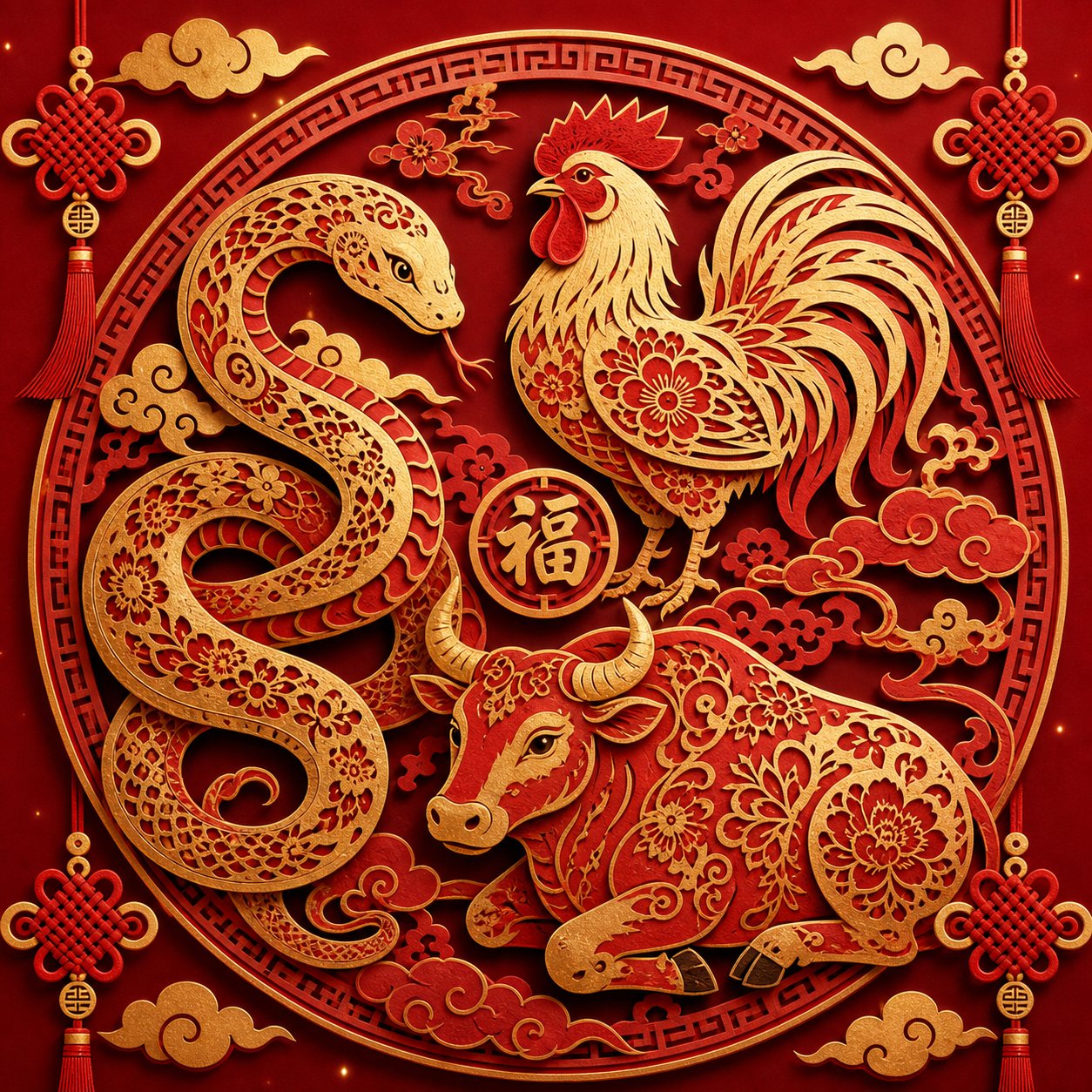
Zodiac Harmony and Clash Radicals for Snake Names
The Chinese zodiac is not just twelve animals standing alone. It is a web of relationships, alliances, rivalries, and secret bonds. Each animal has specific partners that amplify its fortune and specific adversaries that drain it. For the Snake, these zodiac relationships translate directly into radical recommendations that go beyond habitat and elemental logic. When you embed a radical tied to an allied animal into your child's name, you are symbolically inviting that ally's support into their life.
This system draws from the Earthly Branches (地支, dizhi), the twelve cyclical signs that underpin the Chinese calendar. Each zodiac animal corresponds to one Branch, and the mathematical relationships between Branches determine which animals form harmonious groups and which ones clash. Research on Chinese horoscope naming confirms that these Branch relationships directly inform character selection, with naming practitioners seeking radicals that invoke allied animals while avoiding those connected to adversaries.
Snake-Rooster-Ox Trinity Radicals
The Snake (巳), Rooster (酉), and Ox (丑) form what is called a zodiac trinity, or 三合 (sanhe). These three animals share a deep compatibility rooted in their common elemental affinity. Together they create a circuit of mutual support. Including radicals associated with the Rooster or Ox in a Snake baby's name symbolically surrounds the child with loyal allies.
How does this work in practice? The Rooster corresponds to the Earthly Branch 酉 (you), which is also the radical for wine vessel or fermentation. Characters containing 酉 or bird-related components invoke Rooster energy. The Ox connects to 丑 (chou) and carries associations with bovine strength, agriculture, and steady labor. Radicals and components tied to the Ox, particularly 牛 (niu, meaning cow or ox), bring grounding support.
Beneficial radicals from the Snake's trinity allies include:
- 酉 (you) - the Rooster's Branch itself, appearing in characters like 醇 (chun, meaning pure or mellow) and 配 (pei, meaning to match or pair)
- 鸟 (niao) and 隹 (zhui) - bird radicals that connect to Rooster energy, found in characters like 鸿 (hong, meaning swan goose, implying grand ambition) and 雅 (ya, meaning elegant and refined)
- 牛 (niu) - the Ox radical, appearing in characters like 牧 (mu, meaning to shepherd or nurture) and as a component in 特 (te, meaning special or unique)
- 羽 (yu) - feather radical, extending the bird connection to Rooster, found in 翔 (xiang, meaning to soar) and 翰 (han, meaning writing brush or literary talent)
Characters carrying these radicals bring the Snake's trinity partners into the name's symbolic structure. Imagine it as writing a permanent invitation for the Rooster's sharp intelligence and the Ox's dependable strength to walk alongside your child.
Snake-Monkey Secret Friend Connection
Beyond the trinity, the Chinese zodiac assigns each animal a "secret friend" through the 六合 (liuhe) relationship. The Snake's secret friend is the Monkey (申, shen). This bond is more intimate than the trinity. It represents a one-to-one connection of mutual understanding and hidden support, like a confidant who always has your back.
The Monkey's Earthly Branch 申 connects to cleverness, agility, and resourcefulness. Radicals that invoke Monkey energy tend to relate to movement, dexterity, and intelligence. While there is no single "Monkey radical" in the way that 牛 directly represents the Ox, components associated with the Monkey's nature can be woven into names:
- 申 (shen) - the Branch character itself, appearing as a component in 伸 (shen, meaning to extend or stretch) and 绅 (shen, meaning gentleman or gentry)
- 袁 (yuan) - a component historically linked to primates, found in characters like 猿 (yuan, meaning ape) but more usefully in the surname-compatible 远 (yuan, meaning far-reaching)
The secret friend relationship is subtle. You do not need to force Monkey-related components into a name, but when a character naturally contains 申 or related structures and also carries a beautiful meaning, it adds an extra layer of zodiac harmony that most people would never notice but that traditional theory values highly.
Zodiac Clash Radicals to Avoid
Every alliance has its opposite. The Snake's primary zodiac clash is with the Pig (亥, hai). In Earthly Branch theory, 巳 (Snake) and 亥 (Pig) sit directly opposite each other, creating a 冲 (chong), or direct collision. Names containing radicals associated with the Pig introduce symbolic conflict into the child's identity.
The Snake also has a harm relationship (害, hai) with the Tiger (寅, yin), meaning Tiger-associated radicals can bring friction. Additionally, the Snake's punishment relationship (刑, xing) involves the Tiger and Monkey in a complex three-way dynamic, though the Monkey's secret friend bond generally overrides this concern in naming practice.
Radicals and components to avoid for Snake zodiac names:
- 豕 (shi) and 亥 (hai) - Pig-related radicals, appearing in characters like 家 (jia, meaning family, which contains 豕 beneath the roof) and 豪 (hao, meaning heroic or bold)
- 虎 (hu) and 虍 (hu) - Tiger-related radicals, found in characters like 虎 itself and 彪 (biao, meaning tiger stripes or martial)
- 山 (shan) - mountain radical, because the Tiger is king of the mountain and this radical invokes Tiger territory, potentially placing the Snake in a hostile environment
- 寅 (yin) - the Tiger's Earthly Branch, appearing as a component in some characters
The character 家 is worth a closer look. Many parents instinctively like it because it means "family" or "home." But structurally, it places a pig (豕) under a roof (宀). For a Snake baby, this creates a contradiction: the roof radical is favorable, but the pig component underneath introduces the Snake's primary adversary into the name. Traditional naming theory would flag this as a conflict, even though the surface meaning feels warm and positive.
This is precisely why radical-level analysis matters more than character-meaning analysis for zodiac naming. A character can mean something wonderful while containing structural components that work against the child's zodiac energy. The snake names and meanings that carry the deepest fortune are those where every layer, meaning, radical, and zodiac relationship, points in the same harmonious direction.
Zodiac relationships give you a social dimension to layer on top of habitat and elemental radicals. But selecting the right radical is only part of the equation. The number of brushstrokes in each character introduces yet another variable that traditional naming theory insists you cannot ignore.
Balancing Stroke Count and Surname Compatibility with Radicals
You have identified the right radicals for your Snake baby. The grass radical feels perfect, or maybe the fire radical resonates with your child's elemental year. But here is where many parents hit an unexpected wall: the character you love might have the wrong number of brushstrokes to pair with your family surname. In traditional Chinese naming, stroke count is not a minor detail. It is a structural requirement that can make or break a name's overall auspiciousness.
Stroke Count Basics in Chinese Naming
The Five Lattice method (五格剖象法, wuge poxiang fa) analyzes a name by dividing it into five numerical grids: Heaven Grid (天格), Person Grid (人格), Earth Grid (地格), Outer Grid (外格), and Total Grid (总格). Each grid is calculated from the stroke counts of the surname and given name characters. The resulting numbers are then mapped to the Five Elements, where digits 1-2 represent Wood, 3-4 represent Fire, 5-6 represent Earth, 7-8 represent Metal, and 9-10 represent Water. These elemental assignments must form productive or harmonious relationships across all five grids.
One critical rule: stroke counts follow traditional (繁体) character forms, not simplified ones. The grass radical 艹, for example, counts as 6 strokes in naming calculations because it derives from the traditional form of 草. The three-dot water radical 氵 counts as 4 strokes because it represents 水. Getting this wrong throws off every grid calculation that follows.
How Radical Choice Affects Available Stroke Counts
When you commit to a specific radical, you immediately narrow your pool of available characters to a certain stroke-count range. The grass radical 艹 already contributes 6 strokes to any character it appears in. A simple grass-radical character like 芷 has 10 total strokes, while a complex one like 蕊 has 18. The roof radical 宀 contributes 3 strokes, giving characters like 安 (6 strokes) and 宸 (10 strokes).
Imagine your surname is 林 (Lin), which counts as 8 strokes. The Person Grid equals the surname's stroke count plus the first given-name character's strokes. If you need the Person Grid to land on a number ending in 3 or 4 (Fire element, supporting the Snake), your first given-name character needs a specific stroke count. Not every character within your chosen radical will hit that number. This is where the practical tension lives: the radical you want for zodiac harmony might not offer characters at the stroke count you need for grid harmony.
A beautiful radical means nothing if the total name stroke count creates disharmony. The strongest name meaning snake fortune combines the right radical with the right number of strokes, satisfying both zodiac logic and numerical balance.
Matching Radicals to Your Family Surname
Your surname is not a neutral container. It carries its own stroke count, elemental value, and even radical energy. A surname like 陈 (Chen, 16 strokes in traditional form) already sets specific numerical constraints on what given-name stroke counts will produce auspicious grids. A surname like 丁 (Ding, 2 strokes) creates entirely different requirements.
The Three Luck Five Element combination (三才五行配合) analyzes how the surname's element interacts with the given name's elements across all grid positions. There are 112 possible combinations, and each carries a different interpretation. A snake related names strategy must account for this. If your surname already belongs to the Water element, loading the given name with Fire-radical characters could create elemental tension at the grid level even though Fire suits the Snake zodiacally.
The practical solution is to work backward. Start with your surname's stroke count, calculate which given-name stroke counts produce favorable grid numbers, then search within your preferred radical category for characters that match those counts. This approach treats radical selection and stroke count as simultaneous constraints rather than sequential steps. A name that means snake prosperity at the radical level while also hitting auspicious numbers across all five grids is the gold standard, and it is achievable with patience and systematic filtering.
Stroke count and surname compatibility add mathematical precision to what might otherwise feel like a purely symbolic exercise. Yet numbers and radicals still do not tell the whole story. The same radical produces very different characters depending on whether you are naming a daughter or a son, and cultural expectations around gender expression shape which characters feel right for each child.
Gender-Specific Radical Recommendations for Snake Babies
The radicals themselves carry no inherent gender. A grass radical is a grass radical whether it appears in a girl's name or a boy's. But the characters built from those radicals tell very different stories depending on their meaning, sound, and cultural associations. Chinese naming tradition draws on centuries of literary and mythological imagery to guide which characters feel natural for daughters versus sons, and the Snake zodiac adds its own layer of gendered symbolism. Think of the mythical female snake names from Chinese folklore: Bai Suzhen (白素贞) from Legend of the White Snake embodies grace, devotion, and quiet power. Her name uses the silk radical 纟 in 素 (su, meaning plain or pure) and the shell radical in 贞 (zhen, meaning chaste or steadfast). These choices reflect how feminine Snake energy has been understood for generations.
Auspicious Radical Choices for Snake Girls
When selecting snake names for a girl, radicals that combine zodiac harmony with softness, beauty, and natural elegance tend to resonate most. The grass radical 艹 is particularly rich in feminine naming options because so many plant-related characters carry poetic, graceful associations. Meimingteng's naming guide highlights characters like 薇 (wei, meaning rose or fern), 萱 (xuan, meaning daylily, symbolizing a mother's love), and 芷 (zhi, meaning angelica, representing purity). Each of these gives the Snake her grassland cover while painting an image of delicate natural beauty.
The adornment radicals 彡 (shan, pattern) and 纟 (si, silk) are especially powerful for girls because they honor the Snake's shimmering scales while connecting to traditionally feminine aesthetics of refinement and artistry. Characters like 彤 (tong, meaning vermilion), 绮 (qi, meaning fine patterned silk), and 紫 (zi, meaning purple) all carry this dual energy. The reference material notes that these "colorful clothing" radicals (披彩衣) symbolize the Snake's potential to transform into a dragon, adding an aspirational dimension to female names meaning snake elegance.
The roof radical 宀 also produces beautiful options for girls. 安 (an, meaning peace) and 宁 (ning, meaning tranquility) both offer the Snake shelter while carrying serene, composed meanings that suit a daughter's name.
Strong Radical Combinations for Snake Boys
Boy snake names tend to draw from radicals that channel ambition, structure, and upward momentum. The wood radical 木 is a natural fit here. Characters like 楷 (kai, meaning model or standard), 桓 (huan, meaning majestic pillar), and 栋 (dong, meaning ridgepole of a house) all suggest a young man who supports others and rises to prominence. The Snake climbing a tree carries the cultural meaning of ascending toward dragon status, a transformation that resonates with masculine aspirations in traditional naming.
Fire radicals work powerfully for boys as well. 煜 (yu, meaning radiant brilliance), 烨 (ye, meaning splendid), and 炜 (wei, meaning glowing) project confidence and vitality. These characters place the Snake in its native Fire element while carrying meanings associated with leadership and visibility. The bird-related radicals from the Rooster trinity also suit boys well: 翰 (han, meaning writing brush or literary talent) and 鸿 (hong, meaning grand ambition) combine zodiac alliance with scholarly or heroic imagery.
For cultural depth, consider that the Snake in Chinese mythology often represents wisdom and strategic thinking. Male figures associated with serpent symbolism tend to be counselors, scholars, and quiet strategists rather than brute warriors. This makes radicals tied to intellect and refinement, like 口 in 哲 (zhe, meaning wisdom), particularly fitting for boy snake names that honor the animal's true nature.
Unisex Radicals That Work for Any Snake Baby
Not every family wants a strongly gendered name, and some radicals produce characters that feel equally natural for any child. The roof radical 宀 in 宇 (yu, meaning universe) works beautifully regardless of gender. The wood radical in 林 (lin, meaning grove) carries no gendered weight. The grass radical in 荣 (rong, meaning prosperity and glory) suits anyone.
| Gender Suitability | Radical | Example Characters (Pinyin) | Character Meaning |
|---|---|---|---|
| Girls | 艹 (grass) | 萱 (xuan), 薇 (wei), 蕊 (rui) | Daylily, rose/fern, flower pistil |
| Girls | 纟 (silk) | 绮 (qi), 紫 (zi), 纶 (lun) | Patterned silk, purple, silk thread |
| Girls | 宀 (roof) | 安 (an), 宁 (ning) | Peace, tranquility |
| Boys | 木 (wood) | 楷 (kai), 桓 (huan), 栋 (dong) | Model/standard, majestic pillar, ridgepole |
| Boys | 火 (fire) | 煜 (yu), 烨 (ye), 炜 (wei) | Radiant light, splendid, glowing |
| Boys | 隹 (bird) | 翰 (han), 鸿 (hong) | Literary talent, grand ambition |
| Unisex | 宀 (roof) | 宇 (yu), 宸 (chen) | Universe, imperial dwelling |
| Unisex | 木 (wood) | 林 (lin), 森 (sen) | Grove, forest |
| Unisex | 彡 (pattern) | 彦 (yan), 彬 (bin) | Accomplished person, refined |
Gender-specific naming is ultimately a family decision shaped by personal values and cultural context. The radicals remain zodiacally auspicious regardless of which gendered characters you build from them. What matters is that the final name feels true to your child while keeping the Snake comfortable in its symbolic environment. Still, even the most zodiacally perfect, gender-appropriate radical choice can fall flat if the name sounds awkward when spoken aloud or creates unintended meanings in everyday life. The practical realities of how a name functions in the modern world deserve just as much attention as its structural symbolism.
Blending Traditional Radical Theory with Modern Naming Practices
A name lives on paper, but it also lives in the mouth. It gets called across playgrounds, typed into passport applications, and introduced in job interviews decades from now. The best chinese name radicals for snake zodiac theory gives you a powerful symbolic foundation, but a name that is structurally auspicious yet painful to pronounce or riddled with awkward homophones will not serve your child well in daily life. The real art is merging ancient radical logic with the practical demands of a modern, often bilingual world.
Sound and Tone Considerations Alongside Radicals
Mandarin is a tonal language, and the way a name flows across its tones matters as much as what it means on paper. A good name for a snake zodiac baby should move smoothly through its syllables without creating tongue-twisting combinations or monotone flatness. Names where all characters share the same tone (three consecutive fourth-tone characters, for example) sound harsh and choppy when spoken aloud.
Then there is the homophone problem. Chinese is dense with words that sound identical but carry wildly different meanings. The character 煜 (yu, radiant) is zodiacally excellent for a Snake, but paired with certain surname-and-second-character combinations, the full name might sound like an unfortunate phrase. As naming experts note, even individually beautiful characters can create cringe-worthy homophones when combined. Always say the full name aloud, in all four tones of casual speech, and ask native speakers whether it triggers any unintended associations.
Making Snake Radical Names Work in Modern Contexts
Many families today navigate between Chinese and international environments. Your child's name might appear on a Chinese birth certificate and a Western school roster in the same week. Snake themed names built on auspicious radicals should also produce clean, pronounceable pinyin romanizations that work in English-speaking contexts. A character like 萱 (xuan) romanizes smoothly. A character like 蕊 (rui) is straightforward. But some zodiacally favorable characters produce pinyin that foreigners consistently mispronounce or that looks visually confusing in Latin script.
Generational naming conventions add another layer. Some families maintain a 字辈 (zibei) system where one character in the given name is fixed across an entire generation of siblings or cousins. If your family follows this tradition, you may have limited control over one character. The strategy then shifts to optimizing the radical of the remaining free character while ensuring the fixed generational character does not actively clash with the Snake's zodiac energy.
Consider also that a name chosen during the happy year of the snake in Chinese culture will follow your child into professional life. Characters that feel whimsical or overly ornate for a baby might not age well on a business card or academic publication. The strongest names balance youthful charm with adult dignity.
A Practical Checklist for Finalizing Your Choice
Radical theory is one input among several. It is an important input, arguably the most symbolically meaningful one, but it should not override every other consideration. Use the following checklist to evaluate any candidate name holistically:
- Confirm the given-name characters contain at least one radical favorable to the Snake zodiac (grass, wood, enclosure, fire, or allied-animal radicals).
- Verify that no character contains a clash radical (pig, tiger, or mountain components) that contradicts the Snake's zodiac relationships.
- Calculate stroke counts using traditional character forms and check all five grids against your surname for numerical harmony.
- Say the full name (surname plus given name) aloud in natural speech. Listen for awkward tone sequences, unintended homophones, or sounds that resemble negative words.
- Test the pinyin romanization. Does it look clean in Latin script? Can non-Chinese speakers approximate the pronunciation without embarrassing distortions?
- Check the name against your family's generational naming rules, if any, and confirm it does not duplicate characters from living elders' names.
- Ask at least two native Mandarin speakers (ideally from different regions) for their gut reaction to the name. Regional dialects can reveal homophones that standard Mandarin misses.
- Imagine the name on a school roster, a wedding invitation, and a professional nameplate. Does it carry well across life stages?
No single name will score perfectly on every dimension. A character might be zodiacally ideal but one stroke off from the optimal grid number. Another might sound gorgeous but contain a mildly unfavorable component. The goal is not perfection across every axis. It is informed balance, where you understand the tradeoffs you are making and choose consciously rather than accidentally. Radical theory gives your child's name a symbolic root system. Sound, practicality, and cultural fit ensure that root system grows into something beautiful in the real world.
Frequently Asked Questions About Chinese Name Radicals for Snake Zodiac
1. What are the most auspicious radicals for a 2025 Wood Snake baby?
For a 2025 Wood Snake baby, the most favorable radicals include Fire-related radicals (火, 灬), Earth radicals, and the grass radical (艹). Since 2025 already carries strong Wood energy, adding more Wood radicals should be done cautiously to avoid elemental excess. Pairing a grass-radical character with a Fire or Earth character in the given name creates balance by giving the Snake both habitat comfort and elemental harmony without overloading any single element.
2. Why should Snake zodiac names avoid the pig radical?
In Chinese zodiac theory, the Snake (巳) and Pig (亥) occupy directly opposing positions in the Earthly Branch cycle, creating what is called a direct clash or 冲 (chong). Including pig-related radicals like 豕 or 亥 in a Snake baby's name introduces symbolic conflict into the child's identity. Even characters with positive surface meanings, like 家 (family), contain the pig component (豕) beneath the roof radical, which traditional naming practitioners flag as contradictory for Snake zodiac children.
3. How does stroke count affect radical selection for Chinese Snake names?
Stroke count interacts with radical choice through the Five Lattice method (五格剖象法), which divides a name into five numerical grids calculated from the surname and given name characters. When you commit to a specific radical, you narrow your available characters to a certain stroke-count range. The key is working backward from your surname's stroke count to determine which given-name stroke counts produce favorable grid numbers, then searching within your preferred radical category for characters matching those counts.
4. Can water radicals be used in Snake zodiac names even though Snake is a Fire element?
Yes, water radicals can benefit certain Snake babies despite the common belief that Water destroys Fire. A Fire Snake (1977) or Wood Snake (2025) already carries intense heat, so a single water-radical character like 涵 (han, meaning to cultivate) or 润 (run, meaning smooth) provides tempering balance rather than extinguishing the fire. The key is moderation: one water-element character adds emotional depth, while building an entire name around water radicals would create genuine elemental conflict.
5. What is the Snake zodiac trinity and how does it influence naming?
The Snake forms a zodiac trinity (三合) with the Rooster (酉) and Ox (丑), meaning these three animals share deep compatibility and mutual support. Including radicals associated with these allied animals in a Snake baby's name symbolically invites their support. Practical options include bird radicals like 隹 in characters such as 雅 (elegant) for Rooster energy, and the ox radical 牛 in characters like 牧 (to nurture) for Ox alliance. The Snake also has a secret friend bond (六合) with the Monkey, making components containing 申 subtly beneficial.