Why Chinese Nature Names Carry Deep Meaning for Your Baby
Imagine giving your child a name that carries the resilience of bamboo, the purity of a lotus rising from still water, or the quiet brilliance of moonlight. In Chinese naming tradition, this is exactly what parents do. They look to the natural world and find a single character that holds centuries of philosophy, poetry, and aspiration. Chinese nature names for babies are not decorative labels. They are moral wishes, encoded into one or two carefully chosen characters.
Chinese names typically consist of two or three characters, with the given name selected to reflect qualities parents hope their child will embody. Nature, with its beauty and permanence, has long served as the ideal source of that inspiration. A child named Yun (cloud) carries the Daoist ideal of freedom and flow. A baby in Chinese culture named Shan (mountain) is given the gift of steadiness and endurance. These are not random choices. They draw from a living tradition that connects modern families to classical poetry, Confucian ethics, and Buddhist philosophy.
Why Chinese Parents Choose Nature Names
The practice runs deeper than aesthetics. When Chinese parents select asian names rooted in nature, they are choosing aspirations, personality traits, and life philosophies. A child is not simply named "Pine." They are given the quality of constancy, the ability to stay green when everything else fades. This tradition persists across generations. You will meet people in their twenties and sixties who share the same plant-inspired or celestial characters in their names, because the qualities they represent never go out of style.
For Chinese-heritage families, these names preserve cultural identity and honor ancestral customs. For non-Chinese parents drawn to asian girl names or boy names with precious meaning, they offer something rare: a naming system where every syllable carries philosophical weight. Whether you are reconnecting with your roots or discovering Chinese names for the first time, understanding their meaning transforms the naming process from a simple decision into a meaningful act.
What Makes Nature Names Culturally Significant
In Chinese tradition, naming a child after a natural element is not merely decorative. It is a moral metaphor, connecting that child to centuries of poetic and philosophical tradition where language, nature, and human virtue are inseparably intertwined.
The categories of nature that inspire chinese baby names are remarkably diverse. Celestial elements like the moon, sun, and stars evoke brilliance and aspiration. Flora, from orchids to bamboo, encode resilience and refinement. Water names channel Daoist flexibility. Earth and mountain characters ground a child in stability. Weather elements like rain, snow, and clouds carry poetic nuance that has inspired writers for millennia.
Each of these categories carries its own symbolic language, and understanding their meaning helps you choose a name that truly fits. In the sections ahead, you will find specific characters organized by element, complete with pronunciation guides, gender notes, and cultural context, so you can select a name whose beauty runs as deep as its roots.
The Cultural Symbolism Behind Chinese Nature Elements
Every nature character in a Chinese name carries a backstory that stretches back thousands of years. These are not arbitrary associations. They were shaped by painters, philosophers, and poets who observed the natural world and saw moral lessons in it. When you choose a chinese name meaning flower, tree, or mountain, you are tapping into a symbolic vocabulary that educated Chinese speakers recognize instantly.
Here are the core nature elements and the qualities they encode:
- Bamboo (竹 zhu): Resilience, integrity, and humility. Bamboo bends in severe gales but does not break, and its hollow trunk represents openness and receptivity. It stays green year-round, symbolizing constancy through hardship.
- Plum Blossom (梅 mei): Perseverance and renewal. The plum tree flowers while snow still covers the ground, making it a symbol of endurance and the courage to bloom before anyone else. Its five petals represent the Five Blessings: longevity, wealth, health, love of virtue, and a peaceful death.
- Lotus (莲 lian): Purity rising from adversity. The lotus grows from muddy water yet produces an unblemished flower, a Buddhist metaphor for spiritual clarity emerging from a troubled world.
- Pine (松 song): Longevity and moral uprightness. As an evergreen that can live for centuries and resists harsh elements, pine represents steadfastness and strength of character.
- Mountains (山 shan): Stability, permanence, and grandeur. Mountains do not move. They endure floods, storms, and seasons without changing their fundamental nature.
- Orchid (兰 lan): Virtue and understated beauty. Wild orchids grow in hidden, inaccessible places, symbolizing a person of quiet excellence who does not seek attention.
These six elements form the symbolic foundation that parents draw from when selecting nature and meaning together in a single character. A name like Song (pine) is not just pleasant sounding. It tells the world that this child was born to stand tall and stay rooted.
Nature Symbols in Classical Chinese Poetry
Where did these associations solidify? Largely in the poetry of the Tang Dynasty (618-907), widely considered the golden age of Chinese literature. More than 2,200 Tang poets produced over 48,900 surviving works, and nature imagery runs through nearly all of them. Li Bai, a lover of freedom and detachment, filled his verse with moonlight, rivers, and mountains. Du Fu, considered by many the greatest Chinese poet, used nature as both backdrop and moral commentary, embedding landscapes with political and emotional weight.
The Song Dynasty ci poetry that followed added another layer. Ci poems were written as lyrics to musical tunes, with lines of irregular length that mimicked natural speech. Poets used flower meanings, from hibiscus to chrysanthemum, as emotional shorthand. A wilting plum blossom signaled lost love. A pine standing alone on a cliff conveyed stubborn integrity. These images became so deeply embedded in the culture that they still carry elegant meaning when parents choose them for their children today.
How Ancient Philosophy Shapes Modern Baby Names
The groupings matter too. Pine, bamboo, and plum together form the "Three Friends of Winter" (岁寒三友), a motif celebrated in Chinese art for centuries. As the Allen Memorial Art Museum notes, these three plants are associated with the ability to survive adversity and embrace revitalization. Plum blossom, orchid, bamboo, and chrysanthemum form the "Four Gentlemen" (四君子), representing the four seasons and the virtues of a cultivated person.
You will notice these groupings reflected in naming patterns. Parents who name one child Zhu (bamboo) might name a sibling Mei (plum), linking the children through shared symbolism. The elegant meaning behind each character is not private knowledge. It is cultural currency, recognized by teachers, grandparents, and colleagues throughout a child's life.
This symbolic depth is what separates Chinese nature names from simple word-names in other languages. A child named "Rose" in English carries a pleasant association. A child named Lian (lotus) in Chinese carries a philosophical argument about purity, struggle, and transcendence, all compressed into a single syllable. That compression is the art, and the poetry of the Tang and Song dynasties is where it was perfected.
These symbols do not exist only in the abstract. They take concrete form as specific characters with specific tones, strokes, and visual beauty. The celestial realm offers its own rich vocabulary of names, where moon, sun, and stars carry equally layered associations.

Celestial Names Inspired by Moon, Sun, and Stars
Look up on a clear night and you will see the same sky that inspired Chinese poets to write thousands of verses about moonlight, starfire, and the vastness of heaven. Celestial imagery holds a special place in Chinese naming tradition because it connects a child to something eternal, something that transcends seasons and generations. Names that mean moon evoke beauty and quiet reflection. Names with sun meaning carry warmth, ambition, and vitality. Star and sky characters suggest limitless potential.
What makes celestial names particularly appealing is their versatility. Some lean feminine, others masculine, and several work beautifully for any gender. Understanding these associations helps you choose a name that fits your child rather than defaulting to assumptions.
Moon-Inspired Names for Girls and Boys
The moon (月 yue) is one of the most beloved characters in Chinese naming. Its cultural weight is enormous. The Mid-Autumn Festival, one of China's most important holidays, centers entirely on moon appreciation. The legend of Chang'e, the moon goddess who ascended to the lunar palace, gives the moon associations of ethereal beauty and sacrifice. The name Yue itself translates directly to "moon" and is used as a unisex name, evoking tranquility and brightness.
You may recognize Princess Yue from popular media, a character whose name reflects the moon's gentle luminosity and selfless grace. That cultural resonance is not accidental. In Chinese tradition, the moon represents yin energy, cycles of renewal, and the kind of beauty that does not demand attention but draws it naturally. Moon blossom imagery appears throughout classical poetry, pairing lunar light with flowering branches to create scenes of quiet perfection.
Moon-based names tend to skew feminine in modern usage, but historically the character 月 appeared in both male and female names. Compound names like Haoyue (皓月, bright moon) work well for boys, while Xingyue (星月, star and moon) suits any gender. The key is context: which characters you pair with 月 determines the overall feel.
Sun and Star Names With Celestial Power
Names with meaning of sun carry a different energy entirely. Where the moon is reflective and soft, the sun is active and radiant. The character 阳 (yang) is the most common sun-related element in Chinese names, representing the yang principle of brightness, warmth, and forward momentum. It appears in popular modern boy names like Muyang (沐阳, bathing in sunlight) and Dongyang (东阳, eastern sun). However, 阳 is increasingly used in gender-neutral contexts as well.
Star names occupy a middle ground. The character 星 (xing) means star and carries associations of guidance, aspiration, and standing out among many. It is genuinely gender-neutral in modern Chinese naming. A child named Xing is given the quality of brightness without the gendered weight that moon or sun characters sometimes carry.
The sky character 天 (tian) means heaven or sky and suggests vastness, freedom, and ambition. It leans masculine in traditional usage but appears in compound names for all genders. Tiankuo (天阔, vast sky) is a modern boy's name, while Tianyi (天怡, heavenly joy) works for girls.
Here is a reference table of celestial chinese names organized by element:
| Chinese Character | Pinyin | Meaning | Gender Suitability |
|---|---|---|---|
| 月 (Yue) | yue | Moon | Unisex (leans feminine) |
| 皓月 (Haoyue) | hao yue | Bright moon | Boys / Unisex |
| 星月 (Xingyue) | xing yue | Star and moon | Unisex |
| 映月 (Yingyue) | ying yue | Reflection of the moon | Girls |
| 阳 (Yang) | yang | Sun / sunlight | Unisex (leans masculine) |
| 沐阳 (Muyang) | mu yang | Bathing in sunlight | Boys |
| 星 (Xing) | Star | Unisex | |
| 天 (Tian) | tian | Sky / heaven | Unisex (leans masculine) |
| 天阔 (Tiankuo) | tian kuo | Vast sky | Boys |
| 曦 (Xi) | xi | Dawn sunlight / first rays | Girls / Unisex |
A few patterns worth noting. Single-character celestial names like Yue, Xing, and Tian are genuinely flexible. Gender associations come primarily from the companion character in a two-character given name. Pairing 月 with softer characters like 映 (reflection) or 婵 (graceful) creates a feminine name. Pairing it with 皓 (bright, vast) shifts the feel toward masculine. This is one of the elegant features of Chinese naming: the same root character can serve entirely different purposes depending on its partner.
The character 曦 (xi) deserves special attention. It refers specifically to the first light of dawn, that moment when sunlight breaks the horizon. It is visually complex with 20 strokes, which gives it a sense of weight and sophistication on paper. Modern parents favor it for girls, though it carries no inherent gender restriction.
Celestial names connect your chinese baby to the largest, most enduring elements of the natural world. A child named after the moon or sun carries something universal, a name that translates emotionally across cultures even when the specific character requires explanation. That cross-cultural accessibility makes celestial names especially popular among bicultural families seeking names that resonate in both Chinese and Western contexts.
The sky, of course, is only half the picture. Beneath it, an equally rich tradition draws from what grows on the earth itself, from orchids and plum blossoms to ancient pines and bamboo groves.
Flower and Tree Names Rooted in Chinese Tradition
Flora names are the heart of Chinese nature naming. While celestial characters point upward toward the infinite, flower and tree names root a child in something tangible: the orchid blooming in a hidden valley, the pine standing firm on a windswept ridge, the bamboo grove bending through a storm. These are not abstract ideals. They are living things that Chinese families have observed, painted, and written about for millennia.
What makes flower girl names in Chinese tradition so compelling is their layered symbolism. A single character like 兰 (lan, orchid) does not just mean "orchid." It carries the weight of Confucian virtue, scholarly refinement, and quiet excellence. Choosing among these names means choosing which qualities you want your child to carry through life.
Flower Names From Orchid to Lotus
The orchid holds a unique position in Chinese culture. It is one of the "Four Gentlemen" (四君子) in traditional Chinese painting, alongside plum blossom, bamboo, and chrysanthemum. These four plants represent the four seasons and the virtues of a cultivated person. The orchid stands for spring and for moral integrity that does not require an audience. Wild orchids grow in secluded valleys, blooming whether anyone notices or not. Their fragrance is subtle but unmistakable. A child named Lan carries this quality: inner worth that speaks for itself.
The compound name Qin Lan (芹兰) pairs celery, a symbol of diligence, with orchid's refinement, creating a name that suggests both hard work and grace. Similarly, Lan Yan (兰燕) combines orchid with the swallow bird, evoking springtime elegance and freedom. These pairings show how a single flora character gains new dimensions through its companion.
The lotus (莲 lian) carries profound Buddhist associations. It grows from muddy pond bottoms, travels through murky water, and emerges pristine. In Buddhist teaching, this mirrors the human journey through suffering toward wisdom. The lotus is known as the "gentleman's flower" because it rises from mire unsullied. Names containing 莲 reflect spiritual aspirations and moral purity, and unlike some flower names that feel explicitly feminine, lotus works beautifully for any gender.
The plum blossom (梅 mei) is the rebel of Chinese flora symbolism. While other flowers wait for warmth, plum blossoms open during winter's coldest days. The name Mei Ling (美玲), meaning "beautiful and delicate," remains one of the most recognized Chinese names internationally. Yi Mei (依梅), meaning "relying on plum blossom," carries a quieter poetry, suggesting someone who draws strength from adversity itself. Parents choose 梅 hoping their child will face challenges head-on, finding beauty even when circumstances seem bleak.
The hibiscus (蓉 rong) symbolizes fame, riches, and splendor in Chinese culture. It also represents the fleeting nature of glory, making it a name that carries both ambition and philosophical awareness. Chrysanthemum (菊 ju) represents autumn and longevity, while the peony (牡丹 mudan), known as the "queen of flowers," symbolizes wealth and honor.
Which flower names feel current versus dated? In modern China, 兰 (orchid) remains classic and respected across generations. 莲 (lotus) feels timeless but slightly traditional. 梅 (plum) is classic but less common among younger parents, who sometimes perceive it as belonging to their grandmothers' generation. 菊 (chrysanthemum) has fallen out of favor for baby names due to unfortunate internet slang associations, despite its noble heritage. 蓉 (hibiscus) stays fresh because of its connection to Chengdu, nicknamed the "Hibiscus City."
Tree and Bamboo Names That Symbolize Strength
If flower names tend toward beauty and refinement, chinese tree names lean toward strength and endurance. Trees live for decades or centuries. They weather storms without moving. Parents who choose tree characters are making a statement about permanence.
Pine (松 song) represents longevity and moral constancy. While other trees lose their leaves in autumn, pine stays green year-round. Names containing 松 carry wishes for long life and consistency of character. The character appears frequently in scholar names throughout Chinese history, connecting intellectual persistence to natural endurance.
Cypress (柏 bai) shares pine's evergreen symbolism but adds associations of nobility and uprightness. The character 柏 appears in the compound Bailin (柏林), though parents should note this is also the Chinese name for Berlin. Paulownia (桐 tong) is prized for its rapid growth and the beautiful instruments crafted from its wood. A child named Tong carries associations of talent, artistry, and flourishing potential.
Bamboo (竹 zhu) deserves its own category. It grows in groves, not isolation, symbolizing community. Its hollow stems represent humility. Its joints represent integrity, with nothing hidden between sections. And when wind blows, bamboo bends but does not break. Names containing 竹 often appear in families who value education and moral cultivation.
The jade name meaning also connects to this earthy tradition. Jade (玉 yu) is not a plant, but it shares flora's connection to the natural earth. In Chinese culture, jade represents purity, moral beauty, and incorruptibility. The compound Yu Lan (玉兰) means "magnolia" literally but carries the double resonance of jade's purity and orchid's refinement. It is one of the most elegant compound nature names available.
Here is a comprehensive table organizing flora names by subcategory:
| Subcategory | Character | Pinyin | Meaning | Modern Perception |
|---|---|---|---|---|
| Flower | 兰 (Lan) | lan | Orchid | Classic, respected across generations |
| Flower | 莲 (Lian) | lian | Lotus | Timeless, slightly traditional |
| Flower | 梅 (Mei) | mei | Plum blossom | Classic but less common for newborns |
| Flower | 蓉 (Rong) | rong | Hibiscus | Fresh, geographic connection to Chengdu |
| Flower | 菊 (Ju) | ju | Chrysanthemum | Declining for babies despite noble heritage |
| Flower | 牡丹 (Mudan) | mu dan | Peony | Bold, feels literary rather than common |
| Tree | 松 (Song) | song | Pine | Scholarly, enduring appeal |
| Tree | 柏 (Bai) | bai | Cypress | Classic masculine, steady usage |
| Tree | 桐 (Tong) | tong | Paulownia | Trendy, rising in popularity |
| Bamboo | 竹 (Zhu) | zhu | Bamboo | Timeless, intellectual associations |
| Earth/Mineral | 玉 (Yu) | yu | Jade | Eternally classic, works in many compounds |
| Flower | 荷 (He) | he | Lotus/Water lily | Poetic, gaining modern popularity |
A few practical notes. Single-character flora names like Lan, Mei, or Zhu work as standalone given names but are more commonly paired with a second character to create specific meaning. The pairing matters enormously. 兰心 (Lan Xin, orchid heart) suggests inner purity. 兰亭 (Lan Ting, orchid pavilion) references one of the most famous works of Chinese calligraphy. Same root character, entirely different resonance.
Flora names also carry gender expectations that are worth understanding. Flower characters (兰, 莲, 梅, 蓉) lean feminine in modern usage, though historically orchid and plum appeared in male names as markers of scholarly virtue. Tree and bamboo characters (松, 柏, 桐, 竹) lean masculine but are not exclusively so. Jade (玉) is genuinely unisex, appearing in beloved characters of both genders throughout Chinese literature.
The natural world does not stop at what grows from soil. Water, in all its forms, offers another rich vocabulary for naming, one deeply connected to Daoist philosophy and the idea that true strength lies in flexibility rather than force.
Water and Weather Names With Flowing Beauty
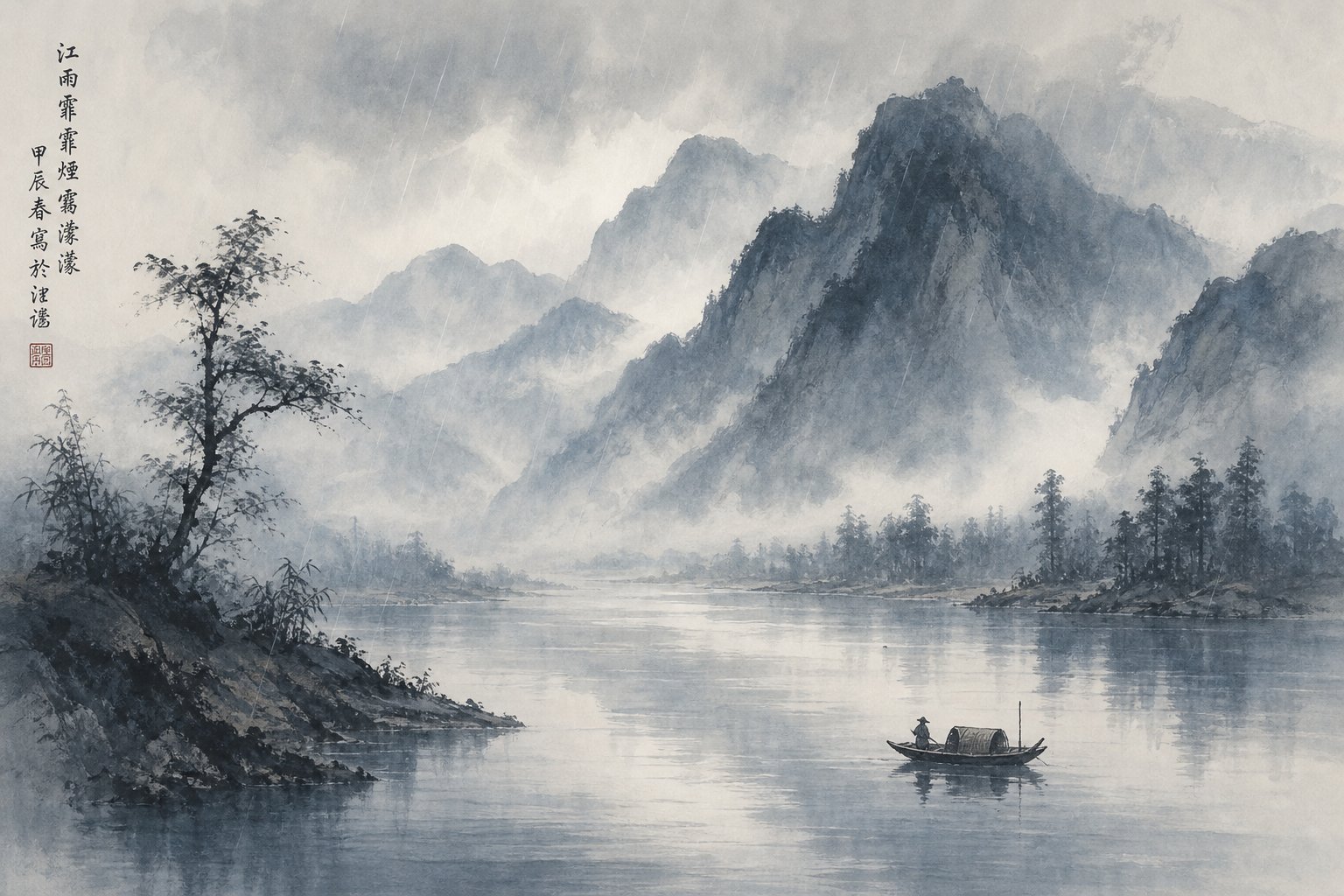
Water does not force its way through stone. It finds the path of least resistance, wears down obstacles over centuries, and fills whatever shape it is given. This is not weakness. In Daoist philosophy, it is the highest form of strength. Laozi wrote in the Dao De Jing that "the highest good is like water" because water benefits all things and does not compete. It nourishes without striving, adapts without losing its nature. When parents choose names that mean water, they are giving their child this philosophy: be flexible, be generous, be quietly unstoppable.
Water and weather characters form one of the most poetically rich categories in Chinese naming. Rivers suggest breadth and ambition. Rain carries blessings. Clouds evoke freedom. Snow implies purity. Each element offers a different emotional texture, and many of these characters work beautifully as one syllable boy names or as components in longer compound names for girls.
Water Names From Rivers to Rain
The character 海 (hai, ocean) is one of the most popular water elements in chinese names girl and boy alike. It suggests vastness, depth, and the capacity to contain multitudes. You will find it in names across generations because its meaning never feels small. A child named Hai carries the sense of someone whose potential has no visible boundary.
River characters split along interesting gender lines. 江 (jiang, great river) carries masculine energy, associated with the Yangtze and with grand, powerful currents. 河 (he, river) is slightly softer but still leans masculine. Both are common in boy names where parents want to convey ambition and forward momentum. The character 泉 (quan, spring or fountain) offers a gentler water image, suggesting a source that gives endlessly, and works well for any gender.
Rain (雨 yu) occupies a special place in the Chinese imagination. As one reference notes, Du Fu wrote about spring rain arriving "when the season is right," falling silently through the night, moistening everything without seeking credit. This is rain as quiet generosity. Names containing 雨 suggest someone who brings comfort to others without making a fuss about it. The character is genuinely unisex and appears in popular modern names for all genders.
Two rain-derived characters deserve special attention. 霖 (lin) means continuous, soaking rain, the kind that sustains crops through a dry season. It carries connotations of lasting blessings and sustained nourishment. 泽 (ze) originally meant marsh or pool but evolved to represent accumulated grace spreading outward. Parents who choose 泽 hope their child will create ripples of kindness that benefit everyone around them. Both characters lean masculine in modern usage but carry no inherent gender restriction.
Cloud, Wind, and Snow Names With Poetic Grace
Clouds drift above the messy world of human affairs, answering to no one, changing shape without apology. The character 云 (yun) is soft, flowing, and deceptively simple. Chinese names girl options like Yunxi (云溪, cloud stream) or Caiyun (彩云, colorful clouds) feel dreamy and artistic. For boys, Yunfei (云飞, flying clouds) adds dynamism. As a standalone, 云 works as a 3 letter girl name in pinyin that carries enormous poetic weight in just one character.
Wind (风 feng) embodies movement itself, the invisible force that reshapes landscapes and carries seeds to distant places. Ancient poets rarely wrote about wind as weather. They wrote about change, about forces beyond human control. Names containing 风 suggest someone comfortable with uncertainty, someone who moves through life with grace rather than rigidity. The character leans masculine in traditional naming but appears in unisex compounds.
Snow (雪 xue) is one of the most recognizable nature characters in Chinese naming. It represents purity, clarity, and the beauty of stillness. Unlike rain, which nourishes, snow transforms the landscape entirely, covering imperfections and creating something new. 雪 leans feminine in modern usage and appears in beloved names like Xueqing (雪晴, clearing after snow) and Ruoxue (若雪, like snow).
The character 霏 (fei) describes fine, misty rain or heavy mist, the kind of weather that blurs boundaries between earth and sky. It appears in the Book of Songs, China's oldest poetry collection. Names with 霏 suggest someone comfortable with mystery, who does not need everything explained or categorized. It is a favorite among parents seeking something poetic and uncommon for girls.
Here is a reference table of water and weather names organized by element:
| Chinese Character | Pinyin | Meaning | Gender Suitability |
|---|---|---|---|
| 海 (Hai) | hai | Ocean / sea | Unisex (leans masculine) |
| 江 (Jiang) | jiang | Great river | Boys |
| 雨 (Yu) | yu | Rain | Unisex |
| 霖 (Lin) | lin | Continuous, soaking rain | Unisex (leans masculine) |
| 泽 (Ze) | ze | Marsh / accumulated grace | Unisex (leans masculine) |
| 云 (Yun) | yun | Cloud | Unisex (leans feminine) |
| 风 (Feng) | feng | Wind | Unisex (leans masculine) |
| 雪 (Xue) | xue | Snow | Girls |
| 霏 (Fei) | fei | Misty rain / fine drizzle | Girls |
| 泉 (Quan) | quan | Spring / fountain | Unisex |
A pattern emerges across these characters. Water names that suggest power and scale (ocean, great river, continuous rain) tend to lean masculine. Those that suggest subtlety and transformation (cloud, snow, mist) lean feminine. But the truly versatile characters, 雨 (rain), 泉 (spring), and 云 (cloud), sit comfortably in the middle, adaptable depending on their companion character. This flexibility mirrors the very quality that makes water so philosophically valued: it takes the shape of whatever holds it without losing its essential nature.
Choosing among these elements is not purely aesthetic. In traditional Chinese naming practice, a deeper system governs which nature characters suit a particular child. The wuxing, or five elements framework, connects water, wood, fire, earth, and metal into a cycle of balance that many families still consult when selecting the perfect name.
The Five Elements Framework for Choosing Nature Names
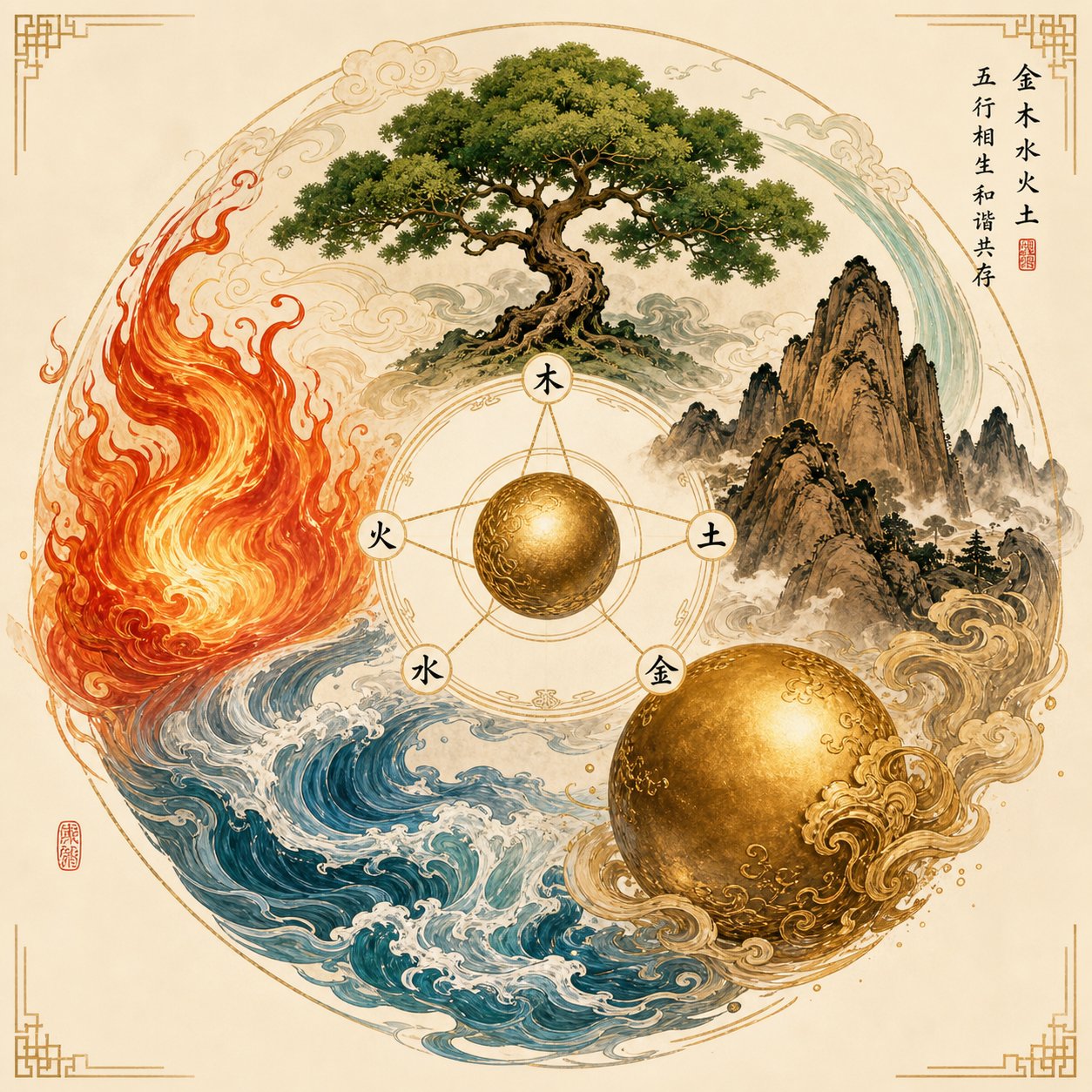
Every nature character you have seen so far, from lotus to ocean to pine, belongs to one of five elemental categories. This is not a loose association. It is a structured system called wuxing (五行), and it has governed Chinese naming for over two thousand years. The word xing (行) does not actually mean "element." It means "movement" or "phase," describing five patterns of energy that cycle through the natural world: Wood, Fire, Earth, Metal, and Water. When parents choose a nature name, they are not just picking a pretty character. They are selecting a specific type of energy to complement their child's destiny.
Sounds complex? The core idea is surprisingly intuitive. Every person is born with a unique energetic profile based on their birth date and time. Some elements show up strongly. Others are weak or missing entirely. A well-chosen name fills the gap.
How the Five Elements Guide Name Selection
The process begins with a child's BaZi (八字), or Four Pillars of Destiny. This is calculated from the year, month, day, and hour of birth, each associated with specific elemental energies. A BaZi reading reveals which of the five phases dominate and which are deficient. If a baby's chart shows abundant Fire and Earth but lacks Water, a naming specialist will recommend characters carrying Water energy to restore balance.
Chinese characters carry elemental associations through their radicals, the structural components that make up each character. A character containing the water radical (氵) belongs to the Water phase. One built with the wood radical (木) belongs to Wood. This is why understanding radicals matters more than surface meaning when working within the wuxing system. Two characters might both translate to something beautiful in English, but only one carries the elemental energy your child actually needs.
Among the most common chinese surnames and given names, you will find elemental balance reflected across generations. Parents working in han mandarin naming traditions consult this framework whether they live in Beijing, Singapore, or San Francisco. The system travels with the culture.
Here are the five elements with their associated nature characters and symbolic qualities:
- Wood (木 mu): The energy of spring, growth, and upward expansion. Associated nature characters include 林 (lin, forest), 森 (sen, dense woods), 桐 (tong, paulownia tree), and 芳 (fang, fragrant). Wood names carry vitality, flexibility, and forward momentum. A child whose chart lacks Wood may benefit from characters that bring a sense of life and continuous development.
- Fire (火 huo): The energy of summer, radiance, and maximum expression. Key nature characters include 炎 (yan, blazing flame), 曦 (xi, dawn light), and 煜 (yu, brilliant glow). Fire names suggest warmth, leadership, and visibility. They suit children whose charts need more passion and outward energy.
- Earth (土 tu): The stabilizing, centering energy between seasons. Nature characters include 山 (shan, mountain), 岩 (yan, cliff or rock), 岳 (yue, great peak), and 坤 (kun, earth/feminine principle). Earth names provide grounding, patience, and reliability, ideal for charts that feel scattered or unanchored.
- Metal (金 jin): The energy of autumn, refinement, and clarity. Characters include 鑫 (xin, triple gold/prosperity), 锋 (feng, sharp edge), and 铭 (ming, inscription). The ming meaning here, "to engrave" or "to inscribe," suggests a person who leaves lasting marks through intellect and precision. Metal names bring discipline, decisiveness, and inner strength.
- Water (水 shui): The energy of winter, depth, and flowing wisdom. Nature characters include 淼 (miao, vast water), 泉 (quan, spring), 涵 (han, contain/encompass), and 泽 (ze, marsh/grace). Water names carry adaptability, intelligence, and profound inner resources.
Balancing Your Baby's Elemental Chart
The five elements do not exist in isolation. They interact through two cycles. In the Generating Cycle, each phase nourishes the next: Wood feeds Fire, Fire creates Earth, Earth bears Metal, Metal collects Water, Water nourishes Wood. In the Controlling Cycle, each phase restrains another: Water quenches Fire, Fire melts Metal, Metal cuts Wood, Wood parts Earth, Earth dams Water. A skilled namer considers both cycles when selecting characters, ensuring the name does not accidentally strengthen an already dominant element or create internal conflict.
Beyond elemental energy, stroke count and character complexity play a practical role. Each Chinese character has a specific number of strokes, and traditional naming practice assigns numerical significance to these counts. A character like 淼 (miao) has 12 strokes, while 泉 (quan) has 9. Some families prefer characters whose stroke counts, combined with the surname's strokes, produce auspicious totals. The syllable meaning matters, but so does the visual weight of the character itself. A name with too many complex characters can feel heavy on paper, while one with only simple characters may lack gravitas.
For families navigating asian surnames with specific stroke counts, this adds another layer of consideration. A surname like Wang (王, 4 strokes) pairs differently than Zhang (张, 7 strokes) or Ouyang (欧阳, 22 strokes combined). The goal is visual and numerical harmony across the full name.
The ming meaning principle extends beyond the Metal element. Every character in a name should carry clear, positive semantic value while also satisfying elemental requirements. A Water character chosen purely for its radical but carrying an obscure or negative meaning defeats the purpose. The best names satisfy all dimensions simultaneously: correct element, beautiful sound, positive meaning, and balanced visual form.
This framework gives structure to what might otherwise feel like an overwhelming number of choices. But structure alone does not prevent mistakes. Certain characters that look perfect on paper create unexpected problems in practice, from unfortunate homophones to dialect complications that can trip up even experienced namers.
Common Pitfalls to Avoid When Picking Nature Names
A character can look beautiful on paper, carry the right elemental energy, and still cause problems the moment someone says it out loud. Chinese is a tonal language dense with homophones, and nature characters are not exempt from this minefield. The difference between a poetic name and an embarrassing one often comes down to details that non-native speakers, and even some native speakers, overlook until it is too late.
Whether you are browsing a chinese names list female options or considering unisex nature characters, these pitfalls apply equally. Awareness is the simplest form of prevention.
Avoiding Homophone Traps and Awkward Combinations
Mandarin has roughly 1,600 distinct syllables when you account for tones, but over 70,000 characters. That means dozens of characters share identical pronunciations. A nature name that sounds lovely in isolation can collide with an unfortunate word when paired with certain surnames or companion characters.
Here are the most common traps to watch for:
- Homophone collisions with negative words: The character 梅 (mei, plum blossom) is a beloved nature name, but it shares its pronunciation with 没 (mei, meaning "without" or "lacking"). A child surnamed Wu (吴, which sounds like 无, "nothing") named Mei could hear their full name interpreted as "has nothing." Similar issues arise with characters like 思 (si, to think) paired with 亡 (wang), which together echo 死亡 (siwang, death).
- Characters too rare for official systems: China's government databases support approximately 32,000 characters. Nature characters drawn from classical poetry sometimes fall outside this range. A rare variant might appear in a Tang Dynasty poem but cannot be input into government computer systems, creating lifelong bureaucratic headaches with ID cards, bank accounts, and travel documents.
- Tonal misreadings that change meaning entirely: Mandarin's four tones mean that a single syllable carries multiple identities. The character 雨 (yu, third tone, rain) is safe, but careless pronunciation can slide it toward 鱼 (yu, second tone, fish). For non-Chinese family members still learning that ni hao meaning "hello" requires specific tones to avoid confusion, imagine the complexity of getting a child's name right every time.
- Gendered assumptions that do not match intent: Many chinese female names draw from flowers and soft weather elements, but this convention is not absolute. Characters like 雪 (xue, snow) and 霏 (fei, misty rain) read as feminine to most native speakers. Using them for a boy will not cause offense, but it will cause repeated assumptions. Conversely, 松 (song, pine) and 峰 (feng, peak) read as masculine. Parents wanting genuinely gender-neutral options should look to characters like 雨 (rain), 云 (cloud), or 泉 (spring), which carry no strong gendered expectation.
- Combinations that create unintended phrases: Individual characters may be fine alone but produce awkward readings together. A surname like Yang (杨) paired with Wei (伟, great) and a nature character like 林 (lin, forest) might seem strong, but always read the full name aloud quickly, multiple times, listening for any phrase that emerges from the combined syllables.
The practical test is simple: say the full name, surname included, to at least three native Mandarin speakers. Ask them what associations come to mind. If anyone laughs or hesitates, investigate why.
Navigating Dialect Differences for Diaspora Families
Here is where things get especially tricky for families living outside mainland China. Mandarin is not the only Chinese language. Cantonese, Hokkien, Teochew, Hakka, and Shanghainese each pronounce the same characters differently, sometimes radically so. As the Asia Media Centre explains, the character 王 alone is pronounced Wang in Mandarin, Wong in Cantonese, Ong in Hokkien, and Heng in Teochew.
This matters because a nature name chosen for its Mandarin sound may lose its beauty or gain unwanted associations in another dialect. A character that flows musically in Mandarin might land with a harsh consonant cluster in Cantonese. For diaspora families where grandparents speak Cantonese but parents use Mandarin, or where the community speaks Hokkien, testing the name across relevant dialects prevents a situation where half the family finds the name awkward to say.
Female chinese names face this challenge acutely because many popular flora characters shift pronunciation significantly across dialects. 梅 (mei in Mandarin) becomes "mui" in Cantonese, which carries different tonal associations. 兰 (lan) becomes "laan" in Cantonese, which fortunately retains its elegance. The ni hao meaning of a greeting stays consistent across contexts, but personal names do not enjoy that same universality.
The safest approach for multicultural families: choose characters whose core sound remains pleasant across the dialects your family actually uses. Test with relatives. Read it aloud in every relevant pronunciation. A name that works in only one dialect is a name that will be mispronounced at half the family gatherings your child attends.
These practical concerns do not diminish the beauty of nature names. They simply sharpen the selection process. And for bicultural families navigating both Chinese and Western naming traditions, there is one more layer to consider: how a Chinese nature name pairs with an English first or middle name to create something that flows across both worlds.
Pairing Chinese Nature Names With Western Names
Bicultural families face a naming challenge that goes beyond meaning. You need a name that sounds right at a Chinese family dinner and at an American school roll call. A name that grandparents in Guangzhou can say with pride and that friends in Portland can pronounce without stumbling. This is not about compromise. It is about finding the intersection where both languages sing.
The good news? Chinese nature characters, with their clean vowel sounds and single-syllable structure, pair remarkably well with English names. The key is understanding a few phonetic principles that make the combination feel intentional rather than forced.
Creating Phonetic Harmony Across Languages
When you say a full name aloud, your ear catches rhythm before meaning. A name like "Sophia Yun" flows because the three syllables of Sophia land softly, and the single syllable Yun provides a clean, open finish. Compare that to "Brooke Zhu," where the hard "k" ending crashes into the "zh" beginning, creating a consonant pileup that feels effortful.
Here are the principles that create smooth bilingual names:
- Alternate syllable counts. If the English name is long (three or four syllables like Elizabeth or Alexander), a one-syllable Chinese nature name like Xue, Yun, or Hai provides balance. If the English name is short (one or two syllables like Claire or Liam), a two-character Chinese name like Muyang or Ruoxue adds rhythmic interest.
- Avoid consonant clusters at the junction. English names ending in hard consonants (k, t, d, x) clash with Chinese names beginning in similar sounds. Names ending in vowels or soft consonants (n, l, r) transition more gracefully into pinyin sounds.
- Match vowel openness. English names with open vowel endings (Emma, Sophia, Noah) pair naturally with Chinese characters that begin with consonants. English names ending in closed sounds (James, Mark) work better before Chinese characters starting with vowels or soft initials like y, l, or m.
- Consider the full name spoken quickly. Say the complete name, first and middle, five times fast. If you trip over any junction, that friction will follow your child through every introduction.
As bilingual families have noted, picking names that work across languages can be a real plus with extended family. Relatives learn to pronounce and accept, but starting with something accessible reduces friction from day one. For non-Chinese family members, characters with familiar consonant sounds like Mei (similar to "May"), Lan (rhymes with "on"), or Hai (sounds like "hi") offer immediate pronunciation footholds.
Some elegant girl names bridge both worlds effortlessly. Lily pairs with Lian (lotus) because the "L" sound echoes across both. Rose works alongside Mei (plum blossom) because both carry floral associations without redundancy. For unique girl names, consider pairing something unexpected in English with a grounding nature character: Wren Yun, Iris Xue, or Sage Lin all create cross-cultural resonance.
Among strong female names, combinations like Victoria Feng (maple) or Athena Hai (ocean) pair Western power with Chinese natural imagery. These are names of strong woman energy, where both halves carry weight independently. For long girl names that feel substantial on paper, combinations like Evangeline Mei or Seraphina Yue create a sense of grandeur balanced by the simplicity of a single Chinese character.
Matching Nature Names to Your Baby's Birth Season
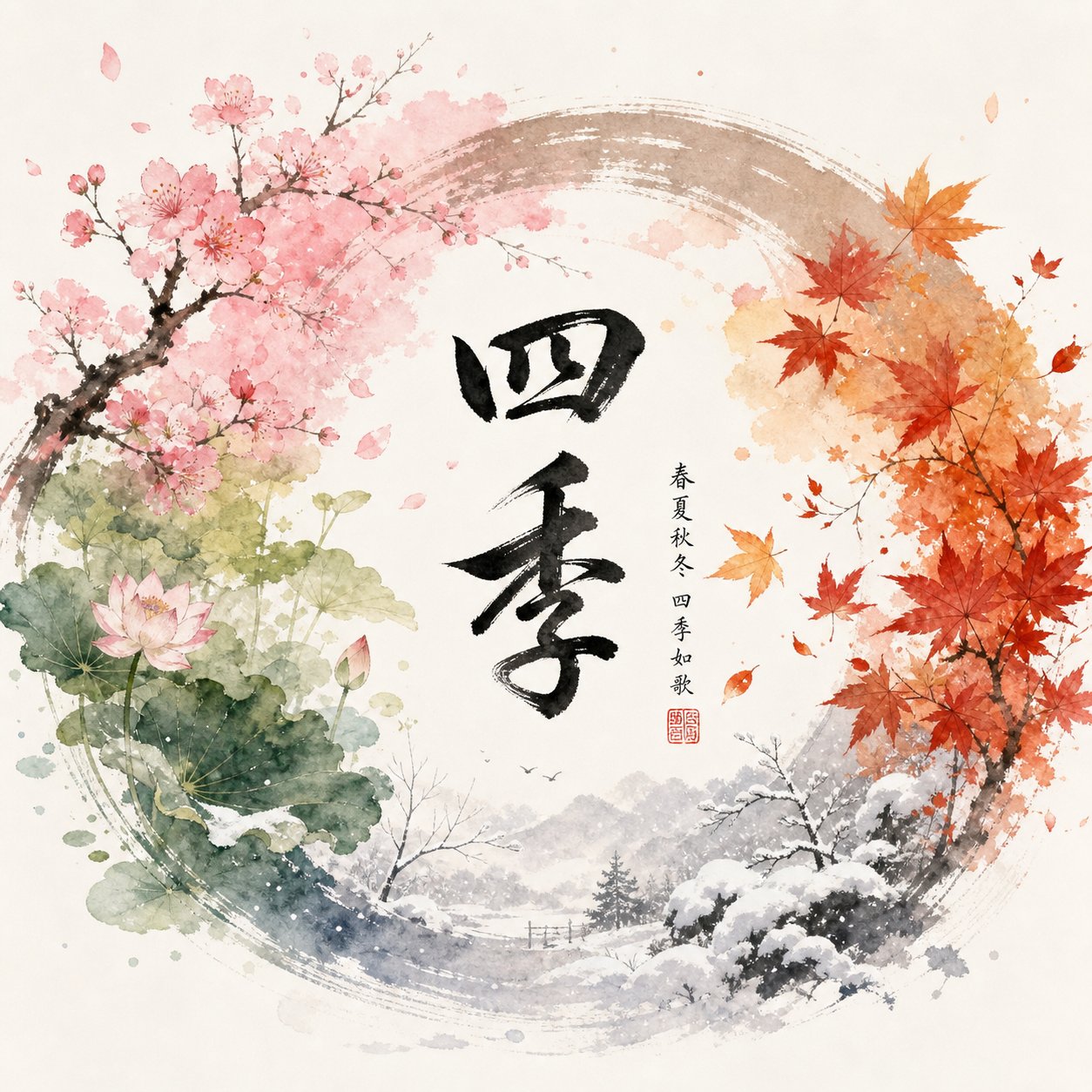
Chinese tradition has always connected naming to timing. A child born during plum blossom season carries different energy than one born under summer sun. Seasonal naming is not superstition. It is poetry made practical, linking your child's arrival to whatever the natural world is doing at that exact moment.
Spring names carry the energy of beginnings. A baby born in March or April arrives alongside peach blossoms and new growth. Summer names hold fullness and intensity. Autumn names suggest harvest, maturity, and quiet confidence. Winter names, as Confucius himself implied, reveal what endures when everything else falls away.
Here is a seasonal guide for chinese names for girls and boys, organized by birth timing:
| Character | Pinyin | Meaning | Season |
|---|---|---|---|
| 桃 (Tao) | tao | Peach blossom | Spring |
| 萌 (Meng) | meng | Sprouting / budding | Spring |
| 春 (Chun) | chun | Spring itself | Spring |
| 荷 (He) | he | Lotus | Summer |
| 阳 (Yang) | yang | Sun / sunlight | Summer |
| 夏 (Xia) | xia | Summer | Summer |
| 枫 (Feng) | feng | Maple | Autumn |
| 菊 (Ju) | ju | Chrysanthemum | Autumn |
| 桂 (Gui) | gui | Osmanthus | Autumn |
| 梅 (Mei) | mei | Plum blossom | Winter |
| 雪 (Xue) | xue | Snow | Winter |
| 松 (Song) | song | Pine (evergreen in cold) | Winter |
Spring babies pair beautifully with names like 桃 (tao, peach blossom), which carries associations of youth, romance, and fresh starts. The compound Xiaochun (晓春, dawn of spring) captures that first-light energy of a new season. 萌 (meng) literally means "to sprout" and has become a modern favorite because it also carries a colloquial meaning of "adorable" in contemporary Chinese, giving it dual appeal.
Summer children suit 荷 (he, lotus), which blooms at the height of warmth, or 阳 (yang), which captures the season's radiant energy. As one poet described, the wind carrying lotus fragrance across water is the essence of slow summer beauty.
Autumn arrivals connect naturally to 枫 (feng, maple), whose leaves turn brilliant red before falling, symbolizing someone who makes their mark vividly. 桂 (gui, osmanthus) blooms in the eighth lunar month with a subtle, unforgettable sweetness, perfect for a child who makes an impression without trying.
Winter babies carry the most symbolically loaded names. 梅 (mei, plum blossom) blooms against the cold, a metaphor for resilience that has inspired poets for centuries. 雪 (xue, snow) transforms the world into something clean and new. These are elegant female names in their own right, but they also work in compound forms for any gender.
For pretty family names that honor both sides of a bicultural household, consider letting the season guide your Chinese character while choosing an English name independently for its own beauty. The two names do not need to share meaning. They need to share rhythm. A child named "Clara Mei" carries springtime in one language and clarity in another, and both halves stand strong on their own.
The final practical consideration: test every name with the people who will say it most. Hand the full name, written in pinyin, to your English-speaking relatives. Ask your Chinese-speaking family to say the English name. If both sides can manage it comfortably on the first or second try, you have found something that works. A name is not just a label. It is the first word your child hears thousands of times, and it should sound like home in every language that matters to your family.
Frequently Asked Questions About Chinese Nature Names for Babies
1. What are the most popular Chinese nature names for baby girls?
Popular Chinese nature names for girls include Yun (cloud), Xue (snow), Lan (orchid), Lian (lotus), and Mei (plum blossom). Each carries deep cultural symbolism. Orchid represents quiet virtue and refinement, lotus symbolizes purity rising from adversity, and plum blossom embodies the courage to bloom during hardship. Modern parents also favor characters like Fei (misty rain) and Rong (hibiscus) for their poetic nuance and fresh feel.
2. How do the five elements (wuxing) affect Chinese baby name selection?
The wuxing system assigns elemental energy to characters based on their radicals. Parents calculate a baby's BaZi (Four Pillars of Destiny) from their birth date and time to identify which elements are strong or weak. A name is then chosen to restore balance. For example, a child lacking Water energy might receive a name containing the water radical like Quan (spring) or Han (encompass). This framework ensures the name complements the child's natural energetic profile rather than simply sounding pleasant.
3. Can Chinese nature names work for non-Chinese families?
Yes, many bicultural and non-Chinese families choose Chinese nature names for their philosophical depth and phonetic beauty. Characters with accessible sounds like Mei (similar to May), Lan (rhymes with on), and Hai (sounds like hi) offer easy pronunciation for English speakers. The key is understanding the cultural weight behind each character and selecting names respectfully, ideally consulting native speakers to avoid homophone issues or unintended meanings.
4. What Chinese nature names are truly gender-neutral?
Several Chinese nature characters carry no strong gendered expectation. Yu (rain), Yun (cloud), Quan (spring/fountain), Xing (star), and Lin (continuous rain) all sit comfortably in the middle. Gender associations in Chinese naming come primarily from the companion character in a two-character given name rather than from the nature element itself. Pairing a neutral character with softer or stronger companions shifts the overall feel without restricting the core name.
5. How do I avoid choosing a Chinese nature name with an embarrassing meaning?
The most reliable method is saying the full name, including surname, aloud to at least three native Mandarin speakers and asking what associations come to mind. Watch for homophone collisions where a nature character shares pronunciation with a negative word, such as Mei (plum) sounding like Mei (without). Also check that the character exists in government databases for official documents, test pronunciation across any dialects your family uses, and read the combined syllables quickly to catch unintended phrases.