How Buddhism Transformed Chinese Naming Traditions
Buddhist influence on Chinese names refers to the centuries-long process through which Buddhist philosophy, imagery, and vocabulary became embedded in the characters Chinese families choose for their children. When Buddhist scriptures were first translated from Sanskrit into Chinese, translators faced a monumental task: rendering abstract spiritual concepts into a writing system built on pictographic and ideographic characters. The result was thousands of new character combinations and meanings that gradually filtered out of monasteries and into everyday life, including the deeply personal act of naming a child.
Imagine a parent selecting a name like 慧 (wisdom) or 莲 (lotus) for their newborn. These characters feel naturally Chinese, yet their spiritual weight traces directly back to Sanskrit Buddhist terminology adapted during translation efforts spanning nearly two millennia. This is the quiet power of Buddhist naming influence: it operates so seamlessly within Chinese culture that most people never notice its origins.
What Buddhist Influence on Chinese Names Means
In Chinese culture, a name is far more than a label. It carries aspirations, philosophical values, and familial hopes. The influence of Confucianism, Daoism, and Buddhism has profoundly shaped these naming practices, with Buddhist concepts of enlightenment and compassion finding their way into the process alongside Confucian virtues and Daoist principles of harmony. A Chinese Buddhist name draws on this religious vocabulary to express spiritual qualities parents wish for their child: inner peace, clarity of mind, moral purity, or awakened understanding.
What makes Buddhist-derived names distinctive is their dual nature. Characters like 净 (purity), 觉 (awakening), and 禅 (meditation) function perfectly as aesthetically beautiful name components while simultaneously carrying layers of doctrinal meaning rooted in sutras translated over a thousand years ago.
The Scale of Buddhist Vocabulary in Chinese Culture
The sheer volume of Buddhist translation work explains why this influence runs so deep. Historical records document around 173 translators who produced over 1,700 scriptures across more than 6,000 scrolls. The Chinese Tripitaka alone contains approximately 3,000 texts encompassing philosophy, literature, linguistics, arts, medicine, and more. This was not a trickle of foreign words entering Chinese. It was a flood of new concepts, each requiring fresh character combinations or reinterpretations of existing characters.
When Buddhist scriptures were rendered into Chinese, they introduced not just a religion but an entire civilization's vocabulary. Characters that once carried purely secular meanings absorbed new spiritual dimensions, and entirely new combinations entered the cultural lexicon, many eventually becoming the building blocks of personal names.
This article serves as a cultural-practical resource, offering a list of Buddhist Chinese name characters and their meanings, tracing how they evolved from sacred text to family tradition. You'll find historical context, gendered naming patterns, and reference tables designed to help you recognize and appreciate these hidden Buddhist threads woven into one of the world's oldest naming traditions.
The story of how this vocabulary moved from scripture to cradle, however, did not happen overnight. It unfolded across specific dynasties, each adding new layers of Buddhist terminology to the Chinese naming pool.
A Historical Timeline of Buddhist Naming Influence Across Dynasties
The buddhist influence on chinese names history stretches back nearly two thousand years, but it did not arrive all at once. It accumulated in waves, each dynasty adding new vocabulary, new character combinations, and new cultural permission to draw on Buddhist concepts when naming children. Tracing this timeline reveals how a foreign religion's terminology became inseparable from one of China's most intimate cultural practices.
From the Han Dynasty to Early Adoption
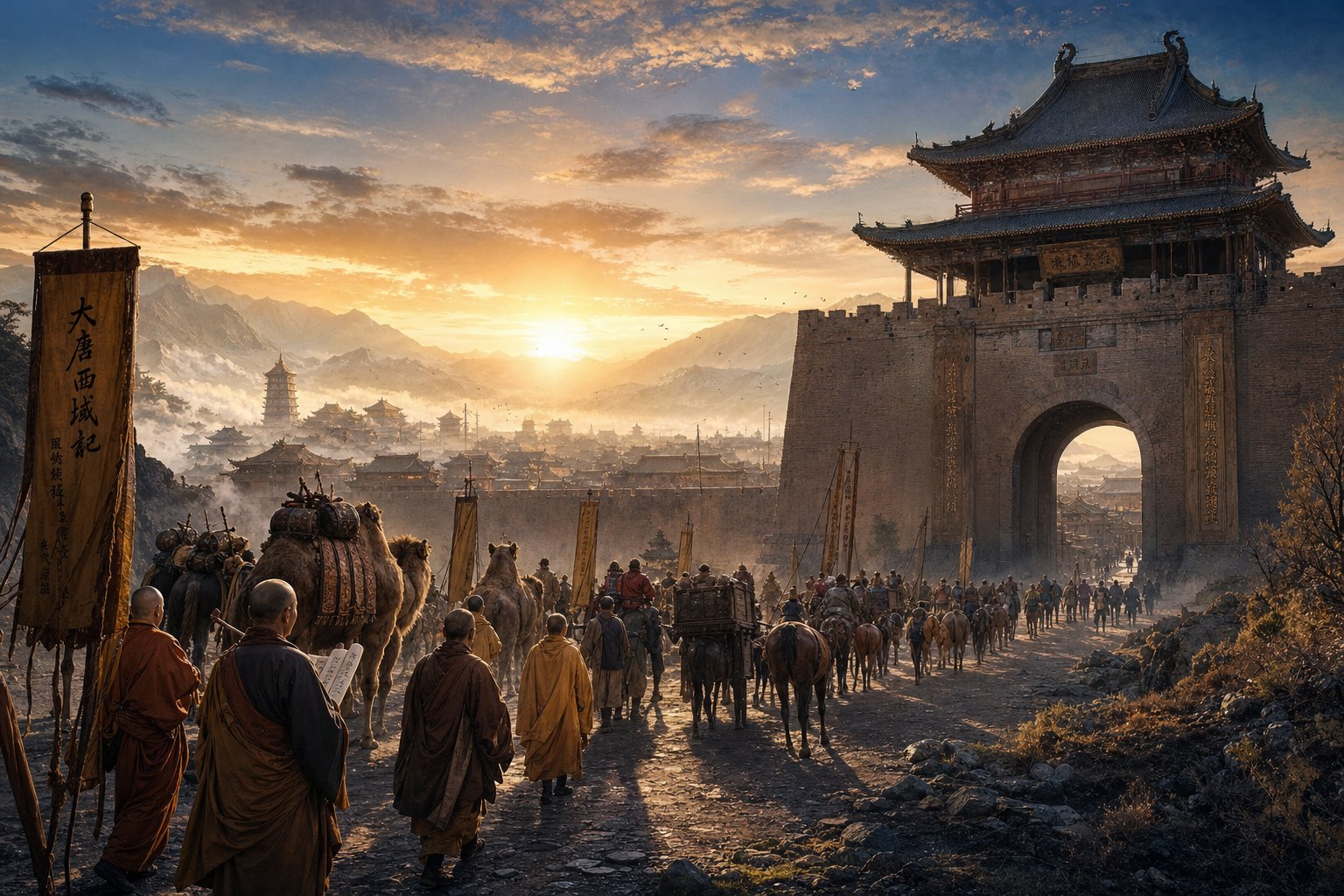
The late Han Dynasty (roughly 25-220 CE) marks the starting point. Buddhism arrived along the Silk Road, and with it came the first translators tasked with rendering Indian scriptures into Chinese. Three figures from this era stand out for their pioneering transcription work: An Shigao (fl. 148-170), a Central Asian translator active in the imperial capital of Luoyang; Lokaksema (fl. 147-189), a Buddhist monk from Gandhara; and Kang Mengxiang, generally considered to have been born in China to Sogdian parents.
These translators faced a fundamental challenge. How do you express a concept like dharma in Chinese characters? Two strategies emerged. One was semantic translation, rendering dharma as 法 (fa, meaning rule or doctrine). The other was phonetic transcription, approximating the sound of the original word using Chinese characters, as when Lokaksema rendered a Prakrit form of dharma as 曇摩 (tanmo). Both approaches created new character associations that would eventually filter into naming culture.
During this early period, Buddhist-influenced names remained largely confined to monastic communities and immigrant families connected to the translation enterprise. Yet the seeds were planted. Characters like 法 began accumulating Buddhist connotations alongside their older secular meanings.
The Tang Dynasty Golden Age of Buddhist Names
The real explosion came centuries later. Here is a chronological overview of the key periods when Buddhist naming influence intensified:
- Late Han to Three Kingdoms (150-280 CE): Initial translation activity introduces Buddhist vocabulary. Names with Buddhist elements appear mainly among clergy and foreign-born communities in Luoyang and other trade centers.
- Eastern Jin and Southern Dynasties (317-589 CE): Emperor Wu of Liang (r. 502-549) declares Buddhism the state religion, legitimizing Buddhist terminology at the highest social levels. Elite families begin incorporating characters like 慧 and 净 into children's names.
- Tang Dynasty (618-907 CE): The golden age. Emperor Taizong sponsors massive translation projects and dispatches pilgrims to India. Chinese buddhist temple names from the Tang period reflect the era's deep engagement with Buddhist cosmology. Buddhist-influenced personal names become common among both clergy and laypeople across all social classes.
- Song Dynasty (960-1279 CE): Buddhist naming conventions merge with Neo-Confucian sensibilities. Characters retain their Buddhist resonance but are increasingly chosen for aesthetic and philosophical qualities rather than overt religious devotion.
The Tang Dynasty deserves special attention. When you consider that famous Chinese Buddhist pilgrims who came to India, such as Faxian (337-422 CE) and Xuanzang (602-664 CE), returned with hundreds of new texts requiring translation, you can see how the naming vocabulary expanded dramatically. Xuanzang alone translated 75 texts comprising over 1,300 scrolls. Each translation introduced fresh character combinations into the cultural mainstream, and Tang society's enthusiastic embrace of Buddhism meant these terms quickly moved from scripture into nurseries.
Dynastic patronage mattered enormously. When an emperor built temples, funded translation bureaus, and publicly honored Buddhist masters, he signaled that Buddhist vocabulary carried prestige. Parents naming children after Buddhist virtues were not just expressing spiritual hopes; they were aligning their families with imperial cultural values.
Post-Tang Evolution and Persistence
After the Tang, Buddhist naming influence did not disappear. It transformed. The Song and Ming dynasties saw Buddhist concepts so thoroughly absorbed into Chinese culture that characters like 明 (illumination), 慈 (compassion), and 觉 (awakening) no longer registered as specifically Buddhist to most people. They had become part of the general Chinese aesthetic vocabulary for names, carrying a sense of refinement and depth without requiring conscious religious intent.
This quiet persistence is perhaps the most remarkable part of the story. A parent choosing 慧 for a daughter today may think of it simply as meaning "intelligent" or "bright," unaware that its spiritual weight traces back to the Sanskrit prajna and centuries of Buddhist philosophical discourse. The religious origin has been so thoroughly naturalized that it functions as invisible cultural inheritance.
Understanding this timeline helps explain why Buddhist-derived characters feel so native to Chinese naming. They have had nearly two millennia to settle into the language, losing their foreign edges while retaining their aspirational beauty. The specific characters that emerged from this long process, and the meanings they carry, form a rich vocabulary that parents still draw from today.
Common Chinese Name Characters Derived from Buddhist Concepts
So which specific characters made the journey from sacred scripture to personal name? The vocabulary that emerged from nearly two millennia of Buddhist translation is vast, but certain characters appear again and again in Chinese given names. Each one carries a layered history: a Sanskrit root, a translation choice made by a monk centuries ago, and a contemporary meaning that parents find beautiful and aspirational. Here is a practical reference to the most important buddhist chinese name characters and meanings you'll encounter.
Characters Rooted in Buddhist Wisdom and Enlightenment
Several of the most popular Buddhist-derived name characters relate to the core pursuit of Buddhism: the attainment of wisdom and awakened understanding. These characters appeal to parents because they express intellectual clarity and spiritual depth simultaneously.
慧 (hui, wisdom) traces directly to the Sanskrit concept of prajna, the transcendent wisdom that perceives the true nature of reality. In Buddhist philosophy, prajna is not mere intelligence but a profound, liberating insight. As a name character, 慧 suggests a person of deep understanding and quick perception. You'll find it in both male and female names, often paired with characters like 明 or 心 to create combinations like 慧明 (wise illumination) or 慧心 (wise heart).
觉 (jue, awakening) corresponds to the Sanskrit bodhi, the very root of the word "Buddha" (the awakened one). In naming, 觉 implies someone destined for clarity and awareness. It appears in names like 觉民 (awakening the people) or 自觉 (self-awakened), carrying both spiritual and secular connotations of perceptiveness.
悟 (wu, enlightenment) represents the moment of sudden realization central to Chan (Zen) Buddhism. The character literally means "to comprehend" or "to awaken to truth." It gained cultural fame through the literary character Sun Wukong (孙悟空) from Journey to the West, whose name means "awakened to emptiness." As a name component, 悟 suggests someone capable of deep insight and spiritual breakthrough. It appears frequently in a list of buddhist chinese male names, often in combinations like 悟道 (comprehending the Way) or 悟真 (awakening to truth).
明 (ming, illumination) predates Buddhism in Chinese, originally meaning "bright" or "clear." Buddhist translation enriched it with associations of spiritual radiance, the light of dharma dispelling ignorance. This dual heritage makes 明 one of the most versatile name characters in Chinese, functioning equally well in secular and spiritual contexts.
Characters Drawn from Buddhist Imagery and Nature
Buddhism brought vivid imagery into Chinese culture: the lotus rising from mud, the still surface of a meditation pool, the vast emptiness of unconditioned reality. These images translated into characters that carry both visual beauty and philosophical weight.
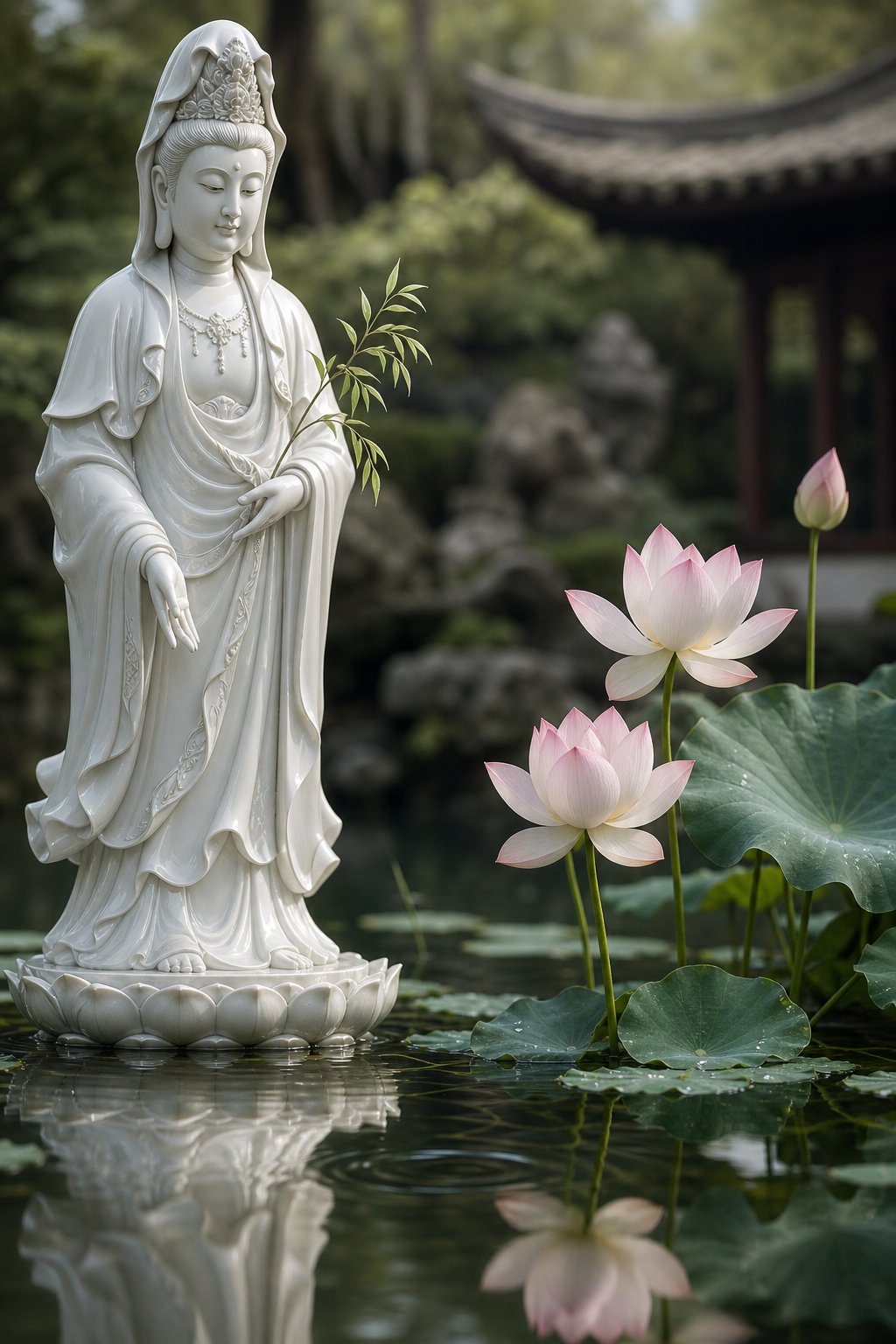
莲 (lian, lotus) derives its spiritual significance from the Sanskrit padma. In Buddhist iconography, the lotus grows from murky water yet blooms immaculately, symbolizing purity emerging from the suffering of worldly existence. Chinese buddhist sculpture names and artistic traditions frequently reference the lotus, and as a name character, 莲 evokes grace, purity, and resilience. It appears most often in female names like 莲花 (lotus blossom) or 玉莲 (jade lotus).
净 (jing, purity) connects to the Buddhist concept of visuddhi (purification) and the Pure Land (Sukhavati) tradition. The character suggests a mind free from defilement and a life of moral clarity. In names, 净 conveys cleanliness of spirit and purpose, appearing in combinations like 净心 (pure heart) or 净明 (pure illumination).
空 (kong, emptiness) represents one of Buddhism's most profound philosophical concepts: sunyata, the emptiness or lack of inherent self-nature in all phenomena. While this might sound negative in English, in Chinese naming culture 空 carries connotations of spaciousness, freedom, and transcendence. It appears in names suggesting someone unbound by worldly attachments, though it is used more cautiously than other Buddhist characters due to its abstract nature.
Characters Reflecting Buddhist Virtues and Practice
Beyond wisdom and imagery, Buddhism introduced an ethical vocabulary that parents found ideal for expressing hopes about their child's character and conduct.
慈 (ci, compassion) translates the Sanskrit maitri (loving-kindness) and karuna (compassion), two of the four immeasurable qualities in Buddhist practice. The character suggests warmth, generosity of spirit, and care for others. It appears in names like 慈恩 (compassionate grace) and carries strong associations with the bodhisattva Guanyin, the embodiment of compassion in Chinese Buddhism.
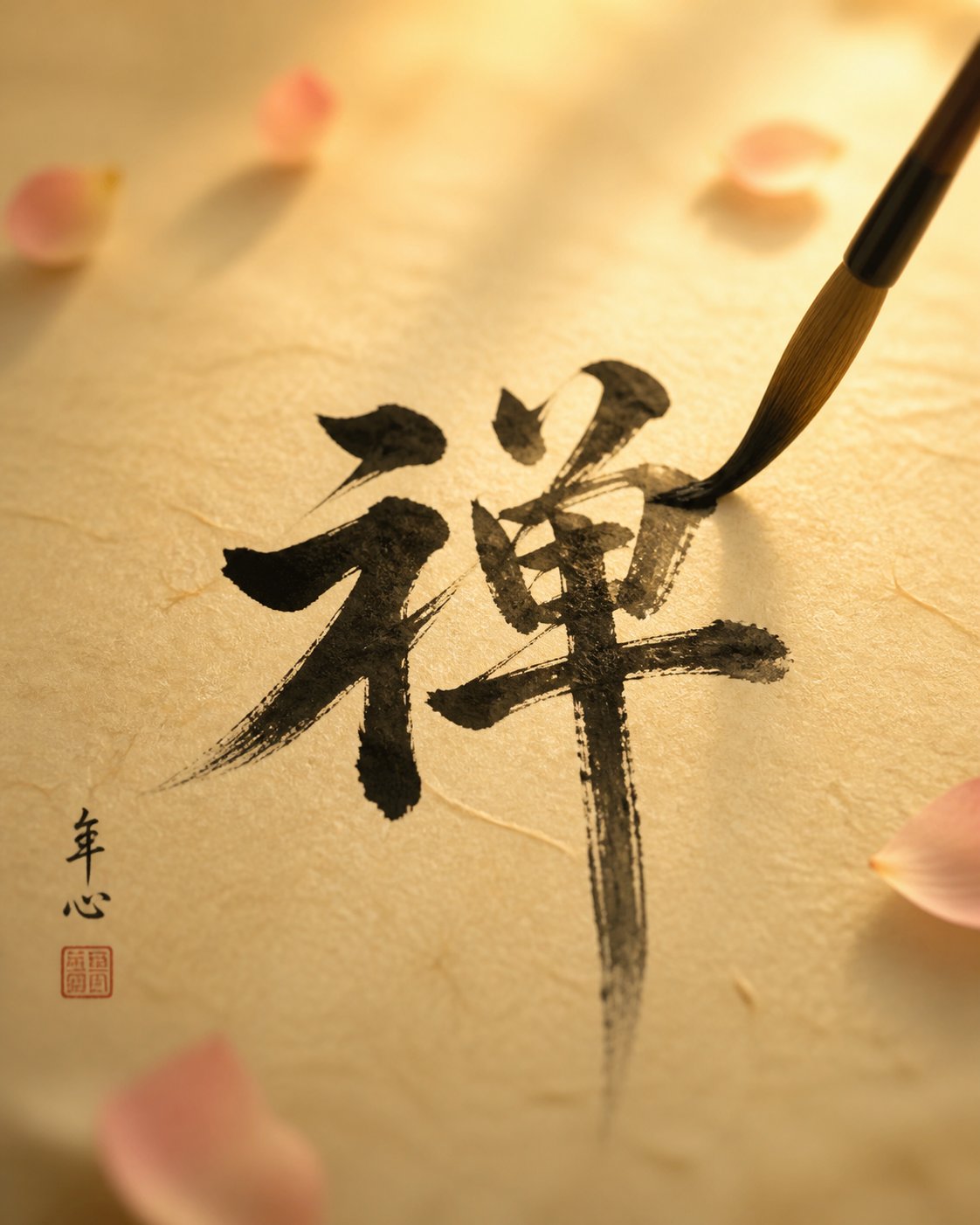
禅 (chan, zen/meditation) is a phonetic adaptation of the Sanskrit dhyana (meditative absorption), filtered through the Pali jhana. As a name character, 禅 evokes stillness, contemplative depth, and inner discipline. It appears more commonly in male names and suggests a person of calm focus and philosophical temperament.
法 (fa, dharma) was chosen by early translators to render the Sanskrit dharma, encompassing Buddhist teaching, universal law, and moral truth. In naming, 法 implies someone who lives by principle and upholds righteous conduct. It functions in names like 法明 (dharma illumination) or 法云 (dharma cloud), and remains especially common in monastic naming traditions.
The table below provides a scannable reference for these characters and their naming contexts:
| Character | Pinyin | Buddhist Origin | Name Meaning | Common Usage |
|---|---|---|---|---|
| 慧 | hui | Sanskrit prajna (transcendent wisdom) | Intelligence, deep understanding | Male and female names; pairs with 明, 心, 敏 |
| 觉 | jue | Sanskrit bodhi (awakening) | Awareness, perceptiveness | Male names; pairs with 民, 明, 悟 |
| 悟 | wu | Chan Buddhist concept of sudden realization | Comprehension, spiritual insight | Male names; pairs with 道, 真, 空 |
| 明 | ming | Buddhist concept of dharma-light dispelling ignorance | Brightness, clarity, illumination | Male and female names; extremely versatile |
| 莲 | lian | Sanskrit padma (lotus) | Purity, grace, resilience | Primarily female names; pairs with 花, 玉, 心 |
| 净 | jing | Sanskrit visuddhi (purification); Pure Land tradition | Purity of mind and conduct | Male and female names; pairs with 心, 明, 土 |
| 空 | kong | Sanskrit sunyata (emptiness) | Spaciousness, transcendence, freedom | Male names; used selectively; pairs with 明, 悟 |
| 慈 | ci | Sanskrit maitri/karuna (loving-kindness/compassion) | Warmth, compassion, benevolence | Female names primarily; pairs with 恩, 心, 云 |
| 禅 | chan | Sanskrit dhyana (meditative absorption) | Stillness, contemplative depth | Male names primarily; pairs with 心, 明, 悟 |
| 法 | fa | Sanskrit dharma (teaching, universal law) | Principle, righteousness, moral truth | Male names and monastic names; pairs with 明, 云, 海 |
Notice something interesting in this table? Several characters cluster around specific gender patterns. Characters associated with beauty and compassion tend toward female names, while those linked to monastic discipline and philosophical attainment lean male. These gendered tendencies reveal how Buddhist iconography and practice shaped not just which characters entered the naming pool, but how Chinese culture assigned them to sons and daughters differently.
Gender Patterns in Buddhist-Influenced Chinese Names
Why does a character like 莲 (lotus) feel instinctively feminine in a Chinese name, while 禅 (meditation) reads as masculine? These associations are not random. They reflect centuries of Buddhist iconography, storytelling, and cultural expectation shaping how parents assign spiritual vocabulary to daughters versus sons. When you explore buddhist inspired chinese names for girls and boys, distinct patterns emerge that reveal as much about Chinese gender ideals as they do about Buddhist philosophy.
Buddhist Characters in Female Chinese Names
Chinese buddhist girl names tend to draw from characters associated with beauty, gentleness, nurturing compassion, and natural imagery. The strongest single influence on feminine Buddhist naming is Guanyin, the bodhisattva of compassion. Originally depicted as the male figure Avalokitesvara in Indian Buddhism, Guanyin transformed into a feminine deity in Chinese culture during the Song dynasty (960-1279), eventually becoming one of the most beloved figures in Chinese mythology. Female names drawn from Buddhist sources often echo Guanyin's qualities of mercy, grace, and serene beauty.
Characters commonly found in female names include:
- 莲 (lian, lotus) - Symbolizes purity rising from adversity; strongly associated with feminine grace in Buddhist art
- 慈 (ci, compassion) - Directly linked to Guanyin's defining virtue of boundless loving-kindness
- 静 (jing, stillness) - Evokes meditative calm and inner composure, prized as a feminine quality
- 妙 (miao, wondrous) - Connected to the legend of Princess Miao Shan, a mortal incarnation of Guanyin in Chinese Buddhist mythology
- 善 (shan, goodness) - Reflects Buddhist moral virtue, often paired with feminine characters
- 心 (xin, heart/mind) - Represents the Buddhist emphasis on cultivating the mind, frequently used in women's names
The connection between chinese mythology female names buddhist figures and real naming practices runs deep. Guanyin's legend as Princess Miao Shan, a woman who defied her father to pursue spiritual practice and ultimately achieved enlightenment through compassion, gave Chinese families a powerful feminine archetype. Characters drawn from her story, like 妙 and 善, became natural choices for daughters.
Buddhist Characters in Male Chinese Names
Male names influenced by Buddhism tend to emphasize philosophical attainment, disciplined practice, and doctrinal authority. Where feminine names draw on imagery and compassion, masculine names lean toward the intellectual and ascetic dimensions of Buddhist tradition.
Characters commonly found in male names include:
- 禅 (chan, meditation) - Suggests monastic discipline and contemplative mastery
- 悟 (wu, enlightenment) - Implies sudden realization and philosophical breakthrough
- 法 (fa, dharma) - Carries authority and moral principle, associated with monks and teachers
- 觉 (jue, awakening) - Evokes the Buddha's own achievement of supreme awareness
- 空 (kong, emptiness) - Represents transcendence and freedom from worldly attachment
- 道 (dao, the Way) - While shared with Daoism, carries Buddhist connotations of the path to liberation
These characters reflect the historical reality that Chinese Buddhist monasticism was predominantly male for much of its history. The monks who translated scriptures, debated philosophy, and achieved fame for spiritual attainment were the cultural models behind these naming choices. A parent naming a son 悟禅 (enlightened meditation) was invoking that tradition of male scholarly and spiritual achievement.
Shifting Gender Boundaries in Modern Naming
Contemporary naming practices have loosened these gendered boundaries considerably. You'll now find girls named 慧禅 (wise meditation) or boys named 慈明 (compassionate illumination) without anyone raising an eyebrow. Several factors drive this shift: greater gender equality in education and professional life, a growing appreciation for Buddhist philosophy independent of gendered iconography, and the simple aesthetic appeal of characters that sound beautiful regardless of traditional associations.
Characters like 慧 (wisdom) and 明 (illumination) have always been relatively gender-neutral, and their popularity continues to grow across both sexes. Meanwhile, 莲 remains predominantly feminine, and 法 predominantly masculine, suggesting that some associations run too deep to shift quickly.
These gendered patterns in secular naming, however, tell only part of the story. Within Buddhist institutions themselves, an entirely separate naming system exists: one where gender matters less than lineage, and where names are not chosen by parents but bestowed by masters in formal ceremony.
Dharma Names and the Monastic Naming Tradition
Within Chinese Buddhist monasteries, names are not chosen by parents hoping for a bright future. They are bestowed by a master during a formal ceremony, marking a practitioner's entry into a spiritual lineage. These dharma names (法名, faming) follow a structured system entirely distinct from secular naming, yet their influence has rippled outward into Chinese culture for centuries, shaping how laypeople think about chinese buddhist monk names and even how some families name their children.
The Structure of Chinese Buddhist Monk Names
When a person takes monastic ordination or receives the lay precepts, they are given a new name that replaces their secular identity. This name typically consists of two characters. The first is a generational character (派字, paizi), shared by all monks or nuns ordained in the same generation within a particular lineage. The second is a dharma character chosen specifically for the individual, often reflecting a quality the master perceives in the student or wishes to cultivate in them.
Think of it like a spiritual surname and given name. The generational character links you horizontally to your dharma siblings, while the individual character distinguishes you within that cohort. Together, they create a traceable lineage map. If you know the generational poem (派诗) of a particular lineage, you can determine exactly where a monk sits in the succession simply by reading their name.
This system means that monk names buddhist chinese traditions produce are never random. They encode institutional memory. A monk named 释印光 (Shi Yinguang) carries the surname 释 (Shi, from Shakyamuni), the generational character 印 (seal/imprint), and the individual character 光 (light). Each layer communicates something specific about identity, lineage, and aspiration.
The dharma name ceremony represents a symbolic death and rebirth. The practitioner's old name, tied to family and worldly identity, is set aside. The new name, given by a master, signals entry into a spiritual family that transcends blood lineage, connecting the recipient to an unbroken chain of teachers stretching back centuries.
Temple Naming Services for Laypeople
Historically, Buddhist temples did not limit their naming influence to ordained monastics. Many temples offered naming services to laypeople, particularly for newborns. Parents would bring a child to a respected monk who would consult the child's birth details and select characters carrying auspicious Buddhist meaning. This practice gave families access to the monk's knowledge of character meanings, phonetic harmony, and spiritual symbolism.
Can you still visit a buddhist temple to get my chinese name? In some communities, yes. Temples in Taiwan, Hong Kong, and parts of Southeast Asia continue offering naming consultations, though the practice is less common in mainland China than it was before the mid-twentieth century. Some temples provide this service during refuge-taking ceremonies, where lay practitioners receive a dharma name alongside their existing secular name. Others offer it as a community service, particularly for families seeking names with spiritual depth.
The names produced through temple consultations tend to differ from purely secular Buddhist-influenced names. A monk selecting a name draws on deeper scriptural knowledge, often choosing character combinations that reference specific sutras, bodhisattva qualities, or doctrinal concepts that a layperson might not think to use.
Famous Monk Names and Their Cultural Legacy
Several historical monk names became so culturally prominent that they influenced secular naming for generations. Consider these examples:
- 玄奘 (Xuanzang) - The Tang Dynasty pilgrim whose name means "profound and magnificent." The character 玄 (mysterious, profound) gained naming popularity partly through his fame.
- 慧能 (Huineng) - The Sixth Patriarch of Chan Buddhism, whose name combines wisdom (慧) with ability (能). His legacy cemented 慧 as one of the most beloved name characters in Chinese culture.
- 鉴真 (Jianzhen) - The monk who brought Chinese Buddhism to Japan, whose name means "discerning truth." Both characters became popular in secular names.
- 弘一 (Hongyi) - The modern monk and artist (born Li Shutong), whose dharma name meaning "spreading oneness" reflects the aspiration to share Buddhist teaching widely.
These figures demonstrate how monastic naming conventions leaked into broader culture. When a monk achieved fame for scholarship, pilgrimage, or artistic accomplishment, their name became a cultural reference point. Parents who admired these figures borrowed their characters, even without intending a specifically religious statement.
The monastic naming tradition also reveals something important about how Buddhist influence on Chinese names operates at multiple levels simultaneously. Secular names borrow individual characters from Buddhist vocabulary. Monastic names, by contrast, represent complete naming systems with their own internal logic, lineage structures, and ceremonial weight. Both streams have shaped Chinese naming culture, but they flow through different channels and serve different purposes.
This same layered influence extends beyond personal names entirely. Buddhist vocabulary shaped not just what people are called, but what places are called, from the grand temple complexes of ancient capitals to the smallest mountain monasteries tucked into remote valleys.
Buddhist Influence on Temple and Place Names in China
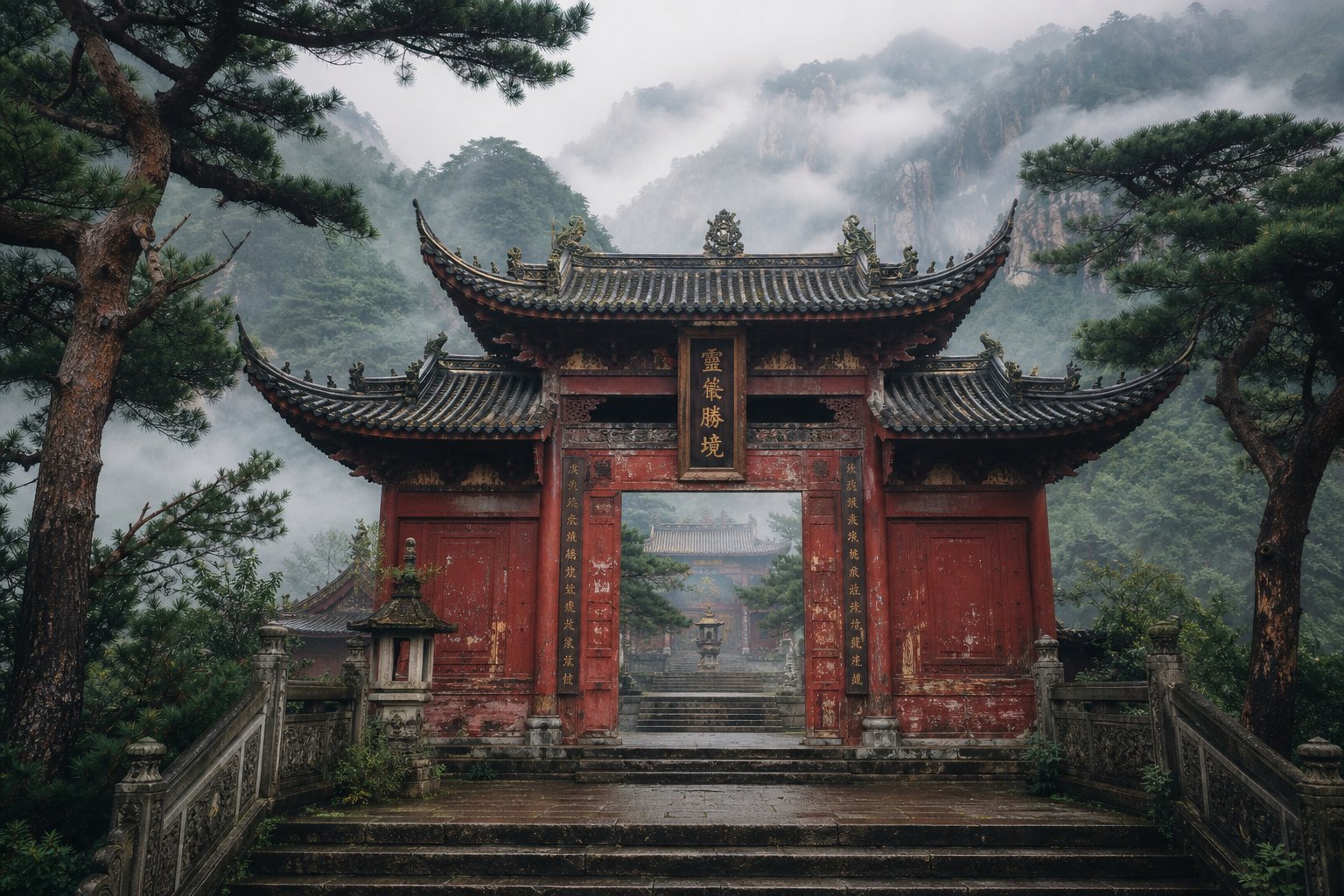
Buddhist vocabulary did not stop at personal names. The same characters and concepts that parents chose for their children also shaped what entire places were called. Across China, thousands of temples, mountains, caves, and districts carry names rooted in Buddhist scripture, cosmology, and aspiration. Chinese buddhist temple names represent one of the most visible and enduring ways that Buddhist thought imprinted itself on the physical landscape.
How Chinese Buddhist Temples Get Their Names
When a Buddhist temple is established, its name is rarely arbitrary. Temple names typically draw from one of several naming patterns, each reflecting a different aspect of Buddhist teaching or institutional identity. The result is a naming system where you can often identify a temple's doctrinal affiliation, founding aspiration, or geographic relationship just by reading its name.
Common naming patterns for Chinese Buddhist temples include:
- Sutra-based names: Temples named after key scriptures, such as 法华寺 (Fahua Si, Lotus Sutra Temple) or 华严寺 (Huayan Si, Avatamsaka Sutra Temple). These signal the doctrinal school the temple follows.
- Aspiration-based names: Names expressing spiritual goals, like 净土寺 (Jingtu Si, Pure Land Temple) or 报恩寺 (Bao'en Si, Repaying Kindness Temple). These reflect the founding community's religious hopes.
- Cosmological names: Temples referencing Buddhist cosmology, such as 天宁寺 (Tianning Si, Heavenly Peace Temple) or 灵隐寺 (Lingyin Si, Soul's Retreat Temple). These connect the physical site to a spiritual geography.
- Virtue-based names: Names highlighting Buddhist qualities, like 慈恩寺 (Ci'en Si, Compassion and Grace Temple) or 善化寺 (Shanhua Si, Virtuous Transformation Temple).
- Geographic or descriptive names: Temples named for their location or physical features, such as 白马寺 (Baima Si, White Horse Temple) in Luoyang, referencing the legend of scriptures arriving on a white horse.
Notice how many of these names use the same characters found in personal names: 净, 法, 慈, 善, 灵. The vocabulary is shared because the source is shared. Both temple names and personal names draw from the same pool of translated Buddhist terminology.
The word used for "temple" itself carries meaning. As research on Chinese temple name translation notes, terms like 寺 (si), 庙 (miao), 坛 (tan), and 观 (guan) are all rendered as "temple" in English, yet each carries distinctly different cultural and religious connotations in Chinese. Buddhist institutions primarily use 寺 (si), originally a government office term repurposed when the first Buddhist monks were housed in a government building during the Han Dynasty. Smaller institutions might use 庵 (an, hermitage) or 院 (yuan, cloister), while the term 禅林 (chanlin, meditation grove) specifically denotes Chan Buddhist monasteries.
A small buddhist monastery name in Chinese often reflects its intimate scale and contemplative purpose. Terms like 茅蓬 (maopeng, thatched hut), 精舍 (jingshe, vihara or pure dwelling), and 兰若 (lanruo, a phonetic rendering of the Sanskrit aranya, meaning forest retreat) all describe modest practice spaces. The buddhist maha vihara chinese name equivalent, 大精舍 or 大寺, signals a larger institutional complex. Historical records show that temples were also called Futu, Lanruo, Chanlin, Daochang, Jialan, and Zhaoti in different Chinese dialects, each term carrying its own shade of meaning about the institution's character and function.
Chinese Buddhist Pilgrims and Geographic Naming
Buddhist influence on Chinese place names extends well beyond temple walls. When Chinese Buddhist pilgrims traveled to India, they brought back not just scriptures but geographic knowledge that reshaped how Chinese scholars understood and named the wider world.
If someone asks you to name some chinese buddhist pilgrims, the two most significant figures are Faxian (337-422 CE) and Xuanzang (602-664 CE). Both undertook extraordinary overland journeys to India and left detailed travel accounts that introduced Chinese readers to foreign place names, many of which were rendered into Chinese characters through phonetic transcription or semantic translation.
Faxian's Record of Buddhist Kingdoms (佛国记) documented his fifteen-year journey through Central Asia, India, and Sri Lanka. His Chinese renderings of Indian place names, like 天竺 (Tianzhu, India) and 狮子国 (Shizi Guo, Lion Country, for Sri Lanka), became standard references in Chinese geographic literature for centuries.
Xuanzang's Great Tang Records on the Western Regions (大唐西域记) was even more influential. Covering 138 kingdoms and regions, his text established Chinese names for hundreds of Indian locations, monasteries, and sacred sites. Many of these names used Buddhist vocabulary: 那烂陀 (Nalanda), 菩提伽耶 (Bodh Gaya), 鹿野苑 (Luyeyuan, Deer Park at Sarnath). These transliterations and translations became the standard Chinese geographic vocabulary for South and Central Asia, persisting in Chinese texts well into the modern era.
The pilgrims' influence worked in both directions. Sites along their travel routes within China were often renamed or commemorated with Buddhist terminology. Mountain passes, rest stops, and caves associated with their journeys acquired names referencing Buddhist concepts, creating a sacred geography layered onto the Chinese landscape.
Regional Patterns in Temple Nomenclature
Temple naming conventions vary across China's regions, reflecting local Buddhist traditions and historical circumstances. In the south, where Pure Land Buddhism gained deep popular roots, you'll find a higher concentration of temples named with characters like 净 (pure), 莲 (lotus), and 弥陀 (Amitabha). Northern temples, historically more connected to imperial patronage, often carry grander cosmological names referencing heaven, dharma, or universal peace.
Mountain temples follow their own logic. China's four sacred Buddhist mountains, each associated with a specific bodhisattva, anchor regional naming systems. Temples on Mount Putuo reference Guanyin, those on Mount Wutai reference Manjusri (文殊), and so on. Smaller temples in these regions often borrow vocabulary from the presiding bodhisattva's scriptural tradition, creating clusters of thematically related names across an entire geographic area.
Urban temples, by contrast, frequently carry names reflecting their social function: 报国寺 (Serving the Nation Temple), 护国寺 (Protecting the Nation Temple), or 祝圣寺 (Blessing the Sage Temple). These names blend Buddhist vocabulary with Confucian civic values, illustrating how temple naming adapted to political context without abandoning its Buddhist roots.
This geographic dimension of Buddhist naming influence reminds us that the tradition is not confined to individuals or institutions. It permeates the landscape itself, from the grandest imperial temple complex to the humblest mountain hermitage. And it continues to evolve. In modern Chinese-speaking societies, these naming traditions interact with contemporary identity, regional variation, and cultural revival in ways that keep Buddhist vocabulary alive and relevant for new generations.
Buddhist-Influenced Names in Modern Chinese Society
Buddhist naming traditions did not fossilize in ancient texts. They remain a living practice across Chinese-speaking communities worldwide, though the way families engage with this vocabulary has shifted considerably. In mainland China, Taiwan, Hong Kong, Singapore, and diaspora communities scattered across Southeast Asia and the West, modern chinese names with buddhist meaning continue to appear on birth certificates, shaped by regional culture, generational attitudes, and a broader revival of traditional aesthetics.
Buddhist Names in Contemporary Mainland China
In mainland China, decades of secularization loosened the explicitly religious associations of Buddhist-derived characters. Parents choosing 慧 (wisdom) or 静 (stillness) today often think of these as culturally refined rather than doctrinally Buddhist. Yet the spiritual resonance persists beneath the surface. A Global Times report on contemporary naming trends notes that post-1990 generation parents increasingly draw on classical texts and traditional philosophy when naming children, treating this as a form of cultural self-expression rather than religious devotion. Characters rooted in Buddhist thought benefit from this broader turn toward heritage-inspired naming.
The pattern is subtle. You won't find parents explicitly searching a list of existing buddhist chinese male names the way a monastic community might consult lineage poems. Instead, Buddhist vocabulary enters modern names through its integration into classical literature, poetry anthologies, and the general aesthetic vocabulary that young parents now mine for distinctive, meaningful characters.
Regional Variations Across Chinese-Speaking Communities
How Buddhist naming traditions manifest varies significantly by region. In Taiwan, where Buddhist institutions like Fo Guang Shan and Tzu Chi maintain enormous cultural influence, explicitly Buddhist names carry social prestige and spiritual intentionality. Parents may consciously select characters like 慈 (compassion) or 净 (purity) as a statement of family values aligned with engaged Buddhism.
Hong Kong and Singapore present a different picture. As multicultural, cosmopolitan cities, they blend Buddhist naming with Cantonese or Hokkien phonetic preferences and English-language considerations. A Singaporean Chinese family of Teochew descent, for instance, might maintain folk Buddhist traditions alongside more orthodox practices, with naming choices reflecting this syncretic heritage. Do chinese buddhist say namaste? Not typically. Chinese Buddhist communities developed their own greeting conventions, like the palm-joined 合十 (heshe) gesture accompanied by "Amituofo," and naming traditions similarly follow distinctly Chinese rather than pan-Asian patterns.
Diaspora communities in North America, Europe, and Australia face an additional layer: choosing Chinese names that carry Buddhist meaning while also functioning alongside Western given names. Some families select Buddhist-influenced Chinese characters as a middle name or heritage name, preserving cultural continuity across generations even when the child primarily uses an English name.
The Revival of Buddhist Naming in Modern Families
Cultural sociologist Xu Shumin observes that young Chinese parents "are reclaiming traditional Chinese culture as a living aesthetic in everyday life." Just as they might wear Hanfu to express identity, naming a child with characters drawn from Buddhist or classical sources becomes another form of cultural statement. This revival is not about religious conversion. It reflects a generation confident enough in modernity to reach back into tradition without feeling old-fashioned.
For most Chinese families, a name is far more than a simple label. It is a significant act that blends family heritage and cultural aspirations, telling not only who you are but who you might become.
This renewed interest means Buddhist-derived characters are gaining fresh appeal among educated urban parents who value their layered meanings, phonetic elegance, and connection to a philosophical tradition thousands of years deep. The characters themselves have not changed, but the cultural confidence surrounding their use has grown stronger.
Recognizing these Buddhist threads when you encounter Chinese names, whether in historical texts, contemporary introductions, or your own family tree, requires knowing what to look for. The patterns, once visible, appear everywhere.
Understanding the Living Legacy of Buddhist Chinese Names
Once you know what to look for, Buddhist threads in Chinese names become impossible to miss. A colleague named 慧明, a historical figure called 净空, a temple sign reading 法华寺: these all draw from the same deep well of translated Sanskrit concepts that entered Chinese culture nearly two millennia ago. This buddhist chinese name meaning and origin guide concludes with a practical framework for spotting these connections wherever you encounter them.
Recognizing Buddhist Elements in Chinese Names
When you come across a Chinese name in literature, a business meeting, or a family tree, look for characters that fall into three broad families:
- Wisdom and awakening characters: 慧, 觉, 悟, 明. These signal the Buddhist pursuit of enlightenment and clear perception.
- Imagery and purity characters: 莲, 净, 空, 光. These draw on Buddhist visual symbolism and the aspiration toward an undefiled mind.
- Virtue and practice characters: 慈, 禅, 法, 善, 静. These reflect the ethical and contemplative dimensions of Buddhist life.
Not every appearance of these characters indicates conscious Buddhist intent. A person named 明 might simply have parents who liked the meaning "bright." But the character's spiritual weight, its association with dharma-light dispelling ignorance, is there whether the family intended it or not. That layered quality is precisely what makes this naming tradition so enduring: it operates even when its origins go unrecognized.
Consider the famous Chinese Buddhist pilgrims who came to India, figures like Faxian and Xuanzang. You can name the chinese buddhist pilgrims by their dharma-influenced names alone: 法显 (dharma manifest), 玄奘 (profound magnificence). Their names encode their spiritual mission. The same principle applies, in quieter form, to millions of ordinary names across Chinese-speaking societies.
The Enduring Legacy of Buddhist Naming Culture
The table below offers a quick-reference summary of the most important character families, their roots, and where you are likely to encounter them:
| Character Family | Key Characters | Buddhist Root | Typical Context |
|---|---|---|---|
| Wisdom and Awakening | 慧, 觉, 悟, 明 | Prajna, Bodhi, Chan realization | Personal names (both genders), monk names, literary figures |
| Imagery and Purity | 莲, 净, 空, 光 | Padma, Visuddhi, Sunyata | Female names, temple names, Pure Land traditions |
| Virtue and Practice | 慈, 禅, 法, 善, 静 | Maitri/Karuna, Dhyana, Dharma | Male and female names, temple names, monastic lineages |
| Monastic Structure | 释 + generational character + individual character | Shakyamuni lineage system | Ordained monks and nuns, lay dharma names |
| Place and Institution | 寺, 庵, 精舍, 禅林 | Vihara, Aranya, Dhyana-vana | Temple names, geographic nomenclature, sacred sites |
What makes this naming legacy remarkable is its quiet persistence. Unlike architectural styles that crumble or rituals that fall out of practice, names regenerate with every new generation. Each time a parent in Shanghai, Taipei, or Vancouver selects 慧 or 净 for a newborn, they participate in a cultural exchange that began when the first Sanskrit syllables were rendered into Chinese characters along the Silk Road. They may not think of it as Buddhist. They may simply find the character beautiful, meaningful, and right for their child. That unconscious continuity is the deepest kind of cultural influence: one so thoroughly absorbed that it feels like home.
Frequently Asked Questions About Buddhist Influence on Chinese Names
1. What are common Chinese name characters that come from Buddhism?
Some of the most widely used Buddhist-derived name characters include 慧 (hui, wisdom from Sanskrit prajna), 莲 (lian, lotus from Sanskrit padma), 禅 (chan, meditation from Sanskrit dhyana), 慈 (ci, compassion from Sanskrit maitri), 净 (jing, purity from Sanskrit visuddhi), 觉 (jue, awakening from Sanskrit bodhi), and 悟 (wu, enlightenment). These characters entered Chinese naming culture through centuries of scripture translation and now function as aesthetically beautiful name components carrying layered spiritual meaning.
2. Who were the Chinese Buddhist pilgrims that traveled to India?
The two most famous Chinese Buddhist pilgrims who journeyed to India were Faxian (337-422 CE) and Xuanzang (602-664 CE). Faxian spent fifteen years traveling through Central Asia, India, and Sri Lanka, documenting his journey in the Record of Buddhist Kingdoms. Xuanzang undertook his pilgrimage during the Tang Dynasty and translated 75 texts comprising over 1,300 scrolls upon his return. Both pilgrims introduced Chinese readers to foreign place names and geographic knowledge that influenced how Chinese scholars named and referenced locations across South and Central Asia.
3. Can I get a Chinese Buddhist name from a temple?
Yes, some Buddhist temples still offer naming services today, particularly in Taiwan, Hong Kong, and parts of Southeast Asia. Temples may provide naming consultations for newborns where a monk selects characters based on the child's birth details and Buddhist symbolism. Lay practitioners can also receive a dharma name (法名) during refuge-taking ceremonies. These temple-given names tend to draw on deeper scriptural knowledge than typical secular Buddhist-influenced names, often referencing specific sutras or bodhisattva qualities.
4. What is the difference between Buddhist names for boys and girls in Chinese?
Buddhist-influenced Chinese names show distinct gender patterns rooted in centuries of iconography. Female names tend to use characters like 莲 (lotus), 慈 (compassion), 静 (stillness), and 妙 (wondrous), reflecting associations with beauty, gentleness, and the feminine bodhisattva Guanyin. Male names more commonly feature 禅 (meditation), 悟 (enlightenment), 法 (dharma), and 觉 (awakening), linked to monastic discipline and philosophical attainment. However, modern naming practices have loosened these boundaries, with characters like 慧 (wisdom) now used freely across genders.
5. How are Chinese Buddhist temple names structured?
Chinese Buddhist temple names follow several distinct patterns. Sutra-based names reference key scriptures (e.g., 法华寺, Lotus Sutra Temple). Aspiration-based names express spiritual goals (e.g., 净土寺, Pure Land Temple). Cosmological names connect sites to Buddhist spiritual geography (e.g., 灵隐寺, Soul's Retreat Temple). Virtue-based names highlight Buddhist qualities (e.g., 慈恩寺, Compassion and Grace Temple). The institutional term also matters: 寺 (si) denotes major Buddhist temples, while 庵 (an) indicates hermitages and 禅林 (chanlin) specifically marks Chan monasteries.