What Chinese Actor Stage Names Really Mean
You're watching a C-drama, you look up the lead actor, and suddenly you find two or three different names attached to the same person. Sound familiar? This confusion is one of the most common stumbling blocks for international fans discovering Chinese entertainment. The reason behind it is a practice that runs far deeper than simple rebranding: the tradition of the stage name.
What Is a Chinese Stage Name
In Chinese, a stage name is called 艺名 (yimíng), which literally translates to "art name" or "performance name." It stands apart from an actor's 本名 (benming), their birth name registered on official documents. Unlike a Western nickname or a casual alias, a yiming carries cultural weight. It is a deliberate, often carefully calculated identity chosen for the public sphere.
艺名 (yimíng): A professional name adopted by a Chinese actor or entertainer for public use, distinct from their legal birth name (本名, benming). It is selected based on cultural, aesthetic, or strategic considerations and functions as the performer's official artistic identity.
This is not a modern marketing invention. Chinese actors in China have used artistic names for centuries, rooted in traditions that predate the film industry entirely. Every character in a yiming can be chosen for its tonal quality, visual elegance when written, or even the number of brushstrokes it contains. When you encounter a Chinese actor credited under a name that sounds particularly poetic or rhythmically balanced, there is a good chance you are seeing their stage name rather than the one their parents gave them.
Why This Matters for International Fans
One layer of confusion comes from name order itself. In Chinese, the surname comes first. An actor in Chinese culture named Zhang Wei has "Zhang" as the family name and "Wei" as the given name. Western databases sometimes flip this order, and stage names can complicate things further by dropping or altering the surname entirely.
Consider a well-known example: the model and actress publicly known as Angelababy, whose Chinese birth name is Yang Ying. For years, international audiences knew only the English-style moniker. A Chinese male actor might similarly carry a stage name that simplifies pronunciation for global casting directors or creates a more distinctive search footprint online. These choices are strategic, not random.
This article breaks down the full picture: where the tradition originated, why specific names get chosen over others, and how you can confidently identify whether the name you see on screen is a birth name or a crafted professional identity. Whether you are a fan trying to follow your favorite performer across platforms or a researcher navigating entertainment databases, understanding how Chinese actor stage names work gives you a clearer window into the industry itself.
The practice is also evolving in real time. Regulatory shifts in China's entertainment landscape have pushed some performers to abandon foreign-sounding stage names and return to their birth names, while others continue to adopt new ones for branding purposes. The reasons behind each choice reveal something about the intersection of culture, commerce, and identity in one of the world's largest entertainment markets.
The Historical Roots of Stage Names in Chinese Entertainment
The tradition of adopting a professional artistic name did not begin with film cameras or talent agencies. It stretches back centuries, woven into the fabric of Chinese performing arts long before anyone could be called a "movie star." Understanding where the practice started helps explain why it still carries so much weight today.
Stage Names in Traditional Chinese Opera
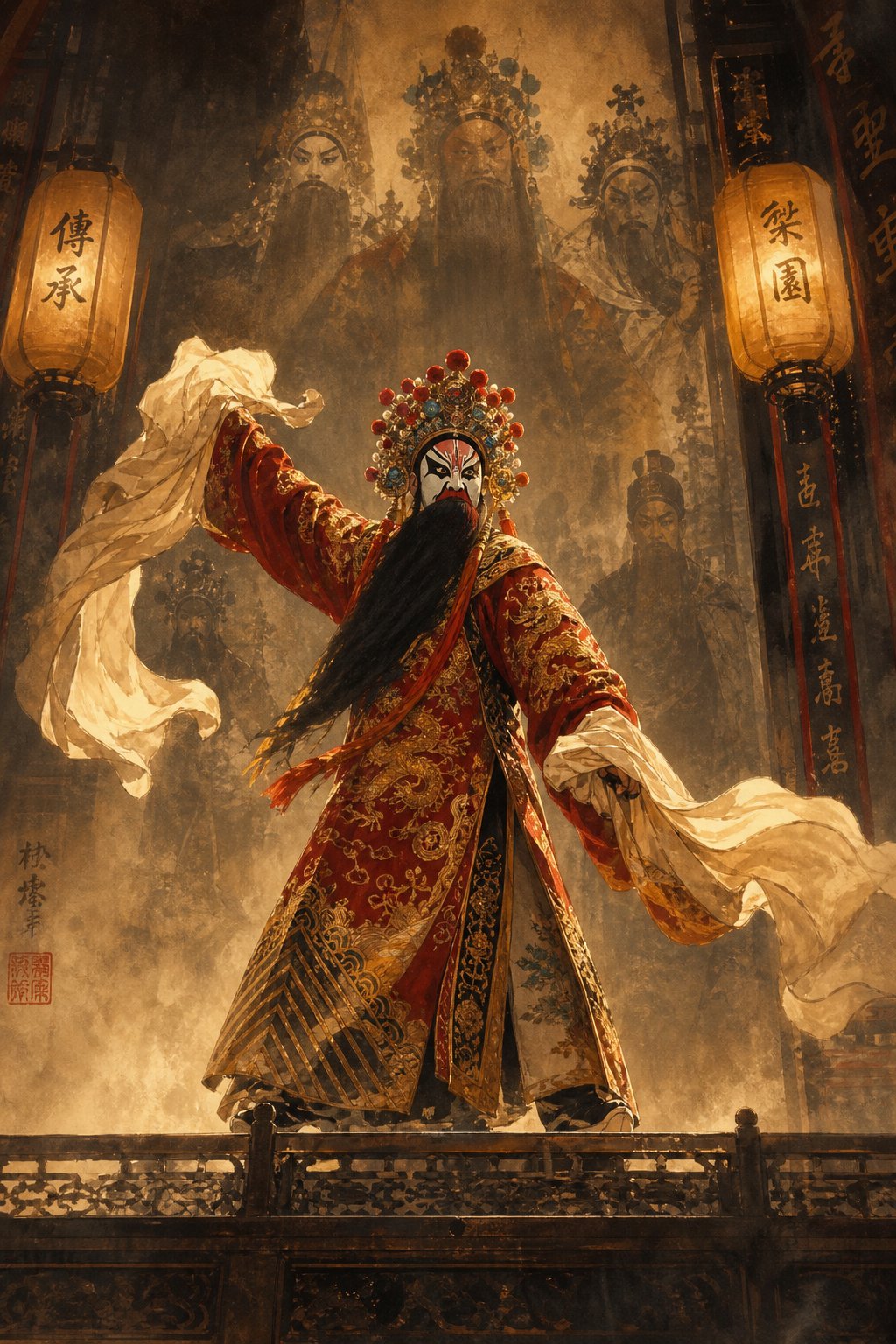
Imagine training from childhood in a rigid apprenticeship system where your master, your role type, and your artistic lineage defined your entire career. That was the reality for performers in traditional Chinese opera, particularly Peking opera (京剧). Young performers adopted stage names that served multiple purposes at once. The name signaled which training house they belonged to, what role category they specialized in (such as 旦, dan, for female roles or 生, sheng, for male leads), and where they sat within a generational hierarchy of performers.
These were not vanity choices. A stage name functioned like a professional credential. Audiences could hear a performer's name and immediately understand their artistic pedigree. Old chinese actors in the opera world carried names that connected them to legendary masters, creating a chain of artistic legitimacy passed down through generations.
From Shanghai Cinema to Modern Entertainment
When cinema arrived in China during the early twentieth century, the first wave of chinese film actors carried the opera tradition directly into the new medium. Shanghai's booming film studios of the 1920s and 1930s became the next stage for artistic reinvention. A striking example is Hu Die, known internationally as Butterfly Wu, one of the era's biggest stars. Her stage name literally meant "butterfly," evoking grace and beauty in a way her birth name alone could not achieve for a screen career.
Chinese movie actors of this period chose names that projected glamour, modernity, or poetic sensibility, adapting the opera tradition for a mass-media audience. The motivation shifted from signaling lineage to building personal brand appeal, a transformation that only accelerated as the decades passed.
Here is how naming conventions evolved across key historical periods:
- Traditional opera era (pre-1900s): Names indicated training lineage, role specialization, and generational rank within a master's school.
- Republican-era cinema (1920s-1940s): Names emphasized elegance, screen appeal, and Western-influenced modernity, often chosen by studio heads.
- Post-1949 state cinema (1950s-1980s): Stage names became less common as the industry de-emphasized individual celebrity under collective ideals.
- Reform-era and modern entertainment (1990s-present): Names are strategically crafted for marketability, numerological favorability, and digital searchability.
Each shift mirrors broader changes in Chinese society itself. The practice moved from artistic tradition to commercial strategy, but the underlying belief remained constant: a name is never just a label. It shapes perception, career trajectory, and public identity. That belief is precisely what drives the specific, sometimes surprising reasons actors choose new names today.
Why Chinese Actors Choose to Adopt Stage Names
So what actually pushes a performer to abandon the name they grew up with? The motivations are more varied than you might expect, ranging from ancient superstition to cold commercial logic. Among popular chinese actors, the decision rarely comes down to a single factor. Usually, it is a combination of cultural belief, industry pressure, and practical necessity working together.
Here are the most common reasons chinese actors famous in the domestic and international market adopt new professional names, ranked roughly by how frequently they drive the decision:
- Numerology and character stroke count (most common): Believed to directly influence career fortune and public reception.
- Agency branding and market positioning: Companies craft names to fit a target audience or genre niche.
- Avoiding name conflicts with established stars: Homonyms or near-identical names create confusion and legal risk.
- Simplifying rare or difficult characters: Uncommon characters cause mispronunciation and database errors.
- Aesthetic and phonetic appeal: A name that sounds pleasing or looks elegant in print carries intangible value.
Numerology and Feng Shui in Name Selection
This might sound surprising to Western audiences, but stroke count analysis is taken seriously across the Chinese entertainment industry. The practice is rooted in a branch of Chinese metaphysics where the total number of brushstrokes in a name's characters is believed to influence luck, wealth, and interpersonal harmony. A name totaling an auspicious stroke count is thought to smooth a career path, while an unfavorable count might invite obstacles.
Many top chinese actors consult naming specialists, sometimes called fortune masters, before finalizing a stage name. These consultants analyze the performer's birth date, the five elements (五行, wuxing) associated with their birth chart, and the tonal balance of potential name characters. The goal is a name that harmonizes with the individual's existing cosmic profile. You will notice that some famous chinese actors in china changed their names early in their careers after a string of unsuccessful auditions or projects, attributing the shift in fortune partly to the new name's energetic alignment.
Agency Branding and Market Positioning
Beyond metaphysics, there is a purely strategic dimension. Talent agencies invest heavily in building a performer's public image, and the name is the foundation of that image. A name might be chosen to evoke youthfulness for an idol-track career, literary sophistication for a serious dramatic actor, or androgynous cool for a performer targeting both male and female fan demographics.
Agencies also consider how a name performs digitally. Does it generate clean search results? Is it easily typed on a smartphone keyboard? Does it create a distinctive hashtag on Weibo? These practical concerns shape naming decisions just as much as cultural ones, particularly for newer performers entering an already crowded market.
Avoiding Name Conflicts With Other Stars
China's entertainment industry is enormous, and with a limited pool of common surnames, name collisions happen frequently. When two performers share an identical or near-identical name, the less established one almost always faces pressure to change. Homonyms present a particular challenge because Chinese has many characters that share the same pronunciation. Two completely different written names can sound identical when spoken aloud, creating confusion in casting calls, media coverage, and fan searches.
Some actors also change names preemptively to avoid association with public figures who have fallen into controversy, a consideration that has grown more relevant as China's entertainment regulations have tightened.
Not every performer goes through this process, though. Some keep their birth names entirely, and the reasons are telling. An actor whose birth name already carries favorable stroke counts and pleasant phonetics has little incentive to change. Others established public recognition before signing with a major agency, making a rebrand risky rather than beneficial. In a few cases, the birth name itself becomes part of the performer's brand story, a signal of authenticity in an industry where manufactured identities are the norm.
The decision to keep or change a name is deeply personal, but it is almost never made in isolation. Behind nearly every stage name stands a network of advisors, agents, and cultural consultants shaping the outcome. That network, the talent agency system itself, plays a role worth examining on its own.

How Entertainment Companies Influence Name Selection
Talent agencies in China do far more than book auditions and negotiate contracts. For many chinese drama actors, the agency is the architect of their entire public identity, starting with the most fundamental building block: the name. The level of corporate involvement in naming might surprise fans who assume a performer simply picked something that sounded nice. In reality, the process often resembles a branding exercise conducted by committee.
How Talent Agencies Shape Actor Identities
Picture a young performer signing their first management contract. Before headshots are taken or training schedules are set, the agency evaluates whether the performer's birth name is fit for purpose. A dedicated team, sometimes including marketing strategists, cultural consultants, and even numerology specialists, assesses the name against several criteria:
- Search distinctiveness: Will the name return clean results on Weibo, Douyin, and Baidu, or does it overlap with existing public figures?
- Visual balance: Do the characters look aesthetically pleasing when displayed on promotional materials and screen credits?
- Phonetic memorability: Can fans recall and type the name quickly on mobile keyboards?
- Demographic targeting: Does the name's tone and connotation match the audience the agency wants to attract?
- Algorithm performance: Some agencies specifically test how a proposed name ranks in social media search suggestions before finalizing it.
This last point has grown increasingly important. China celebrities operate in a digital ecosystem where discoverability can make or break a career. A name that autocompletes easily, generates a unique hashtag, and avoids confusion with unrelated search terms holds genuine commercial value. Agencies that specialize in launching new talent treat name optimization as seriously as any other aspect of debut strategy.
The Trainee System and Name Assignment
China's trainee culture shares structural similarities with the K-pop idol pipeline, but the naming conventions carry distinctly Chinese characteristics. In survival shows and idol training programs, companies often assign stage names to trainees before they ever appear on camera. The reasoning is practical: a cohort of twenty trainees debuting simultaneously needs names that are individually distinctive yet cohesive as a group roster.
Group dynamics play a real role here. If three trainees in the same cohort share the surname Wang, at least one or two will likely receive a stage name to avoid audience confusion. Companies also consider how names look together on group promotional materials, balancing character complexity and visual rhythm across the full lineup.
The path into the industry shapes how much agency control a performer faces over their name:
- Idol survival shows: Highest level of company involvement. Names are often assigned or heavily modified before filming begins, prioritizing instant memorability and fan-culture compatibility.
- Drama school graduates: Moderate involvement. Performers who trained at institutions like the Beijing Film Academy or Central Academy of Drama often enter the industry with some existing recognition, giving them more leverage to retain birth names.
- Independent auditions: Variable. Actors discovered through open casting may keep their names if already distinctive, or accept a rebrand as part of signing with management.
The balance between marketability and cultural authenticity is a constant negotiation. Agencies know that chinese celebs with overly manufactured-sounding names can face backlash from audiences who value genuineness. A name that feels too commercial or too disconnected from Chinese naming traditions risks alienating the very fans it was designed to attract. The most effective stage names thread this needle: they feel natural enough to pass as a birth name while carrying the strategic advantages of careful selection.
What happens, though, when these carefully constructed identities need to travel beyond the domestic market? As Chinese entertainment reaches global audiences, the naming calculus shifts again, introducing an entirely different set of considerations around language, pronunciation, and cross-cultural recognition.
Famous Chinese Actors and Their Real Names Compared
All of this strategic naming work produces a concrete result: famous chinese actors and actresses operating under identities that differ, sometimes dramatically, from the names on their birth certificates. For fans trying to track a performer across platforms, databases, and media coverage in multiple languages, a clear reference is invaluable. The tables below pair well-known chinese actors actresses with their documented birth names and stage names.
A critical note before diving in: misinformation about celebrity birth names circulates widely online. One persistent example involves Lu Han (鹿晗), the former EXO member and actor. Multiple sources incorrectly claim his birth name is "Liu Yiyang" or similar variants. In reality, 鹿晗 (Lu Han) is his actual birth name. The surname 鹿 (Lu, meaning "deer") is rare, which likely fuels the misconception that it must be fabricated. It is not. Only name pairs verified through reliable Chinese entertainment databases and official biographical sources are included here.
Male Actors and Their Stage Names
Among top famous male actors in china, several of the most recognizable names in film and drama history are stage names rather than birth names. You will notice that the changes range from subtle single-character swaps to complete surname-and-given-name overhauls.
| Stage Name (Pinyin) | Birth Name (Pinyin) | Chinese Characters (Stage / Birth) | Primary Industry |
|---|---|---|---|
| Cheng Long (Jackie Chan) | Chen Gangsheng | 成龙 / 陈港生 | Film |
| Li Xiaolong (Bruce Lee) | Li Zhenfan | 李小龙 / 李振藩 | Film |
| Zhang Guorong (Leslie Cheung) | Zhang Fazong | 张国荣 / 张发宗 | Film / Music |
| Li Yifeng | Li He | 李易峰 / 李贺 | Drama / Film |
| Ren Jialun | Ren Guochao | 任嘉伦 / 任国超 | Drama |
Jackie Chan's case is particularly striking. He did not simply change his given name; he adopted an entirely different surname. "Cheng Long" literally means "become the dragon," a name engineered for maximum impact in martial arts cinema. Bruce Lee's stage name followed similar logic: "Xiaolong" means "little dragon," chosen for its energy and memorability over his more conventional birth name. Among famous chinese male actors of the modern drama era, Li Yifeng's change from the simple two-character "Li He" to the more distinctive three-character "Li Yifeng" reflects the industry's preference for names that stand out in crowded cast lists.
Female Actors and Their Stage Names
Famous chinese actors male performers are not alone in this practice. Female performers undergo similar transformations, sometimes with even more dramatic departures from their original names.
| Stage Name (Pinyin) | Birth Name (Pinyin) | Chinese Characters (Stage / Birth) | Primary Industry |
|---|---|---|---|
| Liu Yifei | An Feng | 刘亦菲 / 安风 | Film / Drama |
| Angelababy | Yang Ying | Angelababy / 杨颖 | Film / Drama |
| Hai Qing | Huang Yijia | 海清 / 黄怡佳 | Drama |
| Sun Li | Sun Li | 孙俪 / 孙丽 | Drama |
Liu Yifei's transformation is among the most complete. Born An Feng under her father's surname, she later adopted both a new surname and given name, creating an identity that sounds ethereal and literary. The character 菲 (fei) evokes fragrance and lush beauty, while 亦 (yi) adds a classical, almost poetic cadence. Sun Li's change appears minimal on the surface, a single character swap from 丽 to 俪, but the replacement character carries connotations of elegance and pairing that her original did not.
Angelababy represents a different phenomenon entirely: a Chinese-born performer adopting a Western-style stage name for domestic use, a practice that was common in the 2010s but has since faced regulatory and cultural pushback. She has increasingly been credited under her birth name Yang Ying in recent projects.
These tables represent only a fraction of documented cases. The pattern they reveal, however, is consistent: whether the change involves a single brushstroke or an entirely new identity, the logic behind it connects directly to the cultural and commercial forces discussed earlier. What becomes less obvious is how these naming conventions shift depending on whether a performer works primarily in drama, pop music, or film, each segment of the industry carrying its own unwritten rules about what a name should signal.
How Stage Names Work Across C-Drama C-Pop and Film
Each corner of the Chinese entertainment industry operates by its own logic, and naming conventions are no exception. A name that works perfectly for a C-pop idol might feel out of place on a serious film credit, and a name suited to prestige cinema could sound stiff in the fast-moving world of idol variety shows. The unwritten rules governing stage names shift depending on which industry segment a performer calls home.
Stage Name Trends in C-Drama
China drama actors occupy a middle ground between pop idols and film auteurs, and their names reflect that balancing act. C-drama spans everything from lighthearted romance to historical epics, so naming conventions flex depending on genre specialization. An actor building a career in costume dramas (古装剧) tends toward names with classical resonance, characters that evoke literary tradition or historical gravitas. Think names with characters like 轩 (xuan, meaning "lofty") or 瑶 (yao, meaning "precious jade") that feel at home in a period setting.
Performers focused on modern romance or urban dramas, on the other hand, lean toward names that sound approachable and contemporary. The goal is relatability. Fans watching a modern love story want to feel like the lead could be someone they know, and a name that sounds too grand or archaic works against that intimacy. You will notice that many drama actors who cross between historical and modern genres keep names versatile enough to fit both contexts without feeling forced in either.
How C-Pop Idol Names Differ From Film Actor Names
The contrast becomes sharper when you compare C-pop idols to chinese film stars. Idol culture prizes instant recognition and fan-culture compatibility above all else. This produces naming patterns that would feel unusual in a film context:
- Single-character given names: C-pop idols frequently use one-character given names (e.g., just a surname plus one character) for punchiness and easy chanting at concerts. Shorter names fit neatly into fan slogans and lightstick designs.
- English-hybrid names: Mixing English words or letters with Chinese surnames was common through the mid-2010s, creating names designed to signal cosmopolitan cool and cross-border appeal.
- Phonetic playfulness: Idol names often prioritize how they sound when shouted by thousands of fans. Hard consonants and clear vowels win over subtle tonal beauty.
- Group cohesion: Names within an idol group are sometimes selected to share visual or phonetic patterns, reinforcing the collective brand identity.
Chinese movie stars and serious film actors follow a different playbook entirely. Their names tend to sound authoritative, literary, or grounded. A film actor's name might use characters associated with strength, wisdom, or natural imagery, projecting the kind of gravitas that casting directors and festival juries respond to. The name needs to look credible on a Cannes premiere poster just as much as on a Douban page. Rare or slightly archaic characters appear more frequently in film actor names because the audience for arthouse and prestige cinema appreciates that kind of cultural depth.
Here is a quick comparison of how naming priorities differ across segments:
- C-Pop idols: Brevity, chantability, hashtag distinctiveness, group visual harmony, youth signaling.
- C-Drama actors: Genre flexibility, tonal warmth, fan approachability, moderate classical resonance for period work.
- Chinese film stars: Literary weight, authoritative sound, international legibility, cultural sophistication.
Performers who cross between industries face an interesting dilemma. An idol-turned-actor might find that the punchy single-character name that dominated music charts feels lightweight on a film poster. Some adapt by gradually shifting how their name is presented, using their full legal name for film credits while keeping the shorter stage name for music releases and variety appearances. Others commit fully to one identity and let their work redefine what the name signals.
This industry-specific logic also explains why certain chinese movie stars resist name changes even when agencies push for them. A performer who trained at a top drama academy and debuted in film already carries a name chosen for that world. Rebranding for pop crossover appeal could undermine the credibility they spent years building. The name becomes a statement of artistic intent as much as a marketing tool.
These domestic naming strategies, however, only tell half the story. When Chinese performers step onto the international stage, an entirely new layer of calculation emerges: whether and how to adopt an English name that Western audiences can pronounce, remember, and search for without stumbling over unfamiliar romanization.

English Names and International Recognition Strategies
A Chinese performer can spend years perfecting a stage name for the domestic market, only to discover that international audiences cannot pronounce it, spell it, or find it in a search engine. This gap between domestic identity and global discoverability has driven a growing number of performers to adopt English names, a practice that adds yet another layer to the already complex world of chinese actor stage names.
Why Chinese Actors Adopt English Names
The reasoning is straightforward once you consider the practical barriers. Imagine a Western casting director scanning a list of audition submissions. A name rendered in pinyin romanization, complete with tone marks or unfamiliar letter combinations like "Xu" or "Zhu," creates immediate friction. The director may not know how to pronounce it, may misspell it in correspondence, or may struggle to locate the performer's reel online. An English first name paired with the Chinese surname removes that friction instantly.
Several specific motivations drive the decision:
- Pronunciation accessibility: English names eliminate guesswork for casting directors, producers, and journalists unfamiliar with Mandarin phonetics.
- Search engine performance: A name like "Arthur Chen" returns cleaner, more targeted results on Google and IMDB than "Chen Feiyu" or its various romanization variants (Chenfeiyu, Chen Fei Yu, Feiyu Chen).
- Dual-market branding: Performers can maintain their Chinese stage name domestically while building a parallel international identity, keeping both audiences engaged without confusion.
- Industry credibility signals: An English name suggests international ambition and readiness to work across borders, which can attract global management teams and co-production opportunities.
This is not unique to actors. The practice is common across professional fields in China, where adopting an English name for business contexts has been standard for decades. What distinguishes the entertainment version is the level of strategic calculation behind the choice. A celebrity from china entering the international market is not just picking a name they like. They are selecting one that photographs well on a poster, sounds natural in an English-language interview, and creates a cohesive brand across platforms from Weibo to Instagram.
Notable Examples of International Stage Names
Arthur Chen is one of the clearest modern examples. Born Chen Feiyu (陈飞宇), the son of acclaimed director Chen Kaige, he adopted "Arthur" as his English first name when pursuing roles in international projects. The name positions him as approachable to Western audiences while retaining his family surname, a deliberate bridge between two markets.
Chinese actors in Hollywood have navigated this terrain for generations. Jet Li (born Li Lianjie, 李连杰) adopted a punchy, monosyllabic English name that matched his action-star persona. Tony Leung, Maggie Cheung, and Donnie Yen all operate under English first names that have become inseparable from their international identities. More recently, performers like Simu Liu and Awkwafina represent a different path: diaspora actors whose English names are primary rather than adopted for market access.
Among chinese actors hollywood has embraced in recent years, the pattern holds consistent. The English name is rarely random. It is chosen for phonetic compatibility with the performer's Chinese name, cultural neutrality, and memorability. A name that sounds too unusual or too common both carry risks: too unusual and it distracts, too common and it disappears in search results.
There is an important distinction worth understanding here. A casual English name, the kind any Chinese professional might use in international settings, carries no legal or professional weight. A formal international stage name is different. When a performer registers with organizations like SAG-AFTRA (the Screen Actors Guild) or signs with international talent agencies, the English name becomes an official professional identity tied to contracts, credits, and residual payments. This registration process means the name cannot be easily changed later without significant administrative and branding consequences.
The trend connects to a broader shift in the industry. As Chinese productions increasingly target global distribution through streaming platforms, and as international co-productions grow more common, the line between "domestic star" and "international performer" continues to blur. Chinese actors in hollywood are no longer a rare exception but an expanding category, and the naming strategies they employ reflect that reality.
For fans and researchers tracking these performers across borders, the multiplication of names creates a practical challenge. The same actor might appear as Chen Feiyu on Douban, Arthur Chen on IMDB, and 陈飞宇 on Weibo. Knowing which databases use which conventions, and how to cross-reference between them, becomes an essential skill for anyone seriously following Chinese entertainment across languages and platforms.
How to Identify Stage Names on Entertainment Databases
Tracking a single china actor across IMDB, MyDramaList, Douban, and Baidu Baike can feel like following four different people. Each platform has its own conventions for displaying names, and none of them flag whether you are looking at a stage name or a birth name in any obvious way. The good news is that reliable indicators exist once you know where to look.
Spotting Stage Names on Entertainment Databases
Western databases like IMDB present a specific challenge: inconsistent name order. Chinese names place the surname first, but IMDB sometimes reverses this to match Western conventions, and sometimes does not. You might see "Han Lu" on one page and "Lu Han" on another, referring to the same person. This inconsistency alone does not tell you whether a name is a stage name, but it signals that the platform is not treating Chinese naming conventions with precision, which means other details may be unreliable too.
Here is what to watch for when browsing any entertainment database:
- "Also known as" or "AKA" fields: IMDB and MyDramaList both include alternate name sections. If an actor chinese fans know by one name shows a completely different name in this field, one of those entries is likely the birth name.
- Discrepancies between platforms: When the primary listed name on IMDB differs from the primary name on Douban for the same performer, the Chinese-language platform almost always uses the stage name (since that is the professional identity), while the Western platform may default to a romanized birth name pulled from passport records.
- Character count mismatches: If a performer's Chinese name has three characters on one source and two on another, you are likely seeing a stage name and birth name side by side.
International fans searching for actores chinos on global platforms encounter these inconsistencies constantly. The fragmentation is not a bug in any single database; it reflects the genuine complexity of a naming system where professional and legal identities diverge by design.
Using Chinese-Language Sources for Verification
Chinese-language platforms handle this far more transparently. Baidu Baike, the Chinese equivalent of Wikipedia, typically includes a dedicated field labeled 本名 (birth name) in the biographical sidebar of any performer who uses a stage name. Douban profiles often list both names as well, though less consistently. When you see 本名 followed by a different name than the page title, you have your answer immediately.
Weibo profiles offer another clue. Verified accounts display the performer's professional name, but fan communities and entertainment news outlets frequently reference both names in articles, particularly when discussing a performer's early career before they adopted their current identity.
For anyone serious about verifying whether a specific china actors' credited name is a stage name or birth name, here is a reliable step-by-step process:
- Search the performer's name on Baidu Baike and check the sidebar for a 本名 field. If present, the page title is the stage name and the 本名 entry is the birth name.
- Cross-reference with Douban's actor profile page, noting any names listed under alternate identities or early credits.
- Check IMDB's "Also Known As" section under the performer's biography. Look for Chinese characters or alternate romanizations that differ from the primary listing.
- Search MyDramaList, which often includes both names in the "Native Name" and "Also Known As" fields, with community-contributed notes clarifying which is which.
- If discrepancies remain, search Weibo for early fan posts or debut-era news articles that frequently mention both the old and new name together during a transition period.
This process works for the vast majority of cases. The rare exceptions involve performers whose birth names have never been publicly disclosed, or those whose name changes predate the internet era entirely. For researchers exploring actores chinos from earlier decades, physical entertainment yearbooks and studio archives remain the most reliable primary sources.
Databases are tools for discovery, but they reflect editorial choices made by people who may not understand Chinese naming conventions deeply. The real verification always comes from Chinese-language primary sources. Once you build the habit of checking Baidu Baike as a first step rather than an afterthought, the confusion around which name is "real" largely disappears.
What these databases cannot capture, however, is how names live and mutate in the hands of fans themselves. On platforms like Weibo and Douyin, stage names become raw material for an entirely different kind of identity: fan-created nicknames, coded references, and community shorthand that reshape how a performer is known in daily conversation.

Stage Names in Chinese Internet Culture and Fan Communities
A stage name might be carefully engineered by agencies and numerologists, but the moment it reaches fans on Weibo or Douyin, it takes on a life no branding team could have predicted. Chinese actors rarely go by their full professional names in everyday fan conversation. Instead, their stage names get shortened, twisted, coded, and reinvented into something entirely new, a living layer of identity shaped by millions of people simultaneously.
Fan Nicknames Derived From Stage Names
If you spend any time in Chinese fan communities, you will quickly notice that famous chinese stars are almost never referred to by their complete names. Fans create affectionate shorthand that signals insider knowledge and community belonging. These nicknames typically follow a few recognizable patterns:
- Character reduplication: Repeating one character from the stage name to create a cute, informal address. A performer named Yibo might become "Bobo" among fans, mimicking the affectionate doubling common in Chinese family nicknames.
- Surname plus diminutive: Adding 小 (xiao, "little") before the surname, or 哥 (ge, "older brother") and 姐 (jie, "older sister") after the given name, creating terms like "Xiao Zhan" becoming "Zhan-ge" in fan posts.
- Homophone wordplay: Swapping characters in the stage name for ones that sound identical but carry humorous or flattering meanings. This is where Chinese linguistic creativity truly shines, as fans exploit the language's abundance of homophones to build layered references.
- Food and animal metaphors: Associating a performer with an animal or food item based on appearance, personality, or a phonetic link to their name. Chinese internet culture thrives on this kind of playful association, turning celebrities into mascots their fans rally around.
These nicknames are not random. They function as social currency within fan communities. Knowing the right nickname signals that you belong, that you have been following the performer long enough to understand the reference. For chinese celebrities with massive followings, dozens of nicknames might circulate simultaneously, each one tied to a specific era, event, or inside joke from the fandom's history.
How Social Media Shapes Name Recognition
There is a practical dimension to all this creativity that goes beyond affection. On Chinese social media platforms, censorship and content moderation algorithms actively shape how fans refer to chinese actors. When a performer becomes embroiled in controversy, or when fan wars between rival communities escalate, platform algorithms may suppress posts containing the performer's actual name. Fans respond by inventing coded alternatives: pinyin initials, emoji combinations, or obscure character substitutions that bypass automated filters while remaining instantly recognizable to other fans.
This creates a fascinating feedback loop. A stage name chosen for searchability and hashtag clarity gets deliberately obscured by the very fans who love the performer most, not out of disrespect, but out of protective instinct. Fans of celebrities china's entertainment industry produces have developed sophisticated systems for discussing their favorites without triggering algorithmic suppression or attracting hostile attention from rival fandoms.
The result is that a single performer might exist under five or six different name-identities across the Chinese internet: their official stage name on verified accounts, a fan nickname on Weibo super-topic communities, an initial-based code in group chats, an emoji shorthand on Douyin comments, and their birth name surfacing only in formal news coverage. Each layer serves a different social function, from public visibility to private community bonding.
In Chinese culture, a name is never merely a label. It is a vessel for intention, identity, and relationship. The way fans reshape an actor's name reflects the same belief that drove the stage name's creation in the first place: that what you call someone defines how you relate to them.
This cultural weight explains why naming disputes within fandoms can become genuinely heated. When rival fan communities use a performer's birth name instead of their stage name, it can be read as a deliberate act of disrespect, stripping away the professional identity the performer chose. Conversely, when fans coin an especially clever or affectionate nickname that the performer themselves acknowledges, it becomes a point of pride for the entire community, proof of the intimate bond between star and audience.
The journey of a chinese actor stage name, from a consultant's office to a fan's keyboard, reveals something fundamental about how identity works in Chinese entertainment. Names are not fixed points. They are living things, shaped by tradition, strategy, algorithm, and love in equal measure. For international fans navigating this landscape, understanding that multiplicity is not confusion but richness makes the entire system click into place.
Frequently Asked Questions About Chinese Actor Stage Names
1. What is the difference between a Chinese stage name and a birth name?
A Chinese stage name (艺名, yimíng) is a professionally adopted identity used for public and artistic purposes, while a birth name (本名, benming) is the legal name on official documents. Stage names are deliberately selected based on numerology, phonetic appeal, visual elegance of characters, and market strategy. Unlike casual nicknames, a yimíng functions as an official artistic identity that carries cultural weight and is used across all professional credits and media appearances.
2. Why do Chinese actors change their names?
Chinese actors change their names for several interconnected reasons. The most common is numerology, where the stroke count of characters is believed to influence career fortune. Other key factors include agency branding strategies to target specific audiences, avoiding name conflicts with established celebrities, simplifying rare characters that cause mispronunciation, and creating names with stronger aesthetic or phonetic appeal. Some actors also change names after consulting feng shui specialists who analyze their birth charts for optimal character harmony.
3. Do all Chinese actors use stage names?
No, not all Chinese actors use stage names. Performers whose birth names already carry favorable stroke counts, pleasant phonetics, and distinctive qualities often keep them. Actors who built public recognition before signing with major agencies also tend to retain their original names since rebranding would risk losing established fan awareness. In some cases, keeping a birth name becomes a deliberate branding choice that signals authenticity in an industry where manufactured identities are common.
4. How can I find out a Chinese actor's real name?
The most reliable method is checking Baidu Baike, where a dedicated 本名 field in the biographical sidebar reveals the birth name when it differs from the stage name. You can cross-reference with Douban actor profiles and IMDB's 'Also Known As' section. MyDramaList also lists alternate names with community notes. For thorough verification, search Weibo for early career news articles that often mention both old and new names during a transition period.
5. Why do some Chinese actors adopt English names for international work?
Chinese actors adopt English names primarily to remove pronunciation barriers for Western casting directors and improve searchability on global platforms like Google and IMDB. An English name paired with a Chinese surname creates cleaner search results, enables dual-market branding, and signals international readiness to global management teams. The practice differs from casual English names used in business settings because formal international stage names are registered with industry guilds and tied to contracts and credits.