What Is Chinese American Surname Romanization
Why does one family spell their last name Chen while their cousins go by Chan, and yet another branch writes it as Tan? If you have ever noticed Chinese families sharing the same ancestral character but using completely different English spellings, you are looking at the effects of Chinese American surname romanization in action.
What Chinese American Surname Romanization Means
Chinese American surname romanization is the process of converting Chinese characters into Latin script. Unlike European names that typically carry a single fixed spelling across borders, Chinese surnames can have dozens of valid English renderings. A surname in Chinese is represented by a single character, but the way that character sounds depends on which dialect the speaker uses, which romanization system was applied, and which historical era the family immigrated. The result is a landscape where one character generates many legitimate spellings, and no single version is more "correct" than another.
Consider how different this is from, say, a German surname like Mueller. That name might gain or lose an umlaut overseas, but it remains recognizable. Chinese last names operate on an entirely different principle. The written character stays constant, yet the spoken pronunciation shifts dramatically across dialect groups, and each pronunciation gets transcribed differently depending on who is writing it down and what system they follow.
Why One Character Produces Many Spellings
Three forces drive this variation. First, the Chinese language contains seven to ten major dialect groups with over 300 individual languages, each pronouncing the same character differently. Second, multiple romanization systems exist for converting those sounds into English letters. Third, the era of immigration determined which dialect and system shaped the official record.
The same surname character 陳 can appear as Chen (Mandarin Pinyin), Chan (Cantonese), Chin (Hakka), Tan (Hokkien/Teochew), or even Dan (Hainanese) depending on dialect and romanization system.
This means that Chinese family names you encounter in the United States are not misspellings or errors. They are phonetic snapshots, each one capturing a specific dialect, a specific system, and a specific moment in immigration history. Two people named Wong and Huang may share the exact same surname character 黄, yet their Chinese American surnames reflect entirely different linguistic paths from character to page.
Understanding how Chinese names arrived at their English spellings is more than an academic exercise. It is a practical key for genealogy, identity verification, and reconnecting family branches separated by decades of migration. The spelling your family carries is, in many ways, a record of where your ancestors came from and when they arrived.
How Immigration History Shaped Surname Spellings
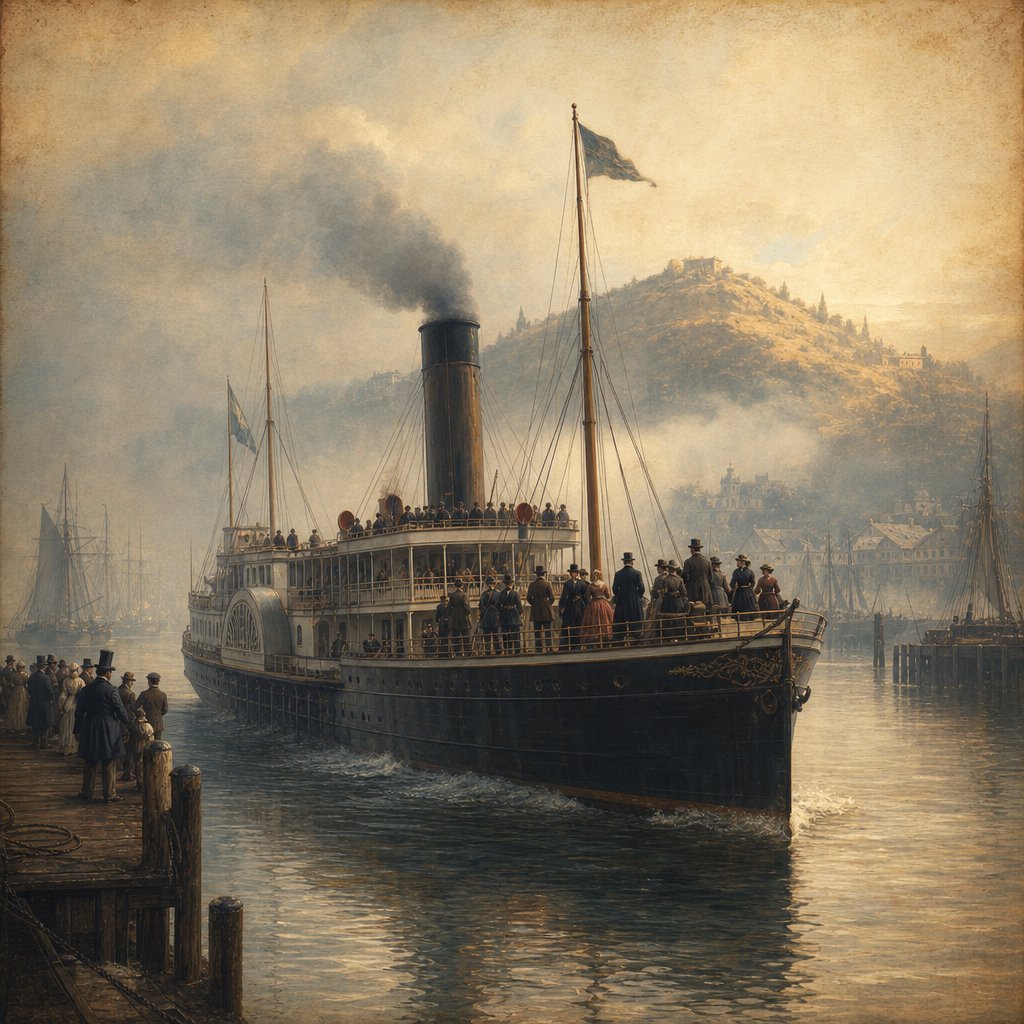
The spelling your family uses did not appear in a vacuum. It was shaped by a specific moment in American history, a specific port of entry, and a specific wave of migration. Chinese American surname romanization patterns map almost perfectly onto three distinct immigration periods, each bringing different dialect speakers and different transcription methods to the United States. When you trace a surname spelling back to its origin, you are also tracing a family's place in this larger timeline.
Gold Rush Era and Cantonese-Dominant Spellings
The first major wave arrived during the California Gold Rush of 1848 to 1855 and continued through railroad construction in the 1860s. These immigrants came almost exclusively from Guangdong province, particularly from two sub-regions in the Pearl River Delta: the Siyi (Sze Yup, or "Four Districts") area, which includes Taishan, Kaiping, Enping, and Xinhui, and the Sanyi (Sam Yup, or "Three Districts") area. A smaller group came from Zhongshan district.
Sze Yup was the dominant sending region because of its limited arable land and widespread poverty. Most emigrants from this area headed to North America, making Taishanese the primary Chinese dialect heard in early Chinatowns across the United States and Canada. These speakers did not use Mandarin. They spoke regional Cantonese variants that sounded nothing like the Beijing standard, and their cantonese surnames were transcribed phonetically by English-speaking clerks who had no formal system to follow.
Imagine a Taishanese speaker pronouncing the character 陳. It comes out closer to "Hin" or "Chin" rather than the standard Cantonese "Chan" or the Mandarin "Chen." Similarly, 黄 might be recorded as "Wong" or "Wung" depending on the clerk's ear. These early phonetic spellings became permanent legal names, passed down through generations. The result is a layer of asian american last names that reflect mid-nineteenth-century Taishanese and Cantonese pronunciation, often unrecognizable to modern Mandarin speakers.
The Sanyi speakers, who came from areas closer to Guangzhou city, produced spellings more aligned with standard Cantonese. Their cantonese last names tend to match what you would find in a modern Cantonese dictionary. Zhongshan speakers added yet another set of variants, creating a three-way split even within this single province.
The Exclusion Era and Paper Son Complications
The Chinese Exclusion Act of 1882 did not stop immigration entirely. It restricted it to narrow categories: merchants, teachers, students, and diplomats. This period, lasting until 1943, kept the Chinese American population overwhelmingly Cantonese-speaking and froze the dominance of Cantonese-based surname spellings for over sixty years.
It also introduced a new source of spelling variation: the "paper son" system. After the 1906 San Francisco earthquake destroyed birth records, many Chinese men claimed U.S. citizenship and then reported fictitious sons born in China. Certificates were sold to young men who entered the country under assumed identities. These "paper names" often carried different surname characters or different romanizations than the immigrant's actual family name. A man surnamed 李 might enter under a certificate reading "Lew" or "Louie" because that was the paper family he purchased into. His children inherited the paper surname as their legal name, even though the family privately maintained their true character.
This practice scattered additional spelling variants across official records, creating asian names and surnames that sometimes have no phonetic connection to the bearer's actual ancestral character.
Post-1965 Mandarin Migration and Pinyin Adoption
Everything shifted after the Immigration and Nationality Act of 1965 removed race-based quotas. Suddenly, Chinese immigrants arrived from Taiwan, Hong Kong, and eventually mainland China in large numbers. The Chinese American population jumped from under 240,000 in 1960 to over 800,000 by 1980, and surpassed 4 million by the 2010 census.
These new arrivals brought Mandarin pronunciation and, increasingly, Pinyin-based spellings. A family surnamed 王 now appeared as "Wang" (Pinyin) rather than "Wong" (Cantonese). The character 張 registered as "Zhang" instead of "Cheung." Taiwanese immigrants often used Wade-Giles romanization, producing spellings like "Chang" for the same character. By the year 2000, Social Security data showed that Mandarin-pronunciation surnames had surpassed Cantonese-pronunciation surnames in frequency among Chinese Americans.
The timeline below summarizes how each period produced its own romanization layer:
- 1848-1882 (Gold Rush and Railroad Era): Cantonese and Taishanese speakers from Guangdong; phonetic transcription by English-speaking officials; no standardized system. Produced spellings like Wong, Chin, Moy, Lew, and Fong.
- 1882-1943 (Chinese Exclusion Act): Continued Cantonese dominance with restricted entry; paper son documentation introduced additional surname variants unrelated to actual family characters; dictionary-based spellings for Mandarin, standard Cantonese, and Fujian dialects began appearing for merchants and students.
- 1944-1965 (Gradual Reopening): Refugees from the Chinese Civil War and Communist revolution; mix of Cantonese, Mandarin, and other regional pronunciations; Wade-Giles system common for Mandarin speakers from Taiwan.
- 1965-Present (Post-Quota Era): Massive influx from Taiwan, Hong Kong, and mainland China; Pinyin becomes dominant for PRC immigrants; Wade-Giles persists among Taiwanese families; Cantonese spellings continue from Hong Kong arrivals. Mandarin-based surnames now outnumber Cantonese-based ones.
Each of these periods left a distinct fingerprint on the surname landscape. A family named "Wong" likely traces to pre-1965 Cantonese immigration. A family named "Wang" with the same character probably arrived after 1965 from a Mandarin-speaking region. And a family named "Vong" might have roots in a Southeast Asian Chinese community that used yet another romanization convention before resettling in the United States.
These layers do not replace each other. They accumulate. All of them coexist in phone books, voter rolls, and school rosters across the country, which is why understanding the specific romanization system behind a spelling matters so much for anyone trying to connect the dots between related families.
Major Romanization Systems Compared
Each immigration wave brought its own romanization conventions, but what exactly are these systems, and why do they produce such different results from the same character? Understanding how Chinese names work at the system level is the key to decoding any spelling you encounter. Six major romanization systems have shaped Chinese American surname spellings, each developed in a different era, for a different purpose, and by a different authority.
Pinyin Versus Wade-Giles for Mandarin Surnames
Pinyin and Wade-Giles both transcribe Mandarin pronunciation, yet they often produce strikingly different spellings for the same chinese surname. The reason comes down to how each system represents aspirated and unaspirated consonants, retroflexes, and palatal sounds.
Hanyu Pinyin, literally meaning "spell-sound," was developed by the People's Republic of China beginning in the late 1950s as part of a literacy campaign. It became the international standard for Mandarin romanization and is the system taught in mainland Chinese schools. Pinyin uses letters like q, x, zh, and z in ways that feel counterintuitive to English speakers. The surname 許, for instance, becomes "Xu" in Pinyin, a spelling that baffles anyone unfamiliar with the system's conventions.
Wade-Giles predates Pinyin by nearly a century. Created by British diplomat Sir Thomas Francis Wade in 1867 and later refined by Cambridge professor Herbert Allen Giles, it was the dominant academic romanization for Mandarin well into the 1970s. Wade-Giles uses apostrophes to mark aspiration: "Ch'en" versus "Chen" distinguishes two entirely different sounds. Without the apostrophe, many readers collapse these distinctions, which is how variant spellings proliferate in practice.
For taiwanese last names, Wade-Giles remained the default system long after mainland China adopted Pinyin. Taiwan used Wade-Giles on passports and official documents until Tongyong Pinyin was introduced in 2002, and Hanyu Pinyin did not become the official standard there until 2009. This means that taiwanese surnames on older documents, and many current ones by personal choice, still follow Wade-Giles conventions. A Taiwanese family surnamed 張 typically spells it "Chang" (Wade-Giles) rather than "Zhang" (Pinyin), even though both represent the same Mandarin pronunciation.
The Yale romanization system for Mandarin, developed at Yale University in the late 1940s for military and diplomatic training, sits between the two. It avoids Pinyin's unfamiliar letter assignments and Wade-Giles' apostrophes, producing spellings that feel more intuitive to English readers. However, Yale never gained widespread use for personal names and remains primarily a pedagogical tool.
Postal Romanization and Its Overlooked Role
One system that rarely gets discussed in the context of surnames is Chinese Postal Romanization. Developed by postal authorities in the late 19th century and formally adopted at a 1906 conference in Shanghai, this system was the most common way of rendering Chinese place names in English for much of the 20th century. It remained official in Taiwan until 2002.
Postal romanization drew on the Nanking syllabary, a system based on Southern Mandarin pronunciation rather than the Beijing dialect that underlies both Wade-Giles and Pinyin. It also accommodated local dialect pronunciations in Guangdong, Guangxi, and Fujian. The result was a hybrid system that sometimes reflected Cantonese or Hokkien sounds rather than standard Mandarin. Place names like "Tsingtao" (Pinyin: Qingdao) and "Chungking" (Pinyin: Chongqing) are postal romanization artifacts.
While primarily used for geography, postal romanization influenced surname spellings on official documents, particularly for families who emigrated during the early twentieth century when this system dominated Western maps and correspondence. A surname recorded on a visa or shipping manifest might follow postal conventions rather than any dialect-specific system, adding yet another layer of variation.
Cantonese Systems from Yale to Jyutping
Cantonese has its own parallel set of romanization systems, entirely separate from the Mandarin ones. The two most widely referenced are Yale and Jyutping.
Yale romanization for Cantonese was also developed at Yale University, originally for teaching Cantonese to American military and diplomatic personnel. It uses tone marks and the letter "h" to indicate tonal distinctions, and its spelling conventions feel relatively natural to English readers. Many Cantonese dictionaries and textbooks still use Yale.
Jyutping, developed in 1993 by the Linguistic Society of Hong Kong, is the modern academic standard for Cantonese romanization. It introduces conventions like "z" and "c" for initials and uses numeric tone markers. Jyutping is more systematic and consistent than Yale, but it arrived too late to influence most Chinese American surname spellings. Its value lies in providing a standardized reference point for identifying how a surname character sounds in Cantonese.
Neither Yale nor Jyutping, however, is what most Hong Kong residents actually use on their identity documents. Hong Kong Government Romanisation, an informal and inconsistent system, is what appears on most Hong Kong passports and birth certificates. This explains why real-world Cantonese surname spellings often do not match any formal system perfectly.
For Hokkien (Southern Min) speakers, the primary romanization system is Pe̍h-oe-ji (POJ), a church romanization developed by Presbyterian missionaries in the 19th century. POJ produces surname spellings like "Tan" for 陳 and "Ng" for 黄, reflecting the distinct phonology of Hokkien. Families from Fujian province or Southeast Asian Hokkien communities often carry these spellings.
The table below shows how six common surname characters render across these major systems. You will notice that a single character can produce five or more completely different English spellings, each one legitimate within its own framework. This is the core of how the surname 中文 character connects to its many English forms.
| Character | Pinyin (Mandarin) | Wade-Giles (Mandarin) | Yale (Cantonese) | Jyutping (Cantonese) | POJ (Hokkien) | Common US Spellings |
|---|---|---|---|---|---|---|
| 陳 | Chen | Ch'en | Chahn | Can4 | Tan | Chen, Chan, Chin, Tan |
| 王 | Wang | Wang | Wohng | Wong4 | Ong | Wang, Wong, Ong |
| 黄 | Huang | Huang | Wohng | Wong4 | Ng/Ooi | Huang, Wong, Ng, Ooi |
| 林 | Lin | Lin | Lahm | Lam4 | Lim | Lin, Lam, Lim, Lum |
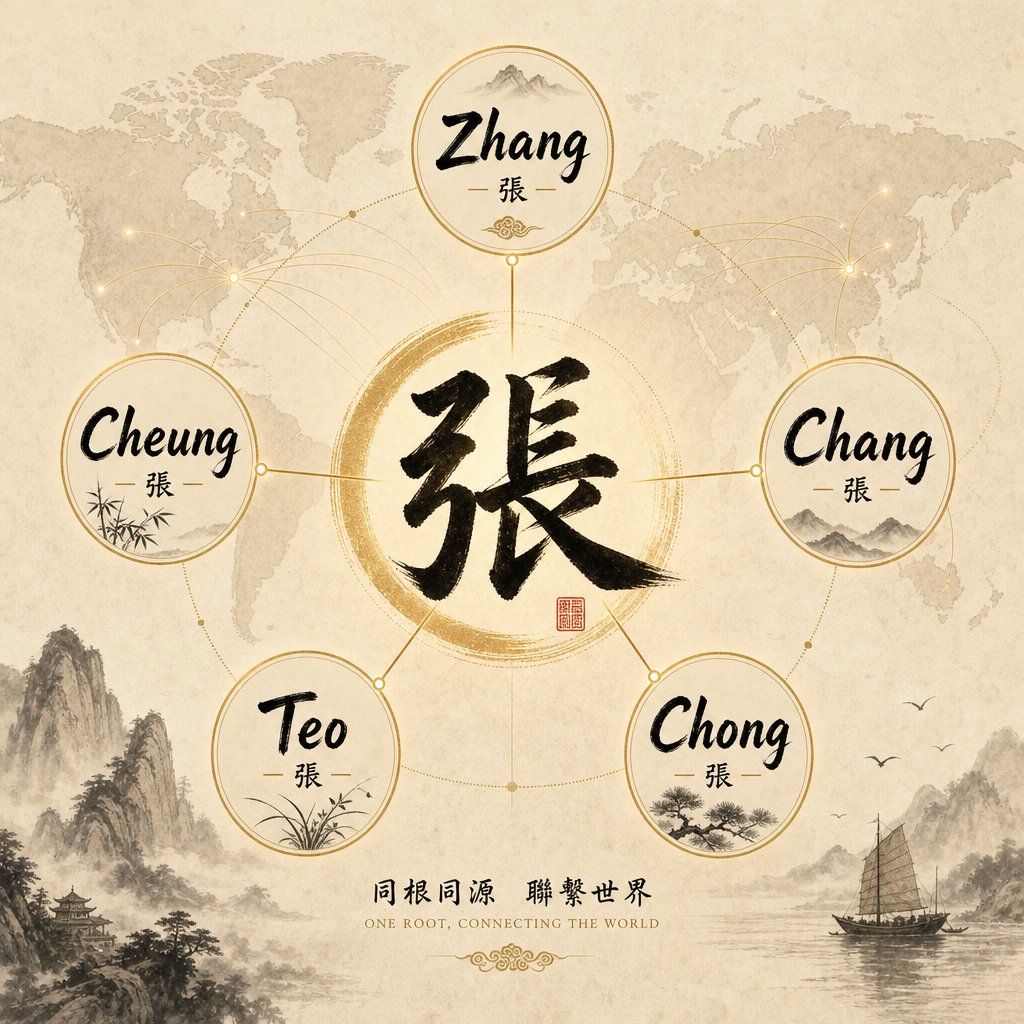
| 張 | Zhang | Chang | Jeung | Zoeng1 | Tiu/Teo | Zhang, Chang, Cheung, Teo |
| 許 | Xu | Hsu | Heui | Heoi2 | Kho | Xu, Hsu, Hui, Koh |
Notice how 黄 and 王 both produce "Wong" in Cantonese, despite being entirely different characters with different meanings. This is one of the trickiest aspects of romanized chinese surnames: two unrelated families can share an identical English spelling while having no ancestral connection whatsoever. Conversely, families spelled Chen, Chan, and Tan may all descend from the same 陳 lineage.
Each system reflects the priorities of its creators. Pinyin prioritizes internal consistency for Mandarin. Wade-Giles prioritizes phonetic precision through diacritics. Jyutping prioritizes systematic coverage of Cantonese sounds. POJ prioritizes accessibility for Hokkien speakers. None of them was designed with surname standardization in mind, which is exactly why the same character fractures into so many English forms depending on which system a family encountered at the moment their name was first written down in Latin letters.
The practical consequence is that identifying a family's dialect origin requires looking beyond the English spelling to determine which system produced it. A surname spelled "Hsu" almost certainly passed through Wade-Giles, pointing to a Taiwanese or pre-1979 academic context. "Xu" signals post-1979 Pinyin and likely a mainland Chinese origin. "Koh" suggests Hokkien roots, possibly via Southeast Asia. These system fingerprints become even more revealing when combined with knowledge of specific dialect pronunciations, which vary not just between Mandarin and Cantonese but across half a dozen regional speech communities within southern China.
Dialect Regions and Their Distinctive Surname Spellings
Romanization systems provide the framework, but dialect is what determines the raw sound being transcribed. Two families can use the exact same romanization method and still end up with different English spellings because their ancestors pronounced the character differently. Southern China's dialect landscape is remarkably fragmented, and each speech community left its own phonetic signature on the asian last names found in American records.
Taishanese Spellings from the Siyi Region
The Siyi (Sze Yup) region, comprising the counties of Taishan, Kaiping, Enping, and the former county of Xinhui, was the single largest source of Chinese immigration to North America before 1965. As documented by linguists studying the Four Counties dialect group, these four counties share a cluster of mutually intelligible dialects that differ noticeably from standard Guangzhou Cantonese. The phonetic differences are not subtle. Taishanese shifts initial consonants, alters vowel qualities, and changes tonal contours in ways that produce entirely different surname spellings.
Consider the character 陳. In standard Cantonese (the Sam Yup or Sanyi variety spoken around Guangzhou), it sounds like "Chan." In Taishanese, the initial consonant shifts forward, producing something closer to "Chin" or "Hin." The character 梅 becomes "Mui" in standard Cantonese but "Moy" in Taishanese. The character 伍 is "Ng" in Cantonese but often rendered "Ng" or "Eng" in Taishanese contexts. If you have ever wondered about the ng last name origin, it traces directly to the Cantonese and Taishanese pronunciation of 伍 or 吴, where the initial nasal sound has no English equivalent and gets transcribed as the bare consonant cluster "Ng."
The distinction between Siyi and Sanyi spellings matters enormously for genealogy. A family surnamed "Chin" almost certainly has Taishanese roots, while a family surnamed "Chan" likely traces to standard Cantonese speakers from the Sam Yup area or Hong Kong. Both share the character 陳, but their English spellings point to different ancestral villages separated by only a few dozen miles.
Zhongshan district, located south of Guangzhou, adds another layer. Zhongshan dialect shares features with both Cantonese and the Siyi group but has its own distinctive vowel shifts. The character 鍾, for example, produces spellings that help explain the chung last name origin for many families. In standard Cantonese, 鍾 romanizes as "Chung" or "Jung," but Zhongshan speakers may produce a slightly different vowel quality. Families researching the chung last name origin often discover that their specific spelling variant points to Zhongshan or nearby areas rather than urban Guangzhou.
Hokkien and Teochew Variants in Southeast Asian Chinese Communities
Southern Fujian province and the Chaoshan region of eastern Guangdong produced two more dialect groups with major influence on popular asian last names: Hokkien (Southern Min) and Teochew (Chaozhou). These dialects differ dramatically from Cantonese. They preserve ancient Chinese sounds lost in other dialects, including voiced initial consonants and nasal vowels that produce spellings unfamiliar to anyone accustomed to Cantonese or Mandarin forms.
Hokkien speakers pronounce 陳 as "Tan," 林 as "Lim," and 黄 as "Ng" or "Ooi." Teochew, closely related to Hokkien but distinct in its vowel system, produces 陳 as "Tan" but 林 as "Lim" and 黄 as "Ooi" or "Ung." Many of these speakers reached the United States not directly from China but through Southeast Asian countries like Malaysia, Singapore, the Philippines, and Indonesia, where Hokkien and Teochew communities had been established for centuries. Their surname spellings often reflect the romanization conventions of those intermediate countries.
Hakka speakers, scattered across mountainous regions of Guangdong, Fujian, and Jiangxi, form yet another distinct group. Hakka pronunciation of 陳 sounds like "Chin" or "Tshin," 黄 becomes "Wong" or "Vong," and 張 appears as "Chong" or "Cheong." Because Hakka communities are geographically dispersed, their asian family names show more internal variation than those of more concentrated dialect groups.
The table below maps ten common surname characters across five major dialect groups. Use it as a reference to identify which dialect likely produced a given spelling.
| Character | Standard Cantonese (Sam Yup) | Taishanese (Siyi) | Hakka | Hokkien | Teochew |
|---|---|---|---|---|---|
| 陳 | Chan | Chin / Hin | Chin / Tshin | Tan | Tan |
| 林 | Lam | Lam / Lum | Lim | Lim | Lim |
| 黄 | Wong | Wong / Wung | Wong / Vong | Ng / Ooi | Ooi / Ung |
| 李 | Lee / Lei | Lee / Ley | Li / Lee | Lee | Lee |
| 梅 | Mui | Moy | Moi | Boe / Mooi | Bue |
| 張 | Cheung | Cheong | Chong / Cheong | Tiu / Teo | Teo / Tio |
| 吴 / 伍 | Ng / Eng | Ng / Eng | Ng / Wu | Goh | Goh / Go |
| 劉 | Lau | Lau / Loo | Lau / Liu | Lau | Lau / Low |
| 鍾 | Chung / Jung | Chung | Chung / Tsung | Chiong | Chong |
| 許 | Hui / Hoi | Hoi | Hi / Hee | Kho / Koh | Koh / Ko |
A few patterns stand out immediately. Hokkien and Teochew often share the same spelling because of their close linguistic relationship, but they diverge on vowel-heavy surnames. Hakka sometimes overlaps with Taishanese on initial consonants (both produce "Chin" for 陳) but differs on vowels. Standard Cantonese and Taishanese share the most common ground, yet the differences are consistent enough to distinguish one from the other in most cases.
These dialect-to-spelling mappings are not just academic curiosities. They are practical tools. When you encounter an unfamiliar surname spelling in old records, matching it against this table can narrow down the ancestral region to a specific dialect group, and often to a specific cluster of counties within Guangdong or Fujian. That level of precision is what transforms a confusing jumble of variant spellings into a readable map of migration and family history.

The Role of Immigration Officials in Creating Surname Variants
Dialect and romanization system explain much of the variation in Chinese American surnames, but they do not explain all of it. A third force was at work: the individual judgment of immigration officials and census enumerators who wrote these names into permanent legal records. At ports of entry like Angel Island in San Francisco Bay, a single clerk's ear could determine how a family's chinese last name would be spelled for generations.
Angel Island and Inconsistent Transliteration
Between 1910 and 1940, Angel Island processed roughly 175,000 Chinese immigrants. Officials there had no standardized transliteration protocol. As a 1991 National Archives report documented, "there was no standard method to transliterate Chinese, and census takers often wrote what they believed they heard, particularly if the Chinese could not write English well." The result was that officials unfamiliar with tonal languages routinely collapsed distinct surnames into identical spellings or split identical surnames into different ones.
Consider what happens when an English-speaking inspector hears two different characters, say 鄭 and 張, both pronounced with an initial "zh" or "ch" sound. Without tonal awareness, both might be written as "Chang" or "Chung." Conversely, the same character could be recorded differently on two separate occasions simply because a different clerk was on duty. What appear to be rare last names or uncommon surnames in old immigration files are often just idiosyncratic phonetic guesses frozen into legal permanence.
A single immigration inspector's phonetic judgment, made in seconds and without any standardized system, could permanently determine how a family's surname would be spelled on every legal document for the next century.
How Interpreter Dialect Shaped Official Records
Interpreters added another layer of inconsistency. When an inspector could not understand an immigrant directly, a bilingual interpreter mediated. But these interpreters had their own dialect backgrounds. A Cantonese-speaking interpreter would hear and relay a Taishanese speaker's pronunciation through a Cantonese filter, potentially altering the transcription. A Sam Yup interpreter might render a Siyi speaker's surname differently than a fellow Siyi interpreter would.
The McGlinn report cited in the National Archives captures this problem precisely: "instances of the same Chinese surname transliterated as Jung, Chung and Chong, depending on the pronunciation of the Chinese and the whim of whoever was recording it." Even more striking, "members of the same family or even the same individual at different times could be recorded with different transliterations of their surnames, while members of different families could be recorded with the same transliterations."
This means that last names uncommon in modern directories may not represent rare lineages at all. They may simply be one-off phonetic interpretations that stuck. A spelling like "Gock" or "Huie" might look exotic, but it could represent a perfectly common character filtered through an unusual interpreter-official combination on a particular afternoon at Angel Island. The official record became the legal truth, regardless of whether it accurately captured the sound the immigrant actually made.
These bureaucratic accidents did not stay confined to immigration files. They cascaded forward into naturalization papers, birth certificates, and Social Security records, creating a permanent paper trail built on a momentary phonetic guess.
Legal Documents and the Challenge of Surname Consistency
A phonetic guess at a port of entry was only the beginning. That initial spelling then had to survive contact with every other bureaucratic system in American life: naturalization courts, county birth registrars, Social Security offices, school enrollment clerks, and draft boards. Each encounter was another opportunity for a chinese american last name to be recorded differently, creating a paper trail where the same person or family might appear under two or three variant spellings across different government databases.
Surname Standardization on Legal Documents Across Eras
Before 1906, the United States had no federal requirement to document name changes during naturalization. As USCIS historical records confirm, Congress wrote the documentation requirement into law in 1906 precisely because immigrants routinely changed their names within the first five years after arrival, and no paper trail existed to track those changes. For Chinese Americans, this meant that pre-1906 surname spellings were essentially whatever a local court clerk, employer, or landlord wrote down. No official mechanism connected the immigration record to the naturalization record to the census record.
After 1906, naturalization petitions required applicants to state their name as it appeared on their immigration record. If the name had changed, the discrepancy needed explanation. This created a specific problem for Chinese Americans whose surnames had been inconsistently transliterated. Imagine arriving with a ship manifest reading "Ching" and then applying for naturalization with documents spelling it "Chin" because a different clerk transcribed it differently. The mismatch could delay or complicate proceedings.
Birth certificates introduced another layer. Children born in the United States received whatever spelling their parents provided to the hospital or registrar, which might not match the father's immigration documents. Social Security cards, introduced in 1936, froze yet another version into federal records. A common chinese name like 陳 could appear as "Chan" on a father's immigration file, "Chin" on his naturalization certificate, and "Chen" on his American-born son's birth certificate, all within the same household.
These inconsistencies were not merely clerical annoyances. They created real obstacles:
- Identity verification failures: Applications for passports, security clearances, or professional licenses could be delayed when background checks revealed mismatched surname spellings across federal and state databases.
- Inheritance and property disputes: When a deed recorded one spelling and a will used another, heirs sometimes needed court orders to prove they were the same family.
- Family separation in records: Siblings born in different years might have different surname spellings on their birth certificates if the registrar changed or the parents adjusted their preferred romanization over time.
- Social Security and benefits claims: Widows or children filing survivor benefits had to demonstrate that variant spellings on marriage certificates, death certificates, and Social Security records all referred to the same individual.
- Voter registration and jury duty: Duplicate records under variant spellings could trigger fraud investigations or cause eligible voters to be purged from rolls.
For families carrying chinese american last names with multiple romanized forms, navigating these systems often required affidavits, legal name-change petitions, or sworn statements from community members attesting that "Chan" and "Chin" referred to the same person.
Generational Changes in Surname Spelling Choices
First-generation immigrants rarely chose their English surname spelling deliberately. It was assigned by an official, copied from a ticket, or approximated by a clerk. But their children and grandchildren faced a different situation. They grew up literate in English and aware that their surname spelling carried social signals.
A common pattern emerged: second-generation Chinese Americans often standardized the family spelling to whatever appeared on their own birth certificate, even if it differed from their parents' immigration documents. This was the path of least resistance. The birth certificate was the foundational identity document for American-born citizens, and its spelling became the family's de facto standard going forward.
Some families made more deliberate shifts. As Mandarin became the prestige dialect in Chinese American communities after 1965, certain families with Cantonese-origin spellings adopted Pinyin forms for their children. A family long known as "Wong" might register a new baby as "Wang," aligning with the common chinese full names appearing in newer immigrant communities. Others moved in the opposite direction, keeping a distinctive Cantonese or Taishanese spelling as a marker of their family's longer American history.
Third and fourth-generation Chinese Americans sometimes discover that their surname spelling no longer matches any standard romanization system at all. It has drifted through decades of clerical reinterpretation, generational preference shifts, and informal Anglicization into something unique. These families carry a surname that is, in effect, a historical artifact: a record of every bureaucratic hand that touched their family's paperwork across a century of American life.
The legal tangle of variant spellings is not just a historical curiosity. It remains a live issue for anyone attempting to connect family records across generations, which is exactly where surname romanization knowledge becomes a practical genealogical tool rather than an academic exercise.
Complete Surname Mapping Across All Systems
Variant spellings scattered across legal documents, immigration files, and family records all point back to a single Chinese character. The challenge is knowing which character. What families need is a single reference that connects every major romanization variant to its source system and dialect, turning a confusing web of spellings into a readable map. Think of the table below as a Rosetta Stone for the most common chinese last names in the United States.
The Definitive Surname Romanization Reference Table
This table covers twelve of the most common chinese surnames by frequency in Chinese American communities. Each row starts with the original character and then shows how it renders across six romanization pathways: Mandarin Pinyin, Wade-Giles (common among Taiwanese families), standard Cantonese, Taishanese, Hakka, and Hokkien. The final column lists additional variant spellings you may encounter in American records that do not fit neatly into any single system.
| Character | Pinyin (Mandarin) | Wade-Giles | Cantonese | Taishanese | Hakka | Hokkien | Other US Variants |
|---|---|---|---|---|---|---|---|
| 王 | Wang | Wang | Wong | Wong / Wung | Wong / Vong | Ong / Heng | Vong, Bong |
| 李 | Li | Li | Lee / Lei | Lee / Ley | Li / Lee | Lee | Leigh, Lea |
| 張 | Zhang | Chang | Cheung | Cheong | Chong / Cheong | Teo / Tiu | Chong, Tiong |
| 陳 | Chen | Ch'en | Chan | Chin / Hin | Chin / Tshin | Tan | Chun, Tran (Vietnamese) |
| 劉 | Liu | Liu | Lau | Lau / Loo | Lau / Liew | Lau / Low | Lew, Louie, Lew |
| 黄 | Huang | Huang | Wong | Wong / Wung | Wong / Vong | Ng / Ooi | Hwang, Oei, Ung |
| 林 | Lin | Lin | Lam | Lam / Lum | Lim | Lim | Lum, Lem |
| 吴 | Wu | Wu | Ng | Ng / Eng | Ng / Wu | Goh / Go | Woo, Ung |
| 許 | Xu | Hsu | Hui / Hoi | Hoi | Hi / Hee | Kho / Koh | Tsui, Shee, Ko |
| 趙 | Zhao | Chao | Chiu / Jiu | Chiu | Chau / Cheu | Tio / Chio | Jew, Jow, Chio |
| 周 | Zhou | Chou | Chow / Jau | Chow / Jow | Chew / Chu | Chew / Chiu | Joe, Jow, Jew |
| 楊 | Yang | Yang | Yeung | Yeong | Yong / Iong | Yeo / Iu | Young, Yeong |
A few things jump out immediately. The wang last name appears identical in both Pinyin and Wade-Giles because the Mandarin pronunciation happens to align with English phonetic expectations. But move to Cantonese and it becomes "Wong," which is also the Cantonese rendering of 黄 (Huang). This means two completely unrelated characters, 王 and 黄, share the same English spelling in Cantonese contexts. If you encounter a family named Wong, you cannot determine their ancestral character without additional context like a Chinese-language document or knowledge of their dialect background.
The chen surname shows similar complexity. In Mandarin Pinyin it is "Chen," in Wade-Giles "Ch'en" (with the apostrophe that is almost always dropped in everyday use), in Cantonese "Chan," in Taishanese "Chin," in Hakka also "Chin," and in Hokkien "Tan." The Asia Media Centre notes that the chen surname traces back to an ancient kingdom called Chen in modern-day Henan, when the ruling family adopted it as their family name. That single origin has since fractured into at least six common English spellings depending on which dialect community carried it overseas.
Notice also how 劉 produces "Louie" and "Lew" in the variant column. These are not formal romanization outputs from any system. They are Anglicized adaptations that emerged when families or officials tried to make a Cantonese "Lau" or Taishanese "Loo" look more like a familiar English name. The same process turned 趙 into "Jew" and 周 into "Joe" in some early immigration records.
Reading the Table to Identify Your Family's Dialect Origin
How do you actually use this table? Start with the English spelling your family carries and scan across the columns to find a match. The column where it appears tells you both the romanization system and the dialect group that produced it. Here is a practical walkthrough:
Imagine your family name is "Lau." Scanning the table, you find it in the Cantonese, Taishanese, and Hakka columns for 劉. That narrows the character but not the dialect. You would need a second data point, like knowing your family came from Taishan versus Guangzhou, to pin it down further. If your family name is "Low," you find it only in the Hokkien column, which immediately points to Southern Fujian or a Southeast Asian Hokkien community.
Some spellings appear in only one column, making identification straightforward:
- "Hsu" appears only under Wade-Giles for 許, pointing to a Taiwanese or pre-1979 academic context.
- "Ong" appears only under Hokkien for 王, indicating Southern Min roots.
- "Cheung" appears only under Cantonese for 張, signaling Hong Kong or Guangzhou origins.
- "Teo" appears only under Hokkien for 張, suggesting Fujian or Southeast Asian heritage.
- "Goh" appears only under Hokkien for 吴, again pointing to Southern Min speakers.
Other spellings are ambiguous. "Wong" could be Cantonese 王 or Cantonese 黄. "Chin" could be Taishanese 陳 or Hakka 陳. "Lee" could be Cantonese, Taishanese, Hakka, or Hokkien 李, since the character sounds similar across most southern dialects. In these cases, you need additional information: a family document showing the Chinese character, knowledge of the ancestral village, or a family association membership that identifies the lineage.
The most common chinese last names in the United States, ranked by frequency in census and Social Security data, are Li/Lee, Wang/Wong, Zhang/Chang/Cheung, Liu/Lau, Chen/Chan, Yang/Yeung, Huang/Wong, Zhao/Chiu, Wu/Ng, and Zhou/Chow. Between them, these ten characters account for a substantial share of all Chinese American surnames. Yet because each character generates multiple English forms, they appear as dozens of distinct "last names" in American databases, fragmenting what are actually enormous lineage groups into seemingly unrelated families.
This fragmentation is precisely why a unified reference matters. When you can trace "Tan," "Chan," "Chen," and "Chin" back to the same character 陳, you unlock connections that would otherwise remain invisible. The most common chinese surnames are not rare. They are hidden in plain sight behind a screen of romanization variants, each one a legitimate phonetic rendering from a specific time, place, and system. Knowing how to read that screen is what turns scattered records into a coherent family story, and it is the foundation for the genealogical strategies that make these connections actionable.
Using Surname Romanization for Genealogy and Identity
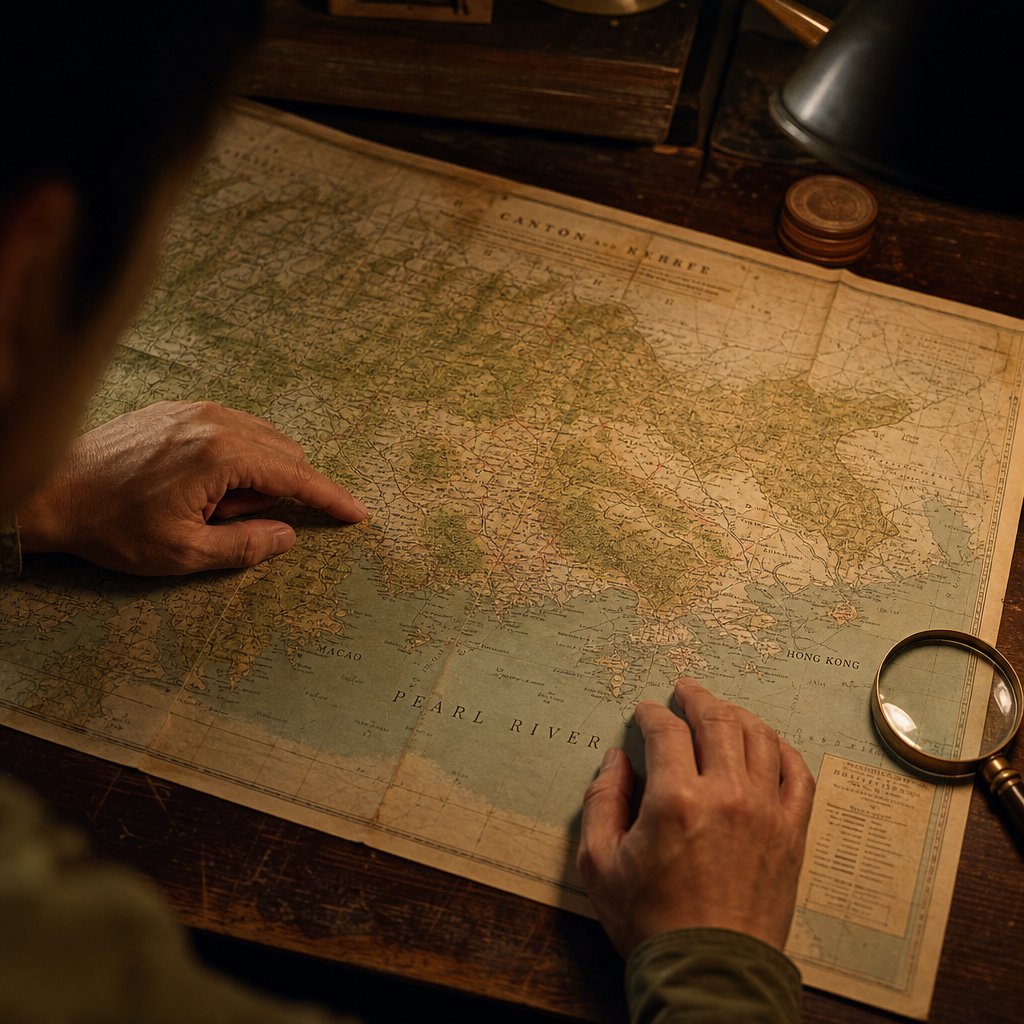
A reference table is only useful if you know how to apply it. For families trying to reconnect scattered branches, trace migration paths, or simply understand why their cousins spell the name differently, romanization knowledge becomes a hands-on research tool. The spelling your family carries is not just a label. It encodes chinese surnames and meanings that point back to a specific village, a specific dialect, and a specific moment of departure.
Tracing Your Ancestral Village Through Surname Spelling
Your English surname spelling is a clue to geography. A family named "Wong" with the character 黄 almost certainly traces to a Cantonese-speaking region in the Pearl River Delta. Researching the wong last name origin more specifically, you can narrow it further: if older family documents show the spelling "Wung" or "Vong," that points toward Taishanese or Hakka communities rather than urban Guangzhou or Hong Kong. Each phonetic variant maps to a cluster of counties, and those counties contain single-surname villages where your ancestors likely lived.
This is where chinese last names and meanings intersect with physical geography. The character 黄 means "yellow" and traces to an ancient feudal state, but the spelling variant tells you which dialect community carried it overseas. That dialect community came from a specific set of villages. Resources like VillageDB allow you to search by surname character and county, matching your family to villages where that surname dominates. The meaning of chinese last names often connects to ancient kingdoms or occupations, but the romanization variant connects to a specific place on a modern map.
Connecting Variant Spellings for Family Research
When you are searching old records, knowing that your family's character has multiple English forms dramatically expands what you can find. A search for only "Chan" misses every relative recorded as "Chin," "Chen," or "Tan." The step-by-step approach below helps you reverse-engineer any surname spelling back to its source character and dialect.
- Identify the English spelling exactly as recorded. Note the document type, date, and location. A 1920 San Francisco immigration file carries different assumptions than a 1985 New York birth certificate.
- Match the spelling against known romanization systems. Use the reference table from the previous section. If the spelling appears in only one column, you have your system and dialect. If it appears in multiple columns, move to the next step.
- Cross-reference with family knowledge of dialect or region. Do older relatives say the family came from Taishan? Guangzhou? Fujian? Even vague geographic memory narrows the possibilities. The wong last name origin, for example, splits cleanly between 王 (king) and 黄 (yellow) once you know whether the family spoke Cantonese or Mandarin.
- Search for the Chinese character in family documents. Tombstones, clan association records, old letters, and Chinese Exclusion Act case files at NARA often contain the character itself, which resolves all ambiguity instantly.
- Expand your record searches to include all variant spellings. Once you know the character, generate every romanization variant from the table and search each one. This is how you find relatives recorded under different spellings in census records, ship manifests, and naturalization indexes.
- Use surname frequency data to confirm. If your identified character is among the most common chinese surnames, the statistical likelihood supports your match. If it points to a rare character, look for additional confirming evidence.
Understanding chinese surname meanings adds another verification layer. If family oral history says the name means "forest," that confirms 林 (Lin/Lam/Lim) regardless of which English spelling appears on documents. Chinese last name meanings often survive in family memory long after the character itself has been forgotten, giving you a second path to identification.
The practical payoff is real. Families who understand their romanization history can connect with relatives they never knew existed, identify their ancestral village with precision, and make sense of documents that previously seemed contradictory. A surname spelling is not just a name. It is a compressed record of dialect, geography, and migration, waiting to be decoded.
Frequently Asked Questions About Chinese American Surname Romanization
1. Why do Chinese families with the same surname character spell their last name differently in English?
Chinese surnames get their English spelling from three intersecting factors: the dialect the family spoke (Cantonese, Taishanese, Hokkien, Hakka, or Mandarin), the romanization system applied at the time of immigration (Pinyin, Wade-Giles, Postal, or informal phonetic transcription), and the era when the family arrived in the United States. For example, the character 陳 becomes Chen through Mandarin Pinyin, Chan through standard Cantonese, Chin through Taishanese or Hakka, and Tan through Hokkien. Each spelling is equally valid and reflects a specific linguistic and historical pathway from character to Latin script.
2. How can I find out which Chinese character my surname comes from?
Start by matching your English spelling against a romanization reference table that shows how common characters render across different systems and dialects. If your spelling appears in only one column, you can identify the system and dialect immediately. For ambiguous cases, cross-reference with family knowledge of ancestral region or dialect, check tombstones or clan association records for the original character, or consult Chinese Exclusion Act case files at the National Archives, which often contain characters alongside English transliterations.
3. What is the difference between Pinyin and Wade-Giles for Chinese surnames?
Both systems romanize Mandarin pronunciation, but they use different letter conventions. Pinyin, developed by the PRC in the 1950s, uses letters like X, Q, and Zh in ways unfamiliar to English readers (e.g., Xu for 許). Wade-Giles, created in 1867, uses apostrophes to mark aspiration and produces spellings like Hsu for the same character. Taiwanese families typically carry Wade-Giles spellings because Taiwan used that system on official documents until 2009, while mainland Chinese families arriving after 1979 generally use Pinyin.
4. Why do Wong and Huang refer to the same Chinese surname?
Wong and Huang both represent the character 黄, but they come from different dialect pronunciations. Huang is the Mandarin Pinyin spelling, while Wong is the Cantonese pronunciation. However, Wong also represents the character 王 (meaning king) in Cantonese, which is spelled Wang in Mandarin. This means two completely unrelated surname characters share the identical English spelling Wong in Cantonese contexts, making it impossible to determine the ancestral character from the English spelling alone without additional family or documentary evidence.
5. How did immigration officials at Angel Island affect Chinese surname spellings?
Between 1910 and 1940, Angel Island officials had no standardized transliteration protocol for Chinese names. English-speaking inspectors wrote down what they believed they heard, often without understanding tonal distinctions that differentiate characters. Interpreters filtered immigrant speech through their own dialect backgrounds, adding further inconsistency. A single clerk's phonetic judgment, made in seconds, became the permanent legal spelling on all subsequent documents. This is why members of the same family sometimes appear under different surname spellings in official records from this era.