Understanding Chinese Maiden Name Traditions
When a woman marries in most English-speaking countries, she faces a familiar question: keep her birth surname or take her husband's? In China, that question simply does not exist. Chinese maiden name traditions operate on a completely different premise. A woman born with the surname Li (李) remains Li after marriage, not because she chose to keep it, but because changing it was never part of the cultural equation.
This is not a recent development or a feminist statement. It is a practice rooted in thousands of years of clan-based identity, where chinese family names represent blood lineage rather than marital status. The surname you are born with reflects your ancestors, your clan, and your place within a multigenerational story. Marriage does not rewrite that story.
In Chinese culture, a woman's surname represents her ancestral lineage and is considered inseparable from her identity. It belongs to her clan, not to her marriage.
What Chinese Maiden Name Traditions Actually Mean
At its core, this tradition means that chinese names carry a permanent connection to paternal ancestry. The family name (姓, xing) comes first in Chinese naming conventions, signaling that collective identity takes priority over individual identity. When a woman marries, her blood does not change, so her surname does not change either. She remains a member of her birth clan regardless of whose household she joins.
Chinese naming customs reflect this logic at every level. Unlike Western systems where a shared married surname signals family unity, Chinese families have always functioned with the understanding that a husband and wife carry different chinese last names. Their children typically take the father's surname, but the mother's own name stays intact on every document, every record, every ancestral tablet.
Why This Tradition Surprises Western Audiences
If you grew up in a culture where women routinely adopt their husband's surname, you might assume the same "keep or change" decision exists everywhere. It does not. In China, women generally do not change their names after marriage legally, and the concept of a "maiden name" as something separate from a current legal name barely applies. A Chinese woman's birth surname is simply her surname, full stop.
Another common misconception is that typical chinese names work the same way as Western names with a different script. They do not. The structure, the cultural weight of the surname, and the relationship between name and identity all follow a distinct logic. Understanding that logic is the key to understanding why surname retention after marriage is the default rather than the exception.
This guide covers everything from the Confucian philosophy behind the practice to how it plays out in modern legal systems, regional variations across Chinese-speaking communities, and practical implications for genealogy research and cross-cultural interactions.

Historical Roots in Confucian Clan Culture
The reason a Chinese woman keeps her birth surname is not a matter of personal preference. It is a matter of blood. The logic behind this practice stretches back thousands of years to the foundations of Confucian social order and the clan system known as zongzu (宗族). To understand the chinese name origin of this tradition, you need to understand how Chinese society organized itself around patrilineal descent groups, where your surname was proof of which bloodline you belonged to.
Confucian Philosophy and Clan Identity
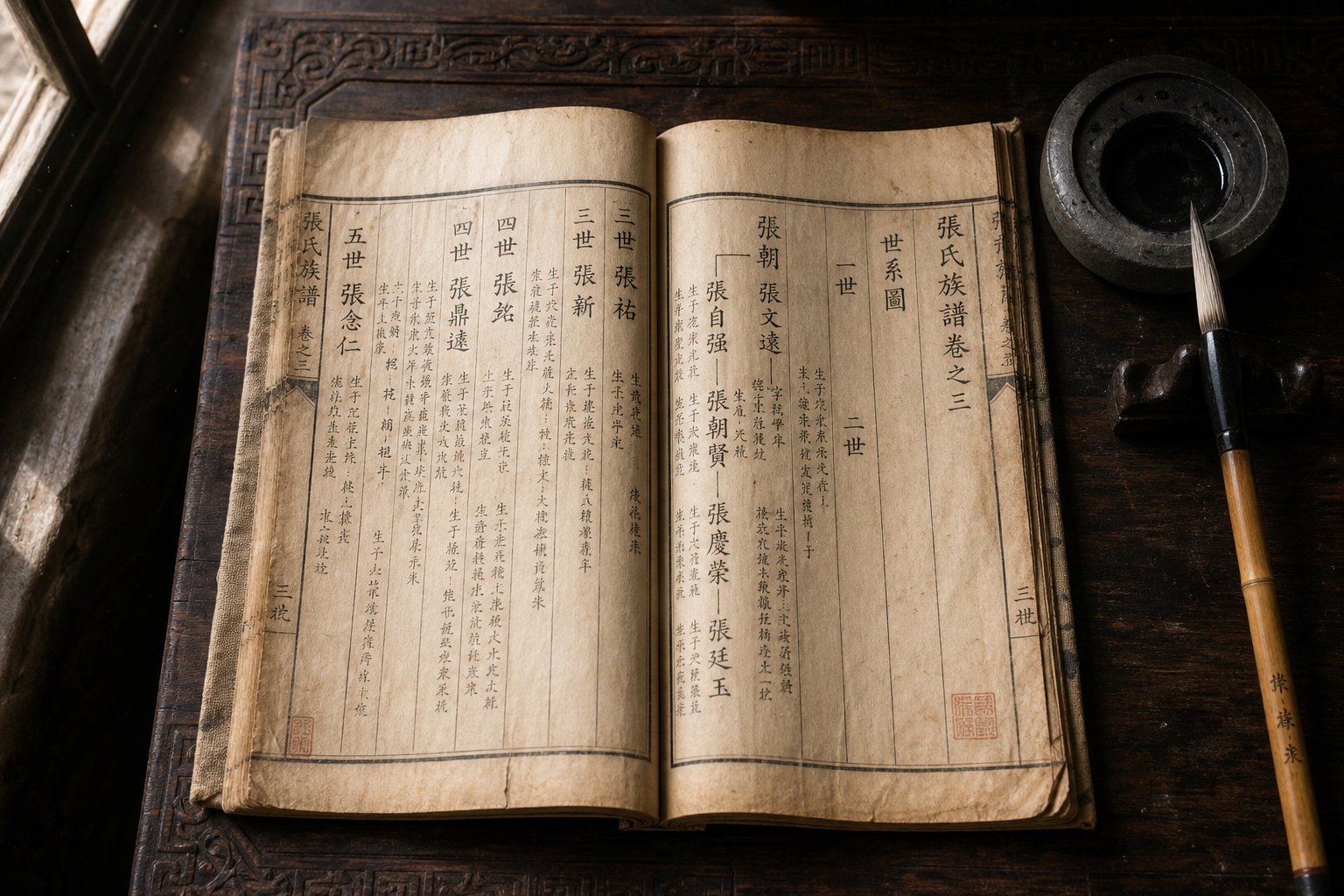
Confucian thought placed the family at the center of social life. Within that framework, the clan (宗族) functioned as the primary unit of identity, mutual support, and social organization. A clan consisted of all descendants sharing a common ancestor and, crucially, a common chinese surname. These groups compiled genealogies, built ancestral temples, and upheld family rules across generations.
Research on family lineage in China describes the zongzu as "a group of effectively organized descendants who share a common antecedent, a common surname, shared family property, and a shared kinship network." The genealogy book (族谱, zupu) documented the family tree, recorded ancestors, and confirmed each member's hierarchical position within the clan. Only male descendants were considered to continue the family bloodline, and socioeconomic status passed down through the patrilineal line.
This structure explains why chinese clan names carried such weight. Your surname was not just a label. It was your membership card in a centuries-old institution that determined your inheritance rights, your social standing, and your obligations to the living and the dead.
The Patrilineal Logic Behind Surname Retention
Here is the key insight: if a surname represents patrilineal blood descent, then marriage cannot change it. A woman born into the Chen (陈) clan carries Chen blood. Marrying a man surnamed Wang (王) does not make her a Wang by blood. Her children will be Wangs because they descend from their father's line, but she herself remains a Chen. The logic is straightforward once you see it through the lens of ancient chinese names and lineage thinking.
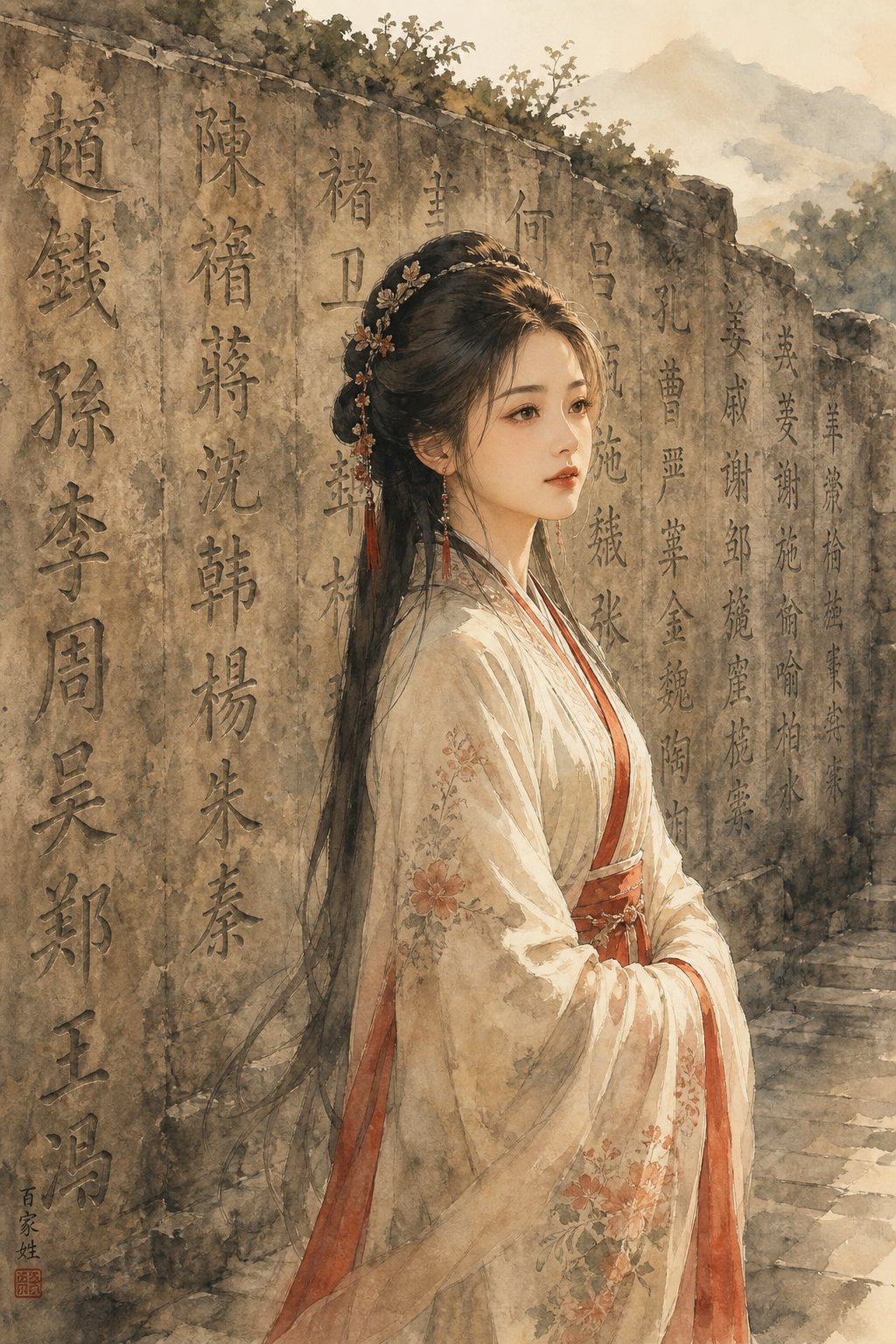
The cultural importance of chinese surnames meaning and heritage is reflected in the Hundred Family Surnames (百家姓, Baijiaxing), a Song Dynasty text compiled around AD 960. Containing over 500 surnames, this poem became a standard educational text for young scholars and gave rise to the expression laobaixing (老百姓), meaning "ordinary folk" or literally "the hundred old surnames." The text's enduring popularity shows how deeply the chinese family name was woven into collective identity.
Historically, a married woman was sometimes referred to using a combined form: her husband's surname prefixed to her birth surname, followed by the character shi (氏). For example, a woman born Chen who married into the Wang family might be called Wang Chen shi (王陈氏). As genealogy researchers have noted, shi signifies "from the family of" and functions like the French word nee. The critical point is that her birth surname was always preserved within this convention. It was never erased or replaced. She was still identifiably a Chen, even within her husband's household records.
This naming convention encapsulates the deeper cultural reality: marriage moved a woman into a new household, but it could not sever her from the bloodline she was born into. The surname stayed because the blood stayed.
How Chinese Name Structure Supports the Tradition
The bloodline logic behind surname retention does not exist in a vacuum. It is reinforced by the very way Chinese names are built. So how are chinese names structured? The answer reveals why a woman's birth surname occupies such an unshakeable position in her identity.
Surname First and Given Name Second
If you have ever wondered "are chinese names last name first," the answer is yes. The chinese name order places the surname (姓, xing) before the given name (名, ming). Imagine someone named Wang Xiaoming (王小明). Wang is the family name, and Xiaoming is the personal name. The family comes first, literally and philosophically.
This chinese name structure reflects Confucian values where the collective takes priority over the individual. You belong to your clan before you belong to yourself. When you hear or read a Chinese name, the very first sound identifies which lineage that person descends from. That front-loaded position gives the surname enormous weight in everyday life.
Because chinese names first last order puts the family name in the leading position, it stays visible in every interaction. A woman named Chen Meiling (陈美玲) introduces herself surname-first in Chinese contexts. After marriage, she is still Chen Meiling. The name does not rearrange itself, and no part of it gets swapped out.
Only about 400 different surnames exist in China, and the top 100 cover roughly 85 percent of the population. A small group of common chinese names dominates, making each surname a shared identity marker for millions of people. Here are the ten most prevalent:
| Rank | Character | Pinyin | Meaning | Approx. Population |
|---|---|---|---|---|
| 1 | 王 | Wang | King | ~100 million |
| 2 | 李 | Li | Plum | ~100 million |
| 3 | 张 | Zhang | Archer | ~95 million |
| 4 | 刘 | Liu | To Conquer | ~70 million |
| 5 | 陈 | Chen | To Display | ~60 million |
| 6 | 杨 | Yang | Poplar Tree | ~40 million |
| 7 | 赵 | Zhao | Ancient Kingdom | ~30 million |
| 8 | 黄 | Huang | Yellow | ~30 million |
| 9 | 周 | Zhou | Complete Circle | ~25 million |
| 10 | 吴 | Wu | Ancient Kingdom | ~25 million |
These ten names and characters alone represent over 500 million people worldwide. Each one traces back centuries, carrying historical meaning tied to dynasties, geography, or ancient clans.
How Name Structure Reinforces Identity
The order of chinese names does more than organize syllables. It encodes a distinction that classical Chinese made explicit through two separate concepts: xing (姓) and shi (氏).
In ancient usage, xing referred to the original clan surname, the deep ancestral marker tied to blood. Shi, on the other hand, functioned as a secondary identifier, often indicating a branch family, a geographic origin, or, for married women, their connection to a husband's household. When a woman was called Wang Chen shi (王陈氏), the shi designated her marital context while her xing, Chen, preserved her birth identity within that very label.
The language itself built a wall between who you married and who you were born as. A woman's xing could never become her husband's xing because they represented two different bloodlines. Even as xing and shi merged into a single concept during the Warring States period, the cultural principle survived: your surname belongs to your birth clan, and marriage does not rewrite that fact.
Consider a concrete example. A woman named Zhang Lihua (张丽华) marries a man named Liu Wei (刘伟). In Western convention, she might become Mrs. Liu. In Chinese convention, she remains Zhang Lihua on her ID card, her passport, her property deeds, and her professional credentials. Their child might be named Liu Chenxi (刘晨曦), carrying the father's surname, but the mother's name stays exactly as it was the day she was born.
This structural permanence is not accidental. The chinese name structure was designed around clan continuity, and it continues to function that way. The surname sits at the front of the name, immovable, because it represents something that cannot move: ancestry.
How the Tradition Evolved Across Dynasties
Ancestry may be permanent, but the way societies record and express it shifts over time. Chinese maiden name traditions did not remain static across two thousand years of imperial rule, revolution, and modernization. The core principle stayed the same: a woman's birth surname belongs to her. Yet the conventions for writing chinese names, the degree of personal identity women held in records, and the legal frameworks surrounding those names all transformed dramatically from dynasty to dynasty.
Imperial Era Naming Conventions for Married Women
During much of imperial China, women occupied a paradoxical position in written records. Their birth surnames were preserved, but their given names often were not. In genealogies (族谱, zupu) and official household registers, a married woman typically appeared as her maiden surname followed by shi (氏). A woman born into the Chen clan who married into the Wang family would be recorded as Wang Chen shi (王陈氏), meaning roughly "the one from the Chen family, married into the Wang household."
Notice what this convention preserves and what it erases. Her clan identity survives. Her personal name does not. The character shi functions like the French word nee, signaling birth origin, but it also signals that her significance in the record is relational: she matters as a link between two clans. For genealogists tracing traditional chinese names through historical documents, this creates a distinctive pattern. You can identify which clan a woman came from, but you often cannot find her given name at all.
This chinese naming convention persisted across the Tang, Song, Ming, and Qing dynasties with remarkable consistency. Whether a family was wealthy or poor, northern or southern, the genealogical shorthand remained the same. A woman was her birth surname plus shi. Her husband's surname might appear as a prefix to indicate which household she joined, but her own clan marker was never dropped from the record.
From Dynasty Records to Modern Practice
The shift from clan-based recording to full personal naming rights did not happen overnight. It required political upheaval, intellectual revolution, and eventually legal codification. Understanding chinese name origins in their modern form means tracing a path through some of the most turbulent decades in Chinese history.
The May Fourth Movement of 1919 marked a turning point. Young intellectuals challenged Confucian traditions and advocated for women's independent personhood. The movement acknowledged women's oppression under the old social order and pushed for their recognition as full actors in public life. Women's emancipation appeared as a condition for a modern China, and that included the right to a complete personal name rather than a clan-only designation.
The Republican era that followed brought the first legal frameworks recognizing women's full naming rights. The Nationalist government's civil code in 1930 allowed women to use their own given names in official records, moving beyond the surname-plus-shi shorthand. Yet the deeper principle of surname retention remained untouched. The reform gave women fuller identities on paper without asking them to surrender their birth surnames.
After 1949, the People's Republic of China went further. Marriage law explicitly stated that both spouses retain their own surnames after marriage. This principle carries forward into the current Civil Code (Article 1012), which protects every citizen's right to their name and prohibits interference with that right. The chinese name conventions that once existed as unwritten cultural practice became enforceable law.
Here are the key milestones in this evolution:
- Pre-Qin Period (before 221 BC): Xing and shi function as separate concepts. Women identified primarily by clan surname.
- Han through Qing Dynasties (206 BC - 1912 AD): The surname-plus-shi convention dominates genealogical records. Women's given names rarely appear in official documents.
- May Fourth Movement (1919): Intellectuals challenge Confucian gender hierarchies and advocate for women's independent personhood and full naming rights.
- Republican Civil Code (1930): First legal recognition of women's right to use their complete personal names in official records.
- PRC Marriage Law (1950): Codifies that both husband and wife retain their own surnames after marriage.
- Current Civil Code (2021): Article 1012 protects the right to one's name, reinforcing surname retention as legally protected for all citizens.
What makes this timeline remarkable is how little the underlying principle changed. The reforms did not introduce surname retention. They formalized it and expanded women's recorded identity from a clan marker to a full personal name. A woman went from being "Chen shi" in a genealogy to being Chen Meiling on a national ID card, but she was always, in every era, a Chen.
The consistency of this tradition across such dramatic political change reveals how deeply chinese name origins are tied to kinship logic rather than legal convention. Laws changed, dynasties fell, revolutions reshaped society, yet the idea that your surname belongs to your blood persisted through all of it.
Regional Variations Across Chinese Communities
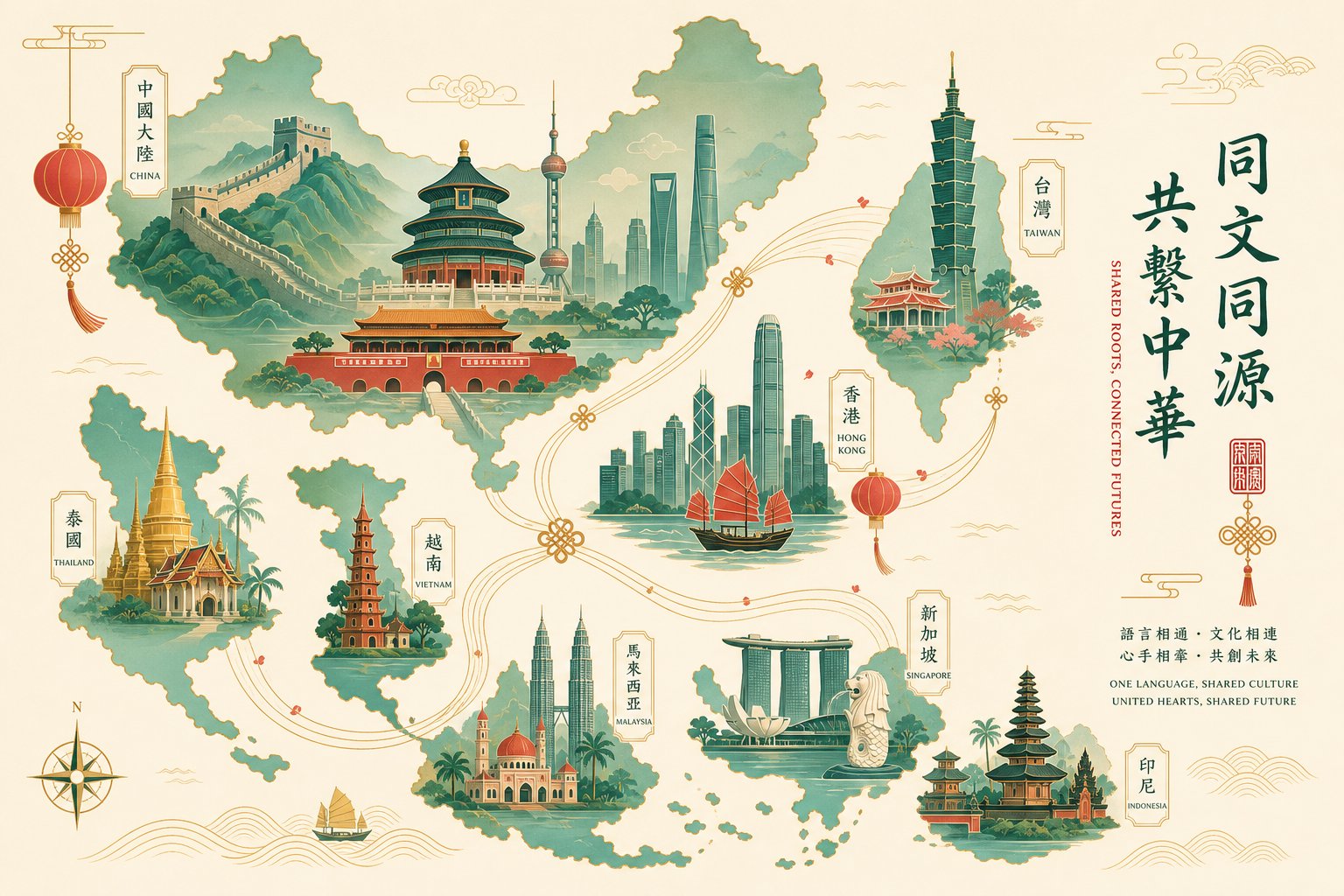
Legal codification tells you what the law says. It does not always tell you what people do. Chinese maiden name traditions may share a common philosophical root, but the way they play out in daily life varies significantly depending on where a woman lives, which dialect group she belongs to, and how much colonial or foreign legal influence shaped her local system. Surnames in china carry the same ancestral weight everywhere, yet the practical expression of that weight looks different in Beijing, Taipei, Hong Kong, and Singapore.
Mainland China and Legal Protections
In mainland China, surname retention after marriage is both the cultural default and a legally protected right. Article 1012 of the Civil Code states that a natural person enjoys the right to their name and is entitled to determine, use, and change it in accordance with law. Article 1015 further specifies that a person shall take the surname of either their father or mother, with limited exceptions for senior lineal relatives or foster parents.
What does this mean in practice? A woman surnamed Zhang who marries a man surnamed Liu remains Zhang on her national ID card, her household registration (hukou), her passport, and every other official document. There is no legal mechanism for adopting a spouse's surname through marriage, and no bureaucratic form that prompts the question. The system simply does not contemplate it.
This makes mainland China one of the most straightforward cases globally. Mandarin last names stay exactly where they are, and the legal infrastructure reinforces what culture already assumes. You will not find a married woman in Shanghai or Chengdu who changed her surname to match her husband's unless she went through an entirely separate legal name-change process unrelated to marriage.
Taiwan, Hong Kong, and Diaspora Variations
Step outside the mainland, and the picture gets more nuanced. Taiwan, Hong Kong, and Southeast Asian Chinese communities each developed their own relationship with this tradition, shaped by different colonial histories, legal systems, and degrees of contact with Western naming conventions.
In Taiwan, the Civil Code similarly protects a person's right to their birth surname. The vast majority of married women retain their maiden names in all contexts. However, among older generations, particularly women who married before the 1990s, you may encounter the husband's-surname-prefix convention. A woman born Chen who married into the Wang family might socially be called Wang Chen (王陈) in formal settings, echoing the imperial-era practice. This is increasingly rare among younger Taiwanese women, but it persists in some traditional families and official titles for senior political figures.
Hong Kong presents the most complex case. British colonial rule introduced a legal system that accommodated both Chinese and English naming practices, creating a hybrid that still functions today. As cultural research on Hong Kong naming conventions explains, women do not change their legal names at marriage. Their Chinese-language documents always display their maiden name. However, some women, particularly government officials and public figures, place their husband's family name before their full name in English contexts. If Chiu Sin Wing married Cheng Kwong Ming, she might be known as Cheng Chiu Sin Wing in English-language settings while remaining simply Chiu Sin Wing (趙善穎) on formal Chinese documentation.
This dual system means a Hong Kong woman might carry cantonese names that look different depending on which language you encounter them in. Her English business card might read "Mrs. Cheng" while her Chinese ID says nothing of the sort. The practice is optional and largely generational, with younger Hong Kong women less likely to adopt any form of their husband's surname.
Southeast Asian Chinese diaspora communities add another layer of complexity. In Malaysia, Singapore, Indonesia, and the Philippines, china family names interact with local legal systems that may or may not accommodate Chinese naming traditions. Hokkien, Teochew, Hakka, and Cantonese communities each brought their own dialect-specific surname pronunciations and cultural practices when they emigrated. A surname written as Chen in Mandarin might appear as Tan (Hokkien), Chan (Cantonese), or Chin (Hakka) depending on the community. Local marriage laws in some countries assume a Western-style name change, creating friction with the Chinese tradition of retention.
Here is how these regional differences compare at a glance:
| Region | Legal Framework | Common Practice | Cultural Expectation |
|---|---|---|---|
| Mainland China | Civil Code Article 1012 protects right to name; no mechanism for spousal name adoption | Universal surname retention | Changing surname after marriage is virtually unheard of |
| Taiwan | Civil Code protects birth surname; optional prefix allowed | Retention is standard; older women may use husband's surname prefix socially | Younger generations retain maiden name without exception |
| Hong Kong | No legal name change required; English-context prefix is optional | Maiden name on Chinese documents; some adopt husband's surname in English contexts | Generational split; younger women less likely to use husband's surname at all |
| Singapore/Malaysia | Local laws vary; some systems assume Western-style name change | Most Chinese women retain maiden name; some adopt husband's surname on English documents | Depends on dialect group, generation, and degree of assimilation |
| Indonesia/Philippines | Local marriage laws may default to husband's surname | Mixed; some women adopt husband's surname legally while retaining maiden name in Chinese community contexts | Stronger pressure to conform to local naming norms |
Notice the pattern: the closer a community stays to Chinese-language legal systems, the more consistently women retain their mandarin surnames or dialect-equivalent surnames. The further a community integrates into a Western-influenced legal framework, the more likely you are to see hybrid practices or outright adoption of the husband's surname on official documents.
Dialect group also matters in subtle ways. Cantonese communities in Hong Kong and Guangdong have historically maintained strong clan associations (宗亲会) that reinforce surname identity. Hokkien and Teochew communities in Southeast Asia similarly organized around surname associations, which served as mutual aid societies for immigrants sharing china last names. These organizations kept the cultural weight of the birth surname alive even in countries where the legal system did not explicitly protect it.
What unites all these variations is the underlying principle: a woman's surname belongs to her birth lineage. The differences lie in how much external pressure, whether colonial, legal, or social, has layered alternative practices on top of that principle. In every case, the Chinese-language identity of a married woman preserves her maiden name. It is only in the interface with non-Chinese systems that ambiguity creeps in.
Feminism, Modernity, and Maiden Name Retention
In Western countries, a woman who keeps her birth surname after marriage is often making a deliberate statement. It signals independence, professional identity, or feminist conviction. In China, the same outcome carries no such weight. A woman keeps her surname because that is simply how do chinese names work within the cultural system. No declaration required, no eyebrows raised, no forms to fill out requesting an exception.
This creates a fascinating paradox. A practice rooted in patrilineal clan logic, one designed to mark a woman as permanently belonging to her father's bloodline, produces a result that looks remarkably like gender equality on paper. Tradition and feminism arrive at the same destination through entirely different routes.
The same naming practice can be read as deeply traditional or quietly progressive depending on which cultural lens you look through. In China, keeping your surname is not a feminist act. It is simply the act.
When Tradition and Feminism Align
Consider the contrast. In the United States and United Kingdom, roughly 70 to 80 percent of women still adopt their husband's surname at marriage. Women who choose otherwise often describe it as a conscious decision, sometimes met with pushback from family or bureaucratic confusion. The choice itself becomes a marker of identity politics.
In China, there is no choice to make. The system never offered the option of changing your surname through marriage in the first place. A woman named Zhou Ting remains Zhou Ting whether she is single, married, divorced, or widowed. Her chinese first names and surname stay fixed on every document from birth certificate to death certificate. The cultural infrastructure simply does not include a mechanism for spousal name adoption.
Does this mean China has achieved naming equality? Not exactly. As Hong Kong Free Press has noted, informal practices still carry patriarchal undertones. In some communities, married women are socially referred to by their husband's surname even when their legal name remains unchanged. And the deeper question of whose surname children carry reveals that patrilineal logic still dominates. The mother keeps her name, but her name typically does not pass to the next generation.
Still, the baseline is striking. Chinese women never had to fight for the right to retain their surnames. That fight, which consumed decades of advocacy in English-speaking countries from Lucy Stone in 1855 onward, simply was not necessary. The tradition handed women something that Western feminists had to demand.
Generational Shifts in Urban China
Where real change is happening is not in whether women keep their surnames, but in whether children inherit them. Traditionally, chinese baby names almost universally carried the father's surname. A child born to father Liu and mother Zhang would be Liu something, full stop. The mother's surname appeared nowhere in the child's name.
That pattern is shifting, particularly in urban and coastal regions. Research published by Sixth Tone found that among Chinese born between 1986 and 2005, nearly 98 percent still carried their father's surname. Children with their mother's surname accounted for only 1.4 percent, and compound surnames combining both parents' names made up 0.8 percent. Small numbers, but with a clear upward trend over time.
The reasons behind this shift are complex. In economically prosperous coastal regions like Jiangsu, Zhejiang, and Shanghai, where women hold stronger bargaining power within families, maternal surnames appear more frequently. Some families adopt compound surnames, combining both parents' names into a new double-barreled form. If the father is Zhang and the mother is Wang, the child might be surnamed Zhang-Wang.
Two distinct forces drive these changes. One is genuinely modern: higher maternal education levels, evolving gender attitudes, and the influence of feminist discourse encouraging women to pass on their lineage. The other is paradoxically traditional: families without male heirs using the mother's surname as a strategy to continue her family's bloodline, echoing the old practice of ruzhui where a husband joined his wife's household. Both forces produce the same visible result but spring from very different motivations.
For younger urban couples choosing chinese names and meanings for their children, the conversation about surnames has become part of a broader negotiation about family identity. Some couples agree before marriage that if they have two children, one will take each parent's surname. Others see giving a child the mother's surname as a statement about equality within the relationship. The one-child policy's legacy, which left many families without sons to carry the paternal line, accelerated these conversations by making maternal surname inheritance a practical necessity for some families.
Globalization adds another layer. Chinese women living in Western countries frequently encounter bureaucratic systems that assume a married woman shares her husband's surname. Immigration forms, school enrollment paperwork, and medical records in countries like the United States, Canada, or Australia may default to listing a married woman under her husband's name. A mother surnamed Chen dropping off her child surnamed Liu at an American school may find herself called "Mrs. Liu" by teachers who assume the family shares one name. These small frictions highlight how deeply Western naming assumptions are embedded in institutional systems, and how chinese first names female professionals carry abroad can create confusion in cross-cultural settings.
The most popular chinese names for girls today, names like Yichen, Xinyi, or Zihan, will follow these women through their entire lives unchanged by marriage. Whether that continuity reads as traditional or progressive depends entirely on where you are standing when you look at it.
Practical Implications for Documents and Genealogy
Knowing that Chinese women retain their birth surnames is one thing. Navigating the real-world consequences of that fact, whether you are filling out immigration paperwork, tracing ancestors through a family genealogy, or simply addressing a colleague correctly, is another matter entirely. The meaning of chinese last names extends beyond cultural symbolism into everyday logistics that affect millions of people across borders.
Official Documents and Legal Identity
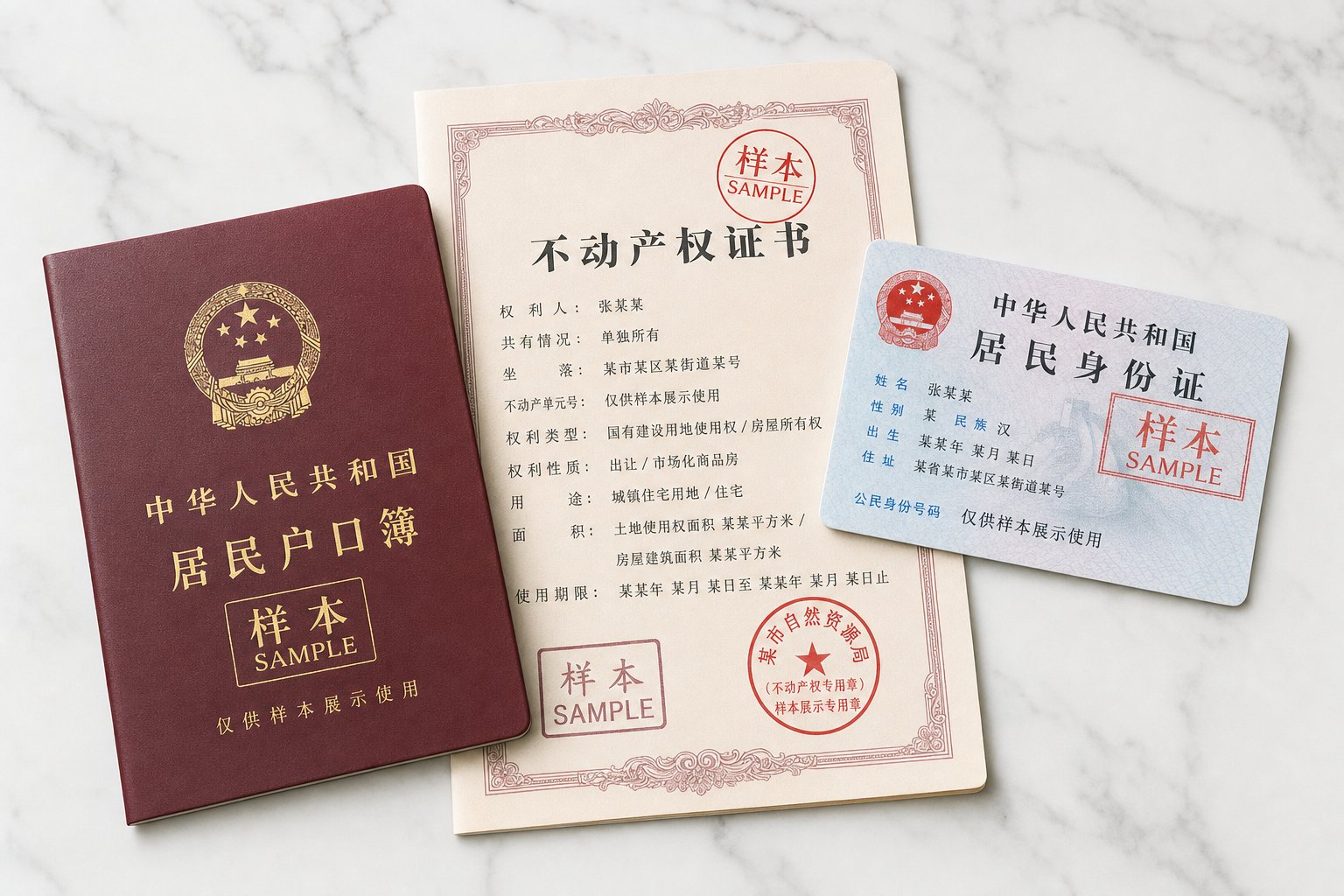
Imagine you are reviewing a Chinese family's documents. The husband's passport says Liu Wei (刘伟). The wife's passport says Chen Meiling (陈美玲). Their child's passport says Liu Chenxi (刘晨曦). Three different surnames across three family members. For anyone accustomed to Western naming conventions, this can look confusing. Is this a blended family? Are they actually related?
They are. This is simply how it works. In mainland China, a woman's national ID card (身份证), passport, household registration (hukou), property deeds, bank accounts, and professional licenses all carry her birth surname. There is no "married name" field on any Chinese government form. The system treats her birth name as her only legal name, period.
This creates specific situations worth understanding:
- Property ownership: When a married couple purchases property together, the deed lists both names exactly as they appear on their respective ID cards. A property owned by Liu Wei and Chen Meiling shows two different surnames, which is entirely normal and carries no legal ambiguity within China.
- Children's documentation: A child's birth certificate lists both parents by their legal names. The child typically takes the father's surname, though maternal surnames are legally permitted. The mother's different surname on the birth certificate does not raise questions in Chinese bureaucratic systems.
- Professional credentials: A woman's medical license, law degree, academic publications, and business registrations all carry her birth surname throughout her career. There is no professional disruption from marriage because no name change occurs.
- Banking and finance: Joint accounts, insurance beneficiaries, and inheritance documents all reference each spouse by their birth name. Chinese banks do not recognize or process spousal name changes because the concept does not exist in the system.
Where complications arise is at the border. Cross-cultural families report that traveling internationally with children whose surname differs from the mother's can trigger additional scrutiny. Immigration officers in Western countries may request proof of guardianship, a marriage certificate, or a birth certificate linking the mother to the child. This is not a Chinese bureaucratic problem. It is a Western bureaucratic assumption colliding with Chinese reality.
Navigating Cross-Cultural Systems
The friction intensifies when Chinese naming traditions meet Western institutional systems. Schools, hospitals, insurance companies, and government agencies in English-speaking countries often default to the assumption that a married woman shares her husband's last name in chinese family contexts. A mother surnamed Zhang enrolling her child surnamed Wang at an American school will likely be addressed as "Mrs. Wang" unless she corrects the assumption.
For professionals working with Chinese colleagues or clients, understanding chinese surname meanings and their permanence prevents awkward mistakes. Never assume a married Chinese woman goes by her husband's surname. If you meet a woman named Li Fang whose husband is surnamed Zhao, she is Ms. Li, not Mrs. Zhao. Getting this wrong signals cultural unfamiliarity and can undermine professional relationships.
Genealogy research presents its own set of challenges. Traditional Chinese family records, known as jiapu (家谱), document patrilineal descent across generations. FamilySearch notes that these books record lineage from father to son, sometimes stretching back thousands of years. Women appear in these records, but often only by their birth surname plus the character shi (氏). A woman recorded as Chen shi in a Wang family's jiapu tells you she came from the Chen clan, but her given name may be lost to history.
For anyone researching Chinese heritage, this pattern has direct implications. If you are looking for a female ancestor, you need to know which clan she was born into, not which family she married into. Her maiden surname is the key that unlocks her origins. The chinese characters for names in old genealogies follow consistent conventions: the husband's surname appears first as a locator, followed by the wife's birth surname and shi. Recognizing this pattern lets you trace maternal lineages backward through the list of chinese family names recorded in historical documents.
Ancestral tablets (牌位) in family shrines follow similar logic. A woman's tablet typically displays her birth surname, connecting her spirit to her natal clan even after death. When families perform ancestral rites, they honor the woman by the name she was born with, not the household she married into.
Here are the practical scenarios where understanding these traditions matters most:
- Immigration paperwork: Expect different surnames within a Chinese family unit. Do not flag this as inconsistent. Request supporting documents like marriage certificates or birth certificates if verification is needed, but recognize that surname differences are standard.
- Genealogy research: Search for female ancestors by their birth surname. In jiapu records, look for the surname-plus-shi convention. Cross-reference with the husband's family records to locate women who married into that lineage.
- Addressing Chinese colleagues: Use a woman's own surname with the appropriate title (Ms., Dr., Professor). Never assume she shares her husband's or children's surname.
- Understanding Chinese media and literature: When a novel or film shows a married couple with different surnames, this is not a plot point about an unconventional relationship. It is simply accurate representation of how chinese family names and meanings function in real life.
- Legal and business documents: When drafting contracts, wills, or partnership agreements involving Chinese parties, verify each person's legal name independently. Do not infer one spouse's surname from the other's.
The chinese last name meanings embedded in genealogical records also serve a practical function for heritage researchers. Because surnames trace patrilineal descent, knowing your grandmother's maiden surname can open an entirely separate branch of research. Each surname connects to specific geographic regions, historical migrations, and clan associations that maintained their own records. A woman recorded as Huang shi in a Li family's genealogy gives you a starting point to search Huang clan records in the region where the marriage took place.
These are not abstract cultural details. They are working knowledge for anyone who interacts with Chinese families, documents, or historical records. The tradition of maiden name retention creates a paper trail that, once you understand its logic, becomes remarkably consistent and traceable across centuries of records.
Applying This Knowledge in Real-World Contexts
A consistent paper trail only helps if you know how to read it. Whether you are tracing your own ancestry, building a relationship with a Chinese partner's family, or working across cultures professionally, the principles covered throughout this article translate into concrete actions you can take today.
The central point bears repeating: Chinese maiden name retention is not an exception to a rule. It is the rule. Do chinese have last names that change at marriage? No. A chinese last name belongs to the bloodline, and marriage does not alter bloodlines. Once that logic clicks, everything else follows.
Key Takeaways for Heritage Researchers
If you are exploring your Chinese family history, understanding how maiden names appear in records is essential. Genealogical documents like jiapu follow predictable conventions that become easy to navigate once you recognize the patterns. Here is your practical checklist:
- Search for female ancestors by birth surname. In clan genealogies, women are recorded by their maiden surname plus shi (氏). A woman listed as Huang shi in a Li family record was born into the Huang clan.
- Cross-reference clan records. Once you identify a woman's birth surname, search that clan's own jiapu for her family of origin. Each surname connects to specific regions and migration histories.
- Learn chinese names and pronunciation. Romanization systems vary. The same character might appear as Chen (Mandarin Pinyin), Chan (Cantonese), or Tan (Hokkien). Knowing how to pronounce chinese names in different dialect systems helps you connect records across regions.
- Do not assume shared surnames equal family connection. A husband, wife, and children may carry two or three different surnames. This is standard, not a sign of incomplete records.
Respecting the Tradition in Cross-Cultural Contexts
For professionals, partners, and friends navigating cross-cultural relationships, a few simple practices go a long way:
- Address Chinese women by their own surname. Use Ms. Chen, Dr. Wang, or Professor Li based on her birth name. Never assume she shares her husband's or children's surname.
- On forms and documents, list each family member's legal name independently. Do not auto-populate a wife's surname from her husband's records.
- When unsure how to say chinese names, ask. Chinese name pronunciation varies by dialect and romanization system. A respectful question is always better than a wrong assumption.
- Recognize that different surnames within a family are normal, not a red flag for immigration, school enrollment, or medical intake forms.
As global mobility increases and cross-cultural families become more common, these traditions will only grow more relevant. Chinese maiden name practices offer a model where identity does not dissolve into a marriage. Your surname tells the world where you came from, and that origin story stays with you for life. In an increasingly connected world, understanding that principle is not just cultural literacy. It is practical respect.
Frequently Asked Questions About Chinese Maiden Name Traditions
1. Do Chinese women change their last name when they get married?
No. In Chinese culture, women retain their birth surname after marriage as a default practice, not a personal choice. This tradition is rooted in the belief that a surname represents patrilineal blood descent, which marriage cannot alter. In mainland China, this practice is legally protected under Article 1012 of the Civil Code, and there is no bureaucratic mechanism for adopting a spouse's surname through marriage. A woman born with the surname Chen remains Chen on all official documents, including her national ID, passport, and property deeds, regardless of her marital status.
2. Why do Chinese couples have different last names?
Chinese couples carry different surnames because the naming system is built on clan lineage rather than marital unity. Each person's surname traces their patrilineal ancestry back through generations. When a woman marries, her blood connection to her birth clan does not change, so her surname stays the same. Their children typically take the father's surname, meaning a family of three might display two different surnames. This is completely normal in Chinese culture and carries no legal ambiguity. Western systems signal family unity through a shared surname, but Chinese systems signal it through household registration and kinship networks instead.
3. What is the Wang Chen shi naming convention in Chinese history?
Wang Chen shi (王陈氏) was a historical convention used in imperial-era genealogies to identify married women. It combined the husband's surname (Wang), the wife's birth surname (Chen), and the character shi (氏), which functions similarly to the French word 'nee.' This format told readers that a woman from the Chen clan had married into the Wang family. Crucially, her birth surname was always preserved within this label. It was never erased or replaced. While this convention has largely disappeared from modern usage, it remains important for genealogy researchers working with historical Chinese family records.
4. How do Chinese maiden names appear in genealogy records?
In traditional Chinese genealogies called jiapu (家谱), married women typically appear as their birth surname followed by shi (氏). For example, a woman from the Huang clan married into a Li family would be recorded as Huang shi. Her given name was often omitted from these patrilineal records. To trace a female ancestor, researchers should search by her birth surname rather than her husband's family name, then cross-reference that clan's own genealogical records. Ancestral tablets in family shrines also display a woman's birth surname, connecting her spirit to her natal clan even after death.
5. Do children in China take their mother's or father's last name?
Traditionally, Chinese children almost universally take their father's surname. However, this is gradually shifting in urban areas. Research shows that among Chinese born between 1986 and 2005, about 1.4 percent carried their mother's surname, with compound surnames combining both parents' names accounting for another 0.8 percent. The trend is strongest in economically prosperous coastal regions where women hold greater bargaining power within families. Some couples now agree that if they have two children, one will take each parent's surname. Chinese law permits children to take either parent's surname under Article 1015 of the Civil Code.