Why Chinese Parents Choose Sun-Inspired Names
Imagine giving your child a name that carries the energy of daybreak, the promise of warmth, and centuries of philosophical meaning. That is exactly what Chinese baby names meaning sun offer. In Chinese culture, the sun is far more than a celestial body. It represents life force, moral clarity, and the active principle of the universe. When parents choose names with sun meaning, they are embedding these qualities directly into their child's identity.
Why Sun Names Hold Deep Meaning in Chinese Culture
Chinese naming traditions treat a name as a gift of intention. Each character chosen carries cultural, historical, and sometimes spiritual significance, and the process of selecting characters is believed to influence a person's destiny. Names that mean sun tap into one of the oldest and most powerful symbols in Chinese thought. The sun in Chinese culture represents "all the light and bright and good things," closely tied to yang energy, fire, spring, and the east where the sun rises.
In Confucian philosophy, the sun symbolizes the virtuous ruler and the upright person whose moral character illuminates those around them. In Daoist thought, it embodies the yang half of the cosmic balance, the active, creative, and life-giving force. Parents who select sun-inspired names are drawing on both traditions at once.
In Chinese philosophy, the sun represents more than brightness. It stands for the life-giving yang force, moral clarity, and the ambition to rise each day with renewed purpose.
This is why sun in Chinese naming goes far beyond a simple nature reference. A child named for the sun carries connotations of vitality, leadership, warmth toward others, and the resilience to rise again after difficulty. These are qualities any parent would want to bestow.
What This Guide Covers
The Chinese language offers a rich palette of characters connected to the sun, and each one paints a slightly different picture. Seven characters stand out as the most commonly used in names:
- 日 (ri) — the sun itself, formal and direct
- 阳 (yang) — sunlight and yang energy, one of the most popular naming characters
- 曦 (xi) — the soft light of dawn, poetic and graceful
- 旭 (xu) — the rising sun, bold and forward-looking
- 晖 (hui) — radiant sunlight, warm and generous
- 晴 (qing) — clear sunny weather, cheerful and optimistic
- 晨 (chen) — morning and dawn, fresh and full of potential
Each of these characters carries distinct connotations, gender associations, and tonal qualities that affect how they pair with family names. Some lean masculine, others feminine, and several work beautifully for any child. In the sections ahead, you will find curated lists of boy, girl, and gender-neutral options complete with pinyin pronunciation, character-by-character breakdowns, and practical advice on tonal harmony, cross-cultural usability, and elemental balance. Whether you are rooted in Chinese tradition or building a bilingual identity for your child, the meaning of the name sun offers a foundation that shines in any language.
Understanding Chinese Characters That Mean Sun
Choosing a sun-inspired name starts with knowing your options at the character level. The Chinese symbol for sun is not a single glyph but a family of related characters, each capturing a different quality of sunlight. Some evoke the full blaze of noon, others the gentle glow before dawn. When you understand what each character literally means and how it feels in a name, the selection process becomes far more intuitive.
The Sun Radical and Its Role in Chinese Characters
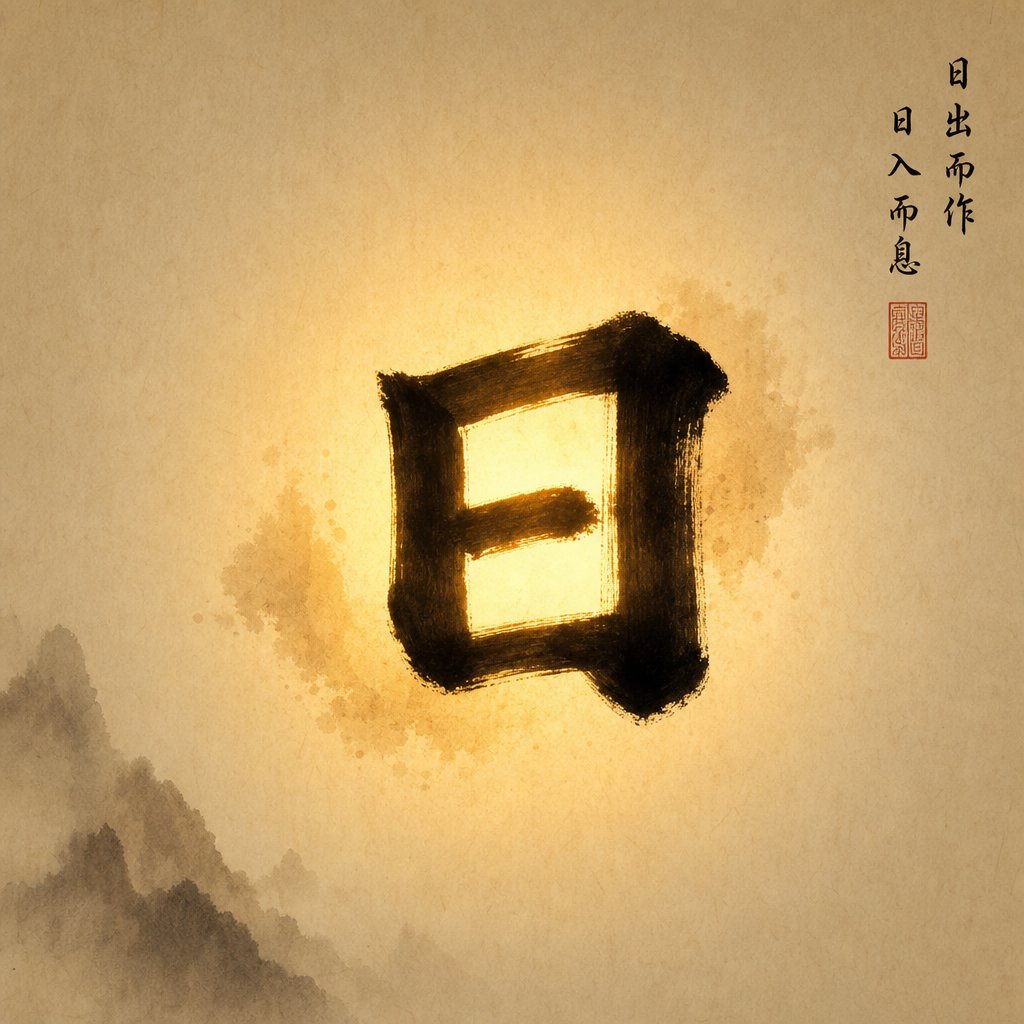
If you look closely at sun in Chinese writing, you will notice a recurring building block: the radical 日 (ri). In Chinese, radicals are the structural components that hint at a character's meaning. The sun radical 日 originated as a pictograph of the sun in oracle bone inscriptions from the Shang Dynasty, appearing as a circle with a dot inside. Over thousands of years, it evolved into the rectangular shape we see today.
As radical 72 in the Kangxi Dictionary, 日 appears in hundreds of Chinese characters related to time, weather, and natural light. When it shows up inside a more complex character, it typically signals a connection to brightness, daytime, or the solar cycle. Think of it as a visual clue. You will spot it on the left side of characters like 时 (shi, time), on top in characters like 早 (zao, early), and embedded within many of the naming characters covered below.
Why does this matter for naming? Because when Chinese speakers see a character containing the sun radical, they instinctively associate it with warmth, light, and positive energy. Even if someone is unfamiliar with a particular name character, the presence of 日 within it communicates a sun connection at a glance. This makes sun-radical characters especially powerful in names: the meaning is visible right there in the structure.
Seven Key Sun Characters for Naming
Not all sun characters carry the same weight or tone. Some feel bold and assertive, others soft and lyrical. The character you choose shapes the personality of the name. Here is a breakdown of the seven most commonly used sun characters in Chinese baby names, with pinyin pronunciation, literal meaning, and practical notes on how each one tends to be used.
日 (ri, fourth tone) — This is the most direct Chinese for sun. It means sun, day, or date depending on context. In modern spoken Mandarin, 太阳 (taiyang) is the everyday word for the sun in the sky, while 日 appears more often in written compounds and formal contexts. As a standalone name character, 日 is rarely used because it feels too blunt and carries strong associations with dates and calendars. However, it serves as the foundational radical inside the other characters below.
阳 (yang, second tone) — Sunlight, yang energy, the bright side of a mountain. This is arguably the most popular sun-related naming character in Mandarin. It carries connotations of positivity, openness, and vitality. You will find it in both male and female names, though it leans slightly masculine in traditional usage. Its connection to the philosophical concept of yang gives it depth beyond simple brightness.
曦 (xi, first tone) — The first light of dawn, that soft golden glow before the sun fully rises. This character feels poetic and refined. It is overwhelmingly used in feminine names, often paired with nature or beauty characters to create an elegant, literary quality. Parents who want a name that sounds graceful and carries a sense of quiet radiance gravitate toward 曦.
旭 (xu, fourth tone) — The rising sun, specifically the moment it breaks the horizon. This character conveys ambition, forward momentum, and new beginnings. It leans strongly masculine and appears frequently in boy names that aim for a bold, energetic feel. The image it evokes is dynamic rather than still: not just light, but light in motion.
晖 (hui, first tone) — Sunlight, radiance, the warm glow that spreads outward. This character suggests generosity and warmth rather than intensity. It works well in both traditional and modern names and carries a slightly more gentle energy than 旭. You will see it in both male and female names, though it appears more often in masculine combinations.
晴 (qing, second tone) — Clear weather, sunny skies. This character brings a cheerful, optimistic quality to any name. It contains the sun radical on the left and 青 (qing, blue/green) on the right, painting a picture of blue skies after rain. It is popular in girl names but flexible enough for gender-neutral use. The feeling it carries is bright, fresh, and uncomplicated.
晨 (chen, second tone) — Morning, dawn, the early hours when the day is new. This character emphasizes beginnings and potential rather than the sun itself. It is one of the most gender-flexible sun characters, appearing comfortably in names for boys, girls, and non-binary children. Its sound is clean and modern, and it pairs easily with a wide range of second characters.
| Character | Pinyin | Literal Meaning | Connotation in Names | Gender Suitability |
|---|---|---|---|---|
| 日 | ri (4th tone) | Sun, day | Formal, foundational; rarely used alone in names | Neutral (uncommon as name character) |
| 阳 | yang (2nd tone) | Sunlight, yang energy | Vitality, positivity, openness | Slightly masculine, very versatile |
| 曦 | xi (1st tone) | Dawn light, first rays | Poetic grace, quiet radiance | Strongly feminine |
| 旭 | xu (4th tone) | Rising sun | Ambition, momentum, boldness | Strongly masculine |
| 晖 | hui (1st tone) | Sunlight, radiance | Warmth, generosity, gentle strength | Slightly masculine, flexible |
| 晴 | qing (2nd tone) | Clear/sunny weather | Cheerfulness, optimism, freshness | Slightly feminine, flexible |
| 晨 | chen (2nd tone) | Morning, dawn | New beginnings, potential, clarity | Fully gender-neutral |
Notice how each character paints a different moment in the sun's daily arc. 旭 captures the dramatic instant of sunrise. 曦 holds the soft minutes just before. 晴 describes the result: a sky washed clean with light. 晨 frames the time of day rather than the light itself. These distinctions matter because they shape the emotional texture of your child's name.
The character you feel drawn to likely reflects the quality you most want your child to carry: bold ambition, gentle grace, cheerful optimism, or the promise of fresh starts. With that foundation in place, the next step is seeing how these characters combine with others to form complete names that sound as good as they mean.
Chinese Boy Names Meaning Sun and Sunlight
A single sun character is a seed. Pair it with the right companion character, and it grows into a name with rhythm, meaning, and personality. For boys, the most popular sun characters in Chinese names lean toward energy and ambition: 旭 (rising sun), 阳 (bright sun), 晨 (morning), and 晖 (radiance). Each one sets a different tone, and the second character in the name refines that tone further, adding layers of meaning while shaping how the name sounds when spoken aloud.
What makes certain character combinations work better than others? Tonal harmony plays a big role. Mandarin has four tones, and a name that moves through contrasting tones feels more musical and easier to call out across a room. A name stuck on the same tone can sound flat or monotonous. You will notice in the lists below that the strongest combinations tend to alternate between rising, falling, and level tones, creating a natural flow that feels satisfying to say.
Boy Names Built on 旭 (Rising Sun)
旭 (xu, fourth tone) captures the exact moment the sun breaks the horizon. It is one of the most recognizable characters for rising sun in Chinese, and it carries a sense of forward momentum that resonates with parents who want their son's name to feel bold and aspirational. Because 旭 is a fourth tone (falling), it pairs especially well with second characters in the first or second tone, creating a pleasing tonal contrast.
- 旭辰 (Xu Chen) — 旭 (xu, rising sun) + 辰 (chen, celestial body/time). Overall meaning: a rising sun among the stars. This name blends solar and cosmic imagery, suggesting someone destined for greatness. The tonal pattern (4th + 2nd) creates a strong-then-rising rhythm. Style: modern and clean.
- 旭明 (Xu Ming) — 旭 (xu, rising sun) + 明 (ming, bright/clear). Overall meaning: the brilliance of a rising sun. 明 itself contains both the sun radical 日 and the moon radical 月, doubling the luminous imagery. Tonal pattern: 4th + 2nd. Style: classic and timeless.
- 旭东 (Xu Dong) — 旭 (xu, rising sun) + 东 (dong, east). Overall meaning: the sun rising in the east. This name directly references the direction of sunrise and carries patriotic undertones, since 东 is associated with China itself. Tonal pattern: 4th + 1st. Style: traditional with cultural depth.
- 旭宸 (Xu Chen) — 旭 (xu, rising sun) + 宸 (chen, imperial/celestial). Overall meaning: a rising sun with imperial radiance. 宸 historically referred to the emperor's dwelling, giving this name an elevated, distinguished quality. Tonal pattern: 4th + 2nd. Style: literary and refined.
- 旭柳 (Xu Liu) — 旭 (xu, rising sun) + 柳 (liu, willow tree). Overall meaning: morning sun filtering through willows. This combination blends solar energy with natural grace, suggesting someone who is both strong and charming. Tonal pattern: 4th + 3rd. Style: poetic and nature-inspired.
Boy Names Built on 阳 (Bright Sun)
阳 (yang, second tone) is perhaps the most versatile sun character in Chinese names for boys with meaning. Its connection to yang energy in Chinese philosophy gives it a depth that goes beyond simple brightness. It suggests vitality, openness, and the active principle of the universe. Because 阳 is a second tone (rising), it pairs naturally with fourth-tone characters for contrast, or with first-tone characters for a smooth, flowing feel.
- 朝阳 (Chao Yang) — 朝 (chao, morning/facing toward) + 阳 (yang, sun/sunlight). Overall meaning: the morning sun, or facing the sun. This is a well-known compound that also serves as a place name in China, giving it instant recognition. The imagery is of someone who always faces the light. Tonal pattern: 2nd + 2nd. Style: classic and widely recognized.
- 志阳 (Zhi Yang) — 志 (zhi, ambition/will) + 阳 (yang, sunlight). Overall meaning: ambition as bright as the sun. This name pairs an internal quality (determination) with an external one (radiance), creating a balanced portrait of character. Tonal pattern: 4th + 2nd. Style: strong and purposeful.
- 沐阳 (Mu Yang) — 沐 (mu, to bathe in) + 阳 (yang, sunshine). Overall meaning: bathed in sunlight. This name evokes warmth and cheerfulness, suggesting someone who brings light to others. Tonal pattern: 4th + 2nd. Style: modern and warm.
- 冬阳 (Dong Yang) — 冬 (dong, winter) + 阳 (yang, sunshine). Overall meaning: winter sunshine. There is something especially precious about sunlight in winter, and this name captures that quality of rare warmth. Tonal pattern: 1st + 2nd. Style: poetic and distinctive.
- 明阳 (Ming Yang) — 明 (ming, bright/clear) + 阳 (yang, sunlight). Overall meaning: brilliant sunlight. Both characters carry luminous meanings, reinforcing each other for a name that radiates confidence. Tonal pattern: 2nd + 2nd. Style: straightforward and confident.
Boy Names with 晨 and 晖 (Morning Light)
晨 (chen, second tone) and 晖 (hui, first tone) offer a softer take on sun energy. Where 旭 is dramatic and 阳 is bold, these characters feel warmer and more approachable. 晨 emphasizes the freshness of morning, the sense that everything is possible. 晖 focuses on the quality of light itself: gentle, spreading, generous. Both work well for parents who want names with sun imagery that feel grounded rather than grandiose.
- 晨曦 (Chen Xi) — 晨 (chen, morning) + 曦 (xi, dawn light). Overall meaning: the first light of morning. This name layers two dawn-related characters for a name that is entirely about beginnings and gentle radiance. Tonal pattern: 2nd + 1st. Style: poetic and luminous.
- 晨旭 (Chen Xu) — 晨 (chen, morning) + 旭 (xu, rising sun). Overall meaning: the rising sun at dawn. Combining two sun characters creates emphasis without redundancy, since 晨 frames the time and 旭 captures the action. Tonal pattern: 2nd + 4th. Style: energetic and modern.
- 晨辉 (Chen Hui) — 晨 (chen, morning) + 辉 (hui, splendor/radiance). Overall meaning: the radiance of morning. 辉 is a variant spelling sometimes used interchangeably with 晖, carrying similar connotations of spreading light. Tonal pattern: 2nd + 1st. Style: warm and approachable.
- 春晖 (Chun Hui) — 春 (chun, spring) + 晖 (hui, sunlight). Overall meaning: spring sunlight. This name carries literary weight, referencing the famous Tang dynasty poem by Meng Jiao that uses 春晖 as a metaphor for a mother's love. Tonal pattern: 1st + 1st. Style: deeply traditional and literary.
- 明晖 (Ming Hui) — 明 (ming, bright) + 晖 (hui, sunlight). Overall meaning: bright and radiant light. This combination reinforces luminosity from two angles: 明 as intellectual clarity and 晖 as warm radiance. Tonal pattern: 2nd + 1st. Style: balanced and classic.
- 晨光 (Chen Guang) — 晨 (chen, morning) + 光 (guang, light/ray). Overall meaning: morning light. Clean, direct, and vivid. 光 adds a sense of expansiveness, as if the light is reaching outward. Tonal pattern: 2nd + 1st. Style: modern and gender-flexible, though commonly used for boys.
A few patterns emerge across these lists. Names on sun that combine two light-related characters (like 晨曦 or 旭明) create intensity through reinforcement. Names that pair a sun character with a nature element (旭柳, 冬阳) or a virtue character (志阳) create contrast and balance. Neither approach is better. It depends on whether you want the name to feel like a single powerful image or a layered story.
Tonal variety also matters more than many parents realize. As naming experts note, a well-crafted name avoids awkward tonal collisions, and the three characters of a full name (surname plus given name) should ideally move through different tones to create natural rhythm. When you test these given names against your family surname, say the full combination aloud several times. Does it flow? Does it feel easy to call across a playground? That spoken test often reveals the right choice faster than any list can.
Of course, sun-inspired names are not exclusively masculine territory. Many of the same characters, paired differently, create names with an entirely different energy, one that suits daughters just as beautifully.

Chinese Girl Names Meaning Sun and Dawn
The same sun that powers bold, ambitious boy names also casts a softer light when paired with characters evoking grace, nature, and poetic beauty. For girls, the most beloved sun characters tend to capture the sun at its gentlest: the hush before dawn, the first golden rays, the cheerful clarity of a cloudless sky. Characters like 曦, 晴, and 晗 carry these quieter sun associations, and they create names meaning dawn, sunrise, and sunshine that feel elegant without sacrificing strength.
What makes feminine sun names work so well? Balance. Chinese naming tradition pairs a luminous character with a softening element, whether that is a nature word (月, moon; 兰, orchid; 岚, mountain mist), a virtue character (雯, patterned clouds; 柔, gentle), or an emotion word (梦, dream; 语, speech). The sun character provides energy and brightness while the companion character grounds the name in grace. The result is a name that feels complete, like sunlight filtered through silk.
Girl Names Built on 曦 (Dawn Light)
曦 (xi, first tone) is the most literary of the sun characters. It refers specifically to the soft, golden light just before the sun fully rises, that liminal moment when the sky shifts from indigo to amber. Names that mean sunrise often draw on this character because it captures not just light but anticipation. Its high stroke count (20 strokes) gives it visual complexity on the page, which many parents find beautiful, though it is worth considering whether your child will need to write it frequently in both languages.
- 晨曦 (Chen Xi) — 晨 (chen, morning) + 曦 (xi, dawn light). Overall meaning: the first light of morning. This is one of the most recognized names that means sunshine in Chinese, appearing in curated spring name lists as a classic dawn-inspired choice. Tonal pattern: 2nd + 1st. Style: timeless and universally admired.
- 曦月 (Xi Yue) — 曦 (xi, dawn light) + 月 (yue, moon). Overall meaning: dawn light meeting moonlight. This name captures the brief moment when both sun and moon share the sky, suggesting someone who bridges opposites with grace. Tonal pattern: 1st + 4th. Style: poetic and distinctive.
- 曦柔 (Xi Rou) — 曦 (xi, dawn light) + 柔 (rou, soft/gentle). Overall meaning: the softness of dawn. Pairing radiance with gentleness creates a name that feels warm without being overpowering. Tonal pattern: 1st + 2nd. Style: delicate and elegant.
- 曦瑶 (Xi Yao) — 曦 (xi, dawn light) + 瑶 (yao, precious jade). Overall meaning: dawn light on jade. This combination links solar beauty with the purity and value of jade, one of the most treasured symbols in Chinese culture. Tonal pattern: 1st + 2nd. Style: refined and luxurious.
- 曦萱 (Xi Xuan) — 曦 (xi, dawn light) + 萱 (xuan, daylily/forget-sorrow herb). Overall meaning: dawn light over daylilies. The daylily traditionally represents a mother's love and freedom from worry, adding emotional depth to the solar imagery. Tonal pattern: 1st + 1st. Style: literary and nature-rooted.
Girl Names Built on 晴 (Sunny and Clear)
Where 曦 is hushed and poetic, 晴 (qing, second tone) is bright and cheerful. It means clear weather or sunny skies, and it carries an uncomplicated optimism that makes it one of the most popular characters in names that mean sunny. You will find 晴 across multiple naming guides as a go-to character for Chinese girl names, often paired with characters that add texture or depth to its sunny disposition.
- 晴雯 (Qing Wen) — 晴 (qing, sunny) + 雯 (wen, patterned clouds). Overall meaning: colorful clouds in a clear sky. 雯 specifically refers to clouds with beautiful patterns, so this name paints a vivid picture of a sky that is both clear and visually rich. Tonal pattern: 2nd + 2nd. Style: classic with literary flair, famously used in the novel Dream of the Red Chamber.
- 晴岚 (Qing Lan) — 晴 (qing, sunny) + 岚 (lan, mountain mist). Overall meaning: sunlight through mountain haze. The contrast between clear skies and soft mist creates a name with atmospheric depth, suggesting someone who is both bright and mysterious. Tonal pattern: 2nd + 2nd. Style: nature-inspired and evocative.
- 晴瑾 (Qing Jin) — 晴 (qing, sunny) + 瑾 (jin, fine jade). Overall meaning: sunny radiance and jade-like virtue. This pairing connects cheerful brightness with inner moral beauty, a combination that reflects traditional naming values around purity and nobility. Tonal pattern: 2nd + 3rd. Style: polished and aspirational.
- 晴柔 (Qing Rou) — 晴 (qing, sunny) + 柔 (rou, gentle). Overall meaning: gentle sunshine. Simple, warm, and immediately understood. This name works well for families who want clarity over complexity. Tonal pattern: 2nd + 2nd. Style: modern and approachable.
- 语晴 (Yu Qing) — 语 (yu, speech/language) + 晴 (qing, sunny). Overall meaning: words as bright as a clear sky. Placing 晴 in the second position shifts the emphasis, leading with expressiveness and closing with warmth. Tonal pattern: 3rd + 2nd. Style: contemporary and lively.
Girl Names with 晗 and Other Sun Elements
晗 (han, second tone) is a character that deserves more attention. It refers to the sky just before dawn breaks, that deep blue moment when the first hint of light appears at the horizon but the sun has not yet risen. Names built on 晗 carry a sense of quiet promise, the feeling that something beautiful is about to happen. It is less common than 曦 or 晴, which gives it a distinctive quality parents often appreciate.
- 语晗 (Yu Han) — 语 (yu, speech/words) + 晗 (han, pre-dawn sky). Overall meaning: words spoken at the edge of dawn. This name suggests eloquence and the anticipation of new beginnings. Tonal pattern: 3rd + 2nd. Style: modern and slightly unusual.
- 梦晗 (Meng Han) — 梦 (meng, dream) + 晗 (han, pre-dawn light). Overall meaning: dreaming at the threshold of dawn. The combination of dream imagery with approaching daylight creates a name that feels imaginative and hopeful. Tonal pattern: 4th + 2nd. Style: romantic and soft.
- 晗悦 (Han Yue) — 晗 (han, pre-dawn) + 悦 (yue, joy/delight). Overall meaning: the joy of approaching dawn. This pairs the anticipation of sunrise with pure happiness, a name that feels like waking up to good news. Tonal pattern: 2nd + 4th. Style: cheerful and balanced.
- 暖阳 (Nuan Yang) — 暖 (nuan, warm) + 阳 (yang, sunshine). Overall meaning: warm sunshine. Using 阳 in a feminine context works beautifully when paired with a softening character like 暖. The name feels cozy and inviting rather than bold. Tonal pattern: 3rd + 2nd. Style: modern and gender-flexible, leaning feminine through the warmth of 暖.
- 阳春 (Yang Chun) — 阳 (yang, sunshine) + 春 (chun, spring). Overall meaning: spring sunshine. This is a well-known compound in Chinese that evokes the warmth and renewal of the spring season. It carries a classic, almost idiomatic quality. Tonal pattern: 2nd + 1st. Style: traditional and seasonally evocative.
A pattern worth noting across all these names: the most successful feminine sun names tend to place the sun character alongside something that adds dimension rather than simply doubling the brightness. A nature element like 岚 (mountain mist) or 月 (moon) creates visual contrast. A virtue character like 瑾 (jade) adds moral weight. An emotion word like 梦 (dream) or 悦 (joy) adds interiority. This layering is what transforms a name from a simple label into a small story about who your daughter might become.
These names also share something practical: most of them sound natural and flowing when spoken aloud, which matters for everyday life. But sound is only one dimension of a well-chosen name. For families raising children across cultures, or for parents who want a name that works equally well regardless of gender expectations, the same sun characters can be combined in ways that transcend traditional categories entirely.
Gender-Neutral Chinese Names Inspired by the Sun
Gender in Chinese names is not a switch that flips on or off. It is more like a dial, and the position of that dial depends on which characters sit together, what cultural associations they carry, and how the listener interprets them. As research on Chinese name-gender associations shows, gender perception in Chinese names exists on a spectrum rather than within a strict binary. A single character can shift from masculine to feminine depending on what it is paired with. This flexibility makes sun characters especially well-suited for families seeking a name for sun that feels open and unconstrained.
Gender-Neutral Sun Names for Modern Families
Several sun characters sit comfortably in the middle of the gender spectrum. 晨 (chen, morning) and 晴 (qing, sunny) are the most naturally flexible, appearing frequently in names for both boys and girls without raising eyebrows. When these characters combine with equally neutral companions, the result is a set of sunrise names that work for any child.
- 晨光 (Chen Guang) — 晨 (chen, morning) + 光 (guang, light/ray). Overall meaning: morning light. Clean and vivid, this name evokes the first rays spreading across a landscape. Both characters are gender-neutral in isolation, and together they create imagery that feels universal. Tonal pattern: 2nd + 1st.
- 旭阳 (Xu Yang) — 旭 (xu, rising sun) + 阳 (yang, sunlight). Overall meaning: the rising sun in full brightness. While both characters lean slightly masculine individually, their combination has become increasingly popular across genders in modern naming. Tonal pattern: 4th + 2nd.
- 晴川 (Qing Chuan) — 晴 (qing, sunny) + 川 (chuan, river/plain). Overall meaning: a sunny river, or sunlight over flowing water. 川 carries a sense of openness and movement without strong gender coding, making this a refreshing choice for names for sunlight paired with nature. Tonal pattern: 2nd + 1st.
- 晨熙 (Chen Xi) — 晨 (chen, morning) + 熙 (xi, bright/prosperous). Overall meaning: the brightness of morning. 熙 is widely used across genders and adds a sense of flourishing energy. Tonal pattern: 2nd + 1st.
- 阳禾 (Yang He) — 阳 (yang, sunshine) + 禾 (he, grain/seedling). Overall meaning: sunshine nurturing growth. This name connects solar warmth to the natural world in a way that feels grounded and gentle. Tonal pattern: 2nd + 2nd.
- 晴安 (Qing An) — 晴 (qing, sunny) + 安 (an, peace/calm). Overall meaning: peaceful sunny skies. Simple, warm, and immediately understood. 安 is one of the most gender-neutral characters in Chinese naming. Tonal pattern: 2nd + 1st.
How Character Pairing Shapes Gender Perception
Why does 旭 feel masculine in 旭东 (Xu Dong) but more neutral in 旭阳 (Xu Yang)? The answer lies in how companion characters shift perception. When a sun character pairs with a traditionally masculine element like 东 (east, with patriotic overtones) or 志 (ambition), the name reads as strongly male. Pair the same sun character with something nature-based like 川 (river) or 禾 (grain), and the gendered signal softens considerably.
The same principle works in reverse. 曦 (dawn light) leans feminine partly because it so often appears alongside characters like 柔 (gentle) or 瑶 (jade). Place it next to 铭 (inscription) or 博 (broad/learned), and the name shifts toward masculine territory. The sun character itself is not the deciding factor. It is the company it keeps.
A large-scale study of over 30 million Chinese names found that only about 4.82% of names in Chinese characters fall into a truly gender-neutral zone, where between 40% and 60% of people using the name are female. This tells you something important: genuinely ambiguous names are relatively rare, which means choosing one is a deliberate and distinctive act. Parents who select gender-neutral sunrise names are making a modern statement while still drawing on centuries of sun symbolism.
Context matters too. Family preference, regional naming trends, and even the surname itself influence how a given name is perceived. A name like 晨光 might read slightly differently following a surname with strong masculine associations versus one that feels lighter. The practical takeaway? Say the full name aloud, share it with family members, and notice how people respond before committing. Gender perception in Chinese names is collaborative, shaped as much by the listener as by the characters on paper.
Of course, choosing the right sun character involves more than gender and sound. Traditional Chinese naming also considers how a name interacts with deeper cosmological systems, particularly the five elements that govern balance and harmony in a child's life.
Five-Element Harmony and Sun Name Selection
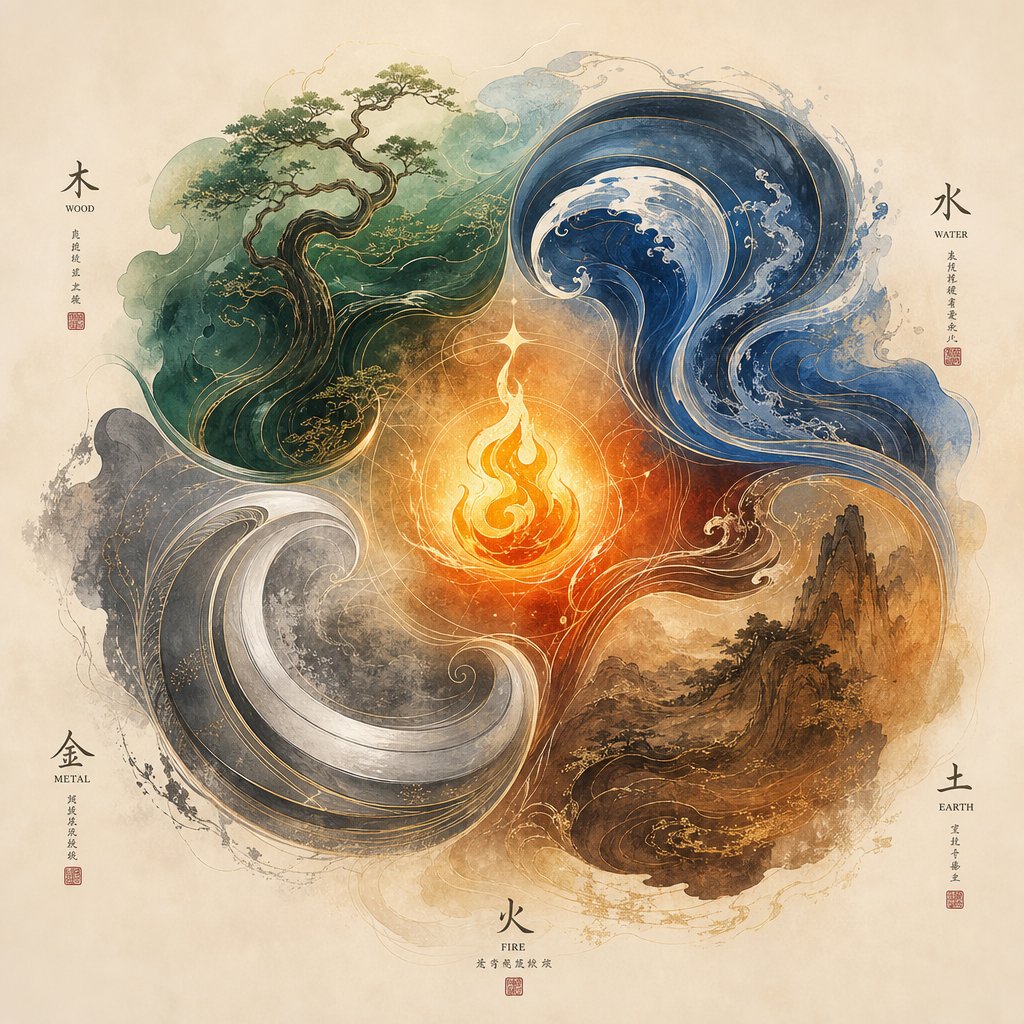
You have found a sun character you love. It sounds beautiful, carries the right meaning, and fits your vision for your child. But in traditional Chinese naming, there is another layer to consider: does the name harmonize with your child's elemental makeup? This is where the Wu Xing (五行) system enters the picture, a framework that has shaped Chinese naming for over two thousand years.
Wu Xing is often translated as the Five Elements, though a more accurate rendering is the Five Phases or Five Movements. These are not physical materials but patterns of energy: Wood (木), Fire (火), Earth (土), Metal (金), and Water (水). Each phase has a personality, a season, and a set of relationships with the others. In naming, the goal is to select characters whose elemental energy complements what a child's birth chart already contains, filling gaps and avoiding excess.
Sun Names and the Fire Element Connection
Here is the key principle for anyone exploring the sun name meaning in an elemental context: most sun-related characters carry Fire energy. Characters like 旭, 晖, 曦, and 晴 all contain the sun radical 日, which associates them with the Fire phase. Fire energy is ascending, radiating, and expressive. It represents summer, visibility, passion, and warmth. When you place a Fire-element character in a name, you are adding that radiant, outward-moving energy to your child's identity.
Whether this addition is beneficial depends entirely on the child's BaZi (八字) birth chart, which maps the elemental distribution at the exact time of birth. A BaZi reading reveals which elements are dominant, which are missing, and which serve as favorable or unfavorable influences. If a child's chart lacks Fire, a sun-meaning name can restore balance beautifully. If the chart already overflows with Fire, adding more through the name could amplify restlessness or impulsiveness rather than warmth.
The five phases exist in dynamic relationship. A name does not simply add an element. It enters a cycle of generation and control, where each phase nourishes one neighbor and restrains another.
This is where the generating and controlling cycles become practical. In the generating cycle, Wood feeds Fire. A child whose surname carries Wood energy (surnames containing the 木 radical, like 林 or 杨) naturally supports a Fire-element given name. The surname fuels the given name, creating a sense of flow and mutual reinforcement. This is considered a favorable pairing.
Water, on the other hand, controls Fire. Surnames with strong Water associations (those containing 氵, like 沈 or 洪) create a tension with Fire-element sun characters. This does not make the combination impossible, but a naming specialist might recommend adding an intermediary element. Since Wood sits between Water and Fire in the generating cycle, including a Wood-element character alongside the sun character can bridge the gap, allowing Water to nourish Wood, which then feeds Fire.
Earth is born from Fire in the generating cycle, so a Fire-element name paired with an Earth-element surname (characters containing 土, like 城 or surnames like 杜) means the given name generates energy for the surname. Metal, meanwhile, is melted by Fire, creating another controlling relationship worth noting if your family name carries Metal energy.
Stroke Count and Tonal Balance in Name Pairing
Elemental harmony is not the only traditional consideration. Stroke count, the total number of brush strokes needed to write each character, plays its own role in Chinese naming numerology. The idea is that certain stroke totals carry auspicious numerical vibrations, while others are considered less favorable. A BaZi-informed naming process typically checks that the total stroke count of the full name (surname plus given name) falls within a harmonious range.
For sun characters specifically, stroke counts vary significantly:
| Character | Pinyin | Stroke Count | Complexity Level |
|---|---|---|---|
| 日 | ri | 4 | Very simple |
| 旭 | xu | 6 | Simple |
| 阳 | yang | 6 (simplified) | Simple |
| 晨 | chen | 11 | Moderate |
| 晴 | qing | 12 | Moderate |
| 晖 | hui | 10 (simplified) | Moderate |
| 曦 | xi | 20 | Complex |
When pairing a sun character with a companion character, visual balance matters alongside numerical harmony. A 6-stroke character like 旭 paired with a 15-stroke companion can look lopsided when written in calligraphy. Many parents aim for characters within a few strokes of each other, creating a name that looks as balanced on paper as it sounds when spoken. This is especially relevant for surnames that mean sun or carry solar associations, like the surname 孙 (Sun), where the given name needs to complement rather than compete with the family name's existing energy.
Tonal balance intersects with stroke count as a practical filter. Once you have identified which sun characters match your child's elemental needs, test the tonal flow of the full three-character name. A name where all three characters share the same tone feels monotonous. The most pleasing combinations typically move through at least two different tones, creating a musical quality that makes the name memorable and easy to call out.
Generational Naming Traditions
One more factor can influence which sun character fits your family: generational naming, or 字辈 (zi bei). This is a tradition unique to Chinese culture where families pre-select a sequence of characters, one for each generation, to be shared by all children born in that generation of the clan. The generational character typically occupies a fixed position in the given name (usually the first of two given-name characters), and the second character is chosen freely.
If your family follows a generational naming system, your sun character may need to serve as the freely chosen second character rather than the first. This affects which combinations are available. For example, if your generational character is 文 (wen, literature), your sun name might become 文旭 or 文晨 rather than 旭文 or 晨文. The order changes the tonal flow and sometimes the perceived meaning, so it is worth testing both positions if your family tradition allows flexibility.
Zodiac year adds yet another dimension. Each Chinese zodiac animal carries elemental associations, and some naming guides suggest that children born in Water years (like the Year of the Pig or Rat) benefit from Fire-element names to counterbalance the year's dominant energy. Children born in Fire years (Snake or Horse) might already carry abundant Fire, making a gentler sun character like 晨 (which emphasizes time rather than heat) a more balanced choice than an intensely fiery option like 旭.
Sounds complex? It can be. But here is the practical reality: most modern families treat these systems as guides rather than rigid rules. You do not need to consult a BaZi master to choose a meaningful sun name, though doing so adds a layer of traditional intentionality. What matters most is understanding that the sun last name origin and given-name elements interact as part of a larger system. Even a basic awareness of elemental relationships helps you make a more informed choice, one that honors tradition while still feeling personal and right for your child.
With elemental balance in mind, the next practical challenge is one that many families face today: making a sun-inspired Chinese name work smoothly across languages and cultures.
Choosing Sun Names That Work Across Cultures
A name might carry perfect meaning in Chinese and still trip up every English-speaking teacher, doctor, and barista your child encounters. For bilingual and overseas families, the Chinese word for sun needs to translate not just in meaning but in sound. The good news? Several sun-character romanizations land naturally in English, while others require a bit of strategic thinking to make daily life smoother.
Romanizations That Work Well in English
Pinyin was designed to represent Mandarin sounds, not to be intuitive for English speakers. As pronunciation guides from UC San Diego emphasize, the single most important thing to remember is that pinyin letters do not map directly to English sounds. X sounds like English SH, Q sounds like CH, and C sounds like TS. These conventions feel natural to Mandarin speakers but create consistent mispronunciation when English speakers encounter them cold on a class roster or a doctor's form.
For sun-related names, this creates a clear divide between easy and challenging romanizations:
| Romanization | Sun Character | English Approximation | Pronunciation Difficulty | Common Mispronunciation |
|---|---|---|---|---|
| Yang | 阳 | "yahng" | Easy | Rarely mispronounced |
| Chen | 晨 | "chuhn" | Easy | Sometimes said like "Chen" in English, which is close enough |
| Ming | 明 | "ming" | Easy | Almost never mispronounced |
| Hui | 晖 | "hway" | Moderate | Often said as "hooey" |
| Xu | 旭 | "shü" | Moderate-Hard | Often said as "zoo" or "ex-oo" |
| Xi | 曦 | "shee" | Hard | Almost always said as "ksee" or "zee" |
| Qing | 晴 | "ching" | Hard | Often said as "king" or "kwing" |
You will notice that Yang, Chen, and Ming sit comfortably in English because their pinyin spellings happen to align with sounds English speakers already produce naturally. Xu and Xi, on the other hand, use letters that trigger completely wrong English reflexes. A child named 晨旭 (Chen Xu) will likely hear "Chen" pronounced correctly and "Xu" butchered daily, which is worth factoring into your decision.
Avoiding Cross-Language Pitfalls
Beyond pronunciation difficulty, some romanized sun names accidentally sound like English words with unfortunate meanings. Naming experts consistently advise running any Chinese name past speakers of both languages before committing, because homophones can create impressions you never intended.
Imagine introducing your daughter as "Xi" at an English-speaking school. Depending on regional accent, listeners might hear "she," "see," or even a sound they cannot parse at all. The name 晴 romanized as "Qing" can sound like "ching" to untrained ears, which carries uncomfortable associations in some English-speaking contexts. These are not reasons to abandon a beautiful name, but they are reasons to think carefully about what form appears on official documents.
Families handle this in several ways:
- Use pinyin as the legal name and accept that some correction will be needed. This preserves the direct connection to the Chinese name.
- Use a phonetic adaptation that guides English speakers closer to the correct sound. For example, spelling 旭 as "Shu" rather than "Xu" on English documents, or using "Chee" for 曦 instead of "Xi."
- Choose a separate English first name and keep the Chinese name for family, cultural, and legal contexts in Chinese-speaking environments.
- Select sun characters whose pinyin doubles as a natural English name. "Ming" works beautifully in both worlds. "Yang" reads cleanly in English contexts.
There is no single right approach. Some families feel strongly that the pinyin spelling preserves authenticity. Others prioritize daily ease for their child. Both positions are valid, and many families revisit the decision as their child grows and expresses preferences.
It is also worth noting that sunrise in chinese carries cultural resonance beyond Mandarin. Families with Japanese heritage might recognize parallels with japanese names that mean sun, such as Hinata or Akira, which draw on similar solar symbolism through different linguistic traditions. If your family bridges multiple East Asian cultures, a sun-meaning name can honor shared values across those traditions while remaining distinctly Chinese in its character form.
Balancing Character Complexity for Bilingual Kids
Here is a practical reality that many parents overlook until their child starts school: a bilingual child learning to write in both English and Chinese faces double the handwriting workload. Character complexity matters. A child who needs to write their name on every homework assignment, art project, and permission slip will feel the difference between a 6-stroke character and a 20-stroke one.
Consider the range among sun characters:
- 旭 (6 strokes) and 阳 (6 strokes, simplified) are quick to write and easy for small hands to master early.
- 晨 (11 strokes) and 晴 (12 strokes) sit in a comfortable middle range, manageable for most school-age children.
- 曦 (20 strokes) is beautiful but demanding. A child writing this character daily in Chinese school may find it frustrating, especially in early years.
This does not mean you should avoid complex characters entirely. As Chinese language educators note, learning to write characters is a skill that develops over time, and children who grow up writing their own name gain early familiarity with stroke order and radical recognition. A complex name character can actually serve as a learning tool. But if your child will attend schools in both languages simultaneously, a moderate stroke count (8 to 12 strokes) often hits the sweet spot between visual elegance and daily practicality.
One more consideration: simplified versus traditional characters. Families connected to mainland China typically use simplified forms, while those with ties to Taiwan, Hong Kong, or older diaspora communities may prefer traditional characters. Some sun characters look identical in both systems (旭, 晨), while others differ significantly. 阳 in simplified form has 6 strokes; its traditional form 陽 has 12. If your child will interact with both systems, choosing a character that remains unchanged across simplified and traditional scripts simplifies their life considerably.
The cross-cultural dimension adds complexity, but it also adds opportunity. A well-chosen sun name can serve as a bridge, connecting your child to Chinese heritage while functioning smoothly in English-speaking environments. The key is testing the name in both worlds before it becomes permanent: say it aloud in English sentences, write it on forms, introduce yourself with it to friends from different backgrounds, and notice where friction appears.
How to Pick the Perfect Sun Name for Your Baby
You have explored characters, studied elemental balance, and considered cross-cultural pronunciation. The options are rich, maybe overwhelmingly so. How do you move from a long list of beautiful possibilities to the one name that feels right? The answer is a structured process that filters your choices through practical checkpoints, narrowing the field until only the strongest candidates remain.
Step-by-Step Name Selection Process
Think of this as a funnel. You start wide, with the sun character that resonates most emotionally, and then test it against increasingly specific criteria. Each step eliminates combinations that look good on paper but fall short in practice.
- Choose your core sun character. Which quality matters most to you? Bold ambition (旭), universal brightness (阳), poetic grace (曦), cheerful optimism (晴), or fresh beginnings (晨)? Start with the character whose meaning speaks to the future you envision for your child.
- Check gender suitability. Does the character align with your preference? Remember that pairing shapes perception more than the sun character alone. If you want a gender-neutral result, combine your sun character with an equally flexible companion like 川, 安, or 光.
- Test tonal flow with your surname. Say the full name aloud, surname first, at least ten times. Does it roll off the tongue or stumble? A name that moves through contrasting tones feels musical. Three characters stuck on the same tone sound flat.
- Evaluate stroke count balance. Write the full name by hand. Does it look visually proportional, or does one character dominate the page while another disappears? Aim for characters within a few strokes of each other for calligraphic harmony.
- Assess modern versus classical feel. Names like 春晖 carry literary weight and historical allusion. Names like 沐阳 feel contemporary and fresh. Neither is better, but the style should match your family's sensibility.
- Verify elemental compatibility. If your family follows Wu Xing principles, confirm that the Fire energy of your sun character supports rather than clashes with your child's BaZi chart. Wood-element surnames naturally feed Fire-element given names, while Water-element surnames may need a bridging character.
- Screen for negative homophones. Say the full name in both Mandarin and English. Does it accidentally sound like an unfortunate homophone in either language? Ask friends and family from both linguistic backgrounds to listen and react honestly.
- Confirm cross-cultural usability. If your child will live in English-speaking environments, check whether the romanized form is pronounceable without constant correction. Names like Chen and Yang pass easily; Xi and Qing require more patience.
Testing Tonal Flow with Common Surnames
The same sun character can feel completely different depending on which surname precedes it. Here is how 旭 (xu, 4th tone) pairs with four of China's most common family names:
- 王旭 (Wang Xu) — 2nd tone + 4th tone. The rising-then-falling pattern creates a satisfying arc, like a wave cresting and breaking. Smooth and natural.
- 李旭 (Li Xu) — 3rd tone + 4th tone. The dipping third tone followed by a sharp falling fourth can feel slightly abrupt. Adding a second given-name character (李旭明, for example) smooths the rhythm.
- 张旭 (Zhang Xu) — 1st tone + 4th tone. High level followed by a decisive drop. This combination sounds confident and direct, with strong tonal contrast.
- 陈旭 (Chen Xu) — 2nd tone + 4th tone. Similar arc to 王旭, rising then falling. Clean and easy to call out across a room.
Notice how the two-character combinations (surname + single given-name character) feel punchy and modern, while adding a third character creates more melodic space. If your surname is a third tone like 李, a two-character given name often flows better because it gives the voice room to recover from the tonal dip before landing.
Try the same exercise with 晨 (chen, 2nd tone):
- 王晨 (Wang Chen) — 2nd + 2nd. Two rising tones in a row can feel slightly monotonous. Pairing with a contrasting second character like 王晨旭 (2nd + 2nd + 4th) adds variety.
- 李晨 (Li Chen) — 3rd + 2nd. Natural and flowing. The third tone dips and the second tone rises, creating gentle movement.
- 张晨 (Zhang Chen) — 1st + 2nd. Level then rising. Calm and steady, with a subtle lift at the end.
- 陈晨 (Chen Chen) — 2nd + 2nd, and identical syllables. This creates a repetitive sound that most naming guides advise against, even though the characters differ (陈 vs. 晨). The ear hears the repetition before the eye sees the distinction.
That last example highlights an easy-to-miss pitfall: when your surname and your chosen sun character share the same pinyin syllable, the name can sound like a stutter regardless of how different the characters look on paper. Always prioritize the spoken test over the written one. Your child will hear their name called thousands of times before they ever write it.
These steps are not rigid rules. They are filters that help you trust your instincts by confirming them against practical reality. Some families move through all eight steps in an afternoon. Others circle back, testing new combinations as sunset names and sunrise names alike reveal their strengths under scrutiny. The process itself is part of the gift: the care you invest in choosing becomes part of the story you will one day tell your child about how their name came to be.
Bringing Your Sun Name Choice to Life
Every name on this list carries something ancient and something alive. Sun-meaning names have traveled through millennia of Chinese philosophy, poetry, and family tradition, yet they sound as fresh today as they did when the first parent looked at a newborn and thought of daybreak. That continuity is part of what makes them powerful. You are not inventing meaning from scratch. You are joining a conversation that stretches back thousands of years, adding your child's voice to it.
Quick-Reference Sun Character Summary
When the research feels overwhelming, return to this table. Each sun character carries a distinct emotional signature, and the right one often comes down to a simple question: what do you feel when you imagine calling this name across a room?
| Character | Pinyin | Best For | Personality It Evokes | Ideal Pairing Style |
|---|---|---|---|---|
| 旭 | xu (4th tone) | Boys, bold energy | Ambitious, dynamic, forward-moving | Virtue or nature characters (明, 辰, 东) |
| 曦 | xi (1st tone) | Girls, poetic grace | Refined, luminous, quietly radiant | Beauty or nature characters (月, 瑶, 萱) |
| 阳 | yang (2nd tone) | Any gender, universal brightness | Warm, open, vital, optimistic | Season, virtue, or action characters (春, 志, 沐) |
| 晴 | qing (2nd tone) | Girls or gender-neutral, cheerful optimism | Bright, uncomplicated, joyful | Nature or emotion characters (岚, 柔, 川) |
| 晨 | chen (2nd tone) | Any gender, fresh beginnings | Clean, modern, full of potential | Light or growth characters (光, 旭, 熙) |
Trusting Your Instincts as a Parent
You have considered tonal harmony, elemental balance, stroke count, cross-cultural pronunciation, and generational tradition. These are valuable tools. But at the end of the process, the best name is the one that makes you feel something when you say it aloud. The one that fits the tiny person you are imagining into the world.
Names meaning sunrise carry the promise of what is coming. Names meaning sunset hold the beauty of what has been. A sun name sits at the center of both, radiating in every direction at once. Whether you choose the bold momentum of 旭, the quiet poetry of 曦, or the open warmth of 阳, you are giving your child a name that shines clearly in Chinese, translates beautifully in spirit across languages, and carries a wish as old as parenthood itself: may your life be filled with light.
Frequently Asked Questions About Chinese Baby Names Meaning Sun
1. What is the most popular Chinese character meaning sun used in baby names?
The character 阳 (yang, second tone) is the most widely used sun-related naming character in Mandarin. It means sunlight and yang energy, carrying connotations of vitality, positivity, and openness. It works in both masculine and feminine names, though it leans slightly masculine in traditional usage. Its philosophical connection to the yang principle gives it cultural depth beyond simple brightness, making it a versatile choice for parents who want a name rooted in Chinese cosmology.
2. Can Chinese sun names work for both boys and girls?
Yes, several sun characters are naturally gender-flexible. 晨 (chen, morning) and 晴 (qing, sunny) appear comfortably in names for any gender. The key factor is the companion character paired with the sun element. For example, 晨光 (morning light) and 晴川 (sunny river) read as gender-neutral because both characters in each name lack strong gendered associations. Research shows only about 4.82% of Chinese names fall into a truly gender-neutral zone, so choosing one is a distinctive and intentional act.
3. How do I choose a Chinese sun name that works in English-speaking countries?
Focus on romanizations that English speakers can pronounce intuitively. Yang, Chen, and Ming align naturally with English phonetics and rarely get mispronounced. Characters like 旭 (Xu) and 曦 (Xi) use pinyin letters that trigger incorrect English reflexes, leading to daily mispronunciation. Families can use pinyin as the legal name, adopt a phonetic spelling that guides English speakers closer to the correct sound, or select a separate English first name while keeping the Chinese name for cultural contexts.
4. What role do the five elements play in choosing a Chinese sun name?
Most sun-related characters carry Fire element energy in the Wu Xing system. Whether adding Fire energy benefits your child depends on their BaZi birth chart, which maps elemental distribution at the time of birth. Wood-element surnames (containing the 木 radical, like 林 or 杨) naturally support Fire-element given names because wood feeds fire in the generating cycle. Water-element surnames may create tension with sun characters, potentially requiring a bridging Wood-element character to restore harmony.
5. What is the difference between 曦 and 旭 in Chinese baby names?
Both characters relate to sunrise but evoke very different energies. 旭 (xu, fourth tone) captures the dramatic moment the sun breaks the horizon, conveying ambition, boldness, and forward momentum. It leans strongly masculine and has only 6 strokes, making it easy to write. 曦 (xi, first tone) refers to the soft golden light just before sunrise, carrying poetic grace and quiet radiance. It leans strongly feminine and has 20 strokes, which makes it visually complex but elegant in calligraphy.