Why Certain Chinese Characters Are Harmful for Ox Zodiac Names
Imagine choosing a beautiful Chinese name for your child, only to learn that one of its radicals symbolizes slaughter or exhaustion for their zodiac animal. For families who follow the chinese star sign ox naming traditions, this is a real concern. Certain characters carry hidden meanings that clash with the Ox's energy, and understanding which ones to avoid can make all the difference.
What Are Ox Zodiac Naming Taboos
In the tradition known as 八字生肖姓名学 (Ba Zi Zodiac Name Studies), every Chinese zodiac animal has a set of characters and radicals considered inauspicious for naming. For people born during the chinese year of the ox, these taboos are especially layered. The system works by connecting three elements: the Earthly Branch assigned to the Ox (丑, Chou), the symbolic associations of the animal itself, and the semantic meaning embedded in each character's radical components.
So what does this look like in practice? A character containing a horse radical might seem perfectly harmless on its own, but for someone born under the cow zodiac, it represents a direct cosmological clash. The naming system treats these radical-level conflicts as energetic mismatches that could bring misfortune, overwork, or hardship to the name bearer.
Origins of the Naming Tradition
These principles did not emerge from classical Confucian naming rites or ancient court rituals. They belong to Taiwanese and mainland Chinese folk naming traditions, systems developed by 命理 (destiny analysis) practitioners who blended zodiac symbolism with practical character analysis. The tradition gained particular popularity in Taiwan, where consulting a naming master remains common for newborns.
Across many cultures, the ox represents tireless labor and physical strength. As Glossika's cross-cultural research notes, the ox has historically served as both a working companion and a sacrificial animal in Chinese, Russian, and other traditions. This dual identity is central to understanding why certain characters are flagged as dangerous.
The Ox's cultural role as both a beast of burden and a ritual sacrifice animal is what makes blade, crown, and labor radicals uniquely threatening in Ox zodiac names. Characters that evoke slaughter or exhaustion mirror the animal's most tragic symbolic fates.
It is worth noting that the English zodiac sign Taurus and the year of the ox share symbolic DNA rooted in the same ancient Proto-Indo-European word for bull. Yet the Chinese naming taboo system operates on an entirely different framework, one built on branch relationships and radical analysis rather than Western astrological houses.
These cosmological relationships form a precise system of conflicts, and each conflict type generates its own category of characters to watch out for.
The Cosmological Logic Behind Ox Zodiac Character Conflicts
The naming taboos for the year of the ox chinese zodiac are not arbitrary superstitions. They rest on a structured cosmological framework that maps animal signs to celestial positions, then derives conflict relationships from those positions. Understanding this framework helps you see exactly why specific radicals end up on the avoidance list.
Earthly Branches and the Ox Position
Chinese astrology ox principles are built on the Earthly Branch system, a cycle of twelve branches (地支, di zhi) that each correspond to one zodiac animal. The Ox maps to the branch 丑 (Chou), which carries the elemental quality of Yin Earth (阴土, yin tu) with hidden stems of 己 (Ji, Earth), 癸 (Gui, Water), and 辛 (Xin, Metal). In directional terms, 丑 sits at northeast-by-north. In the seasonal cycle, it governs the twelfth lunar month, the coldest stretch of winter.
Every branch exists in relationship to the other eleven. Some relationships are harmonious, forming 三合 (san he, three harmonies) or 六合 (liu he, six combinations). Others are destructive. For people born in ox years chinese zodiac, the destructive relationships are what generate naming taboos, because characters containing radicals linked to conflicting branches are thought to destabilize the name bearer's energy.
Types of Zodiac Conflicts Affecting Ox
The year of ox in chinese metaphysics involves three primary conflict types, each producing its own category of problematic characters:
- 相冲 (xiang chong) — Direct Clash: 丑 (Ox) directly opposes 未 (Wei, Goat). This is the strongest opposition in the branch cycle for Ox, representing head-on energetic collision. Characters with Goat-related radicals (羊) fall under this conflict.
- 相害 (xiang hai) — Six Harms: 丑 (Ox) and 午 (Wu, Horse) form a harm relationship. The logic here is that Horse disrupts the natural 六合 bond between Ox and Rat (子丑合). Because Horse clashes with Rat, it indirectly damages Ox by breaking its most supportive alliance. Characters containing Horse radicals (马, 午) are flagged under this category.
- 相刑 (xiang xing) — Punishment: 丑 (Ox), 未 (Goat), and 戌 (Xu, Dog) form a three-way punishment group called 持势之刑 (chi shi zhi xing, punishment of power abuse). This means Dog-related radicals (犬, 犭) also carry negative energy for Ox names.
How Conflicts Translate to Character Avoidance
Each conflict type maps directly to a set of radicals. When you identify a branch conflict, you then look at which radicals visually or semantically represent that conflicting animal. For example, the Horse harm relationship means any character built with the 马 radical or containing the 午 component becomes a candidate for avoidance. The Goat clash means characters with 羊 or its derivatives are problematic. The Dog punishment brings 犬 and 犭 into the avoidance list.
Beyond these animal-based conflicts, the Ox's identity as a laboring and sacrificial creature introduces additional categories. Blade radicals, crown components, and heart or meat radicals all carry specific dangers rooted not in branch opposition but in the animal's cultural fate. These symbolic conflicts layer on top of the branch-based ones, creating a comprehensive system of character avoidance that touches dozens of common radicals.
Horse Radical Characters That Directly Clash With Ox
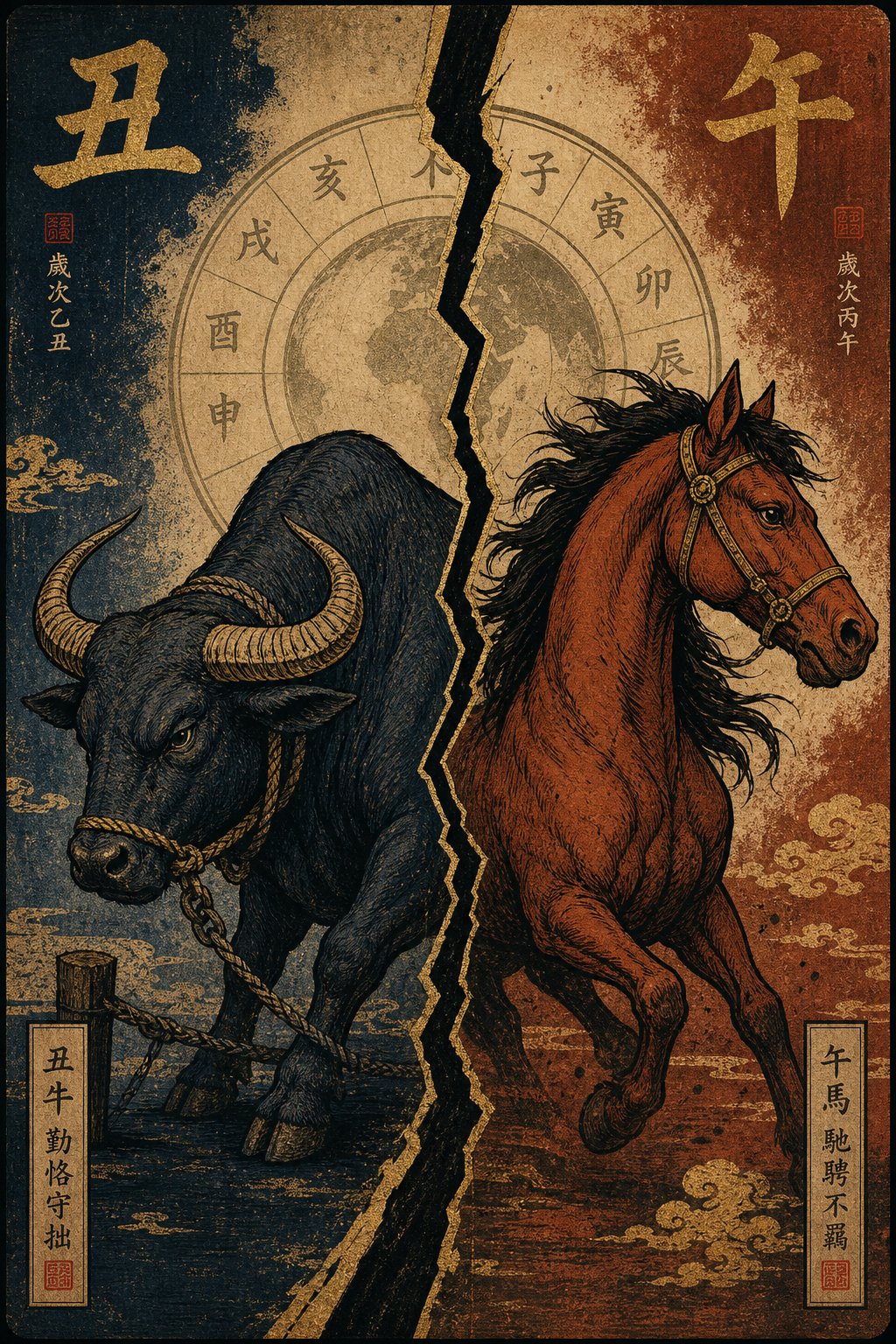
The Horse stands as the ox enemy sign in the Earthly Branch system, and characters built from Horse-related radicals represent one of the most damaging categories for Ox zodiac names. This conflict runs deep, rooted in positional opposition and cultural symbolism that makes even seemingly innocent characters problematic.
The Horse as Direct Clash Animal for Ox
In the twelve Earthly Branches, the Horse corresponds to 午 (wu, the seventh branch), while the Ox holds the position of 丑 (chou, the second branch). The relationship between these two is classified as 相害 (xiang hai), sometimes called 六害 (liu hai, six harms). Here is the logic: the Ox's natural ally is the Rat (子, zi), because 子 and 丑 form a 六合 (liu he, six combination) bond. The Horse directly clashes with the Rat (子午相冲), which means it destroys the Ox's most supportive relationship. Think of it as someone attacking your closest friend. The damage is indirect but deeply felt.
Traditional naming practitioners also reference the folk saying "青牛遇马,不战而逃" (the green ox meets the horse and flees without fighting), suggesting an inherent incompatibility. For anyone born under the ox zodiac, this makes the Horse an ox enemy year whenever it appears in the cycle, and its associated radicals become characters to strictly avoid in naming.
Characters Containing the Horse Radical 马
The 马 (ma) radical is the most obvious Horse component. In simplified Chinese, it appears as 马; in traditional Chinese, as 馬. Any character built on this radical carries Horse energy directly into a name. According to Taiwan's Ministry of Education dictionary, the 馬 radical family includes dozens of characters across stroke counts.
Here are the most common characters containing the Horse radical that people born under the year of the ox sign should avoid:
| Character | Pinyin | Meaning | Why It Conflicts |
|---|---|---|---|
| 骏 / 駿 | jun | fine horse, outstanding | Direct Horse radical; popular in male names but carries full Horse energy |
| 驰 / 馳 | chi | gallop, speed | Horse radical with movement connotation; implies restlessness for Ox |
| 骑 / 騎 | qi | ride (a horse) | Horse radical; implies Ox being dominated or ridden |
| 驹 / 駒 | ju | colt, young horse | Direct Horse radical; even a young horse conflicts with Ox |
| 骅 / 驊 | hua | fine horse (literary) | Horse radical; used in elegant names but harmful for Ox |
| 腾 / 騰 | teng | soar, gallop | Contains 馬 radical in traditional form; implies Horse leaping |
| 驿 / 驛 | yi | relay station | Horse radical; historically linked to horse-powered travel |
| 骆 / 駱 | luo | camel (surname Luo) | Horse radical present; common surname carries conflict |
| 驯 / 馴 | xun | tame, docile | Horse radical; implies taming which echoes Ox's laboring fate |
You'll notice that many of these characters are popular choices for names because they suggest speed, elegance, or ambition. For families following the ox zodiac naming tradition, that appeal is precisely the trap. A character like 骏 (jun, meaning outstanding or fine horse) sounds aspirational, but it floods the name with Horse energy that directly harms the Ox bearer.
Hidden Horse Components in Common Characters
The more subtle danger lies in characters where the Horse connection is not immediately visible. The 午 (wu) component, meaning "noon" in everyday usage, is the Earthly Branch for Horse. It hides inside several characters that people rarely associate with equine symbolism. Similarly, some characters contain phonetic components derived from 马 without using the full radical.
| Character | Pinyin | Meaning | Hidden Horse Component |
|---|---|---|---|
| 许 / 許 | xu | permit, promise (surname) | Contains 午 (wu) as phonetic component; carries Horse branch energy |
| 杵 | chu | pestle | Contains 午 component on the right side |
| 忤 | wu | disobey, oppose | Contains 午 directly; meaning of opposition reinforces conflict |
| 迕 | wu | go against | 午 component with movement radical; double conflict energy |
| 冯 / 馮 | feng | surname Feng | Traditional form 馮 contains full 馬 radical; simplified form still carries the energy |
| 笃 / 篤 | du | sincere, serious | Contains 马 / 馬 at the bottom; often overlooked |
| 玛 / 瑪 | ma | agate (transliteration) | Contains 马 radical; used in transliterated names like 玛丽 |
| 蚂 / 螞 | ma | ant | Contains 马 as phonetic element |
| 码 / 碼 | ma | number, code | Contains 马 radical; less common in names but worth noting |
The character 许 (xu) deserves special attention. It is one of the most common Chinese surnames, and its right component is 午, the exact Earthly Branch that harms the Ox. According to Taiwanese naming practitioner Zhilan's reference guide, 许 is explicitly listed among characters Ox-born individuals should avoid. For someone whose surname is 许, practitioners typically recommend compensating through careful selection of given name characters rather than changing the surname itself.
Another frequently missed character is 红 (hong, meaning red). While its primary radical is 纟 (silk), some naming traditions flag it because its right component 工 can be interpreted as carrying 午-adjacent energy in certain analytical frameworks. This is a more contested interpretation, but conservative practitioners include it on their avoidance lists.
The key takeaway: when evaluating characters for an Ox zodiac name, look beyond the obvious 马 radical. Check for 午 hiding as a phonetic component, and examine traditional character forms where the Horse connection may be more visible than in simplified script. The conflict between Horse and Ox operates at the branch level, meaning any character that channels 午 energy, however subtly, can activate the harm relationship.
Horse-related radicals represent just one layer of the avoidance system. The Ox also faces threats from animals that share its punishment group, particularly the Goat and Dog, whose radical families introduce an entirely different set of problematic characters.
Goat and Dog Radical Characters That Harm Ox Energy
The Horse is not the only animal working against the chinese ox sign in the naming system. Two other zodiac animals, the Goat (未, wei) and the Dog (戌, xu), create their own forms of energetic damage. While the Horse operates through the harm relationship, the Goat and Dog attack through direct clash and mutual punishment, two conflict types that carry equally serious consequences for name selection.
Goat-Related Characters and the Six Harms Conflict
The Goat occupies the branch 未 (wei), which sits directly opposite the Ox's 丑 (chou) on the Earthly Branch circle. This creates 丑未相冲 (chou wei xiang chong), a direct clash representing head-on collision between two opposing forces. In ox compatibility chinese zodiac analysis, this is the single most destructive pairing for the Ox.
Why do these two animals clash so intensely? The cultural reasoning is straightforward: both the Ox and the Goat are grazing animals that compete for the same pasture. They eat the same grass, occupy the same fields, and vie for the same resources. In symbolic terms, placing Goat energy into an Ox name creates perpetual competition and scarcity, as if the name bearer must constantly fight for what should come naturally.
The Taiwanese naming reference from fate-8word.com states explicitly: when Ox encounters Goat radicals, it brings early separation from family, loss of wealth, and an inability to accumulate resources. The specific warning is "生離死別之事提早到來" (matters of life-and-death separation arrive early).
The primary radical to watch is 羊 (yang, goat/sheep). It appears both as a standalone radical and as a component hidden within other characters. Here are the Goat-radical characters that people born under the ox zodiac sign should avoid:
| Character | Pinyin | Meaning | Goat Component |
|---|---|---|---|
| 美 | mei | beautiful | Contains 羊 at the top; one of the most commonly used characters that hides Goat energy |
| 義 / 义 | yi | righteousness, justice | Traditional form contains 羊 at the top; extremely popular in names |
| 群 | qun | group, flock | Contains 羊 on the right side; implies herding which reinforces resource competition |
| 祥 | xiang | auspicious, lucky | Contains 羊 as phonetic component; ironic since the character means "good fortune" |
| 善 | shan | good, virtuous | Contains 羊 at the top; commonly chosen for its positive meaning |
| 羡 / 羨 | xian | envy, admire | Contains 羊 radical directly |
| 翔 | xiang | soar, glide | Contains 羊 as a component; popular in male names |
| 洋 | yang | ocean, foreign | Contains 羊 as phonetic element on the right |
| 样 / 樣 | yang | appearance, style | Contains 羊 as phonetic component |
| 鲜 / 鮮 | xian | fresh, delicious | Contains 羊 on the right side |
| 养 / 養 | yang | raise, nourish | Contains 羊 in its structure |
| 着 / 著 | zhu/zhe | wear, notable | Contains 羊 component in traditional form |
Notice how many of these characters carry overwhelmingly positive meanings. 美 (beautiful), 善 (virtuous), 祥 (auspicious), 義 (righteous). This is precisely what makes the chinese sign ox naming system counterintuitive. A character's dictionary meaning does not override its radical-level energy. For the Ox bearer, 祥 does not bring good fortune. It brings the Goat's competing energy into the name.
Dog-Related Characters and the Punishment Relationship
The Dog corresponds to the branch 戌 (xu), and together with 丑 (Ox) and 未 (Goat), it forms the 三刑 (san xing) punishment group known as 持势之刑 (chi shi zhi xing, punishment of power abuse). Unlike a direct clash, which is a single collision, punishment relationships create ongoing friction, a grinding, repetitive pattern of mutual harm.
The cultural logic here differs from the Goat conflict. The Dog and Ox do not compete for resources. Instead, they create what practitioners describe as mutual stubbornness. Both animals are loyal and determined, but when their energies combine in a punishment configuration, that determination becomes destructive rigidity. The name bearer may experience repeated conflicts with authority, cycles of self-sabotage, or relationships marked by power struggles.
The Dog-related radicals to watch are 犬 (quan, dog), 犭 (the dog radical appearing on the left side of characters), and 戌 (xu) or 成 (cheng) components that carry Dog branch energy:
| Character | Pinyin | Meaning | Dog Component |
|---|---|---|---|
| 威 | wei | power, prestige | Contains 戌 (Dog branch) within its structure |
| 诚 / 誠 | cheng | sincere, honest | Contains 成 which carries 戌 (Dog) energy |
| 成 | cheng | accomplish, become | Directly related to 戌 branch; extremely common in names |
| 献 / 獻 | xian | offer, dedicate | Contains 犬 (dog) radical |
| 狮 / 獅 | shi | lion | 犭 (dog) radical on the left |
| 独 / 獨 | du | alone, single | 犭 radical; meaning of isolation reinforces punishment energy |
| 猛 | meng | fierce, bold | 犭 radical on the left |
| 狐 | hu | fox | 犭 radical; carries cunning associations |
| 犹 / 猶 | you | still, yet | 犭 radical present |
| 猎 / 獵 | lie | hunt | 犭 radical; hunting imagery doubles the threat to Ox |
| 状 / 狀 | zhuang | shape, condition | Contains 犬 component; often overlooked |
| 默 | mo | silent, quiet | Contains 犬 at the bottom; frequently missed |
| 然 | ran | so, thus | Contains 犬 component at bottom-left; extremely common character |
The character 然 (ran) is worth highlighting. It appears in countless names and compound words, and few people realize it contains a 犬 component. Similarly, 成 (cheng, meaning "accomplish") is one of the most aspirational characters in Chinese naming, yet for the Ox it channels the Dog's punishment energy directly.
When evaluating ox compatibility chinese zodiac factors in naming, remember that the Goat clash and Dog punishment operate differently. The Goat creates sudden, dramatic breaks, financial loss and family separation. The Dog creates slow-burning friction, repeated patterns of conflict that wear down the name bearer over time. Both are serious, but they manifest in distinct life areas.
These animal-based conflicts account for a large portion of the avoidance list, yet the Ox faces another category of dangerous characters entirely unrelated to branch opposition. The animal's historical role as a sacrificial creature introduces blade, labor, and crown radicals into the equation, each carrying its own form of symbolic threat.
Sacrifice and Slaughter Characters Dangerous for Ox Names
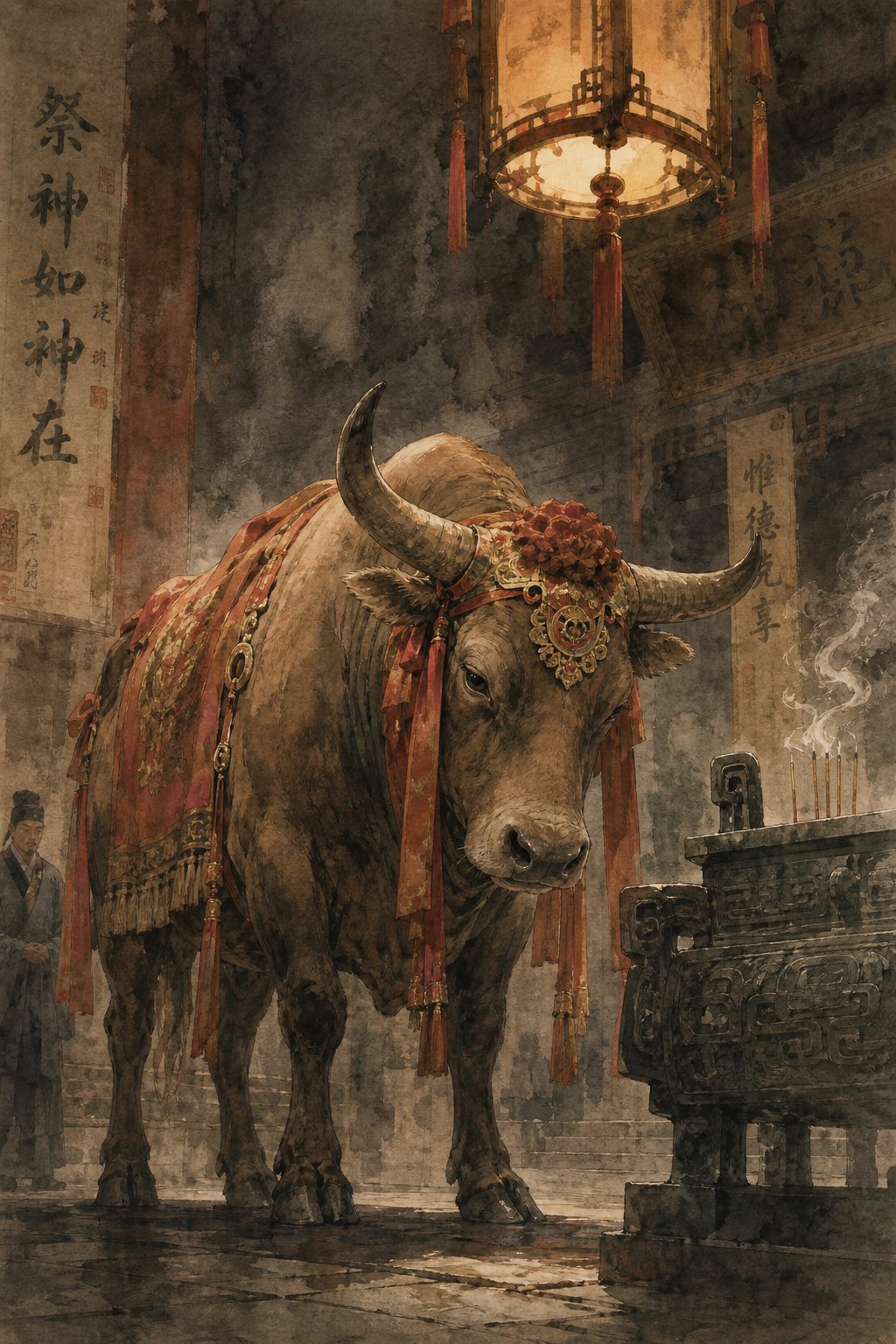
Branch-based conflicts like the Horse harm and Goat clash follow a clear cosmological formula. But the Ox faces an entirely different category of dangerous characters, one rooted not in positional opposition but in the animal's cultural history. For thousands of years, oxen served two primary roles in Chinese civilization: laboring in fields and dying on sacrificial altars. Characters that evoke either fate carry a symbolic weight that naming practitioners consider deeply inauspicious.
When you think about the ox zodiac personality, the traits that come to mind are diligence, endurance, and quiet strength. These are admirable qualities. But in the naming system, they also represent vulnerability. The very characteristics year of the ox people embody, their willingness to work hard and serve others, become liabilities when a name reinforces those patterns to an extreme. A blade radical does not just suggest cutting. It suggests the Ox meeting its end. A labor radical does not just imply effort. It implies exhaustion without reward.
Blade and Slaughter Radicals to Avoid
The most viscerally dangerous category involves characters built from blade and knife components. In ancient China, oxen were the highest-grade sacrificial animals (太牢, tai lao), reserved for the most important state rituals and offerings to Heaven. The act of slaughtering an ox was ceremonial, performed with specific blades in specific ways. Characters containing knife radicals echo this fate directly.
The two primary blade radicals are 刀 (dao, knife) and its variant form 刂 (li dao pang, the vertical knife radical that appears on the right side of characters). Both carry identical energy in the naming system. Here are the key characters to avoid:
- 刘 / 劉 (liu) — One of the most common Chinese surnames. Contains 刂 (knife radical). For Ox-born individuals with this surname, practitioners recommend compensating heavily through given name selection.
- 利 (li) — Meaning sharp, benefit, or profit. Contains 刂 on the right. Despite its positive financial connotation, it symbolizes the blade meeting the Ox.
- 刚 / 剛 (gang) — Meaning firm, strong, or just now. Contains 刂 radical. Popular in male names for its masculine energy, but for Ox bearers it implies being cut down.
- 剑 / 劍 (jian) — Meaning sword. Contains 刂 radical. The weapon imagery is unmistakable.
- 别 / 別 (bie) — Meaning separate or don't. Contains 刂 radical. The meaning of separation reinforces the cutting symbolism.
- 判 (pan) — Meaning judge or sentence. Contains 刂 radical. Implies the Ox being judged, as in selected for sacrifice.
- 创 / 創 (chuang) — Meaning create or wound. Contains 刂 radical. The dual meaning of creation and wounding makes this character particularly complex for Ox names.
- 割 (ge) — Meaning cut or sever. Contains 刂 radical with 害 (harm) as a component, doubling the negative energy.
- 刃 (ren) — Meaning blade edge. A direct knife character rarely used in names but present in compound characters.
- 分 (fen) — Meaning divide or portion. Contains 刀 at the bottom. Extremely common character that many overlook as carrying blade energy.
The obsky.com naming reference also flags the sacrificial ceremony radicals 鼎 (ding, ritual cauldron) and 示 (shi, altar/ritual) as dangerous. These connect to the same logic: any character that places the Ox in a ritual context implies it is being prepared for slaughter rather than living freely.
Labor and Overwork Characters
The year of the ox description in Chinese culture consistently emphasizes hard work and perseverance. These are celebrated as year of the ox traits in personality readings. But in naming, reinforcing the labor theme pushes the Ox toward a fate of endless toil without rest or reward. The animal that works itself to death is not a symbol of success. It is a symbol of exploitation.
The primary radical here is 力 (li, strength/power). Characters built on this radical imply exertion, force, and physical labor, all of which echo the Ox pulling plows from dawn to dusk:
- 勤 (qin) — Meaning diligent or hardworking. Contains 力 radical. This is perhaps the most counterintuitive avoidance: a character meaning "diligent" is harmful because it locks the Ox into perpetual labor.
- 努 (nu) — Meaning strive or exert. Contains 力 at the bottom. Implies straining beyond capacity.
- 劳 / 勞 (lao) — Meaning labor or toil. Contains 力 radical. Directly names the Ox's most burdensome fate.
- 勇 (yong) — Meaning brave or courageous. Contains 力 radical. Popular in names but channels the energy of the Ox charging forward without self-preservation.
- 动 / 動 (dong) — Meaning move or action. Contains 力 radical. Implies being set in motion by external force.
- 功 (gong) — Meaning merit or achievement. Contains 力 radical. Suggests achievement through exhausting physical effort.
- 助 (zhu) — Meaning help or assist. Contains 力 radical. Implies the Ox serving others at its own expense.
- 勉 (mian) — Meaning encourage or force oneself. Contains 力 radical. The meaning of forcing oneself mirrors the driven ox.
Characters implying being bound, led, or restrained also fall into this category. Think of 牵 / 牽 (qian, to lead by hand), which literally depicts leading an animal by a rope. The character 系 (xi, tie or connect) and 绳 / 繩 (sheng, rope) carry similar binding imagery. Any character suggesting the Ox is tethered, controlled, or directed by others reinforces a fate of servitude rather than freedom.
Crown and Honorific Characters That Signal Sacrifice
This is the category that surprises most people. Why would characters related to crowns, royalty, or decoration be dangerous for the Ox? The answer lies in ancient ritual practice. Before an ox was sacrificed to Heaven, it was adorned. Ribbons were tied to its horns. Flowers and colored cloth were draped over its body. A crown or decorative covering on an ox did not signal honor. It signaled death.
The Ba Zi naming tradition states this explicitly: "披彩衣、戴冠冕、祭典字根都有牺牲奉献的意思" (wearing colorful clothes, wearing crowns, and sacrificial ceremony radicals all carry the meaning of sacrifice and dedication). For the ox zodiac personality type, which naturally tends toward service and self-sacrifice, these characters amplify an already dangerous tendency.
The relevant radicals include 冖 (mi, crown cover), 王 (wang, king), and the colorful clothing radicals 彡 (shan, hair/decoration), 巾 (jin, cloth), 纟/糹 (si, silk), 衣 (yi, clothing), and 采 (cai, colorful):
- 冠 (guan) — Meaning crown or hat. Contains 冖 radical. Directly represents the sacrificial crown placed on the ox.
- 彩 (cai) — Meaning colorful. Contains 彡 radical. Represents the decorative ribbons tied to sacrificial animals.
- 彦 (yan) — Meaning talented person. Contains 彡 radical. Popular in names but carries the "dressed up" symbolism.
- 帅 / 帥 (shuai) — Meaning handsome or commander. Contains 巾 (cloth) radical. Implies being adorned.
- 帆 (fan) — Meaning sail. Contains 巾 radical. The cloth imagery connects to sacrificial dressing.
- 丝 / 絲 (si) — Meaning silk or thread. Contains 纟 radical. Silk was used to bind and decorate sacrificial animals.
- 经 / 經 (jing) — Meaning scripture or pass through. Contains 纟 radical. The binding thread imagery applies.
- 继 / 繼 (ji) — Meaning continue or inherit. Contains 纟 radical.
- 衫 (shan) — Meaning shirt or garment. Contains 衣 radical. Clothing on an ox means sacrifice preparation.
- 裕 (yu) — Meaning abundant or wealthy. Contains 衣 radical. Despite its prosperous meaning, the clothing radical makes it problematic.
- 希 (xi) — Meaning hope or rare. Contains 巾 component. One of the most commonly used characters in names that carries hidden cloth energy.
The character 王 (wang, king) deserves special mention. The reference material notes that using "王格" (king-level) characters gives the Ox a sense of overstepping its station, taking on responsibilities and status that do not belong to it. In the year of the ox description within folk tradition, the ox ranks second among the twelve animals. Placing royal energy on a second-ranked animal creates internal conflict, as if the name demands a role the bearer was never meant to fill.
What makes this entire sacrifice category so treacherous is that it targets characters with overwhelmingly positive surface meanings. Beauty, bravery, royalty, diligence. These are exactly the qualities parents want to bestow through naming. Yet for the Ox bearer, each one activates a different facet of the animal's tragic cultural narrative: the decorated ox led to the altar, the tireless ox worked until collapse, the blade that ends a life of service.
The sacrifice and labor radicals address the Ox's physical fate. But the naming system also accounts for internal suffering, characters that affect the Ox's emotional and elemental constitution. Heart, meat, fire, and sun radicals introduce yet another dimension of avoidance, one that shifts depending on which elemental sub-type of Ox the person was born under.
Heart Meat Fire and Sun Radicals for Different Ox Elements
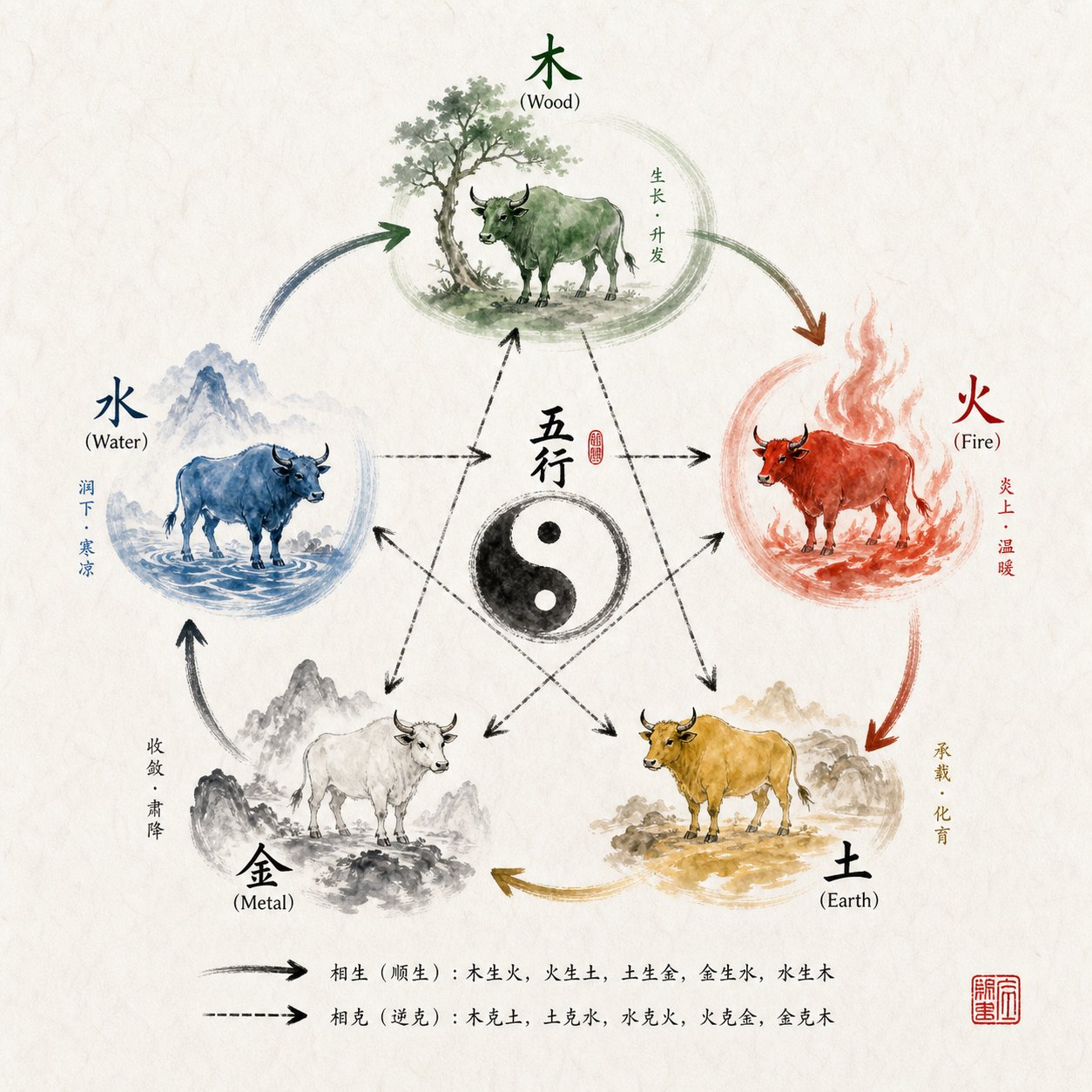
The sacrifice and labor radicals target the Ox's physical fate, but the naming system also accounts for a subtler form of harm: internal suffering. Characters built from heart, meat, fire, and sun radicals affect the Ox's emotional constitution and elemental balance. What makes this category especially complex is that its rules shift depending on which of the five elemental sub-types of Ox the person was born under.
Heart and Meat Radicals and Their Significance
Three radicals form this group: 心 (xin, heart), 忄 (the vertical heart radical appearing on the left side of characters), and 月/⺼ (yue, which functions as the "meat" radical despite looking identical to the moon character). All three are considered inauspicious for Ox zodiac names, but the reasoning operates on two distinct levels.
The first level is literal. The Ox is a grass-eating animal. It does not consume meat. In the biological food chain, the ox can only ever be the source of meat, never the consumer. When a meat-related radical appears in an Ox person's name, it symbolizes something the bearer can never access or enjoy. Practitioners describe this as 食不下咽 (shi bu xia yan), meaning "food that cannot be swallowed." The character promises nourishment that the Ox can never receive, creating a perpetual sense of lack.
The second level is emotional. The heart radical represents feelings, consciousness, and inner life. For the Ox, whose cultural identity centers on silent endurance and selfless labor, heart radicals suggest emotional depletion. The Taiwanese naming reference from Lu Laoshi describes this as "精神被掠奪之象及失落感" (a symbol of one's spirit being plundered, along with a sense of loss). The Ox works without complaint, and a heart radical in its name amplifies that pattern into emotional exhaustion.
Here are the most common characters containing heart and meat radicals that Ox-born individuals should avoid:
- 忠 (zhong) — Meaning loyal or devoted. Contains 心 at the bottom. Loyalty is already the Ox's default mode; reinforcing it through naming pushes devotion toward self-destruction.
- 思 (si) — Meaning think or miss someone. Contains 心 at the bottom. Implies overthinking and emotional burden.
- 意 (yi) — Meaning intention or meaning. Contains 心 at the bottom. Channels emotional weight into the name.
- 惠 (hui) — Meaning kindness or benefit. Contains 心 at the bottom. Despite its generous meaning, it drains the Ox's emotional reserves.
- 怡 (yi) — Meaning joyful or harmonious. Contains 忄 radical. Popular in female names but carries heart energy that conflicts with Ox.
- 悦 / 悅 (yue) — Meaning pleased or delighted. Contains 忄 radical. The promise of joy becomes unattainable.
- 情 (qing) — Meaning emotion or feeling. Contains 忄 radical. Directly names the emotional realm that burdens the Ox.
- 惟 (wei) — Meaning only or think. Contains 忄 radical. Common in literary names.
- 慧 (hui) — Meaning wisdom or intelligence. Contains 心 at the bottom. One of the most popular female name characters that conflicts with Ox energy.
- 育 (yu) — Meaning raise or educate. Contains 月 (meat) radical. Implies nurturing others at one's own physical expense.
- 肯 (ken) — Meaning willing or agree. Contains 月 (meat) radical. Willingness becomes servitude.
- 胜 / 勝 (sheng) — Meaning victory. Contains 月 (meat) radical in its structure. The meat component undermines the triumphant meaning.
You'll notice a pattern: many of these characters express exactly the qualities parents hope to cultivate. Wisdom, joy, loyalty, kindness. For any other zodiac sign, they might be perfectly fine. For the Ox, they activate the animal's tendency toward emotional self-sacrifice, turning positive traits into traps.
Fire and Sun Radicals in Five Elements Context
Fire and sun radicals introduce a different mechanism of harm, one rooted in Five Elements (五行, wu xing) theory rather than animal symbolism alone. The primary radicals in this category are 火 (huo, fire), 灬 (the four-dot fire radical appearing at the bottom of characters), and 日 (ri, sun).
The sun radical carries a straightforward cultural meaning for the Ox. An ox under the blazing sun is an ox being worked in the fields. The Lu Laoshi reference explains: "牛在太陽下耕作成氣喘牛" (an ox working under the sun becomes a panting, exhausted ox). Sun radicals in a name condemn the bearer to visible, relentless labor with no shade or rest. Characters like 明 (ming, bright), 昌 (chang, prosperous), 晨 (chen, morning), 景 (jing, scenery), and 晴 (qing, clear weather) all carry this solar energy.
Fire radicals operate through elemental interaction. The Ox's native branch 丑 carries Yin Earth energy with hidden Water and Metal stems. Fire's relationship to these elements varies: Fire generates Earth (beneficial in some contexts), but Fire also melts Metal and evaporates Water. For certain Ox sub-types, fire energy creates direct elemental destruction. The Capture Miracle naming guide states plainly that characters with 火 bring "不利健康" (harm to health) for Ox-born individuals.
Common fire-radical characters to watch include:
- 炎 (yan) — Meaning flame or inflammation. Double fire character; intensely problematic.
- 烈 (lie) — Meaning fierce or intense. Contains 火 radical with 列 (row). Implies burning intensity.
- 煌 (huang) — Meaning brilliant or glowing. Contains 火 radical. Despite its luminous meaning, it scorches the Ox.
- 照 (zhao) — Meaning illuminate or shine. Contains 灬 (four-dot fire) at the bottom. Solar and fire energy combined.
- 熙 (xi) — Meaning prosperous or bright. Contains 灬 radical. Explicitly listed among the 40 radicals Ox should avoid.
- 杰 / 傑 (jie) — Meaning outstanding or hero. Contains 灬 at the bottom in simplified form. One of the most popular male name characters that hides fire energy.
- 燕 (yan) — Meaning swallow (bird). Contains 灬 radical. Common in female names.
- 荣 / 榮 (rong) — Meaning glory or flourish. Contains 火 component in traditional form. The glory it promises comes at a burning cost.
How Ox Sub-Elements Change the Rules
Here is where the system becomes genuinely nuanced. Not all Ox-born people share the same elemental configuration. The Heavenly Stem (天干, tian gan) of the birth year assigns one of five elements to each Ox year, creating distinct sub-types with different vulnerabilities. A fire ox chinese zodiac person born in 1937 or 1997 already carries fire energy internally, which changes how external fire radicals interact with their name. Similarly, someone born under the wood ox chinese zodiac in 1985 faces a unique set of elemental tensions that other Ox types do not share.
The five Ox sub-types and their birth years are:
- Wood Ox (乙丑) — Born in 1925 or 1985. Wood element dominant.
- Fire Ox (丁丑) — Born in 1937 or 1997. Fire element dominant.
- Earth Ox (己丑) — Born in 1949 or 2009. Earth element dominant.
- Metal Ox (辛丑) — Born in 1961 or 2021. Metal element dominant.
- Water Ox (癸丑) — Born in 1913 or 1973. Water element dominant.
Each sub-type retains all the baseline Ox avoidances (Horse, Goat, Dog, sacrifice, and labor radicals). But elemental radicals affect them differently based on Five Elements productive and destructive cycles. The table below maps each Ox type to its additional elemental sensitivities:
| Ox Type | Birth Years | Native Element | Additional Radicals to Avoid | Reasoning |
|---|---|---|---|---|
| Wood Ox | 1925, 1985 | Wood (木) | Metal radicals (金, 釒) are most harmful; Fire radicals (火, 灬) drain energy | Metal destroys Wood (金克木); Fire exhausts Wood by consuming it as fuel |
| Fire Ox | 1937, 1997 | Fire (火) | Water radicals (氵, 水) are most harmful; excess Fire radicals create instability | Water extinguishes Fire (水克火); too much Fire makes temperament volatile |
| Earth Ox | 1949, 2009 | Earth (土) | Wood radicals (木, 艹) are most harmful; Water radicals weaken foundation | Wood penetrates Earth (木克土); Water erodes Earth over time |
| Metal Ox | 1961, 2021 | Metal (金) | Fire radicals (火, 灬, 日) are most harmful; excess Metal creates rigidity | Fire melts Metal (火克金); the Metal Ox is especially vulnerable to sun and fire characters |
| Water Ox | 1913, 1973 | Water (水) | Earth radicals (土, 山) are most harmful; Fire radicals create steam and instability | Earth dams Water (土克水); Fire evaporates Water causing depletion |
Consider a practical example. Someone born in 1961 or 2021 is a metal ox. Their Metal element is directly destroyed by Fire (火克金, huo ke jin). This means fire and sun radicals are not just generally inadvisable for them, they are actively destructive. A character like 煌 (huang, brilliant) or 照 (zhao, illuminate) would carry significantly more harm for a Metal Ox than for an Earth Ox, whose native element is actually generated by Fire.
Conversely, a water ox born in 1973 faces particular danger from Earth radicals like 山 (shan, mountain) and 土 (tu, earth), because Earth dams and controls Water in the destructive cycle. The baseline Ox avoidance of 山 (which represents laborious mountain climbing for any Ox) becomes doubly problematic for the Water Ox, who also suffers elemental suppression from Earth energy.
The wood ox born in 1985 must be especially cautious with Metal radicals (金, 釒, 刂). Notice that blade radicals, already dangerous for all Ox types due to sacrifice symbolism, become elementally destructive as well for the Wood Ox. Metal cuts Wood. This creates a double-layered threat where the same character harms the bearer through both symbolic and elemental channels simultaneously.
For the fire ox born in 1997, the situation is paradoxical. Fire is their native element, yet the baseline Ox system still flags fire radicals as problematic due to the sun-and-labor association. Practitioners handle this by distinguishing between moderate fire energy (which supports the Fire Ox's constitution) and excessive fire energy (which destabilizes it). A single fire-radical character in a name might be tolerable for a Fire Ox where it would harm a Metal Ox severely. But stacking multiple fire characters remains inadvisable for any Ox type.
This elemental layer is precisely why comprehensive Ba Zi analysis matters more than zodiac-sign-only naming. The birth year animal tells you the baseline avoidances. The Heavenly Stem tells you which elemental radicals carry additional weight. And the full eight-character chart (八字, ba zi), which includes month, day, and hour pillars, reveals whether certain elements are already overrepresented or dangerously absent in the person's natal configuration. A name should compensate for what the chart lacks, not amplify what it already has in excess.
With the heart, meat, fire, and sun categories mapped across all five Ox sub-types, the avoidance system is nearly complete. What remains is the practical question: how do modern families, especially those in diaspora communities, actually apply these layered principles when choosing a name?
Practical Naming Guidance for Modern Ox Zodiac Families
Knowing which radicals to avoid is one thing. Applying that knowledge within the constraints of real life, where surnames are inherited, legal documents require specific characters, and family members have strong opinions, is another matter entirely. Whether you are naming a 1997 ox baby who is now an adult considering a legal name change, or choosing characters for a newborn in 2021, the practical questions are the same: where do these rules actually apply, and how strictly should you follow them?
Given Names vs Surnames and Character Position
In the Ba Zi Zodiac Name Studies framework, a Chinese name is divided into three positional zones: the surname (天, tian, representing heaven and ancestral energy), the first given-name character (地, di, representing earth and personal growth), and the second given-name character (人, ren, representing human relationships). Each position governs a different life stage, with the surname influencing ages 0 to 20, the first given character covering 21 to 40, and the second given character shaping 41 to 60.
Avoidance principles apply most strictly to the given name characters, because those are the elements parents can control. Surnames are inherited. If your family name happens to be 许 (xu, which contains the Horse branch 午) or 马 (ma, the Horse radical itself), you cannot simply discard it. Practitioners handle this by selecting given-name characters that compensate for the surname's conflicting energy rather than amplify it. The goal is balance across all three positions, not perfection in any single one.
Between the two given-name positions, the first character (地) carries slightly more weight in most Taiwanese interpretations because it governs the prime working years. A problematic radical in this position is considered more impactful than one in the second character slot. Mainland practitioners tend to weigh both positions more equally, focusing instead on the overall radical composition of the full name.
Applying These Principles in Diaspora Communities
For families living outside Chinese-speaking regions, the challenge multiplies. You might need a Chinese name for a birth certificate, a family registry, or cultural ceremonies, while also choosing an English or local-language legal name. Some families consult naming practitioners remotely, sending the child's birth date and time to a master in Taiwan or mainland China who then provides character recommendations.
A few practical considerations for diaspora families:
- If the Chinese name will appear on legal documents, confirm which character set (simplified or traditional) your local registry accepts. Some avoidance rules are more visible in traditional characters where radicals are fully preserved.
- For someone researching the chinese zodiac sign for 1961, that year produces a Metal Ox (辛丑). The same applies to 2021. Knowing the elemental sub-type helps narrow which additional radicals to prioritize avoiding.
- If you are choosing characters purely for cultural or ceremonial use rather than legal documents, you have more flexibility to prioritize family meaning alongside zodiac considerations.
- Online radical-lookup tools can help verify whether a character contains hidden components. Check both simplified and traditional forms, since simplification sometimes obscures radicals that are visible in the original.
Families exploring the 1937 chinese zodiac (Fire Ox) or the chinese zodiac for 1949 (Earth Ox) are often doing so for elderly relatives considering a name change or for ancestral name analysis. In these cases, the exercise is typically reflective rather than prescriptive, understanding how existing names may have interacted with the bearer's zodiac energy over a lifetime.
Common Misconceptions About Zodiac Naming Rules
The biggest misconception is that these rules are absolute mandates. They are not. The NameFate research on naming misconceptions emphasizes that no single factor, whether zodiac sign, stroke count, or radical composition, determines a person's destiny in isolation. These are folk traditions with cultural weight, not scientific laws. Many successful people carry names filled with "taboo" radicals and live fulfilling lives.
Other common misunderstandings include:
- "One bad radical ruins the entire name." Not accurate. Practitioners evaluate the full name as a system. A single conflicting radical can be offset by supportive elements elsewhere in the name.
- "These rules are the same everywhere." Taiwanese 八字生肖姓名学 and mainland naming traditions share core principles but differ in emphasis. Taiwanese practitioners tend to weight radical analysis more heavily, while some mainland schools prioritize Five Elements balance or stroke-count numerology.
- "The zodiac sign is the only factor that matters." The birth year animal is just one pillar of the full Ba Zi chart. Month, day, and hour pillars all contribute additional elemental information that can override or modify year-based recommendations.
- "You must change your name if it contains bad radicals." Many families choose to keep meaningful names that honor ancestors or carry personal significance, accepting the folk-tradition perspective as one input among many rather than a binding verdict.
The most balanced approach treats zodiac naming principles as one voice in the conversation, not the only voice. A name that honors family, carries personal meaning, and resonates emotionally can serve its bearer well even if it contains a technically inauspicious radical.
Whether you follow these traditions strictly or treat them as cultural reference points, the value lies in understanding what the system says and why. That understanding gives you the power to make informed choices rather than anxious ones. For those who want a comprehensive view, the final step is consolidating every avoidance category into a single reference and knowing when to seek professional guidance.
Complete Reference of All Characters Ox Zodiac Should Avoid
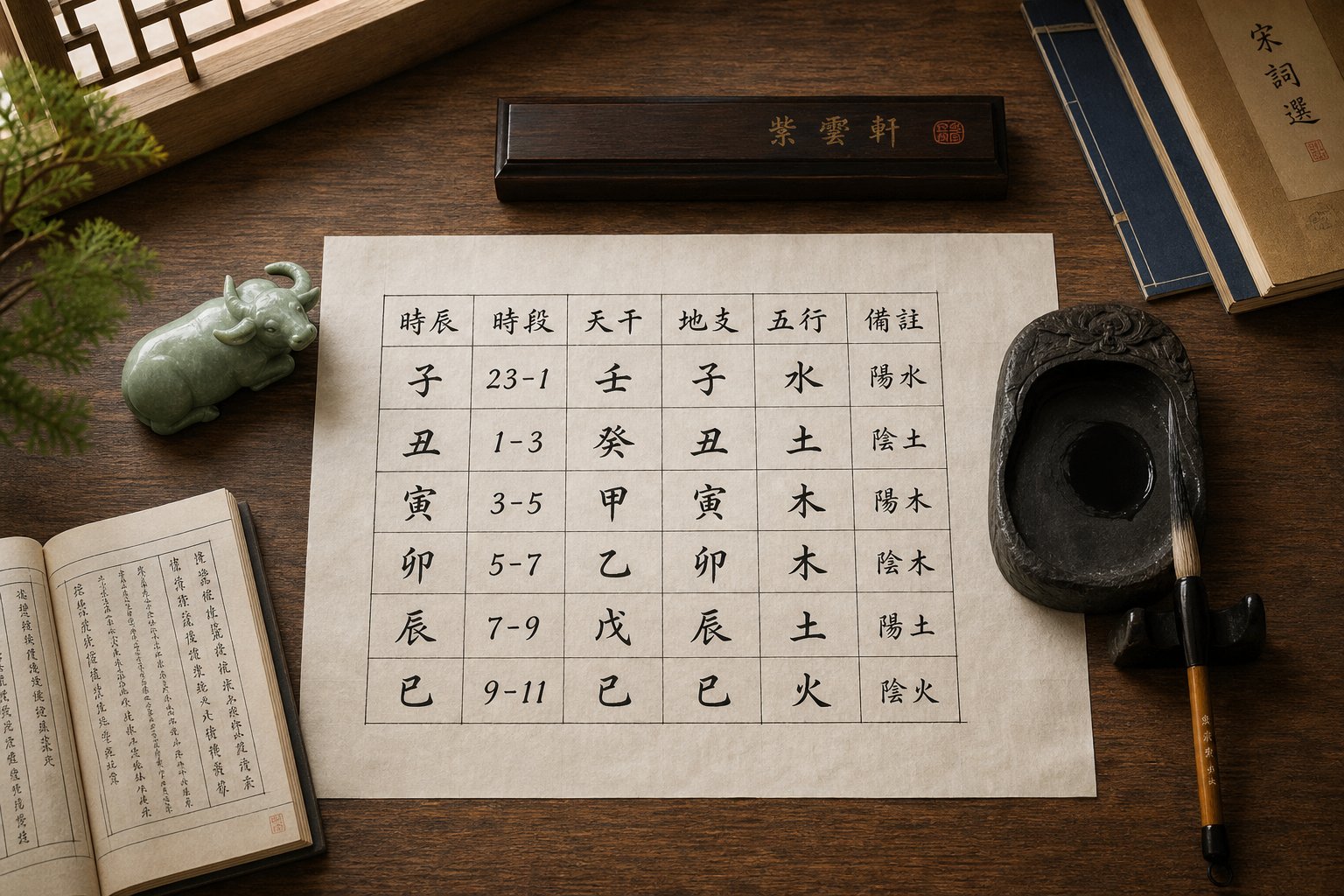
You have now seen how each conflict type operates independently, from branch-based animal clashes to symbolic sacrifice imagery to elemental destruction cycles. But when you are actually sitting down to evaluate a character for a name, you need everything in one place. This consolidated reference organizes every avoidance category by its underlying conflict logic, giving you a single resource to check any character against.
Complete Quick-Reference by Conflict Type
The full meaning of the year of the ox in naming tradition comes down to this: the Ox is a Yin Earth animal occupying the 丑 branch, culturally defined by labor and sacrifice, and vulnerable to specific animals, elements, and symbolic imagery. Every radical on the avoidance list traces back to one of these core vulnerabilities.
The master reference table below consolidates all categories covered throughout this guide. Use it as a checklist when evaluating potential name characters:
| Conflict Type | Source | Radicals to Avoid | Example Characters | Reasoning |
|---|---|---|---|---|
| 相害 (Six Harms) | Horse (午) | 马 / 馬, 午 | 骏, 驰, 骑, 驹, 许, 玛, 冯 | Horse destroys the Ox-Rat alliance (子丑合); any 午 branch energy harms Ox indirectly |
| 相冲 (Direct Clash) | Goat (未) | 羊, 未 | 美, 義, 群, 祥, 善, 翔, 洋, 养 | 丑未对冲: Ox and Goat compete for the same resources, creating scarcity and separation |
| 相刑 (Punishment) | Dog (戌) | 犬, 犭, 戌 | 威, 成, 献, 独, 猛, 然, 默 | 丑戌相刑: mutual stubbornness creates grinding friction, power struggles, and repeated conflict |
| Sacrifice — Blade | Cultural symbolism | 刀, 刂 | 利, 刚, 剑, 别, 创, 割, 刘 | Ox as highest sacrificial animal (太牢); blade radicals echo ritual slaughter |
| Sacrifice — Crown/Clothing | Cultural symbolism | 冖, 王, 玉, 彡, 巾, 衣, 纟/糹, 采, 示/礻 | 冠, 彩, 彦, 帅, 裕, 祥, 希, 经, 衫 | Decorated ox = ox prepared for sacrifice; crowns and ribbons signal death, not honor |
| Sacrifice — Ritual | Cultural symbolism | 示, 礻 | 祈, 祐, 祖, 祥, 祺, 祿, 禎, 福, 禮 | 示 radical represents altar and ceremony; Ox in ritual context becomes the offering |
| Overwork — Labor | Cultural symbolism | 力 | 勤, 努, 劳, 勇, 动, 功, 助, 勉 | Reinforces the Ox's fate of endless toil; locks bearer into exhaustion without reward |
| Overwork — Heart/Meat | Cultural symbolism | 心, 忄, 月/⺼ | 忠, 思, 意, 惠, 怡, 悦, 慧, 育 | Heart = emotional depletion; Meat = Ox as source of flesh, never the consumer |
| Overwork — Sun/Mountain | Cultural symbolism | 日, 山 | 明, 昌, 晨, 景, 晴, 峰, 崇, 岳 | Sun = ox panting under heat while plowing; Mountain = laborious climbing, exhaustion |
| Elemental — Fire | Five Elements (五行) | 火, 灬 | 炎, 烈, 煌, 照, 熙, 杰, 燕, 荣 | Fire melts Metal Ox, evaporates Water Ox; sun-labor association applies to all types |
| Elemental — Varies by sub-type | Five Elements (五行) | Depends on birth year stem | See sub-type table in previous section | Metal Ox avoids Fire; Wood Ox avoids Metal; Water Ox avoids Earth; Earth Ox avoids Wood; Fire Ox avoids excess Water |
| Honorific/Royal | Cultural symbolism | 王, 玉, 主, 君, 帝, 大, 長, 冠 | 瑞, 瑜, 琳, 璋, 隆, 雍, 舜, 堯 | Ox "overstepping its station" invites health damage; historical emperor names are especially taboo |
A few notes on using this table effectively. First, check both simplified and traditional forms of any character you are considering. Simplification sometimes hides radicals that are fully visible in the traditional version. Second, remember that a character can trigger multiple conflict categories simultaneously. For example, 祥 (xiang) contains both the 示 (ritual/sacrifice) radical and the 羊 (Goat) component, making it doubly problematic for the chinese ox. Third, the Lu Laoshi reference identifies 40 specific radicals and characters to avoid, with 241 individual characters explicitly flagged across all stroke counts.
For quick screening, the highest-priority avoidances are the animal-conflict radicals (马, 羊, 犬/犭) and the sacrifice cluster (示, 王, 刂, 彡, 巾, 衣). These carry the strongest traditional weight and appear most frequently in common naming characters. The elemental radicals (火, 日, 山) are secondary for most Ox types but become primary concerns for specific sub-types like the Metal Ox.
Beyond the Zodiac Sign and Next Steps
Everything in this guide addresses one dimension of Chinese name analysis: the birth year zodiac animal. That is a useful starting point, but it is not the complete picture. The ox personality in naming tradition is shaped by far more than the year branch alone.
A full Ba Zi (八字) chart includes four pillars: year, month, day, and hour. Each pillar contains a Heavenly Stem and an Earthly Branch, producing eight characters total. The day pillar, not the year pillar, is actually considered the "self" element in classical Ba Zi analysis. This means two people born in the same Ox year but on different days may have fundamentally different elemental needs. One might desperately need Fire energy to balance an excess of Water in their chart, while another might need to avoid Fire entirely.
The meaning of the year of the ox provides the broad strokes, the baseline avoidances that apply to all Ox-born individuals regardless of their full chart. But personalized naming requires a qualified 命理 (ming li, destiny analysis) practitioner who can read the complete eight-character configuration and determine which elements are deficient, which are excessive, and which radicals would genuinely serve or harm the specific individual.
When seeking professional guidance, consider these steps:
- Provide the practitioner with the exact birth date and time (including hour), not just the year. The hour pillar alone can shift elemental recommendations significantly.
- Ask whether they practice Taiwanese 八字生肖姓名学 or mainland-style naming. The approaches overlap but differ in emphasis, and knowing which tradition you are working within helps set expectations.
- Request an explanation of their reasoning, not just a list of approved characters. Understanding why a character works for your specific chart helps you evaluate alternatives if your preferred characters are flagged.
- If consulting remotely, verify the practitioner's credentials through client references or published work. The field has no universal licensing, so reputation and transparency matter.
For the ox chinese zodiac, the avoidance system is more extensive than for most other signs precisely because the animal carries such heavy cultural symbolism. The Ox is simultaneously revered for its strength and pitied for its fate. That duality means more radical categories trigger negative associations. But it also means the system offers clear, well-documented guidance. You know exactly what to watch for and why.
Whether you treat these principles as binding rules or cultural context, the ox horoscope personality benefits from names that emphasize freedom, nourishment, and rest rather than labor, sacrifice, and conflict. Characters containing grass radicals (艹), grain radicals (禾, 米, 豆), water radicals (氵), and shelter radicals (宀) are traditionally considered supportive. They symbolize an ox that is well-fed, sheltered, and free from the plow, the opposite of every fate the avoidance list warns against.
The naming system, at its core, is an act of care. It asks: given everything we know about this animal's symbolic vulnerabilities, how can we choose characters that protect rather than expose? That question deserves a thoughtful answer, whether your approach is traditional, modern, or somewhere in between.
Frequently Asked Questions About Ox Zodiac Naming Taboos
1. What Chinese radicals are most dangerous for Ox zodiac names?
The highest-priority radicals to avoid are animal-conflict radicals (马 for Horse, 羊 for Goat, 犬/犭 for Dog) and the sacrifice cluster (示, 王, 刂, 彡, 巾, 衣). Horse radicals trigger the six-harms relationship, Goat radicals activate the direct clash, and Dog radicals create punishment energy. Sacrifice-related radicals like blade and crown components echo the Ox's historical role as a ritual offering, symbolizing a tragic fate rather than honor.
2. Why are beautiful characters like 美 and 祥 considered bad for Ox names?
Characters like 美 (beautiful) and 祥 (auspicious) contain the hidden 羊 (Goat) radical, which directly clashes with the Ox's Earthly Branch 丑. In Ba Zi Zodiac Name Studies, a character's radical-level energy overrides its dictionary meaning. Since Ox and Goat occupy opposing positions on the branch circle, any Goat component introduces competing energy that practitioners associate with resource scarcity and family separation, regardless of how positive the character appears on the surface.
3. Do Ox zodiac naming rules differ based on birth year element?
Yes. All Ox-born individuals share baseline avoidances (Horse, Goat, Dog, sacrifice, and labor radicals), but the Heavenly Stem of the birth year adds elemental sensitivities. A Metal Ox (1961, 2021) is especially vulnerable to fire and sun radicals because fire melts metal. A Wood Ox (1985) faces extra danger from metal and blade radicals since metal cuts wood. A Water Ox (1973) should particularly avoid earth radicals like 山 and 土 because earth dams water. Knowing your sub-type helps prioritize which additional radicals matter most.
4. Should I change my surname if it contains a conflicting radical for Ox zodiac?
Practitioners do not recommend changing inherited surnames. Instead, they advise compensating through careful given-name character selection. For example, if your surname is 许 (which contains the Horse branch 午) or 马 (the Horse radical itself), a naming practitioner would choose given-name characters with supportive energy like grass, grain, water, or shelter radicals to offset the surname's conflicting component. The goal is balance across the full name rather than perfection in any single position.
5. Are Ox zodiac naming taboos scientifically proven or mandatory to follow?
These are folk naming traditions rooted in Taiwanese and mainland Chinese cultural practice, not scientific laws. Many successful people carry names with technically taboo radicals. No single factor like zodiac sign, stroke count, or radical composition determines destiny in isolation. Families can treat these principles as one input among many, balancing zodiac considerations with personal meaning, family heritage, and emotional resonance when choosing a name.