Understanding Earth Element Names in Chinese Tradition
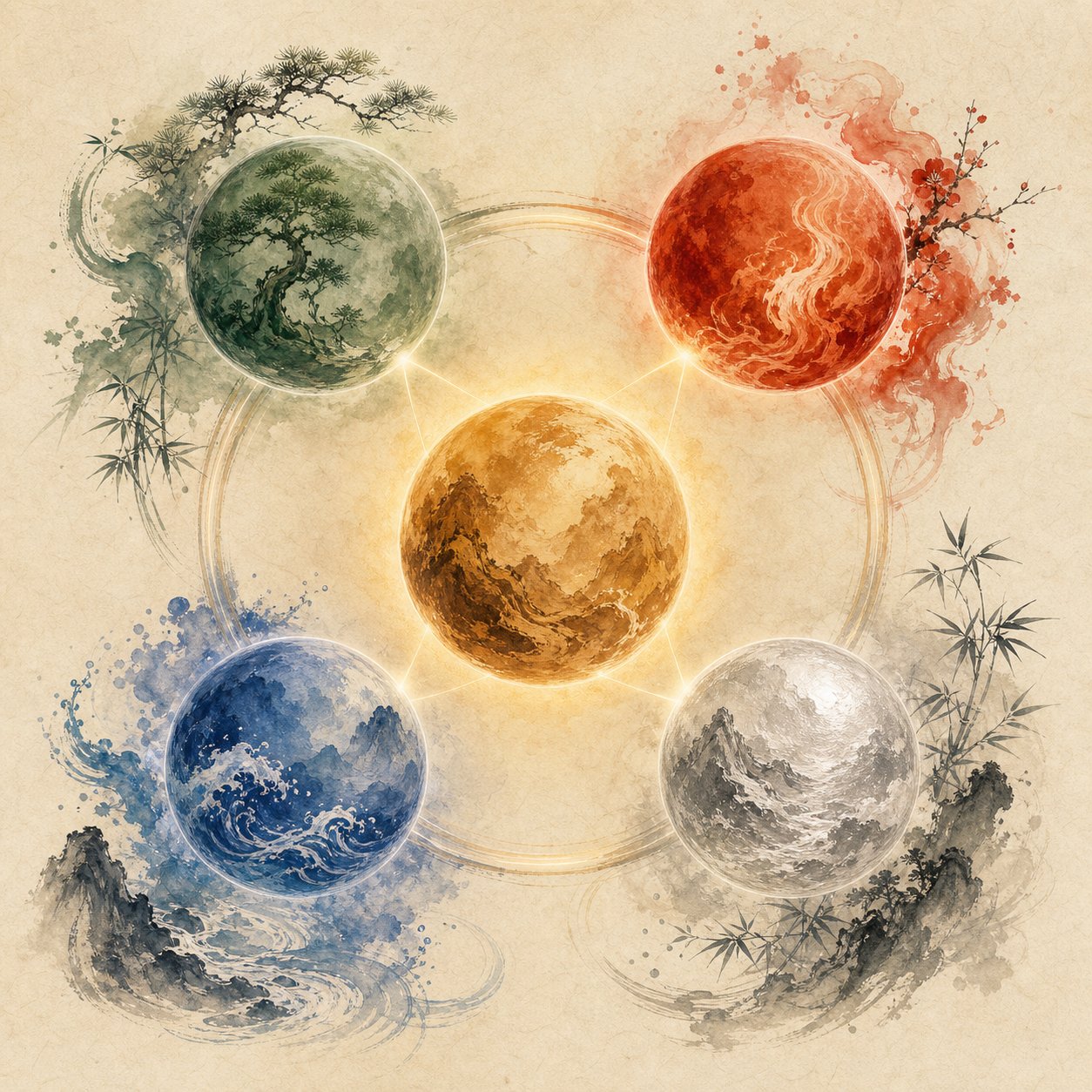
When you hear someone ask "what is my Chinese name?" the answer often runs deeper than picking characters that sound pleasant. In Chinese naming tradition, a name carries elemental weight. It connects a person to one of five fundamental phases of energy described in the Wu Xing (五行) system: Wood, Fire, Earth, Metal, and Water. Among these, Earth (土) holds a unique position. It sits at the center of the cycle, representing the stabilizing force that makes everything else possible.
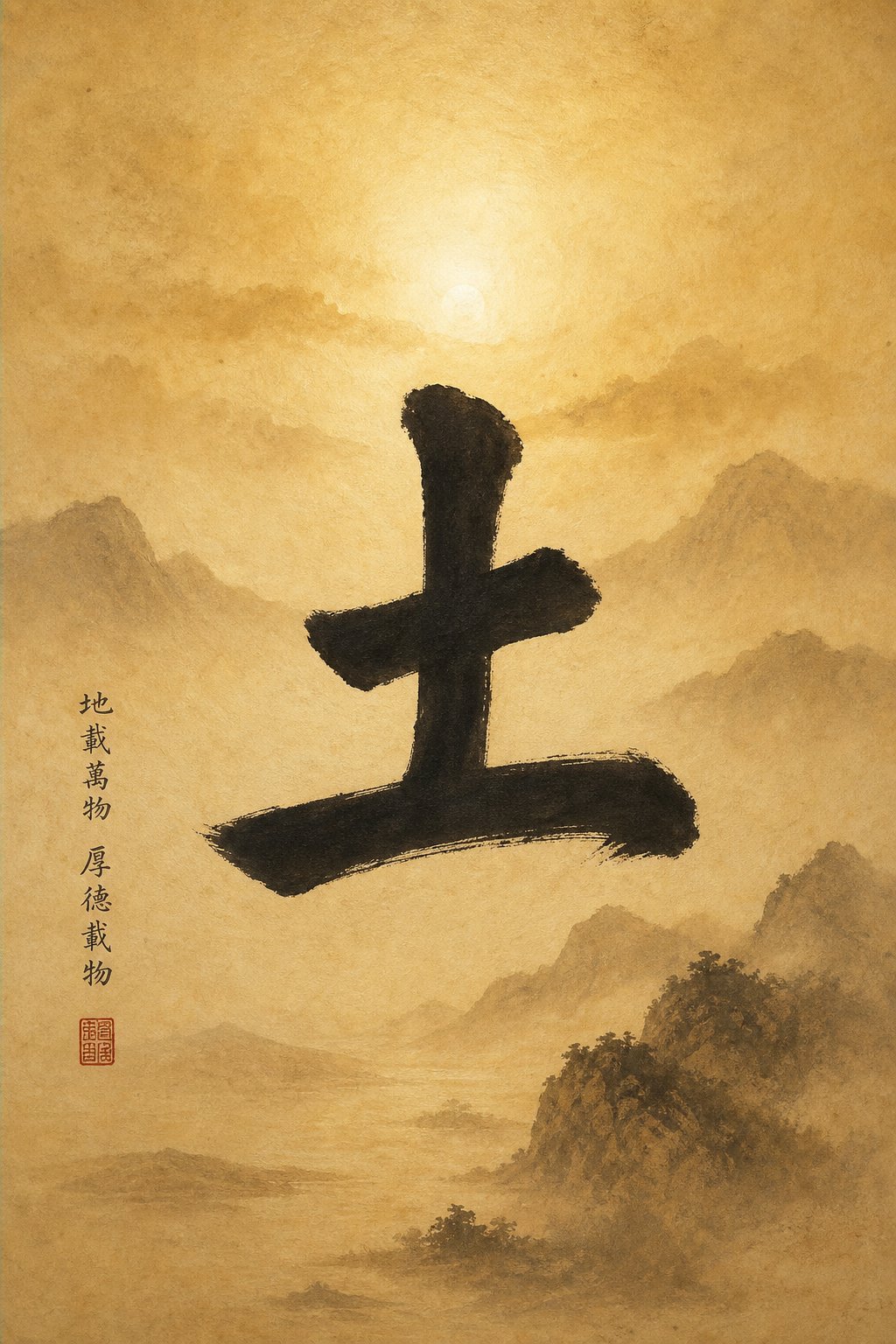
Earth element Chinese names are built around characters that embody groundedness, nourishment, reliability, and trust. Think of earth not as dirt beneath your feet, but as the foundation a house rests on, the soil that feeds a harvest, the steady ground that doesn't shift when storms pass through. In Chinese philosophy, Earth (土) is associated with trust, stability, and nurturing — it is the grounding force that holds the other elements together.
Earth (土) represents the center, the foundation — it is the element of stability, trust, and nourishment in Chinese philosophy.
Why Earth Element Names Matter in Chinese Culture
Earth is not passive. Without it, water has no banks to flow between, wood has no soil to root in, and fire has no ground to burn upon. This is why earth-associated characters carry such cultural prestige in Chinese names. They signal someone dependable, someone who provides a foundation for the people around them. Parents choosing earth element names are embedding a wish for their child: be steady, be trustworthy, be the person others can lean on.
The tradition connects to a broader cosmological view where earth is associated with the color yellow, the center direction, and the transitional energy between seasons. It represents harvest time, the moment when growth pauses and abundance is gathered. A name carrying this energy suggests someone who brings things together rather than scattering them apart.
Who Seeks Earth Element Chinese Names
Two main groups of people search for these names. The first is parents naming a newborn. A BaZi (八字) practitioner analyzes the child's birth chart — calculated from the exact year, month, day, and hour of birth — and identifies which elemental energies are strong, weak, or missing. When earth shows up as deficient, the practitioner recommends characters that carry earth energy to restore balance. This is the most traditional path.
The second group is adults seeking a Chinese name for personal or professional identity. Maybe you're wondering "what is your Chinese name" for business use in China, or you're drawn to the qualities earth represents and want a name that reflects steadiness and reliability. You don't need a formal BaZi reading to choose an earth element name. Many families today simply select earth-associated characters because they admire the qualities those characters represent — patience, dependability, quiet strength.
This guide goes deep on earth element names specifically. Rather than skimming all five elements in a single overview, every section ahead focuses on helping you understand, identify, and choose characters that carry genuine earth energy — from the radicals that signal elemental association to the cultural context that gives each character its weight.
How the Five Element Cycles Shape Name Choices
Knowing that earth represents stability and centeredness is a good start. But choosing earth element Chinese names effectively requires understanding how earth interacts with the other four elements. The Wu Xing system is not a static list of five categories. It is a dynamic cycle where each element feeds, supports, or challenges another. These relationships directly determine which characters pair well together in a two-character given name and which combinations create energetic conflict.
Imagine you're selecting two characters for a given name. One carries earth energy. What should the second character carry? The answer lives in two ancient cycles that govern how the five elements relate to each other: the generating cycle (相生) and the controlling cycle (相克). Getting this pairing right is what separates a harmonious name from one that works against itself.
The Generating Cycle and Earth Element Harmony
The generating cycle, also called the producing cycle, describes how each element naturally gives rise to the next. It flows like this: Wood feeds Fire. Fire creates Earth. Earth produces Metal. Metal generates Water. Water nourishes Wood. Each element acts as a mother to the one it produces.
For earth element names, the critical relationship here is that fire produces earth. In nature, think of volcanic fire creating new land, or flames reducing wood to ash that becomes soil. This means pairing a fire-element character with an earth-element character is considered highly auspicious. The fire character energetically "feeds" the earth character, strengthening it. Chinese names meaning fire — characters like 炎 (yan, flame), 煜 (yu, brilliant), or 晖 (hui, radiance) — work as natural partners alongside earth characters.
A name combining fire and earth follows the natural flow of energy. The fire character generates support for the earth character rather than competing with it. For someone whose birth chart shows earth deficiency, this pairing does double duty: the earth character directly supplies the missing element, while the fire character ensures that earth energy is continuously nourished.
Earth also produces metal in the generating cycle. This means earth-element characters pair comfortably with metal-element characters too, though the dynamic is different. Here, earth acts as the giver rather than the receiver. A name combining earth and metal suggests someone who provides a stable foundation (earth) from which precision and clarity (metal) can emerge.
The Overcoming Cycle and Characters to Avoid
The controlling cycle describes how each element restrains another. It flows like this: Metal cuts Wood. Wood parts Earth. Earth dams Water. Water extinguishes Fire. Fire melts Metal. This cycle is not inherently negative — regulation keeps things balanced. But in naming, you want to avoid placing an element that directly overcomes your target element right next to it.
For earth, the threat comes from wood. Wood overcomes earth. Picture tree roots breaking through soil, or a plow splitting open a field. When you place a wood-element character alongside an earth-element character in a name, the wood energy symbolically weakens and disrupts the earth energy. Characters containing the wood radical (木) or associated with growth and trees — like 林 (lin, forest), 松 (song, pine), or 荣 (rong, flourish) — create tension when paired directly with earth characters.
This doesn't mean wood characters are bad. They simply work against the purpose of strengthening earth. If your goal is to boost earth energy through a name, combining it with the very element that controls it undermines the intention. It's like planting a tree specifically to break apart the foundation you just built.
Earth itself controls water in the overcoming cycle. A name pairing earth with water creates a dynamic where earth dominates water — potentially useful if the chart needs water to be restrained, but problematic if both elements need to thrive equally.
The table below maps out these relationships for all five elements, with earth placed at the center where it belongs in Chinese cosmology. Use it as a quick reference when evaluating character pairings:
| Element | Chinese Symbol | Generates | Is Generated By | Overcomes | Is Overcome By |
|---|---|---|---|---|---|
| Wood (木) | 木 | Fire | Water | Earth | Metal |
| Fire (火) | 火 | Earth | Wood | Metal | Water |
| Earth (土) | 土 | Metal | Fire | Water | Wood |
| Metal (金) | 金 | Water | Earth | Wood | Fire |
| Water (水) | 水 | Wood | Metal | Fire | Earth |
When you look at the Chinese symbols for the elements in this table, notice how earth's row tells the whole story. Fire is its mother (generates it), wood is its adversary (overcomes it), and metal is its child (what it produces). A well-constructed earth element name respects these relationships. The strongest combinations place fire alongside earth, or earth alongside metal. The weakest force wood directly against earth.
These cycles give you a practical framework for evaluating any character combination. You don't need to memorize every interaction — just remember the two key rules for earth: fire supports it, wood undermines it. With that foundation in place, the next question becomes personal. How do you know whether your specific birth chart actually needs earth energy in the first place?
How to Know If Your Birth Chart Needs Earth Energy
You've seen how fire supports earth and wood undermines it. But here's the deeper question: does your chart actually lack earth in the first place? The answer comes from BaZi (八字), a Chinese metaphysical system that maps the elemental composition of your life based on the exact moment you were born. If you've ever wondered "what is my Chinese element" or "what element am I in Chinese astrology," BaZi is the system that provides the answer.
BaZi literally translates to "eight characters." Your birth data — year, month, day, and hour — produces four pairs of Chinese characters, each pair forming a "pillar." Together, these four pillars contain eight characters, and every single one carries an elemental association. A practitioner reads these eight characters to determine which elements are strong, which are weak, and which are missing entirely. That elemental profile is what drives the decision to choose earth element characters for a name.
The Four Pillars and Their Elemental Assignments
Each pillar in your BaZi chart consists of two components stacked vertically: a Heavenly Stem (天干) on top and an Earthly Branch (地支) on the bottom. The Heavenly Stems each carry a single elemental energy, while the Earthly Branches are more complex — each containing hidden stems that carry layered elemental forces beneath the surface.
There are 10 Heavenly Stems, cycling through the five elements in Yin and Yang pairs. There are 12 Earthly Branches, each corresponding to a zodiac animal and a dominant element. When combined, they create the framework that defines your elemental blueprint.
Here are the four pillars and what each one represents:
- Year Pillar (年柱) — Derived from your birth year. It reflects your relationship to society, ancestry, and early childhood. The Earthly Branch of this pillar corresponds to your Chinese zodiac animal.
- Month Pillar (月柱) — Derived from your birth month. It carries the seasonal energy of your chart and represents your relationship to parents, career, and the external environment. This pillar holds particular diagnostic weight because it sets the "temperature" of the entire chart.
- Day Pillar (日柱) — Derived from your birth day. The Heavenly Stem of this pillar is your Daymaster (日主) — the single character that represents you at the center of the chart. Everything else in the chart is read in relationship to this character.
- Hour Pillar (时柱) — Derived from your birth hour (using traditional two-hour blocks, not single hours). It represents your inner self, aspirations, and relationship to children or legacy.
Each of these pillars contributes two characters to your chart — one Heavenly Stem and one Earthly Branch. That gives you eight characters total, each tied to one of the five elements. Some Earthly Branches also contain hidden stems within them, adding additional elemental layers that aren't immediately visible on the surface.
For example, the Earthly Branch 辰 (Dragon) is dominated by Wu Earth but also contains hidden Wood and Water energy. The branch 丑 (Ox) carries Ji Earth as its dominant element with hidden Metal and Water. These hidden stems mean that a single pillar can carry the energy of two or three elements simultaneously.
Identifying Earth Element Deficiency in Your Chart
So how does a practitioner determine that your chart needs more earth? The process involves counting and weighing the elemental representation across all eight characters — plus the hidden stems within the Earthly Branches.
Imagine laying out your four pillars side by side. A practitioner examines each Heavenly Stem and identifies its element. Then they look at each Earthly Branch, noting both the dominant element and any hidden stems. The result is a tally of how much Wood, Fire, Earth, Metal, and Water energy exists in your chart.
A balanced chart would show reasonable representation across all five elements. In practice, perfect balance is rare. Most charts lean heavily toward certain elements while others are underrepresented or absent entirely. When earth shows up as the weakest or missing element — and when the chart's overall dynamics confirm that earth energy would bring balance — a practitioner identifies an earth deficiency.
But it's not purely about counting. The Daymaster's relationship to each element matters. The seasonal energy from the Month Branch affects how strong or weak each element actually functions. A chart born in spring (Wood-dominant months) naturally suppresses earth energy because wood overcomes earth in the controlling cycle. A chart born in summer (Fire-dominant months) naturally supports earth because fire generates earth. Context shapes everything.
This is why two people born on the same day but at different hours can have different elemental needs. The Hour Pillar changes the composition, and even a single character shift can tip the balance from "earth is adequate" to "earth is deficient."
When earth deficiency is confirmed, one traditional remedy is incorporating earth-element characters into the person's name. The name becomes a daily reinforcement of the missing energy — something you write, hear, and identify with throughout your life.
Traditional Consultation vs. Modern Approaches
There are two distinct paths people take when choosing earth element Chinese names, and both are valid.
The traditional path involves consulting a BaZi practitioner or Chinese naming specialist. You provide your exact birth date and time, and the practitioner plots your four pillars, reads the elemental composition, identifies deficiencies, and recommends specific characters. This approach treats naming as a precise metaphysical prescription. The practitioner considers not just which element is missing, but which specific quality of that element your chart needs — stability versus nourishment versus endurance — and selects characters accordingly.
The modern approach is less formal. Many families today choose earth-associated characters simply because they admire what those characters represent. They might not have a BaZi reading done at all. Instead, they browse character lists, identify meanings that resonate — groundedness, reliability, quiet strength — and select names based on aesthetic preference and cultural symbolism. If you're trying to find your Chinese name without a formal consultation, this path lets you work with earth element energy based on personal affinity rather than chart analysis.
Neither approach is wrong. The traditional method offers precision rooted in centuries of metaphysical practice. The modern method offers accessibility and personal choice. What matters in both cases is understanding which characters genuinely carry earth energy — and that starts with recognizing the radicals and structural components that signal elemental association.
Recognizing Earth Element Radicals and Chinese Character Names
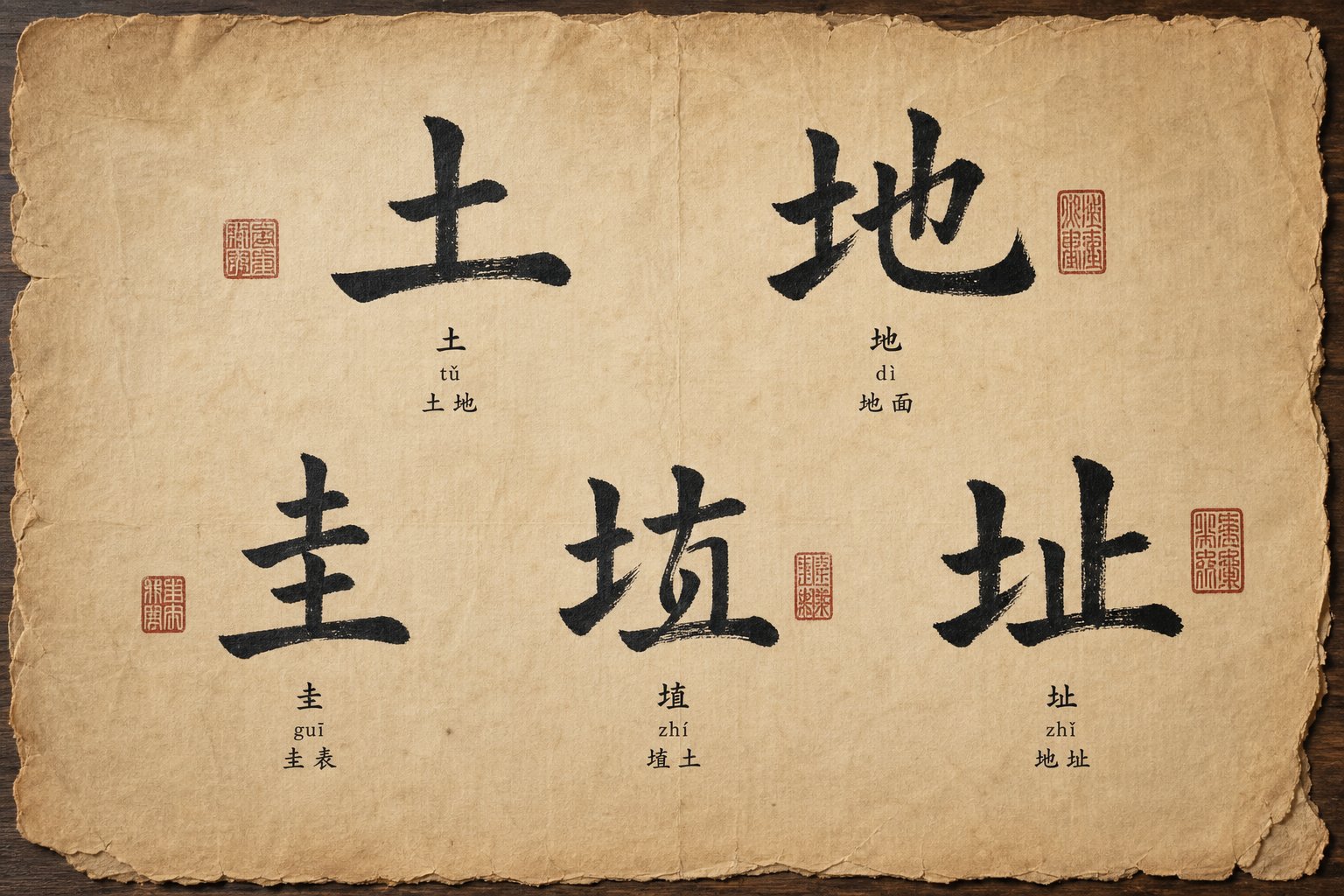
Knowing your chart needs earth energy is one thing. Identifying which characters actually carry that energy is another challenge entirely. Chinese characters are built from smaller structural components called radicals — and certain radicals act as elemental markers. Once you learn to spot them, you can evaluate any character on your own rather than depending solely on pre-made lists. Think of radicals as the DNA of a character. They reveal its elemental lineage at a glance.
This skill matters because name chinese characters number in the thousands. No list can cover every option. But if you understand the five primary earth radicals and how they function, you'll recognize earth energy in characters you've never encountered before. You'll also avoid a common trap: assuming a character belongs to the earth element just because it "feels" earthy, when its actual radical tells a different story.
Primary Earth Radicals You Should Recognize
Five radicals serve as the most reliable indicators of earth element association in Chinese names and characters. Each one connects to a different aspect of earth energy — from raw soil to towering mountains to polished jade. Here they are:
| Radical | Pinyin | Meaning | Example Characters Used in Names |
|---|---|---|---|
| 土 | tu | Earth / Soil | 坤 (kun), 培 (pei), 城 (cheng), 堃 (kun), 垚 (yao) |
| 山 | shan | Mountain | 岩 (yan), 峰 (feng), 崇 (chong), 岚 (lan), 嵘 (rong) |
| 石 | shi | Stone / Rock | 磊 (lei), 碧 (bi), 砚 (yan), 磐 (pan) |
| 田 | tian | Field | 畇 (yun), 畅 (chang), 略 (lue), 甸 (dian) |
| 玉 / 王 | yu | Jade | 瑾 (jin), 琪 (qi), 璋 (zhang), 瑜 (yu), 珏 (jue) |
A few things to notice here. The earth/soil radical (土) is the most direct indicator. Any character built on this radical has an unmistakable connection to earth energy. Characters like 培 (to cultivate), 城 (city wall), and 坤 (the receptive earth in I Ching philosophy) all wear their elemental identity openly.
The mountain radical (山) represents earth in its most imposing form — elevated, enduring, unmovable. Characters like 峰 (peak) and 崇 (lofty, sublime) carry a sense of grandeur that makes them popular in Chinese character names for boys, though 岚 (mountain mist) offers a softer, more poetic option.
The stone radical (石) signals permanence and solidity. 磊, built from three stones stacked together, literally means open-hearted and upright — a character that visually embodies the idea of being rock-solid in character.
The field radical (田) connects earth to agriculture, harvest, and productive land. It carries connotations of wealth generated through patience and cultivation rather than sudden fortune.
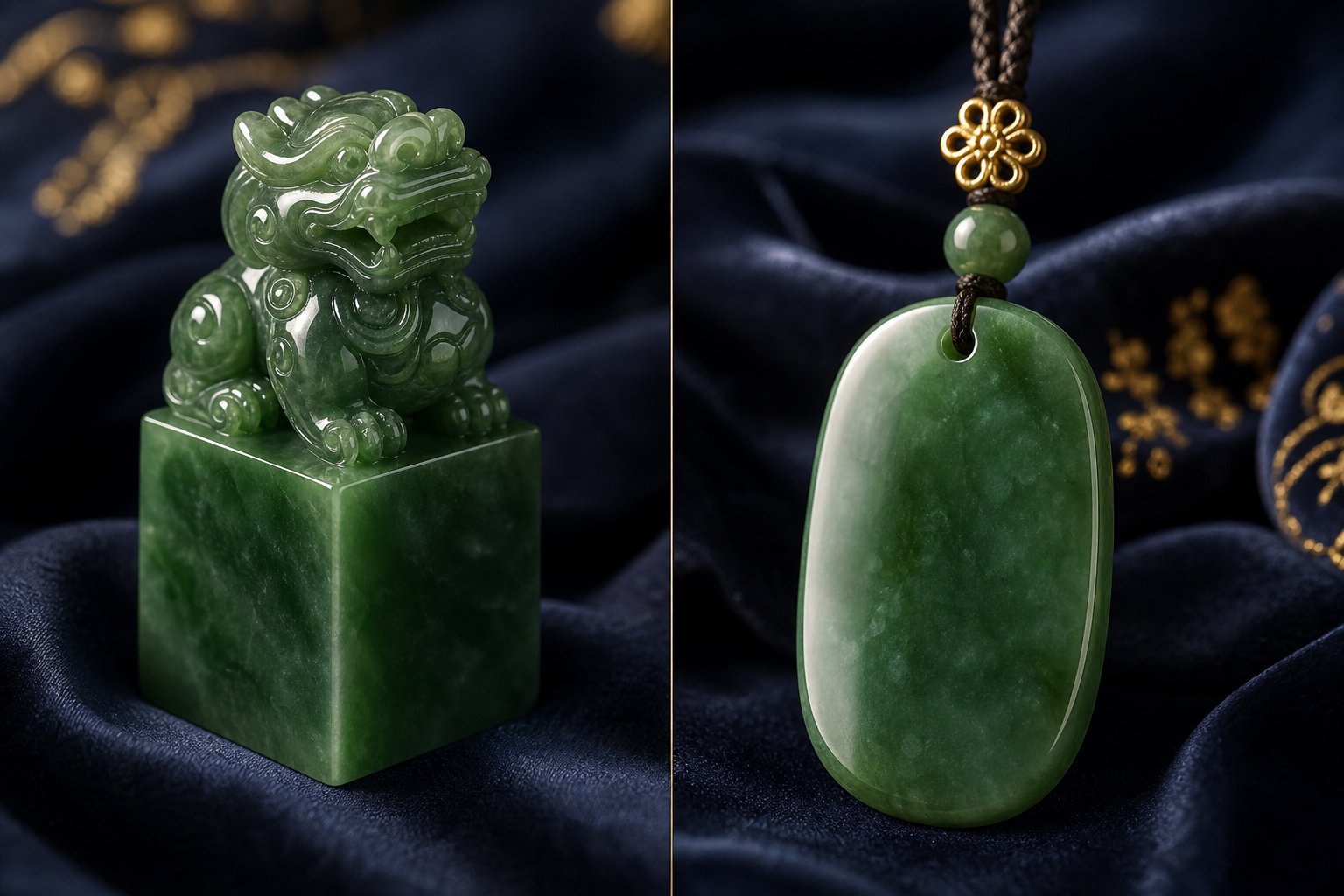
The jade radical deserves special attention. In modern character dictionaries, it often appears as 王 (king) with a small dot, but its origin is 玉 (jade). Jade is a stone — a product of the earth — and carries deep cultural significance in Chinese tradition as a symbol of virtue, refinement, and moral integrity. Characters built on this radical, like 瑾 (fine jade) and 琪 (precious jade), are among the most elegant earth element options available for names.
Structural Radicals vs Philosophical Earth Association
Here's where things get nuanced. Not every earth chinese character contains one of the five radicals listed above. Some characters embody earth element energy through their meaning and philosophical resonance rather than their structural components.
Consider 安 (an), meaning peace and stability. It's composed of the roof radical (宀) over the character for woman (女). No earth radical in sight. Yet in Five Element naming practice, many practitioners associate 安 with earth energy because its core meaning — stability, settledness, being grounded in safety — aligns perfectly with earth's symbolic qualities. The character represents what earth does rather than what earth is.
Other examples of philosophically earth-associated characters include:
- 稳 (wen) — Means steady or stable. Contains the grain radical (禾), technically linked to wood. But its meaning of unwavering steadiness resonates with earth energy.
- 厚 (hou) — Means thick, generous, or substantial. No earth radical present, yet it describes the very quality of rich, deep soil.
- 信 (xin) — Means trust or faithfulness. Contains the person radical (亻). Earth is the element of trust in Wu Xing philosophy, making this a philosophical match.
- 中 (zhong) — Means center or middle. Earth occupies the center position among the five elements, giving this character a strong conceptual link.
So which approach is correct — structural or philosophical? It depends on who you ask. Traditional BaZi practitioners generally prioritize structural radicals. If the character contains 土, 山, 石, 田, or 玉, it counts as earth. Period. This method is clear, verifiable, and leaves little room for debate.
Modern naming consultants sometimes take a broader view, accepting characters whose meanings align with earth qualities even without the structural radical. This expands the pool of available characters significantly but introduces subjectivity. Two practitioners might disagree on whether 安 truly qualifies as an earth element character.
For most people choosing a name, the safest approach is to prioritize characters with visible earth radicals as your primary choice, then consider philosophically associated characters as secondary options — especially when you need a second character that complements the first without doubling down on the same radical. A name like 培安 (pei an) combines structural earth (培, with the 土 radical) and philosophical earth (安, meaning stability), creating layered earth energy without visual repetition.
With these radicals as your guide, you can now scan any character dictionary or name list and quickly identify which options carry genuine earth energy. The next step is seeing these radicals in action — organized not by radical type, but by the specific quality of earth energy each character brings to a name.
Essential Earth Element Characters for Your Chinese Name
You can spot the radicals. You understand which structural components signal earth energy. But when you sit down to actually choose characters for a name, the sheer number of options can feel overwhelming. Which earth characters carry the right weight? Which ones sound elegant when spoken aloud? Which ones will a child grow into rather than outgrow?
The key is to stop thinking alphabetically and start thinking by quality. Earth is not a single note — it's a chord. Some earth characters ring with immovable strength. Others hum with quiet nourishment. Still others resonate with endurance that outlasts generations. Organizing chinese characters names by the specific quality they express helps you match the character to the person rather than picking blindly from a list.
Earth Characters Representing Stability and Strength
These characters carry the energy of earth at its most solid — bedrock, mountain stone, unshakable ground. They suggest someone who doesn't waver under pressure, whose presence steadies the people around them.
- 坤 (kun1) — The receptive earth from the I Ching. Represents the feminine principle of earth: yielding yet infinitely strong. Used in both male and female names with different connotations.
- 坚 (jian1) — Firm, resolute, unyielding. Carries a sense of determination hardened into permanence. The simplified form has 7 strokes; the traditional form 堅 has 11.
- 磊 (lei3) — Three stones stacked together. Means open-hearted, frank, and upright. Visually powerful — the character itself looks like a cairn of rocks.
- 坦 (tan3) — Level, calm, candid. Suggests someone with nothing to hide, as flat and honest as open ground.
- 均 (jun1) — Equal, balanced, even. Contains the earth radical and embodies earth's centering quality — the force that distributes evenly rather than accumulating in one place.
These stability characters work particularly well when paired with fire-element characters in a two-character given name. The fire feeds the earth, and the earth stands firm — a combination that suggests someone whose strength is constantly renewed.
Earth Characters Representing Nourishment and Growth
Earth doesn't just stand still. It feeds. It cultivates. These characters capture earth as fertile soil — the element that makes growth possible for everything it touches. They suggest someone who nurtures others, who builds people up, who creates conditions for flourishing.
- 培 (pei2) — To cultivate, to nurture, to foster growth. One of the most popular earth element naming characters because its meaning is active rather than passive. Earth that does something.
- 垚 (yao2) — Three earth radicals stacked together. Means high, lofty ground. Rare in everyday language but prized in names for its visual intensity and unmistakable earth energy.
- 圻 (qi2) — Boundary of a region, or fertile land near a border. Carries connotations of territory and productive ground. Less common, which gives it distinction.
- 坤 (kun1) — Appears again here because its I Ching meaning specifically emphasizes earth's nurturing, receptive quality — the ground that receives seeds and brings forth life.
- 埼 (qi2) — Curved shoreline, a point of land. Suggests earth meeting water in a productive boundary. Uncommon but elegant.
Nourishment characters suit names intended to express generosity of spirit. If you're looking for your chinese name to reflect a caretaking personality — someone who builds others up — this category offers the richest options.
Earth Characters Representing Groundedness and Endurance
Mountains endure. City walls outlast dynasties. Foundations hold weight for centuries. These characters express earth's staying power — the quality of lasting when everything else changes around you.
- 岩 (yan2) — Rock face, cliff, crag. Combines the mountain radical with stone. Double earth energy in a single character.
- 峰 (feng1) — Mountain peak, summit. Suggests someone who reaches the highest point through steady climbing rather than sudden leaps.
- 崇 (chong2) — Lofty, sublime, to esteem. Carries both physical height (mountain radical) and moral elevation.
- 城 (cheng2) — City wall, fortress. Earth shaped by human intention into something protective and enduring.
- 基 (ji1) — Foundation, base, basis. The literal ground that everything else is built upon. Popular in names suggesting someone who establishes lasting things.
- 堃 (kun1) — A variant of 坤 used specifically in names. Has 11 strokes compared to 坤's 8, which matters for practitioners who calculate stroke-count numerology.
Characters from the jade radical also belong in this endurance category. Jade is earth refined by time and pressure into something precious:
- 瑾 (jin3) — Fine jade. Suggests inner beauty and moral refinement. Traditionally feminine.
- 璋 (zhang1) — A jade tablet used in ancient ceremonies. Carries connotations of ritual importance and authority.
- 琪 (qi2) — Precious jade, or a mythical jade-like stone. Elegant and versatile across genders.
The table below consolidates these characters with the practical details you need for naming decisions — pinyin with tone number, stroke count, and usage notes that flag simplified versus traditional differences:
| Character | Pinyin | English Meaning | Stroke Count | Usage Notes |
|---|---|---|---|---|
| 坤 | kun1 | Receptive earth, feminine principle | 8 | Same in simplified and traditional. Versatile across genders. |
| 坚 | jian1 | Firm, resolute | 7 (simplified) / 11 (traditional 堅) | Stroke count differs significantly between systems. Verify which system your practitioner uses. |
| 磊 | lei3 | Open-hearted, upright, stacked stones | 15 | Same in both systems. Strong masculine connotation. |
| 培 | pei2 | To cultivate, nurture | 11 | Same in both systems. Gender-neutral. Very common in names. |
| 垚 | yao2 | High ground, lofty earth | 9 | Same in both systems. Rare in daily use, distinctive in names. |
| 圻 | qi2 | Boundary land, fertile region | 7 | Same in both systems. Uncommon, offers uniqueness. |
| 岩 | yan2 | Rock, cliff, crag | 8 | Same in both systems. Double earth energy (mountain + stone meaning). |
| 峰 | feng1 | Mountain peak, summit | 10 | Same in both systems. Very popular in male names. |
| 崇 | chong2 | Lofty, sublime, to revere | 11 | Same in both systems. Carries moral weight beyond physical height. |
| 城 | cheng2 | City wall, fortress | 9 | Same in both systems. Suggests protection and structure. |
| 基 | ji1 | Foundation, base | 11 | Same in both systems. Popular in names suggesting legacy-building. |
| 堃 | kun1 | Earth (variant of 坤 for names) | 11 | Same in both systems. Used specifically in naming contexts for different stroke-count numerology than 坤. |
| 坦 | tan3 | Level, calm, candid | 8 | Same in both systems. Suggests honesty and openness. |
| 均 | jun1 | Equal, balanced, even | 7 | Same in both systems. Gender-neutral. Pairs well with many surnames. |
| 瑾 | jin3 | Fine jade, lustrous gem | 15 | Same in both systems. Traditionally feminine. High elegance. |
| 璋 | zhang1 | Jade tablet, ceremonial jade | 15 | Same in both systems. Masculine connotation from ritual authority. |
| 琪 | qi2 | Precious jade, rare stone | 12 | Same in both systems. Gender-neutral. Modern and accessible. |
A note on stroke counts: if you're working with a practitioner who uses stroke-count numerology (笔画数理), confirm whether they calculate using simplified or traditional forms. The difference matters most for characters like 坚/堅 where the gap is four strokes — enough to shift the numerological reading entirely. Characters marked "same in both systems" in the table above are safe choices regardless of which calculation method your practitioner follows.
Notice how some characters appear across categories. 坤 shows up under both stability and nourishment because its meaning encompasses multiple earth qualities simultaneously. This flexibility makes it one of the most versatile earth element characters available. Similarly, jade characters bridge the gap between endurance and beauty — earth energy refined into something precious.
These characters form your working palette. But a palette alone doesn't make a painting. The next consideration is which characters traditionally suit boys, which suit girls, and how modern naming conventions are reshaping those boundaries.
Earth Element Names for Boys and Girls
You have a palette of earth characters organized by quality — stability, nourishment, endurance. But when it comes to actually building a name, another layer of cultural context shapes the decision: gender conventions. Chinese naming tradition carries strong associations between certain characters and masculine or feminine identity. A character like 峰 (peak) immediately reads as male. A character like 瑾 (fine jade) signals femininity. These associations aren't arbitrary — they're rooted in centuries of literary usage, cultural symbolism, and philosophical frameworks like the I Ching's division of earth into yang and yin expressions.
That said, if you're trying to figure out what would my chinese name be, know that modern Chinese naming is loosening these boundaries. Parents today cross traditional gender lines more freely than any previous generation. Still, understanding the conventions helps you make intentional choices rather than accidental ones.
Traditional Earth Element Names for Boys
Masculine earth names tend to emphasize height, solidity, and imposing strength. They evoke mountains, fortresses, and bedrock — earth in its most commanding form. These characters pair naturally with surnames and carry a sense of ambition grounded in steadiness.
- 峰 (feng1) — Mountain peak. Suggests reaching the summit through persistence. One of the most popular earth characters in male names across generations.
- 磊 (lei3) — Stacked stones; open-hearted and upright. Originally referred to stacked stones, and in names means steadfastness and reliability.
- 岩 (yan2) — Rock face, cliff. Double earth energy from combining mountain and stone meanings. Strong and unadorned.
- 崇 (chong2) — Lofty, sublime, to revere. Carries moral elevation alongside physical height.
- 城 (cheng2) — City wall, fortress. Protective strength shaped by intention.
- 基 (ji1) — Foundation, base. The person who builds things that last.
- 坚 (jian1) — Firm, resolute, unyielding. Pure determination made permanent.
- 垚 (yao2) — Triple earth radical meaning high ground. Visually striking and unmistakably earthy.
Notice the pattern: these characters reference large-scale earth formations or structural strength. They project outward. A boy named 志峰 (Zhifeng — ambition + peak) or 建基 (Jiaji — establish + foundation) carries a name that announces capability and solidity.
Traditional Earth Element Names for Girls
Feminine earth names draw from a different register. They emphasize earth refined into beauty, earth as nurturing ground, and earth's quiet, receptive power. Jade characters dominate this category because jade represents earth transformed by patience into something luminous — a metaphor for feminine virtue in classical Chinese culture.
- 瑾 (jin3) — Fine jade, lustrous gem. Suggests inner beauty and moral refinement. One of the most elegant earth characters available.
- 琪 (qi2) — Precious jade or mythical stone. Lighter and more modern-feeling than 瑾.
- 坤 (kun1) — The receptive earth in I Ching philosophy. Represents the feminine principle: yielding yet infinitely powerful. Earth that receives and transforms.
- 岚 (lan2) — Mountain mist. Poetic and atmospheric. Carries earth energy (mountain radical) with a soft, ethereal quality.
- 瑜 (yu2) — Jade's luster, excellence. Suggests someone whose worth shines through naturally.
- 培 (pei2) — To cultivate, to nurture. While gender-neutral, its nurturing meaning gives it feminine resonance in many naming contexts.
These characters tend to be more visually complex — higher stroke counts, more intricate compositions. A girl named 瑾瑜 (Jinyu — fine jade + jade luster) or 岚琪 (Lanqi — mountain mist + precious stone) carries a name that suggests refinement emerging from natural earth.
Gender-Neutral Earth Element Options
Modern naming trends increasingly favor characters that work across gender lines. If you want to get a chinese name with earth energy that doesn't lock into traditional masculine or feminine expectations, these characters offer flexibility:
- 均 (jun1) — Equal, balanced. Earth's centering quality without gendered weight.
- 坦 (tan3) — Level, candid, open. Suggests honesty regardless of gender.
- 培 (pei2) — To cultivate. Works for anyone who nurtures growth.
- 琪 (qi2) — Precious stone. Modern usage has made this increasingly unisex.
- 圻 (qi2) — Boundary land. Uncommon enough that it carries no strong gender association.
- 安 (an1) — Peace, stability. Philosophically earth-associated and used freely across genders.
The shift toward gender-neutral naming reflects broader cultural changes in Chinese-speaking communities. Parents who once would have never given a girl a "mountain" character or a boy a "jade" character now make those choices deliberately — using the unexpected pairing to signal modernity and individuality.
Pairing Earth Characters with Surnames: Tonal and Visual Harmony
Whether you're choosing a name for a boy, girl, or keeping options open, the character still needs to work with the surname. Two practical considerations matter here: tonal flow and stroke-count balance.
Mandarin has four tones, and a well-crafted name avoids awkward tonal collisions — ideally moving through different tones to create natural rhythm when spoken aloud. The most common pitfall is stacking multiple fourth-tone (falling) characters in sequence. A name like 赵建峰 (Zhao Jianfeng) places three characters in sequence where 赵 is fourth tone, 建 is fourth tone, and only 峰 breaks the pattern with first tone. It works, but barely. Compare that to 赵培峰 (Zhao Peifeng) where the tones move fourth → second → first, creating a more dynamic spoken rhythm.
If you're wondering what is my mandarin name going to sound like in conversation, read it aloud several times. Does it flow, or does it feel like your voice is hammering the same note repeatedly? Tonal variety is the difference between a name that glides off the tongue and one that thuds.
For visual harmony, consider how the characters look written together. A surname with very few strokes (丁, 2 strokes) paired with a high-stroke character (磊, 15 strokes) creates visual imbalance on paper — one character looks sparse while the other looks dense. This matters less in digital contexts but remains important for formal documents, seals, and calligraphy. Aim for characters whose stroke counts don't differ wildly from the surname, or deliberately graduate from simple to complex across the full name for an intentional visual rhythm.
These gendered conventions and pairing principles give you the cultural framework to make confident choices. But names don't exist in a vacuum — they carry the weight of everyone who bore them before. The most powerful validation for any earth element name is seeing it reflected in the lives of historical and literary figures whose names shaped how Chinese culture understands earth energy itself.
Famous Names That Carry Earth Element Power
A name gains cultural gravity when it echoes through history. If you're curious about the story behind the name in Chinese tradition, look at the figures whose earth element characters became inseparable from their legacies. These aren't coincidences — in Chinese cultural narrative, a name containing earth energy was often seen as both reflecting and reinforcing the person's character.
Historical Figures with Earth Element Names
Consider Zhou Yu (周瑜), the brilliant military strategist of the Three Kingdoms era. His given name 瑜 carries the jade radical — earth element energy refined into brilliance. The character means jade's luster or excellence, and Chinese behind the name tradition reads this as prophetic: Zhou Yu's tactical genius shone with the kind of steady radiance that jade embodies. His name suggested someone whose worth was inherent rather than performed.
Huang Tingjian (黄庭坚), the celebrated Song dynasty poet and calligrapher, carried 坚 in his name — firm, resolute, containing the earth radical 土 directly. His artistic legacy proved the name apt. He developed a calligraphic style known for its structural boldness and unwavering brushstrokes, as though the firmness encoded in his name expressed itself through ink on paper.
Then there's Yue Fei (岳飞), whose surname 岳 contains the mountain radical 山. While surnames aren't chosen the way given names are, Chinese culture reads the full name as a unified symbol. A mountain that flies — immovable earth given motion — captured the paradox of a general who was both steadfast in loyalty and dynamic in battle.
Zhuge Jin (诸葛瑾), elder brother of the legendary Zhuge Liang, bore 瑾 — fine jade. Known for his diplomatic steadiness and moral integrity in the Wu kingdom, his name's earth energy aligned with a reputation for being the reliable, grounding presence beside more flamboyant figures.
Literary and Cultural References
Beyond individual figures, earth element philosophy permeates China's foundational texts. The Book of Changes (I Ching) contains one of the most quoted passages in Chinese culture connecting earth to moral character:
Just like earth, which is generous and peaceful, a man of virtue should have virtue and accommodate all things (地势坤,君子以厚德载物).
This phrase from the I Ching's Kun hexagram has shaped Chinese naming philosophy for millennia. The character 坤 (kun) in this passage — the same character available for names — represents earth's capacity to bear weight without complaint, to nourish without demanding recognition. When parents choose 坤 for a child's name, they're invoking this entire philosophical tradition. They're naming their child after the quality that Chinese civilization considers foundational to moral greatness: the generosity to support others the way earth supports all living things.
Notice how these historical names work. They don't shout. 瑜 doesn't mean conqueror. 坚 doesn't mean powerful. 瑾 doesn't mean brilliant. They mean jade's glow, firmness, fine stone — quiet earth qualities that proved prophetic through lives well-lived. That's the deeper promise of earth element naming: not flashy destiny, but steady character that reveals its worth over time.
These examples validate earth element names as choices carrying genuine cultural prestige. But prestige alone doesn't prevent mistakes. Some characters look like earth, sound like earth, yet carry associations that would make any naming practitioner wince.
Common Mistakes When Choosing Earth Element Names
Prestige and cultural weight don't protect you from a bad choice. Every year, parents and adults trying to find your chinese name with earth energy stumble into the same traps — characters that look right on paper but carry hidden problems. Some contain the earth radical yet mean something no one wants attached to their identity. Others seem earthy but technically belong to a different element entirely. And a few are simply so overused that they've lost all distinction.
These mistakes range from mildly unfortunate to genuinely embarrassing. The good news: they're all avoidable once you know what to watch for.
Characters That Look Like Earth But Are Not
Visual resemblance is deceptive. Several characters appear to contain earth-related radicals but actually belong to different elemental categories when analyzed properly. If you're trying to get my chinese name balanced with earth energy, misidentifying a character's element defeats the entire purpose.
- 赤 (chi4) — Means red or bare. The bottom portion resembles 土 visually, but this character belongs to the fire element through its meaning and traditional classification. Including it as an "earth" character adds fire energy instead.
- 走 (zou3) — Means to walk or run. Contains what looks like 土 in its upper structure, but the radical is actually 走 itself (the walking radical). It carries no earth elemental association.
- 志 (zhi4) — Means ambition or will. The bottom component is 心 (heart), not 土, despite visual similarity at small font sizes. This character is associated with fire element through its connection to the heart and passion.
- 去 (qu4) — Means to go or leave. Contains 土 structurally, but its meaning of departure and movement contradicts earth's stillness. Most practitioners classify it outside the earth element because its energy is dispersing rather than grounding.
- 寺 (si4) — Means temple. Contains 土 at the bottom, but the character as a whole is not typically used in names and carries institutional rather than elemental connotations.
The lesson here: don't rely on visual pattern-matching alone. A character's elemental classification depends on its radical categorization in traditional dictionaries, its meaning, and how practitioners have historically assigned it. When in doubt, cross-reference with a proper character dictionary that lists the official radical — not just what your eyes think they see.
Negative Connotations to Watch For
This is where mistakes get truly costly. Some characters contain legitimate earth radicals and genuinely belong to the earth element — yet their meanings make them catastrophic name choices. The earth radical doesn't sanitize a character's semantic content.
- 墓 (mu4) — Contains 土 (earth radical). Means tomb or grave. Technically earth element. Obviously unusable in a name. Yet people unfamiliar with the character sometimes encounter it on lists and don't check the meaning.
- 墟 (xu1) — Contains 土. Means ruins or a desolate marketplace. Earth energy, yes — but the energy of abandonment and decay.
- 塌 (ta1) — Contains 土. Means to collapse or cave in. The opposite of the stability you're trying to invoke.
- 埋 (mai2) — Contains 土. Means to bury or to hide. Carries associations with concealment and death.
- 坟 (fen2) — Contains 土. Means grave mound. Another character that is structurally earth but semantically disastrous.
- 堕 (duo4) — Contains 土. Means to fall, to degenerate. Suggests moral decline rather than groundedness.
- 垃 (la1) — Contains 土. Used in 垃圾 meaning garbage or trash. No further explanation needed.
Sounds obvious? Consider that someone searching whats my chinese name online might encounter auto-generated character lists filtered only by radical — with no semantic screening applied. Always verify meaning independently. A character's elemental classification tells you nothing about whether it belongs in a name.
Tonal and Aesthetic Pitfalls
Even when you've selected characters with positive meanings and correct elemental association, the name can still fail on a practical level. Tonal clashes and visual awkwardness undermine names that look perfect in isolation.
Common tonal mistakes with earth element characters:
- Stacking second tones with second-tone surnames. Characters like 培 (pei2), 岩 (yan2), and 崇 (chong2) are all second tone. Pairing them with surnames like 陈 (chen2) or 王 (wang2, though technically second tone in some regional pronunciations) creates a flat, rising-rising pattern that lacks rhythmic variety. 陈培岩 (Chen Peiyan) hits second tone three times in a row.
- Creating unintended homophones. 峰 (feng1) paired with certain characters can produce combinations that sound identical to common words with unfortunate meanings. Always speak the full name aloud — including the surname — and listen for accidental puns or near-homophones in the local dialect, not just standard Mandarin.
- Ignoring regional pronunciation. A name that flows beautifully in Mandarin might hit awkward notes in Cantonese, Hokkien, or other Chinese languages. If the family uses multiple dialects, test the name in each one.
Visual and structural pitfalls also matter:
- Overly complex character combinations. Pairing 磊 (15 strokes) with 瑾 (15 strokes) after a complex surname creates a name that's exhausting to write by hand. Children especially struggle with high-stroke-count names in early school years.
- Repetitive radical appearance. Using two characters that both visibly contain 土 — like 培城 — can look redundant on paper. The earth energy is doubled, but the visual elegance suffers. Mixing radicals (one 土 character with one 山 or 玉 character) creates variety while maintaining elemental consistency.
- Simplified vs. traditional confusion. Some characters carry subtly different connotations across the two writing systems. 里 in simplified Chinese means "inside" or is a unit of distance, while its traditional form 裡 (inside) and 里 (village) are distinct characters. If your name will be used in both mainland China and Taiwan or Hong Kong, verify that the character reads identically in both contexts.
One more trap worth flagging: choosing characters that are so common they offer zero distinction. 峰 appears in millions of Chinese names. It's a fine character — strong meaning, clear earth energy, good tonal flexibility. But a name built entirely from the most popular options (张建峰, 李志峰, 王国峰) blends into a crowd rather than standing apart. If uniqueness matters to you, look beyond the top five most-used earth characters and explore less common options like 圻, 堃, or 垚 that carry equal elemental weight with far more individuality.
Avoiding these pitfalls is largely about verification — checking meaning, checking tone, checking visual balance, and checking cultural context across regions. The effort takes minutes but prevents a lifetime of explaining why your name doesn't mean what people assume it means. With these hazards mapped out, the remaining question is practical: how do you pull all of this knowledge together into a coherent process for choosing or creating your own earth element name?
How to Find Your Perfect Earth Element Name
You've got the theory, the character lists, the elemental cycles, and the pitfalls mapped out. The question now is personal: how do you actually find my chinese name — the one that fits your chart, your identity, and your intentions? Two paths lead to the same destination. One involves expert guidance. The other puts you in the driver's seat using everything this article has covered. Both produce legitimate results.
Working with a Chinese Naming Practitioner
If precision matters to you — and especially if you want a name rooted in formal BaZi analysis — a naming consultant is the most reliable path. These practitioners combine elemental chart reading with deep knowledge of character meanings, tonal harmony, and cultural context. They catch nuances that self-guided research can miss.
Before your consultation, prepare the following information:
- Exact birth date and time — Year, month, day, and hour (ideally to the nearest two-hour block used in Chinese timekeeping). Without the hour, the practitioner cannot calculate the fourth pillar, which leaves a quarter of your elemental profile unknown.
- Surname — The practitioner needs this to check tonal compatibility and stroke-count harmony with proposed given-name characters.
- Family generation characters (if applicable) — Some families maintain a generational poem (字辈) where one character in the given name is predetermined for everyone born in the same generation. If your family follows this tradition, the practitioner works around that fixed character.
- Simplified or traditional preference — This affects stroke-count calculations and determines which character variants are available.
A skilled practitioner will analyze your BaZi chart to identify dominant and lacking elements, then select characters that introduce the missing energy while satisfying sound, form, and meaning requirements simultaneously. Expect the process to involve multiple rounds of character proposals before landing on the final name.
The Self-Guided Approach to Choosing Your Name
Not everyone needs or wants a formal consultation. Maybe you're a non-Chinese speaker wondering what would be my chinese name with earth qualities for professional use. Maybe you simply resonate with earth energy and want to choose characters based on personal affinity rather than chart analysis. The self-guided path works well here.
Follow this process to find out your chinese name step by step:
- Determine your birth chart elements. Use a free online BaZi calculator — input your birth date and time to see which elements appear in your four pillars. Note which elements are strong and which are weak or absent.
- Confirm earth deficiency (or affinity). If earth appears underrepresented in your chart, you have a traditional basis for choosing earth characters. If you're choosing earth for aesthetic or philosophical reasons without a formal deficiency, that's equally valid — just be intentional about it.
- Select characters from the appropriate quality category. Do you want stability (坤, 坚, 磊)? Nourishment (培, 垚)? Endurance (峰, 城, 基)? Refined beauty (瑾, 琪)? Match the character's quality to the energy you want your name to carry.
- Check surname compatibility. Speak the full name aloud — surname plus given name — multiple times. Listen for tonal monotony, accidental homophones, and awkward rhythm. Check that stroke counts create visual balance when written together.
- Verify no negative associations. Look up each character in a comprehensive dictionary. Check for alternate meanings, regional slang interpretations, and homophones in dialects your community speaks. Ask a native speaker for a gut reaction to the combination.
If you're asking what is my asian name for cross-cultural professional contexts, remember that a Chinese name must satisfy four dimensions simultaneously — sound, form, meaning, and element. A name that nails the elemental dimension but stumbles on tonal flow or carries an awkward visual composition won't serve you well in practice. Run every candidate through all four filters before committing.
One final thought: your earth element name doesn't exist in isolation. It connects you to a tradition spanning thousands of years — the same tradition that produced the I Ching's philosophy of receptive earth, the jade symbolism of moral refinement, and the naming practices that shaped dynasties. Whether you arrived here through BaZi analysis or simple curiosity about how to find my chinese name, the characters you choose carry that lineage forward. They become part of the story.
Frequently Asked Questions About Earth Element Chinese Names
1. How do I know if my birth chart needs earth element energy?
Your birth chart's earth element need is determined through BaZi analysis. A practitioner examines the eight characters across your four pillars (year, month, day, and hour of birth), tallying the elemental representation of each Heavenly Stem and Earthly Branch. If earth appears underrepresented compared to other elements, and the chart's seasonal context confirms earth would bring balance, an earth deficiency is identified. You can use free online BaZi calculators for a preliminary reading or consult a professional for a nuanced interpretation that accounts for hidden stems and seasonal influences.
2. What Chinese radicals indicate earth element characters?
Five primary radicals signal earth element association in Chinese characters: 土 (earth/soil), 山 (mountain), 石 (stone), 田 (field), and 玉/王 (jade). Characters built on these radicals carry direct earth energy. For example, 培 contains the 土 radical, 峰 contains 山, and 瑾 contains the jade radical. Some characters like 安 (peace) are philosophically associated with earth through their meaning of stability, even without containing a structural earth radical. Traditional practitioners prioritize structural radicals, while modern consultants may accept philosophical associations as well.
3. Which elements pair well with earth in a Chinese name?
Fire element characters are the strongest pairing for earth element names because fire generates earth in the Wu Xing producing cycle. Characters like 炎 (flame), 煜 (brilliant), or 晖 (radiance) energetically nourish and strengthen adjacent earth characters. Earth also pairs comfortably with metal, since earth produces metal in the generating cycle. The combination to avoid is wood alongside earth, because wood overcomes earth in the controlling cycle, symbolically weakening the earth energy you are trying to strengthen.
4. What are common mistakes when choosing earth element Chinese names?
The most frequent mistakes include selecting characters that visually resemble earth radicals but belong to different elements (like 志, which contains heart, not earth), choosing characters with negative meanings despite having the correct radical (like 墓 meaning tomb or 塌 meaning collapse), creating tonal monotony by stacking same-tone characters, and picking overly common characters like 峰 that offer no distinction. Always verify a character's meaning in a comprehensive dictionary, speak the full name aloud to check tonal flow, and confirm the character reads appropriately in both simplified and traditional Chinese contexts.
5. Can I choose an earth element Chinese name without a formal BaZi reading?
Yes, many families and individuals today select earth element characters based on personal affinity rather than formal chart analysis. If you admire earth qualities like stability, reliability, and nurturing strength, you can choose characters from the earth radical categories that resonate with you. The self-guided approach involves selecting characters by quality (stability, nourishment, or endurance), checking surname compatibility for tonal and visual harmony, and verifying no negative associations exist. While a BaZi consultation offers precision, choosing earth characters for their symbolic meaning is a culturally valid and increasingly common practice.