What Makes Chinese Nicknames for Dogs So Special
When you name a dog in English, you probably start with how the name sounds. Does it roll off the tongue? Does it suit the breed? Maybe you land on something like "Biscuit" or "Shadow" because it feels right. Chinese dog names work on a completely different level. Each character is a tiny picture carrying centuries of cultural meaning, and the name you choose says something far deeper than phonetics alone.
In Chinese culture, a nickname is called 小名 (xiǎomíng), literally "small name." It is not just a shortened version of a formal name. A xiǎomíng is created out of love, traditionally given by parents or close family members as a term of endearment. Pet owners in China apply this same tradition to their dogs, crafting affectionate call names that carry warmth, humor, and intention in every syllable.
Why Chinese Nicknames Are Different From Regular Dog Names
A formal Chinese name (大名 dàmíng) tends to be serious and carefully chosen for its balance of meaning, tone, and stroke count. A 小名, on the other hand, is playful, intimate, and often deliberately humble or cute. Think of it as the difference between "Alexander" on a birth certificate and "Bubba" at the dinner table. For dogs, the xiǎomíng is almost always the primary name because pets live in that affectionate, informal space permanently.
This is what draws bilingual pet owners toward chinese nicknames for dogs. A growing number of people who speak both English and Mandarin are choosing a Chinese nickname as their dog's everyday call name while keeping an English name for the vet's office. The result is a name that feels personal, culturally rich, and genuinely different from every other "Max" or "Bella" at the dog park. For anyone exploring asian names for pets, this tradition offers something Western naming conventions simply cannot replicate.
The Meaning-First Naming Philosophy
Here is the core distinction that sets chinese pet names apart from their Western counterparts:
Chinese nicknames prioritize layered meaning and cultural resonance over phonetic appeal alone. Every character is chosen for what it represents visually, symbolically, and emotionally, not just for how it sounds when called across a room.
Consider the character 福 (fú). It does not just sound pleasant. It literally means "blessing" or "good fortune," and Chinese households hang it on their doors during Lunar New Year. Naming your dog 福福 (Fúfú) is not random. You are wrapping your pet in a wish for prosperity every single time you call their name.
Or take 豆 (dòu), meaning "bean." The character itself looks compact and round, visually echoing the smallness and cuteness of a puppy. When doubled into 豆豆 (Dòudòu), it becomes an affectionate nickname that captures both appearance and feeling in two short syllables.
This meaning-first approach means that choosing a dog chinese name is less about browsing a list and more about asking: what quality, wish, or image do I want to carry in my dog's name? The answer shapes everything that follows, from the specific characters you select to the nicknaming pattern you use to make it feel like home.
How Chinese Nickname Patterns Work for Pets
That meaning-first philosophy does not exist in a vacuum. It gets expressed through specific linguistic patterns that have been used in Chinese families for generations. These patterns are what transform a single meaningful character into something that sounds affectionate, rolls off the tongue, and feels unmistakably like a pet name. Three structures dominate the world of pet names in chinese: reduplication, the 小 (xiǎo) prefix, and food-based endearments.
Each pattern creates a different flavor of cuteness. And once you understand how they work, you can build your own chinese puppy names from scratch rather than picking blindly from a list.
Reduplication Names That Double the Cuteness
Reduplication, called 叠字 (diézì) in Chinese, is the most iconic nicknaming pattern. You take a single character and repeat it. That is it. The doubling instantly shifts the tone from neutral to affectionate, the same way adding "-y" to an English word turns "sweet" into "sweetie."
What makes this pattern so effective for dogs? It naturally produces a two-syllable name with a rhythmic, sing-song quality. Dogs respond well to repeated sounds, and the bouncy cadence of a reduplicated name carries across a park with ease. You will notice that many of the most popular asian pet names follow this exact structure.
- 豆豆 (Dòudòu) - Little bean; perfect for small, round puppies
- 毛毛 (Máomáo) - Fuzzy or furry; ideal for fluffy-coated breeds
- 球球 (Qiúqiú) - Little ball; suits chubby, round dogs
- 乐乐 (Lèlè) - Happy one; great for cheerful, tail-wagging pups
- 贝贝 (Bèibèi) - Treasure or baby; a universal term of endearment
- 皮皮 (Pípi) - Naughty or playful; fits mischievous dogs perfectly
- 牛牛 (Niúniú) - Little bull; for stubborn or strong-willed dogs
- 笨笨 (Bènbèn) - Clumsy one; affectionately teasing, not insulting
- 果果 (Guǒguǒ) - Fruit; sweet and fresh-sounding
- 绵绵 (Miánmián) - Soft cotton; suits gentle, calm dogs
A key detail: when a character is reduplicated in a nickname, the second syllable often shifts to a neutral tone in casual speech. So 豆豆 might sound more like "Dòudou" in everyday conversation. This softening effect makes the name feel even more intimate, like a verbal hug.
Using 小 Xiǎo as an Affectionate Prefix
If reduplication is the most popular pattern, the 小 (xiǎo) prefix is the most versatile. 小 means "little" or "small," and placing it before virtually any character instantly creates a diminutive nickname. It works the same way in Chinese social culture, where 小 is the most versatile prefix for both workplace and affectionate address.
For dogs, 小 carries a double meaning. It signals smallness and youth, which maps perfectly onto how owners feel about their pets regardless of actual size. A 90-pound Labrador can still be 小胖 (Xiǎo Pàng) because the "little" is emotional, not literal. This is what makes the pattern so popular among people searching for the right way to say puppy in chinese terms of endearment.
- 小白 (Xiǎo Bái) - Little White; for white-coated dogs
- 小黑 (Xiǎo Hēi) - Little Black; straightforward color-based name
- 小虎 (Xiǎo Hǔ) - Little Tiger; for brave, fierce puppies
- 小熊 (Xiǎo Xióng) - Little Bear; suits fluffy, bear-like breeds
- 小胖 (Xiǎo Pàng) - Little Chubby; playfully affectionate
- 小宝 (Xiǎo Bǎo) - Little Treasure; pure endearment
- 小龙 (Xiǎo Lóng) - Little Dragon; bold and powerful
- 小金 (Xiǎo Jīn) - Little Gold; for golden-furred dogs
- 小毛 (Xiǎo Máo) - Little Furry; emphasizes coat texture
- 小星 (Xiǎo Xīng) - Little Star; for dogs with standout personalities
The beauty of this pattern is its flexibility. You can pair 小 with colors, animals, personality traits, or abstract qualities. It always sounds natural and never forced.
Food-Inspired Nicknames Chinese Owners Actually Use
Walk through any neighborhood in Beijing or Shanghai and you will hear dog owners calling out food names without a hint of irony. Food-based nicknames are deeply embedded in Chinese pet culture because food represents comfort, abundance, and daily joy. Naming your dog after a beloved snack is not silly. It is a statement that your pet brings you the same warmth as your favorite comfort food.
These names also tend to be phonetically satisfying. Many Chinese food words have round, open vowel sounds that carry well outdoors and are easy for dogs to distinguish from commands.
- 包子 (Bāozi) - Steamed bun; round, soft, and universally loved
- 糖糖 (Tángtáng) - Sugar or candy; combines food with reduplication
- 馒头 (Mántou) - Plain steamed bread; humble and endearing
- 团子 (Tuánzi) - Rice ball; for round, squishy-looking dogs
- 小米 (Xiǎo Mǐ) - Millet or little rice; delicate and cute
- 可可 (Kěkě) - Cocoa; works for brown-coated dogs
- 桃子 (Táozi) - Peach; sweet with a playful sound
- 花生 (Huāshēng) - Peanut; great for small dogs
- 年糕 (Niángāo) - Sticky rice cake; for clingy, affectionate pups
- 奶茶 (Nǎichá) - Milk tea; trendy and modern-sounding
You will notice some food names use reduplication (糖糖) while others use the 小 prefix (小米) or stand alone as two-character words (包子). The patterns overlap and blend freely, which gives you room to mix and match based on what sounds best when you say it out loud.
These three structures cover the vast majority of chinese dog names you will encounter in real life. But patterns are just the scaffolding. The real magic happens when you pair them with characters that carry specific cultural meaning, which is where categories like luck, nature, and personality come into play.
Popular Chinese Dog Nicknames Organized by Meaning
Patterns give you the structure, but meaning gives you the soul. When Chinese owners choose a nickname, they are not browsing random syllables. They are selecting a character that reflects a wish, an observation, or a feeling, and then wrapping it in one of those affectionate patterns. The result is a chinese dog name that functions almost like a tiny blessing spoken dozens of times a day.
What might surprise you: many names that sound exotic or poetic to Western ears are completely ordinary in China. Calling your dog 旺旺 (Wàngwàng) is roughly equivalent to naming a dog "Lucky" in English. It is everywhere. Understanding this cultural context helps you pick a name that feels authentic rather than accidentally cliche, or conversely, lets you embrace the classics with full awareness of what they mean.
Lucky and Auspicious Chinese Dog Nicknames
Fortune and prosperity are deeply woven into Chinese naming culture. Dogs have historically been considered symbols of loyalty and guardianship, so pairing a dog with a lucky dog name doubles the auspicious energy. These names reflect genuine beliefs about language carrying power. When you call your dog by a prosperity-related name, you are verbally inviting good fortune into your home with every repetition.
| Character | Pinyin | Literal Meaning | Cultural Context |
|---|---|---|---|
| 旺旺 | Wàngwàng | Prosperous | The most classic lucky dog name in China; 旺 also sounds like a dog's bark, making it a playful double meaning |
| 福福 | Fúfú | Blessing | The character 福 is hung upside-down on doors during Lunar New Year to signify "fortune arriving" |
| 旺财 | Wàngcái | Prosperous wealth | Considered the equivalent of "Fido" in Chinese culture; extremely common and down-to-earth |
| 招财 | Zhāocái | Wealth attracter | References the 招财猫 (beckoning cat) tradition of inviting money into a business or home |
| 福贵 | Fúguì | Fortune and honor | A traditional name expressing the owner's hope that the dog brings lasting prosperity to the household |
| 来福 | Láifú | Fortune comes | Implies the dog's arrival brought good luck to the family; a warm, welcoming sentiment |
You will notice that 旺旺 carries a clever linguistic bonus: the character 旺 sounds remarkably like the onomatopoeia for a dog's bark in Chinese (汪 wāng). So the name simultaneously means "prosperous" and mimics the sound a dog makes. That kind of layered wordplay is exactly what makes dog names chinese owners choose feel so satisfying.
Nature-Inspired Nicknames With Cultural Depth
Nature names in Chinese carry more weight than their English translations suggest. A name like "Snow" in English is purely descriptive. But 雪 (xuě) in Chinese evokes purity, silence, and the classical poetry tradition where snow symbolizes a fresh start. Every nature character arrives with centuries of literary and philosophical associations baked in.
| Character | Pinyin | Literal Meaning | Cultural Context |
|---|---|---|---|
| 雪雪 | Xuěxuě | Snow | Symbolizes purity and renewal; a popular choice for white-coated dogs |
| 云云 | Yúnyún | Cloud | Represents freedom and lightness; suits fluffy, gentle dogs with soft coats |
| 星星 | Xīngxīng | Star | Implies brightness and uniqueness; often chosen for dogs with sparkling eyes or standout personalities |
| 月月 | Yuèyuè | Moon | Associated with beauty and calm in Chinese poetry; fits serene, graceful dogs |
| 花花 | Huāhuā | Flower or colorful | Used for dogs with spotted or multi-colored coats; 花 also means "patterned" |
| 海海 | Hǎihǎi | Sea or ocean | Conveys vastness and depth; suits large, calm dogs with a steady temperament |
Imagine calling a white Samoyed 雪雪 across a park. The name is not just describing their coat color. It is connecting your cute chinese dog to an entire tradition of snow imagery in Tang Dynasty poetry, where snowfall meant the world was being made clean again. That depth exists whether you consciously think about it or not.
Personality-Based Nicknames for Every Temperament
Perhaps the most practical category. Personality-based names let you match the nickname to your dog's actual behavior, which means the name feels earned rather than assigned. Chinese owners often wait a few days or weeks after bringing a puppy home before settling on a personality name, observing how the dog moves, plays, and interacts before choosing.
| Character | Pinyin | Literal Meaning | Cultural Context |
|---|---|---|---|
| 乖乖 | Guāiguāi | Well-behaved | A term parents use for obedient children; carries deep affection and approval |
| 闹闹 | Nàonào | Lively or rowdy | Affectionately acknowledges a high-energy dog without judgment; embraces chaos lovingly |
| 皮皮 | Pípi | Naughty or mischievous | Playful teasing rather than criticism; implies the dog keeps life entertaining |
| 乐乐 | Lèlè | Happy or joyful | Reflects the dog's cheerful disposition and the joy they bring to the household |
| 憨憨 | Hānhān | Silly or goofy | A trending nickname for dogs with dopey, lovable expressions; endearing rather than mocking |
| 壮壮 | Zhuàngzhuàng | Strong or sturdy | Suits muscular, athletic dogs; also carries a wish for the dog's continued health |
What stands out here is the emotional honesty. A name like 闹闹 does not pretend your hyperactive puppy is calm. It celebrates the chaos. And 憨憨 turns a goofy expression into a badge of honor. These personality names work because they match reality, which means your dog hears genuine warmth every time you use it.
Each of these categories gives you a different entry point into naming. But the question that often follows is more specific: does a particular name suit a particular breed? A Chow Chow and a Chihuahua carry very different visual energy, and the best nickname accounts for that physical presence alongside meaning.
Best Chinese Nicknames Matched to Dog Breeds
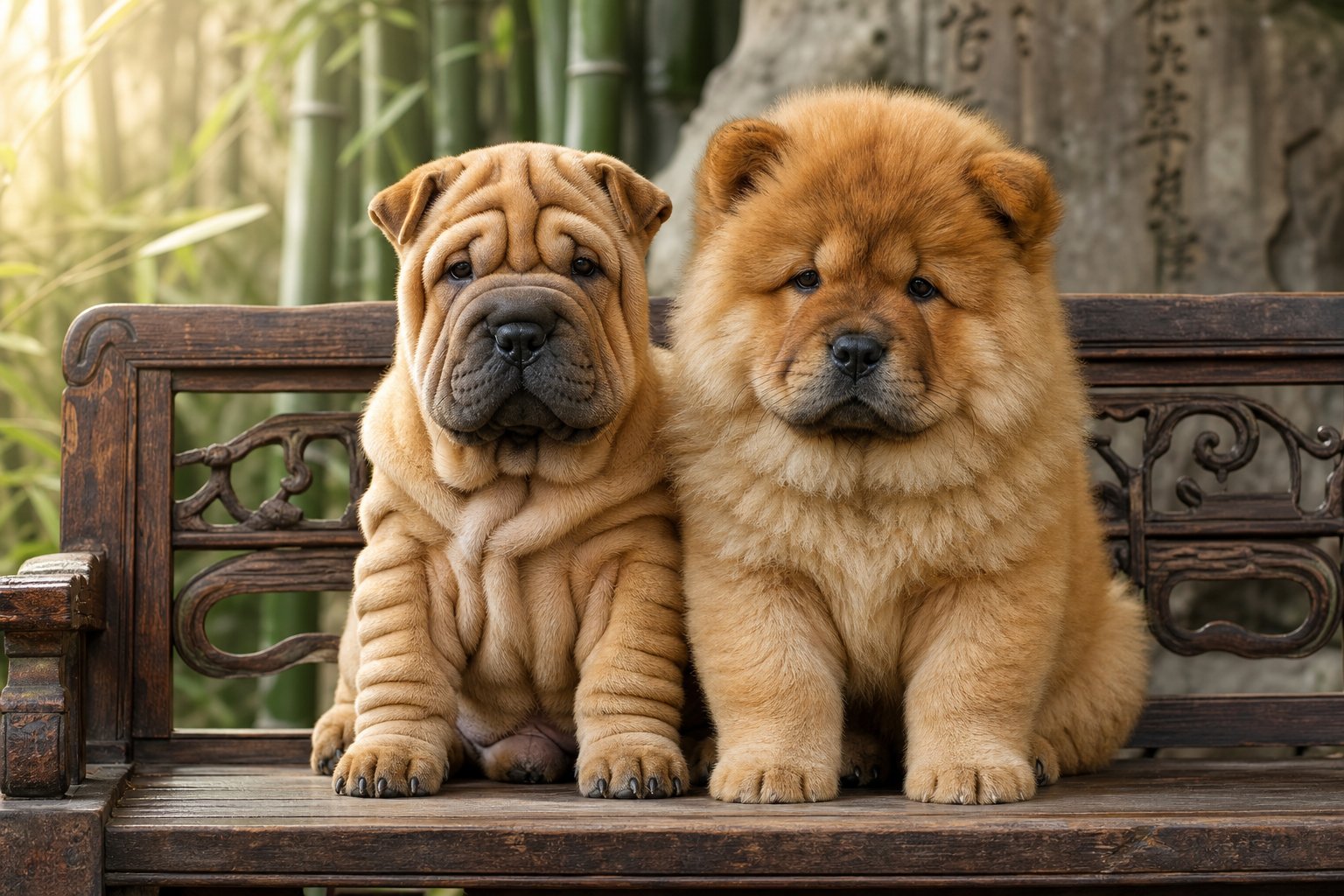
A fluffy Chow Chow lumbering through the park carries a completely different visual weight than a wrinkly Shar-Pei squinting up at you from the couch. The best nickname honors that physical presence. Chinese dog breeds already have deep cultural roots, and pairing them with a nickname that references their history or appearance creates a name that feels inevitable rather than arbitrary.
Nicknames Perfect for Chow Chows and Shar-Peis
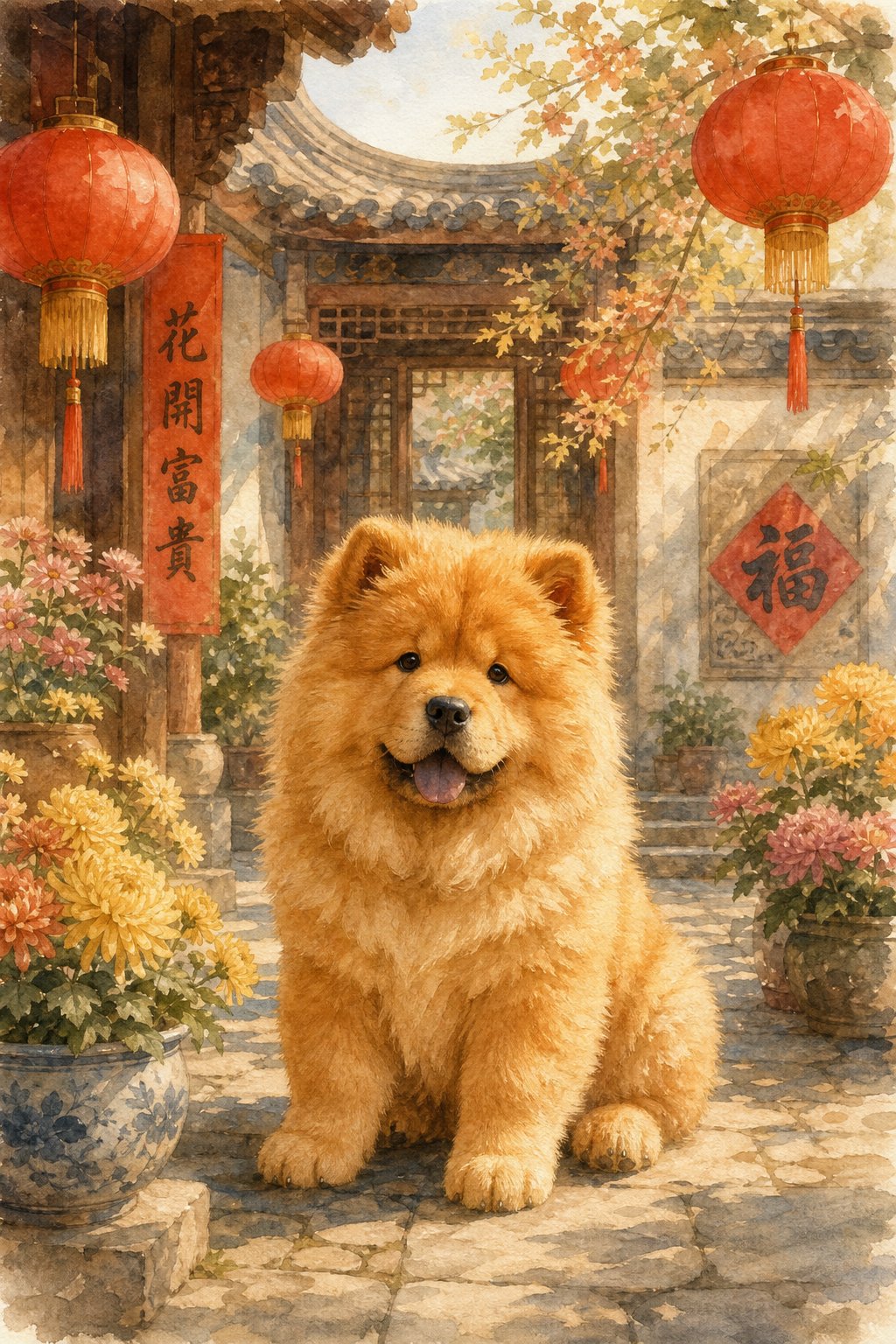
Chow Chows are among the most ancient Chinese breeds, with evidence dating back to 206 B.C. Their bear-like faces, deep facial folds, and distinctive blue-black tongues make them visually unmistakable. When choosing chow chow dog names, you want something that captures that majestic, slightly aloof presence. Think lion manes, bears, and regal composure.
Shar-Peis bring a different energy entirely. The breed name itself means "sand skin" in Chinese, referencing their short, bristle-like coat. Their signature wrinkles and reserved temperament call for names that play on texture, folds, and quiet dignity. If you are searching for shar pei names rooted in the breed's Chinese heritage, sand and wrinkle imagery gives you the most authentic starting point.
| Breed | Nickname | Pinyin | Meaning | Why It Fits |
|---|---|---|---|---|
| Chow Chow | 熊熊 | Xióngxióng | Little bear | Matches their bear-like face and stocky build |
| Chow Chow | 狮狮 | Shīshī | Little lion | References their thick mane-like ruff around the neck |
| Chow Chow | 蓬蓬 | Péngpéng | Fluffy or puffy | Describes their voluminous double coat perfectly |
| Shar-Pei | 沙沙 | Shāshā | Sand | Directly references the breed name meaning "sand skin" |
| Shar-Pei | 皱皱 | Zhòuzhòu | Wrinkly | Celebrates their most iconic physical feature |
| Shar-Pei | 墩墩 | Dūndūn | Stocky or chunky | Suits their solid, compact body shape |
For chow chow puppy names specifically, 熊熊 (Xióngxióng) tends to be the crowd favorite. A Chow Chow puppy genuinely looks like a bear cub, and the name captures that fleeting stage while remaining fitting as they grow into their full mane. Among chinese shar pei names, 沙沙 carries a satisfying linguistic loop: the breed is named for sand, and the nickname echoes that origin back.
Imperial Names for Shih Tzus and Pekingese
Both the Shih Tzu and Pekingese spent centuries as treasured companions of Chinese royalty. The Shih Tzu's name translates to "little lion" in Mandarin, connecting the breed to the Tibetan Buddhist God of Learning who reportedly traveled with a small lion dog. Pekingese were called "lion dogs" or "sun dogs" and were so prized that stealing one from the imperial palace was punishable by death.
This royal lineage calls for nicknames that carry imperial weight. If you are curious about shih tzu 中文 naming traditions, lion and palace imagery dominates. For chinese pekingese dog names, think royalty, gold, and elegance.
| Breed | Nickname | Pinyin | Meaning | Why It Fits |
|---|---|---|---|---|
| Shih Tzu | 小狮 | Xiǎo Shī | Little lion | Directly mirrors the breed's Chinese name meaning |
| Shih Tzu | 贵贵 | Guìguì | Noble or precious | Honors their centuries as palace companions |
| Shih Tzu | 菊菊 | Jújú | Chrysanthemum | References their famous "chrysanthemum face" where hair grows in all directions |
| Pekingese | 小皇 | Xiǎo Huáng | Little emperor | Nods to their exclusive history with Chinese emperors |
| Pekingese | 金金 | Jīnjīn | Gold | Matches their common golden coat and imperial associations |
| Pekingese | 宫宫 | Gōnggōng | Palace | A direct reference to their life within the Forbidden City |
| Chinese Crested | 仙仙 | Xiānxiān | Fairy or immortal | Captures their ethereal, otherworldly appearance |
| Chinese Crested | 灵灵 | Línglíng | Graceful spirit | Suits their elegant, delicate build and lively personality |
The nickname 菊菊 (Jújú) for a Shih Tzu deserves special attention. These dogs are known as "chrysanthemum-faced dogs" because the hair on their faces grows outward in every direction, resembling the flower's petals. The name captures breed identity in a single character.
Chinese Nicknames That Suit Any Breed
You do not need a Chinese breed to use a Chinese nickname. The naming patterns work beautifully when matched to universal traits like coat color, body size, or energy level. A golden retriever is just as naturally a 小金 (Xiǎo Jīn) as a Pekingese. A tiny Chihuahua fits 豆豆 (Dòudòu) perfectly. A hyperactive Border Collie earns 闹闹 (Nàonào) within the first week.
Here is a quick matching guide for non-Chinese breeds:
- White coat (Samoyed, Maltese, Westie): 雪雪 (Xuěxuě) or 小白 (Xiǎo Bái)
- Black coat (Lab, Scottie, Schipperke): 墨墨 (Mòmò, meaning ink) or 小黑 (Xiǎo Hēi)
- Brown or red coat (Vizsla, Irish Setter): 可可 (Kěkě, cocoa) or 小棕 (Xiǎo Zōng)
- Tiny size (Yorkie, Pomeranian, Papillon): 小小 (Xiǎoxiǎo, tiny) or 花生 (Huāshēng, peanut)
- Large and fluffy (Newfoundland, Great Pyrenees): 云云 (Yúnyún, cloud) or 熊熊 (Xióngxióng, bear)
- High energy (Jack Russell, Aussie): 风风 (Fēngfēng, wind) or 闪闪 (Shǎnshǎn, flash)
The key is matching the character's meaning to something visually or behaviorally true about your dog. When the name reflects reality, it sticks. And that connection between name and identity matters just as much when you start considering whether certain names carry gendered associations in Chinese culture.
Chinese Nicknames for Female and Male Dogs
Gender in Chinese naming is more subtle than you might expect. There are no grammatical markers like "la" or "le" that force a name into a category. Instead, gendered associations come from the meaning of the character itself. Characters evoking flowers, beauty, and softness lean feminine. Characters suggesting strength, dragons, and boldness lean masculine. But the reduplication pattern blurs these lines constantly, which means many of the most popular nicknames work for any dog regardless of sex.
Still, if you want a name that carries distinctly feminine or masculine energy, the character you choose inside the pattern is what does the work.
Feminine Chinese Nicknames for Girl Dogs
Chinese female dog names tend to draw from a palette of flowers, sweetness, elegance, and gentle beauty. These are characters that Chinese culture has long associated with femininity, not because of rigid rules, but because of centuries of poetry and art linking these images to grace. If you are looking for chinese names for dogs female owners will love calling out, these carry both meaning and a pleasing sound.
- 美美 (Měiměi) - Beautiful; the most direct expression of beauty, easy to pronounce with a clear "may-may" sound
- 花花 (Huāhuā) - Flower or blossom; suits dogs with colorful or patterned coats
- 莉莉 (Lìlì) - Jasmine; elegant and internationally recognizable
- 甜甜 (Tiántián) - Sweet; a food-adjacent name that sounds exactly like it means
- 妞妞 (Niūniū) - Little girl; a classic affectionate term for female pets in China
- 朵朵 (Duǒduǒ) - Little blossom; the character 朵 is the measure word for flowers
- 小美 (Xiǎo Měi) - Little beauty; combines the 小 prefix with feminine grace
- 娜娜 (Nànà) - Graceful; borrowed from the character meaning elegant movement
Pronunciation tip for English speakers: 美美 and 甜甜 are among the easiest chinese dog names for females to call clearly. The vowel sounds are open and carry well across distance. Names ending in the "ee" sound (like Lìlì and Niūniū) also project sharply, which helps with recall training.
Strong Chinese Nicknames for Boy Dogs
Male-leaning nicknames in Chinese pull from a different set of associations: dragons, strength, bravery, and fortune. These characters carry weight and boldness, making them natural fits for dogs with confident or powerful personalities. Many asian dog names girl owners avoid tend to cluster here, though nothing stops you from giving a female dog a "strong" name if it matches her temperament.
- 壮壮 (Zhuàngzhuàng) - Strong and sturdy; perfect for muscular, athletic dogs
- 大力 (Dàlì) - Great strength; punchy and commanding
- 虎虎 (Hǔhǔ) - Little tiger; fierce and energetic
- 龙龙 (Lónglóng) - Little dragon; carries imperial power and mythological weight
- 刚刚 (Gānggāng) - Tough or firm; suits no-nonsense, confident dogs
- 旺旺 (Wàngwàng) - Prosperous; the classic lucky name with a masculine bark-like sound
- 小武 (Xiǎo Wǔ) - Little warrior; martial and bold
- 雷雷 (Léiléi) - Thunder; dramatic and powerful-sounding
For English speakers, 虎虎 ("hoo-hoo") and 龙龙 ("long-long") are particularly easy to project. The open vowels and strong consonants cut through background noise at a dog park. 雷雷 ("lay-lay") also rolls off the tongue naturally for non-Mandarin speakers.
Gender-Neutral Nicknames That Work for Any Pup
Here is the reality: most reduplicated chinese nicknames for dogs are functionally gender-neutral. Characters like 豆 (bean), 球 (ball), 乐 (happy), and 毛 (fuzzy) carry no gendered weight whatsoever. The reduplication pattern itself is what signals affection, not masculinity or femininity. This is why you will hear 豆豆 used for both male and female dogs across China without anyone blinking.
If you prefer not to gender your dog's name, or if you want flexibility, these are safe picks that sound natural for any pup:
- 豆豆 (Dòudòu) - Little bean; universally cute regardless of gender
- 乐乐 (Lèlè) - Happy one; pure personality, no gendered association
- 球球 (Qiúqiú) - Little ball; playful and round-sounding
- 毛毛 (Máomáo) - Fuzzy; describes coat texture, not gender
- 贝贝 (Bèibèi) - Treasure; affectionate without leaning either direction
- 糖糖 (Tángtáng) - Sugar; sweet for any dog
The gender-neutral nature of most chinese female dog names and male names alike gives you freedom. Pick based on meaning, sound, and fit rather than feeling locked into a category. What matters more than gender is whether the name works practically, which brings up a different question entirely: will your dog actually respond to a Mandarin or Cantonese name, and does pronunciation vary depending on which dialect you are drawing from?
Mandarin and Cantonese Differences Plus Cultural Taboos
That question about pronunciation is more important than it looks. The same Chinese character produces completely different sounds depending on whether you are speaking Mandarin or Cantonese. And most nickname lists you find online default to Mandarin pinyin without mentioning this. If your family speaks Cantonese, or you live in a community with Cantonese roots, the name you picked might sound nothing like what you expected.
Understanding which system a name comes from, and which sounds to avoid entirely, saves you from accidentally choosing something that carries the wrong meaning when spoken aloud.
Mandarin vs Cantonese Nickname Pronunciations
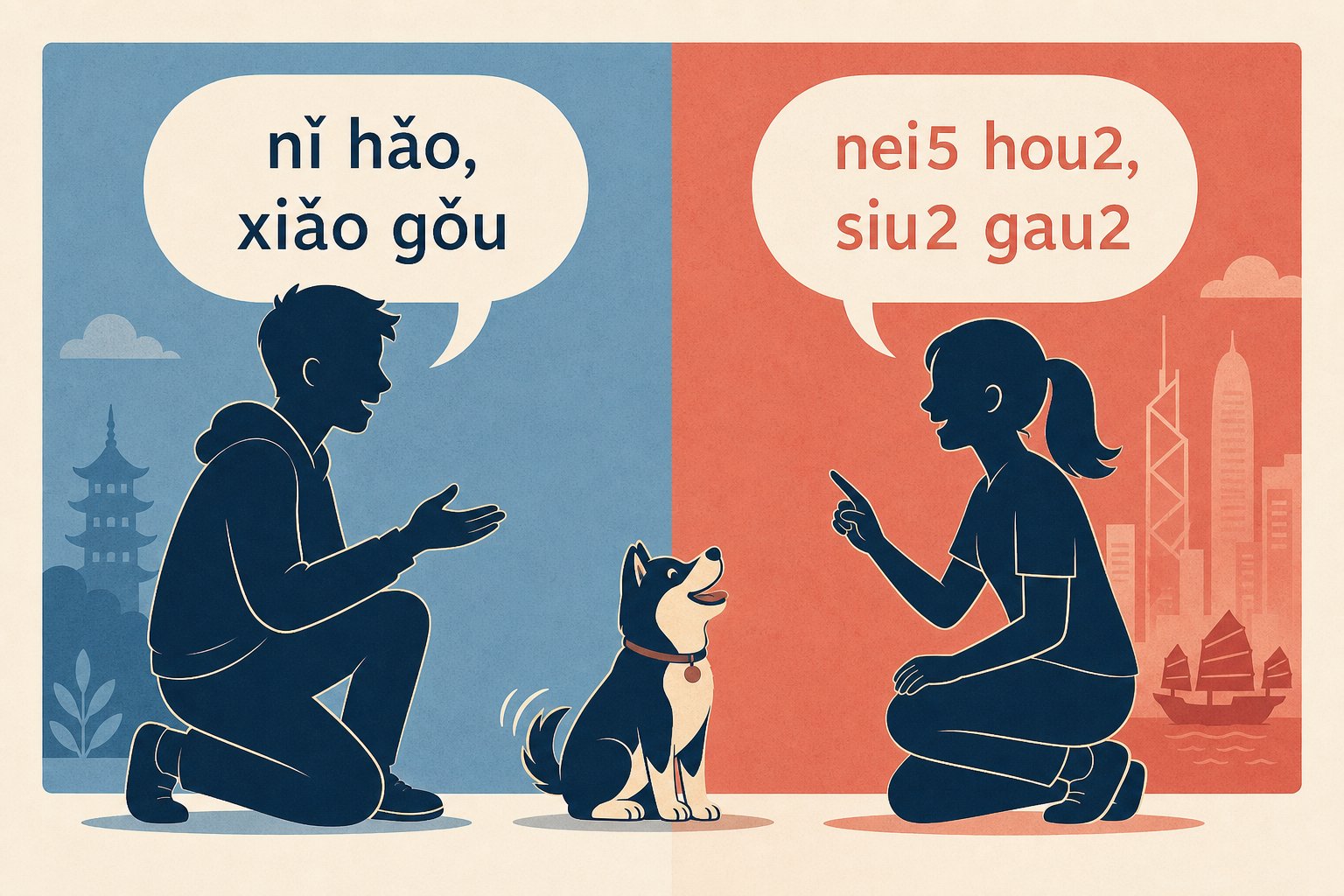
Mandarin uses pinyin as its romanization system, complete with four tones plus a neutral tone. Cantonese uses Jyutping, which has six tones and produces noticeably different syllable structures. When you see a name written in dog in chinese characters, the written form is identical in both dialects. But the moment you say it out loud, the two systems diverge sharply.
Consider how to say dog in chinese: in Mandarin, it is 狗 (gǒu), while in Cantonese, the same character is pronounced gau2. The vowel shape, the tone contour, and the mouth feel are all different. This matters because your dog will learn the sound of their name, not the written character. A cantonese dog owner calling 豆豆 will produce a sound their dog recognizes, but it will not match the Mandarin pronunciation a training video might demonstrate.
Here is how some popular nicknames compare across both systems:
| Character | Meaning | Mandarin (Pinyin) | Cantonese (Jyutping) | Sound Difference |
|---|---|---|---|---|
| 豆豆 | Little bean | Dòudòu | dau6 dau6 | "doe-doe" vs "dow-dow" with a lower tone |
| 旺旺 | Prosperous | Wàngwàng | wong6 wong6 | "wahng" vs rounder "wong" sound |
| 福福 | Blessing | Fúfú | fuk1 fuk1 | Open "foo" vs clipped "fook" |
| 雪雪 | Snow | Xuěxuě | syut3 syut3 | "shweh" vs "syoot" with a hard stop |
| 仔仔 | Little one | Zǎizǎi | zai2 zai2 | Similar sound, different tone contour |
| 妹妹 | Little sister | Mèimèi | mui4 mui4 | "may-may" vs "moy-moy" |
Notice how 福福 shifts from a smooth, open "Fúfú" in Mandarin to a clipped "fuk1 fuk1" in Cantonese. That final consonant changes the entire rhythm of the name. For dog training purposes, the Cantonese version is actually punchier and easier for a dog to distinguish from background noise. Meanwhile, the Mandarin version flows more smoothly for sustained calling.
If you are learning animal names in mandarin specifically, pinyin is your guide. But if your household speaks Cantonese, or you want a name that reflects Hong Kong or Guangdong culture, Jyutping gives you the accurate pronunciation your dog will actually hear.
Chinese Naming Taboos and Names to Avoid
Chinese is a tonal language with a relatively small number of possible syllables. This creates an unusually high number of homophones, words that sound identical or nearly identical but carry wildly different meanings. What sounds like a cute name to an untrained ear might echo something deeply inauspicious to a Chinese speaker.
The most critical taboo involves the number four:
The Chinese word for "four" (四, pinyin: si, jyutping: sei3) sounds nearly identical to the word for "death" (死, pinyin: si, jyutping: sei2). This similarity is so culturally significant that buildings skip the fourth floor, phone numbers avoid the digit, and names containing this sound are considered deeply unlucky.
This phenomenon, known as tetraphobia, extends far beyond naming. In Mandarin, 四 (si) and 死 (si) differ only by tone. In Cantonese, the gap is even narrower: sei3 versus sei2, a single tone level apart. The superstition is powerful enough that companies like Nokia and OnePlus have skipped product numbers containing four when selling in Asian markets.
For dog naming, this means you should avoid:
- Any name where the syllable "si" (fourth tone) features prominently, as listeners may hear "death" instead
- Number-based names using 四 or combinations like 十四 (shisi, fourteen), which sounds like "is dead" (是死, shisi)
- Characters that are homophones of negative words, such as 苦 (ku, bitter) or 衰 (shuai, decline)
- Names of deceased relatives or ancestors, which is considered deeply disrespectful in Chinese culture
- Characters associated with ghosts or the underworld, like 鬼 (gui, ghost), even if meant playfully
- Names that sound like curses when combined with common surnames or words spoken nearby
Beyond homophones, there is a broader cultural principle at work. Chinese naming tradition holds that words carry energy. Repeatedly calling out a name associated with misfortune is believed to invite that misfortune. This is not just superstition for many families. It is a deeply held cultural value that shapes how to write dog in chinese characters with intention and care.
A practical example: you might think 思思 (Sisi, meaning "thoughtful") sounds lovely. And it is a legitimate name. But spoken quickly or in certain regional accents, it can blur into 死死 (sisi, "death death"). A native speaker would likely catch this immediately and steer you away. When exploring animal names in mandarin or Cantonese, running your choice past a fluent speaker is always worth the extra step.
These pronunciation systems and cultural boundaries are not obstacles. They are guardrails that help you land on a name carrying the right energy. The real question becomes whether that culturally rich name also works on a practical level, in the park, during training, and in the daily rhythm of calling your dog home.
How to Pick a Chinese Nickname Your Dog Will Actually Learn
A name can carry all the cultural depth in the world, but if your dog does not respond to it, you have a beautiful word that functions as background noise. The good news? The structure of Chinese nicknames, particularly the reduplication pattern, aligns almost perfectly with what canine behaviorists say dogs learn fastest. You do not have to sacrifice meaning for practicality here. The two goals overlap more than you might expect.
Why Two-Syllable Chinese Nicknames Work Best for Training
Dogs process names differently than humans do. They are listening for a distinct sound pattern that consistently precedes attention, food, or play. Research into pet naming trends shows that two-syllable names are the sweet spot, representing nearly half of all pet names in use. They are short enough to say quickly but rhythmic enough to stand out from ambient noise.
This is where Chinese reduplication names shine. Every 叠字 (diezi) nickname, from 豆豆 (Doudou) to 乐乐 (Lele), is inherently two syllables with a repeating sound. That repetition gives your dog two chances to catch the pattern in a single call. Compare that to a longer name like "Seraphina" that gets shortened to something unrecognizable within a week.
Ending sounds matter too. Names that finish with open vowels or an "ee" sound, like 贝贝 (Beibei) or 莉莉 (Lili), carry an upbeat quality that dogs respond to. Data from Rover's naming database confirms that "ee" endings appear in over 26% of dog names, likely because they sound naturally cheerful and distinct when called aloud.
Equally important: your dog's name should not rhyme with or sound like a common command. "Sit," "stay," "come," "down," and "no" are the words your dog hears most often during training. A name like 西西 (Xixi) could blur into "sit" for an English-trained dog. But 毛毛 (Maomao) or 糖糖 (Tangtang) share zero phonetic overlap with standard commands, making them immediately distinguishable.
There is also a practical bonus to using asian names for dogs in a household that primarily speaks English. As professional trainers note, using a different language for your dog's name and cues reduces the chance of your pet confusing casual conversation with a command directed at them. A Chinese nickname exists in its own sonic lane, separate from the English chatter your dog hears all day.
Testing Your Chinese Nickname for Everyday Use
Imagine standing at one end of a dog park. Can you call the name clearly without feeling self-conscious? Does it carry across 50 feet of open space? These are not trivial questions. A name you only whisper at home is not doing its job.
Before committing to any asian dog names, run through this practical checklist:
- Say the name out loud 10 times in a row. Does it still feel natural, or does your mouth tire?
- Call it across your largest room or backyard. Does the sound carry, or does it get swallowed?
- Ask someone unfamiliar with the name to repeat it back after hearing it once. If they cannot, your dog will struggle too.
- Say it near your dog's common commands (sit, stay, come, down). Does anything sound confusingly similar?
- Try it in an excited, high-pitched tone. Does it still sound like a name and not a random noise?
- Check whether the tones are forgiving. Names where mispronouncing the tone still sounds close enough (like Doudou or Maomao) are more practical than names where a wrong tone changes the meaning entirely.
- Consider whether family members, dog walkers, or vet staff can say it comfortably without extensive coaching.
For English speakers specifically, names with familiar consonant sounds (m, b, d, l, t) and open vowels (ah, oh, ee, oo) are easiest to produce. This is why 毛毛 (Maomao), 豆豆 (Doudou), and 乐乐 (Lele) rank among the most practical choices. They use sounds that already exist in English, so there is no learning curve for the chinese for dog owners who want something culturally meaningful but immediately usable.
Names involving the "x" or "zh" sounds in Mandarin (like 雪雪, Xuexue, or 壮壮, Zhuangzhuang) are beautiful but require practice. If you are not confident producing these sounds consistently, your dog will hear a slightly different name each time, which slows recognition.
Pairing a Chinese Nickname With an English Name
Many bilingual owners solve the pronunciation question by running a dual-name system. The Chinese nickname becomes the intimate, at-home call name. An English name goes on vet records, daycare forms, and anywhere a stranger needs to address your dog. This is not cheating. It mirrors exactly how Chinese families use 小名 and 大名 for children.
The key to making this work in dog in chinese language naming: pick one name as the primary recall name and use it with absolute consistency during training. Your dog does not care whether that name is Mandarin, Cantonese, or English. They care that the same sound always means "pay attention to me." Use the secondary name casually, and your dog will learn to recognize both over time, but the primary name is what builds reliable recall.
A natural pairing might look like 豆豆 (Doudou) at home and "Bean" at the vet, or 小熊 (Xiao Xiong) with family and "Bear" on paperwork. The meanings align, which makes switching between them feel coherent rather than confusing.
With pronunciation sorted and practical testing complete, the final step is pulling everything together into a clear decision framework, one that moves you from browsing names to confidently choosing the one that fits your specific dog.

Your Complete Decision Guide for the Perfect Chinese Nickname
You have the patterns, the meaning categories, the pronunciation tips, and the cultural guardrails. What remains is a clear path from "I want a Chinese nickname for my dog" to "this is the one." The process does not need to be complicated, but it does benefit from a deliberate sequence. Rushing straight to a list and picking whatever sounds cool skips the steps that make a chinese name for dog owners feel genuinely personal rather than randomly selected.
Step-by-Step Framework for Choosing the Right Name
Think of this as a funnel. You start broad and narrow down with each step until only one or two names remain standing. Here is the sequence that consistently produces a name you will still love six months from now:
- Identify the quality you want the name to reflect. Is it your dog's appearance (coat color, size, fluffiness)? Their personality (calm, chaotic, goofy)? A wish you hold for them (health, happiness, fortune)? Pick one core quality. Trying to capture everything in two syllables leads to paralysis.
- Choose a character that carries that quality. Use the meaning categories covered earlier: lucky names, nature names, personality names, or food names. Write down three to five candidates that match your chosen quality.
- Apply a nicknaming pattern. Try each candidate as a reduplication (doubling the character), with the 小 prefix, or as a standalone two-character word. Say each version out loud. One pattern will feel more natural than the others for each character.
- Check cultural appropriateness. Does the name contain homophones of unlucky words? Does it reference something sacred or disrespectful? If you are unsure, ask a native Mandarin or Cantonese speaker. A quick check now prevents awkwardness later.
- Test pronunciation across distance. Stand in your backyard or a large room and call the name as if your dog were 50 feet away. If it feels strained, unclear, or embarrassing to shout, move to your next candidate.
- Verify it does not clash with commands. Say "sit," "stay," "come," "down," and "no" immediately before and after the name. If anything blurs together, eliminate that option.
- Confirm it feels natural on repetition. Say the name 20 times in a row, in different tones of voice: excited, calm, urgent, affectionate. A name you will use thousands of times needs to feel effortless every single time.
If a name survives all seven steps, you have your answer. If multiple names survive, go with the one that made you smile when you said it out loud. That instinct matters.
Matching Nicknames to Your Dog's Appearance and Energy
When you are stuck at step one, your dog's physical traits and energy level offer the most immediate starting point. Here is a quick reference for names for chinese dogs based on observable characteristics:
| Dog Trait | Suggested Direction | Example Names |
|---|---|---|
| Small and round | Food or object imagery | 豆豆 (Doudou), 团子 (Tuanzi), 花生 (Huasheng) |
| Large and fluffy | Nature or animal imagery | 云云 (Yunyun), 熊熊 (Xiongxiong), 蓬蓬 (Pengpeng) |
| White coat | Snow, cloud, or purity | 雪雪 (Xuexue), 小白 (Xiao Bai), 绵绵 (Mianmian) |
| Dark coat | Ink, night, or richness | 墨墨 (Momo), 可可 (Keke), 小黑 (Xiao Hei) |
| High energy | Movement or mischief | 闹闹 (Naonao), 皮皮 (Pipi), 风风 (Fengfeng) |
| Calm and gentle | Softness or serenity | 乖乖 (Guaiguai), 月月 (Yueyue), 绵绵 (Mianmian) |
| Golden or warm-toned | Gold, sun, or warmth | 金金 (Jinjin), 糖糖 (Tangtang), 小金 (Xiao Jin) |
You will notice that some names appear in multiple categories. 绵绵 (Mianmian) works for both white coats and calm temperaments because the character carries both "soft cotton" and "gentle" as meanings. This overlap is a feature, not a bug. It means the name resonates on multiple levels simultaneously, which is exactly what makes a chinese name dog owners connect with deeply.
One final thought worth sitting with. Oriental dog names, when chosen with care, are not just labels. They are tiny acts of cultural participation. Every time you call 福福 across a park, you are engaging with a naming tradition that stretches back thousands of years, one where words carry weight, wishes travel through sound, and a name is never just a name.
The best Chinese nickname for your dog is not the one that sounds most impressive to others. It is the one where meaning, sound, and your dog's identity converge into something that feels true every single time you say it.
Trust that convergence. When the meaning fits, the pronunciation flows, and your dog's ears perk up at the sound, you will know you landed in the right place.
Frequently Asked Questions About Chinese Nicknames for Dogs
1. What is the most popular Chinese nickname for a dog?
旺旺 (Wangwang) is widely considered the most popular Chinese dog nickname. It means 'prosperous' and carries a clever double meaning because the character 旺 sounds like the Chinese onomatopoeia for a dog's bark (汪 wang). It is roughly equivalent to naming a dog 'Lucky' in English and is heard constantly in neighborhoods across China.
2. How do you say dog in Chinese?
In Mandarin Chinese, dog is 狗 (gou, third tone). In Cantonese, the same character is pronounced gau2. The written character is identical in both dialects, but the spoken sounds differ significantly. When choosing a Chinese nickname for your dog, knowing which dialect you are working with determines how the name will actually sound when called aloud.
3. Are Chinese dog names gender-specific?
Most Chinese dog nicknames are functionally gender-neutral, especially those using the reduplication pattern. Names like 豆豆 (Doudou, little bean) and 乐乐 (Lele, happy) carry no gendered weight. However, characters evoking flowers and softness lean feminine (美美, Meimei), while characters suggesting strength and dragons lean masculine (龙龙, Longlong). The gender association comes from the character's meaning, not from grammatical rules.
4. What Chinese dog names should I avoid?
Avoid names containing the syllable 'si' in fourth tone, as it sounds nearly identical to the Chinese word for death (死). Also steer clear of homophones of negative words like 苦 (ku, bitter) or 衰 (shuai, decline), names of deceased ancestors, and characters associated with ghosts or the underworld. Running your chosen name past a native Chinese speaker helps catch unintended negative associations.
5. Can I use a Chinese nickname for a non-Chinese dog breed?
Absolutely. Chinese nicknaming patterns work for any breed when matched to universal traits like coat color, body size, or personality. A white Samoyed suits 雪雪 (Xuexue, snow), a golden retriever fits 小金 (Xiao Jin, little gold), and a hyperactive Border Collie earns 闹闹 (Naonao, lively). The key is matching the character's meaning to something visually or behaviorally true about your specific dog.