Why Chinese Cat Nicknames Are Different From Regular Names
When you search for chinese cat names online, you'll mostly find long lists of formal-sounding options pulled from dictionaries. Beautiful characters, poetic meanings, zero connection to how Chinese people actually talk to their cats at home. The reality? Most cat owners in China never use those formal names. They use nicknames.
Chinese pet culture has its own naming tradition built around affection, not formality. To understand it, you need to know two key terms: 小名 (xiǎo ming, pet name) and 昵称 (ni cheng, nickname). Both refer to the intimate, playful names that family members use behind closed doors. The third term is simple: 猫 (mao, cat) - the cat chinese character that forms the foundation of feline vocabulary in Mandarin.
What Makes Chinese Cat Nicknames Special
A 小名 is not just a shortened version of a longer name. In Chinese families, these pet names are created by parents or close family members out of love, carrying a playful, even silly quality that formal names never have. The same tradition extends naturally to cats. Chinese pet names rely on specific sound patterns, repeated syllables, and diminutive prefixes that signal closeness. They sound soft, rhythmic, and easy to call out across a room.
Nicknames in Chinese culture are about intimacy and affection, not formality. A 小名 belongs to the private world of family, and your cat is family.
Nicknames vs Formal Names in Chinese Pet Culture
Imagine naming your cat "Elizabeth" on paper but calling her "Lizzy" every single day. That gap between formal and familiar exists in Chinese naming culture too, but it runs even deeper. A formal Chinese name for a cat might use elegant characters with layered literary meaning. A nickname, on the other hand, prioritizes sound over sophistication. It needs to feel good rolling off the tongue, catch your cat's attention, and carry warmth in just one or two syllables.
This distinction matters if you're looking for chinese names for cats that feel genuine rather than borrowed from a textbook. The nicknames in chinese pet communities follow repeatable patterns, specific formulas that any cat owner can learn and apply. They draw from food, colors, personality traits, and lucky words, all shaped into bite-sized sounds that real people use daily.
What follows is not another generic list. It's a guide to the actual naming conventions behind chinese pet names, the patterns that make them work, and the cultural logic that gives them meaning. You'll walk away knowing how to build your own authentic nickname from scratch.
The Cultural Roots of Chinese Pet Naming Traditions
Those naming patterns didn't appear out of nowhere. They're rooted in a tradition that goes back centuries, one where nicknames carry emotional weight far beyond their literal meaning. To understand why chinese nicknames for cats sound the way they do, you need to look at how Chinese families have always used 小名 to express love.
The Tradition of 小名 in Chinese Families
In Chinese culture, almost every child receives a 小名 alongside their formal registered name. These pet names are given by parents or grandparents shortly after birth, and they serve a specific emotional purpose: they mark the child as cherished, protected, and close. Historically, some families even chose deliberately humble or silly-sounding 小名 based on a superstition that evil spirits would overlook a child with an unremarkable name. A baby called 狗蛋 (Goudan, "dog egg") or 铁柱 (Tiezhu, "iron pillar") was believed to grow up safer than one with a grand, attention-grabbing name.
This same logic extends to pets. When a cat enters a Chinese household, it becomes family, and family gets a 小名. The nickname signals belonging. It says: you're ours, you're loved, you're home. As linguist Victor Mair has noted, reduplicative baby names are so deeply embedded in Chinese culture that children often carry them well into adulthood. Names like Baobao, Maomao, and Meimei start in the crib and never quite leave. Cats inherit this same affectionate treatment.
How Cats Fit Into Chinese Naming Culture
Cats hold a unique place in Chinese society, and their cultural significance shapes the pet names in chinese households. The relationship between Chinese people and cats stretches back thousands of years. The Book of Rites (《礼记》) from the Zhou dynasty describes rituals to honor a cat deity for protecting grain from rodents. By the Song dynasty, adopting a cat was formalized with gifts - a string of fish for the mother cat or salt for the original owner. Poets like Lu You wrote lovingly about their feline companions, and Ming dynasty emperors gave their favorite cats elaborate nicknames and titles.
Fast forward to modern Chinese internet culture, and cats in chinese culture have reached near-mythical status. Cat lovers jokingly call themselves 猫奴 (maonu, "slave to cats") and refer to their feline overlords as 主子 (zhǔzi, "master"). The term 喵星人 (miaoxingren, "citizens of planet Meow") frames cats as a super-intelligent alien species that came to Earth to enslave humanity. This playful reverence shapes how people name their chinese cats - with humor, affection, and a touch of worship.
The beckoning cat tradition, 招财猫 (zhāocái māo), adds another layer. Cats are associated with fortune and prosperity, which is why so many pet names carry lucky meanings. Naming your cat with auspicious characters isn't just cute - it's believed to invite good energy into the home.
Then there's the phonology factor. Mandarin is a tonal language where certain sound combinations naturally register as soft, cute, or endearing. High-pitched, short syllables with nasal endings (-n, -ng) or open vowels tend to sound more affectionate. The word 猫 (māo) itself, with its first-tone nasal quality, already sounds gentle. Repeated syllables like "mimi" or "maomao" amplify that softness through a pattern linguists call reduplication, which mimics the babbling sounds of infants learning to speak. Your brain registers these sounds as inherently tender.
Homophones add yet another dimension. Mandarin is rich with words that sound identical but carry different meanings, and Chinese cat owners exploit this constantly. A cat named 福福 (Fufu) sounds adorable on its own, but it also doubles the character for "fortune." A name like 来宝 (Laibao) means "treasure arrives." This wordplay, called 谐音 (xiéyīn), lets a single nickname operate on multiple levels - cute sound on the surface, lucky meaning underneath. It's the reason chinese cat meaning often goes deeper than a direct translation suggests.
Superstition, sound, and sentiment all converge in these naming choices. A good nickname isn't random. It balances what feels pleasant to say, what carries positive associations, and what fits the cat's appearance or personality. That layered approach is what makes authentic Chinese pet nicknames so different from simply translating an English name into Mandarin characters.
Understanding these cultural roots gives you the foundation. The next step is learning the specific sound patterns that turn ordinary words into irresistible nicknames - starting with the most beloved technique in Chinese pet naming: reduplication.
Reduplicated Nicknames That Chinese Cat Owners Actually Use
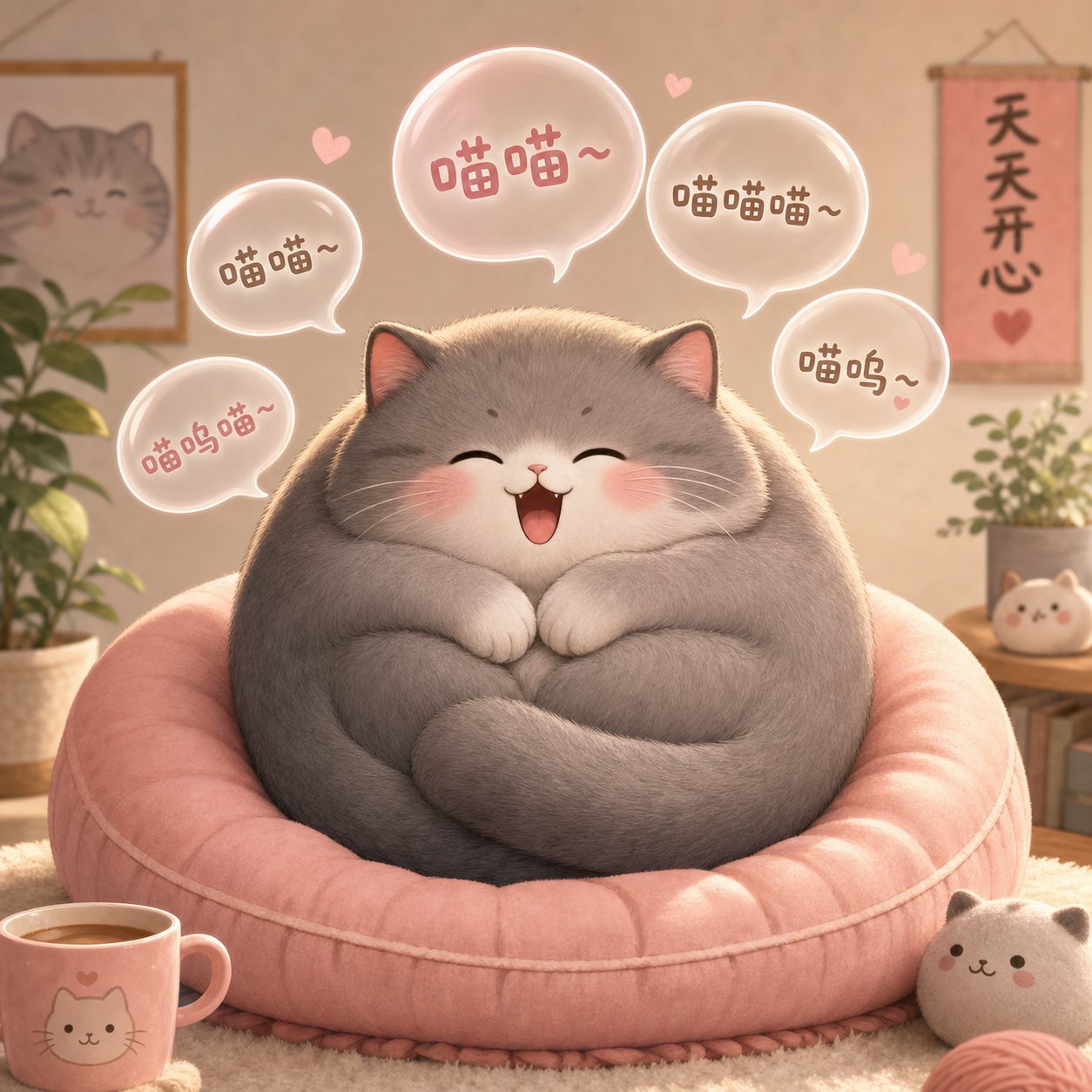
Reduplication. That's the single most common technique behind cat names in chinese households. The concept is simple: take one character, say it twice, and suddenly you have a nickname that sounds irresistibly soft and affectionate. In Chinese, this pattern is called 叠字 (diezi, "stacked characters"), and it's the backbone of how real cat owners name their pets.
Think about it. When English speakers talk to babies, they naturally double up sounds: "mama," "dada," "bye-bye." Mandarin does the same thing, but it's formalized into an entire naming convention. A single character like 豆 (dou, bean) becomes 豆豆 (Doudou) - and instantly shifts from a plain noun into something warm, small, and lovable. That transformation happens purely through repetition.
Why Reduplication Sounds So Cute in Mandarin
There's a linguistic reason this works so well. Reduplication in Chinese adds rhythm and emotional color to language. It's commonly used in baby talk - phrases like 玩球球 (play ball-ball) or 穿鞋鞋 (wear shoe-shoe) are how adults naturally speak to young children. The doubled syllable signals smallness, tenderness, and closeness. When you apply this same pattern to a cat's name, you're tapping into a deeply ingrained association between repeated sounds and affection.
Mandarin's tonal system amplifies the effect. When a syllable repeats, the tonal melody creates a musical quality that single-syllable words lack. 咪咪 (Mimi) rises and falls like a tiny song. 球球 (Qiuqiu) bounces with its rising tones. These aren't just names - they're miniature melodies you call across the apartment at dinner time.
You'll notice this pattern dominates asian kitten names across Chinese-speaking communities. Browse any Chinese pet forum, scroll through Douyin cat videos, or ask a cat owner in Beijing what they call their cat - chances are high you'll hear a reduplicated name. It's the default, the go-to, the naming equivalent of a warm blanket.
Most Popular Reduplicated Cat Nicknames
Here are the reduplicated nicknames you'll hear most often in Chinese homes. Each one includes the characters, pinyin with tones, an English sound approximation so you can say it out loud, and the meaning behind it.
| Characters | Pinyin | English Sound | Meaning |
|---|---|---|---|
| 咪咪 | Mimi | "mee-mee" | Kitty / meow-meow (onomatopoeia for cat sounds) |
| 豆豆 | Doudou | "doh-doh" | Little bean |
| 球球 | Qiuqiu | "chyo-chyo" | Little ball (perfect for round, chubby cats) |
| 毛毛 | Maomao | "mao-mao" | Fuzzy / furry one |
| 乖乖 | Guaiguai | "gwai-gwai" | Good boy/girl, well-behaved one |
| 花花 | Huahua | "hwah-hwah" | Flower / patterned (for calico or tabby cats) |
| 团团 | Tuantuan | "twahn-twahn" | Round dumpling (for cats who curl into balls) |
| 点点 | Diandian | "dyen-dyen" | Little dot / spot (for cats with markings) |
| 糖糖 | Tangtang | "tahng-tahng" | Sugar / candy (for sweet-tempered cats) |
| 肉肉 | Rourou | "roh-roh" | Chubby / fleshy (affectionate term for plump cats) |
A few things stand out from this list. Many of these names describe physical traits: 球球 for a round cat, 花花 for a multicolored one, 毛毛 for an especially fluffy one. Others capture personality: 乖乖 for a calm, obedient cat, 糖糖 for one with a sweet disposition. And some, like 咪咪, are pure sound - an imitation of the noise cats make, doubled into a name. That's the cute cat in chinese naming culture distilled to its simplest form.
Notice how every name on this list is exactly two syllables. That's not a coincidence. It's also not just a cultural preference - there's a practical reason rooted in how cats actually process sound.
Why Your Cat Responds Better to Repeated Syllables
From a feline cognition perspective, reduplicated names are almost perfectly engineered for cat ears. Research on how cats recognize their names suggests they respond best to short, consistent sound patterns with clear consonant onsets. A name like 豆豆 (Doudou) delivers exactly that: two identical syllables, each beginning with a crisp "d" sound, creating a predictable acoustic pattern that's easy for a cat to distinguish from background noise.
Cats don't understand language the way humans do. They recognize specific sound shapes - the rhythm, pitch, and phonetic contour of their name. When both syllables match, you're essentially giving your cat twice the signal in the same short burst. It's like calling them with a built-in echo. The repetition reinforces recognition.
Short names also carry better across a room. Try calling out "Doudou" versus a three-syllable name - the reduplicated version punches through ambient sound more effectively. Chinese cat owners figured this out intuitively long before animal behaviorists confirmed it. The tradition of cat names chinese families have used for generations happens to align perfectly with what we now know about feline auditory processing.
The beauty of reduplication is its simplicity. You don't need to memorize a list. You just need one character that resonates with you - something that matches your cat's look, personality, or the feeling you want to express - and you say it twice. That formula alone opens up hundreds of possibilities, limited only by which characters feel right for your particular cat.
Reduplication is the foundation, but it's not the only pattern in the toolkit. Chinese nickname culture offers several other formulas that work just as naturally, each adding a different flavor of affection to whatever base word you choose.
Three Nickname Patterns to Create Your Own Chinese Cat Names
Reduplication gives you one powerful formula. But Chinese nickname culture doesn't stop there. Three additional patterns let you transform almost any word into an affectionate cat chinese name, each with its own regional flavor and emotional tone. The best part? These aren't static lists to memorize. They're formulas. Learn the pattern once, and you can generate unlimited original nicknames tailored to your specific cat.
Think of these patterns as building blocks. You pick a base word - a color, a trait, a food, anything that fits your cat - and attach a prefix or suffix that instantly softens it into something tender. Each pattern signals a slightly different shade of affection, and real Chinese cat owners mix and match them freely.
The 小 Prefix Pattern for Adorable Cat Names
The 小 (xiǎo) prefix is the most versatile nickname tool in Mandarin. It literally means "little" or "small," but its function goes far beyond describing size. Adding 小 before a word transforms it into a term of endearment - warm, approachable, and familiar. In Chinese social culture, 小 works across nearly every context, from workplace nicknames like 小王 (Xiǎo Wang) to the affectionate names families give their pets.
For cats, the 小 prefix works beautifully with colors, traits, and descriptive words. You're essentially saying "my little [something]," which carries the same cozy feeling as calling a cat "little guy" in English - except it's baked right into the name structure.
Here are the most common 小-prefix cat nicknames you'll hear in Chinese homes:
- 小白 (Xiǎo Bai, "shyao bye") - Little White. The go-to chinese name for cat owners with white cats. Simple, clean, instantly recognizable.
- 小黑 (Xiǎo Hei, "shyao hey") - Little Black. Equally popular for black cats. Direct and affectionate.
- 小花 (Xiǎo Hua, "shyao hwah") - Little Flower. Used for calico, tortoiseshell, or any multicolored cat. The word 花 here means "patterned" rather than literally "flower."
- 小橘 (Xiǎo Ju, "shyao jyu") - Little Orange. Hugely popular for orange tabbies, which Chinese internet culture has turned into a beloved meme category.
- 小胖 (Xiǎo Pang, "shyao pahng") - Little Fatty. Affectionate, not insulting. Perfect for a well-fed, round cat.
- 小乖 (Xiǎo Guai, "shyao gwai") - Little Good One. For a calm, well-behaved cat.
- 小灰 (Xiǎo Hui, "shyao hway") - Little Gray. Straightforward color-based naming for gray or blue cats.
See the pattern? You take any single-character adjective or noun and place 小 in front of it. That's it. Your cat is gray? 小灰. Your cat is chubby? 小胖. Your cat has spots? 小点 (Xiǎo Dian, "little dot"). The formula is endlessly productive, which is why it dominates chinese name cat conventions across all regions of China.
Using 儿 and 阿 to Form Authentic Nicknames
Beyond 小, two other affixes create distinctly different nickname flavors. Each one carries regional and emotional associations that give your cat's name a specific character.
The 儿 (er) suffix
The 儿 suffix adds a soft, tender quality to any word. Pronounced as a retroflex "r" sound that merges with the preceding syllable, it's a hallmark of Northern Chinese dialects, especially Beijing Mandarin. When you hear someone say 花儿 (Huar) instead of just 花 (Hua), that trailing "r" sound wraps the word in warmth - like adding a verbal hug to the end of a name.
For cat nicknames, 儿 works best with short, one-character base words:
- 花儿 (Huar) - Flower, with a soft ending. For patterned or multicolored cats.
- 点儿 (Dianr) - Little dot/spot. For cats with distinctive markings.
- 球儿 (Qiur) - Little ball. For round, curled-up cats.
- 豆儿 (Dour) - Little bean. Tiny and precious.
- 果儿 (Guor) - Little fruit. Sweet and fresh-sounding.
One thing to note: the 儿 suffix changes pronunciation. It doesn't add a full separate syllable. Instead, it colors the final sound of the preceding character with a slight "r" curl. So 点儿 isn't "dian-er" as two distinct beats - it's "dianr," one smooth syllable with a softened ending. This makes these names that mean cat affection sound fluid and natural when spoken quickly.
The 阿 (a) prefix
The 阿 prefix carries a distinctly Southern Chinese and Cantonese flavor. Pronounced as a flat, open "ah" sound in first tone, it creates an easygoing familiarity that feels like calling someone by a casual first-name basis. Where 小 feels universally cute, 阿 feels specifically warm and neighborly - like the difference between "sweetie" and "buddy."
In cat naming, 阿 pairs naturally with single characters:
- 阿橘 (A Ju, "ah jyu") - For orange cats. Extremely popular on Chinese social media.
- 阿白 (A Bai, "ah bye") - For white cats. Casual and friendly.
- 阿花 (A Hua, "ah hwah") - For patterned cats. Has a slightly retro, homey feel.
- 阿福 (A Fu, "ah foo") - Lucky one. Doubles as an auspicious name.
- 阿宝 (A Bao, "ah bao") - Treasure. Affectionate and warm.
The 阿 prefix tends to sound slightly more mature than 小. You'll hear it used for cats that have a certain dignity or personality to them - the cat who struts rather than scampers, the one who owns the room. It's less "baby talk" and more "old friend."
Here's what makes these three patterns so powerful: they're combinable and infinitely expandable. You're not choosing from a fixed list of names. You're learning a system. Any word that resonates with you - your cat's color, a food you love, a quality you admire - can become a nickname by applying one of these formulas. 小 + word, word + 儿, or 阿 + word. Three patterns, unlimited results.
And the base words you plug into these formulas? That's where things get really creative. Chinese cat owners have a particular obsession with one category of base words that dominates pet naming across the country: food.
Food-Inspired Chinese Cat Nicknames and Why They Are So Popular
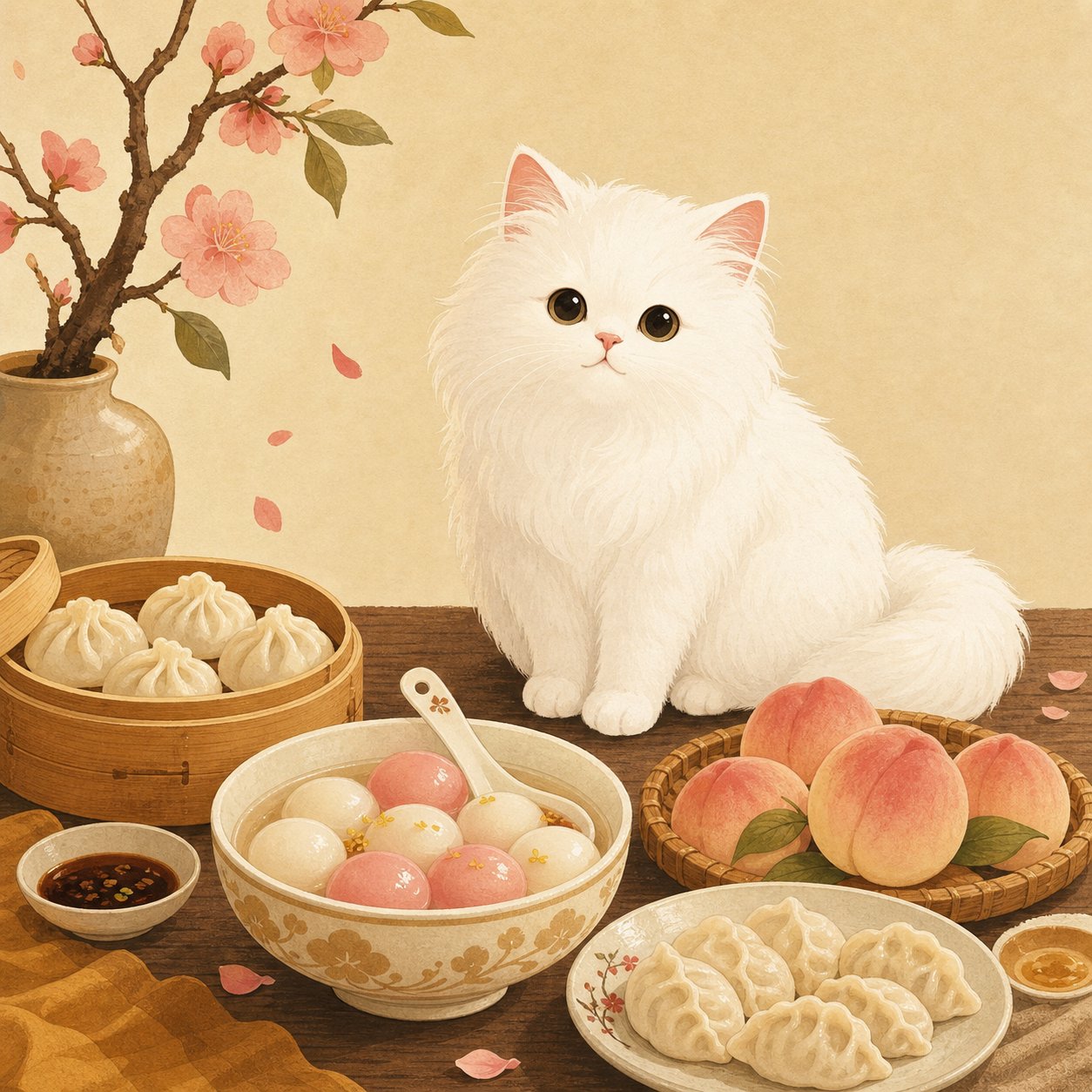
Food isn't just sustenance in Chinese culture. It's the primary language of love. Grandmothers show affection by piling your bowl high. Parents express worry by asking if you've eaten. Friends bond over hot pot. When that same warmth gets directed at a cat, the result is predictable: food nicknames everywhere. Scroll through any Chinese pet community on Douyin or Xiaohongshu and you'll find that a huge portion of cute chinese cat names are borrowed straight from the kitchen.
Why Food Names Dominate Chinese Cat Nicknames
The connection runs deeper than "food sounds cute." In Chinese culture, feeding someone is the most fundamental act of care. The greeting 你吃了吗 ("Have you eaten?") functions as "How are you?" in daily life. Naming a cat after food taps into that same emotional register - it says this creature is nourishing, comforting, and precious to me.
There's also a visual logic at work. Cats curl into shapes that genuinely resemble dumplings, rice balls, and mochi. A round white cat looks exactly like a 汤圆. An orange tabby has the warm golden color of a fried 年糕. The resemblance isn't forced - it's immediate and obvious, which is why these names stick so naturally.
Food nicknames also benefit from built-in cultural symbolism. Many traditional Chinese foods carry auspicious meanings through homophones. Dumplings symbolize wealth because their shape resembles ancient gold ingots. Tangerines represent good luck because 桔 contains the character 吉 (luck). Rice cake (年糕) sounds like "getting higher year by year." When you name your chinese kitten after one of these foods, you're layering cuteness with fortune.
Sweet and Savory Nickname Ideas With Meanings
Here's a breakdown of the most popular food-inspired nicknames, organized by category. Each entry includes pronunciation guidance and a suggestion for which type of cat it suits best.
| Characters | Pinyin | English Sound | Meaning | Best For |
|---|---|---|---|---|
| 桃桃 | Taotao | "tao-tao" | Peach | Pink-nosed or peachy-cream colored cats |
| 橘子 | Juzi | "jyu-dzuh" | Tangerine | Orange tabbies (also carries luck symbolism) |
| 芒果 | Mangguǒ | "mahng-gwoh" | Mango | Golden or yellow-toned cats |
| 饺子 | Jiǎozi | "jyao-dzuh" | Dumpling | Plump, round cats (symbolizes wealth) |
| 汤圆 | Tangyuan | "tahng-ywen" | Sweet rice ball | Round white cats (symbolizes family togetherness) |
| 麻薯 | Mashu | "mah-shoo" | Mochi | Soft, squishy, calm cats |
| 年糕 | Niangao | "nyen-gow" | Rice cake | White or cream cats (symbolizes rising fortune) |
| 布丁 | Buding | "boo-ding" | Pudding | Caramel or golden-colored cats |
| 奶茶 | Naicha | "nye-chah" | Milk tea | Siamese or brown-cream bicolor cats |
| 花卷 | Huajuǎn | "hwah-jwen" | Steamed twisted roll | Tabby cats with swirling patterns |
A few of these deserve extra attention. 汤圆 (Tangyuan) is one of the most beloved asian names for cats on Chinese social media right now. The word's round shape association and its cultural meaning of reunion and togetherness make it feel especially warm. As a traditional food for the Lantern Festival, it carries festive energy year-round when used as a pet name.
饺子 (Jiaozi) is another standout. With over 1,800 years of history as a staple food, dumplings are shaped to resemble ancient silver ingots called 元宝 - making the name a subtle wish for prosperity. A chubby cat named Jiaozi is basically a living good-luck charm sitting on your couch.
On Douyin and Xiaohongshu, the trendiest food names right now lean toward desserts and drinks. 奶茶 (Naicha, milk tea) has exploded in popularity alongside China's bubble tea obsession. 布丁 (Buding, pudding) and 麻薯 (Mashu, mochi) trend heavily among younger cat owners who find the soft, squishy associations perfectly match a cute cat chinese personality. Meanwhile, 芒果 (Mangguǒ, mango) has become a go-to for golden-furred cats, partly because the word itself sounds playful and bouncy.
The beauty of food nicknames is that they work on multiple levels simultaneously. They sound adorable when called out loud. They match your cat's appearance. They carry cultural weight. And they connect your pet to one of the deepest expressions of love in Chinese life - the act of nourishing someone you care about.
Food names bring warmth and whimsy, but Chinese cat naming culture has another dimension entirely: luck. Some owners choose nicknames not just for how they sound or what they describe, but for what they might attract into the household.
Lucky and Auspicious Chinese Nicknames With Hidden Meanings
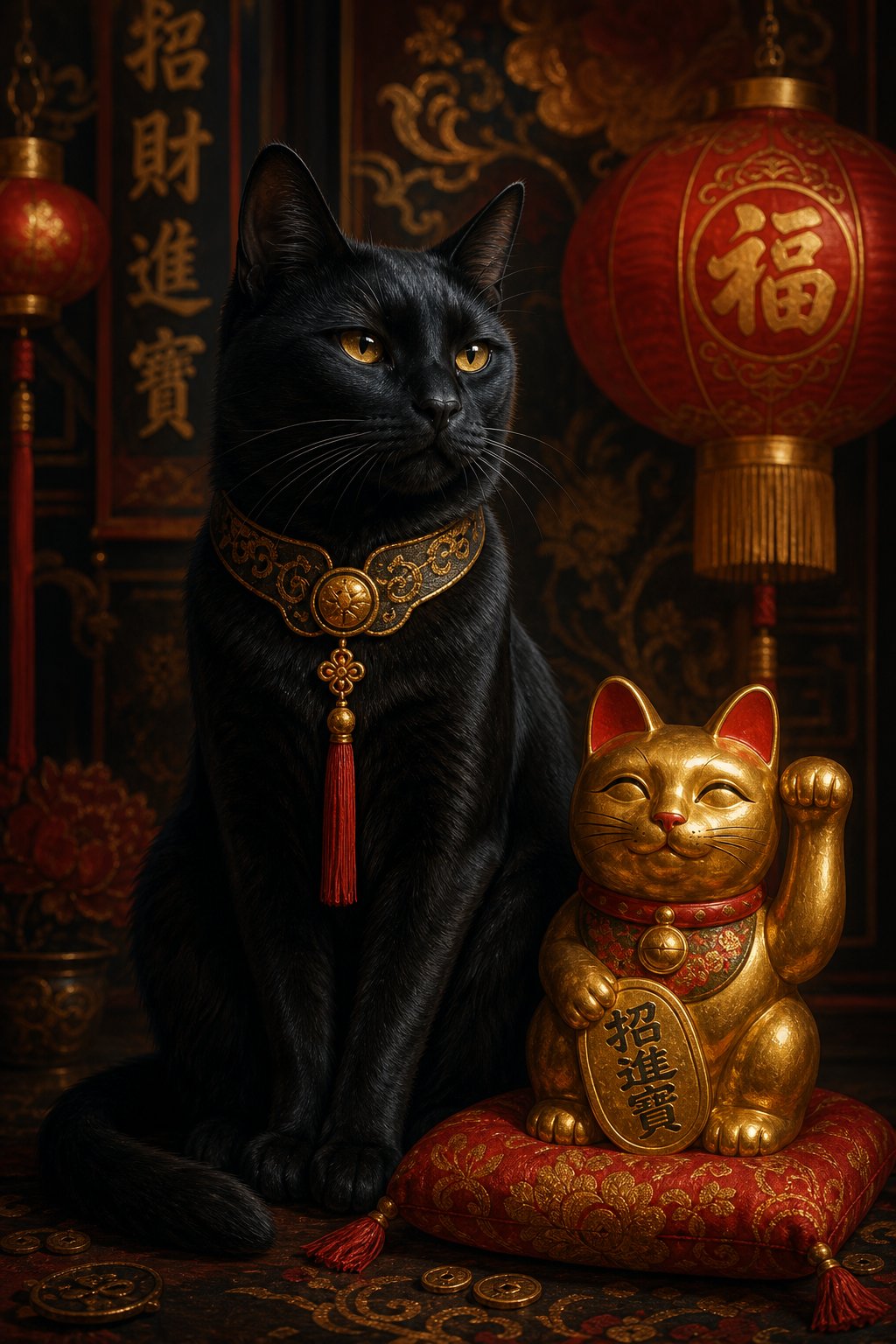
A cat named after a dumpling is charming. A cat named after a gold ingot? That's strategic. In Chinese naming culture, choosing a chinese name related to luck isn't just wishful thinking - it's a deeply rooted practice tied to the belief that words carry energy. The right characters in a name can invite prosperity, happiness, and protection into a household. And when that name belongs to a cat - an animal already associated with fortune through the 招财猫 (zhaocai mao, beckoning cat) tradition - the symbolism doubles.
This is where Chinese cat nicknames move beyond cuteness into something more intentional. Many owners select names specifically for their auspicious meanings, layering good fortune into the sounds they call out every day.
Auspicious Nicknames Based on Chinese Symbolism
Chinese culture places enormous value on positive meaning in names. A name isn't just a label - it's a small daily invocation. Call your cat 福福 (Fufu) a dozen times a day, and you're essentially repeating the word "fortune" over and over in your home. That repetition matters in a culture where language and luck are tightly intertwined.
The beckoning cat tradition reinforces this connection. The iconic 招财猫 figurine, with its raised paw waving in wealth, has been a fixture in Chinese shops and homes for generations. Naming a real cat with wealth-attracting characters extends that same logic from ceramic to living creature. Your cat becomes a furry good-luck charm.
Here are the most popular auspicious nicknames organized by what they're meant to attract:
Wealth and Prosperity
- 福福 (Fufu, "foo-foo") - Double fortune. The character 福 appears on red banners during Chinese New Year, always hung upside down because 倒 (dao, inverted) sounds like 到 (dao, arrived) - meaning "fortune has arrived."
- 元宝 (Yuanbao, "ywen-bao") - Gold ingot. Named after the boat-shaped gold and silver currency used in ancient China. Perfect for a plump, golden cat.
- 招财 (Zhaocai, "jao-tsai") - Attracting wealth. Directly borrowed from the beckoning cat tradition. A bold, confident name.
- 来福 (Laifu, "lye-foo") - Fortune comes. The structure itself is auspicious: 来 (come) + 福 (fortune) = fortune arriving at your door.
- 旺财 (Wangcai, "wahng-tsai") - Prosperous wealth. 旺 means thriving or booming, making this name a wish for flourishing finances.
Happiness and Harmony
- 欢欢 (Huanhuan, "hwahn-hwahn") - Joy, doubled. A reduplicated name that radiates cheerfulness.
- 乐乐 (Lele, "luh-luh") - Happiness, doubled. Simple, bright, and universally positive.
- 喜喜 (Xixi, "shee-shee") - Double happiness. Echoes the 双喜 (shuangxi) symbol seen at weddings and celebrations.
Longevity and Endurance
- 久久 (Jiujiu, "jyo-jyo") - Long-lasting. The number 9 (九 jiu) is considered auspicious in Chinese numerology because it sounds identical to 久 (jiu, long duration), representing eternality.
- 长寿 (Changshou, "chahng-show") - Long life. A direct wish for your cat to live many healthy years.
Protection and Warding Off Evil
- 平安 (Ping'an, "ping-ahn") - Peace and safety. One of the most common blessings in Chinese culture, now wrapped into a cat's name.
- 小玄 (Xiao Xuan, "shyao shwen") - Little mysterious one. In Chinese folk tradition, a black cat in chinese culture is called 玄猫 (xuan mao), and far from being unlucky, it's considered a powerful protector. Folk beliefs hold that black cats specialize in warding off negative energy and guarding the household against misfortune.
- 镇宅 (Zhenzhai, "jen-jai") - House guardian. A bold name for a chinese black cat that acknowledges its traditional role as spiritual protector.
That last category deserves emphasis. Many Western cultures associate black cats with bad luck, but the chinese domestic cat black tradition runs in the opposite direction. Black belongs to the water element in Chinese five-element theory, giving it the power to suppress negative forces. If your household has been experiencing a rough patch, folk wisdom suggests a black cat is exactly what you need - not despite its color, but because of it.
Homophone Wordplay in Lucky Cat Names
Here's where Chinese naming gets genuinely clever. Mandarin is packed with homophones - words that sound identical but carry completely different meanings. This phenomenon, called 谐音 (xieyin), lets cat owners embed hidden lucky meanings inside names that sound perfectly ordinary on the surface.
The principle works like this: you choose a name that sounds cute or descriptive, but its pronunciation also echoes a word associated with good fortune. The listener's brain registers both meanings simultaneously, creating a name that operates on two levels.
Color-based names exploit this beautifully:
- 小橘 (Xiao Ju) - Literally "little orange," used for orange tabbies. But orange is the color of gold in Chinese symbolism. Folk tradition holds that orange cats are the most classic symbol of attracting wealth because their warm color belongs to fire and yang energy, making them natural prosperity magnets. Naming your orange cat 小橘 isn't just describing its fur - it's acknowledging its role as a living lucky charm.
- 雪球 (Xueqiu, "shweh-chyo") - Snowball. For white cats, this name sounds pure and playful. White symbolizes metal in five-element theory, associated with clarity and cutting through obstacles.
- 八宝 (Babao, "bah-bao") - Eight treasures. The number 8 (八 ba) sounds like 发 (fa), the verb in 发财 (facai, to get rich). Embedding 八 in a cat's name is a subtle nod to wealth.
Even the structure of a name can carry auspicious weight. Names that begin with 来 (lai, "to come") or end with 福 (fu, "fortune") create a miniature sentence: fortune arrives, luck comes, blessings enter. Every time you call your cat, you're speaking a tiny wish into existence. Whether you believe in the metaphysics or simply enjoy the cultural poetry, these names add a layer of meaning that purely descriptive nicknames can't match.
Lucky names draw from tradition and symbolism. But Chinese cat culture doesn't live only in the past - it's constantly evolving online, where millions of cat owners share, joke, and create new naming trends every day.
Trending Chinese Cat Nicknames From Internet Culture
Traditional naming patterns give you the foundation, but Chinese cat culture is a living, breathing thing that evolves daily across platforms like Douyin, Weibo, and Xiaohongshu. Millions of cat owners share content, create inside jokes, and spawn naming trends that spread faster than a cat knocking things off a table. If you want to know what Chinese people are actually calling their cats right now, you need to look at what's happening online.
Trending Nicknames From Chinese Social Media
Chinese internet cat culture has its own vocabulary, its own humor, and its own power dynamics. The central joke? Cats are not pets. They're overlords. Chinese netizens have built an entire comedic universe around the idea that cats are the true masters of the household, and their human "owners" are merely servants. This joke isn't casual - it shapes how people name their cats.
Here are the most popular trending nickname styles ranked by how frequently they appear across Chinese pet communities:
- 主子 (Zhǔzi, "joo-dzuh") - Master/Lord. This is the single most iconic term in Chinese internet cat culture. It reflects the running joke that cats rule the house and humans exist to serve them. You'll see it used as both a generic term for any cat and as an actual nickname for individual pets.
- 大王 (Dawang, "dah-wahng") - The King. For cats with big personalities who clearly believe they own the place. Often used for dominant, confident cats who demand attention on their own terms.
- 老板 (Laoban, "lao-bahn") - Boss. Similar energy to 大王 but with a modern, workplace-humor twist. Reflects the idea that your cat is the one actually running things while you just follow orders.
- 皇上 (Huangshang, "hwahng-shahng") - Your Majesty/Emperor. Takes the hierarchy joke to its logical extreme. Popular for cats with regal posture or particularly demanding personalities.
- 祖宗 (Zǔzong, "dzoo-dzong") - Ancestor. A humorous escalation meaning "the one I must worship and obey." Used when a cat is being especially difficult or high-maintenance.
- 喵星人 (Miaoxingren, "myao-shing-ren") - Citizen of Planet Meow. Frames cats as an advanced alien species that colonized Earth. Used as a collective term rather than an individual name, but it captures the reverence perfectly.
These personality-based nicknames reflect something genuine about how young Chinese people relate to their cats. The humor isn't random - it's rooted in the observable reality that cats, unlike dogs, don't perform obedience. They set the terms. Chinese internet culture simply named that dynamic out loud.
Beyond the hierarchy jokes, pop culture references drive plenty of naming trends. The cat meme (猫meme) phenomenon that exploded across Bilibili, Xiaohongshu, and Douyin turned specific cat expressions into household references. Cats with perpetually grumpy faces get called 臭脸 (Choulian, "stink face"). Hyperactive cats earn 疯批 (Fengpi, "crazy one"). A cat caught mid-yawn in a viral photo might inspire thousands of owners to name their own yawning cat after it.
Food-meets-internet culture has also produced hybrid trends. 橘猪 (Ju Zhu, "orange pig") is a wildly popular nickname for overweight orange tabbies - combining the orange cat stereotype (orange cats are always fat, according to Chinese internet lore) with the affectionate insult of calling them a pig. It's the kind of name that only makes sense if you're plugged into the community's inside jokes.
Famous Internet Cats and Their Nicknames
Curious what does kitty mean in chinese internet slang? The standard translation is 小猫咪 (xiao maomi), but online communities have stretched the concept far beyond that. The word 咪 (mi) alone has become shorthand for cat in casual digital speech, spawning nicknames like 咪总 (Mi Zong, "Director Mi") - a joke title that treats the cat as a corporate executive.
If you've ever wondered what does Hello Kitty mean in chinese, the official translation is 凯蒂猫 (Kaidi Mao), a phonetic approximation of "Kitty" plus the word for cat. But the kitty meaning in China goes beyond that single brand - 凯蒂 as a sound has no inherent Chinese meaning, which is actually a useful lesson in cultural authenticity. Real Chinese cat nicknames derive meaning from Chinese words, not transliterated English ones.
This brings up an important distinction. Many "Chinese cat name" lists online are actually English names transliterated into Chinese characters, or formal literary names that no actual Chinese person would use for a pet. Here's how to tell the difference:
An authentic Chinese cat nickname uses native Chinese words, follows established nickname patterns (reduplication, 小 prefix, food words, personality terms), and sounds natural when spoken in daily conversation. If a name requires explanation to a Chinese speaker, it's probably not authentic.
Red flags that a name isn't culturally authentic:
- It's a transliteration of an English word (like 露西 for "Lucy") rather than a native Chinese word
- It uses four or more characters - real nicknames are almost always one to two syllables
- It sounds poetic or literary rather than casual and warm
- No Chinese person would actually call it out loud across a room without feeling awkward
The names trending on Chinese social media right now pass all these tests. They're short, punchy, culturally grounded, and often funny. They come from a community that genuinely loves cats - China's pet ownership penetration reached 22% of households by 2023, with cats increasingly preferred over dogs among young urban residents. That massive community generates naming trends organically, driven by shared humor and collective affection rather than dictionary lookups.
Whether you choose a reverent title like 主子, a food-based classic like 汤圆, or a personality-driven name like 老板, the key is that it feels natural to say out loud, repeatedly, every single day. And saying it correctly matters - which means understanding how these sounds actually work in Mandarin.
How to Pronounce Chinese Cat Nicknames Correctly
You've found the perfect nickname. The meaning resonates, the cultural logic checks out, and it matches your cat's personality. But when you try to say it out loud, something feels off. Mandarin pronunciation trips up English speakers in predictable ways, and getting the sounds wrong can turn an adorable name into something unrecognizable. The good news? You don't need to master the entire language. You just need a handful of sounds and a basic grasp of tones.
Essential Mandarin Sounds for Cat Nicknames
So how to say cat in chinese? The mandarin word for cat is 猫 (mao), pronounced with a high, flat first tone - imagine holding a single musical note steady without letting it rise or fall. The sound itself is close to English "mao" as in "Mao Zedong," with the lips starting closed and opening into a broad "ow." That same first tone appears in nicknames like 咪咪 (Mimi), where both syllables sit at a consistently high pitch.
Mandarin has four main tones plus a neutral tone, and each one changes a word's meaning entirely. Here's how they work using cat-relevant examples:
- First tone (high, flat): 猫 (mao, cat). Hold your pitch steady and high, like sustaining a note while humming.
- Second tone (rising): 毛 (mao, fur). Start mid-range and rise, like asking a surprised "Really?"
- Third tone (low/dipping): 小 (xiao, little). Dip low and let it creep back up slightly. Think of the drawn-out "well..." when you're skeptical.
- Fourth tone (falling): 大 (da, big). Start high and drop sharply, like a firm "No!"
For cat nicknames specifically, tones matter less than you might fear. Why? Reduplicated names like 豆豆 or 球球 repeat the same tone twice, creating a consistent pattern that's easier to nail than a two-tone combination. And when you're calling your cat, the natural rise in your voice (calling intonation) partially overrides strict tonal accuracy anyway. Your cat responds to the overall sound shape, not your tone marks.
Here's a pronunciation guide for the most popular nicknames covered in earlier sections. The "Tone Pattern" column uses numbers (1 = high flat, 2 = rising, 3 = low dip, 4 = falling) so you can see the melodic shape at a glance.
| Nickname | Tone Pattern | English Approximation | Tips |
|---|---|---|---|
| 咪咪 (Mimi) | 1-1 | "mee-mee" (both high and flat) | Keep both syllables at the same steady pitch. Don't let the second one drop. |
| 豆豆 (Doudou) | 4-4 | "doh-doh" (both falling sharply) | Start each syllable high and let it fall. Like saying "go!" twice. |
| 球球 (Qiuqiu) | 2-2 | "chyo-chyo" (both rising) | The "q" sounds like "ch" with a smile. Rise on each syllable like asking a question. |
| 小白 (Xiao Bai) | 3-2 | "shyao bye" (dip then rise) | The "x" sounds like "sh" but with your tongue forward, near your teeth. |
| 汤圆 (Tangyuan) | 1-2 | "tahng-ywen" (flat then rising) | The "yuan" rhymes with "wen" but starts with a "y" glide. |
| 福福 (Fufu) | 2-2 | "foo-foo" (both rising) | Straightforward. Like saying "who?" twice with a rising lilt. |
| 年糕 (Niangao) | 2-1 | "nyen-gow" (rising then flat) | "Nian" rhymes with "yen" with an "n" in front. "Gao" rhymes with "cow" but with a "g." |
| 主子 (Zhuzi) | 3-3 | "joo-dzuh" (dip, then neutral) | When two third tones meet, the first one rises (becomes tone 2). Say "joo" rising, then "dzuh" low. |
A few sounds deserve special attention. The Mandarin "q" (as in 球球) doesn't exist in English - it's a "ch" sound made with the tongue pressed flat against the roof of your mouth while your lips spread into a slight smile. The "x" (as in 小) is similar: think "sh" but lighter and more forward in the mouth. And the "zh" (as in 主子) is a retroflex "j" - curl your tongue tip back slightly while making a "j" sound.
Mandarin vs Cantonese Pronunciation Differences
When someone asks what is cat in chinese, the answer depends on which Chinese they mean. "Chinese" encompasses hundreds of dialects and several major language groups. The two most relevant for pet naming are Mandarin (普通话, the national standard) and Cantonese (广东话, spoken in Guangdong, Hong Kong, and Macau).
The chinese word for cat differs between them:
- Mandarin: 猫 (mao, first tone) - rhymes with "cow" with an "m"
- Cantonese: 貓 (maau, rising tone) - similar sound but with a longer vowel and different tonal contour
The cat in chinese characters is written the same way in both languages (猫 in simplified, 貓 in traditional), but pronunciation diverges significantly. Cantonese has six to nine tones depending on how you count, making it considerably more complex tonally. A nickname like 豆豆 would be "dau dau" in Cantonese rather than "dou dou" in Mandarin - recognizably related but distinctly different in sound.
For most English speakers choosing a Chinese cat nickname, Mandarin pronunciation is the practical default. It's what you'll hear in the vast majority of Chinese pet content online, and it's what the pinyin romanization system represents. If you're connected to Cantonese-speaking communities (Hong Kong, parts of Southeast Asia), the same characters work - just know the pronunciation shifts.
One final consideration: which sounds do cats actually respond to best? Research on feline name recognition suggests cats pick up on short, high-pitched syllables with clear consonant beginnings. Mandarin for cat nicknames delivers exactly this. Names like 咪咪, 豆豆, and 球球 all start with crisp consonants (m, d, q) and stay within two quick syllables. The high-pitched quality of first and second tones also falls within the frequency range that cats find most attention-grabbing. Kitty in chinese - whether you say 小猫咪 (xiao maomi) or just call out 咪咪 - naturally hits the acoustic sweet spot that feline ears are tuned to detect.
Pronunciation is the bridge between knowing a name and actually using it. With these sounds in your toolkit, you're ready to move from theory to practice - combining everything you've learned into a personalized nickname built from scratch.
Build Your Own Chinese Cat Nickname With This Simple Guide
You've got the cultural context, the patterns, and the pronunciation basics. Now it's time to put it all together. Instead of picking from someone else's list, you can build a nickname that's genuinely yours - one that fits your cat's look, personality, and the energy you want in your home. The process takes three steps.
Step-by-Step Nickname Creation Method
Step 1: Choose a base word.
Look at your cat. What stands out? Their color, their shape, their attitude, their favorite sleeping position? Maybe you want to name them after a food they resemble, or a quality you hope they'll bring into your life. Pick a single Chinese character that captures that essence. If you're just starting to explore animal names in mandarin, colors and foods are the easiest entry points because they're concrete and visual.
Here are some starter categories:
- Colors: 白 (bai, white), 黑 (hei, black), 橘 (ju, orange), 灰 (hui, gray)
- Traits: 胖 (pang, chubby), 乖 (guai, well-behaved), 甜 (tian, sweet), 萌 (meng, cute)
- Foods: 豆 (dou, bean), 桃 (tao, peach), 糖 (tang, sugar), 果 (guo, fruit)
- Lucky words: 福 (fu, fortune), 宝 (bao, treasure), 旺 (wang, prosperous), 喜 (xi, joy)
Step 2: Apply a nickname pattern.
Take your base word and run it through one of the formulas you've learned. Reduplication doubles the character for maximum cuteness. The 小 prefix adds a "little" in front for gentle warmth. The 儿 suffix softens the ending with a Northern Chinese lilt. Each pattern produces a different feel, so try all three and see which one rolls off your tongue most naturally.
Step 3: Check for cat-friendliness.
Say the name out loud. Does it stay within two syllables? Does it start with a clear consonant sound? Can you call it across a room without it getting lost in background noise? If yes, you've got a winner. Cats respond best to short, crisp sound patterns - and the chinese for cat naming tradition already favors exactly that structure.
Quick Reference Formation Chart
This matrix shows how the same base words transform depending on which pattern you apply. Use it as a starting point, then swap in any character that fits your cat.
| Base Word | Meaning | Reduplication | 小 + Word | Word + 儿 |
|---|---|---|---|---|
| 白 (bai) | White | 白白 (Baibai) | 小白 (Xiao Bai) | 白儿 (Bair) |
| 豆 (dou) | Bean | 豆豆 (Doudou) | 小豆 (Xiao Dou) | 豆儿 (Dour) |
| 桃 (tao) | Peach | 桃桃 (Taotao) | 小桃 (Xiao Tao) | 桃儿 (Taor) |
| 福 (fu) | Fortune | 福福 (Fufu) | 小福 (Xiao Fu) | 福儿 (Fur) |
| 糖 (tang) | Sugar | 糖糖 (Tangtang) | 小糖 (Xiao Tang) | 糖儿 (Tangr) |
| 花 (hua) | Patterned | 花花 (Huahua) | 小花 (Xiao Hua) | 花儿 (Huar) |
| 胖 (pang) | Chubby | 胖胖 (Pangpang) | 小胖 (Xiao Pang) | 胖儿 (Pangr) |
| 宝 (bao) | Treasure | 宝宝 (Baobao) | 小宝 (Xiao Bao) | 宝儿 (Baor) |
Notice how every combination in this chart produces a legitimate, usable nickname. That's the power of learning patterns over memorizing lists. You're not limited to what someone else curated - you can generate dozens of options in minutes. Among all animal names in mandarin, cat nicknames are uniquely flexible because the naming formulas are so productive and forgiving.
Wondering how to say kitty in chinese using your new creation? Just call it out. If you built 桃桃 (Taotao), say "tao-tao" with two falling tones and a bright, clear voice. If you went with 小豆 (Xiao Dou), let the third tone on 小 dip low before the fourth tone on 豆 drops sharply. How to say kitten in chinese is 小猫 (xiao mao) or 小猫咪 (xiao maomi) - and your nickname essentially replaces that generic term with something personal.
The best Chinese cat nickname sits at the intersection of three things: personal meaning that connects to your specific cat, a pleasant sound that you enjoy repeating dozens of times a day, and cultural authenticity that respects the tradition behind it. You don't need all three to be perfect. Sometimes a name just feels right the moment you say it - and your cat's ear-twitch confirms it.
Try a few options out loud over the next few days. Call your cat with different names and watch their reaction. The one that gets a head turn, a slow blink, or a trot in your direction? That's the one. Chinese families have been finding their cats' names this way for centuries - not through lists, but through the simple, joyful experiment of calling out something sweet and seeing who answers.
Frequently Asked Questions About Chinese Cat Nicknames
1. What is the most common way Chinese people nickname their cats?
The most common technique is reduplication (叠字), where a single character is repeated twice to create an affectionate sound. Examples include 豆豆 (Doudou, little bean), 咪咪 (Mimi, kitty), and 球球 (Qiuqiu, little ball). This pattern mirrors how Chinese families give pet names to children and taps into the natural softness of repeated syllables in Mandarin. Over 80% of casual cat nicknames in Chinese households follow this two-syllable repeated pattern because it sounds tender and is easy for cats to recognize.
2. How do you say cat in Chinese and what character is used?
In Mandarin, cat is 猫 (māo), pronounced with a high flat first tone similar to 'mao' rhyming with 'cow.' In Cantonese, the same character (written 貓 in traditional form) is pronounced 'maau' with a rising tone. The character 猫 combines the radical 犭(animal) with 苗 (sprout) as a phonetic component. This character forms the basis of many cat-related terms like 小猫咪 (xiǎo māomī, kitten/kitty) and 猫奴 (māonú, cat slave, a humorous term cat owners use for themselves).
3. Are black cats considered lucky or unlucky in Chinese culture?
Unlike Western superstitions, black cats are traditionally considered powerful protectors in Chinese culture. Called 玄猫 (xuán māo), black cats belong to the water element in Chinese five-element theory and are believed to ward off negative energy and guard households against misfortune. Folk beliefs hold that keeping a black cat can suppress evil spirits and bring spiritual protection. Popular lucky nicknames for black cats include 小玄 (Xiǎo Xuán, little mysterious one) and 镇宅 (Zhènzhái, house guardian).
4. What are popular food-inspired Chinese cat names and why are they so common?
Food nicknames dominate Chinese cat culture because feeding is the primary expression of love in Chinese society. Popular choices include 汤圆 (Tāngyuán, sweet rice ball) for round white cats, 饺子 (Jiǎozi, dumpling) for plump cats, 奶茶 (Nǎichá, milk tea) for Siamese or bicolor cats, and 麻薯 (Máshǔ, mochi) for soft, calm cats. Many food names carry bonus auspicious meanings through homophones - dumplings resemble gold ingots symbolizing wealth, while tangerines contain the character for luck. This layered significance makes food names both adorable and culturally meaningful.
5. How can I create my own authentic Chinese nickname for my cat?
Follow a three-step formula: First, choose a base character that matches your cat's appearance, personality, or a quality you wish for them (colors like 白 for white, foods like 桃 for peach, or lucky words like 福 for fortune). Second, apply a nickname pattern - reduplication (say it twice: 桃桃), the 小 prefix (小桃, little peach), or the 儿 suffix (桃儿, with a soft ending). Third, test it aloud for cat-friendliness - keep it to two syllables with a clear consonant start. Try calling your cat with different options and watch which one gets a head turn or ear twitch.