What Chinese Folklore Character Names Reveal About Ancient Mythology
When you encounter a name like Baigujing or Sun Wukong, you're not just reading a label. You're reading a compressed biography. Chinese folklore character names function as miniature stories, encoding a figure's powers, moral alignment, and origin into just two or three syllables. Unlike naming conventions in many Western traditions, where character names often carry only loose symbolic weight, Chinese myths and legends build meaning directly into the structure of each character's name.
Why Chinese Folklore Names Are More Than Labels
Chinese lore spans over four thousand years and draws from hundreds of regional traditions, from Daoist immortal tales to Buddhist-influenced demon narratives to local ghost stories passed down through oral tradition. Across this vast landscape, a consistent naming logic persists. Each Chinese character in a name carries independent meaning, and when combined, those characters create layered descriptions. A name might tell you whether a figure is divine or demonic, what element they control, or what moral lesson their story teaches. This guide doesn't ask you to memorize a list. Instead, it teaches you the system behind the names so you can decode unfamiliar chinese legendary figures on your own.
Every Chinese folklore name is essentially a compressed story. Learn to read the characters, and you unlock the figure's essence before you ever hear their tale.
Who This Guide Serves
Whether you're a creative writer searching for authentic names rooted in chinese folklore, a gamer or film viewer trying to identify characters from recent adaptations, or a language learner using chinese legends as a gateway into cultural literacy, this guide meets you where you are. The naming system itself is the key, and once you grasp it, every new character you encounter becomes readable.
That readability starts with understanding the building blocks: the radicals, phonetic components, and moral markers embedded in each name's written form.
The Hidden Naming System Behind Chinese Folklore Characters
Chinese characters aren't random squiggles. Each one is built from smaller components called radicals, and these radicals act like category tags. When you see a folklore name written in Chinese, the radicals inside those characters immediately signal what kind of being you're dealing with. Think of it as a visual classification system baked into the writing itself.
Radicals That Decode a Character's Nature
Imagine you're scanning a page of mythology in Chinese and you spot the 鬼 (guǐ) radical tucked inside a character. Before reading anything else, you already know this figure belongs to the realm of ghosts or the undead. The same logic applies across every category of supernatural being. The 犭 radical (a compressed form of 犬, meaning dog or beast) flags animal spirits and shapeshifters. The 亻 radical (a simplified "person") marks humanoid figures. And the character 仙 (xiān), combining "person" with "mountain," literally paints the image of a human who has ascended to a mountain peak, which is exactly what immortals do in Chinese lore.
This isn't a modern invention. The radical system has organized spirit in Chinese writing for thousands of years, giving readers an instant visual cue about a creature's fundamental nature.
| Radical | Meaning | Category It Signals | Example Name |
|---|---|---|---|
| 鬼 (guǐ) | Ghost, spirit | Ghosts and undead beings | 魑 (chī) in 魑魅 (chīmèi, forest demons) |
| 犭 (quǎn) | Beast, animal | Animal spirits and shapeshifters | 狐 (hú) in 狐狸精 (húli jīng, fox spirit) |
| 亻 (rén) | Person | Humanoid beings and mortals | 仙 (xiān, immortal) |
| 女 (nǚ) | Woman, female | Female spirits and goddesses | 妖 (yāo) in 妖怪 (yāoguài, demon) |
| 火 (huǒ) | Fire | Fire-related spirits or powers | 灵 (líng) in 火灵 (huǒlíng, fire spirit) |
| 骨 (gǔ) | Bone | Undead or skeletal creatures | 骷 (kū) in 骷髅 (kūlóu, skeleton) |
How Name Characters Encode Moral Alignment
Radicals tell you what something is. But the full character, and especially the combinations used in a name, tell you whether that being is good or evil in Chinese folklore's moral framework.
Benevolent figures tend to carry characters associated with light, purity, and the heavens. You'll notice names containing 玉 (yù, jade), 明 (míng, brightness), 天 (tiān, heaven), or 慈 (cí, compassion). These aren't coincidences. They're deliberate moral markers. The Jade Emperor's name uses 玉 precisely because jade represents incorruptible virtue in Chinese culture.
Malevolent figures get the opposite treatment. Their names draw from characters meaning darkness, bone, blood, or chaos. A figure whose name contains 骨 (gǔ, bone), 血 (xuè, blood), or 暗 (àn, darkness) is being flagged as dangerous before the story even begins. Evil in Chinese folklore naming is rarely subtle. The written form warns you.
Common Building Blocks in Folklore Names
Compound characters add another layer. Take 妖 (yāo), one of the most common characters in myths in Chinese supernatural fiction. It combines the 女 (woman) radical with 夭 (yāo), a phonetic component that also carries connotations of something unnatural or premature. The result is a character suggesting a being that is alluring yet strange, beautiful yet dangerous. Understanding the yaoguai meaning starts here: 妖 (yāo, strange spirit) paired with 怪 (guài, monster) creates a compound term for shapeshifting demons that are neither fully animal nor fully human.
This layered construction repeats throughout mythology in Chinese naming. The character 精 (jīng) means "essence" or "spirit" and appears in names like 狐狸精 (fox spirit) and 白骨精 (white bone spirit). It signals that the creature is a concentrated, distilled form of something, an animal or object that has cultivated enough spiritual energy to gain consciousness. Meanwhile, 魔 (mó, demon) borrows from Buddhist terminology and carries a heavier moral weight than 妖, implying active malice rather than mere mischief.
Once you internalize these building blocks, every new folklore name you encounter becomes a puzzle you can solve. The radicals reveal the category, the full characters reveal the moral stance, and the combinations reveal the story. The question that follows naturally is: how do these naming rules play out in the actual gods, heroes, and immortals of Chinese tradition?
Gods, Immortals, and Heroes of Chinese Folklore
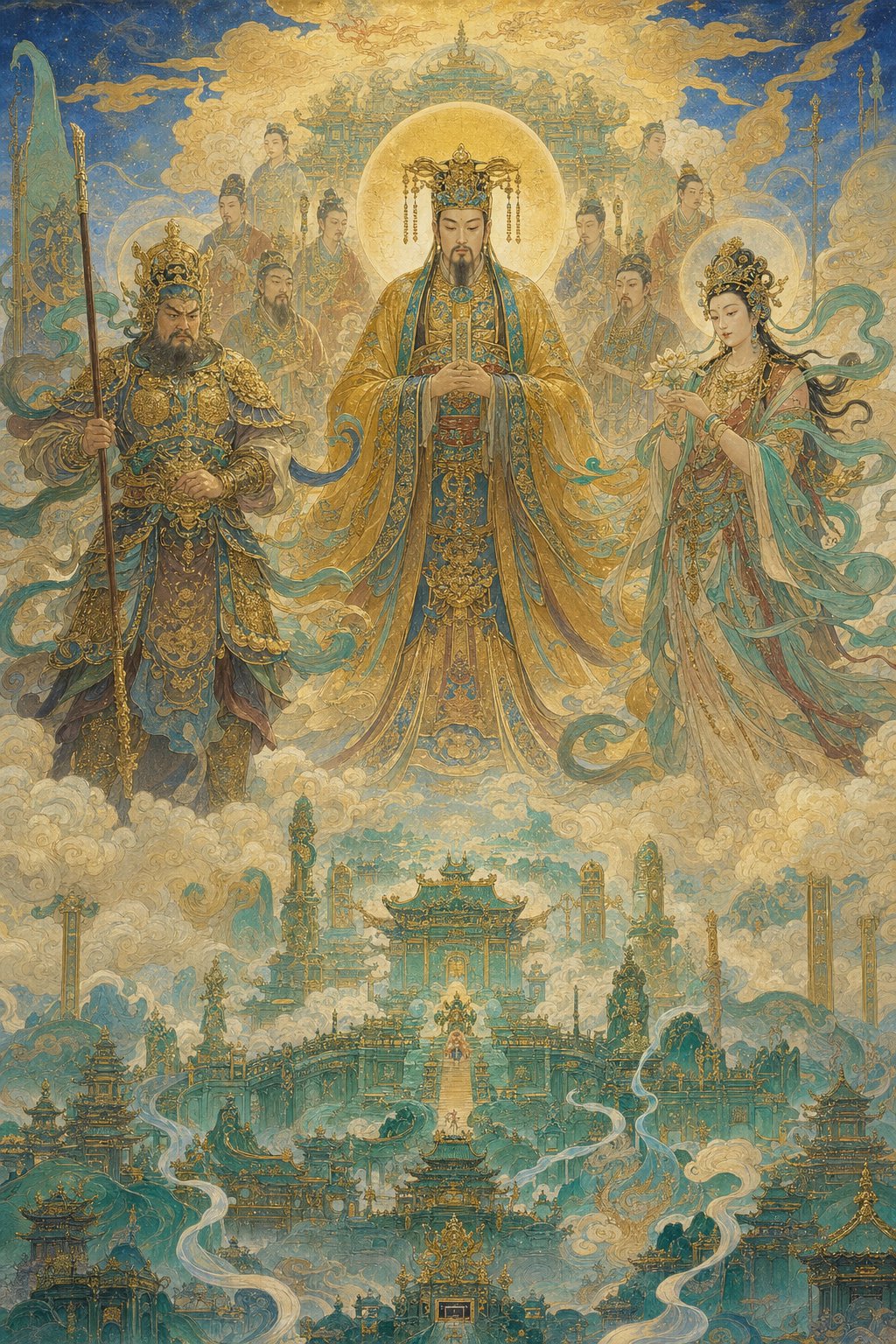
The naming rules covered above aren't abstract theory. They come alive in the most celebrated figures of Chinese tradition. Ancient chinese gods carry names that function as titles, job descriptions, and moral verdicts all at once. Warrior heroes bear names that foreshadow their legendary deeds. When you break these names apart character by character, the stories practically tell themselves.
Supreme Deities and Their Name Meanings
The highest tier of chinese mythical gods follows a clear pattern: their names announce cosmic authority through characters associated with heaven, purity, and primordial creation.
| Chinese Characters | Pinyin | Literal Meaning | Role in Folklore |
|---|---|---|---|
| 玉皇大帝 | Yu Huang Da Di | Jade August Great Emperor | Supreme ruler of Heaven; judges all beings annually |
| 女媧 | Nu Wa | Woman + ancient creator | Creator goddess who shaped humans from clay and repaired the sky |
| 盤古 | Pan Gu | Coiled Antiquity | Primordial giant who separated heaven and earth |
| 觀音 | Guan Yin | Perceiving Sound/Cries | Bodhisattva of compassion who hears all suffering |
Consider the Jade Emperor. His name uses 玉 (yu, jade) because jade symbolizes incorruptible virtue in Chinese culture. 皇 (huang) means "august" or "sovereign," and 大帝 (da di) elevates him to "great emperor." Every syllable reinforces his position as the supreme moral authority. His full ceremonial title, Yu Huang Shang Di (玉皇上帝), translates to "Pure August Emperor on High," though he's more commonly called Tian Gong (天公), meaning "heavenly grandfather."
Nuwa's name works differently. 女 (nu) is the woman radical, immediately marking her as a feminine divine force. 媧 (wa) is an archaic character used almost exclusively for this goddess, suggesting a being so ancient that her name predates common vocabulary. Pangu follows similar logic: 盤 (pan, coiled) and 古 (gu, ancient) paint the image of something curled up in primordial darkness, waiting to unfold the universe.
Guanyin's name is perhaps the most poetic. 觀 (guan) means "to perceive" or "to observe," while 音 (yin) means "sound." She is literally "the one who perceives the sounds of the world," a name that doubles as her divine function: hearing and responding to the cries of all suffering beings.
Warrior Heroes Whose Names Became Legend
Chinese heroes occupy a different naming space. Their names tend to be shorter, more grounded, and often carry subtle references to their martial or moral qualities. The names of chinese warriors in folklore frequently use characters related to strength, loyalty, or natural imagery.
| Chinese Characters | Pinyin | Literal Meaning | Role in Folklore |
|---|---|---|---|
| 關羽 | Guan Yu | Barrier + Feather/Wing | God of war and loyalty; protector of the righteous |
| 花木蘭 | Hua Mu Lan | Flower + Wood + Orchid | Filial warrior who disguised herself to fight in her father's place |
Guan Yu's name pairs 關 (guan, a pass or barrier) with 羽 (yu, feather or wing). The combination suggests someone who guards a critical passage yet moves with the swiftness of a bird. His courtesy name, Yunchang (雲長, "long as clouds"), reinforces this aerial imagery. As a china warrior name, it encodes both defensive strength and graceful speed.
Hua Mulan's name layers three botanical characters: 花 (hua, flower), 木 (mu, wood/tree), and 蘭 (lan, orchid). Orchids in Chinese culture represent refinement and hidden strength, qualities that mirror Mulan's story of concealed identity and quiet resilience. Her surname, Hua (flower), adds an ironic femininity to a figure famous for succeeding in a masculine world.
From Historical Figure to Folklore Icon
Here's a distinction worth understanding: not all these figures started as myths. Guan Yu was a real military general during the late Eastern Han dynasty. His historical existence is documented. Over centuries, storytelling elevated him from a skilled commander to the God of War, and his name accumulated divine weight it never originally carried. Hua Mulan likely originated from a ballad rather than a historical record, placing her in a gray zone between legend and literature.
Contrast this with Pangu and Nuwa, who are purely mythological. No historical person stands behind their names. They emerged from cosmological narratives meant to explain the universe's origin. This distinction matters because it shapes how names function. Historical figures who became mythologized retain ordinary-sounding personal names, while purely mythological beings carry names built from archaic or symbolic characters that no real parent would choose for a child.
Among the important historical and mythological figures in ancient china, this boundary between history and myth is often blurred deliberately. The mythologization process itself tells us what qualities a culture most admires: Guan Yu's loyalty became divine, Mulan's filial piety became legendary, and their names became shorthand for those virtues.
Yet gods and heroes represent only the bright side of the naming spectrum. Chinese folklore's darker figures, its demons, monsters, and shapeshifters, follow an entirely different set of naming conventions designed to signal danger rather than virtue.
Demons, Monsters, and Yaoguai in Chinese Folklore
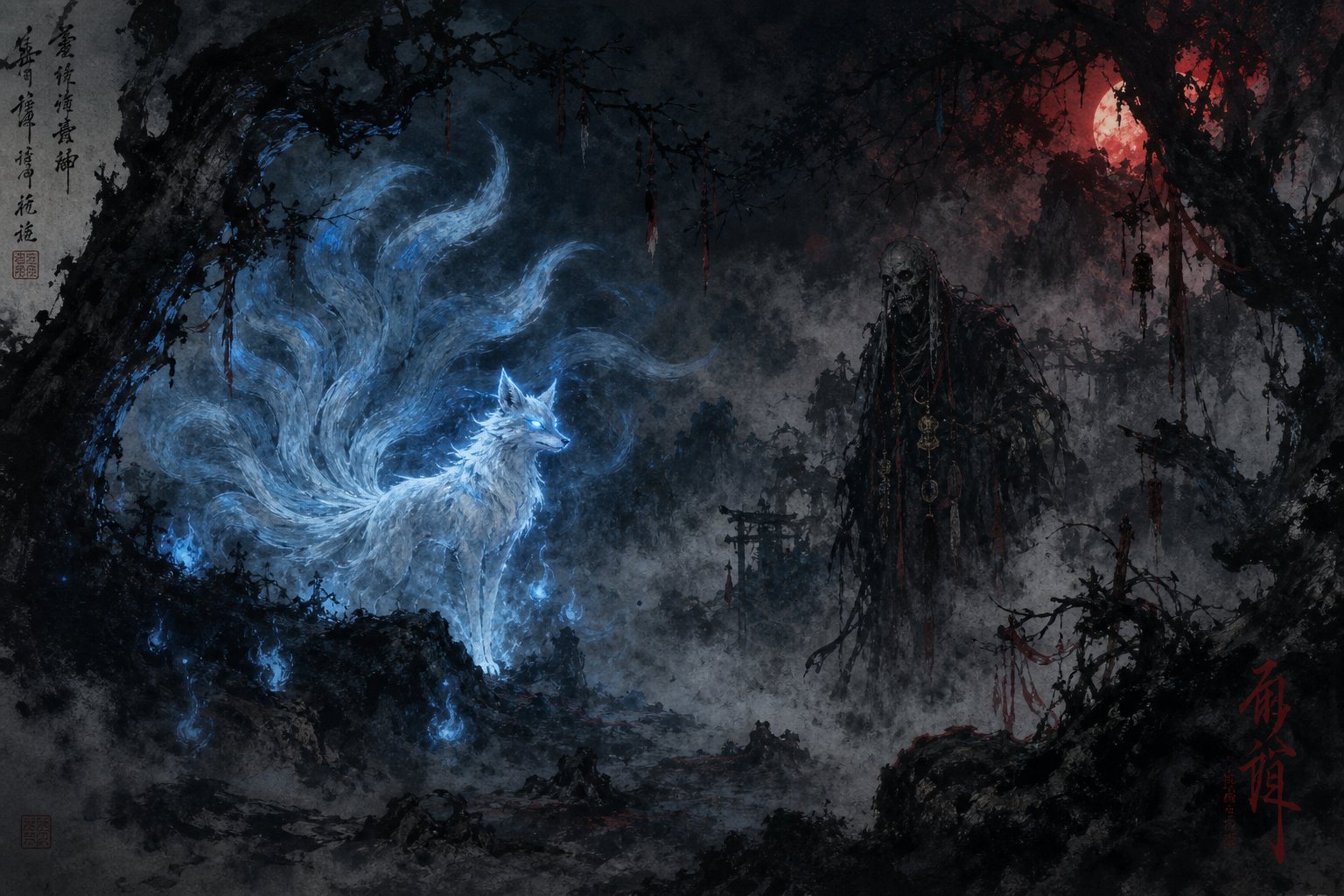
Chinese demon mythology doesn't operate on a simple good-versus-evil binary the way Western demonology often does. Instead, it sorts its dark figures into distinct categories, each with different origins, moral weights, and threat levels. The names themselves carry those distinctions. If you can read the characters, you already know what kind of danger you're facing.
Yao, Guai, and Mo — Understanding Demon Categories
English translations flatten three very different concepts into the single word "demon." In Chinese folklore, though, the differences between these categories are fundamental:
- Yao (妖) — Shapeshifting spirits born from animals, plants, or even inanimate objects that absorbed spiritual energy over centuries. The character 妖 combines 女 (woman) with 夭 (young/to die prematurely), evoking something alluring yet unnatural. Yao are not inherently evil. They're closer to the classical Daemons or Fae of Western tradition than to biblical demons.
- Guai (怪) — Strange, anomalous creatures. The character 怪 uses the heart radical (忄) paired with 圣, suggesting something that disturbs the mind. Guai are oddities, beings that defy natural categories without necessarily carrying malicious intent.
- Mo (魔) — Malevolent demons of genuine evil. This character entered Chinese through Buddhist scripture as a translation of the Sanskrit "Mara" (the demon king who tempted the Buddha). Its components are 麻 (hemp/cannabis, referencing illusions and temptation) over 鬼 (ghost/evil spirit). Unlike Yao, Mo are considered inherently cruel and destructive.
The compound term yaogui (妖怪) merges the first two categories into a general label for supernatural creatures, roughly meaning "demon-monster." When you encounter demon chinese terminology in games or films, it's usually yaogui being referenced. But collapsing these categories together loses important nuance. A fox yao seducing a scholar is a fundamentally different threat than a Mo corrupting an entire kingdom.
Named Demons From Classical Literature
Classical chinese demons carry names that function as threat assessments. Each syllable tells you what the creature is made of, what it can do, or where it came from.
| Chinese Name | Pinyin | Literal Meaning | Powers and Role |
|---|---|---|---|
| 白骨精 | Bai Gu Jing | White Bone Spirit | Shapeshifter made of skeletal remains; deceives through disguise (Journey to the West) |
| 九尾狐 | Jiu Wei Hu | Nine-Tailed Fox | Ancient fox spirit whose tail count signals accumulated power and age |
| 傲因 | Ao Yin | Proud/Arrogant Cause | Monstrous beast from the Shanhaijing known for devouring humans |
| 魍魎 | Wang Liang | (Archaic: mountain/water demons) | Spirits that haunt wilderness areas and mislead travelers |
| 牛魔王 | Niu Mo Wang | Bull Demon King | Powerful demon lord; husband of Princess Iron Fan (Journey to the West) |
Baigujing is a perfect case study among baigujing mythological creatures. Her name is completely transparent: 白 (bai, white) + 骨 (gu, bone) + 精 (jing, spirit/essence). She is literally a spirit whose true form is a pile of white bones. In Journey to the West, she disguises herself as innocent humans to trick the monk Tripitaka, but her name already told you she's hollow inside, nothing but death wearing a mask. The 精 suffix marks her as a concentrated spiritual entity rather than a living creature.
The jiuweihu (Nine-Tailed Fox) uses a numerical prefix that doubles as a power indicator. In Chinese cosmology, nine represents the highest single digit and signals completion or extreme accumulation. A fox with nine tails has cultivated spiritual energy for thousands of years. The name doesn't just describe appearance; it quantifies danger.
The ao'yin appears in the Classic of Mountains and Seas as a beast resembling a large dog with human-like features. Its name carries 傲 (ao, arrogant/proud), hinting at a creature that fears nothing. Meanwhile, Wangliang (魍魎) uses two archaic characters both containing the 鬼 radical, doubling down on their ghostly, elusive nature. These characters are so rare in modern Chinese that their very appearance on a page signals something ancient and unsettling.
What Demon Names Tell You About Their Powers
A pattern emerges when you line up these names. The naming conventions for chinese demons encode specific information:
- Material composition: 白骨 (white bone) tells you the creature's physical substance.
- Power level: Numerical prefixes like 九 (nine) quantify spiritual accumulation.
- Behavioral traits: 傲 (arrogant) or 魅 (bewitching) signal how the creature interacts with victims.
- Moral weight: The suffix matters enormously. 精 (jing, spirit) is morally neutral. 魔 (mo, devil) is inherently malicious. 怪 (guai, strange) is unpredictable.
This system means you can gauge a creature's threat before knowing its story. A name ending in 魔 demands more caution than one ending in 精. A name containing 鬼 radicals warns of death associations. And doubled archaic characters, like in 魍魎, signal beings so old they predate ordinary language.
Demons and monsters occupy the active, aggressive end of Chinese folklore's dark spectrum. But there's another category of supernatural beings whose names encode something different entirely: not power or malice, but the specific manner of their death and the injustice that keeps them bound to the living world.
Ghosts and Vengeful Spirits With Names That Tell Their Stories
Demons choose their path. Chinese ghosts don't. In folklore, a gui (鬼) is not a creature that cultivated power or chose evil. It's the lingering remnant of a person who died, often violently, unjustly, or with something left unfinished. That distinction shapes everything about how chinese ghost names work. Where demon names encode power and moral alignment, ghost names encode cause of death and the specific grievance binding the spirit to the living world.
According to Chinese folk belief, most souls pass through the underworld and eventually reincarnate. But a small number remain trapped in the human realm, bound by unfulfilled wishes or unresolved vengeance. Their names tell you exactly why they stayed.
Ghost Types Named by Their Origin
Chinese ghosts are categorized by a prefix that describes either the ghost's gender, method of death, or the location where it haunts. The prefix functions like a case file summary: read it, and you already know the ghost's backstory.
| Name | Pinyin | Literal Meaning | Origin Story |
|---|---|---|---|
| 女鬼 | Nu Gui | Female Ghost | Spirit of a woman who died from injustice, abuse, or betrayal; often depicted in white funeral dress |
| 冤鬼 | Yuan Gui | Wronged Ghost | Spirit of someone who died from a false accusation or miscarriage of justice; seeks vindication |
| 水鬼 | Shui Gui | Water Ghost | Spirit of a drowning victim; believed to lure others into water to find a replacement so it can reincarnate |
| 吊死鬼 | Diao Si Gui | Hanging Ghost | Spirit of someone who died by hanging; appears with elongated tongue and rope marks |
| 芭蕉鬼 | Ba Jiao Gui | Banana Tree Ghost | Female spirit bound to banana trees; weeps at night and may grant lottery numbers to those who trap her |
Notice the pattern. The nu gui carries 女 (woman) as its prefix, immediately gendering the spirit and connecting it to a long tradition of stories about women wronged by patriarchal systems. Yuan gui mythological creatures use 冤 (yuan, injustice/wrongful) as their defining marker, a character that combines 冖 (cover) with 兔 (rabbit), evoking the image of something trapped and unable to escape. The name itself is a verdict: this ghost exists because justice failed.
Shui gui mythical creatures are particularly fascinating because their naming reveals a belief system. The 水 (shui, water) prefix doesn't just mark location. It signals a specific supernatural mechanic: water ghosts are said to need a living replacement before they can move on to reincarnation. The diao si gui follows the same logic. 吊死 (diao si) means "death by hanging," and the name preserves the method of death as the ghost's permanent identity. Among ba jiao gui mythological creatures, the prefix 芭蕉 (bajiao, banana plant) ties the spirit to a specific habitat, reflecting Southeast Asian Chinese folk traditions where banana groves are considered haunted spaces.
Famous Named Ghosts in Chinese Literature
While ghost type names describe categories, individual chinese ghosts in literature receive personal names that work differently. The most famous example is Nie Xiaoqian (聂小倩) from Pu Songling's Strange Tales from a Chinese Studio, written during the Qing dynasty.
In xiao qian mythology, the name operates on multiple levels. 聂 (Nie) is her surname, an ordinary family name that grounds her as a once-living person rather than a primordial creature. 小 (xiao) means "small" or "young," and 倩 (qian) means "beautiful" or "pretty." Together, 小倩 paints the portrait of a young, lovely girl, which is exactly what she was before dying at eighteen. Her name doesn't signal danger or supernatural power. It signals innocence and tragedy.
This is deliberate. Nie Xiaoqian is introduced as a ghost coerced into luring travelers to their deaths by a yaksha demon. Her human-sounding name tells you she's a victim, not a villain. Pu Songling described her as "gorgeous; girl in paintings," and her name's gentle meaning reinforces that she retains her humanity despite being dead. Eventually, her good deeds earn her restoration to life, and she marries the scholar Ning Caichen. The story has been adapted into over twenty films and television dramas, making Xiaoqian one of the most recognizable ghost figures in Chinese popular culture.
Contrast her name with a categorical ghost label like 厉鬼 (li gui, fierce ghost). 厉 means "severe" or "fierce," immediately marking this type as aggressive and dangerous. Xiaoqian's personal name carries no such warning because her story is about redemption, not revenge.
The Difference Between Gui and Jing in Names
A common point of confusion: both 鬼 (gui) and 精 (jing) get translated as "spirit" in English, but they signal completely different origins. Gui are always the remnants of something that died. Jing are the concentrated essence of something that cultivated spiritual energy while still existing. A fox that absorbs moonlight for a thousand years becomes a 狐狸精 (fox spirit). A woman who dies unjustly becomes a 女鬼 (female ghost).
The naming convention reflects this cleanly. Creatures with 精 in their names were never human. They evolved upward from animals, plants, or objects. Beings with 鬼 in their names were once alive and fell downward into the supernatural realm through death. This directional difference, ascending versus descending, shapes every ghost story in Chinese folklore. Ghosts carry human emotions, human grudges, and human desires because they were human. Spirits do not, because they never were.
These beliefs about death and justice encoded in ghost names point toward something larger: the Chinese cosmological view that the boundary between living and dead is permeable, and that unresolved moral debts persist beyond the grave. That same cosmological framework also produced an entirely different category of named beings, the sacred creatures whose names encode not death or grievance, but elemental harmony and cosmic order.
Mythical Creatures and Sacred Beasts of Chinese Legend
Demons and ghosts carry names that warn you. Chinese mythological creatures on the sacred end of the spectrum do the opposite: their names announce harmony, cosmic balance, and auspicious power. Where a demon's name might contain 骨 (bone) or 魔 (evil), a sacred beast's name encodes color, direction, and elemental force. These aren't random associations. They map directly onto the Chinese cosmological system of Five Elements and Four Directions, turning each creature's name into a coordinate on the universe's moral grid.
The Four Sacred Beasts and Their Color-Coded Names
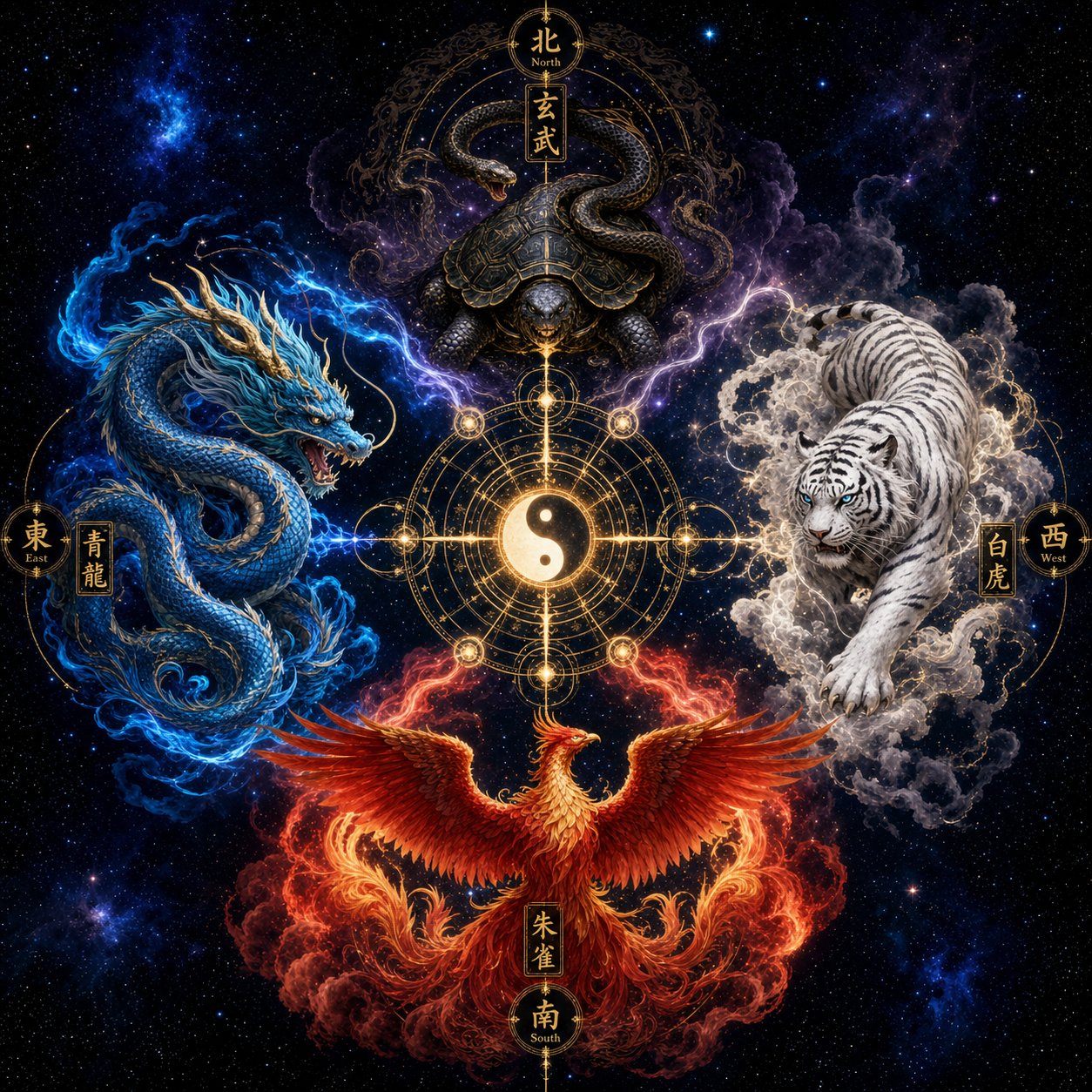
The Four Sacred Beasts (四象, Si Xiang) guard the four cardinal directions. Each one's name is a two-character compound where the first character specifies a color and the second identifies the animal form. That color isn't decorative. It links the creature to a specific direction, season, and element in Chinese cosmology.
| Chinese Name | Pinyin | Literal Meaning | Direction | Element | Season |
|---|---|---|---|---|---|
| 青龍 | Qing Long | Azure/Green Dragon | East | Wood | Spring |
| 白虎 | Bai Hu | White Tiger | West | Metal | Autumn |
| 朱雀 | Zhu Que | Vermilion Bird | South | Fire | Summer |
| 玄武 | Xuan Wu | Black/Dark Warrior (Tortoise-Snake) | North | Water | Winter |
You'll notice the naming logic is remarkably consistent. 青 (qing) means blue-green, the color associated with spring growth and the East. 白 (bai) means white, linked to metal and the West where the sun sets. 朱 (zhu) means vermilion red, the color of fire and the South. And 玄 (xuan) means dark or mysterious, tied to water and the North.
Xuanwu is the most linguistically interesting of the four. 玄 doesn't simply mean "black" the way 黑 (hei) does. It carries connotations of mystery, depth, and the unknowable, fitting for a creature associated with the dark northern waters. 武 (wu) means "martial" or "warrior," which seems odd for a tortoise until you learn that Xuanwu is depicted as a tortoise entwined with a snake, combining defensive endurance with striking aggression. The name encodes both qualities.
Auspicious Creatures With Ancient Name Origins
Beyond the Four Sacred Beasts, several mythical chinese animals carry names built from doubled or archaic characters that set them apart from ordinary vocabulary. This structural difference is itself meaningful. Where demon names use recognizable characters combined in threatening ways, sacred beast names use characters so rare they feel ancient on sight.
The Qilin (麒麟) is the clearest example. Both 麒 and 麟 contain the 鹿 (lu, deer) radical, signaling the creature's deer-like form. But neither character appears anywhere else in modern Chinese. They exist solely to name this creature. 麒 refers to the male and 麟 to the female, making the full name a gendered pair that represents cosmic balance. Among chinese mythological animals, the Qilin stands as a symbol of benevolence so powerful that it supposedly refuses to step on living grass.
The Fenghuang (鳳凰) follows the same doubled structure. 鳳 (feng) is the male bird and 凰 (huang) is the female. Both characters contain the 鳥 (niao, bird) radical, but like the Qilin's components, they're reserved exclusively for this creature. The Fenghuang is often mistranslated as "phoenix," but it has no death-and-rebirth cycle. Its name simply means the supreme paired birds, representing yin-yang harmony in avian form.
Then there's the Pixiu (貔貅). Both characters use the 豸 (zhi) radical, which signals a predatory beast. 貔 and 貅 are again archaic characters with no other modern usage. The Pixiu is said to devour gold and silver but have no anus, making it a symbol of wealth accumulation. Its name's impenetrability to casual readers mirrors its mythological function: wealth that enters never leaves.
This pattern, doubled archaic characters with shared radicals, is a structural signature of chinese supernatural creatures considered sacred or auspicious. It separates them linguistically from demons (whose names use common characters in alarming combinations) and from ghosts (whose names use plain descriptive prefixes). Sacred beasts inhabit a vocabulary space all their own.
Shanhaijing Beasts Named for Their Appearance
The Classic of Mountains and Seas (山海經) takes a radically different approach to naming. Written over two thousand years ago, this geographic bestiary catalogs hundreds of creatures in chinese mythology whose names often describe exactly what they look like or sound like. The naming convention is bluntly physical rather than cosmologically symbolic.
- Lushu (鹿蜀) — Literally "deer-like creature from Shu." Described as shaped like a horse with a white head, tiger-like stripes, and a red tail. Its cry sounds like singing. Found on Zhuyang Mountain.
- Jiuwei Hu (九尾狐) — The Nine-Tailed Fox appears here in its earliest recorded form, described on Qingqiu Mountain as "looking like a fox with nine tails, sounding like a baby, and able to devour people."
- Gu Diao (蠱雕) — Described as resembling a vulture with horns and sounding like a baby crying. A man-eating beast found in the waters near Luwu Mountain.
- Fenghuang (鳳凰) — First cataloged on Danxue Mountain as "shaped like a chicken with five-colored patterns," bearing the characters for virtue, righteousness, propriety, benevolence, and faithfulness on different body parts.
- Xuangui (旋龜) — The "whirling turtle," shaped like a turtle but with a bird's head and snake's tail. Its sound resembles chopping wood. Wearing it prevents deafness.
Shanhaijing creatures represent the oldest layer of chinese mythological beasts, and their naming style reflects an era before the cosmological color-direction system was fully developed. These names prioritize observable traits: what does it look like, what does it sound like, where was it seen. The result is a catalog of china mythological creatures whose names function more like field notes than symbolic titles.
What connects all these naming approaches, from the color-coded Sacred Beasts to the archaic doubled characters of the Qilin to the descriptive labels of the Shanhaijing, is that none of them are arbitrary. Each system encodes different information depending on when and why the creature was named. Sacred beasts get cosmological coordinates. Auspicious creatures get linguistically isolated names that elevate them above common speech. Ancient catalog creatures get physical descriptions compressed into one or two characters.
These creatures don't exist in isolation, though. They populate specific literary works that have shaped Chinese folklore for centuries, and the same figure can carry different names depending on which text you're reading.
Folklore Characters Organized by Classic Literary Source
A single figure in Chinese folklore can carry three different names depending on which book you're reading. The same fox spirit might be a nameless beast in one text and a fully developed character with a personal name in another. Understanding where a character originates, and which literary tradition shaped their name, is essential for navigating the web of chinese mythology stories that spans over two millennia of written tradition.
Four foundational texts account for the majority of named figures you'll encounter in chinese legends and stories. Each was written in a different era, reflects different religious and philosophical concerns, and follows its own naming conventions.
Characters From the Classic of Mountains and Seas
The Shanhaijing (山海經, Classic of Mountains and Seas) is the oldest source, compiled roughly between the 4th century BCE and the early Han dynasty. It reads more like a geographic survey than a narrative, cataloging creatures by location rather than giving them personal stories. Names here tend to be descriptive labels rather than symbolic titles.
| Chinese Name | Pinyin | Literal Meaning | Role |
|---|---|---|---|
| 西王母 | Xi Wang Mu | Queen Mother of the West | Goddess dwelling on Kunlun Mountain; controls immortality elixirs |
| 刑天 | Xing Tian | Punished One / Severed Heaven | Headless giant who continues fighting with nipples as eyes and navel as mouth |
| 九尾狐 | Jiu Wei Hu | Nine-Tailed Fox | Fox creature on Qingqiu Mountain; earliest recorded appearance of this figure |
| 燭龍 | Zhu Long | Torch Dragon | Serpentine deity whose opening and closing eyes create day and night |
Xingtian's name is particularly revealing. 刑 (xing) means "punishment" or "execution," and 天 (tian) means "heaven." His name literally reads as "punished by heaven" or "one who challenged heaven and was cut down." The story matches: he fought the supreme deity, was beheaded, and kept fighting headless. His name is his sentence.
Xi Wang Mu appears here in her earliest, most primal form, described as a fearsome figure with a leopard's tail and tiger's teeth. Later texts would transform her into the elegant Queen Mother hosting peach banquets in heaven, but her Shanhaijing name, simply meaning "Queen Mother of the West," anchors her to a cardinal direction rather than a personality.
Journey to the West's Iconic Named Figures
Journey to the West (西遊記) was published in 1592 during the Ming dynasty, attributed to Wu Cheng'en. It represents the peak of chinese myths and stories blending Buddhist theology with folk humor. Character names here are dense with religious wordplay and allegorical meaning.
| Chinese Name | Pinyin | Literal Meaning | Role |
|---|---|---|---|
| 孫悟空 | Sun Wu Kong | Monkey Awakened to Emptiness | Stone-born monkey who rebels against heaven; later protects the monk on his pilgrimage |
| 唐三藏 | Tang San Zang | Tang [Dynasty] Three Baskets [of Scripture] | Buddhist monk on a quest to retrieve sutras from India |
| 豬八戒 | Zhu Ba Jie | Pig of Eight Prohibitions | Former heavenly marshal reborn as a pig-headed monster; represents earthly desire |
| 沙悟淨 | Sha Wu Jing | Sand Awakened to Purity | Former celestial general exiled to a river; represents clarity of mind |
| 白骨精 | Bai Gu Jing | White Bone Spirit | Shapeshifting skeleton demon who deceives through disguise |
Sun Wukong's name deserves special attention. His master, the Patriarch Subodhi, gave him the surname 孫 (Sun), which uses the 子 (child) radical beside 系 (lineage), referencing his monkey nature. 悟 (wu) means "to awaken" or "to realize," and 空 (kong) means "emptiness" or "the void," a direct reference to the Buddhist concept of sunyata. His religious name is essentially a spiritual aspiration: a monkey who will one day understand that all form is empty.
Sun Wukong carries at least a dozen names across the novel. He is also Qitian Dasheng (齊天大聖, "Great Sage Equaling Heaven"), his self-proclaimed rebel title; Meihou Wang (美猴王, "Handsome Monkey King"), his throne name; and Dou Zhansheng Fo (鬥戰勝佛, "Buddha Victorious in Strife"), his final enlightened title. Each name marks a different stage of his spiritual journey.
The same layering applies to his companions. Zhu Bajie's Buddhist name, Wuneng (悟能, "Awakened to Ability"), parallels Wukong and Wujing, creating a trio of "awakenings" that map the path from desire through purity to emptiness. Tang Sanzang is based on the historical monk Xuanzang (玄奘), whose real name means "Mysterious Grandeur," but the novel renames him using 三藏 (Tripitaka, the three collections of Buddhist scripture) to emphasize his mission over his person.
Investiture of the Gods and Strange Tales Characters
Fengshen Yanyi (封神演義, Investiture of the Gods) was written during the Ming dynasty around the same period as Journey to the West. Set during the fall of the Shang dynasty (roughly 1046 BCE), it dramatizes a war between rival immortal factions. Its character names lean heavily on Daoist cosmological terminology and often encode elemental or celestial associations.
| Chinese Name | Pinyin | Literal Meaning | Role |
|---|---|---|---|
| 哪吒 | Ne Zha | Transcription from Sanskrit/Buddhist origin | Child warrior deity born from a lotus; wields fire-tipped spear and wind-fire wheels |
| 姜子牙 | Jiang Zi Ya | Jiang + Courtesy name "Elder Tooth" | Strategist who leads the Zhou army and assigns divine titles to fallen warriors |
| 妲己 | Da Ji | Da (surname) + Ji (personal name) | Concubine possessed by a nine-tailed fox spirit; corrupts the Shang king |
| 楊戩 | Yang Jian | Yang (surname) + Jian (a type of jade tablet) | Three-eyed warrior with 72 transformations; nephew of the Jade Emperor |
Nezha's name is unusual because it doesn't follow Chinese naming logic at all. It's a phonetic transcription from the Buddhist deity Nalakuvara (那吒俱伐羅), compressed into two syllables. This foreign-sounding name signals his origin outside the native Chinese pantheon, imported through Buddhist scripture and then domesticated into Daoist mythology. Among famous chinese legends, Nezha's story of filial rebellion, where he cuts his own flesh to return it to his parents, remains one of the most emotionally powerful.
Daji's name appears deceptively simple. 妲 (da) and 己 (ji) are both ordinary characters. But in the Fengshen Yanyi, she's actually a nine-tailed fox spirit wearing the skin of the historical concubine. Her human-sounding name is the disguise itself, a mask of normalcy over something ancient and predatory. This connects her directly to the Jiuweihu first cataloged in the Shanhaijing over a thousand years earlier.
Several figures cross between these texts under different names. Yang Jian from Fengshen Yanyi becomes Erlang Shen (二郎神, "Second Son God") in Journey to the West. The Jade Emperor appears in both works with identical authority. And the Nine-Tailed Fox, nameless in the Shanhaijing, becomes Daji in Fengshen Yanyi and spawns countless fox spirit descendants in later literature.
Liaozhai Zhiyi (聊齋志異, Strange Tales from a Chinese Studio) was written by Pu Songling during the early Qing dynasty (published posthumously in 1740). Unlike the epic scope of the previous works, it collects hundreds of short stories about encounters between humans and supernatural beings. Its naming approach is intimate and personal rather than cosmological.
| Chinese Name | Pinyin | Literal Meaning | Role |
|---|---|---|---|
| 聶小倩 | Nie Xiao Qian | Nie (surname) + Small + Pretty | Ghost of a young woman coerced into luring travelers; eventually redeemed through love |
| 嬰寧 | Ying Ning | Infant + Tranquility | Fox spirit who laughs constantly; represents natural innocence uncorrupted by society |
| 畫皮 | Hua Pi | Painted Skin | Demon who wears a painted human skin to disguise its true form |
Pu Songling's naming style reflects his literary goals. His supernatural beings carry names that sound like real people because his stories explore the boundary between human and inhuman. Ying Ning (嬰寧) means "infant tranquility," capturing her childlike, perpetually laughing nature. Hua Pi (畫皮, "Painted Skin") is not a personal name but a concept name, reducing the demon to its single defining trick: wearing a beautiful face painted on a stretched skin.
These four texts form the backbone of chinese myths and folktales as they exist in the literary tradition. The Shanhaijing provides the raw bestiary. Fengshen Yanyi and Journey to the West build epic narratives around named characters with layered identities. And Liaozhai Zhiyi brings the supernatural into intimate, human-scale encounters. Together, they represent ancient china legends spanning from pre-Han geographic catalogs through Ming dynasty epics to Qing dynasty short fiction.
Knowing which text a character originates from helps you decode their name's logic. But there's another layer of complexity that trips up modern readers: the same character can appear under wildly different spellings depending on which romanization system, film adaptation, or video game localization you encounter.
How Chinese Folklore Names Translate Across Global Media
You've learned the naming system. You can decode radicals, parse moral alignment, and identify literary sources. But here's the frustrating reality: search for any of these figures online and you'll find the same character spelled three different ways depending on whether you're reading a novel translation, watching a film, or playing a video game. This inconsistency isn't carelessness. It's the result of competing romanization systems, regional dialects, and creative localization decisions colliding across decades of global media.
Pinyin vs Wade-Giles and the Confusion It Creates
Two major systems have been used to convert Chinese characters into Latin letters. Pinyin, developed in the 1950s and adopted as the international standard, is what mainland China and most modern publications use. Wade-Giles, created by British diplomats in the 19th century, dominated English-language scholarship for over a hundred years and still lingers in older texts, Taiwanese publications, and established proper nouns.
The problem? They romanize the same sounds differently. What Pinyin writes as "q" (a soft "ch" sound), Wade-Giles writes as "ch'" with an apostrophe. What Pinyin spells "x" (a soft "sh"), Wade-Giles renders as "hs." The result is that a single chinese mythology characters name can look like two completely different words depending on which system the translator used.
| Character | Pinyin Spelling | Wade-Giles Spelling | Other Variants in Media |
|---|---|---|---|
| 哪吒 | Nezha | Na-ch'a / Nata | Na Zha (Hong Kong films), Nataku (Japanese anime) |
| 孫悟空 | Sun Wukong | Sun Wu-k'ung | Son Goku (Japanese), Monkey King (English adaptations) |
| 關羽 | Guan Yu | Kuan Yu | Kan-u (Japanese games), Lord Guan (English novels) |
| 花木蘭 | Hua Mulan | Hua Mu-lan | Fa Mulan (Disney 1998), Mulan (simplified global branding) |
| 觀音 | Guanyin | Kuan-yin | Kannon (Japanese), Kwun Yam (Cantonese) |
| 齊天大聖 | Qitian Dasheng | Ch'i-t'ien Ta-sheng | Great Sage (English), Seiten Taisei (Japanese) |
Notice how Guan Yu becomes "Kuan Yu" in Wade-Giles, a spelling still common in older English-language history books. If you're searching for information about famous chinese characters from folklore, you might find entirely separate articles about "Kuan Yu" and "Guan Yu" that describe the same person. This duplication clutters search results and fragments knowledge across inconsistent spellings.
How Games and Films Adapt Folklore Names
Modern media adds another layer of variation. When folklore names enter global entertainment, localization teams make deliberate choices about spelling, pronunciation, and sometimes meaning.
Disney's 1998 animated film changed Hua Mulan's surname to "Fa" for American audiences. As The Stanford Daily noted, this was done "to create a character more comfortable for American audiences," shifting from the Mandarin pronunciation to something closer to Cantonese. The 2020 live-action remake restored the Mandarin "Hua," reflecting a broader industry shift toward authenticity. Among chinese disney characters, Mulan remains the most prominent example of how localization decisions reshape folklore names for Western consumption.
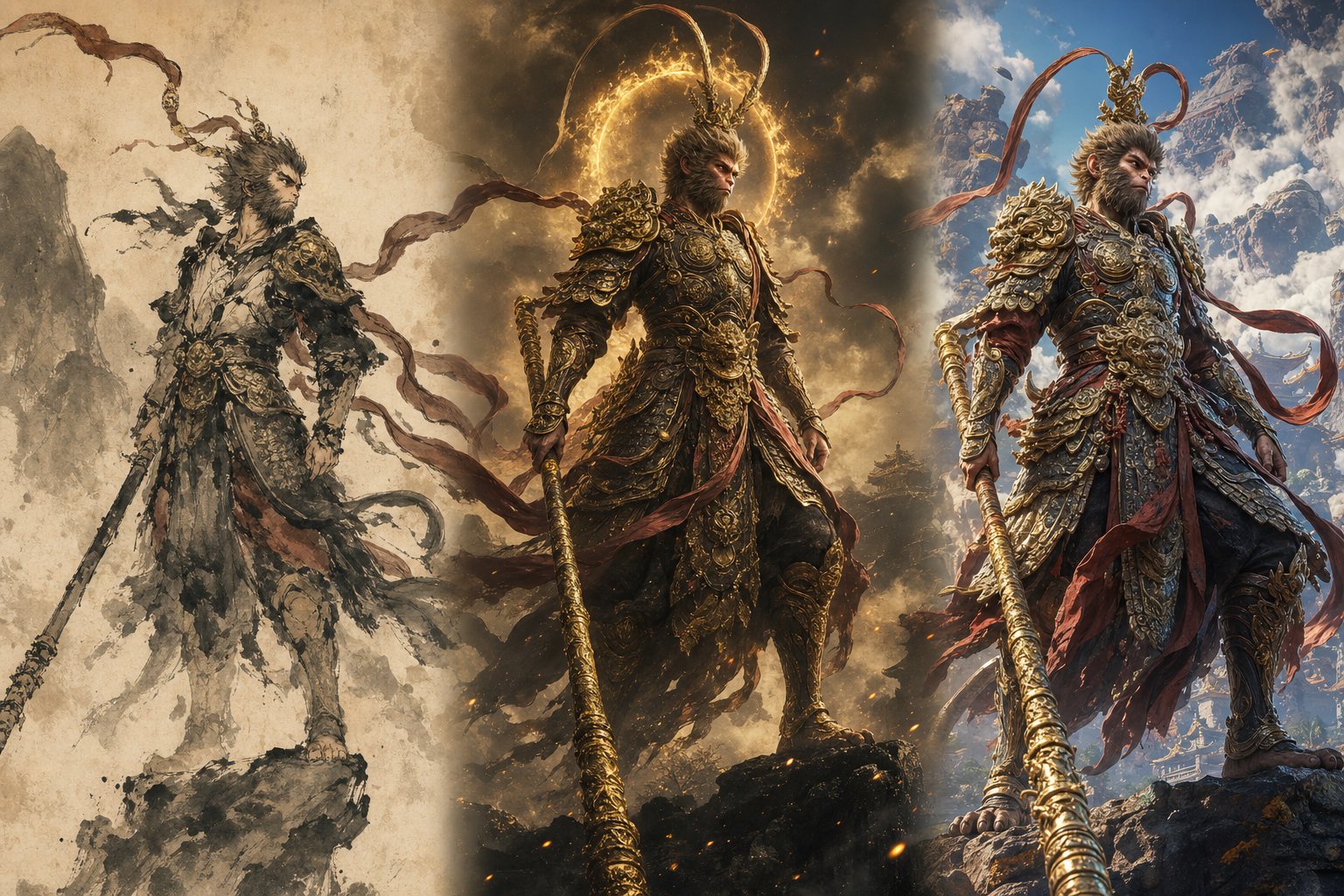
Video games face similar challenges. Black Myth: Wukong (2024) kept the Pinyin spelling intact, banking on global audiences already recognizing the Monkey King's name. Chinese video game characters in titles like Genshin Impact use Pinyin consistently but often simplify tone marks out of the names entirely, making characters like Zhongli (钟离) accessible but stripping the tonal information that distinguishes meaning. The legend of heroes chinese RPG adaptations and anime-influenced games frequently use Japanese romanizations instead, turning 哪吒 into "Nataku" and 二郎神 into "Nirou Shin."
Cartoon chinese characters in anime adaptations follow Japanese phonetic rules rather than Chinese ones. Dragon Ball's "Son Goku" is Sun Wukong filtered through Japanese pronunciation (孫悟空 reads as "Son Gokuu" in Japanese). Viewers who grew up with the anime may not realize they already know a Chinese folklore figure by a Japanese name.
Regional Pronunciation Variants of the Same Characters
Even within Chinese-speaking communities, the same written characters produce different spoken names depending on dialect. Mandarin is the standard reference point for Pinyin, but Cantonese (spoken in Hong Kong and Guangdong) and Hokkien (spoken in Fujian and much of Southeast Asia) produce substantially different pronunciations from identical characters.
| Character | Mandarin (Pinyin) | Cantonese (Jyutping) | Hokkien (POJ) |
|---|---|---|---|
| 關羽 | Guan Yu | Gwaan Yu | Kuan U |
| 觀音 | Guanyin | Gun Yam | Kuan Im |
| 媽祖 | Mazu | Maa Zou | Ma Cho |
| 哪吒 | Nezha | No Zaa | Lo Tia |
| 土地公 | Tudi Gong | Tou Dei Gung | Tho Te Kong |
These aren't minor accent differences. Cantonese preserves tonal distinctions and final consonants that Mandarin has lost, making names sound substantially different. Hokkien diverges even further. The sea goddess Mazu, worshipped across Southeast Asia, is "Ma Cho" in Hokkien-speaking communities in Taiwan and "Maa Zou" in Cantonese temples in Hong Kong. All three versions reference the same 媽祖 characters, but a reader encountering "Ma Cho" in a Taiwanese temple guide and "Mazu" in a mainland Chinese textbook might not connect them without seeing the shared characters.
This regional variation explains why the same folklore figure can appear under half a dozen different romanized spellings across international media. A Hong Kong martial arts film uses Cantonese pronunciation. A Taiwanese puppet theater uses Hokkien. A mainland Chinese game uses Mandarin Pinyin. And a Japanese anime uses its own phonetic adaptation. The written characters remain identical across all versions, which is precisely why understanding the characters themselves, rather than relying on any single romanization, gives you the most reliable foundation for identifying these figures wherever they appear.
Spelling, though, is only half the challenge. Even when you know which romanization system you're looking at, actually pronouncing these names correctly requires navigating sounds that simply don't exist in English.
Pronunciation Guide for Chinese Folklore Character Names
You can decode the meaning behind every radical and moral marker in a name, but if you can't say it out loud, something essential is lost. Pronunciation is where these characters of legend stop being abstract symbols on a page and become living figures you can discuss, reference, and share. The challenge? Mandarin contains sounds that have no English equivalent, and its tonal system means a single mispronounced pitch can turn a god's name into a grocery item.
Pinyin Tone Marks and Why They Matter for Names
Mandarin uses four tones plus a neutral tone. Each tone changes the meaning of a syllable completely. As Hacking Chinese explains, tones in Mandarin function roughly like vowels in English: get them wrong, and you're saying a different word entirely.
Here's the quick breakdown:
- First tone (macron: ā) — High and flat, like sustaining a musical note.
- Second tone (acute: á) — Rising, like the intonation of asking "What?" in English.
- Third tone (caron: ǎ) — Low and dipping, dropping down before rising slightly.
- Fourth tone (grave: à) — Sharp and falling, like a firm command: "Stop!"
Why does this matter for folklore names specifically? Consider the syllable "gui." Pronounced with a third tone (guǐ, 鬼), it means "ghost" and appears across dozens of chinese mythical characters. Pronounced with a fourth tone (guì, 贵), it means "expensive" or "noble." Say it with a first tone (guī, 龟), and you're talking about a turtle. Mispronouncing a ghost's name as "noble" or "turtle" doesn't just sound wrong. It collapses the entire naming system this article has taught you.
The same risk applies to heroic names. Wukong (悟空) uses a fourth tone on wu (wù, "to awaken") and a first tone on kong (kōng, "emptiness"). Flatten both syllables without tonal distinction and you lose the Buddhist philosophical meaning encoded in the Monkey King's name. Across chinese mythologies, tones carry as much semantic weight as the characters themselves.
Sounds That Don't Exist in English
Beyond tones, several Mandarin consonants and vowels have no direct English counterpart. These trip up English speakers consistently when attempting mythical chinese names:
- X (as in Xiao Qian, Xuanwu): Not "z" or "ks." Place your tongue where you'd say "sh" but spread your lips into a smile instead of rounding them. The result is a soft, hissing "sh" sound made at the front of the mouth. Think "she" but lighter and sharper.
- Q (as in Qilin, Qinglong): Not a "kw" sound. It's a "ch" made with the tongue pressed flat against the roof of the mouth, further forward than English "ch." Imagine saying "cheese" but with more air pushed through.
- Zh (as in Zhuque, Zhongli): Similar to English "j" in "judge" but with the tongue curled back. It's a retroflex sound, produced with the tongue tip touching the hard palate behind the ridge.
- Ch (as in Chiyou): Like "ch" in "church" but retroflex, with the tongue curled back the same way as zh. More air is released than in the English version.
- U with umlaut (u as in Nu Gui, Nuwa): Written as "u" after "n" and "l" in Pinyin, this sound doesn't exist in English. Round your lips tightly as if saying "oo" but try to say "ee" instead. The French "u" in "tu" is the closest Western equivalent.
These sounds appear constantly in chinese folklore characters' names. Getting them approximately right makes the difference between being understood and producing confusion.
Pronunciation Reference for Key Folklore Names
The table below covers the most frequently searched chinese mythology names with practical phonetic guidance. The "English approximation" column gives you a starting point, not a perfect match, since true accuracy requires the tones and unfamiliar consonants described above.
| Character Name | Pinyin with Tones | English Approximation | Common Error to Avoid |
|---|---|---|---|
| 孫悟空 (Sun Wukong) | Sun Wukong | Swun Woo-kohng | Don't say "Sun" like the English word for the star; the "u" is shorter, closer to "oo" in "book" |
| 哪吒 (Nezha) | Ne Zha | Nuh Jah (retroflex) | Not "Nez-ha" with two separate syllables split at the z |
| 女媧 (Nuwa) | Nu Wa | Nyoo Wah | The "nu" uses the umlaut u sound, not "noo" as in "noodle" |
| 麒麟 (Qilin) | Qi Lin | Chee Lin | Not "kwi-lin" or "kai-lin"; the Q is a forward "ch" sound |
| 觀音 (Guanyin) | Guan Yin | Gwahn Yin | Not "goo-an-yin" as three syllables; it's two: Gwan-Yin |
| 玄武 (Xuanwu) | Xuan Wu | Shwen Woo | Not "zoo-an-woo"; the X is a light "sh" with spread lips |
| 青龍 (Qinglong) | Qing Long | Ching Lohng | Not "king long"; Q is never a "k" sound in Pinyin |
| 朱雀 (Zhuque) | Zhu Que | Joo Chweh | Not "zoo-kway"; zh is retroflex "j" and que rhymes with "chweh" |
| 白骨精 (Baigujing) | Bai Gu Jing | Buy Goo Jing | Not "bay-goo-jing"; "bai" rhymes with "buy," not "bay" |
| 姜子牙 (Jiang Ziya) | Jiang Zi Ya | Jee-ahng Dzuh Yah | Not "jang"; the "iang" has a clear "ee" glide before the "ahng" |
| 貔貅 (Pixiu) | Pi Xiu | Pee Shyo | Not "pik-soo" or "pi-zoo"; the X is a light "sh" and "iu" glides like "yo" |
| 蚩尤 (Chiyou) | Chi You | Chrr Yo | Not "chee-yoo"; the "chi" uses a retroflex ch with a buzzing "r" vowel |
A few patterns emerge from this table. English speakers consistently misread Pinyin "q" as a "k" sound, "x" as a "z" or "ks," and "zh" as a plain "z." If you remember just one rule, let it be this: in Pinyin, Q always sounds like "ch," X always sounds like "sh" (but lighter), and Zh always sounds like "j" (but retroflex). These three corrections alone will fix the majority of mispronunciations across chinese myth characters.
You don't need to achieve native-level pronunciation to use these names respectfully and recognizably. What matters is understanding that the sounds carry meaning. A tone isn't decoration. A retroflex isn't optional. They're structural elements of the name, just as much as the radicals and moral markers discussed throughout this guide.
And that's the deeper point. The naming system you've learned here, from radicals that signal creature categories, to moral characters that encode alignment, to literary sources that shape identity, to pronunciation that brings it all to life, gives you a framework for decoding any unfamiliar figure you encounter. The next time you see a chinese folklore characters name you've never met before, you won't need a glossary. Read the radicals. Parse the characters. Check the tone. The name itself will tell you the story.
Frequently Asked Questions About Chinese Folklore Character Names
1. What is the difference between yao, guai, and mo in Chinese folklore?
These three terms represent distinct categories of supernatural beings often lumped together as 'demons' in English. Yao (妖) refers to shapeshifting spirits born from animals or objects that absorbed spiritual energy over centuries and are not inherently evil. Guai (怪) describes strange, anomalous creatures that defy natural categories without necessarily being malicious. Mo (魔), borrowed from Buddhist Sanskrit, denotes genuinely malevolent demons with inherent cruelty. The compound yaoguai (妖怪) merges the first two into a general term for supernatural creatures, but understanding the individual categories reveals important differences in threat level and moral weight.
2. How do you pronounce Chinese folklore character names correctly?
Correct pronunciation requires understanding three key elements: Mandarin tones (four distinct pitches that change word meaning entirely), unfamiliar consonants (Q sounds like 'ch,' X sounds like a light 'sh,' and Zh sounds like a retroflex 'j'), and the umlaut u vowel (made by rounding lips for 'oo' while trying to say 'ee'). Tones are especially critical because mispronouncing them can change a ghost's name into a word meaning 'expensive' or 'turtle.' Even approximate accuracy with these sounds makes folklore names recognizable and respectful.
3. Why do Chinese folklore characters have different spellings in English?
The inconsistency stems from competing romanization systems, regional dialects, and media localization choices. Pinyin (the modern standard) and Wade-Giles (the older British system) romanize identical sounds differently, so Guan Yu becomes 'Kuan Yu' in older texts. Regional dialects add further variation: Cantonese, Hokkien, and Mandarin produce substantially different pronunciations from the same written characters. Film and game localizations introduce additional variants, such as Disney changing Hua Mulan to 'Fa Mulan' for American audiences or Japanese anime rendering Sun Wukong as 'Son Goku.'
4. What do radicals in Chinese folklore names tell you about a character?
Radicals function as built-in category tags within Chinese characters. The ghost radical (鬼) signals undead beings, the beast radical (犭) flags animal spirits and shapeshifters, and the person radical (亻) marks humanoid figures. Beyond categorization, full characters encode moral alignment: benevolent figures carry characters meaning jade, brightness, or heaven, while malevolent ones use characters suggesting bone, blood, or darkness. This system allows readers to identify a creature's nature, threat level, and moral role before knowing its story.
5. What are the Four Sacred Beasts in Chinese mythology and what do their names mean?
The Four Sacred Beasts (Si Xiang) are directional guardians whose names encode color, direction, element, and season. Qinglong (青龍, Azure Dragon) guards the East with wood and spring. Baihu (白虎, White Tiger) guards the West with metal and autumn. Zhuque (朱雀, Vermilion Bird) guards the South with fire and summer. Xuanwu (玄武, Black Warrior/Tortoise-Snake) guards the North with water and winter. Each name's first character is a color that maps directly onto Chinese cosmological associations, making the names function as cosmic coordinates rather than simple labels.